Human rights watchdogs turn blind eye on Gitmo hunger strikers
RT | March 19, 2013
Despite the prisoners’ hunger strike at Guantanamo Bay being acknowledged by the US military, there has so far been little reaction from the international humanitarian organizations to the action, which enters its 42nd day on Tuesday.
The United Nations has yet to acknowledge or comment upon the Gitmo hunger strike. RT has reached out to UN human rights bodies in Geneva and officials have promised to respond to the inquiry with a comment by Tuesday afternoon.
The only international organization to respond to what’s going on in Guantanamo is the Red Cross, which visited the island prison from February 18 to 23. It acknowledged that a hunger strike was really taking place, but so far all the organization has done is release a statement saying that “The ICRC believes past and current tensions at Guantanamo to be the direct result of the uncertainty faced by detainees.”
Military censorship makes it quite difficult to access any information about Gitmo prisoners. It was the attorneys for the detainees that first expressed urgency and grave concern over the life-threatening mass hunger strike that reportedly started in the Guantanamo Bay detention facility on February 6.
According to the Center for Constitutional Rights 130 prisoners went on a hunger strike to protest the alleged confiscation of personal items such as photos and mail and the alleged sacrilegious handling of their Korans.
Prison spokesman Navy Capt. Robert Durand, however, acknowledged only 21 inmates to be on hunger strike. He also denied all allegations of prisoners being mistreated.
Even if not for mistreatment and abuse, prisoners could have started the strike just to draw attention to their being kept in Guantanamo, with the US refusing to repatriate them, despite some being cleared for release.
“There are 166 people at Guantanamo. Of those there are probably 20 guys who are bad guys… like Khalid Sheikh Mohammed. The other people… more than half of them – 86 of them have been cleared at least for three years and some during the Bush administration – cleared as innocent people. And they are still there and they are frustrated,” says Thomas Wilner, a lawyer, who used to represent some of the Guantanamo detainees in court.
According to Durand, none of the inmates on hunger strike is in immediate health danger.
Lawyers for the prisoners believe otherwise. They have reported some of their clients had weight loss of up to or more than 20 pounds (8kg) and have been hospitalized. Medical experts say that by day 45, hunger strikers can experience potential blindness and partial hearing loss.
The Center for Constitutional Rights and habeas counsel have sent a letter to US Defense Secretary, Chuck Hagel, urging him “to address this growing crisis at Guantánamo before another man dies at the prison, this time under his watch. The hunger strike should be a wake-up call for the Obama Administration, which cannot continue to ignore the human cost of Guantánamo and put off closing the prison any longer.”
Meanwhile, JTF-GTMO announced that flights to the island prison from South Florida will be terminated on April 5. The step is seen by the prisoners’ attorneys as an attempt by the Defense Department to limit access to their clients.
Related article
Israel releases hunger striker Sharawneh, arrests his brother
Al-Akhbar | March 18, 2013
Israel arrested the brother of former-Palestinian prisoner Ayman Sharawneh in the West Bank early Monday just hours after the long-term hunger striker was released from Israeli prison and deported to the Gaza Strip, Ma’an News Agency reported.
Israeli forces raided the home of Jihad Sharawneh, 24, at dawn Monday in Deir Samir, southwest of Hebron.
An Israeli military spokesman told Ma’an that Jihad Sharawneh was arrested and taken in for security questioning.
Amjad Najjar, head of the Hebron branch of the Palestinian Prisoners Society, denounced the arrest as an act of revenge to punish the Sharawneh family.
Ayman Sharawneh signed an agreement with Israeli authorities to be deported to Gaza for 10 years, bringing an end to his eight-month-long hunger strike, Qadura Fares, head of the Palestinian Prisoners Society, said in a statement.
He arrived at the Erez crossing Sunday night, where a Palestinian ambulance was waiting to take him into Gaza. Hundreds of people crowded at the Palestinian side of the checkpoint to greet him.
Fares said that Israel had previously proposed to deport Sharawneh outside of Palestine, but then offered to exile him to Gaza after he refused to leave his homeland.
Sharawneh agreed to be deported after months of hunger striking to protest his detention, and after numerous warnings by doctors regarding the severe deterioration in his health, Fares added.
The 36-year-old father of nine had previously demanded that authorities allow him to return to Hebron to be with his family.
The under secretary of the PA Ministry of Detainee Affairs, Ziad Abu Ein, told Ma’an that Sharawneh’s agreement was signed without notifying the ministry.
Earlier Sunday, the Minister of Detainee Affairs Issa Qaraqe said the Palestinian Authority rejected the deportation of prisoners as political blackmail.
Sharawneh was released in the October 2011 prisoner swap deal between Israel and Hamas but was rearrested in January 2012 and accused of violating the terms of his release.
Israeli authorities refused to reveal how Sharawneh violated his release terms, even to his lawyers, and he was jailed without charge or trial.
Israeli prosecutors sought to cancel Sharawneh’s amnesty and jail him for 28 years, the remainder of his previous sentence. He went on hunger strike to demand his release.
Abu Ein said Israeli authorities were pressuring Samer Issawi, who has been on hunger strike for 228 days, to make a similar deal.
(Ma’an, WAFA, Al-Akhbar)
PALESTINE: Tent for school children demolished hours after it was built
CPTnet | March 16, 2013
On 16 March 2013 the South Hebron Hills Popular Committee built a tent to protect school children from Tuba and Maghayir Al Abeed while they wait for their military escort. Hours after the ceremonious construction of the tent — attended by villagers, school children, internationals and various media outlets — was over, the Israeli military demolished the tent and arrested one of the internationals present.
The schoolchildren coming from Tuba and Maghayire Al Abeed walk between the Israeli settlement of Ma’on and the outpost of Havat Ma’on in order to get to school in At-Tuwani. Since 2001 settlers have repeatedly attacked the children along this route, preventing most of the children, who feared for their safety, from being able to attend school. In 2004 volunteers from Christian Peacemaker Teams (CPT) and Operation Dove began accompanying the children along the path, but the violent attacks continued. These attacks brought the matter to the attention of the Children Rights Committee of the Knesset, which established in November 2004 a military escort to protect the children.
Since November 2004, CPT and Operation Dove have constantly monitored the military escort, documenting the failures of the Israeli army as well as settler violence toward the children. During the school year 2011-2012, the volunteers of Operation Dove and CPT published a report, The Dangerous Road to Education, which found that in 35% of cases the military escort was late. In addition, in 48% of cases, the military escort arrived late after school, forcing the children to wait for a total time of about 21 hours. There is nothing to shelter the children, some as young as six years old, from the elements as they wait for their unpunctual military escort.
The Popular Committee wanted to give the children a tent to shelter them while they wait. The event had around one hundred in attendance. These included some of the children whom the tent was being made for, teachers and administrators from the school, CPT and other international organizations, Palestinians from At-Tuwani and surrounding villagers and the media. The crowd was immediately met by soldiers who filmed all the attendees and took down Palestinian flags that children had put up around the building area. The children played and chanted in front of the soldiers while settlers on the next hilltop yelled down at them, “Kill all the Arabs.” The tent was completed and christened “Michele’s tent” after the late daughter of the Italian woman who funded the project.
As the afternoon wore on the crowd started to leave. Two hours after the tent was build the Israeli military demolished it and arrested one of the international volunteers who had remained there. The volunteer was released, but must leave the West Bank for two weeks. The Popular Committee plans to rebuild the tent, but as for now the schoolchildren will have to wait out in the rain when they return to school on Sunday.
Related articles
- Israeli forces demolish in two villages, damage a crucial road in South Hebron Hills (palsolidarity.org)
- P/R: Palestinian village under demolition threat, Firing Zone 918 (ramyabdeljabbar.wordpress.com)
- Soldiers Kidnap Several Palestinian Children in Hebron (nsnbc.me)
- Palestine: Israeli soldiers wreak havoc in Jordan Valley village & confrontations (realisticbird.wordpress.com)
- Jenba, the Frontline. (gregsrole.wordpress.com)
- 12 year old boy beaten by soldiers in Azzun (palsolidarity.org)
UN CSW condemns Israel for Human Rights violations

Press TV | March 16, 2013
The United Nations’ Commission on the Status of Women (CSW) has condemned Israel for violating the rights of Palestinian women.
In a resolution issued on Friday, the UN policy-making body, condemned Tel Aviv’s regime for the degrading living conditions for Palestinian women.
“The Israeli occupation remains the major obstacle for Palestinian women with regard to their advancement, self-reliance and integration in the development of their society…” the eight clause resolution read.
The resolution was passed by 29 votes. It was rejected only by Israel and the United States. 10 other countries also abstained.
The UN commission also issued a declaration, urging an end to violence against women across the world.
“The commission urges states to strongly condemn all forms of violence against women and girls and to refrain from invoking any custom, tradition or religious consideration to avoid their obligations with respect to its elimination,” said the declaration.
The declaration also called on the word’s countries to “devote particular attention to abolishing practices and legislation that discriminate against women and girls, or perpetuate and condone violence against them.”
The 18-page declaration includes the viewpoints of Iran and other Muslim countries. Activists have described the document as a victory for women.
Related article
- Israel has detained 15,000 Palestinian women since 1967 (alhittin.com)
Illegal Israeli bullet claims a Palestinian life
 Mahmoud At-Teety – Facebook
Al-Akhbar | March 13, 2013
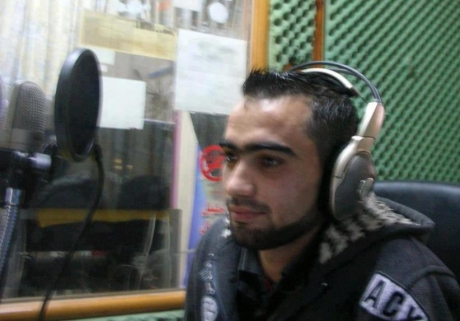
Israeli forces shot dead a young Palestinian protester Tuesday night using bullets prohibited by international law.
Mahmoud Adel Faris al-Teiti, 25, was hit in the head by expanding “dum dum” bullets during clashes at the al-Fawwar refugee camp near Hebron, according to local media.
“Dum dum” bullets, first made by British colonial forces in India’s Calcutta, expand on impact to limit penetration and produce a larger diameter wound. The use of expanding bullets is prohibited by the 1899 Hague Declaration and is listed as a war crime in the Statute of the International Criminal Court (Article 8(2)(b)(xix)).
Witnesses said Israeli soldiers raided Fuwar and opened fire after coming under a barrage of rocks from local Palestinians. Hospital officials said a 25-year-old man died after being shot in the head and two others were wounded by the Israelis.
Two other young men were shot and injured by live ammunition. Another six were hit by rubber-coated bullets.
Israeli forces say they only shoot live fire in ‘life-threatening situations’, but reports of their use in recent weeks have been abundant.
According to Palestinian officials, al-Teiti was the sixth Palestinian killed by Israeli fire in the Israeli-occupied West Bank since the beginning of this year. A seventh was killed on the Gaza border on January 11.
Palestinians have also taken to the streets to protest against Israel’s extrajudicial jailing of thousands of their countrymen. The resulting confrontations, often bloody, have drawn warnings on both sides that a full Palestinian revolt could be brewing.
(Al-Akhbar, Ma’an, Reuters)
Related article
- Israeli security officer brutally beats unarmed Palestinian shepherd (alethonews.wordpress.com)
9 Year old Palestinian boy attacked by settlers
International Solidarity Movement | March 12, 2013
Hebron, Occupied Palestine – On the afternoon of March 12th, Yassin Knaebi was playing on the roof of his house in the old city of Hebron when suddenly stones started falling from the sky. Three young settlers who had been watching him play, began to throw stones from across the street. Yassin, was struck on the head, he lost his balance and fell from the roof of his family home, breaking his left arm in the process. Doctors are fearful of the possibility of long term damage to the young boys eye, though this is still too early to know for sure.
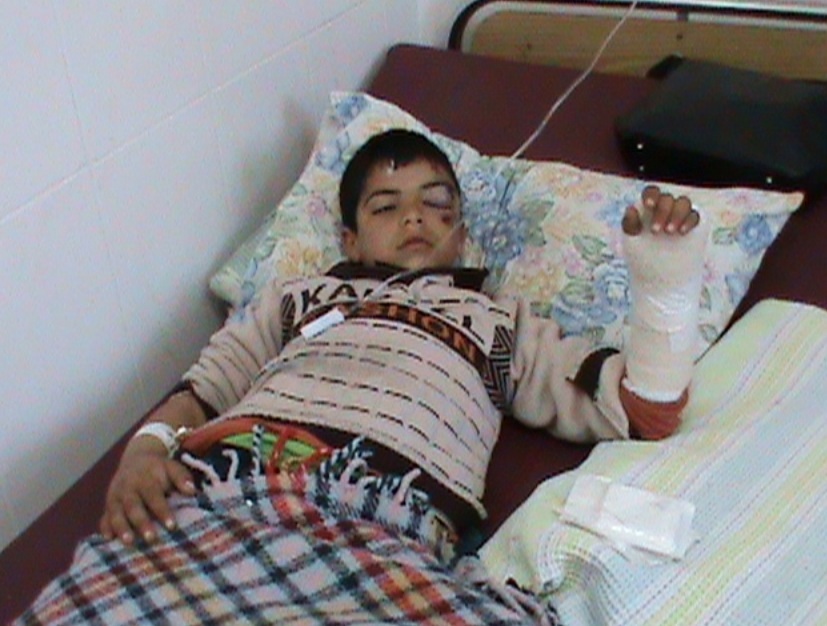
The Knaebi family are terrorised frequently by their neigbours in the Avraham Avinu Settlement. According to Mrs. Knaebi the family is harassed at least three times a week and the Israeli army does nothing to prevent it, despite having an outpost in sight of the house. The message is simple, the settlers in the settlement wish to push the family out and occupy their home, so that the future expansion plans for the neighborhood can go forward without any problems.
Related articles
- Racist attacks are daily reality in Hebron , even for children (palsolidarity.org)
- Continued harrassment of the Nasser family in Madama (alethonews.wordpress.com)
- Stranded in Shuhada: Hebron’s Qurtuba school (alethonews.wordpress.com)
Israeli security officer brutally beats unarmed Palestinian shepherd
By Saed Bannoura | IMEMC News | March 12, 2013
Israeli activists caught on film an attack by an Israeli settlement security guard on a Palestinian shepherd Monday, near the Palestinian village of Susya in the southern West Bank on Monday.
The shepherd was identified as Na’al Abu Aram, but the Israeli security guard, apparently from the Israeli illegal outpost called ‘Avigail’ that was built on stolen Palestinian land, was not identified.
The guard beat, punched, kicked and shoved the shepherd, then ran after his flock of sheep to scare them. Two Israeli soldiers were present at the time of the beating, but they did not intervene.
Avigail was established on stolen land by former Israeli soldiers in 2001. The soldiers entered the land, which belongs to local Palestinians, and installed trailers. They moved in, heavily armed, and began to harass the local villagers and shepherds. No attempt has been made by the Israeli government to remove the trespassing Israelis from the land that they illegally seized by force.
In Monday’s incident, the security guard told reporters with Ynetnews, which obtained and published the video of the incident, that he was being unfairly slandered, and that it was the shepherd who attacked him.
He claimed that the local residents were being accompanied by ‘anarchist activists’ who try to ‘incite provocations’. The guard was apparently referring to Israeli human rights workers who arrived on the scene to try to document abuses reported to them by local Palestinian residents.
Related article
Will the World Bank Stop Investing in Campesino Assassinations?
By Arthur Phillips | CEPR Americas Blog | March 8, 2013
On February 27, the office of the Compliance Advisor/Ombudsman (CAO) for the World Bank’s International Finance Corporation (IFC) launched an audit of the lending arm’s $30 million investment in Tegucigalpa-based Corporación Dinant, which produces palm oil and food products. The audit comes in response to widespread claims of violence, intimidation, and illegal evictions carried out by Dinant’s private security guards in Honduras’ Bajo Aguán valley, the center of the country’s ongoing land struggle. In offering its resources and reputation to the company, the World Bank and its member countries are complicit in the deaths of countless innocent farmers.
The COA’s review began just two days after the United Nations Working Group on the use of mercenaries urged the Honduran government “to properly investigate and prosecute crimes committed by private security guards and to ensure that victims receive effective remedies.” A delegation from the Working Group was in the country from February 18 to 22, when it met with government officials and representatives of civil society and the private sector, including security firms. The delegates voiced their particular concern about the “alleged involvement of private security companies hired by landowners in widespread human rights violations including killings, disappearances, forced evictions and sexual violence against representatives of peasant associations in the Bajo Aguán region.” Dinant is the largest single landholder in the region.
An appointed panel of unnamed experts is currently convened in Washington, D.C., to review both the IFC’s adherence to its social and environmental policies and the role Dinant has played in the abuses. Many human rights observers consider the company’s owner, Miguel Facussé, to be one of the country’s most powerful men and hold him responsible for the killings of dozens of campesinos.
The audit had been a long time coming. On November 19, 2010, the human rights organization Rights Action wrote a letter to the World Bank’s then-president Robert Zoellick demanding that the financial institution suspend its funding to Honduras. The group cited the “context of grave human rights abuses and lack of independence of the justice system” as grounds to withhold funding, and characterized support for Dinant as “a case of gross negligence of the World Bank’s human rights and due diligence obligations.” In the letter, Rights Action also noted that “at least 19 farmers in this region have been killed in the context of conflicts with biofuel industry interests.” (In a new report released two weeks ago, the same group declared that 88 farmers and their supporters have been killed in Bajo Aguán since January 2010, most of them in targeted assassinations.)
In the ensuing period, the office of the CAO maintained discussions with local civil society organizations and in April 2012, CAO Vice President Meg Taylor informed the IFC that her office was initiating an appraisal of the funding group’s investment in Dinant. That appraisal, having found sufficient grounds for further investigation, culminated this August in the decision to conduct the current audit.
A diverse group of international organizations, including Oxfam, Vía Campesina and the Latin American Working Group, welcomed CAO’s decision. In a co-signed letter, though, the groups expressed their firm demand that the IFC halt its financial cooperation with the palm oil company
until a) clear evidence is provided of significant progress in overcoming impunity of crimes and human rights abuses committed against organized peasants and their supporters in the Lower Aguán; and b) a comprehensive, just, peaceful and sustainable resolution is provided to the conflicts over land between the Corporación Dinant, the government of Honduras and the local peasant movements.
The panel is scheduled to conclude its audit on March 8.
On Friday, March 1, while the CAO panel gathered in Washington, journalist Carlos Augusto Lara Cruz was reportedly threatened by a Dinant employee while covering a confrontation between campesinos and a military unit. It must be noted that Honduran human rights defenders have consistently and credibly accused military and police units of collaborating with Dinant security guards in kidnapping, torturing, and murdering land rights activists.
One of the latest assassinations in the area took place on Thursday, February 21, when lawyer José Andrés Andrade Soto was shot dead in the town of Tocoa. Andrade Soto led the regional office of the National Agrarian Institute until former president Manuel Zelaya was deposed in the June 2009 coup. Today, farmer organizations continue to struggle for land titles that the Zelaya government granted to them shortly before it was overthrown.
As part of its Summary of Proposed Investment, written before the program’s approval in order to boost the institution’s transparency, the IFC described its cooperation with Dinant as an opportunity to help small farmers in Bajo Aguán. It also declared that there was no controversy regarding the land in question. “Land acquisition is on a willing buyer-willing seller basis, and there is no involuntary displacement of any people,” the report assured.
Since that report was published, scores of campesinos have been assassinated for efforts to re-appropriate their rightful land. The World Bank and its member countries bear some degree of responsibility for their deaths. No matter the outcome of the CAO audit, the IFC should apologize for the suffering in which it has been complicit and should immediately revoke its support for Facussé and Corporación Dinant.
Related articles
- Killings Continue in Bajo Aguán as New Report Documents Abuses by U.S.-Trained Honduran Special Forces Unit (alethonews.wordpress.com)
- Honduras: Two More Campesinos Murdered in Aguán (alethonews.wordpress.com)
- Honduras: Murdered Lawyer’s Brother Killed in Aguán (alethonews.wordpress.com)
Number of natives in Canada’s prisons alarming: Officials
Press TV – March 8, 2013
A Canadian official says the number of aboriginals including Métis and Inuit in Canada’s prisons is increasing at ‘an alarming rate’.
According to a statement issued by the Correctional Investigator of Canada Howard Sapers on Thursday, “There are just over 3,400 aboriginal men and women making up 23 percent of the country’s federal prison inmate population.”
“In other words, while aboriginal people in Canada comprise just four percent of the population, in federal prisons nearly one in four is Métis, Inuit, or First Nations,” he added.
He went on to say that “the over-representation of aboriginal people in federal corrections and the lack of progress to improve the disparity in correctional outcomes continues to cloud Canada’s domestic human rights record.”
Meanwhile, Canada’s official opposition party, the New Democrats, issued a statement saying “What we find in this report is a shocking indictment of how… (Ottawa) has failed aboriginal Canadians.”
Also, former Supreme Court Justice Frank Lacobucci has revealed in a study that the aboriginal youths are treated more harshly by the justice system than other groups.
Lacobucci showed in a study that about one quarter of young native offenders were sent to jail for assault, in contrast to less than 15 percent of non-aboriginal youth.
He severely criticized the Canadian judicial system for “systemic racism” and stated that the jailing of aboriginals is a “serious crisis.”
In 2012, the United Nations called on Canada to take “urgent measures” to reduce the overrepresentation of aboriginals and blacks in the criminal justice system and out-of-home care.
Featured Video

Death Spikes & Rising Cancer In Our Youth Explained
or go to
Aletho News Archives – Video-Images
From the Archives
Politicians lie
By Mazin Qumsiyeh | Popular Resistance | August 18, 2013
There is no way to say this truth nicely: Politicians lie. That includes Japanese, American, Egyptian, Israeli, and Palestinian politicians! Is there something more common sense than that? Yet, so many citizens around the world believe their own politicians or wistfully acknowledge lies but think it is part of the job needed to run things. They believe even when politicians contradict themselves blatantly. This phenomenon is rather remarkable. It is a dissonance and disconnect from reality that many seem oblivious to. It is very dangerous because it can lead to accepting rationales for going to war. These can be deadly wars that lead to millions of lives lost as happened in what was called World War 1 and WW2. Even when incredible and declassified evidence abound, politicians continue to lie and old mythologies refuse to die. Here are just a few of the countless lies told to us over the past few decades… continue
Blog Roll
 Aletho News
- RSF military group defects, joins Sudanese army: State media
- Ireland goalkeeper refuses to play ‘Israel’ as squad weighs boycott
- China pushes back against US on Cuba, Iran
- Ukrainian Soldiers, Potential Mercenaries: Have Gun, Will Travel!
- Burnham’s UN debut… A masterclass in British disinformation
- Iran flights continue despite US aviation sanctions
- Global Tipping Points Lead the World Into a State of Entropy
- The day-after at the White House: USA and Xi Jinping
- The Geopolitical Balance in the Red Sea: The UAE Being Displaced by New Players
- Iraqi resistance group vows to stage airport sit-ins over Iran aerial blockade
- If Americans Knew
- Deconstructing Netanyahu’s pants-on-fire UN rant – Daily Update
- Trump betrayed voters with his campaign lies and prioritized a foreign country once he took office
- Netanyahu calls Israel’s war in Gaza ‘opposite of genocide’ in UN speech to near-empty hall
- Settler Kidnappings: Torture, Sexual Abuse and Terrorisation of Palestinian Abductees as Israel Deepens Annexation of West Bank
- Gaza winter nears as 162,000 tents become unusable, raising fears of humanitarian crisis
- Netanyahu says, “It’s the opposite of genocide”; UN says Gaza economy is world’s ‘most severe crisis on record’ – Daily Update
- Israel’s US-Backed Assault on Gaza Has Created the ‘World’s Most Severe Economic Crisis on Record’: UN
- ‘Protecting U.S. Citizens’… From Israel
- ‘This is where I live now, the back of a truck’: a day in the life of a grandmother in Gaza
- In UN Speech, Iran’s President Displays Pictures of Children Killed by US, Brings Attention to Israel’s Nuclear Arsenal
- No Tricks Zone
- New Study: Earth And Venus Surface Warmth Largely Explained By Convection And Lapse Rate, Not CO2 Or Radiation
- 2025 Nature Paper Claiming Worsening Global Drought Gets RETRACTED …Heavily Flawed
- New Study: ‘Global Drought Shows No Detectable Recent Acceleration Under Climate Warming’
- Economic Masterminds: German Socialists Suggest Taxing Productivity Gains Stemming From Using AI
- The South China Sea Has Not Been Cooperating With The Climate Change Narrative
- Energy Crisis: Germany Enters Heating Season With Historically Low Gas Reserve Fill Levels
- New Study: The Antarctic Ice Sheet Gained Mass From 2020-2024 Due To Staggering Snow And Ice Accumulation
- Study: Ocean Heating Rates From Thousands Of Years Ago ‘Dwarf’ Modern Ocean Heating Rates
- Climate Extremists Target, Attack Large-Scale Power Grid Infrastructure In Germany!
- New Study: Antarctic Ice Melt Has Contributed Less Than 1 Centimeter To Sea Level Rise In The Last 30 Years

