Neuroscience, Special Forces and Yale
The Ethics of Deception Detection Research
By ROY EIDELSON | CounterPunch | March 6, 2013
Last month, a proposal to establish a U.S. Special Operations Command (SOCOM) Center for Excellence in Operational Neuroscience at Yale University died a not-so-quiet death. The broad goal of “operational neuroscience” is to use research on the human brain and nervous system to protect and give tactical advantage to U.S. war fighters in the field. Crucial questions remain unanswered about the proposed center’s mission and the unusual circumstances surrounding its demise. But just as importantly, this episode brings much needed attention to the morally fraught and murky terrain where partnerships between university researchers and national security agencies lie.
A Brief Chronology
Let’s start with what transpired, according to the news reports and official press releases. In late January, the Yale Herald reported that the Department of Defense had awarded $1.8 million to Yale University’s School of Medicine for the creation of the new center under the direction of Yale psychiatrist Charles Morgan III. Descriptions of the proposed center’s work revolved around the teaching of Morgan’s interviewing techniques to U.S. Special Forces in order to improve their intelligence gathering. To heighten the soldiers’ cross-cultural awareness and sensitivity, Morgan reportedly intended to draw volunteer interviewees from New Haven’s immigrant communities.
Such details typically become public only after a university center has been formally established and its funding officially secured. In this case, however, the early news reports – which included statements from director-to-be Morgan – quickly led last month to a widely circulated Yale Daily News op-ed, an online petition, a Facebook page, and protests by students and local groups outraged over reports of Yale’s support for the military center and plans to treat immigrants as “guinea pigs.” According to ABC News/Univision, in response Morgan explained that he was approached by the Defense Department to help “promote better relations between U.S. troops and the people whose villages they work in and around” – by teaching soldiers “better communication skills” and “how to ask non-leading questions, how to listen to what people are saying, how to understand them.”
A public affairs officer for U.S. SOCOM initially confirmed that it was providing funding for the center. Shortly thereafter, Yale University representatives issued a conflicting statement. Characterizing the center as “an educational and research center with a goal of promoting humane and culturally respectful interview practices among a limited number of members of the armed forces, including medics,” they emphasized that no formal proposal had been submitted for academic and ethical review. Yale also noted that volunteer interviewees “selected from diverse ethnic groups” would be protected by university oversight, and that public reports about the center were in part “based on speculation and incomplete information.” Three days later, SOCOM’s spokesperson retracted his previous statement, explaining that the information provided had been incorrect, and that no funds for the center would be forthcoming. Yale confirmed that the center would not be established at the university. Two days later, SOCOM declared that, in fact, they had decided a year earlier not to fund Morgan’s proposal.
Ethical Risks of Operational Neuroscience
The name of the proposed center – the U.S. SOCOM Center of Excellence for Operational Neuroscience – deserves more attention and scrutiny than it has received thus far. The burgeoning interdisciplinary field of operational neuroscience – supported by hundreds of millions of dollars from the Department of Defense – is indisputably much larger and much more worrisome from an ethical perspective than the mere teaching of interview techniques and people skills would suggest. What makes this particular domain of scientific work so controversial is not only its explicit purpose of advancing military goals. The methods by which these ends are pursued are equally disquieting because they raise the specter of “mind control” and threaten our deeply held convictions about personhood and personal autonomy.
In a presentation to the intelligence community five years ago, program manager Amy Kruse from the Defense Advanced Research Projects Agency (DARPA) identified operational neuroscience as DARPA’s latest significant accomplishment, preceded by milestone projects that included the Stealth Fighter, ARPANET, the GPS, and the Predator drone. National security interests in operational neuroscience encompass non-invasive, non-contact approaches for interacting with a person’s central and peripheral nervous systems; the use of sophisticated narratives to influence the neural mechanisms responsible for generating and maintaining collective action; applications of biotechnology to degrade enemy performance and artificially overwhelm cognitive capabilities; remote control of brain activity using ultrasound; indicators of individual differences in adaptability and resilience in extreme environments; the effects of sleep deprivation on performance and circadian rhythms; and neurophysiologic methods for measuring stress during military survival training.
Anthropologist Hugh Gusterson, bioethicist Jonathan Moreno, and other outspoken scholars have offered strong warnings about potential perils associated with the “militarization of neuroscience” and the proliferation of “neuroweapons.” Comparing the circumstances facing neuroscientists today with those faced by nuclear scientists during World War II, Gusterson has written, “We’ve seen this story before: The Pentagon takes an interest in a rapidly changing area of scientific knowledge, and the world is forever changed. And not for the better.” Neuroscientist Curtis Bell has called for colleagues to pledge that they will refrain from any research that applies neuroscience in ways that violate international law or human rights; he cites aggressive war and coercive interrogation methods as two examples.
Research Misapplied: SERE and “Enhanced Interrogation Techniques”
Some may argue that these concerns are overblown, but the risks associated with “dual use” research are well recognized and well documented. Even though a particular project may be designed to pursue outcomes that society recognizes as beneficial and worthy, the technologies or discoveries may still be susceptible to distressing misuse. As a government request for public comment recently highlighted, certain types of research conducted for legitimate purposes “can be reasonably anticipated to provide knowledge, information, products, or technologies that could be directly misapplied to pose a significant threat with broad potential consequences to public health and safety….”
Yale’s Morgan must surely be aware that operational neuroscience research can be used for purposes contrary to its purported intent – as this appears to be what happened with some of his own work. Morgan’s biographical sketch on the School of Medicine website refers to his research on the “psycho-neurobiology of resilience in elite soldiers” and “human performance under conditions of high stress.” Both of these topics are related to his extensive study of the effects of the military’s physically and psychologically grueling Survival, Evasion, Resistance, and Escape (SERE) training program. In SERE training, soldiers are subjected to extreme conditions in order to inoculate them against enemy interrogation should they be captured and subjected to torture by forces that don’t observe international laws prohibiting prisoner abuse. The techniques applied during the trainee’s simulated incarceration and mock interrogations include isolation, stress positions, sleep and food deprivation, loud noises, sexual humiliation, extreme temperatures, confinement in small spaces, and in some cases waterboarding.
Along with colleagues, Morgan has published a series of research articles examining the psychological, physiological, and biological effects of the SERE program. In summarizing key findings of this research, Morgan and his co-authors highlighted the following: the stress induced by SERE is within the range of real-world stress; SERE students recover normally and do not show negative effects from the training; and the mock interrogations do not produce lasting adverse reactions as measured by physiological and biological indicators. However, after reviewing these same studies, the authors of a Physicians for Human Rights report reached a starkly different conclusion: “SERE … techniques, even when used in limited and controlled settings, produce harmful health effects on consenting soldier-subjects exposed to them.” They also emphasized that during the training many students experienced dissociative reactions and hormone level changes comparable to major surgery or actual combat; the post-training assessments were short-term and insufficient to evaluate soldiers for PTSD and related disorders; and the soldiers benefited from knowing that they could end their participation whenever they chose to do so.
SERE research like that conducted by Morgan and his colleagues was subsequently misused by the Bush Administration after the 9/11 terrorist attacks to illegitimately authorize the abuse and torture of national security detainees held at Guantanamo Bay, Bagram Air Base, and CIA “black sites.” The infamous“enhanced interrogation techniques” (EITs) were developed by former SERE psychologists – working for the CIA – who “reverse-engineered” the SERE interrogation tactics. But even more importantly here, a crucial 2002 Office of Legal Counsel “torture memo” asserted that the EITs did not cause lasting psychological harm, and it cited as evidence consultation with interrogation experts and outside psychologists, as well as a review of the “relevant literature” – which plausibly would have included Morgan’s own extensive work in the area. In short, this appears to be a striking and tragic instance where operational neuroscience research, undertaken in a different context, was subsequently appropriated and misapplied for unconscionable purposes. It is worth adding that these prisoners were subjected to indefinite detention without trial and they were not free to discontinue their torturous interrogations at will. Their torture sessions were also substantially longer and the techniques were instituted more frequently and with greater intensity than Morgan’s research subjects experienced.
Morgan’s Deception Detection Research
Another significant area of operational neuroscience research for Morgan has been deception detection – that is, figuring out when someone isn’t being truthful during an interview, or an interrogation. According to his online CV, he has received Department of Defense funding totaling nearly $2 million for this work over the past several years. Research on this same topic reportedly also became an important focus of attention for several intelligence agencies – including the CIA – immediately after the 9/11 attacks. Befitting his expertise and stature in the field, Morgan has been involved in a variety of high-level initiatives designed to bring together university researchers and personnel from the defense and intelligence sectors.
For example, Morgan is among the listed attendees at a July 2003 invitation-only workshop on “The Science of Deception: Integration of Theory and Practice.” The event was co-hosted by the American Psychological Association (APA) and the RAND Corporation, with generous funding from the CIA. The participants discussed various scenarios, including one focused on law enforcement interrogation and debriefing, and another on intelligence gathering. They also explored specific research questions, such as which pharmacological agents affect truth-telling, and whether it might be possible to overwhelm a person’s senses so as to reduce his capacity to engage in deception during an interrogation. Psychologist Jeffrey Kaye has noted that, in a very unusual step, the APA has scrubbed most of the information about this workshop from its website.
In June 2004 Morgan was a participant at another invitation-only workshop – co-sponsored by the Department of Justice, the FBI, and the APA – titled “The Nature and Influence of Intuition in Law Enforcement: Integration of Theory and Practice.” Among the topics examined were the extent to which police officers, intelligence analysts, interrogators, and others can effectively use “intuition” in their work – for instance, in order to detect deception – and how such capabilities might be applied to counterterrorism efforts. The proceedings from this event identify Morgan as “Senior Research Scientist, Behavioral Science Staff, Central Intelligence Agency” – a professional affiliation that does not appear on his online CV.
Morgan is credited with a similar affiliation in the 2006 report “Educing Information,” published by the National Defense Intelligence College. As a member of the Government Experts Committee, Morgan is listed as working for the “Intelligence Technology Innovation Center,” an administrative unit that falls under the CIA. The foreword to the report describes the volume as “a primer on the ‘science and art’ of both interrogation and intelligence gathering.” Included is a chapter on deception detection by Morgan’s close research colleague, psychologist Gary Hazlett. One of Hazlett’s recommendations in the report is that “the United States adopt an aggressive, focused plan to support research and development of enhanced capabilities to validate information and the veracity of sources.” He also notes that the most troubling limitation of deception research thus far is the lack of “various Asian, Middle Eastern, Central and South American, or African populations” as research participants.
Responding to Morgan’s reported plans for a new center at Yale, local advocacy group Junta for Progressive Action issued a statement of concern last month. It noted that, “As a city that has worked to establish itself as a welcoming and inclusive city for immigrants, the idea of targeting immigrants specifically for the purpose of identifying the distinction of how they lie is offensive, disrespectful and out of line with the values of New Haven.” In a recent newspaper report, Morgan called rumors that the proposed center at Yale would teach new interrogation techniques mere “hype and fantasy,” explaining that he instead “suggested to the Army that perhaps some training in people skills – how to talk to and listen to people might be helpful and create better relations.” Even assuming that this reassuring account is true, it’s certainly not unreasonable to question whether deception detection research and training might have been part of the proposed center’s future operational neuroscience agenda.
Classified and Unclassified Research on Campus
There are broader questions beyond those focused specifically on the uncertain details and background surrounding the not-to-be Center of Excellence for Operational Neuroscience at Yale. The unusual sequence of events that unfolded in New Haven last month should ideally serve as a springboard for open discussion of the opportunities and pitfalls associated with research partnerships between universities and national security agencies. To its credit, Yale University has a clear policy that explicitly prohibits its faculty from conducting secret or classified research:
The University does not conduct or permit its faculty to conduct secret or classified research. This policy arises from concern about the impact of such restrictions on two of the University’s essential purposes: to impart knowledge and to enlarge humanity’s store of knowledge. Both are clearly inhibited when open publication, free discussion, or access to research are limited.
But not all academic institutions have such stringent rules, which are necessary to promote full transparency, informed critiques by other scholars and researchers, and constructive engagement beyond the walls of higher education institutions. At the same time, it should be noted that, even at Yale, voluntary faculty members – Morgan’s official status at the university – do not need to disclose research activities that are not being conducted on behalf of Yale.
Some of the most challenging ethical issues remain even when classified research is not conducted on university campuses. As psychologist Stephen Soldz has highlighted, in cases of unclassified research funded by national security agencies, the academic researchers are not necessarily informed about the totality of the projects to which they are contributing. He offers the example of findings from seemingly uncontroversial deception detection studies, which may ultimately become the basis for the capture, indefinite detention, and torturous interrogation of prisoners in undisclosed locations – well beyond the university researchers’ awareness. Soldz also warns that researchers may never know if their campus work has become “part of a vast secret effort to unlock the mystery of mind control and develop techniques for coercive interrogations, as happened to hundreds of behavioral scientists and others in the decades of the CIA’s MKULTRA and other Cold War behavioral science initiatives.” These risks are further exacerbated for psychologists, psychiatrists, and other health professionals for whom a “do no harm” ethic intrinsically poses conflicts with research projects aimed at identifying and destroying those who are considered adversaries.
Next Steps
There are applications of operational neuroscience – such as improved prosthetic limbs for injured veterans and more effective treatments for victims of brain injury – that are compelling in their apparent value and their promotion of human welfare. But other applications raise profound concerns, especially where the defining goals and priorities of a university and its medical researchers and scientists diverge from those of national security and intelligence operatives. Community health sciences professor Michael Siegel – a graduate of Yale’s School of Medicine – emphasized this point when he was interviewed on Democracy Now! last month. Siegel noted: “The practice of medicine was designed to improve people’s health, and the school of medicine should not be taking part in either training or research that is primarily designed to enhance military objectives.”
In this context it’s worthwhile to recall exactly who Morgan envisioned as the trainees for his proposed “people skills” interview project at the medical school: U.S. Special Forces, the highly skilled soldiers often assigned the military’s most difficult and dangerous missions. These forces – over 60,000 strong including military personnel and civilians – are now covertly deployed around the globe. Journalists Dana Priest and William Arkin have described them as“America’s secret army.” Their counterterrorism operations include intelligence-gathering missions and lethal raids – not only in Afghanistan but also in countries where the United States is not at war. They’ve been authorized to keep “kill lists” of individuals who can be assassinated rather than captured, and some have conducted brutal interrogations at secret detention sites. The Army refers to its Special Forces as the “most specialized experts in unconventional warfare.”
At this point, signs clearly indicate that a U.S. SOCOM Center of Excellence for Operational Neuroscience will not be coming to Yale. But it would be a mistake to assume that this research – and the very considerable national security sector funding it attracts – will not find another home. This is why it’s important that the current controversy not be dismissed without fuller engagement and discussion among all stakeholders of pressing practical and ethical considerations – before a similar project appears on another campus or resurfaces in a reconfigured form in New Haven. The prospect of all defense-related neuroscience research being conducted clandestinely by government or corporate entities – away from the public and expert oversight that universities can offer – is far from reassuring, so difficult issues like this must be tackled head-on.
One valuable next step would be an open forum at Yale. Dr. Morgan could have the opportunity to describe in greater detail the nature of his deception detection work and related projects – including his ongoing research in New Haven about which Yale recently claimed it was unaware. Other distinguished scientists, ethicists, and human rights experts could provide their commentaries. And community members, students, faculty, and administrators could offer their own perspectives and pose questions. Such an event would not likely produce consensus, but the sharing of information, the free expression of differing viewpoints, and informed debate are among the most vital functions of a university. Pending further developments, there are very good reasons to be concerned – and confused – about the recent twists and turns surrounding the proposed center at Yale. Many of the most critical questions still await answers.
Roy Eidelson is a clinical psychologist and the president of Eidelson Consulting, where he studies, writes about, and consults on the role of psychological issues in political, organizational, and group conflict settings. He is a past president of Psychologists for Social Responsibility, associate director of the Solomon Asch Center for Study of Ethnopolitical Conflict at Bryn Mawr College, and a member of the Coalition for an Ethical Psychology.
Related article
- Yale’s Proposed Interrogation Center (nationalinterest.org)
Police militarization comes under nationwide investigation
RT | March 07, 2013
The American Civil Liberties Union has launched a campaign to investigate the growing trend of placing militarized police units in cities and towns across the country.
Doors busted down and windows smashed in. It’s becoming more of a regular occurrence each day in America as heavily-armed SWAT teams are being sent to the homes of suspects, often nonviolent ones, with enough firepower to take down a small army. In November, a botched raid ended with an 18-year-old girl in the hospital. Other incidents haven’t been exactly isolated either: guns get drawn on both grannies and grandkids alike, and equipping law enforcement officers with the means to make these nightmares become reality is easier by the day.
Police units across the US are becoming more like militaries than the serve-and-protect do-gooders that every young schoolboy once aspired to be. Not only are officers being trained to act with intensity as the number of these home invasions increase, but more and more police departments are being awarded arsenals of heavy-duty weaponry that are then being turned not onto members of al-Qaeda, but innocent children and unsuspecting house guests.
ACLU affiliates across the United States filed Freedom of Information Act requests with law enforcement agencies on Wednesday in hope of obtaining as much material as possible relevant to the ongoing expansion of small town police squads to heavily armed squadrons of soldiers.
“Federal funding in the billions of dollars has allowed state and local police departments to gain access to weapons and tactics created for overseas combat theaters – and yet very little is known about exactly how many police departments have military weapons and training, how militarized the police have become, and how extensively federal money is incentivizing this trend,” reads a statement released by the ACLU. “It’s time to understand the true scope of the militarization of policing in America and the impact it is having in our neighborhoods.”
On Wednesday, the ACLU issued a statement saying branches and affiliates in 23 states around the country filed over 255 public records requests only hours after the investigation was formally launched. The agencies hope that, by analyzing documents, can learn more about the extent that “federal funding and support has fueled the militarization of state and local police departments.”
“Equipping state and local law enforcement with military weapons and vehicles, military tactical training, and actual military assistance to conduct traditional law enforcement erodes civil liberties and encourages increasingly aggressive policing, particularly in poor neighborhoods and communities of color,” explains Kara Dansky, senior counsel for the ACLU’s Center for Justice. “We’ve seen examples of this in several localities, but we don’t know the dimensions of the problem.”
The ACLU says they want to know as much as possible about the type of training given to local SWAT officers, as well as information about the types of technology used by agencies around the country. Through the FOIA requests, the ACLU hopes to learn what types of weapons have been used, who they’ve been used on and what the end result has been. They also want documentation pertaining to the growing use of GPS technology, surveillance drones and any agreements between local police departments and the National Guard. The ACLU is also interested in any relationships between small law enforcement units and the US Departs of Defense and Homeland Security.
“The American people deserve to know how much our local police are using military weapons and tactics for everyday policing,” adds Allie Bohm, an advocacy and policy strategist for ACLU. “The militarization of local police is a threat to Americans’ right to live without fear of military-style intervention in their daily lives, and we need to make sure these resources and tactics are deployed only with rigorous oversight and strong legal protections.”
In 2011, the Department of Defense gave half-a-billion dollars’ worth of military machinery that would have been left otherwise unused to law enforcement agencies coast-to-coast. Among the items offered up to officers at no cost at all that year were grenade launchers, helicopters, military robots, M-16 assault rifles and armored vehicles. Before 2012 came to a close, figures for that year were expected to end with more than a 400 percent increase.
Peter Kraska, a criminologist at Eastern Kentucky University, tells journalist Radley Balko that while the militarization of police squads is indeed accelerating, it isn’t likely the ACLU will get all the answers they want.
“My experience is that they’ll have a very difficult time getting comprehensive, forthright information,” Kraska says. “If the goal here is to impose some transparency, you have to understand, that’s not what the SWAT industry wants.”
Related article
Israel’s ill treatment of Palestinian minor prisoners systematic: UN
Press TV – March 6, 2013

The United Nations says the ill treatment of Palestinian minor inmates within the Israeli military detention system is “widespread, systematic and institutionalized.”
The UN children’s fund, UNICEF, said in a 22-page report on Wednesday that it has examined the Tel Aviv regime’s military court system for holding Palestinian children and found evidence of “cruel, inhuman and degrading treatment or punishment.”
Some 7,000 Palestinian children, aged between 12 and 17, have been arrested, interrogated and prosecuted by Israeli forces, the report said, adding that the majority of them were boys.
“In no other country are children systematically tried by juvenile military courts that, by definition, fall short of providing the necessary guarantees to ensure respect for their rights,” the report stated.
UNICEF analyzed the procedure employed by Israeli forces from arrest to trial of the children. It said many children were “aggressively awakened in the middle of the night by many armed soldiers and being forcibly brought to an interrogation centre tied and blindfolded, sleep deprived and in a state of extreme fear.”
Many of them faced mistreatment during the transfer process and forced to lie down on the floor of a vehicle for one day in some cases. They were also subjected to verbal or physical abuse, the report also noted.
“The interrogation mixes intimidation, threats and physical violence, with the clear purpose of forcing the child to confess,” the international body said, adding they were not accompanied by a lawyer or a family member during the interrogation.
“Children have been threatened with death, physical violence, solitary confinement and sexual assault, against themselves or a family member,” it said, adding that they were restrained during the questioning even for extended periods of time.
The maximum penalty for minor inmates, aged 12 to 13, is six months. However, it could be extended to 20 years for those who are over 14. The vast majority of Palestinian children have been arrested for throwing stones.
“The principal evidence against the child is the child’s own confession, in most cases extracted under duress during the interrogation,” the UNICEF report further said, saying they have to sign confession forms in Hebrew which they barely understand.
“Ultimately, almost all children plead guilty in order to reduce the length of their pretrial detention. Pleading guilty is the quickest way to be released. In short, the system does not allow children to defend themselves,” the report concluded.
Venezuelan Indigenous Yukpa Leader Sabino Romero Assassinated
By Ewan Robertson | Venezuelanalysis | March 4, 2013

Mérida – Indigenous Yupka chief and land rights activist Sabino Romero has been assassinated in an act which has generated public repudiation from social movements and the Venezuelan government alike. A high profile investigation into the killing has been launched.
Romero was a chief of the indigenous Yupka people of the Sierra de Perijá in western Venezuela. He was assassinated on Sunday night as he made his way to vote in an indigenous election, in circumstances which are still unknown.
Romero was a leader in the struggle for ancestral Yupka lands in the Sierra de Perijá, lands held by cattle ranchers, but many of which have been formally granted to the Yupka by the Chavez government.
Last November, Romero travelled to Caracas with some 60 Yupka to demand that the government act against violence on the part of cattle ranchers who were refusing to give up their lands, as well as to protest against government inaction and public media silence over the conflict.
Several Yupka have already been killed in the land rights dispute, including Romero’s own father, and activists say that local judicial impunity has prevented the murderers from being brought to justice.
The Venezuelan government today condemned Romero’s assassination as a “terrible act”, and announced that a high-profile investigation into the killing had already been launched. The government, in a statement, said it suspects that the Yukpa chief was murdered for his role in the land rights conflict with cattle ranchers.
“We can’t get ahead of ourselves on a hypothesis about this act, which is condemnable and must be repudiated from all points of view, but in general the just struggle for the fair distribution of land is on the table [as a possible motive],” said communication minister Ernesto Villegas.
Indigenous groups and social movements held a protest today outside the Public Attorney’s office in Caracas to demand that those responsible for Romero’s assassination be brought to justice.
Mother of Bilin protestor killed by Israel files court petition
Ma’an – March 4, 2013
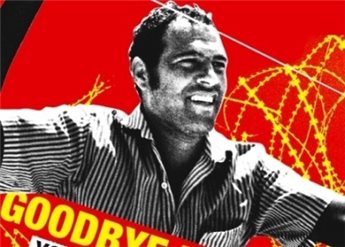 BETHLEHEM – The mother of Bassem Abu Rahmah, who was killed in 2009 during a non-violent protest in Bilin, filed a petition to Israel’s High Court on Sunday to demand justice for the death of her son, B’Tselem said.
The petition was filed jointly with Bilin village council, B’Tselem and Yesh Din, and demands that Israeli Military Advocate General, Major-General Danny Efroni, be ordered to reach a decision in the case and prosecute the soldier and all those bearing command responsibility for the killing of her son.
Bassam Abu Rahman, 30, was killed in 2009 after being shot in the chest with a tear-gas canister during a demonstration against Israel’s separation wall.
Three video segments filmed during the protest prove that Abu Rahmah did not act violently and did not endanger the soldiers in any way, B’Tselem said.
The petition includes opinions from experts who reviewed the videos, stating that the grenade was aimed directly at Abu Rahmah.
Other soldiers in the same video can be seen firing tear-gas canisters directly at protestors in the presence of senior officers and in complete contravention of the open-fire regulations, B’Tselem said.
Despite these findings, the former Military Advocate General initially refused to open an investigation, only changing his mind after a threat to petition Israel’s High Court with expert opinion documenting the “unequivocal conclusion that the firing was aimed directly at Abu Rahmah.”
“The failure to reach a decision is dangerous and conveys the message to IDF and Border Guard personnel engaged in dispersing demonstrations that even if they shoot and kill demonstrators, they will not bear criminal liability,” B’Tselem said.
“Such a message reflects contempt for the lives of Palestinian civilians.”
The death of Bassam Abu Rahmah was featured in the highly praised Palestinian documentary “5 Broken Cameras.”
The film is based on five years of amateur camera work by journalist Emad Burnat as he documented weekly protests against land seizures by Israeli forces and settlers in the village of Bilin.
Related articles
- B’Tselem: The Israeli army uses lethal force against Palestinian protestors (occupiedpalestine.wordpress.com)
- Israel uses deadly weapons on unarmed Palestinian protesters – watchdog (rt.com)
Cops May Be Liable for Felling Occupy Berkeley
By CHRIS MARSHALL | Courthouse News Service | March 1, 2013
OAKLAND, California – Police must face excessive-force claims related to an Occupy protest they dispersed at the University of California, Berkeley, a federal judge ruled.
The protesters claimed to have been engaged in a peaceful protest of tuition hikes and the privatization of public education when officers battered them and used excessive force.
After police raided their Sproul Hall encampment on Nov. 9, 2011, hundreds of protestors allegedly returned later that evening and erected more tents.
They said Vice Chancellor of Student Affairs Harry LeGrande warned them to remove their tents before the police arrived 10 p.m., at which time they would allegedly give a 10-minute warning and remove the tents by force. Officers actually arrived in riot gear at 9:30 and raided the encampment, according to the complaint.
The protestors allegedly linked arms to face the police, who again used their batons, “but this time with even more brutality, pushing and jabbing people and using overhand strokes on protestors’ heads,” according to the complaint.
“The officers grabbed and indiscriminately pulled some of the protestors out of the lines and placed them under arrest,” they added. Even after removing the tents, some officers allegedly continued to beat the protestors, who were reinforced with hundreds more concerned students, according to the complaint. At least 2,000 people allegedly amassed before the officers “ceased their attack on the protestors.”
A group of 29 then sued school police, the Alameda County Sheriff’s Office and the Oakland Police Department for excessive force, false arrest, retaliatory prosecution and abuse of process. They said university officials had set in motion or ignored the police action that caused their injuries.
U.S. District Judge Yvonne Gonzalez Rogers last week found the allegations sufficient against some officers who were directly involved in alleged beating of protestors, but she dismissed claims against supervisors and others not directly involved.
The Alameda County Sheriff’s Department failed to show that the claims against its officers were “unwarranted deductions of fact or unreasonable inferences,” according to the ruling.
She cited multiple specific allegations from the lawsuit, including a claim that Officer Obichere, “who appeared to weigh over 250 pounds, focused on [Plaintiff Christopher] Anderson and hit him with tremendous force about five times with increasing intensity. In addition to jabs, this officer used overhand swings and struck Mr. Anderson’s legs as well.”
Alleging that a police officer used excessive force is a legal conclusion, but “alleging that a police officer used overhand swings to strike the plaintiff is not,” Rogers wrote.
The protestors pleaded “factual content that allows the court to draw the reasonable inference that the defendant[s are] liable for the misconduct alleged,” she added.
Rogers upheld excessive-force allegations against Officers Chavez, Garcia, King and Obichere. Neither the complaint nor the ruling provides the first names of these individual police officers.
University of California Police Department Officer Samantha Lachler is similarly not entitled to immunity for claims that she purposely hit protestor Hayden Harrison in the groin with the edge of her baton.
“Viewing the facts in the light most favorable to the plaintiff, police officers, who were attempting to enforce a no-camping ordinance at 3:30 pm, made a dispersal announcement that protestors could not hear, and then the police officers began hitting protestors that were trapped in a crowd,” the ruling states. “The facts and circumstances confronting the officers, when viewed in the light most favorable to the plaintiffs, do not support an inference that Mr. Harrison posed a threat to the safety of officers or others, was disobeying police orders or camping. Rather, the well-plead facts support an inference that Officer Lachler hit a passive individual in the groin because, by linking arms with other protestors, he may have inhibited her progress.”
While Lachler challenges the truth of the allegations, she “does not assert that hitting a passive protestor is constitutional or that the law regarding the use of force against passive individuals was sufficiently unclear at the time of the events at issue that Officer Lachler made a reasonable mistake as to what the law requires,” Rogers wrote.
The court did toss excessive force claims against UC Police Detective Rick Florendo and UC Police Officer N. Hernandez, noting a lack of specific allegations against them.
Concession from the plaintiffs also led Rogers to dismiss all claims against Alameda County Sheriff Chief Gregory Ahern.
Allegations against university officials, however, were too generalized and unspecific, the court found, tossing all of them with leave to amend.
Lead plaintiff Yvette Felarca and the other plaintiffs are represented by Ronald Cruz of Scheff, Washington & Driver. J. Randall Andrada represents the defendants.
~
Related articles
- NYPD lied under oath to prosecute Occupy activist (rt.com)
- OWS Protestor found innocent after video shows police lied (lunaticoutpost.com)
Israel detained over 300 Palestinians in February alone
MEMO | February 28, 2013
Israel detained 382 Palestinians from the West Bank and the Gaza Strip in February including deceased Arafat Jaradat, three parliamentarians and ten women, a report has said.
The report issued by AHRAR for Prisoners Studies showed that 376 detainees from the West Bank and six from the Gaza Strip.
According to the report, the largest number of Palestinians arrested was from the West Bank city of Nablus followed by Jerusalem, Hebron, Jenin and Bethlehem. Many were arrested from other cities.
While most of the Palestinians were arrested from their homes at night, the report said that 38 of them were arrested at Israeli checkpoints. There are more than 500 of these spread around the West Bank which divide the cities and “make people feel like they are living in hell.”
What made the February detentions distinctive is that large numbers of the detainees are Hamas leaders or activists. The three parliamentarians detained were members of Change and Reform Bloc which is affiliated to Hamas.
Foad al-Khafash, a former prisoner and the head of AHRAR, affirmed that Israeli detention campaigns occur on a daily basis. He also said that the current numbers of those detained are not final as some detentions might not have been reported.
Al-Khafash called for international organisations to shed light on the issue of the Palestinian prisoners and how they are being “violently” kidnapped from their houses.
“The Israeli soldiers ignore all humanitarian norms and laws when they break into the houses of the Palestinians and kidnap them,” Al-Khafash said.
He also said, “the Israeli forces carry out barbaric assaults against prisoners who are not charged and put them into administrative detention.”
It is worth mentioning that, according to AHRAR’s report, the number of detentions has increased this month. “This shows an increasingly aggressive policy in dealing with the Palestinians,” Al-Khafash said.
Related article
- Israel breaches truce 820 times in three months (altahrir.wordpress.com)
Featured Video

Death Spikes & Rising Cancer In Our Youth Explained
or go to
Aletho News Archives – Video-Images
From the Archives
Politicians lie
By Mazin Qumsiyeh | Popular Resistance | August 18, 2013
There is no way to say this truth nicely: Politicians lie. That includes Japanese, American, Egyptian, Israeli, and Palestinian politicians! Is there something more common sense than that? Yet, so many citizens around the world believe their own politicians or wistfully acknowledge lies but think it is part of the job needed to run things. They believe even when politicians contradict themselves blatantly. This phenomenon is rather remarkable. It is a dissonance and disconnect from reality that many seem oblivious to. It is very dangerous because it can lead to accepting rationales for going to war. These can be deadly wars that lead to millions of lives lost as happened in what was called World War 1 and WW2. Even when incredible and declassified evidence abound, politicians continue to lie and old mythologies refuse to die. Here are just a few of the countless lies told to us over the past few decades… continue
Blog Roll
 Aletho News
- RSF military group defects, joins Sudanese army: State media
- Ireland goalkeeper refuses to play ‘Israel’ as squad weighs boycott
- China pushes back against US on Cuba, Iran
- Ukrainian Soldiers, Potential Mercenaries: Have Gun, Will Travel!
- Burnham’s UN debut… A masterclass in British disinformation
- Iran flights continue despite US aviation sanctions
- Global Tipping Points Lead the World Into a State of Entropy
- The day-after at the White House: USA and Xi Jinping
- The Geopolitical Balance in the Red Sea: The UAE Being Displaced by New Players
- Iraqi resistance group vows to stage airport sit-ins over Iran aerial blockade
- If Americans Knew
- Deconstructing Netanyahu’s pants-on-fire UN rant – Daily Update
- Trump betrayed voters with his campaign lies and prioritized a foreign country once he took office
- Netanyahu calls Israel’s war in Gaza ‘opposite of genocide’ in UN speech to near-empty hall
- Settler Kidnappings: Torture, Sexual Abuse and Terrorisation of Palestinian Abductees as Israel Deepens Annexation of West Bank
- Gaza winter nears as 162,000 tents become unusable, raising fears of humanitarian crisis
- Netanyahu says, “It’s the opposite of genocide”; UN says Gaza economy is world’s ‘most severe crisis on record’ – Daily Update
- Israel’s US-Backed Assault on Gaza Has Created the ‘World’s Most Severe Economic Crisis on Record’: UN
- ‘Protecting U.S. Citizens’… From Israel
- ‘This is where I live now, the back of a truck’: a day in the life of a grandmother in Gaza
- In UN Speech, Iran’s President Displays Pictures of Children Killed by US, Brings Attention to Israel’s Nuclear Arsenal
- No Tricks Zone
- New Study: Earth And Venus Surface Warmth Largely Explained By Convection And Lapse Rate, Not CO2 Or Radiation
- 2025 Nature Paper Claiming Worsening Global Drought Gets RETRACTED …Heavily Flawed
- New Study: ‘Global Drought Shows No Detectable Recent Acceleration Under Climate Warming’
- Economic Masterminds: German Socialists Suggest Taxing Productivity Gains Stemming From Using AI
- The South China Sea Has Not Been Cooperating With The Climate Change Narrative
- Energy Crisis: Germany Enters Heating Season With Historically Low Gas Reserve Fill Levels
- New Study: The Antarctic Ice Sheet Gained Mass From 2020-2024 Due To Staggering Snow And Ice Accumulation
- Study: Ocean Heating Rates From Thousands Of Years Ago ‘Dwarf’ Modern Ocean Heating Rates
- Climate Extremists Target, Attack Large-Scale Power Grid Infrastructure In Germany!
- New Study: Antarctic Ice Melt Has Contributed Less Than 1 Centimeter To Sea Level Rise In The Last 30 Years

