Venezuelan Indigenous Yukpa Leader Sabino Romero Assassinated
By Ewan Robertson | Venezuelanalysis | March 4, 2013

Mérida – Indigenous Yupka chief and land rights activist Sabino Romero has been assassinated in an act which has generated public repudiation from social movements and the Venezuelan government alike. A high profile investigation into the killing has been launched.
Romero was a chief of the indigenous Yupka people of the Sierra de Perijá in western Venezuela. He was assassinated on Sunday night as he made his way to vote in an indigenous election, in circumstances which are still unknown.
Romero was a leader in the struggle for ancestral Yupka lands in the Sierra de Perijá, lands held by cattle ranchers, but many of which have been formally granted to the Yupka by the Chavez government.
Last November, Romero travelled to Caracas with some 60 Yupka to demand that the government act against violence on the part of cattle ranchers who were refusing to give up their lands, as well as to protest against government inaction and public media silence over the conflict.
Several Yupka have already been killed in the land rights dispute, including Romero’s own father, and activists say that local judicial impunity has prevented the murderers from being brought to justice.
The Venezuelan government today condemned Romero’s assassination as a “terrible act”, and announced that a high-profile investigation into the killing had already been launched. The government, in a statement, said it suspects that the Yukpa chief was murdered for his role in the land rights conflict with cattle ranchers.
“We can’t get ahead of ourselves on a hypothesis about this act, which is condemnable and must be repudiated from all points of view, but in general the just struggle for the fair distribution of land is on the table [as a possible motive],” said communication minister Ernesto Villegas.
Indigenous groups and social movements held a protest today outside the Public Attorney’s office in Caracas to demand that those responsible for Romero’s assassination be brought to justice.
Mother of Bilin protestor killed by Israel files court petition
Ma’an – March 4, 2013
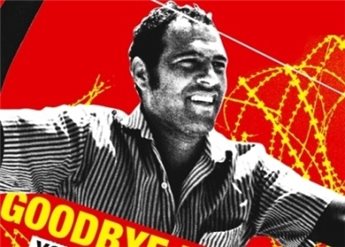 BETHLEHEM – The mother of Bassem Abu Rahmah, who was killed in 2009 during a non-violent protest in Bilin, filed a petition to Israel’s High Court on Sunday to demand justice for the death of her son, B’Tselem said.
The petition was filed jointly with Bilin village council, B’Tselem and Yesh Din, and demands that Israeli Military Advocate General, Major-General Danny Efroni, be ordered to reach a decision in the case and prosecute the soldier and all those bearing command responsibility for the killing of her son.
Bassam Abu Rahman, 30, was killed in 2009 after being shot in the chest with a tear-gas canister during a demonstration against Israel’s separation wall.
Three video segments filmed during the protest prove that Abu Rahmah did not act violently and did not endanger the soldiers in any way, B’Tselem said.
The petition includes opinions from experts who reviewed the videos, stating that the grenade was aimed directly at Abu Rahmah.
Other soldiers in the same video can be seen firing tear-gas canisters directly at protestors in the presence of senior officers and in complete contravention of the open-fire regulations, B’Tselem said.
Despite these findings, the former Military Advocate General initially refused to open an investigation, only changing his mind after a threat to petition Israel’s High Court with expert opinion documenting the “unequivocal conclusion that the firing was aimed directly at Abu Rahmah.”
“The failure to reach a decision is dangerous and conveys the message to IDF and Border Guard personnel engaged in dispersing demonstrations that even if they shoot and kill demonstrators, they will not bear criminal liability,” B’Tselem said.
“Such a message reflects contempt for the lives of Palestinian civilians.”
The death of Bassam Abu Rahmah was featured in the highly praised Palestinian documentary “5 Broken Cameras.”
The film is based on five years of amateur camera work by journalist Emad Burnat as he documented weekly protests against land seizures by Israeli forces and settlers in the village of Bilin.
Related articles
- B’Tselem: The Israeli army uses lethal force against Palestinian protestors (occupiedpalestine.wordpress.com)
- Israel uses deadly weapons on unarmed Palestinian protesters – watchdog (rt.com)
Cops May Be Liable for Felling Occupy Berkeley
By CHRIS MARSHALL | Courthouse News Service | March 1, 2013
OAKLAND, California – Police must face excessive-force claims related to an Occupy protest they dispersed at the University of California, Berkeley, a federal judge ruled.
The protesters claimed to have been engaged in a peaceful protest of tuition hikes and the privatization of public education when officers battered them and used excessive force.
After police raided their Sproul Hall encampment on Nov. 9, 2011, hundreds of protestors allegedly returned later that evening and erected more tents.
They said Vice Chancellor of Student Affairs Harry LeGrande warned them to remove their tents before the police arrived 10 p.m., at which time they would allegedly give a 10-minute warning and remove the tents by force. Officers actually arrived in riot gear at 9:30 and raided the encampment, according to the complaint.
The protestors allegedly linked arms to face the police, who again used their batons, “but this time with even more brutality, pushing and jabbing people and using overhand strokes on protestors’ heads,” according to the complaint.
“The officers grabbed and indiscriminately pulled some of the protestors out of the lines and placed them under arrest,” they added. Even after removing the tents, some officers allegedly continued to beat the protestors, who were reinforced with hundreds more concerned students, according to the complaint. At least 2,000 people allegedly amassed before the officers “ceased their attack on the protestors.”
A group of 29 then sued school police, the Alameda County Sheriff’s Office and the Oakland Police Department for excessive force, false arrest, retaliatory prosecution and abuse of process. They said university officials had set in motion or ignored the police action that caused their injuries.
U.S. District Judge Yvonne Gonzalez Rogers last week found the allegations sufficient against some officers who were directly involved in alleged beating of protestors, but she dismissed claims against supervisors and others not directly involved.
The Alameda County Sheriff’s Department failed to show that the claims against its officers were “unwarranted deductions of fact or unreasonable inferences,” according to the ruling.
She cited multiple specific allegations from the lawsuit, including a claim that Officer Obichere, “who appeared to weigh over 250 pounds, focused on [Plaintiff Christopher] Anderson and hit him with tremendous force about five times with increasing intensity. In addition to jabs, this officer used overhand swings and struck Mr. Anderson’s legs as well.”
Alleging that a police officer used excessive force is a legal conclusion, but “alleging that a police officer used overhand swings to strike the plaintiff is not,” Rogers wrote.
The protestors pleaded “factual content that allows the court to draw the reasonable inference that the defendant[s are] liable for the misconduct alleged,” she added.
Rogers upheld excessive-force allegations against Officers Chavez, Garcia, King and Obichere. Neither the complaint nor the ruling provides the first names of these individual police officers.
University of California Police Department Officer Samantha Lachler is similarly not entitled to immunity for claims that she purposely hit protestor Hayden Harrison in the groin with the edge of her baton.
“Viewing the facts in the light most favorable to the plaintiff, police officers, who were attempting to enforce a no-camping ordinance at 3:30 pm, made a dispersal announcement that protestors could not hear, and then the police officers began hitting protestors that were trapped in a crowd,” the ruling states. “The facts and circumstances confronting the officers, when viewed in the light most favorable to the plaintiffs, do not support an inference that Mr. Harrison posed a threat to the safety of officers or others, was disobeying police orders or camping. Rather, the well-plead facts support an inference that Officer Lachler hit a passive individual in the groin because, by linking arms with other protestors, he may have inhibited her progress.”
While Lachler challenges the truth of the allegations, she “does not assert that hitting a passive protestor is constitutional or that the law regarding the use of force against passive individuals was sufficiently unclear at the time of the events at issue that Officer Lachler made a reasonable mistake as to what the law requires,” Rogers wrote.
The court did toss excessive force claims against UC Police Detective Rick Florendo and UC Police Officer N. Hernandez, noting a lack of specific allegations against them.
Concession from the plaintiffs also led Rogers to dismiss all claims against Alameda County Sheriff Chief Gregory Ahern.
Allegations against university officials, however, were too generalized and unspecific, the court found, tossing all of them with leave to amend.
Lead plaintiff Yvette Felarca and the other plaintiffs are represented by Ronald Cruz of Scheff, Washington & Driver. J. Randall Andrada represents the defendants.
~
Related articles
- NYPD lied under oath to prosecute Occupy activist (rt.com)
- OWS Protestor found innocent after video shows police lied (lunaticoutpost.com)
Israel detained over 300 Palestinians in February alone
MEMO | February 28, 2013
Israel detained 382 Palestinians from the West Bank and the Gaza Strip in February including deceased Arafat Jaradat, three parliamentarians and ten women, a report has said.
The report issued by AHRAR for Prisoners Studies showed that 376 detainees from the West Bank and six from the Gaza Strip.
According to the report, the largest number of Palestinians arrested was from the West Bank city of Nablus followed by Jerusalem, Hebron, Jenin and Bethlehem. Many were arrested from other cities.
While most of the Palestinians were arrested from their homes at night, the report said that 38 of them were arrested at Israeli checkpoints. There are more than 500 of these spread around the West Bank which divide the cities and “make people feel like they are living in hell.”
What made the February detentions distinctive is that large numbers of the detainees are Hamas leaders or activists. The three parliamentarians detained were members of Change and Reform Bloc which is affiliated to Hamas.
Foad al-Khafash, a former prisoner and the head of AHRAR, affirmed that Israeli detention campaigns occur on a daily basis. He also said that the current numbers of those detained are not final as some detentions might not have been reported.
Al-Khafash called for international organisations to shed light on the issue of the Palestinian prisoners and how they are being “violently” kidnapped from their houses.
“The Israeli soldiers ignore all humanitarian norms and laws when they break into the houses of the Palestinians and kidnap them,” Al-Khafash said.
He also said, “the Israeli forces carry out barbaric assaults against prisoners who are not charged and put them into administrative detention.”
It is worth mentioning that, according to AHRAR’s report, the number of detentions has increased this month. “This shows an increasingly aggressive policy in dealing with the Palestinians,” Al-Khafash said.
Related article
- Israel breaches truce 820 times in three months (altahrir.wordpress.com)
Israeli court extends remand of Issawi’s brother

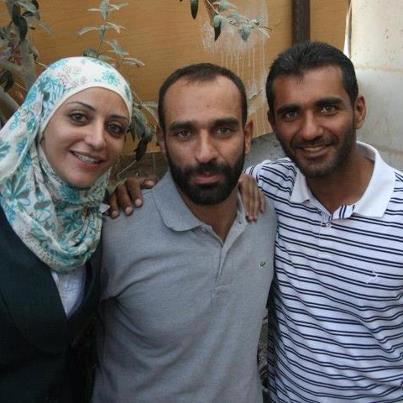
Shireen, Samer and Shadi Issawi
Palestine Information Center – 25/02/2013
RAMALLAH — The Israeli Magistrate Court in occupied Jerusalem extended on Sunday the remand of Shadi Issawi, the brother of hunger striker Samer Issawi, and did not allow him to see his lawyer.
Shireen Issawi, the sister of Shadi and a lawyer, said that the arrest of Shadi and extending his remand fell in line with pressures on Samer to end his seven months hunger strike.
She charged the Israeli occupation authorities (IOA) with targeting all members of Samer’s family, recalling that the IOA razed the home of her third brother Rafat at the start of the year and cut water supplies to her family home in addition to detaining her and her fourth brother Firas for a period of time.
Related articles
- Shireen Al-Issawi: PA did not take prisoners’ issue to the UN (alethonews.wordpress.com)
- Samer Issawi sentenced to 8 months in prison (alethonews.wordpress.com)
Minister: Autopsy shows torture killed Jaradat
Ma’an – 25/02/2013
BETHLEHEM – An autopsy has revealed that Arafat Jaradat died of extreme torture in Israeli custody and did not have a cardiac arrest, the PA Minister of Detainee Affairs said Sunday.
At a news conference in Ramallah, Issa Qaraqe said an autopsy conducted in Israel in the presence of Palestinian officials revealed that 30-year-old Jaradat had six broken bones in his neck, spine, arms and legs.
“The information we have received so far is shocking and painful. The evidence corroborates our suspicion that Mr. Jaradat died as a result of torture, especially since the autopsy clearly proved that the victim’s heart was healthy, which disproves the initial alleged account presented by occupation authorities that he died of a heart attack,” Qaraqe said.
A spokeswoman for Israel’s Prison Authority said Saturday that Jaradat had apparently died of cardiac arrest in Megiddo prison. An emergency service team had tried to resuscitate him but failed, she said.
Qaraqe described the claim as a fabrication and called for a committee to investigate those responsible for Jaradat’s death.
The minister said Jaradat had sustained injuries and severe bruising in the upper right back area and severe bruises of sharp circular shape in the right chest area.
The autopsy revealed evidence of severe torture and on the muscle of the upper left shoulder, parallel to the spine in the lower neck area, and evidence of severe torture under the skin and inside the muscle of the right side of the chest. His second and third ribs in the right side of the chest were broken, Qaraqe said, and he also had injuries in the middle of the muscle in the right hand.
Jaradat’s heart was in good condition and there were no signs of bruising or stroke, the minister added.
Israel’s Health Ministry said the injuries found in the autopsy could have been caused by the medical emergency team’s efforts to resuscitate Jaradat.
“These initial findings are not enough to determine the cause of death,” the Israeli ministry said, adding that further test results were not yet in. An Israeli police spokesman said the investigation into Jaradat’s death was still ongoing.
Qaraqe’s deputy, Ziyad Au Ain, urged any doctors, including Israeli doctors, who doubted that Jaradat was tortured to death to view his body in Al-Ahli Hospital in Hebron.
“Jaradat died due to torture and not a stroke or heart attack,” he said, adding that those responsible must be sued either through Interpol or the International Criminal Court.
Palestinian Prisoners Society president Qaddura Fares added that the autopsy revealed seven injuries to the inside of Jaradat’s lower lip, bruises on his face and blood on his nose.
After the autopsy, Jaradat’s body was transferred to the Palestinian Red Crescent at the Tarqumiya crossing west of Hebron, and taken to the Al-Ahli Hospital. He will be buried on Monday in his hometown Sair.
Jaradat’s lawyer Kameel Sabbagh said he was tortured by Israeli interrogators.
Sabbagh, who works for the prisoners ministry, was present at Jaradat’s last hearing on Thursday, which an Israeli judge postponed for 12 days.
“When I entered the courtroom I saw Jaradat sitting on a wooden chair in front of the judge. His back was hunched and he looked sick and fragile,” Sabbagh said in a statement Sunday.
“When I sat next to him he told me that he had serious pains in his back and other parts of his body because he was being beaten up and hanged for many long hours while he was being investigated
“When Jaradat heard that the judge postponed his hearing he seemed extremely afraid and asked me if he was going to spend the time left in the cell. I replied to him that he was still in the investigation period and this is possible and that as a lawyer I couldn’t do anything about his whereabouts at this time.”
Sabbagh said Jaradat’s psychological state was very serious and that he informed the judge his client had been tortured. The judge ordered that Jaradat should be examined by the prison doctor but “this didn’t happen,” the lawyer added.
On Sunday, thousands of Palestinians protested the death across the West Bank and Gaza, and at least two protesters were injured by live fire in clashes with Israeli forces, including the 13-year-old son of a Preventive Security officer.
Dozens more were injured by rubber-coated bullets.
An Israeli military spokeswoman said soldiers used riot dispersal means against Palestinians hurling rocks at security forces.
Two residents from Burin arrested overnight: confrontations follow
ISM Media Group | Aletho News | February 25, 2013
Mahmoud Nasser Asaus (17) and Magdi Loai Najjar (24) were arrested last night by Israeli forces in the village of Burin and are now being held in Kishon Interrogation Centre in Haifa. Residents of Burin suspect this is the start of a wave of arrests following the Al-Manatir protest that took place In Burin at the beginning of February.
Several jeeps entered Burin at around 2.30am to raid Mahmoud and Magdi’s houses, taking them, handcuffed and blindfolded, to Huwwara military base. At 7am this morning they were transferred to Kishon Interrogation Centre where they are still being held.
These arrests come after the neighbourhood of Al-Manatir was established on a village’s hilltop threatened with confiscation by Israeli settlers. The protest camp was aimed at denouncing Israel’s grab of Burin’s land and to recover the hilltop which has been inaccessible for residents of Burin since 2007.
However, the neighbourhood of Al-Manatir, made up of metal huts and tents, was violently evicted by Israeli soldiers and border police on the same day it was established. Israeli forces protected and accompanied settlers from the nearby settlements of Bracha and Yitzhar; while they were stealing metal huts and throwing stones at Palestinian activists. Simultaneously, around twenty settlers attacked several Palestinian homes on the outskirts of Burin and chopped down one hundred olive trees. When Palestinians ran to the area to defend their homes, stone throwing between settlers and Palestinians ensued. Zakaria Najjar (17), was shot in the right leg with live ammunition by a settler.
During the eviction, eight people were arrested and three of them remained in Israeli prison for twelve days, finally being released without charges. Further reprisals took place in Burin the days following Al-Manatir. Ghassan (23) and Mohammed (19) Najjar were arrested for several hours and interrogated about the protest camp. In addition, the village was sealed off by military checkpoints. The hilltop continues to be inaccessible for residents of Burin.
Following last night’s arrests there have been further incursions into the centre of Burin today. The Israeli army again tried to raid the village resulting in confrontations that began at around midday. Tear gas and rubber coated steel bullets were fired directly into the gathering crowd; as yet no serious injuries have been reported. A further arrest was made by the Israeli authorities, Bahar Adnan Imran who is just 14 years old.
Related articles
- Israeli troops force out 200 from camp (morningstaronline.co.uk)
- Israeli Settlers Attack Palestinian Shepherds In Nablus, Hebron (imemc.org)
Lawyer: “Prior To His Death, Detainee Complained Of Pain Due To Ongoing Interrogation”
By Saed Bannoura | IMEMC & Agencies | February 24, 2013
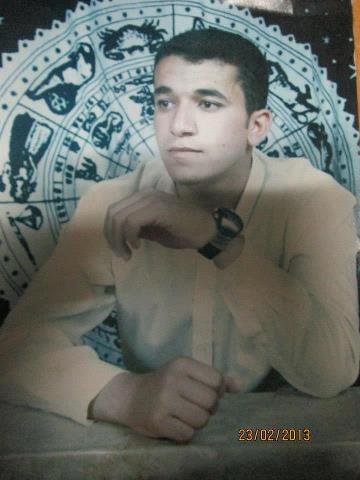 Attorney Kamil Sabbagh, who represented detainee Arafat Jaradat, who died Saturday at an Israeli interrogation facility, stated that Jaradat complained to him of sharp pain due to ongoing and extensive interrogation.
The lawyer said that he represented Jaradat during a court session that was held Thursday February 21.
The court session was the first time the detainee was able to see a lawyer since the army kidnapped him more than 12 days ago. The hearing was held at the Al-Jalama detention and interrogation center.
Sabbagh said that Jaradat complained of sharp pain in the back, and several other parts of his body. Jaradat told his lawyer that he was interrogated for several hours, every day, and repeatedly complained of sharp pain but was never seen by a physician.
The lawyer said that, during the court hearing, he told the military judge about the complaints made by Jaradat, and that the judge instructed the prison administration to grant him the needed medical attention, but the request was apparently ignored.
During the court hearing, the judge ordered Jaradat under interrogation for an additional 12 days.
Following the death of Jaradat on Saturday, several Israeli media agencies claimed that the detainee suffered a heart attack that led to his death.
Palestinian Minister of Detainees, Issa Qaraqe’, held Israel responsible for the death of Jaradat, and said that the detainee died only six days after the army kidnapped him on February 18.
Qaraqe’ demanded forming an international committee to investigate the death of Jaradat, and held Israel responsible for the lives of Palestinian detainees on hunger strike demanding an end to their illegal detention.
Hundreds of Palestinians held a protest in front of the home of Jaradat and chanted slogans against the Israeli occupation, Israel’s ongoing violations and attacks, and chanted for more solidarity with all Palestinian political prisoners held by Israel.
Protests have also been reported in different parts of the occupied territories.
Killings Continue in Bajo Aguán as New Report Documents Abuses by U.S.-Trained Honduran Special Forces Unit
By Alex Main | CEPR Americas Blog | February 22, 2013
A few days ago two more land rights activists were murdered in the Bajo Aguán, a region of Honduras where dozens of campesinos have been killed over the last three years. On February 16, Jacobo Cartagena, member of the Unified Campesino Movement of the Aguán (or MUCA, by its Spanish initials), was shot and killed as he waited for a bus. Hours later, José Trejo Cabrera, was shot down while driving a motorcycle near the town of Tocoa. Trejo was the brother of Antonio Trejo Cabrera, a lawyer who had defended small farmers’ land claims who himself was shot to death last September as he was leaving a wedding. Amnesty International has called on the Honduran government to “urgently investigate” José Trejo’s killing and noted that “the day before he was shot dead [he] had been in the Honduran capital Tegucigalpa, to meet with officials in an effort to ensure justice for his brother’s murder and visiting media outlets to keep the spotlight on the case.”
In an interview with the Associated Press, José Trejo had said “if they killed my brother, what will they not do to me?” He and others blamed the powerful businessman Miguel Facussé for his brother’s murder. Facussé and a handful of other wealthy landowners in the region have hundreds of armed security guards who are believed to be responsible for many of the numerous killings and other attacks targeting campesino activists. Honduran authorities have failed to bring those responsible for the killings to justice or to take effective measures to protect the activists. As the AP notes, “no one is serving time in prison for any of the 89 assassinations of campesinos committed in the Aguán Valley since December of 2009 when land occupations began…”
Since August of 2011, hundreds of Honduran soldiers have been stationed in the Bajo Aguán as part of the so-called Xatruch Intervention Force, ostensibly to mitigate the ongoing violence taking place there. But targeted killings of campesinos have continued unabated and representatives of land rights movements have accused military personnel of being involved in attacks on their members. A new report authored by Annie Bird of Rights Action adds significant weight to these allegations. It documents 34 cases of abuses directly involving members of Honduras’ 15th Battalion, a special forces unit of the Honduran army that has been present in the region for decades and has played a central role in the Xatruch Force.
The report describes in detail specific instances of torture, threats, forced disappearances and killings in which members of the 15th Battalion have been reportedly involved, often in tandem with police and private security forces operating in the Aguán. Only a small handful of these abuses have been partially investigated and none of those responsible have been prosecuted.
The report also examines how military officials have sought to criminalize the region’s campesino movements, associating them with terrorism and drug-trafficking, while steadfastly defending the property claims of powerful landowners.
Those who have reported on the abuses of security forces in the Aguán have also been criminalized by military officials. On February 18th the Commander of the Xatruch Intervention Force publicly accused various journalists, human rights defenders by name of “denigrating the actions of the armed forces” and of “besmirching the image of the Honduran nation.” Following the incident, Reporters Without Borders issued a release stating that the accusations were “a clear attempt to intimidate and censor” and that “this kind of public stigmatization directly exposes those concerned to significant risks, given the human rights situation in Aguán in particular and Honduras in general, where those who dare to provide information about land disputes and environmental problems are systematically criminalized.”
As Rights Action notes, the 15th Battalion reportedly receives training and assistance from the U.S. government. The Honduran media has reported that U.S. Army Rangers have trained personnel from the Battalion and that U.S. Special Operations South has funded the upgrading of the Battalion’s Rio Claro base.
A provision attached to the annual U.S. Foreign Operations Appropriations Act – known as the Leahy Amendment, after the U.S. Senator who first introduced it – prohibits U.S. military assistance to foreign units that commit gross human rights violations with impunity. The provision states: “No assistance shall be furnished under this Act or the Arms Export Control Act to any unit of the security forces of a foreign country if the Secretary of State has credible evidence that such unit has committed gross violations of human rights.” The only exception being if the “Secretary determines (…) that the government of such countries is taking effective measures to bring the responsible members of the security forces unit to justice.” A similar provision can be found in Defense Appropriations Acts, though it only deals with the funding of training activities for foreign troops.
Rights Action’s report appears to provide “credible evidence” that the 15th Battalion and other Honduran authorities are involved in gross abuses and there is no indication that Honduran authorities have pursued any form of judicial action to address these abuses. If the U.S. government has plans to fund further military assistance to the unit there may well be cause for the Secretary of State to cut off assistance until abuses are adequately investigated and any responsible military personnel are brought to justice.
Other recent incidents involving Honduran security forces have also appeared to be within the realm of Leahy Amendment action. Last November the AP reported on how Honduran soldiers trained and vetted by the U.S. murdered an unarmed teenager who ran through a check point last May. The same month, four Honduran villagers in the Moskitia region were killed in the course of a counternarcotics operation carried out jointly by the DEA and a special Honduran police unit trained and vetted by the U.S. As a joint report and previous posts have explained, the Honduran investigation of the incident was flawed and inconclusive, a fact which the State Department still appears unwilling to acknowledge.
Related articles
- Honduras: Murdered Lawyer’s Brother Killed in Aguán (alethonews.wordpress.com)
- Honduras: Two More Campesinos Murdered in Aguán (alethonews.wordpress.com)
- Honduras: Miguel Facusse is Tragically Misunderstood (alethonews.wordpress.com)
- NPR Examines One Side of Honduran “Model Cities” Debate (alethonews.wordpress.com)
Palestinians clash with Israeli troops across the West Bank
Ma’an – 23/02/2013
RAMALLAH – Clashes erupted across the West Bank after the Friday prayers between Israeli troops and Palestinian protesters who rallied to show solidarity with hunger-striking Palestinian prisoners.
Dozens were hurt as Israeli soldiers fired tear gas heavily to disperse the protesters.
Similarly, worshipers in Al-Aqsa Mosque in Jerusalem demonstrated in the compound after the Friday prayer before Israeli troops broke into the squares and clashed with the protesters.
According to Israeli radio station Reshet Bet, Israeli soldiers fired stun grenades to disperse the worshipers. The report highlighted that demonstrations started near the Moroccan Gate through which the soldiers stormed the compound and started to chase protesters.
In Ramallah in the central West Bank, 12 young men were hurt by tear gas and rubber-coated bullets during clashes with Israeli troops after the Friday prayers. Locals told Ma’an that the soldiers detained one Palestinian. The sources highlighted that the Friday prayer was performed near the main gate of Ofer detention center west of Ramallah.
They said about 100 Palestinians preformed Friday prayers near Ofer before Israeli soldiers showered them with tear gas as soon as they finished prayer.
As a result young men started to hurl stones at the soldiers and police officers. A Ma’an reporter said the soldiers directed their tear gas to journalists who gathered in the area to report about the event. He added that the soldiers fired live ammunition at a car for journalists, but nobody was hurt.
Further clashes took place in al-Arrub and al-Fawwar refugee camps in Hebron district.
Witnesses said young Palestinian men in al-Arrub camp north of Hebron pelted Israeli soldiers with stones. Clashes erupted first at the main entrance to the camp on the main road between Hebron and Bethlehem. Then the clashes extended to camp’s alleys resulting in more victims of tear gas as some canisters fell inside houses.
One owner of these houses was identified as Nayif Nimir al-Badawi. Four people were hurt by tear gas. Three others were hurt in house of Khamis Awad al-Badawi.
Israeli forces shut down the main entrance to al-Fawwar camp north of Hebron after young men hurled stones at Israeli soldiers. The soldiers responded with tear gas before they closed the main entrance to traffic.
In Tulkarem in the northern West Bank young Palestinians clashed with Israeli troops in the western part of the city. Soldiers fired tear gas as the young protesters pelted them with stones. The clashes erupted after hundreds of young men rallied after the Friday prayer chanting slogans against Israel’s treatment to Palestinian prisoners.
The northern West Bank city of Jenin also witnessed confrontations between young Palestinians and Israeli soldiers after the Friday prayer. Nine Palestinians were detained during the clashes and dozens were hurt by tear gas and rubber-coated bullets.
Jenin’s clashes started after young men marched from mosques toward al-Jalama checkpoint expressing solidarity with hunger striking Palestinian prisoners. A Ma’an reporter said Israeli forces fired hundreds of tear gas canisters at the protesters in addition to rubber-coated bullets and foul smelling liquids.
Local and security sources told Ma’an that Israeli soldiers detained nine young men. The sources identified one detainee as 14-year-old Amir Majid Irqawi. They said the soldiers assaulted him beating him brutally before he was detained.
Related article
Bedouin communities near Qalqiliya isolated by Israel and facing school demolition
International Solidarity Movement | February 22, 2013
Nablus, Occupied Palestine – The small Bedouin communities of ‘Arab Ramadin al-Janubi and ‘Arab Ab Farda lie south of Qalqilya between the apartheid wall and the green line,close to the illegal settlement Alfe Menashe. They are separated from the rest of West Bank from all sides by the Israeli apartheid wall. The communities, founded by people deported from areas in Negev and Netanya during and after the Nakba are today home to around 500 people. They suffer from multiple restrictions imposed by the Israeli authorities,including no permissions for new buildings or expansion of existing buildings, and limits to the amount of food and gas allowed for sale in the communities.
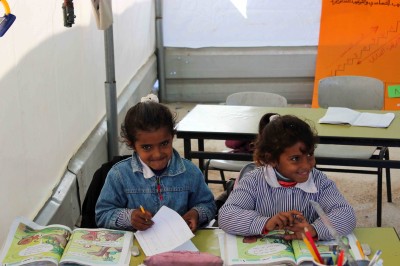
Bedouin girls at school
Access to the communities is limited by Israel with a permission system. The system of access permissions has effectively resulted in the social isolation of the communities, as people from the city of Qalqilya and neighboring villages face difficulties in obtaining permits for visiting the area.
The community of Abu Farda has no access to running water or electricity, and thus water has to be bought in tanks from the village of ‘Azzun. There is a well on the grounds of the village, but the illegal settlement Alfe Menashe has confiscated the well and closed access to it for the inhabitants of Abu Farda. People from the family Fayez living in Abu Farda told us:
“The lack of electricity is a big problem, as we are not able to refrigerate food bought from merchants or the yogurt and milk we produce ourselves for sale, and our children are not able to do their homework after dark due to lack of lighting.”
Furthermore, the Israeli authorities do not allow veterinaries access to the villages, while the village is largely dependent on the raising of livestock.
In October 2012 the community of Ramadin al-Janubi founded a school for 6 to 8 year old children. The new school gives it’s 25 students the opportunity to go to school without having to pass daily through the Israeli checkpoints between the community and a school in the nearby village of Habla. Children older than 8 years still have to go to school outside the community, and in order to reach their schools and go back home they need to cross the Israeli checkpoints twice every single day.
The school in Ramadin, consisting of 4 tents, received a demolition order from the Israeli authorities after two weeks of operation. The faculty of the school live in Qalqilya and have to spend from 30 minutes to over an hour every day passing through the checkpoint and having their papers and belongings examined by the IOF forces at the checkpoint in order to access the school. For now, the village has taken the demolition order to court, and is waiting to for the court hearings to take place.
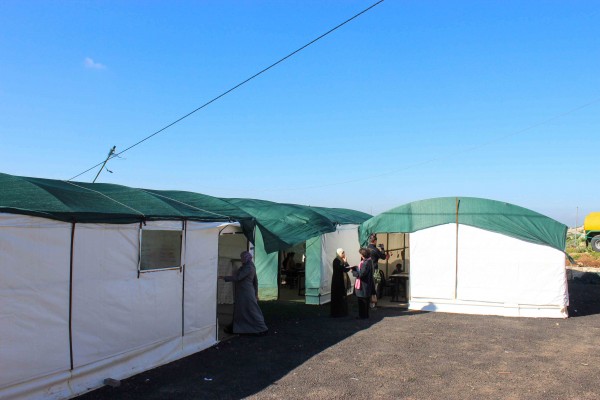
Bedouin school tents with demolition order
Related articles
- Palestinians’ Life in the Shadow of the Barrier Wall (alethonews.wordpress.com)
- West Bank: Aid agencies tread gingerly in Area C (alethonews.wordpress.com)
- Qalqiliya flooding exacerbated by separation wall (altahrir.wordpress.com)
- Israel to demolish Palestinian neighborhood (altahrir.wordpress.com)
Hollywood’s Imperial Propaganda
By JOE GIAMBRONE | CounterPunch | February 20, 2013
Hollywood likes to pretend that things aren’t political when they are. It’s that bi-partisan nationalist myth that if both corporate parties agree to cheer for the empire, then everyone cheers for the empire. It’s gotten so bad now that races like the Oscars and the Writer’s Guild screenwriting award are tight contests between one CIA propaganda film and another CIA propaganda film. The first one helps to demonize Iranians and set up the next World War scenario, while the second film fraudulently promotes the effectiveness of state-sanctioned torture crimes.
If there ever was a time for loud disgust and rejection of the Hollywood / Military-Industrial-Complex, this would seem to be it (contact@oscars.org). Naomi Wolf made a comparison of Zero Dark Thirty’s creators Bigelow and Boal to Nazi filmmaker Leni Riefenstahl (Triumph of the Will). That, to me, seems inappropriately offensive to Leni Riefenstahl. The good German filmmaker never promoted torture through deception. Nor was Triumph a call to war. The film was simply an expression of German patriotism and strength, rebirth from the ashes of World War I. The current insidious crop of propaganda, as in the CIA’s leaking of fictional scenes about locating Osama Bin Laden through torture extraction, are arguably more damaging and less defensible than Riefenstahl’s upfront and blatant homage to Hitler’s leadership.
The Zero Dark Thirty scandal should be common knowledge by now, but here is what the Senate Select Committee on Intelligence wrote to Sony Pictures about it:
“We believe the film is grossly inaccurate and misleading in its suggestion that torture resulted in information that led to the location of Usama bin Laden… Instead, the CIA learned of the existence of the courier, his true name and location through means unrelated to the CIA detention and interrogation program.”
The filmmakers had every opportunity to explore the issue more fully, instead of relying on the “firsthand accounts” of the torturers themselves, and/or their allies within the Central Intelligence Agency. Notably, torturers are felons and war criminals. Those who know about their crimes and help cover them up are guilty of conspiracy to torture. Thus, these self-serving fairy tales that illegal torture led to the desired results (bin Laden) are tangled up with the motivation to protect war criminals from prosecution. Not only does this claim of successful torture help insulate the guilty from legal prosecution, it also helps to promote further criminal acts of torture in the future.
Once this red flag issue was raised by the Senate, the filmmakers could have taken a second look at what they had put up on screens and reassessed the veracity of their material and the way it was being sold to the world. Instead they doubled down. Bigelow and Boal want it both ways, extraordinary access to CIA storytellers for a documentary-like “factual” telling of the bin Laden execution, but they also want license to claim that it’s just a movie and can therefore take all the liberties they please.
Jessica Chastain, who plays a state-employed torturer/murderer, who also allegedly located Osama bin Laden, said:
“I’m afraid to get called in front of a Senate committee… In my opinion, this is a very accurate film… I think it’s important to note the film is not a documentary.”
In a nutshell, that’s the Zero Dark Thirty defense. It’s a highly sourced “very accurate film,” but we can take all the liberties we like because it’s not a documentary, and so if we made up a case for torture based on the lies of professional liars in the CIA, then oops.
Mark Boal went so far as to mock the Senate Intelligence Committee, at the NY Film Critic’s Circle:
“In case anyone is asking, we stand by the film… Apparently, the French government will be investigating Les Mis.”
Any controversy over the picture seems to help its box office, as more uninformed people hear about it. The filmmakers themselves suffer no penalty as a result of misleading a large number of people on torture, to accept torture, to accept a secretive criminal state that tortures with impunity.
Kathryn Bigelow’s wrapped-in-the-flag defense of the film:
“Bin Laden… was defeated by ordinary Americans who fought bravely even as they sometimes crossed moral lines, who labored greatly and intently, who gave all of themselves in both victory and defeat, in life and in death, for the defense of this nation.” (emphasis in original)
Nice propaganda trick at the end equating those who “gave all of themselves” and “death” with the individuals who “sometimes crossed moral lines.” Everyone’s dirty; you see. All heroes are torturers; so it’s okay.
Bigelow’s half-assed response to getting called out by the Senate for putting false torture results into her film, is to say:
“Torture was, however, as we all know, employed in the early years of the hunt. That doesn’t mean it was the key to finding Bin Laden. It means it is a part of the story we couldn’t ignore. War, obviously, isn’t pretty, and we were not interested in portraying this military action as free of moral consequences.” (emphasis added)
Ignore? By her reasoning, because the Central Intelligence Agency tortured people, she was required to fit it into the plot somehow, whether it was relevant to the investigation or not. That’s her excuse. No matter that the scenes are fabrications, and the actual clues about bin Laden’s courier came from elsewhere (electronic surveillance, human intelligence, foreign services).
Bigelow told Charlie Rose, when asked the same question about the torture: “Well I think it’s important to tell a true story.” Unfortunately, when confronted with the Senate investigation, truth quickly takes a back seat.
The truth Bigelow now clings to is that, “Experts disagree sharply on the facts and particulars of the intelligence hunt, and doubtlessly that debate will continue.” To Kathryn Bigelow, the fact that the so-called “experts” she has sided with are torturer criminals with a vested interest in her portrayal of their crimes never occurs to her. She can dismiss the entire matter as a “debate.” Perhaps she no longer finds it “important to tell a true story?”
Kathryn Bigelow, America’s Leni Riefenstahl, claims that Zero Dark Thirty tells “a true story,” even when confronted by evidence that it is a lie. She is unapologetic and completely divorced from the real world damage her propaganda encourages. If this film takes home the Best Picture Oscar, it should serve as the cherry on top of a brutal, deceptive, decrepit and immoral empire, and signal this reality to the rest of the world. If this is allegedly the “best” of America, then we are truly finished.
As for Ben Affleck’s Argo, its sins aren’t so readily apparent. Both films show wonderful Central Intelligence “heroes” acting to further US interests and take care of imperial problems. The Argo scenario is a rescue, however, instead of a hit. The problem is that Iran, a country thrown into a bloodthirsty dictatorship after its nascent democracy was murdered by the very same CIA in 1953, is now the bad guy. There are clearly two sides, and the film takes sides with the people who destroyed democracy in Iran and propped up an illegitimate monarch in order to control its oil and its refineries. When this despotic monarch whose secret police disappeared, tortured and murdered the political opposition – with the help and training of the CIA – is overthrown, we are supposed to overlook all that, because America is always good. We rescue our people. We risk our lives, and we come up with elaborate creative plans to help our people. We are heroic and triumphant vs. the inferior wild-eyed Persians and Arabs of the world.
Now I do believe there’s a real story there, and the situation is ripe for telling, but an extreme sensitivity to the political context would be required.
“… [T]he Iran we see in the [Argo] news clips and the Iran we see dramatized are all on the same superficial level: incomprehensible, out-of-control hordes with nary an individual or rational thought expressed.
… But we never go behind-the-scenes at this revolution. (Instead, Affleck and screenwriter Chris Terrio’s tempering historical introduction is soon outweighed by the visceral power of mobs storming walls, chador-clad women toting rifles, and banshees screaming into news cameras.)
… The problem is that viewers … aren’t going to walk out of [Argo] muttering “gee, it’s more complicated than I thought.” Instead, they’ll leave with their fears and prejudices reaffirmed: that Middle Easterners create terror, that Americans must be the world’s policemen, and that Iranians cannot be trusted because they hate America.
… Argo almost completely ignores individual Iranians; its portrait of an entire culture is neither refined nor sophisticated; and it does reinforce a simplistic, Manichean perspective.”
Enough said?
So why are Argo and Zero Dark Thirty receiving all these awards? Are the awarding bodies so full of hyper-patriots who believe pro-American films can deceive and demonize with impunity, that they want to send an unequivocal message of support for these practices?
Is hyper-nationalist propaganda in vogue now?
With the ascendancy of Barack Obama, there is no longer a moral anti-war voice of any significant size in America. Obama, the smooth talker, has soothed away morality, ethics, law and rights. The empire is beyond reproach because Obama runs it. So the liberal center/left says nothing. Nothing but empty blather and ignorant praise of the Democrats. Murder is being codified in secret as we speak. Bush’s wars are being publicly scaled down, only to ramp up new covert wars of conquest across Africa. Nothing substantial has changed since George W., only the style.
There was a time when no one trusted the CIA. Far from heroes, they were the prime suspects in the assassination of president John F. Kennedy, and presidential candidate Robert Kennedy. CIA support of terrorists was well known, if not loudly opposed. This agency has sponsored Cuban exiles to commit acts of terrorism inside Cuba. Its Phoenix Program kidnapped and murdered Vietnamese villagers by the thousands, torturing and killing them for alleged communist sympathies. The CIA overthrew democracies from Iran to Gutemala to Chile, and was instrumental in waging a terror war against Nicaragua by employing drug-running mercenary terrorists called “Contras.” When the Church Committee investigated the agency in the mid-70s, lots of dirty laundry was aired. The agency was reined in for a time. Assassination was made technically illegal.
In the 1980s, the CIA fought a proxy war against the Soviet Union in Afghanistan by funneling money and arms to radical Islamic Jihadists – like Osama bin Laden – and creating an intelligence/military monster in Pakistan, known as the ISI. With untold billions of dollars of US tax money, plus Saudi oil money, the Pakistanis were propped up as a central hub for militant groups to operate throughout the region. Pakistan is where Osama bin Laden allegedly ended up living for the last decade of his life, half a mile from the Pakistani military academy.
The CIA today is instrumental in the blitzkrieg of terror across Syria. It funnels arms and money to radical Islamic Jihadists, exactly as it did in Afghanistan in the 1980s. In 2011 it participated in the Libyan Crime Against the Peace doing much the same type of activity on behalf of the Libyan Islamic Fighting Group, a group that helped take over that nation despite being included on the US State Department’s Terrorist List! The LIFG has sent its fighters over to Syria, after the fall of Qadaffi, to assist in the genocidal guerrilla war against the Syrian state, as well as civilians. The CIA assists in these activities.
But of course those victims aren’t Americans. So none of that counts.
“…Is it healthy for us to hold up images of Cold War CIA agents as selfless do-gooders?” –Jennifer Epps
Joe Giambrone is a filmmaker and author of Hell of a Deal: A Supernatural Satire. He edits The Political Film Blog, which welcomes submissions. polfilmblog at gmail.
Related articles
- Academy Awards for the Promotion of Torture?
- Oscar-nominated Palestinian director detained at LAX
- Abe Lincoln, Racist Fascist?
- Hollywood myths harming the whole world: Ken O’Keefe
- Pictures Speak Volumes in Oscar-nominated Israeli Films
- Oscar Prints the Legend: Argo’s Upcoming Academy Award and the Failure of Truth
Featured Video

Iran is (probably) collecting tolls, and why Asia stopped buying oil from the US
or go to
Aletho News Archives – Video-Images
From the Archives
The Great Recycling Scam
By Dr. Vernon Coleman – 21st Century Wire – September 2, 2022
Recycling was introduced, worldwide, as a tool to teach citizens to become compliant.
Forcing citizens to sort their rubbish into up to nine separate bags or boxes every week had absolutely nothing to do with ‘saving the planet’ and everything to do with teaching citizens (through a mixture of fines and shame) to behave ‘responsibly’ i.e. to do as they were told without looking too closely at the rationale of what they were being told to do.
The recycling never had anything to do with protecting the planet, of course. Most of the rubbish sorted, washed and collected in the UK was taken abroad, by lorry or ship or train, and burnt or dumped. It was, quite simply, impractical and not cost effective to recycle the material that had been collected. And, of course, collecting the sorted rubbish involved massive costs in terms of cash and pollution.
Today, the recycling business has reached an apogee of lunacy. Councils introduce ever more complex rules and fees. They refuse to take away much of the waste that is collected. And those wanting to take their rubbish to a ‘recycling’ centre will probably have to make an appointment and answer a host of questions.
It is no surprise that fly-tipping has become a major problem. The biggest causes of plastic in the sea are dumped fishing gear and plastic waste (much of it officially designated as recycled) which has been dumped by ships.
The good news, however, is that in Britain, recycling rates are falling. More and more people have become aware that the whole recycling movement was just another piece of manipulative trickery.
Blog Roll
 Aletho News
- Weaponized Journalism: 2021 Sayer Ji Interview with NPR
- Beyond Netanyahu: what Israel’s election means for Palestinians
- Lithuania plans universal conscription
- Lies, Damn Lies, and Ukraine News
- Financial Times rejects Nordic demands to correct Putin call story – media
- The Case for Less Unity in Europe
- Ukraine expands minority rights under EU pressure – but Russians remain excluded
- Albania takes anti-riot crackdown cue from France
- The interest of the House of Rothschild in Ukraine
- Pentagon fires top military planner
- If Americans Knew
- An error has occurred; the feed is probably down. Try again later.
- No Tricks Zone
- Germany’s Green Energy Transition Becoming Increasingly Expensive…Another 6 Trillion Euros!
- Sudden Stratospheric Warming, Powerful El Niño Combination May Lead To Extreme Europe Cold, Energy Crisis!
- Two New Studies Find Thwaites Glacier Melt Cannot Be Driven By Human Activity Or A Warming Ocean
- E-Cars Reduce CO2 Emissions By Only 41% Compared To Internal Combustion Engine Vehicles
- Predictions Made By Renowned Climate Professor Over Past Decades Have Been Proven To Be Poor
- New Study Suggests Large Regions Of The Pacific Ocean Have Been Cooling For The Last 80 Years
- Germany’s Green Energy Debacle: High Energy Costs Force Kahla Porzellan to Close After 182 Years!
- New Study: 50 Years Of The Most Aggressive ‘Net Zero’ Policies Can Only Affect The Global Climate By 0.03°C
- US September “Heat” Was No Record…Many Records Set Decades Ago
- Latest European Green Energy Debacle; Portugal’s Largest Flagship Solar Park Insolvent!

