Israeli navy detains five Palestinian fishermen of one family
Palestine Information Center – 29/04/2012
GAZA — Israeli occupation forces (IOF) detained five Palestinian fishermen to the west of Gaza harbor on Sunday morning, fishermen syndicate chairman said.
Nizar Ayash told the PIC that Israeli navy boats intercepted the fishing boat of the Shurafi family less than two nautical miles off the Gaza coast, which is a permissible area according to the Oslo accords.
He said that the fishermen are three brothers and two of their cousins, charging the Israeli occupation authority with fighting the Palestinian fishermen in their sustenance.
Ayash noted that the Israeli navy more often than not detains the fishermen for a while then returns them without their fishing kit with the sole goal of humiliating those fishermen and breaking their will.
The chairman said that his syndicate addressed messages to various world powers and institutions to check the Israeli violations against the Palestinian fishermen but to no avail.
He said that the Oslo accords allow fishing at a distance of 20 nautical miles but the Israeli navy does not implement that article.
Related articles
- Israeli gunboats fire at Palestinian fishing boats, destroy one – Video by @rosa_schiano (occupiedpalestine.wordpress.com)
- PCHR Weekly: Israel’s Army Carries Out 81 Invasions In W. Bank, 1 in Gaza (occupiedpalestine.wordpress.com)
Palestinian Injured After Being Attacked By Boars Released By Settlers
By Saed Bannoura | IMEMC | April 29, 2012
Palestinian medical sources reported that a Palestinian man was seriously injured after being attacked by a pack of boars that belong to extremist Israeli settlers near Kufur Thuluth Palestinian village, near the northern West Bank city of Qalqilia.

File – Palinfo
The resident was moved to a local hospital suffering serious injuries to various parts of his body; he was in his land, located south of the village.
This is not the first attack of its type as extremist settlers repeatedly released boars to ruin Palestinian farmlands in different parts of the West Bank, and in many cases the settlers also flooded Palestinian lands with sewage.
In September of last year, settlers of the Beitar Illit illegal settlement, south west of Bethlehem, flooded with sewage water Palestinian olive orchards that belong to residents of Nahhalin village, near Bethlehem.
Osama Shakarna, head of the Nahhalin Village Council, stated that the settlers flooded more than 40 Dunams (9.88 Acres) planted with more than 2500 Olive. The sewage water reached Ein Fares natural spring used by the shepherd as the source of water for their herds.
In May of last year, settlers of the Ariel settlement, the largest Israeli settlement in the occupied West Bank, flooded with sewage and waste-water Palestinians farmlands that belong to residents of Bruqin village near the northern West Bank city of Nablus.
The sewage was directed from Ariel settlement directly toward the land of Bruqin village, and has contaminated farmland and groundwater in an area of several kilometers around the village.
In April of last year, the Palestinian town of Beit Ummar, near the southern West Bank city of Hebron, was flooded with sewage from a nearby settlement.
A local farmer said that he was farming his field near Kfar Etzion settlement, and there was no contamination when he left his field to go home for the night.
But sometime during the night, a sewage pipe from Kfar Etzion settlement was opened, flooding the land of a number of Beit Ummar farmers and destroying their crops.
Another resident, whose land was also flooded, told the Maan News Agency, “This is not a coincidence; this is not the first time this has happened”.
The flooding of the village land with sewage comes one year after a similar sewage flood in the same area, when sewage from Gush Etzion settlement flooded all over Sabarneh’s land.
Related articles
- Israeli settlers injure three Palestinians, uproot dozens of olive trees in two separate incidents (alethonews.wordpress.com)
- Jewish settlers attack village, block Nablus road (alethonews.wordpress.com)
- Settlers Install New Outpost Near Hebron (alethonews.wordpress.com)
- Settlers Raise Israel’s Flag On Top Of Ibrahimi Mosque (alethonews.wordpress.com)
- Knesset to discuss bill authorising settlers’ seizure of Palestinian land (alethonews.wordpress.com)
- Kufr ad-Dik and Burqin march against boars, pollution, and violence by Israelis (alethonews.wordpress.com)
Ex-CIA Officer Defends Destruction of Torture Videos
By Noel Brinkerhoff and David Wallechinsky | AllGov | April 27, 2012
In his memoir coming out this month, the Central Intelligence Agency officer who ordered the destruction of the CIA’s torture tapes defends his actions, saying he was erasing “some ugly visuals.”
Jose A. Rodriguez Jr., the former director of the CIA’s secretive interrogation and detention program during the George W. Bush administration, had 92 tapes destroyed in 2005 after the media exposed the controversial program targeting ‘al-Qaeda’ and other ‘suspected terrorists.’
“I wasn’t going to sit around another three years waiting for people to get up the courage,” Rodriguez wrote in his book, Hard Measures.
He adds that he was “just getting rid of some ugly visuals.” Rodriguez was concerned with protecting the identities of the agents who could be seen in the videos and with the negative effect on the reputation of the CIA if the truth came out. He continues to seem clueless about the intent of the United States Constitution.
He even went so far as to write that “I cannot tell you how disgusted my former colleagues and I felt to hear ourselves labeled ‘torturers’ by the president of the United States.” The irony of torturers being upset at being called torturers seems to have escaped Rodriguez.
Made at a secret CIA prison in Thailand, the tapes showed the waterboarding of ‘terrorists’ Abu Zubaydah and Abd al-Nashiri.
President Barack Obama ordered an investigation of the program and the tapes. But the U.S. Department of Justice decided to not pursue charges against Rodriguez or any other CIA agent.
Related articles
- Crime boasting for profit (salon.com)
Glenn Greenwald:
… Destruction of these tapes was so controversial because it seemed so obviously illegal. At the time the destruction order was issued, numerous federal courts — as well as the 9/11 Commission — had ordered the U.S. Government to preserve and disclose all evidence relating to interrogations of Al Qaeda and 9/11 suspects. Purposely destroying evidence relevant to legal proceedings is called “obstruction of justice.” Destroying evidence which courts and binding tribunals (such as the 9/11 Commission) have ordered to be preserved is called “contempt of court.” There are many people who have been harshly punished, including some sitting right now in prison, for committing those crimes in far less flagrant ways than was done here. In fact, so glaring was the lawbreaking that the co-Chairmen of the 9/11 Commission — the mild-mannered, consummate establishmentarians Lee Hamilton and Thomas Kean — wrote a New York Times Op-Ed pointedly accusing the CIA of “obstruction” (“Those who knew about those videotapes — and did not tell us about them — obstructed our investigation”). …
Scottish TUC delegates join Palestine freedom struggle – unanimously!
Scottish PSC | April 25, 2012
 The delegates to the Annual Conference of the Scottish Trades Union Congress (STUC), the umbrella group for every trade union in Scotland, today voted unanimously and repeatedly against Israeli apartheid. The 450 delegates voted to:
- campaign to expose the role of the racist JNF (Jewish National Fund) in the Israeli apartheid system
- support the participants in the Welcome to Palestine initiative who tried to travel peacefully to Palestine via Tel Aviv Airport
- fully support the Palestinian-Brazilian call for the World Social Forum-Free Palestine in Brazil in November
- support the Palestinian hunger strikers and the work of Addameer, the Palestinian prisoner support organisation.
Congress delegates congratulated the students for their work organising Israeli Apartheid Week 2012 events, who initiated action in support of the Palestinian prisoners on hunger strike and called for support for the Scottish demonstration this Saturday 28th April in Edinburgh.
These decisions of the Scottish TUC in support of the Palestinian freedom struggle, by a union confederation representing half a million organised workers in every sector of the economy, will be widely seen as a continuation of the international solidarity the STUC also provided to the liberation struggle in South Africa. Glasgow, Scotland’s biggest city, named a city centre street after Mandela in 1986 while he was still on Robben Island. How long till there is a Palestine Square or Palestine Street in our major cities?
The full text of the resolutions – all passed unanimously – is given below.
The Jewish National Fund
That this Congress notes that the Jewish National Fund acquisition and control of land in Israel and the occupied territories actively discriminates against Palestinians.
Congress calls on the General Council to:
- endorse the international call for action against the Jewish National Fund;
- campaign to expose the role of the Jewish National Fund in the oppression of Palestinians; and
- campaign to have the charitable status of the Jewish National Fund revoked.
(Mover: Midlothian TUC)
Emergency Motion – Palestine
Congress:
- notes that despite prisoner releases, over 4,600 Palestinian political prisoners remain in detention, including 203 children.
- applauds the steadfastness of 1,200 Palestinian political prisoners who began an open-ended hunger strike on 17 April to protest against ‘administrative detention’, where detainees are held without charge or trial for up to six months and which can be renewed repeatedly.
- congratulates the student Palestine solidarity network for organising the biggest ever ‘Israeli Apartheid Week’ of educational and solidarity events and for their mobilisation across Scotland in support of Palestinian political prisoners.
- believes that the engagement of students, trade unionists and others with Palestinian civil society can only strengthen the current human-rights based approach to Palestinian self-determination and is essential to building a future of peace and democracy in the Middle East.
- therefore welcomes the January call by the Palestinian National Committee and the Brazilian National preparatory committee for the 2012 ‘World Social Forum: Free Palestine’ to be held at Porto Alegre, Brazil in November. Conference believes that this “Global Meeting of Solidarity with Palestine” will underline the strength and diversity of the support for the Palestinian call for justice.
- therefore instructs the General Council to:
- Support the work of Addameer, Prisoner Support and Human Rights Association, by distributing information and updates to affiliates and by supporting appeals for action where appropriate;
- Endorse the Scottish demonstration, called by students in support Palestinian political prisoners and the hunger strikers, taking place in Edinburgh on Saturday 28th April;
- Endorse the WSF Free Palestine as part of the internationalist activities promoted by the STUC and fully support the appeal from the Secretariat of the Palestinian National Committee for the World Social Forum “Free Palestine” to mobilise the Scottish trade union movement towards WSF Free Palestine.
(Mover: Dundee Trades Union Council)
Emergency Motion – ‘Welcome to Palestine 2012′
This Congress notes that there is no way into the Occupied Palestinian territories except through Israeli controlled airports or checkpoints.
Congress applauds the ‘Welcome to Palestine 2012′ initiative which highlighted Israel’s oppressive and abhorrent policy of restricting free and unopposed movement to, from and within the Occupied Palestinian Territories.
Congress condemns:
- the actions of the Israeli government in blacklisting activists from around the world and denying them access to the Palestinian territories.
- the detention of those activists who reached Tel Aviv wishing to visit Bethlehem at the invitation of the Mayor in order to attend the launch of an educational project to build new schools.
- Congress asks the General Council to call upon the Israeli government:
- to allow unrestricted passage to and from the Occupied Palestinian Territories for those wishing to visit.
- to end the continued, illegal siege by air, land and sea of the Palestinian Territories.
(Mover: Midlothian TUC)
Palestine
That this Congress applauds the successful delivery of humanitarian aid by the Scottish FBU to the Nablus Municipality Fire Department. Congress calls for continued trade union support for Palestinian projects, and for the exploration of a Scottish Trade Union Palestinian Support Group, and report back to Congress in 2013 any progress on this matter.
(Mover: Fire Brigades Union)
President’s Address to Congress (Mike Kirby, UNISON):
“There is a growing apartheid elsewhere, in Palestine. There have been many changes since my first official visit with Bill Speirs, Eddie Reilly and Malcolm Burns in 2001, during the Second Intifada. We were challenged by different militia, as we were escorted throughout the Occupied Lands by PGFTU, our hosts. On leaving, at the last stop at Jerusalem, we met members of the British Press Corps, who challenged us that we had only visited one place, met with one people. Eddie Reilly’s reply still pertains “We met many Israelis on our travels in Palestine. They were all armed and wearing uniforms.” Order may have been restored in many parts under the control of democratically elected representation of Fatah, democratically elected Hamas, and other political organisations. But that order is still enforced by a circle of unlawful Occupation, and the Apartheid Wall divides communities from their lands and work, and families are split apart.” Read full President’s address
Related articles
- Israel student society attacks peaceful Palestine protest with water bombs at London School of Economics (alethonews.wordpress.com)
- Apartheid is a crime, not an analogy (alethonews.wordpress.com)
- National Demonstration: March for the Hunger Strikers – March for Palestine (altahrir.wordpress.com)
- Ex-Palestinian prisoner: captivity in Israel, living in graves (alethonews.wordpress.com)
Why Palestinian prisoners are on hunger strike
MEMO | 26 April 2012
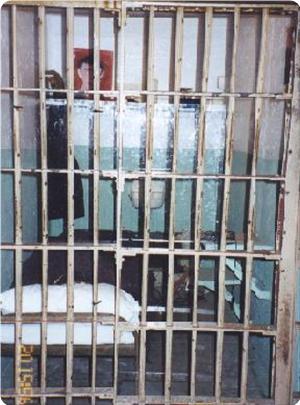 1.1 – The issue of Palestinian prisoners is one of the worst consequences of the Israeli occupation. Since 1967, over 700,000 Palestinians, 20% of the population of the occupied West Bank and Gaza Strip have been detained. This number represents approximately 40% of the total male Palestinian population in the occupied territories.
1.2 – Today, there are about 6,000 prisoners in 17 Israeli jails and detention centres. They include six women and more than 200 minors.
1.3 – 330 Palestinians are being held in administrative detention with no formal charges having been brought against them in a court of law. 28 elected members of the parliament, and three former ministers fall within this category.
1.4 – Israel is currently holding all these Palestinian prisoners far away from their homes, and outside of the occupied territory. This constitutes a clear violation of the Fourth Geneva Convention relative to the Protection of Civilian Persons in Time of War. Article 76 of the Convention states:
“Protected persons accused of offences shall be detained in the occupied country, and if convicted they shall serve their sentences therein.”
Article 49 also states:
“Individual or mass forcible transfers, as well as deportations of protected persons from occupied territory to the territory of the Occupying Power or to that of any other country, occupied or not, are prohibited, regardless of their motive.”
1.5 – Article 32 specifically prohibits “murder, torture, corporal punishments, mutilation and … any other measures of brutality whether applied by civilian or military agents”. Since 1967, 202 Palestinians prisoners have died while being tortured in Israeli jails.
1.6 – Israel routinely tries Palestinians before military courts, none of which meet the most basic standards of international law; particularly the laws relating to the treatment of prisoners of war and people under occupation.
1.7 – In light of the above, there are now calls for the prosecution of Israeli officials at an international tribunal.
Related articles
- 1,600 Palestinian prisoners begin open-ended hunger strike in Israeli jails (alethonews.wordpress.com)
- Ex-Palestinian prisoner: captivity in Israel, living in graves (alethonews.wordpress.com)
- Detention of Palestinian political prisoners (alethonews.wordpress.com)
- 4 hurt in Ramallah protest to support detainees (altahrir.wordpress.com)
- Scottish TUC delegates join Palestine freedom struggle – unanimously! | #PalHunger (occupiedpalestine.wordpress.com)
MSNBC: Evidence of Multiple Shooters, Night Raid in Sgt. Bales Case
By Ralph Lopez – War is a Crime – April 23, 2012
The first story was shaky from the start, that Sgt. Robert Bales “sneaked” off a combat outpost into hostile, landmined territory in the middle of the night, walked north a little over a half mile to a village, engaged in bloody murder, then walked back that half mile, past the base, and another mile south, killed more people, then turned himself in at the gate, all within an hour. Sharp-eyed bloggers did the math and recalled from other reports that Bales has part of a foot missing from a wound in Iraq, making the feat all the more remarkable.
Among the dead were a number of children, including a two-year-old.
Two weeks later the Pentagon’s story changed, and Bales had managed to sneak off the base twice over a longer timeline:
“Staff Sgt. Robert Bales, who is suspected in the shooting deaths this month of 17 Afghans, sneaked off his remote outpost twice during his alleged 90-minute rampage in two Afghan villages, two senior U.S. officials told CNN on Monday.
The officials said that, after the March 11 shootings in one village in Kandahar province, Bales sneaked back onto his base. They said Bales was seen at that point by fellow troops.
One official said investigators believe Bales told other soldiers he had just killed military-aged Afghan men. The officials said they did not know whether those troops told anyone else.
Then Bales sneaked out again and headed to the second village; he was apprehended by a search party as he attempted to re-enter the combat outpost the second time, the officials said.
Before this account, an Afghan guard was believed to have been the sole person who saw Bales that night. The guard alerted U.S. troops on base.”
The UK Guardian noted around the same time:
“Members of the Afghan delegation investigating the killings said one Afghan guard working from midnight to 2am saw a US soldier return to the base around 1.30am. Another Afghan soldier who replaced the first and worked until 4am said he saw a US soldier leaving the base at 2.30am. It’s unknown whether the Afghan guards saw the same US soldier. If the gunman acted alone, information from the Afghan guards would suggest that he returned to base in between the shooting sprees.”
Never mind that this leaves open the question of whether security at a “hot” outpost is routinely left, in this era of attacks coming from inside the wire, to purely indigenous guard, while US troops sleep. Ho Chi Minh would have dreamed of this situation. CNN reported that a US official told them that Bales had returned to the base “unnoticed.”
“One U.S. official with knowledge of the investigation said an Afghan guard allegedly spotted Bales leaving his outpost around 1 a.m. It is not clear why Bales’ superiors weren’t alerted, and the official said Bales was not noticed when he allegedly returned to the compound an hour later.”
The NY Times report quoting one Afghan General Hameed seemed aimed at putting a bit of spin on how Bales could have sashayed on and off the base so easily, saying:
“In recent interviews, American and Afghan officials said that the outpost in the rural Panjwai district was guarded by Afghan soldiers that night, as it probably was on most nights, because there were relatively few American soldiers based there, possibly only a platoon. Platoons typically have between 25 and 40 soldiers. –“Details Offered on How Suspect Could Have Left Afghan Base”“
So let me get this straight. A base in one of the most hostile parts of a war zone is under indigenous guard at night because, out of 25 – 40 tough US soldiers, they all need to be get their beauty sleep? This isn’t the 21st Century Army. This is “F Troop.” If the Pentagon really wants to fool people, they should learn when to shut up.
Jefferson Morley of Salon.com was the first reliable American outlet to report President Karzai’s, and the members of an Afghan Parliament investigative team’s, insistence that there was more than one shooter:
“A group of Afghan parliamentary investigators has concluded that Bales was part of a group of 15-20 soldiers. As Outlook Afghanistan reported Monday, “The team spent two days in the province, interviewing the bereaved families, tribal elders, survivors and collecting evidences at the site in Panjwai district.” One of the parliamentarians told Pajhwok Afghan News that investigators believed 15 to 20 American soldiers carried out the killings.”
The Gulf Times reported the Afghan investigative team’s findings immediately after the shootings, as did other outlets of the regional press:
“After our investigations, we came to know that the killings were not carried out by one single soldier. More than a dozen soldiers went, killed the villagers and then burnt the bodies,” lawmaker Naheem Lalai Hameedzai claimed…..
“All the villagers that we talked to said there were 15 to 20 men (who) had conducted a night raid operation in several areas in the village,” said Hameedzai.”
Disputing this is the governor of the province and the local police chief. The provincial governor who upholds the one gunman scenario says:
“It is time for Afghanistan to calm down and not let the insurgents take advantage of this case. They want foreign troops to leave such areas like this so they can hold those areas. We should be aware of their intentions and try to help the government, not the insurgents.”
The governor does not say where in “try to help the government” the truth figures in.
Interestingly, the initial Reuters report on the scene immediately after the killings made numerous references to multiple shooters, in addition to reporting that one staff sergeant was in custody, and that US officials were insisting on one shooter
“Neighbors and relatives of the dead said they had seen a group of U.S. soldiers arrive at their village in Kandahar’s Panjwayi district at about 2 a.m., enter homes and open fire.
An Afghan man who said his children were killed in the shooting spree accused soldiers of later burning the bodies.
…
“They (Americans) poured chemicals over their dead bodies and burned them,” Samad told Reuters at the scene.Neighbors said they had awoken to crackling gunfire from American soldiers, who they described as laughing and drunk.
“They were all drunk and shooting all over the place,” said neighbor Agha Lala, who visited one of the homes where killings took place.””
Now the first western reporter to gain access to child witnesses in the shooting, which she says the military tried to block, gives accounts of many men with “flashlights” on the ends of their rifles and on their helmets. As carried by MSNBC:
“”the children told Hakim [Yalda Hakim, a journalist for SBS Dateline in Australia] that other Americans were present during the rampage, holding flashlights in the yard.
Noorbinak, 8, told Hakim that the shooter first shot her father’s dog. Then, Noorbinak said in the video, he shot her father in the foot and dragged her mother by the hair. When her father started screaming, he shot her father, the child says. Then he turned the gun on Noorbinak and shot her in the leg.
“One man entered the room and the others were standing in the yard, holding lights,” Noorbinak said in the video.
A brother of one victim told Hakim that his brother’s children mentioned more than one soldier wearing a headlamp. They also had lights at the end of their guns, he said.
“They don’t know whether there were 15 or 20, however many there were,” he said in the video.
Army officials have repeatedly denied that others were involved in the massacre, emphasizing that Bales acted alone.”
The interesting thing here is that Afghan children don’t have videogames. They don’t have TV. In most parts of the country they don’t even have electricity. So night-raid equipment like weapons lights are not likely to arise from their imaginations.
From SureFire catalog “Weapon Lights”, Standard night-raid equipment for US forces

VIDEO: The SureFire Story
Hakim told MSNBC that the reason American investigators gave for trying to prevent her from interviewing the children was that her questions could “traumatize them.”
Stop the presses. In this war of nightly drone attacks on compounds known to have children present, in which hundreds if not thousands of children have been killed, and killed in night raids on such compounds, the interviews might “traumatize” them. I am rarely at a loss for words. This is one of those times.
One story floated about a week after the killings puts down the sighting of more than one soldier to possible confusion with the search party looking for Bales.
“It is unclear whether the soldiers the villagers saw were part of a search party that left the base to look for Bales, who was reported missing.”
But numerous reports make clear that the search party never left the area of the base.
“About 3:30 a.m., the official said, a surveillance camera spotted Bales returning to the base, and the search team found him just outside the compound.”
The NY Times, quoting Afghan Gen. Abdul Hameed, the corps commander for the Afghan National Army in Kandahar, reported:
“When American commanders became aware that a soldier was missing, they first checked sleeping quarters, toilets and the kitchen area before organizing a patrol to look outside the compound, General Hameed said. But before the patrol left, a high-powered infrared camera on a small blimp spotted Sergeant Bales nearby.”
Salon.com’s Morley reports an “unnamed senior U.S. official’ telling the New York Times: “When it all comes out, it will be a combination of stress, alcohol and domestic issues,” leaving aside the question of how the senior official already knows how it will all “come out.”
Morley writes:
“The passing admission that two other soldiers face disciplinary action for drinking with Bales on the night of the massacre might cast doubt on the notion that no one else knew what Bales was going to do. Army spokeswoman Lt. Col Amy Hannah said in telephone interview that she could not confirm the Times’ account. “I am not aware of any releases of information” about other soldiers facing disciplinary action, Hannah said. If the U.S. official’s remarks to the Times were accurate, then the Army is refraining from disclosing how many soldiers are under investigation.
Then there is conflicting eyewitness testimony. In this CNN video, one man describes the actions of a group in carrying out the killings. “They took him my uncle out of the room and shot him,” he says. “They came to this room and martyred all the children.” But one boy seen on the tape says there was only a single gunman. Still other witnesses pointed out a place outside the home, where they said they found footprints of more than one U.S. soldier.
Journalists seeking to clarify the question have been thwarted. In Afghanistan, Pajhaowk Afghan News reports that Lewis Boone, the public affairs director for coalition forces, declined to answer questions about the massacre, saying that a joint Afghan-ISAF team was investigating the killings. As the Seattle Times noted yesterday, the Army has been struggling “to regulate information on the Afghanistan suspect.”
The laugh for the day in Morley’s report comes when Ryan Evans, who worked with ISAF in Afghanistan and is now a research fellow at the Center for National Policy in Washington, said he thought “a cover up is very unlikely.” Now why would anyone think that, after Lt. Col. Daniel Davis just told us in a major report on Afghanistan that:
“We seem significantly challenged to tell the truth in almost any situation.”
And in a fascinating McClatchy report, Karzai’s lead investigator seems to differ with the president’s conclusion of more than one shooter, but then apparently contradicts himself.
KABUL, Afghanistan — The chief Afghan investigator in last month’s slayings of 17 civilians says there’s strong evidence that only one killer was involved, a view that puts him at odds with Afghanistan’s president, Hamid Karzai.
….
Afghan army chief Gen. Sher Mohammad Karimi, whom Karzai sent to Kandahar to investigate the massacre, told McClatchy that two survivors he interviewed offered credible accounts that the killings were the act of a lone person.“They told me the same thing,” Karimi said. “They both said there was (only) one individual who came to their house.”
….
At a meeting at the presidential palace with relatives of the victims days after the massacre, Karzai openly questioned the U.S. account of a lone gunman. The president pointed to one relative and said: “In his family, in four rooms people were killed — children and women were killed — and then they were all brought together in one room and then set on fire. That, one man cannot do.”Karimi said he returned to Kabul to deliver his interim report but the villagers had spoken to Karzai before he did.
“And everybody said (to the president), ‘Sir, it was not one person. … How can one guy shoot people in four rooms, kill them, then lift them, bring them to one room and set them on fire?'”
Underscoring how the incident has become a political football, Karimi himself appeared to parrot Karzai’s line in an interview with an Australian television program broadcast last week, in which he said, “I’m guessing — assumption — that (the killer was) helped by somebody. One person or two persons.”
There are a couple of possibilities here. Karimi could be honestly saying, interpreted by McClatchy as a contradiction, that two survivors said “there was (only) one individual who came to their house.” This would not rule out other men going to other houses or taking positions outside, and McClatchy could be wrong in its interpretation. Or, as McClatchy suggests, Harimi could be trying to play both sides of the fence. However, the rest of Harimi’s witness to the Australian reporter is clear, and MSNBC views it differently than McClatchy:
“Gen. Karimi, assigned by Afghan President Hamid Karzai to investigate the murders, told Hakim that he, too, wonders whether Bales acted alone and how he could left the base without notice.
“Village elders said several soldiers took part and that there is boot prints in the area,” Karimi told Hakim. He said villagers told him that they saw three or four individuals kneeling and that helicopters were overhead during the rampage.
“To search for him?” Karimi said he asked them.
“No,” he said they told him. “They were there from the very beginning.””
Other soldiers who have been stationed at the same base paint a different picture of how hard it would be to sneak off the base. The NY Times tells us:
“A Green Beret who has spent time in Panjwai in the past year said the combat outpost would have been relatively small, protected by dirt-filled containers known as Hesco barriers, with guard towers and perhaps a blimp with a high-powered camera capable of capturing images more than a mile away. It would have been difficult, but not impossible, for Sergeant Bales to slip away at night unnoticed, as the Army says he did.”
Okay. Not impossible. But now it’s twice.
As if this brew needs anymore spice, Bales’ attorney claims the government is withholding evidence:
“UPDATE: The attorney representing the American soldier accused of slaughtering 17 Afghan civilians accused the U.S. government on Friday of withholding evidence that would be crucial to his defense.
Speaking to the Associated Press, lawyer John Henry Browne detailed what he said were numerous examples of the government going out of their way to “hide evidence,” including denying his team access to video allegedly taken from a surveillance blimp showing Staff Sgt. Robert Bales on the night of the killings.”
Perhaps most damning of all, one might ask, isn’t this a simple matter of interviewing the many wounded witnesses? After all, we know beyond doubt that they saw what happened first hand. But Bales’ attorney Brown issued the following statement at the end of March:
“We are facing an almost complete information blackout from the government, which is having a devastating effect on our ability to investigate the charges preferred against our client,” the defense team statement said.
“When we tried to interview the injured civilians being treated at Kandahar Hospital we were denied access and told to coordinate with the prosecution team. The next day the prosecution team interviewed the civilian injured. We found out shortly after the prosecution interviews of the injured civilians that the civilians were all released from the hospital and there was no contact information for them,” the statement said.”
The LA Times reports attorney Browne saying:
“People on our staff in Afghanistan went to the hospital where there supposedly were eyewitnesses to this … and we were told by the prosecutors to come back the next day, which is fine. We went back the next day, and they’d all been released from the hospital and they’d all been scattered throughout Afghanistan. That was a violation of the trust we had in the prosecutors,”…
“We’ve been misled greatly…. They were promised to be there, and they were not,” he said, adding that there isn’t much hope of finding the witnesses now. “People just disappear into the Afghan countryside.”
Finally the Global Post, a project of long-time Boston Globe journalist Charles Sennott, turns in a report which seems to attempt to discount the value of Afghan witness testimony, but in the end relates detail from a witness which corroborates the behavior of soldiers intent on committing war crimes:
“Baran’s brother was killed in the shooting spree, but he didn’t see the shooting happen. Baran said he told Karzai what his sister-in-law, who was at the scene, had told him.
When GlobalPost asked Baran to speak directly with his sister-in-law, he initially refused.
“You don’t need to talk her,” Baran said. “I did, and I can tell you the story.”
Eventually Baran relented, allowing GlobalPost to interview her by phone.
Massouma, who lives in the neighboring village of Najiban, where 12 people were killed, said she heard helicopters fly overhead as a uniformed soldier entered her home. She said he flashed a “big, white light,” and yelled, “Taliban! Taliban! Taliban!”
Massouma said the soldier shouted “walkie-talkie, walkie-talkie.” The rules of engagement in hostile areas in Afghanistan permit US soldiers to shoot Afghans holding walkie-talkies because they could be Taliban spotters.
“He had a radio antenna on his shoulder. He had a walkie-talkie himself, and he was speaking into it,” she said.”
BBC says villagers say they heard helicopters in the night, explained by “correspondents” in the same report by the fact that helicopters are heard often in that part of the country. However helicopters in support of an operation would be distinctly closer and louder than those passing by at altitude.
“A woman in one of the targeted villages told the BBC she first heard helicopters at 02:00 and then gunfire. Others said helicopters and gunfire could be heard from midnight….Some villagers say that helicopters were flying overhead as the killings took place. Many locals appear to believe that they were in fact supporting the operation rather than trying to stop the gunman.
But correspondents say helicopters are frequently heard overhead in parts of the country.”
Reports of Bales’ testimony and behavior seem an intriguing mix of admissions to guilt and confusion. Reuters:
“Army Staff Sgt. Robert Bales initially asserted that he had shot several Afghan men outside a U.S. combat outpost in southern Afghanistan on March 11 and did not mention that a dozen women and children were among the dead, according to a senior U.S. official briefed on the case.
“He indicated to his buddies that he had taken out some military-aged males,” the senior official said. Soldiers normally use that term to denote insurgents.
But Bales’ story soon broke down when commanders on the base learned details of the pre-dawn shooting spree in which 16 Afghan civilians were killed in their homes. At that point, the 38-year-old Army veteran was taken into custody. He refused to talk further and soon asked for a lawyer, two officials said.”
Bales’ wife has stood steadfastly by her husband, saying that whatever he had done, he loved children and could never harm them.
In 2007 after a battle in Iraq, Bales told the Fort Lewis Northwest Guardian:
“I’ve never been more proud to be a part of this unit … for the simple fact that we discriminated between the bad guys and the noncombatants,” he told the after a battle in Iraq in 2007. “Afterward we ended up helping the people that three or four hours before were trying to kill us.”
The Christian Science Monitor reports words from Bales which are startlingly contrary to the charges:
“The charges run contrary to Bales’ own words in the 2007 interview with his local newspaper as well, when he expressed disdain for any insurgent would could put “his family in harm’s way like that,” he said. “I think that’s the real difference between being an American as opposed to being a bad guy.””
Publicintellligence.net notes the irony of the current lack of evidence against Bales when forensics against insurgents in Afghanistan are highly developed:
“A presentation from the U.S. Army’s Office of the Provost Marshal General indicates that as of August 2011 there were three Joint Expeditionary Forensics Facilities (JEFFs) throughout Afghanistan including one in Kandahar, the same province where Staff Sgt. Bales reportedly committed the massacre. These forensics facilities are capable of DNA analysis, latent print identification, photographic forensics, as well as chemical and ballistic analysis.
——-
… it remains to be seen whether the U.S. military will present the same level of forensic evidence that it routinely collects and analyzes when attempting to prosecute suspected insurgents.”
The families of the dead have been paid $50,000 for each victim, an extraordinary sum for most Afghans who often take work, when it is available, which pays one dollar a day. The country is the fifth poorest in the world and suffers a 60% rate of child malnutrition, according to Save the Children. Typical victim compensation in cases of civilian deaths is on the order of $2,000.
Dateline SBC interviews with child witnesses
Related articles
- RT: Bales in court as massacre body count mysteriously rises to 17 (jhaines6.wordpress.com)
Jewish settlers attack village, block Nablus road
Ma’an – 26/04/2012

Settler attacks are common and rarely prosecuted
NABLUS – Settlers in the northern West Bank set up a roadblock and attacked a Nablus village on Thursday, a PA official said.
Ghassan Daghlas, who monitors settler activity in the northern West Bank, said that settlers blocked a main road that links the West Bank town of Huwwara to Tulkarem and Qalqiliya.
Settlers prevented Palestinian vehicles from passing through, causing a large traffic jam. Around 12 settlers also attacked the village of Urif in Nablus, clashing with local villagers.
Witnesses said the Israeli army was present during the incident but fired tear gas at the villagers.
In 2011, the UN Office for the Coordination of Humanitarian Affairs reported that settler attacks had increased by 50 percent on the previous year.
The Nablus district experienced the majority of settler violence in 2011.

Source: When Settlers Attack, The Palestine Center, 2012
Related articles
- Settlers ‘block entrance’ to Nablus village (alethonews.wordpress.com)
- Israeli settlers injure three Palestinians, uproot dozens of olive trees in two separate incidents (alethonews.wordpress.com)
- Impunity Under the Law: Settler attack in Jabari neighborhood (alethonews.wordpress.com)
- Fadi Abu Zeitoun, killed as settlers attacked farmers (alethonews.wordpress.com)
- Soldier, 2 Female Settlers, Arrested For Writing Racist Graffiti (alethonews.wordpress.com)
The right to water: Water cistern demolitions in Hebron area
23 April 2012 | International Solidarity Movement, West Bank

On Monday April 23, 2012, the Israeli occupation forces destroyed four water cisterns outside of the city of al-Khalil (Hebron). Two of the destroyed cisterns were located in the Abweire area, a small agricultural neighborhood of 400-500 residents northeast of al-Khalil. The other two cisterns destroyed were located in Hal-Houl, south of al-Khalil. The demolitions came just one week after another four cisterns were destroyed in the Meshroona area south of al-Khalil.
Palestinians in these areas, who are located in Area C, are forced to depend on rain water cisterns for their crops and livestock because of unequal distribution of water resources to surrounding illegal, Zionist settlements. The destruction of such cisterns is part of a calculated strategy of forced displacement and ethnic cleansing in occupied Palestine. According to the Israeli organization Diakonia, water cistern demolitions over the past two years have directly affected almost 14,000 Palestinians, among whom several hundred have been forced to leave their homes because of lack of water. International law forbids the targeting of structures essential for the survival of the civilian population.
The day after their water cistern was demolished, activists with ISM visited members of the Ashfour family in Abweire in order to talk and survey the damage. The occupation forces did not stop with removing the top of the cistern, but actually smashed the sidewalls, rendering the structure totally useless. The occupation forces came without warning in four jeeps, an armored personnel carrier, an armored bulldozer, and another armored earth-wrecking machine, along with personnel from the Israeli permits and construction offices. They claimed that the cistern was constructed illegally, without the necessary permits, and began to destroy the cistern.

Within an hour the Ashfour family’s hopes for irrigating their crops lay in ruins. According to Hisham Ashfour, the cistern had been built almost ten years ago and served not only his family but about fifty people in his neighborhood. The other cistern destroyed in Abweire was also rendered completely unusable, having been filled in with dirt by an Israeli bulldozer.
Related articles
- International activists assaulted by extreme settlers in Al Khalil (alethonews.wordpress.com)
- Israeli occupation authority destroys Spanish-financed power station in Al-Khalil village (alethonews.wordpress.com)
- Israeli Brutality: Violent arrests of Palestinians in Hebron and disappearance of Dutch volunteer (alethonews.wordpress.com)
- Settler Violence: Broken Glass on Shuhada Street (alethonews.wordpress.com)
- Israeli demolition ‘displaces 120′ in Hebron village (alethonews.wordpress.com)
- Impunity Under the Law: Settler attack in Jabari neighborhood (alethonews.wordpress.com)
- Under Attack – the Golani Brigade’s war on the Palestinian population of Al-Khalil/Hebron (alethonews.wordpress.com)
Wheat farmers under fire in Gaza: We must continue to work our land
By Nathan Stuckey | International Solidarity Movement | April 23, 2012

Today we went farming with the family of Ahmed Saadat. We arrived in Khuzaa at about 7 AM and met Ahmed. He told us that the Israeli’s had already shot at his family when they went to their land to begin work. We went to the land, which lies 300 meters from the border and directly on the buffer zone. You immediately know the buffer zone, nothing is planted in it, no trees are left, and everything has been destroyed, only weeds grow there.
Ahmed and his family began to work, ten people on their knees harvesting wheat by hand. To harvest the wheat they pull it up by the roots and tie it into sheaves to be taken to a threshing machine. The land is quite large, in the past perhaps they would have hired a combine to harvest the wheat so that they would not have to do it by hand, but now it is dangerous to bring equipment near the buffer zone. Now, they work by hand.
At about 7:45 AM an Israeli Occupation Forces (IOF) Humvee pulled up onto a hill north of us. Soon shots began to ring out, these were not directed at us, they were directed at farmers harvesting wheat to our northwest. At about 8 AM soldiers in a tower next to the Humvee launched either tear gas or a smoke grenade, it landed extremely close to the tower, which was about 400 meters from us. This was soon followed by shooting at us.
Bullets whistled past our ears, they slammed into the ground around us, most of them about 20 meters away from us. The farmers were scared, but most of them kept working. They have little choice, the IOF shoots a lot in this area, it is inevitable that they will be shot at while they try to harvest their wheat. After a minute or two of shooting the bullets stop. Soon the Humvee drives down off of the hill and moves further down the border. All morning long the Humvee drives up and down the border, accompanied by two jeeps.
The farmers continue to work harvesting wheat. At about 8:30 Ahmed receives a phone call. It is from Ma’aan organization. They say that the Red Cross has called them asking Ahmed and advising him to leave the area. He is advised to go two kilometers from the border because of the danger. The Red Cross had been called by the IOF asking them who we were, and if we were internationals with the farmers.
Ahmed laughs, two kilometers is the other side of Khuzaa. The farmers continue harvesting their wheat until about 11 AM. While they work chmed tells us a little bit about his family. Like most Gazans, they are refugees. His family is from Salame, near Jaffa. They were expelled in 1948. His family still has the documents proving that they own the land they were expelled from. Now, his family works what land they have managed to buy in Gaza over the years.
He said, “What am I to do, Israel expelled us from our land, now they steal more of it, they shoot at us, but we need this wheat to live, we must continue to work our land.”
Impunity Under the Law: Settler attack in Jabari neighborhood
22 April 2012 | International Solidarity Movement, West Bank
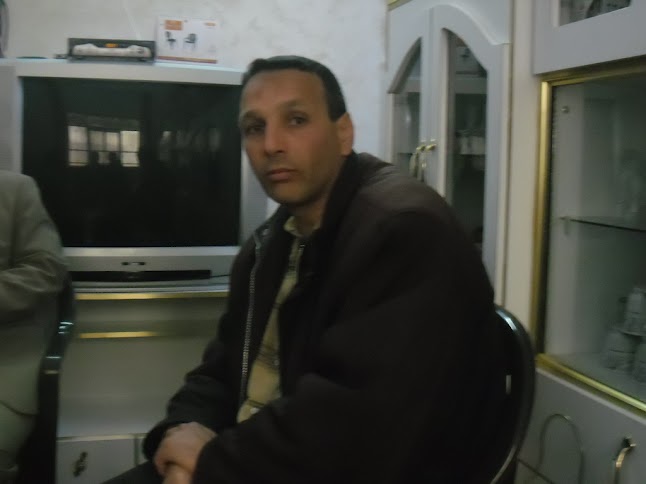 Marwan Borqan always locks the main door to his house at night. Late at night, soldiers will often knock at his door, ‘checking,’ they say, although Marwan has never known what they are checking for.
That is why he did not find it unusual when he heard a loud banging at his front door at 10:30pm on Wednesday night. However, this time it was not the Israeli army but an Israeli settler from the nearby illegal settlement of Givat Ha’avot. As soon as Marwan opened the door he was violently punched and kicked by the settler, who then dragged him out the door.
Outside the beating continued, causing Marwan to fall down a flight of stairs as other settlers, the settlement security guard, and Marwan’s shocked children looked on.
Finally, two police cars arrived and with the help of Marwan’s brothers, detained the attacker.
At this point, Marwan’s father arrived to find that Marwan had lost consciousness. He called an ambulance and was forced to wait forty-five minutes as the ambulance was detained at the metal gate restricting Palestinian vehicular access to their own street.
Marwan’s father demanded that the Israeli army commander arrest the settler who had attacked his son, only to have soldiers threateningly point their guns at his head and tell him to ‘shut up’. At a point during the night, the army released the settler who was responsible for the attack. They later claimed they did not arrest him because they could not find him.
While awaiting the ambulance’s arrival, the Israeli army evacuated the entire building where Marwan lived. Forty-five people, including many children,were forced to wait on the street while the army searched the victim’s house.
An Israeli police jeep then arrived carrying a settler who claimed rocks were thrown at her by a Palestinian earlier that day. The girl scanned the families lined up on the street and admitted that none of them had thrown rocks at her.
After Marwan was taken to the hospital, settlers attempted to occupy his apartment but were later escorted from the building by the Israeli army.
Commonly, following an accusation by a settler, all Palestinians are perceived as guilty by both the illegal settler communities and the Israeli army. Revenge may have been the reason behind the Israeli army raiding a house or the savage beating of a Palestinian by an Israeli settler.
Nonetheless, raids and attacks also take place in lieu of any accusations. Above all, the violence is arbitrary and systematic. The reason is always the same: to make life for Palestinians so difficult that they will be forced to leave. Those who refuse will continue to pay the price.
For Marwan Borqan the price for him and his family has been very high. He suffers from a concussion, and many bodily injuries, and was forced to wait while Israeli soldiers detained the ambulance attempting to reach him.
Marwan explained that he was “shocked” by the beating. His family regularly suffers from settler and soldier harassment, but it was “the first time the settlers actually tried to enter the house.”
His children were up late watching a football match with him when the attacker arrived, and to their horror witnessed his brutal beating. Marwan’s eight year old daughter, Afnan, is still traumatized by what she saw. Marwan explains that she shakes and has difficulty eating. He intends to find psychological help for her.
The Borqan house lies near to the illegal Israeli settlements of Qiryat Arba and Givat Ha’avot in Western Hebron, an area which experiences repeated torment from extremist settlers. Qiryat Arba was one of the first settlements established in the West Bank by members of the far right Kach party and Givat Ha’vot began as a police station which was occupied by settlers in 1990. Both settlements are in violation of Article 49 of the Fourth Geneva convention, prohibiting the transfer of the occupying power’s civilians into the occupied territory. The illegality has been repeatedly confirmed by the International Court of Justice, the High Contracting Parties to the Fourth Geneva Convention and the United Nations Security Council.
Related articles
- Israeli Soldiers Invade Homes In Hebron, Jewish Settlers Attack Young Man (alethonews.wordpress.com)
- Israeli settlers injure three Palestinians, uproot dozens of olive trees in two separate incidents (alethonews.wordpress.com)
- Israeli settlers storm into Palestinian home, occupy residence (alethonews.wordpress.com)
- Knesset to discuss bill authorising settlers’ seizure of Palestinian land (alethonews.wordpress.com)
- Hebron teen ‘shot by Israeli settler’ (alethonews.wordpress.com)
- Kufr ad-Dik and Burqin march against boars, pollution, and violence by Israelis (alethonews.wordpress.com)
Ex-Palestinian prisoner: captivity in Israel, living in graves
Press TV – April 22, 2012
Interview with former Palestinian prisoner Abdulaziz Umar
“They (Palestinian prisoners) just live in graves and their families do not know anything about them; they’re not allowed to contact their families and they are deprived of everything. Some of them are suffering from handicaps and others are even suffering from psychological problems. Of course they spend all this long time in these dark cells under occupation without having any access to the external world.”
Related articles
- 1,600 Palestinian prisoners begin open-ended hunger strike in Israeli jails (alethonews.wordpress.com)
- Meshaal: We will definitely get our prisoners released (occupiedpalestine.wordpress.com)
- Haneyya: Palestinian prisoners are victims of ferocious Israeli campaign (occupiedpalestine.wordpress.com)
Featured Video

AIDS Inc. by Gary Null (2007)
or go to
Aletho News Archives – Video-Images
From the Archives
Clash of Civilization, Iran Part II
By Jamal Kanj – Intifada-Palestine.com – January 14, 2011
Israel’s survival kit is: perpetuate conflict, insecurity to rationalize collective hate and finally playing victim.
Devoid of conflict, Israel implodes internally; without hate, Zionism loses its justification; and playing eternal victim to continue blackmailing the West. Absence of this holy trinity, Israel ceases to exist.
From its inception, the house of Zion has mastered exploiting adversarial powers to advance Israel’s cause. For instance, their influence over the Democratic Party in the US began with President Truman’s bid for 2nd term election in 1948.
Responding to strong opposition from Secretary of State General George Marshall and Department experts urging against recognition of Israel, President Truman replied: “I’m sorry gentlemen but I have to answer to hundreds of thousands [Jewish voters] who are anxious for the success of Zionism. I do not have hundreds of thousands of [voting] Arabs among my constituents”
Zionists influence over liberal American politics was matched with the doctrinal school of Conservative theoreticians aligning the Republican Party’s platform with Israel’s objectives. The Neoconservative Zionists, coined Zioncons, invented the “Clash of Civilization” concept to fight Israel’s wars. … continue
Blog Roll
 Aletho News
- 12 Things Your Psychiatrist Was Trained Not to Tell You
- From Unipolar Universalism to Multipolar Civilizational Distinctiveness
- RSF military group defects, joins Sudanese army: State media
- Ireland goalkeeper refuses to play ‘Israel’ as squad weighs boycott
- China pushes back against US on Cuba, Iran
- Ukrainian Soldiers, Potential Mercenaries: Have Gun, Will Travel!
- Burnham’s UN debut… A masterclass in British disinformation
- Iran flights continue despite US aviation sanctions
- Global Tipping Points Lead the World Into a State of Entropy
- The day-after at the White House: USA and Xi Jinping
- If Americans Knew
- Israel forces Gazans to live in constant peril – Daily Update
- Deconstructing Netanyahu’s pants-on-fire UN rant – Daily Update
- Trump betrayed voters with his campaign lies and prioritized a foreign country once he took office
- Netanyahu calls Israel’s war in Gaza ‘opposite of genocide’ in UN speech to near-empty hall
- Settler Kidnappings: Torture, Sexual Abuse and Terrorisation of Palestinian Abductees as Israel Deepens Annexation of West Bank
- Gaza winter nears as 162,000 tents become unusable, raising fears of humanitarian crisis
- Netanyahu says, “It’s the opposite of genocide”; UN says Gaza economy is world’s ‘most severe crisis on record’ – Daily Update
- Israel’s US-Backed Assault on Gaza Has Created the ‘World’s Most Severe Economic Crisis on Record’: UN
- ‘Protecting U.S. Citizens’… From Israel
- ‘This is where I live now, the back of a truck’: a day in the life of a grandmother in Gaza
- No Tricks Zone
- New Study: Earth And Venus Surface Warmth Largely Explained By Convection And Lapse Rate, Not CO2 Or Radiation
- 2025 Nature Paper Claiming Worsening Global Drought Gets RETRACTED …Heavily Flawed
- New Study: ‘Global Drought Shows No Detectable Recent Acceleration Under Climate Warming’
- Economic Masterminds: German Socialists Suggest Taxing Productivity Gains Stemming From Using AI
- The South China Sea Has Not Been Cooperating With The Climate Change Narrative
- Energy Crisis: Germany Enters Heating Season With Historically Low Gas Reserve Fill Levels
- New Study: The Antarctic Ice Sheet Gained Mass From 2020-2024 Due To Staggering Snow And Ice Accumulation
- Study: Ocean Heating Rates From Thousands Of Years Ago ‘Dwarf’ Modern Ocean Heating Rates
- Climate Extremists Target, Attack Large-Scale Power Grid Infrastructure In Germany!
- New Study: Antarctic Ice Melt Has Contributed Less Than 1 Centimeter To Sea Level Rise In The Last 30 Years

