Cluster bombs: Drop today, kill tomorrow

By Sara Ibrahim | Moqawama | September 12, 2011
July war 2006, the 33 day war “Israel” launched on Lebanon was a bitter memory in the diary of every Lebanese. “Israel” killed 1,200 civilians, one third were children.
Thousands of homes were destroyed, 50 schools were shattered not to mention the roads and bridges that turned into rubble.
Despite all that, the people were able to move on with grand perseverance. With the blessings of the mighty fighters and with the people’s support the Divine victory was sowed.
However this is just the beginning of the “Israeli” belligerence.
At the end of the war, “Israel” had to take revenge. It dropped around 4 million cluster bombs over South Lebanon, mostly during the last 72 hours of the war.
Around 500,000 of those munitions did not explode, and have killed or seriously injured some 213 civilians and 52 de-miners since the war ended. 98% of the victims are civilians.
The reason why many sub-munitions didn’t explode, at least not immediately, was because “Israel” used many old stocks that went decades and decades back.
Unexploded cluster bombs are dangerous in part because their condition is unknown, they might be fully armed and ready to detonate, not armed and relatively harmless, or partially armed. If they are armed, they may or not be capable of firing, adding to their unpredictability.
When cluster munitions are dropped, the bombs can be spread intentionally or unintentionally over a large area, leaving a larger threat to civilians.
Although “Israel” discharged the largest number of cluster bombs in 2006, it used them earlier.
“Israel” used cluster munitions in its 1978 and 1982 incursions into Lebanon. The two-decade-old unexploded sub munitions from “Israeli” campaigns have continued killing and injuring civilians, with over 200 civilian casualties recorded between 2000 and 2005.
Moqawama.org had a special interview with a victim of cluster bombs in South Lebanon.
Ali Suleiman a 52 year old and father of 5, witnessed the pain of the “hidden devil” has he called it. “I was in my land in Arabsalim watering my olive trees and thinking about how much I missed my sons abroad, when suddenly I hear something explode. It was a matter of seconds and I saw blood on my hand and I could see no more. I knew I was injured badly by the “hidden devil”, the cluster bomb!” he said.
He fell on the ground and the pain started in his head then down his face, “I felt like needles were being hammered in my eyes”, he said.
“My wife came to check on me and found me lying on the ground, with all the blood she saw, she thought I was dead.”
The doctors said that Ali was moved to the hospital on time, had he been delayed a bit more he wouldn’t have made it due to the blood he lost.
Ali woke up in the hospital when he opened his eyes, he couldn’t see anything, it was hard for him to absorb what was happening. He was later informed that he lost an eye and the other was injured badly and needed 3 months of treatment.
“I couldn’t breathe; it was hard for me to take a breath. All I was thinking about was the fact that I may not see my wife, my children and grandchildren again. I may not be able to see my land, my home, my family. I may not be able to work again,” he cried.
After 3 months Ali did see again, the doctors managed to save his eye. “When I came back home, I knelt on the ground and thanked God for his mercy. I thanked God for having mighty fighters that were defending us from the antagonism of the Zionists”!
Ali survived yet many others couldn’t make it. Many farmers died before stepping on their land again due to the fact that it was contaminated. Many children lost the chance to run again, or write again, or even hear again. Many dreams were broken and many ambitions were stolen. These are the lives of the victims of the “hidden devils”!
~
A Cluster-Bomb-Free Lebanon?
Today, Monday, marks the opening of the Second Meeting of States Parties to the Convention on Cluster Munitions.
9:20 a.m., the buses took off to South Lebanon, where representatives of 109 countries as well as journalists headed to the demining center and the Lebanese Welfare Association for the Handicapped’s center in Nabatiyeh and Sarafand respectively, for a live experience on the topic.
Out of the 109 countries that have joined the convention, 61 – including Lebanon – are “states parties,” meaning they have signed and ratified the convention, which requires countries to declare and destroy stockpiles of cluster munitions, clear contaminated areas, and assist survivors and affected communities.
According to the Lebanon Mine Action Center, the army-headed division that is supervising the cleanup, 67 percent of contaminated land has been cleared. They aim to have the country free of cluster munitions by 2016.
Today, Monday, the opening of the conference will take place at the UNESCO Palace, where it will be launched under the patronage of President of the Lebanese Republic Michel Suleiman, which will be followed by a series of workshops and seminars to tackle the subject.
Children of Qalandiya: Occupation Starts Here

Ali Hasan Khalifa, another martyr, another victim. (Tamar Fleishman)
By Tamar Fleishman | Palestine Chronicle | September 12, 2011
The West Bank – I wanted to write about Mahmud, the thirteen year old boy that ever since his return from Ofer prison is the first of the children who hurry to greet me on my arrival.
Perhaps this is because finally someone has taken an interest in his fate.
It isn’t often that someone expresses interest and concern for the children of Qalandiya. More than often people make demands of them, reject them and abuse them.
These children are destined to servitude.
I no longer regard Mahmud as just another child in the bunch, he is an individual, he is noticed, his photograph is taken, he smiles, he waits for that specific day in the week when he receives his photos, and when I ask him about the leg that was injured when he was beaten, he tilts his head with timidity, which is uncommon among him and his friends, and then smiles and replies: “no, it doesn’t hurt any more…”and with a hint of embarrassment he agrees to tell some of his prison stories.
Mahmud said that there were eight people sharing his cell, people of all ages, that the youngest was a boy of ten from Jalazone refugee camp who was serving three months, he said that he himself, Mahmud, wasn’t beaten in prison, he was just taken in for interrogation, that he denied having anything to do with the stones that were thrown and that the investigators demanded that he give them names. On his release he received his clothes back, “they didn’t take the money”, and the profit he made at work on the day he was arrested, had remained in his pockets and was enough to cover the ride back home.
Some hours later, between midnight and dawn, twenty two year old Moatassem Adwan and twenty three year old Ali Kalifa from Qalandiya refugee camp, were shot to death.
And I knew that it was all connected, like links in an elongating chain of horror. I knew that I must also write about all that occurred on that night, for together with knowledge and familiarity comes a duty to tell the story and give voice to the living children and to the children that had been shot.
I knew that I must write about the fifteen year old boy, that when coming to arrest him an entire unit of soldiers raided the allies of the refugee camp on the early morning of the first day of the Ramadan. After having knocked the door open, the soldiers searched the house, making a mess and raising havoc. Having not been able to find the boy they took his cousin as hostage.
About the father who did not praise his lord for having saved his son, but instead like Abraham, the father of the two nations, he took his beloved by the hand on the next morning and went with him so that the exchange could be preformed. He handed in his son to those seeking him.
About the mother who watched the two holding one another, walking away, walking and disappearing, heading towards her destruction.
About the failed plan of those invaders who hurried to pull the trigger as soon as they saw two young men in front them.
I must write about my encounter with Ali Kalifa, the same Ali Kalifa who had a rifle’s bullet penetrate his back, it pierced his body from one side and then exited from the other.
About having taken a photo of Ali Kalifa not long before that bitter day, as it is, children of all ages wish to have their picture taken so that they have a memento of their portrait.
About how this might just have been the last photo to ever commemorate the living Ali. H’, a friend of Ali, told me that this photo had been placed at his parents grieving shade.
About my encounter with this young man who would look you straight in the eyes over a light conversation, about how he would imagine himself living in a reality that is unattainable for someone from a refugee camp. It is just as well since those imaginations and dreams were his haven and comfort.
And that this is the story of the children whose backs and napes are exposed and unprotected, for they, the children of Qalandiya are an allegory to the story of the occupation.
(Translated by Ruth Fleishman)
~
As a member of Machsomwatch, once a week Tamar Fleishman heads out to document the checkpoints between Jerusalem and Ramallah. This documentation (reports, photos and videos) can be found on the organization’s site: www.machsomwatch.org. She is also a member of the Coalition of Women for Peace and volunteer in Breaking the Silence.
B’Tselem: Israel denies Palestinian ‘right to protest’ in West Bank

Ma’an – 12/09/2011
BETHLEHEM — The Israeli military systematically denies Palestinians the right to protest in the West Bank, a report published Monday by the Israeli rights group B’Tselem says.
The ‘Show of Force’ report finds that Israel does not recognize the “basic right” of Palestinians to protest and responds to demonstrations with an “excessive use of crowd control weapons.”
The army often fires tear gas canisters “directly at protesters,” a practice which B’Tselem says violates the military’s own orders.
In most cases the army treats protests as “disturbances” and disperses processions even in the absence of violent acts by protesters, according to the report.
B’Tselem examined the conduct of Israeli forces in weekly demonstrations held in the West Bank village of Nabi Saleh over the past year and a half.
It found that the response of the Israeli army indiscriminately harms all village residents through the closure of roads and the imposition of Friday curfews which expose a large number of people to delays and restrictions.
Residents are also exposed to the effects of excessive tear gas which “penetrates their homes.”
The Israeli rights group documented four consecutive demonstrations with video and field observation between June 17 and July 8 and interviewed village residents.
The Israeli military does not “recognize the right to demonstrate” in the West Bank, B’Tselem stated. It called on the Israeli army to respect Palestinians’ right to protest and use “proportionate” means where necessary to disperse protesters.
Israel Targets Vittorio Arrigone School in Embattled Jordan Valley
By Matthew Eskin | Alternative Information Center | September 11, 2011
As schools around the world begin another year of instruction, one school, near to completion in one of the most grief-stricken and resilient areas of occupied Palestine, has suffered a massive set-back because the Israeli military has carried away its infrastructure- the Vittorio Arrigone school, in the small village of Ras Al Auja in the Jordan Valley.

Israeli soldiers confiscate and take away a donated caravan that was to serve as a classroom (Photo: Jordan Valley Solidarity Campaign)
The Arrigoni school, named after the Italian International Solidarity Movement activist killed in Gaza this April, began in February as a small tent school in the village of Ras Al Auja, and began evolving into a more permanent mud-brick and caravan structure in April. Built jointly by the Ras Al Auja community and the activist group Jordan Valley Solidarity, the school, once built, will educate young children up to the age of 13 in one of the areas of the West Bank hardest hit by the Israeli occupation. From the time that Israel seized control of the area in 1967 until the present, the resident Palestinian population has decreased from 320,000 residents to 56,000, as 36 primarily agricultural Israeli settlements, housing 6,400 settlers, have been constructed on 50% of the Jordan Valley’s land.
Ras Al Auja is a Bedouin community seven km west of the larger community of Al Auja. Both serve as paradigmatic examples of the devastating impact of Israeli occupation on Bedouin in the Jordan Valley. Until Israel’s occupation, Al Auja was for millennia an oasis, famous for its ever-flowing spring. As it says on the website of Jordan Valley Solidarity, “people would come to Al Auja from all over to swim, fish and sit among the banana groves that once grew there.” In 1972, the Israeli water company Mekorot, which has monopolized the West Bank water, dug two deep water wells in Al Auja, cutting off the flow of water before it reached the village. “These wells lowered the water table, drying out the spring. Today the area is a desert, crossed with dried-up canals that see water one or two weeks every year during the rainy season.”
As is commonplace for the larger West Bank Bedouin communities, families must use tractors and mobile water tanks to bring water to their homes and villages, at considerable personal expense. The estimated amount of water that one Palestinian in the Valley consumes per day, for drinking as well as all other activities, is some 70 litres. Jordan Valley settlers, on the other hand, enjoy free access to water and, from the comfort of their heavily subsidized, modern settlement homes, individually consume about 33 times as much water as their Palestinian neighbors in the Valley.
To make matters worse, the families of Al Auja and Ras Al Auja, who settled there after expulsion from Beer Sheva during the 1948 Nakba, used to have “over 100 sheep or goats each, which they grazed on the mountains and watered at the spring”. Now, the settlements of Yitav, Niran and ‘Omer’s Farm’ have colonized the surrounding mountains, an army military checkpoint borders Ras Al Auja to the south, and two enormous settler-only water towers cast a grim shade over the dry Al Auja spring. ‘Omer’s Farm’, in particular, has stolen half the land of Ras Al Auja in the five years of its existence. It consists of a single family, on a hilltop, surrounded by stolen farmland, heavily guarded by the Israeli military.
The men of Al Auja, according to Jordan Valley Solidarity, “are reduced to surviving by working in Israel’s illegal settlements, earning a pittance. The area feels like little more than a work camp, reminiscent of the townships of apartheid South Africa, with all the men away during the day in the settlements.” The Bedouin now work for settlers, to farm land that the latter stole from them. While they were previously self-sufficient farmers, the residents, now wage-laborers, making scarcely enough to get by.
In March 2011, Jordan Valley Solidarity joined with community members to construct a school for children of the 130+ families of Ras Al Auja. Over the course of two weeks, volunteers sewed sack cloths together to construct a makeshift tent school, where women from the community began to teach 30 children, mostly aged between 5 and 8, a basic curriculum of math, English, Arabic, geography and history. It was vitally important to establish a school in Ras Al Auja, says Jordan Valley Solidarity coordinator, volunteer and driving force ‘Jane’, who has been involved with this project since its inception, because “if you don’t have education when you’re a small child, that means that when you go to school you’re behind already. Education is a basic human right. These people have a right to education in their community.”
Before construction of this school, the children of Ras Al Auja were forced to walk 7 kilometres each morning to the school in al Auja. As the foot path trailed right next to two Israeli settlements, exposing children to regular physical and psychological settler harassment, many parents were wary of sending their young children to school. In addition, numerous fathers are off working in these very Israeli settlements, thus unavailable to assist their children in the mornings. Numerous children, therefore, were left without an education until later years.
Today, because the new school in Ras Al Auja only educates children aged 7 to 13, those children over 13 lucky enough to continue their education still need to take this daily trek to the Al Auja Secondary School, where they can study for the Tawjihi (matriculation exams). Mossem Zubaidat, a volunteer with Jordan Valley Solidarity who also works with the Palestinian Ministry of Education and Higher Education, relates how “there is no transport to take them to the village, so they use their legs to go to school in summer and winter. It is hard for them to put the bag on their back and walk all the distance… We need to build the school because in Ras Al Auja the people live in boxes, not in houses, they live in tents! We are certain to build a school there, it is our land and we can build a school anywhere!”
The Israeli army does not agree. The Area A, B and C zoning system was established for the West Bank after the 1993 Oslo Accords to designate areas of full Palestinian control, joint Palestinian civil and Israeli military control, and full Israeli control, respectively. Because 95% of the Jordan Valley, including al Auja and Ras al Auja, falls under Area C (50% because of Israeli settlements and 45% because of military training grounds and nature reserves), this means that almost nowhere in the Valley can the Bedouin build any permanent structure without requiring an Israeli permit, which is expensive to apply for and almost impossible to obtain. Between January 2000 and September 2007, Israel issued almost 5,000 demolition orders against Palestinian structures in the Jordan Valley. Of those, 1,663 demolitions were carried out – Israeli bulldozers tore down houses, schools, animal shelters and even entire villages.
The stated purpose of Israel’s vise-like grip on ownership and control of the Valley is to hold a security buffer space between Israel and Jordan, necessary to defend the country; in reality, however, Israel covets the Valley because (1) the West Bank, which could serve as a future Palestinian state, is thereby surrounded on all sides by Israel; (2) the West Bank is thereby cut off from economic interaction and communication with Jordan, and the rest of the Middle East; and (3) in the words of the soon to be published Jordan Valley Solidarity factbook To Exist Is To Resist, the Jordan Valley’s “abundance of water resources, fertile soil and natural minerals offer competitive economic advantages in agriculture, industry and tourism. It also constitutes a geographical “reservoir” of land where the Palestinians could establish housing projects and public facilities.”
Israel’s policy of constant settlement expansion, pervasive military checkpoints, destruction or closure of Palestinian roads (the last few years have seen 17 new roadblocks and 4 new checkpoints in the Jordan Valley), construction of Israeli-only bypass roads and physical intimidation, harassment, and outright demolition of Bedouin villages in Area C is evidence of a conscious attempt to gradually exterminate a Palestinian presence in the Jordan Valley, to cement Israeli control and solidify a long-term Israeli presence that remains illegal under international law. Jane explains the role of Jordan Valley Solidarity in resisting the Israeli occupation: “By supporting communities to construct infrastructure for basic services, we support them to stay in their communities, on their land- because the Israelis want them to leave the Jordan Valley, or to make them move into the 5% of the land which is in area A or B to create an Israeli state with Palestinian ghettoes.” The establishment of a school in Ras Al Auja, like countless other projects in the Valley, is not primarily a gesture of humanitarian aid, but rather a symbol of international solidarity. “The aim of lack of education is to drive people from their land. What that means is that the right to education for people is really important…as a basic human right, it’s not something that can be taken away from children… Therefore our motto is ‘to exist is to resist’, and the people in Ras Al Auja are existing and resisting just by being there, and being on their land is their resistance, so we support them in their resistance…together, [we are] using their own land that the people live on to create a fact on the ground to resist the Israeli occupation.”
It was in this spirit of resistance that, in April, it was decided that a tent school, though an important first step, was too small and impermanent to meet the community’s needs. Accordingly, over 100 international volunteers and community members began constructing two permanent mud-brick classroom buildings. After the death of Italian International Solidarity Movement activist Vittorio Arrigoni in Gaza that April, the Ras Al Auja community, which personally knows the vital role of international activism, requested to name the school Vittorio Arrigoni. From the Jordan Valley Solidarity website- “Vittorio was, and will remain, a great symbol of resistance. To give his name to one of our schools is an honour, and we will do our best to make this school another example of resistance against the occupation.” On 25 April 25t Luisa Morgantini, former Vice President of the European Parliament, Majed Al Fityani, Jericho Governor, 50 Italian volunteers, members of the local community, and Jordan Valley Solidarity volunteers laid the first brick of the Vittorio Solidarity school while singing ‘Bella Ciao’ and the Socialist International anthem.
It is this spirit of resistance that the Israeli army is acting to suppress. During the month of Ramadan, the Ras Al Auja school joyously received a donation of two large caravans, which would serve as classrooms. Yet at 10.30 a.m. on 7 September, in Jane’s words, “the Israeli occupation force arrived and removed the caravans on lorries, leaving paperwork… they made all the village stay back and declared it was a closed military zone while they removed the caravans”.
Jericho Governor Majed Al Fityani, who laid the first brick of the Vittorio Arrigoni school in April, said Wednesday afternoon that “we were surprised by the Israeli actions this morning, we were not expecting this from the Israelis. We are going to request an official answer from the Israelis for why they took the caravans… it is the duty of the government to provide education for the people. it is a question of providing services and facilities for the students, free of charge. It is very difficult to provide services because the school is in Area C, so it is impossible for us to build structures there.”
The start of classes will be postponed until further accommodations are arranged for the students. In addition, a celebration and official announcement ceremony for the school, planned for September 15, will now be postponed.
Nonetheless, the community of Ras Al Auja, along with Jordan Valley Solidarity, remains resilient in the face of this new obstacle. Explains Mossem Zubaidat, “its not the first school we built with Jordan Valley Solidarity. The first school was in Jiftlik, it started in tents, now it’s a building. The second school is in Fasayil. We built it from mud and soil and tents, and now it has become a building. So we have experience with the Israelis about these situations. We are sure that we are going to build that school again, and we must build that school for these people. We are going to talk to the media, we are going to talk to the Jericho Governorate, and we are going to talk to the community, to do something about it. The army says it is illegal, but we say it is legal, because it is Palestinian land!…We have to build the school because we need to stand with these people in their land, not to leave their land to the Israelis. We are going to fight to build that school again, we are not going to surrender!”
Britain’s MoD uses torture systematically
Press TV – September 9, 2011
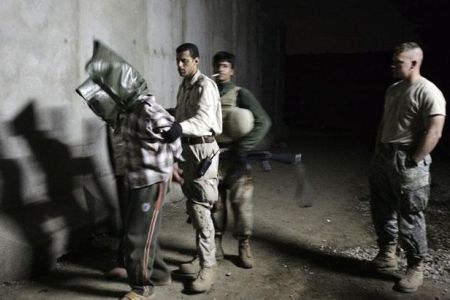
Britain’s Ministry of Defence (MoD) has decided to shake off allegations of systematic abuse at any cost, as hard evidence corroborates the British Army’s use of torture techniques.
The findings of an inquiry into the death of an Iraqi civilian at the hands of British soldiers has sparked widespread criticism, even condemnation, of the treatment of Iraqi detainees by British soldiers.
Baha Mousa, a 26-year-old hotel receptionist, was detained when soldiers from the First Battalion of the Queen’s Lancashire Regiment in the Iraqi city of Basra raided the hotel at which he worked. Two days later, Mousa died while in British Army custody.
The MoD was optimistic about the findings of the inquiry into Mousa’s death trying to bypass any allegations of systematic torture. Nevertheless, as the MoD tries in vain to persuade the public that its detention policies have undergone systematic reforms, analysts have come up with evidence that contradicts any such claims.
A high profile British human rights lawyer, Phil Shiner, has provided several reasons supporting the systematic use of torture and abuse in the British military during the Iraq war.
First, Shiner asserts that the detention policies, which involved torture and abuse, were not restricted to just one battle group, namely 1QLR, as he states that such practices were common, at least, at 14 UK facilities over the period between March 2003 and December 2008.
Shiner asserts that the set of techniques and practices included “unbelievably debased sexual behaviour, mock executions, vicious threats of rape of detainees’ female relatives, and systematic use of hooding, sleep deprivation, sensory deprivation, temperature manipulation and solitary confinement for weeks.”
Second, Shiner says that the shameful techniques and practices were systematically taught, as the Joint Forward Intelligence Team was the mastermind behind the techniques used by British troops.
Furthermore, as the British Defence Secretary, Liam Fox, refused to accept a key finding of the inquiry, Shiner is of the opinion that the MoD has no intention of implementing the “73 carefully measured recommendations” made by the chairman of Mousa’s inquiry, Sir William Gage.
Shiner predicts that the MoD “will continue to hide damaging documents, mislead our courts, run unworthy legal arguments and use its mighty coercive power to keep the public in the dark, not just about Iraq but also Afghanistan.”
More importantly, Shiner argues that the MoD still approves the very same shameful techniques employed by interrogators in Iraq, though Sir William has severely criticised such practices. Forcing a person or two into a sandbag, harshing, and hooding are techniques that are still used by the MoD.
Video Report
Press TV News/Analysis on September 8, 2011
What do Baha Mousa, Ian Tomlinson, Smiley Culture and Mark Dugan have in common? They are people who have died because of tactics used by UK police and in Baha Mousa’s case, British soldiers, why are “unlawful killings” as they are called taking place in the first place? Whether inside Britain or in war zones, it has put the spotlight on UK’s disproportionate and excessive use of force, as was evident in the recent unrest in the UK.
Related articles


Israeli Army Targeting Jenin’s Freedom Theatre
Matthew Eskin for the Alternative Information Center | September 8, 2011
In the past six weeks, the Jenin Freedom Theatre, still recovering from the unsolved 4 April murder of its co-founder and mentor, Juliano Mer-Khamis, has faced a new stumbling block: the Israeli military.
First, at 3:30 in the morning on 27 July, Israeli soldiers arrived at the Freedom Theatre to arrest Adnan Naghnaghiye, Location Manager of the Theatre, and Bilal Saadi, chairperson of the Theatre’s Board of Directors in Jenin. Soldiers further threw stones and huge blocks of concrete at the building, shattering several windows. In the Theatre’s press release, night guard Ahmad Nasser Matahen relates how “they told me to open the door to the theatre. They told me to raise my hands and forced me to take my pants down. I thought my time had come, that they would kill me.” When General Manager Jacob Gough and Theatre co-founder Jonatan Stanczak arrived on the scene, they were “forced at gunpoint to squat next to a family with four small children surrounded by approximately 50 heavily armed Israeli soldiers. Whenever we tried to tell them that they are attacking a cultural venue and arresting members of the theatre,” adds Jonatan, we were told to shut up and they threatened to kick us, I tried to contact the civil administration of the army to clarify the matter but the person in charge hung up on me.”
Adnan and Bilal were detained without charges for almost a month, denied access to a lawyer for over two weeks, and subjected to beatings and sleep deprivation, all as part of a supposed investigation into the murder of Juliano Mer-Khamis.
Then, on 6 August, Rami Awni Hwayel, a 20-year old acting student who currently holds a lead role in the theatre’s adaption of Waiting for Godot, was handcuffed, blindfolded, and taken away by the Israeli army at the Shave Shomeron checkpoint between Nablus and Jenin. Though the army quickly determined he had nothing to do with Juliano’s murder, he was held for a month pending investigation of a confession, extracted during interrogation, that he had illegally sought employment in Israel for 10 days many years ago. In an open letter to the Israeli Embassy in London, Jacob Gough relates how at a court hearing on 17 August, the military judge “stated that the police and army were wrong to have picked up Rami and spent this time as they have on this matter, and that Rami obviously has no connection to the murder of Juliano, however, in what just seems to be an attempt to ‘save face’, the Israeli authorities are looking to imprison him under the aforementioned charge.” The army usually punishes perpetrators of this ‘crime’ by sending them back across the border; for Rami, who, like Adnan and Bilal, was initially held for over two weeks without a lawyer, it will now be more difficult than it usually is for a resident of Jenin refugee camp to secure a visa to tour Waiting for Godot throughout America this September.
Finally, at 2am on 22 August, the Israeli army arrived in Jenin, surrounded the Theatre and entered the home of the Nagnaghiye family, where they beat and arrested Mohammed, theatre security guard and brother of Adnan. They also ransacked and trashed all three floors of the Nagnaghiye family home: “Furniture was thrown to the floor and broken, and there was even dog excrement on the floor. The army also took another three residents of the camp on the same night.”
The stated reason for all of these arrests is an Israeli investigation into the unsolved murder of Juliano Mer-Khamis. However, in an interview given on 3 September, Jacob Gough related that “initially [the army] gave the normal rubbish excuses, like ‘they’re acting against the security of the region’. We then found out they are supposedly doing an investigation into the murder of Juliano. But then I don’t count investigations where you kidnap people and treat them inhumanely, treat them to sleep deprivation- for a week they didn’t sleep- and then you try to get them to confess. Like this they work. That’s not an investigation, that’s trying to pin it on somebody.”
Indeed, Jacob says in an Open Letter to the Israeli Security Apparatus that “in every one of [Bilal’s] court hearings so far, when the Israeli security services have requested an extension of detention, it has been noted in court documents that no information pertaining to the murder of Juliano has been gained from interrogation”, and that “on Sunday 14 August Adnan was in court for another extension of detention, [and] the judge gave the security services an additional 8 days but stated that they needed to wrap the interrogation up as they have not gained much from this time before.”
In addition, the inhumane treatment inflicted on the detainees casts doubt on the real motives of the Israeli army. On 22 August, the same day that Mohammed Nagnaghiye was taken, the two men detained on 27 July – Mohammed’s brother Adnan and Bilal Saadi- were released with no charges filed against them. In the open letter to the Israeli Embassy, Jacob relates that “finally after 2 weeks [Bilal’s] lawyer was allowed access to him… he told her that they had treated him ‘inhumanely’. As of now we only know that they were using disorientation techniques (he had no idea whether it was night or day) and whilst having him shackled painfully and after denying him food for a long period of time they then put food in front of him, obviously with no possible way for him to eat with dignity.” Adnan had been “in much a similar position to Bilaal, but spent 16 days without access to a lawyer.”
Israel also appears to be deliberately impeding the movement of Freedom Theatre actors in and out of the West Bank. In our interview last Saturday at the Theatre, Jacob related that members of Rami’s theatre troupe, which plans to tour Waiting for Godot through America in September, “have all had to have visa application meetings with the American consulate. The American consulate doesn’t come to the West Bank, so these students have to go to Jerusalem and Jordan. Jerusalem is a lot easier. In the past these students have never had problems getting to Jerusalem, and suddenly- stopped. None of these children can go, they are all perceived as a security threat.” In a phone interview on 5 September, Jacob reiterated that “there is no doubt in my mind that this is related [to the army’s arrests]…it all occurred at exactly the same time…[this is] another part of the Israeli army crackdown. I’m sure it’s connected.”
In the Jenin refugee camp “there is fear, fear of being associated with the theatre, [because] we have had someone killed, lots of people arrested…”. But fear seems to be a common factor on both sides of the equation. “After Juliano’s death”, Jacob explains, “it was shown how much support the Freedom Theatre has in the world, and not just people. Politicians, organizations, media as well…[one] of the most dangerous things for Israel, is showing that places like the Freedom Theatre can reach really far…we’ve had the actor’s union in Britain, actors’ unions in America, France, Germany- the Parliament in Britain, France, Germany, Sweden, at least- Congressmen in America as well- people phoning the Israeli embassies and sending them letters all the time, asking what’s happening, what are you doing to the Freedom Theatre. The Israeli embassies started sending back replies, which I’ve never seen before! I’ve never seen the Israeli embassy reply to these kinds of letters, they just go whatever…we don’t care. It feels like we’re hitting a nerve, and we try to harness that.”
On 1 August , the General Secretary of Equity, the trade union representing 36,500 UK based performers, actors and creative workers, wrote to the Israeli Embassy in London to ask why the Freedom Theatre’s “location manager, Adnan Naghnaghiye, and Board member, Bilal Saadi, “are currently being detained following an attack on the theatre”. The letter concludes that “as an organisation which campaigns for freedom of expression, we are obviously very distressed about these reports. I therefore urge you to ensure that the individuals concerned are released immediately and safely returned to Jenin.”
Two weeks later, on 16 August, Equity received a reply from the Israeli Embassy. Citing the murder of Mer-Khamis, the letter states that “the authorities have instigated profound and comprehensive investigations which led them to the arrest you mention in your letter. Although we are aware that damage to the property was caused during the arrest, this was not intentional.”
In his open letter to the Israeli Embassy, Jacob replies that “though it is good of the ambassador to admit damage was caused to the theatre, to say throwing rocks at windows is unintentional is not just wrong, but also a lie. Anyhow, even unintentional harm/damage is at the very least negligent.” An even more curious lapse on the Israeli Embassy’s part, however, is that they ignored completely Equity’s complaint regarding the arrests of Adnan and Bilal, and instead spoke of the arrest of Rami, which was not even mentioned in Equity’s letter and which had nothing to do with ‘damage to the property’ of the theatre, because it occurred far from the theatre! Through this strategic move, the Embassy seeks to deflect attention away from the army’s mistreatment of Adnan and Bilal, and onto “[Rami’s] involvement in a number of other unsolved crimes”- the heinous crimes, namely, involved in crossing the Green Line briefly to bring a little money back to his impoverished refugee camp.
If Rami and his classmates are able to tour ‘Waiting for Godot’ through the US this September, “the hope”, says Jacob in his reply to the Embassy, “is [that] they will manage to get offers of scholarships to continue their training, a rare opportunity and ray of light for these youth who have spent their whole lives under occupation…This whole farce of court proceedings puts this trip for [Rami] in a very precarious position and further works to undermine the work of The Freedom Theatre, which I would say seems to be more the goal of the Israeli authorities than a genuine investigation into the murder of our friend and leader, Juliano Mer Khamis.”
When Juliano founded the Freedom Theatre in Jenin in 2006, he hoped to use performance and art to show to the world a Palestinian people and their vibrant, creative culture and self-identity. In April 2006, four years after the Battle of Jenin, in which 15-20% of the camp’s infrastructure was destroyed by the Israeli army, Mer-Khamis said in an interview with author Arthur Nelsen in London that “in Jenin – especially in Jenin – something is happening, in the good sense of the word. There is a universalist discourse, an international happening…an international campaign around a new kind of resistance…we want to be part of this third Intifada which is on the way in a way to hopefully influence at least some of the people in Jenin camp, towards non-violent, cultural international resistance.”
The Freedom Theatre’s hope remains that, after the violent suppression of the first two Intifadas, a successful Palestinian revolution today must revitalize Palestinian culture and self-identity, and inspire international recognition not merely of a Palestinian state and governing power, but first and foremost of a Palestinian people. On 4 April 2005, one year before the founding of the Freedom Theatre, Juliano said that “we are facing the end of the destruction of the Palestinian people by the Israeli forces. We are in a situation today where not only the political and the economic infrastructure are destroyed, the Israelis are destroying the neurological system of the society, which is culture, identity, communication. We felt that creating a project which will deal with the arts, with cinema, with theatre, with the media activities, computers, web sites, is the best way to fight this deconstruction of the identity of the Palestinian, which is deliberately done in the last year by the Israelis. Israel is pushing back the Palestinian people into the Stone Age…communicating with the outside world, bringing people from the outside world, breaking the wall down, if not physically, metaphorically- is creating the grounds for hope. We cannot bring hope, hope- we cannot bring it in a sack or a package. We can create the grounds so people can build up hope, and this is our task today, to create the grounds for those children.”
In the face of Israeli army harassment, Jenin’s Freedom Theatre has received an outpouring of support, both internationally and within Palestine. In addition to the ferocious and impassioned letter-writing campaign, it has received many donations from abroad to support increasing legal fees.
Additionally, most recent events may indicate that, in response to international pressure, the army is relaxing its crackdown on the Theatre. Mohammed Nagnaghiye, who was arrested on 22 August, received a 15-day extension of his arrest on the 29th, but was then unexpectedly released on 3 September. He did not report any abuse at the hands of the army, and was quickly allowed access to a lawyer. In addition, two technicians at the Theatre, Mohammed Saadi and Ahmad Matahen, along with an acting student, Momeen Syatat, were told to hand themselves in to the Salem military base outside of Jenin by 1 September. The Theatre wrote on its website, “to walk into the arms of the Israeli security service quite often means disappearing from the surface of the earth, never knowing when you will come back and knowing that you are most certainly facing harsh treatment. We demand that Mohammed, Ahmad, and Momeen be treated no worse and no better than any Israeli citizen brought in to participate in a civil criminal investigation. Their legal rights, as stipulated by international law, must be honoured.”
Thankfully, all three residents of Jenin refugee camp were simply asked a few questions, and then released. Over the phone on 4 September, Jacob noted that “the pressure that the theatre put on and that our friends around the world put on, seems to have made a difference. Otherwise the army would’ve kept acting the way it usually does…They even said to some of the guys who went the other day ‘we like the Freedom Theatre, we support the Freedom Theatre!’”
Indeed, at strategic moments Israel does claim to support the Freedom Theatre. Juliano was, after all, an Israeli citizen and well-known Israeli actor; in addition, token gestures of goodwill towards Palestinian arts initiatives bolster Israel’s public image. In reply to Equity’s letter, the Israeli Embassy in London spoke of how “Mr Juliano Mer-Khamis, the director of the theatre, was shot and killed in his car by masked terrorists…Mr. Mer-Khamis…taught alternatives to violence to Jenin’s youth…following his death, the Israeli authorities took it upon themselves to solve his murder and bring his murderers to trial.” In his open reply to the Embassy, however, Jacob retorts that “as there is no evidence or lead or knowledge of who may have committed this attack, it is rather presumptuous of the Israeli Embassy to say it was a Palestinian. Likewise we don’t comment on any theories that it may have been an Israeli…Juliano [son of an Israeli mother and a Palestinian father] was a symbol of co-operation that served very well to show that Jewish-Israelis can live and work with Palestinians, something many far-right Zionists would not like to see…”
In addition, though he taught alternatives to violence, Juliano never tried to teach alternatives to resistance- throughout his life he remained unequivocally opposed to the Israeli occupation of Palestine. As he said in 2006, shortly after the founding of the Theatre, “What we [are] doing in the theatre is not trying to be a replacement or an alternative to the resistance of the Palestinians in the struggle for liberation. Just the opposite. This must be clear…We are joining, by all means, the struggle for liberation of the Palestinian people, which is our liberation struggle.”
It is this commitment to resistance that motivates Israel to crack down on the Freedom Theatre. As the Theatre continues, in the memory of Juliano, to support the struggle for the revitalization of the Palestinian people, it remains to be seen whether the Israeli powers will continue to impede its progress.
Israeli forces detain Hamas lawmaker
Ma’an – September 6, 2011
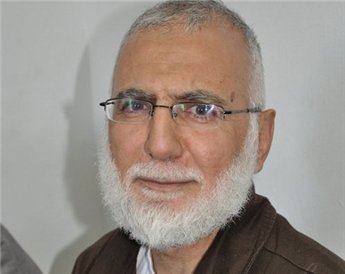 RAMALLAH — Israeli forces detained Hamas legislator Mohammed Abu Teir on Tuesday, army officials said.
Israeli soldiers ransacked Abu Teir’s home in Kafr Aqab, south of Ramallah, before detaining the elected official, a Ma’an correspondent reported.
An Israeli military spokesman said Abu Teir was detained on Tuesday but could not immediately comment on the reason for his arrest.
Former PA Minister of Jerusalem affairs Khalid Abu Arafa told Ma’an he was concerned about Abu Teir’s fate after Israel withdrew his Jerusalem identity card.
In December, an Israeli court expelled Abu Teir to Ramallah from his home in Jerusalem for the second time, after four months in jail for defying a previous ban.
He was previously arrested on June 30, 2010 for entering East Jerusalem after the interior ministry stripped him of his residence permit for his activity in Hamas.
Following Abu Teir’s deportation to Ramallah in December, UN officials expressed concern. Robert Serry, UN Special Coordinator for the Middle East Peace Process, said he was “worried” about the “potential precedent” that the trial set.
Abu Teir was elected to the Palestinian parliament from East Jerusalem in 2006 when Hamas won a landslide victory over the secular Fatah movement of Western-backed President Mahmoud Abbas.
Turkey expels Israeli ambassador, cuts all military ties
Al-Manar – September 2, 2011
As reports have been published about Israel’s refusal to present an official apology to Turkey over the Israeli Navy’s attack against Turkish Mavi Marmara that was carrying aid to the besieged Gaza strip in 2010, Turkey has assured that it will respond to such a step by imposing sanctions against Israel.
Turkish Foreign Minister Ahmet Davutoglu was quoted by the Turkish Hurriyet Daily as saying that “if Israel did not apologize and did not declare its willingness to financially compensate the families of the dead and those injured, Turkey will put in place certain sanctions.”
The sanctions include limiting diplomatic relations between the two countries and expelling the Israeli ambassador from Turkey, as well as launching a campaign in the United Nations against the Zionist entity.
Ynet news quoted an Israeli official as saying that “the (Israeli) Prime Minister knows that the public objects to apologizing to Turkey, and he apparently chose to go with what the public thinks.”
On Friday, the Turkish Foreign Minister held a press conference in which he announced the expulsion of the Israeli ambassador.
“At this point the measures we are taking are: The relations between Turkey and Isreal will be downgraded to second secretary level. All officials over the level of second secretary, primarily the ambassador, will turn back to their country at the latest on Wednesday,” Davutoglu said.
“Second, all the military agreements between Israel and Turkey are suspended… “Third, as the country with the longest coastline on the Mediterrenean, Turkey will take every precaution it considers necessary for the safety of maritime navigation to East Mediterranean,” he added.
~
Also from Reuters:
Davutoglu said some of the [Palmer/Uribe] report’s findings were questionable and that Turkey did not recognize the legitimacy of the blockade of Gaza.
“Turkey will take all measures which it sees as necessary for freedom of navigation in the eastern Mediterranean,” Davutoglu said.
“Turkey does not recognize Israel’s blockade of Gaza. It will secure the study of this blockade at the International Court of Justice. We are beginning initiatives to get the U.N. General Assembly moving (on this),” he added.
He also said support would be given to Turkish and foreign victims to seek justice from courts.
UK arms sales to despots enjoy rise
Press TV – August 29, 2011
Britain has increased by about 30 percent its weapons exports to the Middle East and North African regions, where a wave of Islamic Awakening is challenging totalitarian regimes.
A new inquiry found that the UK has exported arms worth at least £30.5 million to various countries, including Bahrain and Saudi Arabia between February and June this year, as compared to £22million in the same period of 2010, The Times newspaper reported.
According to the report, arms exports to countries, where human rights records are deteriorating, have spiked by one third at the same time when the rulers of these countries are brutally repressing their own people.
The arms exports included weapons used for internal repression, such as small arms ammunition, rifles and sub-machine guns, the report said.
This was despite the Foreign Office promising in February an “immediate and rapid” review of all military exports to the region.
Shortly before the UN Security Council imposed an embargo on weapon supplies to Libya in February this year, Britain provided the Libyan regime with ammunition worth a total of £64,000, the report added.
Meanwhile, the UK weapons manufacturers continued selling weapons to Yemen, Bahrain and Egypt during the period from February to April. The Bahraini regime received the British-made weapons in April, several weeks after its troops violently broke up a pro-democracy rally in Manama’s Pearl Square.
The revelations add to the UK government’s double standard policy as it has been harshly denouncing Bahraini regime of al-Khalifa for gunning down pro-democracy activists in the country, and at the same time selling them weapons, which its regime used to suppress dissent.
It is also difficult to assume that the British authorities were unaware of weapon supplies to the troubled countries of the Middle East and North Africa, given that the country’s license to sell arms is under strict control of the government.
British laws accurately outline that the license should not be issued if weapons sold may be used for internal repressions, attacks against other countries, as well as heating up or extending armed conflicts.
Meanwhile, the UK’s largest peace campaign group, Stop the War Coalition (STWC) has said in a report that Britain is one of the prominent “gunrunners” to the world’s most oppressive and corrupt regimes.
“Britain is one of the world´s biggest arms traders, with a long history of arming the most oppressive regimes, like Libya, Bahrain and Saudi Arabia, who we can assume used UK arms in putting down Arab Spring rebellions,” STWC said.
“Out of the 26 countries that the UK has highlighted as being ‘countries of concern´ on human rights, we sell arms to 16 of them,” it said.
Gunmen kill Baghdad University professor
By Laith Jawad – Azzaman – August 26, 2011
Unidentified gunmen have killed another university professor in Baghdad, the latest victim of a bloody campaign targeting the cream of Iraqi intelligentsia.
Baghdad University’s Professor Hussein Kadhem was shot dead by a silencer gun as he left his home for work in Baghdad’s al-Adel neighborhood.
Scores of university professors have been killed in Baghdad since the 2003 U.S. invasion, most of them in al-Adel, a neighborhood inhabited mainly by university faculty members.
There are no exact figures on the number of Iraqi intellectuals and scientists who have been killed since the U.S. invasion. But conservative estimates put the number at more than 300, among them highly qualified doctors, nuclear scientists and physicists.
The violence targeting Iraqi scientists has forced many of them to flee the country. Iraqis with higher degrees from top Western universities make a large portion of faculty at universities in Jordan and Arab Gulf states. Hospitals and research centers in the Gulf welcome Iraqi scientists.
Featured Video

AIDS Inc. by Gary Null (2007)
or go to
Aletho News Archives – Video-Images
From the Archives
Clash of Civilization, Iran Part II
By Jamal Kanj – Intifada-Palestine.com – January 14, 2011
Israel’s survival kit is: perpetuate conflict, insecurity to rationalize collective hate and finally playing victim.
Devoid of conflict, Israel implodes internally; without hate, Zionism loses its justification; and playing eternal victim to continue blackmailing the West. Absence of this holy trinity, Israel ceases to exist.
From its inception, the house of Zion has mastered exploiting adversarial powers to advance Israel’s cause. For instance, their influence over the Democratic Party in the US began with President Truman’s bid for 2nd term election in 1948.
Responding to strong opposition from Secretary of State General George Marshall and Department experts urging against recognition of Israel, President Truman replied: “I’m sorry gentlemen but I have to answer to hundreds of thousands [Jewish voters] who are anxious for the success of Zionism. I do not have hundreds of thousands of [voting] Arabs among my constituents”
Zionists influence over liberal American politics was matched with the doctrinal school of Conservative theoreticians aligning the Republican Party’s platform with Israel’s objectives. The Neoconservative Zionists, coined Zioncons, invented the “Clash of Civilization” concept to fight Israel’s wars. … continue
Blog Roll
 Aletho News
- Merck Virologists Admitted to Falsely Certifying Vaccine Efficacy
- Mandatory Folic Acid for every man, woman & child
- Pro-Palestine protesters arrested outside UK’s ruling Labour Conference in Liverpool
- Mauritius denies landing permit to flight from Israel, forcing cancellation: Tour operator
- Israeli finance minister calls for genocidal war on West Bank, annexation of south Lebanon
- 12 Things Your Psychiatrist Was Trained Not to Tell You
- From Unipolar Universalism to Multipolar Civilizational Distinctiveness
- RSF military group defects, joins Sudanese army: State media
- Ireland goalkeeper refuses to play ‘Israel’ as squad weighs boycott
- China pushes back against US on Cuba, Iran
- If Americans Knew
- Israel forces Gazans to live in constant peril – Daily Update
- Deconstructing Netanyahu’s pants-on-fire UN rant – Daily Update
- Trump betrayed voters with his campaign lies and prioritized a foreign country once he took office
- Netanyahu calls Israel’s war in Gaza ‘opposite of genocide’ in UN speech to near-empty hall
- Settler Kidnappings: Torture, Sexual Abuse and Terrorisation of Palestinian Abductees as Israel Deepens Annexation of West Bank
- Gaza winter nears as 162,000 tents become unusable, raising fears of humanitarian crisis
- Netanyahu says, “It’s the opposite of genocide”; UN says Gaza economy is world’s ‘most severe crisis on record’ – Daily Update
- Israel’s US-Backed Assault on Gaza Has Created the ‘World’s Most Severe Economic Crisis on Record’: UN
- ‘Protecting U.S. Citizens’… From Israel
- ‘This is where I live now, the back of a truck’: a day in the life of a grandmother in Gaza
- No Tricks Zone
- New Study: Earth And Venus Surface Warmth Largely Explained By Convection And Lapse Rate, Not CO2 Or Radiation
- 2025 Nature Paper Claiming Worsening Global Drought Gets RETRACTED …Heavily Flawed
- New Study: ‘Global Drought Shows No Detectable Recent Acceleration Under Climate Warming’
- Economic Masterminds: German Socialists Suggest Taxing Productivity Gains Stemming From Using AI
- The South China Sea Has Not Been Cooperating With The Climate Change Narrative
- Energy Crisis: Germany Enters Heating Season With Historically Low Gas Reserve Fill Levels
- New Study: The Antarctic Ice Sheet Gained Mass From 2020-2024 Due To Staggering Snow And Ice Accumulation
- Study: Ocean Heating Rates From Thousands Of Years Ago ‘Dwarf’ Modern Ocean Heating Rates
- Climate Extremists Target, Attack Large-Scale Power Grid Infrastructure In Germany!
- New Study: Antarctic Ice Melt Has Contributed Less Than 1 Centimeter To Sea Level Rise In The Last 30 Years

