Honduras: Aguán Massacres Continue to Support Production of Biodiesel
ARMED FORCES “TRAIN” PRIVATE SECURITY FORCES
By Annie Bird | Rights Action | 28 August 2011
Witnesses report that African palm plantation security forces are trained at the 15th Battalion of the Honduran Armed Forces and in private African palm plantations by men in Honduran military uniforms.
There are reports that 40 to 60 Colombians, who wear Honduran army uniforms, are training the paramilitaries. There are reports that US Army Rangers have engaged in training activities, and that the US donated military equipment that has been used in the repression.
Poor campesinos in the Aguán region, in need of a means of survival, are reclaiming lands that have been illegally and violently taken from them by wealthy land-owners backed by the regime. These campesino communities are thus in direct conflict not only with police, military and paramilitary forces, but also organized crime networks (including drug traffickers) who reportedly maintain close collaboration with the police, military, and private security forces.
Extreme corruption of the justice system has not only helped create the conflicts that exist today, by not resolving the legal actions through which campesinos have attempted to regain land rights for over 15 years, but also contributes to the repression through the criminalization of land rights defenders and enforcing total impunity for killers.
According to reports, around noon on Saturday, August 20, 2011 Secundino Ruiz Vallecillo, vice president of the Movimiento Campesion Unificado del Aguan del a Margen Derecha (MUCA-MD), and president of the San Isidro Empresa Campesina Cooperative, was shot and killed while in a taxi in the town of Tocoa by a masked gunman aboard a passing motorcycle.
That afternoon Arnoldo Portillo, member of the 5 de Enero Empresa Campesino Cooperative, of the La Concepcion community, left his home, and did not return. His neighbors began a search early the morning of August 21, 2011. His badly brutalized body was found in the dump of the La Lempira campesino community; he had been killed by machete strikes and gunfire.
Later on August 21, 2011, at approximately 8pm, Pedro Salgado, the president of the 5 de Enero cooperative and his wife, Irene Licona, were murdered in their home by machetes and gunfire. Salgado, like the presidents of all the cooperatives claiming rights to land used by African palm oil businessmen in the Aguan, had been subject to constant death threats. Salgado had recently met with the commander of the Xatruch operation, asking for protection.
OVER 50 CAMPESINOS KILLED, & counting …
These killings occurred amidst a military occupation, called the “Xatruch II” operation, that was launched after two massacres on August 14th and August 15th that left 11 dead.
Since training of African palm oil company paramilitary security forces reportedly began in January 2010, over 50 campesinos have been killed, the majority in drive-by shootings.
COMPLICITY
On July 21, 2011 it was reported that the United Nation’s Clean Development Mechanism (CDM) board “undertook an investigation and after full consideration found that the consultation met the CDM requirements under the parameters of its mandate. It’s a matter for Honduras to deal with outstanding land disputes and responsibility for violence in the region.”
This decision is a complete abdication by the United Nations of the United Nations’ mandate to protect human rights – the UN is complicit in violence in the Aguán.
The complicity – direct or indirect – extends to the governments of Canada and the US. Just days before the August 14 massacre, Canadian Prime Minister Stephan Harper signed a so-called “free” trade agreement on August 12th with Honduras, ignoring the systemic repression carried out by the Honduran regime since the June 2009 military coup. The newly appointed US ambassador to Honduras, Lisa Kubiske, has focused her career on promoting biofuel investment and free trade agreements.
Contact Rights Action to plan educational presentations in your community, school, place of worship, home (info@rightsaction.org)
The soldier is a human being, isn’t he?
By Aya Kaniuk and Tamar Goldschmidt | Mahsanmilim | August 27, 2011
 Ali Khalifa
  Mu’tasem Udwan
On Monday, August 1st, 2011, at dawn, the Occupation soldiers murdered Mu’tasem Udwan and Ali Khalifa and seriously wounded Ma’amun Awad.
It was the first morning of Ramadan.
Murder is always shocking. And because afterwards there is nothing. But what shocked me in particular was how Mu’tasem’s mother saw him very soon after he was murdered, lying on the ground by his house door, his brain splashed on the asphalt. This is how she saw him, her son, and somehow this is what shocks me most of all. Because as soon as he is dead, he is already gone and my thoughts go to the holes that he has left behind. But this particular hole, of Mu’tasem’s mother, is what turns off all the lights for me.
On the one hand, what happened that dawn in Qalandiya refugee camp is not extraordinary. Such things happen all the time. The Occupation soldiers invade one Palestinian locality or another, especially at night, under this or that pretext, and then they break doors, and after breaking in they smash things inside the house, closets and plate glass and television sets, and usually pick up one or another youth, about whom this or that has been said, some truth or some falsehood, usually taken as testimony from another boy under some pressure or other, whereby it is reasonable to assume that he would say anything he was told to say and confess anything he was ordered to confess, and usually there are also stones hurled at the Occupation soldiers and mostly the Occupation soldiers shoot at the stone throwers who are usually mere children, and they also fire rubber or teargas ammunition and even live bullets into homes and on the streets just like that, and here and there at the end of all of this people are wounded or killed, and all this is not that extraordinary. Not in the Qalandiya refugee camp, not throughout the Occupied West Bank.
Still, the murders of Ali Khalifa and Mu’tasem Udwan were cast in the camp as a unique event and different from all the other events that have become routine with the dripping of the years.
Again and again people have been saying, “how could they possibly do this”, and “why of all days on the first day of Ramadan”, the religious and the secular ask alike.
And not because the blood of a person murdered during Ramadan is more precious than that of a victim on any other day. But perhaps it is only that people cannot complain to the same extent at any given moment and shout ‘No!’ and that it is unbearable, unacceptable. For if they did that, no joy would be left, no endurance and the ability to exert oneself and bring up one’s children properly in spite of it all, and live in spite of everything, and also it is normally too dangerous to revolt, and involves tremendous effort.
But there are such moments when the truth, always present, emerges and is heard, and time stops.
Ramadan is such a symbolic moment. Perhaps because in Ramadan the shops remain open at night, too, and one has the duty of doing good deeds, and because people need such moments of shift away from the everyday, and this is provided by religion and tradition, and not only for Palestinians under Occupation.
“This is what happened that night”, says Haitham Hamed, our friend. A gentle, special man from Qalandiya refugee camp. “This is what I heard happened”.
“They came for Wajih. Wajih Haitham Khatib. He is a 15-year old boy. More than 200 soldiers came. 200 soldiers to catch a 15-year old boy. 200 soldiers came for one kid and killed two adults. That’s what happened. They always come, all the Israeli soldiers, to the camp. They bring with them all those forces just to pick up a kid or two… And the Border Patrol and… They keep coming from a thousand ways. From down here, from outside, from the settlement above. They come down, or up, and around the camp where the airplanes were (what used to be the Atarot airfield) and from the main road, from lots of roads. This time, too. They came from near the settlement.
And he’s accused – this I heard in the camp – do you know of what? Are you familiar with the settlement next to the camp? Not Psagot, what’s it called? Kochav Hashachar. He’s accused of having burnt the mountain. Burnt the mountain? With all those soldiers and Border Patrol and the guys with the guns and jeeps and fence and guards and cameras all around. He came to them and burnt a mountain there?
What a story. Just doesn’t enter one’s head. But that’s what his parents told me. That this is what he is accused of. That this 15-year old kid went near the settlement and burnt the mountain. The soldiers didn’t know his real address. So they entered more than one house. And in every house they broke stuff. That’s what I heard. And it’s normal for them to break stuff. They don’t know any other way. First they break the doors with their special machines that they bring. They don’t knock. Only this way, without saying a word, they place the device on the door and press a button and – pow – it opens the door. Always. Not once or twice. Like they did at our home, remember? People replace doors a lot in our camp.
In short, they came to the camp, and didn’t find the boy. They didn’t find the boy. So if you don’t find the boy, you raise such hell? Right, Tammi? You don’t find the boy so you go ahead and kill two people? And then what did they do? What they did was to pick up his cousin. 22-years old. They didn’t find Wajih so they took his cousin, and said that they were taking him until the kid’s father would turn him in.”
And Tamar said: “It’s shocking, Haitham. Shocking. Not only do they kill them, they take in his nephew… kidnap…”
“Yes,” said Haitham. “And his dad brought him to Ofer prison the next day, I think. So his nephew would be released… Under what kind of law do they do this? Taking his cousin, telling his dad if you bring your own son, you can take back your nephew… What law has such words… For the father to hand in his own child. In his own hands he takes his child to prison. And the child knows he’s going… I can’t lie to you, stones have been thrown at them. They left Wajih’s house on the way to another one, and stones were thrown at them. But often they entered the camp and picked the people up, and every time stones were thrown at them. But they didn’t always do this. So why did you come this time, in Ramadan? For a boy no older than 15 or 16? And you knew there were people in the street because of Ramadan. And you knew stones would be thrown at you. And I want to say something about the stone-throwing thing. Throwing stones, that’s the maximum. For who in the camp would have the heart to pick up a gun and shoot at soldiers? So maximum they throw stones. Say a Molotov cocktail, right, Tammi? At most, a Molotov cocktail or stones. So a stone was thrown, so what. They don’t kill you with a stone, right? A stone doesn’t kill, only wounds you. So for this you came and killed two?”
“Mu’tasem, Mu’tasem Udwan, the first fellow they killed. He is my neighbor,” says Majdi from the camp, whom we have just recently met. “He lives just 10 meters away. We were all woken up by the shooting… it was war… I went up to the roof. And there was this soldier down in the street. His rifle placed on a tripod… And Mu’tasem opened his door to take a look outside because of the shooting and the noise. Terrible noise… and teargas and lots of shooting. Mu’tasem who looked down didn’t notice the soldier. The soldier shot him in the head, and he fell to the floor. He opened the door of his home and the soldier shot him with a live bullet to the head… and his brain spilt on the ground. And he didn’t have a head anymore. He didn’t have a head…I saw all that from my roof. I’ll never forget this as long as I live. He had no more head… and his brain spilt on the floor. Abu Ali, Ali Khalifa the second one, he lives down hill. But that night he was at the camp. With his friends. That’s how it is during Ramadan. A bit like your Thursday and Friday nights. People hanging out together. All night. And guys beating traditional drums to wake people up before dawn so they might still get bread or other things for the house before the fast……. And then it all began…. When the shooting got really heavy he wanted to go back home. To get away. His car was parked near my house. He may have come there because he wasn’t as familiar with the camp as we are, so he came back for his car. And he saw Mu’tasem lying on the ground. All alone. It was just 6 minutes after he was shot. And he went over, to Mu’tasem, he may have thought he was wounded, and wanted to help him. He didn’t notice the soldier… and the soldier shot him too. Two bullets. One came out the other side. And a hole opened up in his abdomen. And then he fell, right by Mu’tasem.”
“That’s how he went… How Abu Ali went…”
“Haitham, did you call him Abu Ali?”
“His name was Ali Khalifa. But he was called this way. Abu Ali, because his name is Ali. So you add the Abu. Like that.”
“Everyone knows these guys”, says Haitham. “The camp is small, but everyone knows Abu Ali most. I knew him well, the day before I saw him at the gas station, washing his car. But earlier too. He was with me in prison. As a boy. At the Russian Compound. He was a good person… He used to help people, the elderly, all of us cannot believe he’s dead, I swear to you. That he’s gone. Unbelievable. And he is a Jerusalemite. A Jerusalemite. He lives down the hill. Not in the camp… His parents pay municipal taxes. I knew Mu’tasem, too, but not well. He’s a nice guy. Really nice. Studied at the university. He was about to graduate in a year’s time. And he didn’t do anything. Doesn’t throw stones. He was at home. Looking out through his own door and was shot in the head.”
“And the one who was wounded, Ma’amun Awad, he was shot inside his car”, says Majdi. “He was trying to get away, and the soldiers wouldn’t let him pass, and he pleaded, and finally they threw a gas canister into his car, and smoke broke out, and he opened the car door to escape the smoke, and they shot him, they had an M-16, and he is wounded now. Badly wounded.”
“Maybe you know him”, says Haitham, “this is Ma’amun Awad, whose father owns a gas station at Semiramis, where the army camp used to be and the soldiers would throw stones at the taxis, remember? Poor guy. Got two bullets. Two bullets sitting in his backbone, and the doctors fear that if they’re removed, he will become paralyzed. They say if the bullets are taken out, he’ll end up paralyzed.”
And we fell silent again. Time passed. Then I asked: “Haitham, after that happened to Mu’tasem, did his family see?” Because I kept thinking of it the whole time.
“Sure they saw. He was shot at the entrance to his house. In the beginning his mother was upstairs, watching everything. She saw someone on the ground, his brain spilt… she didn’t realize at first that it was her own son she was seeing. Poor guy, she said, poor wounded child, crying for him not knowing it was her son. But shortly afterwards she knew. And rushed out. She couldn’t recognize him. his head was blasted, the brain was spilt on the ground. That’s what they say. And from the eyes up there’s nothing… And his mother went mad, poor woman. We all cried for her. Pulling at her hair. She’s ill. She’s ill now…”
“The thing that hurts you about Mu’tasem is that the fellow was inside his own home. Standing inside his home. You know what that means, at home? Where the heart is. That’s the worst. The most painful. Right?”
“I couldn’t eat for 4, 5 days after all of this”, says Majdi, “nor sleep properly… not after seeing his brain splashed on the ground.. his flesh hot. His and Abu Ali’s, hot… Abu Ali’s abdomen on the floor… all the flesh, the meat… After the soldiers left I went down where they lay, Mu’tasem and Abu Ali. I thought I’d pick all that up from the ground and put it away, on the side. But I was told not to. That they will take it too, to later sew it back into their bodies… So we collected all of this and put it in plastic bags, and it was hot, hot, their flesh was hot.”
“I think they do it on purpose”, Haitham added. “It’s on purpose. Tammi…. People are sitting like this anyway, and have nothing, and their life is hard. Such a hard life… So why pack in Ramadan like this? Why do this and leave people with no illusions? That’s the reason, I say. To take away their illusions. Their… How do you say this in Hebrew, I’ve forgotten. To take away their hope, Aya. That’s the word. That’s the point and I’m not racist. I look at things from many angles. This will happen and that will happen and I’ll think again and again. And I don’t see everyone the same way. But they did this out of racism. That’s what I think. Not because of the stones, and not because of Wajih. Because of racism. Otherwise they wouldn’t kill two people. It’s their racism that got Mu’tasem. And Abu Ali. Their racism…”
“The camp is very heavy now. Our heart is heavy” says Haitham, after we sat quietly for some more moments. “And fear. People are walking around afraid of soldiers, that if they go out at night, they’d be killed. From far away. And it’s quiet at night. People don’t open their windows out of fear. This is the story of what happened that night of Ramadan in our camp… This is what happened.”
And this is what our friend A., another friend from Qalandiya, told us (A. is a very close friend of ours, and he is always asking us to keep him anonymous because he is afraid that if the soldiers find out that he is talking about what happens at the camp, they would hurt his family). He is the one who first told us about this all, right after it happened. He called us twenty minutes after the murder in the camp, to tell, while the calls for the first prayer of Ramadan were still heard in the background, and Mu’tasem was already dead, and Ali not yet, and Ma’amun unconscious, and it all sounded unreal, like a film or a book or a nightmare:
“Mu’tasem, you know, is such a cute guy. He heard a noise… We say “this guy’s clock is through”. Now he stepped out of the door, the soldiers standing outside, saw a guy look out, so they shot him. I don’t know, I say this, you know, he’s dead, but someone shot him. The guy who shot, I mean what is he saying in his own home now? He’s sitting alone, I think he has kids, he too has a family, or a mother, brothers, his father… And he’s sitting at home, and saying I killed a child today. Why? He can’t say why. Because, why? What did the kid do? What did he do to me? Was he armed? No, he carried no weapon. Was he, how do you say this, was he one of the Arab fighters? No, he was not one of those. And I know he had nothing on him. He didn’t throw stones. He just stepped out of his home, and suddenly I killed him – the soldier would say and I say, this soldier, what can he say? If he has a heart, what does he end up saying? He’d say, wow, why did I kill him? That’s what I think. Just like that. Because, why? What did he do?”
And Tamar said, “I think he’s sitting at home and making this… screen… making up some story for himself.”
“No, no, listen”, A. interrupts her. “He did this and he knows. He could have aimed at the leg, no? He could shoot at the leg and wound him. If he’d want to. But he aimed at the head. And Tammi, on their rifle they have this… he sees through his sights… he looks, he knows. You understand… So I don’t know, I don’t know what he… how he sits at home, knowing, knowing he killed. Say, the soldier is a human being, right? He has a heart, doesn’t he? So what does he tell himself. That I killed a boy today. What does he tell himself…”
Hamas members ‘arrested in Jenin’
Ma’an – 27/08/2011
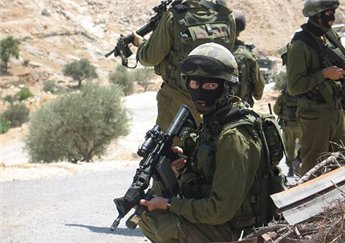 Israeli soldiers deploy during an arrest raid near Jenin [MaanImages, File]
JENIN – Israeli forces arrested two Hamas members in Jenin late Friday, local residents and security sources said.
Muhammad Ahmad Sokiyeh, 38, and Mahdi Hasan Hifawiyah, 34, were driving with their wives when “undercover” forces stopped their cars and took them to an undisclosed location, Palestinian security sources said.
The sources said Israel’s operatives opened fire in order to stop their cars. There were no reports of injury.
Sokiyeh has been wanted since 2005 and Hifawiyah has spent time in Israeli custody.
An Israeli military spokeswoman said there were no arrests in Jenin overnight.
Israeli occupation detains lawmaker Anwar Zaboun
Palestine Information Center – 26/08/2011
 BETHLEHEM — Israeli Occupation Forces (IOF) detained, Friday at dawn, Anwar Zaboun (45 years), member of the Palestinian Legislative Council, after raiding his home in the southern West Bank city of Bethlehem.
Local sources in the Bethlehem district said that a number of IOF troops aboard a number of military vehicles entered Bethlehem, they encircled the home of Anwar Zaboun, raided it and took the lawmaker away.
Zaboun was detained along with other Hamas PLC members in 2006 after occupation soldier Gilad Shalit was captured by Palestinian resistance. He was released about 18 months ago after serving a 49-month term.
With the arrest of Zaboun, the number of Hamas lawmakers detained by the Israeli occupation rises to 19, including lawmaker Muhammad Abu Juhaisha who was arrested a few days ago in al-Khalil.
The Israeli occupation has escalated its arrests of Hamas supporters in the southern West Bank districts of al-Khalil and Bethlehem after the Elat attack.
The Ghosts of Empire Are Returning To Haunt Britain – and the US
By Johann Hari – May 28, 2009
In a few weeks, a group of quiet, dignified elderly men and women will arrive in London to explain how the forces of the British state crushed their testicles or breasts with pliers. It was part of a deliberate policy of breaking a civilian population who we regarded as “baboons”, “barbarians” and “terrorists.” They will come bearing the story of how Britain invaded a country, stole its land, and imprisoned an entire civilian population in detention camps – and they ask only for justice, after all this time.
As a small symbol of how we as a country have not come to terms with our history, compare the bemused reaction to the arrival of these Kenyan survivors of Britain’s gulags to the recent campaign supporting the Gurkhas. We have all waxed lyrical over the Nepalese mercenaries who were, for two centuries, hired by the British Empire to fight its least savory battles. Sometimes they were used in great causes, like the defeat of Nazism. Sometimes they were used to viciously crush democratic movements in India or Malaya or Pakistan. But they obediently did the bidding of the Empire – so they are a rare bunch of foreigners who the right will turn moist over and welcome to our island.
I too strongly supported their rights to reside in Britain, out of simple humanity – if they’re good enough to die for us, they’re good enough to live with us. But isn’t it revealing that even in 2009, we can cheer the servants of Empire but blank the people mutilated and murdered by it? There will be no press campaigns or celebrity endorsements for the survivors of the Kenyan suppression when they issue a reparations claim in London next month. They will be met with a bemused shrug. Yet their story tells us far more.
The British arrived in Kenya in the 1880s, at a time when our economic dominance was waning and new colonies were needed. The Colonial Office sent in waves of white settlers to seize the land from the local “apes” and mark it with the Union Jack. Francis Hall was the officer of the East India Company tasked with mounting armed raids against the Kikuyu – the most populous local tribe – to break their resistance. He said: “There is only one way of improving the [Kikuyu] and that is to wipe them out; I would only be too delighted to do so but we have to depend on them for food supplies.”
The British troops stole over sixty thousand acres from the Kikuyu, and renamed the area “the White Highlands.” But the white settlers were aristocratic dilettantes with little experience of farming, and they were soon outraged to discover that the “primitives” were growing food far more efficiently on the reserves they had been driven into. So they forced the local black population to work “their” land, and passed a law banning the local Africans from independently growing the most profitable cash crops – tea, coffee, and sisal.
The people of Kenya objected, and tried to repel the invaders. They called for “ithaka na wiyathi” – land and freedom. After peaceful protests were met with violence, they formed a group, dubbed the Mau Mau, to stop the suppression any way they could. They started killing the leaders appointed by the British, and some of the settlers too. As a result, the London press described them as “evil savages” and “terrorists” motivated by hatred of Christianity and civilization. They had been “brainwashed” by “Mau Mau cult leaders”, the reports shrieked.
The 1.5 million Kikuya overwhelmingly supported the Mau Mau and independence – so the British declared war on them all. A State of Emergency was announced, and it began with forced removals of all Kikuyu. Anybody living outside the reserves – in any of the cities, for example – was rounded up at gunpoint, packed into lorries, and sent to “transit camps”. There, they were “screened” to see if they were Mau Mau supporters. One of the people locked up this way for months was Barack Obama’s grandfather.
Professor Caroline Elkins, who studied the detention camps for five years for her remarkable book ‘Britain’s Gulag: The Brutal End of Empire in Kenya’, explains the tactics adopted by the British to snuffle out Mau Mau. “Electric shock was widely used, as well as cigarettes and fire,” she writes. “Bottles (often broken), gun barrels, knives, snakes, vermin and hot eggs were thrust up men’s rectums and women’s vaginas. The screening teams whipped, shot, burned, and mutilated Mau Mau suspects.”
The people judged to be guilty of Mau Mau sympathies were transferred to torture camps. There, each detainee was given a number which they had to wear on a band on their wrist. They were then stripped naked and sent through a cattle dip, before the torture would begin again. “Detainees were frog-marched around the compound and beaten until blood ran from their ears,” Elkins writes.
The Kikuyu survivor Pascasio Macharia describes some of the tortures he witnessed: “The askaris [guards[ brought in fire buckets full of water, and the detainees were called on by one, [my friend] Peterson first. The asakaris then put his head in the bucket of water and lifted his legs high in the air so he was upside down. That’s when [one of the camp commandants] started cramming sand in Peterson’s anus and stuffed it in with a stick. The other askari would put water in, and then more sand. They kept doing this back and forth… Eventually they finished with Peterson and carried him off, only to start on the next detainee in the compound.”
Another favoured torment was to roll a man in barbed wire and kick him around until he bled to death. Typhoid, dysentery and lice sycthed through the population. Castration was common. At least 80,000 people were locked away and tortured like this. When I reported from Kenya earlier this year, I met elderly people who still shake with fear as they talk about the gulags. William Baldwin, a British member of the Kenya Police Reserve, wrote a memoir in which he cheerfully admits to murdering Kikuya “baboons” in cold blood. He bragged about how he gutted them with knives while other suspects watched. Another British officer, Tony Cross, proudly called their tactics “Gestapo stuff.”
For the civilians outside, life was only slightly better. Women and children were trapped in eight hundred “sealed villages” throughout the countryside. They were surrounded by barbed wire and armed guards, and forced at gunpoint to dig trenches that sealed them off from the world.
There was always another, honorable Britain who fought against these crimes. The Labour left – especially Barbra Castle and Nye Bevan – fought for the camps to be exposed and shut. They didn’t succeed until the British imperialists were finally forced to scuttle away from the country entirely. We will never know how many people they murdered, because the colonial administration built a bonfire of all the paperwork on their way out the door. Elkins calculates it is far more than the 11,000 claimed by the British government, and could be as many as 300,000.
Yet in Britain today, there is a blood-encrusted blank spot about Empire. On the reality show The Apprentice, the contestants recently had to pick a name for their team, and they said they wanted “something that represented the best of British” – so they settled on “Empire.” Nobody objected. Imagine young Germans blithely naming a team “Reich”: it’s unthinkable, because they have had to study what their fathers and grandfathers did, and expunge these barbarous instincts from their national DNA.
This failure to absorb the lessons of Empire is not only unjust to the victims; it leads us to repeat horrifying mistakes. Today, we are – with the Americans – using unmanned drones to bomb the Pakistan-Afghan borderland, as we did a few years ago in Iraq. Nobody here seems to remember that the British invented aerial counter-insurgency in this very spot – with disastrous consequences. In 1924, Arthur ‘Bomber’ Harris bragged that all rebellion could be stopped with this tactic. We have shown them “what real bombing means, in casualties and damage: they know that within 45 minutes a full-sized village can be practically wiped out and a third of its inhabitants killed,” he said. Yet instead of “pacifying” them, it radically alienated the population and lead to an uprising. If we knew our history, we would not be running the same script and expecting a different ending.
Gordon Brown said last year (in India, of all places) that “the days of Britain having to apologise for its colonial history are over.” The survivors of England’s blanked-out torture camps are entitled to ask: when did we start?
To read my series of articles criticizing the imperialist historians Niall Ferguson and Andrew Roberts, click here, here and here.
Johann Hari is an award-winning journalist who writes twice-weekly for the Independent, one of Britain’s leading newspapers.
Israel kills six Gazans in 24 hours
Press TV – August 25, 2011
Medical sources in the Gaza Strip say at least six people have been killed in Israeli attacks against the coastal sliver in the past 24 hours.
Five people were killed and 30 others wounded in a series of pre-dawn Israeli attacks that continued into the early hours of Thursday, AFP Adham Abu Selmiya, a spokesman for Gaza’s emergency services, as saying.
Among the killed were two members of the Islamic Jihad Movement identified as Ismail al-Asmar, 34, and Ismail Amum, 65.
Asmar was killed when his vehicle was targeted by an Israeli missile on Wednesday morning in the southern city of Rafah. Amum’s body was also found after he was killed in an earlier strike near Deir al-Balah in central Gaza.
Another Jihad activist, 20-year-old Atiya Muqat also lost his life in an Israeli attack on Wednesday evening and a separate attack on Rafah killed a civilian working inside Gaza’s underground tunnels across the Egyptian border.
Israel continued its attacks on the beleaguered Gaza Strip on Thursday morning, when its warplanes pounded a sports hall in the northern town of Beit Lahiya, killing a civilian and wounding another 20.
Hours later, a civilian critically wounded in Beit Lahiya died due to the severity of his injuries.
Tel Aviv has threatened more attacks on the Gaza Strip, which has been under an all-out Israeli siege tightened since 2007.
Israel has stepped up its airstrikes against the besieged Gaza Strip over the past few days, killing more than 20 people in the Palestinian coastal sliver and leaving scores more injured.
Don’t look away from Kashmir’s mass graves and people’s struggle
By Ali Abunimah – The Electronic Intifada – 08/24/2011
Last Summer, during a massive unarmed revolt against Indian rule in Kashmir, the writer Pankaj Mishra posed the following question about the situation in the territory. It remains as valid today as a year ago – especially after the recent discovery of thousands of bodies in mass graves:
Once known for its extraordinary beauty, the valley of Kashmir now hosts the biggest, bloodiest and also the most obscure military occupation in the world. With more than 80,000 people dead in an anti-India insurgency backed by Pakistan, the killings fields of Kashmir dwarf those of Palestine and Tibet. In addition to the everyday regime of arbitrary arrests, curfews, raids, and checkpoints enforced by nearly 700,000 Indian soldiers, the valley’s 4 million Muslims are exposed to extra-judicial execution, rape and torture, with such barbaric variations as live electric wires inserted into penises.
Why then does the immense human suffering of Kashmir occupy such an imperceptible place in our moral imagination? After all, the Kashmiris demanding release from the degradations of military rule couldn’t be louder and clearer. India has contained the insurgency provoked in 1989 by its rigged elections and massacres of protestors. The hundreds of thousands of demonstrators that fill the streets of Kashmir’s cities today are overwhelmingly young, many in their teens, and armed with nothing more lethal than stones. Yet the Indian state seems determined to strangle their voices as it did of the old one. Already this summer, soldiers have shot dead more than 50 protestors, most of them teenagers.
The tolls of last summer’s unarmed uprising, violently suppressed by Indian forces with live fire, eventually rose to more than 100. And, though Kashmir is even less in the headlines today, protests and abuses – particularly the arrests and mistreatment of teenage boys – continue.
For decades, until today, the two-thirds of Kashmir under Indian control has been ruled under the Armed Forces Special Powers Act, emergency rule as repressive as the worst Arab dictatorship.
Mass graves uncovered
If all the suffering of the living in Kashmir has not succeeded in awakening international concern, the recent revelations of mass graves must. Amnesty International reported on 22 August:
Following a report by a police investigation team, confirming the existence of unmarked graves containing bodies of persons subject to enforced disappearances, urgent action needs to be taken including preserving the evidence and widening the investigation across Jammu and Kashmir said Amnesty International today.
Over 2700 unmarked graves have been identified by the 11-member police team of the State Human Rights Commission (SHRC) in four districts of north Kashmir. Despite claims of the local police that the graves contained dead bodies of “unidentified militants”, the report points out that 574 bodies have been identified as disappeared locals – 17 of these have already been exhumed and shifted to family or village grave sites.
The police report concludes that there is “every probability” that the remaining over 2100 unidentified graves “may contain the dead bodies of [persons subject to] enforced disappearances.” The report further clarifies that the only way to negate such a claim is to study the DNA profiles of the unidentified dead bodies and warns that in the absence of such tests, “it has to be assumed/ presumed that [the] State wants to remain silent deliberately to hide the Human Rights violations.”
While Amnesty welcomed this report, it calls on Indian authorities:
to initiate thorough investigations into unmarked graves throughout the state. All unmarked grave sites must be secured and investigations carried out by impartial forensic experts in line with the UN Model Protocol on the disinterment and analysis of skeletal remains.
The fact that an investigation has reached this point at all is to India’s credit, but given its appalling record in Kashmir, there is little reason to believe that India will provide justice for victims without strong pressure and exposure.
The silence of the liberals
While almost every other week, the United States issues orders to this or that country’s leader to step down, or to (very selectively) “respect human rights,” the Obama administration has been totally silent about the crisis in Kashmir. During his visit to India last year, Obama did not mention it.
In US media and establishment discourse, India is often presented as a colorful, “vibrant democracy” with a booming economy and an emerging middle class which is eyed hungrily by American corporations looking to export consumer goods – or jobs to India’s cheaper labor force.
I was reminded of the general obliviousness to the situation in Kashmir by a recent comment on Twitter from Princeton Professor Anne-Marie Slaughter, former Director of Policy Planning in Obama’s State Department, on the occasion of India assuming the chairmanship of the UN Security Council:
@SlaughterAM
Anne-Marie Slaughter If India wants to distinguish itself as chair of the UNSC in August, it can take the lead on a serious int’l response to Syrian violence.
Aug 02 via webFavoriteRetweetReply
I can’t think of an occasion when I have heard American establishment intellectuals call for a “serious international response” to the repression in Kashmir; and surely if India wants to “distinguish itself” in international leadership it should deal frankly with the situation in Kashmir.
Israel and India, Hindutva and Zionism
Although the crisis in Kashmir is off the media radar – and that of many writers and activists concerned with Palestine – thanks to many people in Kashmir I have encountered via Twitter, I have become more educated about the situation. Nonetheless, in recent years, the patterns of Indian behaviour and discourse around Kashmir have come to closely resemble those of Israel toward the Palestinians.
This has been particularly true with the rise of Hindutva over the past two decades – an extreme form of Indian nationalism which views Muslims as alien and often denigrates them in ways familiar to Palestinians subjected to such dehumanizing discourses from Islamophobic Zionists and their allies in Europe and the United States.
Hindutva nationalists and Zionists often try to reframe the “conflicts” not as ones over human and political rights, sovereignty, consent and self-determination, but as being caused by irrational and implacable “Muslims” and “Islamists” who if not confronted and stopped will take over the world. In this context, all the repression and state violence to which millions of people are subjected is justified in the name of “fighting terror” and defending “democracy” and “civilized values.”
And, as Yasmin Qureshi pointed out in an analysis for The Electronic Intifada, Zionist and Hindutva groups are increasingly cooperating on US university campuses to try to shut down discussions of both Palestine and Kashmir.
India-Israel alliance aids repression
The cooperation moreover is not just discursive: India has greatly increased its military ties with, and weapons purchases from Israel – including drones. And Shin Bet and other Israeli agencies responsible for human rights abuses and extrajudicial executions of Palestinians and Lebanese have provided training and advice to India on how to suppress the people of Kashmir.
“My most recent film is about the Jammu Kashmir Liberation Front in India. I am not allowed in India anymore. Interestingly, India is one of the biggest arms trade partners of Israel,” Israeli filmmaker Udi Aloni told The Electronic Intifada last year, “India uses the same tactics against the Kashmir people as Israel does against the Palestinians.”
Justice must not be delayed
Ultimately there can be no solution to the question of sovereignty over Kashmir – a painful remnant of British colonialism – until the region’s people are given the right to determine their future, a promise made and long denied to them, free from manipulation by India or Pakistan, which controls most of the rest of the territory (China also occupies a smaller segment). Pakistan has its own ignoble record of interference in Kashmir and using its people as pawns in its conflict with India.
In the meantime, India’s global image as a “vibrant democracy” should not be allowed to obscure the reality of mass repression – and mass graves – or to delay justice for the victims any further.
Israel uses mini-drone for assassinations
Press TV – August 24, 2011
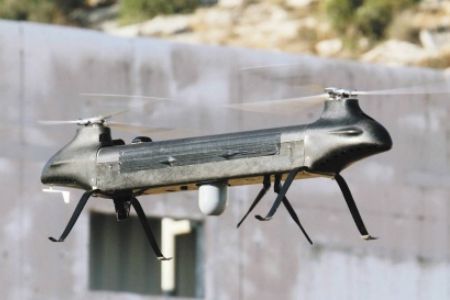 Israel has designed a miniature unmanned aerial vehicle (UAV) to help Israeli intelligence services identify and target leaders of Palestinian resistance movements.
The newly unveiled spying UAV, dubbed Ghost, is an almost silent drone that weighs 9 pounds (nearly 4 kilograms), UPI reported.
The twin-rotor vertical take-off drone is designed for special clandestine operations in urban areas and has a range of around 2.5 miles (four kilometers), a flight endurance of 6 hours and speed of around 37 miles (59.5 kilometer) an hour.
The device can be carried in backpacks, along with spare batteries and a computer, by two soldiers who control it from a laptop computer.
The mini-helicopter, 4.76 feet in length and with a rotor span of 2.46 feet, is said to be capable of flying into buildings through windows to provide real-time intelligence for special forces or company-size infantry units. It can also provide ground forces with a unique horizontal, eyelevel visibility. Which means a comprehensive view of their targets and operational environment that lookdown UAVs cannot offer.
First displayed in March, the Ghost is to be soon marketed in the United States, where it was first unveiled.
The UAV can track targets for assassination by war drones, helicopter gunships or F-16 strike jets using precision-guided munitions, a tactic frequently used against Palestinian leaders.
West Bank village under siege faces live-ammo, arrests and concussion grenades at nonviolent demo
By Alex Kane | Palestine State of Mind | August 22, 2011
The West Bank village of Beit Ommar has had a tough August, withstanding frequent Israeli military raids that see soldiers shoot tear-gas into residential areas and arrest Palestinian minors. Last Saturday, the month got even tougher for activists resisting illegal Israeli settlements and land confiscation.
The Israeli military repressed the Beit Ommar popular committee’s most recent demonstration on August 20. The Israel Defense Forces (IDF) fired live ammunition and concussion grenades, arrested five people, and broke the arm of a member of the committee before they detained him.
The demonstrators, who protest weekly, were attempting to access Beit Ommar’s land near the settlement of Karmei Tzur and were also expressing solidarity with the people of Gaza, which until last night had been under a sustained air assault by the Israeli Air Force.
The Ma’an News Agency reported on the Beit Ommar protest:
Israeli forces on Saturday used live ammunition to disperse a demonstration against land confiscation in Beit Ummar near Hebron, local officials said.
Popular committee spokesman Younis Arar said soldiers stormed the rally as demonstrators marched toward the illegal Karmi Zur settlement, built on Palestinian-owned land.
Arar said it was the first time Israeli troops used live bullets at the weekly protest in Beit Ummar. He added that forces assaulted several protesters.
Yousef Abu Marya, a popular committee member in Beit Ommar, was “brutally beaten” and had his arm broken by Israeli soldiers, according to the Palestine Solidarity Project, a Beit Ommar-based Palestinian-led direct action group. Last week, while I was reporting from Beit Ommar, Abu Marya told me the Israeli military broke his arm two times before, in May and July of this year.
According to an international activist with the Palestine Solidarity Project, the IDF refused to let Abu Marya see a doctor for at least eight hours.
Beit Ommar’s recent troubles did not begin on Saturday, though. As I reported for +972 Magazine last week, the IDF has raided the village of 16,000 five times during August:
A spate of Israeli army raids at night and arrests of young Palestinians have occurred since the beginning of August, shattering any hope for calm during Ramadan. While Israeli military incursions into Beit Ommar are common, residents and activists say that the number of raids and arrests that have occurred in August is particularly high. There have been five occasions this month in which the Israel Defense Forces (IDF) have invaded the village, three of them that have occurred this past week—and the month is not even half over.
Witnesses to the raids and local activists say that the Israeli army has been shooting tear gas, sound bombs and flares into residential areas—in some cases causing injuries—and have arrested fifteen young Palestinians under the age of eighteen this month. A landmark B’Tselem report recently released highlighted how common the arrest of minors is in the occupied territories…
The Israeli army’s repression in the village has not been limited to night raids, though. For the first time during the month of Ramadan, Beit Ommar residents and Israeli and international activists held a demonstration August 13, protesting land confiscation and the nearby settlement of Karmei Tzur. At the demonstration, IDF soldiers repeatedly pushed back Palestinian residents of Beit Ommar attempting to access their land near the settlement, which was declared a closed military zone. Beit Ommar is surrounded by six settlements, of which Karmei Tzur is one.
When the demonstration was over, one Palestinian, a forty-two year old man named Sakhar Abu Marya, was arrested and taken into a military jeep. Recounting the events later, he said that a hood was placed over his head, and that he was beaten by the soldiers. While he was interrogated, soldiers said that, while they would release him now, they would come to his house later and arrest him. Soldiers also brought out food and soda to mock Abu Marya, who is fasting for Ramadan. He was then dropped off at the gate of the Karmei Tzur settlement, without being charged with anything.
Israeli Army Again Targets Jenin’s Freedom Theatre
Alternative Information Center | 22 August 2011
Jenin – After the Israeli army targets the theatre twice during the last month, arresting three of its members, today at approximately 02:00 in the morning of the 22nd August the Israeli army surrounded The Freedom Theatre and the Nagnaghiya family home.
Jacob Gough, the Acting General Manager at The Freedom Theatre left the office at about 01:45: “As I literally entered my home I got a call from neighbours of the theatre saying the army had surrounded the theatre.”
Jacob then returned to the theatre and as he drove into the courtyard was confronted by armed soldiers who forced him to turn around threatening violence if he didn’t. After a second attempt to get closer to the theatre he was forced to strip at gunpoint before being detained. “They said that they’ll beat me up if I even say a word or move”.
During this, the army were inside the home of Mohammed Naghnaghiye, the security guard at the theatre and brother of Adnan Nagnaghiya. Here they beat Mohammed before taking him away in handcuffs then proceeded to ransack all 3 floors of his family home leaving them in disarray. As the army left the area they fired live ammunition in an attempt to disperse the crowds of youth that had gathered.
These events come after a military court hearing that took place yesterday (21st August) in Jalame prison outside of Jenin. At the court hearing it was established that the three previously taken members of The Freedom Theatre had no connection to the murder of the theatre’s late director Juliano Mer Khamis and must be released within the week.
“This behaviour is mounting to systematical harassment of The Freedom Theatre by The Israeli army, it is scandalous. This proves that the Israeli army and security apparatus is either lost in their investigation or that they have the actual intention of damaging the theatre. It also seems that after the murder of Juliano Mer Khamis The Freedom Theatre is no longer exempted from the kind of oppression the Palestinian society is subjected to in general.” says Jonatan Stanczak, co-founder of The Freedom Theatre.
Many injured in Hebron house demolition
22 August 2011 | International Solidarity Movement, West Bank
At 10pm Sunday August 21st the Hasan Ali Darwish Al-Qawasmi house in the Abo Ktelah district was raided and later destroyed by Israeli Occupation Forces (IOF). Around eight armoured vehicles surrounded the house and at least 40 soldiers were blocking every entrance. The IOF had arrived at the house at 8 pm. They told family members that it would take 20 minutes but three and a half hours later they remained in occupation of the house. A row of 14 soldiers blocked the main entrance to the house. Female family members stood in front of them and demanded that they be allowed back into their home.
A family member accounted that Israeli soldiers had already arrested their husbands and were also guilty of the imprisonment of seven brothers and the death of two other brothers of one particular woman. This woman arrived at the house with her baby in her arms to defy and stand up to the Israeli soldiers. After a while the army emerged from the house with a blindfolded and handcuffed man who looked as though he had been beaten.
The soldiers took him away in a jeep. The IOF informed the family and other bystanders that a suspected “suspicious object” was in the home that needed to be disposed of, which coincidentally meant exploding a section of the house. Everyone was pushed aside in preparation for the explosion, which took place in the yard of the house. The massive explosion smashed all the windows and damaged a neighbor’s home.
During the raid clashes between Palestinians and the army started, leaving at least 30 injured with the possible rumor that of the injured, one was killed. Details have yet to be confirmed.
The army was shooting a large amount of tear gas directly at protesters and according to witnesses they probably also used rubber coated steel bullets. The IOF fled at around midnight and the protestors went to inspect the damaged house. Once being allowed back into the home the family members found their home torn apart. Sofa chairs had been ripped open, picture frames had been smashed and glass lay everywhere. Their home had been destroyed.
Witnesses said that 10 days ago another member of the Al-Qawasmi family had been arrested. On the night of August 20th IOF arrested 10 other people in this same neighborhood. This frightful scene concluded with an elderly female relative, who had been trapped in the house during the raid, being carried out on a stretcher by Palestinian ambulances. The ambulances also tended to severely injured protestors.
Featured Video

AIDS Inc. by Gary Null (2007)
or go to
Aletho News Archives – Video-Images
From the Archives
Clash of Civilization, Iran Part II
By Jamal Kanj – Intifada-Palestine.com – January 14, 2011
Israel’s survival kit is: perpetuate conflict, insecurity to rationalize collective hate and finally playing victim.
Devoid of conflict, Israel implodes internally; without hate, Zionism loses its justification; and playing eternal victim to continue blackmailing the West. Absence of this holy trinity, Israel ceases to exist.
From its inception, the house of Zion has mastered exploiting adversarial powers to advance Israel’s cause. For instance, their influence over the Democratic Party in the US began with President Truman’s bid for 2nd term election in 1948.
Responding to strong opposition from Secretary of State General George Marshall and Department experts urging against recognition of Israel, President Truman replied: “I’m sorry gentlemen but I have to answer to hundreds of thousands [Jewish voters] who are anxious for the success of Zionism. I do not have hundreds of thousands of [voting] Arabs among my constituents”
Zionists influence over liberal American politics was matched with the doctrinal school of Conservative theoreticians aligning the Republican Party’s platform with Israel’s objectives. The Neoconservative Zionists, coined Zioncons, invented the “Clash of Civilization” concept to fight Israel’s wars. … continue
Blog Roll
 Aletho News
- Merck Virologists Admitted to Falsely Certifying Vaccine Efficacy
- Mandatory Folic Acid for every man, woman & child
- Pro-Palestine protesters arrested outside UK’s ruling Labour Conference in Liverpool
- Mauritius denies landing permit to flight from Israel, forcing cancellation: Tour operator
- Israeli finance minister calls for genocidal war on West Bank, annexation of south Lebanon
- 12 Things Your Psychiatrist Was Trained Not to Tell You
- From Unipolar Universalism to Multipolar Civilizational Distinctiveness
- RSF military group defects, joins Sudanese army: State media
- Ireland goalkeeper refuses to play ‘Israel’ as squad weighs boycott
- China pushes back against US on Cuba, Iran
- If Americans Knew
- Israel forces Gazans to live in constant peril – Daily Update
- Deconstructing Netanyahu’s pants-on-fire UN rant – Daily Update
- Trump betrayed voters with his campaign lies and prioritized a foreign country once he took office
- Netanyahu calls Israel’s war in Gaza ‘opposite of genocide’ in UN speech to near-empty hall
- Settler Kidnappings: Torture, Sexual Abuse and Terrorisation of Palestinian Abductees as Israel Deepens Annexation of West Bank
- Gaza winter nears as 162,000 tents become unusable, raising fears of humanitarian crisis
- Netanyahu says, “It’s the opposite of genocide”; UN says Gaza economy is world’s ‘most severe crisis on record’ – Daily Update
- Israel’s US-Backed Assault on Gaza Has Created the ‘World’s Most Severe Economic Crisis on Record’: UN
- ‘Protecting U.S. Citizens’… From Israel
- ‘This is where I live now, the back of a truck’: a day in the life of a grandmother in Gaza
- No Tricks Zone
- New Study: Earth And Venus Surface Warmth Largely Explained By Convection And Lapse Rate, Not CO2 Or Radiation
- 2025 Nature Paper Claiming Worsening Global Drought Gets RETRACTED …Heavily Flawed
- New Study: ‘Global Drought Shows No Detectable Recent Acceleration Under Climate Warming’
- Economic Masterminds: German Socialists Suggest Taxing Productivity Gains Stemming From Using AI
- The South China Sea Has Not Been Cooperating With The Climate Change Narrative
- Energy Crisis: Germany Enters Heating Season With Historically Low Gas Reserve Fill Levels
- New Study: The Antarctic Ice Sheet Gained Mass From 2020-2024 Due To Staggering Snow And Ice Accumulation
- Study: Ocean Heating Rates From Thousands Of Years Ago ‘Dwarf’ Modern Ocean Heating Rates
- Climate Extremists Target, Attack Large-Scale Power Grid Infrastructure In Germany!
- New Study: Antarctic Ice Melt Has Contributed Less Than 1 Centimeter To Sea Level Rise In The Last 30 Years

