Rumsfeld Must Face Vet’s Claim He Was Tortured
By JOE CELENTINO | Courthouse News Service | August 4, 2011
A U.S. citizen and Army veteran who says he was imprisoned and tortured by his own military can sue former Defense Secretary Donald Rumsfeld personally for damages, a federal judge ruled.
Court filings do not name the veteran, but note that he worked for the Marine Corps as an Arabic translator along Iraq’s Syrian border.
He claims he was the first American to begin direct talks with Sunni sheik Abdul-Sattar Abu Risha, who later became an important U.S. ally.
In November 2005, as he prepared to return home on leave, the man said he was taken into an interrogation room for four hours. He refused to answer the questions, citing concern for the confidentiality of sensitive information he had learned during his tour.
He was transported to Camp Cropper military jail for “high-value” detainees and kept for more than nine months. His family had no idea of his whereabouts or whether he was alive.
John Doe said interrogators exposed him to extreme cold and continuous bright light. They also allegedly blindfolded and hooded him, kept him awake by banging on the door and windows, and blasted heavy metal or country music into his cell at “intolerably loud volumes.”
Doe said he also sustained physical attacks from other detainees hostile to the United States because they learned about his military affiliation.
Though the government claimed he had provided classified information to the enemy and helping anti-coalition forces enter the country, he was never charged with a crime.
A detainee status board authorized the translator’s continued detention in December 2005, determining that he was a threat to coalition forces. Doe never got to talk to a lawyer and was not permitted to see the evidence against him.
In August 2006, Doe was placed on a military flight to Jordan and eventually made it back home. U.S. District Judge James Gwin, presiding in Washington by designation from his court in Ohio, found that Doe clearly has a civil rights case.
“The stakes in holding detainees at Camp Cropper may have been high, but one purpose of the constitutional limitations on interrogation techniques and conditions of confinement even domestically is to strike a balance between government objectives and individual rights even when the stakes are high,” Gwin wrote.
Rumsfeld argued that court intervention would improperly allow the court to review wartime matters and foreign affair constitutionally committed to the president and Congress.
But Gwin rejected this argument.
“Avoiding the ‘risk of assuming a role that is almost always best suited for Congress,’ however, does not recommend that courts be entirely powerless to review legislative or executive action during a time of war,” he wrote. “Rather, ‘a state of war is not a blank check for the president when it comes to the rights of the nation’s citizens.'”
Rumsfeld also cannot dodge the suit on qualified immunity grounds, Gwin said.
“Although it may be unlikely that Rumsfeld evaluated the detention conditions of each detainee in detail, it is not implausible that he authorized the use of interrogation techniques on the detainee population at Camp Cropper, or even on specific detainees,” the 47-page ruling states. “Though Doe must eventually support his factual allegations with evidence, a motion to dismiss simply calls upon the court to evaluate whether a plaintiff has alleged with specificity fact supporting a plausible claim.”
“This case affects tens of thousands of American citizens who work on behalf of the United States in warzones,” Doe’s attorney, Mike Kanovitz, told the Government Accountability Project. “We are relieved that the courts are going to exercise their constitutional role of judicial review instead of giving the president a blank check when it comes to the fundamental rights of U.S. citizens. There is a clear record showing that Mr. Rumsfeld authorized the use of brutal interrogation techniques that violated our nation’s constitution. Like all Americans, my clients just want a level playing field and a fair jury. Now they are going to get that.”
Doe’s suit is one of just two that has been allowed to proceed of the many against Rumsfeld alleging torture of detainees in Iraq.
Last year, two Americans filed suit claiming they were tortured following accusations of illegal activities by their company. A Chicago federal judge allowed them to hold Rumsfeld personally responsible for the torture. The 7th Circuit is expected to rule on the case soon.
British secret policy on torture unveiled
Press TV – August 5, 2011

Secret British policy discloses intelligence officers could get information from tortured prisoners.
A top-secret document has confirmed that British intelligence officers were allowed to get information from detainees who were being illegally tortured overseas.
The British government has been part of the torture policy for almost a decade, trying to repress the document, making a series of false statements. The document showed how the UK government allowed MI6 and MI5 to be involved in torture and then cover up that involvement.
The interrogation policy, which is claimed to be sensitive and therefore cannot be made public at the government inquiry into the UK’s role in torture and rendition, instructed high-ranking intelligence officers to “weigh the importance of the information being sought against the amount of pain they expected a prisoner to suffer,” the document read.
A copy of the secret policy demonstrated that British ministers and intelligence officers worried that the revelation of the secret document would put public safety at risk, adding the disclosure would also damage the reputation of the UK agencies.
“If the possibility exists that information will be or has been obtained through the mistreatment of detainees, the negative consequences may include any potential adverse effects on national security if the fact of the agency seeking or accepting information in those circumstances were to be publicly revealed.
“For instance, it is possible that in some circumstances such a revelation could result in further radicalisation, leading to an increase in the threat from terrorism,” one section read.
Human rights groups and lawyers have strongly opposed the decision that the interrogation of policy document and other similar secret papers would not be made public at the inquiry into the country’s involvement in torture and rendition.
Ten human rights groups, including Liberty, Reprieve, and Amnesty International expressed their refusal to give evidence or participate in the hearings, as the inquiry does not have “credibility or transparency,” and it’s arrangements are “secretive, unfair and deeply flawed.”
The inquiry led by Sir Peter Gibson, a retired judge, would begin after police investigation into torture accusations are completed.
This is while that, there is no evidence that the UK intelligence was directly involved in torturing the prisoners, because the intelligence officers left jails when the torture sessions began and returned only after the prisoners were physically abused.
In the case of Zeeshan Siddiqui, a British national suspected of having links with al-Qaeda who was captured by Pakistani officials in 2005, Human Rights Watch revealed that Siddiqui “reported being repeatedly beaten, chained, injected with drugs and threatened with further torture and sexual abuse.” He insisted that after being tortured, British intelligence officers began his investigation.
Human Rights Watch also takes the case of Salahuddin Amin as an example. Amin, also a British citizen, accused of plotting attacks on UK targets, was “repeatedly tortured by Pakistan’s notorious Inter-Services Intelligence Agency (ISI) and forced into a laundry list of false confessions”.
While he was being tortured he “was met by British intelligence officials on almost half a dozen occasions. He would be tortured, then forced back to his cell to do ‘homework,’ wherein he would provide a written confession at ISI instruction, then meet British interrogators the next day, who would ask questions on the same subjects. If the ISI felt his answers to the British agents were unsatisfactory, he would be told that he had embarrassed them ‘in front of our friends’ and be punished with further torture,” Amin said.
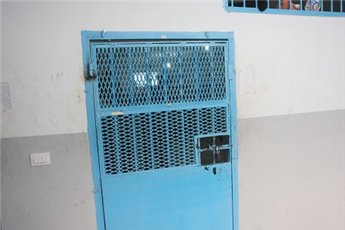
Wall Gate # 300
Alhaqhr | August 4, 2011
AL-KHALIL (HEBRON): Mekerot Water Company disrupts flow of water to Palestinian crops again
CPTnet | 1 August 2011
The Mekerot Water Company continues to disrupt the flow of water to Palestinian farms in the Beqa’a Valley. CPTers received a call on 20 July to document further damage to crops when the water company ripped out plastic irrigation pipes, saying that the Palestinians were stealing water. Seleh Jaber, a sixty-seven-year-old farmer, told CPTers that Mekerot also cut strings that support beans and cut pipes in violation of the Geneva conventions. (1)
Mekerot has destroyed cisterns and wells on the Jaber property, filling them with rocks, and has issued orders for the demolition of all wells in the valley. Jaber said that the interruption of water to crops damages the Palestinian economy. He also said that since farmers in the Beqa’a have many children, the denial of water damages families. Hassan Jaber, a family member whose new house is under construction after the Israeli military demolished his previous home, told CPTers Mekerot personnel beat young men with sticks and clubs when they are in the fields and Mekerot arrives to destroy irrigation equipment. Selah Jaber estimates that over eighty men, women, and children were affected by Mekerot’s pipe cutting venture on 20 July 2011. Shaddad Attili, the head of the Palestinian Water Authority, writing in the Jerusalem Post, June 2011, has listed numerous examples of Israel’s stranglehold on the water supply, such as denying permits for water exploration and destroying cisterns. The Palestinians thus face severe water shortages, despite the fact that the three principle underground aquifers of Palestine are found largely in the West Bank:
- The Yarkon-Tanninim Aquifer supplies Israel with about 340 million cubic meters of water annually, which are used by the Jerusalem-Tel-Aviv area. Palestinians use about 20 million cubic meters a year from this aquifer.
- The Nablus-Gilboa Aquifer supplies Israel with about 115 million cubic meters a year, largely for agricultural irrigation in the kibbutzim (communes) and moshavim (cooperative settlements) in Galilee.
- The Eastern Aquifer supplies about 40 million cubic meters annually to the Israeli settlements in the Jordan Valley, and about 60 million cubic meters to the Palestinians.
Israeli planners insist that the Yarkon-Taninim Aquifer is vital to Israeli water needs, and therefore would like to retain control of settlement blocks over that area, adjacent to the so called “center” of Israel, the Gush Dan area. Israel’s water supply always came from these aquifers, both during British mandate times and when Jordan ruled the area.
Seleh Jaber told CPTers, “The people of Beqa’a live in constant fear that their crops and way of life will be destroyed.” They are constantly seeking ways, in and out of the legal system, to plant and harvest beans, melons, tomatoes, and peppers as their families have done in Beqa’a for over 400 years.
Footnotes
(1) J. L. El Hindi, The West Bank Aquifer and Conventions Regarding Laws of Belligerent Occupation, Michigan Journal of International Law, Vol. 11, No. 4, Summer 1990.
Ufree condemns new indictment filed against mayor’s daughter
Palestine Information Center – 30/07/2011
 OSLO — The European network to support the Palestinian prisoners (Ufree) has condemned Israel’s continued detention of the 17-year-old daughter of the mayor of Al-Beira near the West Bank city of Ramallah.
The statement comes as the Israeli military prosecutor has placed new charges against her and signs of torture inside the prison have surfaced on her person.
The girl Bushra al-Tawil has been in Israeli custody for 25 days so far. She was abducted in a raid on her family’s home.
Ufree said that Israel was deliberately complicating releasing Tawil in a bid to bargain over her or use her to extort her father Mayor Jamal al-Tawil in a political game.
Israeli occupation forces had arrested Jamal al-Tawil as well as his wife on several occasions.
The Israeli Ofer military court ruled Thursday for the release of Tawil as no condemning evidence had been presented against her. But the military prosecutor quickly intervened and introduced an entirely new indictment against her. It also ordered that she be kept in detention and appear before another judge.
Ufree said that by keeping her detained after she was ruled a free girl; the Ofer court gave the prosecutor a fresh chance to present a new indictment against her, as the initial indictment had not been backed by evidence.
Since imprisoned, Tawil has experienced extreme physical pain, Ufree said quoting sources from her family. She was also tied up in awkward positions during the investigation process. Her family said that she appeared to have been suffering from fatigue and health problems when they last saw her bound in the courthouse.
Ufree said it will begin contacting international rights groups in an effort to unify efforts being made to support Tawil. It is also planning on preparing a document on Tawil to be presented to the UN Human Rights Council on Monday.
Israeli Army Attacks Dutch Music Orchestra with Tear Gas
PNN – 29.07.11
Nablus – The Dutch street orchestra ‘Fanfare van de Eerste Liefdesnacht’ (the First Night of Love Brass Band) from Amsterdam was attacked with tear gas today by the Israeli army during their performance in the Palestinian village Kufr Qadum near Nablus, northern West Bank.
The bands tour of Palestine is designed to be interactive, working with children from a refugee camp in the east of Bethlehem and having them play along with the band and dancing in the streets together.
The musicians were confronted with tens of soldiers who shot tear gas cannisters from behind their military jeeps during the musical performance. They then found themselves surrounded with snipers. Several members of the band were injured and suffered from tear gas inhalation.
Kufr Qadum is a village near Nablus that has suffered in recent years from radical jewish settlers who have attacked the villagers, cut down olive trees and set fire to fields. The roads that lead to the village are often blocked by Israeli military checkpoints.
The Dutch music orchestra has travelled around the West Bank for a duration of two weeks to perform in towns, villages and refugee camps. The band consists of 25 musicians with different musical instruments. They were invited by the town council of Kufr Qadum to perform in the village.
See the Dutch band performing ‘Unadikum’ at Yabous Festival in East Jerusalem:
Israeli soldiers attack Palestinian journalist
Ma’an – 30/07/2011

RAMALLAH — Palestinian photojournalist Moheeb Al-Barghouthi was beaten by Israeli soldiers Friday covering a demonstration in the Nabi Saleh village near Ramallah.
Al-Barghouthi, who works for the official Palestinian Authority newspaper Al-Hayat Al-Jadida, suffered head injuries and sustained bruises across his body in the attack.
He said soldiers destroyed his camera and confiscated some of his equipment.
The journalist said the soldiers accused him of “misrepresenting” the image of Israeli forces. They left him bleeding and handcuffed on the ground in intense heat for several hours, he added.
Al-Barghouthi was treated at hospital in Ramallah for light injuries.
Israel’s military responded in a statement that “the Palestinian in question was detained for violating a closed military area order. The man was questioned and released an hour later.”
The Palestinian Journalists Syndicate condemned the attack and expressed “grave concern” for the welfare of Palestinian media workers.
Settlers Attack International With An Iron Bar
By Katie Child | International Middle East Media Center | July 29, 2011
Three settlers from the illegal West Bank settlement of Havat Maon harassed three Palestinian shepherds and attacked two internationals observers near Mesheha hill. The masked settlers threw stones at the internationals as well as hitting one of them with an iron bar on the head.
The Palestinian shepherds were tending to their flocks when the settlers came to harass them and attack the internationals at 9:15AM Wednesday July 27, 2011.
The shepherds left the area before being attacked by the settlers but the Internationals were attacked.
One of the internationals was a member of the Christian Peacemaker Team. The settler ruined this international’s camera. After being attacked by the settler, the international was sent to the hospital to receive eight stitches.
The four unidentified settlers chased both of the internationals back to At-Tuwani.
The international organizations, Operation Dove and the Christian Peacemaker Team, have maintained a presence at At-Tawani and the south Hebron hills since 2004.
Operation Dove and the Christian Peacemakers team has captured six occasions where settlers from Havot Maon have attacked Palestinian’s or internationals by Mesheha hill since June 22, 2011, according to Maan News Agency.
All settlements and outposts in the West Bank are illegal under Israeli and international law.
World parliamentarians ‘appalled’ at Israel’s detention of Palestinian legislators
Palestine Information Center – 27/07/2011
GAZA — The Inter-Parliamentary Union said it was ”appalled” at Israel’s repeated detention of members of the Palestinian Legislative Council, calling it a violation of the Palestinians’ democratic rights.
The condemnation came in a letter by the IPU Human Rights Committee directed at Palestinian MP Mushir al-Masri, who heads the Gaza-based International Campaign for Releasing the Abducted Members of Parliament.
The letter came to clarify the IPU’s position during its latest session on 4 July 2011 with regard to the detention and banishment of PLC members.
It considered that the arrest campaign that followed the capture of Israeli soldier Gilad Shalit had political motives and was an arbitrary decision, given Israel was well aware that Hamas nominees would appear on the election ballot.
The IPU also condemned the indefinite terms of administrative detention faced by Palestinian elected officials, as a violation of human rights.
The letter points out that the IPU had dispatched an observer to attend the latest Israeli Supreme Court hearing over the banishment of three Palestinian politicians from Jerusalem, two of them being members on the PLC.
The body said it would further discuss the matter in its 125th session to take place in mid-October 2011.
The IPU, established in 1889, is the oldest multilateral political organization. It brings together 155 affiliated parliaments and eight regional assemblies as associate members.
The world organization of parliaments has an Office in New York which acts as its permanent observer at the United Nations.
Rights group outlines torture in Israeli detention
Ma’an – 28/07/2011
 BETHLEHEM — Palestinian detainees face torture and inhumane treatment in Israeli jails, a report by the Al-Mezan Center for Human Rights said Thursday.
In a publication documenting violations of human rights against Palestinians by the Israeli army over two years, the Gaza-based rights group outlined 85 cases of Palestinians tortured in Israeli prison.
One detainee told Al-Mezan he was prevented from sleeping for more than a few hours, bound in stress positions, spat at and bombarded with loud music, during a 42-day interrogation.
Nadedh Ali Abed-Rabbo, from Jabalia in north-east Gaza, passed out four times and lost 12 kilograms during the questioning, the report said. Upon his release in July 2010, he received medical treatment in Gaza City for loss of hearing, nerve spasms and ongoing head pain.
The report slammed what it called a “loophole” in the Israeli Supreme Court prohibition of torture, which allows Israeli interrogators to secure permission from supervisors for banned methods if they believe a detainee poses an immediate threat to public safety.
The provision, it said, allows for “practicing torture with impunity.”
“Israel continues to use administrative detention against an excessively high number of Palestinians, and for a prolonged period of time,” the report said.
As of April 2011, an estimated 192 Palestinians were held in administrative detention in Israel, it noted.
The study detailed around 50 Palestinian prisoners being held in solitary confinement, and at least 15 Palestinians from Gaza detained as “unlawful combatants.”
This label, applied since Israel evacuated its settlers from Gaza in 2005, “denies them [Palestinians from Gaza] further protections and allows Israel to place them in prolonged detention,” the report highlighted.
West Bank family visits to prisoners in Israeli jails were denied in 1,500 out of 80,000 cases, the report said.
Al-Mezan documented the detention of 28 rubble and scrap collectors, including four children, by the Israeli army near the buffer zone, and 75 attacks and 65 arrests of Gaza fishermen by Israeli forces off Gaza waters.
“The essence of the policy of the blockade is cruel, inhuman and degrading treatment of the population at large, a prima facie violation of the [Convention Against Torture],” the report noted.
The study, which examined Israeli violations between May 2009 and April 2011, called on the international community to put pressure on Israel to comply with its international obligations through their political, technical and trade relations with the state.
Undercover Forces Captured On Film Kidnapping A Palestinian Child in Jerusalem
By Saed Bannoura | IMEMC & Agencies | July 27, 2011
The Al Aqsa Foundation in Jerusalem published a video showing members of the undercover forces of the Israeli military attacking Palestinian children as they played in Ras Al Amoud Palestinian neighborhood in occupied East Jerusalem, and forcing one of them into their vehicle before driving away. The child was later taken to a graveyard where he was beaten by the soldiers.
The foundation said that the undercover forces kidnapped the child, Islam Jaber, 13, and detained him in Ras Al Amoud illegal settlement, in East Jerusalem, before taking him into a graveyard where they beat him repeatedly while he was cuffed and blindfolded inflicting concussions and bruises to different parts of his body.
The soldiers drove their vehicle against the children as they played football on a minor road in Ras Al Amoud, before jumping out of their car and violently grabbing Jaber.
Jaber said that the undercover forces violently attacked and beat him before trying to force him to sign some papers accusing him of unidentified violations, but he refused their demand and refused to give them any information when they asked him about his friends’ names and other info about them. … Full article
Featured Video

AIDS Inc. by Gary Null (2007)
or go to
Aletho News Archives – Video-Images
From the Archives
Fanatical Followers of the Covid Regime: A Jim Jones-Style Cult?
By Professor Roger Watson and Dr. Niall McCrae | The Daily Sceptic | November 15, 2021
As scholars at leading British universities over recent decades, we witnessed the replacement of critical thinking and debate by narrative: facts are discrimination and scientific method is imperialism; truth, instead, is derived from ‘progressive’ values. This educational trend may be a major contributory factor to the ease in which society has been inculcated to the Covid ‘new normal’ of masking, testing, and repeated doses of vaccines for a disease of similar risk to severe influenza.
One doesn’t need much critical reasoning to observe the flawed logic of some vaccination enthusiasts, such as people who respond to experiencing any side effects, however debilitating, by saying “at least I know it’s working”, or, after contracting the disease despite their promised inoculation (over 90% effective, according to initial drug company claims), “I’d have been worse off without the jab.” … continue
Blog Roll
 Aletho News
- Merck Virologists Admitted to Falsely Certifying Vaccine Efficacy
- Mandatory Folic Acid for every man, woman & child
- Pro-Palestine protesters arrested outside UK’s ruling Labour Conference in Liverpool
- Mauritius denies landing permit to flight from Israel, forcing cancellation: Tour operator
- Israeli finance minister calls for genocidal war on West Bank, annexation of south Lebanon
- 12 Things Your Psychiatrist Was Trained Not to Tell You
- From Unipolar Universalism to Multipolar Civilizational Distinctiveness
- RSF military group defects, joins Sudanese army: State media
- Ireland goalkeeper refuses to play ‘Israel’ as squad weighs boycott
- China pushes back against US on Cuba, Iran
- If Americans Knew
- Israel forces Gazans to live in constant peril – Daily Update
- Deconstructing Netanyahu’s pants-on-fire UN rant – Daily Update
- Trump betrayed voters with his campaign lies and prioritized a foreign country once he took office
- Netanyahu calls Israel’s war in Gaza ‘opposite of genocide’ in UN speech to near-empty hall
- Settler Kidnappings: Torture, Sexual Abuse and Terrorisation of Palestinian Abductees as Israel Deepens Annexation of West Bank
- Gaza winter nears as 162,000 tents become unusable, raising fears of humanitarian crisis
- Netanyahu says, “It’s the opposite of genocide”; UN says Gaza economy is world’s ‘most severe crisis on record’ – Daily Update
- Israel’s US-Backed Assault on Gaza Has Created the ‘World’s Most Severe Economic Crisis on Record’: UN
- ‘Protecting U.S. Citizens’… From Israel
- ‘This is where I live now, the back of a truck’: a day in the life of a grandmother in Gaza
- No Tricks Zone
- New Study: Earth And Venus Surface Warmth Largely Explained By Convection And Lapse Rate, Not CO2 Or Radiation
- 2025 Nature Paper Claiming Worsening Global Drought Gets RETRACTED …Heavily Flawed
- New Study: ‘Global Drought Shows No Detectable Recent Acceleration Under Climate Warming’
- Economic Masterminds: German Socialists Suggest Taxing Productivity Gains Stemming From Using AI
- The South China Sea Has Not Been Cooperating With The Climate Change Narrative
- Energy Crisis: Germany Enters Heating Season With Historically Low Gas Reserve Fill Levels
- New Study: The Antarctic Ice Sheet Gained Mass From 2020-2024 Due To Staggering Snow And Ice Accumulation
- Study: Ocean Heating Rates From Thousands Of Years Ago ‘Dwarf’ Modern Ocean Heating Rates
- Climate Extremists Target, Attack Large-Scale Power Grid Infrastructure In Germany!
- New Study: Antarctic Ice Melt Has Contributed Less Than 1 Centimeter To Sea Level Rise In The Last 30 Years

