Education in Palestine in world spotlight

The impact of the Israeli occupation on Palestinians’ right to education has previously not received enough attention. (Khaleel Reash/MaanImages)
Eva Bartlett | IPS | October 31, 2010
GAZA CITY – The focus on people’s movements in Palestine continues to gain momentum with growing non-violent demonstrations in Gaza, the occupied West Bank and occupied East Jerusalem, and with a Palestine-wide call for Boycott, Divestment and Sanctions (BDS) against Israel.
Years of the non-violent demonstrations throughout the occupied West Bank against Israel’s separation wall have finally generated some media interest in the issue of the wall and annexation of Palestinian land. Yet the behind-the- scenes work of Palestinian unions, Palestinian and international BDS groups, video conferences bridging Palestine to the outside world, and the struggle of Palestinian students to access an education continues largely unnoticed by the cameras.
In July, 2010, the United Nations IRIN news reported that roughly 39,000 Palestinian children from Gaza would not have schools to attend, following the destruction or severe damage of some 280 schools and kindergartens during the 2008-2009 Israeli war on Gaza, and the continued inability to repair or rebuild due to the severe Israeli-led siege on Gaza and lack of construction materials.
The UN also reports that 88 percent of UNRWA schools and 82 percent of government schools operate on a shift system as a result, still resulting in serious overcrowding.
On the heels of popular protests against the G-20 summit in Toronto, and branching from the annual World Social Forum (WSF), the first World Education Forum (WEF) in Palestine began Oct. 28 and in regions throughout historic pre-1948 Palestine. From Jaffa to Nazareth, Jerusalem, Bethlehem, and the Gaza Strip, forums on education and Palestinian culture continued until Oct. 31.
Dubbed ‘Education for Change’, the forums included global points of focus on education – including adult literacy and gender equity in early education – but delved further into Palestine-specific topics: occupation and emancipation; the psychological needs of Palestinian students traumatised by occupation and war; keeping Palestine’s history and culture prominent in educational programmes; the physical and bureaucratic roadblocks to higher education within and outside of Palestine; and the innovative means Palestinians use to educate themselves under six decades of occupation.
“Education is not only a basic human right, one that cannot [be] postponed or neglected during conflict or emergency, but also has a key role to play in protecting and sustaining the lives of children and youths,” says Dr. Mazen Hamada of Gaza’s Al-Azhar University and one of the WEF Gaza organisers. “The effect of siege on Gaza Strip has exceeded the economical, agricultural, heath and environmental levels to reach also the educational sector. The academic achievements of the students at all levels has decreased after the last war on Gaza, and the number of students not attending their classes has increased.”
Hamada notes that the siege’s simple act of banning paper and educational materials needed for schools affects students’ ability to study. He adds, “Because of the siege, many parents are unemployed and are not able to cover the tuition of their children at universities and schools. And university students aren’t able to continue their studies abroad, nor are professors able to participate in international conferences or obtain further training outside.”
The WEF-Palestine, over its four days of forums and events addressed these problems, while reiterating the need to include Palestinian culture and history in curriculum and activities.
“When I was a student, we studied Egyptian history and geography, we never even saw a map of Palestine in school,” says Abu Arab, 30, of his studies in Gaza under Egyptian control. “Palestinian culture wasn’t a part of the education programme then, especially since the Israelis could censor any information they didn’t want studied.”
“Ironically, I learned more about Palestine when I was in prison,” says Abu Basel. “I was imprisoned by the Israelis when I was 16 and hadn’t yet finished high school. Since they kept me for nine years, I had to finish my studies in jail.”
Like many Palestinians, Abu Basel used his time in prison to study from others who had an education. “Some had finished university, some had their Masters, some had studied abroad. We’d study together, like workgroups. We also studied Palestinian history and learned about Zionism.”
Specific to the WEF-Palestine is the problem of access: with all of Palestine’s borders controlled by Israel and Egypt, other means of communication and participation are vital. With group participation from Japan, Canada, Latin America, Africa, and Europe, the WEF-Palestine included video conferences and live streaming on the Internet, as well as interactive workshops, visits to important areas and cultural sessions.
In Gaza, participants joined a popular demonstration in Gaza’s northern Beit Hanoun, as well as meeting fishermen whose livelihoods have been destroyed by the siege and by attacks from Israeli gunboats in Gazan waters.
For farmers living in the buffer zone, the need to enhance education and international understanding is not simply a question of their children’s futures but also of their livelihoods, routinely destroyed by Israeli invasions.
The Garrara elementary school in southeastern Gaza is but one of many schools suffering from multiple problems under siege and under attacks by Israeli soldiers along the border. “We are under one kilometre from the border and the students experience regular firing from Israeli soldiers,” says Umm Mohammed, teacher at the school. “Many of our students have classmates who were killed or injured by these attacks, and that affects their psychological state and ability to study,” she says.
The school itself is still in shambles after the Israeli war on Gaza, and many of the students study in tents year-round.
The WSF a decade ago set out to promote notions of sustainable development, fair trade, and social justice. The WEF-Palestine by virtue of necessity focuses on the urgent educational issues at hand, but likewise harnesses the knowledge of grassroots activists, civil society groups, and educators, citing education as means of resistance, for peace and equality.
Al Azhar’s Dr. Hamada is positive about the outcome. “The WEF is a good opportunity to exchange information and experiences between Palestinians and other international educational organisations towards improving the educational system and teaching methodologies in Palestine,” he says.
As the statement from WEF-Palestine reminds everyone, “Transforming the world and liberating humanity from colonialism, racism and exploitation requires a struggling and educated population. Therefore education is an indispensable tool for liberation.”
UN: Gaza construction materials delayed
Ma’an – 02/11/2010
GAZA CITY — Less than 200 truckloads of food and commercial goods were slated to enter the Gaza Strip on Tuesday morning, Palestinian liaison officials said.
The goods, crossings official Raed Fattouh said, would be transported via the southernmost crossing Kerem Shalom, and would be transferred into Gaza along with limited amounts of industrial diesel and cooking fuel.
According to reports by the UN Office for the Coordination of Humanitarian Affairs, current import levels – controlled by new terms of siege established by Israel following a global outcry in June – remain less than 40 percent of pre-siege levels.
The latest report on the crossing from the UN body said the import of construction materials, which remain strictly controlled by Israeli officials, and banned, except for projects under international supervision – remains limited.
Projects spearheaded by the UN Relief and Works Agency, the main body charged with the care of Palestinian refugees in the Near East, have been delayed by Israeli border officials, the report said.
Of the 1.7 percent of building projects approved for Gaza, OCHA said, Israeli officials have only allowed a small fraction of the supplies necessary for reconstruction into the coastal enclave.
Citing capacity constraints of the conveyor belt at the northern bulk goods crossing, Karni, the report said only 39 of 226 truckloads of materials requested by UNRWA for the projects, mainly clinics and schools, have entered Gaza.
State-sanctioned torture in Israeli detention

Ma’an – 02/11/2010
RAMALLAH — PA Minister of Prisoners’ Affairs Issa Qaraqe released new information Monday revealing cases of child torture under Israeli interrogation.
The announcement came one day ahead of the release of an Israeli rights group document charging Israel with “state sanctioned ill-treatment of interrogees” in at least one detention facility in Petah Tikva, in central Israel.
Qaraqe outlined the case of 13-year-old sixth graders Muhammad Tare Abdul Latif Mukhaimar, and Muhammad Nasser Ali Radwan from the central West Bank town of Beit Ur At-Tahta. Both were detained by Israeli forces in July, he said, and related their stories of torture to officials.
Mukhaimar and Radwan said they were taken by Israeli border guards patrolling sections of Highway 443, a previously settler-only road which was installed with additional checkpoints when an Israeli court decision mandated that it be opened for Palestinian use. When he was forced into a patrol car, Mukhaimar said he was kicked in the legs and beaten with rifle butts until he fell to the floor. The boy said he was then blindfolded and moved to the detention center.
According to the joint B’Tselem and HaMoked report, testimonies from 121 detainees “indicate a clear pattern of activity by the authorities,” which “constitutes cruel, inhuman, and degrading treatment.”
Taken to the same detention facility detailed in the report, Mukhaimar said he and Radwan were locked by border guards naked in the facility bathroom and kept there for two days with the air conditioning on.
He was so thirsty, he said, that he and Radwan drank the toilet water. Whenever they became sleepy guards would bang on the door to the room and wake them up, he added.
“The most awful thing that happened, was when the soldiers went to the bathroom, they peed on us and did not use the toilet,” Mukhaimar said, adding that one of the soldiers videotaped the incident.
The two said that after at least 48 hours in the washroom, they were transferred to the Binyamin settlement detention facility, where they were questioned from 10 p.m. until 3 a.m. They were then transferred to the Ofer prison for three months then to Remonim prison. They remain in custody pending trial.
Testimonies from the two children were in line with revelations in the report from the rights groups, which said violations against detainees “begin from the moment of their arrest and continue until the detainee’s transfer from the facility.”
According to the collected testimony, “violations include cruel detention conditions in sealed cells, in isolation and disgraceful hygienic conditions, continuous cuffing of detainees’ hands in the interrogation room in a way that makes it impossible for them to move, sleep deprivation, and other methods that harm the detainees physically and mentally.
“Nine percent of the witnesses related that the interrogators used physical violence against them in the interrogation room.”
The report noted that “the use of any one of these means, certainly their combined use, constitutes cruel, inhuman, and degrading treatment, and in some instances, torture. All are strictly forbidden under international law and Israeli law.”
Qaraqe said the ministry will file a complaint against the Israeli soldiers involved in the torture of Mukhaimar and Radwan, and their ill-treatment was denounced in the Monday cabinet meeting of the Palestinian Authority.
A statement from the cabinet said “the repressive practices and measures by the occupation authorities” against children were in “violation of international law, human rights conventions relating to children.” Ministers called on rights institutions and the UN to “shoulder its legal and humanitarian efforts to protect our children and our prisoners from brutal Israeli practices against them in prisons and detention centers.”
State sanctioned ill-treatment
Findings of the rights group report, however, indicated there was little hope for justice at the Israeli courts.
Since 2001, the report noted, “Palestinians interrogated by ISA agents have filed 645 complaints to the Ministry of Justice regarding the manner in which they were interrogated. Not one of the complaints led to a criminal investigation against the interrogator.”
The rights groups said the continued use of torture and ill-treatment against Palestinian detainees is justified by the state “by claiming the actions are necessary to thwart serious acts of terrorism.”
However, analysts with the groups said “This claim does not warrant violation of the absolute prohibition on torture and cruel, inhuman, and degrading treatment,” and added that “Israel’s attempts to divert the public debate to what it refers to as the ‘ticking-bomb dilemma’ is artificial.”
Analysts cite the testimonies of detainees like Mukhaimar and Radwan who were not suspected of serious offenses. Some of the witnesses interviewed for the report were accused of acts political or religious in nature, it said, and prison sentences ranged from a few months to two years at most.
“The ill-treatment of the detainees continued after their interrogation ended,” the report continued, “refuting the claim that the means of interrogation chosen were intended to thwart acts of terrorism.”
‘Settlers up assaults on Palestinian kids’
Press TV – November 1, 2010

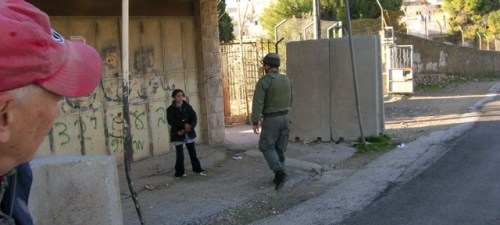
A new study has revealed that Israeli settlers have intensified acts of violence against Palestinian children over the past two years.
The study conducted by Defense for Children International-Palestine (DCI) said on Monday that it has investigated 38 cases of settler violence against minors.
The attacks caused the deaths of three children and left 42 others injured, the rights group said.
The study also found the attacks are usually carried out in groups and include verbal harassment, intimidation, physical assault and the destruction of property.
Physical assault and intimidation was reported in at least 15 cases, and stone throwing in another nine incidents. In 13 of the cases, settlers opened fire, killing three children and injuring another 10.
Verbal abuse was documented in almost every case, according to the report.
“Continued settlement expansion and a growing settler population in the occupied territory have severely impacted the security of the Palestinian population, particularly children, whose lives are increasingly threatened by willful attacks perpetrated by extremist settlers,” the report said.
In eight cases, soldiers colluded with the assailants either by joining in, turning a blind eye to or punishing the victims rather than the perpetrators.
Israel’s failure to enforce the law and hold the perpetrators accountable for their actions has “created an atmosphere in which settlers enjoy impunity and Palestinians live in fear,” the DCI study concluded.
Who Were the Witches? – Patriarchal Terror and the Creation of Capitalism
By Alex Knight | November 5, 2009
This Halloween season, there is no book I could recommend more highly than Silvia Federici’s brilliant Caliban and the Witch: Women, the Body, and Primitive Accumulation (Autonomedia 2004), which tells the dark saga of the Witch Hunt that consumed Europe for more than 200 years. In uncovering this forgotten history, Federici exposes the origins of capitalism in the heightened oppression of workers (represented by Shakespeare’s character Caliban), and most strikingly, in the brutal subjugation of women. She also brings to light the enormous and colorful European peasant movements that fought against the injustices of their time, connecting their defeat to the imposition of a new patriarchal order that divided male from female workers. Today, as more and more people question the usefulness of a capitalist system that has thrown the world into crisis, Caliban and the Witch stands out as essential reading for unmasking the shocking violence and inequality that capitalism has relied upon from its very creation.
Who Were the Witches?
Parents putting a pointed hat on their young son or daughter before Trick-or-Treating might never pause to wonder this question, seeing witches as just another cartoonish Halloween icon like Frankenstein’s monster or Dracula. But deep within our ritual lies a hidden history that can tell us important truths about our world, as the legacy of past events continues to affect us 500 years later. In this book, Silvia Federici takes us back in time to show how the mysterious figure of the witch is key to understanding the creation of capitalism, the profit-motivated economic system that now reigns over the entire planet.
During the 15th – 17th centuries the fear of witches was ever-present in Europe and Colonial America, so much so that if a woman was accused of witchcraft she could face the cruellest of torture until confession was given, or even be executed based on suspicion alone. There was often no evidence whatsoever. The author recounts, “for more than two centuries, in several European countries, hundreds of thousands of women were tried, tortured, burned alive or hanged, accused of having sold body and soul to the devil and, by magical means, murdered scores of children, sucked their blood, made potions with their flesh, caused the death of their neighbors, destroyed cattle and crops, raised storms, and performed many other abominations” (169).
In other words, just about anything bad that might or might not have happened was blamed on witches during that time. So where did this tidal wave of hysteria come from that took the lives so many poor women, most of whom had almost certainly never flown on broomsticks or stirred eye-of-newt into large black cauldrons?
Caliban underscores that the persecution of witches was not just some error of ignorant peasants, but in fact the deliberate policy of Church and State, the very ruling class of society. To put this in perspective, today witchcraft would be a far-fetched cause for alarm, but the fear of hidden terrorists who could strike at any moment because they “hate our freedom” is widespread. Not surprising, since politicians and the media have been drilling this frightening message into people’s heads for years, even though terrorism is a much less likely cause of death than, say, lack of health care.1 And just as the panic over terrorism has enabled today’s powers-that-be to attempt to remake the Middle East, this book makes the case that the powers-that-were of Medieval Europe exploited or invented the fear of witches to remake European society towards a social paradigm that met their interests.
Interestingly, a major component of both of these crusades was the use of so-called “shock and awe” tactics to astound the population with “spectacular displays of force,” which helped to soften up resistance to drastic or unpopular reforms.2 In the case of the Witch Hunt, shock therapy was applied through the witch burnings – spectacles of such stupefying violence that they paralyzed whole villages and regions into accepting fundamental restructuring of medieval society.3 Federici describes a typical witch burning as, “an important public event, which all the members of the community had to attend, including the children of the witches, especially their daughters who, in some cases, would be whipped in front of the stake on which they could see their mother burning alive” (186).
Witch burning was the medieval version of “Shock and Awe”
The book argues that these gruesome executions not only punished “witches” but graphically demonstrated the repercussions for any kind of disobedience to the clergy or nobility. In particular, the witch burnings were meant to terrify women into accepting “a new patriarchal order where women’s bodies, their labor, their sexual and reproductive powers were placed under the control of the state and transformed into economic resources” (170).
Federici puts forward that up until the 16th century, though living in a sexist society, European women retained significant economic independence from men that they typically do not under capitalism, where gender roles are more distinguished. “If we also take into account that in medieval society collective relations prevailed over familial ones, and most of the tasks that female serfs performed (washing, spinning, harvesting, and tending to animals on the commons) were done in cooperation with other women, we then realize… [this] was a source of power and protection for women. It was the basis for an intense female sociality and solidarity that enabled women to stand up to men.”
The Witch Hunt initiated a period where women were forced to become what she calls “servants of the male work force” (115) – excluded from receiving a wage, they were confined to the unpaid labor of raising children, caring for the elderly and sick, nurturing their husbands or partners, and maintaining the home. In Federici’s words, this was the “housewifization of women,” the reduction to a second-class status where women became totally dependent on the income of men (27).
The author goes on to show how female sexuality, which was seen as a source of women’s potential power over men, became an object of suspicion and came under sharp attack by the authorities. This assault manifested in new laws that took away women’s control over the reproductive process, such as the banning of birth control measures, the replacement of midwives with male doctors, and the outlawing of abortion and infanticide.4 Federici calls it an attempt to turn the female body into “a machine for the reproduction of labor,” such that women’s only purpose in life was supposedly to produce children (144).
But we also learn that this was just one component of a broader move by Church and State to ban all forms of sexuality that were considered “non-productive.” For example, “homosexuality, sex between young and old, sex between people of different classes, anal coitus, coitus from behind, nudity, and dances. Also proscribed was the public, collective sexuality that had prevailed in the Middle Ages, as in the Spring festivals of pagan origins that, in the 16th-century, were still celebrated all over Europe” (194). To this end, the Witch Hunt targeted not only female sexuality but homosexuality and gender non-conformity as well, helping to craft the patriarchal sexual boundaries that define our society to this day.
Capitalism – Born in Flames
What separates Caliban from other works exploring the “witch” phenomenon is that this book puts the persecution of witches into the context of the development of capitalism. For Silvia Federici, it’s no accident that “the witch-hunt occurred simultaneously with the colonization and extermination of the populations of the New World, the English enclosures, [or] the beginning of the slave trade” (164). She instructs that all of these seemingly unrelated tragedies were initiated by the same European ruling elite at the very moment that capitalism was in formation, the late 15th through 17th centuries. Contrary to “laissez-faire” orthodoxy which holds that capitalism functions best without state intervention, Federici posits that it was precisely the state violence of these campaigns that laid the foundation for capitalist economics.
Thankfully for the reader, who may not be very familiar with the history of this era, Federici outlines these events in clear and accessible language. She focuses on the Land Enclosures in particular because their significance has been largely lost in time.
Many of us will not remember that during Europe’s Middle Ages, before the Enclosures, even the lowliest of serfs had their own plot of land which they could use for just about any purpose. Federici adds, “With the use of land also came the use of the ‘commons’ – meadows, forests, lakes, wild pastures – that provided crucial resources for the peasant economy (wood for fuel, timber for building, fishponds, grazing grounds for animals) and fostered community cohesion and cooperation” (24). This access to land acted as a buffer, providing security for peasants who otherwise were mostly subject to the whim of their “Lord.” Not only could they grow their own food, or hunt in the relatively plentiful forests which were still standing in that era, but connection to the commons also gave peasants territory with which to organize resistance movements and alternative economies outside the control of their masters.
The Enclosures were a process by which this land was taken away – closed off by the State and typically handed over to entrepreneurs to pursue a profit in sheep or cow herding, or large-scale agriculture. Instead of being used for subsistence as it had been, the land’s bounty was sold away to fledgling national and international markets. A new class of profit-motivated landowners emerged, known as “gentry,” but the underside of this development was the trauma experienced by the evicted peasants. In the author’s words, “As soon as they lost access to land, all workers were plunged into a dependence unknown in medieval times, as their landless condition gave employers the power to cut their pay and lengthen the working-day” (72).
For Federici, then, the chief creation of the Enclosures was a property-less, landless working class, a “proletariat” who were left with little option but to work for a wage in order to survive; wage labor being one of the defining features of capitalism.
Cut off from their traditional soil, many communities scattered across the countryside to find new homesteads. But the State countered with the so-called “Bloody Laws”, which made it legal to capture wandering “vagabonds” and force them to work for a wage, or put them to death. Federici reveals the result: “What followed was the absolute impoverishment of the European working class… Evidence is the change that occurred in the workers’ diets. Meat disappeared from their tables, except for a few scraps of lard, and so did beer and wine, salt and olive oil” (77). Although European workers typically labored for longer hours under their new capitalist employers, living standards were reduced sharply throughout the 16th century, and it wasn’t until the middle of the 19th century that earnings returned to the level they had been before the Enclosures.5
According to Federici, the witch hunts played a key role in facilitating this process of impoverishment by driving a sexist wedge into the working class that “undermined class solidarity,” making it more difficult for communities to resist displacement from their land (48). While women were faced with the threat of horrific torture and death if they did not conform to new submissive gender roles, men were in effect bribed with the promise of obedient wives and new access to women’s bodies. The author cites that “Another aspect of the divisive sexual politics to diffuse workers’ protest was the institutionalization of prostitution, implemented through the opening of municipal brothels soon proliferating throughout Europe” (49). And in addition to prostitution, a legalization of sexual violence provided further sanction for the exploitation of women’s bodies. She explains, “In France, the municipal authorities practically decriminalized rape, provided the victims were women of the lower class” (47). This initiated what Federici calls a “virtual rape movement,” making it unsafe for women to even leave their homes.
The witch trials were the final assault, which all but obliterated the integrity of peasant communities by fostering mutual suspicion and fear. Amidst deteriorating conditions, neighbors were encouraged to turn against one another, so that any insult or annoyance became grounds for an accusation of witchcraft. As the terror spread, a new era was forged in the flames of the witch burnings. Surveying the damage, Silvia Federici concludes that “the persecution of the witches, in Europe as in the New World, was as important as colonization and the expropriation of the European peasantry from its land were for the development of capitalism” (12).
A Forgotten Revolution
Federici maintains that it didn’t have to turn out this way. “Capitalism was not the only possible response to the crisis of feudal power. Throughout Europe, vast communalistic social movements and rebellions against feudalism had offered the promise of a new egalitarian society built on social equality and cooperation” (61).
Caliban‘s most inspiring chapters make visible an enormous continent-wide series of poor people’s movements that nearly toppled Church and State at the end of the Middle Ages. These peasant movements of the 13th – 16th centuries were often labelled “heretical” for challenging the religious power of the Vatican, but as the book details they aimed for a much broader transformation of feudal society. The so-called “heretics” often “denounced social hierarchies, private property and the accumulation of wealth, and disseminated among the people a new, revolutionary conception of society that, for the first time in the Middle Ages, redefined every aspect of daily life (work, property, sexual reproduction, and the position of women), posing the question of emancipation in truly universal terms” (33).
Silvia Federici shows us how the heretical movements took many forms, from the vegetarian and anti-war Cathars of southern France to the communistic and anti-nobility Taborites of Bohemia, but were united in the call for the elimination of social inequality. Many put forth the argument that it was anti-Christian for the clergy and nobility to live in opulence while so many suffered from lack of adequate food, housing or medical attention.

Another common thread weaving the European peasant movements together was the leadership of women. Federici describes that, “[Heretical women] had the same rights as men, and could enjoy a social life and mobility that nowhere else was available to them in the Middle Ages… Not surprisingly, women are present in the history of heresy as in no other aspect of medieval life.” (38). Some heretical sects, like the Cathars, discouraged marriage and emphasized birth control – advocating a sexual liberation which directly challenged the Church’s moral authority.
The gender politics of peasant movements proved to be a strength, and they attracted a wide following that undercut the power of a feudal system which was already in crisis. Federici explains how the movements became increasingly revolutionary as they grew in size. “In the course of this process, the political horizon and the organizational dimensions of the peasant and artisan struggle broadened. Entire regions revolted, forming assemblies and recruiting armies. At times, the peasants organized in bands, attacking the castles of the lords, and destroying the archives where the written marks of their servitude were kept” (45).
What started as a religious movement became increasingly revolutionary. For example, in the 1420s and 30s, the Taborites fought to liberate all of Bohemia, beating back several Crusades of 100,000+ men organized by the Vatican (54-55). The uprisings became contagious all across Europe, so much so that in the crucial period of 1350-1500, unprecedented concessions were made including the doubling of wages, reduction in prices and rents, and a shorter working day. In the words of Silvia Federici, “the feudal economy was doomed” (62).
The author documents that the initial reaction by elites was to institute the “Holy Inquisition,” a brutal campaign of state repression that included torturing and even burning heretics to death. But as time went on, ruling class strategy shifted from targeting heretics in general to specifically targeting female community leaders. The Inquisition morphed into the Witch Hunt.
Soon, simple meetings of peasant women were stigmatized as possible “Sabbats,” where women were supposedly seduced by the devil to become witches, but as Federici clarifies, it was the rebellious politics and non-conforming gender relations of such gatherings which were demonized (177). Strong, defiant women were murdered by the tens of thousands, and along with them the Witch Hunt also destroyed “a whole world of female practices, collective relations, and systems of knowledge that had been the foundation of women’s power in pre-capitalist Europe, and the condition for their resistance in the struggle against feudalism” (103).
For elite European nobles and clergy, the Witch Hunt succeeded in stifling a working class revolution that had increasingly threatened their rule. Even more, Silvia Federici puts forward that the Witch Hunt facilitated the rise of a new, capitalist social paradigm – based on large-scale economic production for profit and the displacement of peasants from their lands into the burgeoning urban workforce. In time, this capitalist system would dominate all of Europe and be dispersed through conquistadors’ “guns, germs and steel” to every corner of the globe, destroying countless ancient civilizations and cultures in the process.6 Federici’s analysis is that, “Capitalism was the counter-revolution that destroyed the possibilities that had emerged from the anti-feudal struggle – possibilities which, if realized, might have spared us the immense destruction of lives and the environment that has marked the advance of capitalist relations worldwide” (22). How might things be different if the forgotten revolution had won?
Conclusion – Rediscovering the Magic of Truth-Telling
Caliban and the Witch is a book that challenges many important myths about the world we live in. First and foremost among these is the widely-held belief that capitalism, though perhaps flawed in its current form, started out as a “progressive” development that liberated workers and improved the conditions of women, people of color and other oppressed groups. Silvia Federici has done impressive work to take us back to the very foundations of the capitalist system in late-medieval Europe to uncover a secret history of land dispossession and impoverishment, gender and sexual terror, and brutal colonization of non-Europeans. This terrible legacy leads her to the profound conclusion that the system is “necessarily committed to racism and sexism” (17).
Most strongly, she writes, “It is impossible to associate capitalism with any form of liberation or attribute the longevity of the system to its capacity to satisfy human needs. If capitalism has been able to reproduce itself it is only because of the web of inequalities that it has built into the body of the world proletariat, and because of its capacity to globalize exploitation. This process is still unfolding under our eyes, as it has for the last 500 years” (17).
It’s been said that we can measure a society by how it treats its women. This book provides compelling documentation to suggest that capitalism is and has always been a male dominated system, which reduces opportunities and security for women as well as marginalizing those who don’t fit within narrow gender boundaries. In particular, Silvia Federici uses the story of the Witch Hunt to illuminate the inner workings of capitalism to show the restraining, silencing, and demonizing of female sexual power built into it.7 Responding to our question that started this essay, she writes, “The witch was not only the midwife, the woman who avoided maternity, or the beggar who eked out a living by stealing some wood or butter from her neighbors. She was also the loose, promiscuous woman – the prostitute or adulteress, and generally, the woman who exercised her sexuality outside the bonds of marriage and procreation… The witch was also the rebel woman who talked back, argued, swore, and did not cry under torture” (184).
In other words, the witches were those women who in one way or another resisted the establishment of an unjust social order – the mechanical exploitation of capitalism. The witches represented a whole world that Europe’s new masters were anxious to destroy: a world with strong female leadership, a world rooted in local communities and knowledge, a world alive with magical possibilities, a world in revolt.
We need not despair for the world that has been lost. Indeed, it is still with us today in the struggles of people everywhere organizing for justice.
Notes
1 – Harvard University researchers released a study on Sept. 17, 2009 showing that approximately 45,000 Americans die unnecessarily from lack of medical coverage every year, unfortunately many times more than the number killed in the September 11 terrorist attacks. See this article for more on the Harvard study: http://www.reuters.com/article/healthNews/idUSTRE58G6W520090917
2 – “Shock and Awe”, Wikipedia. Online at http://en.wikipedia.org/wiki/Shock_and_awe. Accessed Nov. 2, 2009.
3 – This “shock therapy” strategy is examined with detailed case studies by Naomi Klein in the excellent The Shock Doctrine: The Rise of Disaster Capitalism. Metropolitan Books 2007. For example she offers that the US-led devastation of Iraq’s social infrastructure, including destruction of hospitals, schools, and food and water systems traumatized the Iraqi people such that they could not mobilize to prevent the highly unpopular privatization of the country’s oil wealth.
4 – for more on the Witch Hunt’s effect on the male domination of reproduction and medicine, see Barbara Ehrenreich’s Witches, Midwives and Nurses: A History of Women Healers, The Feminist Press at CUNY 1972, pamphlet.
5 – “The high point of wages was immediately preceding the ‘long’ sixteenth century [roughly 1450], and the low point was at its end [roughly 1650]. The drop during the sixteenth century was immense.” Wallerstein, Immanuel. The Modern World-System. Capitalist Agriculture and the Origins of the European World-Economy in the Sixteenth Century. New York: Academic Press, 1974. pg. 80.
6 – see Guns, Germs and Steel: The Fates of Human Societies, W.W. Norton Press 2005. Jared Diamond’s study of the rise of Europe focuses more on ecology than patriarchy, but is nonetheless useful for exposing the carnage of the colonization process.
7 – for a brilliant collection of insights into the many ways female sexuality is still under attack, see Friedman, Jaclyn & Jessica Valenti. Yes Means Yes! Visions of Female Sexual Power and A World Without Rape. Seal Press 2008. My review of this book can also be found here: http://endofcapitalism.com/2009/05/17/review-of-yes-means-yes-visions-of-female-sexual-power-and-a-world-without-rape/
Related articles
- Reproduction and Labor: Silvia Federici and a Feminist Reconstruction of the Commons (marymackfemtech.wordpress.com)
- “The Accumulation of Labor and the Degradation of Women: Constructing ‘Difference’ in the ‘Transition’ to Capitalism” (biopoliticsracegender.wordpress.com)
Picking olives under occupation
International Solidarity Movement Palestine | October 28, 2010
Families in the village of Qusin with properties close to the illegal settlements Shave Shomeron and Shave Shomron, make an attempt to harvest their olives but soldiers forced them to leave.
One of these families has been unable to access their land for the last nine years due to settler attacks and pressure from Israeli soldiers. Another family tried to pick olives about ten days ago but soldiers arrived and stopped them.
According to the Israeli High Court of Justice decision, Palestinian farmers have the right to access their land and soldiers must protect them. Immediately upon the families’ arrival at their land, however, soldiers confronted them and argued that for the protection of them from settler violence, it was necessary for the farmers to leave.
Remembering the Israeli massacre in Kafr Qasim
By Ghassan Bannoura – Palestine News Network – October 31, 2010
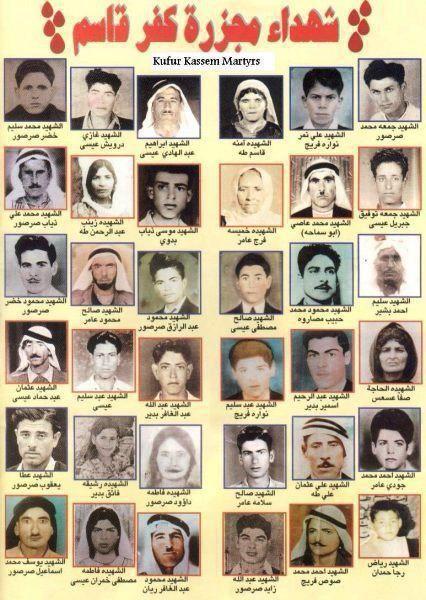
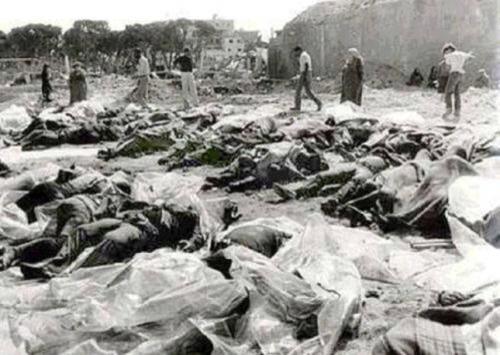
On the evening of October 29, 1956 Israeli troops shot and killed 49 unarmed Palestinian civilians in the village of Kafr Qasem, 20 km east of Tel Aviv near the green line.
Now the village has a population of 18,100 Palestinians, some of whom marched today alongside neighboring Arab villages to commemorate those killed 1956. People marched from the village center to the memorial site and placed candles for those killed; village leaders made speeches in commemoration.
Background
From 1949 till late 1966 the Israeli government decided to consider all its Palestinians citizens a “hostile population”. All major Arab population centers were governed by military administrations and divided into four districts.
Seven Arab villages, including Kafr Qasim, all along the green line, were considered as high infiltration threats. The villages were patrolled regularly by border police (Magav) under the command of Israeli army brigade commander Colonel Issachar Shadmi. Those villages, containing some 40, 000 villagers, were called the Central District.
October 29, 1956
On the day of the massacre, the Israeli army decided to place all seven villages along the green line under a curfew called the War Time Curfew, from 5 in the evening until 6 the following morning. Israeli soldiers were instructed to shoot and kill any villager violating the curfew.
Even though the border police troops were given the order by their commander at 3:30 in the afternoon, they only informed the mayor of Kafr Qasim about an hour later, leaving a window of 30 minutes for the 400 villagers working in the fields or outside the village to come back home.
According to Israeli investigation committee records, from 5:00 pm until 6:30 on October 29, 1956, border police shot and killed 49 villagers from Kafr Qasim as they tried to return home. Among those killed were 23 children and one pregnant woman.
The killed and injured were left unattended through the night. After the curfew ended, villagers took the injured to hospitals and laid the dead to rest in a mass grave.
In his testimony during the investigation, the survivor Jamal Farij said that soldiers shot villagers without any warning. He was driving back to his village along with 28 passengers in a truck.
‘We talked to them. We asked if they wanted our identity cards. They didn’t. Suddenly one of them said, ‘Cut them down’ – and they opened fire on us like a flood.’
Legal Action
Eight Israeli soldiers were charged by the Israeli court and found guilty of murder. The two commanding officers of the unit, Malinki and Dahan, received 17 and 15 years’ imprisonment, respectively. These sentences were later reduced.
Colonel Issachar Shadmi was tried and found guilty only of extending the curfew without authority. He was released after paying a fine of one Israeli cent. On November 1959, after two years, all eight convicted soldiers were released on orders by the Israel Committee for the Release of Prisoners .
Malinki retained his military post and got a promotion to be in charge of security for a top secret Israeli Nuclear Research Center located in the Negev. Dahan was appointed as the head of the “Arab Affairs” department by the city of Ramla, another Palestinian village Israel taken over during 1948.
During Israel’s creation in 1948, and years later, Israeli soldiers shot and killed hundreds of Palestinian civilians. No legal action has been taken against any Israeli leader, commander, or soldier involved in what would later become known as the Palestinian Nakba.
Israeli Army occupies Hebron-area home
Ma’an | October 30, 2010
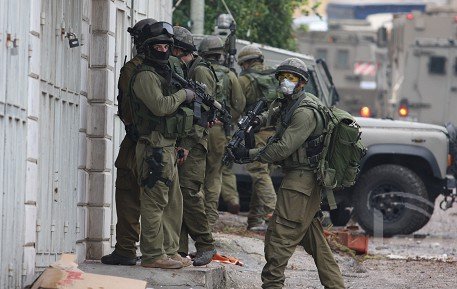
HEBRON — Israeli soldiers occupied a Palestinian home on Thursday in the Baqa’a Valley near Hebron for the third time in two months, a report from the Hebron-based Christian Peacemaker Teams said.
Family members told CPT their father collapsed when he tried to prevent the soldiers entering, and that he was taken to hospital in an ambulance. Last time soldiers occupied the house, his wife had a heart attack and died later in hospital, CPT said.
A family of 15 lives in the home, including 5 children. One son told the peace group that 17 soldiers arrived in military vehicles. A neighbor told CPT workers that he called an ambulance after hearing screams, cries and shots from the house.
International observers with the CPT said seven soldiers stationed outside the house refused to let them enter the home. A military spokesman told them the third floor and the roof of the house would be occupied for 48 hours.
Two other homes were reportedly also occupied in the area, and CPT said the operation was to protect Israeli visitors to Hebron commemorating a Jewish religious event. The occupied houses provided strategic views in all directions, the report noted.
CPT observers said when they left the area, soldiers were installing floodlights and camouflage netting, and had raised an Israeli flag on the roof.
Palestinian Children Prevented From Going To The Tel Aviv Film Festival
By Ane Irazabal – IMEMC & Agencies – October 29, 2010
Israeli soldiers refused to allow children from the West Bank village of Umm al-Kheir entry into Israel while on their way to the Children’s Film Festival in Tel Aviv, after being invited to watch the premiere of a movie featuring them.
The children, first and second graders, were supposed to enter via the Meitar checkpoint to watch the screening of the film “Galacticus”, in which they appear, as part of the Children Make Movies project, run jointly by the Education Ministry, the Children’s Channel and the Lahav and Mifalot associations.
“Galacticus,” which was filmed last year, featured children from the Palestinian village and Israeli children from Kibbutz Harel.
The film describes events that take place when the children are about to meet for a soccer game that they will play in mixed groups. Yoav, the kibbutz team’s captain, does not want to play with the Umm al-Kheir children. While Nimmir, the captain of the rival team, is forbidden by his father from playing soccer because the practices interfere with his schoolwork.
During the shooting of the film, the Palestinian children had passed through the checkpoint several times and the process usually took only a few minutes.
However, yesterday they were detained at length because one of the group’s counsellors brought his six-month-old baby with him. The baby did not need an entry permit, but his presence meant that the number of permits did not correspond with the number of people. By the time they were allowed to pass, it was too late to go to Tel Aviv and make the screening on time, so they returned home.
After Thursday’s screening, many people who were involved in the project expressed their disappointment with the army’s behaviour. The director of the film, Sivan Stavi, said “It was supposed to be a moving moment for the children, a once-in-a-lifetime opportunity that was missed because of nonsense, this is a pity. The children are terribly sad and disappointed.”
Spokesman of Mifalot Association, Ran Aharan stated “We’re a social organization, not a political one. This is a beautiful project, an opportunity to work together.”
On the other hand, the Israel army commented that what had been released to the media was based on inaccuracies.
Israeli daily, Haaretz, reported that the army stated that “the group’s passage was approved, except for a baby who was accompanied by a woman who did not have any papers proving any connection between the two, so the baby’s passage was forbidden. After a swift examination … the decision was revoked in about 10 minutes, but the group had already left the checkpoint in protest.”
MK Hanin Zoabi Wounded By Israeli Fire
By Saed Bannoura – IMEMC & Agencies – October 28, 2010
Arab member of the Israeli Knesset, Haneen Zoabi, stated that she was hit by two rubber-coated bullets fired by the Israeli police during Wednesday’s clashes in Umm al-Fahm, after the police violently attacked protesters who took to the streets to counter a march by fundamentalist settlers.
The Arabs48 news website reported that Zoabi was deliberately targeted by the police.
The police fired dozens of gas bombs and rubber-coated bullets at the protesters and also chased and clubbed several residents before arresting them.
Dozens of residents were wounded by rubber-coated bullets, while others were treated after inhaling gas fired by the police. The wounded residents were moved to local hospitals.
A local reporter, identified as Mohammad Watad, was hit by a gas bomb in his neck, and member of the National Democratic Assembly, Murad Haddad, was shot by a rubber-coated bullet in his foot leading to a fracture.
The Arabs48 news website reported that the police deliberately attacked political leaders including Mohammad Zeidan, head of the Higher Follow-up Committee; MK Dr. Jamal Zahalka; Awad Abdul-Fattah, secretary-general of the National Democratic Assembly; Umm al-Fahm mayor, Khaled Hamdan; MK Afou Agbaria and several other political and social figures.
MK Zoabi told the Arabs48 news that “the real threat against the protesters did not actually come from the extremist settlers, but in fact came from the police who deliberately attacked the protesters with the intent to hurt them”. She added that the police started firing rubber-coated bullets well before any clashes took place, and that the police apparently intended to send a message stating that “Arabs who defend themselves and stand for their rights, will be punished”.
Zoabi further stated that the police apparently agree with the mentality and stances of the extreme fundamentalist right-wingers in Israel, “therefore, the police are more dangerous that the extremists, as policemen can justify the use violence without being punished”. She added that the Arabs will continue to defend themselves and their lands, and will always demand their legitimate rights in their own historical country.
Gitmo’s Indelible Stain
The Ordeal of Murat Kurnaz
By SHERWOOD ROSS | CounterPunch | October 28, 2010
Although U.S. officials have attributed the torture of Muslim prisoners in their custody to a handful of maverick guards, in fact such criminal acts were widely perpetrated and systemic, likely involving large numbers of military personnel, a book by a survivor suggests. Additionally, guards were responsible for countless acts of murder, including death by crucifixion, lynching, poisoning, snakebite, withholding of medicines, starvation, and bludgeoning of innocent victims. And the murders committed by U.S. troops numbered at least in the hundreds, according to reliable sources.
As well, Pentagon architects designed prisons that were sadistic torture chambers in themselves, barely six feet high and seven feet wide, in which human beings were kept for months or years at a time—spaces which, one prisoner noted, are smaller than the legal requirements in Germany for doghouses. Architects who knowingly designed these hellholes may have also committed crimes against humanity.
After the photographs of sadism at Iraq’s Abu Ghraib in May, 2004, shocked the world, President Bush called the revelations “a stain on our country’s honor and our country’s reputation.” He told visiting King Abdullah of Jordan in the Oval Office that “I was sorry for the humiliation suffered by the Iraqi prisoners, and the humiliation suffered by their families.” Bush told The Washington Post, “I told him (Abdullah) I was equally sorry that people who have been seeing those pictures didn’t understand the true nature and heart of America.” A year later, Lynddie England and 10 others from the 372nd Military Police Company were convicted of torture at Abu Ghraib prison in Baghdad, Iraq, yet the events of that prison were likely duplicated everywhere across the spectrum of Pentagon and CIA detention camps acting on orders from the Bush White House.
Although President Bush made the Abu Ghraib revelations sound like nothing worse than “humiliation” in fact, the Abu Ghraib photos gave the world a glimpse into far greater crimes of every sordid type—and reports compiled from other sources indicated that to be captured by the Americans was a veritable descent into hell.
While the President’s words sounded as if they came from an innocent bystander, this was the same man who claimed two years earlier the Geneva Conventions did not apply in the countries the U.S. had invaded; they were uttered by the man who, with his Vice PresIdent Dick Cheney, is primarily responsible for the entire venomous persecution of thousands of innocent men, women, and even children. While a handful of guards such as Ms. England—notorious for her “thumbs up” photo observing a human pyramid of naked prisoners, were convicted and jailed—the many other hundreds or thousands of military guards, interrogators, and doctors and dentists also involved in the widespread tortures have never been prosecuted for their crimes.
It should be kept in mind that no impartial legal system was in place to defend the rights of the accused, so that their torturers could break laws without fear of reprisal. As Jane Mayer wrote in “The Dark Side”(Anchor), “Seven years after the attacks of September 11, not a single terror suspect held outside of the U.S. criminal court system has been tried. Of the 759 detainees acknowledged to have been held in Guantanamo, approximately 340 remained there, only a handful of whom had been charged. Among these, not a single ‘enemy combatant’ had yet had the opportunity to cross-examine the government or see the evidence on which he was being held. Thus, since none had been brought to trial, all the tortures inflicted were on captives who must be presumed innocent. One book, by a man who survived the nightmare of captivity where so many others perished, gives the lie to the notion that abuses were carried out by a few vicious guards. Everywhere he went he was beaten and he saw other prisoners also beaten by many different teams of sadistic guards. The conviction of Ms. England and her companions, therefore, does not begin to serve the cause of justice.
According to Murat Kurnaz, a 19-year-old Turkish citizen raised in Germany and falsely defamed as “the German Taliban,” torture at the several prisons in which he was held was frequent, commonplace, and committed by many guards. In his book, “Five Years of My Life: An Innocent Man in Guantanamo”(Palgrave Macmillan), beatings began in 2001 on the flight from Pakistan (where he was pulled off a public bus and sold by Pakistani police for $3,000) to his first imprisonment in Afghanistan.
“I couldn’t see how many soldiers there were, but to judge from the confusion of voices it must have been a lot. They went from one prisoner to the next, hitting us with their fists, their billy clubs, and the butts of their rifles.” This was done to men that were manacled to the floor of the plane. “It was as cold as a refrigerator; I was sitting on bare metal and icy air was coming from a vent or a fan. I tried to go to sleep, but they kept hitting me and waking me…they never tired of beating us, laughing all the while.”
On another occasion, Kurnaz counted seven guards who were beating a prisoner with the butts of their rifles and kicking him with their boots until he died. At one point, Kurnaz was hung by chains with his arms behind his back for five days. “Today I know that a lot of inmates died from treatment like this.” When he was finally taken down and needed water “they’d just pour the water over my head and laugh.” The guards even tortured a blind man who was older than 90 “the same way the rest of us were,” Kurnaz wrote.
At Camp X-Ray, Guantanamo, Cuba, Kurnaz said, “During the day, we had to remain seated and at night we had to lie down. If you lay down during the day you were punished…We weren’t allowed to talk. We weren’t to speak to or look at the guards. We weren’t allowed to draw in the sand or whistle or sing or smile. Every time I unknowingly broke a rule, or because they had just invented a new one…an IRF (Immediate Reaction Force) team would come and beat me.” Once when he was weak from a hunger strike, Kurnaz wrote, “I was beaten on a stretcher.” During his earlier imprisonment at Kandahar, Pakistan, Kurnaz writes, “There were weaker, older men in the pen. Men with broken feet, men whose legs and arms were fractured or had turned blue, red, or yellow from pus. There were prisoners with broken jaws, fingers and noses, and with terribly swollen faces like mine.” Not only were the wounds of such men ignored by guards but complicit doctors would examine him and other prisoners during tortures and advise guards as to how much more they could stand before they died. On one occasion, he saw guards beating a prisoner with no legs.
Still worse, Kurnaz said doctors participated in the tortures. A dentist asked to pull out a prisoner’s rotten tooth pulled out all his healthy ones as well. Another prisoner who went to the doctor to treat one finger with severe frostbite had all his other fingers amputated. “I saw open wounds that weren’t treated. A lot of people had been beaten so often they had broken legs, arms and feet. The fractures, too, remained untreated,” Kurnaz wrote. “I never saw anyone in a cast.” Prisoners were deliberately weakened by starvation diets. Meals at Guantanamo consisted of “three spoonfuls of rice, a slice of dry bread, and a plastic spoon. That was it.” Sometimes a loaf of bread was tossed over a fence into their compound.
Prisoners who should have been in hospital beds instead were confined to cells purposefully designed to torture them. Kurnaz described his experience this way: “Those cells were like ovens. The sun beat down on the metal roof at noon and directly on the sides of the cage in the mornings and afternoons. All told, I think I spent roughly a year alone in absolute darkness, either in a cooler or an oven, with little food, and once I spent three months straight in solitary confinement.” Prisoners could be put in solitary confinement for the tiniest infractions of the most ridiculous rules, such as not folding a blanket properly. “I was always being punished and humiliated, regardless of what I did,” Kurnaz said. Once, he was put in solitary for ten days for feeding breadcrumbs to an iguana that had crawled into his cage.
Besides regular beatings from IRF, who commonly entered cells with clubs swinging, Kurnaz received excruciating electroshocks to his feet and was waterboarded in a 20-inch diameter plastic bucket filled with water. He describes the experience as follows: “Someone grabbed me by the hair. The soldiers seized my arms and pushed my head underwater. …Drowning is a horrible way to die. They pulled my head back up. “Do you like it? You want more?” When my head was back underwater, I felt a blow to my stomach…. “Where is Osama? “Who are you?” I tried to speak but I couldn’t. I swallowed some water….It became harder and harder to breath, the more they hit me in the stomach and pushed my head underwater. I felt my heart racing. They didn’t let up…I imagined myself screaming underwater…I would have told them everything. But what was I supposed to tell them?”It should be noted that U.S. and German authorities had decided as early as 2002 that Kurnaz was innocent—that he really was a student of the Koran in Pakistan when he had been seized by bounty hunters and sold to the Americans as a “terrorist.” Yet they continued the tortures for years knowing all along of his innocence.
On yet other occasions, Kurnaz, like so many other prisoners, was hung from chains backwards so that “it felt as though my shoulders were going to break. “I was hoisted up until my feet no longer touched the ground….After a while, the cuffs seemed like they were cutting my wrists down to the bone. My shoulders felt like someone was trying to pull my arms out of their sockets…When they hung me up backwards, it felt as though my shoulders were going to break…I was strung up for five days…Three times a day soldiers came in and let me down (and)a doctor examined me and took my pulse. ‘Okay,’ he said. The soldiers hoisted me back up. I lost all feeling in my arms and hands. I still felt pain in other parts of my body, like in my chest around my heart…” A short distance away Kurnaz could see another man hanging from chains–dead.
To compound the inmates’ misery, Guantanamo guards would trample an imate’s Koran, the sacred book of the Muslims. While U.S. authorities denied that Korans had been thrown in toilets, those denials are worth little considering that when the evening call to prayer was sounded, Kurnez said, the caller’s voice “was drowned out by loud music. It was the American national anthem.” One boorish guard specialized in kicking at prisoners’ cell doors when they attempted to pray.
When Kurnaz was transferred within the Guantanamo prison system to “Camp 1” he was put in a maximum security cage inside a giant container with metal walls. “Although the cage was no smaller than the one in CampX-Ray, the bunk reduced the amount of free space to around three-and-a-half feet by three-and-a-half feet. At the far end of the cage, an aluminum toilet and a sink took up even more room. How was I going to stand this? …I hardly saw the sun at all. They had perfected their prison..It felt like being sealed alive in a ship container.”
Although U.S. politicians and ultra-right radio talk show hosts ridiculed the use of sleep deprivation against prisoners, this was, in fact, an insidious practice used earlier in Bolshevik Russia to torture known as “the conveyor belt.” In 2002, Kurnaz writes, when General Geoffrey Miller took over command of Guantanamo, “The interrogations got more brutal, more frequent, and longer.” Miller commenced “Operation Sandman,” in which prisoners were moved to new cells every hour or two “to completely deprive us of sleep, and he achieved it.” Kurnaz says, “I had to stand and kneel twenty-four hours a day,” often in chains, and “I had barely arrived in a new cell and lay down on the bunk, before they came again to move me. …As soon as the guards saw me close my eyes…they’d kick at the door or punch me in the face.” In between transfers, “I was interrogated… I estimated the sessions lasted up to fifteen hours” during which the interrogator might disappear for hours at a time. “I sat chained to my chair or kneeling on the floor, and as soon as my eyelids drooped, soldiers would wake me with a couple of blows…Days and nights without sleep. Blows and new cages. Again, the stabbing sensation of thousands of needles throughout my entire body. I would have loved to step outside my body, but I couldn’t…I went three weeks without sleep… the soldiers came at night and made us stand for hours on end at gunpoint. At this point, I weighed less than 130 pounds.” Kurnaz was released to Germany in August, 2006, and testified by videolink in 2008 to the U.S. Congress. During his five years of confinement, he was never charged with a crime.
And so it happened that, during the presidency of George W. Bush, tens of thousands of innocent human beings, Kurnaz among them, were swept up in dragnet arrests by the invading American forces or their allies and imprisoned without legal recourse—the very opposite of what America’s Founders gifted to humanity in their Constitution. None of the prisoners ever saw a real judge or jury. Torture among them was widespread. As for President Barack Obama, sworn to uphold a Constitution that does not permit torture, his failure to act forthrightly and, in particular, to ignore crimes by the CIA, an agency for which he once worked, would appear to make him guilty of subversion of that founding charter which he is legally obliged to honor. As for not taking action against the countless Pentagon operatives who tortured—including doctors and dentists and surgeons, etc.—Obama’s inaction will permit these sadists to be returned one day to practice among the general civilian population. Think about that. Think, too, about the stain on the American flag that may never be washed clean.
Sherwood Ross is a Florida-based media consultant and director of the Anti-War News Service. To comment or contribute to his work contact him at sherwoodross10@gmail.com
What Are They Hiding? Obama Administration Defending Black Site Prison at Bagram Airbase
Dave Lindorff | This Can’t Be Happening | 10/26/2010
A victory for the government in a federal court in New York City Monday marks another slide deeper into Dick Cheney’s “dark side” for the Obama Administration.
In a lawsuit filed by the American Civil Liberties Union, which has been seeking to force the Pentagon to provide information about all captives it is holding at its huge prison facility at Bagram Airbase outside Kabul in Afghanistan, Federal District Judge Barbara Jones of the Southern District of New York has issued a summary judgement saying that the government may keep that information secret.
The lingering question is: Why does the US government so adamantly want to hide information about where captives were first taken into military custody, their citizenship, the length of their captivity, and the circumstances under which they were captured?
Says Melissa Goodman, staff attorney with the ACLU’s National Security Project, “The military says that they can’t release the information because it would be a threat to national security, but they provided that information for the prisoners at Guantanamo.”
And of course, as our leaders informed us repeatedly, those captives at Guantanamo, who hailed from all over the globe, including Afghanistan, were allegedly “the worst of the worst”–at least until it turned out that many of them were wholly innocent of anything. Had been framed and turned in for a bounty, or were mere children when picked up, like Omar Khadr, the 24-year old Canadian man who just copped a guilty plea to avoid a sham tribunal before 7 officers and potential life imprisonment, after being captured at 15, tortured at Bagram, and held for nine years at Guantanamo (on a charge of killing an American soldier in battle).
The court ruling keeping the information about the thousands of prisoners held at Bagram secret may be a victory for the government, but it is hardly a victory for America’s image in the world, or for the troops battling in Afghanistan, who will be attacked all the harder by people induced to fight to the death to avoid capture and consignment to the hellhole in Bagram (now known as Parwan Prison), which has become Afghanistan’s Abu Ghraib and Guantanamo rolled into one.
One of the things that concerns the ACLU is that by not even making public the circumstances under which Bagram detainees were brought into the prison, it appears likely that the administration is hiding the reality that many “probably don’t deserve to be there,” says the ACLU’s Goodman. She explains, “There could be plenty of people sitting there who were just caught up in house sweeps in Kabul, for instance.”
As well, she says that by withholding information about citizenship and about the place of initial capture, the government may be hiding the fact that it is using Bagram as it used to use Guantanamo, as a so-called “black site” for “rendering,” or bringing, people captured all around the world.
Making matters worse is a string of continuing reports from people released from Bagram, including some which are very recent, that it is a site where torture is routinely applied to prisoners.
Significantly, a second part of the court’s ruling was that the CIA does not have to confirm or deny whether it too is holding captives at Bagram. This is a serious blow too to America’s reputation and to democratic values, since when President Obama, early in his presidency, signed an executive order outlawing torture by the military, he left some major loopholes. Most significantly, he applied that order only to persons captured during “armed conflict.” Since the US doesn’t consider captives in the loosely-defined “War on Terror” to be legitimate combatants, that means many of the people held at Bagram may be considered outside of the president’s ban. The order also says captives in counterterror operations do not have to be reported to the Red Cross.
Goodman says, “Despite concerns that Bagram has become the new Guantánamo, the public remains in the dark when it comes to basic facts about the facility and whom our military is holding in indefinite military detention there. The public has a right to know how long the U.S. has kept people locked up in military detention and under what circumstances. The lack of transparency about these key facts is even more disturbing considering the possibility that the U.S. will continue holding and interrogating prisoners at Bagram well into the future. Unfortunately, today’s ruling will allow the government to continue hiding this vital information.”
When the ugly sadistic goings on at Abu Ghraib were exposed, it caused massive damage to the US, and, according to government statements at the time, ended up helping recruit more future terrorists. It seems the Obama adminstration is heading down the same road now at Bagram, with the blessing of a Judge Jones.
Featured Video

New positive ivermectin evidence
or go to
Aletho News Archives – Video-Images
From the Archives
Secret document reveals plans for civil war in Lebanon, Israeli false flags, and invasion
By Randi Nord | Geopolitics Alert | April 5, 2019
Beirut – During his visit with US Secretary of State, Mike Pompeo, Lebanese President Michael Aoun reportedly received a US-Israeli document detailing plans for creating a civil war in Lebanon with covert false flag operations and possible Israeli invasion.
Although the source of the document is Israeli and created in partnership with Washington, no one knows who presented it to Aoun. The Lebanese TV station, Al-Jadeed, initially reported the document on Lebanese TV and a video on its website. Geopolitics Alert translated the report for this article. … continue
Blog Roll
 Aletho News
- EU Council Advances Chat Control 2.0 Scanning Proposal
- Ex-Greek MEP files complaint against Israeli spyware firm over alleged Pegasus surveillance
- Troubling ideas throughout the Torah, Talmud, Mishneh Torah and Tanya
- ‘Grave, alarming’: Iran mission on Trump’s UNGA ‘annihilation’ threats
- Najaf airport to reopen to Iranian flights within 24 hours: Ambassador
- From ‘How Will This End For Iran’ to ‘When America Walks Away’: A tale of two Economist covers
- Tehran blasts ‘baseless’ speculation linking Iran to alleged bomb plot at UK air base
- The Rise And… Rise Of ‘Color Revolutions’
- The Coming GOP Bloodbath?
- Arctic Scare Stories Melt Away
- If Americans Knew
- Netanyahu Asked UAE Leader to Deny Report on Oct. 7 Warning in Secret Visit, Sources Say
- CNN Chief Int’l Correspondent Clarissa Ward on Journalists in Gaza
- Democratic Party Consultants Surround Troy Jackson with Pro-Israel Donors
- Christian Leader Responds To Netanyahu’s Claims Regarding Palestinian Christians
- In Gaza, ‘Whoever Survives the Bombing Won’t Survive the Rubble’
- Israel kills more Palestinians, amid push to resettle Gaza – Daily Update
- Israel forces Gazans to live in constant peril – Daily Update
- Deconstructing Netanyahu’s pants-on-fire UN rant – Daily Update
- Trump betrayed voters with his campaign lies and prioritized a foreign country once he took office
- Netanyahu calls Israel’s war in Gaza ‘opposite of genocide’ in UN speech to near-empty hall
- No Tricks Zone
- New Study: Earth And Venus Surface Warmth Largely Explained By Convection And Lapse Rate, Not CO2 Or Radiation
- 2025 Nature Paper Claiming Worsening Global Drought Gets RETRACTED …Heavily Flawed
- New Study: ‘Global Drought Shows No Detectable Recent Acceleration Under Climate Warming’
- Economic Masterminds: German Socialists Suggest Taxing Productivity Gains Stemming From Using AI
- The South China Sea Has Not Been Cooperating With The Climate Change Narrative
- Energy Crisis: Germany Enters Heating Season With Historically Low Gas Reserve Fill Levels
- New Study: The Antarctic Ice Sheet Gained Mass From 2020-2024 Due To Staggering Snow And Ice Accumulation
- Study: Ocean Heating Rates From Thousands Of Years Ago ‘Dwarf’ Modern Ocean Heating Rates
- Climate Extremists Target, Attack Large-Scale Power Grid Infrastructure In Germany!
- New Study: Antarctic Ice Melt Has Contributed Less Than 1 Centimeter To Sea Level Rise In The Last 30 Years

