Haifa activist accepts plea deal
By Jared Malsin | Ma’an | October 27, 2010
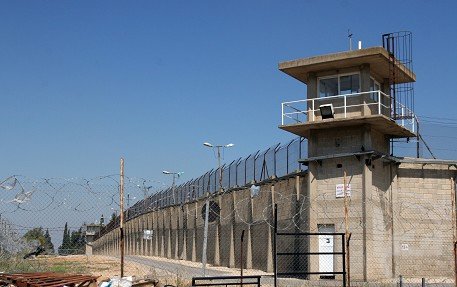
GAZA — Ameer Makhoul, the Palestinian activist from Haifa, accepted a plea bargain on Wednesday, confessing to espionage charges leveled by the Israeli state.
Makhoul, an Israeli citizen, was detained by authorities during a nighttime raid on his home in May. He and his lawyers maintain that the charges against him are political, and that he was tortured while in prison. Makhoul was also banned from seeing a lawyer for the first 12 days of his detention.
The charges include conspiring to assist an enemy, contact with a foreign agent and spying for Hezbollah.
Orna Kohn, one of Makhoul’s lawyers from the legal rights group Adalah, said Makhoul decided to accept the plea deal after consultation with his defense team.
Under the deal, she said, the content of the indictment was reduced. The state is asking for 10 years imprisonment, while the defense is asking for seven, Kohn added.
Kohn said the decision to accept the deal was made after taking into consideration “the political climate now and the legal situation under Israeli law with so-called security charges, and given the history rulings in Israeli courts dealing with such charges.”
Kohn said she met Makhoul earlier on Wednesday. Asked about his condition, she said, “He’s well. He’s hopeful the court will rule for the minimal number of years.”
“He understands his chances of being acquitted are slim,” she added. She said the charges against him “in any other country should not have been basis for indictment.”
A hearing is set for 5 December, when the court will decide whether to accept the plea deal reached between the prosecution and the defense.
Makhoul is the director of Ittijah, the Union of Arab Community-Based Organizations, and also chaired the High Arab Monitoring Committee’s panel on defending Arab citizens’ freedoms. He was arrested in May along with Omar Saeed, an activist with the Balad party.
The plea bargain was agreed upon in the Haifa District Court after being submitted on Tuesday.
A representative for the prosecution told the Israeli newspaper Haaretz: “The plea bargain was approved by the highest ranking levels of prosecution, including the state prosecutor. Most importantly Makhoul, who claimed he was being politically persecuted at the beginning of this, now stands in front of the court and admits to the charges attributed to him.”
Will Fatah choose reconciliation or collaboration?
Raja Abdulhaq, The Electronic Intifada, 26 October 2010
Clashes between the main Palestinian movements Hamas and Fatah date back to the late 1980s when Hamas was officially founded and the early 1990s when Fatah took control of the Palestinian Authority, newly established under the 1993 Oslo accords.
In the wake of the first Palestinian intifada, there were confrontations between Hamas and Fatah supporters over the leadership of the intifada. Fatah refused to admit that a new Islamic movement was rising from within the occupied West Bank and Gaza Strip and taking part in leading the struggle, which Fatah had been leading for decades from neighboring countries. After Fatah was forced to leave Jordan and Lebanon, it recognized that the next stage of the Palestinian struggle would take place inside the occupied West Bank and Gaza Strip and therefore tried to diminish Hamas’s influence in the area.
Hamas’s attacks against Israeli soldiers escalated in response to the Oslo accords and its terms, which in Hamas’s opinion was biased in Israel’s favor and abandoned basic Palestinian rights. It is worth noting that Hamas initiated its first suicide bomb attack against Israeli civilians just weeks after Israeli settler Baruch Goldstein massacred dozens of Palestinians praying in Hebron’s Ibrahimi Mosque on 25 February 1994. Since then, Hamas has continuously offered Israel to come to an agreement to avoid civilian deaths on both sides, but Israel has always refused.
The main dispute between Hamas and Fatah is the result of what is known in the Oslo accords as “security coordination” between the Palestinian Authority and Israel. Article XV of the 1995 Israeli-Palestinian Interim Agreement states: “Both sides shall take all measures necessary in order to prevent acts of terrorism, crime and hostilities directed against each other, against individuals falling under the other’s authority and against their property and shall take legal measures against offenders.”
Moreover, Article XVI states: “Palestinians who have maintained contact with the Israeli authorities will not be subjected to acts of harassment, violence, retribution or prosecution. Appropriate ongoing measures will be taken, in coordination with Israel, in order to ensure their protection.” This article can be interpreted as offering a guarantee of protection to those Palestinians who work with the Israeli occupation forces.
The “Roadmap” plan promoted by US President George W. Bush in 2002 also stressed the importance of ending “Palestinian violence.” This ideology of persecuting those who resist Israel and protecting those who spy for Israel created friction within Palestinian society.
While some people strive to use all necessary means to resist the occupation, a right recognized for all occupied peoples under international law, others make every effort to sabotage them and treat them as criminals, in an attempt to follow the terms of the “peace process.” The Palestinian Authority’s actions, it must be stressed, do not target only those who have engaged in attacks on Israeli civilians, but any and all resistance against the occupation, even the Israeli army.
Furthermore, the Palestinian Authority has sentenced, tortured and even killed some members of Hamas, Islamic Jihad, and even Fatah back in the 1990s. And immediately after Hamas took full control of Gaza in 2007, Fatah began persecuting Hamas activists in the West Bank at the behest of the United States and Israel as a required step to “advance the peace process.”
The heads of the Palestinian security forces, in private meetings, clarified to the Israeli army that there is no rivalry between them. Instead, they both agreed that they are at war against Hamas, the leader of the Palestinian resistance movement. Recently, they made clear their close ties when PA security officials received the chief of staff of the Israeli army, General Gabi Ashkenazi, as their guest in Bethlehem and gave him a guided tour of the city (“Israeli army chief visits Bethlehem,” Ma’an News Agency, 3 October 2010).
Such statements and actions — which have become all too common — clearly portrays that the Palestinian security forces have become a replica of the South Lebanon Army (SLA). Israel’s collaborator militia during its two-decade-long occupation of Lebanon, the SLA was paid to fight against Lebanese and Palestinian resistance in that country.
The PA is very keen to fulfill its security commitments to the Israeli occupation because that is the basis of its relationship with Israel. Therefore, the PA is compelled to continuously hunt down and jail any resistors to the occupation, and to provide Israel with security information. Keeping Hamas members in jails, restricting their movement in the West Bank, or shutting down their grassroots movement makes it all but impossible for Hamas to proceed with a national reconciliation, which it has long sought and which the Palestinian public overwhelmingly wants.
In addition, the US, along with Israel, will not give Fatah — which is dependent on them for political and other kinds of support — the green light to have a unity agreement with Hamas. The US has spent millions of dollars to build a strong Palestinian security force in the West Bank that has worked to bring security for Israel since 2007.
It is very clear that if Fatah decides to halt its work with the Israeli army, the US and other donors will cut off financial aid to the PA. This leaves Fatah leaders in a critical position where they must choose between returning to the national Palestinian camp, or remaining on good terms with Israel and its occupation army.
Raja Abdulhaq is a Palestinian activist who has worked with Al-Awda New York: The Right to Return Coalition, founder of GUPS (General Union of Palestine Students) in New York, and currently works with American Muslims for Palestine.
Federal Court Rules Government Can Keep Secret Basic Facts About Bagram Prisoners
More Transparency Needed On Detention Practices At Massive U.S. Prison In Afghanistan, Says ACLU
ACLU | October 25, 2010
NEW YORK – The Defense Department can continue to withhold key information from the public about the hundreds of detainees imprisoned by the U.S. military at Bagram Air Base in Afghanistan, according to a federal court ruling today.
The ruling came in an American Civil Liberties Union Freedom of Information Act (FOIA) lawsuit against the Defense Department and the CIA for records related to the detention and treatment of prisoners at Bagram (now known as Parwan). The Defense Department has released the names of the 645 prisoners who were detained there as of September 2009, but has kept secret other vital information including their citizenship, how long they have been held, in what country they were captured and the circumstances of their capture. The ACLU charged that the Defense Department is improperly withholding these basic facts about Bagram prisoners and their detention, and asked the U.S. District Court for the Southern District of New York to order the Defense Department to turn over the information. In denying the ACLU’s motion, the court also ruled that the CIA did not act improperly when it refused to even confirm or deny whether the CIA had records about the rendition and interrogation of Bagram detainees.
The U.S. military has announced its intention to transfer control of Bagram prison to the Afghan government next year. However, media outlets have reported that the Obama administration intends to maintain control over a portion of the prison and to continue detaining some prisoners in U.S. custody there, including non-Afghan terrorism suspects captured outside of Afghanistan and prisoners considered “enduring security threats.”
The following can be attributed to Melissa Goodman, staff attorney with the ACLU National Security Project:
“Despite concerns that Bagram has become the new Guantánamo, the public remains in the dark when it comes to basic facts about the facility and whom our military is holding in indefinite military detention there. The public has a right to know how long the U.S. has kept people locked up in military detention and under what circumstances. The lack of transparency about these key facts is even more disturbing considering the possibility that the U.S. will continue holding and interrogating prisoners at Bagram well into the future. Unfortunately, today’s ruling will allow the government to continue hiding this vital information.”
More information about the ACLU’s FOIA lawsuit, including today’s filings, is online at: www.aclu.org/national-security/bagram-foia
CONTACT: (212) 549-2666
The Betrayal of Omar Khadr – and of American Justice
By Andy Worthington | 26.10.10
Yesterday morning, wearing a dark suit, a white shirt and a dark tie, Omar Khadr, the Canadian citizen who was just 15 years old when he was seized after a firefight in Afghanistan in July 2002, ended an eight-year struggle — first by the Bush administration, and then by the Obama administration — to convict him in a war crimes trial at Guantánamo, when he accepted a plea deal in exchange for a reported eight-year sentence.
According to an article in the Miami Herald, drawing on comments made by “two legal sources with direct knowledge” of the deal, Khadr said he “eagerly took part in a July 28, 2002 firefight with US Special Forces in Afghanistan that mortally wounded Sgt 1st Class Christopher Speer.” This was the crux of the case against him, and a charge that he had always previously denied. He also said that he had “aspired as a teen to kill Americans and Jews,” and described his father, Ahmed Said Khadr, who had been responsible for taking him on numerous visits to Pakistan and Afghanistan as a child, leading to the events on the day of his capture, as “a part of Bin Laden’s inner circle, a trusted confidant and fundraiser.”
Khadr’s plea was submitted to the judge, Army Col. Patrick Parrish, by his military defense lawyer, Army Lt. Jon Jackson, and Col. Parrish made sure that he knew what he was doing as he ran through the charges. “Yes,” Khadr replied. “You should only do this if you truly believe it is in your best interests,” Col. Parrish then told him. “Yes,” Khadr replied again. According to the Miami Herald, his voice was “a near whisper,” but became stronger as Col. Parrish read out the charges.
As the Globe and Mail described it, Khadr “assented to knowing that he was attacking civilians, that he wanted to kill US troops, that he planted mines and that he received one-on-one terrorist training from an al-Qaeda operative.” He also agreed that he was a member of al-Qaeda, and was an “alien, unprivileged, enemy belligerent,” who was “unqualified therefore to shoot back or engage in combat hostilities with US or other coalition forces,” and also said that he understood that he was guilty of “murder in violation of the laws of war.”
For the United States, the plea deal means that a trial has been avoided, dimming the glare of the global media spotlight on the embarrassing prospect of the first war crimes trial of a child soldier since the Second World War. Instead, according to the Military Commission rules, a limited amount of evidence will be submitted this week — including testimony from Tabitha Speer, the widow of the Special Forces soldier killed by the grenade in the firefight that led to Khadr’s capture, and statements by mental health professionals for both the prosecution and the defense — before a seven-member military jury will deliver its own sentence. As the details of Khadr’s plea deal have not been made public, this strange formality (which involves a sentence without a trial) will only mean anything if the jury delivers a less severe sentence than the one negotiated in secret.
This, however, is not the main problem with yesterday’s outcome, which blurs the parameters of justice horribly, creating the impression that Khadr is guilty, even though he may only have agreed to confess in order to secure a favorable sentence. This is something that Daphne Eviatar, an observer for Human Rights First, noted in an excellent article in the Huffington Post, when she explained that “it was clear that prosecutors had taken the opportunity to throw the kitchen-sink-full of charges at him — including far more crimes than he’d even been charged with. Most importantly, Khadr pled guilty to killing two Afghan soldiers who accompanied US forces in the 2002 assault on the compound. The government has never presented any evidence whatsoever that Khadr was responsible for that, and did not claim he was in its opening statement at trial.”
In addition, Khadr’s guilty plea enables the Obama administration to disguise the many fundamental flaws with the Military Commissions, which might have been exposed during a trial.
Because Khadr’s plea deal is presumed to stipulate that he cannot appeal, the administration will be able to tell the world that the Commissions are “fair and just,” although they are no such thing. One problem, of course, is that a former child prisoner has been subjected to a trial after eight years of imprisonment in an experimental prison devoted to arbitrary detention and coercive interrogation, when he should have been rehabilitated, according to the UN Optional Protocol to the Convention on the Rights of the Child on the involvement of children in armed conflict (which the US ratified in December 2002), but another concerns the nature of the crimes to which he confessed.
This second problem — which focuses on the fundamental legitimacy of the Commissions — was illustrated starkly in the Globe and Mail’s description of how Khadr agreed that he was an “alien, unprivileged, enemy belligerent,” who was “unqualified therefore to shoot back or engage in combat hostilities with US or other coalition forces,” and also how he reportedly understood that he was guilty of “murder in violation of the laws of war.”
Back in April, Lt. Col. David Frakt, a law professor and the former military defense attorney for two other Guantánamo prisoners, Mohamed Jawad and Ali Hamza al-Bahlul, spelled out the problems with these charges in no uncertain terms. Writing of the central charge of “murder in violation of the law of war,” Lt. Col. Frakt explained that, even if Khadr did throw the grenade, “there is no evidence that he violated the law of war in doing so.”
As I explained in an article about Khadr two months ago, he added that “the confusion arose initially because the Bush administration wanted to find a way to ensure that ‘any attempt to fight Americans or coalition forces was a war crime,’ and that Congress, in enacting two pieces of legislation relating to the Military Commissions in 2006 and in 2009, maintained this unjustifiable position by refusing to distinguish between legitimate and illegitimate actions during wartime.”
Lt. Col. Frakt also explained that the Bush administration’s original invented charge for the Commissions — “Murder by an Unprivileged Belligerent” — was, essentially, replaced by the Congress-endorsed “Murder in Violation of the Law of War,” even though it “conflated two different concepts — unprivileged belligerents and war criminals.”
He continued:
Under Article 4 of the Geneva Prisoner of War Convention it is clear that while a member of an organized resistance movement or militia may be an unprivileged belligerent (because of not wearing a uniform or failing to carry arms openly, for example) he may still comply with the laws and customs of war, so not all hostile acts committed by unprivileged belligerents are war crimes. Attacks by unprivileged belligerents which comply with the law of war (in that they attack lawful military targets with lawful weapons) may only be tried in domestic courts. In Iraq, for example, insurgents who try to kill Americans by implanting roadside bombs are properly arrested and tried before the Central Criminal Court of Iraq as common criminals. Attacks by unprivileged belligerents which violate the law of war, such as attacks on civilians or soldiers attempting to surrender, or using prohibited weapons like poison gas, can be tried in a war crimes tribunal.
With Khadr’s plea deal, the uncomfortable truth about the Commissions — that they have been established to try non-existent war crimes — has been swept aside as thoroughly as it was in the case of Ibrahim al-Qosi, who accepted a plea deal in July. As a result, Omar Khadr may have taken the only realistic route open to him, but the price has been the apparent validation of a fundamentally lawless process, which could have been legally challenged had he been subjected to a full trial.
Back in July, Omar Khadr refused to accept a plea deal, and, in a letter to Dennis Edney, one of his Canadian lawyers, wrote, “there must be somebody to sacrifice to really show the world the unfairness [of the Commissions], and really it seems that it’s me.” It is understandable that — faced with an eight-year sentence, or the possibility of a life sentence in exchange for a “sacrifice” — Khadr chose the former option.
However, it remains deeply depressing that the Obama administration will be able to maintain the fiction that the Military Commissions are capable of delivering justice, and also that it now appears to be irrelevant that Khadr was a juvenile prisoner, subjected to horrific treatment, because he has conceded, in circumstances that may not have been conducive to telling the truth, that he was in fact a terrorist.
Iran: US behind Wikileaks revelations
Press TV – October 25, 2010
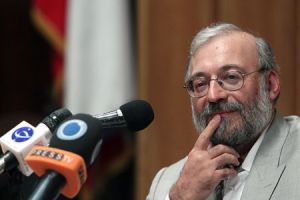 Mohammad-Javad Larijani
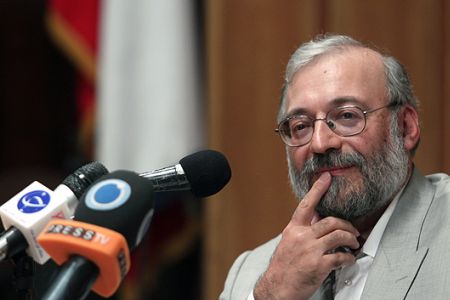
A senior Iranian diplomat says recent revelations by whistleblower website Wikileaks are Washington’s ploy to cover up human rights violations by the US.
In the largest-ever revelation of secret US military documents, Wikileaks released nearly 400,000 classified reports about the US-led war in Iraq.
The leaked documents, which cover the period between January 1, 2004, and January 1, 2010, have shed light on a myriad of crimes and offences committed in Iraq over the past few years, including assassinations, murders, torture and rape.
“It seems that these [revelations] are made upon the order of the US,” Secretary-General of Iran’s High Council for Human Rights Mohammad-Javad Larijani said on Monday at the summit for reviewing the human rights situation in the US.
“The message of Wikileaks documents is that the Iraqi people have been tortured by Iraq’s security forces, and the only wrongdoing of Americans is that they witnessed the incidents and remained silent,” IRNA quoted Larijani as saying.
“This is while the US had the main role in these incidents and is the defendant,” the Iranian diplomat added.
Larijani said unfortunately the Internet, which was supposed to provide all people with vast information, is being used for publishing anti-information in the world.
The head of Iran’s human rights council stressed that the US and certain Western countries take advantage of human rights violations and that “it is necessary to prevent and resist these political abuses.”
The new Wikileaks documents comprise the second such release from the controversial website, which accused the United States of “war crimes” after earlier releasing some 92,000 similar secret military files detailing operations in Afghanistan.
These documents charge the United States Defense Department with instructing American troops to ignore reports recounting torture; they also suggest “hundreds” of civilians have been killed at US military checkpoints since the beginning of the war.
Refusing to discus the Wikikeaks disclosures, US Secretary of State Hillary Clinton merely condemned the leak of any document “putting Americans at risk.”
“We should condemn in the most clear terms the disclosure of any information by individuals and or organizations which puts the lives of United States and its partners’ service members and civilians at risk,” she said.
Photos of Israeli soldiers humiliating Palestinian detainees disclosed

Occupation soldier leaves threat: “we will be back”
Press TV – October 25, 2010
Israeli troops have abused Palestinian detainees during the 2008-2009 attack on the Gaza Strip, new photos released by a rights group show.
The photos were published on Monday by Breaking the Silence, an Israeli group of veteran combat soldiers who collect testimonies and photos of troops who have served in the occupied territories.
One picture shows a soldier pointing his assault rifle at the face of a blindfolded Palestinian detainee.
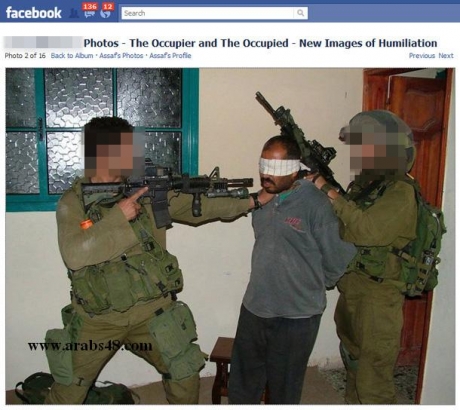
Other images show soldiers smiling and posing inside what appears to be Palestinian homes and in one picture a woman in a headscarf is cooking at a stove.

Yehuda Shaul, a founding member of Breaking the Silence, said the group has received dozens of similar pictures that point to a widespread phenomenon.
“It’s the norm in the Israeli military and it’s a direct consequence of being in a place where you control and rule civilians on a daily basis,” he said.
“You become corrupt, and you are not able any more to see them as human beings like you,” he added.

Blindfolded and bound Palestinian girl on her knees with four Israeli soldiers pointing their guns and laughing provocatively

The Israeli military would not immediately comment on the photos.
The Israeli military launched a deadly assault on the beleaguered Gaza Strip at the turn of 2009, killing at least 1,400 Palestinians, most of them women and children.
Photos – IMEMC
Related articles
- Israeli admits shooting at Palestinian children on TV game show (alethonews.wordpress.com)
- Pathetic Israeli Soldiers Firing indiscriminately at Palestinian Farmers South of Gaza (uprootedpalestinians.wordpress.com)
The ‘Torture’ Hypocrisy of the New York Times
By Scott Horton | Harpers | July 1, 2010
Has the newspaper of record adopted a double standard for torture techniques—using the “t”-word when the techniques are applied by other nations, but using more evasive characterizations when agents of the United States government are in the spotlight? That question has now been authoritatively settled, and the answer is a resounding “yes.”
A new study by Harvard’s Kennedy School (PDF) looks systematically at how American print media characterized the use of waterboarding in incidents reported from 1903 (the famous case of Major Glenn, coming out of the Philippines) to the present day. Here’s the crux of their conclusions:
Examining the four newspapers with the highest daily circulation in the country, we found a significant and sudden shift in how newspapers characterized waterboarding. From the early 1930s until the modern story broke in 2004, the newspapers that covered waterboarding almost uniformly called the practice torture or implied it was torture: The New York Times characterized it thus in 81.5% (44 of 54) of articles on the subject and The Los Angeles Times did so in 96.3% of articles (26 of 27). By contrast, from 2002‐2008, the studied newspapers almost never referred to waterboarding as torture. The New York Times called waterboarding torture or implied it was torture in just 2 of 143 articles (1.4%). The Los Angeles Times did so in 4.8% of articles (3 of 63). The Wall Street Journal characterized the practice as torture in just 1 of 63 articles (1.6%). USA Today never called waterboarding torture or implied it was torture. In addition, the newspapers are much more likely to call waterboarding torture if a country other than the United States is the perpetrator. In The New York Times, 85.8% of articles (28 of 33) that dealt with a country other than the United States using waterboarding called it torture or implied it was torture while only 7.69% (16 of 208) did so when the United States was responsible. The Los Angeles Times characterized the practice as torture in 91.3% of articles (21 of 23) when another country was the violator, but in only 11.4% of articles (9 of 79) when the United States was the perpetrator.
The way newspapers characterize practices like waterboarding has an immediate impact on the attitudes adopted by their readers. Accepting the language suggested by the Bush Administration (“enhanced interrogation techniques”) helped build public acceptance for the application of torture techniques. Victor Klemperer, in his masterful study of the manipulation of language in Germany from the thirties to the end of World War II, called such phrases “little doses of arsenic: they are consumed without being noticed; they seem at first to have no effect, but after a while, indeed, the effect is there.”
In his impressive attempt to catalogue these “doses of arsenic,” Klemperer awards pride of place to the words used by the state to describe prisoners, prison camps, and the treatments to which they were subjected. Indeed, one of the phrases developed in this era is still with us today. In special circumstances and usually only with the permission of higher authorities, interrogators were permitted to use a set of highly coercive techniques on prisoners, including hypothermia and stress positions. These techniques were called verschärfte Vernehmung: “enhanced interrogation.”
But as George Orwell pointed out in his essay “Politics and the English Language,” the process of language manipulation was hardly reserved to the Axis powers during the war. He wrote two novels that focused instead on the same sort of word games that Klemperer documented, drawing on the Soviet Union as an example. And he was convinced that the same malicious force was at work in the English language:
In our time, political speech and writing are largely the defense of the indefensible. Things like the continuance of British rule in India, the Russian purges and deportations, the dropping of the atom bombs on Japan, can indeed be defended, but only by arguments which are too brutal for most people to face, and which do not square with the professed aims of the political parties. Thus political language has to consist largely of euphemism, question-begging and sheer cloudy vagueness. Defenseless villages are bombarded from the air, the inhabitants driven out into the countryside, the cattle machine-gunned, the huts set on fire with incendiary bullets: this is called pacification. Millions of peasants are robbed of their farms and sent trudging along the roads with no more than they can carry: this is called transfer of population or rectification of frontiers. People are imprisoned for years without trial, or shot in the back of the neck or sent to die of scurvy in Arctic lumber camps: this is called elimination of unreliable elements. Such phraseology is needed if one wants to name things without calling up mental pictures of them… if thought corrupts language, language can also corrupt thought.
So waterboarding in the hands of the Japanese, the Khmer Rouge, East Germans, Brazilians, and Argentinians is “torture,” the American newspapers tell us, but indistinguishable techniques when used with the authority of the American government are simply “enhanced interrogation techniques,” that “critics” “refer to as torture.” This is unalloyed hypocrisy. And it has social and political consequences far beyond the nuanced semantics that fill the columns of the public editor. It is shaping a darker, more brutal society—one prepared to accept torture as a legitimate tool in the hands of the state.
© The Harper’s Magazine Foundation
Americans protest police brutality
Press TV – October 23, 2010
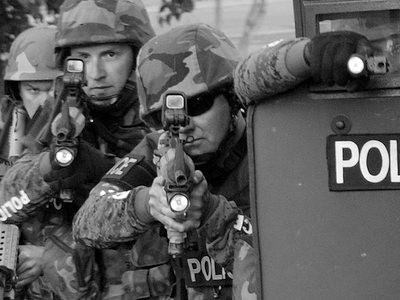
Demonstrations organized by the October 22 Coalition, with the aim of seeking an end to police violence, have been held across the US for the 15th year in a row. Thousands of people participated in protests in major cities in the US on Friday.
Organizers of the National Day of Protest to Stop Police Brutality, Repression and the Criminalization of a Generation say the situation is getting worse.
In Detroit, people demanded justice for Aiyana Jones, a seven-year old girl who was shot to death by police officers during a raid on her home.
In Los Angeles, people held a rally, where riots broke out in September, in response to the killing of Manuel Jamines, a Guatemalan day laborer. LA resident Alicia Alvarez, whose son Jonathan Cuevas was shot in the back by police officers, participated in the demonstrations.
“There are other methods of dealing with suspects. My son was running away from him, so I don’t think my son was an immediate threat, so he could have used a taser or he could have used rubber bullets, but instead he chose to use a fire arm and kill my son,” Alvarez told Press TV.
“The problem is not a problem with individual officers. We don’t believe in the concept of that there are a few rotten apples on the tree. We say the whole orchard is rotten,” Bilal Ali, an event organizer, told Press TV.
LA Police Sergeant Mitzi Grasso responded by saying that “We have over 3 million calls for service a year, and so very few end up in any type of violent encounters… and our review process is so thorough.”
The Coalition published the second edition of the book Stolen Lives, documenting over 2,000 cases in the 1990’s alone.
Photo – credit Wikipedia
Settlers Escalate Attacks Against Olive Orchards. 2,500 Trees Torched In One Week
 Ma’an Images

By Saed Bannoura – IMEMC & Agencies – October 21, 2010
On Wednesday afternoon, a group of extremist Jewish settlers from Bracha illegal settlement, near the northern West Bank city of Nablus, attacked Palestinian villagers, cut and burned trees and injured one farmer.
Local sources reported that one villager from Burin was wounded after being violently attacked by the settlers while attempting to prevent them from uprooting his trees. Moneer Qadous was stabbed with a sharp object and was moved to Rafidia Hospital in Nablus.
Also, dozens of settlers, marching in groups, attacked Palestinian olive-pickers near Burin, while Israeli soldiers kidnapped another villager for trying to defend his land.
The sources added that at least 2,500 olive trees belonging to Burin residents have been torched by the settlers since last Thursday. Such destruction creates a real disaster for the villagers as they depend on olives and olive oil as the main source of their livelihood.
Witnesses said that soldiers stood idle while the settlers were attacking the villagers and the orchards yet they prevented Palestinian firefighters from reaching the torched orchards under the pretext of waiting for proper security coordination, which leads to further losses as the fire continues to consume the trees.
A new stage in the war on dissent
Socialist Worker | October 19, 2010
Michael Ratner is the president of the Center for Constitutional Rights, a leading organization in opposing the dismantling of civil liberties under the Bush, and now Obama, administrations.
He spoke with Nicole Colson about the recent raids on the homes and offices of antiwar and socialist activists in Chicago, Minneapolis and North Carolina–and why the Obama administration, despite claims to the contrary, has been disastrous when it comes to promises to protect our civil liberties.
NC: RECENTLY, ANTIWAR and socialist activists in Chicago, Minneapolis and North Carolina have had their homes and offices raided, and were given grand jury subpoenas. What is your take on these raids? What’s your sense of what the government is after?
THE RAIDS have all the earmarks of a fishing expedition–both the search warrants as well as grand jury subpoenas. They all claimed to be investigating “material support to terrorism,” in particular around both the Middle East and the country of Colombia. It appears to be a fishing expedition because the materials that were authorized to be seized and the subjects about which questions were to be asked were quite broad.
The search warrants were like wholesale seizure warrants. The FBI goes into five or six houses in Minneapolis, two houses in Chicago, some houses in North Carolina and Michigan as well, and seize everything. They take people’s cell phones, they take all the computers out, they take every document out. This broad language in the search warrants purports to allow the FBI to take everything in those offices.
And then the subpoenas, which require people to testify in front of the grand jury, they also are very open ended. Asking for everything people know about certain organizations, phone numbers, associates, friends, etc. So you would think if it was a narrowly tailored prosecution in which they thought there might be real criminal conduct, the focus would be much narrower.
So while it appears from the warrants they might have some suspicion about something (but who even knows if that suspicion is valid), they certainly don’t have very much, because they are going very, very broadly.
It’s something like looking for a needle in a haystack, in which they destroy many lives and chill people’s rights–and there may not even be a needle. And because of that, they are clearly encroaching on the First Amendment rights of people who are doing antiwar organizing and working to change U.S. foreign policy, particularly in the Middle East and in South America.
There are many problems, but one of the problems here is that the search warrants and subpoenas are so that broad, they cut directly into all kinds of First Amendment activities. So the people in Minneapolis, who were among the main organizers of some of the Republican National Convention demonstrations in 2008, then become the targets of the FBI or the Joint Terrorism Task Force–and their First Amendment activities, and their right to organize and oppose the government are therefore chilled or even prevented all together.
A broad, wholesale attack like this on the antiwar movement and on activists is bad for the people who were directly attacked, and it also tells all of us that the activities we undertake are subject to government surveillance and much more in this case–the actual seizure of the documents and grand jury subpoenas.
So it’s quite serious. It makes you very suspicious because it’s so broad. It was so coordinated, it was across the country, and they don’t really have that much, if anything.
A second problem is the ostensible reason for the search. The various warrants and subpoenas cite the law concerning material support for terrorism. And of course, that’s the material support statute.
A case arguing the unconstitutionality of that statute was recently argued by the Center for Constitutional Rights in the Supreme Court [Holder v. Humanitarian Law Project]. We lost. The Supreme Court, for the first time since 9/11, said advocacy or speech on behalf of an organization on the attorney general’s terrorist list is covered by the criminal statute–the material support of terrorism statute–if that speech is coordinated with, or you work with or have contact with, people in the alleged terrorist organization.
So once an organization is put on the terrorist list, if I only write an op-ed, and if I gather the information from the designated organization or have any contact with anybody there, even if it’s just asking for information, that might be interpreted as “coordination” with them, or some kind of material support for that organization. And there is no due process given before an organization is put on the list. It’s almost impossible to challenge. Oftentimes, placement on the terrorist list is a political decision.
So first you have the Supreme Court decision in June 2010, and then you have these raids a couple of months afterward. It makes you very suspicious that the current government is pushing the boundaries of the material support statute and reading it very broadly.
Organizations are going to be put in fear of any kind of opposition to U.S. foreign policy if there is a claim by the government that there is contact with organizations that are designated terrorists. Domestic American organizations that oppose U.S. foreign policy may well be chilled in their work.
COULD YOU say a little bit more about the way that the material support provision has been used since 9/11? There have been a number of really high-profile cases–particularly of Islamic charities, for example–where no violence was ever alleged to have occurred as a result of the so-called “material support,” so a lot of us on the left have seen this as a broader attempt to whip up support for the “war on terror.”
ONE OF the main uses of the material support statute, I think is to demonize organizations that the U.S. government doesn’t like. Had they had such a statue during the period of the African National Congress (ANC) opposition to the apartheid government in South Africa, they would have labeled that–and that’s how they thought of it in the U.S., under Reagan and before–as a terrorist organization. Any contacts with the ANC of any Americans opposed to apartheid would have been considered criminal.
There are two aspects to this. One is that the government can label, without any kind of hearing or way to challenge it, a foreign organization as a terrorist organization. The other is that any American contact with that organization or support for that organization is prohibited.
This is true even if that support is, as I said, by writings that are at all coordinated; by giving blankets to their hospital; by, according to the case we lost in Supreme Court, wanting to teach the [Kurdistan Workers Party] or the Tamil Tigers about the Geneva Conventions. Wanting to teach people peaceful means of resolving disputes, or wanting to get them to the negotiating table–when Jimmy Carter negotiates questions in the Middle East and he has contacts with Hamas or Hezbollah–those all are now prohibited.
So this statute is the favorite of prosecutors to go after people, because the smallest kind of contact with a designated terrorist organization can be considered material support. It’s an easy way to intimidate, wipe out and jail opponents of U.S. foreign policy, and an easy way to demonize organizations that many would call liberation organizations in other countries.
The provision has been used often. It is a favorite among prosecutors because you have to prove so little. So the Holy Land Foundation, which was the biggest Muslim charity in the United States, was accused of giving money to Hamas, but so indirectly that it’s hard to believe any of the facts in the case–it was giving it to groups that I think even the UN was giving to in Gaza. But somehow, they were supposed to believe or know that those groups were connected to Hamas, which has been put on the U.S. terrorist list.
The statute is used very broadly to say, “Muslims in this country and all their charities, what they’re doing is supporting terrorism.” When in fact, the vast majority of those charities–I obviously don’t know every one, but from what I know–gave aid to organizations they didn’t think were terrorist for starters, or on the list, and, secondly, they were giving humanitarian aid or doing things like teaching the Geneva Conventions.
I WANTED to go back to this recent Supreme Court case, Holder v. Humanitarian Law Project, that was argued for the Obama administration by former Solicitor General Elena Kagan–who is now, of course, sitting on the Supreme Court. What do you think that case signals about the court’s view of free speech issues and its efforts to broaden this statute?
THEY WERE pushing to broaden out this statute, of course. I was at the argument, and the solicitor general did make very broad arguments–broader than the case required for saying that certain kinds of what she called “material aid” should be criminally punished under the statute, or could be.
So, for example, let’s say an organization was designated as a terrorist organization, and it comes to you and says, “We were improperly designated, we want to try to challenge it.” I couldn’t do that, as a lawyer representing them. Elena Kagan said in the Supreme Court that such representation would be “materially aiding” a terrorist organizations.
So she took a very broad position in the court. The solicitor general does have some ability to say, “I’m not taking a position that’s broader than the case,” but she didn’t do that. The Supreme Court didn’t decide every question on this, but you’d be taking a real chance if you went and represented a designated terrorist organization that was on the list. So it doesn’t bode particularly well that Elena Kagan argued in that case that she was willing to go for a very broad reading of the statute.
The other issue had to do with the plaintiff we represented, the Humanitarian Law Project, which wanted to teach the Geneva Conventions or explain to a designated terrorist group how to use the UN as a peaceful means of achieving their goals. Kagan argued that such teaching was “conduct,” and not “speech”–and therefore wasn’t protected by the First Amendment.
We argued that it was speech, and the court did agree that it was speech. So even on that issue, the government was willing to say that teaching the Geneva Conventions was speech.
But then they said this was one of the rare cases where we’re going to outlaw speech, which is what they did.
I THINK a lot of people felt some real hope that with Barack Obama’s election, civil liberties would be safer, given his promise to close Guantánamo, and to try detainees in civilian courts. But he’s really fallen far short of almost all of these promises, hasn’t he?
I WOULD say it’s a disaster. It’s a continuation of the Bush policies, and in some cases, the deepening of those policies. So Guantánamo is still open. We still have arbitrary detention, or detention without trial, and we have a number of people at Guantánamo who will never go to trial.
In a recent case that came up in federal court, the court barred testimony that might have been the result of torture. The Obama administration tried to use it. But the government still uses military commissions to try people, and those commissions can still use evidence derived from torture.
The Obama administration still uses the “state secrets” defense to get cases dismissed. They just did it again in a case of ours, in which we’re suing Obama to stop the assassination by drone or otherwise of Imam (Anwar) al-Awlaki in Yemen. The government asserted the “state secrets” defense to that case. We don’t know what the court will decide.
But they have been pretty deferential to the Obama administration on the question of state secrets. We have not won a case. So on every issue–Guantánamo, preventive detention, state secrets, use of torture evidence, military commissions–there’s been an identical practice to that of the Bush administration. Some people would argue they’re surrounded with a few more procedural protections, or laws, but it’s the same policy.
And when it’s coming from a Democrat, it should be a particular lesson to people–that on these national security issues, there’s very, very little difference between the two administrations, Democratic or Republican. It’s also particularly bad, because if one had hopes that the Democrats were going to shift on these issues, it just demonstrates how deeply imbedded the erosion of civil liberties has become in the U.S. and the willingness to sacrifice civil liberties in the name of “national security” or “stopping terrorism.”
You would have trouble distinguishing the policies of Bush from Obama. Even on the issue of rendition, when you take a person from one country to another illegally, Obama has continued this. He claimed that he wouldn’t render people to countries where they would be tortured, but we haven’t seen that yet–the first person who was picked up to be rendered had the heck beaten out of them on the plane over here.
So even on rendition, they’re similar. One difference, you could say, is that there isn’t the open and notorious torture of people that there was under Bush–at least not that we know of.
I say that cautiously, because there are still some secret prisons out there–a section of Bagram that no one’s allowed into–so we don’t know everything that’s going on around the issue of torture. And there’s certainly been no accountability for the torture regime of the Bush administration. Many of those same people are still in the current administration.
I WAS reading a recent Rolling Stone interview with Obama, and he said that people need to vote for the Democrats in November if we want the kind of country that respects civil rights and civil liberties. It just seemed totally disconnected from the reality of what’s happened in the last two years under his administration.
IN EVERY case we’ve gone to court on regarding accountability, the Obama administration has stopped us.
We represent two people who allegedly committed suicide in Guantánamo. We have evidence now that they were murdered, and the Obama administration opposed our suit, and we lost. In another case, we went to court claiming that our Guantánamo lawyers at the Center were wiretapped without warrants. We just lost that case in the Supreme Court. They denied review. Again, the Obama administration opposed us.
The ACLU went to court to try and get at the rendition issue against a subsidiary of Boeing, which was involved in some of the flights. Again, the Obama administration opposed it.
I can name 20 cases where they’ve come into court, and they’ve made sure that there will not be exposure, much less liability, of the torture regime, and violations of fundamental Constitutional rights that occurred under Bush. And many of these violations are still occurring today. You don’t have an outcry about Guantánamo now, yet we have 40 some people there facing indefinite permanent detention without trial.
GIVEN WHAT you’re saying about these recent raids being about demonizing organizations the government doesn’t like, what kind of advice would you give to activists in this kind of climate?
I CERTAINLY think it’s not a time to cut back on actions, that’s for sure. If there is a need for action, it is now–whether it’s on the wars or civil liberties or immigration or otherwise. Otherwise, you’ll be basically conceding this territory to the government. So I don’t think one should pull back on major activity.
I do think one has to assume, in whatever you do, that most of what you do is wiretapped or surveilled, and there’s no doubt that the FBI guidelines are very broad on that. You have to assume that there’s an informant of some sort in a group, and that therefore what you say is going to be heard–whether by the government through surveillance or by someone in the group. And because of the breadth of the statute, you have to be extremely careful about your dealing with organizations on the [foreign terrorist] list.
When I say that, I mean your activities independent of those “terrorist” organizations are okay. So you shouldn’t pull back from that. So, for example, I can write an op-ed article tomorrow supporting the FARC in Colombia, but what I can’t do is have contact with the FARC in terms of saying that I need some help or something like that. Now, where it gets into real journalism is a harder issue.
I think organizations have to be extremely careful dealing with groups on the various terrorist lists that our government keeps. But you can do independent activities. Tomorrow, I can write an article saying “Hezbollah should be the legitimate rulers of Lebanon.” But I can’t contact Hezbollah and say, “Well I’m going to write this article, what do you think about this?” As soon as I do that, I cross a line.
I think organizations have to be extremely careful about contacts, if any, with designated terrorist organizations, and I wouldn’t recommend it. Not the way this government is acting right now and not with these decisions.
IN TERMS of the response to the FBI raids, I know there were several demonstrations in cities in the days following the raids, and when the first grand jury appearance was scheduled, even though all the activists refused to testify, people came out for that as well. Do you think that kind of public pressure is important?
I THINK those have been very helpful. I was really excited to see that there were 27 cities that had demonstrations around the raids and the grand jury appearances. And the fact that everybody decided to take the Fifth Amendment and not testify I think surprised the government. The government didn’t come back immediately and give certain people immunity, or maybe it realized they overreached a bit, and that it was a fishing expedition.
I think the demonstrations made a difference in that. That’s not saying that something more won’t happen, because you know they don’t do these things and then just walk away. But I think demonstrations did help, and protests really limit the scope that the government can act on in these kinds of raids. I think they are absolutely a crucial part of opposition.
I think that if there weren’t those protests, for all I know the government would have enforced those subpoenas right away and dragged those people right in to the grand jury. But now, maybe they’re rethinking it. They may still do it selectively–I don’t have any idea–but I certainly believe that making this into the civil liberties fight that it really is, is crucial.
Settlers torch, vandalize Nablus girl’s school
Ma’an – 20/10/2010
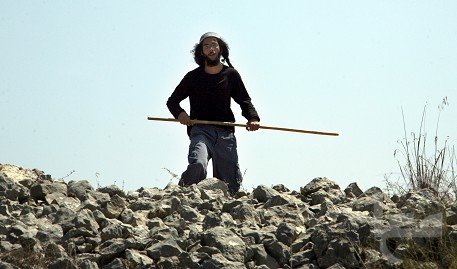
NABLUS — A group of Israeli settlers broke into an all girls’ school in the Nablus district village of As-Sawiya on Wednesday, setting fire to its storehouse containing furniture and unused sports equipment, the headmistress said.
Maysoon Sawalha said the school’s cleaning woman arrived to find the lock on the main door broken as well as that of the storehouse, with all its contents torched.
The fire did not spread to the rest of school because the water main is located in the storehouse she said, adding that “otherwise the whole school would have been set on fire.”
Settlers had also written racist slogans on the school’s walls, including “regards from the hill tops.”
“This is not the first attack on the school. Many attacks were carried out previously, the last of which was last year when settlers intercepted one of the classrooms and fired rounds of ammunition and gas canisters,” Sawalha said.
An Israeli military spokeswoman said a complaint had been filed with Israel’s Civil Administration and that the body was now directly in touch with Palestinian Authority officials to “keep things quiet” in the area. Israeli police, she added, are investigating the incident.
Sawalha called on international organizations to work on stopping such attacks “that put the life of the girls on risk causing them to suffer psychologically and panic out of such attacks.”
The suspected arson follows a wave of reports from Palestinian farmers that settlers have been setting fire to agricultural land since the beginning of the traditional olive harvest in October.
On 4 October, Israeli settlers were suspected of setting fire to a Bethlehem village mosque, after ransacking it and setting fire to the carpets.
Director of PA Ministry of Religious Endowment in Bethlehem Muhammad Ayish at the time describing the arson as a “campaign against everything Palestinian.”
On Tuesday, an Israeli rights group said that 90 percent of claims filed against settlers in the West Bank for assault to person or property against Palestinians fail to secure a conviction.
When will this conspiracy of silence end?
By Dr. Bouthaina Shaaban | MEMO | October 17, 2010
 The recent and latest – but probably not the last – images of prisoners being abused by Israeli soldiers showed a blindfolded Palestinian woman trying desperately to avoid 21st century brutality in a prison cell with neither bars nor windows. As the seconds ticked by like an eternity it was clear that her body was trying to shrink into itself to avoid the monsters of the modern age, in the land of Jesus Christ, who danced around their victim.
Were the soldiers dancing to celebrate the kidnapping of an Arab girl whose only crime was to struggle for freedom from an illegal occupation? Or were they dancing to celebrate the fact that the international conscience, so vociferous about freedom and human rights in other parts of the world, is so very quiet when it comes to the Palestinians who have been oppressed by Western-backed Israel for more than sixty years?
Ihsan Dababseh’s story is only one of numerous daily stories in the lives of the eleven thousand Palestinian prisoners in the last apartheid regime in the world. Nevertheless, the ‘civilized’ world hardly remembers them, except when seconds of the suffering of one of them is leaked out. These are mere seconds of long years of torture and humiliation, without any protest on the part of the ‘free’ Western media, human rights organizations or the UN Human Rights Council, maybe fearing the fate of American anchor, Rick Sanchez, who was fired by CNN simply for saying that “Jews are not oppressed”.
As a result of Western governments and media collusion with Israeli government terrorism, Israeli soldiers have arrested more than 90 Palestinian children in one month. The youngest, aged 13, was taken out of his family home by court order.
Human rights groups have revealed more than once that Israeli soldiers attack female prisoner cells and force them to take off their clothes, subject them to humiliating inspections and force them to raise their hands from 9 in the morning to 3 in the afternoon.
Do Western politicians, who flatter Israeli war criminals like Benjamin Netanyahu, by calling Israel ‘an oasis of democracy’ know this? Why don’t the Americans spread freedom and human rights in Palestine instead of supporting and funding torture, murder and settlement? Or do they view Palestinians as they viewed red Indians in America and the aborigines in Australia as people without human rights and whose life is not equal to human life?
American and European silence towards these atrocious Israeli crimes, even their absolute support of the racist government in Israel gave Israeli soldiers and settlers a free hand to kill, torture and run over unarmed Palestinian civilians. Their crimes have exceeded manifold those committed by the Apartheid in South Africa. They even exceeded Nazi brutality. This was the testimony of holocaust survivor on boat Irene which tried to break the Gaza blockade. He said, “what I suffered in the holocaust is largely similar to the suffering of Palestinian children today”. This was also expressed by Amira Hass (Haaretz, 7 October 2010). She wrote, “Evidence? Explanations? Common sense? No need. They, after all, are paid a salary by the Israeli taxpayer in order to invent new kinds of punishment and torture. She adds, “today, the sense of shame has disappeared. Society’s backing is assured”.
On my part, I add that the sense of shame has disappeared because the silence of the ‘international community’ is assured, because none of the world leaders is ‘free’ any longer. They have become captive to the Israeli lobby which controls the Congress, the media and the election money. That is why no American or European leader, not even the United Nations, will ever condemn any crime against the Palestinians as long as the perpetrators are Israelis. Even when the victim of such aggression is the Nobel peace prize laureate, Mairead Corrigan-Maguire. The peace activist arrived in Gaza on board the ship Rachel Corrie (named after the young woman run over by Israeli bulldozers). When she returned to Bein-Gurion Airport days ago, she was detained by Israeli authorities in the same way they detained American thinkers Noam Chomsky and Norman Finkelstein and Spanish artist Ivan Prado, secure in the knowledge that no one will dare criticize the Israeli apartheid regime for fear of being accused of anti-Semitism. Her crime was that several months ago she took part in a demonstration organized by the Bili’in villagers against the racist segregation wall and was twice on board ships to break the Gaza blockade.
The crimes committed with impunity by this racist entity against prisoners and peace, freedom, justice and human rights activists have gone so far largely because of the ‘silence’ of ‘democratic’ countries. It is true that Palestinian prisoners and activists are fighting for the freedom and dignity of the Palestinian people, but they actually embody the conscience of free people all over the world. Should we leave them in Israeli jails, as we left Nelson Mandela in the Apartheid prisons for decades, and wait until their release to turn them into icons of freedom and dignity? Or should we start immediately to work for releasing all prisoners and for enabling them to live in freedom and dignity with their families in their homeland?
Featured Video
The American Retreat from Vietnam
or go to
Aletho News Archives – Video-Images
From the Archives
Secret document reveals plans for civil war in Lebanon, Israeli false flags, and invasion
By Randi Nord | Geopolitics Alert | April 5, 2019
Beirut – During his visit with US Secretary of State, Mike Pompeo, Lebanese President Michael Aoun reportedly received a US-Israeli document detailing plans for creating a civil war in Lebanon with covert false flag operations and possible Israeli invasion.
Although the source of the document is Israeli and created in partnership with Washington, no one knows who presented it to Aoun. The Lebanese TV station, Al-Jadeed, initially reported the document on Lebanese TV and a video on its website. Geopolitics Alert translated the report for this article. … continue
Blog Roll
 Aletho News
- EU Council Advances Chat Control 2.0 Scanning Proposal
- Ex-Greek MEP files complaint against Israeli spyware firm over alleged Pegasus surveillance
- Troubling ideas throughout the Torah, Talmud, Mishneh Torah and Tanya
- ‘Grave, alarming’: Iran mission on Trump’s UNGA ‘annihilation’ threats
- Najaf airport to reopen to Iranian flights within 24 hours: Ambassador
- From ‘How Will This End For Iran’ to ‘When America Walks Away’: A tale of two Economist covers
- Tehran blasts ‘baseless’ speculation linking Iran to alleged bomb plot at UK air base
- The Rise And… Rise Of ‘Color Revolutions’
- The Coming GOP Bloodbath?
- Arctic Scare Stories Melt Away
- If Americans Knew
- Netanyahu Asked UAE Leader to Deny Report on Oct. 7 Warning in Secret Visit, Sources Say
- CNN Chief Int’l Correspondent Clarissa Ward on Journalists in Gaza
- Democratic Party Consultants Surround Troy Jackson with Pro-Israel Donors
- Christian Leader Responds To Netanyahu’s Claims Regarding Palestinian Christians
- In Gaza, ‘Whoever Survives the Bombing Won’t Survive the Rubble’
- Israel kills more Palestinians, amid push to resettle Gaza – Daily Update
- Israel forces Gazans to live in constant peril – Daily Update
- Deconstructing Netanyahu’s pants-on-fire UN rant – Daily Update
- Trump betrayed voters with his campaign lies and prioritized a foreign country once he took office
- Netanyahu calls Israel’s war in Gaza ‘opposite of genocide’ in UN speech to near-empty hall
- No Tricks Zone
- New Study: Earth And Venus Surface Warmth Largely Explained By Convection And Lapse Rate, Not CO2 Or Radiation
- 2025 Nature Paper Claiming Worsening Global Drought Gets RETRACTED …Heavily Flawed
- New Study: ‘Global Drought Shows No Detectable Recent Acceleration Under Climate Warming’
- Economic Masterminds: German Socialists Suggest Taxing Productivity Gains Stemming From Using AI
- The South China Sea Has Not Been Cooperating With The Climate Change Narrative
- Energy Crisis: Germany Enters Heating Season With Historically Low Gas Reserve Fill Levels
- New Study: The Antarctic Ice Sheet Gained Mass From 2020-2024 Due To Staggering Snow And Ice Accumulation
- Study: Ocean Heating Rates From Thousands Of Years Ago ‘Dwarf’ Modern Ocean Heating Rates
- Climate Extremists Target, Attack Large-Scale Power Grid Infrastructure In Germany!
- New Study: Antarctic Ice Melt Has Contributed Less Than 1 Centimeter To Sea Level Rise In The Last 30 Years

