Novel gets to truth of Sabra and Shatila
Matthew Cassel, The Electronic Intifada, 17 September 2010
 |
Israel’s invasion of Lebanon and subsequent 22-year-long occupation has been the focus of three acclaimed Israeli films in recent years: Lebanon, Waltz with Bashir and Beaufort tell the story of this era from the perspective of the occupiers. All young men serving in the Israeli army, the films’ protagonists question their roles in Lebanon. However, this narrative perspective leads the viewer to empathize with the occupier and thus do little other than reinforce a simplistic falsification of Israel’s history as a country always conflicted when waging necessary wars of self-defense. This is the narrative that continues to dominate the Western media.
Not one of these films makes the slightest attempt to humanize Israel’s victims or tell the story from their perspective. In contrast, UK author Mischa Hiller’s first novel, Sabra Zoo is told through the eyes of a young man named Ivan. Sabra Zoo follows the adventures of this son of a Dutch mother and Palestinian father who serves as an officer in the Palestine Liberation Organization (PLO) in Beirut during the most intense period of Israel’s invasion of Lebanon.
Ivan’s thrilling story starts in the weeks following the evacuation of the PLO after more than a decade of being based in Lebanon and ends soon after the Israeli invasion of Beirut. The evacuation of the PLO was followed by the infamous massacres at the Sabra and Shatila Palestinian refugee camps in southern Beirut committed 28 years ago this week by right-wing militias allied with Israel. Because of his multicultural background and European passport, Ivan acts as an interpreter for foreign nongovernmental organization (NGO) workers in Sabra and Shatila and also runs packages and undertakes other menial yet dangerous tasks for a presumed PLO operative working covertly in West Beirut.
Sabra Zoo leads the reader through various aspects of Israel’s 1982 invasion of Lebanon in the midst of the country’s 15-year-long civil war. Yet Hiller attempts to ground the story through its protagonist. As an 18-year-old, Ivan acts like many other young men, constantly preoccupied with thoughts of sex and alcohol. At points throughout the story, however, Ivan’s character comes across as insensitive and unbelievable for the way he jumps from the horrors faced by people in the camps to his more immediate obsession with getting laid.
Yet, like most who witness war at a young age, Ivan shows a wisdom that others only get much later in life, if ever at all. He’s deeply disturbed through his exposure to Palestinian children and families affected by cluster bombs and other ordnance and is distraught when he has to translate the doctors’ unfortunate prognoses to patients and their families. But he never shies away. Ivan shows incredible courage, learning to deal with the siege and attack while continuing his various jobs.
Ivan’s character is also able to offer readers a glimpse of Western perception of the war through the eyes of foreign NGO workers and journalists with whom he collaborates throughout the story.
A foreign cameraperson covering the war tells Ivan while editing video of cluster bomb victims that doing so is a “‘waste of time.'” He explains: “‘People in the West don’t want to see too much reality over dinner. All the gory stuff gets edited out in London or New York … I think if they showed the real effects of war we wouldn’t have it anymore.'” Through this character, Hiller presents a universality that any Western journalist who has covered conflict in this region is aware of: the horrific effects of war as seen on the ground are much different than the sanitized imagery the media sells in the West.
However, throughout the book Hiller leaves the reader frustrated by not narrating who fired the cluster bombs, even making it difficult to understand who is laying siege to Beirut. The most problematic part comes when Hiller introduces the reader to the Nakba, or “the catastrophe” as Ivan translates it while working with refugees in the camp, with no mention of the ethnic cleansing that took place by Zionist militias who forced 750,000 Palestinians to leave their homes in what is today considered Israel. Sure to mention that “back home was Palestine,” the story goes no further to describe the circumstances in which Palestinians, soon to be massacred in refugee camps, had to leave their homes in the first place. While a reader familiar with the history of this region can easily deduce that Israel is responsible for the Nakba, firing cluster bombs and laying siege to Beirut, others might be left wondering. This is a novel and not a history text book, but as an historical novel, such context is important.
Despite this, Sabra Zoo makes viscerally clear the brutality of Israel’s invasion, unlike the skewed history presented in Waltz with Bashir, which also focuses on the massacres. Waltz’s portrayal of mostly benign Israeli soldiers who merely fired a few shots on their way to Beirut and then lit flares over the camp, mostly oblivious to the massacring happening below, is contradictory to both history and Hiller’s narrative. When Israel finally entered Beirut after a brutal assault that killed nearly 20,000 Lebanese and Palestinians and injured many more, the PLO had already left and thus the invading army faced practically no resistance at the Lebanese capital. “‘Who will resist them now?'” asks Ivan’s PLO friend, frightened after the fighters had left and turned their weapons over to the Lebanese authorities. Hiller’s narrative exposes the utter cowardice of Israel’s invasion of a city unable to defend itself as well as its responsibility for one of the most gruesome events of recent decades.
Retelling the story of an event that took place 28 years ago may seem trivial to some who want to remain focused on the present and future, rather than with events of the past. But before Beirut — now one of the world’s most popular tourist destinations — becomes a city that can be enjoyed by foreigners and its inhabitants alike, those who have devastated it before with impunity and are threatening to do so again must first be brought to justice. Sabra Zoo is recommended reading for anyone hoping to better understand Israel’s invasion of Beirut and Palestinian refugees’ long struggle for justice that continues to this day.
Matthew Cassel is based in Beirut, Lebanon and is Assistant Editor of The Electronic Intifada. His website is http://justimage.org.
Israeli army assassinates Hamas leader
TULKAREM — Israeli forces entered the home of a Hamas leader in Tulkarem on Friday morning and shot him three times in the neck and chest before withdrawing, family members said.
Medics at the Thabit Thabit Hospital in Tulkarem confirmed that 38-year-old Iyad As’ad Shelbaya, a known Hamas leader, was dead, killed by three bullets to the neck and chest.
Shelbaya lived in the Nur Shams refugee camp east of Tulkarem. Security sources said he was assassinated during a raid on his home at 2:30 a.m. on Friday morning.
Officials said several armored vehicles entered the area to carry out the assassination. Palestinian forces were said to have coordinated with the Israeli military in getting Shelbaya’s body from his home to the hospital.
Accounts from family members say Shelbaya’s brother Mohammed was abducted by soldiers earlier in the morning, and forced to show officers the way to Iyad’s home.
Once at the home, witnesses said soldiers placed explosives at the main door, destroying the entry way and entering the home.
Several soldiers were then described entering the home, at which point three gunshots were heard. Medics confirmed three shots killed the man, one in the neck and two in the chest.
Shelbaya’s body was then removed from the home.
Mohammed told Ma’an that he heard his brother Iyad calling from his bedroom when the soldiers entered the home, asking “Who is it? Who is it? Who is it?”
“He asked the question three times, and that was followed by three bullets. He was alone sleeping in the house, his wife was visiting family in Jenin,” he said.
See photos of the scene of the assassination here.
An Israeli military spokesman confirmed the death, but gave a different version of events.
“During an arrest raid in the Palestinian village of Nur Shams, one suspect began running for the force,” the spokesman said. “He did not comply with soldiers who requested that he halt.”
The spokesman said that soldiers “felt threatened” by the behavior of the man, and “fired on the suspect.”
Israeli rights group says military report not likely
A field worker for the Israeli human rights organization B’Tselem who investigated the scene called the slaying “unjustified.”
Speaking with Ma’an less than 12 hours after the attack, Eid As-Sa’di said Israeli statements as to how the death occurred were implausible.
“It would have been possible to arrest him, or just as easily to injure him,” he said.
The rights worker said that the room where Iyad was shot was no more than three meters by three meters, and expressed skepticism over the report that the known Hamas leader had come running at troops, that soldiers had had time to warn him to stop, and then shoot.
As-Sa’di said that an investigation by B’Tselem was ongoing, and said details of the event were still emerging.
Dozens detained overnight
During the raid on the camp, nine other Hamas affiliates were detained from their homes.
Security sources identified those detained as: Mohmmad Abu Al-Kheir, Kamal Masharqah, Tayseer Jaber, Sheikh Mahmoud Al-Ghoul, Ashraf Fouda, Nedal Abu Helal, Nedal Abu Tharefah, Mohammad Abu Deiyah and Ahmad A’sa’s.
Fourth assassination in nine months
On 26 December 2009, Israeli forces entered the city of Nablus, proceeded toward the homes of Raed Sakarji, 38, Anan Subih, 33, and Ghassan Abu Sharkh, 40, in two cases entered the homes and shot the men, and in a third, executed Abu Sharkh in front of his home.
A statement from the Israeli military said soldiers “entered Nablus in an attempt to locate and arrest the men suspected of involvement in the murder of Meir Avshalom Hai this past Thursday.” The statement said the deaths were provoked by the suspects.
Testimony from witnesses, and blood evidence in hallways and bedrooms, showed the men were shot in their homes.
“We were sleeping in our bedroom, not bigger than six square meters, when Israeli soldiers began yelling ‘get out, get out.’ I thought I was dreaming. When I heard the Israeli soldiers and their police dogs outside the room, that was when I realized it was real,” Tahani, the wife of Raed Sarakji told Ma’an at the time.
Tahani said her husband told soldiers he would get out of the house, so they started shooting through the door and the windows. “He fell between my hands bleeding. I started crying ‘they killed him, they killed him.’ Then soldiers broke the door and got in. He was already dead, but they continued to riddle his body with bullets to make sure he was killed.”
A similar account was given by the cousin of Ghassan Abu Sharkh, “Everything happened very quickly… when we opened the door and saw the soldiers, two masked collaborators pointed to my brother Ghassan who was walking down the stairs. Before I knew it he was being shot. I couldn’t really make sense of what was going on at all. Then an Israeli officer asked me whether the dead man was Ghassan, and I said yes. ‘Good, then ask everybody to leave the house,’ the officer said.”
“I was standing close to Ghassan when they killed him. They could have detained him very easily. He passed to join my brother Nayif who was killed by Israeli forces a few years ago [2004].”
The third account was given by Farid Subih, 45, whose younger brother, Anan Subih, 33 was killed.
“At 3 a.m., dozens of Israeli troops surrounded our four-storey building. They blew open the the main gate then started shooting randomly and throwing grenades in all directions. Anan was inside, and he asked everybody to leave the building to avoid being hurt.”
He continued, “We headed to the nearby house of the Al-‘Amoudi family. Then soldiers entered the house with police dogs, and they started throwing more grenades, and a fire erupted in the warehouse full of plastic chairs and sponge material.
“My brother was not armed, but we could see soldiers continue to ransack the house. For three hours, we didn’t know what was going on. After the soldiers left, we found Anan dead … bullets tore all his body and bones.”
According to the Israeli military, “When he was killed, Annan Tzubach [Subih] was armed with a handgun and hiding two M16 assault rifles, an additional handgun, and ammunition.” The same statement, however, said that “During an attempt to arrest him tonight [Saturday], Annan was killed after an exchange of fire with the IDF while he was found in a hiding place along with weapons and ammunition.”
Seven civilians killed in US raid near Fallujah
Al-Manar TV – 16/09/2010
At least seven Iraqi civilians were killed during a joint US-Iraqi raid in the outskirts of Fallujah on Wednesday, in the deadliest incident involving U.S. occupation troops since the United States declared an end to its combat operations in Iraq on Aug. 31.
Iraqi officials said eight civilians were killed, while the U.S. occupation military claimed four suspected members of al-Qaeda in Iraq and two civilians died in a firefight that erupted as forces tried to capture a presumed member of the group who allegedly was responsible for attacks in the region.
Despite the official end of the U.S. combat mission, about 4,500 U.S. Special Operations forces remain in Iraq.
Iraqi officials in Anbar province said U.S. and Iraqi troops began raiding houses at 3 a.m. in Jubil, about 30 miles west of Baghdad. Among the dead, they said, were a 70-year-old man and three of his sons, who were all asleep in their yard when they were killed by a grenade. A fourth son died at a hospital, the Iraqi officials said.
Troops also entered a second house in the area and killed Yaseen Kassar, a former Iraqi military commander, Iraqi officials said, as well as two people in a third house.
It was not immediately clear whether the troops had been looking for Kassar or any of the other people killed.
“The security situation in Fallujah may deteriorate because of what happened today,” said Abdulfattah Izghear, a local city council member. “We asked U.S. troops and the Iraqi government to explain this unjustified action and this naked aggression against civilians.”
Iraqi Prime Minister Nouri al-Maliki, who is in charge of the Iraqi Special Forces, ordered an investigation into the incident, the state-run network al-Iraqiya reported.
Israel arrests MP’s brother five days after release from PA prison
Palestine Information Center – 16/09/2010

AL-KHALIL — Israeli troops raided the south Al-Khalil neighborhood of Wadi al-Hurriya Thursday morning and arrested Subhi Kafisha, 46, the brother of MP Hatem Kafisha, five days after he was released from a PA intelligence prison in Al-Khalil.
MP Hatem Kafisha said the Israeli force entered the neighborhood at 1:00 am Thursday morning and arrested his brother Subhi without specifying the reason for his arrest.
Subhi Kafisha was released the night of Eid al-Fitr after he was detained by PA militia intelligence in a recent campaign against Hamas MPs and their relatives in the West Bank.
Informed Palestinian sources reported that Israeli forces stormed a number of neighborhoods in Al-Khalil and arrested several ex-detainees and Hamas affiliates.
The same sources said Sheikh Mustafa Shawir, 55, a prominent Islamic figure in Al-Khalil, was taken into custody after he was released several months back from Israeli jails.
Sufyan Jumjoum, a 15-year prisoner released about a year ago, was also arrested, as was Sheikh Marwan Sarsour.
The Palestinian Authority arrested Anas Saeed and others waiting for him moments after leaving the Israeli Ofer prison before they reached their homes in Al-Khalil.
Meanwhile, Israeli soldiers arrested four Palestinians on Thursday in Jenin and Nablus after searching their homes. Local sources said Israeli forces arrested Ahmed Hisham Kamil, 26, and Yousef Ahmed Sabri Assaf, 27, after storming their homes in Qabatiya town, Jenin district.
Israeli forces raided the Old City of Nablus and arrested Moataz al-Wawi and Younis Sabri after raiding the neighboring village of Kafr Qalil. Local sources said they heard gunfire and stun grenades during the incursion.
Doubling of SOF Night Raids Backfired in Kandahar
By Gareth Porter | IPS | September 15, 2010
WASHINGTON – During a round of media interviews last month, Gen. David Petraeus released totals for the alleged results of nearly 3,000 “night raids” by Special Operations Forces (SOF) units over the 90 days from May through July: 365 “insurgent leaders” killed or captured, 1,355 Taliban “rank and file” fighters captured, and 1,031 killed.
Those figures were widely reported as highlighting the “successes” of SOF raids in at least hurting the Taliban.
But a direct correlation between the stepped up night raids in Kandahar province and a sharp fall-off in the proportion of IEDs being turned in by the local population indicates that the raids backfired badly, bolstering the Taliban’s hold on the population in Kandahar province.
Night raids, which are viewed as a violation of the sanctity of the home and generate large numbers of civilian casualties, are the single biggest factor in generating popular anger at U.S. and NATO forces, as Gen. Stanley A. McChrystal conceded in his directive on the issue last March.
Nevertheless, McChrystal had increased the level of SOF raids from the 100 to 125 a month during the command of his predecessor, Gen. David McKiernan, to 500 a month during 2009. And the figures released by Petraeus revealed that McChrystal had doubled the number of raids on homes again to 1,000 a month before he was relieved of duty in June.
The step up in night raids has been overwhelmingly concentrated on districts in and around Kandahar City. It began in April as a prelude to what was then being billed as the “make or break” campaign of the war.
The response of the civilian population in those districts can be discerned from data on the Taliban roadside bombs and the proportion turned in by the population. Increasing the ratio of total IEDs planted found as a result of tips from the population has been cited as a key indicator of winning the trust of the local population by Maj. Gen. Michael Oates, head of the Pentagon’s Joint IED Defeat Organization (JIEDDO).
But JIEDDO’s monthly statistics on IED’s turned in by local residents as a percentage of total IEDs planted tell a very different story.
The percentage of Taliban roadside bombs turned in had been averaging 3.5 percent from November 2009 through March 2010, according to official statistics from JIEDDO. But as soon as the SOF raids began in Kandahar in April, the percentage of turn-ins fell precipitously to 1.5 percent, despite the fact that the number of IEDs remained about the same as the previous month.
The turn-in ratio continued to average 1.5 percent through July.
There is a similar correlation between a sudden increase in popular anger toward foreign troops in spring 2009 and a precipitous drop in the rate of turn-ins.
In the first four months of 2009, turn-ins had averaged 4.5 percent of IED incidents. But in early May 2009 a U.S. airstrike in Farah province killed between 97 and 147 civilians, according to the Afghanistan Independent Human Rights Commission. As popular outrage over the biggest mass killing of civilians in the war spread across the country, the ratio of turn-ins fell to 2.1 percent of the total for the month, even though IEDs increased by less than 20 percent.
Then McChrystal took command and ordered a quadrupling of the number of night raids. The turn-in ratio continued to average just 2.2 percent for the next five months.
In Kandahar, as elsewhere in Afghanistan, popular anger at foreign troops was undoubtedly stoked by the inevitable killing and detention of the innocent people that accompanies SOF night raids.
According to the figures released by Petraeus, for every targeted individual killed or captured in the raids, three non-targeted individuals were killed and another four were detained.
Based on past cases of false reporting by SOF units, a large proportion of the 1,031 killed in the raids and identified as “insurgents” were simply neighbours who had come out of their homes with guns when they heard the raiders.
Gen. McChrystal referred to that chronic problem in a statement on his directive on night raids last March. “Instinctive responses” by an Afghan man to “defend his home and family are sometimes interpreted as insurgent acts, with tragic results,” McChyrstal said.
SOF units have routinely reported those killed under such circumstances as insurgents rather than as innocent civilians.
When an SOF unit raided the home of a low-level commander in Laghman province on Jan. 26, 2009, 13 men came out of nearby homes. They were all killed and later included in the tally of Taliban reported killed in the raid.
The problem of false reporting was brought to light most dramatically after a botched SOF raid in Gardez Feb. 12, when two men who emerged from buildings in the compound targeted by an SOF unit were shot and killed. Within hours of the raid, ISAF issued a statement describing the two men as “insurgents”.
That falsehood was later revealed only because the two men happened to be a police official and a government prosecutor. In the same incident, the SOF unit accidentally killed three women, two of whom were pregnant, but reported to headquarters that the women had been found tied up.
McChrystal defended the SOF unit against charges by eyewitnesses that its members had tried to cover up the killing, even after the head of the Afghan interior ministry investigation of the incident publicly declared that the testimony was credible.
The figure of 1,355 insurgents “captured” in the raids given out by the International Security Assistance Force is also highly misleading. In response to an IPS query about the figure, ISAF public affairs officer Maj. Sunset R. Belinsky confirmed that the figure “reflects insurgents or suspected insurgents captured during operations”.
In fact, the vast majority were simply swept up because they happened to be present in a house or compound targeted in a raid.
An ISAF press release Sep. 8 illustrates how such a larger number was accumulated. In a raid on the compound of a suspected “insurgent commander” in Paktika province Sep. 7, the SOF unit ordered all occupants to leave the compound and detained “several suspected insurgents” after “initial questioning”.
U.S. forces in Afghanistan have never released figures on what proportion of Afghans detained as suspected insurgents were eventually released because of lack of evidence. Maj. Gen. Douglas Stone, who reviewed U.S. detainee policies in early 2009, was reported by The Guardian Oct. 14, 2009 to have concluded that two-thirds of the detainees still being held by the U.S. military as Taliban insurgents were innocent.
The claim of 365 “insurgent leaders” killed or captured is also highly misleading.
At his confirmation hearing in June, Petraeus referred to the targets of SOF raids as “middle and upper level Taliban and other extremist element leaders”.
That terminology was later abandoned, however. When questioned about the figure last month, an ISAF official, speaking on condition of anonymity, conceded that it was not clear what authority the targeted “leaders” had. There is no organisational diagram for the Taliban, the official told IPS, and Taliban fighters are not organised in military units.
The vast majority of those “leaders”, it appears, were low level Taliban personnel who are easily replaced.
*Gareth Porter is an investigative historian and journalist specialising in U.S. national security policy. The paperback edition of his latest book, “Perils of Dominance: Imbalance of Power and the Road to War in Vietnam”, was published in 2006.
Due to Gaza closure, 40,000 students refused from UNRWA schools
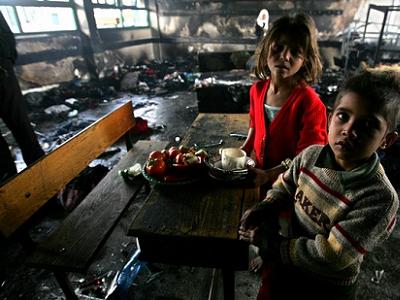 Notebooks and pens are in, construction materials are out
GISHA | September 15, 2010
- UNRWA can’t meet enrollment demand because of ban on construction materials
- UNRWA needs to build 100 schools, none built since 2007 closure
- UNRWA schools have specialized curriculum on human rights and critical thinking, not available in government schools
Despite Israel’s promise to ease the closure of the Gaza Strip, the Gaza school year opened this week with a severe shortage of classrooms. While for the first time in three years Israel has allowed the import of school supplies for government schools in Gaza, the almost absolute ban on the import of construction materials has left students with lots of pens and notebooks but without classrooms.
UNWRA needs 100 new schools to meet the enrollment demands of the children of Gaza. But despite the “easing” of the closure, building materials for the construction of schools have not been approved to enter Gaza since 2007. Therefore, UNRWA has had to turn away 40,000 children eligible to enroll in its schools for the academic year that began yesterday. Students at UNRWA schools study a specialized curriculum in human rights and critical thinking, not available in government schools. Furthermore, according to UNWRA records, students in its schools score 20% higher than government school students on international aptitude tests.
Students being turned away from UNRWA schools is only one consequence of the classroom shortage in the Gaza Strip. To deal with the shortage of classroom space, students in most of Gaza’s schools study in two shifts, in classrooms with up to 50 students, and sometimes oversized metal containers are used as classrooms, with three children seated at desks designed for two.
Onerous bureaucracy, limited capacity of crossings
Construction of a standard school requires an estimated 220 truckloads of building materials, or 22,000 truckloads for 100 schools. The only crossing Israel allows to open, Kerem Shalom, can accommodate just 250 truckloads per day, mostly for food and basic humanitarian supplies. Despite promises, Israel has yet to approve a single truckload of construction materials for UNRWA’s schools and has agreed to “negotiate” coordinating materials for just 8 out of the 100 needed schools. Since the “easing” of the closure, Israel has allowed just 240 truckloads of construction materials monthly for all uses, compared with more than 5,000 trucks monthly before the closure (4% of pre-closure levels).
According to UNRWA’s Gaza Director John Ging: “The right to education is a basic right of children everywhere. For the children of Gaza, realization of that right depends on the continued construction of schools, because all of the temporary measures and substitutes have already been exhausted”.
For an information sheet on the changes in the closure policy since the June 2010 cabinet decision, see: Unraveling the Closure of Gaza.
Gaza deaths protest comes under heavy live fire from Israeli snipers
15 September 2010 | ISM Gaza
Over 100 rounds of live ammunition were fired at peaceful protesters in a Tuesday demonstration in the Gaza strip. The protest at the Erez border area near Beit Hanoun yesterday included Palestinian activists from the Local Initiative group, local residents and 4 members of the International Solidarity Movement who marched into the site of the recent fatal Israeli incursion. The demonstrators had a view of the area where only a few days earlier, a Grandfather Ibrahim Abu Sayed and his 17 year-old grandson were killed by Israeli tank shelling.
The peaceful demonstration was joined by several young Palestinians, who were also protesting their right to their land, much of which is now lost or out of bounds by the Israeli imposed “buffer-zone.” This buffer-zone is 300 metres wide and stretches along the entire border fence on the frontier with Israel. According to the recent United Nations Report “Between the Fence and a Hard Place” the violence used to restrict Palestinians from accessing their land covers areas up to 1500m from the border fence, meaning that over 35% of Gaza’s most agricultural land is in a high risk area causing severe losses of food production and livelihoods.
On a previous demonstration, the activists had managed to partly remove a barbed wire fence, which had prevented them from entering their own farm land. This was met by an Israeli incursion days later, in which tanks and bulldozers unearthed a huge trench in front of the fence, about one kilometre long, three meters deep and two meters wide.
Having marched to the wire fence, 100 metres from the border wall, the demonstrators chanted and waved flags, planting one Palestinian flag beyond the wire fence. They had brought shovels and begun to refill the trench, when the Israel army suddenly opened fire around them. Under heavy shooting with live ammunition, the participants stood their ground, communicating through a megaphone, some crouching low for cover amidst the gunfire that came within 5 metres.
“We attend these demonstration because of the huge border area that takes Palestinian land”, eighteen year-old Hussam told us. “We don’t want it to be separated from our own land, it’s farmland and people are killed for trying to harvest it. Because of that we came to make them feel secure again.”
The shooting created an atmosphere of terror and fear among the demonstrators, as they had no safe cover in the forcibly neglected area… Full article
Israeli Troops Kill Palestinians With Impunity
Palestine Monitor | 14 September 2010

Soldiers who kill Palestinians in the Occupied Territories are almost never held accountable, even if the circumstances raise a grave suspicion that they acted criminally. This is the conclusion arising from B’Tselem’s report, which analyzes the policy of the Judge Advocate General’s Office over the past four years. The main reason for this dismal situation is that the army refrains, as a rule, from conducting a Military Police investigation in cases in which soldiers kill Palestinian civilians. In addition, the research shows that the Judge Advocate Generals’ Office routinely procrastinates in making decisions on files for many months, even years.
The report, Void of Responsibility: Israel Military Policy not to investigate Killings of Palestinians by Soldiers, issued today (Tuesday, 14 Sept) deals with events in the years 2006 to 2009 in which soldiers killed Palestinian civilians who were not taking part in hostilities (not including Operation Cast Lead). During this period, B’Tselem wrote to the Judge Advocate General’s Office (JAG), demanding a Military Police Investigation Unit (MPIU) investigation into 148 cases in which 288 Palestinians were killed in those circumstances. In these years, soldiers killed 1,510 Palestinians, 617 of whom were not taking part in hostilities (the figures do not include Operation Cast Lead).
In only 23 of the cases B’Tselem sent to the JAG, around fifteen percent, was an MPIU investigation opened, and in 41 of the cases, the JAG’s Office decided not to order an MPIU investigation. In the majority of the cases (84 cases), no decision has been made yet.
In the rare cases in which a decision is made to open an MPIU investigation, the decision is reached after great delay, which impairs the effectiveness of the investigation. In about one-third of the cases in which an MPIU investigation was ordered, the decision was made a year or more after the incident. When the investigation has ended, and the file was returned to the Judge Advocate General’s Office for decision on whether to file an indictment, it delays its decision for months, sometimes years. Eight of the 23 cases have ended with a decision to close the file without prosecution. In four cases, the MPIU has not completed its investigation, and in three other cases, the file was returned to MPIU for further investigation. In eight cases, no decision has been made whether to file an indictment, or B’Tselem has not been informed of the decision that was made. None of the cases in which B’Tselem referred to the JAG’s office led to criminal charges.
The fact that most of the complaints to the JAG’s Office still await decision makes it difficult to determine the reasoning it employs. However, analysis of a number of cases that B’Tselem handled in which a decision was made not to open an MPIU investigation shows that investigations are not opened even where there is a grave suspicion that the law has been broken. Also, analysis of the files shows that the authorities’ interpretation of the events is based solely on the results of an operational inquiry and the statements of the soldiers, without any reliance on the eyewitness testimony of other persons and on other evidence that contradicts the soldiers’ position.
The army’s policy not to open an MPIU investigation is based on the determination that the legal situation in the Occupied Territories is one of “armed conflict,” and on an incorrect interpretation of international law, which shirks the obligation of investigation imposed also in the situation of armed conflict. B’Tselem warns that this policy grants immunity to soldiers and officers, and that the army is failing in its obligation to take all feasible measures to reduce injury to Palestinian civilians. This policy permits soldiers and officers to act in violation of the law, encourages a trigger-happy attitude, and shows a flagrant disregard for human live. The petition that B’Tselem and the Association for Civil Rights in Israel (ACRI) filed on this subject in 2003 is still pending.
“Since the beginning of the intifada, we have opposed the sweeping decision not to investigate the killing of Palestinians,” B’Tselem’s executive director Jessica Montell said. “This is even truer now, when it is impossible to view the situation in the West Bank as armed conflict. The legal status must reflect the reality in the field, as well as express the value given to human life and the obligation to protect civilians.”
The report offers recommendations to the defense establishment, the foremost being a change in the legal definition of the situation in the West Bank, eliminating its classification as one of “armed conflict.” In addition, B’Tselem calls on the Judge Advocate Generals’ Office to adopt the guidelines recently submitted by Israel’s attorney general regarding the proper timeframes for handling files.
Background
From the beginning of the first intifada, in December 1987, to the outbreak of the second intifada, in September 2000, the Military Police Investigation Unit (MPIU) investigated almost every case in which a Palestinian not taking part in hostilities was killed. At the beginning of the second intifada, the Judge Advocate General’s Office (JAG) announced that it classified the situation in the Occupied Territories an “armed conflict,” and that an MPIU investigation would be opened only in exceptional cases, in which there was a suspicion that a criminal offense had been committed. This policy, which led to a significant drop in MPIU investigations of homicide cases, ignored the changing character of the army’s actions in the Occupied Territories, and treated every act carried out by soldiers as a combat action, also in cases in which the act had the clear markings of a policing action.
The primary tool used to determine whether to open an MPIU investigation is the operational inquiry, whose principal purpose is to learn lessons to improve operational activity in the future, and not to identify persons responsible for past misdeeds. In November 2005, in the framework of a hearing on a petition filed by B’Tselem and the Association for Civil Rights in Israel objecting to the policy of not opening MPIU investigations, the army instituted a procedure calling for preliminary investigation, within a limited period of time, of cases in which Palestinians not taking part in hostilities were killed. However, the procedure did not set a time framework for making decisions whether to order an MPIU investigation or to prosecute alleged offenders. As a result, these decisions may be delayed months, even years, thus preventing effective handling of suspected criminal acts within a reasonable time from the day that the incident occurred. The establishment, in 2007, of the office of the judge advocate for operational matters, which was intended to improve the efficiency in handling complaints and reduce the handling time, did not bring about significant change.
“They don’t want our boys educated”
Jody McIntyre writing from Beit Ommar, occupied West Bank, Live from Palestine, 13 September 2010
Located just north of Hebron in the occupied West Bank, the entrance to the Palestinian village of Beit Ommar is also the site of an Israeli military post. A large yellow gate is opened and closed at the will of the Israeli army, which can cut off the inhabitants of the town from the rest of the West Bank at any time. Beit Ommar has been resisting since 1948, when the town’s inhabitants fought the original settler population of Gush Etzion and today many continue to suffer the impact of the many surrounding settlements. Jody McIntyre interviews Beit Ommar resident Amal al-Montallab for The Electronic Intifada.
Jody McIntyre: Please introduce yourself.
Amal Abed al-Montallab: My name is Amal Abed al-Montallab, 45 years old, and I have six children — three daughters and three sons. We live in the Thahr al-Burrahesh area of Beit Ommar. My oldest son, Ammar, is 17 and in jail. The rest of my kids are young and still at school, so only my husband works, but he can’t work inside Israel because he’s been imprisoned twice before, so his wages are low. But we know that our story is not unique; there are many more families here with the same story.
JM: Can you tell me about the time the Israeli military came to arrest Ammar?
AM: It was just over two months ago. They army invaded and occupied the neighborhood, and started asking where they could find the house of Mohammed Abdul Hameed Abu Maria, my husband, but the neighbors told them that they’d never heard of such a house. Someone must have given the army inaccurate information, because they were looking for someone called Omar, not Ammar.
A week later they came back, but this time they were sure about his name and the location of our house. It was 2am. Ten soldiers invaded our home and were very violent with our children. They asked my husband where his son was, and he told them that he was working in Jericho. Then, they forced him into a separate room, and asked our children the same question, one-by-one, but they all gave the same answer: “Our brother works in Jericho.” They tried to trick my husband by telling him that one of the kids had informed them that Ammar was in the village, but he replied, “I know that none of my children said that to you, and it is simply from your mind.” Finally, the army left.
We shut the door, intending to get some sleep, but five minutes later the same soldiers invaded our house again, this time from the back door, and stayed for another two hours. The military commander came and took our phone numbers; he told us that he knew Ammar was sleeping at his uncle’s house, but he didn’t want to go there because it would make problems. They gave us a paper ordering us to take Ammar in for questioning at a nearby military base, situated in the settlement of Gush Etzion, but I refused because I knew that Ammar still had his final exams to study for. The commander said, “If you don’t bring him, tomorrow we will shoot him dead.”
The next day, they phoned us and said that we had ten minutes to take Ammar to them, otherwise they would arrest him themselves, and shoot him in front of our eyes.
We were worried because we knew that someone in the neighborhood could quite easily work with the Israeli army and make problems for Ammar. We were also worried that they might arrest Ammar at school, in front of all the students, which would inevitably result in clashes and many further arrests.
My husband told the commander that we would take Ammar to them after he had finished exams, and offered to pay money or even be arrested himself until then, but they refused.
Ammar is still in prison now; it’s been two months so far, and the lawyer thinks he will stay there for between five to seven months overall. The army says that our son threw stones, and he could’ve killed someone, but they have not one shred of evidence.
JM: Why do you think they arrested Ammar?
AM: They wanted Ammar because he’s studying for his final exams. The army does this every year, they arrest boys when they are preparing for the final exam so they aren’t educated. Because they arrested him at the start of the exams, he automatically loses one year of his education.
There was one kid in the neighborhood who was arrested three years in a row. Each year, they arrested him right before the final exams, and then two months later released him.
If the soldiers are scared of the kids throwing stones, they should know that we are suffering a much deeper fear. But we are patient, and when he is free again, he will go back to school.
Jody McIntyre is a journalist from the United Kingdom. He writes a blog entitled “Life on Wheels” which can be found at jodymcintyre.wordpress.com. He can be reached at jody [dot] mcintyre [at] gmail [dot] com.
Israeli occupation forces fire at peaceful march
Palestine Information Center – 14/09/2010
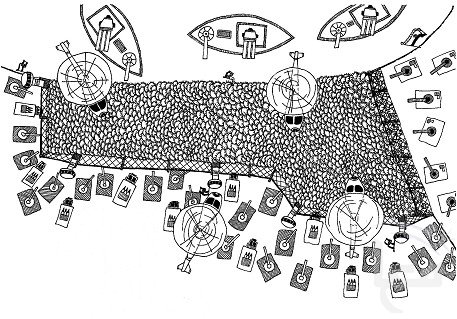
GAZA — Israeli occupation forces (IOF) opened fire on Tuesday at a peaceful march in northern Gaza Strip that was protesting the security fence and buffer zone, eyewitnesses reported.
They said that tens of demonstrators including foreign solidarity activists took part in the march that headed to the Beit Hanun (Erez) crossing.
They said that as soon as the marchers, who were hoisting Palestinian flags, approached the crossing the IOF soldiers got out of one of the trenches and opened indiscriminate machinegun fire at them.
For its part, Al-Mizan center for human rights asked the world community to swiftly provide protection for Palestinian civilians.
It said in a statement on Tuesday that the world should bridle Israel’s intention to establish a buffer zone in northern and eastern Gaza, which would entail catastrophic results on the Gaza inhabitants in general, and the inhabitants and farmers working in those areas in particular.
Mizan castigated the IOF troops for opening fire at the peaceful march earlier on Tuesday morning, noting that the march is weekly organized by the Beit Hanun residents to protest the buffer zone.
The center also condemned the IOF for opening artillery fire at farmers in Beit Hanun on Sunday killing three of them including a 91-year-old citizen and his grandson in addition to 25 heads of sheep.
Israel shells Gaza again: 3 farm workers killed including a 91 year old and his grandson
International Solidarity Movement | September 13, 2010
When 91 year old Ibrahim Abu Sayed left his home near Beit Hanoun in northern Gaza, yesterday morning, in order to check on his land and his animals which graze next to the remains of his former home, he took with him his 17-year-old grandson Hossam and the young boy’s friend and neighbour, 16-year-old Ismail Abu Oda. His son, Hossam’s father, didn’t want to come because it was the final day of Eid ul-Fitr, the Muslim festival that follows the holy month of Ramadan.

Ibrahim Abu Sayed, the 91 year old killed, his face mutilated by shrapnel
Despite his age, Ibrahim Abu Sayed was still mobile enough to regularly check his 3 dunums of land, as he had done for decades. The last decade had been the hardest as his house was destroyed in 2000 by Israeli bulldozers and his rebuilt house destroyed in the 3-week Israeli war on Gaza over the New Year of 2009.
But early Saturday evening would be the last time Ibrahim, Hossam and Ismail would work their land. Seven hundred metres away from their land – north of Sharab Street – at the border with Israel, tanks made an incursion into Gaza. The old man, his grandson and the friend did not stand a chance when the tanks fired shells directly at them.
ISM activists met the family members at the hospital. The wife of Ibrahim was devastated, screaming in horror at the fate that had befallen her family.
“I was there half an hour before it happened”, said Mohammed Abu Oda, another relative. “I saw them by their sheep. I heard the shells from the Israeli tanks, the shells we learned soon afterwards had killed our relatives.”

The dead body of 17 year old Hossam Abu Sayed
They were killed instantly, and were dead on arrival at Beit Hanoun hospital, according to the doctor who examined them. Ibrahim suffered severe shrapnel injuries to his face, chest and stomach and his grandson Hossam had the back of his head blown away. ISM activists verified this immediately as they saw and photographed the mutilated bodies in the morgue. Ismail, Hossam’s friend, had arrived at the hospital 30 minutes after the others but had been buried before ISM arrived at the hospital; according to doctors much of his head was shot away.
The boys had been close friends, studying in the 9th and 10th grade respectively, and had expected to return to school after the end of Eid, the following day. But yesterday they still were on holidays, so they went to help Ibrahim, as they often would. Despite the struggle they endured after their house was destroyed and their land bulldozed, the family, who are Bedouins, had no other job except farming. Although they were obliged to farm their land close to the border, it was still far enough away to be outside the Israeli imposed “buffer zone”.
“Israel claims that there’s a 300 meter buffer zone, but they were 700 meters away from the border”, said one of Ismail’s uncles, Majdy Abu Oda.
“The people there are farmers who’ve been living there for years. We, the people here, were never dangerous for the Israelis. They have photos of the people who live and work here, the area is full of observation cameras. So they knew them.”
Because of this the family considered themselves to be relatively safe, even though there were tanks at the border. It turned out they were mistaken to feel even slightly secure. While all the inhabitants of Gaza are victims of Israel’s ‘collective punishment’, a crime against humanity according to article 33 of the Geneva Convention (of which Israel is a signatory), they are the latest to be subjected to its worst manifestation and murdered with complete impunity.
If a 91 year old man, his grandson and young boy were killed while tending to their livestock on their own farm, 700 metres from a border, somewhere else in the world, there would likely be outcry. Where is the international outrage? Where is the clamour for justice? If equal standards were applied the media uproar should at least be comparable to the condemnation over the Israeli settlers shot two week ago – people who were living illegally on stolen land according to international law. Israeli armed forces have continued to wage a war against civilians in Gaza, long after the Israeli air and ground assault in the winter of 2008/2009 ended, yet condemnation of this state terrorism and its innocent civilian victims is rarely heard.
The family clearly posed no threat; they were known as long term residents of the area. But Israeli soldiers knew they could kill these three men with impunity, having previously almost entirely destroyed their livelihood.
Saber Zaneen, General Coordinator of the Beit Hanoun solidarity group, ‘Local Initiative’, released a statement following the killings, calling for justice.
“Today the occupation committed a new crime which will be added to its black list. Three martyrs now rest in heaven after the shelling and again we call on the international community and civil society to pressure the occupation forces to stop such crimes against Palestinian civilians and to start working on giving some protection to the local people in the Gaza strip,” he said.
They have also announced that tomorrow (Tuesday) morning at 10AM there will be a demonstration against the killings involving a march towards the fence, next to the Erez border. Four International Solidarity Movement activists will be there to accompany the protestors and document the likely violent repression which it may be subjected to – at the last non-violent demonstration in the area, live ammunition was used by Israeli border soldiers.
Zionist Settlers: A Long History of Terrorism
06/09/2010 — Reham Alhelsi
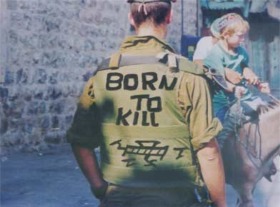
Zionist settlers, illegal colonists coming from all over the world to steal and occupy Palestinian land, armed with a green light to shoot and kill Palestinians whenever they want, won’t hesitate to use force against civilian Palestinians. Their violence includes shooting, stabbing beating, running over Palestinians, stealing their land, property and water, razing agricultural land, uprooting trees and burning crops, stealing harvest, raiding houses and blocking roads. Settler attacks are often initiated by them without any provocation or threat to their safety from Palestinians. In their attacks, the Zionist colonists are often accompanied by Israeli soldiers who either watch and don’t intervene to stop the settler terror or participate in the attacks and provide protection to the settlers. Zionist colonists are seldom prosecuted for their terror actions and in the very rare cases when they were prosecuted, they received very mild sentences. With every passing year, the terrorism of the Zionist colonists occupying Palestinian land increased in brutality and in quantity. Burning down Palestinian homes, mosques, cars and fields have become daily occurrences as beating and attacking Palestinian children on the way to school or Palestinian civilians on the way to work or home.
Looking back, I have tried to gather some examples of terror attacks carried out by Zionist colonists occupying Palestine (Quotations and info are from www.pchrgaza.org unless otherwise stated)
1983: On 26.07.1983 a group of Zionist colonists protected by Israeli soldiers raided the Hebron University campus and the lecture rooms, shooting and throwing hand grenades randomly. 3 Palestinians were killed and 22 injured. The 3 martyrs are: Said Iddin Hasan Dabri (39 yrs), Jamal As’ad Nazzal (29 yrs) and Samih Ammour (26 yrs).
1988: Beita: An example of Zionist terrorism and Israeli response to it
On 8:30 of the morning of 06.04.1988 a group of Zionist colonists from Elon Moreh stopped outside the Palestinian village of Beita. The group consisted of children and their armed guards. One Palestinian resident, Tayseer, tried dissuading the settlers from entering the village and offered to show them an alternative road around the village. The Zionists refused and by that time, some villagers who were working in the fields had gathered to see what the colonists wanted. One armed Zionist guard, Rumain Aldubi who was a known fanatic and violent colonist, ordered the residents of Beita to leave. As Tayseer turned to leave, the guard shot him in the stomach and the leg. He then continued shooting around him and killed Mousa daoud Bani Shamsi (20 yrs). The colonists then went down to the village and were met by the rest of Beita villagers who had heard the shooting and come to investigate. Some residents wanted to keep the colonists till the Israeli occupation forces came and hand over the murderers of Mousa to the IOF. Others were in favour of letting them go. The guard Aldubi began shooting again and killed Hatem Fayez Ahmad Jaber (22 yrs). According to the residents, one of the settler children, Tirza Porat, tried stopping Aldubi from shooting saying that what he was terrible. She tried grabbing his gun from him and he shot her. Bani Shamsi’s mother who was present hit Aldubi on the head. When he fell unconscious to the ground, the resident took his gun and that of the other guard and laid them on the ground until the IOF came. In the meantime the residents took care of the children and protected them. When the Israeli occupation army finally arrived, it was 10:30.
Beita was declared a closed military area. Then the IOF turned the village school into a detention centre and detained hundreds of residents. Isam Abdel Halim Mohammad (15 yrs), was shot dead by the IOF as he fled the village during the arrest campaign. On the same day tens of olive trees were uprooted and 5 Palestinian homes were blown up. The IOF told reporters at the time that they couldn’t establish a direct link between the “killing of the settler girl” and the demolished houses, i.e. the houses were chosen randomly to be demolished as a collective punishment for the village for a murder the villagers didn’t commit. Another 8 Palestinian houses were blown up the next day even after an Israeli military report found that it was in fact Aldubi’s gun that killed the girl. The Israeli army report confirmed that the bullet in the girl’s head was from Aldubi’s gun, the same gun that killed the two other Palestinians as well. The report noted that when the guns were grabbed by the Palestinians their magazines were empty. It also confirmed that the Palestinians had in fact protected the settler children. Israel also deported 6 Palestinians from the village as a further collective punishment for a murder committed by a settler. Even after the release of the Israeli military report, the Zionists continued accusing the Palestinians of killing the girl and stealing the guns from the guards. Israeli politicians, settler leaders and others called for revenge and for a brutal action against the Palestinians of Beita. Israeli minister of religious affairs at the time said that Beita doesn’t exist on the map anymore and that a settlement called Tirza Porat should be built in its place.
No Zionist colonist was ever punished for the murder of the 3 Palestinian residents of Beita.
The Beita tragedy is only one example of the nature of Zionism and Zionist colonists: they killed innocent civilian Palestinians for no reason and killed a Jewish girl as well, then blamed the murder of the girl on the Palestinians and incited against them. In the end it was the Palestinians who were punished for a crime they didn’t commit and punished for being the victims of this Zionist terrorist act.
1990: On 08.10.1990, some 200,000 Zionist colonists marched to Al-Aqsa mosuque. Assisted by Israeli occupation soldiers, the fanatic settlers starting shooting randomly at the unarmed Palestinians and using machine guns and gas bombs. Israeli helicopters participated in the massacre from the air. The massacre lasted 35 minutes during which at least 17 Palestinians were killed and some 900 injured, most of the wounds being in the head and in the heart.
1994: On 25.02.1994, Zionist colonist Baruch Goldstein, a leader of the fanatic terror organization Kach, entered the Ibrahimi mosque in Hebron and killed 29 Palestinian worshippers during dawn prayer. The shooting lasted 10 minutes during which the IOF soldiers stationed outside the mosque did not intervene to stop the massacre, instead they closed the doors of the mosque and prevented worshippers from escaping. After the massacre was over, the IOF soldiers, together with more Zionist colonists, entered the mosques and started shooting at those still alive inside. Another 30 Palestinian were killed by the IOF and Zionist colonists either while trying to provide medical help to those in the mosque, during the funerals of the massacre martyrs, or during protests against the massacre.
On 17.07.1994, Zionist colonists and Israeli occupation soldiers opened fire at Palestinians waiting at the Erez checkpoint. 11 Palestinians were killed and over 200 injured.
1996: On 15.10.1996 Zayid Fathi, 13 yrs, from Yabad, Jenine, was kidnapped by zionist settlers as he was walking home from school and brutally beaten. On the same day, another group of settlers in the Nablus area attacked 4 palestinian children and brutally beat them. One of the children, Mahmoud Bajawi, was beaten unconscious. On 24.10.1996 settlers set dogs at a group of Palestinian children on their way to school. On 27.10.1996 settlers beat Sahar Abdel Raouf Al-Muhtasib, 12 yrs, while Israeli soldiers watched.
2001: On 19.07.2001: a group of Zionist colonists stopped a Palestinian car carrying a family from Ethna, Hebron on its way back from a wedding. The colonists shot at everyone in the car, killing 3 Palestinians including a 3-month old baby and wounding at least 5. According to Amnesty International “The attack happened not far from an Israeli roadblock, but soldiers did not stop the killers car when it fled”.
According to PCHR “a group of settlers called “Halhul Cell” carried out a number of armed attacks on Palestinians killing and injuring some. On 11 April, the group fired at a Palestinian vehicle near Hebron. They also attacked a vehicle near “Rimunin” settlement and another one near “Ma’ale Adumim” settlement, killing a Palestinian. In July 2001, a group of settlers called “the Committee for Road Safety” claimed responsibility for an armed attack on a Palestinian car near Ethna village in Hebron, in which three Palestinian civilians, including a 2-month-old infant were killed. The circumstances of the attack indicate that it could not have succeeded without the protection and logistical support of other parties, and the tacit approval of Israeli forces. According to the Israeli newspaper Ha’aretz, Israeli authorities identified the attackers, but did not take any measure against them.”
“On 15 January, dozens of settlers from “Gush Qatif” settlement bloc attacked Al-Mawasi area in Khan Yunis which is under Israeli military control. According to eyewitnesses, settlers attacked the area at approximately 12:30, under the protection of Israeli occupation forces. They attacked Palestinian civilian facilities, houses, and agricultural land. Eyewitnesses added that settlers shot at Palestinian houses, set fire to three houses and some greenhouses, and destroyed irrigation networks on agricultural land. They also set fire to some restaurants and cafés on the seashore. Israeli occupation forces only intervened to put an end to the attack two hours later. By then, settlers had already terrified Palestinian residents and caused massive destruction.
On 28 March, more than 100 Jewish settlers and Israeli soldiers moved into al-Karantina area in the West Bank, and entered up to approximately 350m inside areas under full control of the PNA. Settlers, under full protection of Israeli forces, attacked Palestinian houses, throwing stones and incendiary materials at them, and breaking their windows with iron bars. They also attacked a number of Palestinian cars in the area, and set fire to nine of them, two of which belong to Hebron Municipality. In the afternoon, Jewish settlers set fire to a part of the headquarters of the Palestinian Ministry of Religious Endowments, located near “Avraham Avino” settlement, causing severe damage to its furniture.
On 19 June, a number of settlers set fire to Palestinian land to southwest of the road leading to “Ennab” settlement established on land of the Palestinian villages of Ramin, Beit Lied, and ‘Anabta near Tulkarm. Fire affected lands of the three villages. Approximately 2,500 donums of Palestinian agricultural land planted with olives, almonds and figs were burnt. According to eyewitnesses, Israeli forces were present in the affected areas, but did not intervene to stop the attack. They even prevented Palestinian civilians from putting out fire and fired at them.”
2002: “On 21 June 2002, armed settlers attacked Burin village, south of Nablus, breaking doors and windows of houses. A settler fired at ‘Othman Edris ‘Abdul Hamid Shehada, 23, killing him with a live bullet in the heart.
On 28 July 2002, a number of Jewish settlers attacked Palestinian houses in the old town of Hebron. They fired at Palestinian civilians and set fire to a number of houses and damaged their contents. A Palestinian girl, Nivin Mousa Jamjum, 14, was shot dead by a live bullet in the right eye.
On 26-28 July 2002, armed settlers waged a series of assaults against Palestinian civilians in the part of Hebron under full control of Israeli occupying forces. The settlers attacked Palestinian civilians and their houses in the old town and other areas in the centre of the city.” One Israeli female soldier told B’Tselem “concerning the settler attacks against Palestinian civilians and property in Hebron on 26-28 July 2002: “I saw a group of settlers, including adults, women and children, raiding Palestinian houses and destroying everything. They destroyed walls surrounding houses, flowerpots and cars. I saw one soldier on duty in the area. He was standing near a house that was raided by settlers and did not intervene. Soon, four soldiers arrived, but they also did not try to stop settlers.”
“In the context of these attacks, at approximately 19:00 on 26 July 2002, a number of settlers attacked the house of Yousef Nu’man al-Sharbati in the part of Hebron under Israeli security control. They set fire to a room and destroyed contents of the house, service networks and water tanks. Then, they seized control over the house, under full protection of Israeli occupying forces and police. Later, Israeli forces took the family of al-Sharbati out of the house, allegedly to protect them from settlers who seized the house. Despite attempts by the family to remain in the house, Israeli police used force to drive them out of the house, instead of expelling the settlers.
In the settler attacks against Burin village on 21 June 2002, according to eyewitnesses, Israeli forces did not intervene to stop these attacks. Rather they even prevented Palestinian civilians from defending themselves.”
On the previous day, 27 July 2002, a number of settlers from “Kiryat Arba’” settlement, southeast of Hebron, launched a series of attacks on the southern areas in Hebron, using firearms and sharp tools. They fired at 9-year-old Fawaz Radwan Edris, wounding him seriously with a live bullet in the head, while he was playing near his house. On the same day, a settler stabbed 7-year-old Ahmed Mohammed al-Natsha in the back, while settlers attacked the house of al-Natsha’s family.
On 17 September 2002, a bomb, apparently planted by extremist settlers, exploded in an elementary school in Zeif village, south of Hebron at approximately 10:00. Approximately 400 students were having classes at school when the explosion occurred; 9 students were injured. Israeli occupying forces arrived at the school and after searching, 2 other bombs were discovered and deactivated by Israeli occupying forces.
On 6 October 2002, while a number of Palestinian farmers from ‘Aqraba village were cultivating olives in their agricultural land in the northeast of their village, they were surprised by a number of settlers who opened fire, wounding Hani Yousef Bani Murra, 26, with a live bullet in the right thigh. As the settlers continued to fire, the farmers were not able to evacuate Murra to hospital for two hours. He was later taken to a medical center in the village, but he succumbed to his wound. Fadi Fadhel Bani Murra, 26, was also wounded in the attack by a live bullet in the right elbow.”
On 07.10.2002 Zionist colonists attacked olive harvesters in Nablus killing one Palestinian farmer and injuring two. “Israeli army officers confirmed that settlers in the area has been deliberately attacking olive harvesters, and that the army has taken no real measures to prevent it. “
2005: On 17.08.2005, a Zionist colonist killed 4 Palestinians in Nablus. According to the PCHR “Mohammed ‘Ali Hassan Mansour, 49, from Kufor al-Jaleel village near Nablus, and Khalil Mohammed Ra’ouf Welaiwel, 40, from Qalqilya, were traveling in an Israeli vehicle from their work place in “Shilo” settlement to their homes. The driver, who was an Israeli settler called Ashir Weisgen, 40, from “Shavot Rachel” settlement, stopped the vehicle and went towards the guard of the industrial zone of “Shilo” settlement. He drank water and stole the guard’s gun. Soon after, he ran back towards his vehicle and opened fire at the two Palestinian workers from a very close range. The two workers were instantly killed. Then, the settler ran into the industrial zone and opened fire at a number of Palestinian workers who were waiting for a vehicle to transport them out of the settlement. One of these workers, Bassam Mousa Tawafsha, 40, from Senjil village near Ramallah, was killed. Two other workers were also wounded: Ussama Mousa Tawafsha, 30, from Senjil village and Rawhi Abu Hani, 35, from Qaryout village near Nablus. The two were evacuated to an Israeli hospital, but the former was later pronounced dead.”
“On 6 August 2005, a number of Israeli settlers in settlement posts in the centre of Hebron attacked 16-year-old Anas Zuhair al-Bayed. He sustained injuries to the mouth, the neck and the right leg, and bruises throughout the body.
On 13 November 2005, a number of Israeli settlers from “Kiryat Arba” settlement, east of Hebron, attacked a number of houses in Wad al-Husain neighborhood using stones, iron bars and empty and explosive bottles. A Palestinian child, 3-year-old Nour Suleiman Abu Su’aifan was seriously injured in the left foot. Two houses were also damaged.
On 4 September 2005, 12 Israeli settlers armed with pistols, knives and iron bars, moved from “Ma’oun” settlement to the southeast of Yatta village, south of Hebron. They attacked tents and cattle farms belonging to a number of Palestinian civilians in the Khalayel al-‘Adra area to the west of the aforementioned settlement. They killed 6 sheep, injured 10 others and damaged the farms.”
On 04.08.2005 a Zionist colonist wearing Israeli army uniform stopped a bus full with Palestinian students on their way home and shot dead 4 Palestinians.
2006: “In 2006, PCHR documented 100 attacks by Israeli settlers: 75% in Hebron; 10% in Nablus; 6% in Qalqilya; 5% in Bethlehem; 2% in Jenin and Jericho. These attacks included: shooting; running down; attacks on houses; attacks on schools and students; attacks on religious sites; attacks on farmers and shepherds; and other attacks.”
2007: “In 2007, PCHR documented 100 attacks by Israeli settlers: 62% in Hebron; 19% in Nablus; 5% in Bethlehem; 5% in Tulkarm; 4% in Salfit; 3% in Jerusalem; 1% in Jenin; and 1% in Qalqilya. The categories of the attacks were: 29% of them were against farmers and shepherds and their property, 19% were against houses; 14% were beating; 6% were against religious sites; 5% were shootings; 2% were running down by cars; 2% were stabbing; and 23% were other attacks, including closing roads and throwing stones at Palestinian civilian vehicles.”
On 22.09.2007 settlers from Nikudim settlement near Bethlehem intercepted an ambulance and with gun point forced two paramedics out and then violently beat them.
“On 2 February 2006, an Israeli settler car intercepted a Palestinian school bus that was travelling on the Bethlehem-Hebron road, on its way to al-‘Arroub refugee camp. Four settlers, armed with pistols and M16 rifles, got out of the car. Two of the settlers entered the bus screaming at the driver and children and threatening and insulting them. The children were terrified and a number of them jumped out of the bus. A number of these children fainted or sustained bruises and fractures. Then, the two settlers violently beat the children who remained in the bus. Five children were injured.”
2008: “In 2008, PCHR documented 170 attacks by Israeli settlers, in comparison with 100 atttacks in 2007. Attacks in 2008 were: 90 in Hebron; 26 in Nablus; 20 in Ramallah and Al-Bireh; 12 in Qalqilya; 8 in Jerusalem; 7 in Salfit; 4 in Bethlehem; and 3 in Jenin. The categories of the attacks were: 48 of them were harassments; 36 were against houses; 34 were against farmers and shepherds and their property; 13 were shootings: 7 were against religious sites; 5 were running down by cars; and 27 were other attacks, including closing roads and throwing stones at Palestinian civilian vehicles.”
“At approximately 21:00 on Saturday, 27 September, dozens of armed Israeli settlers stormed Kufor al-Dik village, west of Salfit. They opened fire into the air to intimidate Palestinian civilians who came out of their houses to try to stop the raid. Israeli settlers stationed in the centre of the village then threw stones at houses under protection from IOF troops that stormed the area. A number of houses, cars and some public property were damaged. IOF troops fired rubber-coated metal bullets and tear gas canisters at dozens of Palestinian civilians who gathered to protect their houses and property. Isma’il Eyad Ahmed, 13, was wounded by a rubber-coated metal bullet to the left hand. Soon after, IOF imposed a curfew on the village and IOF military vehicles pursued Palestinian civilians to disperse and arrest them. ‘Abdul Rahim Hussein Ahmed, 29, was injured as he was hit by a military vehicle.
At approximately 10:00 on Thursday, 2 October, a number of Israeli settlers from “Shavot Aami” settlement near Kufor Qaddoum village, east of Qalqilya, launched an arson attack against large areas of agricultural land planted with olive trees that is located near Qalqilya-Nablus road. Residents of the village attempted to extinguish the fire, but IOF prevented them. According to owners of the land, Israeli settlers had already set up tents and seized a house on the land. Israeli official bodies ordered the evacuation of those settlers from the land, so they moved to a neighbouring area, from which they launched the arson attack under full protection by IOF.
At approximately 20:00 on the same day, dozens of Israeli settlers from “Janat Shomron” settlement, east of Qalqilya, attempted to break into ‘Azzoun village, east of Qalqilya. IOF intervened and prevented the settlers from entering the village to avoid clashes with Palestinian civilians who gathered at the northern entrance of the village to prevent the settlers from storming the village.
On Friday noon, 3 October, at least 50 Israeli settlers living in “Kiryat Arba” settlement, southeast of Hebron, attacked a number of Palestinian civilians, when the latter, in cooperation with international and Israeli peace activists, started to harvest olives from a tract of land belonging to the al-Ja’bari clan. As a result, ‘Abdul Karim Ibrahim al-Ja’bari, 39, was injured, and 2 Israeli peace activists sustained bruises.”[1]
On 02.08.2008, Zionist colonists from Kiryat Arba’ attacked a Palestinian wedding in Hebron and injured two Palestinians. The colonists also pushed Hamza Abu Hattah (15 yrs old) from the roof of his Hebron home, breaking his back. A day earlier, the colonists had attacked another Palestinian wedding injuring 5 Palestinians.
On Friday 05.12.2008, B’Tselem released video footage documenting a Zionist colonist shooting two Palestinians in Hebron. To protest the evacuation of an illegal settlement, Zionist colonists attacked Palestinians and Palestinian homes in Hebron on 04.12.2008. One Zionist colonist shot 40-year-old Hosni Abu Se’ifan (40 yrs old) in the chest and his father Abdil Hai Abu Sa’ifan (65 yrs old) in the arm.
2009: “In 2009, PCHR documented 233 attacks by Israeli settlers, the majority of them in Hebron. Attacks in 2009 were distributed as follows: 86 in Hebron; 67 in Nablus; 11 in Ramallah and Al-Bireh; 14 in Qalqilya; 22 in Jerusalem; 11 in Salfit; 12 in Bethlehem; 3 in Jenin; and 7 in Tulkarm. The categories of the attacks were:
47 cases of harassments; 40 attacks against houses; 63 attacks against farmers, shepherds and their property; 12 shootings: 9 attacks against religious sites; 6 attacks carried out with cars; and 56 other attacks, including closing roads and throwing rocks at Palestinian civilian vehicles.”
During 2009, Zionist colonists uprooted at least 5500 olive trees throughout the West Bank. Also, joint attacks by Zionist colonists and IOF were carried out on Palestinian civilians and their property. “On 8 April 2009, dozens of Israeli settlers, accompanied by IOF, stormed Kherbat Safa village, northwest of Hebron. They injured 9 Palestinian civilians. On 24 April 2009, 12 Palestinian civilians, including two children, were wounded, when armed Israeli settlers, accompanied by IOF, stormed ‘Ourif village, south of Nablus.”
2010: Throughout the year 2010 Palestinian families have been forcibly evicted from their homes by Israeli occupation forces and Zionist colonists who occupied these homes. On 30.01.2010 a Palestinian family was evicted from its home in the old city of occupied Jerusalem. On 28.04.2010, a Palestinian family was evicted from its home in Beit Safafa. Another family was evicted from its home in Beit Safafa on 03.05.2010. On 29.07.2010 Zionist colonists occupied a building in the old city of occupied Jerusalem, evicting the Palestinian families from their homes.
On 04.05.2010 Zionist colonists set fire to a mosque in Al-Lubban Ash-Sharqiyyeh, Nablus. The previous year, on 09.12.2009, Zionist colonists had set fire to the mosque of Yasuf, Salfit.
On 02.04.2010 Zionist colonists assaulted Rifqa Al-Kurd (89 yrs old) and her daughter Nadya (50 yrs old) from Sheikh Jarrah, occupied Jerusalem.
On 27.04.2010 Muhammad Ar-Ruweidi (11 yrs old) and Mustafa Al-Julani (12 yrs old) from Silwan, occupied Jerusalem, were brutally beaten by Zionist colonists.
On 03.06.2010 Mu’taz Mousa Omran Banat (16 yrs old) and Mohammad Ibrahim Al-Bis (16 yrs old) were shot by a Zionist settler at the entrance of Al-Arroub refugee camp, Hebron. The Zionist colonist stopped his car, stepped out of it and began shooting randomly at a group of children on their way to school. On 24.06.2010 Mohammad, who was shot in the chest, was told to come to Etzion detention center to make a report on the incident. He went with his father, and after several hours of interrogation, the child was fined by the Israeli occupation police despite the fact that the Zionist colonist who shot Mohammad had turned himself in to the Israeli police and admitted the shooting.
On 29.04.2010 Zionist colonists attacked the Palestinian village Huwwara, destroyed property, vandalized homes in the village and set fire to its farmlands. On 16.06.2010, dozens of Zionist colonists from Kiryat Arba’ raided several Palestinian homes in the Palestinian village Jabal Jalis at midnight, vandalized and destroyed the village’s farmland. On 30.07.2010, dozens of Zionist colonists attacked Burin and set fire to its farmland. A few days earlier, armed colonists had raided the village, opened fire on the villagers, uprooted olive trees and set the farmland on fire. On 6.08.2010, Zionist colonists set fire to hundreds of dunums of farmland in Beit Furik.
Following is a primary list of Palestinians killed by Zionist colonists:
(During my search for the names of the martyrs I came across many other names of Palestinians who were either beaten, shot or tortured to death and their bodies found in the vicinities of settlements, but it was not clear whether they were killed by the Zionist colonists or the Israeli occupation forces).
1983
Said Iddin Hasan Dabri (39 yrs), was shot dead by Zionist colonists on 26.07.1983
Jamal As’ad Nazzal (29 yrs) was shot dead by Zionist colonists on 26.07.1983
Samih Ammour (26 yrs) was shot dead by Zionist colonists on 26.07.1983
1987
On 08.12.1987 an Israeli settler deliberately ran over 4 Palestinians in Gaza, killing them. This led to the outbreak of the First Intifada against the brutal Israeli military occupation. The 4 martyrs are:
Taleb Mohammad Abdullah Abu Zeid (46 yrs old) from Al Maghazi RC.
Isam Mohammad Hammoudeh (29 yrs old) from Jabalia RC.
Sha’baan Sa’id Nabhan (26 yrs old) from Jabalia.
Kamal Qadourah Hasan Hamoudeh (23 yrs old) from Gaza.
1988
Rabih Hussein Mahmoud Ghanim (16 yrs old) from Bitin, Ramallah, shot dead by Zionist colonists on 11.01.1988
Mohammad Yousif Al-Yazuri from Rafah RC, Gaza, shot dead by Zionist colonists on 12.01.1988
Ahmad Ali Odeh Al-‘Ibiat (45 yrs old) from Bethlehem was shot dead by Zionist colonists on 14.01.1988
Ali Mohammad Mahmoud Dahlan (25 yrs old), from Khan Younis, Gaza, shot dead by Zionist colonists on 16.01.1988
Rawdah Mohammad Lutfi Najeeb (13 yrs old), from Baqa As-Sharqiyyeh, Tulkarim, shot dead by Zionist colonists on 23.02.1988
Hijjeh Mahmoud Abu Allan (60 yrs old) from Ath-Thahriyyeh, Hebron, was run over by Zionist colonists on 26.02.1988
Anwar Riziq Darwish ‘Amerah Al-Ghrisi (29 yrs old), from Ni’lin, Ramallah, shot dead by Zionist colonists after being kidnapped from his home on 26.02.1988
Ra’id Mahmoud ‘Awad Al-Bargouthi (17 yrs old), from ‘Aboud, Ramallah, shot dead by Zionist colonists on 28.02.1988
Ahmad Ibrahim Al-Jirn Al-Bargouthi (22 yrs old), from Ramallah, shot dead by Zionist colonists on 28.02.1988
Khadir Mohammad Hamidah (35 yrs old), from Al-Mazra’a Ash-Sharqiyyah, Ramallah, shot dead by Zionist colonists on 08.03.1988
Khamis Nimir (11 yrs old), from Jerusalem, hanged by Zionist colonists on 10.03.1988
‘Arif Mohammad Hussein ‘Abdo, from Jabal Al-Mukabbir, Jerusalem, died of burns sustained after Zionist colonists threw him inside oven of the bakery where he worked on 04.04.1988
Mousa Salih Mahmoud Bani Shamsi (20 yrs old), from Beta, Nablus, shot dead by Zionist colonists on 06.04.1988
Hatim Faiz Ahmad Said Jabir (22 yrs old), from Beta, Nablus, shot dead by Zionist colonists on 06.04.1988
Joudeh Abdallah ‘Awwad, from Turmus’ayya, Ramallah, shot dead by Zionist colonists on 05.05.1988
Husni Mohammad Al-Mahsiri (42 yrs old), from Ad-Doha, Beit Jala, killed by Zionist colonists on 15.05.1988
Ibrahim Msalam Abu ‘Esheh Al-‘Wewi (71 yrs old), from Hebron, stoned to death by Zionist colonists (smashed his skull) on 15.05.1988
Ahmad Tawfiq Sha’lan (11 yrs old), from Dheisheh RC, Bethlehem, killed by Zionist colonists who kidnapped him and threw his body in a well on 11.06.1988
Nishar Sharif Nassar Salameh (25 yrs old), from Beit Leed, Tulkarim, kidnapped and killed by Zionist colonists on 22.06.1988
Mousa ‘Omar Mahmoud (54 yrs old), from Brouqeen, Nablus, deliberately ran over by a Zionist colonist on 15.07.1988
Mohammad Sa’id Lhalid Kittaneh (27 yrs old), from An-Nazleh Ash-Sharqiyyeh, Tulkarim, killed and thrown in a water reservoir near the village on 24.07.1988
Riyadh ‘Odeh Mahmoud Khattab (28 yrs old), from Lufr Al-Lubbad, Tulkarim, deliberately ran over by a Zionist colonist on 25.07.1988
Khalil Mustafa Al-‘Abadlah (40 yrs old), from Khan Younis, Gaza, died on 11.08.1988 of burns caused by Zionist colonists who set fire to the hut in which Palestinian workers slept near Ur Yahuda illegal colony on 10.08.1988
Sa’id Ismail ‘Abid (22 yrs old), from Rafah, Gaza, died on 12.08.1988 of burns caused by Zionist colonists who set fire to the hut in which Palestinian workers slept near Ur Yahuda illegal colony on 10.08.1988
Nasim Ibrahim ‘Abid (27 yrs old), from Al-Maghazi RC, Gaza, died on 15.08.1988 of burns caused by Zionist colonists who set fire to the hut in which Palestinian workers slept near Ur Yahuda illegal colony on 10.08.1988
Mohammad Khalid Mahmoud Shqier (31 yrs old), from Tulkarim, killed by Zionist colonists on 24.08.1988
Mohammad Zain Ghazi Al-Karaki (18 yrs old), from Hebron, beaten to death by Zionist colonists on 30.09.1988
Kayed Hasan Abdel-Aziz Salah (42 yrs old), from Hebron, shot dead by fanatic terrorist colonist Rabbi Moshe Livinger on 30.09.1988
‘Amr Abdel-Qader Abu ‘Esha (21 yrs old), from Hebron, kidnapped and killed by Zionist colonists on 06.11.1988
1989
Ibtisam Abdil Rajim Bouziyyeh (13 yrs old) from Nablus was shot dead by Zionist colonists on 29.05.1989
‘Aziz Khamis ‘Arar (21 yrs old) from Qarawit Bai Zaid, Ramallah, was shot dead by Zionist colonists on 23.06.1989
Issa Mohammad Ali Sbeih (29 yrs old) from Al-Khadir, Bethlehem, was beaten to death by Zionist colonists on 18.11.1989
1990
Aziza Salim Jabir (27 yrs old) pregnant mother from Hebron, was killed by Zionist colonist Nahshon Fols shot at a group of Palestinians killing her and injuring others on 06.08.1990
Palestinians killed by Zionist colonists and Israeli occupation soldiers during Al-Aqsa massacre on 08.10.1990
Ribhi Hasan Rajabi,(61) Shot: 3x back / 1x chest
Izz Eddine Hamideh Yassini,(15) Shot: 6x head/torso/legs
Fayez Abu Sneineh,(18) Shot: 1x neck-head
Majdi Abu Sbeih,(17) Shot: 2x torso – abdomen
Ayman Ali Shami,(18) Shot: neck /back
Majdi Abu Sneineh,(17) Shot: 5x chest
Burhan Rahman Kashour,(19) Shot: shattered head
Jadu Rajeh Zadeh,(24) Shot: 2x chest/head
Ibrahim Ghurab,(31) Shot: 2x chest
Ibrahim Farhat Idkeidek,(16)Shot: 6x neck/side/legs
Maryam Makhtoub,(52) Shot: massive head injury
Mohammed Abu Sneineh,(30)Shot:3xhead/neck/arm
Nimer Dweik,(25) Shot: 4xeye/chest/abd/hand
Adnan Shteitwi Jinadi,(28) Shot:3x abdomen
Musa Abdel Sweiti,(27) Shot: 2xhead/side
Fawzi Ismail Sheikh,(63) Shot: 1x head
AbdelKarim Za Atreh,(40) Shot:unknown
1994
Palestinians killed by Zionist terrorist Baruch Goldstein, other Zionist colonists and IOF on the day of the Ibrahimi mosque massacre 25.02.1994
1 Ra’id Abdel-Muttalib Hasan An-Natsheh (20 yrs old)
2 ‘Ala’ Badir Abdel-Halim Taha Abu Sneneh (17 yrs old)
3 Marwan Mutlaq Hamid Abu Nijmeh (32 yrs old), father of 6
4 Thiab Abdel-Latif Hirbawi Al-Karaki (24 yrs old)
5 Khalid Khalawi Abu Hussein Abu Sneineh (58 yrs old), father of 8
6 Nuriddin Ibrahim Abdel-Muhtasib (22 yrs old)
7 Mohammad Kifah Abdel-‘Iz Zakariya Maraqa (11 yrs old)
8 Mahmoud Sadiq Mohammad Abu Za’nouneh (49 yrs old), father of 4
9 Sabir Mousa Husni Katbeh Bdeir (37 yrs old), father of 4
10 Nimir Mohammad Nimir Mujahid (34 yrs old), father of 4
11 Kamal Jamal Abdel-Ghani Qafeshah (13 yrs old)
12 ‘Arafat Mousa Yousif Burqan (28 yrs old), father of 4
13 Raji-Izzen Abdel-Khaliq Gheith (47 yrs old)
14 Walid Zuheir Mahfouth Abu Hamdieh (13 yrs old)
15 Sufian Barakat ‘Ouf Zaydeh (21 yrs old)
16 Jamal ‘Ayid Abdel-Fattah An-Natsheh (48 yrs old), supporter of 13
17 Abdel-Haq Ibrahim Abdel-Haq Al-Ja’bari (55), supporter of 13
18 Sliman ‘Awwad ‘Ilyan Al-Ja’bari (37 yrs old), father of 10
19 Tariq ‘Adnan Mahmoud ‘Ashour Abu Sneineh (14 yrs old)
20 Abdel-Rahim Abdel-Rahman Salameh (48 yrs old), supporter of 13
21 Jabir ‘Arif Abu Hadid Abu Sneineh (11 yrs old)
22 Hatim Khadir Nimir Al-Fakhouri (26 yrs old), father of 2
23 Salim Idris Falah Idris (27 yrs old), father of 2
24 Rami ‘Arafat Ali Ar-Rajji (11 yrs old)
25 Khalid Mohammad Hamzah Abdel-Rahman (18 yrs old)
26 Wa’il Salah Ya’coub Al-Muhtasib (28 yrs old), father of 3
27 Zidan Hamoudeh Abdel-Majid Hamid (26 yrs old), father of 4
28 Ahmad Abdallah Mohammad Taha Abu Sneineh (25 yrs old)
29 Talal Mohammad Daoud Mahmoud Dandash (26 yrs old), his wife was pregnant
30 ‘Atiyah Mohammad ‘Atiyah As-Salaymeh (33 yrs old), father of 5
31 Ismail Faiz Ismail Qufesheh (28 yrs old), father of 1 and his wife was pregnant
32 Nadir Salam Salih Zahdeh (19 yrs old)
33 Ayman Ayyoub Mohammad Al-Qawasmi (21 yrs old)
34 ‘Arafat Mahmoud Ahmad Al-Bayid (28 yrs old), father of 3
35 Abdel Rahim Abu Sneineh
36 Akram Kafisheh
37 Akram Joulani
38 Amjad Abdallah Sandal
39 Ayed Abu Hadid
40 Diab Muhtasab
41 Fawaz Zughair
42 Hamad Abu Nijmeh
43 Iyad Karaki
44 Khairi Aref Abu Hadid
45 Kifah Abdul Mu’az Marakeh
46 Marwan Abu Shareh
47 Raji Arafat Rajabi
48 Tariq Abdeen
49 Yasser Diab Kafisheh
50 Yazen Abdul Mu’ti Marakah
51 Yusef Hroub
52 Zeidan Jabber
53 Zein Gheith
54 Ziad Kafisheh
55 Mohammed Yusef Ghayatheh, shot by a Zionist colonist near Beit Jala hospital, Bethlehem
1996
Hilmi Shushah (10 yrs old) from Husan, Bethlehem was killed by a Zionist colonist on 24.09.1996. Hilmi and his friends were on their way back home from school when the settler stopped them and beat Hilmi to death.
1997
Isam Rashad Arafah (22 yrs old) from Hebron was killed by Zionist colonists
1998
1 Hani Salah Abu Hajaj (18 yrs) from Khan Younis, Gaza, was hit by a settler car on 01.05.1998
2 Ahmad Sllan Hamed (26 yrs) from Qaryout, Nablus, was shot dead by a settler on 06.05.1998
3 Khairi Mousa Alqam (51 yrs) from Jerusalem, was stabbed to death by a settler on 13.05.1998
4 Anwar Ibrahim Ali (26 yrs) from Sgufat RC, Jerusalem was stabbed to death by a settler on 10.06.1998
5 Abdel Majid Abu Turkiyyeh (48 yrs) from Hebron was attacked by 3 settlers who struck him with a metal bar killing him on 16.06.1998
6 Eyad Rauhi Karabsa (18 yrs) from Bytonia, Ramallah, while returning from school was shot dead by a settler on 17.09.1998
7 Lina Abu Arram (5 yrs) from Yatta, Hebron, was run over by a settler on 20.10.1998
8 Khalil Ibrahim Ikhshimat (44 yrs) from Anata, Jerusalem, was stabbed to death by a settler on 26.10.1998
9 Mohammad Sleiman Zalmot (70 yrs) from Nablus, was shot by a settler while picking his olive fields on 27.10.1998
10. Osama Mousa An-Natsheh (40 yrs) from Jerusalem, was stabbed to death by a settler on 2.12.1998
11. Nassir Ireqat (17 yrs) from Jerusalem was shot by a settler on 7.12.1998
1999
Israeli settlers ran over Mohammad Ali Al-Baddarin (12 yrs) from As-Samou’ in Hebron, killing him on 27.2.1999
2000
Sarah Abdel Athim Hasan Abdel Haq (18 months old) from Talfit, Nablus, shot dead by a Zionist colonist on 01.10.2000
‘Isam Judeh Mustafa Hammad (39 yrs old) from Um Saffa, Ramallah, tortured to death by Zionist colonists after being arrested on 09.10.2000
Mohammad ‘Udwan (39 yrs old) from Kufl Harith, Nablus, ran over by a Zionist colonist on 11.10.2000
Mohammad Ghassan Buziyyeh (49 yrs old) from Salfit, ran over by a Zionist colonist on 11.10.2000
Mahir Mohammad Mutlaq (24 yrs old) from Nablus, killed by Zionist colonist on 11.10.2000
Fareed Nasasrah (28 yrs old) from Beit Fourik, Nablus, shot dead by Zionist colonists on 17.10.2000
Ibrahim Abdel Rahman Al-‘Aallama (24 yrs old) from Beit Ummar, Hebron, shot dead by Zionist colonists on 18.10.2000
Zahi ‘Arda (35 yrs old) from ‘Askar RC, Nablus, shot dead by Zionist colonists on 19.10.2000
Ahmad Amin Abdel Min’im Al-Khuffash (7 yrs old) from Salfit, Nablus, ran over by a Zionist colonist on 07.11.2000
Mohammad Abdallah Diriyyeh (70 yrs old) from Nablus, ran over by a Zionist colonist on 08.11.2000
Mustafa Mahmoud Ilyyan (50 yrs old) from Askar, Nablus, killed by a huge rock thrown over his car by Zionist colonists on 14.11.2000
Shadi Ahmad Zaghloul (14 yrs old) from Husan, Bethlehem, ran over by a Zionist colonist on 30.11.2000
Hasan Ali Shahin Abu Mreish (20 yrs old) from Beytounia, Ramallah, tortured to death and killed by a sharp instrument by Zionist colonists after being kidnapped on 08.12.2000
Mohammad Hamid Shalash (18 yrs old) from Aboud, Ramallah, was shot dead by a Zionist colonist on 17.12.2000
Rashid Barhoum (24 yrs old) from Rafah, Gaza, was killed by Zionist colonists on 21.12.2000
Najib Mohammad Ibeido from Hebron, was killed by Zionist colonists on 22.12.2000
Sarhan Abu Rmeileh (31 yrs old) was strangled and stabbed to death by Zionist colonists on 25.12.2000
2001
Arij Sabir Al-Jabali (19 yrs old) from Hebron, was shot dead by a Zionist colonist on 05.01.2001
Palestinian from At-Tira was stabbed to death by settlers on 06.01.2001
Mohammad Ahmad Abu Suf (37 yrs old) from Haris, Nablus, was killed by Zionist colonists on 08.01.2000
Abdel Hamid Ahmad Al-Khrouti (34 yrs) from Gaza was shpt dead by Zionist colonists on 08.01.2000
Palestinian from Laqyeh, An-Naqab was tortured to death by Zionist colonists on 09.01.2000
Walid Khalil Al-Awadi (37 yrs old) from Gaza was tortured and shot dead by Zionist colonists after being kidnapped on 17.01.2001
Safwat Isam Qishta (16 yrs old) from Rafah., Gaza, was shot dead by security at Zionist colony on 25.01.2001
Ma’zouza Ar-Rimawi was on her way to hospital when stopped by colonists which led to her death on 26.02.2001
Ahmad Hassan ‘Allan (25 yrs) from Qariour, Nablus was shot dead on 03.03.2001 by a settler
Mohammad Ismail Hashim Nassar (10 yrs old) from Dahyat Al-Barid, Jerusalem, was beaten to death by Zionist colonists on 16.03.2001
Jabri Ahmad Hanashah (40 yrs old) from Dura, Hebron was beaten to death by Zionist colonists on 23.03.2001
Kifah Khalid Zu’rub (18 yrs old) from Gaza was killed by mad dogs released on him by Zionist colonists on 11.05.2001
Ziyad Mahmoud Abu Eid (32 yrs old) from Deir Dibwan, Ramallah was shot dead by Zionist colonists on 03.06.2001
Ayed Mahmoud Abu Eid (38 yrs old) from Deir Dibwan, Ramallah was shot dead by Zionist colonists on 03.06.2001
Mazin Al Julani (34 yrs old) from Anata, Jerusalem was shot dead by Zionist colonists on 03.06.2001
Khalid Tantawi (17 yrs old) from Gaza was killed by Zionist colonists on 07.06.2001
Ashraf Bardawil (27 yrs old) from Tulkarim was killed by Zionist colonists who blew up his car on 07.06.2001
Jamil Qasim Mohammad At-Turk (47 yrs) from Ad-Dik, Salfit, was beaten to death on 10.6.2001
Hikmat Al-Malalha (17 yrs old) from Nseirat RC, Gaza, was killed as a result of rocket fired from Nitsarim colony on 10.06.2001
Nasra Al-Malalha (65 yrs old) from Nseirat RC, Gaza, was killed as a result of rocket fired from Nitsarim colony on 10.06.2001
Salima Al-Malalha (35 yrs old) from Nseirat RC, Gaza, was killed as a result of rocket fired from Nitsarim colony on 10.06.2001
Awni Haddad (42 yrs old) from Hebron was killed by Zionist colonists on 13.06.2001
Ahmad Mahmoud Mohammad Ash-Sheikh (70 yrs) from Nablus, was run over by Zionist colonist on 18.06.2001
Fatima I’layan Abu Farwa (71 yrs) from Qalqilya was ran over by a settler on 19.06.2001
Diya’ Marwan At-Tmeizi (3 moths old) from Ithna, Hebron, was shot dead by Zionist colonists on 19.07.2001
Mohammad Hilmi At-Tmeizi (23 yrs old) from Ithna, Hebron, was shot dead by Zionist colonists on 19.07.2001
Mohammad Salamah At-Tmeizi (20 yrs old) from Ithna, Hebron, was shot dead by Zionist colonists on 19.07.2001
Khalid Arafat Isa Al-Batsh (3 yrs old) from Hebron, was killed by Zionist colonists on 09.09.2001
Ra’fat Mohammad Ihmeidan (25 yrs old) from Ramallah, was shot dead by Zionist colonists on 13.09.2001
Mustafa Abu Mousa (34 yrs old) from Deir Al-Balah, Gaza, was shot dead by Zionist colonists on 20.09.2001
Ahmad Ibrahim I’biat (24 yrs old) from Bethlehem was stabbed to death by Zionist colonists on 16.10.2001
Ahmad Abu Mustafa (13 yrs old) from Khan Younis, Gaza, was shot dead by a Zionist colonist on 12.11.2001
Ibrahim Mousa Yousif Hanani Ghalmi (80 yrs old) from Beit Fourik, Nablus, was run over by a Zionist colonist on 28.11.2001
2002
Luiai Ahmad Mousa Udeili (16 yrs old), from Ussarin was shot dead by a settler on 31.1.2002
Samir Ziad Abu Mayyaleh (14 yrs old) from Ath-Thuri, Jerusalem, was killed in suspicious circumstamces after being kidnapped by settlers on 08.02.2002
Alaa’ Hatem Fayiz Abdel Haj (19 yrs old) from Deir Abu Dhaif, Jenin, was shot dead on 2.4.2002 by a Zionist group that later calimed responsibility
Othman Idris Abdel Hamid Shihadeh (23 yrs old) from Burin, Nablus, was shot dead by a Zionist colonist on 21.06.2002
Nivin Mousa Jamjoum (14 yrs old), from Hebron was shot dead by a Zionist colonist on 28.07.2002
Ata Mahmoud Ibrahim Nimir (68 yrs old), from Al-Jib, Jerusalem died after being run over by a Zionist colonist on 29.07.2002
Jihad Mousa Mohammad Al-‘Athra (6 yrs old), from Yatta, Hebron, died after being run over by a Zionist colonist on 26.08.2002
Hani Yousif Bani Murra (26 yrs old), from ‘Aqraba, was shot dead by a Zionist colonists on 06.10.2002
2003
Khleif Abdil Rahman Khleif (85 yrs old) from Azzoun, Qalqilya, was run over by a Zionist colonist on 02.01.2003
Rayiq Mas’oud Abu Muhsin (30 yrs old) from Tubas, Jenin, was shot dead by a Zionist colonist on 30.04.2003
Mahmoud Mohammad Amin Hanni (23 yrs old) from Nablus, was killed by a Zionist colonist on 01.05.2003
Azhar Anan Hanni (18 yrs old) from Nablus, was killed by a Zionist colonist on 01.05.2003
Yazan Ibrahim At-Tal (11 yrs old) from Nablus, was killed by a Zionist colonist on 12.07.2003
Hamdan Mahmoud Hindi Al-‘Arramin (81 yrs old) from Si’ir, Hebron, was run over by a Zionist colonist on 14.11.2003
2004
Salman Safadi (16 yrs old) from Nablus, was beaten and shot dead by Zionist colonists on 27.10.2004
2005
Mohammad Ali Hasan Mansour (49 yrs old), from Furf Al-Jalil, Nablus, was killed by a Zionist colonist on 17.08.2005
Khalil Mohammad Ra’ouf Wleiwil (40 yrs old) from Qalqilya, was killed by a Zionist colonist on 17.08.2005
Bassam Mousa Tawafsheh (40 yrs old) from Sinjil, Ramallah, was killed by a Zionist colonist on 17.08.2005
Usama Mousa Tawafsheh (30 yrs old) from Sinjil, Ramallah, was killed by a Zionist colonist on 17.08.2005
Mousa Jamal Ibrahim Al-Alami (12 yrs old) from Hebron, was killed by a Zionist colonist on 27.07.2005
Hazar Adil Turki (23 yrs old) from Shafa Amre, was shot dead by a Zionist colonist on 05.08.2005
Dina Adil Turki (21 yrs old) from Shafa Amre, was shot dead by a Zionist colonist on 05.08.2005
Nadir Al-Hayik (55 yrs old) from Shafa Amre, was shot dead by a Zionist colonist on 05.08.2005
Michel Bahhout (56 yrs old) from Shafa Amre, was shot dead by a Zionist colonist on 05.08.2005
Yousif Mohammad Ghazal (80 yrs old) from Hebron, was killed by a Zionist colonist on 17.10.2005
Abdallah Faraj Yahya At-Tamimi (18 yrs old) from Ramallah, was killed by a Zionist colonist on 22.10.2005
2006
Hussein Fahmi Ali Mardawi (48 yrs old) from Habla, Qalqilya, was shot dead by a Zionist colonist on 06.08.2006
Yousif Hilal Badhah (12 yrs old), was killed by a Zionist colonist on 10.02.2006
Ahmad Hilal Badhah (12 yrs old), was killed by a Zionist colonist on 10.02.2006
Amal Hammad Al-Birawi (36 yrs old), from Yatta, Hebron, was killed by a Zionist colonist on 15.02.2006
2007
Mohammad kamal Battat (30 yrs old), was killed by a Zionist colonist on 18.01.2007
Yousif Wail Karawi (32 yrs old), was killed by a Zionist colonist on 10.03.2007
Mohammad Hamdan Ibrahim Bani Jaber (51 yrs old), from Aqraba, Nablus, was stabbed to death on 25.03.2007
Silmi Salim Nimir Hajjar (62 yrs old), was killed by a Zionist colonist on 12.05.2007
Ahmad Daoud Jum’a (69 yrs old), was killed by a Zionist colonist on 29.06.2007
Ahmad Mahmoud Al-Khatib (27 yrs old) from Kufr Manda, was shot dead by settler on10.08.2007
Mohammad Nasim Salim Abu Yacoub (14 yrs old) from Kufl Haris, Salfit, was run over on 17.09.2007
Kamal Mohammad Hamed Abdel qadir (40 yrs old) from Tulkarim was run over on 21.10.2007
Wasfi Al-Khatib (27 yrs old) from Qibya, Ramallah, was run over by settler on29.12.2007
2008
Mohammad Salih Mohammad Shreitih (18 yrs old) from Al-Mazra’a was shot dead by a Zionist colonist on 03.03.2008
Abdel Latif Ali Mohammad Hroub (21 yrs old) from Kharas, Hebron, was shot dead by a Zionist colonist on 31.03.2008
Sharif Bajjas Farid Shtayyeh (15 yrs old) from Salim, Nablus was run over by a Zionist colonist on 07.04.2008
Rashad Ali Khatir (20 yrs old) from Ein Sinya, Ramallah was shot dead by a Zionist colonist on 09.05.2008
Yahia Atiya Fahmi Bani Munya (18 yrs old) from Aqraba, Nablus was kidnapped and shot dead by a Zionist colonist on 27.09.2008
2009
Nasr Mustafa Daoud Odeh (16 yrs old) from ‘Azzoun, Nablus was shot dead by a Zionist colonist on 13.01.2009
Rabah Hjazi Mohammad Sidr (17 yrs old) from Hebron was shot dead by a Zionist colonist on 17.04.2009
Amjad Mohammad Khadir Abu Khdeir (33 yrs old) from Shu’fat, Jerusalem was shot dead by a Zionist colonist on 02.06.2009
2010
Aysar Yasir Al-Zaben (16 yrs old) from Al-Ma’sara, Ramallah was hot dead by settlers on 14.05.2010
Fatima Sabarneh (55 yrs old) from Beit Ummar, Hebron, was run over by a Zionist colonist on 31.05.2010
Mazen Al-Jamal (48 yrs old) from Hebron, was run over by Zionist colonist on 02.06.2010
Sources:
http://poppiesofpalestine.wordpress.com/
http://www.pchrgaza.org
http://www.kotleh.4t.com
http://www.freewebs.com
Footnotes:
[1] http://www.palestinematters.com/home.asp?productID=39
Featured Video
The American Retreat from Vietnam
or go to
Aletho News Archives – Video-Images
From the Archives
Secret document reveals plans for civil war in Lebanon, Israeli false flags, and invasion
By Randi Nord | Geopolitics Alert | April 5, 2019
Beirut – During his visit with US Secretary of State, Mike Pompeo, Lebanese President Michael Aoun reportedly received a US-Israeli document detailing plans for creating a civil war in Lebanon with covert false flag operations and possible Israeli invasion.
Although the source of the document is Israeli and created in partnership with Washington, no one knows who presented it to Aoun. The Lebanese TV station, Al-Jadeed, initially reported the document on Lebanese TV and a video on its website. Geopolitics Alert translated the report for this article. … continue
Blog Roll
 Aletho News
- America’s Greenland deal has a radioactive backstory
- The RAF Fairford ‘terror plot’: Unpacking escalation in the UK echo-chamber
- EU Council Advances Chat Control 2.0 Scanning Proposal
- Ex-Greek MEP files complaint against Israeli spyware firm over alleged Pegasus surveillance
- Troubling ideas throughout the Torah, Talmud, Mishneh Torah and Tanya
- ‘Grave, alarming’: Iran mission on Trump’s UNGA ‘annihilation’ threats
- Najaf airport to reopen to Iranian flights within 24 hours: Ambassador
- From ‘How Will This End For Iran’ to ‘When America Walks Away’: A tale of two Economist covers
- Tehran blasts ‘baseless’ speculation linking Iran to alleged bomb plot at UK air base
- The Rise And… Rise Of ‘Color Revolutions’
- If Americans Knew
- Revealed: German “Anti-Semitism Expert” Driving Crackdown on Palestine Solidarity is Former Israeli Spy
- Egypt’s Warning to Israel Before Oct 7
- Israel’s siege signals another cruel winter for 1.8 million Gazans – Daily Update
- Netanyahu Asked UAE Leader to Deny Report on Oct. 7 Warning in Secret Visit, Sources Say
- CNN Chief Int’l Correspondent Clarissa Ward on Journalists in Gaza
- Democratic Party Consultants Surround Troy Jackson with Pro-Israel Donors
- Christian Leader Responds To Netanyahu’s Claims Regarding Palestinian Christians
- In Gaza, ‘Whoever Survives the Bombing Won’t Survive the Rubble’
- Israel kills more Palestinians, amid push to resettle Gaza – Daily Update
- Israel forces Gazans to live in constant peril – Daily Update
- No Tricks Zone
- New Study: Earth And Venus Surface Warmth Largely Explained By Convection And Lapse Rate, Not CO2 Or Radiation
- 2025 Nature Paper Claiming Worsening Global Drought Gets RETRACTED …Heavily Flawed
- New Study: ‘Global Drought Shows No Detectable Recent Acceleration Under Climate Warming’
- Economic Masterminds: German Socialists Suggest Taxing Productivity Gains Stemming From Using AI
- The South China Sea Has Not Been Cooperating With The Climate Change Narrative
- Energy Crisis: Germany Enters Heating Season With Historically Low Gas Reserve Fill Levels
- New Study: The Antarctic Ice Sheet Gained Mass From 2020-2024 Due To Staggering Snow And Ice Accumulation
- Study: Ocean Heating Rates From Thousands Of Years Ago ‘Dwarf’ Modern Ocean Heating Rates
- Climate Extremists Target, Attack Large-Scale Power Grid Infrastructure In Germany!
- New Study: Antarctic Ice Melt Has Contributed Less Than 1 Centimeter To Sea Level Rise In The Last 30 Years

