Haaretz: Officers Shot Palestinian Lying On Ground
By Saed Bannoura – IMEMC News – June 16, 2010
The official Israeli version of an incident last Friday, in which a Palestinian motorist from East Jerusalem was killed by Israeli border officers after a motor vehicle accident, has been challenged by a new report released today by the Israeli paper Haaretz.

Ziad Jilani (photo from haaretz)
According to the new report, witnesses say that the motorist accidentally hit a group of Israeli border officers walking on the road, and was then killed in revenge by the other officers.
The witnesses reported that the motorist, 39-year old Ziad Jilani, was lying prone on the ground when the officers shot him in the face at point-bank range after kicking him in the head.
The incident took place in the Wadi Joz neighborhood, an area of increased tension since Israeli authorities declared it to be part of a planned expansion of Jewish settlements in what has historically been a Palestinian neighborhood in East Jerusalem.
According to witnesses, a number of Israeli border officers on horseback and on foot entered the Palestinian neighborhood on Friday afternoon as Muslim prayers were getting out, creating a tense situation in the midst of heavy traffic. Jilani was driving along the heavily-trafficked road when some Palestinian youth began throwing stones at the officers.
Two witnesses said they saw one of the stones hit Jilani’s front windshield, causing him to swerve to the left and hit the officers. The officers began firing at Jilani, who drove away and pulled into an alley nearby, where they continued to pursue him, firing their weapons.
A witness who lives along the alley said she saw the vehicle pull in, and saw Jilani get out with the officers close behind him. She told a reporter from Haaretz, “There was shooting and I started to scream. My mother ran toward me and threw me to the ground. Everything happened within seconds. I realized he wasn’t walking normally, and saw the shattered windshield of the car, maybe from a stone. He ran until he fell over. He got out of the car, and they came after him. Not just one of them shot, but many of them, and then they started yelling in Hebrew for people to go back into their homes.” She said she saw the officers kicking Jilani in the head and then shooting him twice with rifles at close range, killing him.
A spokesman for the border police refused to comment on the eyewitness reports, instead claiming that the striking of the officers was an intentional act by Jilani, and that “Individuals have been killed and dozens wounded in vehicle attacks in Jerusalem between 2008 and 2009 … All of those attacks were committed by East Jerusalem residents, and in each case those close to the perpetrators described the incidents as ‘accidents.’”
Jilani was married with three daughters. His widow is a US citizen.
B’tselem: Gaza, 95% of factories are closed, 93% of water is polluted
By Haitham Sabbah • June 14th, 2010
Most of Gaza’s factories have closed and its water is polluted as a result of Israel’s siege policy, according to a new report being released today by the Israeli Human Rights group – B’tselem.
The siege policy has “led to economic collapse in Gaza,” B’tselem noted in a 44-page report (PDF) that looked at Gaza, the West Bank and east Jerusalem during the period from January 2009 to the end of April 2010.
Following is a summery of this report:
- The prohibition on bringing in raw materials and exports into Gaza, which has been in place since Hamas’s takeover of the Strip in June 2007, forced 95 percent of the factories and workshops in the area to close.
- Before 2007, 4,000 types of goods were let into Gaza, compared with less than 150 that come in now. Among the restricted items are building materials such as iron and cement, which are needed to rebuild the 3,500 homes destroyed during last Israeli assault on Gaza – Operation Cast Lead.
- The quantity of goods that comes through the crossings is less than one-quarter of what entered prior to the siege.
- Before 2007, 70 trucks laden with export goods such as furniture, clothing and produce left Gaza daily for Israel. Now, only the export of strawberries and flowers to Europe is allowed in “certain instances”. Goods are coming into Gaza through a system of tunnels set up under the border with Egypt, although the system is not enough to revive Gaza’s economy.
- Electricity is a problem in Gaza. 98% of the residents suffer from blackouts ranging from eight to ten hours a day, while the remaining 2% do not receive any electricity at all.
- The power outages due to lack of fuel and spare parts have prevented the proper operation of wells and desalination plants.
- At the end of 2009, studies showed that 93% percent of the Gaza Strip’s water was polluted, with high quantities of chloride and nitrates.
- “The water supply is defective and thousands of residents are not even connected to the water grid. Waste treatment has also been affected. Every day, some 100,000 cubic meters of untreated or partially untreated waste-water flow into the sea.”
- A lack of pesticides and spare parts for irrigation systems makes it hard for farmers. Those with land near the border with Israel can no longer farm because access is forbidden or restricted, and those who violate these orders risk being shot.
- Fisherman cannot go out farther than three nautical miles, which limits the Strip’s fish supply.
- The number of Palestinian fatalities at the hands of the IOF dropped from 456 in 2008 to 83 from January 21, 2009, through the end of April 2010. These numbers do not include Palestinian deaths that occurred during Operation Cast Lead.
- The report noted that Israel demolitions had continued in Area C of the West Bank, where from January 2009 to the end of April 2010, the occupation forces had destroyed 44 residential structures. The demolitions left 317 Palestinians homeless.
- In 2009, the Jerusalem Municipality demolished 48 buildings in east Jerusalem. The demolitions left 247 Palestinians homeless.
- The report notes that the IOF had not stop building settlements and no outposts been removed.
- According to the report, very few IOF or police investigations into allegations of wrongdoing against Palestinians had actually lead to convictions. From the start of the second intifada in September 2000 to the end of April 2010, B’tselem reported 255 cases of violence to the military advocate-general’s office. Only 11 indictments were filed, and one of those was canceled.
- During that same period, B’tselem turned to the Justice Ministry’s Police Investigation Department concerning 180 cases of violence, but only 12 indictments were filed.
- Since September 2000, B’tselem has submitted 220 complaints to the Israel Police, demanding investigations of cases where Israelis harmed Palestinians or damaged their property. Only nine of these complaints resulted in indictments.
B’tselem executive director Jessica Montell said that the report was being released to mark “the 43rd anniversary” of the end of the Six Day War, which marked “the beginning” of Israel’s occupation.
“The ongoing occupation both violates” Palestinian rights and “poses clear dangers for Israel’s democracy,” Montell said. “For this reason we as Israelis must demand accountability for actions taken in our name in the occupied territories and work to change in policies that infringe human rights.”
ICRC: Gaza closure must be lifted
The hardship faced by Gaza’s 1.5 million people cannot be addressed by providing humanitarian aid. The only sustainable solution is to lift the closure.
ICRC News Release | June 14, 2010
The serious incidents that took place on 31 May between Israeli forces and activists on a flotilla heading for Gaza once again put the spotlight on the acute hardship faced by the population in the Gaza Strip.
As the ICRC has stressed repeatedly, the dire situation in Gaza cannot be resolved by providing humanitarian aid. The closure imposed on the Gaza Strip is about to enter its fourth year, choking off any real possibility of economic development. Gazans continue to suffer from unemployment, poverty and warfare, while the quality of Gaza’s health care system has reached an all-time low.
The whole of Gaza’s civilian population is being punished for acts for which they bear no responsibility. The closure therefore constitutes a collective punishment imposed in clear violation of Israel’s obligations under international humanitarian law.
“The closure is having a devastating impact on the 1.5 million people living in Gaza”, said Béatrice Mégevand-Roggo, the ICRC’s head of operations for the Middle East. “That is why we are urging Israel to put an end to this closure and call upon all those who have an influence on the situation, including Hamas, to do their utmost to help Gaza’s civilian population. Israel’s right to deal with its legitimate security concerns must be balanced against the Palestinians’ right to live normal, dignified lives.”
The international community has to do its part to ensure that repeated appeals by States and international organizations to lift the closure are finally heeded.
Under international humanitarian law, Israel must ensure that the basic needs of Gazans, including adequate health care, are met. The Palestinian authorities, for their part, must do everything within their power to provide proper health care, supply electricity and maintain infrastructure for Gaza’s people.
Furthermore, all States have an obligation to allow and facilitate rapid and unimpeded passage of all relief consignments, equipment and personnel.
Israeli soldier Gilad Shalit is about to enter his fifth year in captivity. Hamas has continued to rebuff the ICRC’s requests to let it visit Gilad Shalit. In violation of international humanitarian law, it has also refused to allow him to get in touch with his family. The ICRC again urges those detaining Gilad Shalit to grant him the regular contact with his family to which he is entitled. It also reiterates that those detaining him have an obligation to ensure that he is well treated and that his living conditions are humane and dignified. *
Ruined livelihoods
Although about 80 types of goods are now allowed into Gaza – twice as many as a year ago –over 4,000 items could be brought in prior to the closure. Generally, the price of goods has increased while their quality has dropped – this is one consequence of the largely unregulated trade conducted through the tunnels that have been dug under the Gaza-Egypt border to circumvent the closure.
Fertile farmland located close to the border fence has been turned into a wasteland by ongoing hostilities, affecting people’s livelihoods in many rural communities. The buffer zone imposed by Israel extends in practice over one kilometre into the Gaza Strip, covering a total area of about 50 square kilometres that is host to nearly a third of Gaza’s farmland and a large share of its livestock. Agricultural activities in the area are hampered by security conditions. Israel’s enforcement of the buffer zone and frequent hostilities have resulted not only in civilian casualties and the destruction of civilian property but also in the impoverishment and displacement of numerous families.
Gaza’s fishermen have been greatly affected by successive reductions imposed by Israel on the size of the fishing grounds they are allowed to exploit. The latest restriction to three nautical miles has cut down both the quantity and quality of the catch. As a result, nearly 90% of Gaza’s 4000 fishermen are now considered either poor (with a monthly income of between 100 and 190 US dollars) or very poor (earning less than 100 dollars a month), up from 50% in 2008. In their struggle to survive, the fishermen have little choice but to sail into no-go zones, at the risk of being shot by the Israeli navy.
“I have already been arrested and my boat has been confiscated several times,” said Nezar Ayyash, who heads Gaza’s fishermen’s union. “But this is our life here. We know that fishing can cost us our lives, but we have no other choice but to go out with our boats: we need to feed our families.”
No cure in sight for ailing health-care system
Gaza is suffering from an acute electricity crisis. The power supply in Gaza is interrupted for seven hours a day on average. The consequences for public services, especially the primary health-care system, are devastating. Hospitals rely on generators to cope with the daily blackouts.
The power cuts pose a serious risk to the treatment of patients – and to their very lives. It takes two to three minutes for a generator to begin operating, and during that time electronic devices do not function. As a result, artificial respirators must be reactivated manually, dialysis treatment is disrupted and surgery is suspended as operating theatres are plunged into darkness.
To make matters worse, fuel reserves for hospital generators keep drying up. Three times this year, fuel shortages have forced hospitals to cancel all elective surgery and accept emergency cases only. Gaza’s paediatric hospital had to transfer all its patients to another facility because it could no longer function. Laundry services have repeatedly shut down. With the prospect of increased electricity consumption during the hot summer months when air conditioning is required, the situation is likely to deteriorate further if hospitals do not receive ample fuel.
Fluctuations in the power supply can also damage essential medical equipment. Repairs are difficult owing to the closure, under which the transfer into Gaza of spare parts for medical equipment is subject to excessive delays of up to several months.
The transfer of disposable electrodes, which are used to monitor the heart rhythm of cardiac patients, has been delayed since August 2009. Without this equipment, patient lives are at risk, as heart problems may not be detected in time. Because of the restrictions in place, most heart monitors in Gaza will be unusable by the end of this month. The run-down state of equipment is one of the reasons for the high numbers of patients seeking treatment outside the Strip.
Stocks of essential medical supplies have reached an all-time low because of a standstill in cooperation between Palestinian authorities in Ramallah and Gaza. At the end of May 2010, 110 of 470 medicines considered essential, such as chemotherapy and haemophilia drugs, were unavailable in Gaza. When chemotherapy is interrupted, the chances of success drop dramatically, even if another painful round of treatment is initiated. Haemophilia patients face life-threatening haemorrhages when compounds such as Factor VIII and IX are not available.
More than 110 of the 700 disposable items that should be available are also out of stock. The only way to cope is to re-use such items as ventilator tubes or colostomy bags, even though doing so can lead to infections that endanger patients’ lives.
“The state of the health-care system in Gaza has never been worse,” said Eileen Daly, the ICRC’s health coordinator in the territory. “Health is being politicized: that is the main reason the system is failing. Unless something changes, things are only going to get even worse. Thousands of patients could go without treatment and the long-term outlook will be increasingly worrisome.”
The health-care system is further weakened by severe restrictions imposed on the movement of people into and out of Gaza. The restrictions prevent medical staff from leaving the Strip to get the training they need to update their skills, and technicians from entering to repair medical equipment.
Lack of sanitation hazardous for health and the environment
The lack of proper sanitation and certain agricultural practices are polluting Gaza’s aquifer. Only about 60% of the territory’s 1.4 million inhabitants are connected to a sewage collection system. Raw sewage discharged into the river Wadi Gaza, which snakes through urban areas, jeopardizes the health of the communities living on its banks.
Because the aquifer is over-exploited, drinking water in most of Gaza contains high levels of nitrate, chloride and salt. The water is unfit for consumption, and the risk of contracting an infectious disease is high.
Assembling enough suitable materials to carry out sanitation projects is a slow and haphazard process. Materials obtained through the tunnel trade can be of questionable quality, while some items, such as certain electro-mechanical pumps, cannot be found at all, which hobbles construction efforts.
“The current situation is critical and may lead to an irreversible trend in the degradation of underground fresh water,” said Javier Cordoba, who oversees the ICRC’s water and sanitation activities in Gaza. “Large-scale projects, such as the construction of a desalination plant, must be undertaken to meet water-supply needs without further exposing the aquifer. The closure must be lifted so that the 4.5 billion US dollars pledged by donor countries over a year ago can be put to use.”
* Over 800 Gazan detainees in Israeli prisons have been prevented from meeting face-to-face with their loved ones since June 2007, when Israel suspended the ICRC’s family visit programme. To mitigate the effects of this measure, the ICRC has doubled its own visits to Gazan detainees and stepped up its efforts to maintain family links by delivering written and oral messages between detainees and their families.
Wheat harvest met with live ammunition in Gaza “buffer zone”
International Solidarity Movement | 13 June 2010
Israeli forces attacked women farmworkers and international human rights activists with heavy gunfire during three days’ wheat harvest in the southern Gaza Strip. The Israel-imposed “buffer zone” illegally claims over 30% of Gaza’s arable farmland. In Khoza’a village, east of Khan Yunis, substantial wheat remains unharvested despite severe poverty and food shortages, as a result of the attacks.
Tuesday, the first day of harvest, did not take place inside the 300m “buffer zone”. However, snipers approached the harvest in Israeli military Jeeps on two occasions, shooting live ammunition around five women who were crouching to hand-collect the wheat with four International Solidarity Movement (ISM) activists. The women laid down in the wheat during the attack but did not leave, and harvest continued after the Jeeps had left. Activists communicated the non-threatening nature of the work to soldiers with a megaphone.
A more severe attack was levied Wednesday, as the harvest continued within 300 meters of the fence. 5 ISM activists and 2 journalists were present as Israeli military Jeeps approached at 7 a.m. and fired several rounds, similar to the previous day. At 8:30, the Jeeps parked on a small hill near the fence. Snipers stood atop the Jeep closest to the workers, with a clear view of the obviously non-threatening hand-harvest. Israeli snipers then rained over 50 rounds on the women, activists and journalists, causing the women to crawl along the ground and shriek with fear. Rounds of live bullets hit within a meter of
people’s heads, meaning any deviation would almost certainly hit someone. The harvest finished at 10 a.m.
Thursday, the final day of harvest, was cut short by two gunfire attacks at 8:00 and 8:30 a.m. Roughly 20 rounds were fired very close to the farmers and 3 ISM activists present. The women were evidently more fearful of attack, and those present agreed that a third attack was imminent and would target them. This proved a correct assumption as, soon after finishing at 8:45, 4 jeeps arrived and remained at the fence. The wheat will likely remain unharvested.
“We were shot at repeatedly with live ammunition; the deafening fizz and crack of the bullets flying past our ears”, states ISM activist Adie Mormech. “The women courageously returned after each attack. On the last day, after snipers had already come twice and fired many rounds quite close, it was clear that someone would be intentionally hit if we stayed. Consequently, the wheat will not be harvested. It is infuriating that this violence continues against what is clearly a peaceful endeavor to farm the third of Gaza’s arable land which is patrolled by the Israeli military.”
While unemployment levels hover near 42% in Gaza and 60% of its 1.5 million residents lack food security,¹ Israel’s illegal buffer zone greatly exacerbates the humanitarian crisis. 30% of Gaza’s arable farmland, and some of its most fertile, lies within the buffer zone.² Farmers who attempt to work in the zone face live fire and crop destruction. The number of crops grown in the zone has consequently been reduced from a diverse range to wheat and other less labor-intensive harvests, which further negatively impacts the nutrition and economic condition of Gazans. An additional 17% of farmland was destroyed in Israel’s war of aggression,³ making 47% (nearly half) of Gaza’s farmland now marginally usable.
The buffer zone has also reduced Gaza’s fishing zones to 1-3 miles offshore. In the first four months of 2010, 19 naval attacks led to two shootings and three arrests, as well as numerous confiscations of fishing equipment. The narrow fishing zone, in which over 3,600 fishermen work daily, is gravely over-fished.²
Israel’s decision to instate a 300-meter buffer zone is in violation of Oslo Accords, and people are routinely shot as far as two kilometers from the border. Israeli attacks in the buffer zone injured 50 persons and killed 14 between January and April 2010. In the past twelve months, at least 220 Israeli attacks have been carried out, with 116 coming since the beginning of 2010 (as of April 30th).²
¹ PCHR Fact Sheet: The Illegal Closure of the Gaza Strip
² PCHR Fact Sheet: The Buffer Zone in the Gaza Strip
³ Oxfam: Failing Gaza: No rebuilding, no recovery, no more excuses
Egypt rejects Algerian aid into Gaza
Press TV – June 12, 2010
Egyptian authorities have refused to allow an Algerian humanitarian aid convoy to enter into the Gaza Strip which has been under a crippling three-year Israeli blockade. The ship, carrying seven tons of medicine and two tons of powder milk, docked in Egypt’s Al-Arish sea port on Friday.
Fifteen people onboard the ship including Algerian lawmakers, businessmen and peace activists were seeking to break the Gaza siege by organizing the convoy.
Algerian daily Al-Khabar said that the convoy was prevented from entering Gaza despite a prior agreement signed between the Algerian Foreign Ministry and Egypt in this regard. The daily added that the Egyptian officials only allowed three Algerian lawmakers to visit Gaza though the Rafah border crossing for a few hours.
The move came two weeks after the Israeli military attacked the Gaza Freedom Flotilla in international waters in the Mediterranean Sea, killing at least 20 peace activists including nine Turkish citizens on board the M.V. Mavi Marmara and injuring about 50 other people who were part of the team on the six-ship convoy.
Israel imposed the blockade on Gaza after the Palestinian resistance movement, Hamas, won parliamentary elections in June 2007.
Some 1.5 million people in the coastal strip are being denied their basic rights, including freedom of movement, and their rights to appropriate living conditions, work, health and education. Poverty and unemployment rates stand at approximately 80 percent and 60 percent respectively in the Gaza Strip.
Egypt has joined Israel in imposing a three-year-long blockade on Gaza, sealing its borders with the strip and effectively cutting off all links to the coastal sliver.
Egypt-US concede failure of steel barrier along Gaza borders
Palestine Information Center – 11/06/2010
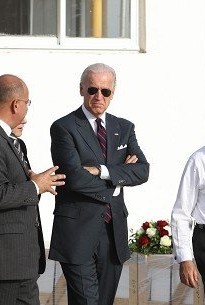 NAZARETH — Hebrew media sources have revealed that an atmosphere of pessimism prevailed in the meeting of US Vice-president Joe Biden with Egyptian president Husni Mubarak in Sharm e-Sheikh due to the failure of the steel barrier strategy in tightening the grip on the besieged Gaza Strip.
Military and security consultants from both countries were profoundly disappointed after “Hamas engineers” in the Gaza Strip succeeded in penetrating the barrier, the sources added.
The sources also disclosed that reports received by Biden alleged that “Hamas engineers” succeeded in excavating 18 meters under the ground and in planting burning materials in the way of the steel slabs that melted the foundations of the barrier and made them of no effect.
Furthermore, the sources said that that the USA decided to abandon the project and stopped financing it, and started to pull out all American military engineers participating in and supervising the project.
The US-Egypt plan was meant to destroy all tunnels along the Gaza Strip borders with Egypt in a bid to complete the Israeli siege and suffocate the 1.6 million Palestinians living in the Strip.
A growing part of the Obama legacy
By Glenn Greenwald | June 9, 2010
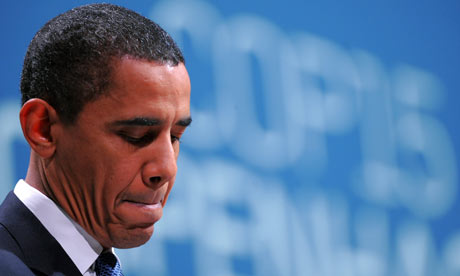
Physicians for Human Rights yesterday released a report documenting (while relying on heavily redacted material) that “medical professionals who were involved in the Central Intelligence Agency’s interrogations of terrorism suspects engaged in forms of human research and experimentation in violation of medical ethics and domestic and international law.” To those paying close attention, the evidence suggesting that this occurred has long been clear. Today, The New York Times Editorial Page said this:
The report from the physicians’ group does not prove its case beyond doubt — how could it when so much is still hidden? — but it rightly calls on the White House and Congress to investigate the potentially illegal human experimentation and whether those who authorized or conducted it should be punished. Those are just two of the many unresolved issues from the Bush administration that President Obama and Congressional leaders have swept under the carpet.
When the history of the Bush era is written, the obvious question will be: what was done about the systematic war crimes, torture regime, chronic lawbreaking, and even human experimentation which that administration perpetrated on the world? And the answer is now just as obvious: nothing, because the subsequent President — Barack Obama — decreed that We Must Look Forward, Not Backward, and then engaged in extreme measures to carry out that imperial, Orwellian dictate by shielding those crimes from investigation, review, adjudication and accountability.
All of that would be bad enough if his generous immunity were being applied across the board. But it isn’t. Numerous incidents now demonstrate that as high-level Bush lawbreakers are vested with presidential immunity, low-level whistle blowers who exposed serious wrongdoing and allowed citizens some minimal glimpse into what our government does are being persecuted by the Obama administration with a vengeance. Yesterday it was revealed by Wired that the Army intelligence officer analyst who reportedly leaked the Apache helicopter attack video to Wikileaks — and thus enabled Americans to see what we are really doing in Iraq and other countries which we occupy and attack — has been arrested (Wikileaks denies the part of that report claiming that the whistle blower also leaked to it “hundreds of thousands of classified State Department records”). This latest episode led Der Spiegel today to decry Obama’s “war on whistle blowers” as more severe than the one waged by the Bush administration (English translation here).
At least in these areas, that’s the Obama administration in a nutshell: protecting Bush extremism and war crimes from any form of accountability while significantly escalating the punishment for those who tried to bring about some minimal degree of transparency (thereby also escalating the intimidation toward those who might want to do so in the future). As the very pro-Obama NYT Editorial Page puts it today: the human experimentation accusation and the question of whether crimes were committed are just “two of the many unresolved issues from the Bush administration that President Obama and Congressional leaders have swept under the carpet.” If you really think about it, that’s a rather damning statement.
The Outrage at Helen Thomas
While Israel Kills and Maims …
By ALISON WEIR | June 9, 2010
Whenever Israel commits yet another atrocity, its defenders are quick to redirect public attention away from the grisly crime scene.
Currently, there are headlines about allegedly anti-Semitic comments made by senior White House correspondent Helen Thomas. Pundits across the land evince outrage at her off-the-cuff 25-second statement made to a man who appears to be holding a camera right in her face.
Thomas issued a public apology for her words, but this was insufficient to assuage the wounded feelings of powerful antagonists, and she has now retired from a long and distinguished career.
Before we examine her comments and evaluate their possible validity, let’s look at other recent events having to do with Israel.
On May 31st Israeli commandos killed at least nine unarmed volunteers attempting to take humanitarian supplies to Gaza.
According to eyewitness reports and forensic evidence, many of these aid volunteers were shot at close range, including a 19-year-old American citizen killed by four bullets to the head and one to the chest fired from 18 inches away.
Israel immediately imprisoned eyewitnesses and hundreds of other aid participants, confiscated their cameras, laptops, and other possessions, and prevented them from speaking to the press for days. Among the incarcerated were decorated U.S. veterans and an 80-year-old former ambassador who had been deputy director of Reagan’s Cabinet Task Force on Terrorism.
When they finally emerged and were able to tell their stories, many described horrific scenes of Israeli commandos shooting people in the head, of those tending the injured being shot in the stomach, of people bleeding to death while flotilla participants waved white flags and pled for help.
They also described being beaten brutally by Israeli forces, again and again – including those on ships that, in the U.S. media’s judgment, experienced “no violence.” A 64-year-old piano tuner from California, Paul Larudee, described hundreds of Israeli commandos boarding his ship. When he refused to cooperate with them, soldiers then beat him numerous times both on board the ship and after he was imprisoned on land.
Eventually he was taken by ambulance to an Israeli hospital. He wasn’t treated, however, and Larudee believes he was taken there because Israel didn’t want media to see his black eye, pronated joints, bruised jaw and body contusions.
Marine veteran Ken O’Keefe described similar beatings while in Israeli custody. In his case, the public was able to see his bloodied, battered face in video clips and still images – but only on the Internet, since American mainstream media failed to report on his press conference or to publish the many still photos of his injuries.
Other gruesome photos available to the American public only on the Internet are of Emily Henochowicz, a 21-year-old American student whose eye and eye socket were recently shattered by Israeli forces. She has since had her eyeball removed, three metal plates inserted in her face, and her jaw wired shut.
Henochowicz was not on the flotilla; she was taking part in a nonviolent demonstration against the Israeli assault when an Israeli soldier shot a high-velocity teargas canister into her face.
A Swedish citizen standing with Henochowicz said, “They clearly saw us. They clearly saw that we were internationals and it really looked as though they were trying to hit us. They fired many canisters at us in rapid succession. One landed on either side of Emily, then the third one hit her in the face.”
Henochowicz is not the first to have been shot by such a canister.
Thirty-year-old Basem Ibrahim Abu Rahmeh died when an Israeli soldier shot one at him at close range while Abu Rahmeh participated in a demonstration against Israeli confiscation of Palestinian farmland. A video of this is also available on You Tube; U.S. networks have also chosen not to broadcast this.
Californian Tristan Anderson was shot in the head by a similar canister while he was taking photographs following another demonstration. Part of Anderson’s brain was removed and he was in a “minimally responsive state” for 6-7 months.
He is now in a wheelchair, has almost no movement in his left arm and leg, is blind in one eye, and his mental functioning is significantly reduced. Photos of the shooting are also available on the Internet.
Since at least 2006 Israeli forces have closed off Gaza to the outside world, essentially imprisoning 1.5 million men, women, and children, and denying them foodstuffs, medicines, and building materials, as documented by such agencies as Amnesty International, Oxfam, and Christian Aid, which said that Israel was using food and medicine as weapons.
One of the multitudinous victims of this illegal siege is five-year-old Taysir Al Burai, who suffers from an acute neurological disorder and requires round-the-clock care. According to the UK Guardian, he could be cured if Israel would allow him to leave Gaza, but to date his parents’ repeated requests have been denied.
Another victim is 7-month-old Mohammad Khader, whose swelling in the brain required specialized treatment unavailable in Gazan hospitals depleted by the Israeli siege. His distraught parents’ applications asking Israel to allow them to travel abroad were similarly denied. Their tiny son died a few days ago.
Such stories go on and on.
Thomas’ “outrageous” statement
Yet, the rage we see in the U.S. media is directed against none of this. People shot in the head, eyes and brain parts destroyed, the elderly beaten, small children and infants caused to suffer and die, parents to grieve – none of this has caused a hint of anger. In fact, most of it has been considered of too little importance even to report.
Instead, media reports are filled with outrage at “anti-Israel” words spoken by 89-year-old Helen Thomas.
In Thomas’s lifetime Israel has ethnically cleansed over a million people, replaced them with colonists from around the world, committed dozens of massacres, tortured thousands of people, killed and maimed untold numbers of children, mangled limbs, and committed outrages on women, old people, the weak and the infirm.
It has assassinated people throughout the world, invaded numerous countries, spied on the U.S., killed and injured 200 American servicemen (the anniversary is this week), and tortured and imprisoned Americans. All while receiving more American money than any other country on earth.
For years, long before her recent words, Thomas has been the target of Israel’s vicious American volunteers, the Zionist blogosphere abounding with nasty slurs on her looks and her Lebanese ancestry, this latter also consistently emphasized by the media, despite her Kentucky birth and upbringing.
One of the reasons for the ferocious animosity toward her is the fact that Thomas is one of the very few mainstream reporters to challenge the neocon engendered lies that led the U.S. into wars that have caused massive death, destruction and tragedy and to continue to expose ongoing policies of violence and cruelty.
As the same groups and individuals who pushed the US into attacking Iraq have in recent years been escalating their efforts to push the U.S. to now similarly decimate Iranians under the pretext that Iran might be developing nuclear weapons, Thomas’s questioning attempted to elicit from Obama the fact that Israel already possesses nuclear weapons. While the rest of the press corps has conspired in the cover-up of this fact and others, Thomas worked to expose them.
Not surprisingly, the many people complicit in these manipulations, such as former Bush spokesperson Ari Fleischer, have led the charge against her.
It is useful to examine the video and context of Thomas’s allegedly “anti-Semitic” comment.
A man, apparently holding a camera right in her face, asks for her comments about Israel. She says, “Tell them to get the hell out of Palestine. Remember, these people are occupied. And it’s their land…” He interrupts her and asks where they should go. She responds, “They should go home. To Germany, Poland, America, and everywhere else.”
While Thomas has since apologized for her hasty words and many Israelis have the right to continue living where they are, the reality is that Israeli settlers did, indeed, come from elsewhere; they are, in fact, illegally occupying Palestinian land (a fact acknowledged even by the U.S. State Department); and international law does require that they leave.
Many commentators evince particular anger at Thomas’s inclusion of Germany and Poland as places to which Israeli colonists should return, suggesting that Hitler is still in control and waiting to pounce.
The happy fact is, however, that World War II and the Nazi holocaust ended well over half a century ago. In Poland today there is a vibrant Jewish revival with a 10-foot tall Menorah being lit in the center of Warsaw during Hanukah, and Germany has become, according to the New York Times, “a country where Jews want to live.” In fact, in recent years more Jews have chosen to immigrate to Germany than to Israel.
Thomas’s call for colonists to return to America (this destination was left out of many articles) is far from outrageous given that a great many West Bank settlers are from the U.S.
Overall, reporting on the incident has largely departed from the standard journalistic practice of quoting people from both sides of an issue. Quotes from Thomas supporters are missing, even though the You Tube page featuring the infamous video contains a large number of comments supporting her. In contrast, quotes from Thomas’s detractors, almost all of them Zionists, are ubiquitous, but generally fail to divulge the speakers’ frequent conflicts of interest.
For example, the Washington Post’s Howard Kurtz quotes Jeffrey Goldberg without mentioning that Goldberg is an Israeli citizen who served as a prison guard at an Israeli prison that held hundreds of Palestinians without charge, some killed in cold blood by the prison commander.
Mainstream media organizations do not seem to have investigated reports that the man who videotaped Thomas, Rabbi David Nesenoff, also made an offensive video featuring himself and another man impersonating a buffoonish Catholic priest and Mexican immigrant.
Similarly, news reports that a high school had disinvited Thomas as a graduation speaker almost never inform readers that many of the school’s parents and students wished Thomas to remain, even though this unreferenced group may represent a majority of the school. Members of this group have created a Facebook page, “Helen Thomas should have been our graduation speaker,” that states:
“The purpose of this group is to quietly but firmly protest the ability of a small minority to impose its will on the larger group through engaging or threatening to engage in disruptive discourse. This group affirms a belief in reasonable discussion and feel that in this scenario, a clear minority was able to override a larger majority by distorting the issues and discussion.”
It is not known who will take over Thomas’s front-row seat at White House briefings. Given the record of the current press corps, it is likely that Israel partisans are breathing a sign of relief.
Alison Weir is executive director of If Americans Knew. Photos and videos referenced in the article can be viewed on the website (http://ifamericansknew.org) She can be reached at contact@ifamericansknew.org
The crimes I saw on the Mavi Marmara
Lubna Masarwa writing from Kfor Qara, Live from Palestine, 8 June 2010
During the Israeli attack on the Mavi Marmara, deep in international waters, I was inside the body of the ship. We were unarmed civilians ranging in age from a one-year-old child to an 88-year-old priest. We were going to Gaza to break the siege that Israel has imposed on a million-and-a-half people for the last four years. We were carrying a cargo of humanitarian and construction aid as well as letters from Turkish children to the children of Gaza. We were full of hope. When the attack began at 4am on 31 May 2010, our ship was transformed into a military target. On the deck, at first there was heavy firing, and then the Israeli occupation’s commandos took control of the ship.
Minutes after the attack began, wounded and corpses were being brought inside from the deck. We were then held for several hours with four bodies and dozens of wounded, some in critical condition. Blood was pouring from the bodies of the dead and the injured. We wanted to help them, but we had no medical equipment to treat them. There was nothing we could do. One Turkish woman was crying and saying goodbye to the body of her dead husband, petting his face and reading the Quran over him. Another man had a bullet wound in his head and was dying.
From 5am on, we were begging the Israeli navy to provide medical assistance to the wounded and dying but received no response. We made the request in English and Hebrew through the loudspeaker and also wrote a sign in Hebrew reading, “SOS … people dying in need of immediate medical attention” and put it on the window in front of them. They ordered the people with the sign to get lost.
At around 7am they ordered us to come to the exit door one by one. I requested in Hebrew that medics be allowed to stay with the wounded; a solider told me to shut my mouth. Later he called me, “You, tell the wounded that if they want to stay alive, they should come out one by one.” We tried to bring the injured out individually, but they could not walk and were falling down.
We were transferred to the upper deck. We were searched; our hands were tied, and we were forced to sit or kneel on the deck as a military helicopter hovered within meters above our heads. Heavily-armed soldiers with guns and knives strapped to their arms and legs stood guard over us with dogs. They were standing around us with the blood of their victims on their boots, joking and making lewd sexual suggestions to each other about the female prisoners. Then Israeli personell came and strutted around the ship. We were held this way for hours. I was held here until 1:40am on 1 June 2010.
As soon as the Israeli occupation forces learned that I was a Palestinian Israeli citizen, I was treated more harshly and isolated from the rest of the other imprisoned passengers. I was taken to a prison in Ashkelon where I was held in isolation and subjected to humiliations such as strip searches four times a day. The next day we were brought to court, and I was held in a small metal box inside the police car for eight hours with my hands and legs shackled. We were subjected to various accusations, from attacking soldiers to carrying weapons. The judge gave the police permission to extend our detention for another eight days. After international pressure forced the Israeli authorities to release all the foreign prisoners, all the Palestinian citizens of Israel were taken to court again. This time, the judge ruled that we would be subject house arrest and would be forbidden to leave the country for 45 days.
As an occupier and a colonizer, Israel depends on the principle of “divide and conquer” in order to maintain its control. It is especially threatened by people like the Palestinian delegation from 1948 (what is now referred to as Israel) who sailed to Gaza on the Mavi Marmara, because we defy Israel’s attempt to divide us as Palestinians. By struggling with our sisters and brothers under the siege, we also send the message that we are one people and our struggle is one struggle. Israel is threatened by solidarity.
That Israel should murder civilians in international waters is not strange. It is a direct continuation of its policy of targeting civilians with lethal force and deadly policies such as the siege of Gaza, and Israeli policies of occupation and apartheid.
Israel feels entitled to besiege, to kill and to attack civilians in international water. This results from the silence of the world that makes Israel believe it has the right to do so.
This is the time to break the silence and to take action. To say “enough is enough” for Israel. Israel’s impunity must end. Israeli war criminals, such as the ones who committed piracy and murder on the Mavi Marmara and their superiors, must be held accountable for their crimes in international courts.
Lubna Masarwa was a Free Gaza Movement representative aboard the Mavi Marmara and wrote this essay from her house arrest in Kfor Qara, Palestine. She can be reached at Lubnna A T gmail D O T com.
Turkish journalist recounts flotilla attack
By Belén Fernández | Pulse Media | June 8, 2010

Ayşe Sarıoğlu
Following is my (rough) translation of excerpts from the first part of Taraf newspaper’s two-part interview with Ayşe Sarıoğlu, a 27-year-old graduate student at Istanbul University, who was on board the Mavi Marmara. Sarıoğlu begins the interview by explaining that although she is sympathetic to the Palestinian cause, she participated in the expedition to Gaza as a journalist.
Readers will note Sarıoğlu’s description of fellow journalist Cevdet Kılıçlar, who was fatally shot during the raid and whose funeral Jasmin Ramsey and I attended this past Friday at Beyazıt Mosque in Istanbul. The fact that Kılıçlar is said to be holding a camera at the start of the attack provides yet more evidence of Israel’s all-inclusive application of the term “weapon.”
Excerpts from the second part of the Taraf interview, in which Sarıoğlu recounts her experience in Israeli custody, will be translated and posted shortly.
[The interviewer’s questions are in bold; Sarıoğlu’s responses follow]
» Was there much solidarity among the journalists on the ship? Did you know the murdered journalist Cevdet Kılıçlar?
Yes, Mr. Kılıçlar never left the press room on the ship. He was always working. I would even say to him: “We’re in such a nice place, we’re on a cruise ship. You should go outside a bit and get some sun.” But he hardly set foot on deck. He told me: “This isn’t a sightseeing trip, this is a work trip… We’ll do sightseeing another time.”…
» I will get to the raid [in a minute], but first I’m curious as to what you all on the ship were expecting [from the Israelis] and whether you realized you were in danger.
At the most we were expecting something along the lines of Taksim [square in Istanbul where protests are often held]… with tear gas, clubs, and commotion, nothing more. Actually we were even thinking [the Israelis] might use rubber bullets, and I thought to myself: “God protect us, a rubber bullet in the eye can blind you.”
…
» There were no weapons [on the Mavi Marmara]?
There were definitely no weapons. There were 30 gas masks which were distributed to journalists doing live broadcasts.
» As I understand it, the convoy’s goal was not only to bring aid materials [to Gaza] but also to break the siege, is that right?
The goal was to bring aid. We even had packaged toys and accompanying letters from Turkish children to the children of Gaza, addressed: “Dear brother.” It was very symbolic and meaningful and, looking back on it, it was so innocent…
…
» The ship’s Turkish flag was taken down during the raid, right?
Yes, but there were also the flags of Palestine, Syria, Kuwait, and all of the other countries. The Israeli soldiers tore down the flags first thing and threw them in the sea, starting with the Palestinian flag…
…
» Did the [soldiers] descend from helicopters?
Everything happened so fast. At the same time, they boarded us from boats and descended from helicopters by rope. And as they were descending they starting firing.
» As they were descending? [So they were firing] haphazardly?
Yes, haphazardly. Mr. Kılıçlar was at the front [of our group] with his camera in hand. And I remember him saying: “If they get to where the captain is our ship is gone. Friends, we must form a barricade.” But he wasn’t inciting anyone to fight, he was just trying to get them to form a wall with their bodies…
…
» Did the Israeli soldiers initially use rubber bullets?
That’s what we thought, but we were wrong. No rubber bullets were found anywhere. I actually hid some used bullets in my pocket that I found on the ground, but of course the soldiers took them from me afterwards… When I realized that people were being shot outside I immediately went inside, where an emergency center had been set up. Our doctors and nurses were there. The wounded started to be brought in…
» What did you do at that moment?
At that moment I thought, ‘There is a frightened, wounded person here who is losing blood and I am taking pictures of him. What should I do? Be a journalist? No, I can’t do this. I need to do something else, because there aren’t enough people here.’ And I decided to help. I don’t understand the first thing about first aid but I did whatever the nurses told me to do… There were so many wounded…
…
» Did [the people resisting the Israeli attack] take weapons from [a certain “captured” attacker]?
They took his weapon… and brought it downstairs but then someone said: “If Israel catches us with weapons it will be terrible”, and they immediately threw the weapon in the sea…
» Was the soldier beaten?
I’m not talking about a systematic beating but of course they hit him.
» What sort of shape was he in?
He was in shock… and shaking. His eyes filled with tears; I saw him crying.
» Were any other soldiers taken captive?
A total of 3 Israeli soldiers were captured, and the weapons belonging to all 3 were thrown in the sea. Nobody kept them.
» So at the same time that you were attending to the wounded, you were also watching what was happening with the soldiers…
Yes, because both the soldiers and the wounded had to come in through the same entrance…
…
» What sort of injuries were sustained [by those resisting the Israeli attack]? What did you see?
Should I really describe it?… On the ground there were pieces of people’s brains. I saw a skull bone, I saw brain pieces…
…
» [Following the attack], were the handcuffs [used on you] plastic?
Yes, they were plastic but they were very tight and [my hands were] behind my back… I said [to a soldier]: “I’m a member of the press.” He asked where my press card was. I said it was with all of my other possessions, in the press room. He said: “At this point it doesn’t matter anyway if you’re a journalist or not.”… It seemed as though the entire [Israeli] army was on top of us, and I asked myself how this many soldiers could be necessary for 600 people.
…
» Were there women among the [Israeli] soldiers?
Yes, I could tell from their voices and their hands. It was impossible to tell otherwise because their faces were masked.
…
» While waiting on deck what else… did you talk to the soldiers about?
I needed to go to the bathroom. I had waited for several hours. I got up and told a soldier, without asking permission, that I was going to the bathroom. He told me I couldn’t go. I asked why not. “You don’t want to see what is in there right now,” he said. “We are cleaning up inside. There are corpses. You can go after we clean.” I said: “I was already inside and I saw everything.” He told me to sit: “Shut up and sit down.”… As a woman I had the advantage of being able to speak to the soldiers more easily. Their behavior toward the men was much harsher.
» How long did you have to wait [on deck]?
From 7.30 in the morning until 1.20 in the afternoon. I kept looking at my watch. We were sitting under the sun. The [Israeli] helicopters kept pouring water on us, so everyone was going from wet to dry, freezing to burning…
…
» When you arrived to Ashdod Port what did you think [the Israelis] were going to do with you?
I thought they would probably put us on the first plane home.
» You never thought they were going to put you in jail?
No. We didn’t think they could do that, because we hadn’t done anything. It was the Israeli soldiers who had killed people… While we were waiting, I was watching Kağan [a Turkish baby on board the Mavi Marmara] with admiration. He never cried or got cranky; I can’t begin to tell you how calm he was…
… part 2
Egypt Prevents Nine Parliamentarians from Entering Gaza
By Saed Bannoura – IMEMC & Agencies – June 08, 2010
The Egyptian Authorities stopped nine Egyptian Legislators at the Rafah Terminal who were trying to deliver construction supplies to Gaza.
In Sinai, Egyptian Authorities confiscated four trucks filled with cement and construction materials heading to Gaza.
Hazim Farouq, head of the Egyptian delegation, said that the authorities seized the trucks that were filled with cement and construction materials, and revoked the license cards of the drivers after threatening to arrest them when they were 20 kilometers away from the Gaza Strip.
The Egyptian Authorities then said that the trucks will not be allowed into Gaza although the Egyptian President ordered the opening of the Rafah Border Terminal until further notice.
The parliamentarian Change and Reform Bloc of the Hamas Movement, slammed the Egyptian authorities from preventing the Egyptian parliamentarians from entering Gaza, and called for allowing the entry of construction materials and other basic supplies.
Several Egyptian Islamist legislators, members of the convoy, started an open-ended protest in front of the Egyptian side of the Rafah Terminal, demanding that Egypt release the detained relief trucks.
Egyptian Legislator, Mohammad al-Biltaji, told the Ikhwan Online news Website, that the legislators will remain at the terminal and will not end their protest until the authorities release the confiscated aid trucks, and allow them to cross into Gaza.
Deputy head of the Palestinian Legislative Council, Dr. Ahmad Bahar, called on Egypt to allow the legislators into Gaza.
It is worth mentioning that Russia also called for lifting the siege on Gaza in order to provide humanitarian and economic relief to the residents.
Independent autopsy: Dog mauled imam
Oralandar Brand-Williams / The Detroit News / June 2, 2010
Southfield –A Muslim advocacy group released a report today claiming an imam was mauled by an FBI dog during a raid and may have fired at it to stop the attack.
The finding comes from an independent autopsy retained by the Council of American-Islamic Relations, whose leaders discussed the report during a news conference this afternoon at their Southfield offices.
The autopsy from forensic pathologist Dr. Cyril Wecht, who is based in Pennsylvania, follows months of controversy over the shooting death of Luqman Abdullah. He was shot by FBI agents in October during a raid in a Dearborn warehouse over a stolen-goods operation.
The agents say they returned fire from Abdullah after he opened fire. A federal indictment labeled him a violent extremist but others have questioned the characterization and called for an independent investigation.
Wecht’s report — which was based on an earlier autopsy and didn’t involve exhuming the body — concluded an FBI dog killed in the raid was responsible for wounds on the imam’s face, hands and arms. The report also concluded that the imam’s jaw was broken as a result of the attack and not from an impact of falling to the ground as previously believed.
Also, Wecht’s report claimed Abdullah, who was shot 21 times, was shot twice in the back and not once as concluded by the Wayne County Medical Examiner’s Office.
The county report also indicates the imam was shot twice in the chest, four times in the abdomen, twice in the groin, four times in the left hip and side, seven times in the left thigh and once in the scrotum.
CAIR executive director Dawud Walid said the dog bites on Abullah’s body may indicate the imam was trying to protect himself against the attack by the animal.
Walid renewed his call for the FBI, Dearborn Police and the Michigan State police to [provide] videotapes and other information on the case. He also called again for an independent investigation by the Justice Department into Abdullah’s shooting.
“They are the only ones who can do a thorough and robust investigation,” Walid said.
bwilliams@detnews.com (313) 222-2027