Israeli Forces Shut Down Jerusalem Culture Event
Bethlehem – Ma’an – Israeli forces arrested several and scuffled with Palestinians while shutting down a cultural festival meant to proclaim attachment to Jerusalem on Thursday.
Organizers, including Prisoners’ Club President Nasser Kaws, were hustled out of the Damascus Gate area of the Old City of Jerusalem and detained by Israeli border police, prompting scuffles at the main entrance into the ancient streets. Also among those arrested was the secretary-general of Jerusalem’s Fatah movement Omar Ash-Shabi.
Crowds gathered at the site and groups sang traditional wedding songs, gathering in clusters around television cameras stationed on the stairs leading to the gate.
One participant in the event, meant to mark Al-Quds Capital of Arab Culture 2009 which comes to an end at the close of this month, told reporters, “Israel used to say they detain everyone who threatens it with weapons, but look, are these people threatening it? They are just celebrating.”
A performer at the Jerusalem event noted, “Israel is an occupation so it is its job to marginalize Palestinian culture, but we will resist with our willpower. No one can suppress the Palestinian people.”
Intended to be a yearlong event sponsored by the Arab League, Al-Quds Capital of Arab Culture was officially banned by Israel. The festival was marred by arrests and police raids.
Israel occupied East Jerusalem along with the West Bank in 1967 in a move not accepted by the international community.
Israeli forces also broke up a march planned by Palestinian scout troops and closed schools where cultural events were taking place.
Soldiers also surrounded the French Cultural Center and the British Council, where two simultaneous events were planned as the finale of Al-Quds Capital of Arab Culture. The two events were headed by Rafiq Al-Husseni the head of the Palestinian president’s office and the other by the Ahmad Ar-Ruwedi, the head of the Jerusalem unit in the president’s office.
Israeli officers handed out a written order from the Israeli minister of internal security stating that the cultural activities were prohibited. Ar-Ruwedi listed the schools that were shut down by Israel: St. George’s School, Freres, At-Tefl Al-Arabi, Az-Zuhour Kindergarten, Dar Al-Awlad, and the Refugees Girls School.
In Nablus, thousands also attended a celebration of Jerusalem as the Capital of Arab Culture, apparently organized by the local branch of Fatah. President Mahmoud Abbas gave opening remarks at the celebration in the northern West Bank city. Abbas told the demonstration that Jerusalem is the eternal capital of Palestine. “Jerusalem is ours and it will remain ours,” he added. Also attending the event in Nablus was Sheikh Abdallah Bin Zayid Al-Nahyan, the foreign minister of the United Arab Emirates, and a number of Palestinian Authority officials.
War-Crimes and their Victims
War Crimes Caught on Video
Abu Ghraib
Watch also:
Lifting the Hood – Iraq
on youtube (26 min)
The Road to Guantanamo (Trailer)
Ex-Guantanamo Muslim chaplain speaks out
Former Guantanamo detainee returns home – 15-Dec-07
Israeli War Crimes & Chemical Weapons
Former pilot of the Israel’s air force accuses Israel of war-crimes, using chemical weapons against the people of Gaza
Israel bans tourists from key West Bank bus line
 December 16, 2009
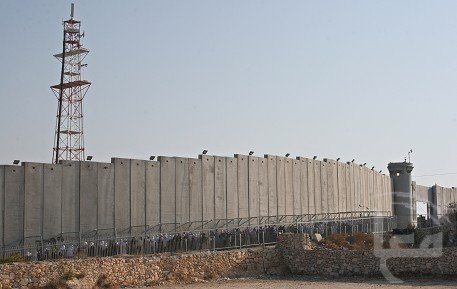
Bethlehem – Ma’an – Just days before Bethlehem’s busiest tourist season begins, Israeli authorities implemented a ban on foreign-passport holders traveling to Jerusalem on Palestinian buses.
On 11 December, Bethlehem tourists began to report being pulled off line 21, a route used predominantly by holders of East Jerusalem residency cards, as they stopped for inspection at the Jerusalem tunnel entrance into Israel.
For years, foreign-passport holders using public transportation could choose between the tunnel bus, which departs near Beit Jala, or Israel’s military checkpoint 300, known colloquially as Gilo or Rachel’s Tomb.
A high-ranking Israeli security official confirmed the policy change on Monday. “This issue is being resolved presently. Everything will be completed in a day or so, possibly even today,” the official said, confirming that, for now, redirecting foreign-passport holders from the tunnel to checkpoint 300 is a matter of policy.
Palestinian Authority security sources said the phenomenon follows a unilateral decision by Israeli authorities made months ago to ban foreigners from the route.
It was not clear, however, who ordered the changes, or why. Israeli army sources insisted they had nothing to do with the plan, but officials in the country’s Border Police, the paramilitary branch of the Israeli Police, said such orders could only have come from the military.
“The [army] commander makes the policy; we just implement it,” said a border guard official who insisted on anonymity. “If the IDF [Israel Defense Forces] says we can’t allow foreign people – it’s a policy.”
A PA police spokesman said he was aware of the issue but refused further comment, referring inquiries to the District Coordination Office (DCO), the local arm of Israel’s non-military, civil administration in the occupied Palestinian territories.
“We’ve been aware of the plan for three, maybe four months; I don’t know why they’d implement it now,” said a Palestinian who works with the DCO. Israel never provided any official or written explanation, he added, nor were local officials given a say in the matter.
Despite numerous inquiries this week to the Israeli military, Border Police, Civil Administration, and national police, no official was ever willing to offer an on-the-record explanation for the ban.
‘Rude’ and ‘threatening’ treatment
Among the first reports Ma’an received about the issue was from an American music teacher accessing Jerusalem to teach students of a local conservatory. She, along with three others, were told they could not re-board the bus after it was checked by soldiers. “They saw the foreigners and herded us to the side,” said 24-year-old Katie Rowold, a US citizen held up on Friday. “Then everyone got back on the bus except for us. … We had to get a service taxi to the walk-through checkpoint [300].”
Sandra Baille, a 64-year-old Canadian citizen, was on a bus with some luggage waiting to have her passport checked by soldiers. As custom generally allows women with children or bags, the sick, or the elderly to remain on the bus during inspections, Baille was surprised when a guard ordered her off the vehicle. “A young Israeli soldier with a mask on his face up to his nose boarded the bus and indicated to me with his arm to get off,” she explained. “I held out my passport so he could see I was an international, but he threw his arm [pointing] to the side. He didn’t say a word, he just pointed.”
Outside the bus, Baille found herself with a group of foreign citizens also waiting at the side of the road. When they asked what was going on, “we were told ‘new rules, new rules,'” Baille said. She was ordered to take her luggage, for a planned trip to northern Israel, Nazareth and the Galilee, off the bus, and watched Palestinian passengers get back on board. She waited again while the driver argued with guards, and heard the bus ordered to leave without the five foreigners. “We were left to walk up the hill” back to Beit Jala, she said.
Others explained how they had to flag down a cab willing to enter a PA area and drive back inside Bethlehem to cross through the Gilo checkpoint there, before ultimately catching another Palestinian bus on the other side of the cement wall. One international who asked not to be named described being left helpless on the side of the busy highway, while Israeli-plated cars zoomed past. “Luckily there was a taxi sitting there. I don’t know what we would have done.”
Baille, the Canadian national, described the guards’ treatment as rude, saying she could not understand what reason Israel would have to target tourists. “Its ironic,” she added. “All over Canada there are signs saying ‘Welcome to Israel,’ but in the end they wouldn’t let us in.” Canada was the test country for the Israeli Ministry of Foreign Affairs’ “Brand Israel” campaign.
Another group of six internationals – four Americans, a Canadian and German national – were warned by the driver of a 21 bus on Saturday that foreigners were no longer being permitted to travel via the tunnel. They said the driver eventually let them on, but that they were indeed refused passage through the checkpoint.
Bad news for Christmas
Reports of internationals being pulled off buses continued throughout the week, and several have noted longer lines at the Gilo checkpoint, making it increasingly difficult to access Jerusalem from Bethlehem.
However, the ban appears to apply only to Palestinian buses in the West Bank. Foreign nationals traveling on Israel’s Egged service, which connects the country’s settlements throughout the occupied territories, including in Bethlehem, into Israel, reported no problems at the tunnel checkpoint. Internationals in private cars were similarly unaffected.
It was not clear if the initiative to limit foreigners’ movement in the region was linked to prior passport restrictions. Mirroring the treatment received by Palestinians already living under the four-decade occupation, similar restrictions on foreigners first came to light in September when Israel began issuing visas that permit travel only in PA-controlled areas.
Israel, meanwhile, has sought to reassure Palestinian Christian leaders that it would facilitate the movement of congregants and tourists as Christmas approaches. Security authorities recently invited the leaders of local churches to a meeting on a military base, where army officials promised to help ease closures, for example, by granting permits for Christians from Gaza to visit Bethlehem for the holiday.
Tens of thousands of foreign-passport holders enter Bethlehem every Christmas to celebrate along with the local Palestinian population, attending mass at the Nativity Church and other annual festivities. Some 60,000 internationals made the pilgrimage in 2008.
In Alarming Step Obama Creates Gitmo North
ACLU Press Release
December 15, 2009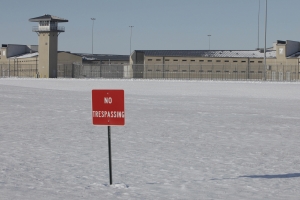
NEW YORK – The Obama administration announced today that it will purchase the Thomson Correctional Center in Illinois for the purpose of holding some of the detainees currently remaining at Guantánamo. Though the administration is leaving unsaid which detainees will be moved there and for what purposes, the information it has provided indicates that some detainees might be held for military commission proceedings in Illinois while others might be held at Thomson indefinitely without charge or trial.
The administration has stated that “any detainees at Guantánamo who continue to be held, and for whom no prosecution is planned, will be held only under authority granted by Congress in 2001 under the Authorization for Use of Military Force, as informed by the law of war.” However, the so-called war on terrorism is not a traditional war, having no temporal or geographical boundaries.
The following can be attributed to Anthony D. Romero, Executive Director of the ACLU:
“The creation of a ‘Gitmo North’ in Illinois is hardly a meaningful step forward. Shutting down Guantánamo will be nothing more than a symbolic gesture if we continue its lawless policies onshore.
“Alarmingly, all indications are that the administration plans to continue its predecessor’s policy of indefinite detention without charge or trial for some detainees, with only a change of location. Such a policy is completely at odds with our democratic commitment to due process and human rights whether it’s occurring in Cuba or in Illinois. In fact, while the Obama administration inherited the Guantánamo debacle, this current move is its own affirmative adoption of those policies. It is unimaginable that the Obama administration is using the same justification as the Bush administration used to undercut centuries of legal jurisprudence and the principle of innocent until proven guilty and the right to confront one’s accusers.
“It is also greatly disturbing that the administration will continue the use of military commissions, which are no more acceptable in Illinois or any other U.S. state than in Guantánamo. Despite some improvements, the commissions still fall far short of the legal standards necessary to comply with constitutional and international standards, allowing, for example, the use of coerced and hearsay evidence that would not be allowed in federal court. The proceedings will achieve neither reliable justice nor a restoration of America’s credibility around the world.
“The administration must also make very clear what category of detainee will be transferred to Thomson in the future and what kind of prison conditions will apply. Detainees not charged with a crime should not be subject to punitive conditions meant for sentenced prisoners who have been found guilty in a court of law, and all conditions must comply with the Geneva Conventions.
“The administration will no doubt be looking to Congress for legislative buy-in for this facility, and as both branches work together, we strongly urge lawmakers to legislate responsibly and not set any policies or precedents for indefinite detention on U.S. soil, or create any violation of the Geneva Conventions.
“The Obama administration’s announcement today contradicts everything the president has said about the need for America to return to leading with its values. American values do not contemplate disregarding our Constitution and skirting the criminal justice system. After detaining hundreds of individuals without the basic due process rights that define our justice system for almost eight years, it is time to charge suspects where evidence exists and repatriate and transfer the rest to countries where they won’t be tortured.”
CONTACT: (212) 549-2666; media@aclu.org
No freeze on Palestinian suffering
Seth Freedman | guardian.co.uk
14 December 2009
Within minutes of our arrival in Tuwani, in the south Hebron hills of the West Bank, an army Jeep rolled into the village and shattered the mid-morning tranquillity. “We’re turning this place into a closed military zone,” announced the stern-faced commander to anyone within earshot. Brandishing his rifle in one hand and a military document in the other, he proceeded to explain that “I decide who can be here and who can’t, and anyone who isn’t a resident has to leave immediately”.
That meant us – me, my friend and our three guides from the Villages Group – as well as the other activists who maintain a permanent presence in Tuwani assisting the locals in their struggle to survive. The timing of the closure was no accident: earlier in the morning NGO workers and locals had taken part in a solidarity march to highlight the hardships suffered by the village children who run the gauntlet of the neighbouring settlement every time they walk to and from their school.
Anything the activists could do the soldiers could do better, it seemed. “The IDF [Israel Defence Forces] don’t like us coming to support the residents of Tuwani,” said one volunteer, “so they make it their mission to make everyone’s lives uncomfortable as a result.”
The shutdown of the village and the surrounding farmland was only the latest in a long line of attempts by the Israeli authorities to break the will of the Palestinians living in the area. As we drove out of Tuwani, we were shown the stump of an electricity pylon sawn down by the army after attempts by villagers to connect themselves to the national grid. Elsewhere, dirt mounds and locked gates stopped locals driving to the nearby city of Ya’ta, thus preventing them taking their produce to sell at market, and severely impairing their economic prospects.
Thanks to the army’s exclusion orders, we were forced to walk a treacherous and convoluted route through the rocky scrubland to visit communities living in even deeper seclusion beyond Tuwani. In Tu’ba, the cave-dwelling residents of the village are under no illusion about what the future holds for them, despite all the hype surrounding the much-vaunted settlement freeze.
“The freeze will have no effect round here,” the father of the household told us bitterly. Our guide expanded on the theme, telling us that the “real freeze is on Palestinian construction: 95% of Palestinian applications for building permits in Area C are denied by the civil administration, and for communities in this area they are not allowed to build above ground whatsoever”.
Those people living in caves are, it seems, tolerated by the authorities while they remain underground, but as soon as they put their heads above the surface and attempt to build rudimentary shacks and outhouses, demolition orders are served and the army are quick to enforce the letter of the law with gusto.
Meanwhile, in the neighbouring settlements of Carmel and Ma’on, building work was going on in earnest, and defiant banners on bus stops and fence posts declared the settlers’ intention to “smash the freeze”, and denounced the incumbent government as traitors to the Zionist cause. While government inspectors have been attacked during their attempts to bring settlement construction to a halt, the full force of the settlers’ wrath has – as ever – been meted out against the Palestinians.
The sickening desecration of a mosque on Friday in the village of Yasuf, near Nablus, appears to be the opening salvo in the settlers’ latest battle to force the government to back down over the building freeze, and those we met in the south Hebron hills were wary of similar reprisal attacks being carried out against their communities. “Our children are still attacked on a regular basis,” one local told us, “as well as our shepherds and farmers. Even if we call the police, we know justice will never be done, and the situation is only getting worse now that the settlers are furious about Netanyahu’s decision.”
Ehud Krinis, one of the Villages Group activists, believes that the freeze is “just an act” on the part of the government; having worked in the area for almost eight years and seen the settlers’ above-the-law behaviour first hand, he maintains “there is no effective force that can stop the settlers building more. In fact, as we can see in Susiya and elsewhere, the settlers simply see the freeze as a challenge to construct [at an even faster rate], which is what will happen over the next 10 months.”
As we sat with the head of the Bedouin clan living in Um al-Kheir – a collection of tumble-down tents and shacks literally touching the perimeter fence of the Carmel settlement – the mood of resignation engulfing the encampment’s residents was suffocating. We were shown aerial photos of Um al-Kheir’s gradual demise over the past 30 years, a situation attributable to the encroachment of the settlers and the military on to their ancestral land. It was clear that for those forced to endure the humiliation and hardship on a daily basis, the politicians’ upbeat talk was at best cheap, and at worst a flagrant denial of the facts.
For those Palestinians living under military rule, coupled with indiscriminate and incessant settler attacks against them, their children and their flocks, there is no end in sight to the suffering. While the world might have been convinced that the worm is about to turn in the Israeli political arena, a quick glance at the fevered construction still taking place in the settlements, the oppressive military activity against the Palestinian villagers and the overarching penury in which the Palestinians are forced to subsist should give onlookers food for thought about the true situation on the ground.
Freeze or no freeze, the future looks no brighter for the Palestinian locals today than it has during any of the bitter years and decades gone by.
Bilin activist: “Words are not enough”
Iyad Burnat and Jody McIntyre writing from Bilin, occupied West Bank, Live from Palestine, 14 December 2009
 |
| Iyad Burnat being arrested by Israeli soldiers at a demonstration in Bilin. (Haitham al-Katib) |
The following is Palestinian nonviolent resistance activist Iyad Burnat’s story as told to The Electronic Intifada contributor Jody McIntyre:
My name is Iyad Burnat. I am 37 years old, married with four children. I am the head of the Bilin Popular Committee.
I started my life in jail at 17, during the first intifada, a popular uprising amongst ordinary Palestinians. It was not the first time I participated in nonviolent resistance. I have always believed that this is the way to end the occupation. But as the intifada clearly showed, the Israeli military does not understand let alone sympathize with such methods.
One night, the Israeli army surrounded my home, and took my father from his bed to come and knock on my door. They told him that because I was a child, they just wanted to speak to me for five minutes. Some of the soldiers were dressed in civilian clothes, and they grabbed me as soon as I opened the door.
That five minutes became two years, in the worst place in the world — Naqab prison [in the Negev desert]. I spent the first 20 days in solitary confinement. I was kept in a room I could only stand up in, with terrible food and no showers, and during the night in a room I could lie down in but had a hole in the roof, at a time when it was raining and snowing. Every day the soldiers were beating me, and every night they would bang on the door so that I couldn’t sleep. The whole time, they were also asking me if I had thrown stones and what political party I belonged to, so in the end I admitted that I had, at some point, thrown stones. By the end of those 20 days, I smelled like an animal.
The jail was extremely bad. In the winter, water leaked from every corner, and in the summer it was unbearably hot. After six months inside, I got the first visit from my mother. My family left their home in Bilin at 3am, and didn’t return until late the next night, just to see me for 30 minutes. We couldn’t even shake hands because of the walls which separated us. She told me that my grandmother had died.
After two years in the Naqab prison, I was released, and given the new “green” ID, handed out after the creation of the Palestinian Authority (PA). At the time, people with green IDs were not allowed to travel and were essentially under house arrest. Even now, Palestinians with green IDs are forbidden from traveling to Jerusalem, our capital.
In 2005, we began our nonviolent demonstrations in Bilin against Israel’s wall in the occupied West Bank and the illegal settlements that have been built on our land. We practice nonviolent methods as a way of resisting, such as tying ourselves to our olive trees when they were due to be bulldozed and uprooted by the Israeli military. For the last five years, we have succeeded in sending our message to the whole world, to tell the people that Israel’s wall is not for security, but it is an apartheid wall built only to steal our land for the purpose of expanding illegal Israeli settlements.
On 4 September 2007, we had a major breakthrough. The Israeli high court made a decision ordering that the army remove the wall from the land of Bilin. Despite this, the Israeli military refused to heed the decision of the court, and instead resorted to violence in an attempt to crush our peaceful struggle. During our nonviolent demonstrations, they beat us with batons, fill the air with tear gas and sewage water, throw sound grenades, and shoot us with a range of projectiles, from lethal high-velocity tear gas canisters and rubber-coated steel bullets, to live ammunition. Over 1,000 people have been injured, more than 200 arrested, and one close friend of mine, Bassem Abu Rahme, has been killed.
The Israeli authorities want to stop us because they are afraid of our model of nonviolent resistance, and fear that the world is waking up to the reality of this situation.
During one demonstration, we had marched to the wall as usual, and Israeli forces immediately began shooting tear gas and rubber bullets. I was caught in the crossfire and started to suffer from severe tear gas inhalation. When I stopped running to allow the doctors to treat me, I saw two soldiers approaching. They told me that I was under arrest, and that they had photos of me throwing stones.
They put me on the other side of the wall, near the military base permanently stationed on our land, and the commanding officer came over with a photo in his hand. He asked me who the man in the photo was, but I didn’t recognize him. He said that if I told him where the man lived he would release me, but I couldn’t. So he told me that in the courts he would claim that it was me, and took me away.
After spending eight days in Ofer prison, I was finally taken into court. The moment the judge saw the photo he said it wasn’t me, and that the prosecution had another 24 hours to bring additional evidence. When they couldn’t, I was ordered to pay 4,000 shekels ($1,060) bail for my release. I told my lawyer that I would not pay one penny, and after one day I was back at home with my family.
During the last five years, the Israeli military has invaded my house many times. The worst thing is that I cannot look at the faces of my children because I am afraid that if I describe their fearful expressions I will start to cry. I want my children to see that I am strong in front of the army. The soldiers don’t seem to care whether Palestinians are adults or children — they start to kick the doors, throw the children outside, and ransack their bedrooms. If my children see their father being beaten by soldiers — I cannot describe how difficult this is.
But I have taught them that every time I am arrested you must continue this struggle, even if I am killed you must continue. I have told them not to be afraid, because we are on the side of justice, and we must return to our land.
None of the kids in the village can sleep anymore, because of the night raids during the last five years. The Israeli military invade the village in the early hours, shooting sound grenades in the streets and tear gas into people’s homes. Six months ago, the most recent wave of these night raids began and the soldiers invaded almost every night. They relaunched a campaign of harassment and intimidation against the people of Bilin, in an attempt to arrest all the people who participate in our nonviolent demonstrations and subject the rest of our residents to a constant state of terror. Since this most recent wave of night raids begun, we haven’t slept a single night.
I remember after one of our demonstrations, I came home and read in the news that US President Barack Obama had won the Nobel Peace Prize. I started to go crazy! The Americans are still in Iraq and Afghanistan, and Palestine is still under occupation. We haven’t seen any change, so I wondered why they didn’t give the prize to George W. Bush, when he was in power.
I am so sorry Mr. Bush — you worked so hard for eight years, killing children, starting wars around the world, and supporting the Israeli occupation of our land, and they gave the prize to another man! And you got a pair of shoes instead? That is a real injustice.
We are a simple people, and more than anything we want to see peace, but before there is peace there must be justice, and we must have our freedom. We are not against Jews or Israelis, but we are against the occupation.
One of the important elements of our struggle is the international volunteers who come to stay in the village. They are our messengers to the outside world, and it is so important for them to tell our story in their own countries, in order to counter the strength of Israeli propaganda in the mainstream media.
But words are not enough. We need people to be taking direct action, both here, and in their own countries against the embassies and governments who support this occupation.
Jody McIntyre is a journalist from the United Kingdom, currently living in the occupied West Bank village of Bilin. Jody has cerebral palsy, and travels in a wheelchair. He writes a blog for Ctrl.Alt.Shift, entitled “Life on Wheels,” which can be found at www.ctrlaltshift.co.uk. He can be reached at jody.mcintyre AT gmail DOT com.
Rules of human decency apply to Israelis too
A dose of Israel’s own (academic) medicine might help the message sink in
 By Stuart Littlewood
The People’s Voice
12 December 2009
Stuart Littlewood argues that an academic boycott of Israel is now urgent in the light of an Israeli High Court ruling that the Israel occupation forces acted within their rights when they abducted, blindfolded, handcuffed and dumped in Gaza 21-year-old Palestinian student Berlanty Azzam just weeks before she was due to complete her degree at Bethlehem University in the occupied West Bank.
Poor Berlanty. What did she do to deserve this crushing blow to her hopes and life chances?
The Israeli High Court has denied Berlanty Azzam justice – again – and prevented her returning to Bethlehem University for the final few weeks to complete her degree.
On 28 October this Christian student at the Vatican-sponsored Bethlehem University was abducted by the “Israel Defence Forces”, “the world’s most moral army”, after attending a job interview in Ramallah, then blindfolded and handcuffed and dumped in Gaza. She had lived in the West Bank since 2005 after being granted a permit.
There was only one kind of permit available in 2005 – an entry permit to Israel. But the Israeli state claimed that this permit was insufficient and Berlanty should have obtained some other permit, even though the state admits that none existed at the time.
State representatives took her permit, a key piece of evidence, and never produced it to the court. After six weeks of double-talk the court accepted the state’s claim that Berlanty entered the West Bank illegally. We hear a lot about how independent Israel’s justice system is. Here’s proof, if any were needed, that it is simply a tool of the military.
To avoid accusations that her residence was not Bethlehem, Berlanty had for the last four years resisted the temptation to return to Gaza and visit her folks. She and her parents submitted numerous applications to change the Gaza address recorded on her identity card to her actual place of residence, Bethlehem, but to no avail. Israel controls the Palestinian population registry and refuses to register changes in address from the Gaza Strip to the West Bank – another example of how Gazans are effectively imprisoned.
This, of course, is in breach of her human rights. The West Bank and the Gaza Strip are internationally recognized as one integral territory and under international law everyone has the right to freely choose their place of residence within a single territory. In 1999 Israel and the Palestinian National Authority (PNA) signed an agreement establishing a 28-mile road corridor giving Palestinians safe passage between the two parts of Palestine – yet another empty gesture.
“We are disappointed that the Israeli military and High Court have interfered with the Church’s educational mission at Bethlehem University by denying Berlanty to be brought back to Bethlehem to complete her studies,” said Brother Peter Bray, the vice chancellor, on hearing the court ruling. “We realize that Berlanty is one of the many people in Gaza who suffer so unjustly.”
Indeed. Since 2000 Israel has implemented a sweeping ban, preventing youngsters from Gaza from studying at Palestinian universities in the West Bank. A 2007 High Court decision determined that students from Gaza wishing to study in the West Bank should be allowed to do so “in cases that would have positive humanitarian implications”.
However, to the best of her legal team’s knowledge, since that judgment was handed down Israel hasn’t issued a single entry permit. Only last summer 12 students from Gaza were refused permits to study at Bethlehem University. Back in the late 1990s, about 1,000 students from Gaza studied in the West Bank, most of them in disciplines that are not offered in the Gaza Strip.
Like Berlanty, an estimated 25,000 people currently living in the West Bank have been declared “illegal” by Israel solely because the address on their identity card is in the Gaza Strip. Some of them have lived in the West Bank for decades but Israel simply does not recognize their right to be there. They are extremely limited in their daily movements and live in fear of being detained and “deported”, just as Berlanty was. Consequently they have very limited opportunities for employment, business and studies. This policy not only breaches Israel’s obligations under international to treat the West Bank and the Gaza Strip as a “single territorial entity”, but it also chokes any prospect of healthy development in Palestinian society.
It is no use pretending that things will change – unless other countries give Israel a dose of its own medicine. How does the Berlanty case and the thousands like it sit with the great and the good who piously reject the idea of an academic boycott against Israel?
All political parties fight against such a boycott for muddle-headed reasons. The recent Channel 4 Dispatches programme uncovered the influence of the Israel lobby and its money on the Conservative Party. Another particularly obnoxious group that’s hopelessly out of touch with reality is the Liberal Democrat Friends of Israel (LDFI). At their party’s conference they tabled a motion squashing an academic boycott, saying that “Israeli universities are centres of free debate and discussion and that the universities contain Jews, Muslims, Christians, Israelis and Palestinians. Furthermore, a boycott does nothing to resolve a negotiated solution to the Israel-Palestine conflict and is indeed counter-productive as it discourages dialogue.” This motion against the boycott was passed with an overwhelming majority.
The aim of the Liberal Democrats Friends of Israel is to “maximize support for the State of Israel within the party and Parliament” and “encourage a broad understanding of Israel’s unique political position as the only democracy in the Middle East”.
Their stated purpose is:
- To influence the party’s Middle East policy so it places a high priority on Israel’s right to peace and security.
- To provide parliamentarians with briefing material for parliamentary debates, questions to ministers and public appearances.
- To rebut attacks on Israel in the media, Parliament and the party.
- To liaise with Israeli politicians and government.
- To arrange and accompany LDFI delegations to Israel.
- To keep in regular contact with the embassy of Israel.
In other words, they act as a prop within the British Parliament for this racist military regime.
Such blind allegiance and bizarre conduct contribute to the tragedy of Berlanty and countless other Palestinian youngsters. Without these beacons of misplaced support across the Western world lawless Israel would be sunk.
President Obama ‘creating torture impunity’
 Press TV– December 11, 2009 06:20:21 GMT
A US civil rights group says that President Barack Obama by creating impunity is following his predecessor into allowing torture policies to continue in the country.
The American Civil Liberties Union (ACLU) said on Thursday that the US president has failed to provide accountability on torture.
Director of ACLU’s National Security Project Jameel Jaffer said “the Bush administration constructed a legal framework for torture and now the Obama administration is constructing a legal framework for impunity.”
“We’re frustrated by the growing gap between (the) Obama administration’s rhetoric on accountability and the reality,” Jaffer added.
In April, Obama said that CIA interrogators who had used waterboarding on suspected militants would not face prosecution. He also released Bush-era memos specifying that the practice did not constitute torture.
Republicans, however, criticized Obama for leaving the door open for the prosecution of former Bush officials who authorized harsh CIA interrogations due to releasing the memos.
Former Vice President Dick Cheney and former Defense Secretary Donald Rumsfeld were among those accused of masterminding the Bush-era torture policy.
Jaffer noted that “on every front, the administration is actively obstructing accountability by shielding Bush officials from civil liability, criminal investigation and even public scrutiny for their role in authorizing torture.”
“It’s the last month of 2009, and not a single torture victim has had his day in court,” ACLU Attorney Ben Wizner said. “Not a single court in a torture case has ruled on the legality of the Bush administration’s torture policies.”
Israel seizes Bil’in anti-wall protest leader
 File Photo – Maan Images

10/12/2009 21:49
Bethlehem – Ma’an – Israeli forces seized Abdullah Abu Rahmah, a member of the Popular Committee against the Wall ofthe village of Bil’in early on Thursday, according to Palestinian Authority police.
PA police said Abu Rahmah was seized from a house in the At-Tira neighborhood in Ramallah.
Iyad Burnat, the head of Bil’in’s Popular Committee confirmed that the arrest took place at around 2:30am. He said Abu Rahmah was likely taken to the military prison in the settlement of Ofer, on the outskirts of Ramallah.
Abu Rahmah is a high school teacher in the Latin Patriarchate school in Birzeit near Ramallah.
Last Thursday Palestinians in the village said the Israeli military seized Rani Najar, 23, from his house at 2am.
The villagers say the nighttime raids are an attempt to quash Bil’in’s weekly nonviolent demonstrations against the wall Israel is building across the town. Thirty-one people have been arrested from the village since June; 16 remain in prison.
“My client’s arrest is another blatant illustration of the Israeli authorities’ application of legal procedures for the political persecution of Bil’in residents,” said attorney Gaby Lasky, who represents many of the Bil’in detainees in a statement.
“The Bil’in demonstrators are being systemically targeted while it is the State [of Israel] that is in contempt of a High Court of Justice ruling; a ruling which affirmed that the protesters have justice on their side and instructed 2 years ago that the route of the Wall in the area be changed, which has not been implemented to date,” she added.
Three teenage boys were also detained by Israeli soldiers at the Huwwara checkpoint south of the city of Nablus on Wednesday night, the police said. The detainees were identified as Ayman Nehad Shaker Masheh, 16, Mussa Yousif Abu Abieh, 16, and Amir Abed Fawzi Sawalma, 16. The three are from Balata Refugee Camp in Nablus.
The Israeli military said it detained five “wanted” Palestinians in the West Bank overnight.
The military said a pistol and a homemade explosive device were found in the home of one of the people its forces detained, south of the city of Ramallah.
According to a report from the Palestinian Monitoring Group of the Palestine Liberation Organization (PLO), Israeli forces arrested 205 Palestinians in the West Bank and Gaza in November alone.
The military carried out 677 raids the same month, the report said.
Israeli vandals attack West Bank mosque
 |
Israeli extremists have attacked a mosque in the occupied West Bank, vandalizing the property and desecrating the holy book of Islam, the Qur’an.
Suspected hardline Israeli settlers stormed the holy site in the northern West Bank village of Yasuf at night, set fire to the mosque’s library and sprayed hate messages on the building.
Israeli security authorities said they had failed to arrest the attackers, adding that a probe had been launched into the incident.
Following the overnight attack, Palestinians in the locality rallied in protest at the attack and clashed with Israeli forces, who fired tear gas to disperse the angry protesters.
The incident is the latest in a series of anti-Muslim violence, which has also seen the eviction of Palestinians by Israeli settlers in the West Bank.
In October, Israeli vandals attacked the Al-Aqsa Mosque — the Muslim world’s third-holiest site — in Jerusalem Al-Quds, which caused public outrage in the Muslim world and prompted condemnations from the international community.
The recent temporary freeze in construction of illegal settlements by Tel Aviv is believed to have stepped up the acts of violence by Israeli settlers.
The Israeli army had earlier voiced concerns that settlers may attempt to display their opposition to the 10-month settlement freeze by targeting the Palestinian population in the West Bank.
Palestinian officials in the region have expressed dismay over repeated settler attacks, saying Israeli security forces have done little to protect Palestinian civilians from the assailants.
Outdoing the Kafkaesque: Egypt’s new US designed underground Gaza wall
December 11, 2009 — People’s Geography

Just when you thought things could not become more Kafkaesque comes apparent confirmation that the US-backed Egyptian government is building an underground steel barrier designed to cut off one of the few lifelines sustaining the Gaza Ghetto, the tunnel economy. The BBC reports that the huge underground wall will be 10-11km (6-7 miles) long, will extend 18 metres below the surface and will take 18 months to complete. The project has been shrouded in secrecy with no official confirmation from the Egyptian government, but it is understood that the design is commissioned by US army engineers, at the behest of Israel, Ann Wright surmises.
The ‘impenetrable’ barrier is made of super-strength steel manufactured in the US, according to the BBC. It will likely not succeed in halting all smuggling but will force Palestinians to dig deeper.
Conditions are worsening in this nightmare siege. The Israeli regime has prevented EU officials from entering the besieged strip, Gaza’s water is contaminated and creating a public health disaster and the israeli blockade that prevents vital reconstruction continues unabated.
This is a new low in the levels of inhumanity, absurdity and wretchedness to which the Israeli regime, with active Egyptian and US ZOG complicity, are subjecting the beleaguered Palestinians of Gaza. Only a just political resolution will put an end to the tunnels.
On a note of black humour, Gilad Atzmon wrote a great satirical piece a few years ago, Operation Security Roof which is relevant here.
Retired US Army Reserve Colonel and former diplomat Ann Wright rightly castigates this development and calls it a laughing stock:
Just as the steel walls of the US Army Corps of Engineers at the base of the levees of New Orleans were unable to contain Hurricane Katrina, the US Army Corps of Engineers’ underground steel walls that will attempt to build an underground cage of Gaza will not be able to contain the survival spirit of the people of Gaza.
America’s super technology will again be laughed at by the world, as young men dedicated to the survival of their people, will again outwit technology by digging deeper, and most likely penetrating the “impenetrable” in some novel, simple, low-tech way.
See also:
Featured Video

Dan Dicks with James Corbett on Solutions Watch
or go to
Aletho News Archives – Video-Images
From the Archives
MMR (Measles, Mumps and Rubella) – Vaccine Risk Statement
MMR Vaccine (Measles, Mumps, and Rubella) Is It Safer Than Measles, Mumps and Rubella?
Physicians for Informed Consent | December 2024
… It has not been proven that the MMR vaccine is safer than measles, mumps, and rubella. The vaccine package insert raises questions about safety testing for cancer, genetic mutations, and impaired fertility. Although VAERS tracks some adverse events, it is too inaccurate to measure against the risk of measles, mumps, and rubella. Clinical trials do not have the ability to detect less common adverse reactions, and epidemiological studies are limited by the effects of chance and possible confounders. Safety studies of the MMR vaccine are particularly lacking in statistical power. A review of more than 60 MMR vaccine studies conducted for the Cochrane Library states, “The design and reporting of safety outcomes in MMR vaccine studies, both pre- and post-marketing, are largely inadequate.”19 Because permanent sequelae (aftereffects) from measles, mumps, and rubella are so rare (especially in children with normal levels of vitamin A and infected after birth),6,15-17 the level of accuracy of the research studies available is insufficient to rule out the possibility that the MMR vaccine causes greater death or permanent disability than measles, mumps, and rubella. – Read full article
Blog Roll
 Aletho News
- Sheikh al-Asadi warns of Iraqi government compliance with US demands
- How to MAKE THE CONSPIRATORS PAY for their crimes! Dan Dicks with James Corbett on Solutions Watch
- There’s a drought in academia: A drought in honest research on the subject of drought and other weather extremes
- Department of War Awards $20.7 Billion Contract to Raytheon for Air-to-Air Missiles
- ‘Distance yourselves from Israel’: IRGC urges US population to question govt policies
- America’s Greenland deal has a radioactive backstory
- The RAF Fairford ‘terror plot’: Unpacking escalation in the UK echo-chamber
- EU Council Advances Chat Control 2.0 Scanning Proposal
- Ex-Greek MEP files complaint against Israeli spyware firm over alleged Pegasus surveillance
- Troubling ideas throughout the Torah, Talmud, Mishneh Torah and Tanya
- If Americans Knew
- An error has occurred; the feed is probably down. Try again later.
- No Tricks Zone
- Two More Paleo Reconstructions Affirm Meters-Higher Sea Levels Across Ireland, Brazil 7000-6000 Years Ago
- New Study: Earth And Venus Surface Warmth Largely Explained By Convection And Lapse Rate, Not CO2 Or Radiation
- 2025 Nature Paper Claiming Worsening Global Drought Gets RETRACTED …Heavily Flawed
- New Study: ‘Global Drought Shows No Detectable Recent Acceleration Under Climate Warming’
- Economic Masterminds: German Socialists Suggest Taxing Productivity Gains Stemming From Using AI
- The South China Sea Has Not Been Cooperating With The Climate Change Narrative
- Energy Crisis: Germany Enters Heating Season With Historically Low Gas Reserve Fill Levels
- New Study: The Antarctic Ice Sheet Gained Mass From 2020-2024 Due To Staggering Snow And Ice Accumulation
- Study: Ocean Heating Rates From Thousands Of Years Ago ‘Dwarf’ Modern Ocean Heating Rates
- Climate Extremists Target, Attack Large-Scale Power Grid Infrastructure In Germany!

