Controversy as New French Security Law Could Crack Down on Filming Police
Sputnik – 14.11.2020
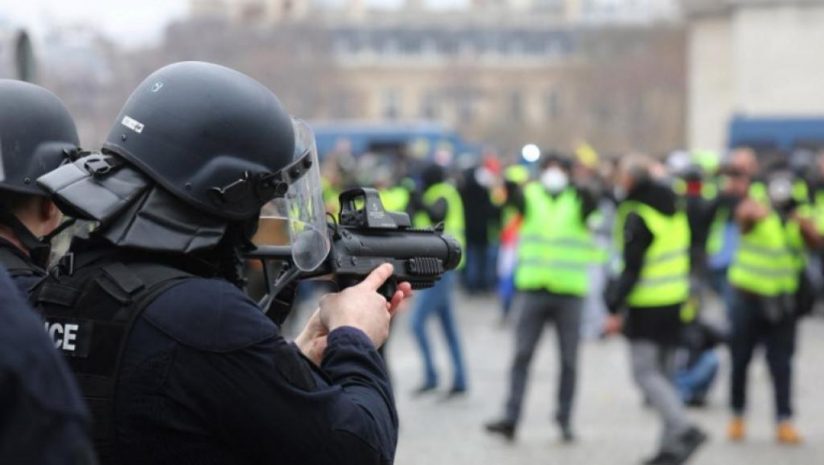
A proposed French law could see images of police officers restricted from circulation. While supporters claim it will only be used to crack down on cyberbullying of law enforcement, critics claim it could be a danger to freedom of the press.
Part of France’s new security bill would make it a criminal offense – under threat of punishment with one year in prison and a €45,000 fine – to spread images that harm “the physical or mental integrity” of law enforcement officers.
Stanislas Gaudon, who heads the police union ‘Alliance’, said on Friday that existing cyberbullying legislation does not currently provide effective protection for the police.
“The problem with those laws is that they can only be applied when the video is already online, but it’s too late, the damage is already done”, he said.
Gaudon said the new law should also make it “compulsory to blur police officers’ faces” in any videos distributed.
Article 24 of the law, which was first proposed La République En Marche (LREM) MP Jean-Michel Fauvergue, following lobbying pressure from Alliance.
Lawmakers supporting the bill stress that it is only intended to be used in response to “malicious” actions.
“The purpose is to forbid any calls for violence or reprisals against officers and their families in videos broadcast over social media” said LREM MP Alice Thourot while speaking to France Inter radio.
Critics of the legislation claim that it could be used to repress certain liberties. On November 8, around 30 members of France’s Society of Journalists issued an open letter denouncing the bill as a “threat to the freedom to report”.
Some 800 filmmakers and photographers sent their own letter, claiming that the proposed bill is equivalent to “censorship”. They cited that a prominent documentary on police violence, ‘Un pays qui se tient sage’ (A Wise Country) filmed amid the 2018-19 Yellow Vest demonstrations, would have been restricted from the airwaves.
Amnesty International has also said the French government would be in violation of the UN’s 1966 International Covenant on Civil and Political Rights, protecting freedom of expression, if the law were to pass.
“The bill is not precise enough,” said Cécile Coudriou, head of Amnesty France. “The notion of ‘malicious intentions’ is too broad. It doesn’t conform to the standards of international law”.
Those who oppose the law highlight examples where police brutality being broadcast through social media has aided in media and legal investigations into police violence.
On 5 January, Cédric Chouviat, a 42-year-old delivery driver in Paris died from a heart attack after being place in a chokehold by police. The event was seen in at least thirteen different videos from the victim, bystanders, and one of the officers involved.
Another example of social media footage bringing police violence to light is the filmed beating of Yellow Vest demonstrators by law enforcement in a Burger King in Paris in December 2018.
Key Military Official Arrested in Mexico Over Ayotzinapa Case
teleSUR – November 14, 2020
Captain José Martínez Crespo, accused of organized crime, homicide, and forced disappearance, is the first detainee in a military prison for the case of the 43 education students of Ayotzinapa, who disappeared in 2014 in Mexico.
According to the Mexican press, the Federal Military Judicial Police this week filled out an arrest warrant against Crespo. So far, the information about his case has not been officially communicated.
Martínez Crespo was one of the commanders of the 27th Infantry Battalion that participated in the events of the night of September 26 and the morning of September 27, 2014, in Iguala, Guerrero.
Captain Crespo” was identified by Sidronio Casarrubias, the alleged criminal leader of the region where the 43 young men of Ayotzinapa disappeared.
President Andrés Manuel López Obrador assured on September 26, the sixth anniversary of the students’ disappearance, that arrest warrants had already been issued for military personnel who participated in the disappearances in the Ayotzinapa case.
Israel seeks to stop flights to Beirut airport
MEMO | November 11, 2020
An Israeli legal team is seeking punitive measures against airlines and insurance companies which fly or provide services to Beirut’s Rafic Hariri International Airport under the pretext of supporting Lebanese Hezbollah group, Israel Hayom newspaper reported.
The paper said on Monday that the Israeli team has sent “warning letters” to major airlines around the world, claiming that by operating civilian flights to Beirut’s airport, they risk falling foul of international law and committing war crimes.
The team has also demanded the companies suspend all services provided to the airport or face legal action on charges of supporting a terrorist organisation.
“The Beirut International Airport has become a hornet’s nest for Hezbollah,” the letter said, adding that the airport and its surrounding area have witnessed large-scale terrorist operations by the group.
Over the past month months, Israeli Prime Minister Benjamin Netanyahu, has repeatedly shown maps allegedly showing missiles and weapons storage sites belonging to Hezbollah, in areas close to the airport. None of his “evidence” has been corroborated.
Palestinian student Ameer Hazboun sentenced by Israeli military court for campus activism
Samidoun Palestinian Prisoner Solidarity Network | November 10, 2020
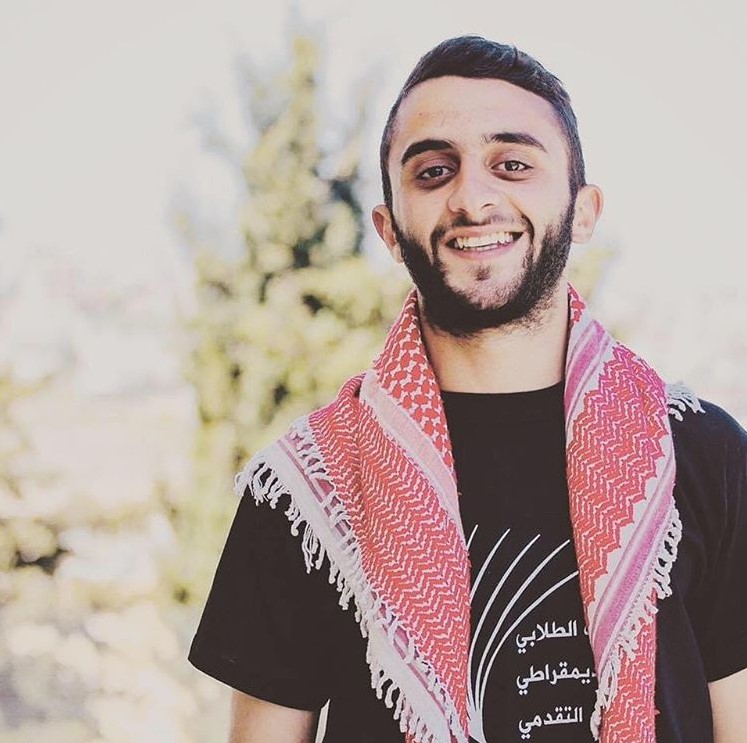
Palestinian student prisoner Ameer Hazboun was sentenced by an illegitimate Israeli military court on Monday, 9 October to 16 months in Israeli prison and a fine of 3000 NIS ($890 USD/$750 EUR). He has been detained since 11 September 2019 and his military court hearings have been repeatedly delayed and postponed.
He was subjected to severe torture under interrogation at al-Moskobiyeh interrogation center before being charged with, essentially, being a Palestinian student activist: he was accused of membership in the Progressive Democratic Student Pole, a leftist student bloc at Bir Zeit University recently labeled a “prohibited organization” by the Israeli military occupation command, attending student events and organizing student activities on campus. In fact, distributing flyers for a student election campaign was labeled “aiding an illegal organization.”
A fourth-year engineering student at Bir Zeit University, Ameer was seized by soldiers in his dormitory on 10 September 2019 as they invaded his room at 1:00 a.m. He was brutally kicked beaten by the soldiers with their guns while being transported to the Moskobiyeh interrogation center. He arrived at the center with bruises all over his body and informed the prison doctor that he has a platinum plate in his left hand for a previous injury. He was interrogated for weeks on end for 22 hours a day. Due to severe sleep deprivation, he would sometimes fall asleep during interrogation and was shaken awake by the interrogators. He was forced into multiple stress positions, including being forced to stand on his toes with his hands cuffed overhead to the wall, placing severe stress on his feet, arms and injured hand.
Why Canada Must Release Meng Wan Zhou
By K.J. Noh | Dissident Voice | October 30, 2020
 Few things are as dangerous as a poorly thought-out kidnapping. Kidnappings are serious business, often with unintended consequences. History is replete with dim-witted criminals who engaged in them on a whim, only to discover adverse outcomes far beyond their imagining. One dramatic example happened 90 years ago this week:
On October 24th, a mother with young children is kidnapped. She is the cherished wife of an important man whom the kidnapper’s group is in competition with. The plan of the kidnapper is that by kidnapping her, this will create unbearable psychological pressure on her husband, force him to capitulate, or at least damage his resolve.
The woman is first humiliated, then tortured, then killed. But the leader does not capitulate, break, or weaken. Instead, over the next nineteen years, he wages war without quarter on his enemies and eventually drives them into the sea. Decades later, he will write this poem for her:
The lonely goddess in the moon spreads her ample sleeves
To dance for these faithful souls in the endless sky.
Of a sudden comes word of the tiger’s defeat on earth,
And they break into tears of torrential rain
The poet, is of course, Mao Zedong. The kidnapped woman was the beloved wife of Chairman Mao, Yang Kai Hui, the mother of his three children. In the winter of 1930, the Kuomintang Fascists kidnapped her and her son, in order to demoralize Mao and put pressure on him to capitulate. She was executed in Changsha, on November 14th, in front of her children, at the ripe age of 29.
Though utterly helpless at the moment she was hostage, Mao never forgave the kidnappers for their depravity, cowardice, and misogyny—victimizing women and children as weapons in a war—and he ground his enemies into the dust, and then built a state where such atrocities could never occur or go unpunished again.
The State-directed, extraterritorial kidnapping of Huawei CFO Meng Wan Zhou is widely seen as a similar act of infamy, misogyny, and thuggery, by a similar class of disreputable individuals. “Lawless, reasonless, ruthless,… vicious” is the extraordinary official pronouncement of the Chinese government. It is certainly a violation of international law. How this will play out ultimately, and what retribution will be meted out remains to be seen, but retribution there will surely be for this “extremely vicious” act.
George Koo has pointed out the “rotten underpinnings of the case” in this article. Most people understand that Meng is not guilty of anything other than being the daughter of Ren Zeng Fei, the founder of Huawei. Huawei, as a global technological powerhouse, represents Chinese power and Chinese technical prowess, which the United States is hell-bent on destroying. Meng has been kidnapped as a pawn, as a hostage to exert pressure on Huawei and the Chinese government, and to curb China’s development. In a maneuver reminiscent of medieval or colonial warfare, the US has explicitly offered to release her if China capitulates on a trade deal—making clear that she is being held hostage. This constitutes a violation of the UN Convention on Hostages.
The outcome of this judicial kidnapping will determine US and Canada-Chinese policy for decades to come: whether a rapprochement is possible in the future, or whether relations will spiral into a cycle of acrimony, vengeance, and ultimately catastrophe.
What is on trial, of course, is not Meng, or Huawei, but the judicial system of Canada and the conscience, good sense, and ethics of its ruling class: whether it will uphold or undermine international notions of justice.
If the Canadian judiciary and its ruling classes fail this test, Canada risks being driven, metaphorically, into the sea by a determined Chinese leadership. The global community that upholds international justice could only concur.
Key Facts about the Meng Wan Zhou Case
The Canadian government arrested Meng Wan Zhou, the CFO of Huawei, on December 1st of 2018, as she was transiting Vancouver on a flight to Mexico. The arrest was made on the demand of the US government’s US District Court’s Eastern District of NY. The initial charge was “fraud and conspiracy to commit fraud to circumvent US sanctions on Iran”.
Of course, the US government knew rapidly that these allegations could not constitute an extraditable charge. The Canadians do not subscribe to US sanctions against Iran—they actively encourage trade with Iran–and therefore business dealings with Iran could hardly be a crime in Canada. In fact, the unilateral US sanction are actually a violation of international law. Furthermore, like most jurisdictions in the world, Canada also has a requirement of “double criminality”: unless the alleged crime is a crime in both jurisdictions, you cannot extradite.
So an alternate case had to be constructed. The case was that was concocted alleged that because Meng had lied to a bank, she must be extradited for fraud. Of course, the bank was British (HSBC), the “crime” happened in Hong Kong, the accused was a Chinese national, and the arrest was in Canada. Hence, she must be extradited to the US for “fraud”. As a set up for a lame joke this would not pass, and as legal argument it is beyond farce. The US court claimed standing to charge her because transactions with HSBC had, or would have transited US servers in New York for a few milliseconds.
Here are some key things to remember about this case:
1) Even if the allegations of so-called “fraud” were true, without the political pressures, such an issue would largely be a private matter between HSBC and Meng.
2) None of the transactions between HSBC and Meng occurred in the US. The funds only transited through the US system because of the way of the global banking system is set up for dollar clearance—this was the pretextual technicality used for jurisdiction and charging. (The funds could equally have been set up to transit through an alternate system, bypassing US servers and risk).
3) No non-US person has ever been charged for “causing” a non-US bank to violate US sanctions in the past. In similar cases, it’s usually a small fine to a corporation.
4) It’s been shown that the US attempted the abduction of Meng in 6 European and Latin American countries—all of which rejected US demands. The US decided on Meng’s momentary transit through Canada, because they considered the Trudeau government to be the most pliable and sycophantic to their cause.
5) Trump has made statements that Meng could be used as a bargaining chip in the US-China trade deal, showing the clearly political nature of the arrest. Confidential RCMP documents also note that the arrest was “highly political”. It’s widely suspected that the law-breaking John Bolton was the instigator behind the action.
6) HSBC was already under prosecution by the US government for prior unrelated violations; rather than doing due diligence in their loan or clearance processes or the law, it decided to collaborate with the US government to entrap Huawei and Meng.
7) The arrest itself involved massive abuses of process: irregularities in detention, notification, search, seizure, constituting themselves violations of international law and bilateral agreements.
8) The court case has been also full of abuses, including the hiding of key exculpatory documents (slides 6 & 16) by the prosecution; and denial of access to key documents to the defense (on the basis of national security and “damage to China-Canada relations”). Given the damage that has already happened to China-Canada relations by the abduction of Meng, one can only imagine what additional “damage” Canada’s Intelligence service is trying to prevent with a claim of National Secrets exemption.
9) The Trudeau government is going on with charade that it is a hapless damsel obliged to follow US strong-arm demands. But Section 23 of the Canadian Extradition Act gives the government the authority to terminate this case at any time. Extradition is made on the discretion of the government, and by refusing to act, the Trudeau administration is abdicating its responsibilities to the Canadian people and the cause of justice.
The Fraudulent Charge of Fraud
Meng Wan Zhou’s lawyer has argued, “It is a fiction, that the US has any interest in policing interactions between a private bank and a private citizen halfway around the world…It’s all about sanctions.”
The jurisprudence upholds this: for a fraud charge against Meng to stick, it would have to show 1) deliberate misrepresentation/deception to HSBC as well as 2) harm or risk of harm to HSBC. In other words, Meng’s lies would have put HSBC at risk for fines and penalities for sanctions busting.
Note, however, that the bank could not have been held liable, if it could be shown that they had been “deceived” into breaching US sanctions by Meng as alleged. If Meng had “lied” to the bank, no harm could have occurred to the bank. The bank would have needed to act deliberately to face any risk of liability.
On the other hand, documents, slides, and emails released later actually show that HSBC had been informed of the relationship between Skycom and Huawei before Meng’s testimony as well as during the meeting, so the allegation of deception doesn’t hold up. (Slides 6 & 16 used in Meng’s presentation to HSBC were omitted to make it seem as if Meng had deceived them, but in full context, show there was no deception).
The conclusion is simple: there was either no lie, or no harm. Regardless, there was no fraud.
In other words, the Canadian government had no case.
The Double Criminality of Heather Holmes
Canadian Justice Heather Holmes, presided over the interrogation. Like the fascist KMT warlord who had kidnapped and tortured Yang Kai Hui, she interrogated Meng Wan Zhou and her lawyer in sibilant tones. Tell me, about “double criminality”, she entreated gently, as if their arguments would be weighed in her judgement.
Meng’s lawyer, Richard Peck, answered with common sense: Because Canada doesn’t have sanctions against Iran, there would be no liability to the bank, hence, no risk to the bank, hence, no criminal “fraud”.
It also couldn’t constitute fraud in the US, since if what the government argued was true–that Meng had misrepresented facts to the bank–HSBC would not be liable because the bank would be an “innocent victim,” hence not liable for any sanctions.
“All risk is driven by sanctions risk in the US,” Peck stated.
Astonishingly, Justice Holmes ruled against Meng, claiming that one should not look for correspondence or equivalence between the statutes to determine “double criminality” in fraud. Instead, she claimed that one had to transpose the context and the coherence of the statues of the demanding country to render a decision. Even though Canada didn’t have sanctions against Iran (thus no illegality or risk of harm, and hence no fraud), she stated that she still had to interpret the demand for extradition by “transposing the environment” that led the US to make the demand. In other words, Canada had no sanctions on Iran, but she had to imagine “the environment”–i.e., “as if Canada had sanctions on Iran”–to render the decision. In so doing, she was able to smuggle in illegal US sanctions by installing a legal backdoor–into a country that had lifted sanctions.
In other words, the dubious, illegal “environment” of US sanctions overruled the clear, plain letter of Canadian law. At the same time, no consideration was given to the odious political “environment” driving the abduction.
Why did the good justice see fit to make a mockery of Canada’s own laws and sovereignty, and subjugate Canada to US extraterritoriality? Why did she contort herself to support the blatant illegality of US sanctions? Does she realize she has set the country barreling down the wrong lane of history?
It’s not known if Justice Holmes asked for the clerk to bring her a basin of Maple syrup to wash her hands after she passed judgement. But it would have been understandable for such a corrupt, consequential, and deeply catastrophic judgement.
Rogue State Canada
Canadian politicians and press like to intone robotically, that Meng’s kidnapping is strictly a by-the-books, “rule-of-law” procedure with Meng’s detention. They like to repeat the catechism, in that tiresome, hypocritical, Maple-washing fashion, that they are “a nation of laws” (insinuating the others are not). But the fact is, Canadians have an atrocious history of kidnapping innocents in general, and assisting the US with kidnappings in particular. There are many examples, but the best known is the story of Maher Arar, the Canadian engineer who was kidnapped and rendered as terrorist, and tortured unspeakably in Syria, where”the pain was so great, it makes you forget the taste of your mother’s milk” Of course, he was innocent of all charges.
It’s also well established that Canadian Police have an ugly habit of kidnapping Indigenous people who are drunk or homeless, and driving them far away from city and abandoning them where they are sure to die of hypothermia and exposure in the winter. These are called Saskatoon “Starlight tours”.
It’s equally well known that the Canadian government also kidnapped tens of thousands of Indigenous children, sometimes at gun point, and forced them into concentration camps (“residential schools”) where they were abused, tortured, raped, enslaved, and killed. Children kidnapped in these schools had a greater chance of dying than soldiers doing battle in WWII–some studies show a mortality rate of 40-60%. In other words, it committed genocide, through rule of law, of course.
In 2018, the UN Committee on Human Rights published a long series of incriminating findings on Canada, related to the torture, mistreatment, imprisonment, death and refoulement of immigrants, refugees, indigenous peoples, and other political prisoners.
On the other hand, the Canadian government has been known to fight tooth and nail to harbor war criminals and torturers–people who legitimately should be extradited. For example, it harbored several El Salvadoran death squad leaders in the 1980’s. These people were so toxic that the Salvadoran government could no longer have them in their country–so they gave them diplomatic postings to Canada. The Canadians, instead of doing the reasonable thing and extraditing them–as was demanded by human rights community around the world, bent over backwards to give them safe harbor and immunity.
Any hope that the settler-colonial Canadian justice system can play an even hand or follow basic human ethics in this case is belied by this atrocious history.
But Why is the US going after Huawei?
China has been designated the official enemy (“revisionist power”) of the US, because it poses a threat to US dominance. As such, the US is engaged in “multi-domain” hybrid warfare against China to attack and bring China down. The domains of warfare that involve the US assaults against Huawei are the domains of: tech war, trade war, economic war, lawfare, and cyber war. Huawei is one of the key pillars of China’s technological and economic strength. It is the world’s largest and most advanced telecom corporation, and in 5G it owns 1/5 of the base patents in the field.
Huawei is also building the digital infrastructure to accompany the Belt and Road Initiative (the “digital silk road”). This not only allows China’s economy to grow, but also prevents the effects of military blockade at the South China Sea. Its hardware makes it harder for US surveillance to tap.
These are the key reasons why it is being attacked and taken down. Aside from kidnappings, the US has been waging this warfare by trying to prevent other countries from signing deals for Huawei 5G infrastructure. It is alleging that Huawei would render these networks insecure: Huawei would spy on them for the Chinese government, or even open them for Chinese cyberwarfare.
Actually, the truth is exactly the inverse. A world-wide Huawei system could create problems for the US global panopticon upon which US “unipolar” dominance relies on: its ability to eavesdrop on individuals, corporations, the leaders of countries, as well as military communications. With non-Huawei routers, due to the subservience and mandated cooperation of US companies, cyberspace as a domain of warfare is always guaranteed to be permeable and amenable to US surveillance and attack.
In other words, the US taps routers globally to spy on individuals, companies, governments, and nations: “Routers, switches, and servers made by Cisco are booby-trapped with surveillance equipment that intercepts traffic handled by those devices and copies it to the NSA’s network”
Regarding specific allegations of Huawei’s “spying”, Huawei has been completely transparent and has handed over its source code to relevant Intelligence agencies for detailed analysis, year upon year. No spying or intentional backdoors have been found: For example, German Intelligence found no spying, and no potential for spying, and British Intelligence also found none.
On the other hand, the US NSA, in a program called Shotgiant, spied extensively on Huawei to look for links between Huawei and the PLA, evidence of backdoors and spying, and vulnerabilities that they could exploit. This extraordinary spying (revealed by Wikileaks) showed no evidence of backdoors, spying or connections with the PLA. The Shotgiant disclosures showed that US allegations were projection: NSA actions “actually mirror what the US has been accusing Huawei of potentially doing”. The NSA did, however, steal Huawei’s proprietary source code at the time, and had plans to spy on other countries by using this information and had sought to compromise security in general. Of course, these kinds of unethical exploits create dangers for everyone.
Theft and exploits notwithstanding, using Huawei hardware could still make it harder for the US to surveil networks–Huawei has declared it refuses to plant backdoors.
Guo Ping, the chairman of Huawei, was quoted in The Verge: “If the NSA wants to modify routers or switches in order to eavesdrop, a Chinese company will be unlikely to cooperate,”…Guo argues that his company “hampers US efforts to spy on whomever it wants,” reiterating its position that “Huawei has not and will never plant backdoors.”
Wired Magazine has also confirmed that Huawei is an obstacle to NSA surveillance: Telecom-equipment makers who sell products to carriers in the US “are required by law to build into their hardware ways for authorities to access the networks for lawful purposes”.
The only allegation of “Huawei vulnerabilities” with any backing evidence shown to date have been Bloomberg‘s “gotcha” article that alleged that in 2009, 2011 some telnet connections in Huawei equipment for Vodaphone in Italy were insecure. Vodaphone, however, refuted these allegations. Further technical analysis showed these allegations were completely implausible. The hardware (Baseboard Management Controller) that Bloomberg alleges is “insecure” cannot access any data in any normal configuration Furthermore, built-in Telnet access CLI connections are unexceptional, and did not pose meaningful risk.
Since then further allegations have been made by the US government (leaked to the WSJ ), but always without proof. These allegations may be recycled and refuted old allegations, or they may just be pure invention, which why they cannot issue the proof.
Of course, Huawei refutes these allegations and always demands proof. The proof is never forthcoming, because there is none.
Here is a solution that allows everyone to step back from the brink. Back off on the unsubstantiated, unverifiable “backdoor spying” canards. Stop the spying and harassment of Huawei, and stop the projection. Stop the interference with its global contracts: let each country evaluate them on their own merits. Stop the fraudulent prosecutions that recycle settled matters.
Above all, stop taking hostages: this is a violation of international law. Canada must release Meng Wan Zhou, immediately. And it must find ways to repair relations and find ways cooperate anew with China. The benefits of success will be tangible and immense. The consequences of failure, immeasurable.
K.J. Noh is a long time activist, writer, and teacher. He is a member of Veterans for Peace and works on global justice issues. He can be reached at: k.j.noh48@gmail.com.
Green Party, Libertarian presidential candidates on Israel-Palestine
By Alison Weir | If Americans Knew | October 29, 2020
Howie Hawkins and Jo Jorgensen are also on the ballot – and unlike Trump and Biden, they and their running mates appear to be remarkably independent of the Israel lobby…
Libertarian Party
Presidential candidate Dr. Jo Jorgensen
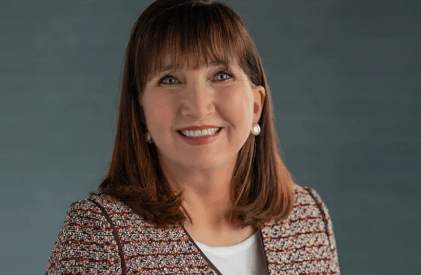
Jorgensen is on the ballot in all 50 states.
In a Q&A on her website she stated:
Q: Should the U.S. continue to support Israel?
A: No, we should not give aid to any foreign nationsQ: Should it be illegal to join a boycott of Israel?
A: NoQ: Should Jerusalem be recognized as the capital of Israel?
A: It’s none of our business
Related statements:
Q: Should the U.S. go to war with Iran?
A: NoQ: Do you support the killing of Iranian Major General Qassem Soleimani?
A: NoQ: Should the military be allowed to use enhanced interrogation techniques, such as waterboarding, to gain information from suspected terrorists?
A: NoQ: Should the U.S. provide military aid to Saudi Arabia during its conflict with Yemen?
A: NoQ: Should the government increase or decrease military spending?
A: DecreaseQ: Should the U.S. accept refugees from Syria?
A: YesQ: Should the U.S. send ground troops into Syria to fight ISIS?
A: NoQ: Should the military fly drones over foreign countries to gain intelligence and kill suspected terrorists?
A: NoQ: Should foreign terrorism suspects be given constitutional rights?
A: Yes, give them a fair trial and shut down Guantanamo BayQ: Should the United States pull all military troops out of Afghanistan?
A: YesQ: Should the U.S. formally declare war on ISIS?
A: NO
Biden vows to sanction ‘Lukashenko regime henchmen’ until Minsk turns ‘democratic’
RT | October 28, 2020
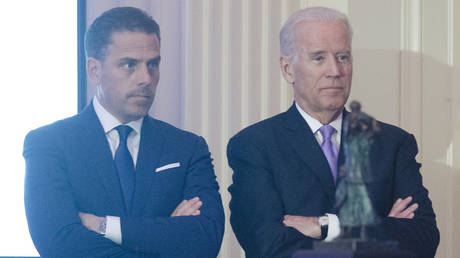
Democrat candidate for US president Joe Biden has called for regime change in Minsk, denouncing President Alexander Lukashenko’s “brutal dictatorship” and vowing to sanction his “henchmen” until there’s a “democratic Belarus.”
“I continue to stand with the people of Belarus and support their democratic aspirations,” Biden said, claiming that President Donald Trump “refuses to speak out on their behalf.”
Biden said that “No leader who tortures his own people can ever claim legitimacy” and demanded that “the international community should significantly expand its sanctions on Lukashenka’s henchmen and freeze the offshore accounts where they keep their stolen wealth.”
The Belarus statement was among a flurry of press releases by Biden’s campaign on Tuesday, and a rare foray into the subject of foreign policy. The Democrat has generally avoided the subject during the campaign, focusing his attacks on Trump on the Covid-19 pandemic.
Lukashenko, who has been president since 1994, was awarded a convincing victory in the August 9 election, by election organisers. The opposition claims the results were rigged.
Official runner-up Svetlana Tikhanovskaya, whom Biden endorsed in the statement, supposedly received about 10 percent of the vote. She has since fled to the neighboring Lithuania and reached out to EU countries for support, calling for a general strike to pressure Lukashenko into annulling the election they claim was “rigged.”
Police in Belarus forcefully dispersed demonstrations on Sunday, prompting some Biden supporters to demand “a plan for Belarus.”
While the EU, UK and Canada have imposed sanctions on Belarussian officials and openly sided with Tikhanovskaya in denouncing the “rigged” election, the Trump administration has been more diplomatic.
Deputy Secretary of State Stephen Biegun met with Tikhanovskaya in Lithuania at the end of August, but said his job was “to listen, to hear what the thinking of the Belarusian people is and to see what they are doing to obtain the right to self-determination.”
“The United States cannot and will not decide the course of events in Belarus,” Biegun said at the time.
This stands in stark contrast with the Trump administration’s strategy for Venezuela, which Biden’s Belarus plan appears to mirror. Vowing to stand with the Venezuelan people in their pursuit of democracy, Washington endorsed opposition figure Juan Guaido as “interim president” of that Latin American country in January 2019, lining up the Organization of American States and even the EU in support.
However, Guaido has repeatedly failed to seize power in Caracas, leaving the government of President Nicolas Maduro more entrenched than ever. Meanwhile, the US-imposed sanctions – ostensibly targeting Maduro’s “regime” – have made lives miserable for the vast majority of Venezuelans, as even think tanks supporting the policy have noted.
Palestinian Teenager Dies after Being Beaten by Israeli Soldiers
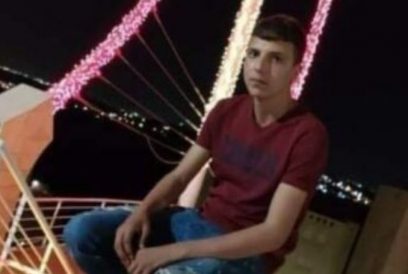
Amer Abdul-Rahim Snobar, 18, was beaten to death by Israeli soldiers. (Photo: via Social Media)
Palestine Chronicle | October 25, 2020
A Palestinian teenager was killed early Sunday after he was severely beaten by Israeli occupation soldiers near the village of Turmus-Ayya, near Ramallah in the occupied West Bank, according to Palestinian security and medical sources.
Israeli occupation forces reportedly chased Amer Abdul-Rahim Snobar, 18, while he was driving near Turmus-Ayya, caught him, and beat him until he died.
Snobar comes from the village of Yatma, near the city of Nablus in the West Bank.
An Israeli military statement said a Palestinian fell while escaping and hit his head while being chased by army forces.
The Ministry of Foreign Affairs and Expatriates demanded today the formation of an international commission of inquiry to investigate the incident.
“This crime reflects the extent of brutality and fascism that controls the political, security and military mentality of the ruling establishment in the occupying state, which allows the killing of Palestinians and the takeover of their land and property, in blatant disregard of all international laws, treaties and agreements, including the basic principles of human rights,” said the ministry in a statement.
The Foreign Ministry called on the International Criminal Court to practice its legal and moral responsibilities towards the crimes committed by the Israeli occupation authorities against the Palestinian people, and “to expedite the opening of an official investigation into those crimes, leading to the prosecution of the Israeli war criminals and those behind them.”
Dying Alone: When We Stopped Caring for Palestinian Prisoners
By Ramzy Baroud | Dissident Voice | October 12, 2020
“No one cares about the prisoners.” Over the past few years, I have heard this phrase — or some variation of it — uttered many times by freed Palestinian prisoners and their families. Whenever I conduct an interview regarding this crucial and highly sensitive topic, I am told, repeatedly, that ‘no one cares.’
But is this really the case? Are Palestinian prisoners so abandoned to the extent that their freedom, life and death are of no consequence?
The subject, and the claim, resurfaces every time a Palestinian prisoner launches a hunger strike or undergoes extreme hardship and torture, which is leaked outside Israeli prisons through lawyers or human rights organizations. This year, five Palestinian prisoners died in prison as a result of alleged medical negligence, or worse, torture.
Even international humanitarian aid workers, like Mohammed el-Halabi, are not immune to degrading treatment. Arrested in August 2016, el-Halabi is yet to be charged for any wrongdoing. News of his plight, which originally received some media attention — due to his work with a US-based organization – is now merely confined to Facebook posts by his father, Khalil.
As of October 1, el-Halabi has been paraded before 151 military trials, yet unaware what the charges are. The cherished Palestinian man, who has played a major role in providing cancer medicine to dying children in Gaza, now holds the record of the longest military trial ever carried out by the Israeli occupation.
Desperate for some attention, and fed up with cliches about their ‘centrality in the Palestinian struggle’, many prisoners, whether individually or collectively, launch hunger strikes under the slogan: ‘freedom or death’. Those who are held under the draconian and illegal ‘administrative detention’ policy, demand their freedom, while ‘security prisoners’, who are held in degrading conditions, merely ask for family visitations or food that is suitable for human consumption.
Health complications resulting from hunger strikes often linger long after the physical ordeal is over. I have interviewed families of Palestinians who were freed from Israeli prisons, only to die in a matter of months, or live a life of endless pain and constant ailments for years following their release.
According to some estimates, over 800,000 Palestinians have been imprisoned in Israeli jails since the Israeli occupation of East Jerusalem, the West Bank and Gaza in June 1967.
Maher al-Akhras is currently writing the latest chapter in this tragic narrative. At the time of writing this article, he has just concluded 77 days of uninterrupted hunger strike. No medical opinion is necessary to tell us that al-Akhras could die any moment. A recent video released of al-Akhras on his Israeli hospital bed conveyed a glimpse of the man’s unbearable suffering.
With a barely audible voice, the gaunt, exhausted-looking man said that he is left with only two options: either his immediate freedom or death within the confines of Israel’s “phony justice system.”
On October 7, his wife, Taghrid, launched her own hunger strike to protest the fact that “no one cares about” her husband.
Once again, the lack of concern for the plight of prisoners, even dying ones, imposes itself on the Palestinian political discourse. So, why is this the case?
The idea that Palestinian prisoners are all alone in the fight for freedom began in the early 1990s. It was during this period that the various Oslo Accords were signed, dividing the Occupied Territories into zones governed by some strange Kafkaesque military system, one that did not end the Israeli occupation, but, rather, cemented it.
Largely dropped from the Israeli-Palestinian negotiations agenda at the time, but permanently, eventually, were several pressing issues fundamental to Palestinian rights and freedom. One of these issues was Israel’s brutal system of incarceration and imprisonment without trial.
Certainly, some Palestinian prisoners were released in small batches occasionally, as ‘gestures of goodwill’; but the system, itself, which gave Israel the right to arrest, detain and sentence Palestinians, remained intact.
To date, the freedom of Palestinian prisoners — nearly 5,000 of them are still held in Israel, with new prisoners added daily — is not part of the Palestinian leadership political agenda, itself subsumed by self-interests, factional fights and other trivial matters.
Being removed from the realm of politics, the plight of prisoners has, over the years, been reduced to a mere humanitarian subject — as if these men and women are no longer political agents and a direct expression of Palestinian resistance, on the one hand, and Israel’s military occupation and violence, on the other.
There are ample references to Palestinian prisoners in everyday language. Not a single press release drafted by the Palestinian Authority, its main Fatah faction or any other Palestinian group fails to renew the pledge to free the prisoners, while constantly glorifying their sacrifices. Unsurprisingly, empty language never produces concrete results.
There are two exceptions to the above maxim. The first is prisoner exchanges, like the one that took place in October 2011, resulting in the freedom of over 1,000 Palestinian prisoners. And, second, the prisoners’ own hunger strikes, which are incremental in their achievements, but have, lately, become the main channel of resistance.
Sadly, even solidarity with hunger strikers is often factional, as each Palestinian political group often places disproportionate focus on their own striking prisoners and, largely ignores others. Not only has the issue of prisoners become depoliticized, it has also fallen victim to Palestine’s unfortunate disunity.
While it is untrue that ‘no one cares about Palestinian prisoners’, thousands of Palestinian families are justified to hold this opinion. For the freedom of prisoners to take center stage within the larger Palestinian struggle for freedom, the issue must be placed at the top of Palestine’s political agenda, by Palestinians themselves and by Palestinian solidarity networks everywhere.
Maher al-Akhras, and thousands like him, should not risk their lives to obtain basic human rights, which should, in theory, be guaranteed under international law. Equally important, Palestinian prisoners should not be left alone, paying a price for daring to stand up for justice, fairness and for their people’s freedom.
 Ramzy Baroud is a journalist and the editor of The Palestine Chronicle. He is the author of five books. His latest is These Chains Will Be Broken: Palestinian Stories of Struggle and Defiance in Israeli Prisons (Clarity Press). Baroud is a Non-resident Senior Research Fellow at the Center for Islam and Global Affairs, Istanbul Zaim University (IZU). Read other articles by Ramzy, or visit Ramzy’s website.
Hundreds of Palestinian children ethnically cleansed by Israel as world remains silent

An Israeli soldier detains a Palestinian boy during an anti-Israel protest in al-khalil in the Israeli-occupied West Bank, on November 29, 2019. (Via Reuters)
By Robert Inlakesh | Press TV | October 8, 2020
Israel has demolished hundreds of Palestinian homes, this year, leaving hundreds more without a place to live. Yet despite the fact that Israel is set for a record number of home demolitions in East Jerusalem al-Quds, the International Community not only refuses to act but also remains silent.
In East Jerusalem al-Quds alone, since 2004, Israeli home demolitions have left 3,459 Palestinians homeless (including 1,847 minors), which is concerning enough, without the added stress to local Jerusalemite Palestinians of this year being on track to break all previous records for the number of home demolitions since 1967.
What the refusal to confront this issue shows is the complete lack of care from the international community and also when it is properly investigated, that house demolitions in of themselves, reveal that inside of Israel itself, there is no democracy for Palestinians.
In order to understand the issue of house demolitions, we have to differentiate between the succinctly three different circumstances under which Palestinians experience this form of ethnic cleansing. The three key areas are inside of what is now Israel, inside of East Jerusalem al-Quds and inside of the West Bank. The Gaza Strip is not included due to the fact that these demolitions are not undertaken in the same way, but rather occur primarily due to airstrikes.
House demolitions in East Jerusalem al-Quds
So far this year, according to Israeli Human Rights Group B’Tselem, 89 housing units and 27 non-residential buildings were ordered to be demolished in East Jerusalem al-Quds by the Israeli regime. Israel is in fact on track for a record number of house demolitions in the occupied territory this year, according to Israeli paper Haaretz, which will inevitably cause a record number of homeless cases.
Something key to understanding cases of home demolitions in East Jerusalem al-Quds is the ongoing effort to Judaize the city. Palestinians living in East Jerusalem al-Quds do not have Israeli citizenship or Palestinian citizenship, but rather Jerusalem ID cards. If Palestinians choose to live outside of the territory for more than 7 years or claim citizenship of any country (normally Jordan), they can also be stripped of this right to their ID and be expelled. As a result of such policies, significant numbers of Palestinian Jerusalemites have been forced out of Jerusalem al-Quds. Also on top of this is the issue of illegal settlement expansion, with hundreds of thousands of settlers moving into the area.
Despite the oppressive policies, Palestinians make up 40% of the total population of Jerusalem al-Quds, yet are only granted roughly 7% of the total building permits for the city.
The issue of Israeli issued building permits is the main reason for the forced destruction of Palestinian properties in Jerusalem al-Quds. Palestinians have to pay, often unaffordable, prices to apply for permits, yet the approval is near impossible even when they do pay. The reason it is nearly impossible, is because of Israeli implemented building schemes, under which Israel has designed a system built to bolster Jewish construction and prohibit Palestinian construction.
Israel occupied East Jerusalem al-Quds in 1967, later formally annexing it in 1980, meaning that Israel imposes its own law of Palestinians living in the territory and has even built a wall through areas which constitute part of the East Jerusalem al-Quds territory. However, the Israeli application of its own laws over Palestinians is in violation of International Law as the territory is still considered as occupied territory, meaning that the laws of occupation apply to the area.
When Palestinians build and are not granted a permit, or start construction whilst the permit is processing – sometimes delayed until years later before a decision is made by Israel to destroy the home – or are told an old building has not got updated papers, the building is ordered to be demolished.
When Israel orders a home demolition, the pain does not end there, Palestinians are required to pay for the Israelis to forcibly evict their family and demolish their home. This has forced many to pay for bulldozers themselves in order to destroy their own home, so that they do not have to pay for Israel to do it, which often carries a fee double or triple the amount. For Palestinians who cannot afford demolition costs, they are forced to destroy their own homes by hand.
House demolitions in al-Naqab
According to a report released in June, by ‘The Negev Coexistence Forum for Civil Equality’, during the years 2017, 2018 and 2019, Israel ordered the demolition of 2,000 homes in the al-Naqab (Negev in Hebrew).
Key to this issue is the fact that Bedouin Palestinians living in the Naqab are Israeli citizenship holders, some of which serve in the occupation army, yet are still persecuted and pushed out of their home lands. At this point, Palestinian Bedouin’s can only inhabit 12% of their ancestral homelands and if they live in villages “unregistered” by the Israeli regime, they are “transferred” to overcrowded villages and camps, reminiscent of the way in which native Americans were crowded into reservations.
This year alone, hundreds of Bedouins have been made homeless, compounded by the fact that the pandemic is affecting these communities badly and they are still being crammed into overcrowded camps.
Some villages have even been demolished over 100 times. The 17th of September for instance was the last time an entire village was demolished for the 178th time in a row.
House demolitions inside West Bank
From the start of 2020 until the 31st of August, 78 housing units were demolished in the West Bank, leaving 320 people homeless, including 166 minors according to Human Rights Organization B’Tselem.
In the West Bank, according to the United Nations, roughly 1.5% of building permits are approved by Israel, making it nearly impossible to obtain one. This is despite the fact that Israeli settlements and outposts continue to rapidly expand into West Bank territory. If a Palestinian does wish to attempt to attain a permit, it will often cost roughly around $30,000 US just to file the application, a price most just cannot afford, or even for those who can afford the price, it’s too much of a gamble.
Often used propaganda, by Israel and its supporters, suggests that house demolitions are primarily done as a reaction to “Palestinian terrorism” and therefore they argue it’s justified. However, this is not the case. In fact, when Israel does blow up the homes of Palestinians in the West Bank, after the Palestinian in question has been alleged to have committed a violent attack against an Israeli occupation soldier or illegal settler, it is not him who suffers for it.
Palestinians that either attempt to attack an Israeli, or are wrongly accused of it, are almost always shot and killed by the occupation forces. Following this, the family is not able to even grieve in peace, as family homes, sometimes housing multiple families are blown up leaving the entire family homeless. This policy has been described by Israeli Human Rights Group B’Tselem as follows: “Demolishing the homes of relatives of Palestinians who harmed or attempted to harm Israeli civilians or security personnel is prohibited collective punishment, and is one of the most extreme measures used by Israel. Over the years Israel has demolished hundreds of homes, leaving homeless thousands of people who had done no wrong and were not suspected of any wrongdoing. It is an immoral and unlawful policy. The fact that the High Court of Justice has upheld it does not make it legal, rather, it makes the justices accomplices to the crime.”
Despite the fact that these Israeli policies of house demolitions, ultimately aimed at ethnically cleansing Palestinians, are ongoing and have grown more aggressive over the past year, the story is relatively untouched by West Media and largely ignored by the International Community.
Robert Inlakesh is a journalist, writer and political analyst, who has lived in and reported from the occupied Palestinian West Bank. He has written for publications such as Mint Press, Mondoweiss, MEMO, and various other outlets. He specializes in analysis of the Middle East, in particular Palestine-Israel. He also works for Press TV as a European correspondent.
Arrest of Hamas co-founder by Israeli security forces denounced as attempt to undermine Palestinian reconciliation
RT | October 2, 2020
Israeli security forces have arrested senior Hamas leader Hassan Youssef. The two rival Palestinian groups, Hamas and Fatah, have both condemned the move as being politically-charged and a bid to ruin their reconciliation talks.
Youssef was taken at his home in Ramallah in the occupied West Bank on Friday morning. While Israeli authorities have not provided any official information about the move, local media reported that the Hamas co-founder was detained over alleged “renewed” activity by the group.
After helping to found Hamas in the late 1980s, Youssef was repeatedly arrested by the Israeli authorities and spent years behind bars. Hamas has always maintained he was only involved in its political activities, and not associated with its military wing.His arrest was condemned by both Hamas and its rival, Fatah. Hamas claimed the arrest was a politically-motivated move, designed to destabilize the ongoing reconciliation process between the two groups.
“We hereby affirm that the arrest of Sheikh Hassan Youssef by the occupation will not stop the path of unity for which he worked for the past two months,” Hamas said in a statement.
Fatah has voiced a similar opinion on Youssef’s arrest, with the group’s Secretary-General Jibril Rajoub accusing Tel Aviv of “tampering” with the reconciliation talks and attempting to “influence the achievement of national unity.”
“This arrest is a continuation of the occupation’s approach to arresting dozens of our Palestinian people every day, and a continuation of the continuous aggression against our people for decades,” Rajoub stated.
Palestine professor narrates his suffering inside US jails
![Abdul Halim Al-Ashqar [Twitter]](https://i1.wp.com/www.middleeastmonitor.com/wp-content/uploads/2019/06/Abdul-Halima-Al-Ashqar-e1559887312769.jpeg?resize=469%2C313&quality=85&strip=all&zoom=1&ssl=1)
Palestinian professor Abdul-Halim Al-Ashqar, 7 June 2019 [Twitter]
MEMO | September 26, 2020
Palestinian professor Abdul-Halim Al-Ashqar, originally from the occupied West Bank city of Nablus, narrates his suffering inside US jails during his 15-year detention.
Speaking to Anadolu Agency, Al-Ashqar, who ran for Palestinian presidential elections in 2005, disclosed that he spent a total of about 15 years inside US prisons over “baseless” accusations related to supporting Hamas.
Al-Ashqar started his career at the Islamic University of Gaza in 1985 and became the head of the Public Relations Office, noting that Israel exerted much efforts to close it over allegations that it was run by Hamas.
Al-Ashqar obtained a Fulbright scholarship in 1989 to complete a PhD in the US. “In the beginning, Israel prevented me from travelling, claiming I was an activist in Palestine and I would go to America to bring them more troubles,” according to Al-Ashqar.
“In the end, they allowed me to travel, but did not stop making troubles for me,” he said, noting that the Israeli occupation authorities were in contact with his university in the US in order to put pressure on him. Due to Israeli pressure, the supervisor of his thesis and dean of the faculty where he was studying, issued him with several warnings.
The professor alleged that the Federal Bureau of Investigation (FBI) asked him to give information about Palestinians he knew before arriving in the US, promising him a US passport and money.
“I refused because I knew no guilty people,” Al-Ashqar explained, “so they filed a complaint against me in 1998 accusing me of supporting Hamas. I refused to stand before a court and therefore they sent me to prison.”
“I went to hunger strike and after 11 days, I was admitted to hospital and force-fed. They promised to help me should I have changed my mind, but I continued my strike which lasted six months. I think it was the longest in US history. However, Hamas was branded by the US as a terrorist group in 1995, but they detained me over claims before that date. I am not Hamas, but an activist who believes in the Palestinian cause and I said this to Americans from the first day.”
In 2000, the professor had a three-year work contract with Howard University, which refused to renew the contract in 2003 over claims of having no valid visa or residence clearance.
Consequently, Al-Ashqar applied for political asylum because, according to him, Israel wanted to punish him, but he faced imprisonment in the US over the same claims. “I stayed in prison for two months and I spent them on hunger strike,” indicating that the US authorities asked him to withdraw his asylum application and leave the country within two months.
As he had no place to go, he remained and a US court sentenced him to 135 months in prison for claims related to perverting the course of justice. However, such charges usually carry between 24 to 40 months, according to US law. He spent around ten years in prison and was released in 2017. Following this, he began to look for a country that would not hand him over to Israel.
“After a short time on my release, the immigration office summoned me. However, I was sick. I was obliged to go. By my arrival, I was immediately sent to prison and spent 18 months there. That was a stark violation of their laws,” Al-Ashqar recounts.
Al-Ashqar claims that the FBI attempted to deport him directly to Israel after he was released in June 2019. “I applied for political asylum. The FBI did not wait, the court deported me in a plane to Israel, but when the plane was in the sky, a senior judge decided to grant me asylum and ordered my return immediately.”
He was then placed under house arrest and had a tracing tag put on his leg. He was obliged not to leave his town of residence without prior permission.
Concluding his interview with Anadolu Agency, he remarked that Turkey would be the best place for him because: “It is the only state where its people and its president still sympathise with the Palestinian people, and its leader is strong enough to defy Israel.”
Featured Video

Chinese jet fuel and the myth of energy independence
or go to
Aletho News Archives – Video-Images
Book Review
Former Insiders Criticize Iran Policy as U.S. Hegemony
By GARETH PORTER | CounterPunch | February 27, 2013
“Going to Tehran” arguably represents the most important work on the subject of U.S.-Iran relations to be published thus far.
Flynt Leverett and Hillary Mann Leverett tackle not only U.S. policy toward Iran but the broader context of Middle East policy with a systematic analytical perspective informed by personal experience, as well as very extensive documentation.
More importantly, however, their exposé required a degree of courage that may be unparalleled in the writing of former U.S. national security officials about issues on which they worked. They have chosen not just to criticise U.S. policy toward Iran but to analyse that policy as a problem of U.S. hegemony. … continue
Blog Roll
 Aletho News
- What is fueling unrest across the EU?
- Why no power can undermine Iran’s eternal dominance over the Strait of Hormuz
- Is The War Against Iran Over?
- Iran war will leave long-term ‘scar’ on Wall Street, investors warn
- How Iran decimated US power projection in West Asia: Military lessons of 40-day war
- Iran’s report details US-Israeli war crimes in targeting schools, hospitals, livelihoods
- NATO’s Slow Fracture: How Trump’s Iran War Exposed the Instrument of Hegemony
- Chinese jet fuel and the myth of energy independence
- Ukraine Sea Drone Fired From Libya Hit Russian Tanker in Mediterranean
- IRGC: Iranian forces launched no attacks during ceasefire hours
- If Americans Knew
- Military aid to Israel emerges as the latest political litmus test for Democrats
- The only Palestinian children’s rights organization closes following years-long Israeli campaign against it
- ‘I Can’t Forget the Smell’: Lebanese Reel After Israel Kills Over 300 in Single Day
- DNC Shoots Down Resolutions Calling Out AIPAC and Limiting Arms to Israel
- TCN: Is Israel Blackmailing President Trump?
- Israel killed at least 303 Lebanese yesterday – who were they? Daily Update
- Amnesty: Urgent – Protect Lebanese civilians from brutal escalation in Israeli attacks
- Is The War Against Iran Over?
- Inside the Israeli army’s propaganda wing
- Hundreds of Gaza Amputees Stranded in Legal Limbo
- No Tricks Zone
- An Inconvenient Tree: Uncovered In Alps… Europe Much Warmer Than Today 6000 Years Ago
- New Study Reports A 60% Slowdown In Greenland’s Ice Loss Rate In The Last Decade
- Low Intensity Tornado Wrecks Major Solar Farm, Creating A Potential Toxic Dump
- New Study Finds Warming Saves Lives…Cold Temperatures 12 Times More Deadly Than Excess Heat
- German Science Blog Accuses PIK Climate Institute Of Hallucinating Climate Tipping Points
- Devastating Assessment Of Comirnaty Vaccine By Former Senior Pfizer Europe Toxicologist
- New Study: CO2 Is ‘Effectively Negligible’ As An Explanatory Climate Change Factor Since 2000
- Former Pfizer Toxicologist Dr. Helmut Sterz Tells Bundestag Hearing Pfizer Vaccine Should Have Never Been Approved
- Energy Expert: Germany’s Nuclear Phaseout Was A “500 Billion Euro Mistake”
- New Research: South Australia’s Mid-Holocene Sea Surface Temperatures Were 4°C Warmer Than Today
 Aletho News