Israeli commander threatens to ‘disable all youth in the camp’ as 2 Palestinians shot in Duheisha
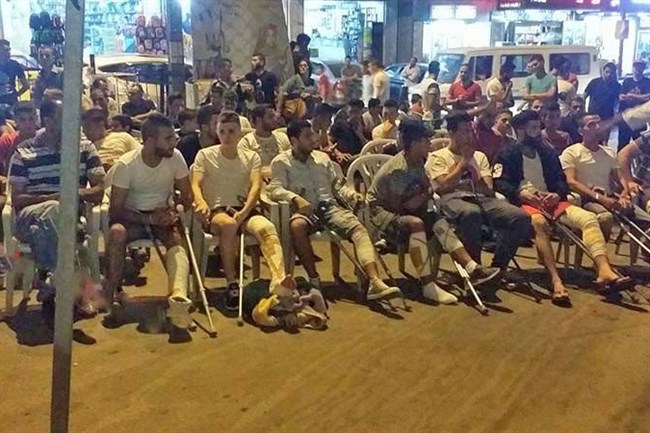
A file photo of a group of Palestinian youth after being treated for gunshot injuries by Israeli forces (Photo: BADIL)
Ma’an – August 26, 2016
BETHLEHEM – Two Palestinian youths were injured with live fire during clashes with Israeli soldiers in al-Duheisha refugee camp in southern Bethlehem early Friday morning, as reports emerged of an Israeli army commander making repeated threats in recent weeks to make “all youth in the camp disabled.”
Local sources said that two youths were shot and injured in the legs during clashes that erupted after Israeli forces raided the camp in Friday’s predawn hours.
Sources added that Israeli soldiers raided and searched the house of the incarcerated Palestinian Muhammad al-Seifi, detaining his mother and sister by locking them inside their home to pressure Muhammad’s younger brother Naba to turn himself into Israeli authorities.
Israeli forces also blew off the door of the Ibdaa Cultural Center near the entrance to the camp and occupied the rooftop of the building, from where Israeli snipers fired live ammunition and tear-gas canisters at local youth.
Violent clashes in al-Duheisha are common and break out nearly every time Israeli army forces enter the camp, which is located in Area A and should be under full Palestinian Authority control according to the Oslo agreements.
In a response to a request for comment, an Israeli army spokesperson told Ma’an that the Israeli army was not involved, and claimed Israeli border police were behind it, despite the area being located outside of police jurisdiction in Area A of the occupied West Bank.
When contacted by Ma’an, Israeli police spokesperson Micky Rosenfeld said he was not aware of the raid, saying it “made no sense” that police would be involved, and confirmed that al-Duheisha fell under the Israeli army’s jurisdiction in terms of raids. When contacted a second time, an Israeli army spokesperson insisted again that the army was not behind the raid and could not say who had been.
‘I will make all the youth of the camp disabled’
The clashes come in the wake of reports documented by BADIL, the Resource Center for Palestinian Residency and Refugee Rights, of an Israeli army commander making repeated threats during and after raids, and during interrogations, to disable all Palestinian youth in al-Duheisha.
The commander is reportedly responsible for the al-Duheisha area, and known to locals as “Captain Nidal.”
Local youth in al-Duheisha told BADIL that Captain Nidal has made statements such as: “I will make all the youth of the camp disabled,” “I will have all of you walking with crutches and in wheelchairs,” “I will make half of you disabled, and let the other half push the wheelchairs,” and “I will make all of you stand in line at the ATM waiting for your disability subsidies and assistance.”
One of the injured youth told BADIL that Captain Nidal told him to tell his friends that “Nidal will make all of you disabled.”
According to BADIL, which is based in Bethlehem, 30 Palestinians have been shot with live ammunition in the camp since the beginning of the year, the majority in their legs and knees.
They added that al-Duheisha had been raided at least three times by Israeli forces between the end of July and mid-August, during which time 18 Palestinian youth between 14 and 27 years old were shot in their legs — eight of which shot directly in the knee and several more in both legs — causing both permanent and temporary disabilities.
An Israeli army spokesperson could not immediately be reached for comment on the reports of the threats made by the commander.
“These threats indicate that these actions are not accidental or isolated incidents, but rather result from a systematic Israeli military policy aimed at suppressing resistance, terrorizing Palestinian youth, and permanently injuring them and/or causing significant damage to their physical and mental well-being,” BADIL said in their statement.
The reported threats come amid what BADIL called an intensification of the “systematic targeting” of Palestinian youth in the occupied Palestinian territory — particularly in refugee camps — since the beginning of 2016.
“This targeting has taken the form of injuries and arbitrary killings by the use of live ammunition by the Israeli army in the context of arrest campaigns, military raids, and random wide searches which usually trigger clashes,” the statement said.
BADIL’s statement also highlight a recent Israeli military incursion in the Hebron-area refugee camp al-Fawwar that lasted some 20-hours, during which an unarmed Palestinian teen was shot dead and dozens others were hospitalized.
“These cases of intentional wounding, when added to the comparable actions happening in refugee camps such as Aida, al-Arroub, Qalandia, Amari, and the West Bank at large, prove that these incidents amount to a systematic policy and an implementation of Captain Nidal’s threats.”
“These willful and grave breaches of international law trigger the obligations of third party states and other mandated agencies to put an end to this climate of impunity under which Israeli forces and its officials operate.”
BADIL’s collection of testimonies came as the latest report amid years of well documented cases of abuse and mistreatment of Palestinian children by Israeli forces in the occupied territory, including in East Jerusalem, which is under Israeli police jurisdiction.
Bilal Kayed’s strike ends with agreement for his freedom; continued mobilization critical for fellow prisoners

Samidoun Palestinian Prisoner Solidarity Network – August 26, 2016
In a press conference held on Thursday morning, 25 August, Sahar Francis, the executive director of Addameer, confirmed that Bilal Kayed had ended his hunger strike after 71 days following the conclusion of an agreement with Israeli occupation prison administration that he will be released in December 2016, with no renewal of administrative detention.
In the press conference, joined by Kayed’s brother Mahmoud Kayed, as well as Prisoners’ Affairs Committee chair Issa Qaraqe and Osama al-Saadi of the Joint List, Francis noted that occupation security officials had earlier stated that they demanded Kayed be deported to Jordan for four years and noted their intention of keeping him in administrative detention for years. Kayed is held in the intensive care unit at Barzilai hospital and was moved there on 19 August as he refused to consume sugar or vitamin B1. He suffers from blurred vision, difficulty breathing and severe pain throughout his body. He will receive treatment until his condition improves considerably and he is returned to health.
Samidoun Palestinian Prisoner Solidarity Network salutes Bilal Kayed for his victory and achievement in the defense of Palestinian rights from the constant attempts of the Israeli occupation to expand, enlarge and intensify the scope of the imprisonment of Palestinian leaders and struggles. We extend our warmest congratulations to Bilal, his struggling family who were at the forefront of his support campaign, his lawyers and advocates with Addameer Prisoner Support and Human Rights Association and his fellow Palestinian prisoners who engaged in a series of collective hunger strikes within Israeli prisons. Kayed’s fellow prisoners of the Popular Front for the Liberation of Palestine were subject to isolation, the targeting of leaders Ahmad Sa’adat, Ahed Abu Ghoulmeh, Wael Jaghoub and Kamil Abu Hanish among others, excessive daily fines, harassment and assaults, and denial of family and legal visits. We salute the Palestinian people throughout occupied Palestine and in exile, including in the refugee camps of Lebanon, who repeatedly took the streets and mobilized in support of Kayed’s battle for freedom, directly confronting the occupation as well as the international institutions and states that refused to stand for justice for Palestinian prisoners.
Furthermore, Samidoun salutes all of the international activists, organizations and movements that came together to stand beside Bilal Kayed and beside the Palestinian people in this battle of freedom. From the outstanding efforts of the Irish movement for freedom for Bilal Kayed, to the ongoing and constant actions in New York City and Berlin, to the honorary citizenship granted to Bilal in Naples, to the organizers of the Black liberation movement who expressed their solidarity, to the organizers in the United States, Canada, Mexico, Venezuela, Brazil, Ecuador, Turkey, the UK, Ireland, Scotland, France, Belgium, the Netherlands, Germany, Switzerland, Italy, Spain, Greece, Portugal, Iceland, the Czech Republic, Finland, Austria, Norway, Sweden, Denmark, South Africa, Jordan, Lebanon, Tunisia, Algeria, Morocco, Bahrain and elsewhere who have mobilized in support of Bilal Kayed, international mobilization has escalated to new heights in support of the Palestinian prisoners in this struggle.
We urge the importance of continued mobilization and action in support of Palestinian prisoners, particularly the current hunger strikers, Mahmoud al-Balboul, on strike since 1 July; Mohammed al-Balboul, his brother, on strike since 4 July; and Ayed al-Herama and Malik al-Qadi, on strike since 14 July, all protesting administrative detention without charge or trial – and for continued mobilization in support of the action of all of the Palestinian prisoners, struggling for freedom from Israeli imprisonment, and for freedom and liberation for the Palestinian people throughout Palestine.
Argentine General and 28 Others Sentenced to Life for Crimes Against Humanity
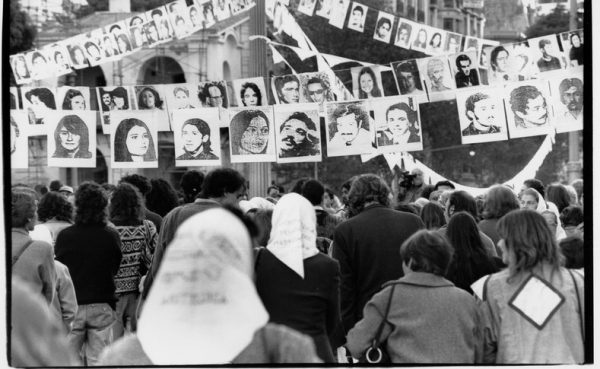
teleSUR | August 25, 2016
An Argentine court sentenced former General Luciano Benjamin Menendez to life in prison Thursday for crimes against humanity committed at secret Dirty War-era detention centers in the late 1970s, making a landmark step in the struggle for justice for human rights abuses during one of the darkest chapters in the South American country’s history.
Menendez stood trial with 42 other defendants who will also be sentenced today after a nearly four year so-called “mega-trial” involving events related to over 700 victims.
The general was in charge of two clandestine jails, known as La Perla and La Ribera, in the province of Cordoba where torture, assassinations, and other human rights abuses were carried out during the 1976-1983 military dictatorship. He was charged with over 600 cases of torture, over 300 murders and forced disappearances, unlawful detentions, and other crimes against humanity committed at the two detention centers between 1976 and 1978.
Thousands of people, including the families of victims and social movements such as the iconic Mothers and Grandmothers of the Plaza de Mayo, filled the streets outside of the federal court in the province of Cordoba to await the announcement under the banner of remembering the 30,000 disappeared during the dictatorship.
Former military intelligence agent Arnoldo Jose Lopez, former military man Ernesto Guillermo Barreiro, and former military captain Hector Pedro Vergez were also found to be among the principle masterminds responsible for the abuses and sentenced to life in jail for charges of hundreds of aggravated homicides, among other crimes.
Ricardo Alberto Lardone and Oreste Valentin Padovan, both considered among the special command at La Perla responsible for carrying out torture and kidnappings, were also sentenced to life in jail.
A total of 28 of the 43 accused were handed life sentences, nine were sentenced to up to 21 years, and six were acquitted.
The case was also historic for marking the first time a court in Cordoba tried charges of illegal apprension of babies during the dictatorship, a military practice of stealing babies from political dissidents, detainees, and victims of forced disappearance and handing them over the families linked to the military regime. The Grandmothers of the Plaza de Mayo has struggled for nearly 40 years to identify their missing grandchildren and reunite them with their families.
The La Perla case dealt with forced disappearance of Silvina Monica Parodi de Orozco, who was over six months pregnant when she and her husband Daniel Francisco Orozco were kidnapped. Silvina’s mother Sonia Torres is still searching for her missing grandchild, whose whereabouts has never been known.
The landmark trial brought together 21 separate cases of crimes against humanity at the hands of the Argentine military, police, and paramilitary forces immediately leading up to and in the years after the 1976 military coup against left-wing President Isabel Peron. The case heard some 600 witnesses provide testimony over the course of 350 hearings related to the 716 victims. Less than half, 340, of the victims survived. Most of the others, 311, were disappeared with no documentation of what happened to them, and the rest were killed.
La Perla was the second most important detention center in the country in the early years of the military dictatorship. Between 2,500 and 3,000 victims of state terrorism were detained at the secret military prison between 1976 and 1977, and it is though to have stopped operating by 1978, according to local media.
A 1979 U.S. Department of State memo included in a batch of over 1,000 pages of recently-declassifed documents related to Argentina’s Dirty War reveals that the U.S. Embassy was aware that “physical torture” was practiced at La Perla in 1976 and 1977. A 1978 State Department recommendation memo to then-President Jimmy Carter characterized General Menendez as as a “hardline general,” and another document indicated that Menendez was pushing for “continued strong efforts to battle ‘ideological subversion.'”
Argentina’s U.S.-backed Dirty War disappeared an estimated 30,000 victims in its brutal state terrorism campaign against suspected political dissidents, which involved systematic forced disappearances, torture, rape, and assassinations. Argentine human rights groups have dubbed the bloody era a “genocide” against political dissidents.
Abu Zubaydah makes case for Guantanamo release in first public statement in 14 years

Abu Zubaydah © wikipedia.org
RT | August 24, 2016
A Guantanamo detainee, who the CIA tortured as a suspected top leader of Al-Qaeda but never officially charged, has made his case for release. Abu Zubaydah appeared in public for the first time in 14 years of his detention.
His first-ever hearing was made via video feed from Washington’s Cuba-based prison and on his behalf. Addressing a Periodic Review Board through a uniformed soldier who read his message, Zubaydah said that he “has no desire or intent to harm the United States or any other country.”
“He has been respectful to us in all of our meetings and dealings with him, and he has come to believe that he might have a chance to leave Guantanamo through this process,” his opening statement reads.
He said he would want “to be reunited with his family” while also “begin the process of recovering from injuries he sustained during his capture” in Pakistan in 2002.
“He has some seed money that could be used to start a business after he is reintegrated into society and is living a peaceful life,” his representative read.
A Saudi-born Palestinian, Zubaydah is one of three men that the CIA has admitted to have waterboarded at an unknown prison in Thailand.
According to the so-called “torture report” released in 2014, Zubaydah was the first prisoner to endure the harsh CIA interrogation program.
After Zubaydah was turned over to US custody, he was subjected to 83 waterboarding sessions, the torture technique that creates the sensation of drowning. He was also placed in a coffin-sized box for a total of 266 hours (11 days, two hours) over a 20-day period. Additionally, he was forced to remain in another small confinement box (21 inches wide, 2.5 feet in length) for 29 hours.
After being brutally interrogated, Zubaydah was transported to Guantanamo Bay in Cuba, where he remains today.
Two former CIA psychologists, and creators of the CIA torture program, admitted that Zubaydah was also stripped naked, confined and that his cell was lit by halogen lamps 24 hours a day for a period of time.
In the aftermath of 9/11, Washington [alleges to have] falsely believed that Zubaydah was a key Al-Qaeda leader in the lead-up to the attacks. Since then, his status in US documents reportedly changed to a “well-known al-Qaeda facilitator.”
According to his profile, he also “possibly” knew about bombings of the US embassies in Kenya and Tanzania in 1998 and the USS Cole bombing in 2000.
However, despite 14 years passing since his brutal capture, Zubaydah has not been officially charged.
It us up to the Periodic Review Board to decide whether a prisoner would pose a danger if released. The decision on his transfer is expected in about 30 days.
Until this Tuesday’s hearing, Zubaydah has not made a single public appearance and has only been seen by his lawyer.
The open statement in a Pentagon room lasted reportedly for less than 20 minutes and was followed by a classified part of it. Zubaydah decided he did not want a transcript of his secret hearing being publicly released.
Hearings at the Periodic Review Board have been held more often recently as the Obama administration is trying to stand by the president’s pledge to close Guantanamo by the end of this presidential term. Unable to shut down President George W. Bush’s facility due to opposition from Congress and the military, Obama has been pushing to transfer out detainees cleared for release.
Last week saw the largest single release of 15 prisoners, all of whom were sent to the United Arab Emirates.
There are currently 61 captives remaining in the Guantanamo Bay.
Peru’s Police Force Harbored a Death Squad, Report Reveals
teleSUR | August 23, 2016
Until as recently as last year, Peru’s national police force harbored a “death squad” that is responsible for the extrajudicial killings of at least 20 people over a four-year period – even at times offering sworn officers bounties to kill criminal suspects, according to an official government investigation of systemic police misconduct.
In an executive summary that reads like the script of a Dirty Harry movie, the Interior Ministry’s report found “serious indications” that both high-ranking and low-level officers of the national police force “falsified intelligence information” to misrepresent at least six cases involving some 20 slayings as the justified result of confrontations with armed suspects, when in fact they were summary executions carried out by police, according to a summary of the report Monday by Vice Minister of Internal Order Ruben Vargas.
The report did not disclose the identities of the officers suspected of participating in the death squad, but Vargas did reveal that the operation was headed by a police colonel who was subsequently promoted to general.
Local media revealed the scandal over three weeks ago after department whistleblowers brought the allegations to light, prompting an investigation. The new report will now be handed over to prosecutors specialized in organized crime to open a case.
Minister of Interior Carlos Basombrio, newly-appointed under President Pedro Pablo Kuczynski and inaugurated at the end of July, claimed that the evidence suggests that a group of high-ranking police officials who moved between divisions are responsible for running the death squad, and that no single police force unit itself is compromised.
Authorities also revealed that several of the officers involved in the scandal were decorated for their so-called “distinguished” achievements within the force last year. A months-long internal police investigation already found that at least two officers were promoted during the period in which they are suspected of participating in the death squad. The Investigator General intervened in the internal probe and took over the investigation over three weeks ago.
Local media report that the death squad, allegedly made up of nearly 100 officers across four units of the national police force, is suspected of carrying out the murders of 27 Peruvian civilians between 2011 and 2015 in the cities of LIma, Ica, and Chiclayo.
Media previously suggested that the 27 victims were common criminals, but the new report found that 11 victims “didn’t even have a criminal record or a warrant to justify them being identified as targets of police interventions,” according to the Interior Ministry.
The confirmation of the extrajudicial killings by the police recalls a dark history of death squads run by state security forces in the South American country that were aimed at wiping out armed left-wing guerrilla movements particularly under the reign of jailed former dictator Alberto Fujimori.
Samidoun international coordinator denied entry to Palestine, interrogated about BDS and prisoner solidarity
Samidoun Palestinian Prisoner Solidarity Network – August 22, 2016
Samidoun Palestinian Prisoner Solidarity Network international coordinator Charlotte Kates was denied entry to Palestine at the King Hussein Bridge crossing from Jordan to occupied Palestine on Monday, 15 August, as she attempted to join a delegation of European parliamentarians and lawyers in support of Bilal Kayed and the Palestinian prisoners. Kayed, 34, has been on hunger strike for 69 days against his administrative detention without charge or trial; nearly 100 fellow prisoners have joined his strike against his imprisonment, imposed upon him immediately following his completion of a 14.5-year sentence in Israeli prisons.
When Kates presented her U.S. passport at the passport control line, it was taken from her and she was told to wait for further questioning. Along with multiple other travelers to Palestine and, especially, Palestinians holding international passports as well as those holding PA passports, she waited for hours at the bridge for a period interspersed with interrogations about her purpose in the country and participation in Palestine prisoner solidarity and BDS activism.
“I was asked about the websites I maintain, asked to allow the interrogator to access my email conversation with others, and asked to write up lists of names of people I know in Lebanon and in Palestine and lists of organizations with which I work. The interrogator attempted to look through my phone to find my contacts and to seek out WhatsApp chats and repeatedly demanded that I log in to my email or social media accounts and allow her access. As my phone was completely clear of any contact information and I refused to access any accounts or provide lists of names, this became a ‘reason’ to deny me entry. However, other travelers at the bridge were also subject to these searches and questioned about their personal photos and WhatsApp chats. In particular, people were questioned about wearing hijab in photos or being in contact with visibly Arab or Muslim friends,” said Kates.
“I was interrogated about my involvement with Samidoun and organizing around Palestinian political prisoners, and whether my visit to Palestine had anything to do with Bilal Kayed in particular, clearly a matter of concern to the Israeli interrogator,” said Kates. “Furthermore, in light of the recent announcements regarding ‘crackdowns’ on BDS activists entering Palestine, I was specifically interrogated regarding speeches and lectures I have given regarding boycott, divestment and sanctions against Israel, support for the BDS call and involvement with Israeli Apartheid Week.”
“This was not about personally targeting me; it was an attempt to target the growing international solidarity movement to support Palestinian prisoners and the Palestinian people’s liberation struggle, and an attempt to further isolate Palestinian prisoners from the people of the world,” Kates said. “Furthermore, my experience of prolonged interrogation and being held for hours at the bridge pales next to the experience of Palestinians being denied their basic right to enter their own homeland – part and parcel of the denial of the fundamental right of return – and subject to harsh interrogation, being deported for carrying international passports, and being subjected to cruel and degrading treatment at the border.”
“During just my own time at the bridge, I encountered numerous Palestinians facing enormous delays and aggressive interrogation, Palestinians denied entry to their own homeland, and Palestinians presented with ‘limited-access’ entry permits prohibiting them from visiting Jerusalem. I encountered a family from Gaza who had one of the rare permits to exit via Erez/Beit Hanoun and then the bridge to Jordan to see family members. As they had studied in the US and UK, they were questioned by border guards as to why they wished to return to Gaza at all, rather than staying in another country. Border control and interrogation is part and parcel of the system of Israeli colonization and dispossession separating Palestinians from their land and seeking to force even more Palestinians outside their homeland. It is part of the same system that denies millions of Palestinians their right to return and attempts to continue the Nakba on an ongoing basis,” said Kates.
“At the same time, I also witnessed numerous holders of international passports singled out for their names, visibly Muslim or Arab appearance, or travels to Arab countries, and subject to degrading and offensive interrogations regarding their religion and personal relationships,” Kates noted. … Full article
Palestinian women prisoners to launch protests against mistreatment of family visitors

Samidoun Palestinian Prisoner Solidarity Network – August 20, 2016
Palestinian women prisoners are declaring their intention to launch a series of protests over mistreatment of their relatives during family visits, Ma’an News reported on Thursday. In particular, Riyad al-Ashqar of the Palestinian Prisoners’ Center for Studies noted that family visits are frequently denied, cut short or delayed and visitors forced to undergo strip searches.
Lena Jarbouni, the elected representative of the 42 women held in HaSharon prison, stated that the women will protest so long as their families continue to experience lengthy waits in the sun, humiliating strip searches, repeatedly altered visitation schedules and prohibition of clothing for the prisoners and other necessary items. Several women prisoners, including Ansam Shawahneh, 19, have been completely denied family visits. There are currently approximately 60 Palestinian women held in HaSharon and Damon prisons.
On Thursday, Ofer Military Court ordered Taghreed al-Faqih, 44, from Dura near al-Khalil, imprisoned for two months and fined 5000 NIS (approximately $1100 USD) for “incitement.” Al-Faqih, the sister of Mohammed al-Faqih, extrajudicially executed by Israeli forces who bulldozed and fired a missile into his home, was arrested after her brother’s killing on 12 July 2016.
On Monday, 15 August, Randa Ahati of al-Khalil was released on bail to house imprisonment in her home in Yatta until her next court date. A former prisoner held for nearly four years in Israeli prison, she was arrested by occupation forces while traveling between Bethlehem and al-Khalil.
Sana Abdelrahman Nayef Abu Sneineh, 24, from Dura near al-Khalil, was released on 15 August after six months in administrative detention. She was arrested on 17 February by Israeli occupation soldiers invading her home in a pre-dawn raid, accusing her of posting “inciting” material on Facebook. She was ordered to three months’ administrative detention without charge or trial, which was then renewed for an additional three months.
Two women remain in administrative detention without charge or trial, among nearly 750 Palestinians in total: Sabah Feroun, imprisoned since 19 June after an invasion of her Jerusalem home by Israeli occupation forces and ordered to six months in administrative detention, and Haneen Abdelqader Amer, 39, from Tulkarem, imprisoned since 27 March and accused of “incitement” on social media but ordered imprisoned without charge or trial.
Mexican police executed 22 civilians in drug raid: Rights body
Press TV – August 19, 2016
A human rights body has found that Mexican police killed nearly two dozen civilians in “arbitrary executions” during a raid against a drug cartel in the country’s troubled west last year.
The independent National Human Rights Commission said in a report on Thursday that the massacre happened in the federal police raid against the Jalisco Nueva Generacion cartel in the western state of Michoacan on May 22, 2015.
Police officers committed “violations of the right to life by excessive use of force that entailed the arbitrary execution of 22 civilians,” the commission said.
Meanwhile, commission chief Ismael Eslava said the government forces also perpetrated “aggravated acts of torture on two people who were detained.”
According to the commission report, forensic investigations indicated police had moved the bodies of those killed in the raid and placed guns next to them in an attempt to cover up the crime.
It also noted that a police helicopter fired 4,000 rounds into the farm where the suspects were hiding.
Responding to the document, Renato Sales, the chairman of Mexico’s National Security Committee, rejected the characterization of arbitrary executions and defended the actions of police.
He said the shooting erupted when the suspects refused to drop their weapons. “We do not think the theory of arbitrary executions stands up.”
The government said previously that the helicopter had fired to contain the suspects. It also said that the 42 people killed by police had attacked officers.
The commission report concluded that a total of 43 people were killed in the security operation, including one policeman and numerous suspected criminals, but only 22 of them were deemed arbitrary executions by police.
The commission also found fault with the actions of investigators from the Michoacan Attorney General’s Office, who mishandled ballistics evidence. Medical examiners likewise came under criticism for irregularities in the autopsies and delays in the return of bodies to their families.
The incident is considered as one of the bloodiest battles in the Mexican government’s decade-long campaign against powerful drug gangs across the Latin American state.
Official figures show that more than 35,000 people are currently missing in the country due to drug-related violence, which has also claimed thousands of lives over the past few years.
Police corruption, drug cartels and organized crime are the greatest challenges facing Mexico.
Hasidic ‘Shomrim’ receive no punishment after assaulting black American
RT | August 18, 2016
A gay black man was brutally attacked by five men in 2013 and has spent the last three years fighting for justice. Unfortunately, he may never see it. Two of five Hasidic neighborhood patrolmen have been sentenced, but will spend no time in jail.
On Tuesday, two men charged with gang assault, punishable by up to 25 years in prison, walked away with a sentence of community service and three-year probation for an attack that left 24-year-old Taj Patterson blind in his left eye.
Pinchas Braver, 22, and Abraham Winkler, 42, were two of five men that assaulted Patterson.
Whether Patterson was attacked for being gay or black or a combination, he’ll never know.
“I was alone. I was an easy target. I’m black. I’m gay, a whole slew of reasons,” Patterson told the Gothamist.
Patterson was walking through South Williamsburg when he was stopped by five members of the neighborhood patrol group known as the Shomrim. Patterson told the New York Daily News it was about 4:00am when the men knocked him down, shouting, “Stay down, f****t!”
Multiple people claim to have seen the attack.
Evelyn Keys, an MTA bus driver, intervened when she saw what was happening. She described the jackets the men were wearing to the Daily News in May, saying, “I know the first letter is an ‘S.’ Under those three letters there was a word that started with an ‘S.’”
“That wasn’t a misdemeanor,” she said.
Mariano Ortiz, 33, told the Daily Mail that his attempt to photograph the attackers’ license plates nearly ended with him being mowed down.
“One of [them] tried to hit me,” Ortiz said.
Despite the witnesses, the case faced a number of hurdles before even being investigated. Patterson attempted to report the attack to the police, but was dismayed to discover that it had been closed a day later. The report said that Patterson was attacked by only one man and claimed that Patterson was “highly intoxicated, uncooperative and incoherent.”
Patterson believes that racial issues factored into their decision, telling the Daily Mail, “I think they saw this black kid . . . and they might have seen the Jewish guys and thought he must have done something wrong because the Jewish guys wouldn’t do anything wrong.”
It took his mother, Zahra, to contact media sources for the attack to be investigated.
Israeli army withdraws from Al-Fawwar, after killing one Palestinian, injuring 59, and searching dozens of homes
IMEMC News – August 17, 2016
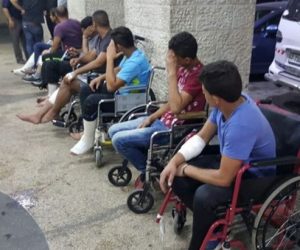 The Israeli army withdrew, late on Tuesday at night, from the al-Fawwar refugee camp, south of Hebron, in the southern part of the occupied West Bank, after concluding a massive military invasion, leading to the death of one Palestinian, while at least 59 others have been injured and dozens of homes invaded and ransacked.
Dr. Waleed Zalloum, the general director of the Hebron Governmental hospital, said 38 Palestinians were moved to the medical center, and that most of them were shot in their legs, thighs and arms.
Zalloum added that one Palestinian, identified as Mohammad Yousef Saber Abu Hashhash, 17, was fatally shot in the chest and died shortly after being moved to a hospital.
Dozens of residents, including many children and elderly, suffered severe effects of tear gas inhalation, and received the needed treatment.
Dr. Yousef Takrouri, the general director of the Al-Ahli Hospital in Hebron, said five Palestinians were moved to the medical center; all were shot with live rounds, four in the legs and one in the chest.
In addition, one Palestinian was moved to the Rafidia Hospital, in the northern West Bank city of Nablus, after the soldiers shot him with an expanding bullet in the leg, and another was moved to a hospital in Ramallah, when the soldiers shot him with a similar round in his left shoulder.
Many Palestinian families said the soldiers violently invaded their homes and searched them, and accused the military of stealing gold and cash during the searches.
Amjad Najjar, the head of the Hebron office of the Palestinian Prisoners Society (PPS) said the soldiers invaded his home in the al-Fawwar refugee camp, before forcing him and his family in one room, and violently searched the property, causing excessive damage.
Najjar added that the soldiers stole gold and cash from the family home, and that the search of the property lasted for more than four hours.
During the invasion into the refugee camp, the soldiers conducted home-to-home searches, causing excessive property damage, in addition to interrogating dozens of families and photographing them.
The Israeli invasion into the camp was initiated at dawn, Tuesday; the army said it was looking for weapons and claimed that the soldiers “located two pistols, one commando knife, sound bombs and dozens of live rounds.
Israeli Occupation Forces arrest Hamas members in West Bank prior to elections
Palestinian Information Center – August 17, 2016
RAMALLAH – Israeli Occupation Forces (IOF) carried out a large-scale arrest campaign against over 20 members and leader of Hamas Movement in the West Bank.
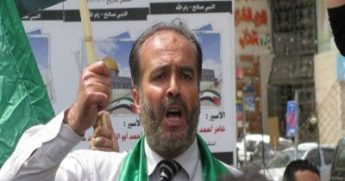
Local sources revealed that Israeli soldiers arrested the Hamas leader Hussein Abu Kuwaik, representative of Hamas in the central elections committee.
The arrest of the Hamas leader Kuwaik came just one day after the committee had announced opening of registration for candidature in the electoral lists of the committee which reflects Israeli targeting of the Movement and the lists it supports.
The sources also reported that the IOF soldiers broke into the home of the Hamas leader Jamal Abu al-Haija in addition to the homes of three of his sons.
 They searched the houses thoroughly, wreaked havoc on them, and confiscated his son’s car.
The forces also confiscated the contents of his son’s electronic devices shop as well as appliances inside the homes.
The Israeli forces stormed the house after midnight by blowing up its main door, Abu al-Haija’s son said.
They gathered the family members in one room and interrogated all of them.
Clashes erupted after the storming of Abu al-Haija’s home in Jenin city and in its refugee camp.
Arrests also took place in al-Khalil, Ramallah and other locations in Jenin city after the storming of Palestinians’ homes and confiscation of computers and other property of the arrested.
Featured Video
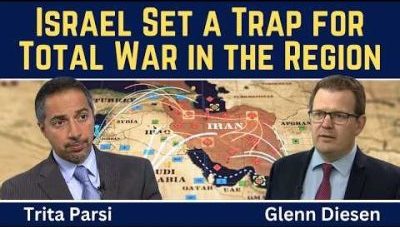
Trita Parsi: Israel Set a Trap for Total War in the Region
or go to
Aletho News Archives – Video-Images
Book Review
Why the War on Conspiracy Theories Is Bad Public Policy
By Kevin Barrett • Unz Review • February 1, 2019
 A Review of Conspiracy Theories and Other Dangerous Ideas by Cass Sunstein (based on an earlier paper co-authored with Adrian Vermeule); In Defense of Troublemakers: The Power of Dissent in Life and Business by Charlan Nemeth; and Conspiracy Theories and the People Who Believe Them, edited by Joseph E. Uscinski
On January 25 2018 YouTube unleashed the latest salvo in the war on conspiracy theories, saying “we’ll begin reducing recommendations of borderline content and content that could misinform users in harmful ways—such as videos promoting a phony miracle cure for a serious illness, claiming the earth is flat, or making blatantly false claims about historic events like 9/11.”
At first glance that sounds reasonable. Nobody wants YouTube or anyone else to recommend bad information. And almost everyone agrees that phony miracle cures, flat earthism, and blatantly false claims about 9/11 and other historical events are undesirable.
But if we stop and seriously consider those words, we notice a couple of problems. First, the word “recommend” is not just misleading but mendacious. YouTube obviously doesn’t really recommend anything. When it says it does, it is lying. … continue
Blog Roll
 Aletho News
- Putin’s key remarks on peace talks and Europe’s ‘schizophrenia’
- Trita Parsi: Israel Set a Trap for Total War in the Region
- Trump’s Iran war is on an Israeli leash
- Saudi oil boss issues global supply warning
- Riyadh Says Its Oil System Is Intact. The Numbers Say Otherwise.
- Trump and Netanyahu Want to “Finish the Job” on Iran
- US ‘one-sided dictation’ not Iran’s beliefs makes rational talks impossible: Baghaei
- Iran’s Next Strike May Not Explode. It Could Shut You Down /Col Doug Macgregor
- Iran: US political targets legitimate if assassinations return
- Iraq shuts key border crossing with Iran under US pressure: Report
- If Americans Knew
- DAILY UPDATE: Latest essential news on Palestine, Israel, & region
- The Israel Lobby’s Changing Fortunes
- AIPAC has become such a political liability that it’s shifting to a more “nimble” approach to buying politicians
- At least 160 Israeli settler attacks in 2 weeks
- Will Gaza’s Ancient Christian Community Disappear Forever?
- Israel’s vision of regional security rests on keeping Arab states weak
- Heidi Levine recounts how Palestinian youths helped save her in settler attack
- DAILY UPDATE: Latest essential news on Palestine, Israel, & region
- Trump’s Intensifying Sabotage of the ICC, for Israel’s Sake
- Israeli military detain US and UK volunteers in West Bank including Democratic NY politician Brad Lander
- No Tricks Zone
- E-Cars Reduce CO2 Emissions By Only 41% Compared To Internal Combustion Engine Vehicles
- Predictions Made By Renowned Climate Professor Over Past Decades Have Been Proven To Be Poor
- New Study Suggests Large Regions Of The Pacific Ocean Have Been Cooling For The Last 80 Years
- Germany’s Green Energy Debacle: High Energy Costs Force Kahla Porzellan to Close After 182 Years!
- New Study: 50 Years Of The Most Aggressive ‘Net Zero’ Policies Can Only Affect The Global Climate By 0.03°C
- US September “Heat” Was No Record…Many Records Set Decades Ago
- Latest European Green Energy Debacle; Portugal’s Largest Flagship Solar Park Insolvent!
- Green Energy Debacle: German Expert Professor Fritz Vahrenholt Warns Of Severe Economic And Social Consequences
- Two More Paleo Reconstructions Affirm Meters-Higher Sea Levels Across Ireland, Brazil 7000-6000 Years Ago
- New Study: Earth And Venus Surface Warmth Largely Explained By Convection And Lapse Rate, Not CO2 Or Radiation

