Palestinians Lose Hope That Turkey Will Help to Solve Gaza’s Power Crisis
Sputnik | July 23, 2016
Ankara has pledged to help the Gaza Strip to tackle its decade-long electricity crisis as part of a deal to normalize ties with Israel that were severed six years ago, but Palestinians told Sputnik that they doubt that Turkish authorities will deliver on the promise.
Mustapha Al-Agha who lives in Gaza said that locals have lost their hope in Turkey after Ankara decided not to pressure Israel to lift the blockade which has been in place since 2007. Turkey’s “help is limited to humanitarian aid,” he said. “All promises given to the Gaza Strip have turned out to be a ‘downer pill’ meant to receive support for the agreement between Turkey and Israel.”
Itaf Mukhanna, a mother of seven, maintained that lifting the blockade was a priority, urging Arab nations to do something about it.
“Situation here is unbearable. Youth unemployment has worsened. Electricity, water and gas have become an everyday dream that each local is trying to fulfil,” she said.
On June 28, Turkey and Israel announced that they would restore diplomatic ties. Ankara has agreed to provide humanitarian aid to and build a power plant in Gaza as part of this deal. Two weeks later a Turkish delegation visited the region to discuss ways to resolve the crisis with Israeli and Hamas officials.
The delegation is expected to prepare a report that will be directed to Turkey’s Energy and Natural Resources Minister Berat Albayrak, the cabinet and President Recep Tayyip Erdogan. The government will then work on a roadmap to implement measures outlined in the report.
Last week Turkey delivered 11,000 tons of humanitarian aid meant for Gaza. The cargo was offloaded in the Israeli port city of Ashdod.
The Gaza Strip’s electricity crisis is acute. The region has a single power plant that has operated at less than 50 percent capacity since 2006 when Israel bombed the facility.
Gaza needs at least 450 megawatts per day, but it receives no more than 185 megawatts in the summer and 200 megawatts during the winter, Tare Lubbad, communications director at a Gazan electric company, told Sputnik.
“The energy crisis in the Gaza Strip has become worse since one of [four] generators at the power plant has not been working due to the lack of fuel,” he said.
The plant needs at least 500 tons of fuel per day to operate at its current full capacity, but the Palestinian Authority in Ramallah has imposed a tax on fuel purchased in Israel.
How the Australian, British, and US Governments Shamelessly Helped Kill Countless People in Indonesia in 1965
Asia-Pacific Research – July 23, 2016
The Hague-based International People’s Tribunal has ruled that the Indonesian regime that replaced Indonesian President Sukarno committed crimes against humanity in 1965. The governments of Australia, Britain, and the United States have also been pronounced guilty as complicit partners in the massacre of 500,000 to 1000,000 people or more in Indonesia. People were murdered in Indonesia due to their principles, political ideology, ethnic backgrounds, and opposition to foreign influence. Albeit the ruling is an important historical acknowledgment, the assistance that the Australian, British, and US governments provided to the coup and played in the massacres is not a secret.
Asia-Pacific Research presents these excerpts from the Australian journalist John Pilger’s book The New Rulers of the World, which was published by Verso in 2002, in the interest of providing the historical background about the massacres that took place in Indonesia. Reading them will educate one on the despicable and criminal roles that Australia, Britain, and the US played. ”There were bodies being washed up on the lawns of the British consulate in Surabaya, and British warships escorted a ship full of Indonesian troops down the Malacca Straits so that they could take part in this terrible holocaust,” for example Pilger writes. In his work John Pilger also notes that the US was directly involved in the operations of the death squads and helped compile the lists of people to be murdered while the Australian, British, and US media were used as propaganda tools to whitewash the coup and bloodbaths in Indonesia. A key point, however, that is emphasizes is that the underlying economic motivations and plunder hidden behind the ideological discourse of the Cold War that really motivated the massacres in Indonesia. – Mahdi Darius Nazemroaya, Asia-Pacific Research Editor, 22 July 2016.

Indonesians preparing to die in a mass grave
Excerpts from The New Rulers of the World (Verso)
John Pilger, 2002
… according to a CIA memorandum, Prime Minister Harold Macmillan and President John Kennedy had agreed to ‘liquidate President Sukarno, depending on the situation and available opportunities’. The CIA author added, ‘It is not clear to me whether murder or overthrow is intended by the word liquidate.’
Sukarno was a populist, the founder of modern Indonesia and of the non-aligned movement of developing countries, which he hoped would forge a genuine ‘third way’ between the spheres of the two superpowers. In 1955, he convened the ‘Asia-Africa Conference’ in the Javanese hill city of Bandung. It was the first time the leaders of the developing world, the majority of humanity, had met to forge common interests: a prospect that alarmed the western powers, especially as the vision and idealism of nonalignment represented a potentially popular force that might seriously challenge neo-colonialism. The hopes invested in such an unprecedented meeting are glimpsed in the faded tableaux and black-and-white photographs in the museum at Bandung and in the forecourt of the splendid art deco Savoy Hotel, where the following Bandung Principles are displayed:
I – Respect for fundamental human rights and the principles of the United Nations Charter.
2 – Respect for the sovereignty and territorial integrity of all nations.
3 – The recognition of the equality of all peoples.
4 – The settlement of disputes by peaceful means.
Sukarno could be a democrat and a demagogue. For a time, Indonesia was a parliamentary democracy, then became what he called a ‘guided democracy’. He encouraged mass trade unions and peasant, women’s and cultural movements. Between 1959 and 1965, more than 15 million people joined political parties or affiliated mass organisations that were encouraged to challenge British and American influence in the region. With 3 million members, the PKI was the largest communist party in the world outside the Soviet Union and China. According to the Australian historian Harold Crouch, ‘the PKI had won widespread support not as a revolutionary party but as an organisation defending the interests of ‘the poor within the existing system’. It was this popularity, rather than any armed insurgency, that alarmed the Americans. Like Vietnam to the north, Indonesia might ‘go communist’ .
In 1990, the American investigative journalist Kathy Kadane revealed the extent of secret American collaboration in the massacres of 1965-66 which allowed Suharto to seize the presidency. Following a series of interviews with former US officials, she wrote, ‘They systematically compiled comprehensive lists of communist operatives. As many as 5,000 names were furnished to the Indonesian army, and the Americans later checked off the names of those who had been killed or captured.’ One of those interviewed was Robert J Martens, a political officer in the US embassy in Jakarta. ‘It was a big help to the army,’ he said. ‘They probably killed a lot of people and I probably have a lot of blood on my hands, but that’s not all bad. There’s a time when you have to strike hard at a decisive moment.’ Joseph Lazarsky, the deputy CIA station chief in Jakarta, said that confirmation of the killings came straight from Suharto’s headquarters. ‘We were getting a good account in Jakarta of who was being picked up,’ he said. ‘The army had a “shooting list” of about 4,000 or 5,000 people. They didn’t have enough goon squads to zap them all, and some individuals were valuable for interrogation. The infrastructure [of the PKI] was zapped almost immediately. We knew what they were doing . . . Suharto and his advisers said, if you keep them alive you have to feed them.’
Having already armed and equipped much of the army, Washington secretly supplied Suharto’s troops with a field communications network as the killings got under way. Flown in at night by US air force planes based in the Philippines, this was state-of-the-art equipment, whose high frequencies were known to the CIA and the National Security Agency advising President Johnson. Not only did this allow Suharto’s generals to co-ordinate the killings, it meant that the highest echelons of the US administration were listening in and that Suharto could seal off large areas of the country. Although there is archive film of people being herded into trucks and driven away, a single fuzzy photograph of a massacre is, to my knowledge, the only pictorial record of what was Asia’s holocaust.
The American Ambassador in Jakarta was Marshall Green, known in the State Department as ‘the coupmaster’. Green had arrived in Jakarta only months earlier, bringing with him a reputation for having masterminded the overthrow of the Korean leader Syngman Rhee, who had fallen out with the Americans. When the killings got under way in Indonesia, manuals on student organising, written in Korean and English, were distributed by the US embassy to the Indonesian Student Action Command (KAMI), whose leaders were sponsored by the CIA.
On October 5, 1965, Green cabled Washington on how the United States could ‘shape developments to our advantage’. The plan was to blacken the name of the PKI and its ‘protector’, Sukarno. The propaganda should be based on ‘[spreading] the story of the PKI’s guilt, treachery and brutality’. At the height of the bloodbath, Green assured General Suharto: ‘The US is generally sympathetic with and admiring of what the army is doing.” As for the numbers killed, Howard Federspiel, the Indonesia expert at the State Department’s Bureau of Intelligence and Research in 1965, said, ‘No one cared, as long as they were communists, that they were being butchered. No one was getting very worked up about it.’
The Americans worked closely with the British, the reputed masters and inventors of the ‘black’ propaganda admired and adapted by Joseph Goebbels in the 1930s. Sir Andrew Gilchrist, the Ambassador in Jakarta, made his position clear in a cable to the Foreign Office: ‘I have never concealed from you my belief that a little shooting in Indonesia would be an essential preliminary to effective change.’ With more than ‘a little shooting’ under way, and with no evidence of the PKI’s guilt, the embassy advised British intelligence headquarters in Singapore on the line to be taken, with the aim of ‘weakening the PKI permanently’ .
Suitable propaganda themes might be: PKI brutality in murdering Generals and [Foreign Minister] Nasution’s daughter . . . PKI subverting Indonesia as agents of foreign Communists . . . But treatment will need to be subtle, e.g. (a) all activities should be strictly unattributable, (b) British participation or co-operation should be carefully concealed.
Within two weeks, an office of the Foreign Office’s Information Research Department (IRD) had opened in Singapore. The IRD was a top-secret, cold war propaganda unit headed by Norman Reddaway, one of Her Majesty’s most experienced liars. It would be salutary for journalists these days to study the critical role western propaganda played then, as it does now, in shaping the news. Indeed, Reddaway and his colleagues manipulated the press so expertly that he boasted to Gilchrist in a letter marked ‘secret and personal’ that the story he had promoted – that Sukarno’s continued rule would lead to a communist takeover – ‘went all over the world and back again’ . He described how an experienced Fleet Street journalist agreed ‘to give exactly your angle on events in his article … . i.e. that this was a kid glove coup without butchery.’
Roland Challis, the BBC’s South-East Asia correspondent, was a particular target of Reddaway, who claimed that the official version of events could be ‘put almost instantly back to Indonesia via the BBC’. Prevented from entering Indonesia along with other foreign journalists, Challis was unaware of the extent of the slaughter. ‘It was a triumph for western propaganda,’ he told me. ‘My British sources purported not to know what was going on, but they knew what the American plan was. There were bodies being washed up on the lawns of the British consulate in Surabaya, and British warships escorted a ship full of Indonesian troops down the Malacca Straits so that they could take part in this terrible holocaust. It was only much later that we learned the American embassy was supplying names and ticking them off as they were killed. There was a deal, you see. In establishing the Suharto regime, the involvement of the IMF and the World Bank was part of it. Sukarno had kicked them out; now Suharto would bring them back. That was the deal.’
With Sukarno now virtually powerless and ill, and Suharto about to appoint himself acting president, the American press reported the Washington-backed coup not as a great human catastrophe, but in terms of the new economic advantages. The massacres were described by Time as ‘The West’s Best News in Asia’. A headline in US News and World Report read: ‘Indonesia: Hope . . . where there was once none’. The renowned New York Times columnist James Reston celebrated ‘A gleam of light in Asia’ and wrote a kid-glove version that he had clearly been given. The Australian Prime Minister Harold Holt, who was visiting the US, offered a striking example of his sense of humour: ‘With 500,000 to a million communist sympathisers knocked off,’ he said approvingly, ‘I think it’s safe to assume a reorientation has taken place.’
Holt’s remark was an accurate reflection of the complicity of the Australian foreign affairs and political establishment in the agony of its closest neighbour. The Australian embassy in Jakarta described the massacres as a ‘cleansing operation’. The Australian Ambassador, KCO Shann, enthused to Canberra that the Indonesian army was ‘refreshingly determined to do over the PKI’, adding that the generals had spoken approvingly of the reporting on Radio Australia, which he described as ‘a bit dishonest’.’ In the Prime Minister’s Department, officials considered supporting ‘any measures to assist the Indonesian army … cope with the internal situation’.
In February 1966, [British] Ambassador Gilchrist wrote a report on the scale of the massacres based on the findings of the Swedish Ambassador, who had toured central and eastern Java with his Indonesian wife and had been able to speak to people out of earshot of government officials. Gilchrist wrote to the Foreign Office: ‘The Ambassador and I had discussed the killings before he left [on the tour] and he had found my suggested figure of 400,000 quite incredible. His enquiries have led him to reconsider it a very serious under-estimate. A bank manager in Surabaya with twenty employees said that four had been removed one night and beheaded . . . A third of a spinning factory’s technicians, being members of a Communist union, had been killed … The killings in Bali had been particularly monstrous. In certain areas, it was felt that not enough people [emphasis in the original] had been killed.’
On the island of Bali, the ‘reorientation’ described by Prime Minister Holt meant the violent deaths of at least 80,000 people, although this is generally regarded as a conservative figure. The many western, mostly Australian, tourists who have since taken advantage of cheap package holidays to the island might reflect that beneath the car parks of several of the major tourist hotels are buried countless bodies.
The distinguished campaigner and author Carmel Budiardjo, an Englishwoman married to a tapol and herself a former political prisoner, returned to Indonesia in 2000 and found ‘the trauma left by the killings thirty-five years ago still gripping many communities on the island’. She described meeting, in Denpasar, fifty people who had never spoken about their experiences before in public. ‘One witness,’ she wrote, ‘who was 20 years old at the time calmly told us how he had been arrested and held in a large cell by the military, 52 people in all, mostly members of mass organisations from nearby villages. Every few days, a batch of men was taken out, their hands tied behind their backs and driven off to be shot. Only two of the prisoners survived . . . Another witness, an ethnic Chinese Indonesian, gave testimony about the killing of 103 people, some as young as 15. In this case, the people were not arrested but simply taken from their homes and killed, as their names were ticked off a list.’
[…]
‘In the early sixties,’ he said, ‘the pressure on Indonesia to do what the Americans wanted was intense. Sukarno wanted good relations with them, but he didn’t want their economic system. With America, that is never possible. So he became an enemy. All of us who wanted an independent country, free to make our own mistakes, were made the enemy. They didn’t call it globalisation then; but it was the same thing. If you accepted it, you were America’s friend. If you chose another way, you were given warnings, and if you didn’t comply, hell was visited on you. But I am back; I am well; I have my family. They didn’t win.’
Ralph McGehee, a senior CIA operations officer in the 1960s, described the terror in Indonesia from 1965 – 66 as a ‘model operation’ for the American-run coup that got rid of Salvador Allende in Chile seven years later. ‘The CIA forged a document purporting to reveal a leftist plot to murder Chilean military leaders,’ he wrote, ‘[just like] what happened in Indonesia in 1965.’ He says Indonesia was also the model for Operation Phoenix in Vietnam, where American-directed death squads assassinated up to 50,000 people. ‘You can trace back all the major, bloody events run from Washington to the way Suharto came to power,’ he told me. ‘The success of that meant that it would be repeated, again and again.’
[…]
Indonesia, once owing nothing but having been plundered of its gold, precious stones, wood, spices and other natural riches by its colonial masters, the Dutch, today has a total indebtedness estimated at $262 billion, which is 170 per cent of its gross domestic product. There is no debt like it on earth. It can never be repaid. It is a bottomless hole.
Copyright © Asia-Pacific Research, Asia-Pacific Research, 2016
Former hunger striker, brother of slain activist, among 18 Palestinians arrested by occupation forces

Samidoun Palestinian Prisoner Solidarity Network – July 19, 2016
In a series of late-night and pre-dawn raids, Israeli occupation forces seized at least 18 Palestinians between 18 and 19 July. They include Ghassan Zawahreh, former prisoner, hunger striker against administrative detention, and the brother of Moataz Zawahreh, shot dead by occupation forces as he participated in a protest in Dheisheh refugee camp on 15 October 2015.
In an invasion of Dheisheh camp by occupation forces, Zawahreh was seized in a pre-dawn raid with a massive military presence. Zawahreh has spent nearly ten years in Israeli prisons over various arrests, including many under administrative detention without charge or trial. He has permanent injuries to his right hand and left leg due to beatings by Israeli occupation forces during earlier arrests, including his first arrest in 2002; he was denied treatment for his knee injury for three years. Zawahreh was released on 30 November 2015, after being held in administrative detention since 4 August 2014. He was one of the initiators of the “Battle of Breaking the Chains,” the 40-day hunger strike by five Palestinians imprisoned without charge or trial under administrative detention.
Moataz, his brother, returned from a study program in France in order to support Ghassan’s strike; he was shot dead by Israeli forces during a demonstration in the refugee camp. When Ghassan was released, he immediately headed directly to his brother’s gravesite to pay his respects and two days later, spoke at a memorial for his brother, video here:
The invasion of Dheisheh camp followed a large protest action in the camp in support of hunger-striking prisoner Bilal Kayed, hospitalized after 35 days of hunger strike for freedom from administrative detention, imprisonment without charge or trial.
Four former prisoners – all students at An-Najah University in Nablus – were detained by occupation forces: Mahmoud Asida, Malek Bilal Shtayyeh, Mumin Munir Sabah, and Karam Kheir Bani Fadel.
Five Palestinians in Qalandia refugee camp north of Jerusalem were arrested: Muath Alayan, Mohammed Samih Muteir, Mahmoud Samih Muteir, Haitham Udwan, and Muhannad Kanaan. In the town of Taqua, east of Bethlehem, two Palestinians were seized by occupation forces, Mohammed Salim Abu Mafarah and Musa Mohammed Amour. Hussein Issa, of al-Khader village west of Bethlehem, was also arrested by occupation forces.
Also yesterday, Israeli occupation forces arrested two more An-Najah university students yesterday, Mohammed Shehadeh at Huwwara checkpoint south of Nablus, and Said al-Tawil in Far’ata village. Samaher Abdul Qader Musalma, of Beit Awwa near al-Khalil, was arrested while visiting her husband in the Negev desert prison, and her husband, Nabil Musalma, was transferred to an unknown prison.
Palestinian journalist Samah Dweik sentenced to six months in Israeli prison

Samidoun Palestinian Prisoner Solidarity Network – July 18, 2016
Palestinian journalist Samah Dweik has been sentenced by the Israeli Jerusalem court to six months and one day in prison, on charges of “incitement” for posting on her Facebook page. She was arrested on 10 April 2016 from her home in the Ras al-Amud neighborhood of Silwan, Jerusalem, in a pre-dawn raid in which occupation soldiers invaded and ransacked her home, accused of posting in support of the intifada on Facebook.
She is one of hundreds of Palestinians targeted for arrest and persecution on the basis of postings on social media. Dweik, 25, is a freelance journalist who works with Quds News Network. She is one of over 20 Palestinian journalists detained and imprisoned by Israel, including Palestinian Journalists’ Syndicate leader Omar Nazzal, Addameer media coordinator Hasan Safadi, and multiple journalists accused of “incitement” for posting on social media.
 Dweik is one of over 60 Palestinian women imprisoned by Israel, held in HaSharon and Damon prisons. On Saturday, 16 July, two more Palestinian women were arrested: Banan Mahmoud Mafarjah, 21, a medical student at Al-Quds University in Abu Dis, Jerusalem, was arrested at an Israeli occupation “flying checkpoint” west of Ramallah; while Amal Masalmah of al-Khalil was among 10 Palestinians detained in late night and pre-dawn raids on 17 July.
Palestinian journalist ordered to administrative detention, campaign launched for syndicate leader’s release

Samidoun Palestinian Prisoner Solidarity Network – July 18, 2016
The Israeli Ofer military court issued a thee-month administrative detention order against Palestinian journalist Adib al-Atrash on Sunday, 17 July, as the Palestinian Journalists Syndicate launched an international effort to free syndicate leader Omar Nazzal, also held under administrative detention without charge or trial.
Al-Atrash, who recently graduated from Eastern Mediterranean University in Cyprus, was arrested by Israeli occupation forces on Monday, 20 June from his family’s home in Al-Khalil. Al-Atrash and Nazzal are two of over twenty Palestinian journalists detained and imprisoned by the Israeli occupation.
Nazzal was arrested by Israeli occupation forces on 23 April 2016, as he attempted to cross at the Karameh crossing from Palestine’s West Bank to Jordan, to travel to the European Federation of Journalists’ annual general meeting in Sarajevo, Bosnia and Herzegovina. Nazzal, a member of the PJS’ general secretariat, was representing the syndicate at the conference; he was also ordered to four months’ administrative detention without charge or trial.
The Palestinian Journalists Syndicate is working with the International Federation of Journalists and international syndicates of journalists to campaign for freedom for Nazzal and his imprisoned colleagues. The IFJ has called for the release of Nazzal and other imprisoned Palestinian journalists, including former hunger striker and administrative detainee Mohammed al-Qeeq.
Al-Atrash and Nazzal are among nearly 750 Palestinians held under administrative detention without charge or trial, out of a total of 7,000 Palestinian prisoners in Israeli jails. Administrative detention orders, issued for periods of one to six months on the basis of secret evidence, are indefinitely renewable.
Government Version of Student Massacre Discredited Again
teleSUR – July 16, 2016
An inquiry published Saturday has revealed that there is virtually no physical evidence to support the Mexican government´s version of the 2014 disappearance of 43 students traveling by bus to Mexico City. Government officials insist that a drug gang kidnapped the students at gunpint, killed them and burned the bodies at a dumpsite near the southwesten town of Iguala, but the report, based on forensic records requested by the Associated Press, revealed no signs of a fire on the night in question.
But the notes of a forensic examination of the Cocula dumpsite in Guerrero state in western Mexico shows that investigators could not confirm a fire on the night that the students vanished on September 26, 2014. The AP obtained the documents under a freedom of information request permissible under Mexican law.
The AP inquiry is the latest in a series of independent investigations that undermines the Mexican government´s version of events. Police say that five suspects have confessed to the crimes but an international panel of experts earlier this year concluded that the confessions were obtained by torture.
Earlier this year the Argentine Forensic Anthropology Team (EAAF) found animal and human remains at the dumpsite but said none of the remains corresponded to the government´s allegation that the bodies were incinerated by members of the Guerreros Unidos cartel. The Attorney General’s Office in April presented evidence of a huge fire and the discovery of the remains of at least 17 adults but the bone fragments were too badly burned to identify, the Argentine team said.
The government´s handling of the case has triggered massive protests that include parents and friends of the students, trade unons and grassroots organizations who believe that law-enforcement authorities are complicit in the slayings of the 43 students, who had effectively stolen a bus, ironically enough, to attend the commemoration of a 1968 police massacre of students.
The case has marred the administration of President Enrique Peña Nieto, who took office promising to reduce violence, curb corruption, and human rights abuses in the country.
Right to play? Palestinian children in occupied al-Khalil
International Solidarity Movement | June 29, 2016
Hebron, Occupied Palestine – In occupied al-Khalil (Hebron), possibilities for Palestinian children to play are scarce. With the help of the Playgrounds for Palestine project, a brand-new playground was installed at Qurtuba school in the Tel Rumeida neighborhood of al-Khalil.
Right to play – can you imagine that as a child, when playing, you’d need to be scared of being attacked, your parents worried whenever you’re out playing, and playing with your friends and enjoying something that is denied to you by a foreign occupying army?
The Tel Rumeida neighborhood is in the H2 area of al-Khalil, under full Israeli military control. After more than six months of collective punishment by the means of a ‘closed military zone’, deliberately designed to affect only the Palestinian population, this measure was officially lifted on 14th May 2016. Despite the lifting of some of the measures intended to forcibly displace the Palestinian population – and thus only a slightly disguised attempt at forced displacement, many of the restrictions applying on Palestinians have remained in place.
A staircase leading to Qurtuba school at the end of the tiny strip of Shuhada Street where Palestinian pedestrians are still allowed to be, is still under a complete closure – for Palestinians, whereas settlers, Israeli forces and anyone resembling a tourist is allowed to pass freely. This apartheid measure severs all the families accessing their homes through these stairs, as well as visitors to the Muslim cemetery and a weekly second-hand market of their main access, forcing them to take long detours. The many restrictions have also forced the project to carry large amounts of the materials through the neighborhood, as Palestinian cars are not allowed in the area. On one day, the workers were prevented from continuing their work on the playground and forced to leave by Israeli forces.
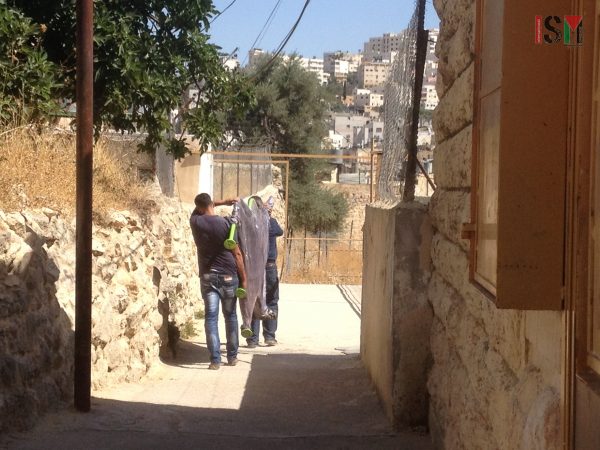
Palestinians carrying materials to the playground
For the children growing up in this area, childhood is short. Child-arrests, even of children less than 12 years and thus illegal even under Israeli military law that is universally applied on the Palestinian population in the Israeli occupied West Bank, are not uncommon, as are humiliations and intimidations by the Israeli forces and settlers under the full protection of the Israeli forces.
The right to play, for Palestinian children, is only a theoretical concept, that often lacks any practical meaning, when growing up next to illegal settlements under a foreign military occupation. Playing on the streets of their neighborhood for most children is dangerous, as settlers do not even restrain from attacking children. In a nearby Palestinian kindergarten, Israeli settlers overnight stole a large roll of artificial grass intended to be part of the play-area for the children attending the kindergarten. With no institution to address this, the artificial grass is merely lost and missing in the play-area.
The installation of the playground at Qurtuba school, thus, is a sign of hope for the Palestinian children. An opportunity for the children to be exactly that: children. To play with their friends and enjoy their childhood, have fun and laugh.
Israeli forces kill 1 Palestinian youth, injure 1, and detain 1 other

Fares Khader al-Rishq
Ma’an – July 13, 2016
RAMALLAH – A Palestinian youth was killed and another injured by Israeli forces while a third was detained early on Wednesday, as soldiers opened fire at the youths’ vehicle in the town of al-Ram in the occupied West Bank’s Jerusalem district.
The youth who was killed was identified as Anwar al-Salaymeh, 22, and the two survivors were identified as Fares Khader al-Rishq, 20, who remains critically injured, and Muhammad Nassar, 20, who was detained by Israeli forces after the incident.
Locals told Ma’an that Israeli forces opened fire at three Palestinians youths, all residents of al-Ram, in a vehicle inside the town around dawn, as the three were seemingly unaware that Israeli forces were deployed in the town and conducting raids.
An Israeli army spokesperson said that the presence of Israeli authorities in the town was due to the fact that Israeli forces, border guards and police reportedly found a blacksmith workshop in al-Ram that manufactured weapons.
Witnesses confirmed that Israeli forces and military vehicles raided al-Ram, closed the main street and raided a blacksmith workshop in the area.
The Israeli spokesperson added that during the military raid, border guards allegedly “saw a speeding vehicle heading towards them” and opened fire, killing one of the passengers and injuring another while a third was detained and transferred for interrogation.
According to locals, al-Rishq’s vehicle arrived near the area where the raid was taking place, and Israeli soldiers opened fire at the car from a close distance, injuring al-Rishq and al-Salaymeh, who later died.
Witnesses said that Israeli forces prevented Palestinian Red Crescent ambulances from reaching the injured.
The Palestinian Ministry of Health confirmed that an unidentified teen from al-Ram succumbed to his wounds after being critically injured by Israeli live fire aimed at the car, while another was injured during the same incident.
Locals added that clashes erupted between youths and Israeli forces, while soldiers opened live fire, rubber-coated steel bullets, stun grenades and tear-gas bombs.
An unidentified youth was also reportedly detained during clashes.
Featured Video
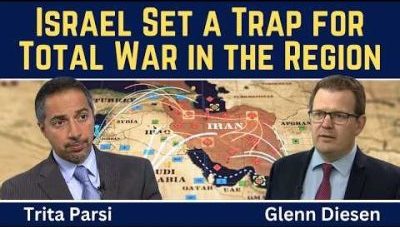
Trita Parsi: Israel Set a Trap for Total War in the Region
or go to
Aletho News Archives – Video-Images
Book Review
Why the War on Conspiracy Theories Is Bad Public Policy
By Kevin Barrett • Unz Review • February 1, 2019
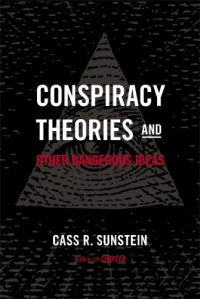 A Review of Conspiracy Theories and Other Dangerous Ideas by Cass Sunstein (based on an earlier paper co-authored with Adrian Vermeule); In Defense of Troublemakers: The Power of Dissent in Life and Business by Charlan Nemeth; and Conspiracy Theories and the People Who Believe Them, edited by Joseph E. Uscinski
On January 25 2018 YouTube unleashed the latest salvo in the war on conspiracy theories, saying “we’ll begin reducing recommendations of borderline content and content that could misinform users in harmful ways—such as videos promoting a phony miracle cure for a serious illness, claiming the earth is flat, or making blatantly false claims about historic events like 9/11.”
At first glance that sounds reasonable. Nobody wants YouTube or anyone else to recommend bad information. And almost everyone agrees that phony miracle cures, flat earthism, and blatantly false claims about 9/11 and other historical events are undesirable.
But if we stop and seriously consider those words, we notice a couple of problems. First, the word “recommend” is not just misleading but mendacious. YouTube obviously doesn’t really recommend anything. When it says it does, it is lying. … continue
Blog Roll
 Aletho News
- Putin’s key remarks on peace talks and Europe’s ‘schizophrenia’
- Trita Parsi: Israel Set a Trap for Total War in the Region
- Trump’s Iran war is on an Israeli leash
- Saudi oil boss issues global supply warning
- Riyadh Says Its Oil System Is Intact. The Numbers Say Otherwise.
- Trump and Netanyahu Want to “Finish the Job” on Iran
- US ‘one-sided dictation’ not Iran’s beliefs makes rational talks impossible: Baghaei
- Iran’s Next Strike May Not Explode. It Could Shut You Down /Col Doug Macgregor
- Iran: US political targets legitimate if assassinations return
- Iraq shuts key border crossing with Iran under US pressure: Report
- If Americans Knew
- DAILY UPDATE: Latest essential news on Palestine, Israel, & region
- The Israel Lobby’s Changing Fortunes
- AIPAC has become such a political liability that it’s shifting to a more “nimble” approach to buying politicians
- At least 160 Israeli settler attacks in 2 weeks
- Will Gaza’s Ancient Christian Community Disappear Forever?
- Israel’s vision of regional security rests on keeping Arab states weak
- Heidi Levine recounts how Palestinian youths helped save her in settler attack
- DAILY UPDATE: Latest essential news on Palestine, Israel, & region
- Trump’s Intensifying Sabotage of the ICC, for Israel’s Sake
- Israeli military detain US and UK volunteers in West Bank including Democratic NY politician Brad Lander
- No Tricks Zone
- E-Cars Reduce CO2 Emissions By Only 41% Compared To Internal Combustion Engine Vehicles
- Predictions Made By Renowned Climate Professor Over Past Decades Have Been Proven To Be Poor
- New Study Suggests Large Regions Of The Pacific Ocean Have Been Cooling For The Last 80 Years
- Germany’s Green Energy Debacle: High Energy Costs Force Kahla Porzellan to Close After 182 Years!
- New Study: 50 Years Of The Most Aggressive ‘Net Zero’ Policies Can Only Affect The Global Climate By 0.03°C
- US September “Heat” Was No Record…Many Records Set Decades Ago
- Latest European Green Energy Debacle; Portugal’s Largest Flagship Solar Park Insolvent!
- Green Energy Debacle: German Expert Professor Fritz Vahrenholt Warns Of Severe Economic And Social Consequences
- Two More Paleo Reconstructions Affirm Meters-Higher Sea Levels Across Ireland, Brazil 7000-6000 Years Ago
- New Study: Earth And Venus Surface Warmth Largely Explained By Convection And Lapse Rate, Not CO2 Or Radiation

