Over the past 15 months the dusty plains of the northern Negev desert in Israel have been witness to a ritual of destruction, part of a police operation known as Hot Wind. On 29 occasions since June 2010, hundreds of Israeli paramilitary officers have made the pilgrimage over a dirt track near the city of Beersheva to the zinc sheds and hemp tents of al-‘Araqib. Within hours of their arrival, the 45 ramshackle structures — home to some 300 Bedouin villagers — are pulled down and al-‘Araqib is wiped off the map once again. All that remains to mark the area’s inhabitation by generations of the al-Turi tribe are the stone graves in the cemetery.
The al-Turis are determined to stay on their ancestral lands to maintain their traditional pastoral way of life; Israel wants the land for a forestation program, to beautify the Negev and attract more Jews to settle there.
The struggle over al-‘Araqib has played out many times before in other Negev locations since Israel’s founding in 1948. Then, and in the early years of state building, all but 11,000 of the Negev’s population of 90,000 Bedouin were expelled to Egypt, Jordan, Gaza and the West Bank. Today, with the highest birth rate of any ethnic group in Israel, the Bedouin number about 190,000, nearly a third of the Negev’s population. Half of them continue to live in rural communities, all of which Israel has refused to accord normal legal standing.
But in September the Israeli government announced a plan to complete the unfinished business of 1948. Over the coming months and years, Israel intends to implement a scheme to evict some 40,000 Bedouin from their homes in the Negev in a program of forced urbanization. It will be an act of wholesale removal unseen in this desert region for more than a generation.
“Integration”
The exact number of Bedouin to be affected is unclear, as Israel has made little effort to assess the true population of the “unrecognized villages,” as the rural dwelling places are known. Officials estimate, however, that 40 percent of the villagers will be relocated to a handful of overcrowded and under-resourced government-built townships for the Bedouin, languishing at the very bottom of Israel’s social and economic tables.
Thabet Abu Ras, a professor of geography at Ben Gurion University in the Negev, calls the plan a “declaration of war” on the Bedouin way of life. He is supported in this view by the Steering Committee of the Negev Arabs, a coalition of community groups, NGOs and political parties in southern Israel, which has accused the government of formulating a policy of “ethnic cleansing.” Meanwhile, Talib al-Sana, a Bedouin member of the Israeli parliament, the Knesset, warns of a “Bedouin intifada.”
In a last-ditch effort to stop the scheme, a four-person team including Abu Ras headed to the United States in October to lobby American Jewish leaders and publicize the Bedouin’s case in the media. Their hope, probably forlorn, is that the Israeli government can be embarrassed into reversing its policy if the American Jewish community brings enough pressure to bear. Abu Ras told the Jerusalem Post newspaper: “Being a minority in the US has made this community very sensitive, and the Jewish community is very involved in politics. If they care about Israel, they should stand for democratic Israel more than anything else.”
The evacuation plan is the personal project of Israeli Prime Minister Binyamin Netanyahu, who has rapidly intensified official efforts to impose a solution to a decades-long legal struggle between the state and the Bedouin over the title deeds to nearly 800,000 dunams — or 200,000 acres — of the Negev. A statement from Netanyahu’s office, published on September 11, the day the cabinet endorsed the plan, said it would “bring about a better integration of Bedouin in Israeli society.”
Few Bedouin share the official optimism. On October 6, thousands converged on the Negev’s main city of Beersheva in the largest protest ever held in the city. A huge banner, in three languages, expressed their verdict: “Israel has stolen the lands of its Arab citizens of the Negev.”
The Prawer Plan
The Prawer plan, named for Ehud Prawer, the head of planning policy in Netanyahu’s office, is intended as the coup de grace of the Israeli government’s efforts to strip the Bedouin of most of their ancestral lands. Abu Ras notes that the Bedouin’s outstanding claim on hundreds of thousands of dunams in the Negev is one of the major territorial issues left unresolved since Israel’s founders sought to implement the Zionist goal of concentrating Palestinian Arabs in the smallest possible area while allowing Jews to take control of the maximum amount of land.
This policy has applied equally to the 1.3 million Palestinian citizens of Israel as it has to Palestinians under occupation in East Jerusalem and the West Bank. According to estimates by groups like Adalah, an Arab legal center in Israel, since Israel’s founding the Palestinian minority has lost at least three quarters of its lands in areas outside the Negev, under the pretext of land nationalization programs. Much of this land transfer was achieved by means of legislation such as the notorious Absentee Property Law of 1950, which passed on to the state all lands belonging to refugees from the 1948 war, including those internally displaced in Israel, and the Land Acquisition Law of 1953.
The cleared lands were then repopulated exclusively with Jews, often only a few dozen people controlling vast swathes of territory. Israel originally termed this policy “Judaization,” targeting in particular the two areas where Israel’s Palestinian citizens, then as now a fifth of the population, were seen as a potential strategic threat: the Galilee and the Negev. In both regions there was a fear, which has barely diminished over subsequent decades, that a rapidly growing and spreading non-Jewish population could forge alliances with neighboring Arab states and attempt to secede. Control of the Negev, which is filled with military sites, including a nuclear reactor at Dimona, and which constitutes 55 percent of Israel’s land mass, is regarded as especially important.
In recent years, the terminology of ethnic domination has been modified to reflect the need for greater opacity. Moving the Bedouin off their historic lands and bringing in Jews in their place is today more commonly described as “developing” the Negev or encouraging a “stronger population.”
Underscoring the real motivations behind the Prawer plan, however, Netanyahu’s office announced at the same time a separate scheme to create ten rural Jewish satellite communities around the Negev town of Arad. These settlements will house 1,500 military families as Israel relocates yet another army base from central Israel to the south. The Arad scheme was drawn up over the objections of both environmental groups concerned about delicate desert ecosystems and the Bedouin.
The prime minister’s office issued a statement describing the Arad project, without a trace of irony, as central to a “Zionist vision for making the Negev flourish, and in line with the government’s policies of development, progress, attracting the population to the periphery and increasing the availability of housing.” At least two unrecognized Bedouin villages, al-Tir and neighboring Umm al-Hiran, are due to be emptied of their combined 1,000 residents to make way for the new Jewish communities.
Enclosure
For the Bedouin, the prospect of such displacement is a painful echo of their experiences in Israel’s early years.
Shortly before Israel’s creation, the Bedouin tribes held claim to about 2 million dunams — 500,000 acres, or about a sixth of the total territory of the Negev — on which their herds had grazed for generations. But more than 85 percent of the Bedouin were expelled either during the 1948 war or in subsequent years by the Negev’s military government. The state quickly appropriated these lands.
In the early 1950s, 11 of the 19 tribes that remained were forcibly relocated to a small “security zone” in the northern corner of the Negev, near Beersheva, known as the Siyag, or “enclosure.” A few of the other eight tribes, already based inside the Siyag, were required to move to other sites in the enclosed zone. In many cases, the tribes were told by the army that they would soon be allowed to return to their original lands. This promise that was never kept.
Having severed the Bedouin’s physical connection to their ancestral lands, the Israeli authorities began a campaign of harassment to destroy their pastoral way of life. During the period of the military government, which lasted until 1966, the tribes’ movements were severely restricted, their herds were confiscated and their crops uprooted or burned. As the Bedouin slowly emerged from two decades of punitive military rule, many agreed to relocate to state-planned townships. Seven were established for this purpose from the late 1960s to the mid-1980s, and half of the Negev Bedouin settled there, chiefly, though not exclusively, those lacking significant land holdings.
The rest of the Bedouin remained defiantly in their 45 villages, even though the state refused to recognize them. Over subsequent decades the state intensified its policy of harassment, denying water, electricity and all other public services to the unrecognized villages, and declaring the domiciles therein illegal and subject to demolition.
The inhabitants of the unrecognized villages, in particular, have continued to stake their claim to ownership either of their ancestral lands or of the areas they were given in lieu of them by the state. In some cases, Bedouin who relocated to a township later returned to their former villages, as they realized that the state had reneged on its side of the bargain by failing to develop the townships, offer agricultural opportunities to the inhabitants or expand the communities to deal with natural growth.
Struggles for Ownership
The unrecognized villages have been fighting a battle against the authorities on two related fronts. First, they have been demanding that their 45 villages be recognized by the state as agricultural communities and given access to public services. With this aim in mind, in 1997 they created an unofficial regional council — modeled on those with jurisdiction over Jewish communities — to draw up a master plan for each village, a precondition for legal building within the municipal boundaries.
And second, they have waged a struggle through the courts for recognition of ownership of their lands, making some 3,200 claims on nearly 800,000 dunams, or 6 percent of the Negev. Some Bedouin are believed not to have submitted claims for fear of opening themselves up to legal moves by the state to dispossess them.
Each of these parallel struggles has met with limited success.
Of the 45 villages, ten were given partial recognition in 2003 and incorporated into a regional council, known as Abu Basma, overseen by Jewish officials. Special legislation was passed in 2009 to ensure that this council holds no elections for the foreseeable future. Abu Basma, with some 35,000 residents and controlling just 58 dunams, has the highest population density and smallest territorial jurisdiction of all the regional councils in the Negev. It is also the only one of 47 regional councils in Israel that lacks territorial continuity. By contrast, the ten other regional councils in Israel’s south — home to 45,000 Jews — have jurisdiction over an expanse of rural land, some 11 million dunams.
Abu Ras has observed of Abu Basma that its “jurisdiction is restricted to the built-up area of each village and does not include the lands between the villages or the surrounding land. Despite the Bedouin way of life, Abu Basma has not been allocated any agricultural areas.”
To resolve the question of the Bedouin’s land claims, the state began a registration program for the Negev in the early 1970s. The state sought to prejudge the outcome in 1976 by appointing a committee headed by Plia Albek, a senior legal adviser to the Justice Ministry. (A year later Albek would become the key official to provide legal cover for the new Likud government’s decision to declare much of the West Bank “state land.”) In the Negev, she determined that the territory was mawat (dead), or unsuitable for cultivation, a legal classification used by the Ottomans. Overnight this decision turned the Bedouin into “squatters” and “trespassers,” terms used by officials to this day. The committee, however, did approve partial compensation of 20 percent of the land for anyone with a claim to more than 400 dunams.
Despite its current claim that the Bedouin have no legal title to the areas in which they reside, Israel did in fact acknowledge in its early years their ownership of large tracts of the Negev. Officials appear to have accepted that the Bedouin’s failure to register their lands with the Ottoman rulers derived from a fear that, among other things, they might be conscripted into the Ottoman army as a consequence. And while the British mandatory authorities who followed did not carry out land classification in the Negev, they determined that the land “belongs to the Bedouin tribes because of their residence on the land from time immemorial.” Many of the Bedouin have documentation to prove that their families were paying taxes on their land for many years prior to Israel’s creation.
Confirming Israel’s earlier position toward Bedouin land claims, the Adalah legal center recently discovered in Israel’s military archives a “top secret” document from 1952. In it the Negev’s military governor, Michael Hanegbi, observed that the tribes’ transfer to the Siyag “was mainly achieved by persuasion and economic pressure, since we had no legal basis” for relocating the Bedouin.
The same year a government-appointed committee recommended recognition of the Bedouin’s legal claims. The panel members included high-level officials such as Yosef Weitz, the head of the Jewish National Fund, and Yehoshua Palmon, a senior adviser to Israel’s founding premier, David Ben Gurion. The committee suggested that the Knesset pass a law to nationalize the land and compensate the Bedouin financially or with alternative territory.
Another official document — this one from 1966, and written by Sasson Ben-Zvi, then the Negev’s military governor — referred both to the government’s recognition of Bedouin land ownership and to the purchase by the Jewish National Fund of areas of the Negev from the Bedouin before Israel’s establishment.
But following Albek’s reclassification of the Negev as mawat, and therefore as state land, officials have claimed in court cases that the Bedouin are not landowners, conceding as a “good will gesture” only that the Bedouin have a status as “guardians.” So far, of the 800,000 dunams under legal contestation, the state has reached an arrangement with 380 Bedouin claimants over 205,000 dunams. Much of that land is located within the master plan of the Abu Basma villages. The rest of the 2,750 claims have yet to be settled.
Taking a Harder Line
The pressure to deal with the Bedouin’s claims intensified following a Supreme Court hearing in 2000 in which the Israeli planning authorities promised to find new ways to incorporate the inhabitants of the unrecognized villages into the regional plan for the Beersheva district. They also agreed to come up with alternatives to settling the villagers in the seven townships, including by creating rural communities.
It was against this backdrop that the centrist government of Ehud Olmert set up a committee in 2007 under a retired Supreme Court justice, Eliezer Goldberg, to “recommend to the government a policy for regulating Bedouin settlement in the Negev.” The eight-person committee included two Bedouin representatives, though no one from the unrecognized villages. In December 2008 it issued its report to the Housing Ministry.
In many respects, Goldberg broke with previous state policy. He acknowledged that the Bedouin had endured an “intolerable situation,” that they were neither trespassers nor squatters, and that they had “general historic ties” to the land. He suggested that the Bedouin’s forced relocation to the Siyag in the 1950s qualified them as internal refugees. He recommended that the 45 villages be granted recognition wherever possible, and that most buildings designated as illegal be reclassified as “gray,” allowing for their later legalization. Unlike Albek, Goldberg set no minimum land holding for Bedouin owners to receive compensation from the government and he allowed for land as well as financial compensation. He also recommended establishing a new planning body to regulate Bedouin settlement in the Negev.
The report received a lukewarm reception from Bedouin groups, including the Regional Council for the Unrecognized Villages. They were impressed by the conciliatory tone, but wary of the dangers posed by various omissions and vague formulations that could be exploited by less sympathetic officials. The biggest concerns were that Goldberg failed explicitly to recognize the Bedouin’s historical right to the land and that he proposed legalizing the unrecognized villages subject to several conditions that did not apply to Jewish communities. These included having “a minimum mass of residents,” proving “municipal fitness” and ensuring that the village “accorded with a master plan.” Given that traditional planning policy in the Negev had not only overlooked the unrecognized villages but also pursued of a policy of severely restricting Bedouin development, this last condition was regarded as particularly onerous.
For many months Goldberg’s recommendations languished in the government’s bottom drawer.
After Netanyahu took office in 2009, however, he set up a new committee under Ehud Prawer to “implement” the report. The committee included no Bedouin members at all, and talked to no Bedouin representatives during its deliberations. Prawer was already known for his hardline views on the Bedouin. In 2006, as deputy head of the National Security Council, he had declared at the Herzliya conference, an annual security convention attended by Israel’s political, military and diplomatic elites, that the removal of settlers from Gaza the previous year provided a model for handling the Bedouin in the Negev.
In the end, the Prawer committee’s recommendations, leaked in early 2011, bore little resemblance to the Goldberg report.
Prawer’s proposals were roundly condemned by human rights organizations in Israel, including the Association of Civil Rights in Israel (ACRI) and Bimkom, a planning rights group. These activists, along with the Regional Council of Unrecognized Villages, had earlier sponsored their own panel of experts to draft an alternative plan, which Prawer ignored. Oren Yiftachel, a geography professor at Ben Gurion University in the Negev and a member of the human rights-oriented committee, said its proposal was “better, cheaper and much more humane for both Jews and Arabs of the Negev.”
It proposed that the Bedouin villages be recognized and treated as a “distinct type of settlement” in the planning system, much like a moshav, kibbutz or Arab village in the Galilee, and that the inhabitants be allowed to continue an agricultural way of life. It noted that, contrary to official claims that the Bedouin villages were too “scattered” or small to be accommodated in the regional plan, there were more than 100 Jewish rural communities in the Beersheva area, with an average population of just 300 residents. The average unrecognized village had a population, even according to the minimal official figures, of 1,740 residents. There was also a precedent for recognition of previously unregistered communities: In 2010, the government retroactively legalized some 60 Jewish farms established illegally across the Negev by individual ranchers.
The Prawer report was considered a major step backwards for the Bedouin. It made no mention of the Bedouin’s historical connection to their lands, and did not name a single unrecognized village or suggest any be recognized. It also discriminated between those Bedouin who had been forced off their land by the state into the Siyag and those still on their ancestral lands. The latter were entitled to land compensation, though at a rate reduced to half of their holdings, whereas the former were entitled only to monetary compensation and an option to buy a plot in one of the government townships. Abu Ras, who also heads Adalah’s Negev project, estimated that under the Prawer plan the Bedouin would receive between 180,000 and 200,000 dunams of their outstanding claim of 600,000 dunams.
Draconian Revision
The Prawer report was put aside in June 2011 under pressure from the far-right coalition faction of Yisrael Beiteinu, led by Foreign Minister Avigdor Lieberman. Netanyahu agreed instead that it would be “revised” by the unlikely figure of Yaakov Amidror, the head of the National Security Council. Amidror, an icon of the national-religious community and a settler, is best known for his hardline positions against Palestinian statehood and his belief that Israel should reoccupy Gaza.
Bedouin leaders were appalled that a man responsible for the handling of Israel’s gravest security threats should be put in charge of deciding their fate. Netanyahu’s militarized approach to the Negev Bedouin was confirmed a short time later by news that he had apppointed Moshe Yaalon, a former chief of staff and the current minister of strategic affairs, to enforce the revised Prawer plan. Rawia Abu Rabia, a Bedouin lawyer with ACRI, spoke for many in noting that the government “sees us as enemies.”
The new version of Prawer is even more draconian than the original. It reduces the amount of Bedouin land to be recognized to 100,000 dunams, a sixth of the outstanding claims. The rest of the land is to be confiscated. Monetary compensation will range from 20 to 50 percent of the land’s value. Recognition of the existing villages is considered a last resort. Unlicensed new construction will be dealt with severely, while owners of existing illegal buildings will have a deadline for obtaining permits, after which demolition will be strictly enforced and its costs charged to the homeowner. A special court for dealing with Bedouin objections to land confiscation will be staffed with government appointees.
Harshest of all, the amended plan requires the forced removal of tens of thousands of Bedouin from their lands, destroying what is left of their traditional pastoral way of life. The villagers would be relocated either to one of the communities in Abu Basma or to one of the original seven townships. The government has set aside up to $2 billion to destroy the villages and relocate the inhabitants, including $320 million for economic development. The Negev’s Bedouin, however, have reasons to be skeptical about whether the latter money will materialize. An earlier Israeli government, that of Ariel Sharon, promised in 2003 to spend $200 million on building housing and improving infrastructure for the Bedouin. A year later, according to classified US embassy cables released by WikiLeaks, Israeli officials privately conceded that they did not have “even a quarter of the money needed for completion of the projects.”
Sense of Urgency
For those Bedouin who may doubt the government’s determination to carry out its plan, officials have been making an example of two unrecognized villages, one them al-‘Araqib. The other is the joint village of al-Tir and Umm al-Hiran, northeast of the township of Hura. Its 1,000 inhabitants have received notification of the wholesale destruction of the village to make way for a new Jewish community, Hiran. The courts have accepted the state’s argument that the inhabitants have no attachment to the land, even though they were eventually moved there after eviction from their ancestral lands in Khirbat Zubala in 1948, which subsequently became a kibbutz called Shuval.
Bedouin leaders are now considering ways to halt the plan in its tracks. As well as their American tour, they are preparing to take their fight to the United Nations and other international bodies, according to Talib al-Sana. They hope for a sympathetic hearing at the UN after publication of a report in August by James Anaya, the special rapporteur on the rights of indigenous peoples. Anaya rejected Israel’s contention that the Negev Bedouin are not the region’s “indigenous people.” It is precisely such mounting international pressure that is creating a sense of urgency among Israeli officials to close the Bedouin file for good.
But the Netanyahu government’s position, like its forebears’, also derives in large part from a long-standing Zionist concern that an unrestrained Bedouin population might eventually forge dangerous alliances with enemy groups. Those fears, rarely articulated directly, explain the decision to entrust the Prawer plan to such safe pairs of military hands as Amidror’s and Yaalon’s.
Hints about the nature of such security concerns, however, do occasionally shine through. In 2004, for example, the Jerusalem Post reported that the Israeli authorities were seeking to remove Bedouin families from an area around the Nevatim airbase in the Negev to “reduce any missile threat” to military aircraft taking off or landing. Intelligence sources quoted by the paper suggested that the villagers could receive anti-aircraft missiles smuggled from Gaza to shoot down the planes “since the smugglers were Bedouin from the Sinai with close links with their Negev tribesmen.”
Likewise, the amended Prawer plan stresses that the Bedouin must be prohibited from establishing any communities west of Road 40, the main highway through the Negev — a restriction that keeps them well away from the Gaza Strip. Containment of the Bedouin in the Siyag was always motivated in significant part by a fear that a dispersed Bedouin population might link up and make common cause with Palestinians in either Gaza or the West Bank. The Negev provides a bridge between the two.
It is unlikely to be coincidental that, as the Netanyahu government pressed ahead with the Prawer plan, the military authorities in the West Bank unveiled an almost identical scheme for restricting the settlement of the Bedouin there. The goal, as Amira Hass reported in Ha’aretz in September, is for the Civil Administration to uproot all the Bedouin from Area C — the 60 percent of the West Bank that, by the terms of the 1993 Oslo accords, remains under full Israeli control and that Israel hopes to annex in any future peace deal with the Palestinians. Most of the 27,000 Bedouin in the West Bank are the descendants of those expelled from the Negev in 1948. They will be moved well away from areas that are contiguous with Israel.
One Negev Bedouin leader, Amal al-Sana al-Hajouj, observed: “If we accept what they are offering, we will see a violent, overcrowded, poverty-ridden area. We want to restart the negotiating process so we, the Bedouin, can start to contribute to the area and not just be people living in poverty.” All indications are, however, that the Netanyahu government, like its predecessors, is incapable of seeing the Bedouin citizens of Israel through any prism other than that of security.
October 25, 2011
Posted by aletho |
Ethnic Cleansing, Racism, Zionism, Timeless or most popular |
Leave a comment
Iowa-based investor Bruce Rastetter and fellow investors in the industrial agricultural corporation AgriSol Energy have their sights on 800,000 acres (325,000 hectares) of land in Tanzania that is home to 162,000 people.
The proposed site is inhabited by former refugees from neighboring Burundi. Most of the residents, several generations of families who have successfully re-established their lives by developing and farming the land over the last 40 years, will be displaced against their will. They will lose their livelihoods and their community. Once they are gone, Agrisol Energy will move in.
Despite rising international criticism of the proposed plan to evict the residents in the proposed lease areas for foreign investors, the Tanzanian government plans to move forward with the project.i
AgriSol has promoted this large-scale land acquisition as a project to transform Tanzania into a “regional agricultural powerhouse” by combining the country’s abundant agricultural natural resources with “modern” farming practices, including the use of genetically modified crops.ii Unfortunately, AgriSol’s plans–which include seeking Strategic Investor Statusiii from the Tanzanian government that would grant them tax holidays and other critical investment incentives (including waiver of duties on agricultural and industrial equipment supplies, export guarantees, and certainty for use of GMO and Biotech and production of biofuels), while generating tremendous profit for the investorsiv–will do little, if anything, for Tanzanians. On the contrary, it is likely that if this land deal goes ahead it will set a precedent for future land rights abuses.
More details can be found in the Oakland Institute Brief, AgriSol Energy and Pharos Global Agriculture Fund’s Land Deal in Tanzania.
We fear that this project could move quickly forward unless the Tanzanian government and the US investors realize that the world is watching. We ask that you join the Oakland Institute in holding Bruce Rastetter and AgriSol team accountable and send them the message that proceeding with their plans is not “socially responsible agricultural investment.”
October 24, 2011
Posted by aletho |
Corruption, Economics, Environmentalism, Ethnic Cleansing, Racism, Zionism, Timeless or most popular |
Leave a comment
Islamophobic blogs like Gates of Vienna, popular with white supremacists have Israeli American fans who have adopted a hard line pro Israel agenda. It also appears that ‘Fjordman‘ is back at Gates of Vienna. He was cited recently as a tipster alongside Caroline Glick, the senior editor at The Jerusalem Post.
A closer scrutiny of Gates of Vienna the white supremacist blog which published ‘Fjordman‘ until he went into hiding after the Norway massacre shows it is run by a couple living in Virginia, USA, one Baron Bodissey whose real name is Edward May popularly known as ‘Ned May‘ and his wife who edits the blog under the pseudonym ‘Dymphna.’ It claims to focus on the ‘Great Jihad’ in Europe, regularly publishing essays promoting white supremacism, calls for a Muslim Holocaust and is filled with vile anti Islam bigotry, lies and polemics dressed up as ‘counter jihadism’. Anders Brievik has posted comments there. In the past too, discussions of exterminating the ‘Muslim’ problem caused waves as in ‘Thinking the Unthinkable‘ in which options to rid the world of Muslims were discussed.
Gates of Vienna has a pro Israel focus which Ned and Dymphna go to great pains to emphasise. A cynic may suspect there are ulterior motives at play here. The connection between Zionism and organized Islamophobia is clear and comes as no surprise now. Fear Inc. a six month study by the Centre for American Progress, details how an Islamophobia industry is being funded and peddled by a small minority of conservatives. What is popularly known as ‘Islamism’ has its Zionist counterpart, as explored in a recent LoonWatch series ‘Why Religious Zionism, Not Judaism, Is The Problem‘.
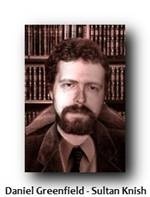 Indeed Dymphna regularly does the rounds at right wing Zionist websites posting comments moaning about their poverty. One such blog is the rabidly anti Palestinian and Islam hating blog ‘Sultan Knish‘ run by Daniel Greenfield an Israeli sabra living in New York, who is a fellow at the David Horowitz Freedom Centre the same organisation that sponsors Jihad Watch. Daniel is obsessed with a pathological hatred for Muslims and a delusion that the US military exists to carry out his fantasy of a war on Islam. Daniel’s postings regularly dehumanise Muslims, and are filled with anti Islam screeds which he fabricates on whim, not unlike Ned May. He also has a Torah Parsha blog and this video shows him in a debate about New Media. In a common theme amongst neo cons, Daniel complains there is a plot to destroy the US military by Obama. In one blog post ‘Winning the War on Terror‘ he suggests genocide:
‘We would have to be willing to kill millions, directly or indirectly, while maintaining an alliance that would defy Russia, China and the First World nations that would accuse us of genocide. The real name for this war might well turn out to be World War III. It would take a Churchill or a Roosevelt to launch something like that, and while the world would be radically different afterward, it might well turn out to be radioactively different too.’
Whilst Daniel’s crowd propagate that Muslims are out to destroy the USA, the truth is these very neo conservatives bankrupted the US economy by leading it into trillion dollar wars on fake premises and fabricated evidence. As Julian Borger reported in The Guardian, the evidence for the Iraq war was fabricated by the now defunct ‘The Office of Special Plans‘ affiliated with hard line Likudniks. […]
Far right Islamophobic activists have forged alliances of convenience with radical Zionists and regard Israel as an ally, not least because they see Israel’s treatment of Palestinians as a role model for how Muslims should be treated. Hard line Zionists see it as an opportunity to lessen the growing Muslim presence and influence in the USA and Europe which they see as detrimental to a greater Israel. Stooges like Geert Wilders are funded in the hope they can halt Muslim immigration and influence. Marginalised as they are, some European nationalist groups are willing to shed their traditional Jew hatred in an attempt to find allies, but as often happens in marriages of convenience, it doesn’t take much for cracks to appear. Pamela Geller’s association with the EDL caused waves when Roberta Moore claimed they had Jew hating members and were not sufficiently pro Israel. In Europe, German newspaper Der Spiegel probed this alliance in ‘The Likud Connection‘ showing how some marginalized right wing populists are going the Geert Wilders way. This bizarre coupling has split the far right movement in Europe which has traditionally been anti-semitic.
Meanwhile, Ned May, an EDL activist, serves as director of International Free Press Society an American and Denmark based group whose members claim to fight threats to free speech from ‘forces within Islam’. IFPS’s board members include the familiar names Bat Ye’or, Robert Spencer, Andrew Bostom and affiliates like Aish Ha Torah. Incidentally, one of the listed advisers for IFPS is Rachel Ehrenfeld an “expert on terrorism” and author of ‘Funding Evil’ in which she made allegations of terror funding against the now deceased Saudi billionaire Khalid bin Mahfouz for which he sued.
Ned often mixes in a pro Israel and pro Jewish stance liberally peppering his polemics with quotes from the Talmud and expresses a desire (like Dymphna) to be in the pay of Mossad. In this he has help from fellow bloggers like his friend, a Jerusalem based Israeli American lawyer, one Carl Mordechai Sherer, who runs Israel Matzav as ‘Carl in Jerusalem‘. Charles Johnson banned Carl from Little Green Footballs where he was a heavy commenter for posting a link to Gates of Vienna with a curt ‘I will have nothing to do with people who promote fascist creeps‘. Stung by LGF’s criticism, a blog war followed, in which Ned May tries to salvage some dignity for his cesspool.
A particularly revealing blog post is where Carl can be seen giving Ned advice on the legality of declaring Jewish rights to Israel as an indigenous people, stating he fully supported a ‘greater Israel’ though the world won’t allow it. Ned in turn laments a common Nazi theme which he modifies to this convoluted logic:
‘Regardless of the merits of the case, I agree with Carl that the Declaration on the Rights of Indigenous Peoples will never be applied to Jews — or to white Europeans, for that matter.
“Indigenous Peoples” are “brown” peoples, especially Muslims, American Indians, Australian Aboriginals, and black Africans. Anything using the term that is passed by the UN will only be allowed to apply to those peoples, and never to Jews or Caucasians.’
Ned May must be unaware of the millions of Caucasian Muslims including Russians, American Muslims, British and other European converts. Carl, who did not see fit to tell his friend that most Israeli’s are non Caucasian Sefardi Jews was however, quick to hypocritically cry ‘Nazi’ at white supremacist Occupy Wall St protesters.
Incidentally, Carl, who has lauded Fjordman’s postings at Gates of Vienna gushes at Israel Matzav:
‘For those who have never been to Gates of Vienna, go check it out. It’s some of the highest level intellectual material you will ever read on the Internet.’
How high is that ‘intellectual level’ ? Let us quote Ned verbatim where he explains the purpose of Gates of Vienna is to spread lies at a grassroots level, in short; telling a lie often enough makes one believe it. Not just to lie but to oversell it. In a blog titled ‘Overselling the Meme‘ he states:
‘This must be accomplished at a level well below that of the celebrities and famous pundits, because action on that battlefield invites a massive and well-funded counterattack by CAIR, ISNA, the OIC, etc.’
Using hyperbole and flowery nonsense, he spells out his mission in life:
‘As a propagandist, my task is to spread the meme and not to sweat the nuances. Nuances can be argued about and nailed down by scholars in the centuries after Islam — as a culture, a political ideology, and a religion — is totally destroyed. We don’t have the luxury for such finicky scholasticism right now.’

Perhaps the best known Israeli tipster for Gates of Vienna is The Jerusalem Post’s Caroline Glick an Israeli American known for her right wing views, and who serves as editor for the Israeli political satire website Latma TV. Caroline was cited approvingly in Breivik’s manifesto. It appears that Fjordman is once more back at Gates of Vienna, for on 13th October 2011, the credits included :
‘Thanks to C. Cantoni, Caroline Glick, Fjordman, heroyalwhyness, JP, and all the other tipsters who sent these in.’
When Israel was forced to offer an apology for Latma TV releasing ‘We Con the World,’ a satire mocking the dead Gaza flotilla activists, the Huffingon Post’s Eileen Read wrote ‘The Jerusalem Post Should Fire Caroline Glick for Making a Racist Video in which she opined:
‘But this is lower than I’ve ever seen someone go who carries a management title at a journalism organization. I’m ashamed to say that Glick and I are both Columbia alums. Even if she hates people of another race or religion and is allowed by her editors to poke fun at them in a tasteless and blatantly racist way, she should be fired for making fun of the dead.’
This incident was not the first time Caroline Glick had received flak for her radical opinions. In the aftermath of the Norway massacre, the Jerusalem Post published editorials that had tried to link the tragedy to Europe’s immigration policies. Norwegians took offence at sentiments expressed by Glick amongst others and voiced their objections to Israeli diplomats as to how the tragedy was being exploited. Some weeks later, the Jerusalem Post’s Editor in Chief published ‘Apology to Norway‘ an editorial in which he expressed remorse:
‘As Senior Contributing Editor Caroline B. Glick suggested in her column last Friday, the fact that Breivik’s warped mind cited a group of conservative thinkers including herself as having influenced his thinking in no way reflects on them.
“As a rule, liberal democracies reject the resort to violence as a means of winning an argument. This is why, for liberal democracies, terrorism in all forms is absolutely unacceptable,” she wrote. “Whether or not one agrees with the ideological self-justifications of a terrorist, as a member of a liberal democratic society, one is expected to abhor his act of terrorism. Because by resorting to violence to achieve his aims, the terrorist is acting in a manner that fundamentally undermines the liberal democratic order.”
It later emerged that Breivik, a Christian radical, had posted on the Internet an extremely anti-Muslim manifesto that supported far-right nationalism and Zionism.’
He then moves on to vocalise the Jerusalem Post’s stance:
‘This is certainly not the kind of support Israel needs. It is the type of Islamophobia that is all too reminiscent of the Nazis’ attitude toward the Jews. Jews, Muslims and Christians in Israel and around the world should be standing together against such hate crimes.’
Caroline has also given explicit permission for Gates of Vienna to publish a Norwegian version of Norway’s Problem which Ned did after writing:
‘Under normal circumstances, Gates of Vienna does not publish in any languages other than English (in its American, British, Canadian, and Australian variants). However, we are making an exception for the following opinion piece by Caroline Glick.’
Setting the tone for this unique honour, Ned continues:
‘The result was the column below. Several Scandinavians requested that we publish a Norwegian translation, and with Ms. Glick’s permission it was kindly translated by Cecilie.’
Indeed! We have here one of Israel’s ‘most important’ women and the Senior Contributing Editor of the Jerusalem Post giving permission to publish a translated version of her article at a hate site (that credits and links back to her) espousing views deemed repugnant by her editor-in-chief. One can recall the hue and cry when Octavia Nasr tweeted about a Hezbollah sheikh’s death that led to CNN firing her!
Gates of Vienna may be bottom feeders in the world of Islamophobia, but clearly their unsettling involvement with prominent hatemongers is more than just a cause for concern.
Farha Khaled is a columnist for the Arab News. She can be followed on Twitter http://twitter.com/farhakhaled
October 23, 2011
Posted by aletho |
Ethnic Cleansing, Racism, Zionism, Islamophobia, Timeless or most popular |
Leave a comment
Introduction:
The relation between imperialism and democracy has been debated and discussed over 2500 years, from fifth century Athens to Liberty Park in Manhattan. Contemporary critics of imperialism (and capitalism) claim to find a fundamental incompatibility, citing the growing police state measures accompanying colonial wars, from Clinton’s anti-terrorist laws, and Bush’s “Patriot Act” to Obama’s ordering the extrajudicial assassination of overseas US citizens.
In the past, however, many theorists of imperialism of varying political persuasion, ranging from Max Weber to Vladimir Lenin, argued that imperialism unified the country, reduced internal class polarization and created privileged workers who actively supported and voted for imperial parties. A historical, comparative survey of the conditions under which imperialism and democratic institutions converge or diverge can throw some light on the challenges and choices faced by the burgeoning democratic movements erupting across the globe.
The Nineteenth Century
During the 19th century, European and US imperial expansion covered the world. In tandem, democratic institutions took root, the franchise was extended to the working class, competitive parties emerged, social legislation was passed, and the working class increased its representation in the legislative chambers.
Was the simultaneous growth of democracy and imperialism a spurious correlation reflecting divergent and conflicting underlying forces, one favoring overseas conquest and another promoting democratic politics? In fact, there was a great deal of overlap between pro-imperialist and democratic politics and not simply among the elites.
Throughout the 19th and especially in the 20th century, important sectors of the labor and social democratic parties and numerous prominent leftists and revolutionary socialists, at one time or another combined support for workers’ demands and imperial expansion. None other than Karl Marx, in his early journalistic writings in the New York Herald Tribune critically supported the British conquest of India as a “modernizing force” breaking down feudal barriers, even as he supported (with criticism) the European revolutions of 1848.
The ruling classes, the driving force of imperialism, were divided: Some saw the democratic reforms, “citizenship”, as a means of raising mass conscription for imperial wars; others feared that the democratic reforms would enhance social demands and undercut the accumulation of capital and rule by the elite. Both were right: Along with greater popular participation came virulent modern nationalism, which fueled empire building. At the same time mass access to democratic rights led to heightened class organizations, which threatened or challenged class rule. Within the ruling classes, democratic institutions were seen as an arena to peacefully resolve conflicts between competing sectoral elites. But once they took a mass character they were perceived as political threats.
Imperial and class-based parties competed for voters among the newly enfranchised urban workers and rural poor. In many cases, imperial and class allegiances “co-existed” within the same individuals. The question of which of the two, imperialist or class consciousness would become ‘operative’ or ‘salient’ was in part contingent on the success or failures of the larger competing political projects.
In other words, when imperial expansion succeeded in easy conquests resulting in lucrative colonies (especially settler colonies) democratic workers embraced the empire. This was the case because empire enhanced trade, namely profitable exports and cheap imports, while protecting local markets and manufacturers. These in turn expanded employment and wages for substantial sectors of the working class. As a result, labor and social democratic parties and trade unions did not oppose imperialism, indeed many supported it.
In contrast, when imperialist wars led to prolonged bloody and costly conflicts, the working class shifted from initial chauvinist enthusiasm to disenchantment and opposition. Democratic demands to ‘end the war’ led to strikes challenging unequal sacrifice. Democratic and anti-imperialist sentiments tended to fuse.
The conflict between democracy and imperialism became even more apparent in the case of an imperial defeat and military occupation. Both the defeat of France in the German-French war of 1870-71 and the German defeat in the First World War led to massive democratic socialist uprisings (the Paris Commune of 1871 and the German revolution of 1918) attacking militarism, ruling class domination and the entire imperial capitalist institutional framework.
The Imperialism and Democracy Debate and ‘History from Below’
Historians, especially practitioners of the fashionable “history from below”, exaggerated the democratic values and struggles of the working class and understated the prolonged and deep felt support among important sectors for successful imperial expansion and conquest. The notion of ‘inherent’ or ‘instinctual’ class solidarity is belied by the active role of workers in imperial conquest as soldiers, overseas settlers, merchant mariners and overseers. Imperial collaborators and empire loyalists were numerous among English and French workers and, especially later, within the US labor movement.
The theoretical point is that the pre-eminence of democratic over imperial consciousness and action among workers is contingent on the practical material outcomes of imperial policies and democratic struggles.
Workers and Imperialism
Empire building makes demands on workers to produce more for less in order to export and invest profitably in colonized regions. This led to capital-labor conflict, especially in the initial phase of imperial expansion. As imperial rulers consolidated their control over the colonized countries they intensified exploitation of markets, labor and resources. Imperial exports destroyed local competitors. Profits rose, wages increased and workers turned from initial opposition toward imperialism to demanding a share of the increasing income of the export oriented manufacturers. Labor leaders and trade unionists approved of the policies of ‘imperial preference’, which protected local industries from competition and privileged monopoly control of colonial markets. They did so because imperial policies protected jobs and raised living standards.
Workers who were active in social struggles, blacklisted or jailed, voluntarily moved or were exiled to colonized countries. Once settled overseas, they were given privileged access to better paying jobs as overseers, skilled employees or promoted to managerial positions. Imperial based militant workers, once overseas, became colonial collaborators. Many encouraged former workmates, relatives and friends to join them as successful settlers or contract workers. The ‘domestication’ of workers and the reconciliation of democratic and imperialist sentiments was a cause and consequence of successful imperialism.
Empire Loyalism: Not by Bread Alone
While material benefits accruing to workers from “successful imperialism” are one factor enhancing workers’ imperial consciousness, this was reinforced by symbolic gratification, the sense of being a member of the “leading country in the world” where “the sun never sets on the empire”, was equally important. It is rare to find a country where the majority of workers express “solidarity” with the exploited miners, plantation workers or displaced peasants and indigenous small landholders in the ‘colonies’. The stronger the hold of the colonial power, the greater the ‘colonial opportunities’, the longer the colonial ties, the deeper the economic penetration, and the stronger the sense of imperial superiority among the imperial states’ workers. It is not surprising that the British workers, the unions and Labor Party raised few objections to the savagery of the imperial opium wars against China , the imperial induced genocidal famines in Ireland in the 19th century and India in the 20th century. Likewise, the French workers’ parties – Socialists especially – were in the forefront of the post WWII colonial wars against Indo-China and Algeria only turning against them in the face of imminent defeat and internal disintegration. In the same vein, US successful colonial wars against Cuba and the Philippines, its invasions of Caribbean and Central American countries were supported by the American Federation of Labor and many ‘ordinary workers’, even as a minority of radicalized workers opposed these wars. The ‘partial turn’ of labor against US colonial wars which occurred during the Korea , Vietnam and Afghanistan wars was a result of prolonged losses and high economic costs with no victory in sight. It should be added that US workers, in opposing the imperial wars, expressed no solidarity with the national liberation and workers movements of the colonized countries.
Imperialism and the “True Democrats”
To argue, as some on the Left have, that imperialism does not coexist with “true” democracy, is to argue that the last 150 years have been devoid of free elections, party competition and citizens rights, however abbreviated, especially over the past decade. The reality is that imperial intervention and expansion has drawn precisely from citizens’ sense of “obligation” to uphold the democratic institutions, which has enabled imperial leaders to elicit legitimacy and active citizen support or compliance in waging bloody, even genocidal, colonial wars.
If democracy has not usually been an obstacle to imperial expansion – indeed a facilitator under certain circumstances – under what conditions have workers and citizens movements turned against imperial wars? What has been the political response of the ruling class when the majority of electorate has turned against imperial wars? In other words: When the democratic institutions no longer function as vehicles for imperial policies, what gives?
From Imperial Democracy to Imperial Police State
The past ten years provide important lessons on the relation between imperialism and democracy in the United States .
Beginning with the controversial political circumstances surrounding known terrorists’ gaining access to the US and subsequently hijacking the airplanes on 9/11/2001, the US government launched two major colonial wars and numerous overt ‘clandestine’ ground and air attacks in Somalia , Yemen , Pakistan , Libya and other countries. The “global war on terror”, launched under the Bush regime, and implemented by non-elected senior militarist – Zionist officials in co-operation with NATO and Israel was supported by the democratically elected Congress. For that matter the vast majority of the electorate, influenced by an immense propaganda campaign of fear, media manipulation and lies endorsed the wars on terror.
Given the unprecedented scope and breadth of the wars, (a global war on terror), the vast increase in military spending and the huge outlays for an all encompassing internal repressive (security) apparatus (Homeland Security), a new executive-centered police state was constructed which superseded the existing democratic institution and rights of citizens.
The trajectory of imperial politics moved from early military successes to problematic prolonged occupation. This led to escalating resistance, growing state expenditures , a deepening fiscal crises , social decay and rising political opposition.
As in the past, contemporary imperial wars that are prolonged, costly and with no decisive victory in sight, have led to citizen disenchantment, followed by increased open rejection. The wage and salaried majorities who voted for imperial policymakers and backed their enabling legislation, including laws (Patriot Act) which suspended basic civil and constitutional rights, have turned away from the imperial agenda. Today the democratic majority prioritize their class, economic interests, especially in the face of a prolonged recession and unemployment and underemployment of close to 20%. Beginning in 2008-2011 endless wars and prolonged crises have set in motion a conflict between democracy and imperialism.
In other words, the democratic majority has become an obstacle to the implementation and pursuit of imperial wars. Imperial military activity in Iraq , Afghanistan , Libya , etc. did not lead to quick victories, the conquest of lucrative export markets and take-over of natural resource. Jobs were not created and no benefit accrued to employees and workers in the imperial country. High expenditures for arms undercut public investments in labor intensive employment in critically overdue infrastructures projects. The small number of dangerous jobs in occupied countries was unattractive and too risky for the unemployed.
In other words, unlike most previous imperial-colonial wars, none of the plundered wealth was used to secure workers loyalty to the empire. The burden of empire progressively undercut wage and salaried workers’ living standards. Over time, regressive taxation gradually eroded any sense of chauvinist grandeur or superiority. Instead citizens of the empire developed a political inferiority complex. Faced with determined Islamic opposition and China’s rising economic power, exaggerated bellicosity among a minority and critical introspection among the majority took hold. Popular consciousness of “something basically wrong” in Washington and Wall Street took over. The earlier war chants and mindless flag-waving, as the armies of Empire marched to Afghanistan and Iraq , were replaced by angry defeatism directed at misleaders. Over 80% of the public now articulates a negative view of Congress, rejecting both war parties. Similar negative views are held toward the White House, the Pentagon and Homeland Security.
After a decade of war and four years of economic crisis, mass protests erupted, the “Occupy Wall Street” movement puts new options on the table, displacing the imperial agenda with a powerful denunciation of the militarist-financial elite.
The executive rulers, especially the judicial, intelligence and police apparatuses increasingly implemented arbitrary police state measures. Tens of millions are subject to surveillance by Homeland Security. The police state intercepts billions of faxes, e-mails, web sites and taps telephone calls. The link between imperialism and democracy broke at the point where declining empire no longer could secure the electorate’s support or compliance.
More and more bizarre terrorist plots were fabricated by the intelligence agencies. The Iranian bomb plot against the Saudi Arabian ambassador to Washington was the most primitive and crude effort to regain public support for imperial militarism in the Gulf region. Apart from the politically influential, but infinitely small, pro-Israel Zionist power configuration, US public opinion is not distracted from its domestic agenda; its quest for jobs at home and opposition to Wall Street.
As the conflict between imperialism and democracy intensifies, the previous ‘consensus’ fractures. The White House and Congress opt for imperialism backed by a profoundly anti-democratic police state. The majority of the electorate presses forward, utilizing their remaining democratic rights to change the political agenda from empire toward a social republic.
Conclusion
We have argued that empire and democracy have been complementary in times of ascendant imperialism. We have shown that when wars of conquest have been short and inexpensive, and when the results have been lucrative for capital and job-creation for labor the democratic majorities joined in support of imperial elites. Democratic institutions flourished when overseas empires provided markets, cheap resources and raised living standards. Workers voted for imperial parties, held positive opinions of executive and legislative officials, and applauded the colonial war veterans (our troops). Some even volunteered and joined the military. With vast citizen support for empire, the state more or less ‘abided’ by the constitutional guarantees. But the marriage of democracy and imperialism is not ‘structural’. It is contingent on a series of variable conditions, which can cause a profound rupture between the two, as we are witnessing today.
Prolonged, losing, costly imperial wars that increasingly erode living standards for over a generation have undermined the consensus between imperial rulers and democratic citizens. Early signs of this potential divergence were evident during the latter period of the Korean War, when public opinion turned against President Truman, architect of the Cold War and the US invasion of Korea . More evidence emerged during the Vietnam War. Faced with a prolonged, losing war, which imperiled the lives and opportunities of tens of millions of draft age Americans, millions in civilian life and the military opted to end the war and question imperial interventions. The repressive state was still not organized sufficiently to terrorize and contain the democratic upsurge of the 1970’s. The end of the Vietnam war represented the high point in democratic America’s quest to counter imperialism and rebuild the republic.
Subsequent small, quick, low cost and militarily successful imperial interventions in Panama, Grenada, Haiti and elsewhere did not provoke any conflict between imperialism and democracy. Nor did imperial clandestine and surrogate wars in Nicaragua, El Salvador, Guatemala, Angola, Mozambique, Afghanistan and the Balkans elicit any significant democratic opposition since they were low cost (in lives and funding) and were not accompanied by any sharp cuts in social expenditures and incomes.
The onset of the current Afghanistan , Iraq , and global offensive wars were seen by some imperial strategists in the same light: Quick, low cost victories with few domestic costs. One highly placed pro-Israel official in the Pentagon even argued that the invasion and occupation of Iraq would be “self-financing” via an oil grab.
The 21st century wars turned out otherwise: They followed the Korean-Vietnam pattern, not the Central American/Caribbean pattern. Immensely costly, the 21st century wars have not led to quick victories and, worse still, occurred in the midst of an unprecedented economic crisis, without the manufacturing and market boom of the 1950’s/1960’s which had cushioned the retreat from Korea and Vietnam.
The divergence between imperialism and democracy has become acute. Democratic dissent has increased and the police state has become more prominent and direct. Imperialism increasingly relies on “fabricated domestic and external terror plots” to augment the powers of the repressive machinery and rule by fiat. White House exhortations ring hollow. The public puts less and less credence in their rulers’ claims of ‘justifiable’ arbitrary detentions, massive surveillance and extrajudicial assassinations of US citizens (and even their children).
We now face long-term, large-scale dangers, inherent in imperial democracies. Not because of “internal contradictions” but because sooner or later imperial powers meet their match in the form of protracted struggles by anti-imperialist and national liberation movements. Only, when imperials wars take their toll on the wage and salaried majority, does the rupture between democracy and imperialism take place. Then and only then are democratic forces set in motion to create a democratic republic, with social justice and without empire.
The present danger is that imperial structures are deeply embedded in all the key political institutions and are backed by an unprecedented vast and sprawling police state apparatus, called Homeland Security. Perhaps it will take a major external political-military shock to ignite the kind of mass democratic uprising needed to transform an imperial police state into a democratic republic. A growing sense of isolation and impotence affects the ruling regime in the face of overseas military defeats and unyielding, deepening domestic economic crisis. The danger is that these fears and frustrations could induce the White House to attempt to regain popular support by attacking Iran under a manufactured pretext. A US/Israeli assault on Iran will result in a world-wide conflagration. Iran could and would retaliate. Saudi and Gulf oil wells would go up in flames. Vital shipping lanes would be blocked. Gas prices would skyrocket while Asian, EU and US economies crash. Iranian troops with their Iraqi allies would lay siege to the US garrisons in Baghdad. Afghanistan, Pakistan and the rest of the Muslim world will take up arms. US forces would surrender or retreat. The war would shatter the US Treasury. Deficits would spiral out of control. Unemployment would double. This likely sequence of events would trigger a massive democratic movement and a decisive struggle between an emerging republic struggling to give birth and a decaying empire threatening to drag the world into the inferno of its own demise.
October 23, 2011
Posted by aletho |
Economics, Militarism, Timeless or most popular |
Leave a comment
Oh please. When did CNN ever run an article like this, on the difficulty of adjusting to daily life for a newly-released prisoner, about any of the three-quarters of a million Palestinians imprisoned by Israel since 1967?
Looking pale, thin and emotional, Gilad Shalit was reunited with his family Tuesday after more than five years in captivity. Now he faces what is likely to be a bewildering few days, weeks and months as he readjusts to a life of liberty.
While no one yet knows exactly what he went through, other captives’ experiences give an insight into his likely state of mind — and suggest that although he has his freedom, other challenges lie ahead…
Let’s get some perspective here. It might be true that “no one yet knows exactly what he went through”, but the mere fact that he was able to walk to freedom after a quick once-over by Israeli doctors gives us a pretty good idea of some of the things he didn’t go through.
 For example, we know that he wasn’t tied up by his captors and beaten so viciously that his testicles had to be surgically removed. Benan Oudeh was 15 years old when that happened to him at the hands of Israeli soldiers who accused him of throwing stones, during the first intifada:
The Defense Ministry a few days ago gave NIS 2.4 million to 28 Palestinians who were tortured by the Israel Defense Forces and the Shin Bet security service. The payment was made after an out-of-court settlement was reached with the plaintiffs, who agreed that suits brought to the Tel Aviv Magistrate and District courts would be turned down.
One of the plaintiffs, Benan Oudeh, 31, of Qalqilya, arrested a few years ago for throwing stones, told Haaretz yesterday that his testicles were beaten so badly in the interrogation room that they had to be amputated…
— Out-of-court deal awards Palestinians NIS 2.4 million; Ha’aretz, 1 Feb 2006..
And we know, for example, that he wasn’t tied up then violently shaken over and over again by captors who thought shaking was a convenient means of torture because it left no marks, but forgot that if done too violently and for too long it leads to brain damage, coma and death. Which is how ‘Abd al-Samad Harizat, one of 8,000** Palestinian prisoners to undergo “violent shaking”, was killed by members of the Israeli General Security Service during the Oslo “peace process”:
‘Abd al-Samad Harizat, a 30-year-old computer expert from Hebron, was arrested around midnight on 21 April 1995 and fell into a coma soon after 4pm on 22 April; he died on 25 April without regaining consciousness. Physicians for Human Rights sent an expert, Professor Derrick Pounder, to observe the autopsy, carried out by two Israeli forensic pathologists. The autopsy found that ‘Abd al-Samad Harizat had died from ”violent shaking” which had caused a sub-dural haemorrhage within the skull. Pressure from the lawyer of the Harizat family later obtained information about his interrogation: he had been shaken 12 times between 4.45am and 4.10pm, 10 times by holding his clothes and twice by holding his shoulders. “There is no doubt whatsoever about the cause of death; it’s very clear he has died from unnatural causes, and that he has died from torture”, said Professor Pounder.
— Amnesty International, Human Rights in Israel and the Occupied Territories, 1 September 1998
And we know for sure that Shalit wasn’t left paraplegic by interrogators from the Israeli General Security Service who systematically tortured him, then told him: “Now you are paralyzed, as we promised”. Which is what happened to Luwaii Ashqar, while he was a prisoner at the Kishon detention facility, during the second intifada:
“We have to make you do a little sports,” the Shin Bet interrogator said, launching four successive days of questioning accompanied by brutal physical torture. The result: Luwaii Ashqar can no longer stand on his feet. He sits in his wheelchair, dressed in a fashionable quasi-military suit, super-elegant, new Caterpillar-brand shoes on his paralyzed feet. ..
Was there a judgment by the High Court of Justice? There was. It banned precisely the types of torture he underwent: the “banana posture,” the “shabah” (body stretching with hands tied to a chair), “invisible” blows and the “frog posture” (being forced to stand for hours on the toes in a crouching position) – all the way to a vicious kick to his chest that bent his body backward while he was tied to a chair with his arms and legs, and which was the probable cause of the partial paralysis of his legs.
Throwing up with the vomit entering his nostrils, losing consciousness and being given only saltwater to drink, relieving himself in his pants, not sleeping or resting – all of that for four consecutive days and nights.
What does the interrogator Maimon tell his children when he goes home? What do Eldad and Sagiv tell their wives about their daily labors before they turn in? That they tortured another helpless prisoner until they turned him into a cripple? That they beat this charming young man brutally and that at the end of the interrogation he was tried for only marginal offenses? And where is the Supreme Court, which in 1999 prohibited precisely the chain of torture that Luwaii Sati Ashqar, 30, who was married three years ago, underwent in the Kishon detention facility?
– Now You are Paralyzed, as we Promised; Ha’aretz, 16 Jun 2007.
So whatever “challenges lie ahead” for Gilad Shalit, we can be sure they’re not challenges of quite the same magnitude as those faced by thousands of Palestinians like Benan Oudeh, ‘Abd al-Samad Harizat, and Luwaii Ashqar, none of whom ever got a sympathetic retrospective from CNN. Because, whatever he endured in captivity, Gilad Shalit at least endured it as an Israeli soldier in the hands of Hamas, and not as a Palestinian prisoner in Israel.
** Eight thousand, according to Israeli former Prime Minister Yitzhak Rabin.
October 22, 2011
Posted by aletho |
Subjugation - Torture, Timeless or most popular |
Leave a comment
A former aide to Rwandan President Paul Kagame says Kagame ordered the shooting down of the plane carrying former Rwandan President Juvenal Habyarimana in 1994.
Theogene Rudasingwa said on his Facebook page that Paul Kagame, “then overall commander of the Rwandese Patriotic Army, the armed wing of the Rwandese Patriotic Front (RPF), was personally responsible for the shooting down of the plane,” AFP reported on Friday.
Rudasingwa, who is in exile in the United States, said the truth must now be told, adding that “in July 1994, Paul Kagame himself, with characteristic callousness and much glee, told me that he was responsible for shooting down the plane. Despite public denials, the fact of Kagame’s culpability in this crime is also a public secret within the RPA and RPF circles.”
Kagame has repeatedly denied any involvement in the 1994 attack, saying that the plane was shot down by Hutu extremists.
A former chief of staff of Kagame and a former Rwandan ambassador to the United States, Rudasingwa admitted that he had “enthusiastically sold this deceptive story line, especially to foreigners who by and large came to believe it, even when I knew that Kagame was the culprit in this crime.”
In April 1994, the plane of Habyarimana was shot down. Burundian President Cyprien Ntaryamira was also killed in the plane crash.
The Rwandan genocide, in which about 800,000 to one million people, mainly Tutsis, were killed, began after the crash, when Hutus were incited to commit acts of ethnic violence against Tutsis.
All of the details of the double assassination have never come out and investigations continue to this day.
The genocide of 1994 lasted approximately 100 days and hence is called the “100 Days of Hell.”
“By killing President Habyarimana, Paul Kagame produced a wild card in an already fragile ceasefire and dangerous situation. This created a powerful trigger, escalating to a tipping point towards resumption of the civil war, genocide and the region-wide destabilization that has devastated the Great Lakes region ever since,” Rudasingwa added.
Rudasingwa said Kagame should “immediately be brought to account for this crime and its consequences.”
October 21, 2011
Posted by aletho |
Deception, False Flag Terrorism, Timeless or most popular, War Crimes |
Leave a comment
As Mahdi Darius Nazemroaya pointed out in “Libya and the Big Lie: Using Human Rights Organizations to Launch Wars,”
One of the main sources for the claim that Qaddafi was killing his own people is the Libyan League for Human Rights (LLHR). The LLHR was actually pivotal to getting the U.N. involved through its specific claims in Geneva. On February 21, 2011 the LLHR got the 70 other non-governmental organizations (NGOs) to sent letters to the President Obama, E.U. High Representative Catherine Ashton., and the U.N. Secretary-General Ban-ki Moon demanding international action against Libya invoking the “Responsibility to Protect” doctrine.
According to the Jerusalem Post, however, the 70 “rights groups” were actually organised by UN Watch. UN Watch is affiliated with the American Jewish Committee, a key component of the Israel lobby.
In “Libya and the Big Lie,” Nazemroaya also notes another Israeli connection to the Libyan League for Human Rights. Sliman Bouchuiguir, the General-Secretary of the LLHR, appears to be a protégé of an influential American pro-Israeli academic:
Sliman Bouchuguir is an unheard of figure for most, but he has authored a doctoral thesis that has been widely quoted and used in strategic circles in the United States. This thesis was published in 1979 as a book, The Use of Oil as a Political Weapon: A Case Study of the 1973 Arab oil Embargo. The thesis is about the use of oil as an economic weapon by Arabs, but can easily be applied to the Russians, the Iranians, the Venezuelans, and others. It examines economic development and economic warfare and can also be applied to vast regions, including all of Africa.
Bouchuguir’s analytical thesis reflects an important line of thinking in Washington, as well as London and Tel Aviv. It is both the embodiment of a pre-existing mentality, which includes U.S. National Security Advisor George F. Kennan’s arguments for maintaining a position of disparity through a constant multi-faced war between the U.S. and its allies on one hand and the rest of the world on the other hand. The thesis can be drawn on for preventing the Arabs, or others, from becoming economic powers or threats. In strategic terms rival economies are pinned as threats and as “weapons.” This has serious connotations.
Moreover, Bouchuiguir did his thesis at George Washington University under Bernard Reich. Reich is a political scientist and professor of international relations. He has worked and held positions at places like the U.S. Defense Intelligence College, the United States Air Force Special Operations School, the Marine Corps War College, and the Shiloah Center at Tel Aviv University. He has consulted on the Middle East for the Foreign Service Institute of the U.S. State Department and received grants such as the Defense Academic Research Support Program Research grant and the German Marshal Fund Grant. Reich also was or is presently on the editorial boards of journals such as Israel Affairs (1994-present), Terrorism: An International Journal (1987-1994), and The New Middle East (1971-1973).
It is also clear that Reich is tied to Israeli interests. He has even written a book about the special relationship between the U.S and Israel. He has also been an advocate for a “New Middle East” which would be favourable to Israel. This includes careful consideration over North Africa. His work has also focused on the important strategic interface between the Soviet Union and the Middle East and also on Israeli policy in the continent of Africa.
It is clear why Bouchuiguir has his thesis supervised under Reich. On October 23, 1973, Reich gave a testimony at the U.S. Congress. The testimony has been named “The Impact of the October Middle East War” and is clearly tied to the 1973 oil embargo and Washington’s aim of pre-empting or managing any similar events in the future. It has to be asked, how much did Reich influence Bouchuiguir and if Bouchuiguir espouses the same strategic views as Reich?
October 21, 2011
Posted by aletho |
Deception, Timeless or most popular, Wars for Israel |
Leave a comment
In 2002, the Los Angeles Times reported:
Five New York City police investigators are in Israel for a symposium on suicide bombers. The officers are apparently the first members of a U.S. police department to receive training from Israeli counter-terrorism experts.
“Obviously after 9/11 everyone’s world changed,” Police Commissioner Raymond W. Kelly said. “We have to be as prepared as we can be for any eventuality.”
The New York Police Department (NYPD) has a detective “based in Israel” who reports back to department head Ray Kelly. The relationship continues.
Fast-forward to the present, where in recent weeks a steady drip of outrageous revelations about the NYPD’s indiscriminate spying on Muslim New Yorkers continues to be published by the Associated Press.
Israeli “counter-terror” tactics rely on a racist dragnet that labels every Palestinian a threat to Israeli security, much in the same way the NYPD’s operation reveal that the department believes every Muslim guilty until proven innocent.
The NYPD, of course, needs no help in learning the tactics of racial profiling when it comes to policing communities of color. But the close relationship between the NYPD and Israel on counter-terrorism merits a closer look. Just what insight is the NYPD gathering from Israeli security?
Is the NYPD’s spying operation on Muslim New Yorkers yet another example of, as Scott McConnell put it, “anti-Muslim bigotry” becoming embedded in the U.S. due in part to Israeli-centric ideas about counter-terrorism?
Alex Kane is a freelance journalist and blogger based in New York City. Follow him on Twitter @alexbkane.
October 20, 2011
Posted by aletho |
Civil Liberties, Ethnic Cleansing, Racism, Zionism, Subjugation - Torture, Timeless or most popular |
Leave a comment
“[It is] of vital importance not only to secure all water resources already feeding the country, but also to control them at their source.”
– Chaim Weizmann, President of the World Zionist Organization and the first President of Israel, at the 1919 Paris Peace Conference
“And when I talk about the importance to Israel’s security, this is not an abstract concept… It means that a housewife in Tel Aviv can open the tap and there’s water running to it, and it’s not been dried up because of a rash decision that handed over control of our aquifers to the wrong hands.”
– Prime Minister Benjamin Netanyahu, May 17, 1998
“All water has a perfect memory and is forever trying to get back to where it was.”
– Toni Morrison
On October 18, The Atlantic published a lengthy article by Nancy Scola exploring the possible rationale for Texas Governor and terrible GOP Presidential nominee Rick Perry’s deep and abiding affinity for Israel. Scola, after citing potential reasons such as “the religious affinities of a conservative Christian” and “a shared fighting spirit” (in addition to “oil”, which is odd considering there’s no oil in Palestine) for Perry’s affection and admiration, suggests a different explanation:
In 2009, Perry told the Jerusalem Post that part of the Texas-Israel “connection that goes back many years” included the reality that “Israel has a lot we can learn from, especially in the areas of water conservation and semi-arid land.” It raised the possibility that at the root of Perry’s deep commitment and professed connection to Israel doesn’t lie in what Texas has in abundance — oil, faith, orneriness — but what it lacks: water.
Scola goes on to explain that, when he was Texas agriculture commissioner in the 1990’s, “Perry helped to lead the Texas-Israel Exchange, a program that aims to transfer knowledge between the two lands, where farming is a way of life but the water to do it with is often difficult to come by” and draws an environmental and hydrogeological parallel between the two regions. “Texas’ mountain aquifers have their equivalent in Israel’s karst aquifers,” she writes, before quoting UT professor and water expert David Eaton as saying, “Israel doesn’t have enough water, but they’ve figured out how to succeed.”
Among the ways Scola describes Israel’s victory over water scarcity through “a variety of technologies to try to squeeze the maximum possible water from dry land” are “projects focused on water reclamation — that is, using treated waste water, including sewage, to irrigate, cool, or in manufacturing processes.”
What Scola omits – and considering she devotes considerable space (nearly 2,000 words) to this issue, the omission can not be anything but willful and deliberate – is Palestine. In fact, the word itself is never uttered once in the entire article, nor is the 44-year occupation and blockade that controls their lives each and every day.
The reason this omission is so glaring is because over 60% of Israel’s fresh water supply comes from Palestinian aquifers in the West Bank, illegally seized in 1967 after a conflict instigated by Israel and subsequently controlled exclusively by the Israeli government and military in occupied Palestine.
An October 2009 report by Amnesty International entitled “Troubled Waters – Palestinians Denied Fair Access to Water” notes that, in 1967, “Israel forcibly took control of water resources and imposed significant changes in the area’s water sector. This included extracting large quantities of groundwater and diverting surface water for its own benefit, while preventing access by the local Palestinian population to these same resources.”
In 1982, then-Defense Minister Ariel Sharon transferred all West Bank water systems to the Israeli national water company Mekorot for the nominal price of one shekel. A decade later, the Oslo accords established a (so-called) Joint Water Management Committee, granting Israel a veto over all water resources, facilities and infrastructure in the West Bank.
Amnesty reveals that “[d]uring more than four decades of occupation of the Palestinian territories Israel has overexploited Palestinian water resources, neglected the water and sanitation infrastructure in the OPT, and used the OPT [Occupied Palestinian Territories] as a dumping ground for its waste – causing damage to the groundwater resources and the environment” and that “Israeli policies and practices in the OPT, notably the unlawful destruction and appropriation of property, and the imposition of restrictions and other measures which deny the Palestinians the right to water in the OPT, violate Israel’s obligations under both human rights and humanitarian law.”
The report’s introduction states:
Lack of access to adequate, safe, and clean water has been a longstanding problem for the Palestinian population of the Occupied Palestinian Territories (OPT). Though exacerbated in recent years by the impact of drought-induced water scarcity, the problem arises principally because of Israeli water policies and practices which discriminate against the Palestinian population of the OPT. This discrimination has resulted in widespread violations of the right to an adequate standard of living, which includes the human rights to water, to adequate food and housing, and the right to work and to health of the Palestinian population.
The inequality in access to water between Israelis and Palestinians is striking. Palestinian consumption in the OPT is about 70 litres a day per person – well below the 100 litres per capita daily recommended by the World Health Organization (WHO) – whereas Israeli daily per capita consumption, at about 300 litres, is about four times as much. In some rural communities Palestinians survive on far less than even the average 70 litres, in some cases barely 20 litres per day, the minimum amount recommended by the WHO for emergency situations response.
Access to water resources by Palestinians in the OPT is controlled by Israel and the amount of water available to Palestinians is restricted to a level which does not meet their needs and does not constitute a fair and equitable share of the shared water resources. Israel uses more than 80 per cent of the water from the Mountain Aquifer, the only source of underground water in the OPT, as well as all of the surface water available from the Jordan River of which Palestinians are denied any share.
The stark reality of this inequitable system is that, today, more than 40 years after Israel occupied the West Bank, some 180,000 – 200,000 Palestinians living in rural communities there have no access to running water and even in towns and villages which are connected to the water network, the taps often run dry. Water rationing is common, especially but not only in the summer months, with residents of different neighbourhoods and villages receiving piped water only one day every week or every few weeks. Consequently, many Palestinians have no choice but to purchase additional supplies from mobile water tankers which deliver water at a much higher price and of often dubious quality. As unemployment and poverty have increased in recent years and disposable income has fallen, Palestinian families in the OPT must spend an increasingly high percentage of their income – as much as a quarter or more in some cases – on water.
In the Gaza Strip, the only water resource, the southern end of the Coastal Aquifer, is insufficient for the needs of the population but Israel does not allow the transfer of water from the West Bank to Gaza. The aquifer has been depleted and contaminated by overextraction and by sewage and seawater infiltration, and 90-95 per cent of its water is contaminated and unfit for human consumption. Waterborne diseases are common.
The report also documents how “[s]tringent restrictions imposed in recent years by Israel on the entry into Gaza of material and equipment necessary for the development and repair of infrastructure have caused further deterioration of the water and sanitation situation in Gaza, which has reached crisis point,” causing both “water shortages and poor sanitation services” throughout occupied Palestine.
“Since Israel occupied the West Bank in 1967,” Amnesty reports, “it has denied its Palestinian inhabitants access to the water resources of Jordan River, preventing them from physically accessing the river banks and diverting the river flow upstream into Lake Kinneret/Tiberias/Sea of Galilee.” Furthermore, “As well as depriving the Palestinians of a crucial source of water, the drying up of the Jordan River has had a disastrous impact on the Dead Sea, which has seen the fastest drop in its water level to an unprecedented low.”
Consequently, without access to the Jordan, the Mountain Aquifer is the only remaining source of water for Palestinians in the West Bank. Still, despite having two other main water resources (Lake Kinneret/Tiberias/Sea of Galilee and the Coastal Aquifer), Israel “limits the amount of water annually available to Palestinians from the Mountain Aquifer to no more than 20 per cent, while it has continued to consistently overextract water for its own usage far in excess of the aquifer’s yearly sustainable yield. Moreover, much of Israel’s over-extraction is from the Western Aquifer, which provides both the largest quantity and the best quality of all the shared groundwater resources in Israel-OPT.”
Clearly, the miracle of Israeli ingenuity that so enamors Rick Perry and impresses Naomi Scola is not so much technological advancement as it is illegal military occupation and heavily-armed dominance over Palestinian land and resources.
Yet, Israel not only appropriates and exploits Palestinian water supplies (“regardless of the consequences that this disproportionate and unfair division has for the Palestinian population in the OPT and its impact on Palestinians’ human rights,” says Amnesty) through its past and continual colonization, illegal annexation of land via the Apartheid Wall (which has isolated at least 39 groundwater wells from their Palestinian communities with more wells threatened for demolition in the Wall’s “buffer zone”), and ethnic cleansing of indigenous populations, it also deliberately destroys what resources Palestinians still have.
During Israel’s three-week Gaza massacre in the winter of 2008-9, the Israeli military “destroyed more than 30 kilometres of water networks – the equivalent of more than double the width of the strip at its widest – and 11 water wells,” reports the Emergency Water Sanitation and Hygiene group (EWASH), a coalition of 30 leading humanitarian organizations operating in occupied Palestine.
Israeli forces also “carried out a strike against a wall of one of the raw sewage lagoons of the Gaza wastewater treatment plant, which caused the outflow of more than 200,000 cubic metres of raw sewage onto neighbouring farmland,” reportedthe UN Fact-Finding Mission. The Goldstone Report continued,
The circumstances of the strike suggest that it was deliberate and premeditated. The Namar wells complex in Jabaliyah consisted of two water wells, pumping machines, a generator, fuel storage, a reservoir chlorination unit, buildings and related equipment. All were destroyed by multiple air strikes on the first day of the Israeli aerial attack. The Mission considers it unlikely that a target the size of the Namar wells could have been hit by multiple strikes in error. It found no grounds to suggest that there was any military advantage to be had by hitting the wells and noted that there was no suggestion that Palestinian armed groups had used the wells for any purpose.
The Mission determined that this assault (“carried out…unlawfully and wantonly”) on water facilities constituted “a violation of the grave breaches provisions of the Fourth Geneva Convention,” explaining, “Unlawful and wanton destruction which is not justified by military necessity amounts to a war crime” and that such deliberate destruction “was carried out to deny sustenance to the civilian population, which is a violation of customary international law and may constitute a war crime.”
Nearly three years after the bombardment of Gaza, the consequences of such war crimes are still devastating.
In March 2011, EWASH notes, “the Khuza’a municipality warehouse was hit by an airstrike destroying a large quantity of essential water and sanitation materials and spare parts to the value of over US$ 60 000. In April, the Al-Mintar water reservoir in Al-Quba area of Gaza City was hit leaving 30 000 people in eastern Gaza city with no water for three days.” In mid-July 2011, “an Israeli airstrike destroyed an agricultural well in the eastern part of Beit Hanoun,” injuring seven civilians including four children and three women. “The strike also caused damage to nine water tanks belonging to five households in the adjacent neighbourhood, serving 59 people,” the report continues.
Whereas the destruction of water facilities in Gaza is the result of Israeli policies of deliberate deprivation and collective punishment, Israeli military actions in the continually colonized West Bank serve a different purpose. Amnesty reports, “[t]he Israeli army’s destruction of Palestinian water facilities – rainwater harvesting and storage cisterns, agricultural pools and spring canals – on the grounds that they were constructed without permits from the army is often accompanied by other measures that aim to restrict or eliminate the presence of Palestinians from specific areas of the West Bank.”
In the past two years, EWASH has documented “the destruction of 100 water, sanitation and hygiene structures, 44 cisterns, 20 toilets and sinks, 28 wells. This year alone, 20 cisterns have been destroyed,” The Guardian reports. “Most of this is happening in Area C, which is under full Israeli military control.” Israeli Occupation soldiers routinely shoot at vitally-needed Palestinian water tanks.
In March 2011, AFP reported that “Israeli troops have destroyed three water wells belonging to Palestinian villagers living near a sprawling Jewish settlement outside Hebron.” Later that same month, Israeli authorities destroyed “an ancient water well and reservoir southeast of Bethlehem used by Palestinian Bedouin shepherds as their main sources of water.”
On July 5, 2011, it was reported that “a convoy of Israeli Army, civil administration, and border police arrived in the Palestinian village of Amniyr accompanying a flat bed truck with a front end loader and a backhoe. Israeli settlers having a picnic at the settlement outpost next to the Susiya archaeological site looked on as the army destroyed nine large tanks of water and a tent.” It was the fifth time this year.
Just one week ago, WAFA, the Palestinian News and Info Agency, reported, “The Israeli authorities Thursday handed a number of Palestinian farmers demolition orders of several water wells and green houses and stopped construction work of rehabilitating an agricultural road in an area in Kufr Al-Deek, a town in Salfit,” according the town’s mayor.
Drilling new wells and rehabilitating existing wells is prohibited in the West Bank without the authorized consent of the Israeli occupiers. Meanwhile, as Palestinians are “denied access to an equitable share of the shared water resources and are increasingly affected by the lack of adequate water supplies, Israeli settlers face no such challenges – as indicated by their intensive-irrigation farms, lush gardens and swimming pools. The 450,000 Israeli settlers, who live in the West Bank in
violation of international law, use as much or more water than the Palestinian population of some 2.3 million.”
In her Atlantic column, Naomi Scola addresses none of these issues. Instead, she notes that many state governments in the U.S. have business partnerships with the State of Israel, noting that “the exchange between the state of Texas and the state of Israel is generally considered the oldest such relationship, and it is certainly one of the most robust.”
Scola also quotes from a 1996 op-ed Rick Perry wrote for the Austin American-Statesman, in which he “bragged about teaming up with Israel, ‘a country known for using technology to turn a desert into an agricultural oasis of productivity.'” This pernicious myth of “Desert-Bloomism“, while articulated by Perry, is allowed to stand on its own, unchallenged, in Scola’s article.
While Scola suggests Rick Perry’s love affair with Israel may be based on a shared lack of water, it is abundantly clear that the common ground between the Texas governor and the Israeli government has far more to do with a shared lack of humanity.
October 20, 2011
Posted by aletho |
Ethnic Cleansing, Racism, Zionism, Timeless or most popular |
Leave a comment
If the signage at the Wall Street occupation site and its thousands of satellites around the country tells the tale, the dominant sentiment in the nascent movement is that finance capital be ejected from the commanding heights of power. True, there are myriad other issues in the churning mix of leaderless people power, but this is the tie that binds, without which centrifugal forces would have hurled the small, founding band of organizers into oblivion. Washington, DC’s Freedom Plaza, the other pole of the occupation force field, was established by significantly older, veteran activists, some of whom have wished Wall Street dead since the days before the bankers murdered and cannibalized (liquidated!) the last Titan of Industry.
Having challenged the plutocrats and all their minions – and gaining majority support of the American people in the process – the “movement” is called upon, from inside and out, to make specific demands. Of course, Old Fred taught us that power concedes nothing without a demand. But the wrong demands can undo a popular project, so this is not something to rush into. And, in many cases, there is no point in demanding anything from your enemy, except that he drop dead in a hurry.
It is by no means clear to me that all of the folks who claim to be bankster-slayers really want to kill the beast, or merely attempt to shrink or tame it. The logic of political economy, historical experience and common sense dictates that, if the vast wealth and power that flows from concentrated private capital is what allowed Wall Street to achieve hegemony over every important aspect of U.S. society, then concentrated capital must be vanquished; that it be given no space or opportunity to regroup to make further war on democracy.
Ah, democracy, the other dominant current in the occupation conversation. What does a movement of the 99% versus the 1% mean by democracy, when measured against the privileges of money? Is it acceptable that any human being wield a million times as much influence on society as the average Josephine, by virtue of his wealth or connections to money? What about the only somewhat rich, with a few thousand times as much societal clout? Would they be prevented, like parolees, from fraternizing with their peers, lest they combine to exercise mega-clout? And, what about when these rich guys put on their masks and call themselves “The Markets.” Will we allow them to run around freely, buying and selling stuff to make millions (and then billions and derivative trillions) for themselves while, as a byproduct, affecting the terms of life for all the rest of us, wholly outside the democratic process or any civilized notion of development?
Does anyone seriously believe that today’s Masters of the Universe will allow themselves to be shut out – as a class – of the electoral pathways to state power, without wreaking havoc on an impudent society through their current control of every lever of power and the sheer crush of their money? One cannot simply leave the hegemon intact, allowing him to retain all the powers of concentrated capital that made him Master, and expect him to accept the new limitations.
The idea that the plutocrats can be quarantined from power, while remaining plutocrats, is absurd. And no, there is no difference between Warren Buffet, the Koch brothers, Bill Gates, Michael Bloomberg, the Walton (Mal-Mart) family and the late Steven Jobs. Their very existence is an insult to any legitimate concept of democracy. Every one of them would kill a million people to preserve his billions. They already do.
A movement must be prepared to break the plutocrats’ power – confiscate his fortune or make it impossible to spend – or find themselves like Lilliputians trying to tie down a huge and vicious unchained Gulliver while he stomps on you like roaches.
There is a nostalgia and romanticism in some neighborhoods of the movement – understanding that anyone is welcome to wander in and claim membership – that has echoes in the Tea Party. A Washington Post column by Barry Ritholtz, an author and head of a quantitative research firm, offers advice to the OWS movement. He wants to “bring back real capitalism,” with no bank bailouts. His closely related position is to end “too big to fail” banks in order to “restore competition.” None of this works, however, if the “real” finance capitalism at this stage in its development is exactly what we have experienced: an inherently unstable system that inexorably moves toward further consolidation, suborning every social institution along the way as a consequence of its very nature. If capitalism is in deep crisis – which is the case – and if the nature of that crisis compels finance capitalist institutions to search for ever-increasing returns through rigged markets, derivatives, systematic looting of vulnerable communities, overseas plunder under U.S. military protection and wholesale privatization of public assets in the developed capitalist countries, all of which requires massive corruption of the political and moral life of the home society, then we have simply experienced late-stage finance capitalism as it actually exists. Ritholtz would have us send the banks back to some previous era, where they will regain the vigor and moral uplift of youth.
Ritholtz clearly loves banks, or the idea of banks, and would never transfer their societal functions – which they no longer fulfill – to public entities under democratic direction. He thinks “competition” will solve the problem. However, Ritholtz does support a constitutional amendment to keep corporate money out of congressional elections, which I suppose gets his nose under the broad OWS tent, so to speak.
What about bringing back Glass-Steagall, the 1932 law that separated investment banking from commercial banking, but was repealed in 1999 under President Bill Clinton? Would reinstatement of Glass-Steagall fit the bill for meaningful reform worthy of OWS? I don’t think so. If the power of Wall Street was such in 1999 that a Democratic administration would collaborate in repeal of a foundational New Deal economic pillar, then finance capital was already hegemonic. Well before 1999, Wall Street power had passed the point where it could be controlled by conventional regulation. Rather, the struggle is to free society from its fatal embrace. There is no reforming Wall Street, only its dismantling and simultaneous replacement by public institutions for allocating capital for human needs and development.
The crisis of capitalism is the hegemony of finance capital, which is beyond repair. $16 trillion dollars in infusions from the public sector under President Obama – more than the gross domestic product of the United States – have failed to cause Wall Street to function as a social asset of the nation or the global economy. Quite the opposite; finance capital preys on the real economy and is most responsible for devouring and privatizing the public sector, leaving the people naked to the predations of a dying and parasitic system.
People can choose to be ruled by rich men who call themselves “markets” or they can trust themselves to erect public institutions that are responsive to human needs. For four weeks now, the swelling OWS movement has claimed to be contemplating how to harness democracy and end plutocracy. Since it is patently clear that plutocrats and democracy cannot coexist, the project is to rid us of the plutocrats, while there’s still time to save our world. Once that’s understood, the rest is in the details.
BAR executive editor Glen Ford can be contacted at Glen.Ford@BlackAgendaReport.com.
October 19, 2011
Posted by aletho |
Economics, Solidarity and Activism, Supremacism, Social Darwinism, Timeless or most popular |
Leave a comment
Jerusalem – On 1 October, thousands of Palestinians marched in Sakhnin to commemorate the eleventh anniversary of the October 2000 uprising during which Israeli police forces murdered 13 unarmed Palestinian citizens of Israel over the course of eight days. None of the slain protesters posed a threat to the life of police forces or others and most of them were shot in the upper-body at close range. The killings took place in Umm al-Fahm, Jatt, Arrabeh, Sakhnin, Nazareth, Kufr Kanna and Kufr Manda between 1-8 October 2000.
“Eleven years later, the wound is still bleeding,” Ibrahim Siyam, father of martyr Ahmad Siyam and spokesman for the martyrs’ families, told The Electronic Intifada. “Ahmad was the first martyr of the October 2000 demonstrations. He was just 18 and preparing to attend college in few days,” Siyam added.
All 13 martyrs were young men, brimming with hope and life. Amid the attempts of the Israeli propaganda machine to dehumanize Palestinians, the martyrs’ families insist on reminding everyone of the dreams and aspirations of their loved ones.
One of the most poignant images of the October 2000 uprising was that of 17-year-old Aseel Assleh from Arrabeh wearing a T-shirt that carried the logo of Seeds of Peace — a Palestinian-Jewish peace group — his head buried in an olive grove after being shot in the back of his neck at extremely close range. Aseel was a remarkably smart student who believed in non-violent resistance and whose political consciousness far exceeded his age.
In a phone interview, Aseel’s father, Hassan Assleh, said, “Aseel crackled with energy … even on his way to the demonstration in Arrabeh on 2 October, he was singing. His eyes were glistening with hope and lust for life.”
Challenging the “death-loving” myth
Hassan Assleh is particularly bothered by the stigma often ascribed to Palestinians in the mainstream Israeli and Western media as “death-loving people” who are obsessed with seeking martyrdom. “This is a simplistic and false stereotype,” he said. “Aseel had smoldering passion and he clung to life until his very last heartbeat. All Palestinians are like that. Don’t think that any of the martyrs chooses to die or put martyrdom as their goal. We are aware, however, that freedom requires great sacrifices and it is the insistent drive to freedom and justice that inspires these young women and men to sacrifice. Martyrdom is not our aim, but it’s the cost we are forced to pay to liberate our land and regain dignity.”
When I asked him whether he regrets allowing his son to join the demonstration, he heaved a deep sigh that summed up his feelings as expressively as his eloquent words. “No, even if I had known the consequences, I would have never stopped him from joining the protest. I always taught my kids to speak out and stand up to injustice; and preventing Aseel from attending the demonstration would have contravened the values his mother Jamila and I hold,” he replied.
“However, there are arduous times when I feel betrayed by our political ‘leadership’ that did very little to demand accountability. In these painfully onerous and lonely moments, I miss Aseel the most. His memory and my wife’s fortitude keep me strong, though.”
“Betrayed by the political leadership” is a feeling that is constantly expressed by the martyrs’ families. Even though it was the High Follow-Up Committee for Arab Citizens in Israel that called for mass demonstrations and public strikes on 1 October 2000 in response to Ariel Sharon’s rabble-rousing visit to the Al Aqsa mosque in Jerusalem, and the killing of 12-year-old Mohammad Al Durra a day later in Gaza, the martyrs’ parents feel that the High Follow-Up Committee and the Palestinian parties in the Knesset (Israeli parliament) have let them down ever since.
“I think that since the establishment of the Or Commission [the commission that was set up by the government to investigate into the killings under pressure from the Palestinian minority], the High Follow-Up Committee and all the Palestinian parties did not apply any pressure,” Ibrahim Siyam said. “The Commission desperately tried to absolve the government from any responsibility and in various occasions it denied Palestinians due process and failed to abide by legal norms, but this might not have not happened had a constant pressure been exercised.”
Siyam agrees with Assleh: “With every passing year, the October 2000 uprising is pushed further to the margins. In this year, the High Follow-Up Committee did not call for a public strike and was content with staging a central march that has over the years become more of a festival.”
The victims’ families are concerned that the October 2000 uprising is turning into a folklore event that is only remembered every subsequent year on 1 October.
Protection from amnesia
“It’s important to internationalize the October 2000 massacre,” Assleh said, “But what’s more important is to protect it from amnesia inside Palestine. Just like the Kufr Qassem massacre and Land Day, October 2000 is a landmark in the struggle of Palestinian minority in Israel against the Zionist entity and every Palestinian citizen of Israel should be aware of its significance and implications.”
Keeping October 2000 a part of the local discourse is an enormous challenge, however. And while the Palestinian political representatives inside Israel bear some of the brunt, the state of Israel also attempts to control the collective memory of Palestinians by banning schools from commemorating the October 2000 killings and persecuting and terrorizing those who do. For instance, the principal of Al Battof high school in Arrabeh was summoned for a hearing at the Israeli ministry of education for holding a panel to discuss the October 2000 killings. Such steps, along with the “Nakba Law” and the censorship imposed on teaching the Palestinian narrative, make a mockery of Israel’s claim to be the “only democracy in the Middle East.”
Another damning indictment against Israel is the fact that no criminal investigation was held into the October 2000 killings, and that none of the policemen responsible for the killings was held accountable. In its final report that was published in September 2003, the Or Commission, headed by Justice Theodore Or, found that rubber-coated bullets and live ammunition were used against unarmed protesters and ordered the police investigation department Mahash to restart investigation into the cases. Two years later, Mahash concluded that there was no sufficient evidence to warrant criminal investigation into the cases, in stark contrast to the findings of the Or Commission. In his review of Mahash’s report, the then Attorney General Menachem Mazuz decided to back Mahash and closed all 13 cases in February 2008.
“We never trusted the racist state of Israel to bring us justice.” Assleh said. And he is right. In the country that boastfully appoints itself as the only democracy in the Middle East, state-sponsored crimes against Palestinians have always gone unpunished.
Ibrahim Siyam wondered: “If one Jewish citizen had been killed by the police, do you think they would have allowed the killer to escape accountability? In Israel, it seems that Palestinian lives are cheap.”
Budour Youssef Hassan, originally from Nazareth, is a Palestinian socialist activist and third-year law student at the Hebrew University in Jerusalem. Follow her on Twitter at: twitter.com/Budouroddick.
October 19, 2011
Posted by aletho |
Ethnic Cleansing, Racism, Zionism, Subjugation - Torture, Timeless or most popular |
Leave a comment
“On July 29, 2008, my family and I were terrorized by an errant Prince George’s County SWAT team. This unit forced entry into my home without a proper warrant, executed our beloved black Labradors, Payton and Chase, and bound and interrogated my mother-in-law and me for hours, as they ransacked our belongings . . . As I was forced to kneel, bound at gunpoint on my living room floor, I recall thinking that there had been a terrible mistake. However, as I have learned more, I have to understand that what my family and I experienced is part of a growing and troubling trend where law enforcement is relying on SWAT teams to perform duties once handled by ordinary police officers.”—Maryland Mayor Cheye Calvo in testimony before the Maryland Senate
Insisting that the “damage done by drugs is felt far beyond the millions of Americans with diagnosable substance abuse or dependence problems,” President Obama has declared October 2011 to be National Substance Abuse Prevention Month. However, while drug abuse and drug-related crimes have unquestionably taken a toll on American families and communities, the government’s own War on Drugs has left indelible scars on the population.
Indeed, although the Obama administration has shied away from using the phrase “War on Drugs,” its efforts to crack down on illicit drug use—especially marijuana use—have not abated. Just consider—every 19 seconds, someone in the U.S. is arrested for violating a drug law. Every 30 seconds, someone in the U.S. is arrested for violating a marijuana law, making it the fourth most common cause of arrest in the United States.
So far this year, approximately 1,313,673 individuals have been arrested for drug-related offenses. Police arrested an estimated 858,408 persons for marijuana violations in 2009. Of those charged with marijuana violations, approximately 89 percent were charged with possession only. Moreover, since December 31, 1995, the U.S. prison population has grown an average of 43,266 inmates per year, with about 25 percent sentenced for drug law violations.
The foot soldiers in the government’s increasingly fanatical war on drugs, particularly marijuana, are state and local police officers dressed in SWAT gear and armed to the hilt. These SWAT teams carry out roughly 50,000 no-knock raids every year in search of illegal drugs and drug paraphernalia. As author and journalist Radley Balko reports, “The vast majority of these raids are to serve routine drug warrants, many times for crimes no more serious than possession of marijuana . . . Police have broken down doors, screamed obscenities, and held innocent people at gunpoint only to discover that what they thought were marijuana plants were really sunflowers, hibiscus, ragweed, tomatoes, or elderberry bushes. (It’s happened with all five.)”
Take the case of Philip Cobbs, an unassuming 53-year-old African-American man who cares for his blind, deaf 90-year-old mother and lives on a 39-acre tract of land that’s been in his family since the 1860s. Cobbs is the latest in a long line of Americans to find themselves swept up in the government’s zealous pursuit of marijuana. On July 26, 2011, while spraying the blueberry bushes near his Virginia house, Cobbs noticed a black helicopter circling overhead. After watching the helicopter for several moments, Cobbs went inside to check on his mother. By the time he returned outside, several unmarked police SUVs had driven onto his property, and police in flak jackets, carrying rifles and shouting unintelligibly, had exited the vehicles and were moving toward him.
Although the officers insisted they had sighted marijuana plants growing on Cobbs’ property (they claimed to find two spindly plants growing in the wreckage of a fallen oak tree), their real objective was clear—to search Cobbs’ little greenhouse, which he had used that spring to start tomato plants, cantaloupes, and watermelons, as well as asters and hollyhocks. The search of the greenhouse turned up nothing more than used tomato seedling containers. Incredibly, police had not even bothered to secure a warrant before embarking on their raid of Cobbs’ property—part of a routine sweep of the countryside in search of pot-growing operations that had to cost taxpayers upwards of $25,000, at the very least.
Thankfully for Cobbs, no one was hurt during the warrantless raid on his property. However, that is not the case for many Americans who find themselves on the wrong end of a SWAT team raid in search of marijuana. For example, on May 5, 2011, a SWAT team kicked open the door of ex-Marine Jose Guerena’s home during a drug raid and opened fire. Thinking his home was being invaded by criminals, Guerena told his wife and child to hide in a closet, grabbed a gun and waited in the hallway to confront the intruders. He never fired his weapon. In fact, the safety was still on his gun when he was killed. The SWAT officers, however, not as restrained, fired 70 rounds of ammunition at Guerena—23 of those bullets made contact. Guerena had had no prior criminal record, and the police found nothing illegal in his home.
Tragically, Jose Guerena is far from the only innocent casualty in the government’s War on Drugs. Botched SWAT team raids have resulted in the loss of countless lives, including children and the elderly. Usually, however, the first to be shot are the family dogs. As Balko reports:
When police in Fremont, California, raided the home of medical marijuana patient Robert Filgo, they shot his pet Akita nine times. Filgo himself was never charged. Last October [2005] police in Alabama raided a home on suspicion of marijuana possession, shot and killed both family dogs, then joked about the kill in front of the family. They seized eight grams of marijuana, equal in weight to a ketchup packet. In January [2006] a cop en route to a drug raid in Tampa, Florida, took a short cut across a neighboring lawn and shot the neighbor’s two pooches on his way. And last May [2005], an officer in Syracuse, New York, squeezed off several shots at a family dog during a drug raid, one of which ricocheted and struck a 13-year-old boy in the leg. The boy was handcuffed at gunpoint at the time.
Clearly, something must be done. There was a time when communities would have been up in arms over a botched SWAT team raid resulting in the loss of innocent lives. Unfortunately, today, we are increasingly coming to accept the use of SWAT teams by law enforcement agencies for routine drug policing and the high incidence of error-related casualties that accompanies these raids.
What’s more, the government is providing incentives to the SWAT teams carrying out these raids through federal grants such as the Edward Byrne memorial grants and the Community Oriented Policing Services (COPS) grants. As David Borden, the Executive Director of Drug Reform Coordination Network (DRCNet), pointed out, “The exact details on how Byrne and COPS grants are distributed has not been studied, at least not to my knowledge, but an examination of grant applications by one of my colleagues found that they overwhelmingly focus on the number of arrests made, particularly drug arrests. Byrne grants also fund the purchase of equipment for SWAT teams.”
Unfortunately, while few of these raids even make the news, they are happening more and more frequently. As Borden notes, “In 1980 there were fewer than 3,000 reported SWAT raids. Now, the number is believed to be over 50,000 per year . . . About 3/4 of these are drug raids, perhaps more by now, the vast majority of them low-level.” Balko’s research reinforces this phenomenon. Based on more than a year’s worth of research and culled only from documented SWAT team incidents, Balko cites “40 cases in which a completely innocent person was killed. There are dozens more in which nonviolent offenders (recreational pot smokers, for example . . . ) or police officers were needlessly killed. There are nearly 150 cases in which innocent families, sometimes with children, were roused from their beds at gunpoint, and subjected to the fright of being apprehended and thoroughly searched at gunpoint. There are other cases in which a SWAT team seems wholly inappropriate, such as the apprehension of medical marijuana patients, many of whom are bedridden.”
Despite the government’s current fanaticism about marijuana, America has not always been at war over the cannabis plant. In fact, in 1619, all farmers of the Jamestown colony were required to grow cannabis for rope and other military purposes. Over the next 200 years, a variety of laws required hemp harvesting. In some cases, landowners could be imprisoned for neglecting their duty to grow hemp. Oftentimes, a surplus of hemp could be used as legal tender, even for paying taxes. In 1850, there were 8,327 hemp plantations in the U.S.
It was only later, during the early 20th century, that the government embarked on an all-out assault on marijuana, largely due to corporate business considerations that favored the production of cotton over hemp and racist policies that tied Hispanics and blacks to marijuana use. For example, even though blacks only account for 15% of the drug using population (with whites making up a growing part of the market), the vast majority of drug arrests and convictions affect black drug users. Incredibly, more than 70% of prisoners convicted of nonviolent drug offenses are black or Latino.
The time has come to put an end to the government’s racially-weighted, militant war on marijuana. It is a failed, costly and misguided program that has cost the country billions. As critics rightly point out, the war on marijuana has also resulted in a massive increase in incarceration rates. According to Joe Klein, writing for Time, “We spend $68 billion per year on corrections, and one-third of those being corrected are serving time for nonviolent drug crimes. We spend about $150 billion on policing and courts, and 47.5% of all drug arrests are marijuana-related.”
Worse, the government’s War on Drugs seems to have actually exacerbated the drug problems in this country, funding criminal syndicates and failing to restrict its availability or discourage its use. Indeed, the National Survey on Drug Use and Health revealed that as recently as 2005, 58% of the public found marijuana readily available, with 50% of 12 to 17 year-olds declaring it easy to get.
A growing number of legal scholars, including Bruce Fein, who served as a high-ranking Justice Department official during the Reagan administration, are calling to end the prohibition on marijuana and treat it like alcohol by regulating and taxing it at the state level. Their rationale is that instead of allowing marijuana to flourish as a profitable black market crop, it should be taxed and regulated in a manner similar to tobacco and alcohol, which many in the medical community believe to be far more harmful than marijuana. Not only would that lessen violent criminal activity associated with the manufacture and sale of marijuana, but it would also provide an economic boost to ailing state and federal coffers. As it now stands, marijuana is the United States’ largest cash crop (it brought in an estimated $35 billion in 2005), with a third of this production coming from California where it is the state’s largest cash crop.
Recently, over 500 economists led by Nobel Laureate George Akerlof, Daron Acemoglu of MIT, and Howard Margolis of the University of Chicago, signed an open letter to the president, Congress, state governors, and state legislatures expounding the immense economic benefits of legalization. They pointed out that if marijuana sales were taxed at the same level as cigarettes and alcohol, the government would make up to $6.2 billion annually. Additionally, a repeal of the prohibition of marijuana would save federal, state, and local governments an estimated $7.7 billion annually by ending the need for enforcement of drug laws.
Acknowledging the medical benefits of marijuana, especially for those who suffer from Alzheimer’s, HIV/AIDS, and multiple sclerosis, 16 states as well as the District of Columbia have also legalized it for medicinal purposes. Most recently, the California Medical Association, which represents more than 35,000 physicians statewide, called for the legalization and regulation of the plant.
As always, the special interests have a lot to say in these matters, and it’s particularly telling that those lobbying hard to keep the prohibition on marijuana include law enforcement officials and alcoholic beverage producers. However, when the war on drugs—a.k.a. the war on the American people—becomes little more than a thinly veiled attempt to keep SWAT teams employed and special interests appeased, it’s time to revisit our drug policies and laws. As Professors Eric Blumenson and Eva Nilson recognize:
During the 25 years of its existence, the “War on Drugs” has transformed the criminal justice system, to the point where the imperatives of drug law enforcement now drive many of the broader legislative, law enforcement, and corrections policies in counterproductive ways. One significant impetus for this transformation has been the enactment of forfeiture laws which allow law enforcement agencies to keep the lion’s share of the drug-related assets they seize. Another has been the federal law enforcement aid program, revised a decade ago to focus on assisting state anti-drug efforts. Collectively these financial incentives have left many law enforcement agencies dependent on drug law enforcement to meet their budgetary requirements, at the expense of alternative goals such as the investigation and prosecution of non-drug crimes, crime prevention strategies, and drug education and treatment.
~
Constitutional attorney and author John W. Whitehead is founder and president of The Rutherford Institute. His new book “The Freedom Wars” (TRI Press) is available online at http://www.amazon.com. Whitehead can be contacted at johnw@rutherford.org. Information about The Rutherford Institute is available at www.rutherford.org.
October 19, 2011
Posted by aletho |
Civil Liberties, Economics, Timeless or most popular | Human rights, United States |
Leave a comment
 Indeed Dymphna regularly does the rounds at right wing Zionist websites posting comments moaning about their poverty. One such blog is the rabidly anti Palestinian and Islam hating blog ‘Sultan Knish‘ run by Daniel Greenfield an Israeli sabra living in New York, who is a fellow at the David Horowitz Freedom Centre the same organisation that sponsors Jihad Watch. Daniel is obsessed with a pathological hatred for Muslims and a delusion that the US military exists to carry out his fantasy of a war on Islam. Daniel’s postings regularly dehumanise Muslims, and are filled with anti Islam screeds which he fabricates on whim, not unlike Ned May. He also has a Torah Parsha blog and this video shows him in a debate about New Media. In a common theme amongst neo cons, Daniel complains there is a plot to destroy the US military by Obama. In one blog post ‘Winning the War on Terror‘ he suggests genocide:
 For example, we know that he wasn’t tied up by his captors and beaten so viciously that his testicles had to be surgically removed. Benan Oudeh was 15 years old when that happened to him at the hands of Israeli soldiers who accused him of throwing stones, during the first intifada:

 Aletho News

