The Syrian revolution uses a strikingly familiar logo. The Otpor fist was originally used in Serbia in 2000, and handed off to the various movements trained by the US funded CANVAS organization, including the Tunisian & Egyptian youth movements- now the Syrian Youth Revolution.
“A prominent Syrian opposition figure says the country is “a bomb, ready to explode” as protesters demand freedom and an end to president Bashar al-Assad’s “cancerous regime,” reports Australia’s ABC News. This prominent Syrian opposition figure is “human rights activist” Haitham Maleh, of the Human Rights Association of Syria, recently released from a Syrian prison.
Freedom Now specializes in “political prisoners” from various regions around the world that attract the attention of globalist ambitions. Leveraging these “human rights abuses” affords the globalists a perceived moral high ground from which they can exert pressure on target nations. This is very similar to the operation being run by Chatham House globalist Robert Amsterdam of Amsterdam & Peroff, who is defending western-backed Mikhail Khodorkovsky to ratchet up pressure on Russia, and Thaksin Shinawatra to exert pressure on Thailand.
Understanding who these “human rights activists” are, who is supporting them, and the role they play in the latest round of the Western-backed “Arab Spring,” we can better understand articles like the Jerusalem Post’s ‘More than 100 killed in Syrian anti-government rallies.’ In the very first paragraph, the article concedes that the reports were cited from human rights activists and witnesses, thus a continuation of the absurd, unsubstantiated reporting seen earlier in Libya where unverified reports by the criminally irresponsible corporate media laid the groundwork for an equally criminal military intervention.
It is important to remember that Syria was included under George Bush’s “Axis of Evil” and mentioned in a 2007 speech by US General Wesley Clark as slated for destabilization and regime change.
The clownish London-based Syrian Human Rights Committee puts on a poorly staged demonstration outside the Syrian Embassy in England. As silly as the SHRC looks, a good majority of the information the mainstream media reports on from Syria comes from “human rights organizations” like this.
There is also Kamal Labwani, who in 2005 was arrested in Syria after returning from a trip to Europe and the United States where he met with government officials, journalists, and “human rights” groups in his effort to “change” the Syrian government. Amongst these officials Labwani consorted with was George Bush’s Deputy National Security Adviser J.D. Crouch.
Considering that the United States had openly declared Syria a rogue-state, and in a speech by John Bolton, was targeted by possible US military action, Syria’s accusations that Labwani was guilty of “communicating with a foreign country and inciting it to initiate aggression against Syria” doesn’t seem so far fetched. In most nations the punishment for treason is death, under Syria’s “cancerous regime” Labwani got 12 years.
Once again, we see an entire movement fomented and propelled by Western-backed opposition in tandem with the corporate owned media. This is all part of a now irrefutable larger plot consuming the Middle East and Northern Africa.
Just as we saw in Egypt and to a greater extent in Libya, the initial phases of unrest in Syria are marked by purposefully sloppy and confused reporting giving the destabilization efforts on the ground a chance to stampede the government from office. Should this stampeding fail, the truth will begin to trickle out, and the West’s involvement will become more overt.
“[Depleted uranium tipped missiles] fit the description of a dirty bomb in every way… I would say that it is the perfect weapon for killing lots of people.” – Marion Falk, chemical physicist (retd), Lawrence Livermore Lab, California, USA
In the first 24 hours of the Libyan attack, US B-2s dropped forty-five 2,000-pound bombs. We do not know if these massive bombs, along with the Cruise missiles launched from British and French planes and ships, contained depleted uranium (DU) warheads. But if past evidence of their deployment by the US and British military is any guide, they may well be part of the bombardment Libya is now experiencing.
DU is the waste product from the process of enriching uranium ore. It is used in nuclear weapons and reactors. Because it is a very heavy substance, 1.7 times denser than lead, it is highly valued by the military for its ability to punch through armored vehicles and buildings. When a weapon made with a DU tip strikes a solid object like the side of a tank, it goes straight through it, then erupts in a burning cloud of vapor. The vapor settles as dust, which is not only poisonous, but also radioactive.
An impacting DU missile burns at 10,000 degrees C. When it strikes a target, 30% fragments into shrapnel. The remaining 70% vaporises into three highly-toxic oxides, including uranium oxide. This black dust remains suspended in the air and, according to wind and weather, can travel over great distances. If you think Iraq and Libya are far away, remember that radiation from Chernobyl reached Wales.
Particles less than 5 microns in diameter are easily inhaled and may remain in the lungs or other organs for years. Internalized DU can cause kidney damage, cancers of the lung and bone, skin disorders, neurocognitive disorders, chromosome damage, immune deficiency syndromes and rare kidney and bowel diseases. Pregnant women exposed to DU may give birth to infants with genetic defects. Once the dust has vaporised, don’t expect the problem to go away soon. As an alpha particle emitter, DU has a half life of 4.5 billion years.
In the ‘shock and awe’ attack on Iraq, more than 1,500 bombs and missiles were dropped on Baghdad alone. Seymour Hersh has claimed that the US Third Marine Aircraft Wing alone dropped more than “five hundred thousand tons of ordnance”. All of it DU-tipped.
Al Jazeera reported that invading US forces fired two hundred tons of radioactive material into buildings, homes, streets and gardens of Baghdad. A reporter from the Christian Science Monitor took a Geiger counter to parts of the city that had been subjected to heavy shelling by US troops. He found radiation levels 1,000 to 1,900 times higher than normal in residential areas. With its population of 26 million, the US dropped a one-ton bomb for every 52 Iraqi citizens or 40 pounds of explosives per person.
William Hague has said that we are in Libya ” to protect civilians and civilian-populated areas”.You don’t have to look far for who and what are being ‘protected’.
In that first 24 hours the ‘Allies’ ‘expended’ £100 million on DU-tipped ordnance. The European Union’s arms control report said member states issued licences in 2009 for the sale of £293.2 million worth of weapons and weapons systems to Libya. Britain issued arms firms licences for the sale of £21.7 million worth of weaponry to Libya and were also paid by Colonel Gadaffi to send the SAS to train his 32nd Brigade.
For the next 4.5 billion years, I’ll bet that William Hague will not be holidaying in North Africa.
Internationally-funded Guatemalan bio-fuel interests evict Mayan Qeqchi families from their historic lands, destroying homes and crops, killing one, injuring more, while thousands are without food or shelter. On March 15, 16 and 17, hundreds of security officers from the Guatemalan National Civil Police, Army and Anti-riot Squads entered 14 small Maya Qeqchi villages in the municipality of Panzos, Alta Verapaz, shooting live ammunition and dispersing tear gas.
Reports from the region indicate that police and soldiers were followed by masked and armed employees of the Chabil Utzaj sugar cane company, who destroyed homes and crops. Families pleaded, to no avail, with plantation ‘owners’ and State authorities to spare the crops because they were close to harvest and families would face starvation without their harvest.
In the first community, Aguas Calientes, 72 families awoke at 5 a.m. surrounded by troops. They were given an hour to gather possessions and food. They begged for more time to gather what crops they could, but were not allowed. The day before, on March 14, a delegation from the community had attended a government sponsored negotiation meeting with farm ‘owners’ in Guatemala City, and were given no notice of the pending eviction. Those too slow in the scramble to leave were attacked with violence, resulting in five injured and four hospitalized. Families with registered land titles in a neighboring farm were also attacked.
The next community, of 32 families, was Miralvalle. The eviction began at approximately 10 a.m., and proceeded in a similar manner. Witnesses report that Antonio Beb Ac, a 35-year-old father of three, was shot in the head by anti-riot troops, though justice system authorities, notoriously corrupt in this region of the country, claim he was killed by a rock.
Evictions continued the evening of March 16 in the community of Quinich. On March 17 reports indicate that evictions occured in Semau, Finca Parana, Tinajas, San Miguelito, Los Recuerdos, Bella Flor, La Isla, Santa Rosa, San Paolo, Rio Frio, El Rodeo and 8 de Agosto. Thousands of people, including thousands of children, are camped out many on the side of the roads with no shelter or food, in the rain.
BIOFUEL-RELATED REPRESSION BUILDS ON 1978 “PANZOS” MASSACRE
This is not the first time the landholders who claim to own the land from which these communities are being evicted have called out the armed forces against the communities.
During the military governments ushered in by the 1954 CIA-sponsored coup, a handful of non-Qeqchi families gained access to land and land titles in the fertile Polochic Valley where Panzos is located, in large part through a combination of violence and fraud. The communities did not accept the validity of these claims, and made every effort they could, under military governments, to have their land and labor rights recognized.
One man, Flavio Monzon, who was named as mayor in 1954 by the military government and remained in office for 20 years, is reported by community leaders to have amassed approximately 200,000 acres of land while acting as mayor, including much of the area being evicted today.
The historical tension between the large landholders and the Qeqchi communities culminated in 1978 when, according to testimonies, the mayor and landholders convoked communities to a meeting in the town square on May 29. On approximately May 24, a contingent of 30 soldiers, invited by the mayor and landholders, occupied the municipal hall. Early in the morning on May 29, workers hired by plantation owner Flavio Monzon used a tractor to dig a large hole in the Municipal cemetery.
By 9:00 a.m., hundreds of people from the summoned communities had arrived in the town square of Panzos, to find it surrounded by soldiers and police. The army was stationed around the square and on the roofs of the buildings surrounding it. They had blocked all the exits. At the mayor’s signal, they opened fire on the unarmed crowd. Soldiers went after those who tried to escape one-by-one to kill them. Monzon’s hired workers then used the municipal truck to carry at least three loads of bodies to the cemetery and dump them in the hole they had prepared beforehand. The United Nations-sponsored Commission for Historical Clarification registered 53 people killed that day. Local people say there were actually many more killed and injured.
Extreme repression continued, with constant kidnappings, torture and extrajudicial executions of community leaders throughout the late 1970s and 1980s. Mass graves are reported in the area where the forced evictions are today occurring, and a torture center used by the military was located that was evicted, Las Tinajas.
Following the Panzos massacre and the ensuing extreme repression, communities abandoned their homes and fled into the mountains, the Sierra de las Minas, surviving unimaginable hardship.
BIOFUELS & MULTILATERAL “DEVELOPMENT” BANKS IN THE POLOCHIC VALLEY: THE NEXT CHAPTER IN THE VIOLENCE
Between 1985 and 2005 the situation slowly improved as the nation transitioned into ostensible “civilian” rule, as the international community accompanied the peace process, ending the 36-year armed conflict in 1996. Communities returned to farming lands some had fled from during “the violence.”
Under the framework of the peace accords, a national fund for land was created to provide access to credit to allow rural communities to buy land. Based on a model being implemented throughout Latin America with the goal of facilitating stable land markets, the fund was highly problematic. Nonetheless it was the only apparent alternative for thousands of communities seeking secure tenure of their land.
Throughout the Polochic Valley dozens of communities sent in their paperwork, requesting to buy lands from the land “owners.” By the mid 2000’s dozens of communities believed they were on the brink of gaining security over their lands, when the possibility of massive agri-business profits appeared in the form of biofuels.
Though sugar cane and palm oil producers may argue that their production is for human consumption, the current investment in these sectors is geared toward generating sufficient production to supply the biofuel markets expected to skyrocket as climate change mitigation strategies mandate consumption and subsidize production of biofuels.
WEALTHY FAMILY CONNECTIONS
In 2006, Carlos Widmann, brother-in-law of then recently-elected president Oscar Berger and owner of the sugar cane refinery Ingenio Guadalupe, secured loans totaling $31 million from the Central American Bank for Economic Integration (CABEI) (a smaller version of the World Bank and the Inter-American Development Bank), with which he moved his refinery operation across the country from the traditional sugar lands of the south-west Coast to the Polochic Valley, where the refinery was renamed Chabil Utzaj.
The Widmann family was not a traditional landholder in the Polochic, but Widmann brokered deals with the landholders to rent and then allegedly buy the farms. Mass evictions of communities began, in what the Qeqchi farmers describe as being just like the 1980s, when communities were forced to flee to the mountains. Many again were displaced into terrible conditions in the Sierra de las Minas, like in the 1980s.
Between 1998 and 2006, a large landholding family in Polochic of German descent, the Maegli’s, experimented with African Palm oil production, and by 2006 had 5,000 hectares under palm fruit production in Alta Verapaz, and then began rapidly expanding plantations, and therefore also illegally, forcibly displacing small farmers.
Though studies should be undertaken, it was obvious to observers that forests were significantly impacted by this displacement as hungry families were forced to cultivate forest lands either bordering or within the Sierra de las Minas biosphere.
The new palm and sugar cane plantations needed large scale irrigation. Carlos Widmann and his Chabil Utzaj company literally re-routed the Polochic river while the palm oil producers reportedly changed existing irrigation systems connected to tributaries of the Polochic, wreaking massive havoc throughout the region, particularly due to the re-routing of the river.
Each year since 2006 immense extensions of land have been flooded as the river seeks to return to its natural course, flooding out crops and even flooding portions of the large town of Teleman. The river often deposits 60cm or more of sand on top of large expanses of formerly agricultural lands outside of the cane and palm plantations, strangling all crops and trees. Small farmers throughout the region have been devastated, and ecosystems in the Polochic River and Izabal Lake have been devastated. People have been killed crossing the river.
In late 2009, the Widmann sugar cane operation apparently collapsed, and the lands were abandoned. The reasons are not clear. Mayan Qeqchi communities, most having lived and worked (as almost slave-labour) for generations on these lands, then returned to farm the lands, building huts and sowing subsistence, survival crops. In August 2010 newspapers reported that lands and equipment belonging to Chabil Utzaj were to be auctioned by a Guatemalan bank, Banco Industrial, which managed a trust fund set up to facilitate CABEI funds for Chabil Utzaj.
However, a solution was negotiated between Chabil Utzaj and CABEI, in which at the urging of the bank Chabil Utzaj brought on new investors to recapitalize the company. In the region rumors are circulating that cane plantations would be converted to African palm.
In February 2011, local radio stations ran advertisements apparently from Chabil Utzaj calling on former cane workers to illegally evict the families farming the former cane plantations.
GREENWASHING STARVATION AND ENVIROMENTAL DESTRUCTION
Small farmers in the Polochic live from harvest to harvest. When the harvest is not good, families know they must pass a few weeks when food will be scarce because they must buy or forage for it. When a harvest is lost completely, like when the company destroys their crops by provoking flooding, chopping down crops or kicking families off lands, they face starvation conditions, now rampant in one of Guatemala’s most fertile river valleys.
Recent studies have demonstrated that virtually all the families in the villages affected by the introduction of biofuel production spend significant periods of time feeding five to seven people with only five pounds of corn a week, and nothing else.
Claims that the production of biofuel crops (African palm, sugar) generates jobs are false and misleading. While a large number of jobs are generated for labor during harvest, the cane company brought in outside seasonal labors. One reliable source reported that workers had been brought in from Nicaragua.
Most significantly, the only study of production patterns in the region found that other cash crops produced, such as chili and okra, as well as corn and beans, all require much more intense labor than cane or palm, often double or triple work input per land unit, and in this way maintain much higher and more constant employment levels. These crops also contribute to food security and are cultivated by small producers, while the economic benefits are distributed more equitably. This clearly demonstrates that palm and cane plantations reduce employment, income and food security, even though they may raise the national Gross Domestic Product.
WELFARE FOR THE WEALTHY: SUBSIDIZING ENVIRONMENTAL DESTRUCTION & RIGHTS VIOLATIONS
Biofuels, however, are apparently more profitable for large plantation ‘owners,’ in part because they are being subsidized by Clean Development Mechanism and favorable loans from multilateral development banks.
Between 2006 and today, a handful of cane and palm oil producers have received funding from the CABEI, and the IDB’s (Inter-American Development Bank) private sector lending agency, the Inter-American Investment Corporation. In May 2007, the IDB held its Annual General Meeting in Guatemala City, promising financing for biofuel production through funding projects that had been in the planning for several years.
The Ingenio Magdelena, like the Ingenio Guadelupe, received CABEI funds. The Pantaleon sugar operation, of which the Widmann family is a large shareholder, benefitted from an IDB loan.
Given that both the CABIE and the IDB are government-sponsored and -controlled funding agencies, the fact that close relatives of the then president benefit from these resources raises red flags of corruption and nepotisim. Carlos Widmann’s sister was the First Lady, and Widmann’s nephew, son of then President Berger, was on the board of the Guatemalan bank that facilitated the more than $30 million in CABEI funds.
INTERNATIONAL INVESTORS PROFITEERING FROM RIGHTS VIOLATIONS AND PUBLIC FUNDS
But the wealthy and powerful in Guatemala are not the only beneficiaries of the enormous windfalls from the massive public spending on market incentives for initiatives purportedly aimed at curbing climate change or from funding from multinational, public development banks.
Central American corporations are taking on business partners from throughout the region, and stock and bond holders in the US, Europe, the Middle East and Asia are profiting from this new ’emerging market.’
In 2006, the CABEI, for just the second time in its existence, issued publicly traded bonds, placing $200 million worth on the New York market. Since 2006, CABEI has embarked on an aggressive strategy of capitalizing the bank with series of bond releases sold in the US, Europe and Asia, while prioritizing so called “renewable” energy investments like biofuels.
Multilateral banks have participated in creating a burgeoning new array of “mezzanine” investment funds, in which public funds from the WB and the IDB provide seed capital for investment funds deposited with private investment corporations used to levy private sector investment in the funds, which in turn finances a range of private sector investments in infrastructure and “renewable” energy.
For example, the Central America Mezzanine Infrastructure Fund, created in 2005 with WB and IDB investments, was deposited with the Bahrain based “EMP” investments which was later purchased by a Brunai based investment firm.
In January 2009, the WB and IDB collaborated to create the Latin American Capital Management LLC (LACAM), managed by Reservoir Capital Group, described as managers of university endowments and individual investors.
LACAM is dedicated to sugar cane financing!
The “Clean Development Mechanism”, managed by the United Nations Framework Convention for Climate Change, has certified carbon emissions reduction credits for projects undertaken by cane and palm oil companies to reduce their emissions or generate electricity.
The Extractora del Atlantico palm oil refinery received CDM certification in April 2008; the Agroamerica palm oil plant in April 2009; the Ingenio Magdalena cane mill in July 2009; the INDESA palm oil plant in July 2009; and the Olmeca palm oil plant in November 2009.
Agroamerica and INDESA produce palm oil from the Polochic Valley. In August 2010, INDESA received certification from the Round Table on Sustainable Palm Oil (RSPO), certifying it as being an ecologically sustainable product.
RSPO certification is being strongly promoted by the World Wildlife Fund (WWF) and the WB.
In recognition that biofuel production is devastating environments and communities around the world, the WB and the IDB put a freeze on biofuel loans while they prepared sector strategies. RSPO is seen as a “safeguard” which can separate out the environmentally friendly palm oil; experience in the Polochic Valley shows RSPO is nothing more than greenwashing.
The WB plans to present its palm oil strategy in this month. In May 2010 they held “stakeholder consultations” in Costa Rica with palm oil producers and NGOs. Agroamerica, a Polochic Valley palm oil producer, among other Guatemalan palm oil producers such as Palmas del Ixcan and Agroindustrias Hame, participated. It seems that Polochic Valley palm oil producers are poised to benefit from the WB’s private sector funding agency, the International Finance Corporation.
Defensores de la Naturaleza, a highly criticized environmental NGO that “administers” the Sierra de las Minas biosphere, receives funding from WWF and Conservation International. As part of the “payment for environmental services” scheme they also receive funding from palm oil producers.
USAID sponsored a project to promote “Ecotourism” involving the Defensores de la Naturaleza and INDESA.
Under the new REDD+ initiative, advanced in the Copenhagen COP16 summit, palm oil plantations may be eligible to earn carbon capture credits. In Copenhagen, agreements were advanced to define mandatory national percentages of fossil fuel replacement by biofuels, and for the creation of multinational public funding for technology conversion, which could generate trillions of dollars of potential markets for northern corporations.
These measures will stimulate the expansion of biofuel production on unprecedented levels and strengthen already politically powerful financial and corporate interests in biofuels, some of which appear to have little concern for the real environmental, or human, impacts of biofuel production.
The environmental damages by cane and palm production are already being reported around the world. In the Polochic valley the damages from the destruction of wetlands, the rerouting of the Polochic River and the displacement of families has not been quantified, but observers and communities alike know it is enormous. The corporations earning money through the Clean Development Mechanism and enjoying access to public funds are generating environmental destruction and climate change, not curbing it. It also appears that climate change funds attract investors to initiate these environmentally destructive activities.
WHY DO MAYAN QEQCHI COMMUNITIES THINK THEY HAVE RIGHTS TO THIS LAND?
How communities, who have lived for generations on their lands, are today called ‘land invaders’ and are being charged with trumped up crimes of land usurpation and then brutally evicted by the military, police and private security forces, is the result of a historical process enabled by violence and racism, international investment and by US political and military intervention, and it is ongoing.
In the late 1880s, the Guatemalan government created the National Land Registry. It is not a coincidence that this occurred as the government was promoting international investment to try to boost exports. Around the same time the Guatemalan national army was formed, and from the beginning its focus was controlling the population of Guatemala, enforcing land grants, not defending borders.
The Land Registry allowed people, or communities with existing land titles, most of which had been granted by the Spanish crown prior to Guatemalan independence in 1821, to register them with a centralized national authority. It was established that any lands not registered with the Land Registry were considered to be ‘baldios,’ essentially property of the nation. Anyone could stake a claim on the land by having it measured, and paying a fee to the government. However, laws stipulated that if someone was already using the land, they had prior rights. Over the ensuing years these rights were often ignored, especially in the fertile Polochic valley.
The creation of the Land Registry ushered in a land rush in which outsiders came into the Polochic valley, and by 1915 had claimed over 300,000 acres of land. The Mayan Qeqchi communities, which had been farming the area, became the plantation laborers, following the colonial pattern that tied indigenous laborers to land grants in slave-like conditions.
Large tracts were given to German settlers to begin large scale cultivation of coffee and to US owned banana plantations. The coffee and banana planters had a strong presence, which was followed by an influx of mixed Spanish descent immigrants who also took control of land, usually by a combination of force and fraud.
The 1940s and 1950s were a turning point in the Polochic valley. Many of the descendants of the German planters were expelled during World War II, due to a perceived allegiance to Nazi Germany. The land reform program initiated during Guatemala’s ten year reformist government (1944-1954), and a banana blight, impelled United Fruit Company to leave the area.
From the 1950s to the 1980s, Mayan Qeqchi communities and landholders of mixed Spanish and German descent struggled for control of the fertile flatlands in the valley. During most of that time a man named Flavio Monzon served as mayor of Panzos, first named in 1954 by the bloody regime ushered in by the CIA sponsored invasion. During the 20 years he acted as mayor, he and other non Qeqchi families amassed massive landholdings using a combination of fraud and violence.
Elders today describe how, while Mayor, Flavio Monzon offered to help communities obtain registered land titles, they brought him the documentation they had to back up their land rights, and the lands then appeared registered in his name. Sources claim Monzon left office with title to approximately 200,000 acres of land.
During the 1970s, land rights and agricultural worker rights movements grew in Panzos and across Guatemala. By the end of the 1970s, Monzon had turned over the Mayors’ office to Walter Overdick. According to investigations and testimonies from community members, Monzon then took the lead in organizing landholders (of which he was now a major landowner), in close coordination with the Mayor, to put an end to the demands for land titles and better working conditions on plantations.
The bailouts of banks, speculators and manufacturers served their real purposes: the multi-millionaires became billionaires and the later became multi-billionaires.
Introduction
According to the annual report of the business magazine Forbes there are 1,210 individuals – and in many cases family clans – with a net value of $1 billion dollars (or more). Their total net worth is $4 trillion, 500 billion dollars, greater than the combined worth of 4 billion people in the world. The current concentration of wealth exceeds any previous period in history; from King Midas, the Maharajahs, and the Robber Barons to the recent Silicon Valley – Wall Street moguls of the present decade.
An analysis of the source of wealth of the super-rich, the distribution in the world economy and the methods of accumulation highlights several important differences with major political consequences. We will proceed to identify these specific features of the super-rich, starting with the United States and follow with an analysis of the rest of the world.
The Super-Rich in the US: Greatest Living Parasites
The US has the most billionaires in the world (413), better than one third of the total, the greatest proportion among the “big countries in the world. A closer look also reveals that among the top 200 billionaires (those with $5.2 billion and more) there are 57 from the US (29%). Over one third made their fortune through speculative activity, predators on the productive economy and exploiters of the property and stock market. This is the highest percentage of any major country in Europe or Asia (with the exception of England). The enormous concentration of wealth in the hands of this tiny parasitical ruling class is one reason why the US has the worst inequalities of any advanced economy and among the worst in the entire world. Speculators do not employ workers, they secure tax loopholes and bailouts and then press for cuts in the social budget, since they do not require a healthy, educated workforce (except for a tiny elite). In 1976 the top 1% held 20% of the wealth; in 2007 they commanded 35% of total wealth. Eighty percent of Americans own only 15% of the wealth. The recent economic crises, which initially reduced the total wealth of the country, did so in an uneven fashion – hitting the majority of workers and employees worse. The Bush-Obama bailout led to the economic recovery, not of the “economy in general”, but was confined to further enhancing the wealth of the billionaires – which explains why the unemployment/under employment rate has hardly moved, why the fiscal debt and trade deficit grows and the state lowers corporate taxes and slashes federal, state and municipal budgets. The “dynamic” sector composed of parasitical capitalists employ few workers, exports no products, pays lower taxes and imposes greater cuts in social spending for productive workers. In the case of the US billionaires, their wealth is largely accrued via the pillage of the state treasury and productive economy and via speculation in the information technology sector which houses one-fifth of the top billionaires.
BRIC’s: The New billionaires: Exploiting Labor of Nature
The leading emerging capitalist countries, Brazil, Russia, India and China (BRIC) hailed by the mass media for their rapid growth over the past decade are producing billionaires at a faster rate than any bloc of countries in the world. According to the latest data in Forbes (March 2011), the number of billionaires in the BRICs increased over 56% from 193 in 2010 to 301 in 2011, exceeding that of Europe.
The high growth of the BRICs – has led to the concentration and centralization of capital, in every case promoted by state policies which provides low interest loans, subsidies, tax incentives, unrestricted exploitation of natural resources and labor, the dispossession of small property owners and the give-away of publically owned enterprises.
The dynamic growth of billionaires in the BRICs has led to the most egregious inequalities in the world. Among the BRICs, China leads the way with the greatest number of billionaires (115) and the worst inequalities in all of Asia, in sharp contrast to its Communist past when it was the most egalitarian country in the world. An examination of the source of wealth of China’s super rich reveals that it has resulted from the exploitation of labor in the manufacturing sector, speculation in real-estate and construction and trade. China has surpassed the US as the world’s biggest manufacturer in 2011, as a result of the super-exploitation of labor in China and the growth of parasitical financial capital in the US.
In contrast to the US, China’s working class is making significant inroads into the profiteering of its manufacturing and real estate elite. As a result of working class struggle, wages have been growing between 10% and 20% over the past 5 years; protests by farmers and urban households against state sanctioned evictions by real estate speculators have exceeded 100,000 per year.
The wealth of Russian billionaires on the other hand resulted from the violent theft of public resources (oil, gas, aluminum, iron, steel, etc.), developed by the previous Communist regime. The great majority of Russian billionaires depend on the export of commodities, pillaging and devastating the natural environment under a corrupt and deregulated regime. The contrast in living and working conditions between the western oriented billionaires and the Russian working class is largely the result of the siphoning off of wealth to overseas accounts, offshore investments and extraordinary personal luxuries including multi-million dollar real estate. In contrast to China’s industrial elite, Russia’s billionaires resemble the parasitical ‘rentiers’ found among Wall Street speculators and Persian Gulf sheiks.
India’s billionaires are a combination of old and new rich drawing their wealth by exploiting low wage industrial workers, dispossessing slum and tribal peoples, as well as from diversified holdings in real estate, IT and software. India’s billionaires accumulated their wealth through their class-kin linkages to the very corrupt higher echelons of the political class, securing monopolies via state contracts. India’s high growth over the past decade (averaging 7%) and the upsurge in billionaires upward to 55 by 2011, are both linked the neo-liberal policies of deregulation, privatization and globalization, which have concentrated wealth at the top, undermined small scale producers and dispossessed tens of millions.
Brazil’s billionaire class has expanded rapidly, especially under the leadership of the Workers Party, to 29, up from single digits a decade earlier. Today over two-thirds of Latin America’s billionaires are Brazilians. The centerpiece of Brazil’s super rich wealth is the financial-banking sector which has benefited enormously from the monetary, fiscal and neo-liberal policies of the Lula Da Silva regime. Billionaire bankers have been the principle beneficiaries of the agro-mineral export economy which has flourished over the past decade, at the expense of the manufacturing sector. Despite claims by Workers Party leaders, the class inequalities between the mass of minimum wage workers ($380 per month as of March 2011) and the super-rich continues to be worst in Latin America. An analysis of the source of wealth among Brazilian billionaires reveals that 60% accrued their wealth in the finance, real estate and insurance (FIRE) sector and only one (3%) in the capital or intermediary maufacturing sector. Brazil’s boom in economic growth and billionaires fits the profile of a ‘colonial economy’: heavy in conspicuous consumption, commodity exports and presided over by a dominant financial sector which promotes neo-liberal policies. Over the course of the past decade despite the populist political theatrics and paternalistic poverty-programs sponsored by the “center-left” Workers Party, the major socio-economic outcome has been the growth of a class of “super-rich” billionaires concentrated in banking with powerful links to the agro-mineral sectors. The free-market high growth financial-agro-mineral class has degraded the manufacturing sector, especially textiles and shoes, as well as capital and intermediary goods producers.
The BRICs are producing more,and growing faster than the established imperial powers in Europe and the US but they are also producing monstrous inequalities and concentrations of wealth. The socio-economic consequences have already manifested themselves in increasing class conflict especially in China and India, as intensive exploitation and dispossession have provoked mass action. The Chinese political elite seems to be the most conscious of the political threat posed by the growing concentration of wealth and is in the midst of promoting substantial wage increases and greater local consumption which seems to be lowering profit margins among some sectors of the manufacturing elite. Perhaps the ‘historical memory’ of the “cultural revolution’ and the Maoist legacy plays a role in alerting the political elite to the political dangers resulting from “capitalist excesses” associated with the high levels of exploitation and the rapid growth of a class of politically connected kinship based billionaires.
Middle East:
Over the past decade the most dynamic country in the Middle East has been Turkey. Led by a liberal democratic regime of Islamic inspiration, Turkey has led the region in GDP growth and in the production of billionaires. The Turkish economic performance has been presented by the World Bank and the IMF as a model for the post dictatorial regimes in the Arab world – ‘high growth’, a diversified economy based on the growing concentration of wealth. Turkey has 35% more billionaires (37) than the Gulf and North African states combined (24). The ‘secret’ of Turkish growth is the high rates of investments in diverse industries and the intensive exploitation of labor. Many Turkish billionaires (14) derive their wealth via ‘conglomerates’, investments in diverse manufacturing, finance and construction sectors. Apart from the ‘conglomerate’ billionaires, there are ‘specialist billionaires’ who have accumulated wealth from banking, construction and food manufacturing.
One of the reasons Turkey has rebuked and challenged Israeli power in the Middle East is because its capitalists are eager to project investments and penetrate markets in the Arab world. Apart from the highly Zionized US political system, the ruling elites and publics in Europe and Asia have looked favorably on Turkey’s opposition to Israel’s massacres in Gaza and violation of international law on the high seas. If a modern liberal Islamic regime can grow rapidly through the rapid expansion of a diversified class of the super-rich, so does Israel, a modern neo- liberal-Judaic state based on the rapid growth of a highly diverse class of billionaires. Israel with 16 billionaires is a country with the fastest growing class inequalities in the region-with the highest per-capita billionaires in the world… Israel’s “growth sectors”, software, military industries, finance, insurance, diamonds and overseas investments in metals and mining are led by billionaires and multi-millionaires who have benefited from Zionist induced financial handouts from the US pillage of resources from the ex USSR and transfer of funds by Russian-Israeli oligarchs and though joint ventures with Jewish-American billionaires in software corporations, especially in the “security” sector. Israel’s high percentage of billionaires at a time of sharp cuts in social spending puts the lie to its claim to be a ‘social democracy’ in the midst of Arab ‘sheikdoms.’ As a matter of record, Israel has twice as many billionaires (16) as Saudi Arabia (8) and more super-rich than the entire Gulf countries combined (13). The fact that Israel has more billionaires per capita than any other country has not prevented its Zionist supporters in the US from pressing for an additional $20 billion in aid over the next decade. Unlike the past, today Israel’s wealth concentration has less to do with its being the biggest recipient of foreign aid … Israel’s handouts are a political issue: Zionist power over the Congressional purse. Given the total wealth of Israel’s billionaires a five percent tax would more than compensate for any cut off of US foreign aid. But that is not about to happen simply because Zionist power in America dictates that the US taxpayers subsidize Israel’s plutocrats by paying for their offensive weaponry.
Conclusion
The “economic crises” of 2008-2009 inflicted only temporary losses to some (US-EU) billionaires and not others (Asian). Thanks to trillion dollar/Euro/yen bailouts, the billionaire class has recovered and expanded, even as wages in the US and Europe stagnate and ‘living standards’ are slashed by massive cutbacks in health, education, employment and public services.
What is striking about the recovery, growth, and expansion of the world’s billionaires is how dependent their accumulation of wealth is based on pillage of state resources; how much of their fortunes were based on neo-liberal policies which led to the takeover at bargain prices of privatized public enterprises; how state de-regulation allows for plunder of the environment to extract resources at the highest rate of return; how the state promoted the expansion of speculative activity in real estate, finance and hedge funds, while encouraging the growth of monopolies, oligopolies and conglomerates which captured “super profits” – rates above the ‘historical level’. Billionaires in the BRICs and in the older imperial centers (Europe, US and Japan) have been the primary tax beneficiaries of reductions and elimination of social programs and labor rights.
What is absolutely clear is that the state not the market plays a essential role in facilitating the greatest concentration and centralization of wealth in world history, whether in facilitating the plundering of the treasury and the environment or in heightening the direct and indirect exploitation of labor .
The variations in the paths to ‘billionaire’ status are striking: in the US and UK, the parasitical – speculative sector predominates over the productive; among the BRICs – with the exception of Russia diverse sectors incorporating manufacturers, software, finance and agro-mineral billionaires predominate. In China the abysmal economic gap between the billionaires and the working class, between real estate speculators and dispossessed households is leading to increasing class conflict and challenges, forcing significant increases in wages (over 20% the past 3 years) and demands for increased public spending on education, health and housing. Nothing comparable is occurring in the US , EU or in the other BRICs.
The sources of billionaire wealth are, at best, only partially due to ‘entrepreneurial innovations’. Their wealth may have begun, at an earlier phase, from producing useful goods and services; but as the capitalist economies ‘mature’ and shift toward finance, overseas markets and the search for higher profits by imposing neo-liberal policies, the economic profile of the billionaire class shifts toward the parasitical model of the established imperial centers.
The billionaires in the BRICs, Turkey and Israel contrast sharply from the Middle East oil billionaires who are ‘rentiers’ living off ‘rents’ from exploiting oil and gas and overseas investments especially in the FIRE sector. Among the BRICs only the Russian billionaire oligarchs resemble the rentiers of the Gulf. The rest, especially Chinese, Indian, Brazilian and Turkish billionaires have taken advantage of state promoted industrial policies to concentrate wealth under the rhetoric of ‘national champions’, promoting their own ‘interests’ in the name of a “successful emerging economy”. But the basic class questions remains: “growth for whom and who benefits?” So far the historical record shows that growth of billionaires has been based on a highly polarized economy in which the state serves the new class of billionaires, whether parasitical speculators as in the US, rentier pillagers of the state and environment such as Russia and the Gulf states or exploiters of labor such as in the BRICs.
Post Script
The Arab revolt can be seen in part as an effort to overthrow ‘rentier capitalist clans’. Western intervention in the revolts and support of the “opposition” military and political elites is an effort to substitute a ‘neo-liberal’ capitalist ruling class. This “new class” would be based on the exploitation of labor and dispossession of current crony-clan-kin owners of resources Major enterprises would be transferred to multi-nationals and local capitalists. Much more promising are the internal working struggles in China and to lesser degree in Brazil and the rural based Maoist peasant and tribal movements in India which oppose rentier and capitalist exploitation and dispossession.
What stood out from the first page was the tone—measured but firm, uncompromising but not strident. Every assertion seemed precisely weighed, put forth without exaggeration, flamboyance, or polemical excess. Also striking was the absence of gratuitous deference towards the opponent. There was no pulling of punches, no telltale signs of anxiety about the consequences of an argument taken too far, or indeed made at all. Such was my first reaction to reading John Mearsheimer’s and Steve Walt’s Israel Lobby paper, posted five years ago today on the website of Harvard’s Kennedy School, and published in shorter form in the London Review of Books. It had arrived at the opening of business one morning in an email from Michael Desch, then a professor at Texas A&M’s George H. W. Bush School of Government. I sent it across the hall to my colleague Kara Hopkins, a woman a generation my junior, somewhat less engaged than I by the Middle East, and certainly less persuaded that a coterie of neocons had gotten George W. Bush on a leash and were leading him this way and that. Three minutes later I walked into her office, where she had the paper up on her screen. “This is exactly what I believe,” said Kara, words that I had never heard from her before on any subject, much less this one.
American Christians who are neither ignorant nor bigots have a difficult time finding the right words to discuss Israel and its special relationship to the United States. Anyone with knowledge of European history knows of the connection between discourses about Jewish power and anti-Semitism. Inevitably this history has intruded on American discussions of Israel and its lobby. Save a handful of exceptions, mainstream dissent from the special relationship with Israel has taken the form of the dry aside or the understated sentence or two published amidst a lot of other stuff, almost as if the author hoped it would not be noticed. Occasionally public figures at the end of their careers made remarks that more resembled outbursts, the parting shot of the seventy- five year old senator or aging general. But more often than not, ever sensitive to the perils of anti-semitism, Americans let their fears of contributing to injustice shut off necessary debates. People rolled their eyes or took refuge in wry remarks: “What’s the matter with the rest of them?” said a friend upon seeing a Washington Post story about the 360 members of Congress who had showed up to pay homage at one of AIPAC’s annual gatherings.
The reasons differed for every individual, and were composite. There was the worry about offending close Jewish friends or colleagues, concerns over possible adverse professional consequences, or the general inhibitions associated with the Jewish power/leading to anti-Semitism/leading to the Holocaust nexus.* The result was that critical analysis of the special relationship was shoved to the margins of American political discourse. The discussions may have been richer and more involved on the Marxist and anti-imperialist Left than on the quasi-isolationist Old Right, but in neither case did they much influence the political mainstream. Even in the wake of the Iraq disaster, with the looming prospect of more American wars in the Middle East, Israel’s role was alluded at most in passing, but seldom really pursued.
The evasions could be almost comical.
In the second issue of The American Conservative, in the fall of 2002, we published an outstanding 8000 word essay by Paul Schroeder, a distinguished diplomatic historian, who argued that Americans had a great stake in preserving an international system which inhibited preventive wars of the sort Washington was preparing to wage against Iraq. After being granted 8000 words, Schroeder added some footnotes, the fourth of which stated, inter alia, “It is common for great powers to try to fight wars by proxy, getting smaller powers to fight for their interests. This would be the first instance I know where a great power (in fact, a superpower) would do the fighting as the proxy of a small client state.”
To Schroeder’s consternation, this footnote was the only item from his argument mentioned a few months later in a Washington Post oped, where it was cited amongst other examples of the supposed anti-semitism of Iraq war critics who had deigned to notice that the push for war was connected to Israel.
Five years ago, John Mearsheimer of the University of Chicago and Stephen Walt of Harvard stepped directly into these bogs of understatement, circumlocution and the relegation of major points to footnotes. Here are some of the points the two made in the first pages of their paper:
For the past several decades, however, and especially since the Six Day War in 1967, the centerpiece of U.S. Middle East policy has been its relationship with Israel. The combination of unwavering U.S. support for Israel and the related effort to spread democracy throughout the region has inflamed Arab and Islamic opinion and jeopardized U.S. security…
More importantly, saying that Israel and the United States are united by a shared terrorist threat has the causal relationship backwards: rather, the United States has a terrorism problem in good part because it is so closely allied with Israel, not the other way around…
This situation has no equal in American political history. Why has the United States been willing to set aside its own security in order to advance the interests of another state?
In the essay that followed, the two backed up these and other equally forceful assertions with tightly-argued, factually-based paragraphs and extensive footnotes. They were not, of course, the first pioneers in pursuing this subject from an establishment vantage point: on at least two occasions, the Israel subject had been addressed by Americans of comparable eminence. George W. Ball, probably the wisest figure to hold high positions in the Kennedy and Johnson administrations, had late in life co-authored with his son an important book on America’s “entangling alliance” with Israel —a book whose antecedent was in an article written for Foreign Affairs in the late 1970’s, proposing that America “save Israel from itself” by stopping its incipient campaign to colonize the West Bank. A few years earlier, Senator William Fulbright, probably the leading foreign policy intellectual among Americans who held elective office in the postwar era, bemoaned the Israel lobby’s influence, and pushed for an American security guarantee for Israel within the 1967 borders.
Both Fulbright and Ball came to the subject at the close of long careers. In contrast Mearsheimer and Walt published their paper during their professional primes. Their argument had none of that “Now I can finally say it” quality; instead the authors arrived with every intent of carrying their argument forward. They had tenure at two of the country’s top universities. They had reached the top of a profession which rewards clear writing and thinking, and possessed the argumentative eloquence that comes from years of lecturing before the nation’s brightest students. They were political moderates—whose careers had placed them squarely in the “vital center” of American academic foreign policy discourse. They were fully prepared to go larger, and in eighteen months turned the paper into a best-selling book.
Of course it mattered somewhat that the Israel lobby used every tool at its disposal to smear the authors and bury their argument. Every journal and newspaper that had ever felt the need to stress its “pro-Israel” credentials published a negative review of the book. (The Israel Lobby received generally far more favorable reviews in Europe and, in fact, in Israel.) But the sheer volume and intensity of the attacks on the paper may have been self-defeating. By April 2006, it seemed that everyone with an interest in foreign policy had read the article and was eager to talk about it. (I would note that in that month I went on a trip with a church group to Syria, Israel, and the occupied West Bank, on a schedule that included five or six meetings a day for ten days. Excepting the purely religious figures, it is no exaggeration to say that every single Arab intellectual, government or NGO official we met with mentioned the Mearsheimer and Walt paper. It was also the very first topic raised by Owen Harries, the very wise retired editor of The National Interest, at a private dinner I gave in his honor when he was visiting from Australia that May. )
Like the original essay, the book itself was a blend of precise analysis and exact documentation. As a resource it is unparalleled. If someone confidently asserts that Israel and its backers had nothing whatever to do with encouraging the United States to invade Iraq ( a “canard” is the usual dismissal phrase), one can find in The Israel Lobby five or six pages of quotes from television appearances and op-eds by leading Israeli political and military figures, who utilized their untrammeled media access to convey their war-mongering points to the American public. The same holds true for dozens of other subtopics of their broader subject: precise generalizations, supported by facts, authoritatively and contextually presented in a rhetoric that neither overheats nor backs down.
There are several different frames of reference in which to discuss Israel, the Palestinians, and the United States. One potentially critical new front is now being opened by some Jewish liberals, who charge that Israel’s longstanding occupation policies contravene Jewish values. But important as this argument is, it initiates a debate in which the vast majority of Americans have no standing to participate.
This underscores the achievement, and the yet unrealized potential, of Mearsheimer and Walt’s essay and book. As international relations scholars and centrist “realists,” the two examined the American relationship with Israel through the prism of American national interests and values—or at least the non-racist and democratic values America has aspired to for most of the past century. They found the Israel relationship deficient on both counts. In doing so they not only wrote a milestone paper and book— what political work in the past decade comes close to The Israel Lobby in importance? They provided the tens of millions in the vast American political center with a vocabulary and a conceptual frame to discuss a subject of critical importance to them. Non-Jews especially, for the reasons discussed above, desperately needed such a vocabulary, for without it they were all but mute. No matter that this potential remains, as yet, relatively underutilized: it is still there, ready to be deployed. In the long run, this may prove the greatest contribution of the two scholars, one which far surpass what the book has achieved thus far.
*These inhibitions included the fear of offending other non-Jews. My wife, whose father was a UN official with extensive responsibilities for Middle East peacekeeping, grew up with a far more critical attitude towards Israel than I had. It was not until my own (previously neoconservative) views began to change in the mid 90’s, fifteen years into our marriage, that she acknowledged to me some of her pro-Palestinian sympathies.
Israel admitted this week that it was behind the abduction of a Gazan engineer who went missing more than a month ago while travelling on a train in the Ukraine.
Israeli officials confirmed that Dirar Abu Sisi, 42, was being held in Israel’s Shikma prison, near Ashkelon, after a judge partially lifted reporting restrictions late on Sunday. However, the reasons for Abu Sisi’s abduction are still covered by the gag order.
The whereabouts of Abu Sisi, the operations manager of Gaza’s only power plant, have been the subject of intense speculation since he disappeared on February 18 as he travelled on a train to the Ukrainian capital, Kiev.
Suspicions that he might have been spirited to Israel were raised by the Ukrainian spokesman of the United Nations High Commissioner for Refugees earlier this month.
A few days after his disappearance, Abu Sisi’s wife, Veronika, a Ukrainian national, accused the Israeli spy agency Mossad of kidnapping him to extract information that could be used to disable Gaza’s power station in a future confrontation with the enclave’s Hamas rulers.
Israel bombed the plant during its three-week military assault, Operation Cast Lead, in winter 2008, causing blackouts across much of Gaza. Israel also targeted the power station in June 2006, cutting power to 700,000 Gazans for several months while it was fixed at a cost of more than $5 million.
Abu Sisi’s family suggested another reason why Israeli might consider him a high-value target. They say he had recently developed a method to reduce the plant’s dependency on high-grade diesel fuel, the flow of which Israel controls into Gaza.
In January Hamas officials announced that the station’s turbines had been modified to work on regular diesel, which is cheaper and can be smuggled in through tunnels from Egypt.
The Israeli media, on the other hand, have speculated that Abu Sisi must be a senior Hamas activist to have secured an important post at the plant. The family have denied the claim, saying he was not involved in any political faction and was appointed because of his skills as an engineer.
One of his Israeli lawyers, Smadar Ben Nathan, who met him for the first time at the court hearing on Sunday to lift the gag order, said she believed Israel had carried out the operation based on false information.
She called the abduction a “miscalculation”, saying interrogators had dropped their original line of questioning. She said the gag order meant she could not discuss the case further.
No charges have been brought yet. Ben Nathan said her client had lost a great deal of weight and his health was deteriorating after more than a month incommunicado. His family is concerned that he is being tortured.
Although the Mossad is suspected of carrying out many assassinations on foreign soil — including a hit on a Hamas leader, Mahmoud al Mabhouh, in a Dubai hotel last year — there are few examples of it seizing individuals in foreign countries to bring them to trial.
Ben Nathan said she could identify only two similar cases: Israeli agents captured the Nazi war criminal Adolf Eichmann in Argentina in 1960, and smuggled Mordechai Vanunu, a nuclear whisteblower, out of Italy in 1986.
Victor Kattan, an international law expert at the School of Oriental and African Studies at London University, said Israel had broken several human rights laws in seizing him rather than invoking treaty agreements between the Ukraine and Israel and requesting his extradition.
The Palestinian Centre for Human Rights, based in Gaza, said it had learnt the details of how Abu Sisi was seized from another Israeli lawyer who had access to him. They did not name him, apparently because the information was a violation of the gag order.
In a statement, the Centre said three men, two of them apparently wearing official Ukrainian uniforms, had dragged Abu Sisi, hooded and handcuffed, from his carriage at a stop en route to Kiev, where he was due to meet his brother.
He was later interrogated in an apartment by six people who identifed themselves as Mossad agents, before being put on a plane. The flight took about four hours. The plane then made another flight of about an hour to Israel, the PCHR said.
Abu Sisi’s brother, Yousef, accused Ukraine of being “deeply involved”, adding that he had spent three weeks being “kicked like a football from one office to another” as he sought help from the police and various intelligence agencies. “At one point an official even threatened to make me disappear,” he said.
Abu Sisi was in Ukraine to apply for citizenship so that he and his wife could immigrate with their six children, his brother said. “He was desperate to leave Gaza and take his children to Ukraine away from the Israeli bombs and attacks. How could he be a threat?”
According to Veronika, her husband had encountered problems at an interior ministry office in the city of Kharkiv earlier on the day of his disappearance. Officials there had briefly refused to return his passport.
So far Ukraine has kept a low profile on the incident.
During an official visit to Israel last week by the Ukrainian prime minister, Mykola Azarov, reporters due to cover his meeting with Benjamin Netanyahu, Israel’s prime minister, had their invitations withdrawn at short notice and without explanation.
However, during an interview with Israel’s Haaretz newspaper while he was in Israel, Azarov responded to a question about Abu Sisi’s disappearance: “We don’t have clear information right now … I don’t want to imagine that such things are carried out on the soil of a friendly state.”
Abu Sisi’s kidnapping was first brought to light by Richard Silverstein, an American blogger.
The Association of Civil Rights in Israel, which sought the removal of the gag order, said in its petition to the court: “It is inconceivable that the authorities in a democratic country be able to secretly arrest people and ‘vanish’ them from the public eye.”
~
Jonathan Cook is a writer and journalist based in Nazareth, Israel. His latest book is Israel and the Clash of Civilisations: Iraq, Iran and the Plan to Remake the Middle East (Pluto Press)
In Egypt, a people’s uprising has succeeded in removing Hosni Mubarak from power. The main battle, however, lies ahead. Will there be a substantive transformation of Egyptian society, or will the economic and political system remain essentially unchanged, with only a new face occupying the presidential office? There are powerful forces that are determined to steer events in the latter direction.
While many in the Egyptian middle class, fed up with the corrupt rule of Mubarak, may be content to see the establishment of formal electoral democracy, the poor of Egypt hope for genuine economic and political change. Their grievances are many.
Mubarak’s adoption of the Economic Reform and Structural Adjustment Program in 1991, at the urging of the IMF and World Bank, had predictable consequences. Off to a relatively slow start, privatization of state enterprises began to accelerate ten years into the program. Social benefits were cut in accordance with neoliberal principles. Passage of the Unified Labor Law in 2003 targeted unions and the rights of workers. It permitted workers to be hired on temporary contracts that could be renewed at will by management. The advantage for employers is that a worker on temporary contract is not allowed to join a union or vote in union elections. The law did away with the practice of granting permanent employment to workers once they passed a probationary period. Limits were also placed on collective bargaining and the right to strike. (1)
As has been the case elsewhere in the world, privatization of state-owned enterprises resulted in mass layoffs. For example, more than 65 percent of the workforce was eliminated at the six ESCO textile mills. And at the Assiut Cement Company, about 77 percent of workers lost their jobs. Special Economic Zones were established, offering tax and legal concessions to investors. At many factories located in these zones, workers are required to sign undated resignation letters as a condition of employment, allowing companies to swiftly and easily dismiss workers involved in union activities. (2)
The net effect of the Economic Reform and Structural Adjustment Program and the Unified Labor Law has been to concentrate ever more wealth in the hands of the few, while driving great numbers of people into poverty. According to World Bank figures, 44 percent of Egypt’s population survive on less than $320 a year. (3)
U.S. corporations have a strong interest in maintaining the status quo in Egypt. That nation ranks as the second largest market for foreign direction investment in Africa, and the United States is its primary foreign direct investor. Egypt is an attractive destination for foreign investment, as its textile workers earn less than half the pay of their counterparts in Tunisia, and about a third of the pay of those in Morocco and Turkey. (4)
For the last several years, workers have responded with strikes and protests, helping to build the momentum that eventually toppled Mubarak from power. They aim to achieve some measure of economic justice. Can they succeed in that goal? Not if U.S. imperial interests have their way. In a revealing comment, U.S. Secretary of State Hillary Clinton recently said, “We have an enormous stake in ensuring that Egypt and Tunisia provide models for the kind of democracy that we want to see.”(5) Note the language she used: the kind of democracy that U.S. elites want to see, rather than what the Egyptian people want.
For the Obama Administration, the model it hopes to see Egypt adopt is that of the Philippines, where a people’s moved drove Ferdinand Marcos from power in 1986, or Indonesia, where a similar mass movement removed Suharto from office in 1998. Men like Marcos, Suharto and Mubarak were warmly embraced as close U.S. allies, but Western support for them vanished once it became clear that their continued rule was no longer a viable option. U.S. allegiance shifted abruptly, with an eye on the continuation of fundamental economic interests, based on the concept that rulers are expendable. Profits are forever.
Although people’s movements in the Philippines and Indonesia successfully ousted brutally repressive rulers, daily lives for most people remained otherwise unchanged. Wealth remained in the hands of the few, corruption persisted, and the majority of people continued to struggle in desperate poverty under neoliberal policies. That is the model the U.S. wants Egypt to follow.
And U.S. leaders are not shy about pushing that goal. Even before the fall of Mubarak, the Center for International Private Enterprise received money from the National Endowment for Democracy to strengthen the ability of civil society organizations in Egypt “to advocate for free market legislative reform, and to build consensus on needed changes to the Egyptian legal environment to remove impediments to competition in a free market.” (6)
Mubarak enthusiastically embraced the neoliberal economic model, but U.S. and Western European elites sense an opportunity to accelerate that process and remake Egypt in their own image. Already Senators John Kerry, Joe Lieberman and John McCain are preparing legislation to establish what they term the Egyptian-American Enterprise Fund and the Tunisian-American Enterprise Fund. The Egyptian fund would be initially seeded with at least $50 million. The senators indicated that they hope these funds will attract private investment to Egypt, and said that their legislation is being modeled on the “hugely successful” efforts of a similar nature in Eastern Europe after the fall of socialism. (7) Those efforts were a huge success – for Western investors, with Eastern European economies retooled to become sources of cheap labor, and dominated by Western corporate penetration. The process was less pleasing for workers in the region, with precipitous drops in GDP, growing unemployment, poverty, and slashing of pay, pensions, and social benefits.
Senator Kerry said the bill he is co-sponsoring with Lieberman and McCain is based on “the belief that the United States has an historic opportunity to help these two countries, to transform the Arab awakening…into a lasting rebirth that brings prosperity and democracy.”(8) In Kerry’s eyes, it is the mission of the U.S. to guide events in the Arab world. Prosperity, as always, translates as increased profits for corporate interests, and democracy is little more than a euphemism for the free market. “These new enterprise funds,” Kerry continued, “will allow us to do what Egypt and Tunisia are calling for – provide investment in their entrepreneurs and private businesses so their economies can stabilize, prosper and create the crucial jobs.” (9) Oh really? Is that what the Egyptian and Tunisian people are calling for: support for private businesses, whose interests, as always, come at the expense of working people?
To remove all doubt about whose interests will be served, a statement by the bill’s sponsors says, “The funds will be designed to improve the overall business environment in the two countries and strengthen local capital markets. By relying on U.S. financial managers and other private-sector experts, the funds will concentrate on making profitable investments.” (10)
Not to be outdone, U.S. Secretary of State Hillary Clinton visited Egypt, bringing along Elizabeth Littlefield, CEO of the Overseas Private Investment Corporation (OPIC), to discuss with the interim Egyptian government support for business. “We want to see a very specific commitment by OPIC and by the U.S. Export-Import Bank to provide letters of credit, to encourage private sector investments, because the long-term economic growth of Egypt depends not on government jobs but on private sector jobs,” Clinton announced. “So the more foreign direct investment that we can help to encourage and support, we think will be beneficial for Egyptian people.” (11) And not so incidentally increase profits for Western investors.
Clinton took the occasion to announce a $2 billion aid package for North Africa, to be provided through OPIC, in order to “encourage foreign direct investment.” (12) OPIC head Elizabeth Littlefield talked of “partnership” between U.S. and Arab businesses, and said that OPIC “hopes to bolster the private sector’s role in helping to transform the region.” In a business-friendly direction, it scarcely needs adding. According to an OPIC press release, the organization “will identify and encourage private businesses, especially U.S. businesses, to invest in the region by providing direct loans, guarantees and political risk insurance.” (13) In other words, this so-called “aid” to Egypt is in reality designed to benefit U.S. corporations.
The European Bank for Reconstruction and Development (EBRD), in which the U.S. is the largest shareholder, plans to discuss “aid” to North Africa at its upcoming annual meeting in May. “The EBRD was created in 1991 to promote democracy and market economy and the historic developments in Egypt strike a deep chord at this bank,” stresses the bank’s president, Thomas Mirow. (14) In a recent speech, Mirow noted that the bank stands ready to take up the task. “We have the ability to deliver the development of the private sector.” If called upon to do so, the bank stands “ready to act,” Mirow chirps, “championing the values that we hold dear.” (15)
The American Chamber of Commerce in Egypt sees itself as having “a role to play.” The organization’s president, M. Gamal Moharam, notes that the nation is “at the dawn of a new era,” and the “private sector should strive to smooth any disruptions to normal economic activity caused by labor actions.” Keep those pesky workers down. Furthermore, “it’s also more important than ever to reassure both foreign investors and tourists that Egypt is an attractive destination.” The private sector, he feels, “should cooperate closely with the government to communicate these messages to the international community, highlighting that Egypt is once again open for business.” (16)
The U.S. is working closely with the interim government led by the Supreme Council of the Armed Forces. According to the New York Times, “Pentagon officials remain in daily contact with the new military rulers.” (17) That contact is already paying dividends, as Egypt has begun shipping arms to anti-government rebels in Libya. According to Libyan businessman Hani Souflakis, who acts as liaison between Libyan rebel forces and the Egyptian government, “Americans have given the green light to the Egyptians to help.” (18) In fact, U.S. officials quite likely did more than merely give a green light. It is known that the U.S. made a direct request to Saudi Arabia to ship arms to Libyan rebels, and surely the same request was made to Egyptian officials. (19)
In a populous capitalist nation such as Egypt, it takes money – and lots of it – to run a political campaign. New political parties will have had little time to form, let alone campaign, by the time a new election takes place in Egypt. And working-class parties will simply be incapable of mustering sufficient funds to run a national political campaign. It remains to be seen whether entrenched interests in Egypt, backed by the West, prevail, or if the Egyptian people can grab the reins and determine their own destiny. U.S. government and non-governmental organizations are going to provide funding and training to political candidates supporting the neoliberal agenda, giving them a clear advantage.
As political commentator Stephen Gowans points out, “Sure, Egyptians are free to elect anyone they want, but modern elections are major marketing campaigns. Without strong financial backing, you haven’t a chance.” (20) U.S. leaders are once again on a civilizing mission, in which the “natives” are to have their fate chosen for them. If the U.S. has its way, Egypt has only more of the same to look forward to: more privatization, more poverty and economic dislocation, and more subservience to the West. The Egyptian people have not asked for this Western “help,” and fighting off Western meddling and diktat is likely to prove a far more difficult battle for the Egyptian people than the removal of Hosni Mubarak from power.
(1) Joel Benin, “Justice for All: The Struggle for Worker Rights in Egypt,” Solidarity Center, February 2010.
(2) Joel Beinin.
(3) Joel Beinin.
(4) Joel Beinin.
(5) Testimony, Hillary Rodham Clinton, Statement before the House Appropriations Subcommittee on State, Foreign Operations, and Related Programs, “FY 2012 Budget Request,” U.S. Department of State, March 10, 2011.
(6) Egypt, National Endowment for Democracy.
(7) Theo Emery, “Kerry Bill will Aid Egyptian and Tunisian Entrepreneurs,” Boston Globe, March 10, 2011.
“US Senators Unveil Investment Aid to Egypt, Tunisia,” Agence France-Presse, March 11, 2011
(8) US Senators Unveil Investment Aid to Egypt, Tunisia.”
(9) “Kerry Legislation will Support Economic Stability and Democracy in Egypt and Tunisia,” U.S. Senate Committee on Foreign Relations, March 10, 2011.
(10) “Kerry Legislation will Support Economic Stability and Democracy in Egypt and Tunisia.”
(11) Hillary Rodham Clinton, “Remarks with Egyptian Foreign Minister Nabil Al-Araby,” U.S. Department of State, March 15, 2011.
(12) Nicole Gaouette, “Clinton Announces $2 Billion of New Egypt Aid in Cairo,” U.S. Department of State, March 15, 2011.
(13) Press Release, “OPIC to Provide Up to $2 Billion for Investment in Middle East and North Africa,” Overseas Private Investment Corporation, March 17, 2011.
(14) Sebastian Tong, “EBRD Aims to Complete Egypt Inclusion Study by Spring,” Reuters, February 14, 2011.
(15) Speech, Thomas Mirow, Oxford International Relations Society, February 23, 2011.
(16) M. Gamal Moharam, “Moving Egypt Forward,” AmCham Egypt Business Monthly, March 11, 2011.
(17) Elisabeth Bumiller, “Pentagon Places its Bet on a General in Egypt,” New York Times, March 10, 2011.
(18) Charles Levinson and Matthew Rosenberg, “Egypt Said to Arm Libya Rebels,” Wall Street Journal, March 17, 2011.
(19) Robert Fisk, “America’s Secret Plan to Arm Libya’s Rebels,” The Independent (London), March 7, 2011.
An Israeli campaign to target Palestinian community leaders and organizations in Jerusalem seems to be underway.
From the unjustified closure of over 25 community centres to the interrogation and arrests of numerous political and community leaders, Palestinians in East Jerusalem say that the Israeli authorities are trying to limit the impact of Palestinian civil society groups in the city.
Since Saturday night, the United States, France, and Britain have been bombing Libya with cruise missiles, B-2 stealth bombers, F-16 and F-15 fighter jets, and Harrier attack jets. There is no reliable estimate of the number of civilians killed. The U.S. has taken the lead in the punishing bombing campaign to carry out United Nations Security Council Resolution 1973.
The resolution authorizes UN Member States “to take all necessary measures . . . to protect civilians and civilian populated areas under threat of attack in the Libyan Arab Jamahiriya, including Benghazi, while excluding a foreign occupation force of any form on any part of Libyan territory.” The military action taken exceeds the bounds of the “all necessary measures” authorization.
“All necessary measures” should first have been peaceful measures to settle the conflict. But peaceful means were not exhausted before Obama began bombing Libya. A high level international team – consisting of representatives from the Arab League, the Organization of African Unity, and the UN Secretary General – should have been dispatched to Tripoli to attempt to negotiate a real cease-fire, and set up a mechanism for elections and for protecting civilians.
There is no doubt that Muammar Qaddafi has been brutally repressing Libyans in order to maintain his power. But the purpose of the United Nations is to maintain international peace and security. The burgeoning conflict in Libya is a civil war, which arguably does not constitute a threat to international peace and security.
The UN Charter commands that all Members settle their international disputes by peaceful means, to maintain international peace, security, and justice. Members must also refrain from the threat or use of force against the territorial integrity or political independence of any state or in any manner inconsistent with the Purposes of the United Nations.
Only when a State acts in self-defense, in response to an armed attack by one country against another, can it militarily attack another State under the UN Charter. The need for self-defense must be overwhelming, leaving no choice of means, and no moment for deliberation. Libya has not attacked another country. The United States, France and Britain are not acting in self-defense. Humanitarian concerns do not constitute self-defense.
The UN Charter does not permit the use of military force for humanitarian interventions. But the UN General Assembly embraced a norm of “Responsibility to Protect” in the Outcome Document of the 2005 World Summit. Paragraph 138 of that document says each individual State has the responsibility to protect its populations from genocide, war crimes, ethnic cleansing, and crimes against humanity. Paragraph 139 adds that the international community, through the United Nations, also has “the responsibility to use appropriate diplomatic, humanitarian and other peaceful means, in accordance with Chapters VI and VIII of the Charter, to help protect populations from genocide, war crimes, ethnic cleansing and crimes against humanity.”
Chapter VI of the Charter requires parties to a dispute likely to endanger the maintenance of international peace and security to “first of all, seek a solution by negotiation, enquiry, mediation, conciliation, arbitration, judicial settlement, resort to regional agencies or arrangements, or other peaceful means of their own
choice.” Chapter VIII governs “regional arrangements,” such as NATO, the Arab League, and the Organization of African Unity. The chapter specifies that regional arrangements “shall make every effort to achieve pacific settlement of local disputes through such regional arrangements . . .”
It is only when peaceful means have been tried and proved inadequate that the Security Council can authorize action under Chapter VII of the Charter. That action includes boycotts, embargoes, severance of diplomatic relations, and even blockades or operations by air, sea or land.
The “responsibility to protect” norm grew out of frustration with the failure to take action to prevent the genocide in Rwanda, where a few hundred troops could have saved myriad lives. But the norm was not implemented to stop Israel from bombing Gaza in late 2008 and early 2009, which resulted in a loss of 1,400 Palestinians, mostly civilians. Nor is it being used to stop the killing of civilians by the United States in Afghanistan and Pakistan.
There is also hypocrisy inherent in the U.S. bombing of Libya to enforce international law. The Obama administration has thumbed its nose at its international obligations by refusing to investigate officials of the Bush administration for war crimes for its torture regime. Both the Convention Against Torture and the Geneva Conventions compel Member States to bring people to justice who violate their commands.
The United States is ostensibly bombing Libya for humanitarian reasons. But Obama refuses to condemn the repression and government killings of protestors in Bahrain using U.S.-made tanks and weaponry because that is where the U.S. Fifth Fleet is stationed. And Yemen, a close U.S. ally, kills and wounds protestors while Obama watches silently.
Regime change is not authorized by the resolution. Yet U.S. bombers targeted the Qaddafi compound and Obama said at a news conference in Santiago that it is “U.S. policy that Qaddafi needs to go.” The resolution specifically forbids a “foreign occupation force.” But it is unlikely that the United States, France and Britain will bomb Libya and leave. Don’t be surprised to hear there are Western forces on the ground in Libya to “train” or “assist” the rebels there.
Defense Secretary Robert Gates pegged it when he said that a “no-fly zone” over Libya would be an “act of war.” Although the Arab League reportedly favored a no-fly zone, Amr Moussa, Secretary General of the Arab League, said that “what is happening in Libya differs from the aim of imposing a no-fly zone.” He added, “What we want is the protection of civilians and not the shelling of more civilians.” He plans to call a new meeting of the league to reconsider its support for a no-fly zone.
The military action in Libya sets a dangerous precedent of attacking countries where the leadership does not favor the pro-U.S. or pro-European Union countries. What will prevent the United States from stage-managing some protests, magnifying them in the corporate media as mass actions, and then bombing or attacking Venezuela, Cuba, Iran, or North Korea? During the Bush administration, Washington leveled baseless allegations to justify an illegal invasion of Iraq.
Moreover, Obama took military action without consulting Congress, the only body with the Constitutional power to declare war. It is not clear what our mission is there or when it will end. Congress – and indeed, the American people – should debate what we are doing in Libya. We must not support a third expensive and illegal war. There is a crying need for that money right here at home. And we should refuse to be complicit in the killing of more civilians in a conflict in which we don’t belong.
~
Marjorie Cohn is a professor of law at Thomas Jefferson School of Law, past president of the National Lawyers Guild, and deputy secretary general of the International Association of Democratic Lawyers. Her latest book is “The United States and Torture: Interrogation, Incarceration, and Abuse” (NYU Press).
One of the key distinctions between a capitalist and a non-capitalist (socialist, feudal, absolutist state) economy is the separation of state and private enterprise. In a capitalist state, economic enterprises are supposed to operate according to market principles, seeking to maximize profits and expand market shares. The state is supposed to act on behalf of capitalist enterprises, ensuring their protection and furthering their pursuit of profits and markets.
Recent history of foreign relations provides ample evidence that the reverse is true: private corporations, especially banks have been converted into adjuncts of the US state, serving as transmission belts of US military policy, by sacrificing markets, profits and opportunities for future economic growth. Another important reason for keeping US multinational corporations out of a country. Moreover, the state both in the US and Europe have seized billions in private investment funds and dispossessed their owners, in the process scuttling major financial transactions adversely affecting the biggest Western financial houses.
The dispossession of private capitalists and the harnessing of private firms to state policy have grown in scope and depth over the current decade, revealing the growing subordination of private capitalism to a militarist imperialist state. Sacrificing private profits and free markets to the edicts of state officials has been implemented via state coercion and severe sanctions against any transgressors.
How and why the world’s biggest propagandist of “free enterprise” and de-regulated capitalism has successfully converted major international financial and industrial enterprises into tools of foreign policy at enormous costs to their bottom line is yet an untold story. Given the enormity of the historical change in the relation between state and market, the shift in power has enormous consequences for peace, prosperity and freedom.
How the State Dominates “the Market”: The Historical Context
Beginning in the 1990’s under President Clinton and escalating under Bush and Obama, the US imperial state imposed economic sanctions first in Iraq and later on Iran and more recently on Libya. In effect the state dictated to its petroleum multi-nationals and biggest banks that they should sacrifice lucrative investment opportunities, ongoing profits and markets to serve imperial state interests. Billions of dollars were lost during the 1990’s, in the face of Iraq sanctions, forcing many US oil companies to engage clandestine “third party” intermediaries, to secure a reduced share of the petrol market. The imperial state imposed severe penalties – fines, jailing’s and exclusion from the US market – to any of the CEOs and private corporations that did not abide by the sanctions. Clearly the state was in command; the corporate ruling class became the executive committee of the imperial state.
The sanctions policy applied to the Middle East under Clinton was only the beginning; it was deepened and vastly expanded under Presidents Bush and Obama, especially after 2004.
The Levey Levy: How American Zionists Freeze Financial Profits
In 2004 a little noticed administrative add-on in the US Treasury Department took place that has had world historic significance: AIPAC (American Israel Public Affairs Committee) pressured Treasury to create the position of “Undersecretary for Terrorism and Financial Intelligence”. Equally important, under strong pressure from AIPAC, a zealous Zionist of immense energy, Stuart Levey was appointed to head the new agency.
Levey used all the administrative mechanisms in the Treasury, from threats of penalties, fines and ostracism, to friendly and hostile persuasion, to line up US federal and state public and private pension funds to sacrifice lucrative investments in targeted countries, most of whom, lo and behold, were adversaries of Israeli occupation of Palestine.
Even as Levey was imposing state constraints over the operations of private investors in the US, he organized his entire staff to police the financial world abroad. Levey and his Zionist allies in the so-called “Israel lobby” called on their Congressional cronies to approve sanction policies which not only affected US banks, manufacturers and construction companies but which penalized any European, Asian and Middle Eastern bank which had economic dealings with Iran and other countries on his list (Cuba, North Korea among others).
Levey extended the sanctions to cover firms and investors with even indirect economic ties to the US: his secret financial police located funds which passed from one private bank to another which had tangential links to US banks and Levey applied and secured hundreds of millions in fines against Swiss, Chinese (Macao) English and other banks. Effectively the US imperial state via its Undersecretary of Treasury, harnessed the entire world’s financial system to serve US and Israeli foreign policy. Levey is explicit about his role in creating a state within a state. “The US Treasury is the only Treasury in the world with a fully functioning intelligence office.” He might have added that the US Treasury is the only Treasury in the world which sacrifices the economic interests of its private investors and those of its allies in pursuit of the interests of a foreign power (Israel).
The Levey regime by leveraging ties with private US financial institutions and access to US markets, effectively controls the financial transactions and market operations of European, Asian and Middle Eastern private enterprises.
What appears as merely a relatively minor administrative post in Treasury has in fact created an administrative empire which has effectively converted private international banking and manufacturing corporations into instruments of US and Israeli policy.
In office, Levey engineered the seizure of billions of dollars of overseas assets of private and public funds of adversaries. One of his last moves before leaving office (March 2011) was to seize $32 billion in Libyan funds using the pretext that the non-US bank to which the funds were entrusted invested in US Treasury notes.
Levey has clearly defined the new relation between private capital (the market) and the State: “Governments around the world see the power of these types of measures and the relevance of the private sector to the overall [imperial] effort and that is something that has changed in the last four or five years.” (Financial Times, March 10, 2011, pg. 5).
The “measures” that Levey refers to are the state sanctions and the coercion and penalties applied to the private sector to ensure their conformity with imperial and Israeli military interests at the expense of profits and markets.
The Visible Hand of the State
Levey and his Zionist colleagues have ensured that his “state within a State” will continue beyond his tenure in office. He was succeeded by David Cohen, his former law firm partner and promoter of the very same Israeli interests. Levey/Cohen have institutionalized and set in stone the mechanisms to further imperial state control over market operations. Cohen’s appointment ensures the continuation of the Zionist dynasty in the “State within the State”.
The biggest economic losers in the state centered “sanction” policies pursued by Treasury (read Levey/Cohen) have been the international banks, petroleum and gas companies and pension funds. The banks have lost access to investment funds and lucrative management fees; the petroleum companies have lost profits and access to oil fields. The military-industrial complex has lost arms sales. The agro-exporters have lost markets in food deficit oil producers. Who have been the “winners” – certainly not the Generals who are engaging in a third costly war when the sanctioners decided to escalate to the ‘military option’, once their sanctions policies failed to result in the overthrow of the Libyan regime.
On the surface the main ‘winners’ of sanction policies are their advocates in the White House, Congress, Treasury, the leaders of the two major parties and the ideologues and Islamaphobes in the mass media. And of course, the biggest winners of them all are Israel and their Zionist power configuration embedded in the key agencies of Treasury, the key committees in Congress, and their colleagues in the most influential Middle East posts in the State Department (James Steinberg, Mark Grossman, Dennis Ross, Jeffrey Feltman) and Treasury (Cohen).
If one asks the logical question why doesn’t Big Banking or Big Petroleum make a fight over policies prejudicing their economic interests and subjecting them to the harsh oversight of Levey/Cohen investigators in Treasury, the most reasonable assumption is that they are not willing to engage in a knockdown fight with three potent adversaries: the politically influential Zionists in the government who design, implement and enforce sanctions; their counterparts in the prestigious mass media who support their policies and the 300,000 active members of the 52 major American Jewish organizations who threaten to organize boycott campaigns. An implausible assumption is that the bankers and oil majors have become altruistic and patriotic and are willing to sacrifice billion dollar deals to serve our “national security” as defined by Levey/Cohen and their cohorts in AIPAC. When we speak of US ‘sanction policies’ or when we read of European bankers “following Washington’s lead” let’s be clear about what “state” within the US we are talking about and which agencies in Washington are ensuring that European banks follow “our” lead.
While we might not shed tears about an intrusive government curtailing the profit-making of Big Oil and Big Banks, or interfering with free market operations, let us not forget that “the state within the state” that dictates economic policy is not accountable to our citizens; moreover, if it dictates foreign economic policy to the multi-nationals surely it has no scruples in doing the same to ordinary Americans. Next on the AIPAC/Levey/Cohen agenda is a “request” by Israeli Prime Minister Netanyahu for an additional $20 billion dollars in “aid” to ensure Israel’s protection from the pro-democracy movements sweeping the Arab world and to finance a new batch of settlements in the West Bank.
Israel needs US aid like American taxpayers need a hole in their pockets. According to the latest study of billionaires published in the March 20 2011 of Forbes, Israel has more billionaires per capita than any country in the world.
~
James Petras’ most recent books are: What’s Left in Latin America?, coauthored with Henry Veltmeyer (Ashgate Press, 2009), and Global Depression and Regional Wars (Clarity Press, 2009).
Israel recently launched an international campaign to increase its number of tourists. While 2010 was a record year for visitors, Israeli ministries promote “public relations” campaigns to disguise the country’s policies of oppression and occupation.
Israel’s Ministry of Tourism launched a NIS 45 million tourism campaign last week, aiming to bring tourists from North America and Europe to Israel.
The ministry’s biggest campaigns are underway in the US, Germany and Russia, reported the Jerusalem Post, where Israel tourism television commercials are airing, and smaller campaigns have also begun in Spain, France, the Netherlands and Scandinavian countries.
Ukrainian Prime Minister Mykola Azarov, who visited Jerusalem last week, told Israeli President Shimon Peres that since Israel and Ukraine signed a bilateral agreement last year for the cancellation of entry visas, there has been a 20- per cent rise in tourism between the two countries.
Israel received 3.45 million tourists in 2010, a record number and 14 percent higher than the previous record of about 3 million tourists in 2008. Most tourists visit from the United States, Russia, Germany, France, and the United Kingdom. According to Pini Shani, the Tourism Ministry’s deputy director of marketing administration, the Ministry’s goal is 5 million tourists annually by 2015.
“The biggest concern is the lack of understanding of the Middle East. Many people in Germany and other places don’t know the difference in terms of size and distance between Israel and other countries, and when they hear ‘Middle East’ they think of everything under one umbrella,” Shani said.
However, based on new campaigns being launched by the Ministry of Foreign Affairs, Israel’s tourism concerns aren’t only geographic.
The Israeli Ministry of Foreign Affairs has doubled the embassies’ 2011 budget for public relations. Additionally, embassies were ordered to prepare a list of “one thousand allies who will be regularly briefed by the embassies. These allies should initiate assemblies and demonstrations, and publish articles in newspapers,” Barak Ravid of the Israeli news daily Haaretz reported in December 2010.
As Israel continues to withdraw from peace negotiations and increases settlement construction, Europeans have become increasing wary and critical.
“Israel is losing the battle for European public opinion,” notes Pascal Boniface, Director of the French Institute de Relations Internationales et Strategiques (IRIS), “and the planned public relations attack by the Foreign Ministry demonstrates that the Israeli government knows its message is not as convincing as in the past.”
Pascal Boniface ends by saying “the fact is that the state of Israel is losing the battle for European public opinion. In order to rehabilitate its image, a change in policy is necessary, not a change in public relations.”
“These residents often present anti-Israeli positions to groups of tourists that they guide,” the bill states. “To ensure foreign tourists are exposed to the national Israeli viewpoint, we suggest ruling that travel agencies, and any organization providing tours for foreign tourists, ensure that the groups are accompanied by a tour guide who is an Israeli citizen and has institutional loyalty to the State of Israel.”
Since the establishment of the state of Israel, tourism has been directed to a one sided ideological tourism to secure and serve the Israeli propaganda and the Israeli claim on Palestine.
The Palestinian Boycott, Divestment and Sanctions National Committee is calling for a tourism boycott: “Supporting Israeli tourism comes at the cost of further destruction to Palestinian communities, heritage and culture. Tourism is used by the occupation to promote a ‘progressive’, ‘peaceful’ and ‘multicultural’ face to the world despite the daily crimes committed against the Palestinian people. In the campaign against tourism to Apartheid South Africa, activists sought out tourist exhibitions or agents promoting travel to the regime under the slogan ‘Apartheid is NO Holiday’.”
The AIC spoke with Rami Kassis, the Executive Director of the Alternative Tourism Group (ATG), a Palestinian NGO specializing in tours that critically examine the history, culture and politics of the Holy Land.
“Tourism in Palestine is supposed to be one of the main pillars of our economy…Before the Oslo agreement and the PA there was more restriction in tourism. Israel is controlling tourism until now. They want to guarantee that there is no direct interaction between the local community and the Palestinians and the tourist. They want to guarantee that Israelis are benefitting from the tourism.”
According to Kassis, Palestinian cities have never been mentioned on Israeli tour maps. Tourists in Israel are always discouraged from visiting Palestinian cities and meeting Palestinian people.
“In Palestine, as in many other places world wide, tours are designed to mainly isolate the tourist from the current political, social, historical and economic context. However, many people have started asking for an alternative,” Kassis told the AIC.
Much of what journalist Robert Fisk writes strikes a congruent cord with me; however, there are patches of his writing where he brays discordantly. In his recent article,1 Fisk launched into an ad hominen-laced tirade against Libyan Colonel Muammar Gaddafi.
Writes Fisk, “Gaddafi is a fruitcake and … he probably does occasionally chew carpets as well” and “Gaddafi is completely bonkers, flaky, a crackpot on the level of Ahmadinejad of Iran and Lieberman of Israel…” Yes, Fisk did add in Lieberman, but the implication is that Arab rulers are flakes while flakes do not become rulers in Israel.
Fisk avers that seldom do fruitcakes rule in Europe: “The Middle East seems to produce these ravers – as opposed to Europe, which in the past 100 years has only produced Berlusconi, Mussolini, Stalin and [Hitler] …”
Fisk acknowledges that “there is a racist element in all this.”
And for Fisk, the apple does not fall far from the tree, as he describes Gaddafi’s son, Saif al-Islam, as “crazed” and states the father-son “should meet their just rewards, along with their henchmen?”
Did Fisk ever write that Bush Sr and Bush Jr “should meet their just rewards, along with their henchmen?” Does Fisk ever describe the mercenaries2 of the US, UK, Canada, etc. as “henchmen?” Is this not tendentious reporting, if not racist?
When did Fisk become a psychologist?
What makes western rulers such as George W. Bush, Tony Blair, Barack Obama, David Cameron, Stephen Harper saner than Gaddafi? Was aggressing Iraq on a contrived pretext and slaughtering upwards of a million Iraqis and forcing millions more to become refugees sane?
Can mass murders be sane? Is not mass murder the apical quintessence of sociopathology? Meanwhile, the killing continues under Obama whose sanity Fisk has never called into question.
Fisk’s entire piece is tinged with bias and demonization. For example, he writes of “Gaddafi’s tanks,” but would he write of “Blair’s tanks,”3 Cameron’s planes, or Obama’s warships?
What are readers supposed to deduce from Fisk’s superfluous ad hominem? Has he lost a journalistic marble or two?
That Arabs are saddled with authoritarian rulers is immensely due to western states foisting such rulers upon the people, as Fisk well knows.
Instead of rabbiting on about the mental delusions of Arab or Iranian rulers, Fisk might define sanity for his readers and what makes western rulers such as Bush, Blair, Cameron, Obama sane versus Middle Eastern rulers. Otherwise, he is casting stones from a glasshouse.
Fisk realizes that the invasion of Libya now is “a Nato force committed to regime-change…”; however, he does not delve much into the more important matter of whether regime change is legitimate or sane.
He does address whether “we” should be the ones to invade. In doing so he neglects recent history when he writes: “However bad our behaviour in the past, what should we do now?” He finds such a question is too late. Late or not, surely a retreat into a distant past is unnecessary when invasions/occupations in Iraq, Afghanistan, Haiti and succor to coups in Honduras and Venezuela are current history. And there is the decades-old, ongoing western — overt and tacit — support for the dispossession of, discrimination against, and killing of Palestinians.
Gaddafi may well be mentally unbalanced, but he is not launching insane massive invasions of far-flung countries. Criticizing his long tenure as a “leader” in Libya is also fine; however, this criticism should be applied equally to other countries. There is virtually no US criticism of the unelected Abdullahs in Jordan or Saudi Arabia, the unelected king Hamad bin Isa Al Khalifa in Bahrain, nor was there of the despotic ruler of Egypt — Hosni Mubarak.
Surely what “we” should not be doing now is focusing on psychologically assessing the mental fitness of rulers from afar, while giving free passes to “our” own rulers who are, at a minimum, accomplices in mass killing. As for colonially created nation states, I submit what they should do now is try to undo the monumental crimes they committed against Indigenous peoples whose land they stole and remain in occupation of before passing judgement on others.
Mercenary is arguably an apt term for fighters in western “volunteer” militaries because surely a number of them enlisted for a paycheck
My internet search turned up nothing attributable to Fisk on this nor for “Blair’s warships,” “Blair’s ships,” “Blair’s planes,” and since the British public is Fisk’s main readership, this search was deemed sufficient. I leave it to more diligent readers to try and snoop out such a quotation.
On February 13, 1960, France carried out its first nuclear test in Algeria’s southern Reggane region. According to official statistics, 17 nuclear tests were carried out in total over the next 6 years. The area remains affected, and local scientists say that radioactive contamination has caused genetic mutations and irreversibly changed the region.
There are no official statistics on the number of victims. The only figures can be found in the records kept by the French representative of the local church, which lists 42,000 victims of nuclear tests. Three years ago, the French Ministry of Defense issued a statement, putting the number at 27,000 people. The victims include French soldiers as well as local Algerians who lived in the surrounding areas. … continue
This site is provided as a research and reference tool. Although we make every reasonable effort to ensure that the information and data provided at this site are useful, accurate, and current, we cannot guarantee that the information and data provided here will be error-free. By using this site, you assume all responsibility for and risk arising from your use of and reliance upon the contents of this site.
This site and the information available through it do not, and are not intended to constitute legal advice. Should you require legal advice, you should consult your own attorney.
Nothing within this site or linked to by this site constitutes investment advice or medical advice.
Materials accessible from or added to this site by third parties, such as comments posted, are strictly the responsibility of the third party who added such materials or made them accessible and we neither endorse nor undertake to control, monitor, edit or assume responsibility for any such third-party material.
The posting of stories, commentaries, reports, documents and links (embedded or otherwise) on this site does not in any way, shape or form, implied or otherwise, necessarily express or suggest endorsement or support of any of such posted material or parts therein.
The word “alleged” is deemed to occur before the word “fraud.” Since the rule of law still applies. To peasants, at least.
Fair Use
This site contains copyrighted material the use of which has not always been specifically authorized by the copyright owner. We are making such material available in our efforts to advance understanding of environmental, political, human rights, economic, democracy, scientific, and social justice issues, etc. We believe this constitutes a ‘fair use’ of any such copyrighted material as provided for in section 107 of the US Copyright Law. In accordance with Title 17 U.S.C. Section 107, the material on this site is distributed without profit to those who have expressed a prior interest in receiving the included information for research and educational purposes. For more info go to: http://www.law.cornell.edu/uscode/17/107.shtml. If you wish to use copyrighted material from this site for purposes of your own that go beyond ‘fair use’, you must obtain permission from the copyright owner.
DMCA Contact
This is information for anyone that wishes to challenge our “fair use” of copyrighted material.
If you are a legal copyright holder or a designated agent for such and you believe that content residing on or accessible through our website infringes a copyright and falls outside the boundaries of “Fair Use”, please send a notice of infringement by contacting atheonews@gmail.com.
We will respond and take necessary action immediately.
If notice is given of an alleged copyright violation we will act expeditiously to remove or disable access to the material(s) in question.
All 3rd party material posted on this website is copyright the respective owners / authors. Aletho News makes no claim of copyright on such material.
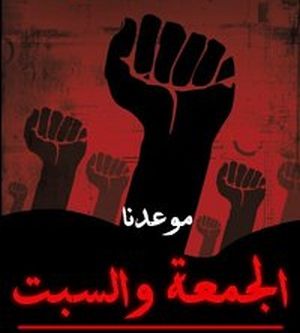



 Aletho News

