All governments lie, kill and misuse public funds, but these calculated habits are amplified manifold during wars. We’re in two now, aiming for a third. Japan, whose land we’re still occupying 65 years after Hiroshima, has just announced sanctions against Iran beyond what the U.N. mandated. South Korea swiftly followed suit. It’s surprising to see these two countries so in sync, until one remembers that they have become American cheerleaders for decades. Rah, rah, bomb Tehran! A murderous chorus is rising, yet again. Countries that aren’t our client states can be counted with two hands, even those missing fingers from an exploding grenade.
Universal outrage has been drummed up over the case of an Iranian woman about to be stoned to death for adultery. She’s also implicated in the murder of her husband, for which she may be hanged. This second, more serious crime has been left out of many news stories. America also executes, but it doesn’t stone, especially for a bit of ticklish fun on the side. We inject, electrocute, gas, hang and shoot our condemned. We’re more humane that way. Forever bureaucratic, we pay attention to procedural niceties.
Our objection, then, is not to capital punishment, but to certain methods. Stoning is barbaric. We don’t stone, period, except during one of our serial wars, where we will stone entire communities back to the Stone Age. But that’s war, buddy. We also use phosphorous and cluster bombs, plant landmines that will last generations. To rectify and avenge the stoning of one woman, someone we don’t really care about, whose name we can’t even pronounce, we’ll flatten Iran, maybe by Thanksgiving.
The United States is concerned about women worldwide. It is touched and outraged by one Afghan woman, Aisha, whose nose was sliced off by her Taliban husband. To defend her honor, it has killed hundreds of thousands of her brothers and sisters. To protect her, it has destroyed her country. It’s the principle that matters. We care about the individual, at least those who are useful to our agendas. It’s the masses we don’t give a flying whoopee about. How can we not raise our voices, for example, when an imprisoned prostitute—hardly a criminal, really, even less so than adulterer—is left in a cage, to be baked to death for at least four hours in 107-degree heat? Her captors ignored her pleas for water. They wouldn’t even allow her to use the bathroom, so she soiled herself before passing out. She was still alive, however, when finally taken to the hospital, where doctors allowed her to die. Incredibly, no charges have been filed. Such barbarity and judicial callousness deserve our fullest condemnations, except that hardly anyone has heard of Marcia Powell, 48, who died in an Arizona prison in May of 2009. The mainstream media ignore her, because her abject death cannot be exploited for political purposes. We’re not trying to bomb Arizona.
Needing to kill, a government will lie before, during and after splattering blood. Eschewing subtlety, it prefers to speak in slogans and clipped, cartoonish sentences. They hate us for who we are. We must fight them over there, so we don’t have to fight them over here. We’re trying to root out the bad guys. Adopting this lingo, many Americans are dubbing the community center and mosque near Ground Zero a “jihad mosque” or a “victory mosque.” In Lower Manhattan last week, I saw a man carrying a sign, “EVERYTHING I EVER NEEDED TO KNOW ABOUT ISLAM I LEARNED ON 9/11.” Another displayed a caricature of “IMAM OBAMA.” There was an effigy of a tied up Palestinian, complete with keffiyeh, with this placard, “OBAMA: With a name like HUSSAIN we understand. Bloomberg: what the f@&k is your excuse?”
Totalitarianism always breeds idiocy. Lies that go unchallenged lead to more preposterous lies. Idiocy is also the manure from which totalitarianism rises. On September 11, 2001, the entire world saw America symbolically imploded, but our actual collapse is ongoing. It is relatively gradual, unlike the three, yes, three, World Trade Center buildings that tumbled onto their own foot prints. For the last nine years, we have endured an unending stream of lies and idiocy, none more grotesque than the official explanation to what happened that tragic day.
Despite being lied to repeatedly, almost daily, Americans are strangely gullible to incoherent, even ridiculous narratives dished up by their government. Brainwashed by the bromide that their nation is always a force for good, anywhere, worldwide, Americans can’t imagine that Washington could be complicit in the murder of its own citizens. Ignored is the fact that it has done so many times before, and since, 9/11. Using false pretexts to invade Iraq, our government has caused the death of over four thousand Americans, more than the number who perished on 9/11.
I don’t know what happened that day, but it makes no sense to me that World Trade Center #7 fell down without being hit by anything. It makes no sense to me that it collapsed exactly the same way as the twin towers, as if imploding. It makes no sense that the passport of Satam al Suqami, one of the alleged hijackers, could be found on the ground, when entire skyscrapers were being pulverized. I also don’t understand how no military jets could intercept any of the three planes that hit their targets that day. The first tower was struck at 8:46AM, the Pentagon at 9:40AM, nearly an hour later, with no effective response from our vaunted military. I used to take buses to and from the Pentagon Transit Center. I knew the building wasn’t very tall, so it struck me as weird how an airliner could hit it from the side. Why fly parallel to the ground, nearly shaving it, to strike such a low target? Why not just dive into it? There are red flags all over this incident, yet many sane, reasonable people will become completely unhinged at the slightest suggestion that the official version doesn’t add up. Our government lies all the time, but when it comes to this one incident, we shouldn’t question anything? Even National Review, of all places, pointed out visa irregularities among the alleged hijackers, how they could enter the U.S. without the proper paperwork.
After Martin Luther King was killed in 1968, his family refused to believe the official explanation. They fought and fought until an assassination conspiracy trial was scheduled in 1999. Presented with extensive evidences, a jury concluded that, yes, the federal, state and local governments all had a hand in Dr. King’s murder, and that James Earl Ray was not the shooter. The King family did what any sane, loving family would do. Coretta Scott King explained, “We had to get involved because the system did not work. Those who are responsible for the assassination were not held to account for their involvement […] It has been a difficult and painful experience to revisit this tragedy, but we felt we had an obligation to do everything in our power to seek the truth.”
On September 11, 2001, someone stabbed America. She’s being murdered right now. As Americans, we need to get to the heart of this, because this madness and deceit are perpetuating themselves. If we don’t have the courage and clarity to confront this evil, we won’t regain our sanity or move forward. We might as well be dead. We’re dying. As with the King murder and so much else, you cannot expect the system to convict itself. It will lie and lie until the truth hardly matters.
So, if bin Laden is as dead as Elvis, who’s been faking all those scary threats in his name?
Who’s keeping the terror myth alive?
Credit image: Sabbah Report
In the trigger-happy post-9/11 world, the favoured way to instigate a war is to demand that the designated “evildoer” prove a negative.
Iraq was invaded because it couldn’t prove that it didn’t have WMDs. Iran is under constant threat of attack unless it can demonstrate that it’s not seeking nuclear weapons. And now Pakistan is being chastised for allegedly harbouring Osama bin Laden—who in all probability has been dead and buried for eight years.
Questioning Pakistan’s willingness to pursue bin Laden and other al-Qaeda leaders, U.S. Secretary of State Hillary Clinton last year told a group of Pakistani editors, “I find it hard to believe that nobody in your government knows where they are and couldn’t get them if they really wanted to.” And in a recent interview with Fox News, Clinton charged that “elements” of the Pakistani government know where bin Laden is hiding.
But what if bin Laden is not hiding in Pakistan? What if he’s been dead since December 2001? How then does Islamabad prove that some of its government officials are not concealing his whereabouts?
While the mainstream media rarely if ever question the belief that bin Laden is still alive, some cracks have been appearing in the consensus. In a September 11, 2009 piece in Britain’s Daily Mail,Sue Reid wondered, “What if everything we have seen or heard of him on video and audio tapes since the early days after 9/11 is a fake—and that he is being kept ‘alive’ by the Western allies to stir up support for the war on terror?”
An even more prominent sceptic is UPI Editor at Large Arnaud de Borchgrave whose July 26, 2010 commentary titled “Elvis bin Laden” may herald a new consensus. Sifting much the same evidence as Reid, the “legendary journalist” stated that “some key intelligence officials are taking bin Laden’s reported demise seriously.”
Both articles cited experts who have studied the post-December 2001 audios and videos and concluded they are fakes.
In 2007, Switzerland’s Dalle Molle Institute for Artificial Intelligence, which does computer voice recognition for bank security, found that the voices on recordings after mid-December 2001 differed clearly from earlier recordings of bin Laden.
Professor Bruce Lawrence, head of Duke University’s religious studies’ department and the foremost bin Laden expert, noted in a 2007 book the inconsistency between the increasingly secular language of the audios and videos and bin Laden’s earlier distinctive religious speech.
Assessing the evidence, Angelo M. Codevilla, a former U.S. intelligence officer who studied Soviet disinformation techniques during the Cold War and a professor of international relations at Boston University, wryly concluded that “Elvis Presley is more alive today than Osama bin Laden.”
So, if bin Laden is as dead as Elvis, who’s been faking all those scary threats in his name?
According to U.S. and British intelligence officials, al-Qaeda’s media wing, As-Sahab Foundation for Islamic Media Publication, has been run since 2001 by Adam Gadahn, a California-born convert to radical Islam who now goes by the name Azzam al-Amriki.
Adam’s parents changed their surnames to Gadahn in the mid-1970s. The name refers to the Biblical warrior Gideon who, with the aid of trumpets and clay jars, defeated Israel’s enemies.
As Antiwar.com editor Justin Raimondo put it, Adam Gadahn is “an awfully odd figure, whose sudden evolution from a nice Jewish boy into Osama bin Laden’s Goebbels is just a little hard to take.”
Equally hard to take is the means by which the public learns of bin Laden’s latest pronouncements
“Almost every statement by Osama bin Laden published on the Internet…is first made public by SITE and IntelCenter,” according to a Spiegel Online profile of Rita Katz, Josh Devon and Ben Venzke, who founded the two companies that supposedly track al-Qaeda online.
SITE co-founder Rita Katz is an Iraqi-born Jew, whose father was publicly hanged in Iraq after the 1967 War as an Israeli spy. Katz, who served in the Israeli Defense Forces, tries to downplay the significance of her background but is not always successful. “When you grow up in a place like Iraq,” she told Spiegel, “you understand maybe a little bit about how Arabs think, and also what they are capable of.”
When Neal Krawetz, a researcher and computer security consultant, analysed a 2006 al-Qaeda video of Ayman al-Zawahiri for alterations and enhancements, he discovered that the As-Sahab and IntelCenter logos had been added at the same time.
Attempting to make light of the understandable suspicions that the “terror trackers” are working for Israeli intelligence, the Spiegel article jokes: “And the conspiracy theories pontificating that SITE and IntelCenter shoot the bin Laden videos themselves will continue to exist in the future. And Katz, Venzke and Devon will continue to see the humor in such theories: Yep, this is Mossad Headquarters. Exactly!”
But with the hunt for the elusive bin Laden having already cost thousands of lives and trillions of dollars, perhaps Americans should demand conclusive proof that Israel hasn’t conned them into fighting a phoney “war on terror.”
On the evening of 9/11 the wheels of war were beginning to turn. The talking points were ready, the media was in on the game and the ‘official’ story was beginning to take shape.
The BBC was told who to interview. Those who were the architects of the event in some way or another were prepared to step into the propaganda matrix.
A couple of PNAC members, Richard Perle and Frank Gaffney and perhaps one of the leading planners, Israel’s own Ehud Barak, were tasked to mold pubic perception. It was all lies.
Daily we are deluged with gloom about how we are overwhelming the Earth’s ability to sustain and support our growing numbers. Increasing population is again being hailed as the catastrophe of the century. In addition, floods and droughts are said to be leading to widespread crop loss. The erosion of topsoil is claimed to be affecting production. It is said that we are overdrawing our resources, with more people going hungry. Paul Ehrlich and the late Stephen Schneider assure us that we are way past the tipping point, that widespread starvation is unavoidable.
Is this true? Is increasing hunger inevitable for our future? Are we really going downhill? Are climate changes (natural or anthropogenic) making things worse for the poorest of the poor? Are we running out of food? Is this what we have to face?
Fortunately, we have real data regarding this question. The marvelous online resource, the UN Food and Agriculture Organization (FAO) statistics database called FAOSTAT, has data on the amount of food that people have to eat.
Per capita (average per person) food consumption is a good measure of the welfare of a group of people because it is a broad-based indicator. Some kinds of measurements can be greatly skewed by a few outliers. Per capita wealth is an example. Since one person can be a million times wealthier than another person, per capita wealth can be distorted by a few wealthy individuals.
But no one can eat a million breakfasts per day. If the per capita food consumption goes up, it must perforce represent a broad-based change in the food consumption of a majority of the population. This makes it a good measure for our purposes.
The FAOSTAT database gives values for total food consumption in calories per day, as well as for protein and fat consumption in grams per day. (Fat in excess is justly maligned in the Western diet, but it is a vital component of a balanced diet, and an important dietary indicator.) Here is the change over the last fifty years:
Figure 2. Consumption of calories, protein, and fat as a global average (thin lines), and for the “LDCs”, the Least Developed Countries (thick lines) . See Appendix 1 for a list of LDCs.
To me, that simple chart represents an amazing accomplishment. What makes it amazing is that from 1960 to 2000, the world population doubled. It went from three billion to six billion. Simply to stay even, we needed to double production of all foodstuffs. We did that, we doubled global production, and more. The population in the LDCs grew even faster, it has more than tripled since 1961. But their food consumption stayed at least even until the early 1990s. And since then, food consumption has improved across the board for the LDCs.
Here’s the bad news for the doomsayers. At this moment in history, humans are better fed than at any time in the past. Ever. The rich are better fed. The middle class is better fed. The poor, and even the poorest of the poor are better fed than ever in history.
Yes, there’s still a heap of work left to do. Yes, there remain lots of real issues out there.
But while we are fighting the good fight, let’s remember that we are better fed than we have ever been, and take credit for an amazing feat. We have doubled the population and more, and yet we are better fed than ever. And in the process, we have proven, once and for all, that Malthus, Ehrlich, and their ilk were and are wrong. A larger population doesn’t necessarily mean less to eat.
Of course despite being proven wrong for the nth time, it won’t be the last we hear of the ineluctable Señor Malthus. He’s like your basic horror film villain, incapable of being killed even with a stake through the heart at a crossroads at midnight … or the last we hear of Paul Ehrlich, for that matter. He’s never been right yet, so why should he snap his unbeaten string?
APPENDIX 1: Least Developed Countries
Africa (33 countries)
Angola
Benin
Burkina Faso
Burundi
Central African Republic
Chad
Comoros
Democratic Republic of the Congo
Djibouti
Equatorial Guinea
Eritrea
Ethiopia
Gambia
Guinea
Guinea-Bissau
Lesotho
Liberia
Madagascar
Malawi
Mali
Mauritania
Mozambique
Niger
Rwanda
São Tomé and Príncipe
Senegal
Sierra Leone
Somalia
Sudan
Togo
Tanzania
Uganda
Zambia
Does Hillary Clinton’s speech on US global leadership mean a return of American exceptionalism? Jake Diliberto of Rethink Afghanistan said the speech is merely rhetoric, similar to that used in the past by the Bush administration. He argued that the speech sends the message that the US State Department wants to transform the world into the American image. He said it is ok to be a world leader, but not if leadership means dominance.
US Secretary of State Hillary Clinton spoke today on the Obama administration’s vision of American global leadership in the 21st century. She said that the US has the reach, resources and resolve to mobilize in order to solve global problems and that the world counts on the US to do so. Citing international sanctions on Iran and the US’s reset with Russia she argues that the US model of global leadership is producing results. But is it also producing an expansion of American exceptionalism? RT contributor Webster Tarpley says the speech is a systematic attempt to deny reality, arguing that the US model has not been successful. He said the speech was unilateralism in disguise. “It’s a rhetoric that obviously grates very much because of the arrogance, the complacency, the hypocrisy, the double standard,” adds Tarpley.
Zionist settlers, illegal colonists coming from all over the world to steal and occupy Palestinian land, armed with a green light to shoot and kill Palestinians whenever they want, won’t hesitate to use force against civilian Palestinians. Their violence includes shooting, stabbing beating, running over Palestinians, stealing their land, property and water, razing agricultural land, uprooting trees and burning crops, stealing harvest, raiding houses and blocking roads. Settler attacks are often initiated by them without any provocation or threat to their safety from Palestinians. In their attacks, the Zionist colonists are often accompanied by Israeli soldiers who either watch and don’t intervene to stop the settler terror or participate in the attacks and provide protection to the settlers. Zionist colonists are seldom prosecuted for their terror actions and in the very rare cases when they were prosecuted, they received very mild sentences. With every passing year, the terrorism of the Zionist colonists occupying Palestinian land increased in brutality and in quantity. Burning down Palestinian homes, mosques, cars and fields have become daily occurrences as beating and attacking Palestinian children on the way to school or Palestinian civilians on the way to work or home.
Looking back, I have tried to gather some examples of terror attacks carried out by Zionist colonists occupying Palestine (Quotations and info are from www.pchrgaza.org unless otherwise stated)
1983: On 26.07.1983 a group of Zionist colonists protected by Israeli soldiers raided the Hebron University campus and the lecture rooms, shooting and throwing hand grenades randomly. 3 Palestinians were killed and 22 injured. The 3 martyrs are: Said Iddin Hasan Dabri (39 yrs), Jamal As’ad Nazzal (29 yrs) and Samih Ammour (26 yrs).
1988: Beita: An example of Zionist terrorism and Israeli response to it
On 8:30 of the morning of 06.04.1988 a group of Zionist colonists from Elon Moreh stopped outside the Palestinian village of Beita. The group consisted of children and their armed guards. One Palestinian resident, Tayseer, tried dissuading the settlers from entering the village and offered to show them an alternative road around the village. The Zionists refused and by that time, some villagers who were working in the fields had gathered to see what the colonists wanted. One armed Zionist guard, Rumain Aldubi who was a known fanatic and violent colonist, ordered the residents of Beita to leave. As Tayseer turned to leave, the guard shot him in the stomach and the leg. He then continued shooting around him and killed Mousa daoud Bani Shamsi (20 yrs). The colonists then went down to the village and were met by the rest of Beita villagers who had heard the shooting and come to investigate. Some residents wanted to keep the colonists till the Israeli occupation forces came and hand over the murderers of Mousa to the IOF. Others were in favour of letting them go. The guard Aldubi began shooting again and killed Hatem Fayez Ahmad Jaber (22 yrs). According to the residents, one of the settler children, Tirza Porat, tried stopping Aldubi from shooting saying that what he was terrible. She tried grabbing his gun from him and he shot her. Bani Shamsi’s mother who was present hit Aldubi on the head. When he fell unconscious to the ground, the resident took his gun and that of the other guard and laid them on the ground until the IOF came. In the meantime the residents took care of the children and protected them. When the Israeli occupation army finally arrived, it was 10:30.
Beita was declared a closed military area. Then the IOF turned the village school into a detention centre and detained hundreds of residents. Isam Abdel Halim Mohammad (15 yrs), was shot dead by the IOF as he fled the village during the arrest campaign. On the same day tens of olive trees were uprooted and 5 Palestinian homes were blown up. The IOF told reporters at the time that they couldn’t establish a direct link between the “killing of the settler girl” and the demolished houses, i.e. the houses were chosen randomly to be demolished as a collective punishment for the village for a murder the villagers didn’t commit. Another 8 Palestinian houses were blown up the next day even after an Israeli military report found that it was in fact Aldubi’s gun that killed the girl. The Israeli army report confirmed that the bullet in the girl’s head was from Aldubi’s gun, the same gun that killed the two other Palestinians as well. The report noted that when the guns were grabbed by the Palestinians their magazines were empty. It also confirmed that the Palestinians had in fact protected the settler children. Israel also deported 6 Palestinians from the village as a further collective punishment for a murder committed by a settler. Even after the release of the Israeli military report, the Zionists continued accusing the Palestinians of killing the girl and stealing the guns from the guards. Israeli politicians, settler leaders and others called for revenge and for a brutal action against the Palestinians of Beita. Israeli minister of religious affairs at the time said that Beita doesn’t exist on the map anymore and that a settlement called Tirza Porat should be built in its place.
No Zionist colonist was ever punished for the murder of the 3 Palestinian residents of Beita.
The Beita tragedy is only one example of the nature of Zionism and Zionist colonists: they killed innocent civilian Palestinians for no reason and killed a Jewish girl as well, then blamed the murder of the girl on the Palestinians and incited against them. In the end it was the Palestinians who were punished for a crime they didn’t commit and punished for being the victims of this Zionist terrorist act.
1990: On 08.10.1990, some 200,000 Zionist colonists marched to Al-Aqsa mosuque. Assisted by Israeli occupation soldiers, the fanatic settlers starting shooting randomly at the unarmed Palestinians and using machine guns and gas bombs. Israeli helicopters participated in the massacre from the air. The massacre lasted 35 minutes during which at least 17 Palestinians were killed and some 900 injured, most of the wounds being in the head and in the heart.
1994: On 25.02.1994, Zionist colonist Baruch Goldstein, a leader of the fanatic terror organization Kach, entered the Ibrahimi mosque in Hebron and killed 29 Palestinian worshippers during dawn prayer. The shooting lasted 10 minutes during which the IOF soldiers stationed outside the mosque did not intervene to stop the massacre, instead they closed the doors of the mosque and prevented worshippers from escaping. After the massacre was over, the IOF soldiers, together with more Zionist colonists, entered the mosques and started shooting at those still alive inside. Another 30 Palestinian were killed by the IOF and Zionist colonists either while trying to provide medical help to those in the mosque, during the funerals of the massacre martyrs, or during protests against the massacre.
On 17.07.1994, Zionist colonists and Israeli occupation soldiers opened fire at Palestinians waiting at the Erez checkpoint. 11 Palestinians were killed and over 200 injured.
1996: On 15.10.1996 Zayid Fathi, 13 yrs, from Yabad, Jenine, was kidnapped by zionist settlers as he was walking home from school and brutally beaten. On the same day, another group of settlers in the Nablus area attacked 4 palestinian children and brutally beat them. One of the children, Mahmoud Bajawi, was beaten unconscious. On 24.10.1996 settlers set dogs at a group of Palestinian children on their way to school. On 27.10.1996 settlers beat Sahar Abdel Raouf Al-Muhtasib, 12 yrs, while Israeli soldiers watched.
2001: On 19.07.2001: a group of Zionist colonists stopped a Palestinian car carrying a family from Ethna, Hebron on its way back from a wedding. The colonists shot at everyone in the car, killing 3 Palestinians including a 3-month old baby and wounding at least 5. According to Amnesty International “The attack happened not far from an Israeli roadblock, but soldiers did not stop the killers car when it fled”.
According to PCHR “a group of settlers called “Halhul Cell” carried out a number of armed attacks on Palestinians killing and injuring some. On 11 April, the group fired at a Palestinian vehicle near Hebron. They also attacked a vehicle near “Rimunin” settlement and another one near “Ma’ale Adumim” settlement, killing a Palestinian. In July 2001, a group of settlers called “the Committee for Road Safety” claimed responsibility for an armed attack on a Palestinian car near Ethna village in Hebron, in which three Palestinian civilians, including a 2-month-old infant were killed. The circumstances of the attack indicate that it could not have succeeded without the protection and logistical support of other parties, and the tacit approval of Israeli forces. According to the Israeli newspaper Ha’aretz, Israeli authorities identified the attackers, but did not take any measure against them.”
“On 15 January, dozens of settlers from “Gush Qatif” settlement bloc attacked Al-Mawasi area in Khan Yunis which is under Israeli military control. According to eyewitnesses, settlers attacked the area at approximately 12:30, under the protection of Israeli occupation forces. They attacked Palestinian civilian facilities, houses, and agricultural land. Eyewitnesses added that settlers shot at Palestinian houses, set fire to three houses and some greenhouses, and destroyed irrigation networks on agricultural land. They also set fire to some restaurants and cafés on the seashore. Israeli occupation forces only intervened to put an end to the attack two hours later. By then, settlers had already terrified Palestinian residents and caused massive destruction.
On 28 March, more than 100 Jewish settlers and Israeli soldiers moved into al-Karantina area in the West Bank, and entered up to approximately 350m inside areas under full control of the PNA. Settlers, under full protection of Israeli forces, attacked Palestinian houses, throwing stones and incendiary materials at them, and breaking their windows with iron bars. They also attacked a number of Palestinian cars in the area, and set fire to nine of them, two of which belong to Hebron Municipality. In the afternoon, Jewish settlers set fire to a part of the headquarters of the Palestinian Ministry of Religious Endowments, located near “Avraham Avino” settlement, causing severe damage to its furniture.
On 19 June, a number of settlers set fire to Palestinian land to southwest of the road leading to “Ennab” settlement established on land of the Palestinian villages of Ramin, Beit Lied, and ‘Anabta near Tulkarm. Fire affected lands of the three villages. Approximately 2,500 donums of Palestinian agricultural land planted with olives, almonds and figs were burnt. According to eyewitnesses, Israeli forces were present in the affected areas, but did not intervene to stop the attack. They even prevented Palestinian civilians from putting out fire and fired at them.”
2002: “On 21 June 2002, armed settlers attacked Burin village, south of Nablus, breaking doors and windows of houses. A settler fired at ‘Othman Edris ‘Abdul Hamid Shehada, 23, killing him with a live bullet in the heart.
On 28 July 2002, a number of Jewish settlers attacked Palestinian houses in the old town of Hebron. They fired at Palestinian civilians and set fire to a number of houses and damaged their contents. A Palestinian girl, Nivin Mousa Jamjum, 14, was shot dead by a live bullet in the right eye.
On 26-28 July 2002, armed settlers waged a series of assaults against Palestinian civilians in the part of Hebron under full control of Israeli occupying forces. The settlers attacked Palestinian civilians and their houses in the old town and other areas in the centre of the city.” One Israeli female soldier told B’Tselem “concerning the settler attacks against Palestinian civilians and property in Hebron on 26-28 July 2002: “I saw a group of settlers, including adults, women and children, raiding Palestinian houses and destroying everything. They destroyed walls surrounding houses, flowerpots and cars. I saw one soldier on duty in the area. He was standing near a house that was raided by settlers and did not intervene. Soon, four soldiers arrived, but they also did not try to stop settlers.”
“In the context of these attacks, at approximately 19:00 on 26 July 2002, a number of settlers attacked the house of Yousef Nu’man al-Sharbati in the part of Hebron under Israeli security control. They set fire to a room and destroyed contents of the house, service networks and water tanks. Then, they seized control over the house, under full protection of Israeli occupying forces and police. Later, Israeli forces took the family of al-Sharbati out of the house, allegedly to protect them from settlers who seized the house. Despite attempts by the family to remain in the house, Israeli police used force to drive them out of the house, instead of expelling the settlers.
In the settler attacks against Burin village on 21 June 2002, according to eyewitnesses, Israeli forces did not intervene to stop these attacks. Rather they even prevented Palestinian civilians from defending themselves.”
On the previous day, 27 July 2002, a number of settlers from “Kiryat Arba’” settlement, southeast of Hebron, launched a series of attacks on the southern areas in Hebron, using firearms and sharp tools. They fired at 9-year-old Fawaz Radwan Edris, wounding him seriously with a live bullet in the head, while he was playing near his house. On the same day, a settler stabbed 7-year-old Ahmed Mohammed al-Natsha in the back, while settlers attacked the house of al-Natsha’s family.
On 17 September 2002, a bomb, apparently planted by extremist settlers, exploded in an elementary school in Zeif village, south of Hebron at approximately 10:00. Approximately 400 students were having classes at school when the explosion occurred; 9 students were injured. Israeli occupying forces arrived at the school and after searching, 2 other bombs were discovered and deactivated by Israeli occupying forces.
On 6 October 2002, while a number of Palestinian farmers from ‘Aqraba village were cultivating olives in their agricultural land in the northeast of their village, they were surprised by a number of settlers who opened fire, wounding Hani Yousef Bani Murra, 26, with a live bullet in the right thigh. As the settlers continued to fire, the farmers were not able to evacuate Murra to hospital for two hours. He was later taken to a medical center in the village, but he succumbed to his wound. Fadi Fadhel Bani Murra, 26, was also wounded in the attack by a live bullet in the right elbow.”
On 07.10.2002 Zionist colonists attacked olive harvesters in Nablus killing one Palestinian farmer and injuring two. “Israeli army officers confirmed that settlers in the area has been deliberately attacking olive harvesters, and that the army has taken no real measures to prevent it. “
2005: On 17.08.2005, a Zionist colonist killed 4 Palestinians in Nablus. According to the PCHR “Mohammed ‘Ali Hassan Mansour, 49, from Kufor al-Jaleel village near Nablus, and Khalil Mohammed Ra’ouf Welaiwel, 40, from Qalqilya, were traveling in an Israeli vehicle from their work place in “Shilo” settlement to their homes. The driver, who was an Israeli settler called Ashir Weisgen, 40, from “Shavot Rachel” settlement, stopped the vehicle and went towards the guard of the industrial zone of “Shilo” settlement. He drank water and stole the guard’s gun. Soon after, he ran back towards his vehicle and opened fire at the two Palestinian workers from a very close range. The two workers were instantly killed. Then, the settler ran into the industrial zone and opened fire at a number of Palestinian workers who were waiting for a vehicle to transport them out of the settlement. One of these workers, Bassam Mousa Tawafsha, 40, from Senjil village near Ramallah, was killed. Two other workers were also wounded: Ussama Mousa Tawafsha, 30, from Senjil village and Rawhi Abu Hani, 35, from Qaryout village near Nablus. The two were evacuated to an Israeli hospital, but the former was later pronounced dead.”
“On 6 August 2005, a number of Israeli settlers in settlement posts in the centre of Hebron attacked 16-year-old Anas Zuhair al-Bayed. He sustained injuries to the mouth, the neck and the right leg, and bruises throughout the body.
On 13 November 2005, a number of Israeli settlers from “Kiryat Arba” settlement, east of Hebron, attacked a number of houses in Wad al-Husain neighborhood using stones, iron bars and empty and explosive bottles. A Palestinian child, 3-year-old Nour Suleiman Abu Su’aifan was seriously injured in the left foot. Two houses were also damaged.
On 4 September 2005, 12 Israeli settlers armed with pistols, knives and iron bars, moved from “Ma’oun” settlement to the southeast of Yatta village, south of Hebron. They attacked tents and cattle farms belonging to a number of Palestinian civilians in the Khalayel al-‘Adra area to the west of the aforementioned settlement. They killed 6 sheep, injured 10 others and damaged the farms.”
On 04.08.2005 a Zionist colonist wearing Israeli army uniform stopped a bus full with Palestinian students on their way home and shot dead 4 Palestinians.
2006: “In 2006, PCHR documented 100 attacks by Israeli settlers: 75% in Hebron; 10% in Nablus; 6% in Qalqilya; 5% in Bethlehem; 2% in Jenin and Jericho. These attacks included: shooting; running down; attacks on houses; attacks on schools and students; attacks on religious sites; attacks on farmers and shepherds; and other attacks.”
2007: “In 2007, PCHR documented 100 attacks by Israeli settlers: 62% in Hebron; 19% in Nablus; 5% in Bethlehem; 5% in Tulkarm; 4% in Salfit; 3% in Jerusalem; 1% in Jenin; and 1% in Qalqilya. The categories of the attacks were: 29% of them were against farmers and shepherds and their property, 19% were against houses; 14% were beating; 6% were against religious sites; 5% were shootings; 2% were running down by cars; 2% were stabbing; and 23% were other attacks, including closing roads and throwing stones at Palestinian civilian vehicles.”
On 22.09.2007 settlers from Nikudim settlement near Bethlehem intercepted an ambulance and with gun point forced two paramedics out and then violently beat them.
“On 2 February 2006, an Israeli settler car intercepted a Palestinian school bus that was travelling on the Bethlehem-Hebron road, on its way to al-‘Arroub refugee camp. Four settlers, armed with pistols and M16 rifles, got out of the car. Two of the settlers entered the bus screaming at the driver and children and threatening and insulting them. The children were terrified and a number of them jumped out of the bus. A number of these children fainted or sustained bruises and fractures. Then, the two settlers violently beat the children who remained in the bus. Five children were injured.”
2008: “In 2008, PCHR documented 170 attacks by Israeli settlers, in comparison with 100 atttacks in 2007. Attacks in 2008 were: 90 in Hebron; 26 in Nablus; 20 in Ramallah and Al-Bireh; 12 in Qalqilya; 8 in Jerusalem; 7 in Salfit; 4 in Bethlehem; and 3 in Jenin. The categories of the attacks were: 48 of them were harassments; 36 were against houses; 34 were against farmers and shepherds and their property; 13 were shootings: 7 were against religious sites; 5 were running down by cars; and 27 were other attacks, including closing roads and throwing stones at Palestinian civilian vehicles.”
“At approximately 21:00 on Saturday, 27 September, dozens of armed Israeli settlers stormed Kufor al-Dik village, west of Salfit. They opened fire into the air to intimidate Palestinian civilians who came out of their houses to try to stop the raid. Israeli settlers stationed in the centre of the village then threw stones at houses under protection from IOF troops that stormed the area. A number of houses, cars and some public property were damaged. IOF troops fired rubber-coated metal bullets and tear gas canisters at dozens of Palestinian civilians who gathered to protect their houses and property. Isma’il Eyad Ahmed, 13, was wounded by a rubber-coated metal bullet to the left hand. Soon after, IOF imposed a curfew on the village and IOF military vehicles pursued Palestinian civilians to disperse and arrest them. ‘Abdul Rahim Hussein Ahmed, 29, was injured as he was hit by a military vehicle.
At approximately 10:00 on Thursday, 2 October, a number of Israeli settlers from “Shavot Aami” settlement near Kufor Qaddoum village, east of Qalqilya, launched an arson attack against large areas of agricultural land planted with olive trees that is located near Qalqilya-Nablus road. Residents of the village attempted to extinguish the fire, but IOF prevented them. According to owners of the land, Israeli settlers had already set up tents and seized a house on the land. Israeli official bodies ordered the evacuation of those settlers from the land, so they moved to a neighbouring area, from which they launched the arson attack under full protection by IOF.
At approximately 20:00 on the same day, dozens of Israeli settlers from “Janat Shomron” settlement, east of Qalqilya, attempted to break into ‘Azzoun village, east of Qalqilya. IOF intervened and prevented the settlers from entering the village to avoid clashes with Palestinian civilians who gathered at the northern entrance of the village to prevent the settlers from storming the village.
On Friday noon, 3 October, at least 50 Israeli settlers living in “Kiryat Arba” settlement, southeast of Hebron, attacked a number of Palestinian civilians, when the latter, in cooperation with international and Israeli peace activists, started to harvest olives from a tract of land belonging to the al-Ja’bari clan. As a result, ‘Abdul Karim Ibrahim al-Ja’bari, 39, was injured, and 2 Israeli peace activists sustained bruises.”[1]
On 02.08.2008, Zionist colonists from Kiryat Arba’ attacked a Palestinian wedding in Hebron and injured two Palestinians. The colonists also pushed Hamza Abu Hattah (15 yrs old) from the roof of his Hebron home, breaking his back. A day earlier, the colonists had attacked another Palestinian wedding injuring 5 Palestinians.
On Friday 05.12.2008, B’Tselem released video footage documenting a Zionist colonist shooting two Palestinians in Hebron. To protest the evacuation of an illegal settlement, Zionist colonists attacked Palestinians and Palestinian homes in Hebron on 04.12.2008. One Zionist colonist shot 40-year-old Hosni Abu Se’ifan (40 yrs old) in the chest and his father Abdil Hai Abu Sa’ifan (65 yrs old) in the arm.
2009: “In 2009, PCHR documented 233 attacks by Israeli settlers, the majority of them in Hebron. Attacks in 2009 were distributed as follows: 86 in Hebron; 67 in Nablus; 11 in Ramallah and Al-Bireh; 14 in Qalqilya; 22 in Jerusalem; 11 in Salfit; 12 in Bethlehem; 3 in Jenin; and 7 in Tulkarm. The categories of the attacks were:
47 cases of harassments; 40 attacks against houses; 63 attacks against farmers, shepherds and their property; 12 shootings: 9 attacks against religious sites; 6 attacks carried out with cars; and 56 other attacks, including closing roads and throwing rocks at Palestinian civilian vehicles.”
During 2009, Zionist colonists uprooted at least 5500 olive trees throughout the West Bank. Also, joint attacks by Zionist colonists and IOF were carried out on Palestinian civilians and their property. “On 8 April 2009, dozens of Israeli settlers, accompanied by IOF, stormed Kherbat Safa village, northwest of Hebron. They injured 9 Palestinian civilians. On 24 April 2009, 12 Palestinian civilians, including two children, were wounded, when armed Israeli settlers, accompanied by IOF, stormed ‘Ourif village, south of Nablus.”
2010: Throughout the year 2010 Palestinian families have been forcibly evicted from their homes by Israeli occupation forces and Zionist colonists who occupied these homes. On 30.01.2010 a Palestinian family was evicted from its home in the old city of occupied Jerusalem. On 28.04.2010, a Palestinian family was evicted from its home in Beit Safafa. Another family was evicted from its home in Beit Safafa on 03.05.2010. On 29.07.2010 Zionist colonists occupied a building in the old city of occupied Jerusalem, evicting the Palestinian families from their homes.
On 04.05.2010 Zionist colonists set fire to a mosque in Al-Lubban Ash-Sharqiyyeh, Nablus. The previous year, on 09.12.2009, Zionist colonists had set fire to the mosque of Yasuf, Salfit.
On 02.04.2010 Zionist colonists assaulted Rifqa Al-Kurd (89 yrs old) and her daughter Nadya (50 yrs old) from Sheikh Jarrah, occupied Jerusalem.
On 27.04.2010 Muhammad Ar-Ruweidi (11 yrs old) and Mustafa Al-Julani (12 yrs old) from Silwan, occupied Jerusalem, were brutally beaten by Zionist colonists.
On 03.06.2010 Mu’taz Mousa Omran Banat (16 yrs old) and Mohammad Ibrahim Al-Bis (16 yrs old) were shot by a Zionist settler at the entrance of Al-Arroub refugee camp, Hebron. The Zionist colonist stopped his car, stepped out of it and began shooting randomly at a group of children on their way to school. On 24.06.2010 Mohammad, who was shot in the chest, was told to come to Etzion detention center to make a report on the incident. He went with his father, and after several hours of interrogation, the child was fined by the Israeli occupation police despite the fact that the Zionist colonist who shot Mohammad had turned himself in to the Israeli police and admitted the shooting.
On 29.04.2010 Zionist colonists attacked the Palestinian village Huwwara, destroyed property, vandalized homes in the village and set fire to its farmlands. On 16.06.2010, dozens of Zionist colonists from Kiryat Arba’ raided several Palestinian homes in the Palestinian village Jabal Jalis at midnight, vandalized and destroyed the village’s farmland. On 30.07.2010, dozens of Zionist colonists attacked Burin and set fire to its farmland. A few days earlier, armed colonists had raided the village, opened fire on the villagers, uprooted olive trees and set the farmland on fire. On 6.08.2010, Zionist colonists set fire to hundreds of dunums of farmland in Beit Furik.
Following is a primary list of Palestinians killed by Zionist colonists:
(During my search for the names of the martyrs I came across many other names of Palestinians who were either beaten, shot or tortured to death and their bodies found in the vicinities of settlements, but it was not clear whether they were killed by the Zionist colonists or the Israeli occupation forces).
1983
Said Iddin Hasan Dabri (39 yrs), was shot dead by Zionist colonists on 26.07.1983
Jamal As’ad Nazzal (29 yrs) was shot dead by Zionist colonists on 26.07.1983
Samih Ammour (26 yrs) was shot dead by Zionist colonists on 26.07.1983
1987
On 08.12.1987 an Israeli settler deliberately ran over 4 Palestinians in Gaza, killing them. This led to the outbreak of the First Intifada against the brutal Israeli military occupation. The 4 martyrs are:
Taleb Mohammad Abdullah Abu Zeid (46 yrs old) from Al Maghazi RC.
Isam Mohammad Hammoudeh (29 yrs old) from Jabalia RC.
Sha’baan Sa’id Nabhan (26 yrs old) from Jabalia.
Kamal Qadourah Hasan Hamoudeh (23 yrs old) from Gaza.
1988
Rabih Hussein Mahmoud Ghanim (16 yrs old) from Bitin, Ramallah, shot dead by Zionist colonists on 11.01.1988
Mohammad Yousif Al-Yazuri from Rafah RC, Gaza, shot dead by Zionist colonists on 12.01.1988
Ahmad Ali Odeh Al-‘Ibiat (45 yrs old) from Bethlehem was shot dead by Zionist colonists on 14.01.1988
Ali Mohammad Mahmoud Dahlan (25 yrs old), from Khan Younis, Gaza, shot dead by Zionist colonists on 16.01.1988
Rawdah Mohammad Lutfi Najeeb (13 yrs old), from Baqa As-Sharqiyyeh, Tulkarim, shot dead by Zionist colonists on 23.02.1988
Hijjeh Mahmoud Abu Allan (60 yrs old) from Ath-Thahriyyeh, Hebron, was run over by Zionist colonists on 26.02.1988
Anwar Riziq Darwish ‘Amerah Al-Ghrisi (29 yrs old), from Ni’lin, Ramallah, shot dead by Zionist colonists after being kidnapped from his home on 26.02.1988
Ra’id Mahmoud ‘Awad Al-Bargouthi (17 yrs old), from ‘Aboud, Ramallah, shot dead by Zionist colonists on 28.02.1988
Ahmad Ibrahim Al-Jirn Al-Bargouthi (22 yrs old), from Ramallah, shot dead by Zionist colonists on 28.02.1988
Khadir Mohammad Hamidah (35 yrs old), from Al-Mazra’a Ash-Sharqiyyah, Ramallah, shot dead by Zionist colonists on 08.03.1988
Khamis Nimir (11 yrs old), from Jerusalem, hanged by Zionist colonists on 10.03.1988
‘Arif Mohammad Hussein ‘Abdo, from Jabal Al-Mukabbir, Jerusalem, died of burns sustained after Zionist colonists threw him inside oven of the bakery where he worked on 04.04.1988
Mousa Salih Mahmoud Bani Shamsi (20 yrs old), from Beta, Nablus, shot dead by Zionist colonists on 06.04.1988
Hatim Faiz Ahmad Said Jabir (22 yrs old), from Beta, Nablus, shot dead by Zionist colonists on 06.04.1988
Joudeh Abdallah ‘Awwad, from Turmus’ayya, Ramallah, shot dead by Zionist colonists on 05.05.1988
Husni Mohammad Al-Mahsiri (42 yrs old), from Ad-Doha, Beit Jala, killed by Zionist colonists on 15.05.1988
Ibrahim Msalam Abu ‘Esheh Al-‘Wewi (71 yrs old), from Hebron, stoned to death by Zionist colonists (smashed his skull) on 15.05.1988
Ahmad Tawfiq Sha’lan (11 yrs old), from Dheisheh RC, Bethlehem, killed by Zionist colonists who kidnapped him and threw his body in a well on 11.06.1988
Nishar Sharif Nassar Salameh (25 yrs old), from Beit Leed, Tulkarim, kidnapped and killed by Zionist colonists on 22.06.1988
Mousa ‘Omar Mahmoud (54 yrs old), from Brouqeen, Nablus, deliberately ran over by a Zionist colonist on 15.07.1988
Mohammad Sa’id Lhalid Kittaneh (27 yrs old), from An-Nazleh Ash-Sharqiyyeh, Tulkarim, killed and thrown in a water reservoir near the village on 24.07.1988
Riyadh ‘Odeh Mahmoud Khattab (28 yrs old), from Lufr Al-Lubbad, Tulkarim, deliberately ran over by a Zionist colonist on 25.07.1988
Khalil Mustafa Al-‘Abadlah (40 yrs old), from Khan Younis, Gaza, died on 11.08.1988 of burns caused by Zionist colonists who set fire to the hut in which Palestinian workers slept near Ur Yahuda illegal colony on 10.08.1988
Sa’id Ismail ‘Abid (22 yrs old), from Rafah, Gaza, died on 12.08.1988 of burns caused by Zionist colonists who set fire to the hut in which Palestinian workers slept near Ur Yahuda illegal colony on 10.08.1988
Nasim Ibrahim ‘Abid (27 yrs old), from Al-Maghazi RC, Gaza, died on 15.08.1988 of burns caused by Zionist colonists who set fire to the hut in which Palestinian workers slept near Ur Yahuda illegal colony on 10.08.1988
Mohammad Khalid Mahmoud Shqier (31 yrs old), from Tulkarim, killed by Zionist colonists on 24.08.1988
Mohammad Zain Ghazi Al-Karaki (18 yrs old), from Hebron, beaten to death by Zionist colonists on 30.09.1988
Kayed Hasan Abdel-Aziz Salah (42 yrs old), from Hebron, shot dead by fanatic terrorist colonist Rabbi Moshe Livinger on 30.09.1988
‘Amr Abdel-Qader Abu ‘Esha (21 yrs old), from Hebron, kidnapped and killed by Zionist colonists on 06.11.1988
1989
Ibtisam Abdil Rajim Bouziyyeh (13 yrs old) from Nablus was shot dead by Zionist colonists on 29.05.1989
‘Aziz Khamis ‘Arar (21 yrs old) from Qarawit Bai Zaid, Ramallah, was shot dead by Zionist colonists on 23.06.1989
Issa Mohammad Ali Sbeih (29 yrs old) from Al-Khadir, Bethlehem, was beaten to death by Zionist colonists on 18.11.1989
1990
Aziza Salim Jabir (27 yrs old) pregnant mother from Hebron, was killed by Zionist colonist Nahshon Fols shot at a group of Palestinians killing her and injuring others on 06.08.1990
Palestinians killed by Zionist colonists and Israeli occupation soldiers during Al-Aqsa massacre on 08.10.1990
Ribhi Hasan Rajabi,(61) Shot: 3x back / 1x chest
Izz Eddine Hamideh Yassini,(15) Shot: 6x head/torso/legs
Fayez Abu Sneineh,(18) Shot: 1x neck-head
Majdi Abu Sbeih,(17) Shot: 2x torso – abdomen
Ayman Ali Shami,(18) Shot: neck /back
Majdi Abu Sneineh,(17) Shot: 5x chest
Burhan Rahman Kashour,(19) Shot: shattered head
Jadu Rajeh Zadeh,(24) Shot: 2x chest/head
Ibrahim Ghurab,(31) Shot: 2x chest
Ibrahim Farhat Idkeidek,(16)Shot: 6x neck/side/legs
Maryam Makhtoub,(52) Shot: massive head injury
Mohammed Abu Sneineh,(30)Shot:3xhead/neck/arm
Nimer Dweik,(25) Shot: 4xeye/chest/abd/hand
Adnan Shteitwi Jinadi,(28) Shot:3x abdomen
Musa Abdel Sweiti,(27) Shot: 2xhead/side
Fawzi Ismail Sheikh,(63) Shot: 1x head
AbdelKarim Za Atreh,(40) Shot:unknown
1994
Palestinians killed by Zionist terrorist Baruch Goldstein, other Zionist colonists and IOF on the day of the Ibrahimi mosque massacre 25.02.1994
1 Ra’id Abdel-Muttalib Hasan An-Natsheh (20 yrs old)
2 ‘Ala’ Badir Abdel-Halim Taha Abu Sneneh (17 yrs old)
3 Marwan Mutlaq Hamid Abu Nijmeh (32 yrs old), father of 6
4 Thiab Abdel-Latif Hirbawi Al-Karaki (24 yrs old)
5 Khalid Khalawi Abu Hussein Abu Sneineh (58 yrs old), father of 8
6 Nuriddin Ibrahim Abdel-Muhtasib (22 yrs old)
7 Mohammad Kifah Abdel-‘Iz Zakariya Maraqa (11 yrs old)
8 Mahmoud Sadiq Mohammad Abu Za’nouneh (49 yrs old), father of 4
9 Sabir Mousa Husni Katbeh Bdeir (37 yrs old), father of 4
10 Nimir Mohammad Nimir Mujahid (34 yrs old), father of 4
11 Kamal Jamal Abdel-Ghani Qafeshah (13 yrs old)
12 ‘Arafat Mousa Yousif Burqan (28 yrs old), father of 4
13 Raji-Izzen Abdel-Khaliq Gheith (47 yrs old)
14 Walid Zuheir Mahfouth Abu Hamdieh (13 yrs old)
15 Sufian Barakat ‘Ouf Zaydeh (21 yrs old)
16 Jamal ‘Ayid Abdel-Fattah An-Natsheh (48 yrs old), supporter of 13
17 Abdel-Haq Ibrahim Abdel-Haq Al-Ja’bari (55), supporter of 13
18 Sliman ‘Awwad ‘Ilyan Al-Ja’bari (37 yrs old), father of 10
19 Tariq ‘Adnan Mahmoud ‘Ashour Abu Sneineh (14 yrs old)
20 Abdel-Rahim Abdel-Rahman Salameh (48 yrs old), supporter of 13
21 Jabir ‘Arif Abu Hadid Abu Sneineh (11 yrs old)
22 Hatim Khadir Nimir Al-Fakhouri (26 yrs old), father of 2
23 Salim Idris Falah Idris (27 yrs old), father of 2
24 Rami ‘Arafat Ali Ar-Rajji (11 yrs old)
25 Khalid Mohammad Hamzah Abdel-Rahman (18 yrs old)
26 Wa’il Salah Ya’coub Al-Muhtasib (28 yrs old), father of 3
27 Zidan Hamoudeh Abdel-Majid Hamid (26 yrs old), father of 4
28 Ahmad Abdallah Mohammad Taha Abu Sneineh (25 yrs old)
29 Talal Mohammad Daoud Mahmoud Dandash (26 yrs old), his wife was pregnant
30 ‘Atiyah Mohammad ‘Atiyah As-Salaymeh (33 yrs old), father of 5
31 Ismail Faiz Ismail Qufesheh (28 yrs old), father of 1 and his wife was pregnant
32 Nadir Salam Salih Zahdeh (19 yrs old)
33 Ayman Ayyoub Mohammad Al-Qawasmi (21 yrs old)
34 ‘Arafat Mahmoud Ahmad Al-Bayid (28 yrs old), father of 3
35 Abdel Rahim Abu Sneineh
36 Akram Kafisheh
37 Akram Joulani
38 Amjad Abdallah Sandal
39 Ayed Abu Hadid
40 Diab Muhtasab
41 Fawaz Zughair
42 Hamad Abu Nijmeh
43 Iyad Karaki
44 Khairi Aref Abu Hadid
45 Kifah Abdul Mu’az Marakeh
46 Marwan Abu Shareh
47 Raji Arafat Rajabi
48 Tariq Abdeen
49 Yasser Diab Kafisheh
50 Yazen Abdul Mu’ti Marakah
51 Yusef Hroub
52 Zeidan Jabber
53 Zein Gheith
54 Ziad Kafisheh
55 Mohammed Yusef Ghayatheh, shot by a Zionist colonist near Beit Jala hospital, Bethlehem
1996
Hilmi Shushah (10 yrs old) from Husan, Bethlehem was killed by a Zionist colonist on 24.09.1996. Hilmi and his friends were on their way back home from school when the settler stopped them and beat Hilmi to death.
1997
Isam Rashad Arafah (22 yrs old) from Hebron was killed by Zionist colonists
1998
1 Hani Salah Abu Hajaj (18 yrs) from Khan Younis, Gaza, was hit by a settler car on 01.05.1998
2 Ahmad Sllan Hamed (26 yrs) from Qaryout, Nablus, was shot dead by a settler on 06.05.1998
3 Khairi Mousa Alqam (51 yrs) from Jerusalem, was stabbed to death by a settler on 13.05.1998
4 Anwar Ibrahim Ali (26 yrs) from Sgufat RC, Jerusalem was stabbed to death by a settler on 10.06.1998
5 Abdel Majid Abu Turkiyyeh (48 yrs) from Hebron was attacked by 3 settlers who struck him with a metal bar killing him on 16.06.1998
6 Eyad Rauhi Karabsa (18 yrs) from Bytonia, Ramallah, while returning from school was shot dead by a settler on 17.09.1998
7 Lina Abu Arram (5 yrs) from Yatta, Hebron, was run over by a settler on 20.10.1998
8 Khalil Ibrahim Ikhshimat (44 yrs) from Anata, Jerusalem, was stabbed to death by a settler on 26.10.1998
9 Mohammad Sleiman Zalmot (70 yrs) from Nablus, was shot by a settler while picking his olive fields on 27.10.1998
10. Osama Mousa An-Natsheh (40 yrs) from Jerusalem, was stabbed to death by a settler on 2.12.1998
11. Nassir Ireqat (17 yrs) from Jerusalem was shot by a settler on 7.12.1998
1999
Israeli settlers ran over Mohammad Ali Al-Baddarin (12 yrs) from As-Samou’ in Hebron, killing him on 27.2.1999
2000
Sarah Abdel Athim Hasan Abdel Haq (18 months old) from Talfit, Nablus, shot dead by a Zionist colonist on 01.10.2000
‘Isam Judeh Mustafa Hammad (39 yrs old) from Um Saffa, Ramallah, tortured to death by Zionist colonists after being arrested on 09.10.2000
Mohammad ‘Udwan (39 yrs old) from Kufl Harith, Nablus, ran over by a Zionist colonist on 11.10.2000
Mohammad Ghassan Buziyyeh (49 yrs old) from Salfit, ran over by a Zionist colonist on 11.10.2000
Mahir Mohammad Mutlaq (24 yrs old) from Nablus, killed by Zionist colonist on 11.10.2000
Fareed Nasasrah (28 yrs old) from Beit Fourik, Nablus, shot dead by Zionist colonists on 17.10.2000
Ibrahim Abdel Rahman Al-‘Aallama (24 yrs old) from Beit Ummar, Hebron, shot dead by Zionist colonists on 18.10.2000
Zahi ‘Arda (35 yrs old) from ‘Askar RC, Nablus, shot dead by Zionist colonists on 19.10.2000
Ahmad Amin Abdel Min’im Al-Khuffash (7 yrs old) from Salfit, Nablus, ran over by a Zionist colonist on 07.11.2000
Mohammad Abdallah Diriyyeh (70 yrs old) from Nablus, ran over by a Zionist colonist on 08.11.2000
Mustafa Mahmoud Ilyyan (50 yrs old) from Askar, Nablus, killed by a huge rock thrown over his car by Zionist colonists on 14.11.2000
Shadi Ahmad Zaghloul (14 yrs old) from Husan, Bethlehem, ran over by a Zionist colonist on 30.11.2000
Hasan Ali Shahin Abu Mreish (20 yrs old) from Beytounia, Ramallah, tortured to death and killed by a sharp instrument by Zionist colonists after being kidnapped on 08.12.2000
Mohammad Hamid Shalash (18 yrs old) from Aboud, Ramallah, was shot dead by a Zionist colonist on 17.12.2000
Rashid Barhoum (24 yrs old) from Rafah, Gaza, was killed by Zionist colonists on 21.12.2000
Najib Mohammad Ibeido from Hebron, was killed by Zionist colonists on 22.12.2000
Sarhan Abu Rmeileh (31 yrs old) was strangled and stabbed to death by Zionist colonists on 25.12.2000
2001
Arij Sabir Al-Jabali (19 yrs old) from Hebron, was shot dead by a Zionist colonist on 05.01.2001
Palestinian from At-Tira was stabbed to death by settlers on 06.01.2001
Mohammad Ahmad Abu Suf (37 yrs old) from Haris, Nablus, was killed by Zionist colonists on 08.01.2000
Abdel Hamid Ahmad Al-Khrouti (34 yrs) from Gaza was shpt dead by Zionist colonists on 08.01.2000
Palestinian from Laqyeh, An-Naqab was tortured to death by Zionist colonists on 09.01.2000
Walid Khalil Al-Awadi (37 yrs old) from Gaza was tortured and shot dead by Zionist colonists after being kidnapped on 17.01.2001
Safwat Isam Qishta (16 yrs old) from Rafah., Gaza, was shot dead by security at Zionist colony on 25.01.2001
Ma’zouza Ar-Rimawi was on her way to hospital when stopped by colonists which led to her death on 26.02.2001
Ahmad Hassan ‘Allan (25 yrs) from Qariour, Nablus was shot dead on 03.03.2001 by a settler
Mohammad Ismail Hashim Nassar (10 yrs old) from Dahyat Al-Barid, Jerusalem, was beaten to death by Zionist colonists on 16.03.2001
Jabri Ahmad Hanashah (40 yrs old) from Dura, Hebron was beaten to death by Zionist colonists on 23.03.2001
Kifah Khalid Zu’rub (18 yrs old) from Gaza was killed by mad dogs released on him by Zionist colonists on 11.05.2001
Ziyad Mahmoud Abu Eid (32 yrs old) from Deir Dibwan, Ramallah was shot dead by Zionist colonists on 03.06.2001
Ayed Mahmoud Abu Eid (38 yrs old) from Deir Dibwan, Ramallah was shot dead by Zionist colonists on 03.06.2001
Mazin Al Julani (34 yrs old) from Anata, Jerusalem was shot dead by Zionist colonists on 03.06.2001
Khalid Tantawi (17 yrs old) from Gaza was killed by Zionist colonists on 07.06.2001
Ashraf Bardawil (27 yrs old) from Tulkarim was killed by Zionist colonists who blew up his car on 07.06.2001
Jamil Qasim Mohammad At-Turk (47 yrs) from Ad-Dik, Salfit, was beaten to death on 10.6.2001
Hikmat Al-Malalha (17 yrs old) from Nseirat RC, Gaza, was killed as a result of rocket fired from Nitsarim colony on 10.06.2001
Nasra Al-Malalha (65 yrs old) from Nseirat RC, Gaza, was killed as a result of rocket fired from Nitsarim colony on 10.06.2001
Salima Al-Malalha (35 yrs old) from Nseirat RC, Gaza, was killed as a result of rocket fired from Nitsarim colony on 10.06.2001
Awni Haddad (42 yrs old) from Hebron was killed by Zionist colonists on 13.06.2001
Ahmad Mahmoud Mohammad Ash-Sheikh (70 yrs) from Nablus, was run over by Zionist colonist on 18.06.2001
Fatima I’layan Abu Farwa (71 yrs) from Qalqilya was ran over by a settler on 19.06.2001
Diya’ Marwan At-Tmeizi (3 moths old) from Ithna, Hebron, was shot dead by Zionist colonists on 19.07.2001
Mohammad Hilmi At-Tmeizi (23 yrs old) from Ithna, Hebron, was shot dead by Zionist colonists on 19.07.2001
Mohammad Salamah At-Tmeizi (20 yrs old) from Ithna, Hebron, was shot dead by Zionist colonists on 19.07.2001
Khalid Arafat Isa Al-Batsh (3 yrs old) from Hebron, was killed by Zionist colonists on 09.09.2001
Ra’fat Mohammad Ihmeidan (25 yrs old) from Ramallah, was shot dead by Zionist colonists on 13.09.2001
Mustafa Abu Mousa (34 yrs old) from Deir Al-Balah, Gaza, was shot dead by Zionist colonists on 20.09.2001
Ahmad Ibrahim I’biat (24 yrs old) from Bethlehem was stabbed to death by Zionist colonists on 16.10.2001
Ahmad Abu Mustafa (13 yrs old) from Khan Younis, Gaza, was shot dead by a Zionist colonist on 12.11.2001
Ibrahim Mousa Yousif Hanani Ghalmi (80 yrs old) from Beit Fourik, Nablus, was run over by a Zionist colonist on 28.11.2001
2002
Luiai Ahmad Mousa Udeili (16 yrs old), from Ussarin was shot dead by a settler on 31.1.2002
Samir Ziad Abu Mayyaleh (14 yrs old) from Ath-Thuri, Jerusalem, was killed in suspicious circumstamces after being kidnapped by settlers on 08.02.2002
Alaa’ Hatem Fayiz Abdel Haj (19 yrs old) from Deir Abu Dhaif, Jenin, was shot dead on 2.4.2002 by a Zionist group that later calimed responsibility
Othman Idris Abdel Hamid Shihadeh (23 yrs old) from Burin, Nablus, was shot dead by a Zionist colonist on 21.06.2002
Nivin Mousa Jamjoum (14 yrs old), from Hebron was shot dead by a Zionist colonist on 28.07.2002
Ata Mahmoud Ibrahim Nimir (68 yrs old), from Al-Jib, Jerusalem died after being run over by a Zionist colonist on 29.07.2002
Jihad Mousa Mohammad Al-‘Athra (6 yrs old), from Yatta, Hebron, died after being run over by a Zionist colonist on 26.08.2002
Hani Yousif Bani Murra (26 yrs old), from ‘Aqraba, was shot dead by a Zionist colonists on 06.10.2002
2003
Khleif Abdil Rahman Khleif (85 yrs old) from Azzoun, Qalqilya, was run over by a Zionist colonist on 02.01.2003
Rayiq Mas’oud Abu Muhsin (30 yrs old) from Tubas, Jenin, was shot dead by a Zionist colonist on 30.04.2003
Mahmoud Mohammad Amin Hanni (23 yrs old) from Nablus, was killed by a Zionist colonist on 01.05.2003
Azhar Anan Hanni (18 yrs old) from Nablus, was killed by a Zionist colonist on 01.05.2003
Yazan Ibrahim At-Tal (11 yrs old) from Nablus, was killed by a Zionist colonist on 12.07.2003
Hamdan Mahmoud Hindi Al-‘Arramin (81 yrs old) from Si’ir, Hebron, was run over by a Zionist colonist on 14.11.2003
2004
Salman Safadi (16 yrs old) from Nablus, was beaten and shot dead by Zionist colonists on 27.10.2004
2005
Mohammad Ali Hasan Mansour (49 yrs old), from Furf Al-Jalil, Nablus, was killed by a Zionist colonist on 17.08.2005
Khalil Mohammad Ra’ouf Wleiwil (40 yrs old) from Qalqilya, was killed by a Zionist colonist on 17.08.2005
Bassam Mousa Tawafsheh (40 yrs old) from Sinjil, Ramallah, was killed by a Zionist colonist on 17.08.2005
Usama Mousa Tawafsheh (30 yrs old) from Sinjil, Ramallah, was killed by a Zionist colonist on 17.08.2005
Mousa Jamal Ibrahim Al-Alami (12 yrs old) from Hebron, was killed by a Zionist colonist on 27.07.2005
Hazar Adil Turki (23 yrs old) from Shafa Amre, was shot dead by a Zionist colonist on 05.08.2005
Dina Adil Turki (21 yrs old) from Shafa Amre, was shot dead by a Zionist colonist on 05.08.2005
Nadir Al-Hayik (55 yrs old) from Shafa Amre, was shot dead by a Zionist colonist on 05.08.2005
Michel Bahhout (56 yrs old) from Shafa Amre, was shot dead by a Zionist colonist on 05.08.2005
Yousif Mohammad Ghazal (80 yrs old) from Hebron, was killed by a Zionist colonist on 17.10.2005
Abdallah Faraj Yahya At-Tamimi (18 yrs old) from Ramallah, was killed by a Zionist colonist on 22.10.2005
2006
Hussein Fahmi Ali Mardawi (48 yrs old) from Habla, Qalqilya, was shot dead by a Zionist colonist on 06.08.2006
Yousif Hilal Badhah (12 yrs old), was killed by a Zionist colonist on 10.02.2006
Ahmad Hilal Badhah (12 yrs old), was killed by a Zionist colonist on 10.02.2006
Amal Hammad Al-Birawi (36 yrs old), from Yatta, Hebron, was killed by a Zionist colonist on 15.02.2006
2007
Mohammad kamal Battat (30 yrs old), was killed by a Zionist colonist on 18.01.2007
Yousif Wail Karawi (32 yrs old), was killed by a Zionist colonist on 10.03.2007
Mohammad Hamdan Ibrahim Bani Jaber (51 yrs old), from Aqraba, Nablus, was stabbed to death on 25.03.2007
Silmi Salim Nimir Hajjar (62 yrs old), was killed by a Zionist colonist on 12.05.2007
Ahmad Daoud Jum’a (69 yrs old), was killed by a Zionist colonist on 29.06.2007
Ahmad Mahmoud Al-Khatib (27 yrs old) from Kufr Manda, was shot dead by settler on10.08.2007
Mohammad Nasim Salim Abu Yacoub (14 yrs old) from Kufl Haris, Salfit, was run over on 17.09.2007
Kamal Mohammad Hamed Abdel qadir (40 yrs old) from Tulkarim was run over on 21.10.2007
Wasfi Al-Khatib (27 yrs old) from Qibya, Ramallah, was run over by settler on29.12.2007
2008
Mohammad Salih Mohammad Shreitih (18 yrs old) from Al-Mazra’a was shot dead by a Zionist colonist on 03.03.2008
Abdel Latif Ali Mohammad Hroub (21 yrs old) from Kharas, Hebron, was shot dead by a Zionist colonist on 31.03.2008
Sharif Bajjas Farid Shtayyeh (15 yrs old) from Salim, Nablus was run over by a Zionist colonist on 07.04.2008
Rashad Ali Khatir (20 yrs old) from Ein Sinya, Ramallah was shot dead by a Zionist colonist on 09.05.2008
Yahia Atiya Fahmi Bani Munya (18 yrs old) from Aqraba, Nablus was kidnapped and shot dead by a Zionist colonist on 27.09.2008
2009
Nasr Mustafa Daoud Odeh (16 yrs old) from ‘Azzoun, Nablus was shot dead by a Zionist colonist on 13.01.2009
Rabah Hjazi Mohammad Sidr (17 yrs old) from Hebron was shot dead by a Zionist colonist on 17.04.2009
Amjad Mohammad Khadir Abu Khdeir (33 yrs old) from Shu’fat, Jerusalem was shot dead by a Zionist colonist on 02.06.2009
2010
Aysar Yasir Al-Zaben (16 yrs old) from Al-Ma’sara, Ramallah was hot dead by settlers on 14.05.2010
Fatima Sabarneh (55 yrs old) from Beit Ummar, Hebron, was run over by a Zionist colonist on 31.05.2010
Mazen Al-Jamal (48 yrs old) from Hebron, was run over by Zionist colonist on 02.06.2010
9/11 was the day steel-framed buildings fell like sandcastles, the law of physics worked in reverse and the United States Air Force went missing in action. So what is the real story?
Before attempting to identify “nine hundred and eleven reasons why 9/11 was an inside job”, I would like to briefly mention my own “where-were-you-on-9/11-moment” since it has a lot to do with my reasons for rejecting the official version of events that fateful day.
Introduction
On the evening of September 11, 2001, as fate would have it, I was sitting inside of Uncle Sam’s restaurant in the heart of Moscow, enjoying dinner with a Russian friend. In the middle of our now-forgotten conversation, some commotion on the overhead television caught my friend’s attention. I turned around just in time to see an airplane careening into the World Trade Center in a magnificent ball of fire.
And that was it: in that split second, a dividing line had been crudely carved down the middle of the world’s mind between “Before 9/11” and “After 9/11.” For the majority of people who saw those horrific images from various time zones around the planet, the world suddenly felt like a very different, even unrecognizable place. But thanks to the availability of those raw video images, as well as new-found physical and chemical evidence, the truth may finally rise up from the ashes of Ground Zero.
A group of diners that had gathered around the television heard the CNN anchor say that “the South Tower has just collapsed.” I asked one of the people standing close to the screen: “How much of the building is still standing?” He responded with barely a trace of emotion, “Nothing. It’s completely gone.”
In hindsight, news of the total collapse of the South Tower represented the first seed of doubt in my mind concerning 9/11. It seemed unfathomable that the seemingly indestructible North and South Towers, which I had just toured the summer before, had been reduced to a pile of dust and rubble level with the horizon line. Surely at least part of the building was left standing!
For many “9/11 truthers” that seed of doubt has grown into an oak tree that can no longer be ignored. If Internet traffic is any real indication, the movement is quickly outgrowing its electronic borders and eventually some serious questions will have to be answered by some serious people in the real world.
I excused myself from my dinner companion, who somehow failed to appreciate the global ramifications of two commercial jets slamming into America’s financial heart, and headed to yet another popular hangout for Moscow expatriates. I took a seat at the corner of the bar at the American Bar & Grill and watched until well past midnight as one analyst after another tried to make some sense of the wreckage still smoldering on the ground in New York, Washington and Pennsylvania.
Not surprisingly, the only suspect that was mentioned, before any investigation had begun, was Osama bin Laden. This announcement, predictable though it may have been, sparked a heated bar stool debate between me and my neighbor, who couldn’t understand how I could question the news that bin Laden was the culprit. “It’s too early to say anything with certainty,” was my only reply. The premature blame that was heaped on this admittedly evil guy (bin Laden) represented the second seed of doubt.
As it turned out, those red flags that popped up in my mind concerning the events as explained by “the experts” in the immediate aftermath of 9/11 were shared by many other individuals around the world. In fact, the only things that really added up on 9/11, for those who were keeping score, were the incredible number of inconsistencies.
Today, researchers from various walks of life are demonstrating that it was highly improbable that the upper sections of the North and South Towers were able to topple the massive, largely undamaged structures below without some sort of other variables in the equation. Meanwhile, large traces of thermite, an extremely rare and dangerous material used by the military and professional demolitionists, have been found in dust samples taken from the WTC buildings. This discovery itself warrants a criminal investigation.
But this is undoubtedly the greatest irony of them all: Osama bin Laden, the alleged mastermind of 9/11, does not even appear on the FBI’s most wanted list. Why? Officials at the Bureau admit that there is simply not enough evidence to arrest him! So if the FBI is not satisfied with the US government’s explanation for the events that transpired on 9/11, why should the public be satisfied?
The 9/11 Omission Commission
In short, 9/11 represented the world’s largest crime scene of modern times, but was never treated as one. In fact, the crime scenes at Ground Zero, the Pentagon and a patch of woods in Pennsylvania were cordoned off and scrubbed clean before any forensic work could occur. The steel from the WTC towers was quickly hauled to Asia and melted down, while photographs show workers hauling away large crates from the Pentagon site, the contents of which were never revealed to the public.
Meanwhile, US politicians assumed that by simply uttering the name “Osama bin Laden” 9/11 was a shut and closed case. After all, who would dare defend such a villainous creature? Not a criminal lawyer in the entire world, that’s for sure, especially given the paranoid, code-orange mindset that gripped the United States in the immediate aftermath of 9/11, which precluded any hope for investigating other plausible explanations.
Given the information as we have collected it, and researched by various parties, we can only conclude that the “investigative work” conducted on this crime scene – performed by government agencies, such as the National Institute of Standards and Technologies (NIST), as well as the 9/11 Commission – seems to have actually obstructed and derailed any real efforts at unraveling the true story behind 9/11. That is the real purpose of this article: to assist in the efforts to open a real criminal investigation and eventual trial for the culprits who were responsible for 9/11.
For those who think that such an article is a waste of time, or some sort of propaganda aimed at the United States, you need only consider the following: The 9/11 Commission (a government investigative committee that George W. Bush was forced to assemble) told reporters during their deliberations that the individuals who were responsible for protecting America continually provided false information.
According to an article in The Washington Post, “For more than two years after the attacks, officials with NORAD (North American Aerospace Defense Command) and the FAA (Federal Aviation Administration) provided inaccurate information about the response to the hijackings in media and testimony appearances.”
“Some of the panel’s staff members,” the paper continued, “believe that authorities sought to mislead the Commission and the public about what happened on Sept. 11.”
“To this day we don’t know why NORAD told us what they told us,” said Thomas H. Kean, the former New Jersey Republican governor who led the Commission. “It was just so far from the truth… It’s one of those loose ends that never got tied.”
Meanwhile, senior officials at the FAA deliberately destroyed air traffic controllers’ tapes made just hours after 9/11.
According to the Washington Post, “Six air traffic controllers provided accounts of their communications with hijacked planes on Sept. 11, 2001, on a tape recording that was later destroyed by a Federal Aviation Administration manager…But months after the recording was made… another FAA manager decided on his own to destroy the tape, crushing it with his hands, cutting it into small pieces and depositing the pieces into several trash cans.”
The article, which was published on May 7, 2004, went on to say that the manager who had the initiative to record the air traffic controllers, one Mike McCormick, had been reassigned to Iraq where he is “helping to set up an air traffic control system.” So much for contacting Mr. McCormick.
Finally, the families of the 9/11 victims called for the resignation of Executive Director Philip Zelikow, a Bush insider, and were duly snubbed. Commission member Max Cleland resigned, calling the entire exercise a “scam” and a “whitewash.”
If everything was so straightforward and transparent on 9/11, why would anybody need to twist the truth and destroy all of the available evidence? This is called obstruction of justice, which ranks as a federal offense in the United States. It should be little wonder, then, that the esteemed members of the 9/11 Commission wanted to wrap up their proceedings as fast as possible because, to quote a Republican senator participant, “the system needs fixed and another terrorist attack could happen at any moment.”
The bottom line is, if the public cannot place its trust in the very 9/11 Commission that was supposed to investigate the attacks, then how is it supposed to trust the official version of 9/11? But for most individuals, expressing any sort of doubt about the official version as to what occurred on 9/11 would mean confronting demons that few people are prepared for.
The Neoconservatives get their “Pearl Harbor”
Any discussion about the events of 9/11 must include those individuals who were responsible for preventing those attacks from occurring in the first place, namely, the neoconservatives who served under former president George W. Bush.
The neoconservative faction of the Republican Party, which believes it is America’s duty to police the planet and spread its own democratic values, out of the barrel of a gun if necessary, is a radical new political animal in the United States. In the aftermath of 9/11, that philosophy achieved a stranglehold on US politics that will be very hard to shake off in the years to come.
Based largely on the philosophy of a Washington-based neoconservative think tank known as the Project for a New American Century (PNAC), more than one commentator has made a direct link between 9/11 and the administration of George W. Bush
PNAC, which was in existence from 1997 to 2006, enthusiastically trumpeted the idea that “American leadership is both good for America and the world.”
William Kristol, one of the founding fathers of PNAC, betrayed the zeal and passion that his group had for the use of military force in resolving foreign policy problems in his numerous publications.
“Saddam Hussein must go,” was the blunt opening line of Kristol’s op-ed piece in The New York Times (“Bombing Iraq Isn’t Enough,” Jan. 30, 1998, co-written with Robert Kagan).
“This imperative may seem too simple for some experts and too daunting for the Clinton administration,” Kristol continued. “But if the United States is committed… to insuring that the Iraqi leader never again uses weapons of mass destruction, the only way to achieve that goal is to remove Mr. Hussein and his regime from power. Any policy short of that will fail.”
It should be remembered that, following Operation Desert Storm (a military campaign by coalition forces to oust Iraq from Kuwait, opened by Bush the Elder on August 2, 1990 and lasting until February 28, 1991) Iraq went from being one of the most advanced Arab nations to one of the most primitive.
In the course of that war, massive Allied bombing campaigns inflicted severe damage on the country, destroying power stations, major dams, even sewage treatment facilities. Indeed, Iraqi fighter pilots and troops, understanding that engaging “the enemy” meant certain death, abandoned their positions and fled to Iran. In other words, there were many more threshold nations to worry about than one that had already been pulverized several years earlier.
Despite overwhelming evidence (supported by UN weapons inspectors on the ground) that Iraq was not stockpiling weapons of mass destruction, the PNAC continued to beat the war drum for the use of military force against Saddam Hussein. Eventually the PNAC, whose members went on to fill top positions in the Bush administration (Paul Wolfowitz, Elliott Abrams, Richard Armitage, Dick Cheney, John Bolton, Richard Perle and Donald Rumsfeld, to name just a few), got exactly what it wanted with 9/11 when the “if you aren’t with us, you’re against us” mentality kicked in full throttle and “full spectrum dominance” was given a chance.
In fact, the PNAC prior to 9/11 actually seemed to be anticipating another catastrophic event when it wrote in a treatise (Rebuilding America’s Defenses) that “the process of transformation, even if it brings revolutionary change, is likely to be a long one, absent some catastrophic and catalyzing event – like a new Pearl Harbor.”
Many commentators point to this passage, as well as the inexplicable attack on Iraq, as proof that the neoconservatives must have had their fingerprints all over the events that transpired on 9/11. This article will not go that far. With that said, however, it is suggestive, at the very least, that the very individuals who fantasized over “another Pearl Harbor” just happened to find themselves in power when that once-in-a-lifetime event broke on 9/11.
Furthermore, the Bush administration will never win accolades for its outstanding moral behavior. Indeed, the crimes it has been found guilty of committing while pursuing its “war on terror” had the actual effect of creating some degree of sympathy for the enemy – no small task when we are talking about Osama bin Laden. Although it is reasonable to expect that the American military would be a bit overenthusiastic after what occurred on 9/11, this cannot excuse the transgressions of international law that followed in its wake.
America and the world are still grappling with the consequences of: attacking Iraq without a UN mandate; hauling suspected terrorists off to Guantanamo Bay, Cuba, where the detainees were “sensorily deprived” and stripped of all legal rights; black hole prisons that the US secret services operated somewhere in Eastern Europe (interesting that the locations of concentration camps and GULAGs are well known, but the site of these democratic dungeons remain veiled in a shroud of total secrecy) with the purpose of torturing prisoners shattered America’s hard-earned reputation as a country that stands for human rights and decency. Finally, the pure breakdown of discipline that was revealed inside the walls of Abu Ghraib prison at the hands of the US guardians appeared to be so systemic that some suggested it was reflective of the new atmosphere of immorality and decadence “that reigns in ‘The West.’”
With the events of 9/11 as the great justifier for anything and everything that follows, members of the Bush administration began to dream up the most deranged Orwellian schemes for “protecting America,” at the same time they were actually destroying civil rights and freedom. The Patriot Act, for example, rammed through by the Bush administration on October 26, 2001 after America blinked, greatly increases the power of the law enforcement agencies to search telephone, e-mails, and even library book withdrawals.
But this blatant disregard for any sort of limits to power cut in the other direction too. According to investigative reporter Seymour Hersh, an “executive assassination ring,” called the Joint Special Operations Command, was cooked up by the Bush administration.
“It’s a special wing of our special operations community that is set up independently,” Hersh said. “They do not report to anybody. Except in the Bush-Cheney days, they reported directly to the Cheney office.”
And then there was Defense Secretary Donald Rumsfeld’s Office of Strategic Influence, which “was created,” according to a report by the American Forces Press Service … “to aid U.S. efforts to influence countries overseas to help or at least support the war against global terrorism.”
Rumsfeld decided to ax the program after a report in The New York Times discovered evidence that the office was designed to “plant false press releases in foreign media outlets to manipulate public opinion.” So much for spreading democracy.
None of the above-mentioned things, however, proves that the Bush administration was somehow complicit with what occurred on 9/11. But it does provide us a strong clue as to their thought processes: how they responded to a crisis, how they craved secrecy, and how they managed to condone some of the most inhumane military practices – in complete violation of the Geneva Convention – in American history.
Pre-9/11, the neoconservatives were silently hoping for some kind of “Pearl Harbor”, while post-9/11, they managed quickly to forfeit the global support and sympathy that the world had awarded the United States by ushering in an epoch of fear, arrogance and incredibly poor judgment. Despite a growing mountain of evidence that suggests the public has been deceived as to the true nature of events on 9/11, politicians are now expending a lot of time and energy debating whether or not it was morally ethical or strategically expedient for the United States to authorize the use of torture against suspected terrorists. This debate only camouflages the real debate: The real debate and investigation should focus on 9/11, that watershed event that is responsible for getting our troops mixed up in the Middle East to begin with.
Getting back to PNAC, that shady organization eventually fell by the wayside, but the ideas that it nurtured and promoted continue to this day. Indeed, it is too early to say whether irreversible damage has been inflicted on the central tenets of the Republican Party.
Finally, individuals who reject alternative versions of events to the official one are accused of either “distorting the memory of the victims of 9/11,” or being “conspiracy theorists”. Personally, had I been a passenger on one of those ill-fated airplanes, I would probably be sitting in some faraway place, anxiously waiting for an honest investigation that would finally put my soul to rest; after all, there can be no greater tribute to the memory of the deceased than the truth.
As far as accusations of being “conspiracy theorists” goes, it seems that the real conspiracy, given the emerging facts, was concocted on the other side of the debate. Even the FBI has found no reason to arrest Osama bin Laden, yet our military is now fighting on two bloody fronts as a result of his purported crime.
I would like briefly to mention two individuals who have given me permission to quote and cite their exhaustive research for this article: First, Giulietto Chiesa, an Italian journalist and politician who produced the unmatched documentary film on 9/11 entitledZero, which has thus far failed to reach large audiences in the United States; Niels Harrit, a Professor from the University of Copenhagen whose patient emails helped me to understand chemistry a bit better. Finally, special thanks to the courageous work of David Chandler, a physics teacher who could certainly teach the government a lesson on how to construct viable mathematical models on a shoestring budget.
Never before or after 9/11 have steel-framed skyscrapers collapsed due to fire.
In February 2005, the 32-storey Windsor Building in the financial district of Madrid, Spain was completely engulfed by flames for 20 consecutive hours. I repeat: 20 consecutive hours. The structure did not collapse. In fact, after the fire was finally extinguished, a huge construction crane was seen perched on the roof of the building as raw testimony to the practical indestructibility of steel as a construction material.
Now compare the fire in Madrid that burned continuously for 20 hours, without compromising the structure, to two relatively low-temperature fires inside the formidably constructed WTC buildings. As the investigators would have us believe, those fires caused both structures to disappear, in mirror-image collapses, into their own footprints in less than one hour.
On October 18, 2004, an inferno gutted the top 20 floors of the 50-storey Parque Central Tower in Caracas, Venezuela. The fire burned for 17 consecutive hours, but the steel structure did not collapse.
By contrast, the fires burning inside of the World Trade Center buildings were textbook examples of oxygen-starved fires, visible by the dark gray smoke that emitted from both structures. Indeed, very few flames were visible at all. Furthermore, many tenants of the stricken buildings were able to walk down the emergency steps past the point of impact where the planes had struck.
Brian Clark, a South Tower survivor, was working in his office at Euro Brokers Inc. when, at 9:03am, United Airlines 175 crashed into the 78th Floor. Euro Brokers’ office was situated on the 84th floor, 6 storeys above the impact of the jetliner. Yet Clark, together with other fellow employees, managed to escape from the South Tower, walking down the building’s inside stairwell and past the point of impact.
“When I looked down there, I didn’t see flames,” Clark said in an interview for the film Zero. “We decided to go as far as we could until we would be stopped by flames. When we came to the 78th floor (the point of impact), there were flames licking up the other side of the wall… It wasn’t a roaring inferno. I sensed that the flames were maybe starved for oxygen right there. We kept going, and when we got to the 74th floor… normal conditions: the lights were on, and there was fresh air coming up from below.”
Another indication that the WTC fires were far below the temperatures needed for a catastrophic collapse was evident by the tragic image of office workers who were filmed standing inside the gaping mouth of the airplanes’ point of entry, desperately waiting to be rescued. Indeed, much of the jet fuel that both airplanes were carrying was immediately blown out of the buildings upon impact in magnificent orange fireballs.
Kevin Ryan is a former engineer from Underwriters Laboratory (UL), a highly reputable company that was subcontracted to test the hypothesis of the National Institute of Standards and Technology (NIST) as to how the WTC towers collapsed. Ryan and his colleagues used model replicas of the WTC towers to test the ability of the structures to remain standing in the event of a fire.
“We did test the floor models in August 2004,” Ryan said, “and those tests disproved the primary theory behind the collapse of the buildings.”
“The floor models didn’t collapse in the tests,” Ryan said, “and these (models) were in furnaces in much hotter temperatures, for a longer period of time (as compared with the temperature and endurance of the fires on 9-11). Yet, they still did not collapse.”
According to Ryan, in order for NIST to get the results they were looking for, they “manipulated the test parameters. They doubled one thing, and cut something else in half. They doubled the time their computer model exposed the columns to fire – 90 minutes, as opposed to 50 minutes.”
Eventually, NIST was forced to substitute the “pancake theory” (which wrongly hypothesized that the combined force of the upper floors began a domino effect downward) for the “inward bowing theory,” which argues that the floors and walls of the WTC buildings buckled to the point where they could no longer support the weight of the structure – an equally implausible explanation for the collapses, given the low temperatures inside the structures.
Ryan was fired from his job with Underwriters Laboratory one week after he challenged the results of the NIST report, the US government’s official version of the reasons for the WTC collapses.
It is important to remember that the WTC was specifically designed to withstand the impact of not one, but several airplanes crashing into it, as well as powerful winds that the architects understood would regularly pummel the structure.
The inner “core” of the World Trade Center towers, a mixture of steel and concrete that housed the elevator shafts and stairwells, can best be described as formidable. This inner supporting section, which measured an area of 87 by 135 feet (27 by 41 m), was composed of 47 steel columns packed in cement that ran the entire length of the structures. If left untouched, the towers were constructed to “outlive the pyramids,” as one engineer told me.
“We designed the buildings to resist the impact of one or more airliners,” said Frank De Martini, WTC construction manager.
Free-fall collapse time of the structures
One of the most perplexing aspects about the collapse of the WTC structures is that they tumbled to the ground in almost free-fall time. Researchers say this is a physical impossibility.
“One of the things that particularly struck me was the incredible speed in which the towers came down,” said Paolo Marini, a metallurgy researcher at the Italian Center for Materials Development.
“There was something truly inexplicable about the speed of the collapse. If we drop a weight from a height of around 400 meters, which was the height of the towers, the time it would take to reach the ground… would take approximately 9 seconds.”
“The impact (of the airliner) was about two-thirds of the way up the tower,” Marini continued. “But even if the section above collapsed suddenly due to the structure giving way, and even considering that the impact of the section above was enormous, and therefore somewhat weakened the resistance of the structure below, it’s clear that, due to the resistance of the undamaged part below, this tower should not have fallen at such a speed. But it fell as if there was nothing below it.”
David Chandler, a member of Architects and Engineers for 9/11 Truth, has created a video presentation that blows a gaping in hole in the official version of events.
Chandler focuses on the top 32 meters (equivalent to eight floors) of World Trade Center I, also known as the North Tower, which collapses and drops on top of the massive undamaged section below. It has been argued that the downward force of the upper section onto the lower section was what brought down the entire building into a mountain of dust and rubble.
Chandler tracks the rate of fall of the upper 32 meters at 64 per cent of free fall speed. In other words, once the upper structure begins to fall, the upward resistive force (that is, the undamaged section below) must be only 36 per cent of the weight of the falling section of the building, i.e. the difference in percentage (if the math seems fuzzy to some readers, you may want to find Chandler’s visual models, which are easily accessible over the Internet).
“So far, so good,” says Chandler, who has a knack for making physics sound simple. “But… Newton’s Third Law says that interaction between objects work both ways. The forces that two objects exert on each other are always equal and opposite. If the upward force acting on the falling block is 36 percent of the weight of the falling block, the downward force exerted by the falling block must be exactly the same: 36 percent of the weight of the falling block.”
“In other words,” Chandlers continues, “the top section of the building is exerting less force on the lower, stronger, undamaged structure than it would if it were simply sitting motionless.”
Chandler’s scientific conclusion: “The top section of the building, whatever its condition, cannot possibly be destroying the lower section of the building. The destruction of the building must be caused by something else.”
To summarize: Even if we accept the official explanation that fires from the jet fuel weakened the steel girders to the point that made the upper section collapse on to the bottom section, the free-fall speed that is clear for all to see cannot have happened by itself; something else must have been destroying the lower floors at the same time that the upper “block” was coming down. The force of the smaller 8-storey section of building above was not significant enough to bring down the entire North and South Towers as it allegedly did.
The inexplicable (and ignored) collapse of WTC 7
If the destruction of the World Trade Center’s North and South towers was nothing more than magicians pulling fluffy white rabbits out of silk black hats, World Trade Center 7 is where the cards tumbled out of their sleeves, revealing the invisible strings that brought this great illusion to life.
The horrifying images of two commercial jets slamming into the North and South Towers of the World Trade Center largely dominate our memories of 9/11. Yet many people forget about, or never heard of, World Trade Center 7, which was a 47-storey, 200-meter-high skyscraper that was never hit by a jet, yet crumpled to the ground like a house of cards a full 7 hours after the collapse of the North Tower. So let us reiterate: there were three destroyed skyscrapers on 9/11, but just two commercial jets.
And just like the first two towers, WTC 7 dropped at almost free-fall speed. Although this building was damaged by falling debris from the collapse of WTC North tower (a large gash was visible on the building’s exposed side), and was on fire in isolated sections for several hours, the extent of the physical damage seems entirely inconsistent with the final catastrophic result.
An increasing number of researchers are arriving at the conclusion that Building 7, like the towers, was brought down with thermitic material. Indeed, at the base of the WTC 7 towers, as was the case with the North and South towers, the presence of molten metal in large quantities was found. But more on that “theory” later.
David Chandler, a humble physics teacher armed with nothing more than inexpensive software and a zero budget, provided a far more realistic analysis of the collapse of the WTC 7 building than NIST did with its multimillion-dollar government budget.
Basically, Chandler accuses NIST of not only doing a “sloppy job” in its analysis of the collapse of WTC 7, but goes so far as calling it “beyond incompetence; it is a… blatant lie.”
“NIST’s method tells us nothing about the nature of the motion itself,” says the physicist. “They merely assume uniform acceleration over a time interval in which it is clear that the acceleration is not uniform. Mislabeling their assumption to be constant speed indicates sloppy work. But asserting uniform acceleration for an interval where the building sits nearly motionless for several seconds and then drops for several seconds in free fall is beyond incompetence, it is a… blatant lie.”
“The average acceleration is a meaningless quantity,” Chandler explains. “It is the instantaneous acceleration that is significant because the acceleration at any moment is an indication of the forces at work. To measure and publish a meaningless average acceleration, when sufficient data and a multimillion dollar budget are available… constitutes either gross incompetence or an attempt to obfuscate the issue.”
But even if we accept the official version, which says that WTC 7 was “compromised by falling debris” from the North and South Towers, as Popular Mechanics mechanically argued, how is it possible that the building came down in “elegant” (as one demolition expert put it to me) controlled-demolition fashion?
Demolishing a building is a veritable science that requires the precise placement of explosive charges at carefully selected points so that the targeted structure drops into its own footprint without damaging any other buildings in the vicinity. This is exactly what WTC 7, as well as the monstrous North and South towers, politely did with tremendous respect for their surroundings.
Having a large building drop in textbook fashion without the assistance of professionals must be to demolitionists what a monkey that sat down to a typewriter and hammered out perfect Shakespeare in a fortnight would be to literary agents. In other words, highly unlikely.
Compounding the mystery behind the inexplicable collapse of the 47-storey WTC 7 building, which housed Mayor Rudy Giuliani’s Office of Emergency Management, this major event (the collapse) is never mentioned once in the government’s 9/11 Commission report.
If anybody holds out hope that somebody someday will analyze the steel columns from the collapse for evidence of explosives, better not hold your breath: the wreckage was quickly whisked out of the United States to Asia where it was melted down. Indeed, we are probably buying Chinese-made toys made out of WTC evidence without even knowing it. Thus, NIST’s threadbare investigative efforts have been compared to “conducting an autopsy without the corpse.”
“Anyone serious about solving a crime,” comments Chandler, “knows the importance of physical evidence. Yet here (at Ground Zero), the crime scene has been scrubbed, the evidence destroyed, and the investigation delayed for years.”
“Destroying a crime scene is itself a criminal act,” Chandler concludes. “Destroying the steel has absolutely no justification except to cover up the cause of the collapse.”
The presence of molten metal
According to numerous witnesses, molten metal was clearly visible on the salvaged steel girders, as well as at Ground Zero. These claims are supported by video footage of the burning towers on 9/11, which clearly shows images of white-hot metal oozing out of the towers like volcanic lava shortly before catastrophic collapse occurs.
In the weeks and months after 9/11, there were many reports of “pools of molten metal” in the remains of the World Trade Center. In fact, the presence of these intensely hot pockets hampered the cleanup efforts until December 20 – over three months after the collapses!
“As of 21 days after the attack,” said Leslie Robertson, structural engineer responsible for the design of the WTC, speaking at the National Conference of Structural Engineers on Oct. 5, 2001, “the fires were still burning and the molten steel was still running.”
“The fires got very intense down there,” Richard Riggs, a debris removal specialist, told the History Channel. “It was actually melted beams, molten steel that was being dug up.”
Ken Holden, who was involved with the organizing of demolition, excavation and debris removal operations at Ground Zero told the 9/11 Investigative Committee, “Underground, it was still so hot that molten metal dripped down the sides of the walls from the (WTC) buildings.”
To the uninitiated in the murky field of chemistry, such phenomena (intensely burning fires that continue to burn for weeks and months) may seem somehow plausible given the extent of the damage at Ground Zero. But for (some) trained chemists and engineers, such physical phenomena are nothing short of a scientific impossibility without some degree of human trifling. Why? Because steel must be heated to 2,750 degrees Fahrenheit before it will melt, simple as that. Not even the planet Venus gets that hot. Yet researchers are practically unanimous in their belief that the temperatures inside of the buildings never got above 800 degrees.
So what was responsible for slicing through the steel columns like a hot knife through butter?
One of the unforgettable images of 9/11 was the amount of white soot that covered everything, making the stunned survivors resemble a menagerie of lost ghosts walking down the streets of New York City in the middle of a snowstorm.
Thousands of pounds of this dust clogged every nook and cranny of the Big Apple for weeks. And for the residents of New York, who were forced to cope with tiny mountains of white ash throughout their downtown apartments, this dust became a morbid keepsake, a grim souvenir of the day that shook the world. New Yorkers scooped up the fine powder and saved it, not knowing how important this act would turn out to be, because what researchers discovered in that dust has proven to be the single most disturbing discovery to date about 9/11.
The devil is in… the dust
“At the microscopic level, if you examine the granular structure of the steel, one can detect the presence of an element that is not normally present,” said Marini. “And it is there in substantial qualities. It is sulfur.”
Professor Steven Jones, a member of Scholars for 9/11 Truth, after examining samples of the dust collected from residents (from different locations around the city), provided the shocking reason for the high levels of sulfur found in the steel beams: the existence of thermite, a powerful material that is often employed in detonations.
“We are quite certain where this molten metal comes from,” the physicist explained in the documentary film Zero. “It comes from a material called thermite, which is made up of aluminum powder, iron oxide and sulfur.”
According to Jones, “the presence of thermite in the dust samples implies that someone had to place the thermite near the steel columns in order to cut through them.”
In other words, Jones is describing what is commonly known as a controlled demolition.
In addition to thermite, Jones said that his team detected large amounts of barium in the dust particles as well.
“This is very interesting,” he said, “because barium nitrate and sulfur are part of the military patent on what is known as thermate (thermite with sulfur and barium nitrate added). Barium is a very toxic metal, so one would not expect it to be present in the large concentrations that we see.”
In several of the available photos from Ground Zero, some of the protruding steel columns that survived the collapse have straight downward cuts that seem to lend credence to Jones’s chilling theory.
Danish scientists confirm presence of nano-thermite
In a separate study, Neils Harrit from the University of Copenhagen, together with eight of his fellow colleagues, provides conclusive evidence for the prevalence of explosive material in dust samples from 9/11.
The study (entitled “Active Thermite Material Discovered in Dust from the 9/11 World Trade Center Catastrophe”), draws the conclusion that “the red layer of the red/gray chips we have discovered in the WTC dust is active, unreacted thermitic material, incorporating nano-technology, and is a highly energetic pyrotechnic or explosive material.”
During an interview with RT in July, Harrit said he also believed that “conventional explosives were used in abundance” in the collapse of the buildings.
“We suggested… to the National Institute of Standards and Technology that they should look for traces of explosives and they have refused to do so every time,” said Harrit. “They have not investigated it.”
The simple question must be: why? After all, 9/11 represented the largest crime scene in modern history; should not all of the possibilities be thoroughly examined? Why is NIST not interested in knowing if explosives were used in combination with the suicide missions of the hijackers? After all, is it not plausible that the terrorists rigged the building with explosives just in case the airliners missed, or failed, to bring down their targets? Rigging a building with explosives, although certainly no simple feat, would not have been any more challenging than hijacking four aircraft with worse than amateur pilots suddenly in charge of navigating the aircraft.
Moreover, conventional explosives were tried once before. It could not have escaped NIST’s attention that on February 26, 1993, a 1,500 lb (680 kg) bomb was detonated in the underground garage section of the North Tower. The terrorists had anticipated that the force of the bomb would topple the North Tower onto the South Tower. The crude attempt failed, of course, but given the testimony of hundreds of witnesses who reported feeling explosions below the buildings during the attacks of 9/11, it seems incredible, and even suspicious, that this angle was never explored by the government agency.
Harrit then goes on to discuss the presence of molten iron in the collapse site.
“The thermite reaction produced molten iron. Now the molten iron was pouring out of one of the towers. Molten iron was in pools in the rubble after 9/11. For weeks and months the surface temperature was 735 degrees after three days of showers. It took them three months to put out the fire, which was declared officially extinguished on December 20. Now this is some kind of fire. This was a witch’s brew of nano-thermite chemistry for three months!”
Meanwhile, eyewitness accounts of pre-crash explosions inside of the buildings seems to lend credence to the theory that nano-thermite, perhaps, mixed with other explosives, may have been used to bring down both structures.
“It turns out that literally dozens of firefighters and emergency medical workers had given testimony that they had heard one, two, three, seven, eight, some said 10 explosions going off in the building,” said Professor David Ray Griffin, the author of “9-11 Commission Report: Omissions and Distortions.”
“Some of the people inside the buildings reported that they were banged around, knocked downstairs by explosions. Other people testified to seeing flashes. And many of them said: ‘It looked just like on TV when we see them bring down buildings with explosions.’”
RT asked Professor Niels Harrit in an exclusive interview (in fact, his first for an English-language media syndicate) what motivated him to research the collapse of the WTC buildings.
“I accidentally saw Building 7,” Harrit began. “And for those who do not know this… there were two airliners, but there were three skyscrapers (that were destroyed). Most people associate the World Trade Center with the twin towers… but Building 7 was a huge building, close to 200 meters high, 47 stories, with a footprint the size of a soccer field. And it came down 20 minutes after 5 in the afternoon; this was 7 hours after the North tower had collapsed.
“I saw this accidentally, and I said, ‘What is this?‘ “This is World Trade Center 7,’ I was told. ‘What?!’
“And it’s going down completely symmetrically, in 6.5 seconds,” says Harrit, gesticulating with his hands to demonstrate the movement. “It’s going down – zoop! And as a scientist, you are trained to watch your environment in an analytical fashion. You are always thinking ‘how does this happen, how does this happen.’ And this, I just could not understand it.
“It took me weeks actually to digest this… But once you have realized this, there is no way back. So you can either speak out, or you can live in shame. And from then on, I got more and more interested, and I found that the evidence for controlled demolition is overwhelming… ‘”
Andrews Air Force Base is a mere 10 miles away from the Pentagon, yet 1 hour and 20 minutes after the attacks began not a single fighter jet had been activated to intercept American Airlines Flight 77.
Consider the following: On October 25, 1999, a tiny Learjet 35 departed from Orlando, Florida that was carrying Payne Stewart, a professional American golfer. About 14 minutes after departing from the airport, the control tower lost contact with his plane. The air-traffic controllers, following rigid protocol regarding lost aircraft, immediately notified the US Air Force.
According to FAA official transcripts, “At 9:52 a U.S. Air Force F-16 from the 40th Flight Test Squadron at the Englin Air Force was vectored toward the aircraft.”
At 9:54 – just two minutes after the command to intercept had been ordered – the fighter jet had already spotted Payne Stewart’s wayward aircraft.
The pilot of the F-16 reported that both engines on the plane were working, but the cockpit windows were covered with condensation or frost, a sign that the cabin had depressurized without the necessary oxygen reserves. Things looked very bad for the occupants of the aircraft.
Both the Learjet and the F-16 were now over the state of Illinois, many miles from the departing point. The F-16 from Englin stopped pursuing the Learjet and landed at Scott Air Force Base in Illinois for refueling and probably a cigarette.
At this point, two Oklahoma F-16s (Codenamed, TULSA 13) were then vectored to intercept the “accident airplane” by the Minneapolis ARTCC (Air Route Traffic Control Center). Neither pilots of those two planes, which flew within meters of the disabled aircraft, noticed anything mechanically wrong with the tiny aircraft. But still the pilot of the Learjet did not respond.
Minutes later, the TULSA 13 jets handed off the plane to two F-16s stationed in North Dakota (Codenamed, NODAK 32). One of the pilots from this new sortie reported, “We’ve got two visuals on it… the cockpit window is iced over and there’s no displacement in any of the control surfaces…”
Twenty minutes later, one of the jets from the NODAK 32 team remained to the west of the Learjet, while the TULSA 13 F-16 followed the Learjet down.
“The target is descending and he is doing multiple aileron rolls, looks like he is out of control,” the TULSA 13 pilot radioed back to his command station. “It’s soon to impact the ground he is in a descending spiral.”
The plane crashes and all of the passengers, who probably died long before the plane had hit the ground, were killed.
Compare: On Sept. 11 at 9:37 a.m., one hour and twenty minutes after the hijackings were reported, American Airlines Flight 77 slams into the west wall of the Pentagon without ever being followed, intercepted or shot down by US fighter jets.
How does NORAD account for the fact that five (5) state-of-the-art F-16 fighter jets, activated from various air force bases, trailed a tiny wayward Learjet halfway across the United States, yet failed to vector a single aircraft to inspect four commercial jets that were carrying hundreds of passengers across many miles of heavily populated, strategically sensitive territory? It does not compute.
Despite possessing highly sophisticated aircraft that can fly faster than the speed of sound (2,400 km per hour), and shoot down targets from many miles away, the U.S. Air Force opted not to activate a single fighter jet to intercept, tag, or at least investigate, four lumbering commercial jets that had wandered off their courses for periods ranging from 20 to 90 minutes.
“Anytime an airliner goes off course,” says Robert Bowman, a pilot and decorated Vietnam veteran, “or loses radio communication, or loses its transponder signal – anytime any one of those three things happen, the aircraft is supposed to be intercepted.”
“On 9/11, all three of those things happen,” continues Bowman in the film Zero, “and still there was no intercept. Those planes flew for 20 minutes to an hour-and-a-half without ever being intercepted.”
But there was no shortage of fighter jets available, we must assume, since there are sixteen (16) Air Force bases located in the northeast of the United States. So why weren’t the large, slow-moving Boeing jets intercepted?
The official version of the story says that NORAD was notified too late; in other words, the air traffic controllers were not on the ball on 9/11. This argument seems equally implausible. John Judge, a 9/11 investigator for former Congresswoman Cynthia McKinney, said that 9/11 was the first time in the year 2001 that an air emergency went ignored.
“Sixty-seven times in that year, 2001,” says Judge, “there had been air emergencies. They can get a plane up in 6 to 10 minutes, and scrambled 67 times that year in air emergencies, but there was not an instance where an air emergency went ignored for long periods of time – until 9/11.”
One good explanation for the eerily empty skies over New York, Washington and Pennsylvania on 9/11 had a lot to do with a bizarre memorandum (entitled “Aircraft Piracy and Destruction of Derelict Airborne Objects”) that former Vice President Dick Cheney rammed through the Defense Department on June 1, 2001, exactly three months before 9/11.
Despite warnings from intelligence-collecting agencies that a terrorist strike was becoming an increasing threat (a presidential brief, for example, entitled “Bin Laden Determined to Strike in US” landed on George W. Bush’s desk from the FBI on August 6 that makes direct mention of the Al-Qaeda leader wanting to “hijack a US aircraft to… gain release of US-held extremists”), Cheney inexplicably relieves NORAD of its long-standing responsibility to intercept and shoot down hijacked airplanes that pose a major threat on the ground.
In other words, the U.S. generals had their hands tied on 9/11, and could not even scramble jets without a direct order from the Pentagon. That command, of course, never came.
It should be no surprise as to who failed to pick up the telephone at the Pentagon on the morning of Sept. 11. Yes, Donald Rumsfeld. Where was he? Strangely, nobody could find him. Indeed, the official 9/11 Commission report states that the Defense Secretary “was untraceable until 10:30a.m.”
Eventually, US Secretary of Defense Donald Rumsfeld was caught on film shortly after the crash of Flight 77, assisting with the rescue efforts on the lawn of the Pentagon. Although this humanly gesture must be commended, it seems to be completely at odds with Rumsfeld’s most critical job duty, which was to give clearance for NORAD to shoot down or intercept hijacked aircraft according to Cheney’s updated (and short-lived) memorandum mentioned above.
On the lawn of the Pentagon, tending to the wounded was not the right place for the Defense Secretary who should have been sitting near the phone, coordinating our national defenses. And how did Rumsfeld know for certain that another plane might not drop out of the sky, indeed as had been wildly rumored? Wouldn’t his expertise and command have been much more helpful inside of the Pentagon?
Or maybe the absence of any aircraft in America’s skies besides hijacked ones had something to do with a secret exercise that was based upon “the fiction” of a hijacked plane crashing into a building. When did that military exercise occur? Yes, on the very morning of Sept. 11.
“In what the government describes as a bizarre coincidence,” reports the Associated Press exactly one year after 9/11, “one US intelligence agency was planning an exercise last Sept. 11 in which an errant aircraft would crash into one of its buildings”
“Officials at the… National Reconnaissance Office had scheduled an exercise that morning in which a small corporate jet would crash into one of the four towers at the agency’s headquarters…,” the AP article revealed.
Is what follows just another coincidence? You be the judge: The National Reconnaissance Office, which operates many of the nation’s spy satellites, sits just four miles away from Washington’s Dulles International Airport. And it was from Dulles Airport where American Airlines Flight 77 – the Boeing 757 that was hijacked and crashed into the Pentagon – departed at 8:10 a.m. on Sept. 11, fifty minutes before the crash exercise at the intelligence agency was scheduled to begin.
If there was a better way to obfuscate the already high level of pandemonium that existed on Sept. 11 than to plan a terrorist hijacking exercise similar to the “real-world” one in progress, I personally cannot imagine it. Indeed, precious minutes were wasted as the agency and the air traffic controllers debated if it was the exercise they were witnessing on their radar screens, or “the real thing.”
Alright, so one of the most elite air forces in the world allowed a large, lumbering commercial jet to strike one of the world’s best protected military installations in the world. Fine, mistakes happen, even impossible mistakes, we could say with a shrug. But what about the batteries of surface-to-air missiles that reportedly surround the Pentagon? Surely the Pentagon’s defense ring would have intercepted American Airlines Flight 77 (Thierry Meyssan, the French journalist who caused a sensation with his book entitled “9/11: The Big Lie,” stated that the Pentagon is protected by “five missile batteries.” Some commentators refute that claim, saying there are no such batteries on the grounds of the Pentagon. Meyssan, however, defends his source of information: “The presence of these anti-missile batteries was testified to me by French officers to whom they were shown during an official visit to the Pentagon. This was later confirmed to me by a Saudi officer”).
April Gallop, a US Army administrative specialist, was working inside the Pentagon on 9/11. In response to a question presented by George Washington’s blog, Gallop responded that the real question is, “what is the probability or likelihood that no anti-aircraft defense, warning alarms or additional security mechanism functioned on that particular day?”
Gallop has since retired from the Pentagon due to her injuries sustained on 9/11.
Missing-in-action video camera footage
Although we may never know for sure if the Pentagon is surrounded with a surface-to-air missile defense system, we do know that the building employs a small contingency of video cameras – 85 to be exact – that dutifully capture every conceivable angle of the hallowed grounds. And according to a senior journalist from the US Department of Defense, the FBI collected all of the footage from these cameras shortly after the attacks.
“The FBI was immediately at the scene and took the surveillance tapes and confiscated 85 videotapes,” said Barbara Honegger, a senior journalist with the Department of Defense (DoD).
Although collecting the videos may be considered “routine intelligence gathering,” failing to share the footage with your fellow citizens for no apparent reason seems a bit odd, if not outright scandalous. But in yet another inexplicable move, that is exactly what the FBI did. Not until 2006 did the Department of Defense (DoD) back down to freedom of information requests, handing over four tapes from their stash of 85 available. Isn’t that being a bit stingy with the vintage video collection? Beggars can’t be choosers, apparently.
Anyways, two of the tapes released by the DoD show only a vague plume of smoke in the distance and so are of absolutely no use to researchers. The remaining two tapes, taken from the Pentagon’s parking lot entrance, show what appears to be the tip of some sort of approaching vehicle – and that is all – before a huge fireball is seen erupting against the wall of the building. Nothing remotely resembling a Boeing 757, or even the smallest airplane for that matter, is evident in the released video clip.
“Quite frankly, there’s not enough in those photographs to tell exactly what it was,” says Captain Russ Wittemberg, a pilot with 30 years experience in military and civilian aviation. “But you can tell what it wasn’t. It didn’t have the size… If it was a real 757-200 it would be much bigger than the vehicle we do see in the picture.”
The Pentagon explained that the lack of an airplane in the video clip was due to the speed of the aircraft; the lumbering commercial aircraft somehow managed to squeeze its formidable proportions right between the frames of the video! Yes, the Boeing 757-200 was just too tiny a target, it seems, to have been captured on those sophisticated surveillance cameras.
According to an affidavit by Jacqueline Maguire, Special Agent Counterterrorism Division of the FBI, “fifty-six (56) of these videotapes did not show either the Pentagon building, the Pentagon crash site, or the impact of Flight 77 into the Pentagon on Sept. 11, 2001.”
Maguire goes on to explain that “I personally viewed the remaining twenty-nine (29) videotapes.” Yet she concluded that there was “nothing of interest” for the public to gain from having access to those tapes.
Again, we are reduced to asking more silly “why” questions, which should have been provided from the beginning: If the Pentagon perimeter was ringed with security cameras, why were approximately three-fourths of the devices not aimed at the building itself? And if they were aimed away from the complex, as alleged, how could a Boeing 757-200 commercial jet fail to get captured by all of the video cameras? Finally, why did Maguire “personally view” just 29 of the available 85 tapes? Why did she not have privilege to all of them? Certainly she must have been curious. And if it was not Maguire who viewed the other 56 tapes, who did view them?
Boeing 757s (and amateur pilots) cannot perform acrobatic maneuvers
Perhaps the reason that the Pentagon’s army of video cameras failed to catch any sign of a commercial jet was because the hulking Boeing 757 was up in the air performing graceful acrobatic maneuvers before its final descent and crash. At least this is what the official version of the Pentagon crash would have us believe.
Before plowing into the Pentagon building, the Boeing 757 seems to have performed a death defying 270-degree turn at the speed of approximately 88 kilometers per hour, official data says. Experienced flight personnel, however, say “no way.”
“That is a really difficult maneuver,” commented Robin Hordon, a flight controller for 11 years at Boston Center. “And what I will say to you is that an experienced pilot with thousands of hours probably would have to take between 10 and 20 attempts… before they would be able to pull off that maneuver.”
“A 757 is not designed to do that,” Hordon continued. “The 757 is designed to be a cruise ship in the sky. It’s not acrobatic. So you just can’t do that with one of those big airplanes.”
“The speed, the maneuverability, the way that it turned,” commented Danielle O’Brien, air traffic controller from Dulles airport, “we all thought in the radar room, all of us experienced air traffic controllers, that that was a military plane.”
Then there is the assertion that the aircraft was flying at 6 meters above the ground at 580 kilometers per hour for one kilometer before hitting its target.
“The story is Flight 77 was going 530 miles per hour, 460 knots… it can’t go that fast down that low,” says Wittemberg. “The air is too dense at such low altitudes.”
“I challenge any pilot,” says Nila Sagadevan, a pilot and aeronautical engineer, “give him a Boeing 757 and tell him to do 400 knots 20 feet above the ground for half a mile. You can’t do it. It’s aerodynamically impossible.”
So given the extreme unlikelihood that even a seasoned pilot would be able to pull off such a maneuver, how could Hani Hanjour, who could not even negotiate a tiny Cessna 172, be the man who performed these next-to-impossible flying maneuvers before zeroing in on the Pentagon.
“I’m still to this day amazed that he could have flown into the Pentagon,” said one of Hanjour’s past flight instructors in an interview with The New York Times. “He could not fly at all.”
“His instructor described him as a terrible pilot,” admitted the 9/11 Commission report, quoting an FBI memorandum. Another flight instructor went so far as to call Mohamed Atta and Abdulaziz Al-Omari, the alleged hijackers of Flight 11, “dumb and dumber in an airplane.”
“For a guy to just jump into the cockpit and fly like an ace is impossible,” says Wittenberg, in an interview with Lewis News. “There is not one chance in a thousand.”
The ex-commercial pilot then recalled that when he made the jump from Boeing’s 727 to the much more sophisticated 737’s and then on to the 767’s it took him “considerable time” to feel comfortable with the changes.
So it is little wonder that the 9/11 commission report says that “the President (George W. Bush) was struck by the apparent sophistication of the operation and some of the piloting, especially Hanjour’s high-speed dive into the Pentagon.”
Yes, almost unbelievable.
Disappearance of Flight 77 after hitting the Pentagon
Whenever an airplane crashes, we are only too familiar with grim television news reports that show close-up footage of physical wreckage, including engines, seats, luggage, and wheel assemblies. But this is the truly inexplicable thing about the crash of Flight 77 into the Pentagon: there is practically no sign of a wrecked aircraft after the crash. All that remains of Flight 77 is about a dozen small pieces, most of which can be lifted by hand.
On September 9, 1994, US Air Flight 427 crashed into a wooded area outside of Pittsburgh, Pennsylvania. According to data retrieved from the plane’s black box, the plane went into a vertical roll at a height of 3,600 feet just after the captain announced an emergency. Witnesses at the scene told investigators that the plane “dove into the ground at full speed.”
Despite slamming into the ground at a great speed and distance and exploding, large remains of the aircraft were nevertheless discovered over a wide area.
“The largest part of the plane… believed to be the tail,” reported the EmergencyNet news Service. “Bits of baggage, shredded parts of the plane, and severed limbs are reportedly strewn over a large area.”
Compare this routine crash scene with that reported (once) by a CNN anchor from his “close-up inspection” at the Pentagon:
“From my close-up inspection, there’s no evidence of a plane having crashed anywhere near the Pentagon,” he commented live from the scene. “The only pieces left that you can see are small enough that you can pick up in your hand. There are no large tail sections, wing sections, a fuselage, nothing like that anywhere around which would indicate that the entire plane crashed into the side of the Pentagon.”
There was also a firsthand report from a fighter pilot who was ordered by Major General Larry Arnold, the commander of NORAD, the agency that is charged with protecting the airspace over North America.
According to Honegger, the senior journalist with the U.S. Department of Defense, the pilot made an overpass of the crash zone and reported back to command center that “there was no evidence, zero evidence, of an impact of a plane at the Pentagon.”
As questions over the whereabouts of the mysteriously disappearing aircraft began to mount, the Department of the Defense began to support the theory that Flight 77 simply “vaporized” due to the speed that it was traveling.
So, in addition to being forced to accept the new science that steel buildings collapse due to fire, we are also expected to swallow yet another “unprecedented event” that happened on that truly mysterious morning of September 11: all those practically indestructible components of an aircraft – engines, landing gear, tail and wings – just vaporized into thin air.
The engines of a Boeing 757-200 are about 9 feet long and composed of titanium, the strongest of metals that resists melting even at 3,000 degrees Celsius. So why was there no evidence of these engines against the wall of the Pentagon? The two big holes that we would expect to see are not there. There should have been a line of complete destruction before the collapse of the building’s external wall. It’s simply not there. Instead, where the wings of the aircraft should have struck the building, in cooperation with the mighty engines, there are unbroken windows clearly visible.
Only a small hole, 16 foot (5 meters) in diameter, was visible in the side of the Pentagon 45 minutes before the wall collapsed. Certainly, a Boeing 757-200, which weighs over 100 tons, carries a much larger footprint.
Boeing 757’s are 150 feet long. The engines of these monster aircraft are 9 feet long. The landing gear also contains huge metal components, made of titanium, that are virtually indestructible. How can 60 tons of airplane vanish into thin air with barely a trace?
“There’s no indication of the wings hitting anything at the Pentagon,” says Capt. Russ Wittemberg, a 30-year veteran of military and civilian aviation.
“Perhaps at a certain moment,” quipped Dario Fo, a Nobel Prize winner, “the airplane somehow closed up its wings, just as dragon flies do, and the plane entered the hole!”
“I look at the hole in the Pentagon,” said Maj. General Albert Stubblebine, whose former job was to measure pieces of Soviet equipment taken from photographs during the Cold War, “and I look at the size of the airplane that was supposed to have hit the Pentagon, and the plane does not fit in that hole.”
Stubblebine then asked, with no lack of emotion: “So what did hit the Pentagon? What’s going on?”
Whatever it was that hit the Pentagon on 9/11, it slammed through 6 massive walls before leaving a nearly perfect circular exit hole deep inside the military complex that measured approximately 12 feet across. In other words, nothing remotely resembling an airplane.
“With all the evidence readily available at the Pentagon crash site,” concludes Col. George Nelson, an aircraft accident investigator with the US Air Force, “any unbiased, rational investigator could only conclude that a Boeing 757 did not fly into the Pentagon.”
Not a single individual lost their job following the worst terrorist attacks to strike the United States; in fact, the military personnel directly responsible for protecting America’s skies all received promotions shortly after 9/11.
Osama bin Laden was suspect number one on 9/11, yet the U.S. authorities commit yet another inexplicable act: they release all members of the bin Laden family who were residing at the time in the US.
Let’s imagine that a mass murder has been committed in Smalltown, America and the suspect is at large. Where is the first place the investigators will invariably go to search for clues as to either the whereabouts of the killer or his or her motives? Yes, to the immediate families of the suspected killer.
So why did the US authorities let the immediate kin of bin Laden escape on planes out of Dodge?
“Even though American airspace had been shut down,” Sky News reported, “the Bush administration allowed a jet to fly around the US picking up family members from 10 cities, including Los Angeles, Washington DC, Boston and Houston.”
“Two dozen members of Osama bin Laden’s family were urgently evacuated from the United States in the first days following the terrorist attacks on New York and Washington,” CBS reported.
“Most of bin Laden’s relatives were attending high school and college,” the article continued. “Many were terrified, fearing they would be lynched after hearing reports of violence against Muslims and Arab-Americans.”
The skies over America in the days following 9/11 were in lock-down mode yet the entire family of America’s number one enemy is released without due question. Furthermore, not only are these individuals duly released, they are released on commercial jets, the very mode of transport that bin Laden allegedly used to wreak havoc on the northeastern United States.
This is truly amazing, and bears repeating: not a single American citizen could fly after 9/11, yet we give permission to the family of the evil mastermind who allegedly used commercial jets to damage four buildings to escape from the United States on commercial jets! This sort of irrational behavior on the part of the authorities almost makes it look as if the Bush administration knew that Osama bin Laden was not responsible for the attacks so releasing the bin Ladens would not mean much. Or maybe we are missing something here?
Let’s briefly imagine a reversal of roles: an American, who is believed to be hiding out in enemy territory overseas, is accused of killing thousands of innocent people in Jeddah one Tuesday morning. Meanwhile, dozens of his American relatives are attending university in Jeddah. How would the Saudi government, or any government for that matter, respond to that predicament? I think it would be a safe bet that the Saudi government might, at the very least, ask those Americans, who are probably innocent, of course, not to leave town until further notice. If nothing else, it seems to be normal protocol for any investigation, whatever the size. But the sheer size and brutal surprise of 9/11 allowed us to set aside our common sense and accept any explanation, however asinine.
Is there a better way to sabotage an in-depth investigation against the world’s premier evil mastermind than to release all of his family members before any in-depth question-and-answer session had taken place? Personally, I cannot imagine it. Think about it. What about possible phone calls to ( or from) bin Laden from family members that should have been examined? Or emails? (After all, bin Laden, despite spending most of his time in caves, is an allegedly tech-savvy guy). These take weeks to fully examine. Perhaps there was an incriminating clue somewhere, a hint, a code? There is even the possibility, despite the fact that the bin Ladens have apparently ostracized Osama, that at least one of them was sympathetic to his cause. But it would only have taken one to get mountains of valuable information. Finally, the decision seemed to be politically unattractive. Still, even that did not deter the authorities from giving the bin Ladens yet more frequent flier miles.
Moreover, the United States has proven itself to be somewhat adept at using “intense interrogation” techniques to extract information from co-conspirators. Did any official float the idea of applying a little bit of pressure, you know, in classic good cop, bad cop routines that we’ve seen a million times in Hollywood films, to one or two bin Laden family members in order to get one of the others to spill the beans? Apparently not.
Instead, former White House counter-terrorism czar Richard Clarke, who was supposedly one of the only individuals on the ball when it came to recognizing the terror threat sitting like a burning pile of manure on America’s doorstep, gave his stamp of approval to the White House initiative.
“Somebody brought to us for approval the decision to let an airplane filled with Saudis, including members of the bin laden family, leave the country,” Clarke told Vanity Fair magazine in an interview. “So I said, ‘Fine, let it happen.’”
Maybe this was simply Clarke’s last straw in attempting to focus the Bush administration’s attention on what appeared to be a major domestic threat. Clarke soon said his goodbyes to the dirty world of espionage and anti-terrorism to write books dedicated to the blundering Beltway.
So many videos, so little time
Another inexplicable thing about the morning of 9/11 involves yet more missing videotape evidence, this time involving the alleged leaders of the hijackers, Mohamed Atta and Abdulaziz Al-Omari.
But in order to appreciate the full scenario, we must back up to Sept. 10 when Mohamed Atta and Abdulaziz Al-Omari depart from sunny Florida in a rental car and drive all the way to distant Portland, Maine. This in itself makes no sense. Why not drive straight to Boston, if you really must drive 1,500 miles, where the hijacking would take place? Once in Portland, investigators tell us that the two men (Islamic fundamentalists, remember, who are about to commit suicide) go wild at a night club, attract attention to themselves with their revelry, and pay with credit cards in their name. In short, they do everything possible to leave behind proof of their presence in Portland.
At 6 a.m. on Sept. 11, the two men fly from Portland to Boston. This is really cutting things close, since the plane they are accused of hijacking departs just 30 minutes after their connecting flight lands.
In the nervous days after 9/11, the public is presented CCTV photos of Atta and al-Omari passing through a security check before boarding the plane. This is the authorities’ definitive evidence that the two men were on board ill-fated America Airlines Flight 11, the first plane to strike the WTC. The only problem is that the famous CCTV video shows the two men boarding at Portland, not Boston. In fact, there is no physical proof anywhere that Atta and al-Omari ever boarded the doomed planes from Dulles Airport.
“The Dulles airport video is unlike the Portland video in every way,” writes Paul Zarembka in his book, The Hidden History of 9-11-2001. “While the Portland video has sharp, clear resolution, the Dulles video’s resolution is poor and grainy. While the Portland video was released soon after 9/11, only heavily edited versions of the Dulles video with segments missing were not made available to the American public until almost three years later, on July 24, 2004, one day before the Commissions Report’s release. It took a lawsuit by families of the victims of the 9/11 attacks to pry the video loose from the government’s grip…”
Just like the military exercises involving a hijacked plane that were staged to occur at the same time as the real attacks on 9/11, it could be argued that having these two men fly out of Portland, Maine only served to cloud the picture. Indeed, it strongly suggests that Atta and Al-Omari never boarded Flight 11.
“These missing data,” Zarembka says, “are just one of five major problems identifiable in the Dulles video.” For those interested in reading further on this particular subject, and others, may click here.
Stolen Identities
Perhaps the biggest hole in the fairy tale of the 19 terrorists, who were “armed with nothing more than box cutters,” involves the not-insignificant fact that at least 10 of them are still walking the earth today.
“After at least ten named on the FBI’s final list of 19 have been verified to be alive,” writes Zarembka, “with proof that least one other, Ziad Jarrah, had his identity doubled and therefore fabricated, the FBI has nevertheless refused to make the necessary corrections to exonerate those falsely accused.”
Of the 11 individuals who had “stolen identities,” most of them are pilots or work in some capacity for the airlines.
For example. On Sept. 17, 2001, The Independent reported that a ‘suicide hijacker’ is really an airline pilot “alive and well in Jeddah.”
“Abdulrahman al-Omari, a pilot with Saudi Airlines,” the British newspaper reported, “was astonished to find himself accused of hijacking as well as being dead and has visited the US consulate in Jeddah to demand an explanation.”
Then, five days later, another Saudi Arabian pilot, Waleed Al Shehri, protests his innocence from his home in Casablanca, Morocco.
Saudi Airlines was reported saying it is considering legal action against the FBI for seriously damaging its reputation.
Yet the incredible revelations of alleged hijackers turning up alive continue unabated.
“Saudi Airlines pilot Saeed Al-Ghamdi and Abdulaziz Al-Omari, an engineer from Riyadh, are furious that the hijackers’ “personal details” – including name, place, date of birth and occupation – matched their own,” the Telegraph reported.
Al-Ghamdi faced further humiliation when CNN, the American television news agency, flashed a photograph of him around the world, calling him a hijack suspect.
But perhaps the wildest pretense of proof to fall from the skies like manna post-9/11 was the miraculous discovery of hijacker Satam Al-Suqami’s passport, lying a few blocks away from the crash site. The World Trace Center fires were fierce enough, we are told, to melt steel and destroy both virtually indestructible black boxes from the airplanes. Yet a flimsy passport from one of the terrorists survives the inferno and lands gently on a side street for all to behold.
As The Guardian put it best: “The idea that (the) passport had escaped from the inferno unsinged (tests) the credulity of the staunchest supporter of the FBI’s crackdown on terrorism.”
“We never saw this coming”
Finally, members of the Bush administration passionately defend themselves after 9/11, saying that the attacks had taken them completely by surprise. This is patently false.
“I don’t think anybody could have predicted that they would try to use an airplane as a missile,” national security advisor Condeleezza Rice told reporters.
Yet an attack involving hijacked airplanes is precisely what NORAD, the agency that failed to protect America’s skies on 9/11, was practicing for in 1999.
“In the two years before the Sept. 11 attacks,” reported USA Today (April, 2004), “the North American Aerospace Defense Command (NORAD) conducted exercises simulating what the White House says was unimaginable at the time: hijacked airliners used as weapons to crash into targets and cause mass casualties.”
“NORAD, in a written statement, confirmed that such hijacking exercises occurred. It said the scenarios outlined were regional drills, not regularly scheduled continent-wide exercises,” the daily continued.
But there is no need to go all the way back to 1999 for proof that at least some individuals were preparing for an attack against highly sensitive strategic targets in the United States.
First, there is the already-mentioned presidential brief (“Bin Laden Determined to strike in US”) that had landed on George W. Bush’s desk on August 6, 2001.
Here is one part from that brief:
“We have not been able to corroborate some of the more sensational threat reporting, such as that from a (—) service in 1998 saying that Bin Laden wanted to hijack a US aircraft to gain the release of… U.S. held extremists.
“Nevertheless, FBI information since that time indicates patterns of suspicious activity in this country consistent with preparations for hijackings or other types of attacks, including recent surveillance of federal buildings in New York.”
In addition to this red-hot potato that even Dan Quayle could have handled, members of the intelligence community had plans to hold a hijacking exercise on the very morning of 9/11, hosted by the National Reconnaissance Office.
“In what the government describes as a bizarre coincidence,” reported the Associated Press, “one U.S. intelligence agency was planning an exercise last Sept. 11 in which an errant aircraft would crash into one of its buildings.”
Ultimately, as discussed elsewhere in this story, that mission was cancelled when news of 9/11 broke. Yet given the fact that the exercise was “coincidentally” held on 9/11 added much unnecessary fuel to a September morning that was already smoking in overload.
Despite public declarations to the opposite, certain individuals were certainly aware about the possibility of a terrorist attack against the United States using commercial jets as weapons, yet claimed nothing could have prepared them for such a thing. We “never could have imagined it!” After all, we are inherently good, the script seemed to scream, and they are inherently bad.
Moreover, despite numerous such exercises, allegedly to thwart a terrorist hijacking, the US Air Force, which US taxpayers spend billions a year slush-funding, remained landlocked on the second day in American history that will live in infamy.
Although we could easily write a thousand more pages on the “coincidences” and inconsistencies involving the official version of events of 9/11, perhaps we should end this story on that note, before forwarding a question tailor-made for the likes of a modern-day Sherlock Holmes: “Who did it?”
The Prism Between Middle Eastern Reality and Americans
Emmy award-winning film-maker Tom Hayes describes the censorship, or information blockade, that he faced in every step of the creation and distribution of his award-winning film ‘People and Land.’
“Are there really goblins Daddy? Reelee?” It’s already dark in her room. Four, going on five, she’s got a tight grip on my hand, suspecting the answer might be scary. Still in reentry from a couple of months filming in Occupied Palestine, it’s taking me a long time to answer.
Lying here with three tons of hot night on my back in Jenin. Hell-bound Palestinian mosquitoes are relentlessly trying to carry me away. Slapping noises from the other guys’ rooms indicate a multi-pronged attack. The crew and I are staying in a house almost directly across the road from an Israeli military camp. The reason I am awake is not so much the mosquitoes or the heat.
Screams periodically rip through the barbed wire of the camp across the road.
Jenin is a good-sized market town in the northern West Bank. Sweeping down steep slopes leading to an open plain, it is densely lived in, picturesquely compact. Roman aqueducts, occupation, Marlboros. Jenin was slugging it out with the Israeli occupation.
The screams, a man’s screams, come about every 5 minutes. Sometimes closer. He sounds like a large man, the low pitch the screams start with as they uncoil into the darkness of my room.
Co-producer Riad Bahhur and I had traveled up from our base in Jerusalem on a fair bet that Jenin would be the scene of demonstrations the next morning. It would be the anniversary of the Sabra/Shatilla massacre in Israeli-occupied Beirut—and the anniversary of the signing of the Camp David sellout as well. What a stunning coincidence that the massacre took place on the same date as the Camp David signing.
There were the screams themselves—and then the reaction of Jenin’s dogs—that gnawed against my sleep. With each scream that rose from the Army camp, dogs in the neighborhood began baying, and as they bayed, dogs farther away would pick up the cry, then dogs farther yet. The alarm expanded up the slopes of Jenin like waves hitting a reef. A terrible sound: grief and empathy, warning and dread.
Inside the wire there was no sound of empathy all that long scorching night.
Years later I’m sitting in the studio of Detroit’s PBS station doing a program that will immediately follow the broadcast of People and the Land. The follow-up will be a half-hour program to—what, calm people down? “update” the one-hour program? I gather from the moderator’s tone that the real intent is to denigrate my journalistic style. I’m doing my level best to be polite.
A member of the station’s board, who is also associated with the Anti-Defamation League, threatened to resign when his opposition to the broadcast was overridden. Detroit was something like the fifteenth (of 283 PBS affiliate stations) to broadcast People and the Land.
The broadcast of People in Miami seemed to take the ADL League by surprise. Maybe the program director failed to solicit ADL’s approval. Abraham Foxman, ADL’s National Director, issued a press release condemning People and the Land and howling outrage at the Corporation for Public Broadcasting for letting it get funded in the first place. The Detroit Jewish press called me an “amateur filmmaker with a history of anti-Israeli films.”
Well you might ask how in God’s name I got my leg caught in this thing.
In the late 70s I made a film about displaced Indochinese people who were eventually resettled in the United States. The documentary followed a single family, the Nouts, starting with their life in the camp and staying with them through their first year in the United States.
My arrival in Thailand coincided with artillery attacks by the Vietnamese Occupation Army in Cambodia against the camps on the Thai side of the border. Khmer Rouge resistance fighters were thought to be stashing their weapons and going into refugee camps where food and medical care were available on a sort of “non-denominational” basis. The fighters would get patched up and fed, then go back into Cambodia and kill Vietnamese soldiers. The Vietnamese Army expressed its displeasure with 122 mm. shells.
Refugee camps are purposely impermanent constructions—places to drain off humanity into the sky. There is no safe place to hide but sewage-filled trenches when high explosives come screaming in. More than half the population of any refugee camp on the planet is children. You connect the dots—refugee camps, artillery, and children—the results are utterly and ruthlessly predictable. That trip left an impression like a tattoo on my neocortex.
The resulting film, Refugee Road, was broadcast nationally on PBS. It was picked up again by WNET, the New York City PBS affiliate, for a series on immigrants that was broadcast during the rededication of the Statue of Liberty. Never once, in all the screenings of Refugee Road I attended, was the term “balance” ever mentioned.
Six months after Refugee Road was released Kamphong Nout, the protagonist, died in agony of complications from surgery. My family and the Nout family had over time melded as one. Kamphong’s death here in the States, after the hell he and his family had already endured, overwhelmed me. I decided filmmaking was a worthless waste of time. I began picking up courses at Ohio State, prerequisites for medical school I had missed as an undergrad. I suppose it was the helplessness I had felt in the face of Kamphong’s pain.
I was supporting myself working freelance on commercials and industrial films, doing school part time. I remember quite clearly the morning I stepped into that black hole marked Palestine. It’s funny how the pivotal moments of our lives are so innocuous, so little preparatory fanfare. I’m having a cup of coffee before class, two newspapers before me—The New York Times and The Columbus Dispatch. I read a story in the Times that goes something like this, “Israel launches air strike against guerrilla stronghold in southern Lebanon, 6 dead.”
I didn’t think much of it. There wasn’t much of it—an inch of copy. I’d seen hundreds of nearly identical inch-long stories without blinking. I reach for the Dispatch: “Israel launches air strike against Rashidiyya, a Palestinian guerrilla stronghold in southern Lebanon.” And I look up. Just across the dining room table I’ve tacked up a map of all the refugee camps.
And I’m looking right at the word Rashidiyya with a little symbol that says it’s a refugee camp. My mind travels at the speed of light back to the Cambodian border, and I’m confused. Israel—the Israel I was so smugly sure of—would never bomb a refugee camp. I know from bombing refugee camps. The shining city on the hill simply wouldn’t do that. And I seemed to sense the camouflage that the term “guerrilla stronghold” provided to the act of bombing men, women and children in a refugee camp. I became very curious about who these Palestinians were and how they happened to be in refugee camps and why was the English language evading these journalists?
So I read everything I could get my hands on, from Menachem Begin to Fawaz Turki. I sought out Palestinians and talked to them about what I’d read and about their lives. If you know anyone who’s doing that—informing themselves on this issue, and talking to actual Palestinians—warn them: ROAD CLOSED, PROCEED AT YOUR OWN RISK. Knowledge may very well be power; I have bet my life on that premise. But ignorance may provide a better night’s sleep.
Sleep escaped me all through that long night of screaming in Jenin. It was over breakfast a couple of hours later that the shooting started. I’d heard shooting before. I learned the basic rhythm of heavy artillery in Thailand: whump, wait, sweat, slam. It’s peculiar how your threshold of terror rises, and amazing how quickly it can fall. That’s where all that reading and talking to actual Palestinians will land you.
The more I had read, the weirder the world seemed to have gotten. Strange stuff about displaced people not being allowed to return to their homes, two-tier legal systems, international law being used as toilet paper.
The more I dug up, the more peculiar I found the stories that came out of the public (NPR/PBS) and corporate media—as though a huge crevasse had swallowed all reality relating to Palestine.
Palestine was not alone in that respect. In 1981 there wasn’t a serious national dialogue on South African apartheid either. This reality gap—and I’ve met lots of Palestine veterans who have experienced the sensation—is a constant irritation. Like all your underwear is too tight. You can’t pick up a paper, or watch the news without the deformity of language hitting you in the face. An Orwellian soiree: war is peace, “occupation” tethered to “benign,” state terrorism cloaked in “security.”
While I was working on Refugee Road I had a long look at how selfless individual Americans could be when they knew the truth. Three quarters of a million people were resettled, in a volunteer effort, from those terrible camps to America. It was something.
And why? Because Americans met those folks through their televisions, and they heard their stories and saw their living conditions. Other issues aside, my people had reached out and at least ameliorated a human catastrophe.
That was the context that brought me to consider producing a documentary about the situation of Palestinian refugees. It was really two decisions.
I wasn’t just setting out to clue up Americans who I had faith would respond when they had information on the human side of these issues. I was also setting out to test the hypothesis that there was some kind of too-tight tourniquet on information about the Palestinian experience. Don’t get me wrong, I was still incredibly naive in 1981 about the power I was poking at.
During the fund-raising period of that project (released as Native Sons: Palestinians in Exile) I had my first encounter with what I have come to think of as The Information Blockade—yes capitalized, definitely.
I was a credible applicant, having had Refugee Road broadcast nationally. As difficulties arose in raising funds to film in Lebanon, I talked extensively with PBS about their strictures on funding from what they like to call “sources with a direct interest in the topic.” To PBS, the more “controversial” the content of a program, the more inadmissible funding from “sources with a direct interest in the topic.” Of course what constitutes “controversial” is a wholly subjective and fundamentally political judgment.
A program on Indochinese refugees was not “controversial” because it was positive on government-endorsed resettlement. I intended to approach a program on the Palestinian refugee experience in the same way I had approached Refugee Road—portraits of individuals’ lives. But this was seen as controversial. Same filmmaker, same human issues. Different ethnic group, different definition.
PBS’s tolerance of funding sources with a “direct interest” is applied on a sliding scale. For example if you watch “This Old House” you may see an Owens/Corning funding credit. Oddly enough the logo on insulation going into the walls of that old house has the funder’s name on it. You couldn’t fantasize a funder with a more direct interest in the program.
PBS let me know that funding for Native Sons from any organization with even a peripheral “interest” in the topic would “taint” such a “controversial” program.
This sliding scale at PBS sounds like good policy for “protecting” the viewer, but in fact it narrows the diversity of viewpoints. The problem is that information on some issues, like Palestinian human rights, has been so systematically distorted that virtually no funder without a direct interest is going to touch it.
Jo Franklin-Trout was publicly crucified for allegedly accepting “tainted funding” when she brought her program on the intifada, Days of Rage, to PBS. Fortunately she had a prior commitment to air from PBS, which felt compelled to begin the program with a graphic detailing the allegations against her.
It took two years to generate enough “clean” funding (spell that n-o-n-A-r-a-b) to go into production on Native Sons. Most of the grants were from the Ohio Arts Council and the National Endowment for the Arts. Hoorah for peer panel review. UNRWA was providing some logistical support and I had borrowed heavily against our home to make up the balance of the budget.
With nine months of colloquial Arabic study under my belt, I took off for Lebanon, to be followed in two weeks by the soundman and the rest of the equipment. It seems crazy in retrospect. I didn’t have any real contacts, had never visited the country before. Six people had died in shelling at the Beirut airport the day before I flew into it.
Like many non-Palestinians I’ve met who do solidarity work for Palestinian human rights (they’re a kind of Abe Lincoln Brigade, ala Spain), there is a sense that history will not allow you to walk away; that once the lights go on you bear a responsibility to yourself and your fellow beings to do the work. Doesn’t mean you’re not afraid, you just have to swallow it. Gandhi articulated the issue perfectly: “When you know the truth, the truth makes you a soldier.”
That aside, the Palestinian camps in Lebanon were a soul-crushing experience. Maybe it was the proximity to artillery impacts, or that smell that would come out of the ground in Shatilla Camp on hot days. The thousand awful things . . . its not always the big things that chew your brain.
“It’s okay, it’s going to be okay, honey.” My wife is shaking me, trying to bring me up. I’ve been yelling in my sleep again. Sitting up in bed I’m trembling, sweat dripping off my elbows. For nearly a year after returning I was having a recurrent nightmare of an experience in Beirut, altered slightly to include members of my family.
Late August 1983. The Lebanese Army is randomly shelling West Beirut to put the Amal militia back in its place. The morning started with a small arms battle around the apartment building where John McClintock (the other half of the crew) and I are staying. We’re sitting behind equipment cases stacked in front of the windows to keep flying glass out of our bodies.
There’s the thump of the artillery piece sending a shell our way. “Three,” pause, ”two,” long pull on a cigarette, we count the shell down. The sound of ripping air then a tremendous explosion in an upper floor of a building two doors away. There are the initial startled screams that follow every close hit and then another sound starts.
“UmmiUmmiUmmi!”—“MommyMommyMommy!” Hysterical cries of two young children erupt from the wrecked apartment. It’s very close. We can hear that they are young, probably preschoolers. They don’t stop crying and calling for their mother. They just don’t stop.
There seems to be a lull in the shelling and I resolve to go over, hoping there’s something I can do. There must be something. The pain and terror in the children’s cries, the not knowing. Are they trapped in the rubble? Is their mother?
I never made the 50 feet to the door of their building. Walking into the street I see another man up at the corner. Two thumps from the artillery pieces. We glance toward each other, a momentary exchange, a look that says “what do we do now?” He ducks around the corner. I jump for the cover of some parked cars. The first shell hits at the corner killing him.
The second shell explodes behind me, the shock wave seeming to hammer the dust in the air straight through my skin. Shrapnel holes the cars. Gasoline pours from ruptured gas tanks into the gutter and ignites. Cars are exploding one after the other, chasing the burning gas, coming toward me like giant footsteps. I run. Not knowing where I’m going, not knowing that I’m running.
Past the corner, he’s lying there, a wet mess in the rubble of the street. Some people are trying to drag him out of the street. More thumps from the guns. Someone is yelling at me “two-by-two, they’re sending them in two-by-two!” People peering out windows duck for cover. Everyone scatters and I run faster.
Finally I’m pulled off the street and into a basement by some Nigerian students who press cigarettes and bottled water on me. Completely lost in the city, it takes me a long time to quit shaking.
It was that man’s last look, and that corner, and the cries of those children that came clawing into my dreams night after night when I got back to the States. It would be my brother on that corner, or my mom in that apartment. I was afraid of sleep for a while. It took about a year for me to be comfortable back here in Disneyland, to quit flinching when doors slammed behind me. To quit wanting to strangle Americans who whined to me about their “problems”—the landlord, their shitty job, a big cable bill. I live in wonder at my freedom and the modest comfort of my life. The absence of artillery, or automatic weapons fire, having a real roof, being able to work to feed my family. They’re not little things.
One of the families that I filmed in Lebanon lived in Rashidiyya camp. It was, after all, news about that camp that had beckoned me to the topic in the first place. Abu Hussein’s family had one son studying in the U.S. and the rest of the family was working to keep him in school.
The Israeli Army occupied Rashidiyya at that time, so the family went to pains to hide John and me when foot patrols came through.
One day Yehyah, one of the older sons, took John and me for a walk. We passed some flattened PLO sentry posts and made our way to a great stone-walled pool that some previous occupier had left behind centuries before. It still held water. As we tight rope walked the stones along the edge of the reservoir, Yehyah began explaining his life to me.
He couldn’t work because he was Palestinian, not Lebanese. He couldn’t own property for the same reason. He couldn’t go to school in Beirut because he wouldn’t make it past the Israeli and Phalange checkpoints. At that point even leaving the country was impossible. As a young Palestinian male, he wouldn’t survive a trip to Beirut or Damascus. His life was stuck like a bug in amber, legally null-and-void.
Rashidiyya Camp was my point of entry into the Palestinian culture of the Exile—the Catastrophe—and a stereotype shatterer as well.
One night when I was there, nearly a dozen high-school-age Palestinians broke curfew and dodged the Israeli foot patrols so they could sit with John and me and discuss questions from their English literature text. It seems absurd to tell, but those kids were so intent on their education that they risked beatings and bullets to quiz “native speakers.” The boys sat on one side of the vine-covered courtyard, the girls on the other. Munching fresh grapes, we mulled over their questions. Such serious questions, such pointed interest in the nuance of language. Oh, that my own children may become such careful stewards of their minds.
Prior to Lebanon I had never encountered Palestinian hospitality. My Arabic teacher had insisted I learn how to eat, and drink, and about basic manners, but the idea of a culture of hospitality had evaded me.
Yehyah’s family was large, thirteen children in the house, and keeping all those tummies full was no small task for his father, Abu Hussein. Yet the day John and I wrapped up the filming with them, the family cooked up one of their five chickens, a good layer, in our honor. I felt terrible. Here they were in this dread situation blowing their limited resources on a couple of pampered Americans. Well, it really was their pleasure so we all enjoyed it.
There have been so many experiences like that over the years that accepting hospitality became, by necessity, part of the production schedule: “first we’ll have coffee, then film a little. Then we’ll have juice, and film a little. Then we’ll turn off the camera and just talk through a carton or so of smokes. Then dinner. So we can’t travel tonight.”
Once while filming in Deheisha Camp during the intifada, Dorothy Thigpen, assistant cameraperson on that trip, commented that the tray our juice had been served on was lovely. The next thing she knew the tray was being handed to her. “We want you to have it. No, we insist!” Dorothy was mortified at the time, but she has that tray today. There was no escape without it.
One day we dragged our equipment to the edge of a wind blown precipice that gave a good angle on the newly built Wadi Naar (Valley of Fire) road. Israel cut the road to route non-chosen humans around Jerusalem. It plunges into a desert valley so steep and menacing that I wouldn’t drive it without a parachute. If your brakes go you’ll be airborne.
We’d been standing on this lonely ridge filming the cars and taxis struggling up and down that roller coaster road for half an hour when a young boy appeared, tromping over a distant rise with a tray of hot coffee (little cups, lots of cardamom—sensational) and a pack of smokes. For us. Out of thin air. Like some great hospitality genie dropped him from the sky. We had to laugh . . . and drink coffee, and share a smoke.
It is such an important lesson, experiencing Palestinian hospitality, one of those “facts on the ground” that anyone can test. And when you’ve tested it then you’re really confronted with the steepness of the slant in American media, the depth of the cultural slander. I am, after all, a member of the community directly responsible for their oppression. Those gracious expressions of acceptance I experienced somehow make the whole situation even sadder—that this culture of all cultures should be singled out for the role of demon.
Within the Occupied Territories there is a broad sense among Palestinians that the most powerful weapon in their hands is the truth. The camera was not only welcome, but people would take considerable personal risk to make sure we got out with our film.
It is the morning after the night of the screaming in Jenin. Riad, John and I are having coffee on the front porch when we hear that characteristic crackle of M-16 fire. It sounds like someone slapping two-by-fours together, not at all the throaty thud of a Kalishnakov.
It wasn’t long before a neighbor woman came up the front walk shaking with sobs. She told us that a neighborhood boy, Imad Arqawi, had been killed by Israeli troops. Several other people were badly wounded.
A Palestinian journalist drove up and asked if we wanted to go over to the clinic, or up to Imad’s house. We opted for Imad’s house in Jenin Camp. By this time burning tires are pushing black fingers into the sky all over Jenin.
There was no question we were at the right house as we unloaded our equipment. All the neighbor ladies had come to be with Imad’s mother. The collective grief that poured from that courtyard was a sound from hell.
In Islam, as in Judaism, it is customary to bury the dead the same day they die, and martyrs are buried in the clothing they were wearing when they were killed. The Israeli Army, in its role of harasser of things non-Jewish, regularly confiscates the bodies of martyrs for a few days and performs unauthorized autopsies to prevent the observance of this religious custom.
We followed Imad’s family to the cemetery, a bowl-shaped field to the east of the camp. It looked like all of Jenin was involved—crowds numbering in the hundreds, chanting for freedom and liberation, pouring down the roads and paths leading to the cemetery.
Imad lay beneath a Palestinian flag in the center of the field, his friends and family kneeling beside him, saying goodbye. The townspeople gathered, surrounding them like a great protecting wall. Neighbor ladies escorted his mother to the shade of an olive tree. One of the women cried out to Umm Imad, “All the boys in Palestine are your sons now.” It was then that I started to cry. The waste of that young life. Never to marry, never to share grandchildren with his parents, never to have lived free for even an instant of his life. His mother held an olive branch in her hand. An olive branch!
The distance between a news item “One Palestinian Killed” and the human meaning of the murder is such a terrible unbridgeable distance.
There was a feeling I couldn’t shake at that funeral that made me recall tales I had heard of slave funerals in the old South. Imad was free at last, safe beyond the oppressors’ long reach.
We had gone down through the crowd to where Imad’s body lay. As non-Arabs, we were instantly identified with the occupation. Some people directed their rage at us, but others came forward to lead us to where Imad rested.
I’m not unaware of the ghoulish reputation that “the media” have. “If it bleeds it leads.” But frankly I was so sick of listening to denials of the violence against Palestinians—the so-called “benign occupation”—that I felt compelled to film what we were seeing. Imad had a bullet hole just at the base of his throat, and another about four inches away near his left armpit.
As I bent close to that young body there was a smell. Not the smell of death, he had only been dead an hour or so. It was a strange sweet smell, like a baby’s smell. I kept smelling that smell for a long time afterwards, like it was fastened to me. Even months later it would just appear in my nose.
We shot all the film we had brought with us. Boys we’d never met, friends of Imad, urged us to get the hell out of there because the Army was going to be attracted to such a large gathering. They held a quick logistical discussion.
One group took off to scout the road. There was no telling which direction or directions the Army would come from. The boys were absolutely intent that we not lose our film to the Israelis. We followed in a second car a half mile behind. The cemetery was actually no more than a quarter mile from where we were staying, but we took a long circuitous route back to the house. When we got there, the boys asked us for the film and took off through back yards. The footage wound up buried in a garden for two weeks before we could get back to retrieve it.
Then we heard automatic weapons fire from the direction of the cemetery. Usually you hear a burst or two, then it’s over. This shooting didn’t stop. The Army had come to seize Imad’s body. I loaded audiotape into the deck and started recording. As I was trying to describe the sounds coming from the distance, I couldn’t shake the image of Imad’s mother, sitting under that tree, all those other Palestinian mothers gathered around her. Even in death, Imad was pursued. Even in her grief, his mother endured another assault.
What kind of people shoot into crowds at a funeral? What manner of human being? Murdering Imad wasn’t satisfying enough? They had to terrorize his family and friends during the funeral?
The unarmed crowd succeeded in holding off the soldiers long enough for Imad to be buried. Another boy, 13, died as a result of chest wounds incurred in the attack. More than a dozen Palestinians were seriously wounded.
Tell me those fairy tales of “Israeli democracy.” I’ll be looking at you like you just escaped from a mental hospital. Tell me about that shining city on the hill.
Tell me I don’t have a balanced viewpoint.
Then balance for me the Khmer Rouge tale with the refugees’ tale. I didn’t give the Khmer Rouge any face time at all in Refugee Road. Not one second. Yet in the 50 plus screenings of Refugee Road I attended no one ever whispered the word “balance.”
Balance me apartheid, or the Cheyenne, or the Japanese-Americans’ experience during World War II, the slave’s tale with the slave owner’s.
Truth exists beyond balance. It is “justice” that is associated with balance, as in “the scales of.” The sound of those high-powered assault rifles being used against a funeral crowd, recorded on my tape, is truth that nothing is going to balance.
The salient question is How Is Such Distorted Mythology Perpetuated?
People and the Land addresses two forms of information control vis-a-vis the human rights situation in Palestine. In fact there are really four distinct pinch points on information before it hits the breakfast table: Funding, filming, getting the footage out of Israel, and dissemination.
The amount of money required for a broadcast quality media production is staggering. It can take years to mount a project and funding may be needed from any number of sources to fill in the fiscal recipe. Probably 80 percent of an independent filmmaker’s time is spent hacking out proposals. When you finally go into production it’s like being released from a cage.
On People and the Land Riad and I were fortunate to get the nod from the Independent Television Service (ITVS). Congress mandated the creation of ITVS through the Corporation for Public Broadcasting to serve under-served minorities and increase programming diversity on PBS.
The total annual budget for ITVS is equivalent to six hours of aid to Israel, or three 30-second Super Bowl commercials. ITVS provides full funding for productions precisely to accommodate PBS funding “concerns.”
That makes the process sound so simple: one grant, full funding, out the door. It’s anything but simple. It took two years to raise enough money to go into production on Native Sons. Five years on People and the Land.
Generally you only get one opportunity per year on a specific grant, an annual panel meeting. You can go through whole years turning out nothing but bad paper, the grant-writing days and weeks like pieces of your life sucked into the word processor, then spit into oblivion. A little frustrating. ITVS receives in excess of 2,000 proposals a year. If 20 get funded it’s a good year.
Our relationship with ITVS began stormy in 1991, and continues so to this day.
It was July 1991 when ITVS called. They had just completed their first grant panel meeting and the entire film community was holding its collective breath, each of us praying that the project that was consuming each of us was going to be recommended for funding. I had trouble controlling bodily fluids when I was told that our project had been selected. The next sentence that came scratching out of the phone dropped a sinker in my stomach: “We have some questions.”
When you have spent a few years doing information work on Palestine, the sound of a qualifying remark from a grant administrator is an icicle to the heart.
“Some questions” from ITVS staff, mostly in the person of John Schott, then Executive Director, turned into 18 months of battling to keep the grant. Multi-page lists of questions streamed in from their offices in Minneapolis. The paper interrogation boiled down to “where did you get every penny that went into shooting the sample work submitted for this grant?” ITVS burrowed through the project records, mining for a justification to kill the funding.
The lasting mental image I have from that 18 months is of my feet pacing my office night after night, trying to figure out how ITVS could pull such a stunt, scoping the next move in that slow chess game.
There was plenty of time for soul-searching. For me, work on Palestine was a test of the relevance of independent filmmaking. If you couldn’t get funding and dissemination for work about super-power culpability in cultural genocide, then what exactly was the point of independent film making? Entertainment? Media titillation?
I’m not interested in entertainment nor am I interested in the programming philosophy embedded in most PBS shows: “If it’s dead, shoot it.” PBS runs lots of interesting documentaries, nearly all of them about dead people, dead artists, and dead issues. Their one current affairs documentary series, Front Line, is squeezed through the corporate filter of WGBH in Boston, a single Executive Producer exercising final cut on the entire series. Not a recipe for diversity in the market place of ideas.
According to the ITVS grant panel, what I had brought to the table fit its congressional mandate of providing diversity and serving an under-served audience.
It is worth noting that PBS, the Corporation for Public Broadcasting, and ITVS, were looking at reauthorization hearings on Capitol Hill within the year. What John Schott described as “administrative diligence” appeared to me like a monster cop-out, an attempt to protect ITVS funding by not having to defend a Palestine project before Congress.
At one point I was told that the project had been disqualified because a Palestinian-American community organization had provided plane tickets and lodgings in Palestine for production trips funded by the Ohio Arts Council. Schott defined that as support from an organization with a direct interest in the topic. “I’d really like to see this project funded but those are the PBS rules, we can’t do anything about it.”
Ironically, at the very same time, the Ohio Arts Council was saying that it was going to reduce the final payment on one of our grants because we had not generated adequate matching funds. Their justification was that the travel assistance we had received had no monetary value—the same travel assistance ITVS was defining as having a monetary value that disqualified the project.
Schott’s “administrative diligence” with the project was the source of ongoing discussion and division on the ITVS board. At one point, Jackie Shearer, a member of the founding ITVS board, threatened to resign over the affair. She had herself come under the Zionist swatter when she produced a human interest story for a Boston station about Palestinians in America. Jackie knew precisely what was going on.
In December 1992 she became president of the ITVS board. Four months later the pre-production payment for People and the Land arrived from ITVS. Jackie Shearer died of a chronic illness some months later. Without her dedication to the principles of diversity and artistic freedom People and the Land would not exist.
With funding in hand, we were ready to film in Occupied Palestine. You learn quickly that cameras are not wanted. It’s completely understandable. If you were committing war crimes would you want camera crews following you around? Israeli antagonism to foreign camera crews is justified on the premise that the entire world is anti-Semitic and therefore only Israelis should be making images for export of the Jewish State in action.
The media obstacle course begins long before entering Israel. The geography of this maze says a lot about the “why” of prevailing Mideast mythology. It starts with domestic issues: equipment, and a document called a carnet.
Once a project is funded, you rent the production equipment. Of course renting anything from a car to a camera is going to require either proof of insurance, or the renter himself will sell you the insurance. But “all-risk” insurance is not available for media equipment that is going to be used under Israeli jurisdiction. I don’t know why exactly, but it may have to do with Israeli guys with machine guns taking and breaking crews’ camera gear. Not even Lloyd’s of London would write insurance against confiscation on equipment going into Israel.
The impact of this insurance problem is a financial bullet big enough to stop a project. Since no one is going to rent you equipment, you have to buy it. This is an expense on the order of buying a house. In light of the kind of resources this equipment consumes, I am very fortunate that my wife and family have been supportive of this work. The lack of insurance means that if the equipment is seized or damaged by the Army you’re looking at financial devastation.
Getting the film, the crew, and the equipment into Israel is another ball of worms. The carnet is sort of a passport for the equipment. It makes possible the duty free import/export of the gear. In addition to the carnet, Israel requires a deposit on entry equal to the full value of the equipment you’re bringing in. We’re talking in excess of $40,000. At that time there were only three countries in the world that demanded a 100 percent deposit on media equipment: South Korea, South Africa, and Israel.
I had a history of unsullied carnet use so I was able to secure a surety bond for considerably less than $40,000. Still it’s not hard to see how these two issues, carnet and insurance, can limit attempts by independents to document the situation in the Occupied Territories.
Then you have to get through Ben Gurion airport. A word to the wise: treat your entrance onto the plane for Tel Aviv as entry into an Israeli military base. Don’t discuss your purpose with your crew or anyone else. Just watch the movie and keep your mouth shut.
For a trip in 1989 we had secured letters from the Governor of Ohio and Senator John Glenn stating that we were producing a film for PBS and to please extend all normal journalistic courtesies and clearances to the crew. At some point in the flight Dorothy Thigpen, Riad Bahhur and I checked over the contents of the Letters Envelope. Each of us had a full set of originals. When we got into Tel Aviv the three of us were immediately escorted to the “Welcome To Israel” wing (otherwise known as the Arab Room) where we were taken to separate interrogation rooms. The first thing out of my interrogator’s mouth was “let’s see the letters.”
The management of Interrogations-Are-Us concentrated on Dorothy, the assistant cameraperson. “Who are their contacts?” “Who’s helping?” “What did they tell you about where they’ll be filming?” She enjoyed their company longer than either Riad or I.
We quit traveling together to Israel after that. An Arab surname, even in a U.S. passport, plus a camera is an irresistible red flag. Entry without Riad was somewhat easier. And we briefed the crew on subsequent trips: no shop talk.
An interesting thing happened after our trip to the Arab Room. Dorothy called her parents to tell them we had arrived unscathed. The moment she said, “The airport was really weird,” her call was cut off.
It sends you a simple message—we’re listening. In some ways that is what I found most oppressive about working in the Territories. You’d come back into Jerusalem after a few days in the trenches witnessing God-knows-what-new-horror and you’d be dying to talk with your family, hungry for the touch of their support. But you couldn’t go near the phone. You don’t want the Army to know what you have on film, or where you’ve been, or what you saw. Over time the sense of living under siege became palpable, a ringing loneliness.
By 1993 Israel had put a new twist on keeping down improper image creation. I’m standing in the immigration queue at Ben Gurion. I hand my documents to the young woman in her nice blue uniform and she glances at them. “You are a journalist?” “Yes, a journalist.” “You cannot enter, you don’t have a visa. You should have contacted us ahead of time.”
Usual politics of intimidation, thought I. “I don’t need a visa, I’m an American citizen. I can enter when I want.” She throws me a poisonous glance, stamps the passport and motions me through. After all, I’m white. I didn’t find out until a couple of days later what she was talking about.
We had embarked on the ritual of the Journalist’s Credentials. This entails traveling into West Jerusalem to the National Baloney Factory, otherwise known as the Government Press Office at Beit Agroan. This had to be weirdest for Riad—requesting a document from New Yorkers to be able to film in his homeland without getting beat up.
The crew is sitting around filling out applications for press credentials, part of which acknowledges our understanding that as journalists we can’t make a phone call or send a fax that discusses the situation on the ground without first getting content cleared through the military censor.
I do most of the camera work, but this time I just wrote director as my job description. Barry Congrove, assistant cameraperson on that trip, completed his form and hands it to the clerk. The guy looks at the form and narrows his eyes at the five of us. “Which of you will be handling camera equipment?” Barry puts up his hand. “There’s a new law. Foreign camera operators can only have credentials for two weeks.” He proceeds to explain that the videographers union persuaded the government to protect Israeli jobs by limiting the amount of time a given project could use non-Israeli camera operators.
On its face this seems pretty reasonable, and it would be reasonable if the Army service requirements were different in Israel. Virtually every male between 18 and 50 performs active duty with the Israeli military once a year. Which means that any Israeli cameraman you hire may have—just the week before—been kicking the shit out of the people you’re filming.
American networks abide by the law. We would frequently see convoys of Israeli crews in their armored Volvos rolling in from Jerusalem after clashes.
The implications are profound of this policy that “only our people are allowed to interpret our image to the world.” The image conduit to the U.S. is, by law, narrowed to the perspective of Israeli reservists. This is not to say that every Israeli cameraperson is a slack-jawed lackey to the Army. On the other hand, if you are raised in a segregationist society your world view is going to be shaped by your environment. The obscene is normal and you may treat it as such in your work.
Mr. Credentials said one other very interesting thing. “You don’t need credentials in the Territories, only if you want to film inside Israel.” This is a classic bit of Orwellian speak. He may as well have said “we don’t object to you putting your tongue in that light socket.” Press credentials are the only protection against the Army that you’ve got in the Territories. And a puny bit of protection it is.
With the camera running, I asked the Keeper of the Credentials, the Army Spokesman, and the General who runs the “Civil Administration,” exactly what the credentials enabled us to do in the Territories. Their answers were the same: “Oh, anything you want.” I show their responses in the film as an example of the abyss between official Israeli government pronouncements and the situation on the ground.
The credential itself clips inside your passport. It’s worthless plastic in terms of allowing you to do your work, but it can save your skin.
On our first trip into the Territories in 1988, Riad, John, and I decided to enter as tourists. We had letters from the Governor of Ohio and a Congressman basically saying we were artists working with Ohio Arts Council funds and not to beat us up. We decided to steer clear of the Government Press Office and try to work without credentials. The Army was routinely seizing footage and equipment from journalists. We thought we might be able to move more easily if we weren’t identified with the press.
One afternoon we shot an interview in Ramallah with a human rights caseworker from AlHaq (Law in the Service of Man). The shoot dragged on until after dark. Once finished, we brought the car around and surreptitiously began loading the equipment. We had learned early in the game that if the Army saw a crew entering or leaving a home they would make a point of visiting the family later, either to smash up the place, or to detain the person suspected of talking to the press.
We were making the last turn out of Ramallah for Jerusalem when two Army jeeps pulled in front of us and forced us to stop. “WHAT ARE YOU DOING HERE?” the leader of the pack yells into my face. “Trying to get back to Jerusalem.” “WHERE HAVE YOU BEEN?” “Uh, Nazareth.” When we traveled we’d work out our story ahead of time; always use tourist towns for points of departure and destination. “GIVE US YOUR PASSPORTS!”
We hand over our passports. Riad is sitting in the back seat trying to make himself invisible. We’ve stuffed all of the production equipment into the trunk so we’re looking pretty touristy.
The unit commander flips through the three passports. When he gets to Riad’s he steps to his window. “WHAT WAS YOUR WHORE MOTHER DOING IN ARGENTINA?” Riad’s passport indicates that he holds American citizenship but was born in Argentina. Riad answers “My family moved to Argentina before going to the States.” “SPEAK ARABIC!” screams the unit commander. “My Arabic isn’t very good.” The commander, now very agitated, is yelling Arabic. “HAKI ARABI IBN SHARMOOTA.” “SPEAK ARABIC YOU SON OF A WHORE.”
He yells a clipped order in Hebrew. Two soldiers step to either side of the car and point their M-16s at John and me. Two more throw open Riad’s door and drag him by his clothing onto the deserted street. The few cars that do approach the intersection are waved through. We are alone in the dark and at their mercy. My knees have started shaking for real.
“Is there a problem? What’s the problem?” I go for my door latch and the soldier covering me sights down his rifle as if to say “one more inch and you won’t need that head.” They are dragging Riad around in the street like a dead animal, the commander screaming at him. Finally they stand him up, shove a rifle in his stomach and say something I can’t catch in Arabic. Riad turns and says, quietly, “He’s ordering me into the jeep. He says they’re going to teach me manners.”
I had read enough reports of young Palestinian men found in olive groves with their heads stove in to know I would probably never see Riad again if he got into that jeep. I looked the soldier who was covering me in the eye, prayed, and stepped out of the car. Hanging onto the door—my knees don’t seem to be cooperating—I’m yelling as loud as I can yell. “THIS MAN IS AN AMERICAN CITIZEN. I WANT TO SEE YOUR COMMANDING OFFICER. THIS MAN IS AN AMERICAN CITIZEN. WHAT’S THE PROBLEM?” I’m terrified and very glad to have the door to support myself.
Riad pulls out his letter from the Governor of Ohio and hands it to the commander. He looks at it, tears it up and throws it in the street.
While I’m hanging off the car yelling, the other soldier tells John to pop the trunk. He does. They see the camera and tell the commander. Now it’s my turn. I’m shoved over to the jeep. “YOU ARE JOURNALIST?” “Well, uh, media artist, yes.” He shoves his face into mine. He’s out of control, his spit hitting me in the face. “YOUR PICTURES ARE MAKING A LOT OF TROUBLE FOR US!”
You learn quickly in the Territories that carefully measured audacity can be salvation. Never show these punks fear, it just makes them feel more powerful. “THIS MAN IS AN AMERICAN CITIZEN. I WANT TO SEE YOUR COMMANDING OFFICER,” I yell back. What’s to lose at this point? I figured we were all in for it.
He gives me this weird look like “the sub-human must have some juice or he wouldn’t talk to me like that.” “I WANT YOU OUT OF HERE NOW!” “Yes, sir, we’re gone.” John reaches over and plucks the passports from the commander’s hand and heads back to the car. The other soldiers look to their boss for orders. He says nothing. Riad and I jump in the car and take off, holding our breaths, waiting for the crack of the rifles. Nothing.
We decided that Israeli journalist credentials might not be a bad idea in the future. And we made a hard rule. No traveling in the Territories after dark. Be gone before dark, or stay where you are. The wolf packs come out at night.
Many a long night after that I lay in the darkness of my room polishing that sword named fear. What tomorrow? Will we all get out of here alive?
A year later when we went to get journalist credentials, Mr. Credentials was disturbed by the number of letters from U.S. Senators and Congressmen we dropped on his desk. “I’ve never had anyone bring in a letter from a Senator before, why do you have one?”
I explained that Riad and I had a very unpleasant interaction with Israeli troops on a previous trip and that I had no intention of repeating that experience, and neither had Senator Glenn.
We got our credentials, but had to listen to Mr. Credentials’ excuses for why Israeli troops can’t control themselves at the sight of an Arab surname. “You don’t know what happened to those soldiers before you got there!” That kind of denial is like nails on a blackboard. “I was there. Tell me, do you think there’s any excuse for an agent of government to call someone’s mother a whore?”
So you’ve got some funding, equipment and credentials—and you’re in the Territories. This is where it gets tough.
The Army will do anything to prevent you from capturing their tactics on film. And the Palestinian community has little reason to either trust you or to put any value in what you are trying to accomplish. Fortunately some Palestinians are committed to outreach work and are willing to help journalists. Still, developing contacts can take years. Riad, as a member of the community, was able to do a great deal in this regard, but we faced a siege atmosphere in many Palestinian communities: trust people you grew up with, and keep an eye on some of them.
Risk and benefit. Those were two issues we saw weighed before us daily. As Jad Isak, a member of the Palestinian negotiating team and a veteran of Israeli prisons, said, “The sword of administrative detention hangs over the neck of every Palestinian.”
You can go to jail for breathing if you’re Palestinian in the Territories. Helping out journalists was a pretty good way to guarantee a trip to Ansar III. I think many of the people who did help us make contacts, or who appeared in the film, were convinced enough about the power of video to risk paying the price. The price got very high.
Of the people who helped us on our 1989 trip, 18 received administrative detention and four were shot. Zacharia Talamas almost paid with his life for helping us and his tale says much about the Army’s attitude toward journalists. The logic is transparent. If someone can help film Palestinian resistance, then they must be part of the resistance, and must be taken out of circulation.
We are filming in Gaza in December 1989 and staying at Marna House (otherwise known as the Palestinian Foreign Ministry). We are making daily forays into the camps with the help of local journalists. Gaza was red hot. You could barely move without dropping into the middle of a clash. The further you are from the press headquarters in Jerusalem, the more out of control the Army.
We’d had an endless afternoon in Shati Camp trying to get some footage without catching a round. It was a strike day so the soldiers had been cruising the camp in jeeps and on foot. Shooting people. Zacharia had gotten us onto a rooftop near an intersection so we had a decent vantage point. The shooting was heavy enough that Palestinian ambulances were cruising about a block behind the Army jeeps, picking up wounded like buses picking up passengers.
Filming through a crack between cinder blocks, I was trying to get a shot of a patrol that had emerged from one of the narrow paths in the camp. School girls, third and fourth graders from the look of them, wearing those cute blue and white striped school uniforms, were headed right toward the oncoming patrol.
The girls stopped in their tracks then, after a little discussion, proceeded forward. When they were 20 feet past the patrol, one of the soldiers raises his rifle and starts to chase them. Little feet fly. Blue and white dresses billow as tiny hands clutch each other. The soldier stops and looks back to his fellows. They all get a good laugh.
The footage, a group of girls running, a pan to a man with a machine gun slowing and turning away, is not all that dramatic. No arms or legs flew off, none of the stuff of evening news. But I must have watched that footage 50 times in my editing room. I ask myself the same question over and over: what would I do if a man with a machine gun chased my daughter on her way home from school, just for the pleasure of seeing her fear? What would any American do?
Getting out of the camp is more difficult than getting in. The shooting was picking up toward dusk. I was losing my light so we decided to split. Soldiers are all over the place, shooting on the slightest pretext. We walked out of the house into the street and shots cracked almost immediately. We started running up the sand road, very exposed, easy targets.
An old woman watching through a crack in her door runs out, pulls the white scarf from her head and waves it frantically at the troops as a truce flag. “Yalla, Yalla.” “Come on.” She hustles us through her house, into the garden. Of course a quick drinking of the juice is required, then we take off again, climbing over walls, and dodging through gardens trying to get back to our car. Zacharia had driven it away from the house and dropped it near the entrance of the camp to keep our presence inconspicuous. As we were climbing through another yard, I rolled camera, asked Riad to roll sound, and began describing the situation. “We are in Beach Camp, trying to get out without losing our film.” “Or our lives,” says Dorothy, her voice shaking.
The old lady had given us her white scarf as a protective talisman. We got out of the camp intact, waving the white scarf for all we were worth. We later made a press flag for the car out of it. I think we had the only hand-embroidered press flag in Palestine.
We made it back to Marna House at dark and the proprietor, Madame Shouwa, immediately tucked us into a good dinner. Zacharia said he had to get home and off he went. Dinners at Marna house were almost always intense. All the guests ate together at what we came to call the Captain’s Table. Madame Shouwa was the Captain, of course, and you didn’t get much respect at that table if you hadn’t put your head all the way into the proverbial lion’s mouth.
Halfway through dinner Zacharia comes stumbling into the room. The right side of his face is red and puffy as though he’s burned it. “Sit down, what’s up, you okay?”
An Army patrol had grabbed him as he stepped out of the gate at Marna House. He was stuffed in a jeep and taken to Central Prison where he was beaten up, then hauled before an officer. “He told me, ?You better quit this journalism bullshit.’ Then they brought me back here.” We fed him coffee and sweets until he regained his composure, then he headed home. He was going to be doing some taping for NBC the next day, so we arranged to work in Khan Yunis with a friend named Saud who was doing legwork for Associated Press.
It was a fairly uneventful day and we got back to Marna house early. Three hours later Saud returned, obviously shaken. “Zacharia’s been shot in the stomach. I was with him.”
They had gone to tape in one of the camps but nothing much was going on. Zacharia was standing in the street panning around with a small Hi8 camera when a jeep pulled up. A soldier got out, went down on one knee, shot Zach in the stomach, then drove away. Saud and another cameraman carried Zach to the car, which got stuck in the sand. It took them quite a while to get him to hospital.
This was not a chance or accidental shooting. The camp was calm. Two journalists I know and respect were with him when it happened. The Army warned him, and they carried through.
In August 1988 the Israeli Army spokesman waxed uncharacteristically candid in a press briefing. “This isn’t just a war of stones. This is a war of stones and photographs.”
The early years of the intifada were the toughest in terms of direct assaults on camera crews. Confiscation of film and equipment, beatings, and shootings were all on the menu. Palestinian journalists were most heavily targeted. Their newspaper offices were welded shut and a great many were given administrative detention running into years without charge, trial, or family visits.
One of the first people we interviewed in 1988 was Kamel, a Palestinian journalist. He had just been released after a year of administrative detention at Ansar III, the concentration camp in the Negev desert. His wife was six months pregnant with their first child when troops broke into their house and dragged him off into the night. His son was six months old before he met his father.
As foreign journalists, we didn’t have to worry too much about being jailed unless we tried to film military prison camps, which would be interpreted as an act of spying. Making the Army really angry can result in the Israeli government’s declaring you persona non grata—you’re out for good. If the Army arrests you, that’s it. Avoiding arrest and trying to do your work is a knife-edge you walk daily.
The primary problem was a sort of geographic censorship. If the Army spotted our crew a soldier would pull out a closure order, wave it in our face, and order us to leave the town. If a journalist was caught in a “closed area” the minimum retribution was arrest and a pink slip out of the country. Some American journalists weren’t so lucky. Neal Cassidy, who photographed for the New York City newspaper Front Line, was shot in Nablus. Photographer Bill Biggart, who did work for The Village Voice and The Christian Science Monitor, was caught alone by Israeli troops and thoroughly stomped.
In the course of our filming, we experienced an exciting range of Army hospitality. We were shot at and targeted for gassing. Or a soldier would attempt to slam the camera through the back of my head. It’s a simple technique: shove the lens hard enough and the eyepiece will try to spoon the cameraman’s eyeball out.
At first the troops can intimidate you into leaving simply by stating, “This is a closed military area, you have to leave.” After a while we got wise to the fact that soldiers would lay this line us whether we were in a closed area or not. We started demanding to see the closure order. This was partly for our own entertainment, and partly a step in the dance of intimidation and defiance.
We were in Ramallah one day unloading our equipment to film a follow-up interview at the AlHaq human rights monitoring office. We had already hauled one load up to their fourth floor offices. When we returned to our car, two Army jeeps were waiting for us, soldiers gathered around our rental car.
A young officer, early twenties, obviously of European origin, comes up. “This is a closed military area. You can’t film here. You have to leave the town.” I countered that there had been no barricades when we entered town, so when did the closure go into effect? “Today. The people have not been so quiet. We are taking measures.” He was making it up as he went. There was no curfew. The town was wide open. He was just doing his bit to stop our filming.
I explained that we weren’t trying to film the town, that we were there to shoot an interview. “It’s a closed area you can’t film anything. You have to leave.”
“If this town is closed where’s the closure order. I want to see the order.” The soldiers went through their pockets. The Army had been issuing blank Closure Orders to troops so that they could fill in location and date when and where they found journalists. But none of the soldiers had a blank handy so they held us there on the street at gunpoint while one of them drove off to fetch one. One of the people at AlHaq snapped a picture of us surrounded by soldiers on the sidewalk beneath their windows.
I hate it when an Israeli soldier points an M-16 at me. Ouzis and Galili rifles I can take, but not the insult of an M-16. I pay taxes that are sent to Israel to insure its “security.” Then that aid is shoved in my face in the form of an automatic weapon to keep me from communicating how the aid is being used to the people putting up the cash.
Twenty minutes later an Army jeep careens to a stop and a Closure Order is presented to us. Then we had to go through a negotiation about the load of equipment we had already carried up to the fourth floor. “Can we go back up and get our camera now?” “You must leave now.” “I can’t leave without the camera.” “No.” “I’m not leaving without it.” “One of you get the camera. The rest stay here.” Their jeeps escort us out of town.
Ramallah is close to Jerusalem, press headquarters for the world. The further you went into the Territories the tougher the Army was on journalists.
We were doing some follow-up filming in Jenin when two Army jeeps screeched in front and behind us at an intersection. Riad, Dorothy and I pass out our press cards. Their radios spit and hoot for a while then an older soldier approaches the car. He doesn’t speak English, but he is speaking Arabic to Riad. “He says we can’t film here.” “What does he mean ?here’”?
It had become standard MO to push back when the Army pushed us, pretending we weren’t intimidated. But survival is tied to knowing when to stop pushing back.
The three-way conversation through Riad had reached the “I want to see the closure order” stage. “He says he doesn’t need an order. He says it’s a soldiers’ order.” “Tell him I want to see the order. Tell him we have credentials from his government.” “Tooom,” Riad says between his teeth. I glance back over my shoulder.
The soldier has stepped back from the car and raised his gun to waist level. A real gun, not a word on a page. The other seven soldiers have moved to flank him.
He barks something in Arabic. “He says it’s a soldiers’ order.” I’m scared, yes, and frustrated out of my skin. We’ve been on the road four hours crawling through checkpoints getting here. The day is going to be a bust if we’re summarily thrown out. Or beat up, or shot. “Ask him if he expects me to believe that he can close this whole town without a written order.”
Riad reluctantly translates my question. It does the trick. He says that we can film the town but we are not allowed to film any soldiers. We must cover the camera lens when we are around soldiers. We say “fine” and they let us drive away.
What the man with the gun was ordering us to do was give reality a holiday. Creating images in the Occupied Territories that exclude the occupier is like filming an abattoir without filming the butcher.
In the fall of 1989, Beit Sahour had a tax strike under the oddly familiar slogan “No Taxation Without Representation.” The Israeli Army threw an extended siege and curfew on the town during which they plundered, looted, and trashed much of Beit Sahour in the name of “tax seizures.” It was one of the beautiful and terrible stories of the Uprising; the granite solidarity of the community, the base expression of rage from the occupier.
Peace Now had scheduled a trip to express solidarity with the people of Beit Sahour shortly after the siege ended. We were intent on filming this meeting. It’s important for Americans to understand that Israel is not a political monolith.
We packed up and took off early. The Peace Now buses were supposed to be there at 3:00 but we wanted to be in place well ahead of time.
Just outside of Bethlehem the road drops sharply into Beit Sahour. No sooner do we make the turn but we’re at an Army barricade. A soldier whose flat Midwestern accent smacks of Chicago leans in the window. “You can’t enter Beit Sahour. It’s a closed military area. Here’s the order.” No luck there.
We drive up into Bethlehem and worm our way down steep alleys and goat paths, a secret access into Beit Sahour. It is not looking good for the Peace Nowers. We decide to try filming the Army turning back the Peace Now buses. A family whose house clung to a ridge directly opposite the blockade lets us film from their veranda.
We film the Army turning back several United Nations vehicles, but no Israeli busses show up. Through our telephoto we could make out two people sitting beside the checkpoint, obviously bound. Soldiers walked over periodically and whacked or kicked them.
Someone tells us that Peace Now was trying to get into town the back way. We load up and try to drive across town. Despite some Three Stooges driving—going between houses and through yards—the Army had us in 10 minutes. “You are in a closed military area. We will escort you out. If you are seen here again you will be arrested.”
Fine. Two jeeps escort us back to the entrance of the town. One of our helpers suggests that we could at least catch a shot of the busses entering town from the balcony of a house overlooking Beit Sahour city limits. This way we’d be outside of the closed area, but have a good view, through a long lens, of the town.
We drive over to the house. An Army unit has taken over the roof of a house on the high point above Beit Sahour. We park our car where they can’t see it, well away from the house we want to film from. People in the neighborhood help us move our equipment piece by piece to the house and we begin setting up. We thought we’d been pretty cool, pretty invisible. Not.
There is a rumble of trucks outside and the screech of air brakes. A little girl looking out the door screams “Jaish!” “Soldiers!” A 13-year-old boy runs into the bathroom and hides in the shower. Outside troops in full combat gear are pouring from two trucks. I’m out on the balcony with the camera trying to figure out how to handle this. After all, we’re not inside the closed area, so maybe defiance is the attitude of the hour, or . . . not.
Definitely not. Six gun barrels come around the back corner of the house, trained on the crew. “Keep your hands where they can see them and don’t move,” I mutter. A horrendous pounding has started on the front door, Army boots and rifle butts. Our hostess opens the door. There’s no discussion, not a word exchanged. The soldiers clog the house. “You will leave now. Right now or we will arrest you.” There are 50 soldiers surrounding the house and wandering through its rooms. There is absolutely no arguing with these guys.
As we are pulling away in the car our hostess shouts, plenty loud enough for the soldiers to hear, “Don’t forget your dinner invitation.” We did in fact slip back into town for supper. We held onto our dignity through those little acts of resistance.
You can’t expect respect if you don’t put yourself at the same risk that the people you’re filming live under every day of their lives. If we were filming a clash, we went without the designer body armor many American journalists sport. We were as vulnerable as any kid on the street.
Still, I get to walk away with my white skin and my U.S. passport. If I bring two truckloads of soldiers down on a family, it may visit my nights but the repercussions don’t touch my life.
Leaflets from the Unified National Leadership of the intifada set out a calendar of resistance. If we thought we would be filming a clash, the crew would wear matching tee-shirts or jackets with the letters “TV” stenciled large between the shoulder blades. Below that, “JOURNALIST” in Arabic and Hebrew.
Denial is a way of life for the Israeli Army: “The press is free to film the Army.” “The Army’s role is not to punish people.” “There are no death squads.” I didn’t want anyone on my crew shot in the back by “mistake.” We frequently changed the vehicles we were renting—not so much for anonymity, but for license plate color. The basic color code is yellow=Israeli, blue=West Bank Palestinian, white=Gaza Palestinian. Israeli settlers have yellow plates regardless of where they live. This simplifies harassment of Palestinians and minimizes inconvenience to settlers.
Deciding which plate to wear on a given expedition is not that simple. If you use yellow, you aren’t going to get much trouble from the Army. Approach the checkpoint with confidence, you’ll slide through. But when you get to where you’re going, people will be suspicious that you’re settlers come to rain havoc, and you may lose a windshield or worse.
The Army is going to home in on the people you film because there’s a car with the wrong color plates near the house. We got in the habit of putting yellow plate vehicles in barns or garages, or dumping them on the outskirts of town after we’d unloaded.
If you wear a blue plate, the Army will treat you like a Palestinian: long waits, vehicle searches, explanations of why a card-carrying human being is sitting in a car with blue plates. But if you can get to where you’re going, you can move about quietly. There’s nothing on the vehicle to leave the journalist scent.
Yellow plates are very handy if you want to drive inside Israel at night. It is illegal for Palestinians from the Occupied Territories to spend the night in Israel, so forget the blue or white plates. Swinging through Israel to get back to Jerusalem was something we did several times. If we worked late in Nablus or Jenin, we’d punch across the Green Line in our yellow plate special and avoid the checkpoints.
If we were playing tourist, we’d take a yellow plate Israeli rental car into the Territories and keep a checkered kaffiyya on the dashboard when moving through Palestinian towns. If we approached a checkpoint we’d stuff the kaffiyya under the seat ’til we’d cleared the troops.
Some strategies for dealing with the Army were more perverse. I picked up several corrosively bright shirts at the Salvation Army, and wore them constantly. These shirts are guaranteed to make you underestimate the wearer on sight (as in “only a moron would wear . . . “). I also carried a yo-yo. If soldiers got into that mean kind of kick-yer-ass testiness, I’d pull out the yo-yo and start doing “’round the worlds.” I’m older than most of the soldiers. The image: eye-searing shirt, yo-yo, $40,000 camera—full-on ozone cowboy American—worked on several occasions to get the boyz in green to react like I was possibly infectious.
Those are the mechanics of gathering footage in Occupied Palestine, but some discussion of project method is in order, a look at the documentary philosophy behind People and the Land.
We tried to maintain a kind of controlled chaos system during the nearly seven months of filming we did in the Territories: Don’t even try to make plans; the Army’s sure to screw them up anyway, and you also risk filming to the plan instead of catching the situation around you.
I am comfortable inside that kind of chaos, Riad less so, but we kept things very loose. We’d go out the door with the camera loaded, the recorder threaded, and enough charged batteries, underwear and film for several days of shooting. We shot any manifestation of the occupation we could get away with.
There were things we couldn’t film. Unforgettable things. We were trying to get back to Gaza City from Rafah one day. It was close to the first anniversary of the Palestinian Declaration of Independence. The Occupied Territories were seething and the Army was not liking it. Khan Yunis was blocked off—there had been an armed operation against the Army—so we took back roads, mostly sand paths, to get around it.
We came into a village well back from the main road, on the eastern side of the Gaza Strip, that was crawling with Army. As we turned onto the road that would take us back toward Gaza City we came upon a large ditch completely surrounded by soldiers and jeeps. The males in the village, 70 or so, had been herded down into the bottom. Old men squatted beside their grandsons amidst the trash. You could hear murmured assurance to the little ones. The older faces gazed up at the ring of soldiers and guns on the rim of the ditch, as though memorizing the faces.
A tableau of oppression. But no way in hell we could shoot it.
It’s not just the Army that’s hostile to the camera. Israeli civilians got into it with us as well.
We’re in the old city of Haifa, the pre-1948 Arab city, a ghost city. Tier on tier of old homes throw empty stares at the Mediterranean. These are the homes of refugees, empty since their owners fled in 1948. Trees grow through roofs supported on fine marble columns. Soft dents of generations of travel ripple the great staircases that lead up from the sea and through the decaying buildings. Some of the houses bear Hebrew signs “Rat Poison, Unfit For Habitation.”
I had gathered considerable footage for Native Sons, particularly from British archives, of Haifa after it fell to Jewish nationalists. Rough black and white images of a desolate empty city. That moment is frozen in Old Haifa. It looks pretty much today as it did in those ’48 newsreels. Block on block of old empty homes whispering their loss.
I’ve met several families, some in the camps in Lebanon, some in the States, who had left Haifa on boats, or walked overland to the border during the ’48 war. Standing there outside their homes—so mundane, just standing out there with the camera—is something the owners haven’t been able to do for 50 years. They’ve been defined by Israel as the wrong kind of human being to live on top of that soil. Old Haifa is a museum to fascism and intolerance.
I’m squinting through the camera, getting a shot of one of the long ascending public stairways, when one of the infrequent cars that uses the neighborhood for a shortcut passes, then stops and turns around.
An Israeli fellow in his fifties gets out and lumbers over to the camera. “What are you filming this for?” I explained that it was an interesting image, city blocks of vacant homes on a hillside. “You shouldn’t film this. What do you want to film this for?” This exchange went on for a couple of minutes during which two more Israeli men approached us on foot. The three conferred, then went into the same routine, “Go down into the new parts of town, there’s lots of nice stuff to film there.” They badgered us for half an hour while we worked around them.
When we filmed Israeli demonstrations against the occupation, inevitably we’d find cadres of ultranationalist Zionists, mostly settlers, who didn’t want cameras recording the blasphemy. At a Women in Black event, a fellow followed me around pushing a newspaper in front of the lens. Women in Black, an organization of Israeli women, was formed in 1988 and has demonstrated under the slogan “Stop the Occupation” every Friday since. Actually I think they stopped briefly when Oslo Air Freshener was sprayed, but the stink came back and so did they.
There is an Israeli company called Victims of Arab Terror, Incorporated, that was formed it seems just to harass Women In Black demonstrations. Every week they’re out there with their signs (“Rope for the Arabs and These Black Traitors”), hollering across the street, “These black widows are traitors to their country and their people. They’re sick demented Jews.”
Despite the pressures from official and non-official Israel we were able to accumulate nearly 20 miles of footage in the Territories. There are many disturbing images crawling around in those reels, but their cumulative meaning is quite simple: Israel wants the Palestinians to disappear from the land and has applied dozens of insidious policies to achieve that goal. Pressure to leave is well leavened with provocation. When Palestinian resistance responds to provocation, Israel uses the response as justification to ratchet up collective punishment of Palestinian communities.
Some of these punishments, like curfews, are nearly impossible to photograph well. If you go out during a curfew you’ll be shot, beaten, or jailed, or even tied to the hood of an Army jeep and driven around town as an object lesson. The impact on people’s lives is enormous.
In the Gaza Strip, for example, there was for six years a curfew that began at 9 p.m. and lasted until 3:30 a.m. No having friends over to listen to the World Cup games, or to watch a TV show, or for a game of bridge. The entire Strip lived for six years like they were on a work-release program from jail. As the years of resistance wore on, the evening curfews, as distinct from the mass arrest curfews, spread into the West Bank.
We were filming in Jenin one day when, at sunset, jeeps with loudspeakers began to cruise around barking out the curfew announcement. “MAMNUA BTJOWAL! MAMNUA BTJOWAL! “ “It is forbidden to move around.” You aren’t supposed to go outside for any reason during a curfew. Sometimes soldiers will even order “lights out” during a curfew.
We had found an empty house for quarters in Jenin. We got ourselves back there and Dorothy and Riad started to put together some dinner. A cold wet November wind was sharing the house with us so I decided to light the portable kerosene heater that sat in the living room. I don’t know much about kerosene heaters. No sooner had I put a match to the wick than a black, choking smoke began to billow out of it. I’m hollering for Riad’s help, and he says “get it out of here.” The heater was belching smoke like a burning tire. I grabbed its handle and ran for the door. When I grabbed the knob my heart flopped in realization that if I stepped out the door I could be shot for breaking curfew. I hesitated, but the heater made my mind up for me. We’re talking about a major pile of stinking smoke. I threw open the door, ran out, dumped the heater and dashed back into the house.
It’s in the simple things, like opening a door without fear, that the realities of the occupation reveal themselves. How often have you started cooking dinner only to discover that some essential ingredient was going to require a quick trip to the corner store? We discovered there wasn’t an onion in the house, but we’d seen some on the porch railing. We turned off the lights one by one, so the open door wouldn’t attract attention, then Dorothy crawled out onto the porch and snagged the onions. At dawn the next morning the loudspeakers came by again: “You can look out your windows now.”
I sometimes ponder how Americans would respond to a year or two of that.
Israel insists that these curfews are not collective punishment, defined as a war crime by the Geneva Accords, but are instituted for the “protection” of the communities.
On a separate occasion, during the intense July heat, the Army imposed a two-day curfew during which electricity and water to Jenin were cut off.
Qabatiyya, a little town south of Jenin, went through more than a month of continuous curfew without water or electricity after a collaborator was killed. People were not even allowed to leave their houses to feed their livestock. Animals that broke loose from hunger or thirst were shot down in the streets for breaking curfew. The mayor told us the water cut-off was so severe and extended that people had been pushed to clean themselves with their own urine. This wasn’t a punitive action against some criminal convicted of a heinous crime. It was revenge against a whole town.
Qabatiyya has a reputation across the Levant for its fine olive arbors, the strong saplings they husband and sell. A year’s crop of new seedlings died during that curfew and a crop of yearlings was damaged beyond marketability. Like everyone else, they went a month without water. We filmed greenhouse after greenhouse of parched yellow olive seedlings. It struck me as a powerful symbol of war, a quarter million dead olive branches.
The years of school and university closings, the curfews, the demolition of homes, the deportations, the lack of anything resembling due process prior to imprisonment, the murders of unarmed Palestinians, particularly children. Provocation upon provocation. As an outside observer it looked like Israel was begging the resistance to put down the stones and pick up guns.
I was in Beirut when Israel’s occupation reached all the way into the southern suburb of Ozai. Lebanese patriots blew up Israeli troops and Israel pulled back to the Litani River. More Lebanese patriots blew up more Israeli troops and the Army pulled back south of Tyre. The recent spate of successful operations against Israeli troops in occupied southern Lebanon (euphemism: Security Zone) has the Knesset discussing a unilateral pullout from Lebanon.
There was no discussion of a pullout or even a redeployment in Gaza until a few Palestinian patriots stopped throwing rocks and started shooting troops. Suddenly Bone Breaker Rabin wanted out of Gaza. Initiation of talks with the PLO coincided closely with Palestinian use of firearms in the Gaza Strip.
That’s not to say there wasn’t something sad and beautiful in the war of the stones: a systematically disarmed people pulling up pieces of the very land they were fighting for and hurling it at their oppressors. Poetry—revealing to the world the nature of the occupation.
We spent considerable time in Palestinian hospitals, places where the stones may very well have turned themselves into bullets. Our purpose was to gather footage of the types and numbers of intifada-related injuries being admitted, documentable facts with relevance to provisions of the Geneva Accords. We would regularly film a series of wards and document the new casualties.
This boy shot in the abdomen, this one beaten until he went into shock, a round in the lung, in the leg, poison gas. I hadn’t drawn a connection between the school closures and casualties until we started filming in the wards. So many children who should have been in school. So many children who had demonstrated against an occupation that robbed them of their education. So many new faces in the wards.
Few but the most serious cases even went to the hospital. If you were shot through the leg or the arm, it was safer to snag some antibiotics and stay home. The Army had a reputation for removing people with bullet wounds from the Gaza hospitals for interrogation.
One day while we were filming in a Gaza emergency room, a father ran in carrying his four-year-old daughter. A gas canister had caught her in its cloud, searing membranes in her nose. He and his wife couldn’t get the nosebleed to stop. There was fear in her eyes. There was more in his as he stood there wiping away the blood.
The emergency room staff engaged immediately, trying to induce clotting. The little girl’s grandfather arrived and helped by holding her hand. He spoke to us in English, composed and dignified, “Too much gas. Too much gas.” He stayed so cool, a rock bracing his son as he cleaned the steady stream of blood from his daughter’s face.
Some of those hospital beds are going to live with me the rest of my life. One at Jerusalem’s Mak-assed hospital in particular.
It started with a dream, very vivid, real time. In the dream I’m in a hospital room holding the rail of a bed where my only child lies. She has somehow lost her legs. Nothing left but bandaged stumps. The calamity before me, unthinkable terror.
I wake up in the darkness shaken. The dream, so vivid, I got out of bed and dropped to my knees praying to God that my little girl is alright. Then I grabbed the phone and woke up my wife who checked on “Little Bit” while I waited. She was fine.
I know where that dream began. We had scheduled to do some follow-up filming in Deheisha Camp, outside of Bethlehem, but when we got there we found the camp under curfew, a closed military area with jeeps across the only entrance. The day was pretty well blown, so we went back to East Jerusalem. We decided to use the time to do a lighting check at Makassed Hospital: just take in a meter and see what we were up against. It was taking a while to get clearance to film at Makassed, but I wanted to have the shoot prepped and ready.
The Chief of Anesthesiology walked us through the wards and treatment areas. He showed us projectiles that had been collected from the bodies of wounded patients. He showed us x-rays of the damage the projectiles had caused, and took us around to the wards and treatment areas to meet the people whose x-rays we’d seen.
As we were saying our good-byes, the doctor raised his finger, “Oh, along the way there’s someone I want you to meet.” He motioned us into a room at the end of a dim green corridor. It was a ward of ten beds on the first of which lay a little boy of 9 years. He has somehow lost his legs. Nothing left but stumps. And one of his hands.
The doctor is explaining that someone shot an Israeli anti-tank shell into his family’s dining room in Hebron. I’m not registering much of what he’s saying. The nightmare image of my own child lying mangled is rising through me like a tornado, showing me for a mind-searing second exactly how I’d feel if he was my own boy. I start crying. Not the red-around-the-eyes kind, the “where is God” kind. I had to go out to the car. From that strange morning forward I watched what was happening to the children with a deeper interest.
The State of Israel was responsible for the deaths of 232 Arab children from December 1987 through July 1993. In proportional terms it would have been 40,000 children in a population the size of the U.S. The U.S. press did provide an occasional whiff of a story if the child was very young, “Six-year-old dies from Army beating.”
Anat Hoffman of Women in Black, a member of the Jerusalem City Council, articulated the situation concisely: “Two children is an accident, 200 children is a policy.”
From December 1987 through July 1993, Israeli forces wounded 120,000 Palestinians. When you fire lead sufficient to create those kinds of casualties you are bound to lose some rounds in chests and heads. Yes, 232 children died, but I think the real story, the policy evidence, is in the 46,000 Palestinians under age 16 who were disabled by Israeli security forces during that six-year period.
The numbers on the ground, and the cases I saw in the hospitals, suggest a more horrible interpretation than Anat’s: the policy wasn’t so much killing children but maiming them en masse as a way of pressuring their parents to leave their homeland.
In the face of the maiming policy it is easy for the killings to happen. When the Army charges a crowd, everybody on the street runs, I mean everybody. Journalists, grandmothers, medics. The smaller you are the shorter your stride. Little kids would frequently wind up at the rear of a retreating crowd.
There is no incentive to stop running when the troops yell “Halt!” Too many people who allowed themselves to be captured were beaten to death or permanently disabled while in custody. When the crowd doesn’t “Halt!,” the Army unloads their M-16’s into their legs and in the process winds up hitting heads and chests.
One point of Army procedure that seems like it should have been a big story was the berets worn by Israeli patrols, even in Gaza City.
The question: In a conflict characterized by stone-throwing, what is the worst thing that can happen to you? Clue one: a rock buries itself in a smiley-faced watermelon. Clue two: rocks bounce off a helmeted watermelon. It was rare to see a helmeted Israeli soldier. If the troops put on their helmets they couldn’t very well claim that their lives were endangered by rock-throwing. They’d never get a chance to shoot.
We were able to persuade the Army to let us ride on a sanitized “press patrol” in 1993. Not one of the twelve soldiers on this “corporate image patrol” wore a helmet. It struck me as a “Dirty Harry” approach to occupation, “Go ahead punk, make my day.”
The first clashes we filmed were scary and exciting. The energy and courage of the shabab, the youth. The solidarity of the community. The gunfire and the deadly chase. After working in the hospitals filming x-rays, documenting minute details of the impact of those weapons on human bone, meeting people who were going to have to live or die with that damage, what began as excitement became century-long minutes of terror for me.
I’d gotten to know those kids and had received the hospitality of their homes. I wanted desperately for all of us to return to our families as whole human beings. When the Army would charge, my knees began going to jelly on me, I’d have to brace against a wall to steady the camera. “Please God don’t let anyone get hit.” The popular canonization of journalists—cool detachment while hovering fearless, in a nice suit, over the mayhem they’re reporting—is something I can’t get my head around. I’m not a cowboy riding a bucking adrenal gland. I always wear my seat belt. I find the business end of an assault rifle leaves very little room for detachment.
As the weeks of filming went on, we all found the ugliness of the situation chewing on us like some black fungus. It’s the isolation. You can’t really talk to your family back home about what you’re seeing, about the realities of the situation. One wrong word on the phone is going to let the perpetual listeners know what we’re filming, or where, provide clues about our helpers’ locations, or set us up for trouble with the Military Censor.
Registering as a journalist with Israel requires a signed commitment to clear every fax, every foreign call that involves discussion of the situation, every tape, and every reel of film through the Military Censor’s office at Beit Agroan. Failure to do so is punishable by imprisonment or deportation. While you’re filming you constantly live with the implicit threat that if you mess with the Army the Censor isn’t going to let you take your footage out of the country.
You can’t clear your material bit by bit. No more than 48 hours prior to leaving the country, you have to physically drag the crates up to the Censor’s office where armed soldiers decide if it stays or leaves. All your work, all the risks and sacrifices contained in those crates, comes down to that moment. They can do anything they want, from seizing the entire heap, to screening the material frame by frame. They have guns.
Every story you see on television has been through this process, although the networks rarely acknowledge it. The chronic failure to inform viewers and listeners that material has been cleared through the Israeli Military Censor amounts to a form of systematic distortion. It gives the impression that what is posing as information is coming to you “free and clear.”
When the Detroit PBS station taped its follow-up program for the broadcast of People and the Land, the moderator started slamming the “quality of journalism” in the program. I had to laugh. The network he works for hasn’t acknowledged censor clearance since the Gulf War. My response was that People and the Land held itself to a higher journalistic standard than PBS or any of the networks by disclosing the strictures through which the American people receive the information.
The Censor on duty asks for all the cases to be emptied. I drag about 50 cubic feet of film cans and Hi8 tapes onto the floor of the office. “Who is helping you do all this filming? What are their names? What towns are they from? What did you film?” I’m being offered a not terribly subtle bribe: give us some people and we’ll let you and your footage go.
“Everybody helps, I don’t know their names, we filmed whatever the Army allowed us to film.” “Holy sites” was also an effective response to the Censor’s questions. After all, every place in Palestine is a Holy Place to someone. It’s a hard answer to tease any information from and it doesn’t antagonize.
At any point the officer can demand to see the footage. In our case this would have meant processing and printing in an Israeli lab. Fortunately the duty officers I encountered weren’t in the mood for confrontation. After the questions, they’d hand me a form thick with carbon paper, a legal document on which I was to explain the content of the footage and sign a declaration that nothing in the footage was a threat to state security.
There are events that preoccupy any nation, even occupying nations. World Cup soccer games, for example. I arrive at the Censor’s office with nine crates of footage, smack in the middle of the Israel vs. Poland match. They’ve pulled the monitors off their playback decks and are glued to the screens. I’m the last thing in the universe they want to mess with.
The Censor hurriedly reads the signed form. The armed soldiers are oblivious to anything but the game. You hold your breath as the Censor’s seal descends onto the pages. Then all the footage goes back into the cases and he applies a seal to each case. Without the seal the footage will not leave the country.
We always went to the airport three hours early so there would be plenty of time for our search and interrogation.
Every single time Israeli security officers would say that the material was not allowed to leave the country. Censor’s seals aside, they let you know that your exit was in their hands. “Who helped you, what are their names, where are they from? You couldn’t have filmed all of this on your own.” She is in her early twenties, a true believer, her English clipped and precise. “We need to know who helped you, for your own safety.” My response is that the Military Censor has already cleared the footage. I lean into the adage when threatened be aggressive: “The right of journalists to maintain confidentiality of sources is internationally recognized.”
“Wait right here.” She marches off and returns with someone higher in the food chain. He’s in his late forties and carries a distinct Philly accent. “Whatah de names o’de people det hepd chu fim?” I know the type, generally you run into them in settlements. I decide to go for the weak spot, racism. “I don’t know, everyone’s named Mohammed or Ali around here and lives in Beit something.” He looks at me hard. After a moment the image—clueless, Hawaiian-shirted American—prevails; he relaxes.
We’re still pulled aside with our 27 crates for that special search. Every single thing in every single case comes out. The collapsing miniature darkroom goes up so security can touch the unprocessed negative. Two hours and several thousand dollars in excess baggage fees later our passports are handed back to us and we are instructed to go to the departure lounge and wait for the boarding call before entering passport control.
We grab some breakfast and hope that there are no hitches. You aren’t really home free until you leave Israeli airspace. We finally hear the TWA boarding call over the loudspeakers and hustle up to Passport Control. I hand my passport to the officer who glances at it, then hands it back. “You haven’t received an exit visa. You are not allowed to pass.” There wasn’t anything to argue about, so I took off in a not too calm search for the security officer who had handled my passport. It wasn’t long before I saw her, standing behind a door, watching me through a small window.
“Excuse me, do you remember me? You cleared me but must have forgotten to put the exit visa in my passport.” Staring sullenly at me she clips out the words, “I did not forget.” I stand there, mute, holding out my open passport like one of my vital organs. She finally takes it from my hand, pulls a little yellow sticker from her pocket and puts it on the page. “Goodbye, Mister Hayes.”
The anvil sitting on my stomach didn’t begin to lift until the landing gear left the tarmac and we arched out over the Mediterranean.
Getting footage “in the can” and easing it and a living crew back to the States is all very nice, but there shouldn’t be any sense of accomplishment in it. You’re no closer to getting it into the nation’s living rooms than when you started. The Information Blockade is cocked and waiting like a bear trap.
The first time I got my leg hung in that thing was in the early 80s. I was editing Native Sons but had zero finishing funds. Grant writing was getting me nowhere until the George Gund Foundation out of Cleveland awarded us a grant adequate to complete the work, the first time they had funded an independent film project. There was much naive rejoicing.
About a week later there was a tiny squib of a story in the entertainment section of The Columbus Dispatch: “The Community Film Association has received a $25,000 grant from the George Gund Foundation for Tom Hayes’s project, Native Sons, that examines the lives of three Palestinian refugee families in Lebanon.” That’s all it said, but it changed my world.
My funders and potential funders, and the Community Film Association that administered my grants, received letters from the Columbus Jewish Federation painting me as a PLO stooge, making perverse allegations about the Gund Foundation, and “insisting” on editorial control of the film.
At the same time freelance enthusiasts—Jewish Defense League types—began harassing my family. Phone calls into all hours, obscene threats against my then pregnant wife, threats on her life and mine. I put wire mesh on all the windows except the living room, a simple way to avoid a firebombing. It didn’t help; someone came into the yard and busted that window out. At one point our phone line was cut as I prepared to take a business trip. I stayed home.
We talked to the police several times, even providing them a tape of one set of calls. But whenever we got to the question “why would you be having this problem” and I explained what I was working on, they’d sort of wander away asking quietly over their shoulders if I owned a firearm. This was in Columbus, Ohio, not Jenin or Hebron. Nevertheless we had begun to feel like we lived in occupied territory.
The whole thing was so dumb. Like I’d forget about the film if enough people hassled me. I had already put my butt on the line precisely because I suspected there were structures preventing a broad base of information on issues Palestinian. These info-terrorists did nothing but affirm the reasons I started this work in the first place. We got scared, sure, and we got busy.
One of the grants the Community Film Association (CFA) was administering came from the Ohio Arts Council. This was a matter of public record. The Columbus Jewish Federation secured that information, and a copy of the Gund Foundation proposal, which was not public record. Under the signature of Eric Rozenman, Director of Community Relations, a second barrage of correspondence went to my funders trashing the film and me and urging CFA to disassociate itself from the project.
A CFA board member told me that he and other board members had received intimidating phone calls from people at Federation: “You are responsible for Tom Hayes engaging in propaganda with public funds. There’s going to be an injunction against this film and your whole board is going to be sued for their personal assets.”
The board was basically a bunch of folks who liked to watch movies, and thought it exciting to help an independent filmmaker occasionally. This Native Sons thing was giving them a lot of unexpected grief. They called me in to announce that one of their number would screen the rough cut. They sent Dennis Aig, who was at the time active with (I’m sure you can guess) the Columbus Jewish Federation.
Dennis ended his private screening standing on a chair in my cutting room yelling, “You can’t say that! You can’t say that.” His visit was followed a week later by a letter from CFA informing me that the board had found that I was engaging in propaganda and would therefore forfeit a $20,000 reimbursement grant from the Ohio Arts Council.
I had borrowed once again on the house (counting on reimbursement from the grant for repayment) and spent the loan on lab charges. I contacted OAC howling for help. Chris Nygren, who coordinated the media arts program, informed CFA that it had the right to forfeit the grant. BUT if it followed this course, with its implicit effect on an artist, then CFA could not expect to see another OAC grant. It was some ice cold line like “if you forfeit then you must not want our funding” that did the trick.
Two days later I received a letter from CFA stating that it would complete its commitments on existing grant contracts. The financial heat was off, but the freelancers kept at my family with threats and harassment.
The Ohio State University School of Fine Arts had booked the premiere for a series called Personal Independents and would be using a local theater for screenings. I got a call from the curator, Nancy Robinson, telling me that Native Sons was going to have to be shown elsewhere; the theater owner was refusing to show it.
I suggested that she might respond to this censorship by telling the owner she planned to pull the whole series out of his theater. That served as an inducement to him to straighten up and act like a supporter of artistic freedom. Personal interest conquered politics.
A week before the premiere of the film, Alex Odeh, a regional director in California for the American-Arab Anti-Discrimination Committee, was blown in half by a bomb wired to his office door. He had apparently commented on local television that the PLO was the sole legitimate representative of the Palestinian people.
Suddenly the threats felt less like threats and more like impending doom. Bomb squad in place, we premiered the film. At a press conference that night I spoke out against the Columbus Jewish Federation’s attempts to limit artistic freedom.
If American Zionists had left the project and my family alone, I doubt that I would have continued work on the topic. They made it personal and they made it part of the politics of my community. I’m old enough to remember that the same tactics of intimidation were used to keep black Americans from registering to vote in the South. There’s no way I could walk away and allow intimidation to succeed. I was weaned on “Cry The Beloved Country.”
I got curious about AIPAC. As I dug around, the rest of the equation of oppression began to lay itself out before me: the U.S. tax dollars that prop up the Zionist enterprise.
Some years later, when we entered into the agreement with ITVS, we stipulated in the contract that no public information about People and the Land would be released without our express permission. Important advice to anyone working on a project about this topic: keep quiet until you’re done. Talking to the papers is like taping a “kick me” sign on your behind.
One interesting aspect of the contract with ITVS is that their projects are at no charge to the PBS system for a period of three years. And only PBS. As producers, Riad and I have no rights to license broadcast or cablecast of the program anywhere in America until the year 2000. This would not have become a problem if the PBS system had picked up the program, or if ITVS had handled itself more carefully.
ITVS submitted People and the Land to PBS for national release in February 1997. Gayle Loeber, Director of Broadcast Marketing for ITVS, called some time afterward to inform me that PBS had “declined the program.” “Declined, what do you mean declined? What’s their reason for declining?” Gayle cut me off, “They are not required to provide a reason.”
She went on to describe the next steps in the distribution plan: submit for PBS’s Point of View series and, if that failed, up-link. ITVS would prepare press materials and arrange a satellite feed to all 283 PBS affiliate stations. This is called a soft feed. A hard feed is PBS core programming, prime time series and specials. Stations, at the discretion of the individual program directors, can air any of the dozens of “soft feeds” they receive each week.
The relationship with ITVS, never warm on account of the 18 months they had me swinging in the wind, deteriorated further over the first press release. I had worked by phone and fax with ITVS in preparing it. Their first draft omitted mention of the foreign aid issues that the program starts and ends with—the essence of the program. I wrote a brief paragraph to remedy this defect, they said “fine,” and (I thought) we put the project to bed.
When I got my press copy in the mail, the following text had been deleted from our final draft: “. . . People and the Land carries this humanist perspective into a look at U.S. involvement in the Israeli occupation comparing Israel aid figures with cuts in human service programs for American citizens—$5.5 billion dollars in aid to Israel, $5.7 billion in cuts to human service programs.”
I called ITVS. “What’s up with censoring my press release?” I was told by a staff member that Jim Yee, Schott’s replacement as Executive Director, had called for the copy cut.
In May ITVS called to say that some of the stations requested additional information about the program and would I write a statement about why they should air it? What I was not told was that ITVS had requested Mark Rosenblum, founder of Americans for Peace Now, to review the film. ITVS didn’t ask anyone else to review the film. No Palestinian view was solicited, no American historian, just Mark Rosenblum.
ITVS sent this review to every programming director in the PBS system. An introduction signed by Gayle Loeber states that, “Mark is uniquely qualified to comment on this program . . . ”
The review, using asterisks to emphasize some words, proceeds to firebomb the film with Zionist mythology: “approximately 20% accurate,” “97% of Palestinians are *ruled* by *Palestinian* authorities,” and—in a true flight of imagination—“Actually Jews [in Palestine] represented . . . the demographic *majority* since 1870.” The document bears a striking resemblance to the ooze that rolls out of the Government Baloney Factory in Jerusalem. A sort of Joan Peters pocket novella.
When the Anti-Defamation League sent out its press release expressing outrage that CPB had funded People and the Land, ITVS sent a very thoughtful letter to Abraham Foxman at ADL, and sent copies of ADL’s condemnation of the program to every station in the system.
Now check me on this: is sending out an utterly negative review of a program a 90s promotion technique that I’m not sharp enough to appreciate? Orwellian promotion: war is peace, promotion is sabotage.
I asked Jim Yee and Suzanne Stenson of ITVS why ITVS had become a mailboy for the ADL. Public agitation by the ADL would have raised the profile of the program and widened the debate, raising censorship and free speech issues. When ITVS delivered the message, ADL’s hands were clean and the desired results were achieved without public discourse.
These ITVS/ADL/Rosenblum tactics have scored hits. At least one station that we can document, WTIU in Bloomington, Indiana, removed People and the Land from its schedule following the communiqu?s from ITVS. Other stations, in Cleveland and Philadelphia for example, rejected member requests to air the free program by referring to the ITVS material.
These aggressive ITVS “promotion” techniques are ominous when you consider that they have a broadcast lock on the program for three years. However, there have been some victories for information and the “marketplace of ideas.” Twenty-three stations have broadcast so far. Many of those screenings were the result of grassroots organizing.
Arab Americans of Central Ohio (AACO) conducted a campaign that resulted in the program’s being aired in a prime time slot on the PBS affiliate in Columbus. AACO’s approach constitutes a worthy model for the like-minded:
Organization calls the Director of Programming at the local PBS affiliate to ask when People and the Land is going to be broadcast, and how could the group help to promote the program? (Rather than approaching the issue from an adversarial perspective, assume the station will do the right thing.)
Members of the organization sign on, en masse if possible, as supporting members of the station.
Organization’s board members meet with the Director of Programming, the General Manager, or both if necessary, expressing their concern that their community is under-represented and under-served by the station’s programming. (Emphasize that diversity is the issue, not who can field the most “friends of the station.”)
If successful in getting the program aired, organization members call to thank station management for its commitment to quality and diversity in programming. (Then encourage more of the organization’s members to become station members.)
The decision to air or not to air People and the Land in any of the 283 communities served by PBS rests in the hands of two people, three at the most: the Program Director, the Station Manager, and the General Manager. It’s not a “System”—it’s two or three people with phone numbers and offices. ITVS provides the tape free of charge, so the “broke station blues” is not a valid excuse.
Program directors who express ignorance about where to obtain the program can be reminded that ITVS can be reached at 415-356-8383 or by e-mail at itvs@itvs.org. Lois Vossen, Manager of Marketing and Promotion, is the contact person for stations.
The production crew, our colleagues, and friends in Palestine have gone to some lengths to create this information resource. Are there enterprising and energetic people out there who will run the blockade at the 260 PBS affiliate stations that are still sitting on the program?
The BADIL Resource Center for Palestinian Residency and Refugee Rights recently published Rights in Principle — Rights in Practice, which examines a rights-based approach to crafting durable solutions for Palestinian refugees. The Electronic Intifada contributor Adri Nieuwhof interviews BADIL director Ingrid Jaradat Gassner on the organization’s work and the new book.
Adri Nieuwhof: Can you introduce BADIL and yourself?
Ingrid Jaradat Gassner: BADIL is a Palestinian nongovernmental organization (NGO) based in Bethlehem, and was established in 1998. Our mandate is to support the Palestinian people, in particular displaced people, to defend their rights, in particular their right of return. I am a founding member of BADIL and I have been its director since the beginning.
AN: What was the idea behind the foundation of BADIL?
IJG: The initiative came to a large extent from a series of popular conferences in the West Bank, the Gaza Strip as well as a conference of Palestinians in Israel in the mid-1990s, following the Oslo peace process, which in a very clear way sidelined Palestinian refugees and internally displaced persons. It was unclear how the peace process and the negotiations would deal with this. A strong campaign was necessary so that Palestinian negotiators would take a firm stand against a peace deal that would violate the rights of the refugees. One of the recommendations of the conferences was that there should be a Palestinian civil organization that specializes in this, because this did not exist. There was a group of people working in NGOs who were familiar with the topic and they participated in setting up BADIL, as well as some of the organizers of the popular conferences, among which were many members of the refugee communities.
AN: Can you give a brief overview of Rights in Principle – Rights in Practice?
IJG: It is a special book for BADIL, because it sums up several years of our work. In the first years we had to try to get involved in the peace process, because it could have a huge impact on the position of refugees. We had to engage in this existing peace effort. One way was to work with community organizations, to make sure the voice of the refugees was heard and respected by the Palestinian negotiators. We made a quite sustained effort to engage our international activities on the rights of Palestinians more in the context of the negotiations. Slowly we started to realize that we were the black sheep in these forums — always making the claims on the right of return and restitution for Palestinian refugees. We decided we should create our own forum, because we were no longer willing to participate in these non-rights based forums. In 2003 and 2004 we held seminars on the role of international law, housing, land and property restitution, international protection, and putting rights into practice. At the same time we organized study visits for Palestinian refugees to other places where refugee crises were being or had been resolved in order to see how states and the international community tackle and resolve refugee situations in other contexts. Refugees from the occupied [Palestinian] territory, Lebanon, North America, Europe and internally displaced Palestinians from Israel participated in these visits to Bosnia and Herzegovina, South Africa and Cyprus. Those who could do so, also participated in “return visits” to their places of origin now located in Israel, in order to assess possibilities for return and reconstruction.
The idea of the book came about when we realized around 2004/2005 that the situation is not one where we could expect a substantial peace process would emerge again. We felt we had learned what states and civil society could do, but there was no longer a context to push for a rights-based process. At some point there will be negotiations. We felt it is important not to lose the knowledge we collected, so that our expertise can be used later.
It is a closing chapter book. At the end of the book we look back and show the lines where we are going from there, which is very different from the technical in-depth debate of the rights-based approach.
AN: How do you analyze the current situation?
IJG: The 2004 advisory opinion of the International Court of Justice (ICJ) on the construction of the wall in the occupied West Bank was a kind of turning point. It made very clear that there was no political will to implement international law, or to be clear about what is right and what is wrong. How could we expect that Israel and other states would respect their obligations, if they can even ignore the highest opinion of the ICJ? We understood that it is basically civil society that creates the political will. We can change the thinking of decision makers, this absolute no-response of states. Many of us realized this in 2004/05. Organizations engaged in collective discussions on how we analyze the situation.
It was clear that this regime [Israel] does not respect international law, but continues to commit violations over and over again. We debated what is needed to change this. At this time civil society organizations in Palestine started to discuss what is today the boycott, divestment and sanctions campaign to isolate Israel and to build pressure on other governments to take a position against Israel’s violations of international law.
We also analyzed the character of the regime which oppresses the Palestinian people. We got some help from independent human rights experts. Professor John Dugard helped us understand how colonization, apartheid and occupation can go together in one regime. In 2008 we had extensive, broad discussions and how the Israeli regime combined the three. It has become common to talk about Israeli apartheid today, although it is not yet clear for everybody what this means. Our challenge is to explain exactly why we say it is apartheid, what are the main characteristics of apartheid.
At the same time, we again found a situation where governments and UN institutions and bodies, people in the UN absolutely refuse to recognize that Israel is a colonial apartheid regime. They have the information — there is an unwillingness to engage. Until we reach a situation where powerful actors recognize that we live in a situation of colonialism, apartheid and occupation, not much can be done here. All the international interventions will not protect the rights of Palestinians, because they miss the root causes. All efforts of constructive engagement with Israel, like for example that of the European Union, will not work. What works is to treat Israel like apartheid South Africa was treated. Put pressure on Israel, isolate Israel until it understands there are certain rules they have to comply with.
Right now, [Israel is] building bantustans in the [West Bank], and there is displacement, the blockade of the Gaza Strip. We are moving farther away from a peace scenario. We are deep in a colonial apartheid scenario.
AN: You explained that we are in the post-peace process stage and you have explained that the Israeli regime combines colonialism, apartheid and the occupation. What are the implications for BADIL’s strategy? Or the Palestinian strategy?
IJG: Well, I think the main strategy is to build the boycott, divestment and sanctions campaign as broad and as strong as possible. This is number one. It has proven to be very effective and there is potential for a bigger impact. Secondly, we have to raise awareness about this Israeli apartheid regime, even among our friends and campaigners we work with. Apartheid seems to be a bad word. We are convinced we can make a legal argument that apartheid is a crime under international law and that it applies to our situation. Thirdly, as BADIL we have to put effort at the same time into showing that positive scenarios can be developed. While we are struggling against the oppression, we have to develop a vision and show that our vision is practical and achievable.
AN: What type of support is needed in this fight phase from international organizations, citizens and social movements?
IJG: I think maximal activism and involvement in the boycott, divestment and sanctions campaign is the most important. We would also like to see more emphasis, campaigning, raising awareness on the discrimination of Palestinian citizens in Israel and the Palestinian refugees. There is a tendency to focus on the campaign against the occupation. These other two sectors of the Palestinian people are also very much affected by this colonial, apartheid regime. We want to have solidarity with the entire Palestinian people.
Adri Nieuwhof is a consultant and human rights advocate based in Switzerland.
Nuri al Uqbi’s small cinderblock home in a ramshackle neighbourhood of Hura, a Bedouin town in Israel’s Negev desert, hardly looks like the epicentre of a legal struggle that some observers say threatens Israel’s Jewish character.
Inside, the 68-year-old Bedouin activist has stacks of bulging folders of tattered and browning documents, many older than the state of Israel itself, that he hopes will overturn decades of harsh government policy towards the Negev’s 180,000 Bedouin.
For the past few months, Mr al Uqbi has been in court pursuing a case that has pitted his own expert witnesses against those of the state.
Mr al Uqbi claims the right to return to a patch of 82 hectares in the Negev, close to the regional capital, Beersheva, that he says has belonged to his family for generations. But as both the government and the judge in the case, Sarah Dovrat, seem to appreciate, much more is at stake.
Should Mr al Uqbi win his case, tens of thousands of Bedouin, who long ago had their properties confiscated, could be entitled to repossess their agricultural lands or seek enormous sums in compensation.
Theoretically, it might also open the door to claims by millions of Palestinian refugees scattered across the Middle East.
The Negev, constituting nearly two-thirds of Israel’s territory, has been almost entirely nationalised by the state, with the land held in trust for world Jewry. But the Bedouin have outstanding legal claims on nearly 80,000 hectares of ancestral property.
Tom Segev, an Israeli historian, observed that the historical documents presented by Mr al Uqbi “raise a fundamental question: Who does this country belong to?”
The lawyers and witnesses in the case, Mr Segev added, were not just “arguing over a plot of land. They are arguing over the justness of Zionism”.
Such high stakes may explain why over the past few weeks, as Ms Dovrat has been considering her verdict, the authorities have sped up plans to plant over Mr al Uqbi’s land a “peace forest”, paid for by an international Zionist charity called the Jewish National Fund (JNF).
Until now the main obstacle in their way has been a small village, Al Araqib, re-established a decade ago by several Bedouin families who, rather than pursue Mr al Uqbi’s legal route, have simply reoccupied the land.
Last week, about 300 Bedouin were again evicted when the police destroyed the village’s 40 homes for the fourth time in less than a month.
Mr al Uqbi, a father of eight, said that five years ago – after years of challenging the land confiscation with protests and appeals to the authorities – he launched the lengthy legal process that has finally reached the Beersheva court.
“I realised that the authorities were simply waiting for me to die. When all the old people are gone, who will be left to come and testify?”
Mr al Uqbi said his father, Sheikh Suleiman al Uqbi, and the other villagers were “tricked” by the authorities in 1951. They were told that they would have to relocate “temporarily” while military exercises were carried out in the area.
Mr al-Uqbi, who was nine at the time, remembers the tribe being forcibly moved to a new site, next to Hura, where they have lived ever since, although their neighbourhood has never been recognised by the state.
All these years later, Mr al Uqbi’s home, like his neighbours’, is still illegal, and they are all denied water, electricity and other services.
The only option they had been offered to make their lives legal again, Mr al Uqbi said, was to move to one of seven government “townships” set up in the 1970s. All are sunk at the very bottom of Israel’s social and economic tables.
The families have refused, protesting that they would also have to renounce both their claim to their ancestral lands and a pastoral and agricultural way of life known by the Bedouin for centuries. The Uqbi tribe’s fate is far from unique. Tens of thousands of other Bedouin were also moved by the army and have been faced with a similar, stark choice.
Today, 90,000 Bedouin, or half the Negev’s Bedouin population, live in unrecognised communities, according to a human rights group.
Mr al Uqbi’s court case has set two noted Israeli geography professors in sharp opposition.
The state’s position is represented by Ruth Kark, of Hebrew University in Jerusalem, who claims that the Negev Bedouin were nomads with no ties to the land. Instead, she argues, most of the Negev was considered “mawat”, or dead, and its ownership passed to Israel in 1948 as the new sovereign ruler.
On these grounds, the state has long classified the Bedouin as “trespassers” and “invaders”.
But Mr al Uqbi’s expert, Oren Yiftachel, of Ben Gurion University in Beersheva, has countered that there was a well-established system of Bedouin land ownership and crop cultivation in the Negev long before Israel’s creation.
He says Bedouin deeds – though never formally recorded – were recognised by the Ottomans, the British and even early Zionist organisations such as the JNF, which bought land from the Bedouin.
A 1921 document from the public records office in London unearthed by Mr Yiftachel shows that Winston Churchill, the colonies minister, signed an agreement with Bedouin in the Beersheva area that exempted them from registering their lands and set up a special tribal court to settle land disputes.
Mr al Uqbi has kept a large store of documents passed on to him, showing that his father cultivated crops on the land and paid regular tithes on the profits to the Ottoman and British authorities.
He also has a copy of the treaty signed in 1948 between 16 Bedouin tribes, including the Uqbi, and the new Israeli army, pledging loyalty in return for a guarantee that they could continue living on their lands.
Mr Yiftachel said the legal battles of the Bedouin should be compared to those waged by other indigenous peoples in countries such as Australia, Canada, South Africa, India and Brazil. “Like them, they are fighting for recognition of ‘native title’,” he said.
– Jonathan Cook is a writer and journalist based in Nazareth, Israel. His latest books are “Israel and the Clash of Civilisations: Iraq, Iran and the Plan to Remake the Middle East” (Pluto Press) and “Disappearing Palestine: Israel’s Experiments in Human Despair” (Zed Books).
Rep. Joe Sestak of Pennsylvania is the latest to take heat from the Israel Lobby, mainly because he once attended a meeting with the Council on American Islamic Relations (CAIR), and also refused to sign a letter written by AIPAC. So they created a TV ad that tries to tie him to terrorism. Never mind the fact that Sestak acted on his conscience in both instances—anybody who flouts the dictates of the Israel Lobby has to be punished.
The people who are promoting this latest experiment in intimidation are pretty open about what they’re doing, and why. “We’re the pro-Israel wing of the pro-Israel community,” exults neo-con godfather William Kristol. So here’s the crazy part—we’re not supposed to acknowledge that there’s an Israel Lobby, even though its main players talk openly about their activities! No, as Abraham Foxman pointed out in his book “The Deadliest Lies,” the existence of an Israel Lobby is a scurrilous falsehood made up by anti-Semites.
Got that? There’s no Lobby, but you’d better do what the Lobby says.
To help readers with this Orwellian dilemma, I offer these “12 Commandments of the Israel Lobby,” to be memorized if possible in a venue featuring the theme song of “The Twilight Zone” in the background.
1. The Israel Lobby does not exist. In those cases where it does exist, its conclusions cannot be questioned.
2. All criticisms of Israel are false. They are invented by anti-Semites, self-hating Jews, and terrorists. Also by crypto-Nazis, apostates and liars.
3. All critics of Israel must be punished by extracting a public apology. Some offenders may be required to apologize more than once, if they do not grovel sufficiently the first time around.
4. Those who criticize Israel and do not publicly apologize must be endlessly harassed, and fired from their jobs if possible. In academia they must be denied tenure.
5. Any Arab or Muslim that criticizes Israel is a terrorist, and deserves to die.
6. To praise anybody who ever criticized Israel is the same thing as criticizing Israel. Just as all things Israeli are good, anybody that criticizes Israel is bad.
7. In any conflict involving Israelis and Palestinians, the Israelis are always the victims. If an Israeli hurts a Palestinian, the Israeli is still the victim because the Palestinian is trying to make the Israeli feel bad.
8. Israel/Palestine is never debated. That implies another side to the issue, and there is only one side. Therefore debate is suppressed or disrupted.
9. The United Nations, the World Court, the various UN agencies, every human rights organization and non-governmental organization in the world that isn’t approved by the NGO Monitor [an Israeli screening operation] is anti-Semitic. That is because these organizations are likely to criticize Israel’s human rights record—and as any fool knows, that means they’re anti-Semitic.
10. The interests of the US are exactly the same as the interests of Israel. If they aren’t, the interests of Israel take precedence.
11. Any war that the US is likely to be involved in must be evaluated from the point of view of its helpfulness to the current government of Israel.
12. Anybody who threatens to make sense while criticizing Israel must be immediately shouted down. If shouting doesn’t work, screaming and crying are recommended. As a last resort, one must declare that criticisms of Israel are making one feel “unsafe.”
These rules, while meant to be humorous, reflect a reality that is petty, tiresome and essentially undemocratic. Thereore let us answer them by answering the call from Palestinian civil society for international Boycott, Divestment and Sanctions against Israeli apartheid. The purpose is to end the longest and most brutal military occupation of our time, and in so doing resolve the one issue most likely to cause religious war. But there is another reason to support BDS. The Israel Lobby operates as a thought police, spending millions of dollars to stop anybody in public life who would have a candid discussion of American interests in the Middle East. For this reason, we must counter the intimidation of the Israel Lobby in order to restore free speech and freedom of association to American discourse.
* IFN is circulated nationally, and is the largest Muslim newspaper in the US.
Part One, The Record, treats the history of garlic as evidence. From the clay garlic bulb placed in an Egyptian grave nearly six thousand years ago, through the Ebers Papyrus, through Hippocrates, Dioscorides, Pliny and Galen, the Arab physicians under Avicenna, the medieval herbals, Culpeper, and the plague years, to the last era in which Western physicians prescribed garlic as a matter of course, which ran from 1850 to 1945. It closes with the living traditions that never stopped using it, and with the folklore of charms, vampires and the evil eye.
Part Two, The Chemistry and the Evidence, sets out what is known about why a clove has no smell until it is cut, and why the order of crush, rest and heat changes the medicine. It then reads the clinical evidence against the historical record — bacteria, blood and vessels, cancer epidemiology, metals and fatigue — and names the trials that went against garlic as directly as the trials that went for it, including the 2007 Stanford trial funded by the US National Institutes of Health which found that raw garlic, garlic powder and aged garlic extract moved LDL cholesterol no more than placebo did. It then turns to onion, garlic’s closest relative, and reads the newer evidence published since 2015, before closing with the whole of the record through the terrain lens.
Part Three, Why Medicine Set It Aside, asks the question directly. One chapter contrasts the pharmaceutical model of isolating a single active compound with the folk model of combining whole plants, and reports what the garlic evidence says about which model works better. One chapter examines the economics of research on a plant that cannot be patented. One chapter — Fire Cider — tells the story of a folk preparation whose name was taken into a United States trademark by a Massachusetts company in 2012, and won back by three herbalists in 2014 who documented forty years of prior use through Rosemary Gladstar and her students into the older tradition.
Part Four, Garlic in Practice, is the working manual — the kitchen pharmacy, traditional uses by body system, a full chapter on safety and interactions, and a complaint-by-complaint practical guide. The book closes with The Trial That Was Never Run — a one-chapter reading of the whole evidential architecture.
At the back: two appendices (a traditional list of uses, and a preparation quick-reference), a full bibliography, and a live index.
This site is provided as a research and reference tool. Although we make every reasonable effort to ensure that the information and data provided at this site are useful, accurate, and current, we cannot guarantee that the information and data provided here will be error-free. By using this site, you assume all responsibility for and risk arising from your use of and reliance upon the contents of this site.
This site and the information available through it do not, and are not intended to constitute legal advice. Should you require legal advice, you should consult your own attorney.
Nothing within this site or linked to by this site constitutes investment advice or medical advice.
Materials accessible from or added to this site by third parties, such as comments posted, are strictly the responsibility of the third party who added such materials or made them accessible and we neither endorse nor undertake to control, monitor, edit or assume responsibility for any such third-party material.
The posting of stories, commentaries, reports, documents and links (embedded or otherwise) on this site does not in any way, shape or form, implied or otherwise, necessarily express or suggest endorsement or support of any of such posted material or parts therein.
The word “alleged” is deemed to occur before the word “fraud.” Since the rule of law still applies. To peasants, at least.
Fair Use
This site contains copyrighted material the use of which has not always been specifically authorized by the copyright owner. We are making such material available in our efforts to advance understanding of environmental, political, human rights, economic, democracy, scientific, and social justice issues, etc. We believe this constitutes a ‘fair use’ of any such copyrighted material as provided for in section 107 of the US Copyright Law. In accordance with Title 17 U.S.C. Section 107, the material on this site is distributed without profit to those who have expressed a prior interest in receiving the included information for research and educational purposes. For more info go to: http://www.law.cornell.edu/uscode/17/107.shtml. If you wish to use copyrighted material from this site for purposes of your own that go beyond ‘fair use’, you must obtain permission from the copyright owner.
DMCA Contact
This is information for anyone that wishes to challenge our “fair use” of copyrighted material.
If you are a legal copyright holder or a designated agent for such and you believe that content residing on or accessible through our website infringes a copyright and falls outside the boundaries of “Fair Use”, please send a notice of infringement by contacting atheonews@gmail.com.
We will respond and take necessary action immediately.
If notice is given of an alleged copyright violation we will act expeditiously to remove or disable access to the material(s) in question.
All 3rd party material posted on this website is copyright the respective owners / authors. Aletho News makes no claim of copyright on such material.


06/09/2010 — Reham Alhelsi
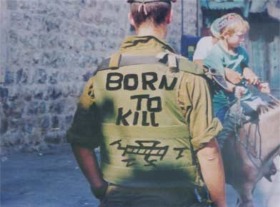

 Half the Negev’s Bedouin population live in unrecognised communities

 Part One, The Record, treats the history of garlic as evidence. From the clay garlic bulb placed in an Egyptian grave nearly six thousand years ago, through the Ebers Papyrus, through Hippocrates, Dioscorides, Pliny and Galen, the Arab physicians under Avicenna, the medieval herbals, Culpeper, and the plague years, to the last era in which Western physicians prescribed garlic as a matter of course, which ran from 1850 to 1945. It closes with the living traditions that never stopped using it, and with the folklore of charms, vampires and the evil eye.
 Aletho News

