This is a great documentary by Free Mind Films about the 1995 False Flag Event bombing in Oklahoma City. The government claims that 168 people were killed, including nineteen children. For years following the bombing, countless victims family members, survivors, rescuers, and ordinary Americans, have questioned the government’s conspiracy theory (aka the official story) about that fateful day. Hoping to shed light on answers long ignored and censored, both by prominent media outlets and the U.S. Government, A Noble Lie peels back what we thought we knew about the bombing and the perpetrators. This film exposes information never before examined or brought to the attention of the American public. A Noble Lie is the culmination of years of research and documentation conducted by independent journalists, scholars, and ordinary citizens. Often risking their personal safely and sanity, they have gathered evidence which threatens to expose the startling reality of what exactly occurred at 9:02 am on April 19, 1995 in Oklahoma City.
The Murrah building was bombed for three reasons, two having to do with records stored there and the destruction of those records, and overall to promote THE FAKE WAR ON TERROR. They were:
1) The first set of records were those concerning the Clinton’s and their CIA op’s in Mena, Arkansas which involved drug smuggling, gun running, and the whole Iran Contra affair.
2) The second set of records of greater concern had to do with the Anthrax vaccine and the use of depleted uranium weaponry, both which had many adverse effects on our troops which participated in Gulf War 1. These records were to be used in lawsuits against the federal government for what is known as Gulf War Syndrome.
3) The “official” definition of Terrorism had been changed in all dictionaries from GOVERNMENT BY INTIMIDATION to extremists fighting against democracy. The OKC bombing was setting the stage for their biggest “upcoming” False Flag Event which was 911. That event would be the Final Solution (along with the COVID-19 PLANdemic) in bringing forth the NEW WORLD ORDER agenda against mankind.
‘You’ll end up on a ventilator’. That threat was frequently aimed at dissidents in the early months of Covid-19. ‘End’ is the operative word, as most patients who were put on to the mechanical breathing apparatus lost their lives. Many may have died anyway, but undoubtedly ventilators did more harm than good.
As Registered Nurses, we are concerned by needless iatrogenic deaths in the Covid-19 regime, whether by excessive use of midazolam, cardiovascular harm from vaccines, curtailed access to cancer screening and surgery, or the impact of fear-inducing propaganda. What was the role played by ventilators in the pandemic phenomenon?
We have divided this review into ‘how’ and ‘why’. In Part One we consider the dubious clinical rationale and adverse outcomes of such widespread treatment, and in Part Two we explore its psychological purposing. It’s not a pretty picture.
THE CLINICAL CARNAGE
IMAGINE being admitted to hospital for any reason and after testing positive for a respiratory virus, being moved to another ward, sedated into semi-consciousness and hooked up to a mechanical breathing machine. How on earth did you get here? Yet this was a common fate of hospital patients admitted in the Covid-19 outbreak in 2020. For too many, it was a silent spring, as their last breaths were taken before the tube was passed into their lungs.
A ventilator operates by a tube inserted through the mouth reaching down the windpipe into the lungs, blowing oxygen in and enabling exhalation of carbon dioxide out. The ventilated patient is normally sedated, partly to reduce distress caused by losing the ability to breathe naturally.
In an exchange with TCW editor Kathy Gyngell, former Pfizer chief scientist Mike Yeadon asserted: ‘I believe they were sedating, intubating and ventilating people admitted for non-respiratory reasons if they tested positive for Covid. My bottom line is that close to zero people should ever have been ventilated. Did you know that once sedated/unconscious and ventilated, everyone will die in due course? It’s a horribly dangerous procedure. When lifesaving like deep surgery or after trauma in a road accident, or perhaps a chest wall injury or stabbing and pneumothorax, or if you’ve an obstructive lung disease and are physically exhausted by the work of breathing, and finally a 50 per cent burn victim in agony, mechanical ventilation may be justified.’
The equipment is not standard treatment for influenza and pneumonia, a leading cause of death in older people, for whom such intervention would normally be regarded as unnecessarily invasive (and costly). Indeed, Yeadon doubts whether any patients testing positively for Covid-19 should have been ventilated.
The mad rush for ventilators began after the virus reached Italy and then spread across Europe and North America. On March 25 2020 the analytics company GlobalData estimated that about 10 per cent of the Covid-19 cases worldwide needed ventilators and that 888,000 ventilators would be needed. The company’s medical devices analyst Tina Deng said: ‘Ventilator shortages are a crucial reality as the Covid-19 outbreak continues to worsen globally. All ventilator manufacturers have full order books and hold little in stock – receiving orders not only from regular customers such as hospitals, but also directly from governments.’
Italy became the benchmark for the rest of Europe, but account was not taken of the uniqueness of the Italian health service. Before Covid-19, Italy had considerably higher bed occupancy than in the UK. With similar populations (60million for Italy; 68.5million for UK), the former has 25,000 more beds than the latter (187,000 for Italy; 162,000 for UK). In 2019 Italians were admitted to hospital a staggering 58.6million times compared with approximately 6million in the UK. Patients in Italy are much more likely to be admitted, with high use of intensive care units (ICU), where Italy has 3.1 beds per 1,000 people compared with 2.4 in the UK.
At the time of the Covid-19 outbreak the NHS had 5,000 adult and 900 child ventilators, but at least 30,000 were deemed necessary for the surge in pandemic patients. The government called on major British manufacturers such as Rolls-Royce and Dyson to build ventilators instead of engines and vacuum cleaners (see Part Two).
But ventilators were clearly no panacea. In April 2020 the Daily Mail reported data from the Intensive Care National Audit and Research Centre on the first 777 Covid-19 patients treated in 285 ICUs, showing that only 34 of 98 ventilated patients lived to tell the tale. According to the newspaper, volunteers at the hurriedly erected Nightingale Hospital in London were told that 80 per cent of patients on ventilators would die.
On April 9 theIndependent reported that ‘some working on the front lines of the coronavirus epidemic are now wondering whether (ventilators) might do more harm than expected’. On the same day the Daily Mail went almost as far as saying that doctors knew that this intervention was killing people. On April 26 an NIH pre-print reported that ‘mortality rates range from 50-97 per cent in those requiring mechanical ventilation’. Meanwhile the US publications STAT (twice) and Time both reported warnings by physicians that use of ventilators for Covid-19 patients was misguided.
As Kit Knightly remarked in OffGuardian(May 4 2020), ‘over-use of ventilators may actually be killing people who could otherwise have survived’. Knightly’s detailed article explained why so many patients were dying, including this quote from German pulmonologist Thomas Voshaar: ‘Invasive ventilation is fundamentally bad for patients. Even if the ventilator is optimally adjusted and the care is perfect, the treatment brings with it many complications. The lungs are sensitive to two things: excess pressure and excessive oxygen concentration in the air supplied . . . The terminal failure of the lungs is often caused by too high pressure and too much oxygen.’
Rather than ameliorating pulmonary infection, ventilators increase the risk. Under sedation, the intubated, ventilated patient’s cough reflex is disabled, often leading to fluid accumulating in the lungs. These stagnant pools are prone to bacterial infection (particularly in the microbial culture of a general hospital). Survivors of ventilation are often left with lasting damage. A study published in the American Journal of Tropical Medicine & Hygiene found that mechanical ventilation seriously damages the lungs of Covid-19 patients.
After the frenzied quest, ventilators were quietly dropped. According to the BMJ, 60 to 75 per cent of Covid-19 patients admitted to hospital in the UK in April 2020 were subjected to this apparatus. However, according to recent UK Government figures for the seven days leading up to April 6 2023, only 4 per cent of the same type of patient were ventilated. As Ingrid Torjesen said in the BMJ in January 2021: ‘The pace of the move away from invasive ventilation varies among hospitals and has been driven by greater clinical experience of treating covid patients, by data associating invasive ventilation with higher mortality.’ Yet as we have shown, there was never a good medical rationale for intubating and ventilating patients as a front-line treatment.
One ICU nurse we interviewed about the early days of Covid-19 described policy and practice on ventilation as ‘a farce’, with no consistency between physicians. But policies must have existed, whether on paper or not. Unsubstantiated anecdotes proliferated on social media of ambulant patients being intubated and ventilated to immobilise them to reduce transmission. A YouTube video by nurse Erin Marie Olszewski, featuring covertly recorded conversations in the intensive care unit of a New York hospital, tells of the tragic death of a 37-year-old man. Admitted with shortness of breath but otherwise healthy, this case illustrated how patients were regarded by hospital management as throughput, placed on ventilators simply because they had low oxygen level. In the killing fields of New York more than 80 per cent of ventilator cases died, and according to Olszewski one person who did not perish saved himself by pulling the tube out. She attributed this radical practice to orders ‘from above’ and financial incentives from the government; it was literally cash for corpses.
Most doctors and nurses who worked through the great pandemic scare of 2020 would be aghast at any implication that they were knowingly terminating lives. As with most aspects of Covid-19, the pandemic response was orchestrated at a higher level, but this does not excuse any clinician who departed from the Hippocratic Oath to first do no harm. Ventilators killed, but as we shall discuss in Part 2, they also had a much wider, malign impact on society.
On March 19, 2003 the United States began its military invasion of Iraq. The Authorization for Use of Military Force Against Iraq passed Congress in October 2002, with 296 congressmen and 77 senators voting in favor of giving President George W. Bush carte blanche authority to decide if and when to go to war.
Twenty years later, this is a list of members of Congress who voted for the AUMF and are still in office.
There are sixteen congressmen, including nine Republicans and seven Democrats.
Ken Calvert (R-CA)
Darrell Issa (R-CA)
Mike Simpson (R-ID)
Hal Rogers (R-KY)
Sam Graves (R-MO)
Chris Smith (R-NJ)
Frank Lucas (R-OK)
Joe Wilson (R-SC)
Kay Granger (R-TX)
Sanford Bishop (D-GA)
Steny Hoyer (D-MD)
Stephen Lynch (D-MA)
Bill Pascrell (D-NJ)
Adam Schiff (D-CA)
Brad Sherman (D-CA)
Adam Smith (D-WA)
There are ten senators, including five Republicans and five Democrats.
“The Road to Emmaus,” 1877 painting by Robert Zund. The Gospel of Luke account remains beloved reading and gives inspiration to spiritual retreats. United Methodist News Service.
Emmaus is a profoundly important place in Christianity. The Bible says that after Jesus’ death and resurrection, he appeared before two of his disciples while they were walking on the road to Emmaus, although at first they didn’t recognize him. When they arrived in Emmaus, Jesus took bread, blessed it, broke it in pieces, and gave it to them.
In 1967, after Israel launched its Six Day War, Israel expelled the inhabitants of Emmaus and obliterated almost all traces of the village, along with two other Palestinian villages nearby. This was part of the Israeli strategy, in the words of an Israeli historian, “to take over as much of Palestine as possible with as few Palestinians as possible” (a strategy initiated in the 1948 war to establish the modern state of Israel and then to erase the Palestinian presence).
Israeli journalist Amira Hass describes Emmaus before it was leveled: “Schools, mosques, an ancient church, olive presses, paths to fields and orchards, bubbling streams, mountain air, sabra bushes, carob and olive and deciduous trees, harvested fields, graves, water cisterns.”
Israel then “brought in the bulldozers and destroyed and detonated and trampled. Not for the first time, not for the last. And the owners of all that beauty – the elderly, the children, the infants – heard and watched the explosions from a kilometer or two away.”
The villages’ inhabitants then “trekked for days through the mountains to Ramallah, leaving their belongings behind. Four seniors and a one-year-old baby died along the way. The elderly and disabled residents who were unable to leave their homes had their houses demolished on top of them. Eighteen were killed, buried underneath the rubble.”
IDF soldiers expel the residents of Imwas (originally named Emmaus) from their village (source)
In 1972 Israel built its popular Canada Park on the location, named after Jewish Canadians who had been persuaded to donate for the venture. Hass writes that the park “was designed to conceal and bury” its war crime.
Christians often focus on the Biblical Emmaus story
Today, Christian pastors often retell the story of Jesus’ appearance to his disciples in Emmaus.
The numerous paintings of this sacred event are featured on Christian websites around the country. The story is often used as an inspirational message to Christians, for example, to become “more committed to serving others.” […]
Yet, almost none of the sites featuring the Biblical story of Emmaus seem aware of the modern story, and of the people made homeless and in need of help – perhaps because so few know these facts. As author Grace Halsell wrote in a powerful essay, most Christians are unaware of what they don’t know about Israel. “They were indoctrinated by U.S. supporters of Israel in their own country and when they traveled to the Land of Christ most did so under Israeli sponsorship.”
A moving film recounting the facts about Emmaus, “Ritorno a Emmaus” (Return to Emmaus), was broadcast on Swiss Italian Television on May 29, 1987 but was not shown in the U.S. This is the first time it’s available in English:
There is a strange idea hovering about that if you don’t know something then it doesn’t exist. Kind of like the image of the proverbial ostrich with his head in the sand. But it goes beyond denial. Ignorance is when you don’t know something at all, denial is when you know it, but you ignore it.
What I am talking about here is when you know something and do not deny it, but simply rationalize it away with a statement like “they must have a good reason for doing that,” or similarly, “maybe we don’t know all that there is to know about that.” Which is often followed with, “and I don’t have the time, (inclination, care, interest, curiosity, ability, intelligence, etc.) to look into it further.”
This has always bugged me to some extent, but I must admit I have been marginally guilty of this sort of thinking myself. I mean, do we really have the time to check everything? Well, now I think we have to make the time, and, of course, not everything is important enough to require vetting it for truth. That is an awful thing to say, but I am afraid it is the truth.
Part of this “gullibility” that causes many people to just brush things off assuming that all is ok comes from indoctrination from an early age. I grew up in a culture that seemed to be really obsessed with people’s safety—particularly the safety of children. Think of all the recalls of toys and such. If some toy comes out that has the slightest bit of uncertainty about how it might harm your child, it is pulled.
I should not say I “grew up” with this because most of the crap I played with as a kid would be considered a lethal weapon today—Lawn Darts, BB and pellet guns, Vac-U-Forms, chemistry sets, Easy Bake ovens (this was my sister’s toy, she was a little girl, I was a little boy—I tell you this for clarity). The “safety craze” didn’t really start until a decade or so later. I even remember some kid I knew got an “Atomic Energy Lab” toy that had actual uranium ore in the kit.
I would have died (literally) to get my hands on one of these.
Those were the days.
So over the decades, due to these recalls and safety concerns, we have developed a false sense of security. What regulation agency would bother to recall Lawn Darts but at the same time allow an unsafe vaccine to reach the unwilling arms of children? Well, toys are toys, vaccines are medicine. There ‘ya go.
The government, and other regulatory agencies, know what’s right, right?
Being born into a culture (US) that was known for its integrity, truthfulness, righteousness, and a penchant for character and goodness (ha, ha), no one would ever think that the CIA would have been actively trying to assassinate Fidel Castro, among others, for decades.
I remember first hearing a rumor about this when I was about 15. “No way,” I thought to myself. “Assassinations are illegal! My country would never be involved in such a thing!” Especially attempting to murder a leader of a country that really was just minding their own business. At least so it seemed. (Today, when we hear of such things, we shrug our shoulders and say, “They must know what they are doing.”)
And what about Iran’s Mosaddegh? He was minding his own business overseeing the affairs of Iran as Prime Minister from 1951 to 1953. The US wasn’t happy with him for a number of reasons (primarily economic, like, for example, Mosaddegh wanted Iran to get a bigger share of oil profits that the US and UK were sucking out of his nation’s oil fields, imagine that! What audacity!). The CIA bopped him off as well—indirectly with a CIA created insurrection, which led to Mosaddegh’s imprisonment and more than likely contributed to his health issues, then he died). Sure there is detail here I am not presenting, but you get the picture.
The US Government must have had a good reason.
How about Obama’s drone war? Killing a whole whack of people, including children (I would say “women and children” but I might get in trouble for that).
He must have had a good reason.
Personally, I don’t think there is any “good” reason to kill children—even if as collateral damage or unintentionally.
I am presenting here only a few examples among thousands… more than we even know of course. And this is just government actions, what about pharmaceutical actions, or other medical actions? They all must have good reasons.
As a whole most people seem to think that atrocities cannot happen in the US (or Canada, or the UK, or other countries in the “civilized” West). We are just too sophisticated for that. The irony here is the official spokespeople for the US, for example, actually present themselves as do-gooders. They either keep their actions covert and Top Secret, or they present them as “good things.” We only have to look to people like Julian Assange and Edward Snowden to see how the US treats whistleblowers who seek to expose the fact the US really doesn’t have a good reason to do much that it does—at least no reason that benefits us.
If you ever corner a sheep and throw this sort of stuff at them, they will first hit you with the statement, “why do you have to be so negative? Why can’t you just trust your government to take care of business in our best interests as a nation?” They will say that the government has to have secrets in order to keep us safe, and those people who break the law (Assange and Snowden, among many others. Since we are counting, let’s include the truckers of Canada as well) are criminals, and it doesn’t matter if your intention is good, if you break the law you are a criminal and should be punished.
If you try to argue with these sheep about anything more complex, like the CIA’s intervention into Middle Eastern affairs, they will just blow it off and say something like, “All that overseas stuff is just too complicated to sort out. And those Middle Eastern countries (except Israel) are all bad guys, I don’t really care what the US does to them, they know what they are doing.”
Sheep are funny that way. “La, la, la, la, la, la” with fingers plugging their ears. It is easy to push them to this point. Sheep poking. Try it some time for fun and pleasure.
One good way to get them there really quickly is to bring up some false flag issue that has been in the big time news within the last few decades. The 9-11 fiasco is my favorite. You’ll get the sheep fingers into the ears really quickly with the “la la la’s” going full blast. Don’t try something too far out there though, like the moon landing, or the hot ticket now, germ vs. terrain theory. You’ll only just get eye rolls for those whacko topics.
I am curious though… speaking of 9-11… what will happen when that incident is exposed for what it was? (Assuming that will ever occur.)
I will bet you money, no matter how ludicrous it would be, their first response to the realization that their own government was responsible for the destruction of those buildings at the World Trade Center, will be, “They must have had a good reason.”
Actually they did, but it wasn’t a good reason for us.
Todd Hayen is a registered psychotherapist practicing in Toronto, Ontario, Canada. He holds a PhD in depth psychotherapy and an MA in Consciousness Studies. He specializes in Jungian, archetypal, psychology. Todd also writes for his own substack, which you can read here.
Roger Daltry of mod rock band The Who screamed “We won’t get fooled again” in its lengthy and punchy signature song. But it appears we have. Almost everything that those on the sceptical side of the Covid narrative recognise about the hyped-up nature of the recent pandemic will see parallels in Overturning Zika: the pandemic that never wasby Randall S. Bock.
Bock is a U.S. physician who has long harboured scepticism about something that most of us had completely forgotten: the Zika ‘pandemic’ of 2015 in Brazil. Like COVID-19, this was accompanied by dire predictions of deaths in the millions and, parallel to the ridiculous and extraordinary locking down and social distancing mandates of 2020-2021, Zika was accompanied by ludicrous suggestions that women should not have babies and even abort the ones they were carrying. Some did.
Zika is a mosquito-borne virus that is present in South America. According to Wikipedia, it can be associated with the birth defect microcephaly, whereby a child is born with a smaller than normal brain. One source, GAVI (‘The Vaccine Alliance‘) claimed in 2022 that one third of babies exposed pre-birth to Zika developed microcephaly. However, it then proceeded to say there is a “continued need to develop a safe and effective vaccine for preventing Zika virus infections during pregnancy”. GAVI has a vested interest in vaccine production and distribution.
It is worth pointing out that the author of this book is not a tin-foil hat wearing virus sceptic, ‘anti-vaxxer’ or conspiracy theorist. He does not deny the existence of the Zika virus, or specifically deny its potential to cause microcephaly and does not ascribe the manufacturing of the Zika pandemic to evil forces determined to reduce the population of the world. Instead, he examines the evidence as it stands, contextualises this within the scientific paradigm and examines some of the social and media forces at work which fan the flames. Thus, a smouldering fire of (misplaced) suspicion that there was an outbreak of Zika-related microcephaly in Brazil soon became a forest fire of panic across the country and elsewhere in the region.
The simple facts are that a case of microcephaly was attributed to Zika without a shred of evidence that Zika was the cause. Microcephaly occurs in possibly one in every 800-5,000 babies. If you go out armed with only a hammer, everything looks like a nail and other cases of microcephaly were soon identified and misattributed to Zika. In 2019, when Zika was a distant blip in the rear-view mirror, Bock tried to publish a short review demonstrating that the accompanying pandemic had been a mistake, but major medical journals refused to publish it. This was not because it was inaccurate or that what was contained was not fairly common knowledge among the medical community, but in case it undermined public trust in public health initiatives related to Covid. This is what is now referred to as ‘malinformation’; something that is true but uncomfortable for those controlling the narrative.
The story, briefly, is that Zika was considered the cause of a cluster of cases of microcephaly. This was done against a background of poor baseline information about the extent of microcephaly and without specific laboratory testing for the presence of Zika. A purported Zika test had never been standardised and Zika and its close relative dengue fever are almost identical genetically and almost impossible to distinguish. Scepticism about the existence of Zika, based on the poor science applied to its characterisation was quashed and likewise scepticism about the link between it and microcephaly.
In the sceptical free zone that was allowed to exist around the Zika microcephaly story, local, national, regional and international panic ensued. Pregnant women lived in fear that their babies were going to be born brain damaged, the WHO issued travel advice related to the 2016 Brazil Olympics and NPR, never known to let a good pandemic go to waste, reported fears amongst athletes and staff at the games over Zika infection.
However, when accurate Zika testing became available in 2016, the purported link between the virus and microcephaly failed to hold. Zika-related microcephaly, now described as ‘rare’, just disappeared. The only reasonable conclusion, in the absence of a vaccine or additional preventive measures, was that it probably did not exist. In the meantime, pregnant women had been smothering themselves in insecticides potentially harmful to their unborn babies and the family planning lobby had got to work with increased calls for ‘net zero’ related to birth rates.
Bock traces the main characters involved from the group of physicians who initially raised the alarm, through incompetent national health officials up to the ubiquitous eminence grise, without whom no pandemic is complete, Anthony Fauci who said all the usual things about vaccines and public health measures. In this case, rather than being a driving force, Fauci jumped on the Zika bandwagon. What had started as a cock-up soon became a conspiracy. Fauci used Zika to “wage war” on pandemics. We now know what he meant.
The book is written in a very familiar and even colloquial style. It is reasonably easy to read and not too heavy, within the text, on scientific jargon. It does suffer, however, from a somewhat samizdat style of presentation and there is a great deal of repetition of what the appropriate scientific procedures should have been. That said, the opening synopsis is very helpful, makes all the main points and stands alone. The accompanying diagrams and figures are far too busy, poorly produced, and not signposted properly. On the whole, some ruthless editing may have helped to produce a more concise text. Nevertheless, this is a book that should be read.
Randall S. Bock (2023) Overturning Zika: the pandemic that never was. Drivestraight Publishing, Istanbul, is available to purchase on Amazon.
Dr. Roger Watson is Academic Dean of Nursing at Southwest Medical University, China. He has a PhD in biochemistry.
Fear of a Microbial Planet, by Dr. Steve Templeton, is a wonderfully accessible book on the Covid era now published by Brownstone institute, offers desperately needed clarity and science on the organization and management of individual social life in the presence of pathogenic infection. It can be read as a definitive answer to expert arrogance, political overreach, and population panic.
For three years following the arrival of the virus that causes Covid, the dominant response from governments and the public has been to be afraid and stay far away through any means possible. This has further mutated into a population-wide germophobia that is actually being promoted by elite opinion.
Steve Templeton, Senior Scholar at Brownstone Institute and Associate Professor of Microbiology and Immunology at Indiana University School of Medicine – Terre Haute, argues that this response is primitive, unscientific, and ultimately contrary to individual and public health. The most unhealthy populations are those which preserve immunological naivete in the presence of a virus that is otherwise going to circulate widely.
Dr. Templeton’s story is both scientific and highly personal, taking the reader through the basics of immune response and public health even while relaying his personal frustrations with trying to talk sense to others in senseless times.
If a public health response is like an immune response, then consider this book as immunization against germophobia, politicized science, a self-defeating safety culture, and misplaced faith in experts. Dr. Templeton is our guide to helping us gain a new and more robust understanding of the relationship between the microbial kingdom and our own lives.
The pandemic forecasts in the United States were very grim. Experts were predicting that 60-70 percent of the population would ultimately be infected resulting in over 1.5 million deaths in just a few months. People on social media were in an absolute panic. Stories about empty shelves and runs on toilet paper were everywhere. Those who tried to refute these doomsday predictions were shouted down and eventually silenced.
And yet, the science on the virus was very clear. Disease severity was age-stratified. Extreme measures would not drive it away and would cause a tremendous amount of collateral damage. Even if the worse-case scenarios were true, it was extremely important that we take measures based on evidence.
But eventually, the cry to “do something” became overwhelming, and the costs no longer mattered. Trying to calm people with wisdom about infectious disease became nearly pointless. Germophobia swept through society and political culture.
Hardly anyone wanted to hear the truth that microbes are everywhere, and they cannot be avoided. There are an estimated 6×10^30 bacterial cells on Earth at any given time. By any standard, this is a huge amount of biomass, second only to plants, and exceeding that of all animals by more than 30-fold.
To live at peace with the microbial kingdom requires trained immune systems, as George Carlin said years ago. That means exposure and the protection of normal social functioning even under pandemic conditions with a new virus.
Many books have been and will be written about pandemic response mistakes, and that’s a good thing. There can’t possibly be enough reflection on what went wrong, otherwise we will be doomed to follow the same path, or an even worse one, next time. This book argues that the safety-at-all-costs culture will continue to result in counterproductive policies until it is challenged at its root.
How did people in our communities and around the world get to the point of hysteria over a pandemic with a clear age-stratified and comorbidity-amplified mortality? Why were young and healthy people with very little risk for disease and death treated as if they were a grave danger to others?
It was always pointless to try to stop much less eradicate this virus. We’ve evolved with pathogens and need to learn to live with them without imposing mass psychological, social, economic, and public-health damage.
Everyone who panicked to the point of meltdown needs this book as a corrective. And even if you did not, everyone knows someone who did, public-health officials above all else.
Former US National Security Advisor John Bolton has urged Washington to implement a new Cold War-style strategy against Russia and China. According to the long-time foreign policy hawk, the West should cut back on social programs to fund military spending, renew testing of nuclear weapons, and provide security guarantees to Taiwan.
Bolton, who served in the administration of President Donald Trump, described his “grand-strategy” approach to geopolitics in a Wall Street Journal column on Wednesday, urging candidates in the 2024 US presidential election to think in the same terms.
The US should have a “contemporary reincarnation” of NSC-68, Bolton argued, referring to the document adopted under President Harry Truman which laid the foundation for militarizing the confrontation with the USSR. He also claimed that in a new Cold War, the US and its allies would be pitted against a Chinese-Russian “axis” and “accompanying rogue-state outriders like Iran and North Korea.”
Bolton named several key points for his proposed strategy, including an immediate increase in military spending to Reagan-era levels, which he claimed should be maintained for the foreseeable future. He also asserted that Western nations should cut back on social spending, because “neither the obese welfare state nor massive income-redistribution schemes protect us from foreign adversaries.”
In addition, Bolton insisted that the US should upgrade its nuclear stockpiles, which would mean “the inevitable need to resume some underground testing.”
Bolton’s plan also advocated the “improvement and expansion” of American military alliances, possibly by making NATO a global organization. This would help “exclude Moscow from regional influence, along with Beijing,” the former official claimed.
The self-governed Chinese island of Taiwan should receive “much more military aid” from Western nations, which should “embed Taipei into collective-defense structures,” Bolton suggested. The recommendation comes despite the Chinese government identifying Taiwanese separatism as a major ‘red line’ which may trigger military action if crossed.
Finally, Bolton urged Washington to prepare for what happens “after Ukraine wins its war with Russia.” He claimed that such an outcome could lead to Russia’s fragmentation, and warned that China would then seize some of its territories, providing it with “direct access to the Arctic, including even the Bering Strait, facing Alaska.”
Moscow has alleged that the conflict in Ukraine is part of a US proxy war against Russia, and that Washington’s goal is to partition the country. The Russian leadership has argued that this threat leaves it with no other option but to succeed in Ukraine.
So-called conspiracy theories abound, especially among those who attack others by calling them conspiracy theorists. There are official conspiracy theories, such as the government-approved stories about 9/11, the 7/7 bombings, the Manchester Arena attack and so on. There are also unofficial conspiracy theories, such as the expressed opinion of Richard D. Hall that the Manchester arena attack was a staged simulation without injury or death but performed and reported as if real.
We have to use the term “conspiracy theory” advisedly because, as we shall see, conspiracy theory, as we understand the term, doesn’t exist. “Conspiracy theory” is really just an opinion that the state does not wish anyone to either hold or express.
The BBC’s special disinformation and social media correspondent, Marianna Spring, calls Richard D. Hall a “disaster troll.” She claims that Hall lives in a “dark world” and that his “warped views” have “led him to the doors of terror victims.” Spring says that Hall is spreading “obscene lies” and that he is “at the centre of a network of conspiracies.”
Spring is utilising the propaganda technique of “othering.” She is trying to cast Hall as subhuman—a troll—and, by association, applies the same dehumanising propaganda label to anyone who shares Hall’s concerns about the official account of the alleged Manchester Arena bombing.
“Othering” is an applied psychological strategy widely used by authoritarian political regimes. Prominent historical examples include the “othering” of Jews in Germany during the 1930s by Nazi propagandists.
Spring’s alleged “journalism” should be considered within the context of efforts by the government and its propagandists to censor any and all dissenting opinion. Spring evidences her intent, and the purpose of her “Disastater Troll” pseudo-investigation, when she rounds off one of her attack pieces on Hall by saying:
What matters is that he’s created a conspiracy world that causes real world harm.
Demonstrably, Hall has done nothing of the sort. It is Spring herself who has created a propaganda world that really does augur “real world harm.”
It seems that “what matters” to Spring and the BBC is that they provide whatever narrative support they possibly can to promote the UK government’s proposed Online Safety legislation. To that end, Spring is producing anti-democratic propaganda and disinformation.
Like the RESTRICT Act in the US and the EU’s Digital Services Act, the UK’s Online Safety Bill proposes to exploit alleged threats and legitimate safety concerns for the purpose of censoring free speech and freedom of expression.
The influential international law firm Reynolds Porter Chamberlain (RPC) describes what it calls the “unintended” consequences of the Online Safety Bill. Suggesting that the proposed legislation is poorly conceived, RPC notes:
Almost every online platform that allows user-to-user engagement or search will be caught by the OSB [Online Safety Bill]. [. . .] [E]very online platform or communication channel around the globe which “targets the UK” will have to comply with an increasingly onerous array of obligations.
Not only is censorship legislation emerging in the UK, it is also appearing simultaneously across the world. Since RPC is a pillar of the Establishment, it is not going to point out the UK’s dictatorship. But for the law firm to imagine that this coordinated, global censorship agenda is simply poorly conceived or all merely “coincidence” or the result of “mistakes,” as it claims elsewhere, isn’t credible.
RPC continues its informed legal opinion:
Individuals could be subject to ongoing surveillance ordered by a regulator and operated on an indiscriminate basis [. . .]. This in turn could expose journalistic sources and endanger individuals investigating politically sensitive issues. Index on Censorship warns that “unless the government reconsiders or parliament pushes back, these powers are set on a collision course with independent media and journalism as well as marginalised groups.”
The UK state’s intention is to censor “independent media and journalism” and silence “marginalised groups.” The “collision course” RPC speaks of is an inevitable consequence of the legislation, if it stands.
None of this “matters” to Spring or the BBC, however, as they relentlessly push for greater state surveillance and censorship. Instead, the destruction of our supposedly open and free democracy is wholeheartedly endorsed by Spring and her employers.
Spring is acting as a state propagandist, and her attack upon Hall is both nonsensical and politically motivated. The propaganda she is producing cannot be described as “journalism.”
Richard D. Hall’s Opinion
Richard D. Hall is an investigative journalist and author who has provided the evidence which strongly suggests that the official narrative of the Manchester Arena bombing cannot be true. In Hall’s opinion, the Manchester Arena bombing was a simulated false flag event that did not result in injury or death.
As reported by the BBC, false flag terrorism has been used extensively by governments. For example, Operation Gladio ran for more than four decades in Europe. In this operation, NATO-aligned intelligence agencies, including the British State’s MI6, worked with far right terrorist groups, murdering European civilians and blaming the atrocities upon far left groups. The geopolitical objective was to demonise the Soviet Union and, through the strategy of tension, convince populations to accept greater authoritarian state controls for their own “safety.”
Spring’s BBC propaganda deploys a similar strategy of tension. It seems her objective is to convince the wider public that Hall’s evidence-based opinion presents some sort of threat. Once convinced, the population may be willing to accept state control of public opinion—in the form of the Online Safety Bill—in order to “stay safe.”
The irony is that it is Spring’s Disaster Troll narrative that presents the real threat. A government that can censor all criticism is a very dangerous beast indeed.
The Operation Gladio false flag terror campaign used real bombs and bullets to kill people. The European mainstream media (MSM) then published the disinformation needed to shift the blame onto the pre-designated perpetrators.
A simulated or “hoaxed” false flag is different: the attack itself is staged, and few people, if any, are injured. The MSM’s role in such a hoax is to shore up the official account and deny the evidence that exposes it as a simulation or hoax.
For example, the evidence indicates that the so-called Boston bombing was a simulated terror event that used crisis actors to create the false impression of a terrorist attack. Yet the MSM reported the official narrative without examining any of this evidence.
“Disinformation” is information deliberately intended to deceive. If a global news corporation reports on an event without any investigation or reporting of the evidence, it is reasonable to consider this reporting “disinformation.” The intent is obviously to deceive the public into believing that the balance of evidence supports the report. It is “deliberately” misleading.
In 2016, the Associated Press (AP) reported that a deadly car bomb in Iraq “hit a popular fruit and vegetable market near a school in the northwestern Hurriyah area, killing at least 10 people and wounding 34.” The story was then picked up by MSM outlets across the world and reported to an unsuspecting public as if it were true.
In reality, it was a simulated terror attack. By omitting the clear evidence which proved this to be the case, AP and all the other MSM outlets that ran the same story were spreading disinformation.
Companies that specialise in providing crisis actors and crisis simulations, such as CrisisCast in the UK, create fake terror attacks and other crisis events for training purposes. They specialise in fake injuries—called Casualty Simulation (CAS SIM)—to provide the military and emergency services with highly realistic training environments.
CrisisCast explains that its crisis actors “undergo psychological training with our own in-house behavioural psychologist.” Promoting the effectiveness of its crisis actors, the company adds:
We provide professionally trained amputee actors and film grade makeup specialists. CrisisCast amputee actors have many years of experience in hyper-real, immersive training for key learning outputs and are regularly featured in film and television productions.
Of course, Spring’s faux “Disaster Troll” investigation does not inform the audience of the British state’s historical involvement in the use of false flag terrorism. She makes no mention of the fact that crisis actors exist or that false flag terror attacks, including simulations, are a relatively common propaganda tool. Thus, by omission, Spring deceives her audience into believing that Hall’s opinion is beyond the realm of possibility.
Spring broadcast comments she made to a BBC producer prior to doorstepping Hall at his market stall:
We’ve asked him lots whether he [Hall] wants to do an interview with us and he hasn’t taken us up on that offer. So this is my chance to put our questions to him face-to-face.
“Hasn’t taken us up on our offer” gives the impression that Hall hadn’t responded. In truth, Hall responded at length and flatly declined the BBC’s “offer.” He made it clear that he did not wish to speak to Spring or anyone else from the BBC. He even explained why:
The BBC has shown itself over many years to be duplicitous and its raison d’etre is not about reporting the truth. If you mention me or my work I insist that each time I or my work is referred to that you mention and display a prominent link to the following website URL, so that people can find the whole work and judge the whole work for themselves.
The fact that Hall felt the need to elaborate reveals an important distinction between the BBC’s output and his own work. The BBC expects its audience to trust whatever it says, but Hall knows, from experience, that they shouldn’t. Hence his request that the BBC feature a link to his website, at least affording the BBC audience the opportunity to consider the evidence he offers and “judge the whole work for themselves.”
When Spring interviewed him against his wishes, Hall politely suggested she should read his book—Manchester: The Night of the Bang. To which Spring replied:
I have looked at your book and in there are claims about the victims that are contrary to the evidence.
It is unclear if Spring has really “read” Hall’s book, but at least she mentions the importance of evidence. She goes on to say that Hall’s book contains “a series of false claims that would be laughably ridiculous if they weren’t so offensive and harmful.”
Considering that Spring thinks Hall’s evidence is “laughably ridiculous,” She makes an inexplicable allegation:
I think it is interesting that he [Hall] doesn’t want to talk to us. [. . .] I think for his fans and followers who turn up at his stall they might think — Oh! don’t you want to present your evidence? We wanted to give him that opportunity but he has decided that he doesn’t want to.
Why does Spring think she and the BBC need to give Hall this “opportunity”?
Richard D. Hall has spent years investigating the Manchester Arena bang. He has produced numerous videos and written and published an incredibly detailed analysis of the evidence. His book is available to anyone who wants to read it. Short of delivering his evidence door-to-door by hand, it is unclear what more Hall could have done to “present” the evidence to the public.
All of Hall’s “laughably ridiculous” evidence is in the public domain. Spring is supposedly an investigative journalist. She has produced endless reams of content alleging that Hall’s opinion is “contrary to the evidence” and causes harm. She’s a leading BBC correspondent, for heaven’s sake. She doesn’t need Richard D. Hall to present his evidence to her audience for her.
So, then, why hasn’t the BBC simply demonstrated to its listeners, readers and viewers precisely how Hall’s opinion is “contrary to the evidence?” Surely, if Spring is correct, nothing could be easier than to show that the evidence he has offered is “laughably ridiculous,” right?
Yet, despite running hours and hours of Disaster Troll podcasts, Panorama investigations, radio shows, numerous articles, appearances on media debates and widely reported news items, the BBC and Marianna Spring haven’t mentioned a single scrap of the evidence Hall has already “presented” to the public.
Indeed, the entirety of Hall’s “evidence” is absent from their “investigative reporting.” Why? Given the BBC’s serious allegations against Hall and Spring’s questioning of the veracity of his work, their refusal to explore his evidence makes no sense whatsoever. What is the BBC’s problem?
If Hall’s opinion is correct and his evidence solid and if he succeeds in bringing that evidence to wider public attention, the social and political implications would be immense. Under such circumstances, it is logical to expect the entire apparatus of the British state would be aligned against this single journalist. Thus, given that the BBC has devoted considerable resources to demonising and discrediting Hall, we can conclude it is trying to suppress his work.
But in attacking Hall, the state risks popularising his research. Marianna Spring confronts this problem:
Hall’s face and name are front and centre of his operation. [. . .] Hall has gone all in on trying to build a brand in his own name. [. . .] While making this podcast we gave careful thought to how much exposure we should give to conspiracy theories and the people who spread them. [. . .] But with Hall [. . .] it is impossible to report on the harm he’s causing without inevitably drawing some attention to him.
In other words, Spring is attempting to censor Hall’s work by using the “othering” technique of labelling him a conspiracy theorist “troll.” Her seeming intention is to discredit Hall while simultaneously discouraging her audience from looking at the evidence he has presented to the public. Spring apparently expects her audience to believe whatever claims she makes without examining any of the evidence for themselves.
Propagandists like Spring carefully construct the language they use to maximise the psychological impact of “othering,” thereby discrediting their target and heightening her audience’s fears and suspicions without cause. In Spring’s words, Richard D. Hall is not an investigative journalist and author who runs his own small business but is, instead, at the centre of an “operation.”
According to Spring, Hall’s willingness to publish his work in his own name doesn’t suggest he is honest but, rather, that he has “has gone all in” to build a “brand.” Without offering anything to substantiate her own opinion, Spring asserts that Hall is causing “harm” by expressing his honest opinion.
State propagandists face a conundrum. They realize that Hall’s scepticism of some state narratives is indicative of widely held beliefs. They want us to believe that so-called “conspiracy theory” has suddenly emerged as a social problem that “undermines democracy” and that something must be done to address this reportedly “new” problem. Of course, this assertion isn’t true, but the propagandists clearly hope that scapegoating Richard D. Hall will convince the UK public otherwise.
What is relatively new is the vast increase in the number of people who can now reach a relatively large audience. Hitherto, the distribution of information was reserved for a coterie of government officials, academia, and the MSM. In recent years, the internet has democratised the sharing of information, and the state’s response is to shut it down.
People are using the internet to discuss a whole range of issues that the state would prefer they did not. As a result, governments across the world are racing to seize control of the open and free exchange of information. The state and its propagandists are genuinely “undermining democracy.”
In order to justify their censorship agenda, propagandists need to construct compelling stories to convince people to abandon democratic principles by giving up their right to free speech and expression. Attacking Hall is one such compelling story, but it is a calculated risk.
Spring’s “Disaster Troll” propaganda is carefully crafted to evoke a fearful emotional response to the spectre of a dangerous bogeyman. The hope being, by casting Hall as a subhuman, the BBC audience will believe the spun narrative and accept the need for legislation to “protect” them, without ever considering any of the evidence Hall has presented.
The target is not Hall himself but rather the uncontrolled freedom of information. Destroying Richard D. Hall’s reputation and livelihood is just a means to an end for propagandists like Marianna Spring.
What Is Conspiracy Theory?
Joining in the drive towards state censorship is a gaggle of allegedly reformed “conspiracy theorists.” Neil Sanders and Brent Lee are among them. They seek to enlighten whoever they consider deluded. Apparently, Sanders and Lee are doing this “enlightening” by cooperating with Spring and the BBC.
Neil Sanders and Brent Lee
Whether Sanders and Lee are useful BBC dupes isn’t known. To be fair to both, they consistently highlight the need for so-called conspiracy theorists to stick to the evidence, avoid making baseless claims and refrain from alarmist hyperbole. This is good advice in general and doesn’t apply only to people they label “conspiracy theorists.” Some BBC “journalists” and government spokespersons should take note.
It is also important to look for and, wherever possible, consider all of the evidence. So it is unfortunate that Sanders’ and Lee’s critiques so frequently ignore huge swaths of evidence as they construct the strawman arguments they then proceed to knock down. In Sanders’ case, at least, this oversight is surprising, considering that he is a diligent researcher.
Sanders and Lee hope to divert people away from going down so-called “rabbit holes.” They appear to be doing this by diving headlong down the biggest rabbit hole of all: the “conspiracy theory” hole. They seem to think “conspiracy theories”—as defined by the likes of Spring—exist, when, in fact, they do not.
In actuality, a conspiracy theory is nothing more than an opinion held by one or more people about a possible conspiracy. A conspiracy theory commonly questions state narratives and policies.
But that’s it! There isn’t any other legitimate definition of “conspiracy theory.”
Like any opinion, so-called conspiracy theories can be wild and wacky, poorly informed—or outright wrong. They can also be well-informed, evidence-based and accurate. As opinions go, they are exactly the same as all other opinions.
Anyone can have an opinion, including a belief in one “conspiracy theory” or another. These opinions, when voiced, can be abhorrent to others. They can condone or even promote racism, hate, violence, and so on. But expressed opinions can also do good, by exposing crimes, uncovering malfeasance by public servants, provide invaluable social and political insights, or encourage people to cooperate and live in peace.
By advocating that “conspiracy theories” should be censored, the government, the BBC and Spring are trying to regulate and censor all opinions that question the state. Spring apparently holds “democratic ideals” in contempt. She seems to want an authoritarian regime—perhaps something akin to fascism or communism—established in the UK.
Certain well-funded psychologists and propagandists insist that there is some sort of maladaptive psychology underpinning what they call “conspiratorial thinking.” As Spring asserts:
Conspiracies are rooted in someone’s belief system. They become someone’s identity and their entire community, making them even more difficult to reject.
This is anti-scientific, statistically ignorant dross. There isn’t a shred of evidence that alleged “conspiracy theorists” form any kind of identifiable group or that they are particularly prone to any psychological disorders.
In the US, political scientists Joseph Uscinski and Joseph Parent undertook what may have been the largest-ever research survey of individuals they called “conspiracy theorists.” It was published in 2014.
They found, for one thing, that there was no identifiable type of person who could be labelled a “conspiracy theorist.”
They also discovered that women were just as likely as men to be “conspiracy theorists.” And, unsurprisingly, given their lived experiences in the US, black and Hispanic people represented the ethnic groups statistically most likely to question the US government.
Another point they found out: People who questioned state narratives largely worked outside academia but almost one-quarter of them (23%) were university-educated.
The survey detected no unifying political ideology. Liberals and conservatives, socialists and capitalists, Democrats and Republicans were all equally likely to question official accounts of events. Uscinski and Parent did find, however, that non-partisan “independents” had a slightly increased propensity to do so, though the leanings didn’t amount to a clear ideological predisposition.
It is widely reported by the MSM that “dangerous” conspiracy theories are on the rise. So, more recently, Uscinki et al. wrote a paper examining the alleged growth of these so-called conspiracy theories in the West. Warning that their research “should not be used to make claims about, or to excuse the behavior of, political elites who weaponize conspiracy theories,” they reported:
In no instance do we observe systematic evidence for an increase in conspiracism, however operationalized. [. . .] Questions regarding the growth in conspiracy theory beliefs are important, with far-reaching normative and empirical implications for our understanding of political culture, free speech, Internet regulation, and radicalization. That we observe little supportive evidence for such growth, however operationalized, should give scholars, journalists, and policymakers pause.
To be clear: anyone, from any ethnic, political or social group, may have opinions that question official government narratives or policy decisions. These opinions are widely held across society. There is not, nor has there ever been, any such thing as a “conspiracy theorist community.” Nor is there any plausible evidence to indicate that a higher percentage of the population question the state today than in any previous generation.
It is possible that the first time “conspiracy theories” emerged as a pejorative term was somewhere around the 1870s. In the Journal of Mental Science vol. 16, it was noted:
The theory of Dr Sankey as to the manner in which these injuries to the chest occurred in asylums deserved our careful attention. It was at least more plausible that the conspiracy theory of Mr Charles Beade.
In his magnum opus—The Open Society And Its Enemies—the philosopher Karl Popper discussed what he called the prevailing conspiracy theory of society. Popper highlighted the point that, while human society is capable of affecting significant change, it does not follow that every major development results from human action.
He criticised, what he considered to be, the widely held “conspiracy theory of society”:
The view that an explanation of a social phenomenon consists in the discovery of the men or groups who are interested in the occurrence of this phenomenon (sometimes it is a hidden interest which has first to be revealed), and who have planned and conspired to bring it about [. . .] – sinister pressure groups whose wickedness is responsible for all the evils we suffer from – such as the Learned Elders of Zion, or the monopolists, or the capitalists, or the imperialists.
Then he added:
I do not wish to imply that conspiracies never happen. On the contrary, they are typical social phenomena. [. . .] The conspiracy theory of society cannot be true because it amounts to the assertion that all results, even those which at first sight do not seem to be intended by anybody, are the intended results of the actions of people who are interested in these results.
Popper’s concern about the prevalence of the “conspiracy theory of society” would seem reasonable were it not for the fact there was no evidence to support it. His contention that a large body of people believe that every event occurs due to “the actions of people who are interested in these results” was not evidence-based.
Popper himself acknowledged that conspiracies are relatively common, yet he did not count himself among those who, he alleged, held to the “conspiracy theory of society.” The proportion of events Popper believed to be the “intended results of the actions of people who are interested in these results” remains unclear.
Building on Popper’s work, in 1964 American historian Richard Hofstadter suggested that people’s rejection of official state narratives was not founded in their appreciation of evidence but was instead rooted in some sort of psychological derangement. Admitting that he had no particular experience in psychology, Hofstadter implied, without cause, that these people were unhinged idiots.
I call it the paranoid style simply because no other word adequately evokes the sense of heated exaggeration, suspiciousness, and conspiratorial fantasy that I have in mind. [. . .] Of course, there are highbrow, lowbrow, and middlebrow paranoids, as there are likely to be in any political tendency. But respectable paranoid literature not only starts from certain moral commitments that can indeed be justified but also carefully and all but obsessively accumulates “evidence.” [. . .] The difference between this “evidence” and that commonly employed by others is that it seems less a means of entering into normal political controversy than a means of warding off the profane intrusion of the secular political world.
In addition, Hofstadter introduced an important component of the “conspiracy theorist” propaganda label. Although gathering and analysing “evidence” had traditionally been part of the critical thinking process, he newly presented the concept of “acceptable” evidence. That is, it is only “evidence” if it falls within the official Overton Window and supports the prevailing political and social paradigms.
UNESCO opines that the evidence offered by people who question official narratives is not evidence, because it is “forced to fit the theory.” This nonsensical drivel by UNESCO builds upon Hofstadter’s nonsensical drivel and is no more than a further attempt to redefine “evidence.”
That which tends to prove or disprove something; ground for belief; proof.
Evidence cannot be “forced” to “fit” any “theory.” Evidence is independent of a theory. If it supports a theory, it lends credibility to the theory. If it contradicts a theory, it is provides reason to doubt that theory.
Theories are constructed from all the available evidence. This is achieved by evaluating both the supporting and the contradicting evidence. This is the only way known to humanity for discovering facts and, ultimately—with any luck, the truth.
The illogical practice of simply ruling out evidence that doesn’t fit the narrative is what enables defenders of the Establishment to dismiss everything that contradicts their opinions. They can apply the conspiracy theory label as a device to ignore evidence and thus maintain preferred narratives and “opinions” that are not evidence-based.
In 1967, the term “conspiracy theorist” was first weaponised as a propaganda tool by the CIA with the distribution of an internal dispatch called Document 1035-960: Concerning Criticism of the Warren Report. Constructed from an amalgam of Popper’s “conspiracy theory of society” and Hotstadter’s “paranoid style,” the CIA memo outlined many of the techniques used today by propagandists like Spring.
The modern term “conspiracy theorist” is a manufactured label created by those who seek to defend the Establishment by marginalising and silencing its critics. The “conspiracy theory” label has absolutely no foundation in either evidence or fact.
There is no evidence to substantiate the view that people called “conspiracy theorists” think random events never occur. There is no evidence that they are psychologically flawed or that they even exist as a distinct social group. The mythical conspiracy “movement” is a fabrication created by those who wish to stop people from expressing anti-state opinions. “Conspiracy theory,” then, is a nothing but a propaganda construct.
Spring’s Ludicrous but Dangerous Attack on Hall
Marianna Spring
As we have already discussed, the lengths that the BBC and Marianna Spring have gone to in order to formulate an argument to ridicule Richard D. Hall’s opinion, without ever mentioning any of the evidence he has presented to substantiate his views, is quite remarkable. By omitting vital evidence, Spring must ask her audience to trust her when she alleges that Hall has “caused harm.” Not discussing the evidence clearly “matters” to the BBC and Marianna Spring.
With the considerable resources of the BBC behind her, Spring’s attack on Hall is formed entirely from accusation, insinuation, assumption, assertions and implied guilt by association. She has led her readers, viewers and listeners to wrongly believe that there is no basis for Hall’s questions and concerns. She has produced the epitome of disinformation.
We can summarise Spring’s published “investigation” of Richard D. Hall as follows:
— Spring is of the opinion that the Manchester Arena attack occurred exactly as described to her by the UK government. Richard D. Hall does not hold that opinion.
— Spring is satisfied that whatever the state told her about that attack is unquestionably true. Richard D. Hall isn’t satisfied with the state’s account of the attack.
— Spring has not investigated the Manchester Arena event at all. Hall has conducted a thorough investigation.
— Based on her own uninformed opinion, Spring has accused Hall of having the wrong informed opinion. She alleges—again, without evidence—that Hall’s informed opinion causes harm. She thereby implies that he should be prosecuted for expressing what she considers to be his wrongly informed opinion. Of course, Hall disagrees with her entire premise and conclusion.
Ordinarily, this disagreement between an advocate of the state’s story and a critic of the state’s story wouldn’t constitute any kind of news story. The fact that two people have different opinions is hardly newsworthy.
But, set within the context of a global effort to censor the wrong opinions by labelling the whole lot of them “conspiracy theories,” it is a very newsworthy story, and we need to pay close attention to it.
Spring is entitled to her opinion, but that is all it is—an opinion. She has not presented sufficient evidence—and has ignored far too much evidence—to substantiate her opinion. The fact that she creates content for the BBC does not lend her opinion any additional credibility. Many might feel, if anything, that her relationship with the BBC undermines her expressed opinion.
In light of the potential implications of the Online Harms Act, which makes a publisher responsible for the actions of individual members of its audience, Spring appears to be creating a false narrative in order to place Hall—and anyone else who expresses the wrong opinion—within its envisaged scope. She alleges, without any evidence, that Hall’s publications on the matter constitute “extreme material” and that he “leads his own community.”
Some people are interested in Hall’s opinions, others not. But he no more leads a “community” than Spring does. There is no RichPlanet [Hall’s website] “community,” just as there isn’t a Marianna Spring-led “BBC community.”
Hall expresses opinions that some people object to. In a free and open society, they have every right to their contrary opinion.
If we wish to maintain such an open-minded society, which Spring evidently doesn’t, we cannot allow the state to create a law which makes publishers responsible for the acts of everyone who has ever encountered their published opinions. Yet this is precisely what the Online Safety Bill portends.
Spring and the BBC appear to want us all to live in a tightly controlled, oppressive society. A society where, unless a journalist works for the BBC or another approved MSM outlet, he or she dare not publish any opinion that questions the state, lest some stranger comes along and cites that published opinion as the reason they caused harm.
We already have laws to stop publishers inciting violent or other crimes. We do not need any more. This OSB is censorship legislation, nothing more.
On behalf of the UK state, Spring and the BBC are endeavouring to construct the rationale for a society that outlaws perfectly legitimate opinion. People like Sanders and Lee have, unwittingly or not, been roped into the BBC’s corral.
While she presumably earns a fair living producing propaganda and disinformation for the BBC, Spring has repeatedly questioned the right of anyone else to support themselves doing independent research and analysis, writing and speaking.
She asks:
Mr Hall is only making a living from his theories, rather than making huge profits – why keep going?
Spring is at a loss to understand what motivates someone to follow the evidence and uncover the truth. Whether or not Hall is successful in his efforts to expose the truth is not the issue. Making the effort to find the truth appears to be what “matters” most to Richard D. Hall—a devotion Spring seems unable to fathom.
She apparently resents the fact that Mr Hall is able to earn a living from his work. There are enough people who are sufficiently interested in his opinion and, having encountered the evidence he has presented to substantiate it, are willing to support his efforts. Presumably, Spring believes that no one, other than MSM “journalists,” should be allowed to earn a living as a journalist.
Spring tells us that Martin and Eve Hibbert, who say they were victims of the alleged Manchester Arena terrorist attack, are suing Hall for defamation and harassment. Of course, this is their right. We await the outcome of the trial, if there is one.
Not surprisingly, Spring is eager to pre-emptively comment on the outcome of that possible trial:
He’s [Hall has] created a conspiracy world that causes real world harm.
Has he? Says who? Marianna Spring and the BBC? This smacks of trial by the media.
Let’s hope the court isn’t swayed by her opinion if the case comes to trial. Regrettably, the extent of the BBC’s accusations against Hall and the scale of their broadcast and published misrepresentation of his work makes the chances of him receiving a fair trial seem unlikely.
Spring has ratcheted up her allegations by stating that Hall’s investigation into the supposed Manchester victims constitutes “hate.” Yet, just as throughout her Disaster Troll pseudo-investigation, she continues to offer nothing to justify her opinion.
In her most recent Disaster Troll commentary, Spring outlines the purpose of her disinformation:
This is just one case, and taking legal action is expensive. It’s beyond the means of many people. Some think, it shouldn’t just be left to individuals to resort to the courts. [. . .] But legislation like this would not be straight forward. After all social media sites and policy makers have been grappling with hate and online disinformation for some time. The UK is currently in the process of introducing new legislation. The Online Safety Bill [. . .] will mean the social media sites have to make commitments to protecting users to the online regulator, Ofcom.
Spring reports that the Hibberts wish to hold Richard D. Hall to account. She says that they want to get him to admit that what they experienced was real.
As Hall does not currently believe that they sustained their injuries in the alleged bombing, he could presumably be convinced to change his mind only if the Hibberts can prove they were injured as a direct result of a bomb blast detonated by Salman Abedi in the foyer of the Manchester Arena on the evening of May 22, 2017.
If the dispute goes to trial, for any subsequent ruling to be just, the court will need to examine and consider all of the evidence Mr Hall has presented to substantiate his opinion. Any refusal to do so will render the legal decision meaningless.
If there is no exploration of Hall’s evidence; if it is simply dismissed out of hand by labelling it a “conspiracy theory”; if it is just asserted that the official narrative is true and cannot be questioned, then, regardless of whatever position Hall may be forced to accept, why would he, or anyone else who is familiar with the evidence he has uncovered, have any genuine cause to believe either the official account or the legitimacy of the verdict?
Last week I attended the 23rd World Vaccine Congress in Washington, D.C. — which bills itself as “The Most Important Vaccine Event of the Year”:
“Our event format allows for whole-sector topics, giving an opportunity for people to find out more about their specific area of research and their job-function. By running parallel niche conference channels over the 3 days, it increases the relevance of the whole event for everyone who attends.
“During the sessions you will learn how cutting-edge research efforts can be integrated with
Pharma
Biotech
Academia
Government
“to produce more and better vaccines to the market.”
More than 3,100 people, largely from the pharma and biotech industries and regulatory affairs, attended the event.
Keynote speakers included prominent figures from public health agencies, including Peter Marks, M.D., Ph.D., director of the Center for Biologics Evaluation and Research (CBER) at the U.S. Food and Drug Administration (FDA); various directors of research at BioNTech and Moderna; and academic bigwigs like Peter Hotez, M.D., Ph.D., dean of the National School of Tropical Medicine and co-director of Texas Children’s Hospital Center for Vaccine Development at Baylor College of Medicine (my own alma mater).
During the three full days of the conference, neither I nor Dr. Elizabeth Mumper encountered another physician presently in clinical practice.
The event was open to anyone willing to pay the entry fee, which started at $495 for students and went up to $1,000+. But from what I could tell, this was largely a gathering of big and small pharma, biotech and leaders in regulatory affairs.
General impressions
The majority of attendees truly believe they are doing the right thing.
The majority of attendees look no further than recommendations from agencies of public health to guide their opinions. In other words, they fully believe COVID-19 mRNA (and other) vaccines are exceedingly safe and have saved millions of lives.
Beyond members of the FDA’s Vaccines and Related Biological Products Advisory Committee (VRBPAC) and officers from the UK Health Security Agency (UKHSA), few, if any, are aware of vaccine trial and post-marketing observational data around COVID-19 vaccine safety and efficacy.
The keynote speakers and expert panel moderators who raised the topic of “vaccine hesitancy” were dismissive of those who managed to avoid vaccination and were openly contemptuous of those who encouraged others to do the same.
Except for a few instances, the tone of the presentations and round table discussions were collegial. Aside from the pointed questions that Mumper and I were able to pose, there were no open hints that any of the attendees questioned the conventional narratives around the COVID-19 pandemic response.
One-on-one exchanges revealed encouraging signs that not everyone there has bought the conventional narratives around the pandemic.
Calls for public-private “partnerships” were a common theme.
I was able to attend only a fraction of the hundreds of presentations and panel discussions during the conference. Below I summarize the most important points from the sessions I attended and key conversations I had with the presenters.
Note: Throughout this article I have quoted myself and others. I do not have access to any audio or video recordings from the sessions, if there are any. Quotations are paraphrased from my own recollection and are not to be taken verbatim.
Introduction to the conference: Anti-vaxxers are dangerous, expect annual COVID vaccinations
Dr. Gregory Poland, director of vaccine research at the Mayo Clinic, delivered the opening remarks. He then moderated a panel discussion with Marks; Paul Burton, chief medical officer at Moderna; Isabel Oliver, chief scientific advisor transition lead at UKHSA; and Dr. Penny Heaton, vaccines global therapeutic area head, Johnson & Johnson.
This first session was possibly the most fascinating 90 minutes of the entire week. Poland, I learned in a brief conversation with him after the conference, is also a pastor. His oratory skills were on full display during his opening and closing remarks. He also is vaccine-injured.
In February 2022, Poland reported suffering from significant tinnitus after receiving the second dose of “an mRNA vaccine.” At the time, Poland described his symptoms as “extraordinarily bothersome.” Nevertheless, he chose to receive a third dose (monovalent booster).
Poland’s commentary on the COVID-19 mRNA vaccines was extremely positive. He said the rapid deployment of the new therapy saved millions of lives and would have saved millions more if it weren’t for the disturbing trend of growing vaccine hesitancy.
I assumed that his vaccine-induced tinnitus had resolved over the last year. It was only at the end of the conference, several days later, when he told me personally that his symptoms were still debilitating, making his unmitigated support of these products even more astonishing.
Poland set the tone for the four-day conference in the first 10 minutes. In his mind, the COVID-19 pandemic was halted through the hard work of our regulatory agencies and the remarkable products borne of the mRNA platform.
The only failure came in the form of “inexplicable” vaccine hesitancy, a phenomenon driven by anti-vax pseudoscientists who are profiting from spreading baseless, fear-driven propaganda.
Combatting vaccine hesitancy is as big a challenge as protecting the world from the next deadly pathogen. Indeed, a significant portion of the events focused on strategies to dismantle the troubling “anti-vaxxers.”
Marks supported Poland’s position that the vaccine-hesitant are irrational, “It’s crazy that they don’t get how great vaccines are,” he said. “I am past trying to argue with people who think that vaccines are not safe.”
I found this remark to be particularly disquieting. What is it going to take for the director of the FDA’s CBER to reassess the safety profile of the mRNA shots?
The panelists expressed shock that some states (Idaho and North Dakota) are considering bills making the administration of COVID-19 mRNA vaccines illegal.
“How can we get the public to understand that science is iterative?” Heaton asked. “COVID vaccines save lives!”
Poland responded: “Can we get an amen?!!”
Marks, flanked by his partners — I mean counterparts — in industry let the audience know what the future would look like. “I am not going to hold my breath waiting for a sterilizing vaccine, protecting against severe disease is enough,” he said.
Marks predicted COVID-19 vaccines would be administered annually or even biannually.
He noted that the challenge will be to identify the strain of interest in June so that we can have a vaccine by September. A 100-day turnaround is possible as long as we have manufacturing ready to go, he said. Heaton (J&J) and Burton (Moderna) nodded in response.
To summarize, leaders of the vaccine industry and the regulatory agencies are, in my impression, convinced that they have offered the world an amazing product and are frustrated that it is not being readily and universally accepted.
They cited the fact that although 70% of Americans received the primary series, only 15% have chosen to receive the bivalent booster that became available in September 2022.
The reluctance of the public to accept the shot, they think, is due to the perceived reduction of threat of the disease, which can be overcome by “proper messaging.”
Of course, the public is correct. The pathogenicity of the strains now circulating is less than the original ancestral strain from 2020. The possibility that reduced uptake could be linked to a poor safety profile was never mentioned.
In their minds, vaccine injuries and serious adverse events are extremely rare. Their incidence has been exaggerated by anti-vax rumor mills. Poland joked that “maybe we should start a rumor that microchips are in ivermectin!”
His rejoinder was met with only sparse, nervous laughter.
Roundtable discussion: ‘Insights and tools to counter vaccine hesitancy’
Though the speakers at the introductory session were clearly entrenched in the “safe and effective” position, they acknowledged that there was a strong and growing swath of the population that was vaccine-hesitant.
More importantly, they were interested in dismantling this movement and not ignoring it. It was an opportunity to engage with them, perhaps in smaller groups or individually. I made my first attempt at a roundtable discussion where people could offer ways to convince the “anti-vaxxers” that they were wrong.
I found myself sitting next to Dame Jennifer Margaret Harries, a British public health physician and chief executive of the UKHSA. The UKHSA has been publishing U.K. health surveillance data with more granularity and frequency than our own Centers for Disease Control and Prevention (CDC).
I let her know that I appreciated the data coming from her agency and that I began following the agency’s regular surveillance reports two years ago. She was grateful for the acknowledgment and appreciated my interest in her work.
It was the UKHSA that offered the first glimpse of negative efficacy of the COVID-19 vaccines in a public dataset in September 2021.
I asked Harries about that and her tone immediately shifted. She said she was aware of no such thing and that she would have to look into it before commenting.
I was surprised by her response. The report from September 2021 wasn’t an aberration. Subsequent reports from the agency over which she presides indicated there was a large and growing incidence of COVID-19 among the vaccinated compared to the unvaccinated.
The UKHSA stopped making that data available several months later. I wanted to know why, but she was unwilling to answer.
Harries looked at me sternly and said, “There are a number of prominent physicians in my country who are gaining fame for their unfounded positions around vaccine dangers, most recently a cardiologist.”
Harries didn’t think Malhotra or Lawrie held credible opinions, or at least that’s what she told me. It wasn’t easy for me to accept this. We didn’t have a chance to speak about this further. I had another brief interaction with Harries later in the week (see below).
An American pediatrician chaired the roundtable. He opened the discussion with a request for ideas on how to counter vaccine hesitancy.
I had one:
“It’s obvious that the Krispy Kreme doughnuts and travel restrictions are carrots and sticks that have only partially worked. Those that remain hesitant are steadfast in their position because they have looked harder than most.
“They aren’t believing rumors. They are listening to credentialed physicians and scientists who have authored numerous peer-reviewed papers and who happen to be COVID-19 vaccine critics. Why don’t we engage them openly and see what they have to say?”
Katie Attwell, Ph.D., a professor from the University of Western Australia whose interest is in vaccine policy and uptake, shot down that idea. I didn’t know who she was at the time. I did manage to speak with her personally later in the week. Her rebuke was curt and to the point, “We cannot give any voice to the critic,” she told me. “Once the public sees them on equal footing with us they may believe what they are saying.”
Implicit in her strategy is the idea that the public cannot separate information from misinformation. Truth, in her mind, cannot stand on its own. It needs to be identified by those who know better.
Of course, there is another possibility. Perhaps she knows what the truth is and wants to hide it. My initial impressions were that she was earnestly doing her duty to protect the public through whatever means necessary. It would all come down to assessing her breadth of knowledge on the topic.
Chris Graves, the founder of Ogilvy Center for Behavioral Science, supported Attwell’s position. He was a smiling, gregarious fellow, who, I found out later, was hired by Merck to analyze different personality types and value/belief systems among the “anti-vax” camp.
Once a person is properly categorized, “personalized messaging” can be used to bring them back to “reality.” According to the abstract of his study:
“Just as precision medicine treats individuals, this study of 3000 parents (inclusive of all demographics) in the USA sought to identify the most effective personalized messaging to address vaccine hesitancy among parents. First, it sought correlations between: demographics; stated specific reasons for vaccine hesitancy; cognitive biases; cognitive styles; identity-linked worldviews; and personality traits.
“Second, it tested 16 messages in the form of mini-narratives, each embodied with a behavioral science principle, to find if certain messages resonated better than others depending on the many factors above.”
I later asked him how he would respond to someone who looked at the trial and observational data and found that it told a different story about the vaccines’ safety. He smiled, “Oh, those are the ones that have a higher need for cognitive closure. Yes. They are stuck because they cannot move forward if there is any uncertainty.”
Graves couldn’t describe what the “personalized messaging” would look like for this group specifically, only that it existed and had been proven to be more effective than the other types of messaging
I asked him if he was aware of how many reports of adverse events had been registered in the Vaccine Adverse Event Reporting System. “No,” he said, still smiling.
Panel discussion: ‘What vaccines and COVID have taught us about the science of immunology’
The panel included Ofer Levy, M.D., Ph.D., director of the Precision Vaccines Program at Boston Children’s Hospital and VRBPAC member.
This discussion centered around the lack of good biological markers for vaccine efficacy. According to the consensus position of the VRBPAC, antibody levels are not a surrogate for protection.
In other words, an immune response to the vaccine in the form of antibodies should not be used to judge whether the vaccine will do anything useful. Nevertheless, pediatric trials of the original formulation used them as proof of efficacy.
One of the expert panel members was Sharon Benzeno, Ph.D., chief commercial officer of Immune Medicine at Adaptive Biotechnologies, who offered encouraging information. She felt that our approach was too centered on antibody responses and that it would be possible to identify biochemical markers of vaccine-induced cellular immunity in the future.
Levy agreed that this would be an important addition to our fund of knowledge moving forward.
When it came time for questions, I asked the panel:
“As we all know, uptake of the bivalent booster is very low. People are unwilling to subject themselves to another shot because there are no trials that look at outcomes, only immunogenicity, which you yourself are saying is insufficient. Why not insist on trials that can prove an outcome benefit?”
Levy responded that the advisory panel had no say in what kind of studies were required. His advisory committee could only vote yes, no or abstain with regard to approval/authorization.
Another panel member, Alessandro Sette, doctor of biological science, head of Sette Lab and professor at La Jolla Institute for Immunology, piped in, “It wouldn’t be practical. The signal is too small because we are no longer dealing with a non-naive population.”
Sette had taken the bait. He was saying that most people have either been vaccinated or exposed to the virus already. The booster would have little benefit, if any, on a population that was already protected.
I asked the obvious follow-up: “So why then are we insisting that everyone get boosted?”
Harries, the moderator, immediately stepped in, “Okay, we have veered off topic. Next question.”
I was beginning to understand how this conference was being managed. I don’t believe the sponsors of this meeting expected to encounter many probing questions about the quality of the COVID-19 vaccines from the audience who paid for their expensive tickets. When and if they arose, moderators were quick to intervene.
Was it possible that others in the audience saw what was happening? I believe it to be so. Every time I asked a question, people seated near me told me that they appreciated the question and wondered why it went unanswered.
Even a non-scientist from Moderna approached me several times throughout the conference to let me know she agreed that responding to these issues would be the best way to “increase uptake” and that she was planning on forwarding my questions to her scientific staff.
Panel discussion: How does vaccine law impact uptake and access?
This group was moderated by a lawyer, Brian Dean Abramson, “a leading expert on vaccine law, teaching the subject as adjunct professor of vaccine law at the Florida International University College of Law.”
His opening remarks demonstrated his contempt of the vaccine-hesitant:
“We didn’t get to herd immunity because of these anti-vaxxers.
“They are dangerous. In 2021, they received $4 million in donations. It is estimated that in 2022, more than $20 million have been funneled to their movement.”
The panel included Attwell, whose position was clear from her flat response to my suggestion earlier. Her public page indicates that she has received approximately $2 million in funding for her research into increasing vaccine access and uptake.
Attwell is not a physician or a medical scientist. However, also on this panel was a public health physician from Johns Hopkins Bloomberg School of Public Health, Chizoba Wonodi, Ph.D., who has 27 years of experience in Africa, Asia and America.
I was encouraged by the flexibility in the audience from my prior challenges and when offered the microphone, I opened with a more aggressive salvo directed at the moderator:
“‘Anti-vax’ is pejorative and reflects ignorance about who the vaccine-hesitant are and why they believe what they believe. This is further reflected when you insert terms like ‘herd immunity’ with regard to this pandemic. Without a sterilizing vaccine, or even one that can prevent infection, herd immunity is an impossibility.
“Rather than inflaming the situation, why don’t we engage with the doctors and scientists who are vaccine-cautionary and hear their arguments in a fair, open and public discussion?”
Once again, Attwell politely but sternly warned the audience that this would be too dangerous in her opinion. I expected that. And I also was again encouraged that the three people sitting around me acknowledged that my point was valid and that it was puzzling that the panelists would not address the merits of my position.
Afterward, Chizoba approached me and let me know she appreciated my question. In her work, she has found that education is the most important thing. She was kind; she believed that many of the vaccine-hesitant physicians could be reached by providing them with the proper information.
I asked her how she would address a physician who simply felt that authorizing a therapy where the double-blinded trial demonstrated a greater all-cause mortality than the placebo was not only unprecedented but illogical.
She stared at me blankly. “Is this from a new study?” she asked.
I told her that this was from the published interim results from the Pfizer/BioNTech trial, the trial that launched the worldwide vaccination campaign. She was not aware of the results.
To her credit, she admitted that she hadn’t looked at the paper but planned on doing so.
The final day
I attended a session titled “Let’s Talk Shots” where Daniel Salmon, Ph.D., presented the work being done at Johns Hopkins Institute for Vaccine Safety.
“LetsTalkShots is designed to support vaccine decision-making. It shares engaging animated content based on a person’s questions or concerns.”
Suffice it to say that there is a lot of thought, money and energy behind the campaign to vaccinate the public. The approach once again is around targeted messaging, which acknowledges that different people need to hear different types of information.
Attwell also presented to the same audience. In this forum, she pointed out that the U.S. government was more tolerant of the vaccine-hesitant than in her country. She suggested that our religious and philosophical exemptions should be eliminated entirely. Only the strictest medical exemptions should be permitted. This will lead to better outcomes.
After her talk, I approached her. She looked up as if she was expecting me to ask her some questions. I asked her if she would be willing to have a more open conversation about her research and opinions. She was.
I let her know that I thought she was smart enough to realize that I was, in fact, a vaccine skeptic. She nodded her head.
“So,” I said, “the number one disinformation spreader may be running for President of the United States. What do you think should be done?”
She smiled uncomfortably and said, “Yes, it’s going to be hard to keep him from getting oxygen.”
In other words, her proposed approach to suffocate the anti-vax spokespersons becomes much harder when they are running for the highest office in the land. I thought she might be willing to reconsider her strategy. She wasn’t.
I tried a different approach. I explained that in my investigation, I haven’t found enough evidence that the COVID-19 mRNA shots were safe or effective, however, I was open to the possibility that the mRNA platform may eventually prove to be a powerful way to create therapies that are safe and effective in the future.
What good would it be to have this technology if half of the public no longer trusts it or the people who are shoving it down their throats while denying them an opportunity to debate them?
“Yes. That’s a good point.”
I told her that in this country, doctors are unwilling to write religious or philosophical exemptions to COVID-19 vaccines for fear of backlash. Many employers won’t accept them anyway, so her position is moot.
“Yes. That’s true.”
I asked her what would be a cause for a medical exemption. She didn’t know. I explained that medical exemptions are considered valid ONLY if the person has evidence of a prior reaction to an mRNA vaccine or to one or more of the ingredients in them. Nobody but a handful of people on the planet knows what exactly is in these things.
How would a doctor (or anyone else) know whether a given person was at an increased risk for an untoward event?
“I don’t know.”
I asked her if she was aware of the evidence of medical fraud around the Pfizer vaccine trials. She said she read something about it a while ago but didn’t think it was important.
Finally, I asked her why she thought vaccinating everyone was the right thing to do.
“Vaccination rates in my country are higher than in yours and we fared better.”
But there are countries whose vaccination rates are much lower than both countries and mortality rates are even lower. How could she explain that? She couldn’t.
Observations from Dr. Elizabeth Mumper
Mumper attended “Partnering for Vaccine Equity Program,” chaired by Joe Smyser, Ph.D., CEO of The Public Good Projects.
She shared this with me:
“This lecture was about vaccine acceptance and demand, specifically social and behavioral drivers, and how to link action and policy through the use of the social sciences.
“The strategy was to empower community leaders to take public health messages to communities. The research showed that disparities in vaccine acceptance decreased in black and brown communities which had the program. Research shows that now the most vaccine-hesitant are white, rural and right-wing.
“In the program described, they worked with social media influencers (like young women who did beauty blogs) to repeat public health messages to their audiences. They identified 212,700,000 disinformation messages about vaccines, most of which came from the United States.
“In this project, they worked closely with Twitter and facilitated the removal of what they deemed misinformation. They recruited 495 influencers who would share information voluntarily with their followers. As a result, they reached 60 million people.
“They know that so-called ‘anti-vaxxers will not come after social media influencers.’ The program provided training and webinars to educate how to compose effective public health messages.
“This public health social scientist called anti-vaxxers ‘idiots and jerks.’
“During the question and answer period, I said that in my experience, many parents who were vaccine-hesitant were very smart and had advanced degrees. People like doctors and lawyers and engineers knew someone in their family who had an adverse vaccine reaction. I suggested it would be more effective to engage with the vaccine-hesitant and discover what data they are relying on rather than using vitriolic name-calling.
“I am paraphrasing the speaker’s response below. He said, ‘We work upstream. We want to know where they are getting their misinformation. I can call people idiots and jerks if they are giving out misinformation. If you even raise questions like about the HPV vaccine, you will get speaker invitation and book deals. People are getting rich from spreading misinformation. We know what the right information is.’”
Mumper summarized:
“It was profoundly disturbing for me to hear details about how social scientists and public health officials worked directly with Twitter to remove content they deemed to be misinformation. Their assertion ‘that we know what is true’ did not ring true. Their efforts were directed at increasing vaccine uptake in all age groups for which emergency use authorization had been granted.
“The speaker did not seem to take into account the First Amendment rights for free speech of those who posted data questioning the effectiveness of COVID vaccines.
“I was surprised by the vitriolic rhetoric directed at those who reported side effects from the vaccine or who questioned the risk-benefit ratio.
“It was unsettling to hear how public health officials courted social media influencers to spread messages for their followers to get vaccinated. Yet they scrubbed messages from doctors and scientists who posted inconvenient data about COVID-19 vaccines.”
The last question of the symposium
The final day wound down with another plenary session. Once again, Poland moderated a panel of vaccine researchers who discussed how to quickly manufacture more durable vaccines, i.e., ones that would have longer-lasting protection.
One of the researchers made a remarkable observation. Early in the pandemic, prior to vaccine availability, young infants who contracted COVID-19 were found to have robust and enduring immunity by every measure even three years later. Perhaps some clues lay within this interesting cohort.
Mumper saw a great opportunity to pull the rug from under their feet. She said:
“I am a pediatrician in Virginia. I have been shocked at how well my infant patients did with COVID-19. The CDC has told us that the survival rate from COVID-19 is 99.997% in these infants. Now you, too, are telling us that we know these kids have great protection two years after infection.
“I am wondering why I should be pushing these vaccines on a 6-month-old when I don’t have any long-term data on what things like lipid nanoparticles do to babies. So convince me!”
(Laughter from audience.)
Poland to the panelist: “You have 30 seconds to answer.”
(More laughter.)
Panelist: “That would require more time and a bottle of wine.”
(Laughter.)
Panelist: “I don’t think I can answer that question.”
Mumper: “OK, Anybody else?”
Panelist Andrea Carfi, Ph.D., chief scientific officer at Moderna, took a shot at it, pointing out that Mumper is under the “misconception” that long-term effects of COVID-19 are less than that of the vaccines while admitting that he didn’t know what the long-term sequelae of infection were either.
Poland accepted Carfi’s response as sufficient and closed the discussion.
Those sitting next to us once again noted the merits of Mumper’s concern. Moreover, Carfi’s response didn’t resolve the issue at all. If the long-term effects of both the vaccine and the infection are unknown, on what grounds are we pushing the jab on these children?
Final thoughts
This was a rare opportunity to engage with vaccine proponents in their own house on their own terms. In my assessment, their foundation is crumbling and their structure will eventually collapse.
The big players must see this, which is why they are quick to squelch any lines of inquiry that will expose the hypocrisy.
This wasn’t lost on the audience. As I mentioned, some of them were able to realize that simple questions were not met with clear answers.
It is clear to me that the “pro-vaccine” camp is not as monolithic as we often think. There is a spectrum of skepticism amongst them. They also recognize that the vaccine-hesitant range the full continuum from “SARS-CoV-2 virus deniers” to the “wait and seers.”
They have the means to construct sophisticated “information” campaigns that target the vaccine-cautionary with specific messaging.
I suggest we use their model to at least acknowledge that we can be more precise in how we bring them to their senses.
In my first open comment in a roundtable discussion, I summarized the situation as follows:
“There are many people who are vaccine-hesitant that do not have the capacity to read scientific papers and analyze data. They see two groups who are mirror images of each other. Both sides think the other side is incredibly gullible, that they are listening to misinformation spreaders and are endangering the rest of us for their own personal gain.
“They can also see the one big difference between the two. One side is asking for an open discussion around this important issue. The other believes that only their side should have the right to express themselves while the other needs to be silenced.
“How do you think this is going to play out? Why would the undecided ever choose to follow the group that advocates censorship over open debate?”
By refusing to engage us in any meaningful exchange they may be able to bring over a few of the vaccine-hesitant to their side by what can be best described as “conversion therapy.”
However, in the end, their tower will topple because it is not based on logic, the scientific method or the unassailable facts. It relies on censorship of the voices of those who are qualified to speak on the matter to manufacture “consensus.”
It is incumbent on us to decide what should be done to hasten the inevitable emergence of sensibility around this matter.
I am quite certain there are people who know vaccines are causing incalculable harm but advocate their widespread use anyway. A few of them were likely at the conference. They won’t be swayed by open debate, however, they represent only a tiny minority of all vaccine advocates.
I suggest that we begin by not regarding every vaccine proponent as an engineer of mass murder. Most are woefully uninformed. In attempting to achieve herd immunity they have succumbed to herd mentality. They need to be reached.
In my recent experience, I see that it is possible through open dialogue. This is precisely why the engineers of this pandemic and its response want to make sure this never happens. Despite what they say publicly, I don’t think they are worried about the vaccine skeptics remaining hesitant — they are worried about losing members of their own herd to the truth.
Madhava Setty, M.D. is senior science editor for The Defender.
While we were being distracted by the ongoing Russia/Ukraine war – and Washington’s increasing involvement in the war – tremendous developments in the Middle East have all but ended decades of US meddling in the region. Peace is breaking out in the Middle East and Washington is not at all happy about it!
Take, for example, the recent mending of relations between Saudi Arabia and formerly bitter adversaries Iran and Syria. A China-brokered deal between the Saudis and Iran has them re-establishing full diplomatic relations, with the foreign ministers of both countries meeting in Beijing last week. It is the highest level meeting between the two countries in seven years.
Additionally, Riyadh is expected to invite Syria back into the Arab League and Syrian president Assad may attend the next Arab League summit. Syria was suspended from the Arab League 12 years ago when then-US allies in the Middle East signed on to Washington’s “Assad must go” policy that wreaked havoc across the region.
And the nearly decade-long war in Yemen, which has devastated that population, appears to finally be ending, as Saudi Arabia is expected to announce an end to its US-backed war on that country. Troops from the United Arab Emirates are leaving Yemen and a Saudi delegation is arriving to negotiate a peace deal.
To normal people the idea of peace breaking out in the Middle East is a wonderful thing. But Washington is anything but normal. President Biden dispatched his CIA Director, William Burns, to Saudi Arabia in a surprise visit last week. According to press reports, Burns was sent to express Washington’s surprise and frustration over the peace deals going through. Biden’s foreign policy team “has felt blindsided” by Saudi Arabia’s sudden move to get along with its neighbors.
Washington is angry that Saudi Arabia will start trading with Syria and Iran because those two countries are still under “crippling” US sanctions. One by one, as these countries begin ignoring US-demanded sanctions, the entirety of US foreign policy is being exposed as a paper tiger – just bluster and threats.
Middle East developments have revealed a dirty secret about US foreign policy. Washington has for a long time used a “divide and conquer” strategy to keep countries in the Middle East – and elsewhere – at each other’s throats. Sanctions, covert operations, and color revolutions have all been used to make sure that these countries do not get along with each other and that DC controls who runs the show.
As unlikely as it may seem to some, China has moved into the region with a different policy. China seeks business partners, not to manipulate the internal politics of the Middle East. They may be ruthless in their own way, but it is suddenly clear that the countries of this region are tired of US meddling and are looking for new partners.
We non-interventionists are often attacked as “isolationists,” but as I have always said, it is the neocons and interventionists in Washington who are really isolating us from the rest of the world. Nowhere is that more evident these days in the Middle East. It didn’t have to be this way, but if this is the end of US meddling in Middle East affairs then ultimately it is a good thing for the American people… and for peace.
It’s been nearly a year since the Taliban banned Afghan poppy farming used for the production of opioids. The impact of the move is set to hit global markets sometime soon, given the delay from farm to customer.
You’d think that would bring a welcome sigh of relief. Apparently not. Reports are now suggesting that a lack of Afghan heroin on the global market and a reduction of available natural opioids like heroin could lead to increased use of synthetic opioids like fentanyl. If that’s the case, then it’s only because Washington and the West are about as competent at curtailing skyrocketing drug overdose deaths as they were at tackling the cultivation of Afghan opioids back when they had control of the country. Synthetic opioids from China and Mexico are increasingly being used, as are those procured through prescriptions within America’s own healthcare system.
Over the course of the US-led Global War on Terror that kicked off in Afghanistan in 2001, heroin overdoses in the US and elsewhere spiked. Despite having control over the country and its government for two decades, Washington not only failed to curtail farming and exports of Afghan opium, but oversaw an increase.
In February 2004, then US Assistant Secretary for International Narcotics and Law Enforcement Affairs, Robert Charles, outlined a new policy for countering “narcoterrorism” in Afghanistan before Congress. He cited a desire to assist the US-backed Afghan government with its objective “to eliminate opium poppy cultivation and trade in 10 years.” The project would involve deploying CIA-linked USAID to poppy-growing areas to help find alternative farming solutions. But there have always been strong doubts over the sincerity of such efforts. A US Department of Justice policy paper from 1991 accused the CIA of “complicity in the narcotics trade” in Afghanistan, underscoring that “covert CIA operations in Afghanistan, for example, have transformed South Asia from a self-contained opium zone into a major supplier of heroin for the world market.”
The CIA would certainly be in a position to know, having backed Mujahideen jihadist fighters against the Soviet Union in Afghanistan during the Cold War while the trafficking occurred right under its nose. Apparently old habits die hard.
In 2010, Former Director of the Federal Drug Control Service of Russia, Viktor Ivanov, met with NATO officials to request a mandate for destroying the poppy fields, citing 30,000 opium-related deaths in Russia. “We cannot be in a situation where we remove the only source of income of people who live in the second poorest country in the world without being able to provide them with an alternative,” NATO spokesman James Appathurai replied, according to Reuters.
Clearly, they just weren’t that interested. It now seems that the US and NATO counter insurgency mission served in part as cover for safeguarding and protecting the opium fields from destruction – which the Taliban had already gone about doing before the 2001 US invasion. Propping up Western proxies doesn’t come cheap, and some things simply aren’t fit for the accounting books back home. It’s no secret that the CIA has a history of using narcotic trafficking to support US interests abroad while simultaneously accusing the local opposition of doing just that – from Nicaragua and Haiti to Southeast Asia, Indochina, and even France.
According to a State Department fact sheet from the pre-2001 archives, Taliban poppy cultivation bans “lacked credibility.” Yet it was Washington’s public proclamations of eradication that never came to fruition. Similarly, Washington laughably charged Venezuelan President Nicolas Maduro with “narco-terrorism partnership with the FARC for the past 20 years,” in March 2020. This was despite Washington’s unconditional backing of South American ally, Colombia – an actual narco-state whose cocaine production exploded under the leadership of former President Ivan Duque even as President Joe Biden introduced him at the White House in 2022 as “my friend.” Biden added: “We’ve known each other for a long while, and we were reminiscing about how far back we go… I’ve been deeply engaged with the relationship with Colombia for a long time, going back more than 20 years to that old Plan Colombia.”
Funny that Biden should mention Plan Colombia – a US-backed multi-billion dollar program to fight drugs and insurgency in the country, which is largely considered to be a counter narcotics failure. It didn’t even really provide lasting counterinsurgency results, according to members of former President Barack Obama’s own administration, concluding that “our collective failure to control either drug abuse or drug trafficking has exacted an enormous human toll.”
Washington has historically been both disingenuous and incompetent when it comes to fighting illicit drug use. The fact that the Taliban finally has an opportunity to do what Washington was never able or willing to do – despite claims to the contrary – closes one spigot. However, it won’t save Washington from its own failures on the drug front.
Rachel Marsden is a columnist, political strategist, and host of independently produced talk-shows in French and English.
The label for Humira, once the best-selling drug in the world, lists its risks in plain print. One of them, in the label’s own words, is new “autoimmune” disease.
A drug prescribed for a condition labelled autoimmune carries a warning that it can cause a condition labelled autoimmune. That contradiction sits in every box, on a folded paper almost nobody reads.
My new book starts there.
No Autoimmunity: The Body Doesn’t Attack Itself
For seventy years, “your body is attacking itself, and we don’t know why” has ended the conversation for people diagnosed with multiple sclerosis, lupus, rheumatoid arthritis, Hashimoto’s, Type 1 diabetes, Crohn’s and psoriasis. More than eighty conditions now carry the autoimmune label. The diagnosis comes with a prescription for life. It almost never comes with a question about cause.
This book asks the question and answers it from the framework’s own records: its drug labels, its journals, its regulatory filings, and its own experiments. … continue
This site is provided as a research and reference tool. Although we make every reasonable effort to ensure that the information and data provided at this site are useful, accurate, and current, we cannot guarantee that the information and data provided here will be error-free. By using this site, you assume all responsibility for and risk arising from your use of and reliance upon the contents of this site.
This site and the information available through it do not, and are not intended to constitute legal advice. Should you require legal advice, you should consult your own attorney.
Nothing within this site or linked to by this site constitutes investment advice or medical advice.
Materials accessible from or added to this site by third parties, such as comments posted, are strictly the responsibility of the third party who added such materials or made them accessible and we neither endorse nor undertake to control, monitor, edit or assume responsibility for any such third-party material.
The posting of stories, commentaries, reports, documents and links (embedded or otherwise) on this site does not in any way, shape or form, implied or otherwise, necessarily express or suggest endorsement or support of any of such posted material or parts therein.
The word “alleged” is deemed to occur before the word “fraud.” Since the rule of law still applies. To peasants, at least.
Fair Use
This site contains copyrighted material the use of which has not always been specifically authorized by the copyright owner. We are making such material available in our efforts to advance understanding of environmental, political, human rights, economic, democracy, scientific, and social justice issues, etc. We believe this constitutes a ‘fair use’ of any such copyrighted material as provided for in section 107 of the US Copyright Law. In accordance with Title 17 U.S.C. Section 107, the material on this site is distributed without profit to those who have expressed a prior interest in receiving the included information for research and educational purposes. For more info go to: http://www.law.cornell.edu/uscode/17/107.shtml. If you wish to use copyrighted material from this site for purposes of your own that go beyond ‘fair use’, you must obtain permission from the copyright owner.
DMCA Contact
This is information for anyone that wishes to challenge our “fair use” of copyrighted material.
If you are a legal copyright holder or a designated agent for such and you believe that content residing on or accessible through our website infringes a copyright and falls outside the boundaries of “Fair Use”, please send a notice of infringement by contacting atheonews@gmail.com.
We will respond and take necessary action immediately.
If notice is given of an alleged copyright violation we will act expeditiously to remove or disable access to the material(s) in question.
All 3rd party material posted on this website is copyright the respective owners / authors. Aletho News makes no claim of copyright on such material.

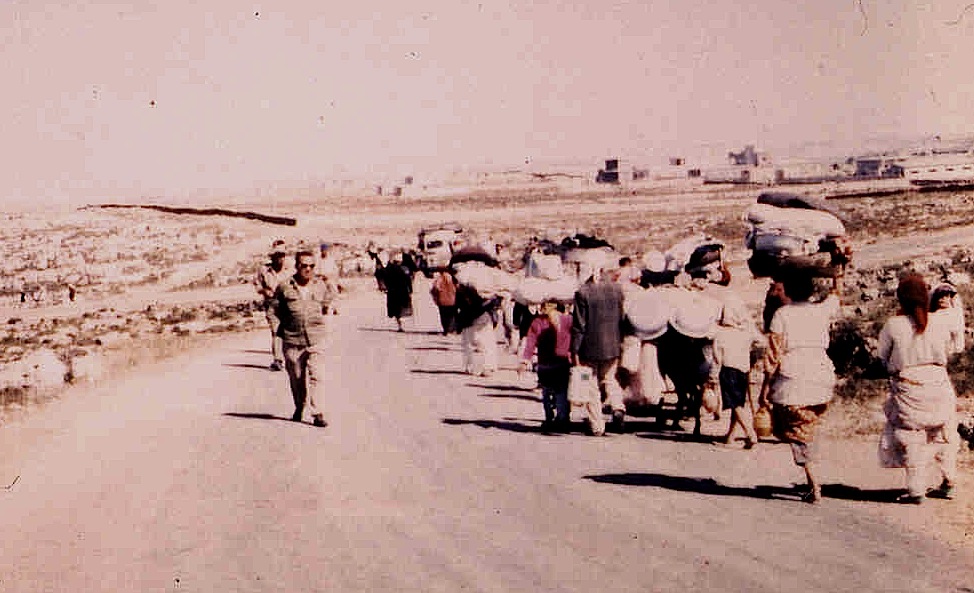
 Fear of a Microbial Planet


 The label for Humira, once the best-selling drug in the world, lists its risks in plain print. One of them, in the label’s own words, is new “autoimmune” disease.

