No, Lockdown Instigators Do Not Deserve the Benefit of the Doubt
The damage that lockdowns would cause was far too well known, uneven, and catastrophic to assume their chief instigators must have had good intentions.
By Michael P Senger | The New Normal | September 20, 2022
In the United States, some 2,000,000 people—over 1% of adult men—currently reside in prisons and jails. In America’s poorest cities, crime and law enforcement are intertwined with life to such a degree that many children grow up more familiar with the justice system than the education system. For kids who grow up in these circumstances, getting through school while staying out of jail is a feat worth celebrating.
Some of this is, of course, necessary to maintain a peaceful society in a country as open and unequal as the United States. But the American political-prison-industrial complex is also riddled with perverse incentives. As Supreme Court Justice Neil Gorsuch put it: “We live in a world in which everything has been criminalized. And some professors have even opined that there’s not an American alive who hasn’t committed a felony under some state law.” We’ve even developed an Orwellian lexicon for this system; the term “crime of moral turpitude” is a tacit admission that America’s statutes are riddled with crimes that do not actually involve “moral turpitude”—it’s puzzling why these should be considered crimes at all.
Worse yet, an estimated 5% of convicts are actually innocent. That means there are currently some 100,000 Americans in prisons and jails who didn’t even commit the crimes for which they were charged. The sad truth is that just living in one of America’s poorest neighborhoods comes with some risk of incarceration; the more people around who are convicted, the greater the odds of becoming an innocent convict oneself. Juries do their best, but they’re beset by the usual human biases. Judges know all too well that verdicts often come down to such irrelevant factors as the defendant’s charisma, physical attractiveness, or even what the jury had for breakfast that morning.
Mass incarceration is one sad byproduct of inequality and community deterioration in the 21st century. But an even worse byproduct of that inequality is an entire caste of western elites who’ve begun to manipulate the system to exempt themselves and their supporters from the rule of law to a degree not seen since the rise of the fascist regimes of the 1930s. And in no instance has this been made more clear than in the promulgation of Covid lockdowns into policy in early 2020.
Lockdowns, or the shutting of businesses and community spaces with the force of law, were unprecedented in the western world prior to Xi Jinping’s lockdown of Wuhan and weren’t part of any democratic country’s pandemic plan; rather, these pandemic plans suggested only voluntary social distancing measures. While lockdowns bore some facial resemblance to the voluntary social distancing measures contemplated in pandemic plans, this similarity was no coincidence, as the concept of “social distancing” in its origin was lifted by the US CDC straight from the Chinese Communist Party policy of “lockdown” as imposed during SARS in 2003. Further, some leading federal officials have disclosed that at the time they recommended temporary social distancing measures for Covid, they did so with the intent that state governors would enforce them as indefinite forced lockdowns.
As former UN Assistant Secretary-General Ramesh Thakur has documented in scrupulous detail, the harms that lockdowns would cause were all well-known and reported at the time they were first adopted as policy in early 2020. These included accurate estimates of mass deaths due to delayed medical operations, a mental health crisis, drug overdoses, an economic recession, global poverty, hunger, and starvation.
Yet regardless, for reasons we’re still only beginning to understand, some key scientists, health officials, national security officials, media entities, international organizations, billionaires and influencers advocated the broad imposition of these unprecedented, devastating policies from the earliest possible date, ostensibly to stop or slow the coronavirus as the CCP claims to have done in Wuhan, while censoring any contrary opinions, spinning a false illusion of consensus amongst an unknowing public. A report later revealed that military leaders saw this as a unique opportunity to test propaganda techniques on the public, shaping and “exploiting” information to bolster government messages about the virus. Dissenting scientists were silenced. Psyops teams deployed fear campaigns on their own people in a scorched-earth campaign to drive consent for lockdowns.
These early advocates of lockdowns inverted the definitions of key public health principles in sophisticated, Orwellian fashion. While the lockdowns they advocated were deliberately intended to overturn existing public health practices, they instructed the public to “follow the science,” leading the public to believe that their policies were grounded in established scientific practice. They used the rhetoric of equity and vulnerability to advocate policies that disproportionately harmed the most vulnerable and increased existing economic divides. They then retroactively cited the broad public support for lockdowns that had been sown by their own propaganda as justification for their propaganda in support of those lockdowns.
Ultimately, these lockdowns failed to meaningfully slow the spread of the coronavirus and killed tens of thousands of young people in every country in which they were tried. We now know the virus had already begun spreading undetected all over the world by fall 2019 at the latest and had an infection fatality rate under 0.2%.
However, the lockdowns caused the public to believe that the virus was hundreds of times deadlier than it really was. Simultaneously, the World Health Organization issued global PCR testing guidance—using tests later confirmed by the New York Times to have a false positive rate over 85%—pursuant to which millions of cases were soon discovered in every country. Additionally, the WHO issued new guidance on the use of mechanical ventilators to member nations; over 97% of those over age 65 who received mechanical ventilation in accordance with this guidance were killed.
Terrified by this surge of deaths and the psychological terror campaigns deployed by governments on their own people, populations across the western world proceeded to impose an ever-darker swathe of illiberal mandates including forced masking and digital vaccine passes for everyday activities. Young children, who were at virtually no risk from the virus, lost years of primary education in the worst education crisis since the end of the Second World War. An indefinite state of legal emergency was imposed which continues to this day. The global fight for human rights and the end of poverty was set back decades.
Over $3 trillion in wealth was transferred from the world’s poorest to a tiny number of billionaires and their supporters, predominantly in China and in the tech and pharmaceutical industries. Several key early lockdown proponents indicated that they saw Covid as an opportunity to “entrench a new idea of the left … reconstructing a cultural hegemony on a new basis.” Authoritarian regimes grew more autocratic, and democratic governments took on authoritarian characteristics.
Worst of all, a norm was grafted onto western democracy that the fundamental rights to movement, work, association, bodily autonomy, and free expression, for which our forebears fought so tirelessly, can be suddenly and indefinitely suspended, without precedent, analysis, or logic, based on nothing but vague promises that doing so will “save lives” — rendering them all but moot.
Meanwhile, the lockdowns and mandates led to the deaths of over 170,000 Americans and proportionate numbers in countries that imposed them across the western world. By 2021, lockdowns had killed over 228,000 children in South Asia. Studies of excess deaths indicate that lockdowns led to several million deaths in India and proportionate numbers in other developing nations.
A million here, a million there, pretty soon you’re talking real atrocities.
These numbers do not even begin to count the total damage that will ultimately ensue due to the economic devastation of lockdowns, which we will continue to witness for many years to come. Many early lockdown proponents may never be among the 2,000,000 Americans currently residing in jails and prisons, but we can be sure that thousands more would-be innocent children will one day be added to the prison rolls as a result of the economic destruction their policies unleashed.
Ladies and gentlemen, this case ultimately comes down to whether, unlike the other 2,000,000 Americans currently in state custody, we can be sure that by virtue of their socioeconomic position and the panic over a virus which panic they deliberately stoked with their own policies, this handful of key early lockdown proponents acted in good faith when they convinced the world to adopt these unprecedented, catastrophic policies based on the belief that China eliminated the virus from an entire country by shutting down one city for two months—so sure that the question demands no further inquiry. I leave that for you to decide.
Stalin’s Jews
BY LARRY ROMANOFF • UNZ REVIEW • SEPTEMBER 18, 2022
This topic is important not only for its own sake but because it provides linkages that help us to put other historical events in perspective, and even more because it is an astonishing, even astounding, example of how history is spun, of how the omission of only a few crucial facts can totally distort an entire vital segment of history. One result is that much of what we “know” of our history is factually wrong, but also it provokes us to despise innocent people while sympathising with the guilty.
Some years ago, Sever Plocker wrote an article for Israel’s Ynet News titled “Stalin’s Jews”[1] in which he stated, “We mustn’t forget that some of greatest [mass] murderers of modern times were Jewish.” This article is a testimony to his statements.
To quote Plocker:
“We cannot know with certainty the number of deaths Cheka was responsible for in its various manifestations, but the number is surely at least 20 million, including victims of the forced collectivization, the hunger, large purges, expulsions, banishments, executions, and mass death at Gulags. Whole population strata were eliminated: Independent farmers, ethnic minorities, members of the bourgeoisie, senior officers, intellectuals, artists, labor movement activists, “opposition members” who were defined completely randomly, and countless members of the Communist party itself.
And us, the Jews? Many Jews sold their soul to the devil of the Communist revolution and have blood on their hands for eternity. Dr. Halfin described the waves of soviet terror as a “carnival of mass murder,” “fantasy of purges”, and “messianism of evil.” Turns out that Jews too, when they become captivated by messianic ideology, can become great murderers, among the greatest known by modern history. Even if we deny it, we cannot escape the Jewishness of “our hangmen”, who served the Red Terror with loyalty and dedication from its establishment.
An Israeli student finishes high school without ever hearing the name “Genrikh Yagoda,” the greatest Jewish murderer of the 20th Century, the GPU’s deputy commander and the founder and commander of the NKVD. Yagoda diligently implemented Stalin’s collectivization orders and is responsible for the deaths of at least 10 million people. His Jewish deputies established and managed the Gulag system.”
Plocker then states a view all too common among Jews everywhere, when he writes, “The Jews active in official communist terror apparatuses . . . did not do this, obviously, as Jews, but rather, as Stalinists, communists, and “Soviet people”. But he does redeem himself by stating further, “My own view is different. I find it unacceptable that a person will be considered a member of the Jewish people when he does great things, but not considered part of our people when he does amazingly despicable things.” I couldn’t agree more.
If the arguments are valid, then Germany shouldn’t apologise or feel remorse about anything, because after all Hitler wasn’t acting as a German, but as a “European” or a “Nazi”. This is simply a lame attempt to tell us that Jews are “really Jews” only when they’re good. When they’re evil, their Jewishness is presumably cast off and they assume some other identity.
Jews are unwilling to confront the history of significant numbers of their own people committing savage atrocities, so they downplay their own origin, rewrite history, and forget it. Perhaps even more to the point, what about the savage and inhuman treatment the Jews in Israel inflict on the Palestinian people? When they shoot children in the head, bomb the UN school to utter destruction, destroy the American School in Gaza with white phosphor, and burn children alive, are they acting as Jews? Surely they must be.
Plocker refers to one other thing, an attempt to confuse and transfer liability and guilt from the Jews to the Russian people. He noted that Niall Ferguson, a so-called “historian” at Harvard University, in his book “The War of the World”, wrote that “no revolution in the history of mankind devoured its children with the same unrestrained appetite as did the Soviet revolution”. Plocker also recalled that Tel Aviv University’s Dr. Igal Halfin, in a book on the Stalinist purges, wrote that “Stalinist violence was unique in that it was directed internally”.
I find both those statements repulsive idiotic sophistry, apparent deliberate acts to deflect responsibility for a campaign of mass murder almost without equal. In no way did the Soviet Revolution “devour its own children”; rather the Jews came to Russia to devour Russian children. And the violence was “directed internally” only in the sense that those executing it were external agents, outsiders who came to kill.
A Bit of Historical Background
In a previous essay on Jews and Revolutions[2] I noted that there have been many waves of attempted revolutions in the past, all instigated by the Jews, but mostly buried and misrepresented by these same people. Russia is a particular case in point. It doesn’t seem widely-known, but Russia has had more than its share of attempted revolutions, both before and after the 1917 event we all know as “The Russian Revolution”.
The Revolutions of 1848
The world in 1848 had a virtual epidemic of attempted revolutions and overthrows of government, affecting literally dozens of countries, Russia among them. There was mild success in France, but all others were crushed. Nevertheless, 1848 was a major point in world history that is almost never seen as such because the individual elements are all treated separately by our so-called historians (primarily Jewish) and the book publishers (almost entirely Jewish) who never provide us with the tools to link all those disparate events into one picture. I won’t dwell on it here, but all of those revolutions of that year were from the same source, an enormous concentrated effort to reconfigure the governments of the world to be more compatible with the aims of the Khazar Jews.
The Revolution of 1881
Russia had another revolution in 1881,[3] stirred up by the same people, in this case with the assassination of Tsar Alexander II by a Jew named Vera Figner, leader of a Jewish terrorist group called “The People’s Will”. This was their notification to the new Tsar Alexander III: [4]
“Workers of Russia! Today, March 1st, Alexander the Tyrant (Alexander II) has been killed by us, Socialists. He was killed because he did not care for his people. He burdened them with taxes. He deprived the peasant of his land. He handed over the workers to plunderers and exploiters. He did not give the people freedom. He did not heed the people’s tears. He cared only for the rich. He himself lived in luxury. The police maltreated the people and he rewarded them instead of punishing them. He hanged or exiled any who stood out on behalf of the people or on behalf of justice. That is why he was killed. A Tsar should be a good shepherd, ready to devote his life to his sheep. Alexander II was a ravening wolf and a terrible death overtook him.”
The Revolution of 1890
It seems our revolutionaries didn’t much care for Alexander III either, and made another stillborn attempt in 1890. As part of their revolutionary plot, the Jews took advantage of a poor crop year in an attempt to foster a popular revolution with hunger as they did in France. The Russian government was at first unaware of the extent of the poor harvest and the food shortages, and delayed acting for some time. Realising the natural outcome, and also knowing that grain prices were much higher for export than for domestic consumption, Jewish “grain buyers” pre-empted the government’s actions by quickly purchasing and exporting much of the year’s already-limited crop before Imperial edicts could prevent it. The resulting famine was serious, and nearly 500,000 people died. The hoped-for revolution failed to appear, however.[5]
The Revolution of 1905
The next attempt following was much more momentous, this being the revolution of 1905 and the event termed “Bloody Sunday” where an organised protest was put down rather brutally by the new Tsar Nicholas II. During the next two years, the Jews organised terror brigades that killed many thousands of people, mainly police and government officials. Several thousand Jewish terrorists were caught and exiled to Siberia and elsewhere, but this story has a closely-related and very important element that history has de-linked and which we need to understand.[6]
The Russo-Japanese War
I won’t go into too much detail here because the topic is large and other references are easily available on the basic facts.[7] In simple terms, Russia wanted a warm-water naval port in Northern Korea or Northern China, areas under the control of the Japanese. The picture is a bit murky but it is clear that the Jews were heavily pushing belligerence and intractability on both sides, and definitely promoting serious military engagement. Jacob Schiff was promoting a (thoroughly fictitious) policy of helping Japan to industrialise and militarise, to protect itself from the “Christians of Russia’s Tsar”.[8]
One of the crucial details history has suppressed is that Japan was not only being pushed into a war with Russia, but was given financing of $200 million by the European Rothschilds to purchase a wide array of arms and weapons conveniently supplied by Rothschild’s arms factories in Germany. Japan was literally armed to the teeth with the latest of everything – and all on credit. Another detail history has omitted is that Russia was sold essentially the same weapons for about the same $200 million and also on credit, financed by another group of Jewish bankers but supplied by the same Rothschild factories. Fortunately for the Japanese, their weapons arrived just in time for the attacks on Russia, permitting Japan to destroy much of the Russian fleet. Unfortunately for Russia, their weapons shipments were inexplicably delayed, not arriving until all the damage had been done, thus leaving the government weak, demoralised and in disarray, with much of its military destroyed.
In spite of this defeat, Russia did eventually obtain half of Sakhalin Island at the time for use as its naval bases, and obtained the remainder after WWII. Thus, the Japanese realised that their war with Russia was actually of no benefit at all, at least not to them. However, they also realised something else – that they had been suckered by the Jews into a war with Russia for the sole purpose of weakening Russia as preparation for the planned 1905 revolution. They not only obtained no benefit from the war, but were used merely as an unwitting tool to weaken an enemy for someone else to conquer – and left almost bankrupt and with $200 million in debt for the experience.
Our history books and Wikipedia have no knowledge of this. One example of how omitting just one crucial detail changes the entire picture of an historical event, leading all students to precisely the wrong conclusion.
The Japanese didn’t forget this and, with further similar experiences, they realised they were never going to be accepted as part of the Western world. Thus, when the winds of WWII began blowing, the Japanese understandably didn’t want enemy aliens in their midst. They first expelled all the Jews from Nagasaki in 1926 and then later all the Jews from all of Japan. This is where we can make more historical links. It appears almost a certainty that the reason Bernard Baruch, a Jew and “the most powerful man in the US” at the time, selected Nagasaki as one of the targets for the atomic bomb. And the later total expulsions were arguably the reason Baruch chose Japan as the target for the US to demonstrate its new atomic prowess.
The Khazar Jews are not forgiving to any nation who expels them, which is the reason poor little Cuba has been horribly punished ever since Castro’s revolution, and one of the reasons China is such a target today – because Mao expelled all the opium and every kind of Jew from China as soon as he took power. Jewish publications tell us the Jews left Shanghai “in a hurry” after the war, neglecting to mention the cause of that “hurry”.
This is an aside, but the second expulsion of all Jews from Japan is the source of the fabricated stories of Shanghai “welcoming 40,000 Jews who were escaping Hitler’s atrocities in Europe”. The story, a lie in its entirety, is that all these Jews traveled from Germany to Shanghai where they would be “safe” from Hitler. But if this were their objective, crossing the border into Russia would have been enough; reaching Moscow would have been more than enough. Traveling 7,000 Kms. all the way through Siberia, then another 5,000 Kms. south to Shanghai makes no sense. There were many safe places on the way. In any case, transportation from Moscow to Siberia was minimal at best and there was no system capable of carrying an additional 40,000 people to Yakutsk, nor were there facilities to take those people through Siberia, Mongolia and Japan-controlled Manchuria all the way to Shanghai. While there might have been a few who did travel overland, it was the Jews expelled from Japan that flooded into Shanghai. And it was not the “warm-hearted Chinese” who saved 40,000 Jews from Hitler as we are told. The Japanese had full control of Shanghai as well as much of Northeast China, and Shanghai already had a huge number of opium Jews, so the transfer was a natural one. “China” had no say in the matter, Shanghai had no say in the matter, and all those “warm-hearted Chinese” didn’t even know what happened.
Back to the Revolution of 1905
The Tsar at the time, Nicholas II, had a serious change of heart and was willing to make major concessions to keep his country at peace and to avoid a civil war. One of his most effective ministers, Peter Stolypin, proposed many changes that would have cemented the contentment of the population and the security of Russia. It is said that Stolypin was perhaps the one man who could have avoided all the bloodshed and saved the Romanovs. Thus, Stolypin had to be removed.[9] A Jewish revolutionary named Dmitri Bogrov shot and killed Stolypin.[10] The Jews quickly claimed that Bogrov “acted alone” but mysteries about that assassination were never resolved. In any case, his assassination doomed the Romanov dynasty. Wikipedia had no idea Bogrov was a Jew.[11]
The 1917 Russian Revolution
We need to note first that the 1917 Russian Revolution was not, in any sense, a “Russian” revolution. It was entirely, 100%, a Jewish revolution against Russia and the Russian people. Native Russians had no part in the planning, and played little role in the execution of this immense tragedy, absolutely one of the bloodiest and most savage events in the world’s recent history.
It isn’t so much the revolution that is of interest to us, but the events preceding and following that should claim our attention. The Jews desperately wanted an upheaval to destroy Russia as it was, according to the plan for worldwide Communist control. This time, they planned much more carefully. It doesn’t seem widely-known, but Trotsky and several hundred Russian Jews who were expelled from Russia after the failed 1905 revolution, were all in the US receiving training for the next attempt, and they received literally many years of coaching. They were heavily financed by Jacob Schiff and Max Warburg, who spent more than $20 million on the training and the financing of the revolution itself. That would be about $750 million today, an enormous amount of money for the time.
In March of 1917, Schiff and Warburg sent Lev Davidovich Bronstein, better known as “Trotsky” and his group of several hundred Jewish communists off to Russia, to foment a revolution. At the same time, some 90,000 Jewish exiles returned to Russia from all over the world to infiltrate the country and assist in the revolution, most changing their Jewish names to blend more easily into Russian society. You can see this was not a trivial undertaking, but one with extensive worldwide planning from a single source – that source being the City of London.
Lenin was sent across Europe to Russia on the famous “sealed train” with an additional $5 million or $6 million in gold (about $175 million in today’s dollars). At the same time, Trotsky left New York aboard the S.S. Christiania with approximately 300 intensively-trained Jewish revolutionaries, with a huge hoard of gold in hand, their first port of call being Halifax, Nova Scotia. The Canadian government was aware of the plot and of the identities of those men, and arrested Trotsky and his people, and impounded their gold. But the Jews reacted immediately and with threats of force, with William Wiseman of Kuhn Loeb, and the famous “Colonel” House, imposing enormous pressure on Canada to release the men. Canada, cowardly as always, capitulated to the pressure and complied, Trotsky then free to meet up with Lenin and proceed with the Jewish plans for Russia. This is one of the many parts of Canadian history that no Canadian is permitted to learn.
In the world of motor vehicle insurance there used to be a doctrine for assigning responsibility for collisions, known as “the last clear chance”. The theory was that, regardless of who created the circumstances for an accident, if one driver had a last clear chance to avoid the collision but failed to exercise it, the blame would fall on him. If we adopt this doctrine, Canada had the last clear chance and can be assessed the entire blame for the revolution in Russia and the enormous toll of casualties that ensued.
The Jewish Revolutionists
The Georgian, Ioseb Besarionis dze Jughashvili (aka. Joseph Vissarionovich Stalin), may have been little more than a front, the real power behind the throne emanating from the City of London and masterminded by Jacob Schiff and Max Warburg. Some historians agree that Stalin was a mere figurehead, that it was Lazar Kaganovich (the Jewish head of the CHEKA, and the brother of Stalin’s Jewish wife) who was really in charge. More than a few historians appear to accept the thesis that it was all the Jews in important positions under Stalin, who actually made the decisions and determined the policies.
It should be noted that, while Jews were only a minuscule percentage of Russia’s population, between 80% and 90% of all Russian revolutionaries were Jews and, in some segments like the Gulags and the CHEKA, Jewish participation was effectively 100%. Jews absolutely dominated the entire Bolshevik regime after the 1917 Red October Revolution. Almost all the ministers in the first Soviet government were Jews, and the few who were not, were Freemasons, had Jewish wives, and spoke Yiddish. “The Bolshevik’s revolution in Russia was the work of Jewish brains, of Jewish dissatisfaction, of Jewish planning, whose goal is to create a new order in the world.” [12] As noted above, about 90,000 Jews from many European regions poured into the major cities of Russia, to be given prominent executive positions in all major sectors of government and the economy.
“According to data furnished by the Soviet press, out of 556 important functionaries of the Bolshevik state, including the above-mentioned, in 1918-1919 there were: 17 Russians, two Ukrainians, eleven Armenians, 35 Letts [Latvians], 15 Germans, one Hungarian, ten Georgians, three Poles, three Finns, one Czech, one Karaim, and 457 Jews.”[13]
“According to the U.S. State Department’s documents, a group of powerful Jewish financial elites were planning the overthrown of the Russian Tsar, Nicholas II, in 1916. These plotters included Jacob Schiff, Mortimer Schiff, Felix Warburg, Otto Kahn and Isaac Zeelman. They decided that Russia should be destroyed and a communist dictatorial regime would be implemented, subservient to the dictates of International Jewry.”[14]
Alexander Solzhenitsyn wrote: “You must understand. The . . . Bolsheviks who took over Russia were not Russians. They hated Russians! They hated Christians! Driven by ethnic hatred they tortured & slaughtered millions of Russians without a shred of human remorse. The October Revolution was not what you call in America the ‘Russian Revolution’. It was an invasion & conquest over the Russian people. More of my countrymen suffered horrific crimes at the blood-stained hands than any people, or nation ever suffered in the entirety of human history. It cannot be understated! Bolshevism was the greatest human slaughter of all time. The fact that most of the world is ignorant of this reality is proof that the global media itself is in the hands of the perpetrators. We cannot state that all Jews are Bolsheviks, but without Jews there would have been no Bolshevism. For a Jew, nothing is more insulting than the truth. The blood-maddened Jewish terrorists murdered 66 million in Russia from 1918 to 1957.”[15]
Winston Churchill wrote, “There is no need to exaggerate the part played in the creation of Bolshevism and in the actual bringing about of the Russian Revolution by these international and for the most part atheistical Jews . . . In the Soviet institutions the predominance of Jews is even more astonishing. And the prominent, if not indeed the principal, part in the system of terrorism applied by the Extraordinary Commissions for Combating Counter-Revolution (CHEKA) has been taken by Jews, and in some notable cases by Jewesses.”[16]
“The world revolution which we will experience will be exclusively our affair and will rest in our hands. This revolution will tighten the Jewish domination over all other people.”[17]
The Jewish CHEKA
The Jewish CHEKA was a secret police force created through the NKVD; its makeup was almost entirely Jewish. “Jews were especially dominant in the most feared and bloodthirsty part of the Bolshevik State apparatus, the CHEKA, which consisted of 250,000 officers”, all Jews, and with unlimited power, Kaganovich and his CHEKA organisation acting as “policeman, investigator, jailer, prosecutor, judge and executioner”.[18]
Lazar Kaganovich was the Jewish head of the CHEKA and was famous for his purges of those who opposed Jewish control of the country. Anyone daring to criticize Jewish Supremacy was mercilessly murdered, as “anti-Semitism” became a crime punishable by death in the Soviet Union.
Primarily, the CHEKA rounded up all Gentiles failing to support the Jewish government, then tortured and killed them. This especially included the military and government workers, all Christian clergy, and anyone with property valued at more than 10,000 rubles. The Jews operating the CHEKA not only exterminated all these categories of people but specialised in torture, their methods including skinning people while alive, scalping, impaling on stakes, hanging, stoning to death, being ‘crowned’ with barbed wire, being tied to planks and pushed slowly into tanks of boiling water. There was a further atrocity that was also commonly done to black slaves in America, that of pounding nails into a large wooden barrel so the points protruded into the inside, then placing a naked man into the barrel, nailing it shut, and rolling it down steep hills. They also used what is called the “rat torture”, placing a rat inside an open-bottom metal box attached to a man’s abdomen, then heating the metal box to red-hot, at which point the animal, crazed from the heat, would attempt escape by eating into the man’s body.
These Jews also specialised in torturing and killing women and children, inevitably raping the women before they were killed. The CHEKA Jews quite openly roamed the countryside kidnapping and killing children, eventually exterminating entire rural populations. They also burned down many or even most of the churches and destroyed most of the Christian monuments in Russia, turned the priests into street-sweepers or simply murdering them outright. In the end, the majority of the Christian clergy were killed by the Jews. “The Jewish CHEKA systematically exterminated the wealthy, the business class, the intelligent educated class, all the high-achieving segments of the population, leaving Russia with a population of ignorant workers, peasants, and a powerful Jewish ruling elite.”
The Jews in the CHEKA also murdered the entire family of Tsar Nicholas II, “the last of the Romanovs”. It was Yakov M. Yurovksy, a Jew, who carried out the murders. Trotsky rationalised the murders as “a useful measure, not only expedient but necessary.” He claimed it proved that “it showed everyone that we would continue to fight on mercilessly, stopping at nothing.” He said the executions were meant “to frighten, horrify and instill a sense of hopelessness” in the Gentile Christians, and also to show other Jews that “there was no turning back, that ahead lay either total victory or total doom.”
The Jewish Gulags
The Gulags consisted of about 500 Jewish concentration camps established under the CHEKA, and used primarily for forced labor, any dissenters in the population typically receiving sentences of 5 to 25 years of hard labor. Yagoda sent hundreds of thousands to work on the Baltic Sea canal project where countless numbers of Russians, Ukrainians, and others perished. The system was created and founded by two Jews, Naftaly Frenkel and Levi Berman, under the direct control of Genrikh Yagoda and with the camps commanded by Jews such as Rappoport, Solz, and Spiegelglas, all of whom are mentioned at length in the work of Solzhenitsyn.
“Millions of innocent people were incarcerated in these gulags which eventually became death camps. “Prisoners worked outdoors and in mines, in arid regions and the Arctic Circle without adequate clothing, tools, shelter, food, or even clean water. They trudged through mud in sub-zero -20C temperatures, cut down trees with handsaws, dug at frozen ground with primitive pickaxes and heaved huge rocks with primitive tools. Others mined coal or copper by hand, often suffering painful or fatal lung diseases from inhaling ore dust while on the job. These prisoners worked up to 14 hours a day on massive projects, including the Moscow-Volga Canal, the White Sea-Baltic Canal, and the Kolyma Highway.
Before Stalin’s death, nearly 20 million men and women were transported to these camps in Siberia and other outposts, many of them never to return. The prisoners suffered from starvation, illness, violence, and cold; an immense number of people died. Starvation was not uncommon, as prisoners were barely fed enough to sustain such difficult labor. Other prisoners were simply dragged out to the woods and shot by guards for little or no reason.”[19]
Jewish Collectivisation
The Jewish Bolsheviks implemented a policy known as “Collectivisation”, which meant confiscating all peasant land in the name of the state, and by the use of Red Terror at the hands of the CHEKA. “This is what Karl Marx himself described as the “essence of communism”, to abolish private property which belongs to the Gentiles“. After a dozen or so years, more than 90% of all the land had been ‘collectivised’. One direct result of this process was death by starvation, since the Jews confiscated not only the land but all the grain from these areas, directly condemning the peasants to death.
The famines created in Russia by the Jews were unimaginable. One historian, Yulia Khmelevskaya, wrote that “People were eating almost everything that could be swallowed. They ate straw from the roof.” The Jews deliberately organised three large waves of “man-made famines aimed at starving farmers in Ukraine, Belarus, Kazakhstan and Russia. Millions of people died a slow death and people resorted to eating grass and some even to cannibalism.” And the Jews’ attitude toward this? Trotsky is famous for having stated, “You are Starving? This is not famine yet; when your women start eating their children, then you may come and say we are starving.”[20]
The Jewish Holodomor in the Ukraine
The Encyclopedia Britannica estimates that around 8 million people, five million of them Ukrainian, were starved to death by one Kaganovich famine alone and the three Holodomor genocides together resulted in a death toll of 16.5 million people. The Jewish media and Jewish organisations of all stripes make enormous efforts today to dismiss the Ukrainian famines as a hoax when the evidence is overwhelming. They do so primarily to avoid competition for the Jews as the world’s only victims in WWII. This is worse than you might imagine; we have all seen photos of huge piles of emaciated dead bodies – literally skin and bones piled two or more meters high, which are presented to us as evidence of Jews starved to death by the Germans. But they are no such thing. They are instead evidence of Ukrainians, Russians and other Slavs starved to death by the Jews.[21]
Aleksandr Solzhenitsyn estimated that in total the Jewish regime in Russia managed to exterminate more than 60 million people, including victims of the forced Collectivisation, the starvations and famines, the purges, expulsions, banishments, executions, and mass deaths at Gulags. I believe he also said that “Industrial-scale murders like these are an essential part of [Jewish] communist theory.”
Khazar Jewish Sympathy for the Victims
Trotsky said “We must turn Russia into a desert, populated by White negroes upon whom we shall impose a tyranny such as the most terrible Eastern despots never dreamt of. The only difference is that this will be a left-wing tyranny, not a right-wing tyranny. It will be a Red (Jewish) tyranny, and not a White one. We mean the word “red” literally, because we shall shed such floods of blood as will make all the human losses suffered in the capitalist wars pale by comparison. The biggest bankers across the ocean will work in the closest possible contact with us. If we win the revolution, we shall establish the power of Zionism upon the wreckage of the revolution’s funeral, and we shall become a power before which the whole world will sink to its knees. We shall know what real power is. By means of terror & bloodbaths, we shall reduce the Russian intelligentsia to a state of complete stupefaction & idiocy and to an animal existence.” Lenin said that “Three-quarters of mankind may die, if necessary, to ensure the other quarter for Communism”.
Grigori Zinoviev, the head of the Jewish Communist International (Comintern), wrote in an article in the Krasnaya Gazeta, in 1918 where he stated, “We will make our hearts cruel, hard and immovable, so that no mercy will enter them, and so that they will not quiver at the sight of a sea of enemy blood. We will let loose the floodgates of that sea. Without mercy, without sparing, we will kill our enemies in scores of hundreds. Let them be thousands. Let them drown themselves in their own blood. Let there be floods of the blood of the bourgeois; more blood, as much as possible.”[22]
Stalin’s Jews
Lazar Kaganovich

Lazar Kaganovich was a close associate of Joseph Stalin and the brother of Stalin’s wife. As noted above, Kaganovich was the Jewish head of the CHEKA and famous for his purges of those who opposed Jewish control of the country, having ordered the deaths of millions. Kaganovich openly boasted of personal responsibility for killing at least twenty million people. It was Kaganovich also who presided over the total destruction of Christian churches and clergy, the man famous for standing atop the rubble of a Russian church and proclaiming, “Mother Russia has been cast down! We have torn away her skirts!”.[23]
This Jew truly “made life a living hell” for the people of Russia, killing countless millions of innocent peasants in a sea of blood. Not everyone objected: One Jew in Hollywood was reported to have said, “You can’t make an omelet without breaking eggs” and, in a statement variously attributed to both Stalin and Kaganovich, “The death of one man is a tragedy, the death of a million is a statistic.” On the other hand, the Jewish Virtual Library seems to know only that Kaganovich “managed the construction of the Moscow underground”, and that, rather than being Stalin’s main Jewish handler, his “subservience to Stalin was made abundantly clear” in some obscure article he supposedly wrote.[24] Kaganovich was just one of the Jewish mass murderers; there were many other Jews who contributed to the massacre of Russians under the cruelest circumstances.
Yakov Sverdlov

Yakov Sverdlov, known as the “devil of the revolution”, was the Jew’s executive secretary and head of the Jewish government. It was this man who created and unleashed what became known as “The Red Terror”. It was also Sverdlov who initiated the so-called “decossackization”, where about 1 million Don Cossacks were brutally killed, including women and infants, often by being buried alive. For the first several years after 1917, it seems that every single bloody action against the Russian people was instigated by Sverdlov, being “the brains of the party”. The writer P. Paganuzi said that “the monstrous crimes of the [Jewish] Bolsheviks which exceeded all measures of cruelty, were committed on orders from the center, and the main responsibility for them lay with Sverdlovsk.”[25] [26] [27] [28] [29] It was Sverdlov who gave the order to kill the Russian Royal Family. “Research in 1990 by the Moscow playwright and historian Edvard Radzinsky uncovered Sverdlov’s role in ordering the execution of Tsar Nicholas II and his family.” The Jews were so proud of him that the city of Yekaterinburg where the Tsar and his family were killed, was renamed Sverdlovsk in his honor.
Genrikh Yagoda (real name: Genakh Gershenovich)

Genrikh Yagoda was described as “Stalin’s leading terror chief responsible for keeping him in power”, and who was unquestionably “one of the greatest Jewish mass murderers of the 20th Century“. He was the GPU’s deputy commander and the founder and commander of the NKVD. It was Yagoda who implemented the Collectivisation of peasant lands and crops and was responsible for the deaths of at least 10 million people. It was Yagoda’s Jewish deputies who established & managed the Gulag system, of Aleksandr Solzhenitsyn fame.[30] Yagoda was later demoted and replaced as chief hangman by Nikolai Yezhov, “the bloodthirsty dwarf”.
Lavrentiy Pavlovich Beria

Lavrentiy Beria, certainly Stalin’s most powerful and vicious Jewish Lieutenant, was a mass murderer of peasants and a bloodthirsty sex maniac and pedophile who buried children in his basement, apparently many while still alive. Beria was the notorious police chief and powerful lieutenant who initiated the Katyn massacre.[31] Beria joined the CHEKA and became head of the NKVD in Georgia and eventually a member of the Central Committee of the Communist Party, then deputy prime minister and member of the Politburo. After Stalin’s death in 1953, Beria attempted to replace him as dictator of the Soviet Union, but was defeated by Nikita Khrushchev, Molotov and Malenkov.
As an example of how history is spun, consider this apparently trivial statement: “Beria has long symbolized all the evils of Stalinism . . .” Stalinism? This immense Russian tragedy, planned and executed entirely by Jews, is suddenly reduced to a single adjective that pins the entire blame on one man not apparently Jewish. In fact, Beria symbolises all the evils of “Jewish-ism”, still “haunting the public imagination both in the West and in the former Soviet Union”. Yet the man’s name (along with a few others) has been expunged from history and almost no one has heard of him.
Ilya Ehrenburg

There was also Ilya Ehrenburg, who is perhaps most famous as the Jew who taught people to hate – to “Kill all Germans because they are not human”.[32] It was Ehrenburg who incited troops to rape and maim German, Polish, and Czech women as a form of punishment, as part of his agitation for genocide against all Germans.[33]
“The Germans are not human beings. From now on, the word ‘German’ is the most horrible curse. From now on, the word ‘German’ strikes us to the quick. We have nothing to discuss. We will not get excited. We will kill. If you have not killed at least one German a day, you have wasted that day … If you cannot kill a German with a bullet, then kill him with your bayonet. If your part of the front is quiet and there is no fighting, then kill a German in the meantime … If you have already killed a German, then kill another one – there is nothing more amusing to us than a heap of German corpses. Don’t count the days, don’t count the kilometers. Count only one thing: the number of Germans you have killed. Kill the Germans! … – Kill the Germans! Kill!”
And in another leaflet: “The Germans must be killed. One must kill them … Do you feel sick? Do you feel a nightmare in your breast? … Kill a German! If you are a righteous and conscientious man – kill a German! … Kill!” [34] But according to Wikipedia, Ehrenburg was a nice man, a quiet journalist who is most famous for his written works detailing “the genocide of Russian Jews”.[35] Oddly, his fanatical writings demanding the genocide of all German Gentiles has been deleted by our history book publishers.[36]
And Many More
There was Leonid Reichman who was head of the NKVD’s special department and the organization’s chief interrogator, and a particularly cruel sadist.[37] There are many more, names that will mean little to you: Alexander Parvus, Solomon Lozovsky, Moisei Uritsky, Adolph Abramovich Joffe, Dmitry Bogrov, Lev Kamenev (real name Rosenfeld), Maxim Litvinov (born Meir Henoch Mojszewicz Wallach-Finkelstein), Karl Radek (real name Karol Sobelsohn), Grigori Zinoviev, Ilya Ehrenburg, Natalfy Frenkel, Mathias Berman. All Jewish mass murderers in their own right.
The Anonymity of the Jews
It is not always easy to know with certainty the Jewish identity of some people due to attempts of so many natures to disguise and obfuscate the facts. Merely by changing their names so often, Jews make the truth of their ethnicity difficult to discern. Lenin (Vladimir Ulyanov) was a Jew.[38] [39] [40] [41] It is widely speculated now that Stalin was a Georgian Jew, with even the Los Angeles B’nai B’rith Messenger crediting him as being a Jew. Certainly, he spoke Yiddish, he had three Jewish wives, and had no Gentiles anywhere in his inner circle. And certainly, part of the issue is that identifying Stalin as a Jew, eliminates his usefulness as a poster boy for Russian psychopathology, leaving no Gentile to blame for Jewish atrocities. As mentioned above, this permits the Jews to categorise the entire “Russian” revolution and all the atrocities as “Stalinism”, i.e., an entirely Gentile event when the destruction of Russia and the extermination of more than 60 million Russians was entirely of Jewish creation and execution. It should be noted that Russia’s population at the time, was only 125 million.
There are some Jewish websites such as Jew or Not Jew that are often very helpful in offering their determination of the ethnicity of various people, and usually one can write and ask for an opinion or determination. But there are some individuals who appear to be verboten in this respect. One such is Reimert Ravenholt, the former head of USAID, surely one of the greatest sociopaths and psychopaths of all time, having forcibly sterilised literally hundreds of millions of women in undeveloped countries, and causing only God knows how many deaths. I have attempted through these Jewish websites to obtain information or opinions on Ravenholt’s ethnic background, and in only this one case have all websites unanimously refused to reply to me.
“The difficulty in arriving at an accurate understanding of the problem of the Jews lies in the fact that there is a distinct Jewish religion and a distinct Jewish race. Where one ends and the other begins. Jews will, however, reply with assurance that they are not a race but a religion and that to differentiate between them and other religious bodies is sheer prejudice and bald Anti-Semitism.”[42]
“Judaism is a religion, not a nation.” That may be true, but we aren’t discussing the religion of Judaism; rather, we are focused on Jews as a people. The preceding statements deny that Jews are a people, a race, or a nation, and can be identified only as members of a religion. Well, maybe, but how is it that I – and hundreds of millions of others – can look at a face and tell you instantly that person is a Jew? It would be a very powerful religion indeed if it can alter the facial features of its adherents.
There is more to this. Many years ago, the Jewish Kehillah in New York heavily pressured the US government to avoid altogether the ethnic or racial identities of Jews and to record only their passport status. This resulted in the government having no firm knowledge of the number of Jews in the US, the NYC Kehilla being the only body possessing such records. The Jews have gone much further in the recent past by pressuring the US government to make illegal any request of a person’s religion on the basis that this amounted to “religious discrimination”. Having succeeded in this, the Jews then conflated the two and heavily promoted the thesis that “Jewishness” is solely a religion and not a race or nation, thus making it impossible to have any legal means to discover if someone is a Jew. Quite clever. And, since so many Jews frequently change their names, the identification effort becomes almost impossible.
Yet, the effort is necessary because it is only when we can make this identification that we can form the links necessary to connect all the dots and understand both our history and the current affairs of the world. It is only with this identification that we can realise that pornography is almost exclusively a Jewish talent, that the alphabet soup of “sexual preferences” is being promoted nearly entirely by Jews. It is only by this identification of Jews as a race and a nation that we can realise that the “Russian Revolution” was in actuality entirely a Jewish Revolution against Russia, and that the destruction and colonisation of Yugoslavia, Iraq and Libya were entirely Jewish events even though effected by the US military on the Jews’ behalf. For example, the so-called “provisional orders” issued for the colonisation of Iraq by Paul Bremer, take on a very different light when we learn that Bremer, the “Temporary President of Iraq” was a Jew, and a close affiliate of Henry Kissinger. (43) Bremer was clearly taking his direction from the City of London and not from George Bush. Thus, Iraq was also a “Jewish Revolution”, as were Yugoslavia and Libya.
There is yet more. I once had an acquaintance in Shanghai named Steven Wood – hardly a name one would identify as a Jew. At the time, Steven had a high HR position with Huawei, and confided that he possessed both American and Israeli passports and traveled to Israel several times a year. One day he sent me a file of about 50Mb, if I recall correctly, containing the technical details of all of Huawei’s products. I was surprised because it seemed to me that was information he should not have had, since engineering and design were not part of his job description. He never told me anything directly but, from the context, I assumed that whenever he traveled to Israel all of Huawei’s information went with him. Huawei of course would have no way of knowing they had been infiltrated.
Given the difficulties, it is possible to make occasional errors in the identification, and classify someone provisionally as a Jew when they are not. I would argue that such occasional errors are almost always trivial. Most of those so identified are dead, and these errors, though unfortunate, are unlikely to do particular harm. This is by no means an excuse for carelessness or a casual attitude, but I would argue that so much is at stake that “it is better to be safe than sorry”.
There are many other items of immense historical significance whose flavor is considerably altered if we can accurately make these identifications. For example, the greatest criminal organisation in the history of the world was Rothschild’s British East India Company, followed closely by the Dutch East India Company, both of which were created and controlled by Jews. Rothschild and his Jews killed at least 200 million people in India by execution and famine, with some estimations being much higher. Similarly, the business of growing opium in India and forcing it onto China, were entirely Jewish enterprises – which our history books, thanks to Jewish publishers, blame on “the British”. Again, Rothschild and Sassoon killed at least 100 million in China by slaughter and at least an additional 50 million by other means. The CIA’s MK-ULTRA program was entirely Jewish at the top and at least through the middle ranks, with atrocities that may never have an equal. The decision to do incendiary bombing of Germany’s residential areas was the result of one of Churchill’s Jewish advisors. Similarly, Holland’s Tulip Bubble and the South Seas Bubble were Jewish concoctions. There is so much more.
Enormous historical crimes are thus covered up, with the blame assigned to the wrong persons and leaving the Jews free to present themselves as the world’s victims instead of the perpetrators.
I would add a final note. Readers often complain they are unable to locate evidence of certain historical events such as the expulsions of Jews from Cuba or China, stating that their searches uncover nothing. They seem unable to fathom that Google heavily censors any topic dealing with the Jews, with Israel, with history (especially any history involving the Jews), with most political topics and much more. It is almost amusing that Google has no knowledge of the expulsion of Jews from China after the war, but instead knows a great deal about Jews who remained in China and who carried much influence. As someone wrote, “It would be better to not know so many things, than to know so many things that are wrong.”
It shouldn’t be necessary to point out that Google is as Jewish as Israel, and that the historical facts it permits to escape through the net on these topics, are those with a particular propaganda point of view and are, more often than not, factually wrong. For this reason, and because Google assiduously tracks (and saves in perpetuity) every search, every topic, every keyword, every clicked link, every website visited, I haven’t used Google for 20 years.
And, in spite of having no Google-related programs or apps on my computers, I am still warned of more than 500 attempts every month by Google attempting to track my online movements.
The Jewish Pogroms
These were events of punishment (by imprisoning or killing Jews) in Russia and some other countries, events which are presented (and which may have been) “witch hunts” against Jews for the crimes committed during and after the Revolution of 1917.
We have all seen enough of the Dr. Zhivago and Fiddler on the Roof-type movies to give us a sense of the sympathy-seeking approach by the Jews about the Russian Revolution. Because of their media and Hollywood control, much or even most of the world’s public consciousness about this enormous event has been resolved to only two items: One, Stalin was evil, and two, the Jews in Russia suffered terribly from these “anti-Semitic” pogroms, persecutions which the ever-chaste and stellarly-virginal Jews absolutely did not deserve because no Jew anywhere has ever done anything to anybody. It is almost unimaginable that the Jews have so much control over the media and book publishing that they have been able to perpetrate such an enormous and truly unforgivable hoax on the world’s public consciousness. Compared to what the Jews did to the Russian people, the so-called “pogroms” were too trivial to warrant mention.
I am obviously of Russian extraction. If you and your friends come to my country, brutally exterminate nearly half of our population, kill my King and his entire family and steal most of the Royal Treasures, torture millions, create famines to kill millions more, destroy the nation and the economy, then loot my country of most of its most priceless art treasures while also emptying my government’s central bank on your way out, I might be tempted to hunt you down too.
Epilogue
“We mustn’t forget that some of greatest [mass] murderers of modern times were Jewish.”
Does anyone recall Hitler writing: “The Jews are not human beings. From now on, the word ‘Jew’ is the most horrible curse. The Jews must be killed. One must kill them … If you cannot kill a Jew with a bullet, then kill him with your bayonet … Kill a Jew! If you are a righteous and conscientious man – kill a Jew! If you have already killed a Jew, then kill another one… Kill!”
No, of course not. Then, it is reasonable to ask why Hitler has become the poster boy for historical atrocities when most of these Jews were far worse, especially considering that much, if not most, of the so-called Nazi atrocities were merely “atrocity porn” proven later to have been entirely fabricated by the Jews. Why is it that we are inundated with tales of Hitler’s evils, both real and imaginary, but we have never heard of Beria, Kaganovich, Yagoda, Ehrenberg or Sverdlov? Who is it that controls the media and the book publishers? Who is it that labels you an “anti-Semitic Nazi Jew-hater” for revealing historical truths?
Think of the attitudes of the Jews mentioned in this article, of their actions. What kind of man boasts about having personal responsibility for killing “at least” 20 million innocent people? What kind of man says “If you are righteous and conscientious, kill a German”? What kind of man confiscates all the farm crops and thus sentences tens of millions to die? These are the Khazar Jews, as murderous and savage today as they were 700 years ago.
Moreover, these are the same people who today populate the City of London which is where the planning for all these atrocities has originated for centuries and continues still. Today, they dress nicely, drink afternoon tea with Royalty, and always brush their teeth after every meal. But they are responsible for one million deaths in Iraq, and many more recent tragedies. If COVID-19 was planned, this is where it was planned. These are the people who want a Third World War with Russia, China and Iran, and they will almost certainly have it because the Americans so under their control are stupid enough to launch it. The end.
Mr. Romanoff’s writing has been translated into 32 languages and his articles posted on more than 150 foreign-language news and politics websites in more than 30 countries, as well as more than 100 English language platforms. Larry Romanoff is a retired management consultant and businessman. He has held senior executive positions in international consulting firms, and owned an international import-export business. He has been a visiting professor at Shanghai’s Fudan University, presenting case studies in international affairs to senior EMBA classes. Mr. Romanoff lives in Shanghai and is currently writing a series of ten books generally related to China and the West. He is one of the contributing authors to Cynthia McKinney’s new anthology ‘When China Sneezes’. (Chapt. 2 — Dealing with Demons).
His full archive can be seen at https://www.bluemoonofshanghai.com/ + https://www.moonofshanghai.com/
He can be contacted at: 2186604556@qq.com
Notes
[1] Stalin’s Jews
https://www.ynetnews.com/articles/0,7340,L-3342999,00.html
[2] Jews and Revolutions
https://www.bluemoonofshanghai.com/politics/8184/
[3] 1881 March 13 Czar Alexander II assassinated in St. Petersburg
https://www.history.com/this-day-in-history/czar-alexander-ii-assassinated
[4] MANIFESTOS ON THE ASSASSINATION OF ALEXANDER II [1881]
https://alphahistory.com/russianrevolution/manifestos-assassination-of-alexander-ii-1881/
[5] Russian Famine of 1891-1892
https://www.volgagermans.org/history/famines/famine-1891-1892
[6] 1905 Russian Revolution
https://spartacus-educational.com/RUS1905.htm
[7] Russo-Japanese War
https://www.history.com/topics/japan/russo-japanese-war
[8] Jacob Schiff would help industrialize and militarize non-Christian Japan to fight against the Christians of Russia’s Tsar.
http://www.thechristiansolution.com/doc2009/145_Holodomor.html
[9] Stolypin, Peter
https://www.encyclopedia.com/history/encyclopedias-almanacs-transcripts-and-maps/stolypin-peter
[10] Dmitri Bogrov
https://spartacus-educational.com/RUSbogrov.htm
[11] Dmitry Bogrov
https://en.wikipedia.org/wiki/Dmitry_Bogrov
[12] The American Hebrew, 1920
https://en.wikipedia.org/wiki/The_American_Hebrew
[13] Robert Wilton
https://sunray22b.net/robert_wilton.htm
[14] The Jewish-Led Russian Revolution
http://www.renegadetribune.com/the-jewish-led-russian-revolution/
[15] The Jewish-Led Russian Revolution
http://www.renegadetribune.com/the-jewish-led-russian-revolution/
[16] The Jewish-Led Russian Revolution
http://www.renegadetribune.com/the-jewish-led-russian-revolution/
[17] Peuple Juif, February 8. 1919.
http://fau.digital.flvc.org/islandora/object/fau%3A32504/datastream/OBJ/view
[18] Jewish Bolsheviks mass-murdered 66 million Christians in Russia
[19] The Jewish-Led Russian Revolution
http://www.renegadetribune.com/the-jewish-led-russian-revolution/
[20] The Jewish-Led Russian Revolution
http://www.renegadetribune.com/the-jewish-led-russian-revolution/
[21] Holodomor Denial — A Crime against Humanity
http://www.thechristiansolution.com/doc2009/145_Holodomor.html
[22] The Jewish-Led Russian Revolution
http://www.renegadetribune.com/the-jewish-led-russian-revolution/
[23] Lazar Kaganovich – Stalin’s Mass Murderer
https://rense.com/general11/stal.htm
[24] Lazar Moiseyevich Kaganovich
https://www.jewishvirtuallibrary.org/kaganovich-lazar-moiseyevich
[25] Yakov Sverdlov. 100 years since the death of the “devil of the revolution”
https://topwar.ru/155444-jakov-sverdlov-100-let-so-dnja-smerti-djavola-revoljucii.html
[26] Yakov Sverdlov: the demon of the Leninist Revolution. 6 facts that are not found in textbooks
[27] Grandson of a merchant and brother of the American banker Y. M. Sverdlov (Gauchmann Aaron Moishevich)
https://sofya1444.livejournal.com/3187005.html
[28] Yakov Sverdlov-biography
https://biographe.ru/politiki/yakov-sverdlov
[29] The secret of Yakov Sverdlov’s death
https://proza.ru/2012/08/02/513
[30] The first NKVD commissar to be shot. Genrikh Yagoda
https://spbvedomosti.ru/news/nasledie/pervyy-rasstrelyannyy-narkom-nkvd-genrikh-yagoda/
[31] Katyn massacre
https://en.wikipedia.org/wiki/Katyn_massacre
[32] Ilya Ehrenburg agitated for genocide against Germans
https://ww2gravestone.com/ilya-ehrenburg-the-leading-soviet-propagandist-of-the-second-world-war/
[33] Ilya Ehrenburg – Kill all Germans because they are not human
[34] Ilya Ehrenberg – The Man Who Invented The ‘Six Million’
https://rense.com/general75/ehr.htm
[35] Ilya Ehrenburg
https://en.wikipedia.org/wiki/Ilya_Ehrenburg
[36] Ilya Ehrenburg
https://en.metapedia.org/wiki/Ilya_Ehrenburg
[37] Stalin’s Jews
https://www.ynetnews.com/articles/0,7340,L-3342999,00.html
[38] Lenin was a Jew
http://www.jewornotjew.com/profile.jsp?ID=1
[39] Lenin’s Jewish roots
https://www.thejc.com/news/features/lenin-s-jewish-roots-1.447185
[40] (Israel Moses) Blank in Odessa in the early 1800s.
The grandfather of Vladimir Ilyich Ulyanov — he began to take the pseudonym Lenin when he was around 30 — was born Sril Moiseyevich
[41] Was Lenin Jewish?
https://www.myjewishlearning.com/article/was-lenin-jewish/
[42] THE CAUSE OF WORLD UNREST
https://www.bluemoonofshanghai.com/wp-content/uploads/2022/09/The-Cause-of-World-Unrest.pdf
[43] Humanity at the Crossroads
https://www.bluemoonofshanghai.com/politics/humanity-at-the-crossroads/
Iran president: Israel’s ‘savagery is not ending’
MEMO | September 22, 2022
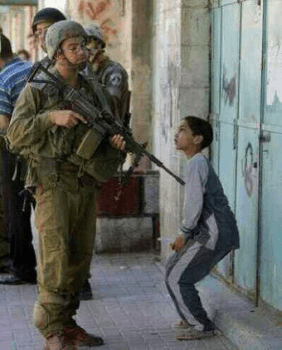 Israel’s “savage power” and its “savagery is not ending”, Iranian President Ebrahim Raisi told the UN General Assembly yesterday.
“The region has not seen an occupying savage power such as the Zionist regime in its midst in the past,” Raisi said.
He explained: “The killing of children and women are present in the dark report card of the Zionist regime. It has managed to form the biggest prison in the world in Gaza and the expansion of settlements and housing illegally on Palestinian territories.”
“The killing of Palestinian women and children shows everyone that seven decades of Israeli occupation and savagery is still with us and not ending.”
“The occupying Zionist power that has occupied Jerusalem and other lands in the region cannot be a partner for security and stability,” he continued.
To solve the Israeli-Palestinian conflict, Raisi proposed a vote by all Palestinians — “Muslims, Christians and Jews” — to establish a single state.
Latest COVID Shots Sold as Genetic Software Update
By Dr. Joseph Mercola | September 20, 2022
Just when you thought the U.S. Food and Drug Administration couldn’t possibly get any worse, they prove you wrong. Here are two recent COVID booster campaign messages tweeted out by the FDA:
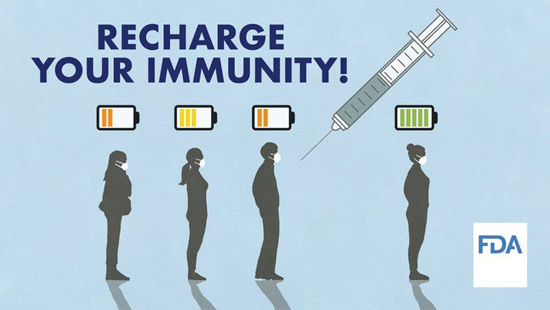
“It’s time to install that update! #UpdateYourAntibodies with a new #COVID19 booster.”1 “Don’t be shocked! You can now #RechargeYourImmunity with an updated #COVID19 booster.”2
FDA Now Pushes Transhumanist Pipe-Dream
That’s right. The FDA now wants you to believe that your immune system is something that needs to be “recharged,” as if it were a battery, or “updated” with mRNA injections like a piece of software.
This is transhumanist lingo that has no bearing on real-world biology or physiology, and proves beyond doubt that the FDA is fully onboard with the transhumanist ideas of technocracy pushed by the globalist cabal. The human body is basically viewed as nothing more than a biological platform equipped with genetic software that can be altered and updated at will.
The problem, of course, is that your body doesn’t work that way. You cannot turn your body into a “bioreactor”3 or an internal “vaccine-production facility”4 and expect it to work as intended. The massive increase in disability and sudden death among COVID jab recipients is a testament to the fact that allowing Big Pharma to play God is a bad idea.
Transhumanism as a whole is a pipe-dream, as it fails to take into account just about everything that actually makes us human, including the nonlocality of consciousness, which they irrationally believe can be uploaded to a cloud-based system and merged with AI, or downloaded into an artificial body construct, such as a synthetic body.
False Advertising
The Federal Trade Commission is responsible for addressing fraudulent advertising. According to law, an ad must be “truthful, not misleading, and, when appropriate, backed by scientific evidence.”5 The FDA itself also requires drug ads to be “truthful, balanced and accurately communicated.”6
“Balanced” refers to promotional materials that include efficacy and benefit claims, which must include a balance between benefit information and information about risks. In my view, the FDA’s most recent COVID booster ads are clear examples of false advertising, because:
- They’re not truthful and accurate, as there’s no basis for the claim that your antibodies need to be updated with a drug, or the claim that immunity must be recharged at regular intervals
- They’re not backed by scientific evidence, as the FDA is a) ignoring massive evidence of harm from the original shots, and b) the bivalent boosters are being released based on data from a few mice alone. The FDA is advertising the boosters for the prevention of disease, even though it has zero data to prove it prevents anything
- They’re not balanced, as the FDA fails to warn people about any of the many side effects reported to the Vaccine Adverse Event Reporting System (VAERS)7
Was No-Test Drug Approval the Plan All Along?
While I cannot prove it, I suspect Operation Warp Speed (OWS) — devised in the spring of 2020 by a dozen top officials from then-President Trump’s health and defense departments to expedite the development of a COVID-19 vaccine8 — may have been intended to normalize the approval of drugs without proper testing.
Even if the normalization of expedited drug approval wasn’t originally intended, it certainly has been used and abused to that aim since. In June 2022, the FDA quietly implemented a “Future Framework” scheme9 to speed up the delivery of COVID boosters. This is what allows for the authorization of reformulated COVID shots without human trials.10,11,12
The FDA basically rewrote the rules on the fly, deciding that mRNA gene therapies are equivalent to conventional influenza vaccines and can be updated and released without testing.
The idea here is that the safety of the mRNA COVID shots has already been proven by the original shots, which they claim have harmed or killed no one. Hence, safety is a given, and the effectiveness of reformulated boosters can be assessed simply by checking the antibody levels in a few mice, which is what Pfizer and Moderna did.
In reality, however, millions of people around the world have been harmed and killed by the original shots, the human trials for those shots were riddled with fraud, antibody levels tell us nothing about the jab’s ability to protect against infection, and the two technologies (conventional flu vaccines and mRNA gene therapy) have no common ground.
I have no doubt this “Future Framework” will also, over time, be widened to include other vaccines and drugs that drug makers may want to tinker with. It may even lower standards for drug trials in general, which historically have required at least 10 years of multiphase testing.13 The dangers of this trend really cannot be overstated.
Analysis of US Booster Policy
In a September 12, 2022, article, Kaiser Health News raised several questions about the FDA’s authorization of the new bivalent COVID boosters:14
“… in the real world, are the omicron-specific vaccines significantly more protective — and in what ways — than the original COVID vaccines so many have already taken? If so, who would benefit most from the new shots? Since the federal government is purchasing these new vaccines … is the $3.2 billion price tag worth the unclear benefit? …
The FDA could have requested more clinical vaccine effectiveness data from Pfizer and Moderna before authorizing their updated omicron BA.5 boosters. Yet the FDA cannot weigh in on important follow-up questions: How much more effective are the updated boosters than vaccines already on the market? In which populations?
And what increase in effectiveness is enough to merit an increase in price (a so-called cost-benefit analysis)? Other countries, such as the United Kingdom, perform such an analysis before allowing new medicines onto the market, to negotiate a fair national price …
As population immunity builds up through vaccination and infection, it’s unclear whether additional vaccine boosters, updated or not, would benefit all ages equally … The CDC’s Advisory Committee on Immunization Practices considered limiting the updated boosters to people 50 and up, but eventually decided that doing so would be too complicated.”
Shocking Jab Study Decimates Safety Claims
In related news, a shocking risk-benefit analysis15 looking at the impact of booster mandates for university students concluded that:
- Between 22,000 and 30,000 previously uninfected adults (aged 18 to 29) must be boosted with an mRNA vaccine to prevent one COVID-19 hospitalization
- For each hospitalization prevented, the jab will cause 18 to 98 serious adverse events, including 1.7 to 3 “booster-associated myocarditis cases in males, and 1,373 to 3,234 cases of grade ≥3 reactogenicity which interferes with daily activities”
That means mandating a third COVID shot for university students will result in “a net expected harm.” The authors also stress that “Given the high prevalence of post-infection immunity, this risk-benefit profile is even less favorable.” The authors go on to state that “University booster mandates are unethical because:”16
“1) no formal risk-benefit assessment exists for this age group;
2) vaccine mandates may result in a net expected harm to individual young people;
3) mandates are not proportionate: expected harms are not outweighed by public health benefits given the modest and transient effectiveness of vaccines against transmission;
4) U.S. mandates violate the reciprocity principle because rare serious vaccine-related harms will not be reliably compensated due to gaps in current vaccine injury schemes; and
5) mandates create wider social harms. We consider counter-arguments such as a desire for socialization and safety and show that such arguments lack scientific and/or ethical support.”
Government Study Reveals COVID Jab Problems
A small observational study17,18 led by neurology researchers at the National Institutes of Health also brings bad news, as they found “a variety of neuropathic symptoms” occurring within three to four weeks of COVID injection:
“We studied 23 patients (92% female; median age 40 years) reporting new neuropathic symptoms beginning within 1 month after SARS-CoV-2 vaccination. 100% reported sensory symptoms comprising severe face and/or limb paresthesias, and 61% had orthostasis, heat intolerance and palpitations …
Biopsies from randomly selected five patients that were evaluated for immune complexes showed deposition of complement C4d in endothelial cells. Electrodiagnostic test results were normal in 94% (16/17). Together, 52% (12/23) of patients had objective evidence of small-fiber peripheral neuropathy …
This observational study suggests that a variety of neuropathic symptoms may manifest after SARS-CoV-2 vaccinations and in some patients might be an immune-mediated process.”
FDA Refuses to Release Key COVID Jab Safety Analyses
In July 2022, The Epoch Times asked the FDA to release “all analyses performed by the agency for the COVID-19 vaccines using … Empirical Bayesian data mining, which involves comparing the adverse events recorded after a specific COVID-19 vaccine with those recorded after vaccination with non-COVID-19 vaccines.”19
The FDA has so far refused, claiming the data is tied to “internal discussions protected by law.” September 10, 2022, The Epoch Times reported:20
“According to operating procedures laid out by the agency and its partner in January 202121 and February 2022,22 the FDA would perform data mining ‘at least biweekly’ to identify adverse events ‘reported more frequently than expected following vaccination with COVID-19 vaccines.’ The agency would perform the mining on data from the Vaccine Adverse Event Reporting System (VAERS).
In a recent response, the FDA records office told The Epoch Times that it would not provide any of the analyses, even in redacted form. The agency cited an exemption to the Freedom of Information Act that lets the government withhold inter-agency and intra-agency memorandums and letters ‘that would not be available by law to a party other than an agency in litigation with the agency.’
The agency also pointed to the Code of Federal Regulations, which says that ‘all communications within the Executive Branch of the Federal government which are in written form or which are subsequently reduced to writing may be withheld from public disclosure except that factual information which is reasonably segregable in accordance with the rule established in § 20.22 is available for public disclosure.’
It’s not clear why the FDA could not produce copies of the analyses with non-factual information redacted. The Epoch Times has appealed the determination by the records office.”
CDC Also Refuses to Release Its Safety Analyses
According to the VAERS standard operating procedures cited above, the Centers for Disease Control and Prevention is also required to perform data mining analyses, using Proportional Reporting Ratio (PRR) data mining. PRR23 measures how common an adverse event is for a specific drug compared to all the other drugs in the database.
When The Epoch Times asked the CDC to release its results, it too refused. According to The Epoch Times, the CDC “has also twice provided false information when responding to questions”:24
“The agency initially said that no PRR analyses were done and that data mining is ‘outside of th[e] agency’s purview.’ The agency then said that it did perform PRRs, starting in February 2021. Later, the agency acknowledged that wasn’t true.
The agency did not begin performing PRRs until March 2022, a spokesperson told The Epoch Times. Roger Andoh, a records officer, gave the initial response, citing the CDC’s Immunization and Safety Office. Dr. John Su, a CDC official, gave the second response.
It remains unclear with whom the information originated. The Epoch Times has submitted Freedom of Information Act requests for internal emails that may provide answers.”
So far, the FDA has insisted the data show no evidence of serious adverse effects from the COVID jab. The only possible signal they’d found through April 16, 2021, was for raised body temperature. In the article, The Epoch Times cites several papers in which the FDA and/or CDC claim their data mining efforts have come up empty handed.
But if that’s true, why the reluctance to release the data? Don’t they want us to be reassured that these shots are as safe as they claim them to be? Why sit on exculpatory evidence? Unless, of course, the data proves the FDA and CDC have been lying all along.
Senators Calling for Special Grand Jury
In other related news, naturopath Henry Ealy and two Oregon state senators, Kim Thatcher and Dennis Linthicum, have been trying since March 2022 to compel the impaneling of a special grand jury to investigate decisions by federal officials that “significantly compromise[d] the accuracy and integrity of COVID-related data.”25
According to the March 7, 2022, petition,26,27 filed in Portland, Oregon, the 30 defendants manipulated statistics to create “a significant hyperinflation of COVID-19 case, hospitalization and death counts,” which in turn resulted in $3.5 trillion in fraudulent taxpayer expenditures.
Defendants specifically named28 are former CDC director Robert Redfield and current CDC director Rochelle Walensky, former Health and Human Services (HHS) secretary Alex Azar, HHS director Xavier Becerra, and National Center for Health Statistics director Brian Moyer.
As explained by Ealy in the video update above, the defendants were given 60 days to reply to the March 7 petition. As it happened, the U.S. Attorney for Oregon, Scott Asphaug, was assigned by the Department of Justice (DOJ) to be the defending attorney — an interesting choice, considering Ealy, Thatcher and Linthicum had in 2021 asked Asphaug to investigate the listed defendants, which he refused to do.
Asphaug immediately filed for an extension, which gave them another 60 days. The defendants now had until August 26, 2022, to respond. Suddenly, July 13, the DOJ reassigned Asphaug to Nairobi, Kenya. Asphaug resigned from his post as U.S. attorney, effective July 17, at which point U.S. Attorneys Natalie Wight and Dianne Schweiner took over the CDC’s defense.
When the defendants missed the August 26 deadline, Ealy, Thatcher and Linthicum filed for default judgment.29 Two days later, August 29, Wight and Schweiner opposed default judgment.30
Schweiner’s excuse for missing the deadline was that she’d been busy caring for her acutely sick dog. As noted by Linthicum in his newsletter,31 “no self-respecting sci-fi editor would allow something this outlandish past his desk when trying to make a story about integrity and transparency sound believable.”
Ealy is now convinced the CDC is feeling the heat, and urges Americans to sign Stand for Health Freedom’s petition to convene a special grand jury to investigate the CDC’s conduct during COVID-19.

The more signatures there are on this petition, the stronger the argument that the court must order a grand jury investigation, as it demonstrates that this investigation is important to the American public, and isn’t just some pet grievance by Ealy, Thatcher and Linthicum.
As noted by Ealy, the CDC has committed criminal data fraud. There are laws prohibiting data manipulation by federal agencies, and laws meant to prevent it from happening in the first place.
The CDC violated those laws, not just once, but repeatedly, and those in charge must be held accountable. We cannot have a public health agency flouting data laws in order to justify harming the public. So, please, add your name to the grand jury petition.
Sources and References
- 1 Twitter FDA September 7, 2022
- 2 Twitter FDA September 9, 2022
- 3 MIT Technology Review February 5, 2021
- 4 Nature Biotechnology 2022; 40: 840-854
- 5 FTC Truth in Advertising
- 6 Compliance Online Drug Ads
- 7 OpenVAERS
- 8 Politico January 17, 2021
- 9 FDA Briefing Document June 28, 2022
- 10 The Defender June 27, 2022
- 11 The Epoch Times June 28, 2022 (Archived)
- 12 New York Times June 27, 2022 (Archived)
- 13 Phrma.org Biopharmaceutical research and Development
- 14 KHN September 22, 2022
- 15, 16 SSRN September 12, 2022
- 17 medRxiv May 17, 2022
- 18 Trial Site News September 1, 2022
- 19, 20, 24 Epoch Times September 10, 2022
- 21 VAERS Standard Operating Procedures January 2021
- 22 VAERS Standard Operating Procedures February 2022
- 23 All About Pharmacovigilance PRR
- 25, 26, 28 Petition to impanel special grand jury March 7, 2022
- 27 Stand For Health Freedom
- 29 Application for entry of default August 27, 2022
- 30 Opposition to entry of default August 29, 2022
- 31 Dennis Linthicum Newsletter
Featured Video

AIDS Inc. by Gary Null (2007)
or go to
Aletho News Archives – Video-Images
From the Archives
Clash of Civilization, Iran Part II
By Jamal Kanj – Intifada-Palestine.com – January 14, 2011
Israel’s survival kit is: perpetuate conflict, insecurity to rationalize collective hate and finally playing victim.
Devoid of conflict, Israel implodes internally; without hate, Zionism loses its justification; and playing eternal victim to continue blackmailing the West. Absence of this holy trinity, Israel ceases to exist.
From its inception, the house of Zion has mastered exploiting adversarial powers to advance Israel’s cause. For instance, their influence over the Democratic Party in the US began with President Truman’s bid for 2nd term election in 1948.
Responding to strong opposition from Secretary of State General George Marshall and Department experts urging against recognition of Israel, President Truman replied: “I’m sorry gentlemen but I have to answer to hundreds of thousands [Jewish voters] who are anxious for the success of Zionism. I do not have hundreds of thousands of [voting] Arabs among my constituents”
Zionists influence over liberal American politics was matched with the doctrinal school of Conservative theoreticians aligning the Republican Party’s platform with Israel’s objectives. The Neoconservative Zionists, coined Zioncons, invented the “Clash of Civilization” concept to fight Israel’s wars. … continue
Blog Roll
 Aletho News
- Pro-Palestine protesters arrested outside UK’s ruling Labour Conference in Liverpool
- Mauritius denies landing permit to flight from Israel, forcing cancellation: Tour operator
- Israeli finance minister calls for genocidal war on West Bank, annexation of south Lebanon
- 12 Things Your Psychiatrist Was Trained Not to Tell You
- From Unipolar Universalism to Multipolar Civilizational Distinctiveness
- RSF military group defects, joins Sudanese army: State media
- Ireland goalkeeper refuses to play ‘Israel’ as squad weighs boycott
- China pushes back against US on Cuba, Iran
- Ukrainian Soldiers, Potential Mercenaries: Have Gun, Will Travel!
- Burnham’s UN debut… A masterclass in British disinformation
- If Americans Knew
- Israel forces Gazans to live in constant peril – Daily Update
- Deconstructing Netanyahu’s pants-on-fire UN rant – Daily Update
- Trump betrayed voters with his campaign lies and prioritized a foreign country once he took office
- Netanyahu calls Israel’s war in Gaza ‘opposite of genocide’ in UN speech to near-empty hall
- Settler Kidnappings: Torture, Sexual Abuse and Terrorisation of Palestinian Abductees as Israel Deepens Annexation of West Bank
- Gaza winter nears as 162,000 tents become unusable, raising fears of humanitarian crisis
- Netanyahu says, “It’s the opposite of genocide”; UN says Gaza economy is world’s ‘most severe crisis on record’ – Daily Update
- Israel’s US-Backed Assault on Gaza Has Created the ‘World’s Most Severe Economic Crisis on Record’: UN
- ‘Protecting U.S. Citizens’… From Israel
- ‘This is where I live now, the back of a truck’: a day in the life of a grandmother in Gaza
- No Tricks Zone
- New Study: Earth And Venus Surface Warmth Largely Explained By Convection And Lapse Rate, Not CO2 Or Radiation
- 2025 Nature Paper Claiming Worsening Global Drought Gets RETRACTED …Heavily Flawed
- New Study: ‘Global Drought Shows No Detectable Recent Acceleration Under Climate Warming’
- Economic Masterminds: German Socialists Suggest Taxing Productivity Gains Stemming From Using AI
- The South China Sea Has Not Been Cooperating With The Climate Change Narrative
- Energy Crisis: Germany Enters Heating Season With Historically Low Gas Reserve Fill Levels
- New Study: The Antarctic Ice Sheet Gained Mass From 2020-2024 Due To Staggering Snow And Ice Accumulation
- Study: Ocean Heating Rates From Thousands Of Years Ago ‘Dwarf’ Modern Ocean Heating Rates
- Climate Extremists Target, Attack Large-Scale Power Grid Infrastructure In Germany!
- New Study: Antarctic Ice Melt Has Contributed Less Than 1 Centimeter To Sea Level Rise In The Last 30 Years

