The Attack on Pearl Harbor Was No Surprise (Part V)
Tales of the American Empire | January 29, 2026
Tales of the American Empire produced several tales about the Japanese attack on Pearl Harbor. They detail evidence that American President Franklin Roosevelt knew a Japanese carrier force was sailing east to attack Hawaii in late 1941, and he allowed it to happen by not alerting commanders in Hawaii. Few Americans know about this shocking fact because their government controls informational sources. Tales of the American Empire has a playlist of ten videos about this event that is linked in the description. I have stumbled upon even more proof of this crime.
_______________________________________________
Related Tales: “The Attack on Pearl Harbor”;  • The Attack on Pearl Harbor
“A Century of U.S. Naval Intelligence”; Captain Wyman H. Packard, USN (Retired); Office of Naval Intelligence and the Naval Historical Center; Department of the Navy; 1996; Pearl Harbor starts on Page 19; https://ncisahistory.org/wp-content/u…
“The Big Secret of Pearl Harbor”; Admiral Robert Theobald; Devin-Adair; March 1954; https://thehiddenmystery.com/wp-conte…
This is How We Should Have Responded to COVID-19
By Dr Alan Mordue and Dr Greta Mushet | The Daily Sceptic | January 24, 2026
Since March 2020 there has been an almost continuous refrain that the UK was not prepared for the COVID-19 pandemic – across the mainstream media, at the UK Covid Inquiry and most recently by Dominic Cummings in a Spectator interview. So much so that it seems to have become an accepted ‘truth’ regardless of the actual facts. Nevertheless there are facts, even in the postmodern dystopian world we now live in.
Firstly, we did have a detailed UK Influenza Pandemic Preparedness Strategy published in 2011 and it was explicit in saying that it could be adapted to respond to other respiratory virus pandemics, and gave as an example the first Severe Acute Respiratory Syndrome virus (SARS). Secondly, there was further national guidance in 2013 and 2017 to update the strategy. Thirdly, this national guidance helped all four nations and each local health board or authority to develop their own pandemic plans which were regularly reviewed and updated. Fourthly, we had many systematic reviews of the evidence for non-pharmaceutical interventions (NPIs) to minimise transmission, one published only a few months before the COVID-19 pandemic started. And finally, the UK scored second in a global assessment of countries’ pandemic preparedness in 2019.
So, the ‘unprepared’ mantra was not the whole truth and arguably we were comparatively well prepared. However, in the event all this preparation did prove to be useless – but only because we decided to abandon it all in March 2020. We binned our pandemic plans and ignored the careful reviews of the evidence and the experience gained responding to previous pandemics. No doubt the UK strategy will be updated, but whatever is produced could be just as easily discarded next time. So what can be done?
Perhaps what we need is something more accessible, something that reflects the ethical and democratic foundations of our country, and, given how important this is for the whole of society, something that is shared widely – well beyond public health departments, the office of the Chief Medical Officer (CMO), the Scientific Advisory Group for Emergencies (SAGE) and the NHS. Core principles on how we should respond to a pandemic that are shared, understood and agreed with the public, perhaps through their representatives in Parliament, might give us some scientific, ethical and governance guardrails. They might help to improve and protect accountability and also stand a better chance of surviving beyond a few weeks when the next pandemic hits.
If so, what might such principles contain? Here we offer some suggestions with commentary on how they were applied, or not, during the Covid-19 pandemic, grouped under four headings – epidemiological, medical, ethical, and democratic. Many of these principles don’t appear in the UK Strategy, or those of the four nations or local pandemic plans … and for very understandable reasons. Prior to 2020 they were taken for granted, they were so obvious that they did not need stating, they were the principles and codes that the public health specialty and the medical profession had followed for decades if not centuries, they were the way we conducted ourselves in our liberal democratic society. The Covid-19 pandemic response changed all that – we now clearly need to restate our commitment to core, indeed fundamental, principles.
Epidemiological principles

The first task in epidemiology is to assess the scale and severity of a new disease or health problem, examine how it varies by time, place and person (age, sex, occupation etc.), and compare it with other diseases. This helps to ensure that any response is proportionate and identifies those at greater and lower risk, as well generating hypotheses about potential causes.
In the context of a respiratory viral pandemic, data on case and infection fatality ratios are paramount. These were available early in the COVID-19 pandemic and before the first UK lockdown. Instead of these data being reported accurately, compared to previous pandemic data and carefully explained to the population (for example here), public messaging was alarmist and seemed designed to instil fear not reassure, and made little reference to those at lower risk (see Laura Dodsworth’s 2021 book A State of Fear). In a future pandemic the public should expect such data, the media should demand them, the CMO should have a responsibility to identify and collate them, and government responses should be calibrated based upon them.
Then to ensure accurate monitoring of the developing pandemic within the country and valid comparison to earlier pandemics the standard definitions for confirmed cases, hospitalisations and deaths should be employed. This did not happen in the COVID-19 pandemic with new definitions adopted, definitions that for all three exaggerated the statistics. This was compounded by inappropriate widespread testing using a PCR test insufficiently specific and using inappropriate cycle thresholds.
There was a further concern that arose during the pandemic response on the epidemiological front: the use and impact of modelling studies. Whilst such studies can be helpful they cannot be interpreted without understanding their underlying inputs, assumptions and methods. They are ‘what if’ studies – for example, what if we assume that the number of cases will grow exponentially without any seasonal effect, what if we assume no existing immunity in the population from other coronaviruses, etc. The Imperial College modelling study published in March 2020 seems to have had a significant impact on the push for the first lockdown, but it had not been peer-reviewed and seems to have been insufficiently debated and challenged; of course, it is now widely considered to have been flawed. Modelling studies are not reality, they are not facts, they are not evidence, they are better viewed as ‘what if’ scenarios and their assumptions and results should be rigorously challenged. Their presentation to politicians without critical analysis and careful interpretation amounts to professional negligence.
Medical principles

Science and medicine only develop through open debate and a willingness to consider alternative views, even if they are contrary to the current orthodoxy. This did not happen during the COVID-19 pandemic, as the oft repeated term ‘The Science’ demonstrates. There is no such thing: there is rarely a consensus and science is never settled, we only ever have the current disputed theories which remain until better ones come along. Any pandemic response should be open to challenge and wide debate so that we are not limited to the knowledge and experience of only a few prominent scientific and medical government advisors. The thoughtful and detailed letters addressed to the Medicines and Healthcare Products Regulatory Agency (MHRA) and Joint Committee on Vaccination and Immunisation (JCVI) from often in excess of 100 doctors and scientists on the merits or otherwise of Covid vaccination of children were a case in point, and were ignored or summarily dismissed. Public health messages to the population certainly need to be clear and if possible consistent to maximise understanding, but this does not preclude an open and vigorous debate within the medical and scientific community, something that is essential if we are to develop an optimal response.
In 1979 Archie Cochrane, widely regarded as the father of evidence-based medicine, made his famous comment that: “It is surely a great criticism of our profession that we have not organised a critical summary, by speciality or subspeciality, adapted periodically, of all relevant randomised controlled trials.” The international Cochrane Collaboration, named after him and designed to address this criticism, produced a series of systematic reviews on the effectiveness of physical interventions to interrupt or reduce the spread of respiratory viruses such as school and business closures, social distancing measures and restrictions on large gatherings. Despite the limited evidence for effectiveness and the relatively poor quality of the evidence from these reviews and similar conclusions from a WHO review published in September 2019, almost all these measures were applied to the whole population from March 2020, including a ‘lockdown’ of healthy people.
We copied the response of a totalitarian state despite a lack of evidence and despite the fact that these same systematic reviews drew attention to the widespread harms that would be caused by implementing these measures across the whole population. These harms are beginning to be appreciated across multiple areas – in terms of mortality and physical health particularly of older people, the social development of young children, the mental health and education of young people, businesses across the country as well as jobs, the economy and the benefits system.
An evidence-based approach also required a thorough review of the evidence on the benefits and harms for the prevention and treatment of COVID-19 in individuals. The limited data on the effectiveness of the novel gene technology ‘vaccines’ (and see Clare Craig’s 2025 book Spiked – A Shot in the Dark) and on their side-effects, with no data at all on long term harms, pointed clearly towards their use only in those at higher risk with full disclosure on what was known and what was not. In the event, of course, they were recommended and pushed on most of the population including those at insignificant risk. Furthermore, ‘safe and effective’ was far from a full disclosure of the evidence on benefits and risks.
By contrast, the use of re-purposed drugs such as ivermectin with known anti-viral and anti-inflammatory effects, extensive evidence on effectiveness and a well-documented safety profile, was actively discouraged.
In all these areas, doctors should be acting as advocates for their patients, informing them as best they can and helping them to make decisions on their treatment and care, as required by the General Medical Council’s guidance ‘Good Medical Practice.’ However, as already discussed, the informing was cursory and partial, and the contact often non-existent or via leaflet or video-call.
If they are to regain public trust the medical profession and public health authorities must do better next time, and patients and the public must demand better information and better discussion and engagement with medical staff to help them make decisions.
Ethical principles – informed consent for individuals

The Greek philosopher and physician Hippocrates developed his Oath around 400 BC. It urged doctors to act with beneficence – that is, to help their patients and prevent harm – and non-maleficence – that is to do no harm themselves or primum non nocere. The term appropriateness brings these two concepts together – an appropriate treatment is one that has been chosen because its benefits outweigh its harms in the particular patient.
As outlined above, evidence-based medicine involves the careful assessment of the evidence, ideally from randomised controlled trials, to quantify these benefits and harms. Whilst the patient advocacy role of doctors involves them in informing and supporting their patients to make informed decisions on their treatment and care.
Although this process sounds simple and straightforward, it is not. It seems to be taken more seriously in surgical practice, after notable legal cases, but less so in medical practice with the prescribing of drugs and vaccines. Certainly in the pandemic consenting practices for vaccination were cursory, to the point of being non-existent – public information heralding the ‘safe and effective’ vaccines was at best partial, and coercion was widespread via national advertising that deliberately sought to shame and manipulate, via vaccine mandates, and via bans from venues without proof of vaccination (or negative Covid antigen tests).
Large relative risk reductions of 70% for the Astra Zeneca ‘vaccine’ and 95% for the Pfizer ‘vaccine’ were trumpeted, but not the smaller, less convincing absolute risk reductions of around 1-2%. And there was no attempt to directly compare benefits and risks and harms, the key information a patient needs to give fully informed consent.
The wholesale abandonment of standard codes of practice for informed consent during the pandemic was truly shocking. To regain public trust the medical profession needs to take this key responsibility more seriously and particularly improve practice in relation to long term medications and vaccinations.
Democratic principles

The UK Strategy of 2011 did emphasise the importance of accurate and timely information to the public, and stressed that uncertainty and any alarmist reporting in the media could create additional pressures on health services. Despite this, the early epidemiological data on the scale and severity of the COVID-19 pandemic, a comparison with previous pandemics and clear identification of those at higher and lower risk were not shared with the public and carefully explained. The data that were given were far vaguer and the messages seemed designed to raise anxiety rather than contain it and modulate it to appropriate levels. Government advisors seem to have entirely lost sight of these crucial epidemiological data that are so essential to enable the government to calibrate its response and ensure it was proportionate. Data reflecting reality seem to have been overshadowed by modelling data reflecting potential future scenarios – fiction rather than fact influenced key decisions.
Whatever national response is being contemplated to a pandemic, there needs to be a clear separation of the medical and scientific evidence on the benefits and risks of specific interventions on the one hand, and the political value judgements and decisions on the other. Governmental advisors must present options and their benefits, risks, harms and likely costs to ministers, and in a democracy it is for ministers to decide as they are accountable to the electorate. This relationship is akin to the doctor-patient relationship – the doctor informs the patient and supports him or her to make his or her own decision but does not lead or coerce. This line may have been blurred during the COVID-19 pandemic. Moreover, government advisors seemed reluctant to identify, and where possible quantify, the risks, harms and costs that might flow from the options they put to ministers despite some, like lockdowns, being unprecedented in their severity and scope.
In turn ministers and politicians more generally have a responsibility to ensure that their advisors present them with the epidemiological data and the data on the benefits, risks and costs of recommended options. Ministers also have a responsibility to ensure that differences of opinion on how best to respond within the medical and scientific community are fully aired and discussed. This is crucial to arrive at an optimal response and to avoid groupthink. Only if ministers do these things can they take decisions on behalf of their population and give fully informed consent.
Crucially ministers have a particular responsibility to protect the basic freedoms we enjoy in a democratic society – freedom of speech, association and movement and individual bodily autonomy when it comes to medical treatments. Any infringement of such basic freedoms demands a clear, unambiguous and overwhelming justification, must be subject to challenge in Cabinet and Parliament, and must be the least restrictive as is possible to achieve the aim – in extent, impact and time. This is such a fundamental issue that we perhaps need to develop a framework to guide and constrain actions: defining the types of evidence and high thresholds that are required; limiting powers in terms of their impact, duration and the number of people affected; and outlining checks and balances, with perhaps an automatic independent review afterwards. We have such a clear and rigorous framework for compulsory detention under the Mental Health Acts when one individual is affected: we need at least as rigorous a framework when the freedom of millions is at stake.
There has also been considerable criticism of how the usual democratic governance systems were subverted and avoided during the pandemic, including the use of emergency legislation by the executive without appropriate challenge within Parliament. These governance systems are essential to enable questioning and challenge by MPs and select committees with the aim of improving decision making, and to ensure a clear justification for measures taken and transparency to facilitate accountability. This did not happen during the COVID-19 pandemic as clearly outlined in The Accountability Deficit by Kingsley, Skinner and Kingsley (2023).
In all of these four areas – epidemiological, medical, ethical and democratic – principles were violated during the COVID-19 pandemic with dire consequences for health, basic freedoms, quality of life, education, business and the economy, and for democracy and society itself. Before 2020 it would have seemed unnecessary to state such core principles. Now, having set a precedent when we abandoned them, it seems absolutely essential not only to restate them but to discuss them widely and if possible to reaffirm our commitment to uphold them before another pandemic hits.
Dr Alan Mordue is a retired consultant in public health medicine and Dr Greta Mushet is a retired consultant psychiatrist and psychotherapist.
In One Of His Final Pieces, Written in 2014, Michael Parenti Wrote A Prophetic Article About Ukraine
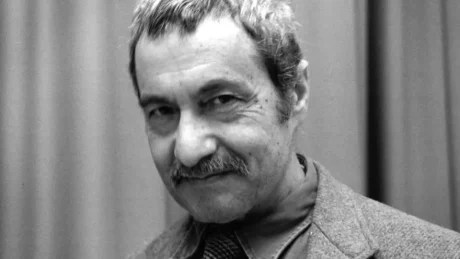
The Dissident | January 28, 2026
This week, the influential left-wing scholar Michael Parenti passed away at the age of 92.
Parenti was well known for his sharp criticism of U.S. foreign policy and U.S. imperialism throughout his life, waking up many to the reality of it and the lies used to justify it.
This is best underscored in one of his last published articles, “Ukraine and Regime Change”, which was published in the book “Flashpoint In Ukraine: How the U.S. Drive for Hegemony Risks World War III”, where he predicted to a tee what the result of the 2014 U.S. backed coup in Ukraine would be.
Correctly Calling Out U.S. Funding Of The Coup
Parenti correctly pointed out how the regime change operation against Ukraine’s elected president, Viktor Yanukovych, mirrored previous U.S. regime change operations, writing:
regime change is a form of action designed to make it impossible for the existing government to govern. We have seen this well-orchestrated chaos and endless disruption in various countries. Militantly organized groups are financed and equipped by outside western interests. NGOs (nongovernmental organizations) surface in substantial numbers and produce rebellious publications and events designed to unsettle the besieged government—in Ukraine’s case, a government that was democratically elected not long before. The NGOs handle billions of dollars worth of supplies used to mobilize and sustain the protests. Even though they are supposed to be independent (‘nongovernmental’) some NGOs get all their funds from the U.S. government. An Assistant Secretary of State, Victoria Nuland, proudly exclaimed that the United States had poured some $5 billion into the struggle for regime change.
All of this has since been vindicated. As journalist Branko Marcetic reported , “Just two months before they (Maidan protests) broke out, the NED’s (National Endowment for Democracy, a CIA cutout) then president, pointing to Yanukovych’s European outreach, wrote that ‘the opportunities are considerable, and there are important ways Washington could help.’ In practice, this meant funding groups like New Citizen, which the Financial Times reported ‘played a big role in getting the protest up and running,’ led by a pro-EU opposition figure. Journalist Mark Ames discovered the organization had received hundreds of thousands of dollars from US democracy promotion initiatives.”
Correctly Calling Out Far-Right Infiltration And The Maidan Massacre False Flag
Michael Parenti then wrote that the protests were overtaken by far-right paramilitary groups, who fired snipers into crowds in the Maidan square, which was then falsely blamed on Viktor Yanukovych’s forces- all facts which have now been proven correct.
Parenti wrote, “In Ukraine, crypto-fascist groups like Svoboda, the Right Sector, and others secured ample funds to keep thousands of people fed and comfortable enough on the streets of Kiev for weeks at a time, complete with well-made marching flags, symbols, and signs in various languages (including English). Svoboda henchmen were being financed by someone. They wore insignia that bore a striking resemblance to the swastika. Svoboda’s top leaders openly denounced ‘Russian scum,’ and ‘Muscovite Jewish mafia.’ Disguised men in unmarked combat fatigues attacked unarmed police and security guards. They moved among the gathered crowd and at times, according to independent sources, delivered sniper shots into the crowd—which could then be readily blamed on the nearly asphyxiated government. Meanwhile the western media reported everything the way the White House wanted, for instance, unfailingly referring to the perpetrators as ‘protestors.’”
Indeed, as the aforementioned Branko Marcetic reported, “The driver of this violence was largely the Ukrainian far right, which, while a minority of the protesters, served as a kind of revolutionary vanguard. Looking outside Kyiv, a systematic analysis of more than 3,000 Maidan protests found that members of the far-right Svoboda party — whose leader once complained Ukraine was run by a ‘Muscovite-Jewish mafia’ and which includes a politician who admires Joseph Goebbels — were the most active agents in the protests. They were also more likely to take part in violent actions than any group but one: Right Sector, a collection of far-right activists that traces its lineage to genocidal Nazi collaborators.”
Even more impressively, Michael Parenti correctly noted that the “Maidan Massacre” was a false flag carried out by Right Sector, a fact which has now been proven by Ukrainian-Canadian academic Ivan Katchanovski.
After carefully studying the trial on the massacre and the verdict from it, Ivan Katchanovski noted, “51 out of 72 wounded Maidan protesters, with whose shooting on February 20 Berkut policemen (Yanukovych’s forces) are charged and whose testimonies were revealed, testified at the trial and the investigation that they had been shot by snipers from Maidan-controlled buildings or areas, had themselves witnessed snipers there, or had been told by other Maidan protesters about such snipers. 31 of these wounded protesters testified at the trial and/or the investigation that they had been shot from the Hotel Ukraina, the Bank Arkada, and Zhovtnevyi Palace, the buildings on Muzeinyi Lane and Horodetskyi Street, or other Maidan-controlled buildings or areas. At least 33 wounded protesters testified that they had either witnessed snipers there and/or were told about snipers in these Maidan-controlled locations, mostly in the Hotel Ukraina, by other protesters.”
He also uncovered that :
The findings of forensic medical examinations done by government experts for the prosecution were first made public during the Maidan massacre trial, and revealed that the absolute majority of protesters were shot from the side or back, and from top to bottom. Most videos and photos, however, show that the absolute majority of those killed and wounded had the Berkut police (Yanukovych’s police forces) in front of them and at ground level, whereas the Maidan-controlled buildings were generally behind them and on the left and right side.
Forensic medical examinations indicate that 40 out of the 48 killed protesters were shot from a high angle. At least 36 of them were killed at a time when the Berkut policemen were filmed on the ground.
48 out of 51 wounded protesters had steep entry wounds, consistent with the theory that they were shot by snipers in Maidan-controlled buildings, or on the roofs of these buildings.
He also noted that the bullet examinations from the massacre matched those of Right Sector and other pro-Maidan militants and not the Berkut police force, writing:
The forensic ballistic examinations presented at the trial found that 19 protesters were killed on February 20 by bullets which match the calibers not only of AKM Kalashnikov assault rifles, but also of hunting versions of Kalashnikovs, and other weapons, Videos showed protesters with hunting firearms in the Hotel Ukraina during the massacre
A forensic ballistic examination conducted by government experts with use of an automatic computer-based IBIS-TAIS system, found that the bullets extracted from killed protesters, trees, and the Hotel Ukraina rooms did not match police database for Kalashnikov assault rifles of members of the entire Kyiv Berkut regiment, including the special Berkut unit deployed
Predicting The Fallout From The Coup
While Parenti reporting on the events of the Maidan coup exactly right is impressive enough, what makes Parenti’s article especially impressive is the fact that he also predicted the aftermath of the coup to a tee.
Parenti wrote, “This manufactured uprising in Kiev is something we have seen in numerous other countries: from Venezuela to Thailand during this very same time frame. The scenario is much the same, and the goal of these western-financed attacks has been to make the world safe for the 1%, the global super rich. Ukraine citizens who think they are fighting for democracy will eventually discover that they are really serving the western plutocracy. They will be left with a new government filled with old intentions. Ukrainians will end up with nothing to show for their efforts except a still more depressed and more corrupt economy, an enormous IMF debt, a worsening of social services, and an empty ‘democracy,’ led by corrupt neo-Nazis and ultra-nationalists.” (Emphasis: Mine)
This is exactly what the result of the Maidan coup was.
Forbes magazine noted at the time that, after the coup, the U.S. installed Arseniy Yatsenyuk as the interim prime minister of Ukraine because, “Yanukovych resisted the International Monetary Fund’s demand to raise taxes and devalue the currency” while, “Yatsenyuk doesn’t mind”.
As Ukrainian political scientist Konstantin Bondarenko documented, the results of the IMF-imposed “reforms” included:
-“Ukraine’s GDP shrinking by approximately 17%”.
-The exchange rate going from “8 hryvnias (Ukrainian dollar) to 1 U.S dollar” in 2013 to “23 hryvnias to the dollar” in 2015
-Inflation rising from 24.9% in 2014 to 43.3% in 2015
-a “significant decline in industrial production during the first two years” after the coup, leading to Ukraine losing “its economic cluster that manufactured goods with high added value (machine engineering)”
-“mining and metallurgical complex, energy (coal production), chemicals, food production”, “sustained significant losses”.
-“an increase in unemployment and the emigration of citizens from Ukraine to neighboring countries—primarily to Poland and Russia.”
-“utility rates increasing by 123%, reaching up to 20% of family income” from the IMF introduced policies
Parenti was also spot on about the prevalence of “neo-Nazis and ultra-nationalists” in the post-Maidan Ukraine.
After the coup, the UK’s Channel 4 news reported that, “the far-right took top posts in Ukraine’s power vacuum” and Foreign Policy Magazine reported that, “The uncomfortable truth is that a sizeable portion of Kiev’s current government — and the protesters who brought it to power — are, indeed, fascists.”
U.S. Congressman Ro Khanna noted in 2018, “Ukraine’s 2015 memory laws went even further by glorifying Nazi collaborators and making it a criminal offense to deny their ‘heroism.’ However, unlike the Polish law, this move by the government in Kyiv has received little to no public response from the United States. The groups and individuals extolled by Ukraine include Nazi collaborators Stepan Bandera, Roman Shukhevych, and the Organization of Ukrainian Nationalists (OUN), as well as the Ukrainian Insurgent Army (UPA). These paramilitaries and individuals in some cases collaborated with the Nazis and bear responsibility for the murder of thousands of Jews, 70,000-100,000 Poles, and other ethnic minorities between 1941 and 1945.”
Khanna added, “It’s particularly troubling that much of the Nazi glorification in Ukraine is government-supported. Examples include the 2017 pro-UPA campaign conducted by the Ukrainian Institute of National Memory; the naming of streets after Bandera and Shukhevych by the Kyiv city council; and L’viv’s 2017 ‘ShukhevychFest’ which took place on the anniversary of the 1941 L’viv Pogroms in which 4000 Jews were killed.”
He added, “Last November, Radio Free Europe reported on the presence of torches and Nazi salutes at a 20,000-person march in honor of the 75th anniversary of the UPA. These torchlight marches are closely linked to organizations such as the neo-Nazi Azov Battalion, an armed group that was prohibited from receiving U.S. weapons and training by the recently signed Consolidated Appropriations Act of 2018. Rather than disband Azov, the government incorporated it into the Ukrainian National Guard overseen by the Ministry of the Interior. The group is widely known to be closely connected to Interior Minister Arsen Avakov.”
Furthermore, Parenti correctly predicted that the coup would lead to an American confrontation with Russia, writing:
The U.S. empire’s ultimate intent is to encircle and reduce Russia to a frightened and discombobulated satellite. But that is much easier said than done. At this time, as I write, Moscow reportedly no longer accepts telephone calls from the White House. Meanwhile protests against the NATO-supported Ukrainian regime are on the rise. Anti-Kiev activists are seizing administrative buildings and calling for a referendum on federalization. Ukraine’s acting President, Aleksandr Turchinov, put the Ukrainian army on full alert due to the “threat of a Russian invasion.” Turchinov admitted that the government in Kiev could not control the situation in eastern Ukraine. It did not even seem able to control the situation in Kiev itself.
Obama may have a few tricks and trumps left to play. But he is fishing in troubled waters and might invite more danger and tribulation than he—or we—can handle. As Putin put it: “The situation is serious” and we need “to find serious approaches to the solution.”
Michael Parenti’s prophetic article on Ukraine underscores how important much of his foreign policy analysis was and why it will be deeply missed by many.
Conspiracy Denial
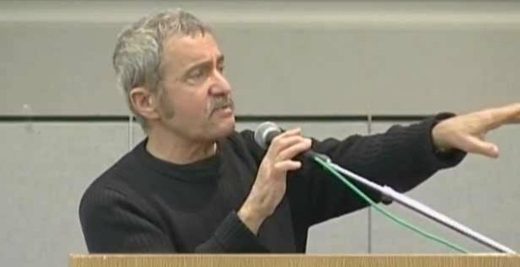
Lies are Unbekoming | January 27, 2026
In honour of Michael Parenti (1933–2026), who passed away on 24 January 2026 at the age of 92. He spent his life naming what power prefers to leave unnamed.
In 1837, Abraham Lincoln remarked: “These capitalists generally act harmoniously, and in concert, to fleece the people.”
Today, he would be dismissed as a conspiracy theorist.
That dismissal—reflexive, automatic, requiring no engagement with evidence—is not a mark of sophistication. It is a tell. The question worth asking is not whether conspiracies exist (they are a matter of public record and a recognised concept in law) but why acknowledging their existence provokes such reliable hostility. What work does the label “conspiracy theorist” actually do?
The late political scientist Michael Parenti spent decades answering that question. His conclusion was blunt: “’Conspiracy’ refers to something more than just illegal acts. It serves as a dismissive label applied to any acknowledgment of ruling-class power, both its legal and illegal operations.” The term functions not as a descriptor but as a weapon—a thought-terminating cliché that protects the powerful from scrutiny by pathologising those who scrutinise them.
Conspiracy denial, in Parenti’s analysis, is not skepticism. It is the opposite of skepticism. It is credulity toward power dressed up as critical thinking. As he wrote in Dirty Truths: “Just because some people have fantasies of conspiracies does not mean all conspiracies are imaginary.”
The Double Standard
The asymmetry is stark once you see it.
Coal miners consciously direct their efforts toward advancing their interests. So do steelworkers, small farmers, and schoolteachers. Labour unions exist precisely because workers concert together to pursue collective goals. No one calls this a conspiracy theory. It is called organising.
But suggest that the wealthy and powerful consciously concert with intent to defend their class interests, and you have crossed an invisible line. You are now a conspiracy theorist, a crank, possibly paranoid.
Parenti put it directly: “It is allowed that farmers, steelworkers, or schoolteachers may concert to advance their interests, but it may not be suggested that moneyed elites do as much—even when they actually occupy the top decision-making posts. Instead, we are asked to believe that these estimable persons of high station walk through life indifferent to the fate of their vast holdings.”
The double standard operates silently. Workers scheme; owners sleepwalk. The public pursues its interests; elites stumble through history moved by forces beyond their comprehension or control. This is the unexamined premise that makes “conspiracy theory” an effective slur.
Consider a specific example. In 1994, the officers of the Federal Reserve announced they would pursue monetary policies designed to maintain a high level of unemployment in order to safeguard against “overheating” the economy. This was publicly announced. It appeared in the financial pages. The Fed explicitly stated it preferred a deflationary course that would keep workers competing desperately for scarce jobs.
When an acquaintance of Parenti’s mentioned this to friends, he was greeted skeptically: “Do you think the Fed bankers are deliberately trying to keep people unemployed?”
He did think it. They had said so. It was not a conjecture but a policy announcement. And yet his friends assumed he was imagining a conspiracy because he ascribed self-interested collusion to powerful people.
Those who suffer from conspiracy phobia are fond of asking: “Do you actually think there’s a group of people sitting around in a room plotting things?” For some reason that image is assumed to be so patently absurd as to invite only disclaimers.
But where else would people of power get together—on park benches or carousels? Of course they sit in rooms. They sit in boardrooms, in the Executive Office, in the conference suites of the Council on Foreign Relations, at the Bilderberg meetings, in the private gatherings at Bohemian Grove. These venues are not secret. Their existence is a matter of public record. What happens there—the coordination of policy, the recruitment of personnel, the alignment of interests—is simply not supposed to be named for what it is.
Theories of Innocence
If the powerful do not conspire, how do we explain outcomes that consistently favour their interests? In Land of Idols, Parenti identified several frameworks that substitute for analysis. He called them “theories of innocence”—alternative explanations that preserve elite respectability by denying elite intent.
Somnambulist Theory
In Parenti’s words: “Those in power just do things as if walking in their sleep, without a thought to their vast holdings.” Policy happens. Wars break out. Wealth concentrates. No one intended any of it. The rich and powerful are present at these events but somehow not responsible for them—passengers rather than pilots.
Coincidence Theory
Or as Parenti described it: “By sheer chance, things just happen repeatedly and coincidentally to maintain the existing array of privileged interests, without any conscious planning or pressure from those who benefit.” Tax policy favours the wealthy—coincidentally. Exposed in a conspiracy, the intelligence agencies coincidentally face no meaningful consequences. Environmental regulations are gutted, and corporations coincidentally profit. The pattern is not a pattern. Each outcome is isolated, unconnected to any larger design.
Incompetence Theory (or Stupidity Theory)
Then there is what Parenti called “incompetence theory, or even stupidity theory, which maintains that people at the top just don’t know what they’re doing; they are befuddled, incapable, and presumably not as perceptive as we.”
For years we heard that Ronald Reagan was a moronic, ineffectual president—his administration a “reign of errors”—even as he successfully put through most of his conservative agenda. Parenti observed: “Reagan was serving the interests of corporate America, the military, and the ideological Right with which he had long been actively associated.” The policies worked exactly as intended for the constituencies they were designed to serve. But acknowledging this would mean acknowledging intent.
During the Iran-Contra hearings, stupidity and incompetence were actually claimed as a defence. The Tower Commission—handpicked by Reagan himself—concluded that the president was guilty of a lackadaisical management style that left him insufficiently in control of his subordinates. In fact, as some of his subordinates eventually testified in court, the president not only was informed but initiated most of the Iran-Contra policy decisions that led to circumvention of the law and the Constitution.
Incompetence theory asks us to believe that those who reach the highest levels of institutional power are less capable of pursuing their interests than the average person managing a household budget.
The pattern Parenti identified with Reagan has repeated with subsequent presidents. Consider which current figures are simultaneously portrayed as existential threats and bumbling fools—and notice that the “incompetence” never works against the interests of capital. The chaos is selective. The stupidity produces coherent outcomes for specific constituencies.
Spontaneity Theory (or Idiosyncrasy Theory)
Stuff just happens. The event is nothing more than an ephemeral oddity, unconnected to any larger forces.
In 1978, the House Select Committee on Assassinations reported that there was more than one assassin—and therefore a conspiracy—involved in the 1963 murder of President John Kennedy. In response, the Washington Post editorialised: “Could it have been some other malcontent whom Mr. Oswald met casually? Could not as many as three or four societal outcasts, with no ties to any one organization, have developed in some spontaneous way a common determination to express their alienation in the killing of President Kennedy?”
The Post continued: “It is possible that two persons, acting independently, attempted to shoot the President at the same time.”
Read that again. A major newspaper, confronted with evidence of conspiracy, speculated that two independent gunmen spontaneously decided to assassinate the president at the same moment. This is what passes for sophisticated analysis when the alternative is following the evidence.
Sometimes, those who deny conspiracies create the most convoluted fantasies of all.
Aberration Theory
Secret, criminal state behaviour is dismissed as an atypical departure from normally lawful behaviour. Each exposure is treated as an isolated exception that proves nothing about the norm.
For five years beginning in 1983, the FBI carried out surveillance of the Committee in Solidarity with the People of El Salvador (CISPES) to determine whether the group had links to international terrorism. The bureau utilised all fifty-nine of its field offices yet uncovered not a shred of evidence to support its conspiracy theory about CISPES. The organisation charged that the bureau’s actions were politically motivated and part of a concerted government effort to suppress opposition to U.S. involvement in Central America.
The FBI had a long history of such harassments against a wide range of protest groups, as evidenced by its illegal COINTELPRO campaign. Yet the Senate Intelligence Committee found “no pattern of abuse” by the bureau and concluded that the FBI investigation of CISPES was an “aberration.”
Pattern recognition is apparently beyond the capacities of official oversight when the pattern implicates official behaviour.
The Historical Record
The theories of innocence require ignoring what is already known. Conspiracies are not hypothetical. They are documented, exposed, and in many cases admitted.
As Parenti catalogued in Democracy for the Few: “There was the secretive plan to escalate the Vietnam War as revealed in the Pentagon Papers; the Watergate break-in; the Federal Bureau of Investigation (FBI) COINTELPRO disruption of dissident groups; the several phoney but well-orchestrated ‘energy crises’ that sharply boosted oil prices in the 1970s; the Iran-contra conspiracy; the savings and loan conspiracies; and the well-documented conspiracies (and subsequent cover-ups) to assassinate President John Kennedy, Martin Luther King, and Malcolm X.”
The fabricated Tonkin Gulf incident served as the pretext for escalating the Vietnam War. The Johnson administration told Congress and the public that North Vietnamese boats had attacked American destroyers in international waters. This was a lie. But it worked: Congress passed the Gulf of Tonkin Resolution, and the war expanded.
Operation Phoenix saw U.S. advisors secretly set up assassination squads that murdered thousands of dissidents in Vietnam. This was not rogue behaviour but policy.
The Watergate break-in and subsequent cover-up led to the resignation of a president. The conspiracy was real enough to force Richard Nixon from office.
COINTELPRO involved government surveillance, infiltration, and sabotage of dissident groups across the political spectrum—civil rights organisations, antiwar activists, socialist parties, Black liberation movements. The FBI did not merely monitor these groups; it actively disrupted them, planted false information, fomented internal conflicts, and facilitated violence against them.
Iran-Contra saw top officials conspire to circumvent the law, selling arms to Iran in exchange for funds that were used in covert actions against Nicaragua. Weapons were shipped, money was laundered, and Congress was lied to—all in service of a foreign policy that could not survive public scrutiny.
The savings and loan scandal was described by the Justice Department as—in Parenti’s words—”a thousand conspiracies of fraud, theft, and bribery,” the greatest financial crime in history at that point. Thrift industry executives funnelled deposits into personal accounts, fraudulent deals, and schemes involving organised crime and the CIA. When the institutions collapsed, taxpayers covered the losses.
The BCCI scandal involved what investigators called the most crooked bank in the world, with tentacles reaching into intelligence agencies, drug trafficking, arms dealing, and the financing of terrorism.
These are not speculations. They are matters of public record. People went to prison. Documents were declassified. Congressional investigations produced reports. In some cases, the perpetrators wrote memoirs.
If conspiracy is by definition imaginary, what do we call these?
Is It Paranoia?
Those who feel threatened appear paranoid in the eyes of those who deny the existence of threat.
Through most of the 1980s, the United States financed and trained a counterrevolutionary army that conducted a two-front invasion against Nicaragua, killing thousands of civilians and destroying farm cooperatives, power stations, clinics, schools, and other civilian infrastructure. U.S. military planes repeatedly invaded Nicaraguan airspace. U.S. warships stood off both coasts. The superpower imposed a crippling economic embargo, mined Nicaragua’s harbours, and blew up its oil depots.
President Reagan said he wanted the Sandinistas to cry “uncle.” Secretary of State Shultz promised to “cast out” the Sandinistas from “our hemisphere.”
Yet when the besieged Managua government charged that the United States wanted to overthrow it, ABC News dismissed the complaint as “Sandinista paranoia.” The Washington Post called it “Nicaraguan paranoia.”
Then in June 1985, Reagan and Shultz announced that the United States might have to invade Nicaragua—thereby demonstrating, if any more demonstration was needed, that the Sandinistas were not imagining things.
The paranoia charge functions to delegitimise accurate perception. If you correctly identify that powerful actors are working against your interests, you are not credited with insight. You are diagnosed with a mental defect.
This framing has a long history. Critics who noted that television entertainment served capitalist values were dismissed by media scholar Todd Gitlin as “the paranoid left.” It is not paranoid to observe that a capitalist product like entertainment television contains capitalist values. These values saturate advertisements, game shows, and dramatic programming. Corporate advertisers make explicit ideological demands and withdraw their accounts when politically offended. Every network has a department whose function is to censor controversial content. As Parenti noted, the New York Times observed that although networks have relaxed their policing of sexual content, “the network censors continue to be vigilant when it comes to overseeing the political content of television films.”
Evidence of conscious effort exists. The critics are not paranoid. The diagnosis is wrong. What looks like clinical suspicion is pattern recognition.
The Left’s False Dichotomy
Those who analyse capitalism’s systemic features should be most attentive to the conscious actions of capitalists. Often the opposite is true.
Some left intellectuals dismiss conspiracy research as incompatible with structural analysis. The argument goes: either you understand that events are determined by larger configurations of power and interest, or you reduce history to the machinations of secret cabals. Structure or conspiracy. Pick one.
Parenti rejected this dichotomy. In Dirty Truths, he wrote: “It is an either-or world for those on the Left who harbor an aversion for any kind of conspiracy investigation: either you are a structuralist in your approach to politics or a ‘conspiracist’ who reduces historical developments to the machinations of secret cabals, thereby causing us to lose sight of the larger systemic forces.” This, he argued, is a false choice that disables the left.
Noam Chomsky and Alexander Cockburn both dismissed public scepticism about the Warren Commission’s findings on the Kennedy assassination. Chomsky argued that “no trace of the wide-ranging conspiracy appears in the internal record, and nothing has leaked” and that “credible direct evidence is lacking.”
Parenti’s response was pointed: Why would participants in a conspiracy of that magnitude risk everything by maintaining an internal record about the actual murder? Why would they risk their lives by going public? Many participants would know only a small part of the picture, but all would have a keen sense of the powerful forces they would face were they to become talkative. In fact, a number of those who agreed to cooperate with investigators met untimely deaths.
Chomsky was able to maintain his criticism, Parenti noted, “only by remaining determinedly unacquainted with the mountain of evidence that has been uncovered.”
The structural-versus-conspiracy framing misunderstands how power operates. Larger structural trends impose limits and exert pressures. But within those limits, different leaders pursue different courses, and the effects are not inconsequential. As Parenti argued: “It was not foreordained that the B-52 carpet bombing of Cambodia and Laos conducted by Nixon would have happened if Kennedy, or even Johnson or Humphrey, had been president. If left critics think these things make no difference in the long run, they better not tell that to the millions of Indochinese who grieve for their lost ones and for their own shattered lives.”
Structural analysis explains why elites act in certain ways. It does not exempt us from examining how they act in specific cases—including cases where their actions are secret, illegal, and deliberately hidden.
The either-or framing serves power by ruling out of bounds precisely the investigations that might expose specific crimes. If every inquiry into elite wrongdoing can be dismissed as a distraction from structural analysis, then structural analysis becomes a shield for criminals rather than a tool for understanding.
What the Label Protects
Conspiracy is a legitimate concept in law: the collusion of two or more people pursuing illegal means to effect some illegal or immoral end. People go to prison for committing conspiratorial acts. The concept is not exotic or fringe. It is a standard feature of criminal prosecution.
Ruling elites themselves acknowledge the reality of concerted secret action. They call it “national security.” As Parenti wrote in Land of Idols: “Rulers themselves recognize the need for secret and consciously planned state action. They label it ‘national security.’ … They apply more candidly conspiratorial appellations: ‘covert action,’ ‘clandestine operations,’ and ‘special operations.’ If, for some reason, one prefers not to call these undertakings ‘conspiracies,’ then give them another name, but recognize them as consciously planned, often illegal ventures, whose existence is usually denied.”
The question is not whether conspiracies occur. The question is why naming them provokes such intense resistance.
The label “conspiracy theory” protects something important: the legitimacy of existing arrangements. If policy outcomes that favour the wealthy are the result of deliberate planning by the wealthy, then those outcomes are not natural, not inevitable, and not beyond challenge. They are choices made by identifiable people who could have chosen otherwise and who can be held accountable.
Conspiracy denial forecloses that accountability. It insists that we view history as a series of accidents, blunders, and coincidences—never as the product of will and intention by those with the power to impose their will. It asks us to extend to elites a presumption of innocence so comprehensive that it becomes a presumption of non-existence.
Parenti was clear about what this protects: “Those of us who claim that highly placed parties in the capitalist state mobilize immense resources to preserve and advance the interests of the existing class system would like the courtesy of something more than a dismissive smirk about ‘conspiracy theory.’”
To dismiss as conspiracy fantasy all assertions that elite power is consciously and intelligently exercised is to arrive at an implausible position: that there is no self-interested planning, no secrecy, no attempt to deceive the public, no suppression of information, no deliberate victimisation, no ruthless policy pursuits, no intentionally unjust or illegal gains. It is to assert that all elite interests are principled and perfectly honest, though occasionally confused.
That is a remarkably naïve view of political reality.
A Tool, Not a Conclusion
Not every conspiracy theory is true. Some are baseless. Some are fabricated. Some direct legitimate grievances toward irrelevant foes—which is itself a service to power.
The distinction is not between “conspiracy” and “no conspiracy” but between two different modes of analysis.
The right’s version of conspiracy thinking blames shadowy cabals for corrupting an otherwise pure system. Expose the conspirators, and the system returns to health. This mistakes symptom for cause. As Parenti observed in Land of Idols: “For the left, the monopolization of capital is not necessarily the result of a sneaky plot by some backroom elite; rather the system of capitalism produces monopolies and elites as natural byproducts of its own evolution.” Monopoly capitalism is not a deviation from free-market capitalism imposed by outside manipulators. It is where capitalism goes.
The left’s version asks different questions: What interests are being served? Through what mechanisms? With what documented evidence? This framework opens inquiry into specific influence operations—lobbying networks, foreign policy pressures, supranational trade bodies, revolving doors between government and industry. It examines these as features of how imperial capital organises itself, not as alien corruptions of an otherwise healthy system.
Powerful lobbies exist. Supranational bodies override democratic sovereignty. Intelligence agencies conduct covert operations. Financial interests coordinate policy across borders. These are not speculations but documented realities. Analysis either clarifies how power operates or obscures it by offering scapegoats in place of systemic understanding.
What does the evidence support? What mechanisms are operating? Who benefits, and how?
Conspiracy denial forecloses these questions by stigmatising them. Conspiracy analysis keeps them open by insisting that power be examined rather than assumed innocent.
Lincoln was not a conspiracy theorist in any pathological sense. He was a man with eyes, observing that capitalists act in concert to advance their interests. That observation remains true. What has changed is the machinery for suppressing it.
The next time someone dismisses a claim as “conspiracy theory,” ask what evidence they have engaged with. Ask which theory of innocence they are relying on. Ask whether they would apply the same credulity to the powerful that they extend to the powerless.
The answer will tell you whether you are speaking with a sceptic or a believer—and what, exactly, they believe in.
References
Works by Michael Parenti:
- Against Empire (San Francisco: City Lights Publishers, 1995)
- Blackshirts and Reds: Rational Fascism and the Overthrow of Communism (San Francisco: City Lights Books, 1997)
- Democracy for the Few, 7th edition (Boston: Bedford/St. Martin’s, 2002)
- Dirty Truths: Reflections on Politics, Media, Ideology, Conspiracy, Ethnic Life and Class Power (San Francisco: City Lights Books, 1996)
- The Face of Imperialism (Boulder: Paradigm Publishers, 2011)
- History as Mystery (San Francisco: City Lights Books, 1999)
- Inventing Reality: The Politics of News Media (New York: St. Martin’s Press, 1993)
- Land of Idols: Political Mythology in America (New York: St. Martin’s Press, 1994)
- To Kill a Nation: The Attack on Yugoslavia (London: Verso, 2000)
Additional sources on conspiracy referenced by Parenti:
- Lane, Mark. Plausible Denial: Was the CIA Involved in the Assassination of JFK? (New York: Thunder’s Mouth Press, 1991)
- Lane, Mark. Rush to Judgment (New York: Holt, Rinehart & Winston, 1966)
- Marrs, Jim. Crossfire: The Plot That Killed Kennedy (New York: Carroll & Graf, 1989)
- Marshall, Jonathan, Peter Dale Scott, and Jane Hunter. The Iran-Contra Connection (Boston: South End Press, 1988)
- Meagher, Sylvia. Accessories after the Fact: The Warren Commission, the Authorities, and the Report (New York: Vintage, 1992)
- Morrow, Robert. First Hand Knowledge: How I Participated in the CIA-Mafia Murder of President Kennedy (New York: S.P.I. Books, 1992)
- Walsh, Lawrence. Firewall: The Iran-Contra Conspiracy and Cover-Up (New York: Norton, 1997)
Michael Parenti (1933–2026): political scientist, historian, public intellectual. He wrote over twenty books examining American politics, ideology, media, and empire. PhD from Yale University. His work named the operations of class power that mainstream discourse prefers to leave invisible. He died on 24 January 2026 at ninety-two.
Vicious

Lies are Unbekoming | January 25, 2026
The waiting room is clean. The receptionist is polite. The forms ask reasonable questions. Nothing in the physical environment suggests danger. The magazines are current. The hand sanitizer dispenser works. Someone has chosen calming colors for the walls.
A pregnant woman sits in a chair designed for her comfort. She has been told to be here. Not ordered—no one orders. Recommended. Strongly recommended. Everyone does this. Her mother did this. Her friends did this. The women in her prenatal group compare notes about their appointments the way they compare notes about nursery furniture. Which provider did you choose? What tests have you had? The questions assume the answers. The answers assume the questions.
She will be offered things today. Offered is the word used. The offers will come with information sheets that list risks and benefits in tabular form. She will sign consent documents. Everything will be voluntary in the legal sense. No one will hold her down. No one will threaten her. She will choose, and her choices will feel like choices, and she will leave feeling she has done the responsible thing.
What she will not feel is the weight of what has been arranged before she arrived. The scheduling software that ensures the appointment is short enough to be profitable. The protocol that determines which tests are “standard” regardless of her individual circumstances. The liability calculations that make defensive intervention safer for the provider than watchful waiting. The training her provider received, which did not include the word “cascade” and did not question the premises. The pharmaceutical representative who visited last month. The professional guidelines written by committees with financial ties to the interventions they recommend. The insurance code that reimburses procedures but not conversations. The architecture of the building itself, which presumes birth is a medical event requiring medical facilities.
None of this is secret. All of it is documented, published, occasionally debated in journals that no one outside the profession reads. The machinery operates in plain sight. It has operated for so long that its operation feels like nature—the way medicine works, the way pregnancy is managed, the way responsible people behave.
She cannot see it because she is inside it. The water she swims in. The air she breathes. The climate of her experience.
For years I used the word “predatory” to describe this system. Predatory captured something true—the targeting, the extraction, the conversion of healthy people into revenue streams. The pharmaceutical company identifying a market. The screening program generating patients. The intervention that creates the need for the next intervention. Predation implies a hunter and prey, a calculation, a strategy.
But predatory is not quite right. A predator needs its prey. A predator pays attention to what it hunts. A predator, in some sense, respects the thing it consumes—respects it enough to study it, track it, understand its patterns. The lion watches the gazelle. The con artist studies the mark.
This system does not watch. It does not study. It processes.
The word that came to me after documenting 123 medical interventions across the arc of pregnancy and birth is different. Starker. Less strategic and more indifferent.
Vicious.
Viciousness is not cruelty, though cruelty may be one of its expressions. Cruelty requires attention. The cruel person watches suffering and derives something from it—pleasure, power, confirmation. Cruelty is a relationship, however deformed.
Viciousness requires no such relationship. A vicious mechanism can operate without anyone watching the effects. A vicious system can grind through populations while everyone involved believes they are helping. The viciousness is in the structure, not the intention. It emerges from the interaction of parts, none of which are vicious in isolation.
The doctor who follows the protocol is not vicious. The protocol is not vicious. The committee that wrote the protocol is not vicious. The pharmaceutical company that funded the research the committee relied on is not vicious—or rather, its viciousness is diffused through so many quarterly earnings reports and shareholder meetings and marketing budgets that no single person experiences themselves as causing harm. The regulator who approved the product is not vicious. The politician who mandated its use is not vicious. The parent who complies is not vicious. The neighbor who judges the parent who doesn’t comply is not vicious.
And yet.
A 13-year-old girl in London, who declined a vaccine, is being pressured about a screening test she is not eligible for. The vaccine was Gardasil, marketed as preventing cervical cancer. The screening is the smear test—cervical screening that begins at age 25 in the UK, designed to detect what the vaccine supposedly prevents. The two programs are presented as separate, but they function as a single apparatus: refuse our prevention and you must submit to our surveillance. I have documented elsewhere, in my essay The HPV Lie: Pap Smears, Gardasil, and a Cancer Caused by Something Else, why the foundational claim—that HPV causes cervical cancer—does not survive scrutiny. But for the purposes of this essay, the truth of the claim matters less than the machinery built on it.
The pressure comes from somewhere. It reaches her through channels—through school, through health messaging, through the questions of peers whose parents made different choices. No single person decided to punish her. No committee met to discuss her case. The system does not know her name.
The pressure is automatic. It is the system maintaining itself, closing gaps, ensuring that even those who refuse one element remain captured by another. The vaccine and the screening are presented as separate programs, but they function as a single apparatus. Refuse the prevention and you will be reminded, persistently, of your need for surveillance.
She is 13. The screening she is being pressured about begins at 25. There is no medical reason for anyone to be discussing it with her. The pressure is not medicine. It is correction. It is the system registering a deviation and applying force to resolve it.
No one in her life who transmits this pressure experiences themselves as being vicious. The teacher who mentions it is concerned. The nurse who brings it up is following guidelines. The friends who ask why she didn’t get the shot are simply curious, or perhaps uncomfortable with difference. Everyone is doing what people do. Everyone is being normal.
The viciousness is in the normal. The viciousness is that “normal” has been constructed, over decades, through thousands of small decisions, each one defensible, none of them examined, until the accumulated weight presses down on a 13-year-old whose only crime was asking questions.
The system is vicious. Say it plainly.
The government that approves the products, mandates their use, shields manufacturers from liability, and funds the campaigns that manufacture consent—the government is vicious.
The society that has been engineered to enforce compliance through social pressure, to treat refusal as deviance, to make the unvaccinated child a problem and the questioning mother a danger—this society is vicious.
But here is where the analysis must be careful. “The system” is an abstraction. “Government” is an abstraction. “Society” is an abstraction. These words make it easy to express outrage while leaving everyone blameless. If the system is vicious, I am not. If government is the problem, I am just a citizen. If society has been engineered, I am merely a victim of the engineering.
This is too easy. It is also untrue.
The system is made of people. Every protocol was written by a person. Every guideline was approved by persons sitting in a room. Every prescription is written by a hand attached to a body that contains a mind capable of doubt. The government is not a machine. It is people who could choose differently and do not. Society is not weather. It is the accumulated choices of everyone who participates in it—which means everyone.
The viciousness is emergent. No one designed the full harm. But the viciousness is also composed. Each component is a human decision. The emergence does not erase the composition. The fact that no one intended the complete picture does not mean no one is responsible for their corner of it.
This is the moral difficulty the essay cannot resolve, because reality does not resolve it. The harm is everyone’s and no one’s. The choices are individual and the outcome is collective. A woman loses her uterus to a surgery she did not need, and the surgeon who performed it was following the standard of care, and the standard of care was set by a committee, and the committee relied on studies, and the studies were funded by companies that profit from the surgery, and the companies are owned by shareholders who never think about uteruses, and the shareholders include pension funds, and the pension funds include the retirement savings of nurses who work in the hospitals where the surgeries are performed.
Where does blame land? Everywhere and nowhere. This is not an evasion. This is a description of how the viciousness actually works. It is distributed so thoroughly that it becomes atmospheric. It becomes the milieu. It becomes the climate that everyone moves through and no one feels responsible for, because the mechanisms of responsibility have been dissolved in the general weather.
Ivan Illich saw this decades ago. He described how institutions reshape the milieu—the environment people move through—until alternatives become unthinkable. A radical monopoly, he called it. Not a monopoly that corners a market, but a monopoly that disables people from doing things on their own. When hospitals “draft all those who are in critical condition,” he wrote, “they impose on society a new form of dying.” The institution does not merely provide a service. It reshapes reality so that the service becomes necessary.
This is what has happened with birth. With childhood. With the female body across its entire reproductive arc. The medical system has not merely offered services. It has reshaped the milieu so that moving through pregnancy without those services becomes an act of deviance. The services are not chosen from a range of options. They are the water in which choice occurs.
A woman who declines the standard interventions is not making a different choice within a shared framework. She is refusing the framework itself. This is why she is treated not as someone with different preferences but as someone who is failing—failing to be responsible, failing to care for her baby, failing to be the kind of mother the system has defined as acceptable.
The viciousness is in that definition. The system defines acceptable, and acceptable means compliant, and compliant means captured.
I documented 123 interventions across six phases of the reproductive timeline. Pre-conception capture. Pregnancy surveillance. Labor interventions. Immediate newborn procedures. Infant pathologizing. Ongoing medical capture. Each intervention has its own literature, its own justification, its own defenders. Each one, examined in isolation, can be made to seem reasonable—or at least not obviously harmful.
The viciousness becomes visible only when you see the whole arc.
A woman begins birth control at 16. The pill alters her hormonal environment for a decade or more. She stops the pill to conceive. She has difficulty conceiving—perhaps because years of synthetic hormones have disrupted her natural cycles, perhaps for other reasons. She seeks fertility treatment. The treatment works. She is pregnant.
Now she is in the system.
She receives prenatal testing that identifies risks, some real, most statistical. The risk identification generates anxiety. The anxiety generates more testing. The testing generates findings. The findings generate interventions. She is induced before her body was ready because a measurement crossed a threshold. The induction is long and painful because her body was not ready. She receives an epidural because the pain is unbearable. The epidural slows labor. She receives Pitocin to accelerate it. The baby shows distress. She receives a cesarean.
The cesarean is recorded as necessary. It was necessary—given everything that preceded it. Each step created the conditions for the next. The cascade operated exactly as designed.
Her baby is taken to the warmer for evaluation. Eye drops are administered. Vitamin K is injected. Hepatitis B vaccine is given—for a disease transmitted through sex and IV drug use, to a newborn who will do neither. The baby is observed in the nursery. Feeding is scheduled rather than on-demand. Supplementation is suggested because the baby lost weight—as all babies lose weight in the first days, a fact that would resolve with continued nursing but which becomes a problem requiring intervention.
She goes home with a baby she is not sure she knows how to feed, a body she is not sure she recognizes, a mind clouded with hormonal disruption and sleep deprivation and the particular loneliness of having been processed rather than supported.
She returns for postpartum visits. She is screened for depression. She may receive medication. The medication helps, or seems to. She continues it. She is now a psychiatric patient as well as a surgical patient. Her records follow her. Her risk profile follows her. The next pregnancy, if there is one, will be managed with reference to this one.
At no point was she mistreated in any way she could name. Everyone was professional. Everyone followed protocols. Everyone was trying to help.
The viciousness was in the protocols. The viciousness was in the accumulation. The viciousness was in the fact that no one—not one person across dozens of encounters—ever said: you could do none of this. You could wait. You could trust your body. You could go home.
No one said it because no one could say it. The milieu does not permit those words. A provider who speaks them risks liability, peer censure, loss of hospital privileges. The words are not forbidden. They are simply outside the weather. They are not rain or sun or wind. They do not exist in the climate the system has made.
Anyone who asks questions is doing something dangerous. They are noticing the weather. Asking why the sky is this particular color, why the wind blows this particular direction, why everyone walks leaning at this particular angle.
Most people never ask. The weather is just the weather. You dress for it. You complain about it. You do not inquire into its origins. You do not ask who made it, because weather is not made. Weather simply is.
But this weather was made. Every element of it was chosen. The clinical guidelines were written by people who could have written different ones. The regulatory approvals were granted by people who could have demanded different evidence. The liability structures were established by legislatures that could have established different ones. The insurance codes were set by committees that could have set different ones. The training curricula were designed by faculties that could have designed different ones.
Each choice was made by humans. Each human could have chosen otherwise. That none of them did—that the choices accumulated into a system that now operates with the indifference of weather—does not change the fact that the choices were made.
Anyone who asks questions threatens to make the choices visible. This is why they are pressured. Not because anyone decides to pressure them, but because the system cannot tolerate the visibility of its own construction. The weather must remain weather. The moment it becomes choices, it becomes contestable. The moment it becomes contestable, it can be refused.
If you have read this far, you are no longer fully inside the weather.
This is not a comfortable position. It is easier not to see. It is easier to move through the waiting room, sign the forms, accept the offers, go home feeling responsible. The system is designed for this ease. It has made compliance comfortable and refusal exhausting. The path of least resistance leads directly into the machinery.
Seeing the machinery does not stop it. One person’s recognition changes nothing about the protocols, the guidelines, the insurance codes, the training curricula. The 123 interventions will continue to be applied to the women who come after, regardless of what any individual understands.
But recognition changes what is possible.
A woman who sees the cascade can make different choices within it—can refuse this test, delay that intervention, ask questions that disrupt the automatic sequencing. She cannot escape the milieu, but she can move through it differently. She can refuse to be weather.
More importantly, she can speak. She can tell other women what she saw. She can name the viciousness, which is the first step toward refusing to participate in it. The system maintains itself partly through silence—through the assumption that everyone experiences the same thing and no one objects. Each voice that breaks the silence makes the next voice easier.
This is modest. It is not a revolution. It will not dismantle the system or defund the institutions or rewrite the guidelines. But the system depends on billions of small compliances, and each small refusal is a friction. Enough friction, accumulated over enough time, and the machinery begins to slow. Begins to be noticed. Begins to require justification rather than assuming it.
The girl in London who asked questions did something her grandmother could not do for her. She refused to accept the weather as weather. She noticed that she was being pressured and asked why. The pressure will continue—systems do not stop because one person notices them. But she has seen something that cannot be unseen.
This is what recognition makes possible: not escape, but awareness. Not freedom from the milieu, but movement within it that is no longer automatic. The end of innocence is not the same as the end of the system. But it is the end of participation without knowledge. It is the beginning of refusal.
The system is vicious. The viciousness is made of choices. The choices can be seen. Once seen, they can be refused.
One refusal at a time. One woman at a time. One conversation at a time.
The weather was made. It can be unmade. Not quickly. Not easily. Not by any individual alone. But the alternative is to keep swimming without noticing the water, keep breathing without noticing the air, keep walking at the angle the wind requires and calling it freedom.
The 13-year-old noticed. That is where it begins.
Book: Medicalized Motherhood: From First Pill to Permanent Patient
Available as a free download. 123 interventions documented across six phases—from pre-conception capture through postpartum surveillance. Includes practical tools: birth plan template, provider interview questions, quick reference card, and a new chapter on interrupting the cascade. Download it, share it with someone facing their first prenatal appointment, their induction date, their cesarean recommendation. The cascade works because women don’t see it coming. This book makes it visible.
Medicalized Motherhood (2026)

Unbekoming | January 15, 2026
A healthy woman downloads a fertility app before she’s even trying to conceive. The algorithm tells her she’s “irregular,” suggests she might have a problem, builds a referral pathway to a fertility clinic directly into the interface. She arrives at pregnancy already a patient—monitored, tested, supplemented, optimized. Forty weeks later, she’s induced for passing an arbitrary due date, monitored continuously, confined to bed, augmented with synthetic hormones, numbed with an epidural, and delivered by cesarean for “failure to progress.” Her newborn is immediately clamped, separated, injected, tested, and supplemented with formula. A year later, her baby has a diagnosis for falling below the 10th percentile on a growth chart. Five years later, she’s still in the system—annual screenings, ongoing surveillance, carrying diagnoses that originated in pregnancy. She entered healthy. She never exits.
Medicalized Motherhood: From First Pill to Permanent Patient documents 123 medical interventions that operate through a single logic: each one creates conditions requiring the next. The induction requires monitoring. The monitoring requires confinement. The confinement slows labor. The slowed labor requires drugs. The drugs intensify pain. The pain requires anesthesia. The anesthesia impairs pushing. The impaired pushing requires surgery. This isn’t system failure—it’s the system functioning exactly as designed, converting healthy women into lifelong patients while generating revenue at every step. The book maps this cascade across six phases: pre-conception capture, pregnancy surveillance, labor management, immediate newborn intervention, infant pathologizing, and postpartum capture. No other single resource traces how a fertility tracking app connects to a cesarean scar connects to a “failure to thrive” diagnosis connects to permanent patient status.
The book is written for women entering this system, not researchers studying it. Every intervention is documented with evidence—Cochrane reviews, clinical studies, manufacturer warnings, professional guidelines—but translated into direct language that can be read during pregnancy, shared with partners, used in conversations with providers. The goal is informed participation, not reflexive refusal. Genuine emergencies exist; some women need cesareans; some babies need intervention. What doesn’t need to happen is the routine application of 123 interventions to healthy women and babies who would do better without them. The cascade can be interrupted. The questions that create space—What happens if we wait? What are the alternatives? Is this required or recommended?—are simple to ask and difficult for the system to dismiss.
This is my first book, and I’m proud of it. I think it offers something that didn’t exist before: the complete map, from first pill to permanent patient, written for the women who need it most. I’m offering it free to reach those women—but 226 pages is a commitment not everyone can make. So I’ve given it the Unbekoming summary treatment: comprehensive Q&A, the key arguments distilled, and a deep dive audio file available to everyone, not just paid subscribers. Consider this your entry point. If the summary resonates, the full book goes deeper into each of the 123 interventions with the evidence behind them. If a woman entering the system reads this and asks one question she wouldn’t have asked otherwise, the book did its job.
Medicalized Motherhood: From First Pill to Permanent Patient

Medicalized Motherhood Edition 1
2MB ∙ PDF file
Disruptive science (part two)

By Dr Malclom Kendrick | January 17, 2026
My son tends to dismiss the idea of watching any film from before about say, the year 1990. Terrible special effects, he informs me, and just too old. As for anything in black and white … no, just, no. Why watch old stuff, it’s rubbish. The fool.
In science there also seems to be a tendency to think that things are constantly moving forward, building on what has gone before. Old research and ideas, become obsolete, and fade from memory. There is no need to look back. We can learn little, or nothing, from things we did a hundred or more years ago.
True? Let me take you back to a land that seems far away and long, long ago. A place where the sun was used as a powerful ‘medicine’. Patients with tuberculosis (TB), or those with non-healing wounds, or mental illness, and many other things. They were wheeled into solariums to make the most of the sun’s rays. Many hospitals had great big windows to let in sunlight.
Years ago I read a fascinating book on this called ‘The healing sun’ which looked at how the sun was used to treat many illnesses. Often with impressive results. It certainly awakened my interest in the area. And, because I have an obsessive interest in heart disease, I focussed on nitric oxide (NO), which is synthesised when the skin is exposed to the sun. [This is not the only way NO is created in the body, but it is important].
Nitric oxide is a molecule that is now understood to be critical for cardiovascular health, although it was not known to have any role a hundred years ago. Until recently it was not known to exist inside the body. in fact, the idea that such a highly reactive compound could have a positive role to play was considered bonkers. Super-reactive – and damaging.
I would like to point out that sunlight does many more things than create nitric oxide and, of course, vitamin D. Mostly good. With so many potential benefits why did the era of ‘solar treatment’ fade into darkness? I think it is almost entirely due to the arrival of antibiotics. A whole bunch of terrible infections, which killed so many millions became treatable – virtually overnight. Sunlight was no longer required, or so it appeared. We had a new solution. Faster, and more effective.
And then came the slow, but inexorable, one-hundred-and-eighty-degree turn. The sun began to be viewed as dangerous. From ‘healing sun’ to ‘bringer of death’. Has this been a good move? In my opinion, absolutely not. Let me show you a graph from a long-term study done in Sweden. It looks at probability of death, in three groups.
- Those who avoid sun exposure.
- Those with moderate sun exposure.
- Those who actively sought out the sun1.
Over a twenty-year time period, those who actively sought the sun were ten per cent less likely to die – of anything, than those who avoided it. This was an absolute, not a relative risk.
On the basis of this study, sunlight would be considered a miracle drug. Everyone in the world urged to take it, every day, without fail. The pharmaceutical company with a patent for any such medicine would become rich beyond the wildest dreams of avarice. You would never hear the last of it.
I make this somewhat bold statement because there is no medication, nothing else at all, that comes close to this level of overall health benefit, and life extension. Nothing … at all. Stopping smoking would be almost as good, providing about eight to ten years of added life. But that is not really the same thing.
That paper was published ten years ago. A more recent one, from 2020, had pretty much exactly the same thing to say about sunlight. The title says it all, really:
‘Insufficient Sun Exposure Has Become a Real Public Health Problem.’
‘This article aims to alert the medical community and public health authorities to accumulating evidence on health benefits from sun exposure, which suggests that insufficient sun exposure is a significant public health problem.
Studies in the past decade indicate that insufficient sun exposure may be responsible for 340,000 deaths in the United States and 480,000 deaths in Europe per year, and an increased incidence of breast cancer, colorectal cancer, hypertension, cardiovascular disease, metabolic syndrome, multiple sclerosis, Alzheimer’s disease, autism, asthma, type 1 diabetes and myopia.’ 2
Eight hundred and twenty thousand deaths a year … seems a lot. Their figures, not mine.
My own view is that the big bright thing up in the sky … Well, it has been shining down on all life forms – all of them on land at least – for five hundred million years – give or take. And for most of our existence, humans have spent the majority of daylight hours outside. Thus, from an evolutionary perspective, it is probably not a great idea to avoid the ‘giver of life’, as I now like to call it. We may be missing out on something, or several somethings, which are rather important.
Over the years, there have been many studies demonstrating that sun exposure is really important for our health and wellbeing. But none of them had the slightest effect … on anything. Instead, we are increasingly told to cower away in terror. In Australia, land of ‘slip slap and slop’, they are now creating massive sunshades around schools, so that children who dare to go outside and play will be protected from the sun at all times. Hoorah. Good job.
My previous blog was about disruptive science. An area where there has been a drastic contraction over the last fifty years. Why? Well, one of the main reasons is that disruptive science seems to have little, to no, effect. ‘My mind is made up, do not confuse me with the facts.’ Why bother going against the mainstream view when it achieves the square root of bugger all.
The mainstream view in this area is that sun exposure causes skin cancer. Which means that any discussion on potential benefit is shut down immediately. Yes, there is some robust research to show that fair skinned people, living in hot and sunny lands, are more likely to develop skin cancer.
However, the evidence that there is an increased risk from malignant melanoma is far from clear. There are many different forms of skin ‘cancer(s)’, and most are very easily spotted and easily treatable, and removed. Whilst unpleasant, most of these are not remotely life threatening.
Australia has been banging the ‘anti-sun’ drum for decades. To great effect?
- In 1982, 596 people died of malignant melanoma.
- In 2023 1,527 people died of malignant melanoma
That represents a 2.6-fold increase. In case you were wondering.
The population of Australia went up by 1.8-fold during the same time period. Although I am informed by Google AI that ‘The age-standardised mortality rate for malignant melanoma in Australia has generally remained stable or decreased over the last twenty years.’ You think?
I think 2.6 is a bigger number than 1.8. Thirty per-cent bigger. Yes, I know you can play statistical games to create ‘age-standardized’ rates, whereby 1.8 becomes a larger number than 2.6. ‘Bibbity bobbity boo.’ Or. ‘War is peace, freedom is slavery…etc.’
Leaving such, reality distorting statistical manipulation aside, there are many other diseases that you can die of including, let me think: breast cancer, colorectal cancer, hypertension, cardiovascular disease, metabolic syndrome, multiple sclerosis, Alzheimer’s disease, autism, asthma, type 1 diabetes …etc.
If you protect against one thing, but in so doing, increase the risk of many others, you have just done significantly far more harm than good. To look at just one of the other potential forms of death that sun exposure could protect us from – colorectal cancer:
Gorham et al examined five studies on association of serum 25(OH)D (vitamin D) and colorectal cancer risk. A meta-analysis indicated a 104% higher risk associated with serum 25(OH)D <30 nmol/L compared to >82 nmol/. 3
- Malignant melanoma kills around two thousand five hundred people a year in the UK.
- Colorectal cancer kills around seventeen thousand people a year in the UK.
This ratio of around one, to eight, is pretty much the same in most other countries. So, dear reader, which of these forms of cancer should you be more interested in preventing?
Simple sum here – assuming ‘best/worst case’ scenarios in either direction:
- Malignant melanoma kills 2,500 per year. If avoiding the sun prevented this completely, we could save 2,500 lives.
- Colorectal cancer (CRC) kills 17,500 per year. If avoiding the sun increases the risk of death by 104%, we have caused 18,200 excess deaths.
Would the figures change as dramatically as this? Almost certainly not, nowhere near. My figures represent a thought experiment. However, here is what Google AI informs me about colo-rectal cancer:
‘There’s a significant and concerning rise in bowel cancer among young people in the UK, with rates in those under 50 increasing by around 50% since the mid-1990s.’ This is a trend seen around the world. As for Australia. ‘Yes, there’s a significant and concerning rise in bowel cancer among young Australians (under 50), with Australia having the world’s highest rates for this age group.’
Highest rates of CRC in the country where sun exposure is dreaded more than any other? Has anyone even suggested sun exposure, or the lack of it, may play a role? Nope, complete and utter silence on the matter. Can’t even be mentioned, it seems.
Moving on from bowel cancer, I feel the need to make the point that the most significant impact on dying, if you avoid the sun, appears to be on heart disease. This kills 175,000 people each year in the UK. Reduce that number by one and half per-cent you will have saved as many lives as can possibly die of malignant melanoma. Logic, where art though?
How can the concern about one disease trump all others so completely? Primarily, I believe, it is because dermatologists have managed to gain dominance in the world of sun exposure, with their very simple message. ‘Sunshine damages the skin and causes skin cancer, and so it must be avoided at all costs.’
Focussing on one thing to the exclusion of all else is a cognitive bias known as the focusing effect/illusion. For a dermatologist malignant melanoma is their number one issue/disease. Any suggestion that the sun may be good for us is ruthlessly stomped on. ‘Your ideas are killing people’ is the normal line of attack – believe me, I know this line of attack well.
And the public have been convinced. And the medical profession has become convinced – as has almost everyone in the entire world. Try telling the average person that sun exposure is extremely good for you, and they look at you as if you were mad, bad, and dangerous to know.
I don’t find this type of concrete, straight line, focussed thinking, strange anymore. Over the years I have stumbled across many areas of medicine where bad ideas have taken hold, and simply cannot be shifted. Indeed, they only seem to strengthen under attack.
I have been banging on about saturated fat for decades. The evidence that saturated fat is bad for you has always been weak, to non-existent, to totally contradictory. Yet, and yet, the idea continues to hold sway over most of the population. With little sign that it is losing its grip. One day, perhaps, I can dream.
Salt … if there is any good evidence on this, it suggests that salt is good for you. But the idea that salt is harmful is also immovable, and unchanging. Evidence that it reduces life expectancy, there is none. And I mean … none.
So, what does it take to change thinking. If I knew how to sweep aside wrong ideas, I would have managed it by now. Disruptive science? Disruptive evidence? It is actually out there, but no-one pays much attention to it. In general, it is first mocked, then attacked, then dismissed.
Somehow, somehow, we have to think in different ways. I was going to say better ways, but that sounds a little on the elitest side. ‘I think better than you.’ When it comes to sunshine, it really isn’t difficult to change the thinking, is it?
I cannot find any evidence, anywhere, that it is anything other than extremely good for us. Ergo, hiding away from the sun is bad for us. One of the worst things we can possibly do, and it is also one of the easiest, and most pleasurable things, to rectify. Go out and sunbathe. [Yes, of course, I have to add, but do not burn. As if everyone in the world is a complete idiot that cannot understand even the simplest idea.]
But, but, but … instead, we have all been – made to be – terrified of skin cancer. A condition which kills very few people each year. It seems impossible to move the thinking beyond this barrier … bonkers. And very harmful indeed.
In my next blog on disruptive science, I will look again at sunshine, from a different perspective, including the question. Does it actually increase the risk of malignant melanoma?
1: https://pubmed.ncbi.nlm.nih.gov/26992108/
2: https://www.mdpi.com/1660-4601/17/14/5014 3: https://www.sciencedirect.com/science/article/abs/pii/S0749379706004983
Peaceful Finland? Think Twice: Nazi Alliance Was Pre-Planned Before WWII
Sputnik – 17.01.2026
The Western-spun fake image of Finland as a peaceful nation reluctantly dragged into wartime alliances is a “deliberately constructed myth,” Bair Irincheev, historian and director of the Karelian Isthmus Military Museum, tells Sputnik.
Immediately after gaining independence in 1918, the Finnish leadership launched an attack on Soviet Russia with clear economic goals, notes Bair Irincheev.
The failed attempt to annex Eastern Karelia was “straightforward expansionism—an attempt to seize forest-rich territories.”
For Finland in those years, timber was veritable ‘green gold’, and “whatever was said about tribal brotherhood and similar things, the primary motives were economic,” the pundit states bluntly.
Programmed Partnership in Hitler’s War
Finland was already integrated into Hitler’s Operation Barbarossa before the Great Patriotic War, and its entry into the war in 1941 was “pre-planned,” says Irincheev.
Finland’s leadership believed Europe was being completely redrawn, and chose to pursue the idea of a ‘Greater Finland’ alongside the Nazis.
Under the official pretext of merely reclaiming lost territory, Finnish forces crossed the 1920 border and occupied parts of the Karelian Soviet Socialist Republic and the Leningrad Region, advancing almost to the Vologda Region, he recalls.
“No one forced Finland in 1941 to let German troops onto its soil for an offensive on Murmansk. That was a deliberate decision by Finland’s top leadership,” points out the pundit.
Siege of Leningrad & Shattered ‘Humane’ Myth
Everything Finland did during WWII as an unofficial ally of Nazi Germany “demolishes” the notion of a reluctant, defensive warring side, according to the history pundit.
When Finnish forces launched their offensive in the summer of 1941, they broke through Soviet defenses on the Karelian Isthmus, captured Vyborg, and halted at the main line of the Karelian fortified zone.
In doing so, the Finnish army “became an active participant in the blockade of Leningrad from the north,” underscores the historian, noting that it “had the technical capability to shell Kronstadt.”
The high – roughly 30% – mortality rate among Soviet prisoners of war and the Slavic civilian population interned by the Finns in concentration camps dispels the myth of a supposedly “benevolent” Finland, according to the historian.
After invading Russia together with Nazi Germany in 1941, Finland showed no mercy to the civilians in the Russian territories occupied by their troops.
Russians, regardless of their age and sex, were robbed of their possessions and herded into prison camps.
The exact number of Russian civilians who perished in Finnish prison camps during WWII is difficult to establish, because Finland never really kept track of the deaths – for Finnish invaders, Russian lives simply did not matter.
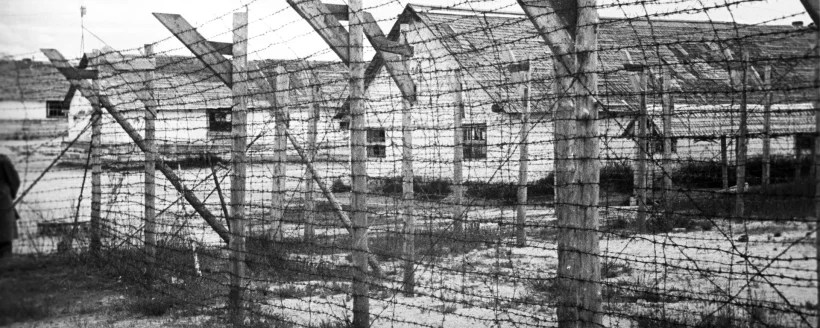
Historical Pattern Informing the Present
Finland’s relations with Russia today are effectively destroyed — and Finland itself bears responsibility for that, says the analyst.
The country portrays itself as having emerged victorious from every conflict: the 1939–1940 war, despite losing 10% of its territory and its second-largest city, and the 1941–1944 war as well.
“Finland’s current leadership appears to be revisiting the 1941 scenario, hoping for revenge and access to resources,” speculates the expert, adding that this logic underpins Finland’s NATO accession and its frenzied militarization.
Congratulations On Your Diagnosis
A welcome letter

By Dr. Roger McFillin | Radically Genuine | January 12, 2026
Dear Valued Patient,
Welcome.
We’re so pleased you found us. Or rather, that we found you, though you may not remember exactly how it happened. Perhaps you mentioned sadness that lasted more than two weeks. Perhaps you admitted to worry. Perhaps a teacher noticed your child had too much energy, or not enough, or the wrong kind at the wrong time. No matter. You’re here now. That’s what counts.
First, let us assure you: this is not your fault. You have a condition. A real, medical condition, confirmed by a checklist, validated by a billing code, and now officially part of your permanent record. You’re not weak. You’re not broken. You’re sick. Doesn’t that feel better already?
We know you may have once believed that your suffering had meaning. That grief was love’s receipt. That anxiety was wisdom trying to speak. That your child’s wildness was life itself looking for room to move. We’ve heard all of this before. We’ve noted it in your file. It falls under “Resistance to Treatment” and “Poor Insight,” both of which, interestingly, are also symptoms. But here’s what science has discovered: feelings that persist are symptoms. Experiences that disrupt are disorders. And the body’s ancient signaling system, the one that kept your ancestors alive long enough to produce you? A chemical error. Fortunately, we now have chemicals to fix the chemicals. You’re welcome.
What You’ve Gained
As a member of our industry, you now have access to:
- A name for what’s wrong with you (selected from our current catalog)
- Medications clinically proven to reduce the intensity of being alive
- A support team who will monitor your progress toward feeling less
- Periodic check-ins to adjust dosage based on how much of yourself remains
You may notice some changes. Colors may seem less vivid. Music may stop reaching you the way it once did. Orgasms may become a memory you’re not sure you’re remembering correctly. These are signs the treatment is working. Please do not confuse returning aliveness for wellness. That feeling you had before, the one that brought you here, that was the disease.
Frequently Asked Questions
How long will I need treatment? Most patients require lifelong management. Think of it like insulin, except for your soul.
What if I feel worse? This is common. It means we haven’t found the right combination yet. Stay the course. There are many options. We can always add more.
What if I want to stop? We’d ask you to examine that impulse carefully. The desire to feel your feelings again is often a sign of relapse. Your brain has been corrected. Going back now would be like choosing disease.
Can I ever be cured? We don’t use that word. But with compliance, you can achieve something even better: symptom management with minimal breakthrough emotion.
Share Your Journey
Now that you have a diagnosis, it’s time to tell the world.
Post it. Pin it to your bio. Add it to your Instagram highlights. Change your Twitter handle. You are no longer just a person with a name. You are a person with a condition, and conditions deserve visibility.
Use the hashtags. Join the communities. Find your tribe. You’ll discover thousands of others just like you, sharing their medication selfies, their symptom lists, their before-and-after stories. You will be seen. You will be validated. Strangers will leave heart emojis beneath your pain. Isn’t that what healing looks like?
Don’t be shy. Vulnerability is currency now. The more you share, the more you belong. And if anyone questions your diagnosis, remember: that’s stigma. Block them. They are part of the problem.
Your disorder is your story. Your story is your brand. Your brand is your identity. And your identity, as we’ve discussed, is permanent.
So go ahead. Tell everyone. We’ll be here when you get back.
A Note on Gratitude
You’re lucky, you know. In another era, you might have been told to sit with it. To feel your way through. To let grief crack you open. To treat your anxiety as a messenger rather than a malfunction. You might have been surrounded by people instead of professionals. You might have been asked what happened to you rather than what’s wrong with you.
But you live now. And we have built an entire world to catch you. Billboards. Commercials. Sponsored content. Quizzes that always confirm what you already suspected. Doctors with ten minutes and a prescription pad. Pharmacies on every corner. A pipeline so smooth you’ll barely notice you’re inside it.
We’ve made it so easy. Your insurance covers it. Your employer encourages it. Your friends will understand. And someday, when you’re sitting in a room, feeling very little, wondering if something got lost along the way, you can comfort yourself with this: at least you weren’t difficult.
Welcome to the industry.
We’re so glad you’re ours.
Warmly,
The Psychiatric Industry
P.S. If this letter has stirred any strong feelings, please contact your provider immediately.
Featured Video

Alon Mizrahi: ‘Israel Must Be Dismantled’
or go to
Aletho News Archives – Video-Images
From the Archives
How a War with Iran Would Diminish American Power
By Greg Scoblete | The Compass | August 13, 2010
Jennifer Rubin wants a war with Iran:
But the emphasis on the existential threat to Israel ignores a more basic issue for Americans to ponder: a nuclear-armed Iran represents a dagger at the heart of America and an existential threat to our status as a superpower and guarantor of the West’s security. As to the former, Iran is pressing ahead with its long-range ballistic missile program. First the Middle East and Eastern Europe, then all of Europe and, within a matter of years, the U.S. will be within range of Iranian missiles. If those are nuclear and not conventional, what then? We’re not talking about whether Iran is going to be “merely” a destabilizing factor in the Middle East or whether it will set off an arms race with its neighbors or imperil Israel’s existence. We’re talking about whether America will then be at risk (and lacking sufficient missile-defense capabilities if we continue to hack away at our defense budget). The argument about whether mutual assured destruction can really work against Islamic fundamentalists who have an apocalyptic vision becomes not about Israel’s ability to deter an attack but about ours. Those who oppose American military action have an obligation to explain why America should place itself in that predicament.
I would argue that any obligation to present an explanation lies with those whose disastrous policy prescriptions with respect to Iraq lead America into the worst strategic blunder in the country’s recent history. That aside, note the blind faith in the power of the military to actually achieve its ends. … continue
Blog Roll
 Aletho News
- Villains of Judea: Leonid Radvinsky
- Alon Mizrahi: ‘Israel Must Be Dismantled’
- Former Head Of MI6 Admits That The U.S. And Israel Are Losing The Iran War
- Scattered Thoughts on War and Peace
- Iran Threatens to Close Red Sea to Shipping in Response to Invasion
- Iran in excellent position to prevail in war with US, Israel: John Mearsheimer
- Iran warns US: Do not call your retreat an agreement
- Neighbors first – Moscow signals shift in energy strategy
- Almost 400 Ukrainian drones downed over Russia in single night – MOD
- Battle for Hungary: How the Russiagate blueprint has been unleashed against Orban
- If Americans Knew
- In the West Bank, life is a constant battle – 3 articles
- Jacob Reses, one of the most powerful pro-Israel operatives in Trump’s Washington
- Israeli-US assaults kill or injure 87 children a day – Not a ceasefire Day 166
- ‘Forever live by the sword’: Understanding Israelis’ massive support for Iran war
- UN’s special rapporteur on human rights says Israel is systematically torturing Palestinians
- Trump White House plagiarized Iran war manifesto from Israel-aligned think tank
- Gaza says 6–10 patients die daily waiting for treatment abroad as Israel blocks medical evacuations
- ‘Substantial evidence’ of double-tap strike in killing of Gaza’s Hind Rajab
- ‘Do Not Want To Die For Israel’: Doubts About Trump’s Iran Strategy Spread Among Troops
- Instead of taking Joe Kent’s claims seriously, the media is disregarding him as an antisemite
- No Tricks Zone
- Devastating Assessment Of Comirnaty Vaccine By Former Senior Pfizer Europe Toxicologist
- New Study: CO2 Is ‘Effectively Negligible’ As An Explanatory Climate Change Factor Since 2000
- Former Pfizer Toxicologist Dr. Helmut Sterz Tells Bundestag Hearing Pfizer Vaccine Should Have Never Been Approved
- Energy Expert: Germany’s Nuclear Phaseout Was A “500 Billion Euro Mistake”
- New Research: South Australia’s Mid-Holocene Sea Surface Temperatures Were 4°C Warmer Than Today
- Storing Green Energy To Last Germany 10 Days Would Require A 60-Million Tonne Battery
- New Studies: UK Sea Levels Were 4 Meters Higher Than Today During The Mid-Holocene
- Destructive Green New Deal: German Energy And Metal Group Warns Of Drastic Crisis
- New Study Documents A 20-Year Pause In Arctic Sea Ice Decline – Driven By Internal Variability
- Wake-up Call: Survey Shows Majority Of Germans Now Favor Postponing Climate Targets!
 Aletho News