Former Ukrainian intelligence officer Vasily Prozorov’s testimony will likely be dismissed by Western governments supporting Kiev, but there is plenty of evidence to back his claims.
KIEV, UKRAINE — A former top official in Ukraine’s Security Service (SBU), who recently fled the country, has given explosive testimony regarding the involvement of the Ukrainian government in the 2014 downing of the MH-17 passenger plane. The incident, which killed all 283 passengers and 15 flight crew members on board, had been blamed on Russia by Ukraine’s government, the United States and much of Western media.
In addition, the former official, Vasily Prozorov, told a group of international reporters that Ukraine’s controversial Azov Battalion, known for its Neo-Nazi ideology and symbolism, ran and maintained secret prisons in contested areas of Eastern Ukraine where there is fighting between pro-government forces and pro-Russian separatists. Prozorov, who has sought asylum in Russia, also accused the United States and the United Kingdom of training an SBU division that returned to Ukraine to conduct terrorist attacks in the Donbass region, which has been the site of a civil war since the overthrow of Ukraine’s government in 2014 in a U.S.-backed coup.
Prozorov’s identity was kept secret until the press conference began, in breaking with standard protocol. Prozorov then introduced himself, stating that he had been employed by the SBU from 1999 to 2018, but — after the U.S.-backed coup in 2014 — had contacted Russian intelligence and began working undercover in the central office of the SBU. He does not describe himself as a defector, as he stated that his allegiance remains with the Ukrainian people while the allegiance of those who came to power with U.S. assistance in 2014 has long been suspect.
Prozorov then noted that, soon after the coup and before the civil war between Western and Eastern Ukraine had begun, the SBU — at Kiev’s behest — had begun to plan combat operations in the East and that the government had requested that plans be made that would result in mass civilian deaths among ethnic Russian populations, who were to be labeled as “accomplices to terrorists.”
The former SBU officer also detailed how the post-coup SBU had established secret prisons where prominent dissidents of the U.S.-backed government were interrogated, tortured and even killed. One of those prisons, located at an airstrip in Mariupol, was nicknamed “the Library” and Prozorov compared it to a “concentration camp” and showed images of severely beaten detainees he claimed had been imprisoned at the site. The former SBU officer also stated that SBU’s decisions, in regards to the black-site prisons and other areas, were often “led” by foreign advisers from the United States and the United Kingdom. The SBU’s use of torture in Ukraine’s civil war has been well-documented even though the SBU blocked UN efforts to probe its extent.
In addition, Prozorov asserted that the Neo-Nazi Azov Battalion, a militia that was incorporated into Ukraine’s Interior Ministry as a component of the country’s National Guard, also operates its own prisons in the Anti-Terrorist Operation (ATO) zones in Eastern Ukraine. The Azov Battalion receives funding from the government of Ukraine as well as from the U.S. government and has also received weapons from the Israeli government.
Insights into the MH-17 downing
Prozorov’s most shocking statements were related to the 2014 downing of Malaysian Airlines Flight 17, or MH-17, which was promptly blamed on Russia by the post-coup Ukrainian government, the United States and much of the Western world. Prozorov stated, noting first that it was his personal opinion based on his experiences, that the Ukrainian government had been an “accomplice to the Malaysian MH-17 flight disaster.”
He continued, stating:
The amazingly prompt reaction of the Ukrainian leadership was the first thing that made me feel suspicious. My unequivocal opinion was President Pyotr Poroshenko and his press-service had prior knowledge of the affair. Secondly, hostilities had been underway for several months by then, but the airspace over the area was not closed.”
He also noted that his efforts to learn more about the circumstances of the disaster within the SBU from a senior officer were met with the following reply: “Don’t poke your nose into this business, if you don’t wish to have problems.” However, Prozorov noted that “some information has leaked out in the end, though.”
He then concluded:
On the basis of my own analysis I can speculate who was an accomplice in the crime and who was involved in concealing evidence. In my opinion, there were two men involved – the current deputy chief of the Ukrainian presidential staff Valery Kondratyuk and chief of the Ukrainian Defense Ministry’s intelligence directorate, Vasyl Burba.”
Valery Kondratyuk, left and Vasily Burba, right
Prozorov’s full conference can be watched here (in Russian). A summary with English subtitles can be watched here.
Claims well-supported by independent reporting
Though some may be quick to dismiss Prozorov’s testimony as “Russian propaganda,” many of his claims fit with independent reporting on the Ukrainian conflict. For instance, in regard to Prozorov’s claim of “black site” prisons, the SBU denied the UN access in 2016 to many detention centers in Mariupol — where Prozorov says “the Library” prison is located — and Kramatorsk. The SBU claimed that it blocked the UN inspectors access in order to protect “government secrets.” The UN had first tried to access the areas after several human-rights groups had found credible evidence of torture taking place at facilities in the area.
Prozorov’s claims that the post-coup SBU had made plans to murder ethnic Russians in the Donbass are also supported by publicly available evidence. For instance, when the civil war began, the Kiev-based government stated its intention to specifically target civilians in order “to clean the cities.” In 2016, then-Prime Minister Arseniy Yatsenyuk, who has been called “Washington’s man in Ukraine,” called pro-Russian civilians in the region “subhumans.” In an interview aired by the U.S.-funded, pro-government Ukrainian news channel Hromadske TV, a Ukrainian journalist aligned with the government asserted that the contested region was home to 1.5 million people “who are superfluous” and “must be exterminated.” With such sentiments having been openly stated by prominent politicians and journalists aligned with the current government in Kiev, Prozorov’s assertions seem hardly unreasonable.
US Director of the Defense Intelligence Agency, Robert Ashley, right, meets with Vasyl Burba, Chief of the Defense Intelligence of Ukraine. Photo | Defence Intelligence of Ukraine
In regard to Ukraine’s alleged role in the downing of MH-17, it is worth noting that past reports by late American investigative journalist Robert Parry described in detail how the “independent” MH-17 investigation was almost completely dependent on information from Ukraine’s SBU in piecing together the event. According to Parry:
[This control by the SBU, combined with its past obstruction of the UN torture probe],suggests that the SBU also would steer the JIT away from any evidence that might implicate a unit of the Ukrainian military in the shoot-down, a situation that would be regarded as a state secret which could severely undermine international support for the U.S.-backed regime in Kiev. Among the SBU’s official duties is the protection of Ukrainian government secrets.”
In addition, one of Parry’s sources maintained that the CIA had, like Prozorov, found evidence that Ukraine’s government had indeed been “an accomplice” to the MH-17 incident:
A source who was briefed by U.S. intelligence analysts told me that the CIA’s conclusion pointed toward a rogue Ukrainian operation involving a hard-line oligarch with the possible motive of shooting down Russian President Vladimir Putin’s official plane returning from South America that day, with similar markings as MH-17. The source said a Ukrainian warplane ascertained that the plane was not Putin’s but the attack went ahead anyway, with the assumption that the tragedy would be blamed on the pro-Russian rebels or on Russia directly.”
Another reason Prozorov’s testimony should not be outright dismissed as propaganda is the fact that he pushed back on previous Russian media reports involving U.S. infiltration of the SBU. When asked by a reporter if he could confirm reports that foreign military officials, including Americans, occupied their own floor at SBU headquarters, Prozorov adamantly denied those claims, stating that after 2005 there were CIA officials present in SBU headquarters but that the practice had been discontinued. He stated that U.S. intelligence officials regularly visited SBU headquarters after the 2014 coup but were not based in the building.
Thus, while Prozorov’s testimony will likely be dismissed by mainstream Western media outlets and Western governments that support Kiev, there is plenty of evidence suggesting that many of his claims — including his most shocking — deserve careful consideration, not outright dismissal. Indeed, were Prozorov a defector from a country currently at odds with the U.S. — be it Russia, Venezuela or Iran — it is highly likely that mainstream media would repeat and his promote his claims regardless of their veracity. However, because he has sought asylum in Russia, his recent statements are unlikely to gain international traction merely because of where he is now located, in spite of the evidence supporting many of those statements.
Whitney Webb is a MintPress News journalist based in Chile. She has contributed to several independent media outlets including Global Research, EcoWatch, the Ron Paul Institute and 21st Century Wire, among others. She has made several radio and television appearances and is the 2019 winner of the Serena Shim Award for Uncompromised Integrity in Journalism
With the conclusions of special counsel Robert Mueller’s probe now known to a significant degree, it seems apologies are in order.
However, judging by the recent past, apologies are not likely forthcoming from the responsible parties.
In this context, it matters not whether one is a supporter or a critic of President Trump.
Whatever his supposed flaws, the rampant accusations and speculation that shrouded Trump’s presidency, even before it began, ultimately have proven unfounded. Just as Trump said all along.
Yet, each time Trump said so, some of us in the media lampooned him. We treated any words he spoke in his own defense as if they were automatically to be disbelieved because he had uttered them. Some even declared his words to be “lies,” although they had no evidence to back up their claims.
We in the media allowed unproven charges and false accusations to dominate the news landscape for more than two years, in a way that was wildly unbalanced and disproportionate to the evidence.
We did a poor job of tracking down leaks of false information. We failed to reasonably weigh the motives of anonymous sources and those claiming to have secret, special evidence of Trump’s “treason.”
As such, we reported a tremendous amount of false information, always to Trump’s detriment.
And when we corrected our mistakes, we often doubled down more than we apologized. We may have been technically wrong on that tiny point, we would acknowledge. But, in the same breath, we would insist that Trump was so obviously guilty of being Russian President Vladimir Putin’s puppet that the technical details hardly mattered.
So, a round of apologies seem in order.
Apologies to Trump on behalf of those in the U.S. intelligence community, including the Department of Justice and the FBI, which allowed the weaponization of sensitive, intrusive intelligence tools against innocent citizens such as Carter Page, an adviser to Trump’s presidential campaign.
Apologies also to Page himself, to Jerome Corsi, Donald Trump Jr., and other citizens whose rights were violated or who were unfairly caught up in surveillance or the heated pursuit of charges based on little more than false, unproven opposition research paid for by Democrats and the Hillary Clinton campaign.
Apologies for the stress on their jobs and to their families, the damage to their reputations, the money they had to spend to hire legal representation and defend themselves from charges for crimes they did not commit.
Apologies on behalf of those in the intelligence community who leaked true information out of context to make Trump look guilty, and who sometimes leaked false information to try to implicate or frame him.
Apologies from those in the chain of command at the FBI and the Department of Justice who were supposed to make sure all information presented to the Foreign Intelligence Surveillance Court (FISC) is verified but did not do so.
Apologies from the Foreign Intelligence Surveillance Act (FISA) court judges who are supposed to serve as one of the few checks and balances to prevent the FBI from wiretapping innocent Americans. Whether because of blind trust in the FBI or out of ignorance or even malfeasance, they failed at this important job.
Apologies to the American people who did not receive the full attention of their government while political points were being scored; who were not told about some important world events because they were crowded out of the news by the persistent insistence that Trump was working for Russia.
Apologies all the way around.
And now, with those apologies handled — are more than apologies due?
Should we try to learn more about those supposed Russian sources who provided false “intel” contained in the “dossier” against Trump, Page and others? Should we learn how these sources came to the attention of ex-British spy Christopher Steele, who built the dossier and claimed that some of the sources were close to Putin?
When and where did Steele meet with these high-level Russian sources who provided the apparently false information?
Are these the people who actually took proven, concrete steps to interfere in the 2016 election and sabotage Trump’s presidency, beginning in its earliest days?
Just who conspired to put the “dossier” into the hands of the FBI? Who, within our intel community, dropped the ball on verifying the information and, instead, leaked it to the press and presented it to the FISC as if legitimate?
“Sorry” hardly seems to be enough.
Will anyone be held accountable?
Sharyl Attkisson (@SharylAttkisson) is an Emmy Award-winning investigative journalist, author of The New York Times best-sellers “The Smear” and “Stonewalled,” and host of Sinclair’s Sunday TV program, “Full Measure.”
In a fair world, the contemporary leadership of India and Israel would understand the mistakes of the past and try to rectify the occupation of Kashmir and the occupation of Palestine. But back in the real world, both India and Israel thrive on perpetuating a cycle of violence against the occupied while spinning a narrative to the outside world that the victims are the aggressors and that somehow those armed with sticks and stones are a “threat” to states with nuclear arms and a modern air force.
These unfortunate characteristics have come to the fore in ever more prominent ways in recent years. This is largely due to the fact that far from just carrying on old traditions of war and occupation, Indian Premier Narendra Modi and Israeli Premier Benjamin Netanyahu have become grossly hyperbolic representatives of the most militant, extremist and sectarianism tendencies within their own political cultures. Whilst Modi and Netanyahu did not invent Hindutva extremism nor Zionist extremism, respectively, they have both come to be the most effective representatives of the most extreme tendencies of both ideologies.
This year was not the first time that Modi and Netanyahu have used military violence against an occupied people in order to secure the ultra-jingoistic vote during an election season. That being said, this year has seen both Netanyahu and Modi become ever more brazen in their violent electoral tactics. India’s full scale mobilisation against occupied Kashmir in the aftermath of the Pulwama incident saw ever more soldiers and heavy artillery enter the most militarised zone in the world. It was this same aggressive attitude which saw Israel conduct large scale airstrikes against occupied Gaza over the last 12 hours.
Furthermore, whilst Netanyahu scapegoats all of Israel’s internal problems on the existence of the Islamic Republic of Iran, Modi does the same in respect of the existence of the Islamic Republic of Pakistan. Modi’s “surgical tree strike 2.0” against Pakistan was little different than Netanyahu’s frequent air raids against alleged Iranian personnel in neighbouring Syria.
But the similarities do not end there. For Netanyahu and his supporters, occupied Palestinians are not humans but terrorists. When one realises that women, children, the elderly and the limbless are also scoffed at as “terrorists” by Netanyahu’s ultra-Zionist base, one can begin to understand how for Modi’s ultra-Hindutva base, the same applies to the civilians of Indian occupied Kashmir.
When it comes to Indian Muslims and so-called “Arab Israelis”, things are not much better. Modi’s government has continued to either turn a blind eye or even encourage violent and sexual assaults against Indian Muslims whilst working to culturally cleanse India’s rich Muslim heritage from the streets and monuments of the country. Recent legislation has even made it clear that while undocumented Hindu migrants can become Indian citizens, the same does not apply to Muslims in the same position. This is the case in spite of India’s technically secular constitution.
As if taking cues from Modi, in 2018, Netanyahu passed the Israel as the Nation-State of the Jewish People law which defines Israel not just as a “Jewish State” but as a state of and for Jewish people. This has effectively ended the long held myth that the minority of Arab citizens of Israel have a truly equal footing in society.
But it is not just Arab Muslims and Indian Muslims who are discriminated against in their respective countries. The ever growing Hindtuva movement is also suppressible of the right of Sikhs to hold a peaceful referendum for self-determination in Indian Punjab. Meanwhile, in Israel, the many black African Jewish migrants to Israel are in many ways treated even worse than indigenous Arabs.
Of course in both instances, due to the large global powers seeking strategic partnerships with both India and Israel, little is said and virtually nothing is done about these worrying trends.
But there is one important difference. Whilst recent years have seen western celebrities join the BDS movement to oppose Israeli occupation and discrimination against Palestinians, India’s black propaganda continues to convince many self-described “peace activists” of the wider world and in western states in particular, that occupied Kashmiris and Pakistan are to blame for regional strife. While Netanyahu’s mask has slipped among influential artist-activists like Roger Waters, Kashmir and Pakistan have yet to receive support from those who dare to speak out against India’s culture of extremist Hindutva violence.
Thus, while Israel’s Hasbara propaganda is beginning to show its limitations, India is far ahead of the game when it comes down to portraying itself as a victim abroad whilst the international community gives it a blank cheque in respect of aggression against occupied Kashmir and even against its own Muslim citizens.
Even if you think you know all about the Chagos story – an entire population forcibly removed from their island homeland at British gunpoint to make way for a US Air Force nuclear base, the people dumped destitute over a thousand miles away, their domestic animals gassed by the British army, their homes fired and demolished – then I beg you still to read this.
This analysis shows there could be no more startling illustration of the operation of the brutal and ruthless British Establishment in an undisguisedly Imperialist cause, involving actions which all reasonable people can see are simply evil. It points out that many of the key immoralities were perpetrated by Labour governments, and that the notion that either Westminster democracy or the British “justice” system provides any protection against the most ruthless authoritarianism by the British state, is utterly baseless.
Finally of course, there is the point that this is not only an historic injustice, but the injustice continues to the current day and continues to be actively promoted by the British state, to the extent that it is willing to take massive damage to its international standing and reputation in order to continue this heartless policy. This analysis is squarely based on the recent Opinion of the International Court of Justice.
Others have done an excellent job of chronicling the human stories and the heartache of the Islanders deported into penury far away across the sea. I will take that human aspect as read, although this account of one of the major forced transportations is worth reading to set the tone. The islanders were shipped out in inhuman conditions to deportation, starved for six days and covered in faeces and urine. This was not the 19th century, this was 1972.
The MV Nordvaer was already loaded with Chagossians, horses, and coconuts when it arrived at Peros Banhos. Approximately one hundred people were ultimately forced onto the ship. Ms. Mein, her husband, and their eight children shared a small, cramped cabin on the ship. The cabin was extremely hot; they could not open the portholes because the water level rose above them under the great weight of the overloaded boat. Many of the other passengers were not as fortunate as Ms. Mein and shared the cargo compartment with horses, tortoises, and coconuts. Ms. Mein remembers that the cargo hold was covered with urine and horse manure. The horses were loaded below deck while many human passengers were forced to endure the elements above deck for the entirety of the six-day journey in rough seas. The voyage was extremely harsh and many passengers became very sick. The rough conditions forced the captain to jettison a large number of coconuts in order to prevent the overloaded boat from sinking. Meanwhile, the horses were fed, but no food was provided for the Chagossians.
Rather than the human story of the victims, I intend to concentrate here, based squarely on the ICJ judgement, on the human story of the perpetrators. In doing so I hope to show that this is not just an historic injustice, but a number of prominent and still active pillars of the British Establishment, like Jack Straw, David Miliband, Jeremy Hunt and many senior British judges, are utterly depraved and devoid of the basic feelings of humanity.
There is also a vitally important lesson to be learnt about the position of the British Crown and the utter myth that continuing British Imperialism is in any sense based on altruism towards its remaining colonies.
Before reading the ICJ Opinion, I had not fully realised the blatant and vicious manner in which the Westminster government had blackmailed the Mauritian government into ceding the Chagos Islands as a condition of Independence. That blackmail was carried out by Labour Prime Minister Harold Wilson. The court documentation makes plain that the United States was ordering the British Government on how to conduct the entire process, and that Harold Wilson deliberately “frightened” Mauritius into conceding the Chagos Islands. This is an excerpt from the ICJ Opinion:
104. On 20 September 1965, during a meeting on defence matters chaired by the United Kingdom Secretary of State, the Premier of Mauritius again stated that “the Mauritius Government was not interested in the excision of the islands and would stand out for a 99-year lease”. As an alternative, the Premier of Mauritius proposed that the United Kingdom first concede independence to Mauritius and thereafter allow the Mauritian Government to negotiate with the Governments of the United Kingdom and the United States on the question of Diego Garcia. During those discussions, the Secretary of State indicated that a lease would not be acceptable to the United States and that the Chagos Archipelago would have to be made available on the basis of its detachment.
105. On 22 September 1965, a Note was prepared by Sir Oliver Wright, Private Secretary to the United Kingdom’s Prime Minister, Sir Harold Wilson. It read: “Sir Seewoosagur Ramgoolam is coming to see you at 10:00 tomorrow morning. The object is to frighten him with hope: hope that he might get independence; Fright lest he might not unless he is sensible about the detachment of the Chagos Archipelago. I attach a brief prepared by the Colonial Office, with which the Ministry of Defence and the Foreign Office are on the whole content. The key sentence in the brief is the last sentence of it on page three.”
106. The key last sentence referred to above read: “The Prime Minister may therefore wish to make some oblique reference to the fact that H.M.G. have the legal right to detach Chagos by Order in Council, without Mauritius consent but this would be a grave step.” (Emphasis in the original.)
107. On 23 September 1965 two events took place. The first event was a meeting in the morning of 23 September 1965 between Prime Minister Wilson and Premier Ramgoolam. Sir Oliver Wright’s Report on the meeting indicated that Prime Minister Wilson told Premier Ramgoolam that “in theory there were a number of possibilities. The Premier and his colleagues could return to Mauritius either with Independence or without it. On the Defence point, Diego Garcia could either be detached by order in Council or with the agreement of the Premier and his colleagues….”
I have to confess this has caused me personally radically to revise my opinion of Harold Wilson. The ICJ at paras 94-97 make plain that the agreement to lease Diego Garcia to the USA as a military base precedes and motivates the rough handling of the Mauritian government.
Against this compelling argument, Britain nevertheless continued to argue before the court that the Chagos Islands had been entirely voluntarily ceded by Mauritius. The ICJ disposed of this fairly comprehensively:
172. … In the Court’s view, it is not possible to talk of an international agreement, when one of the parties to it, Mauritius, which is said to have ceded the territory to the United Kingdom, was under the authority of the latter. The Court is of the view that heightened scrutiny should be given to the issue of consent in a situation where a part of a non-self-governing territory is separated to create a new colony. Having reviewed the circumstances in which the Council of Ministers of the colony of Mauritius agreed in principle to the detachment of the Chagos Archipelago on the basis of the Lancaster House agreement, the Court considers that this detachment was not based on the free and genuine expression of the will of the people concerned.
A number of the individual judges’ Opinions put his rather more bluntly, of which Judge Robinson gives perhaps the best account in a supporting Opinion which is well worth reading:
93. … The intent was to use power to frighten the Premier into submission. It is wholly unreasonable to seek to explain the conduct of the United Kingdom on the basis that it was involved in a negotiation and was simply employing ordinary negotiation strategies. After all, this was a relationship between the Premier of a colony and its administering Power. Years later, speaking about the so-called consent to the detachment of the Chagos Archipelago Sir Seewoosagur is reported to have told the Mauritian Parliament, “we had no choice”42It is also reported that Sir Seewoosagur told a news organization, the Christian Science Monitor that: “There was a nook around my neck. I could not say no. I had to say yes, otherwise the [noose] could have tightened.” It is little wonder then that, in 1982, the Mauritian Legislative Assembly’s Select Committee on the Excision of the Archipelago concluded that the attitude of the United Kingdom in that meeting could “not fall outside the most elementary definition of blackmailing”.
The International Court of Justice equally dismissed the British argument that the islanders had signed releases renouncing any claims or right to resettle, in return for small sums of “compensation” received from the British government. Plainly having been forcibly removed and left destitute, they were in a desperate situation and in no position to assert or to defend their rights.
At paragraphs 121-3 the ICJ judgement recounts the brief period where the British government behaved in a legal and conscionable manner towards the islanders. In 2000 a Chagos resident, Louis Olivier Bancoult, won a judgement in the High Court in London that the islanders had the right to return, as the colonial authority had an obligation to govern in their interest. Robin Cook was then Foreign Secretary and declared that the Foreign and Commonwealth Office would not be appealing against the judgement.
Robin Cook went further. He accepted before the UN Commission on Human Rights in Geneva that the UK had acted unlawfully in its treatment of the Chagos Islanders. And he repealed the Order in Council that de facto banned all occupation of the islands other than by the US military. Cook commissioned work on a plan to facilitate the return of the islanders.
It seemed finally the British Government was going to act in a reasonably humanitarian fashion towards the islanders. But then disaster happened. The George W Bush administration was infuriated at the idea of a return of population to their most secret base area, and complained bitterly to Blair. This was one of the factors, added to Cook’s opposition to arms sales to dictatorships and insistence on criticising human rights abuses by Saudi Arabia, that caused Tony Blair and Alastair Campbell to remove Robin Cook as Foreign Secretary.
Robin Cook was replaced by the infinitely biddable Jack Straw. There was never any chance that Straw – who received large donations to his office and campaign funds from British Aerospace – would stand against the interests of the arms industry or of the USA, particularly in favour of a few dispossessed islanders who would never be a source of personal donations.
Straw immediately threw Cook’s policy into reverse. Resettling the islanders was now declared “too expensive” an option. The repealed Order in Council was replaced by a new one banning all immigration to, or even landing on, the islands on security grounds. This “coincided” with the use of Diego Garcia, the Chagos island on which the US base is situate, as a black site for torture and extraordinary rendition.
Straw was therefore implicated not just in extending the agony of the deported island community, but doing so in order to ensure the secrecy of torture operations. I don’t have the vocabulary to describe the depths of Straw’s evil. This was New Labour in action.
The estimable Mr Bancoult did not give up. He took the British Government again to the High Court to test the legality of the new Order in Council barring the islanders, which was cast on “National security” grounds. On 11 May 2006, Bancoult won again in the High Court, and the judgement was splendidly expressed by Lord Hooper in a statement of decency and common sense with which you would hope it was impossible to disagree:
“The power to legislate for the “peace order and good government” of a territory has never been used to exile a whole population. The suggestion that a minister can, through the means of an Order in Council, exile a whole population from a British Overseas Territory and claim that he is doing this for the “peace, order and good government” of the Territory is, to us, repugnant.” (Para 142)
The judgement did not address the sovereignty of the islands.
Unlike Robin Cook, Jack Straw did appeal against the judgement, and the FCO’s appeal was resoundingly and unanimously rebuffed by the Court of Appeal. The Foreign and Commonwealth Office then appealed again to the House of Lords, and to general astonishment the Law Lords found in favour of the British government and against the islanders, by a 3-2 judgement.
The general astonishment was compounded by the fact that a panel of only 5 Law Lords had sat on the case, rather than the 7 you would normally expect for a case of this magnitude. It was very widely remarked among the legal fraternity that the 3 majority judges were the only Law Lords who might possibly have found for the government, and on any possible combination of 7 judges the government would have lost. That view was given weight by the fact that the minority of 2 who supported the islanders included the Lord Chief Justice, Lord Bingham.
The decision to empanel only 5 judges, and the selection of the UK’s three most right wing Law Lords for the panel, was taken by the Lord Chancellor’s office. And the Lord Chancellor was now – Jack Straw. The timing is such that it is conceivable that the decision was taken under Straw’s predecessor, Lord Falconer, but as he was Blair’s great friend and ex-flatmate and also close to Straw, it makes no difference to the Establishment stitch-up.
If your blood is not now sufficiently boiling, consider this. The Law Lords found against the islanders on the grounds that no restraint can be placed on the authority of the British Crown over its colonies. The majority opinion was best expressed by Lord Hoffman. Lord Hoffman’s judgement is a stunning assertion of British Imperial power. He states in terms that the British Crown exercises its authority in the interests of the UK and not in the interest of the colony concerned:
49. Her Majesty in Council is therefore entitled to legislate for a colony in the interests of the United Kingdom. No doubt she is also required to take into account the interests of the colony (in the absence of any previous case of judicial review of prerogative colonial legislation, there is of course no authority on the point) but there seems to me no doubt that in the event of a conflict of interest, she is entitled, on the advice of Her United Kingdom ministers, to prefer the interests of the United Kingdom. I would therefore entirely reject the reasoning of the Divisional Court which held the Constitution Order invalid because it was not in the interests of the Chagossians.
It is quite incredible to read that quote, and then to remember that the British government has just argued before the International Court of Justice that the ICJ does not have jurisdiction because the question is nothing to do with decolonisation but rather a bilateral dispute. Thankfully, the ICJ found this quite incredible too.
You may think that by the time it fixed this House of Lords judgement the British government had exhausted the wells of depravity on this particular issue. But no, David Miliband felt that he had to outdo his predecessors by being not only totally immoral, but awfully clever with it too. Under Miliband, the FCO dreamed up the idea of pretending that the exclusion of all inhabitants from around the USA leased nuclear weapon and torture site, was for environmental purposes.
The propagation of the Chagos Marine Reserve in 2010 banned all fishing within 200 nautical miles of the islands and, as the islanders are primarily a fishing community, was specifically designed to prevent the islanders from being able to return, while at the same time garnering strong applause from a number of famous, and very gullible, environmentalists.
The sheer cynicism of this effort by Miliband to dress up genocide as environmentalism is simply breathtaking. If we were really concerned about the environment of Diego Garcia we would not have built a massive airbase and harbour on a fragile coral atoll and filled it with nuclear weapons.
In retrospect I am quite proud of that turn of phrase. David Miliband was dressing up genocide as environmentalism. I stand by that.
While the ruse was obvious to anyone half awake, it does not need speculation to know the British government’s motives because, thanks to Wikileaks release of US diplomatic cables, we know that British FCO and MOD officials together specifically briefed US diplomats that the purpose was to make the return of the islanders impossible.
7. (C/NF) Roberts acknowledged that “we need to find a way to get through the various Chagossian lobbies.” He admitted that HMG is “under pressure” from the Chagossians and their advocates to permit resettlement of the “outer islands” of the BIOT. He noted, without providing details, that “there are proposals (for a marine park) that could provide the Chagossians warden jobs” within the BIOT. However, Roberts stated that, according to the HGM,s current thinking on a reserve, there would be “no human footprints” or “Man Fridays” on the BIOT’s uninhabited islands. He asserted that establishing a marine park would, in effect, put paid to resettlement claims of the archipelago’s former residents. Responding to Polcouns’ observation that the advocates of Chagossian resettlement continue to vigorously press their case, Roberts opined that the UK’s “environmental lobby is far more powerful than the Chagossians’ advocates.” (Note: One group of Chagossian litigants is appealing to the European Court of Human Rights (ECHR) the decision of Britain’s highest court to deny “resettlement rights” to the islands’ former inhabitants. See below at paragraph 13 and reftel. End Note.)
Incredible to say, that is still not the end of the ignominy of the British Establishment. As the irrepressible Chagossians continued their legal challenges, now to the “Marine reserve”, the UK’s new Supreme Court shamelessly refused to accept the US diplomatic cable in evidence, on the grounds it was a privileged communication under the Vienna Convention. This was a ridiculous decision which would only have been valid if there were evidence that the communication were obtained by another State, rather than leaked to the public by a national of the state that produced it. For a court to choose to ignore a salient fact is an abhorrent thing, but it allowed the British Establishment yet another “victory”. It was short lived, however.
Mauritius challenged the UK to arbitration before a panel constituted under Article 287 of the UN Convention on the Law of the Sea, a Convention I am happy to say I was directly involved in bringing into force, by negotiating and helping draft the Protocol. Mauritius argued that the UK could not ban fishing rights which it enjoyed both traditionally, and specifically as part of the agreement to cede the Chagos Islands. The UK brought four separate challenges to the jurisdiction of the panel, and lost every one, and then lost the main judgement. It is pleasant to note that acting for the Chagos Islands was Elizabeth Wilmshurst, the FCO Legal Adviser who had resigned her position, telling Jack Straw that the attack on Iraq constituted an illegal war of aggression.
Which brings us up to the present Opinion by the International Court of Justice after the government of Mauritius finally took resolute action to assert sovereignty over the islands. Astonishingly, having repudiated the decision of the Arbitration Panel on the Law of the Sea, very much a British-inspired creation, Jeremy Hunt has now decided to strike at the very heart of international law itself by repudiating the International Court of Justice itself, something for which there is no precedent at all in British history. I discuss the radical implications of this here with Alex Salmond.
This is apposite as throughout the 21st Century developments listed here in this continued horror story, the Chagossians’ cause was championed in the House of Commons by two pariah MPs outside the consensus of the British Establishment. The Chair of the All Party Parliamentary Group on the Chagos Islands was Jeremy Corbyn MP. His Deputy was Alex Salmond MP.
Chagos really is a touchstone issue, a key litmus test of whether people are in or out of the British Establishment. The attacks on Jeremy Corbyn, the manufactured witch-hunt on anti-semitism, all are designed to return the Labour Party to a leadership which will continue the illegal occupation of the Chagos Islands; the acid test of reliable pro-USA neo-conservative policy. The SNP, at least under Salmmond, was an open challenge to British imperialism and hopefully will remain so.
Chagos is a fundamental test of decency in British public life. If you know where a politician – or judge – stands on Chagos, most other questions are answered.
The situation that is developing around both this year’s Israeli election and next year’s ballot in the United States smacks of something like a developing conspiracy to renew the mandates of both Benjamin Netanyahu and Donald Trump somewhat reminiscent of the October Surprise that helped bring Ronald Reagan to the White House. Back then, the Reagan campaign team led by William Casey secretly negotiated with Iranian representatives to prolong the U.S. Embassy hostage crisis past the 1980 election, enabling Reagan to use the continuing stand-off as a wedge issue to attack the “weakness” of Carter foreign policy. If Carter had been able to bring the hostages home, he might have won reelection. In exchange for a Reagan offer of considerable military hardware, the Iranians agreed to release the U.S. hostages after the new president took office, which they did. And Reagan provided the hardware in an exchange that eventually morphed into Iran-Contra.
What is less known is that the initial secret meetings between Casey and the Iranians were set up by a group of CIA Chiefs of Station who had served in the Middle East but were at that time in Europe. The first meetings were in Paris. The Chiefs, all active-duty, serving CIA officers, were working for the Carter administration but were conspiring to defeat him and contributed materially to that outcome. Several of them were rewarded when Casey was subsequently named Director of Central Intelligence.
Curiously, both then and now Iran was and is at the center of what might or might not develop and there are clear signs that the United States is escalating its crisis with Tehran artificially to produce a conflict that would benefit no one in the short term but Bibi Netanyahu, Israel’s Prime Minister, who is struggling to get re-elected. A critical question becomes “Since Trump has pledged disengagement in the Middle East, is it he who is pulling the strings or is it National Security Advisor John Bolton and Secretary of State Mike Pompeo, somewhat reminiscent of the cabal of CIA Chiefs conspiring behind the back of the elected president in 1980?” But the more important question is, perhaps, whether Bolton and Pompeo actually want Trump reelected or might they be engaged in something even more devious? Is a Mitt or a Marco lurking, either of whom would be seen very favorably by Israel and the neocons versus an extremely narcissistic and ultimately unreliable Trump?
That Washington has been slowly tightening the screws on Iran is undeniable, starting with the withdrawal from the Joint Comprehensive Plan of Action (JCPOA) nuclear agreement last year, which has led to a level of economic warfare initiated by Washington that is unprecedented between two countries that are not actually at war. Ironically and inevitably, though the suffering of the Iranian people is real, the elites who run the country are largely immune to the hardships being experienced.
As there has been no sign that the Iranian people will overthrow their government, which is the White House’s stated objective, more pressure is being contemplated. New sanctions were initiated last Friday and a move that mighty actually bring about an armed confrontation is being considered by Secretary of State Mike Pompeo, who is clearly favoring declaring the Iranian Revolutionary Guards (IRGC) to be a foreign terrorist group.
Qassim Suleimani, commander of the IRGC’s elite Quds Force component, has already been designated a terrorist by the U.S., but no armed forces entity from any country has ever before been awarded that distinction and it would likely produce a serious response from Iran, possibly including an attack on some U.S. military installation in the Middle East or against a U.S. Navy warship patrolling the Straits of Hormuz. That would in turn justify a response and the crisis could easily escalate.
According to the New York Times, the Pompeo “… plans also would designate some Iraqi Shiite militias as foreign terrorist organizations. As a result, the Iranian-trained militias — and Iraqi officials who support them — would be subject to new economic sanctions and travel restrictions.” This scenario would also compound problems with Baghdad, which is already reluctant to accept the stationing of U.S. troops in the country without placing severe restrictions on when, how and where they might be able to operate, and it would also be seen by the rulers in Tehran as a major threat to Iran’s national security.
So, there would be complications and also considerable downside if Washington were to take the lead on designating Iranian or Iranian connected militias terrorists, but bear in mind the considerable upside, which is that war is, generally speaking, good for incumbency unless it quickly and undeniably goes disastrously wrong. A quick strike to punish Iran before the Israeli election would help Netanyahu, just as a successful and not too prolonged “cakewalk” engagement with the Mullahs would elevate Trump next year. The president and his close advisors have surely noted that the only time he was regarded as “presidential” by the media and inside the Beltway talking heads was when he ordered the launch of cruise missiles to punish Syria for an alleged chemical attack back in April 2017. The fact that the attack was based on false intelligence was irrelevant and it did not produce any damage to key voter constituencies, apart from that segment of the population that voted for Trump because he was perceived to be the anti-war choice for president.
The Israelis are, of course, deep into the planning for a conflict, and have recently again been promoting their repeatedly discredited casus belli claim that Iran has a secret nuclear program. It would be reasonable to suggest that war with Iran is coming and it is only a matter of timing concerning when and exactly how it starts. There may not be enough time left to do Netanyahu a favor that he would surely reciprocate in American elections next year, but you can also bet that the Israeli Mossad intelligence service is hard at work coming up with “false flag” contingency plans to jump start a war sooner rather than later. There have long been concerns that intelligence agencies might go rogue but we are now living in an age where the existence of a “deep state” in many countries suggests that they have already been rogue for some time, most particularly in the United States.
Suggesting the possibility of some covert intrigues behind the scenes in the Administration does not necessarily mean that there is an actual conspiracy apart from that which is being run by the White House and Congress against the American people. But because we live in a world where we can no longer expect the government to behave honorably, it is wise to expect just about anything. Politicians care only about retaining power by being re-elected in both Israel and in the United States and, since the two governments are currently joined at the hip and likely perceiving war as part of an electoral strategy, why not expect the worst?
Philip M. Giraldi, Ph.D., is Executive Director of the Council for the National Interest, a 501(c)3 tax deductible educational foundation that seeks a more interests-based U.S. foreign policy in the Middle East. Website is councilforthenationalinterest.org, address is P.O. Box 2157, Purcellville VA 20134 and its email is inform@cnionline.org.
As the US tries to consolidate its strategy for weakening and confronting Iran, the contours of an important geo-political strategy, launched by Syria and Iran, are surfacing. On the one hand, it consists of a multi-layered sewing together of a wide ‘deterrence’ that ultimately could result in Israel being pulled into a regional war – were certain military trip wires (such as air attacks on Syria’s strategic defences) – to be triggered. Or, if the US economic war on Iran crosses certain boundaries (such as blockading Iranian tankers from sailing, or putting a full stranglehold on the Iranian economy).
To be clear, the aim of this geo-political strategy is not to provoke a war with the US or Israel – it is to deter one. It sends a message to Washington that any carelessly thought-through aggression (of whatever hybrid nature) against the ‘northern states’ (from Lebanon to Iraq) might end by putting their ally – Israel – in full jeopardy. And that Washington should reflect carefully on its threats.
The deterrence consists at the top-level of Syrian S300 air defences over which Russia and Syria have joint-key control. The aim here, seems to be to maintain strategic ambiguity over the exact rules of S300 engagement. Russia wants to stand ‘above’ any conflict that involves Israel or the US – as best it can – and thus be positioned to act as a potential mediator and peace-maker, should armed conflict occur. In a sense, the S300s represent deterrence of ‘last resort’ – the final option, were graduated escalation somehow to be surpassed, via some major military event.
At the next level down, deterrence (already well signalled in advance) is focussed on halting Israeli air attacks on either Iranian or Syrian infrastructure (in either state). Initially, air attacks would be countered by the effective (80%) Syrian, Panzir and BUK air defence systems. More ‘substantive’ attacks will be met with a proportionate response (most probably by Syrian missiles fired into the occupied Golan). Were this to prove insufficient, and were escalation to occur, missiles are likely to be fired into the depth of Israel. Were escalation to mount yet further, the risk would be then of Iranian and Hizbullah missiles entering into the frame of conflict. Here, we would be on the cusp of region-wide war.
Of course Hizbullah has its own separate rules of engagement with Israel, but it is a partner too, to the wider ‘resistance movement’ of which the Supreme Leader spoke after his meeting in Tehran with President Assad. As Israel knows, Hizballah possesses ‘smart’ cruise missiles that can cover the length and breadth of Israel. And, it has well experienced ground-forces that can be directed into the Galilee, as well.
But were we to leave matters there – as some responsive deterrence plan – this would be to miss the point entirely. What has been happening at these various meetings amongst military and political leaders in the north is the unfolding of a much wider, forward looking, strategy to frustrate US objectives in the Middle East.
What has emerged from the key visit of President Rouhani to Iraq is something much larger than the military alliance, alluded to above: These states are unfolding a regional ‘Belt-and-Road’ trading area, stretching from Lattakia’s port on the Mediterranean (likely contracted out to Iranian management) across to the border with Pakistan (and perhaps ultimately to India, too).
What is so significant arising from Rouhani’s recent visit to Iraq is that Iraq, whilst wanting to keep amicable relations with Washington, rejects to implement the US siege on Iran. It intends to trade – and to trade more – with Iran, Syria and Lebanon. One major strand to the agreement is to have a road and railway ‘belt’ linking all these states together, for trade.
But here is the bigger point: This regional ‘Belt and Road’ is to be unfolded right into the heart of the Chinese BRI project. Iran always has been envisaged as a – if not ‘the’ – key pivot to China’s BRI in the region. As China’s Minister of Commerce, Zhong Shan, underlined this week: “Iran is China’s strategic partner in the Middle-East and China is the biggest trade partner and importer of oil from Iran”. A senior Chinese expert on West Asia plainly has taken note: Rouhani’s visit has “long-term geopolitical implications” in terms of expansion of Iran’s regional influence.
And here is a second point: The unfolding of this ‘Belt and Road’ initiative, effectively marks the end of the Belt & Road members’ looking to Europe as a principal trading partner. EU equivocation with the US over the JCPOA by trying to tie conditions to their SPV, and by holding reconstruction aid for Syria hostage to their ‘transition’ demands, has back-fired. Together with the US, the EU has become tainted through its efforts to mollify Washington – in the hope of avoiding being tariffed by Trump.
How will the US respond? Well, Secretary Pompeo is about to arrive in the region to threaten Lebanon (as it has already threatened Iraq) with tough sanctions. Russia, Iran and Syria, of course, are already under harsh sanction.
Will it work? Mr Bolton presently is trying to weaken Iran – surrounding it with US special forces hubs, placed in proximity to Iran’s ethnic minority populations, in order to de-stabilise the central authority. And Pompeo is about to land in the Middle East threatening all around with sanctions, and still ‘talking the talk’ of reducing Iranian oil sales to zero, as US oil waivers expire on 1 May.
Of course, zero waivers were never likely, but now with the new trade ‘Belt and Road’ alliance unfolding, the stakes for US foreign policy are doubled: Syria will find investors in its reconstruction precisely because it – like Iran – is a pivotal ‘corridor’ state for trade (and ultimately for energy). And Iran will not be brought to capitulation through economic siege. What Pompeo risks, through his belligerency, or clumsiness, rather, is to lose both Iraq and Lebanon.
In the former, ‘losing Iraq’ could entail the Iraqi government demanding US troops leave Iraq. In the latter case, ‘loosing’ Lebanon, translates into something more sinister: To sanction Lebanon (in order to ‘hurt’ Hizbullah) actually means putting Lebanon’s entire economic stability into play (as Hizbullah is an integral part to Lebanon’s economy – and the Shi’a compose some 30-40% of the population. They cannot be somehow ‘filtered out’, as if some stand-alone sanctions target). Instability in Lebanon is never far away, but to induce it, is crazy.
Wherever Pompeo travels on his journeys through the region, he cannot fail but to notice that US policies – and the constancy of such policies – are not trusted (even this week, ‘old US ally’ Egypt has turned to Russia for the purchase of military aircraft).
It is against this background, that the earlier intelligence service quotes in the NY Times, and its Editorial (i.e. not an op-ed article): Shedding Any Last Illusions about Saudi Arabia, might be understood. US policy across the entire Middle East, and by extension, much of its leverage over Russia and China, stands on extremely weak foundations. The débacle of the US-sponsored Warsaw conference, which was supposed to consolidate support for America’s anti-Iranian ‘war’ – and the silence with which VP Mike Pence’s address at Munich was received – provide clear evidence for this.
Well, the pivot for countering this unfavourable US conjuncture rests on one man: MbS. America’s entire foreign policy, and that of its ally, Israel, has pivoted around this erratic, highly-flawed, psychologically-impaired figure. The NYT leak from CIA officials, with its unqualified endorsement through a NYT board editorial, suggest that the CIA and MI6 have concluded that US global interests cannot be left in such unreliable, unsafe hands.
What this ultimately might mean is unclear, but such a leak would suggest that it stems from a concerted CIA professional assessment (i.e. that it is not just a partisan party warfare). Trump may not concur, or like it much, but the CIA when it does form such a definitive view, is no force to be lightly trifled with.
It’s a simple matter, even if one might lose oneself in the various details, names, places, and dates. The Caribbean Community and Common Market (CARICOM), mostly made up of Anglophone Caribbean states, decisively stood up for non-intervention in the internal affairs of states by going against the push to recognize the illegitimate and illegal claim to power by Juán Guaidó in Venezuela. Such a policy, pushed by the US’ regime change agenda, would have clearly served to undermine the authority of the elected government of President Nicolás Maduro, while legitimating foreign intervention. Just as the US today seeks the overthrow of Venezuela’s government, tomorrow it could seek the overthrow of any other government in the Americas. It is thus the Caribbean’s voice that matters most right now.
Trump: Against Sovereignty
On the other side, Trump’s White House is not only pushing for regime change in Venezuela, Trump’s NSA, John Bolton, has stated repeatedly that the US intends to resurrect and impose the neocolonial and plainly imperialist Monroe Doctrine—claiming effective authority to rule the Western Hemisphere. (That includes Canada, not that Canadians have bothered to take note.) Given Trump’s own stated belief that “to the victor go the spoils,” and the US’ validation of the acquisition of territory by force—backing Israel’s claim to Syria’s Golan Heights—even respect for the territorial integrity of states has gone out the window. Fundamental and basic principles of the UN Charter have thus been unilaterally shredded by the US. CARICOM stands as one impediment. Trump clearly will not let that stand.
Trump has apparently resuscitated divide et impera, trying to not only pry some CARICOM members away from the main body by “dangling investment” promises in front of their eyes, but also setting the stage for CARICOM members to turn on each other. What Trump did was to invite a small, select group of Caribbean leaders—those belonging to the Lima Group (standing outside of any international body, because the Group supports regime change in violation of international law)—to visit him at his Mar-a-Lago estate. Trump thus met with St Lucia Prime Minister Allen Chastanet, Dominican Republic President Danilo Medina, Jamaica Prime Minister Andrew Holness, Haiti President Jovenel Moise, and Bahamas Prime Minister Hubert Minnis at the Mar-a-Lago estate in Palm Beach, Florida. These countries, “have all either criticized Venezuela’s Nicolas Maduro, or recognized Juan Guaido [sic] as the country’s rightful leader”.
Jamaica’s Minister of Foreign Affairs and Trade, Kamina Johnson Smith
Among those in attendance, Jamaica recently announced the closure of its embassy in Venezuela, despite the parliamentary opposition in Kingston voicing serious criticisms. Reporting on these events, the Jamaica Observer instead backed CARICOM’s approach to the Venezuelan crisis, reaffirming the value of the UN Charter. As for Jamaica’s Prime Minister, Andrew Holness, he spoke of being pleased with his meeting with Trump, saying that Trump, “wants to encourage and promote a stronger relationship with the region”. (Holness appears to be confusing a “stronger relationship” with a relationship of strength.) Holness’ main concern appeared to be the promise of US investments, saying that he hoped it was “not just talk” but that there would be “instrumental action”. Yet Trump is in no position to order US companies to invest in the Caribbean—he cannot even do that in the US itself. The US is not a state-run socialist economy, where public companies obey public policy—surely Holness understands this? Nonetheless, the affair smelled of something akin to bribery, and if this was representative of Caribbean leaders “standing tall” then language has been inverted, and standing tall is a reference to the humility of beggars. One might recall how the British Colonial Office used to refer to visiting Caribbean Chief Ministers as a “beggars’ opera”.
Rowley: Standing Up for the Caribbean
Once more, the figure standing up to Trump, and standing up for CARICOM and international law, is Trinidad & Tobago’s Prime Minister: Dr. Keith Rowley, of the ruling People’s National Movement (PNM). Dr. Rowley noted that this minority which met with Trump, which was not empowered to speak for CARICOM, were at Mar-a-Lago because they are members of the Lima Group whose objective is regime change in Venezuela. Apparently the US ambassador to Trinidad & Tobago, Joseph Mondello, said that he “viewed with concern” comments made by Rowley last month—in response, Rowley was reportedly angered and he redoubled his efforts to push CARICOM on the path of anti-intervention.
The fact that other Caribbean states such as Trinidad & Tobago and the majority of CARICOM members, who oppose the Lima Group, were logically not invited—why would they be?—has been seized upon by quislings in the region who think the Caribbean’s primary duty is servitude to whomever occupies the Big House in the US. Failure to show deference to US interests, these proxies think, somehow entails a loss of status, a “loss of leadership” even. Real leaders stand up for American interests, apparently. This has been translated into accusations that those who were not at Mar-a-Lago were thus “snubbed,” and missed out on something “special”.
Representative of this pro-US faction are figures such as Ralph Maraj, a former foreign minister of Trinidad & Tobago, and a member of the opposition United National Congress (UNC). According to Maraj, the fact that Trinidad was “excluded” from the Mar-a-Lago meeting means that the US now has a diminished view of the country. He continued:
“We do not stand tall, contrary to what Dr. Rowley has stated, we stand diminished in the region, we have lost our leadership of Caricom which we had. Jamaica now is leading the way…. We’ve really abdicated the leadership in Caricom and we have obviously offended the United States, and while we have sovereign right to deal with our foreign relations we stand by the principles and so, we must also protect our relationships…. The United States does not need to invest in our petrochemical industry anymore. They have the most gas, natural gas in the world…. They don’t need our gas, they don’t need our oil. They are a net exporter now of both oil and gas. We have lost our economic clout”.
Maraj’s message was, at best, confusing. If the US no longer needs Trinidad, and Trinidad has lost its economic clout as a result, then how would a lunch at Mar-a-Lago have altered those basic, objective economic facts? It’s not clear where Maraj’s complaint lies, but it’s also far from obvious that the facts are on his side.
“In regional politics, it could be said that T&T is an opinion shaper. [Prime Minister Patrick] Manning [of the PNM] just completed a six-month tenure as Chairman of CARICOM, a period marked by a renewed emphasis on regional economic integration. T&T receives high marks for its commitment to the needs of the smaller countries of the Eastern Caribbean. Beyond CARICOM, T&T maintains correct but cool relations with Venezuela, largely due to differences of opinion over Petrocaribe and Chavez’s regional aspirations. T&T views Cuba as a Caribbean brother and maintains amicable ties. Manning regularly goes to Cuba for medical attention”.
Did having an independent foreign policy diminish Trinidad, as Maraj argued above? The US Embassy recognized Trinidad & Tobago’s influential leadership position, even as it pointed to serious foreign policy differences between the US and Trinidad & Tobago (repeated here):
“T&T in many ways demonstrates a fierce independence; it has been immovable on several key recent U.S. foreign policy priorities. Because of former President Robinson’s role as a ‘father’ of the International Criminal Court (ICC), T&T was one of the first ICC signatories. It has not signed an Article 98 agreement with the U.S. and likely never will. T&T continues to desire and work towards good relations with Venezuela as they share a long maritime border and common energy concerns. It often defends Cuba, which it sees as a Caribbean brother. T&T, along with its neighbors, did not recognize Haiti’s interim government in the absence of a CARICOM consensus. T&T did not support the U.S. intervention in Iraq, and its media have been openly critical on this issue. T&T’s voting record at the U.N. also leaves much to be desired from a U.S. policy perspective. Most notably, T&T voted, together with its CARICOM partners, in favor of Venezuela’s candidacy for the vacant Latin American Caribbean seat on the UN Security Council”.
If standing up for Trinidad & Tobago’s interests—which are not the same as American interests—is somehow weak or diminished leadership, then that case has not been proven, not even when we refer to the opinions of US diplomats themselves.
Furthermore, during the same weekend that Trump was hosting a small group of Caribbean leaders, CARICOM itself held a dialogue with Juán Guaidó, in an effort to promote peaceful mediation towards an end to the crisis. Unfortunate however was the praise given by CARICOM leaders to Canada, which helped to organize the encounter. The point however is that if CARICOM did not matter, then not even Trump’s instrument in Venezuela would seem to agree—as Trump met with a splinter group, Guaidó spoke with representatives of the larger body, and both events happened at nearly the same time.
Who Was Invited to the Man’s House?
To have them assembled in one place, here are the comments made by Prime Minister Rowley about this weekend’s event at Mar-a-Lago, and what it signifies, gleaned from several sources as indicated below:
Prime Minister of Trinidad & Tobago, Dr. Keith Rowley
“There are people in Trinidad and Tobago who believe that because Trinidad and Tobago was not invited to the private residence of an American president we are somehow diminished…. Ladies and gentlemen, we have never stood taller, we have never stood prouder; and, as I speak to you now, Caricom’s position, as reaffirmed in the last meeting of heads in St Kitts-Nevis, is that there are three people representing and authorised to represent Caricom outside of its heads and caucus, and that’s the chairman of Caricom, who is the prime minister of St Kitts-Nevis (Dr Timothy Harris); Trinidad and Tobago’s prime minister or designate; and Barbados, through its prime minister or designate”. (source)
“A man’s home is his castle—you are free to invite who you want to your house. We can’t stay outside and say we shoulda be invited. Since when are we measuring our stature and station by who invites us to their house? If it is we’re being ‘blanked’ or ‘snubbed’ for steadfastly standing for the principles of the United Nations Charter, history will absolve us”. (source)
“Our foreign policy has always given us an indication of the road ahead. What we’re reacting to is an invitation to a man’s house—a meeting of the Lima Group at the private residence of the US President”. (source)
“I don’t know that T&T or anyone was deliberately, unwittingly or accidentally invited to anyone’s private home. The invitation wasn’t to Caricom, we don’t go around begging for invitations”. (source)
“What we are going to do resolutely and without apology, as a tiny speck on the world’s map, is to stand with the principles of the United Nations where we all have signed on and accept as the best way for peace and security, not only in our region, but the world. We, from early—St Kitts-Nevis, Dominica, Trinidad and Tobago, St Vincent and the Grenadines—we did not sign on to the Lima Group. So we are not reacting to an invitation to a man’s house”. (source)
“There are 14 Caricom countries, how many have gone to Mar-a-Lago? Yet the convseration is about four. The ones who’ve agreed are part of the Lima Group. What’s the group’s objective? Regime change in Venezuela. How that’s to be achieved is for those who’ve embarked on that course”. (source)
“As far as I’m aware, there’s no tear in TT-US relations. The US remains a friendly country and in so far as having a disagreement on the approach of Venezuela, it has nothing to do with the relations between the people of T&T and the people of the US—notwithstanding Opposition’s efforts to create that kind of division!” (source)
“Force Multipliers”
Rather than come out and call them “treacherous servants,” the politically correct term for amplifiers of US power is “force multipliers”. On the same day that Trump announced his Mar-a-Lago meeting, the Leader of the Opposition in Trinidad & Tobago, former Prime Minister Kamla Persad-Bissessar of the United National Congress, met with the US Ambassador in Port of Spain. It’s not the first time that Persad-Bissessar, while in the Opposition, has gone to the US Embassy to have private meetings to talk about Trinidadian affairs, slanted in a way that always favoured American interests and those of her party. The party attacking Prime Minister Rowley for not being servile enough to get an invitation to Mar-a-Lago, has a history of going in secret to the US Embassy to lay out its complaints about domestic political matters for the American ambassador to consider—perhaps this is what they mean by “leadership”. From their perspective a figure like Juán Guaidó must be one of the world’s greatest living “leaders”.
Ralph Maraj
The UNC is a party that mostly represents Trinidad’s population of East Indian descendants, which for generations have vied for power against the African-descended population that is mostly represented by the ruling People’s National Movement (PNM). The PNM led the country to independence in 1962, and its leadership was responsible for expelling the US from its air and naval bases in Trinidad. The PNM also nationalized Trinidad & Tobago’s oil and gas industry, and did substantial work in trying to build a nation.
The UNC has long had a particularly cozy relationship with the US, and it’s no secret that many of its followers tend to hold in high esteem all things coded White, looking up to the Global North, with neither the White House nor Donald Trump personally being any exception of course. In fact, the UNC’s long-standing former leader, Basdeo Panday, was the Prime Minister who personally hosted Donald Trump when he traveled to Trinidad for the 1999 Miss Universe Pageant. Trump and Panday spent time dining and golfing together, and apparently the experience made a positive impression on Trump. A few years later, Panday would find himself jailed on corruption charges.
While Trinidadian politics are not organized along left vs. right lines (mistakenly assumed to be universal by most North American and many European writers)—the UNC has nevertheless on occasion lambasted opponents, in a manner uncharacteristic of Trinidad politicians, as “communists”. The UNC’s stance on Venezuela, since the rise of Hugo Chávez, has been consistently hostile to the Bolivarian Revolution.
It was thus telling that this cable, as published by WikiLeaks, showed that, “on October 3 [2006], the [US] Ambassador met with Opposition United National Congress (UNC) Deputy Political Leader Senator Wade Mark, at Mark’s request,” and during that meeting the UNC’s Wade Mark not only assured the US that a future UNC government would favour US interests, but he went as far as linking the then PNM Prime Minister, Patrick Manning, with radical Muslim terrorism—and then linked the PNM and Hugo Chávez to Muslim terrorism. Wade Mark was purposely baiting the US, knowing that the US Embassy was keeping a keen eye on Muslim groups in the country, at the height of the US’ so-called “Global War on Terror”.
Let’s read that document from the US Embassy in Port of Spain in greater depth, which was previously publicized thanks to Guanaguanare—the emphases in bold print are mine:
“Mark said his purpose was to express to the Ambassador the UNC’s shock at the sudden assault on the United States unleashed by Prime Minister Patrick Manning, in his September 5 address before energy industry executives and members of the diplomatic corps…. Mark wished to reassure the Ambassador that a UNC administration would re-establish with the US the same friendly and cooperative relations which has characterized the 1995-2001 period when then UNC Prime Minister Basdeo Panday and Secretary of State Warren Christopher signed an extradition treaty, a mutual legal assistance treaty and an agreement on maritime law enforcement. Mark went on to say that UNC concern with Manning’s undiplomatic outburst was heightened by the fact that Minister of Energy and Energy Industries Dr. Lenny Saith has reportedly signed a memorandum of understanding with Mexico according to which a portion of the liquefied natural gas currently exported by T&T to the US would be assigned to Mexico instead. Such an action could not help but have serious national security implications for T&T, given that T&T depends for much of its food imports on the US. The Ambassador listened to Mark and acknowledged that the Prime Minister’s September 5 criticism of the US had taken him by surprise, too.
“Mark then launched into a litany of allegations and rumors whose veracity it is impossible to gauge. He said it was the UNC’s understanding that newly-appointed foreign minister Arnold Piggott… had, while serving as High Commissioner to Canada, met with elements associated with Al-Qaeda and Hezbollah. (Note: Post has no reason to believe that this is true and has not heard this rumor from any other source). He went on to say that three ships carrying rocket launchers as well as members of Hezbollah, which had left Syria in August en route to Argentina, were diverted to Venezuela’s Margarita island where a Hezbollah base was to be established with the aim of targeting the US. (Note: Post has heard this claim elsewhere, although embassy Caracas would be better placed to ascertain whether it is fact or fiction).
“Mark also drew a connection between Prime Minister Manning, Imam Yasin Abu Bakr, leader of the extremist Jamaat al Muslimeen (JAM) group, and Venezuelan President Hugo Chavez. Referring to Abu Bakr’s release from prison on bail and to his court-authorized leave to travel to Venezuela, Mark said it strains credulity that such a development could have taken place without the knowledge and intervention of the powers that be. Mark said that Abu Bakr is treated like a head of state by the Chavez regime, and hypothesized that his leave to travel to Venezuela could have been intended to cement Manning’s anti-American credentials in return for the JAM’s assistance with voter recruitment at the next election….”
It is from within this fold that Prime Minister Rowley was seen as being “snubbed” by Trump, and that Trinidad lost its leadership status. It’s not surprising then, and in fact it’s quite logical, that on a previous occasion in Parliament, Dr. Rowley blasted the opposition UNC as “traitors”.
A Perspective on Canada
Canada’s government could learn a great deal—first of all, about international law and the UN Charter—from listening to Prime Minister Rowley. Instead, rather than having the post-national state as Justin Trudeau remarked, Canada has more of a post-government state, one that functions almost on auto-pilot by hiring technocrats who are “skilled” in “reading the signals coming out of Washington”. As studious imitators, they would have been well prepared by “universities” in Canada since they are largely just retail outlets for American academic production, training Canadians in the high art of consuming American books, American journals, and traveling to American conferences.
Canada helped found the Lima Group, in an effort to overthrow Venezuela’s government. While Trudeau is defending Canadian corporate interests, he does so using the language and techniques that shore up US interests. It has reached the point where, instead of taking an independent and correct stand like Trinidad & Tobago and CARICOM, Canada instead imagines that Venezuela is part of its “global backyard”. Chrystia Freeland, Trudeau’s minister for foreign affairs, stated to the press:
“the crisis in Venezuela is unfolding in Canada’s global backyard. This is our neighbourhood. We have a direct interest in what happens in our hemisphere”.
Peter Boehm, a Canadian “diplomat,” seconded Freeland, telling the CBC: “This is our backyard, the Western hemisphere. We have a role here too”.
Funny, how the front yard thinks it owns a backyard, ignoring the Big House standing between the two and claiming ownership of both. What both Freeland and Boehm miss, obviously, is that from the US’ standpoint, we are allbackyard.
Canada itself has no backyard, apart from its internal colonies—and there is no such thing as a “global backyard”. It is a semi-peripheral state which, like two centuries ago, still specializes in exporting raw materials. Lacking national leadership means that, in practice, there has been virtually no distinction of any substance that can be made between Donald Trump and Justin Trudeau, apart from superficial matters like style, tone, and virtue signalling (and sometimes not even then). Lacking an independent national government, and worse yet having one that thinks it’s American, means that it has been easy for Trump to effectively dictate terms to Canada and offload some of the costs of US foreign policy onto Canada, with no reward in return for Canada. Whether it is unrelenting trade tariffs, surrender/renegotiation of NAFTA to favour US interests even more, the transfer of asylum-seekers, or the consequences of dragging Canada into the geopolitical conflict between the US and China—Canada under Justin Trudeau has been haemorrhaging both political and economic capital to the US. One ironic and sad consequence is that this has only strengthened Canada’s Conservatives—with all of their supposed “agency,” Canadians vote for either Tweedledee or Tweedledum, generation after generation, and all of the parties are beginning to look and sound alike. With respect to Venezuela, that means more of the same.
US Embassy—Trinidad & Tobago. (2006). “Trinidad: Bi-Weekly Political Roundup”. Port of Spain, Trinidad: US Embassy, February 1. Cable ID: 06PORTOFSPAIN152_a.
Carried out under a false pretext and in disregard of the UN, the NATO bombing of Yugoslavia in 1999 paved the way for similar US-led operations in Iraq, Libya and elsewhere and over a million were killed, an analyst has told RT.
NATO’s attack 20 years ago, which was launched “without declaring war and without any permission from the UN Security Council, was a transformative act which has changed the world ever since,” Marko Gasic, commenter on international affairs, said.
“This formula… that you don’t need UN Security Council authorization was then implemented at the expense of Iraq and Libya and elsewhere. So far, the decision to bomb Yugoslavia has led to over a million casualties worldwide; and rising.”
Back in 1999, the US and its allies launched airstrikes in what was then Yugoslavia, after blaming Belgrade for “excessive and disproportionate use of force” in a conflict with an ethnic Albanian insurgency in Kosovo.
NATO warplanes carried out 900 sorties during the brutal 78-day bombing campaign, which officially claimed at least 758 civilian lives. But Serbian sources insist the actual death toll was twice as high.
NATO had used depleted uranium in its air strikes on Yugoslavia. Despite the studies showing that children born there after the bombing are prone to cancer, “very little” has been or is being done to hold the bloc accountable, Gasic said.
The Yugoslav authorities tried suing NATO, but its “response was to create a ‘Color Revolution’ (in 2000) there and bring its own puppets to power… who abandoned the lawsuit.”
“The world community really needs to take NATO to task. And If Serbia is too weak to do it, we need other countries to take an interest. If they don’t defend Serbia – it’ll be their borders next that NATO will be coming for,” the analyst warned.
Quelle surprise. After more than two years looking for a non-existent needle in an ever-expanding haystack, Chief Hunter of the Needle, Special Counsel Robert Mueller, has finally declared that he hasn’t been able to find it. This ought to come as no surprise, because as we know non-existent needles don’t exist. Except, of course, in the minds of hundreds of foolish Democrat politicians and their dutiful stenographers in the mainstream media, or Global Pravda as it is known on this blog.
The fascinating thing about it all is that it wasn’t hard to grasp that the needle didn’t exist. It was obvious from the start. Here’s what I wrote back in November 2017, almost 18 months before Robert Mueller finally gave up his pointless hunt:
“Imagine a Convention of Village Idiots holding a never-ending hunt for a non-existent needle in an ever-expanding haystack. Every once in a while one of them finds a twig, or an old sock, or a marble, and with a look of sheer delight on their face they look up and squawk, ‘I’ve found it’. And all the other VIs gather round to marvel at the needle, and the news is published in the press across the country that they’ve got it, and there is much rejoicing. Until that is, someone points out that what they’ve found is not a needle at all, but a twig or an old sock or a marble, and before you know it they’ve quietly put it to one side, and resumed the hunt.
The Convention, which sometimes goes by the name Russiagate, has been going on for more than a year now, and despite its participants claiming on multiple occasions to have found the needle, sadly for them they’ve still to locate it. You might think that after still not finding it after this long, they’d be discouraged enough to give up, go home, and tend to their gardens, or some other such useful endeavour. But not a bit of it. The fact that they keep finding things in the haystack that aren’t needles only convinces them that there must be a needle in there somewhere. And so with a squawk of excitement and a cry of “On with the hunt”, off they go again looking for it with more enthusiasm than ever, ready to unearth yet more non-needles.
What have they actually found? Well, there was the indictment of Paul Manafort. Surely that was a needle, wasn’t it? Well, only in the same way that a needle resembles a brick, the charges against him being utterly unrelated to Russia, but instead about dealings he had in Ukraine years before Donald Trump ever announced he was standing for election. How about the indictment of George Papadopolous by the Mueller inquiry? Well, given that the charge against him is again nothing to do with collusion with Russia, but rather about lying to the FBI, that’s not very needle-like either, is it?”
Somehow though, supposedly serious and powerful people have believed in the non-existent needle with a zeal that might be commendable if it were ever used to do some actual good. As it is, their evidence-free fanaticism has simply shown them to be on the Dark Side of the Moon, many sandwiches short of a picnic, and certainly an indictment short of collusion. The question is why? Chiefly a couple of reasons:
Firstly, although I have zero time for the present incumbent of the White House, who I consider to be a man-child possessing stratospheric levels of folly, egotism and petty vindictiveness, the one commendable thing about him was that in his campaign, he seemed to be fairly keen on not starting a war with Russia. That seems to me be to be a Good Thing! True, his plan was never any more detailed than repeating the phrase,“I think we can get along” over and over, but for anyone who isn’t keen on nuclear war, it was still preferable to the sentiments of his opponent, Mrs Warmonger. Although she didn’t openly campaign on a promise to start a war with Russia, she might just as well have done so given some of the ideas she was espousing.
But apparently some folks got spooked by what Mr Trump was saying because — well because American exceptionalism and all that. And the only explanation they could come up with for his strange sounding words about dialling down tensions with a nuclear-armed country was that he must be in cahoots with the Kremlin. Obvs! Of course, some of them knew this to be baloney, but said it anyway because they foresaw Mr Trump as a huge threat to their neo-globalist project. Others were just “Useful Idiots”, probably truly believing it and being more than happy to peddle it night after night in the TV studios of Global Pravda. I do wonder that it never seems to occur to such people that if tensions with another nuclear-armed power are not dialled down, they stand as much chance of ending up in a cloud of radioactive ash as “the Deplorables” they seem to despise.
Secondly, those who have zealously hunted in the haystack have done so because they could never reconcile themselves to the fact that their beloved candidate did not attain to what she, and they, assumed to be her birthright. Like Gollum, her precious had been stolen from her, but unlike Gollum — a solitary and friendless creature — the Creature Clinton had a multitude of supporters ready to try to move heaven and earth to get back what was apparently rightfully hers. And so rather than facing up to the fact that she lost because she is perhaps the most odious politician in modern America, they instead justified her loss by concocting the most fantastical tale about how the ring was stolen from her by conniving thieves.
However, not only was the tale not true, but its murky origins actually begin with Mrs Clinton’s attempts to deprive her opponent of the Presidency. In other words, Russiagate is really Clintongate, as I now hope to explain.
It was abundantly clear very early on that the whole collusion claim started with a dossier put together by the (former?) MI6 agent Christopher Steele. Not only this, but it was also clear that the dossier itself was not impartial intelligence, but had been commissioned by the Clinton campaign, which paid Fusion GPS for dirt on Mr Trump. Fusion GPS then farmed it out to a private British intelligence company — Orbis Business Intelligence — which is owned by Christopher Steele. As an aside, Christopher is friends with Pablo, who was friends with Sergei, both of whom lived in Salisbury — but that’s another story for another time!
But it gets even murkier. Not only was the dossier put together at the behest of the Clinton gang, but when it was handed over to US Intelligence, its contents were never even verified by the FBI. Yet that didn’t stop its salacious contents being peddled around Washington to various reporters and politicians, prior to the 2016 election. And it was this that formed the beginnings of the whole idea that Mr Trump was in cahoots with Mr Putin.
The dossier itself, which was released into the public domain in January 2017 by Buzzfeed, is full of unverified gossip. And just recently we found out more about why that was. In one of those inconvenient moments when the truth seeps out — although unfortunately the entire Global Pravda press corps seem to have been out at the time — deposition transcripts from a federal court case, in which Mr Steele and Buzzfeed are being sued by Aleksej Gubarev, who is named in the dossier, reveal that Mr Steele took at least some of the information in the dossier straight from CNN iReports. Furthermore, it was also revealed in those transcripts that Mr Steele didn’t even know that the site he was taking the info from was not in any way verified, but rather included postings by members of the public. CNN themselves called it:
“a user-generated site. That means the stories submitted by users are not edited, fact-checked, or screened before they post.”
When asked in court if he understood that CNN iReports were nothing more than any random individuals’ assertions on the Internet, Steele replied:
“No, I obviously presume that if it is on a CNN site that it has some kind of CNN status. Albeit that it may be an independent person posting on the site.”
The astonishing nature of this needs to be digested slowly, but let me try to summarise it for you.
The Hillary Clinton campaign paid Fusion GPS for dirt on Donald Trump.
Fusion GPS farmed this out to a private British Intelligence organisation, run by Christopher Steele, who used to lead the Russia desk for MI6.
Mr Steele based at least some of his dossier on “intelligence” taken from a website where anyone can post information.
This dossier then became the basis for the entire two years of absurd accusations against the President of the United States, that he and his campaign actively colluded with a foreign power to steal the presidency.
Seems unbelievable, doesn’t it? And yet it’s absolutely true.
There is of course another element of all this, which is the claim that the Russian State hacked emails from the Democratic National Committee (DNC) and Hillary Clinton’s campaign chairman, John Podesta. Whilst these were not claims that Robert Mueller was specifically investigating, they do of course play a part in the general theory of Russian meddling and collusion with the Trump campaign to rob Mrs Clinton of her birthright. Yet there is no more truth in these claims than in the collusion claims. As I noted here:
“The claims of Russian state involvement in the hacking of the DNC’s and John Podesta’s computers originated from the DNC itself, and from the company they themselves paid to investigate, making the alleged victim — the DNC — the counsel for the prosecution for its own claims. There is the fact that the firm the DNC paid to undertake the investigation — Crowdstrike — is owned by one Dmitri Alperovitch, a Senior Fellow at the rabidly anti-Russian think tank, Atlantic Council, which makes them not exactly what you would call “impartial”. There is the fact that the FBI have never even examined the DNC’s or Mr Podesta’s computers to verify the claims they have made, but have instead relied wholly on the findings of Crowdstrike — the company paid for by the DNC. There is the fact that the FBI has never interviewed the two key witnesses in the whole affair, Britain’s former ambassador to Uzbekistan, Craig Murray, and Wikileaks’ Julian Assange — both of whom have stated that they know the identity of the individual(s) who leaked (not hacked) the emails.”
But what about the “fact” that all 17 US intelligence agencies signed off on the January 6th document claiming that Russia hacked the DNC and Podesta computers? Problem with this claim is that it’s not true (I wrote about this here at the time). Quite apart from the fact that that report contained no evidence to back up the claim of hacking (most if it bizarrely focuses on RT), it was signed off by four, not 17 agencies, with the NSA — the all-seeing eye that can track all incoming or outgoing server activity — only being willing to express “moderate confidence” in the claims being made. The disclaimer to that document in Annex B is unintentionally hilarious, stating without a trace of irony:
“Judgments are not intended to imply that we have proof that shows something to be a fact.”
In other words, they don’t have the proof, which of course the NSA would have if there had actually been a hack and not a leak. Draw your own conclusions.
And so the Mueller Inquiry has now followed the House Intelligence Committee and the Senate Intelligence Committee in being unable to find evidence of collusion. There’s a reason for that. Just as you’re never going to find a non-existent needle in a haystack, no matter how hard you look and no matter how many searches you launch, you’re not going to find non-existent collusion either.
What has shown up, however, is this: A junk dossier, cobbled together by a British spy at the behest of the Clinton Gang who wanted dirt to discredit her opponent, was circulated to journalists prior to the 2016 election, even though its contents were unverified by the FBI, and it was this that then kickstarted a frenzy of folly and lies that have poisoned the atmosphere in the US for over two years, polluted the airwaves, led to impeachment calls based on falsehoods, and made the international situation far more dangerous than it has been than at anytime since 1962.
Heads ought to roll. Those involved in creating these lies (including in the FBI and Department of Justice) ought to face investigation. Prosecutions should follow. But of course none of these things will happen. Instead, the non-existent needle hunters will do one of two things: They’ll either move on, pretend it never happened and continue to be feted as experts on Global Pravda. Or they’ll double down on their claims, perhaps saying that Mueller has been compromised (maybe Putin has videos of him as well?). Perhaps they’ll even find another haystack in which to hunt their non-existent needle.
The U.S.-Israel Directed Energy Cooperation Act would deepen Israel’s access to grotesque weapons of war that have been developed by the US military but have also been banned for use by American troops
WASHINGTON — Last Thursday, Reps. Ted Lieu (D-CA) and Elise Stefanik (R-NY) introduced the “U.S.-Israel Directed Energy Cooperation Act,” which would authorize “the Department of Defense to carry out bilateral cooperation with Israel to develop directed energy capabilities,” according to a press release.
Directed energy weapons include laser weapons and particle beams; they are highly destructive but embraced by militaries for their “infinite magazines” and “incredible speed and range.”
More specifically, the bill — which is identical to a bill of the same name that Lieu and Stefanik introduced last year but failed to pass — would allow the Pentagon “to carry out research, development, test, and evaluation activities, on a joint basis with Israel, to establish directed energy capabilities that address threats to the United States, deployed forces of the United States, or Israel, and for other purposes.”
Arguably more troubling is the fact that this bill would deepen Israel’s access to grotesque weapons of war that have been developed by the U.S. military but have also been banned for use by American troops. For instance, in the late 1990s, the U.S. and Israel collaborated on the “Nautilus” program that created lasers that cause permanent blindness in those targeted by literally “melting the eyeball.”
Though the “Nautilus” lasers were banned for use by the U.S. under the Clinton administration because they could cause permanent blindness, they were nevertheless shared with Israel’s government. A spokesman for U.S. Army Space and Strategic Defense Command, John Cunningham, at the time told the Washington Report on Middle Eastern Affairs that the decision to share the technology with Israel had not been made by the command — which was the lead agency overseeing the program — and instead stated that “We are taking our orders from the Secretary of Defense [William Perry] and President Clinton.”
The “Nautilus” lasers were later shelved for use as missile defense by Israel in 2006, despite the U.S. and Israel having spent $300 million, owing to the “prohibitive cost” of their operation. However, Israel has continued to use the highly experimental technology to develop a new system it claimed was on the “verge of completion” this past December.
In light of this current bill, it is important to revisit the “Nautilus” example, as it clearly shows that the U.S. government, in past “collaborative” efforts, has provided experimental, hi-tech weapons to Israel even when they are so controversial, potent and deadly that the U.S.’ own military is banned from using them. This point is even more troubling when one considers that Israel regularly tests its experimental and newly developed weapons on Palestinians, including civilians, who live in the blockaded Gaza Strip and the occupied West Bank.
U.S. to subsidize Israeli arsenal
While it has been touted as a means of “jointly” researching directed energy weapons, the text of the bill reveals that it would be used to funnel U.S. taxpayer funds to subsidize Israeli directed energy weapon research in Israel.
For instance, the bill states: “The Secretary of Defense is authorized to provide maintenance and sustainment support to Israel for the directed energy capabilities research, development, test, and evaluation activities authorized.” It then states that Israel’s financial contribution to said research would not necessarily need to be equal to the U.S.’ contribution, but merely “an amount that otherwise meets the best efforts of Israel, as mutually agreed to by the United States and Israel.”
Furthermore, the “memorandum of agreement” between the two countries states that the bill would require “the United States Government to receive semiannual reports on expenditure of funds, if any, by the Government of Israel, including a description of what the funds have been used for, when funds were expended, and an identification of entities that expended the funds.” This passage strongly suggests that the research will take place in Israel under Israeli government supervision.
The bill is part of a recent congressional effort to mandate close cooperation between the Israeli and U.S. governments in sensitive technology, despite Israel’s history of using such collaboration to steal state secrets. For instance, a widely overlooked provision of the United States-Israel Security Assistance Authorization Act of 2018 — which was nearly passed but ultimately blocked last year in the Senate by Rand Paul (R-KY) — would have mandated that the National Aeronautics and Space Administration (NASA) work closely with the Israel Space Agency (ISA) “to identify and cooperatively pursue peaceful space exploration and science initiatives in areas of mutual interest.”
The provision was included despite the fact that an Israeli postdoctoral student, Amir Gat, at Caltech had illegally transmitted to Israel classified information on NASA technology. Gat is now employed by an Israeli state-run research institution.
Considering the source(s)
This current bill appears not to provide any direct benefit to the United States and, instead, promises to be a way of subsidizing hi-tech weapons research of an allied government that regularly commits war crimes. Though Rep. Lieu has claimed that the legislation is an “opportunity” for the U.S. and would “save lives,” it seems that the $31,850 Lieu received from the pro-Israel lobby just last year may have swayed his opinion.
Yet, in contrast, the bill’s other sponsor, Rep. Stefanik, has not received such largesse from the Israel lobby. Instead, Stefanik is connected with and used to work for the country’s most notorious and zealously pro-Israel neoconservatives, when she served as communications director for the Foreign Policy Initiative (FPI). FPI was founded in 2009 by neoconservatives Robert Kagan and Bill Kristol as the successor to the Project for a New American Century (PNAC), which had fallen into disrepute for its role in promoting — and some argue helping to plan — the Iraq War. Yet, Stefanik’s association with neoconservatives goes beyond her association with FPI, as neocon National Security Adviser John Bolton endorsed her re-election campaign bid in 2017.
Given the lack of benefit for the U.S. — and Israel’s history of war crimes and testing its newly developed weapons on disenfranchised Palestinians in blockaded Gaza or the occupied West Bank — this bill is a perfect example of yet another “Israel first” bill now making its way through the U.S. Congress.
Whitney Webb is a MintPress News journalist based in Chile. She has contributed to several independent media outlets including Global Research, EcoWatch, the Ron Paul Institute and 21st Century Wire, among others. She has made several radio and television appearances and is the 2019 winner of the Serena Shim Award for Uncompromised Integrity in Journalism.
Hubris grips Israel. Absolute power has had its usual effect of absolute corruption, of morality, legality, and justice as well as the money deals that have enriched corrupt Israeli politicians.
No one dares stop Israel. Not the UN and not western governments. They can but they don’t or they won’t. Israel can kill Palestinians on the West Bank, in Jerusalem, in Gaza, without any meaningful intervention by the ‘international community.’
On the West Bank, a corrupt Palestinian Authority has done much of its dirty work, administering the occupied territory on behalf of the occupier, not the occupied. In East Jerusalem, it has acted as the conduit for the sale of Jerusalem properties to Zionist settlers, with straw men, Palestinians, and bogus companies set up to transfer properties without owners knowing that the real purchasers are Zionist settlers.
Most of the money for these purchases comes from the US, where Donald Trump has now followed up his “recognition” of Jerusalem as Israel’s capital with his “recognition” of the occupied Golan Heights as sovereign Israeli territory.
He did this in a tweet, without telling the relevant arms of his own administration beforehand. The State Department was taken by surprise and so was everyone else, except the Israeli government. It knew because Trump had passed on the word. Behind the scenes, John Bolton and the US ambassador to Israel, David Freedman, effectively Israel’s American ambassador to Israel, worked to set this up.
The parallel to Trump’s unilateral White House action is US recognition of Israel in 1948. Because of the probability of extreme bloodshed, early in 1948 the US had backed away from the 1947 partition plan and was seeking a UN trusteeship over Palestine. That was the policy followed until Truman upended it on May 14 by recognizing Israel de facto, without informing the State Department or the US delegation at the UN.
The UN Secretary-General had been informed, and it was in the wastepaper basket in his office that the screwed-up ticker tape message sent to him was found. The US delegation ’s head, Warren Austin, was so disgusted he walked out of the UN building and left it to his deputy to make the formal announcement of recognition. The enraged Cuban delegation threatened to pull Cuba out of the UN.
The US has never been an honest broker but at least in the 1940s and 1950s, there were sensible people who recognized the great dangers for the US in supporting Zionism and the state of Israel.
Loy Henderson, a senior State Department official, responsible for Middle Eastern policy, wrote that support for a Jewish state would violate US policy of allowing a majority vote by the population of any territory to determine its form of government.
He warned that support for Israel would involve the US “in international difficulties of so grave a character that the reaction throughout the world as well as in this country will be very strong.”
Secretary State George Marshall opposed partition and wrote that if Truman recognized Israel, he would vote against him in the next elections.
Truman’s double-dealing was to repeated by Lyndon Johnson in the 1960s when he told the Israeli ambassador, Yitzhak Rabin, that he need not worry about being forced into signing the nuclear-non proliferation treaty in return for the supply of US planes and tanks.
Johnson would make sure they would be provided without any conditions, blindsiding his own officials, who thought they were going into negotiations with a strong hand, only to be treated with discourtesy by Rabin.
Israel got the lot then, the tanks and the planes and the freedom to develop nuclear weapons without having to sign the NPT, and it has got the lot ever since. Military and economic grants have now reached unprecedented levels. On top of the $3.8 billion aid, Israel will receive for 2019 it is now the beneficiary of a ten-year $38 billion ‘defense’ package, signed into law in August 2018.
These sums of money, enabling the occupation of Palestine and the killing of Palestinians, are augmented by smaller grants, $50 million here or $50 million there, the icing on an enormous and very tasty cake. Israel still has the freedom to develop nuclear weapons without US interference.
In December 2017, Donald Trump “recognized” Jerusalem as Israel’s capital, on the same day that Zionist snipers were killing unarmed Palestinians along the Gaza fence line. He has now followed this by “recognizing” the Golan Heights as sovereign Israeli territory.
The banality of the man is summed up in the means of communication, not a White House press conference, not a State Department communique, but a tweet, the same conduit he uses for talking about his children or abusing his political opponents or telling the world how great the Mexican wall will be.
Of course, there can be no “recognition” because both East Jerusalem (‘at least’ as there is no good reason to separate the occupation of the east in 1967 from the occupation of the west in 1948) and the Golan Heights are occupied territories in fact and under international law.
With these two announcements, the US has finally ruled itself out as any kind of honest broker between Israel and the Palestinians. It never has been, of course. Some presidents tried hard to bring balance into the relationship – Jimmy Carter for example – but all eventually caved in.
The Golan Heights is part of Syria. In 1967 it was seized by Israel during its war against Egypt and Syria. This was no “pre-emptive” attack as the Zionists have claimed ever since but a blitzkrieg aimed at destroying Arab military capacity, destroying Egypt’s leader, Gamal Abd al Nasser and seizing the rest of Palestine.
The seizure of the Golan involved the expulsion of 90,000-130,000 Syrians and Palestinians. Some fled, others were driven out but, just like 1948, no one was allowed back. About 100 villages were destroyed and ploughed over.
In 1974, after a war which Egypt and Syria would have won on the battlefield had not Anwar al Sadat betrayed the Syrian president, Hafez al Assad, new lines of demarcation were drawn up on the Golan, leaving about 70 percent in the hands of the Zionists.
Before withdrawing from some of the territories they had occupied, Zionist units deliberately destroyed the city of Quneitra. It was never rebuilt, the ruins standing as testimony to the complete bastardry of the army which had occupied it.
Since that time Israel has filled the occupied Golan with about 30 settlements and 25,000 settlers. Archaeological relics are plundered, the Golan’s vital water resources are drained off and Israeli and foreign tourists contribute to the economy of occupation. In recent years the occupied Syrian communities, mainly Druze, have had to put up with wounded terrorists being transported across their land from Syria to receive treatment in Israeli hospitals. On occasion, they have attacked these convoys. Most Druze remain committed to their Syrian identity.
In his tweet, Trump wrote that the “recognition” of the occupied Golan as Israeli is important to “regional stability.” The opposite is true, of course. ‘Regional stability’ is even more seriously threatened. With these announcements, Trump has put his administration entirely in Israel’s pocket.
Trump may well give Netanyahu’s election prospects a boost by turning his tweeted intention into a formal policy statement before the Israeli elections in early April. Both the Jerusalem and the Golan declarations, however, are a sign that Israel and its lobbyists in the US have seriously overplayed their hand and that in buckling to their pressure, Trump has worsened Israel’s standing in the US.
The US groveling to Israel over many decades would now seem to have reached its apogee. All that remains is the plan being cooked up by Trump, John Bolton, Jared Kushner, and David Freedman, in continuous consultation with the Israeli government, to bury the Palestinian question forever.
Americans are aware more than ever of how Israel dictates US foreign policy. Jewish Americans know it in increasing numbers, especially on university campuses. They have the same moral consciousness as anyone else and are appalled by Israel’s atrocious record over many decades. They are distancing themselves both from Israel and Zionism and of course, they completely abhor the Netanyahu government and Israel’s even more openly racist and fascist parties.
Two Muslim members of Congress have recently sharpened the debate with exposure of the lobby’s vote-buying political influence. Senior Democrats, including Bernie Sanders and Elizabeth Warren, have declared they will not be attending the annual AIPAC conference in Washington on March 24-26. In years gone by, such defiance by a US politician would be regarded as suicidal but not now. This is partly the measure of how the wind is blowing in the US.
Trump’s two declarations end all illusions. Even in the minds and the hearts of those who desperately cling to the hope of a genuine peace process, there can surely be no hope left. One would have to be completely deluded to see something in nothing. What is left is surrender or resistance. Either you or us. Not a peace of the brave as pronounced on the White House lawns in 1993 but a peace of the grave.
Many Palestinians never thought peace with Israel was possible. They have been proven right. Those who continued to place their trust in the “international community” or in the application of international law or the bona fides of the Israeli government have been proven wrong. George Habash read the situation correctly back in the 1950s and 1960s. Hasan Nasrallah reads it correctly now.
The abandonment by the US of the remnants of a peace process that was never a peace process in the first place creates grave dangers, not regional stability, especially when taken in the context of a possible Israeli war with Hizbullah or Iran or on both of them.
The US has left the supporters of a genuine peace process with nothing in their hands. There is no two-state solution in sight, only a bogus one-state ‘solution’ which turns all of Palestine into Netanyahu’s apartheid Jewish state.
If Palestine, any part of it, is to be redeemed, only the option of force seems left for those who will not surrender. After more than seven decades of chicanery, lies, and brutality from Israeli governments, this conclusion would be self-evident.
It is not a question of wanting it or wishing for it. Force is abhorrent but there has never been a time in history when an occupied people have not resisted the occupier to the utmost limits of their endurance.
Both the Palestinians and the Zionists conform to the historical pattern, one as the occupied and the second as the occupier. Israel thinks it can break the Palestinians down by the application of brute force but after more than seven decades it has still not succeeded. Instead, in the minds of many, it has only strengthened the lesson that what has been taken by force, ultimately can only be taken back by force.
When there is no peace, no remote possibility of peace, the pendulum must swing back to war. When it comes, and sooner or later it will come, Israel is going to take such punishment that it might finally see reason, if by then it is not too late to see reason. It would be better to see reason before the event but that is not going to happen.
Hizbullah has the capacity to inflict great damage on Israel. The Iron Dome and the Arrow anti-missile ‘defense’ systems will stop only a fraction of the volume of missiles that will pour into Israel in the event of war with Hizbullah or the war with Iran which Netanyahu has wanted for years. Even Hamas now says it has rockets that can reach any part of Israeli territory. Even if Israel ‘wins’, a nebulous concept in the context of such a destructive war, it will be seriously wounded.
Israel’s greatest defense system would have been to reach a generous settlement with the Palestinians long ago but what it has actually settled for is ideology, the fulfillment of the Zionist dream that is a Palestinian nightmare, and the continued theft of Palestinian land over the security of its Jewish citizens.
They are in the Middle East and want to stay there. They want a future for their children, but what kind of future is on offer from Israel’s racist politicians, settlers and rabbis? The answer? The same kind of violent future that is on offer for the Palestinians. Is this the choice any sane person would want to make?
During the recent Third Conference on Supporting the Future of Syria, in Brussels, the USA decided to allocate $5 million to the White Helmets, a decision which has once more turned the spotlight onto that organization.
It first emerged in 2013, under a banner of political neutrality: a non-partisan NPO formed of volunteers who carried out humanitarian missions, and its members were promptly branded as heroes by the media. They were represented as people who rushed to rescue their fellow citizens in the face of savage bombing raids by government forces: saving lives, providing first aid etc.
According to the White Helmets, its volunteers have “saved” some 115 thousand people in the years since the organization was founded. This figure was taken at face value by Western officials and media, and has been endlessly repeated.
In addition to their humanitarian mission the “rescuers” prepared various materials from the front lines of the conflict in Syria. They posted photographs and videos of bombed hospitals, schools and mosques on their social media accounts as evidence of the “evil” of the Damascus regime. They focused on producing content that would touch viewers in the West on a raw nerve. So they emphasized, above all, the suffering of Syrian children: the victims of shooting, bombing and other horrors of war.
All these materials were directed at a mass audience, and their creators were highly praised and awarded a number of international prizes. In 2015, for example, the White Helmets were awarded the Alternative Nobel Peace Prize – worth approximately € 50,000. The film The White Helmets won an Oscar in 2018 for the Best Short Subject Documentary.
Nevertheless, all this tub-thumping is unable to hide certain inconvenient facts. Particularly, the fact that, ever since the organization’s brigades first appeared on the scene they have operated exclusively in areas outside the control of the Syrian government and controlled by armed opposition groups, including DAESH and the Al-Nusra Front.
These groups punished the slightest insubordination in the areas they controlled. The White Helmets’ claims that they remained politically independent when active in these areas are therefore rather unconvincing. Their members accepted the new status quo and were loyal to the militants, which naturally played into the militants’ hands.
According to experts from a number of different countries, members of the White Helmets were drawn into the conflict In March 2017 on the side of the armed opposition groups, and provided them with various kinds of support. In March 2017, Abu Jaber, one of the leaders of the Al-Nusra Front expressed his sincere thanks to the White Helmets, calling them the “unseen warriors of the revolution”. It is not for nothing that a number of Arabic media have described the organization as “White Helmets under a black flag”.
That did not prevent their sponsors from the West and the Middle East from generously financing their activities. The organization’s director admits that it has received money from government and private donors in the USA, the United Kingdom, the Netherlands and a number of other European countries as well as Turkey, Qatar and other Persian Gulf states.
The largest donor has been the United States Agency for International development (USAID), which paid the White Helmets at least $23 million between 2013 and 2016.
The special services also lent a helping hand. One of the movement’s founders and inspirers is James Le Mesurier, a former British intelligence officer and soldier who has fought in Bosnia, Kosovo and the Lebanon. He is the head of the Mayday Rescue Foundation which supported the White Helmets using funds it received from donors, including $4.5 million from NGOs in the Netherlands and the same amount from donors in Germany.
The activists did their best to earn the funding and donations they were given.The organizations posted false reports on its social network accounts. It actively took part in a public relations campaign accusing the Syrian authorities and their allies of using chemical weapons.
The USA and its allies cited the materials fabricated by the White Helmets. These materials were used in meetings of the UN and the Organisation for the Prohibition of Chemical Weapons to prepare the ground for resolutions and other measures, including military intervention, against the Syrian government.
The White Helmets played a very underhand role as agents provocateurs, by fabricating chemical weapons attacks in the town of Khan Shaykhun, in Idlib Province on 7 April 2017, and in East Douma in April 2018. There was no proof of responsibility, but that did not prevent the USA from attacking the Syrian air base of Shayrat in response to the first of these incidents, after which the USA, the UK and France launched missile attacks against a number of targets in Syria which were allegedly connected with the manufacture of chemical weapons.
As the rebels have lost territory in Syria, the areas in which the White Helmets operate has been reduced. The situation has changed dramatically, and in 2018 the organization went through a “very difficult time”, as Raed Saleh, the head of the group has acknowledged.
In June 2018 the Israeli army helped with an urgent evacuation of several hundred so-called rescuers belonging to the White Helmets from Syria, along with their families. Many of the countries that supported the organization declared that they were ready to accept these refugees and provide them with support.
The story of the White Helmets is an example of a new kind of media project: one with a strong humanitarian element, which unfolds in front of the public’s eyes. This project was launched following the failure to topple the Syrian government, as had been done in Libya. When it became clear that Bashar Assad’s presidency was not about to collapse, then his opponents initiated a long-drawn-out siege. And one of their main weapons was the White Helmets, with foreign support.
The White Helmets now resemble a terminally ill patient who is confined to bed and scarcely breathing. Now that the terrorists have been defeated in most parts of Syria, the organization has exited the stage – the only region where its members are still partially active is Idlib Province, which is not yet under government control.
But will the latest grant of funds, which the US lobbied for in the Brussels conference on Syria, be able to help save this chronic invalid? It seems unlikely. On the contrary, it will merely go to prove, once again, who the White Helmets are supported by, and whose interests they really represent.
Yury Zinin, Leading Research Fellow at the Moscow State Institute of International Relations.
NEW YORK — For nearly two decades, one of the most overlooked and little known arrests made in the aftermath of the September 11 attacks was that of the so-called “High Fivers,” or the “Dancing Israelis.” However, new information released by the FBI on May 7 has brought fresh scrutiny to the possibility that the “Dancing Israelis,” at least two of whom were known Mossad operatives, had prior knowledge of the attacks on the World Trade Center. … continue
This site is provided as a research and reference tool. Although we make every reasonable effort to ensure that the information and data provided at this site are useful, accurate, and current, we cannot guarantee that the information and data provided here will be error-free. By using this site, you assume all responsibility for and risk arising from your use of and reliance upon the contents of this site.
This site and the information available through it do not, and are not intended to constitute legal advice. Should you require legal advice, you should consult your own attorney.
Nothing within this site or linked to by this site constitutes investment advice or medical advice.
Materials accessible from or added to this site by third parties, such as comments posted, are strictly the responsibility of the third party who added such materials or made them accessible and we neither endorse nor undertake to control, monitor, edit or assume responsibility for any such third-party material.
The posting of stories, commentaries, reports, documents and links (embedded or otherwise) on this site does not in any way, shape or form, implied or otherwise, necessarily express or suggest endorsement or support of any of such posted material or parts therein.
The word “alleged” is deemed to occur before the word “fraud.” Since the rule of law still applies. To peasants, at least.
Fair Use
This site contains copyrighted material the use of which has not always been specifically authorized by the copyright owner. We are making such material available in our efforts to advance understanding of environmental, political, human rights, economic, democracy, scientific, and social justice issues, etc. We believe this constitutes a ‘fair use’ of any such copyrighted material as provided for in section 107 of the US Copyright Law. In accordance with Title 17 U.S.C. Section 107, the material on this site is distributed without profit to those who have expressed a prior interest in receiving the included information for research and educational purposes. For more info go to: http://www.law.cornell.edu/uscode/17/107.shtml. If you wish to use copyrighted material from this site for purposes of your own that go beyond ‘fair use’, you must obtain permission from the copyright owner.
DMCA Contact
This is information for anyone that wishes to challenge our “fair use” of copyrighted material.
If you are a legal copyright holder or a designated agent for such and you believe that content residing on or accessible through our website infringes a copyright and falls outside the boundaries of “Fair Use”, please send a notice of infringement by contacting atheonews@gmail.com.
We will respond and take necessary action immediately.
If notice is given of an alleged copyright violation we will act expeditiously to remove or disable access to the material(s) in question.
All 3rd party material posted on this website is copyright the respective owners / authors. Aletho News makes no claim of copyright on such material.
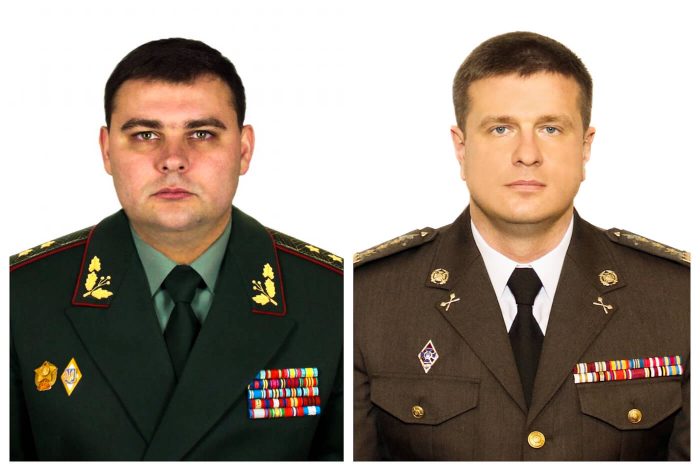
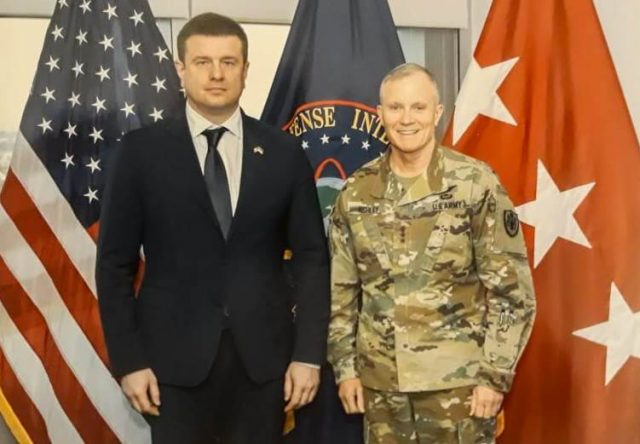
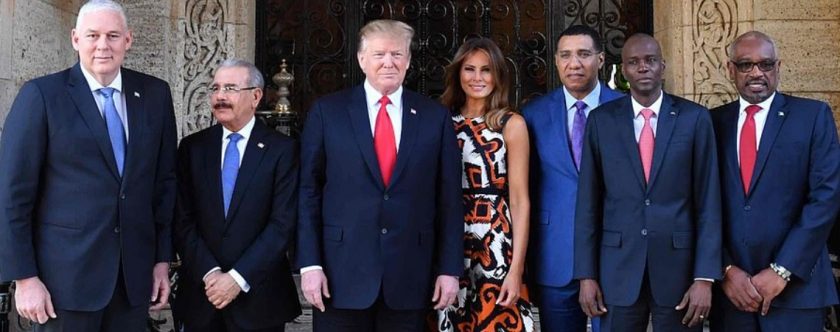


 Aletho News
