Aletho News

ΑΛΗΘΩΣ

Nariman and Ahed Tamimi: Icons of Palestinian Resilience

By Bassem Tamimi | MEMO | March 20, 2018

The incarceration of the two most important women in my life, my wife Nariman and daughter Ahed, is not an extraordinary or exceptional case. On the contrary, Palestinians have continued to endure such atrocious behaviour from Israel as an occupying power since the Nakba of 1948. Perhaps my family represents a model of Palestinians in general, and women specifically, who suffer from inhumane practices on a daily basis.

While families in the Middle East and elsewhere celebrate Mother’s Day, my heart aches for my late mother who passed away about three years ago. She died after suffering from a severe illness, while also still grieving the murder of my sister Bassema. About 25 years ago, my sister was brutally beaten to death by a group of Israeli settlers at the entrance of an Israeli court while waiting to see her detained son. During this painful period, I also went through one of the most difficult and life-threatening periods of my life. While incarcerated in an Israeli prison, I sustained a brain hemorrhage that led to a coma, which left me incapacitated for a long period. The day I was released from Israeli prison, my sister was buried; a devastating time for me and my family. While the Palestinian people continue to suffer from this indefinite occupation, it feels as if these devastating days are a never-ending part of our everyday lives.

Such is the case as my wife and daughter continue to be imprisoned by the Israelis. In the early morning hours of 19 December, 2017, over 30 Israeli soldiers invaded my home and imprisoned my 16-year-old daughter, Ahed. The soldiers declared my village a closed military zone and sealed off all entrances and exits. With more than 12 military jeeps, they fired teargas and detonated sound bombs – they came to terrorize my child and family. Ahed was strong, resilient and calm. While sitting chained in an Israeli military jeep, she called, “Don’t worry, I am strong”. Yes, my child will continue to be strong and resilient and perhaps that is why many people idolize her, while others fear her strength.

Prior to the arrest, some Israeli groups launched a vicious campaign against her because she stood tall against Israeli intimidation and brutality. When my wife Nariman attempted to visit her at the Israeli interrogation centre, she was also arrested. Today, these two strong women await justice and freedom.

I should not be surprised by Ahed’s perseverance, strength, and rejection of the occupation. When she was a small child she asked me what ‘occupation’ means. “Fear,” I said. Despite Ahed’s gentle and warm personality, she grew up knowing how to face that fear and to be strong in the face of it. She stood strong against an armed solider and all that he represented in this illegal occupation. All she did was to unwaveringly say no, in her words and actions, to the occupation.

Despite Ahed’s youth, she stood strong and proud against intimidation and threats during her interrogation by the Israeli military. They tried to break her will, but my child won. In a letter sent through her lawyer, Ahed said, “What happened was expected, and when I remember why I am in Israeli prison, my will becomes stronger. This cause deserves a great deal. We have endured difficulties and we will overcome, as I was taught by my parents. The encouragement and enthusiasm I have received has made me immensely happy, however, I hope that the rest of the Palestinian prisoners receive the same support as I have.”

No doubt, I am a proud father, a father of a girl that has become an icon of popular and peaceful resistance. However, my heart is full of sadness and anger as my child is robbed of her childhood.

Despite my family’s long history of peaceful resistance and demonstrations, and both myself and Nariman’s numerous arrests by the Israelis, I cannot hide the fact that I am in distress and fear for Ahed’s future—perhaps because this is her first experience in Israeli prisons and her first time away from home.

Since 2010, Nariman has participated in hundreds of peaceful demonstration organized in our village against the Israeli occupation. Our home was raided hundred times and Nariman was arrested three times—but this did not deter her from continuing her struggle against the occupation. During the course of demonstrations, she rescued countless Palestinian youth who sustained injuries and attacks by the Israeli military. Yet, she was not able to rescue her own brother who was brutally killed by the Israeli military in 2012. Nariman captured the Israeli attacks on video that day, but did not know that she was in fact filming the death of her own brother. Planting the seeds of resilience in Ahed and my children, Nariman continues to be a role model to women everywhere.

The Palestinian people continue to endure hardship and dispossession, from the time of the Nakba in 1948 until today, both at the hands of the Israeli occupying authorities, as well as the terror of illegal Israeli settlers. Palestinians worldwide, whether living under occupation, in the refugee camps, or elsewhere in exile—continue to live a daily Nakba. We in An Nabi Saleh village represent every Palestinian family who continues to endure Israeli policies of disenfranchisement, a policy that deprives Palestinians of the basic human right to live free. Despite these inhuman and illegal policies and practices against our families, and especially against women in particular, Palestinian women have persisted in their fight. In An Nabi Saleh, women and girls are leaders, and their role in peaceful demonstrations is vital, and are considered role models for many women here in Palestine and abroad.

While the Israelis chose Mother’s Day to prosecute Nariman and Ahed, my family, village, and Palestinians worldwide await the day when they, and all political prisoners, are released from Israeli prison. I would like to extend my family’s sincere gratitude to all those who have supported my wife and daughter, especially human rights organizations.

I am a proud husband and father. I am proud of all the women and mothers of Palestine who, with their strength and determination, have taught us to be fearless. I am proud that today, my child’s beautiful face has become a universal symbol of steadfastness, resistance and anti-injustice – like the iconic image of Che Guevara.

March 21, 2018 Posted by | Ethnic Cleansing, Racism, Zionism, Subjugation - Torture, Timeless or most popular | , , , , | Leave a comment

Why the UK, the EU and the US Gang-Up on Russia

By James Petras :: 03.20.2018

Introduction: For the greater part of a decade the US, the UK and the EU have been carrying out a campaign to undermine and overthrow the Russia government and in particular to oust President Putin. Fundamental issues are at stake including the real possibility of a nuclear war.
The most recent western propaganda campaign and one of the most virulent is the charge launched by the UK regime of Prime Minister Theresa May. The Brits have claimed that Russian secret agents conspired to poison a former Russian double-agent and his daughter in England, threatening the sovereignty and safety of the British people. No evidence has ever been presented. Instead the UK expelled Russian diplomats and demands harsher sanctions, to increase tensions. The UK and its US and EU patrons are moving toward a break in relations and a military build-up.

A number of fundamental questions arise regarding the origins and growing intensity of this anti-Russian animus.

Why do the Western regimes now feel Russia is a greater threat then in the past? Do they believe Russia is more vulnerable to Western threats or attacks? Why do the Western military leaders seek to undermine Russia’s defenses? Do the US economic elites believe it is possible to provoke an economic crisis and the demise of President Putin’s government? What is the strategic goal of Western policymakers? Why has the UK regime taken the lead in the anti-Russian crusade via the fake toxin accusations at this time?

This paper is directed at providing key elements to address these questions.

The Historical Context for Western Aggression

Several fundamental historical factors dating back to the 1990’s account for the current surge in Western hostility to Russia.

First and foremost, during the 1990’s the US degraded Russia, reducing it to a vassal state, and imposing itself as a unipolar state.

Secondly, Western elites pillaged the Russian economy, seizing and laundering hundreds of billions of dollars. Wall Street and City of London banks and overseas tax havens were the main beneficiaries

Thirdly, the US seized and took control of the Russian electoral process, and secured the fraudulent “election” of Yeltsin.

Fourthly, the West degraded Russia’s military and scientific institutions and advanced their armed forces to Russia’s borders.

Fifthly, the West insured that Russia was unable to support its allies and independent governments throughout Europe, Asia, Africa and Latin America. Russia was unable to aid its allies in the Ukraine, Cuba, North Korea, Libya etc.

With the collapse of the Yeltsin regime and the election of President Putin, Russia regained its sovereignty, its economy recovered, its armed forces and scientific institutes were rebuilt and strengthened. Poverty was sharply reduced and Western backed gangster capitalists were constrained, jailed or fled mostly to the UK and the US.

Russia’s historic recovery under President Putin and its gradual international influence shattered US pretense to rule over a unipolar world. Russia’s recovery and control of its economic resources lessened US dominance, especially of its oil and gas fields.

As Russia consolidated its sovereignty and advanced economically, socially, politically and militarily, the West increased its hostility in an effort to roll-back Russia to the Dark Ages of the 1990’s.

The US launched numerous coups and military intervention and fraudulent elections to surround and isolate Russia. The Ukraine, Iraq, Syria, Libya, Yemen and Russian allies in Central Asia were targeted. NATO military bases proliferated.

Russia’s economy was targeted: sanctions were directed at its imports and exports. President Putin was subject to a virulent Western media propaganda campaign. US NGO’s funded opposition parties and politicians.

The US-EU rollback campaign failed.

The encirclement campaign failed.

The Ukraine fragmented – Russia allies took control of the East; Crimean voted for unification with Russia. Syria joined with Russia to defeat armed US vassals. Russia turned to China’s multi-lateral trade, transport and financial networks.

As the entire US unipolar fantasy dissolved it provoked deep resentment, animosity and a systematic counter-attack. The US’s costly and failed war on terror became a dress rehearsal for the economic and ideological war against the Kremlin. Russia’s historical recovery and defeat of Western rollback intensified the ideological and economic war.

The UK poison plot was concocted to heighten economic tensions and prepare the western public for heightened military confrontations.

Russia is not a threat to the West: it is recovering its sovereignty in order to further a multi-polar world. President Putin is not an “aggressor” but he refuses to allow Russia to return to vassalage.

President Putin is immensely popular in Russia and hated by the US precisely because he is the opposition of Yeltsin – he has created a flourishing economy; he resists sanctions and defends Russia’s borders and allies.

Conclusion

In a summary response to the opening questions.

1) The Western regimes recognize that Russia is a threat to their global dominance; they know that Russia is no threat to invade the EU, North America or their vassals.

2) Western regimes believe they can topple Russia via economic warfare including sanctions. In fact Russia has become more self-reliant and has diversified its trading partners, especially China, and even includes Saudi Arabia and other Western allies.

The Western propaganda campaign has failed to turn Russian voters against Putin. In the March 19, 2018 Presidential election voter participation increased to 67%. Vladimir Putin secured a record 77% majority. President Putin is politically stronger than ever.

Russia’s display of advanced nuclear and other advanced weaponry has had a major deterrent effect especially among US military leaders, making it clear that Russia is not vulnerable to attack.

The UK has attempted to unify and gain importance with the EU and the US via the launch of its anti-Russia toxic conspiracy. Prime Minister May has failed. Brexit will force the UK to break with the EU.

President Trump will not replace the EU as a substitute trading partner. While the EU and Washington may back the UK crusade against Russia they will pursue their own trade agenda; which does not include the UK.

In a word, the UK, the EU and the US are ganging-up on Russia, for diverse historic and contemporary reasons. The UK exploitation of the anti-Russian conspiracy is a temporary ploy to join the gang but will not change its inevitable global decline and the break-up of the UK.

Russia will remain a global power. It will continue under the leadership of President Putin. The Western powers will divide and bugger their neighbors – and decide it is their better judgment to accept and work within a multi-polar world.

March 21, 2018 Posted by | Economics, Fake News, Mainstream Media, Warmongering, Militarism, Russophobia, Timeless or most popular | , , , , | Leave a comment

Israel admits to launching military attack on Syria in 2007, warns region of more

Press TV – March 21, 2018

Israel has formally admitted that it had attacked and destroyed a site in eastern Syria back in 2007, warning the region of more such assaults.

The announcement by the Israeli military through declassified documents came on Wednesday about “Operation Out of the Box” against what Israel claims to be a nuclear reactor in Syria’s eastern province of Dayr al-Zawr.

For over 10 years, the Israeli military had prohibited discussions about the already well-known and widely reported secret.

The new declassified materials included photographs and cockpit video said to show the moment that an airstrike targeted Syria’s Al-Kubar facility.

According to the Jerusalem Post, the Mossad confirmed the existence of the Syrian site in March 2007. In the months that followed, former Israeli Prime Minister Ehud Olmert tried to pressure former US President George W. Bush to attack the site.

In July 2007, after Bush refused Israel’s demands, Olmert convened his security cabinet, which ultimately concluded that the alleged reactor had to be destroyed.

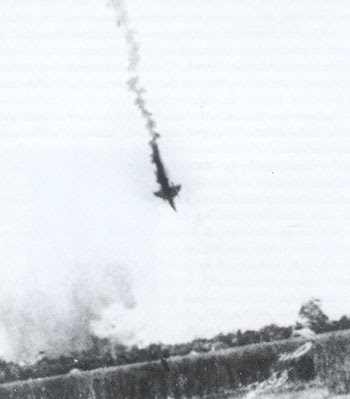
Before midnight on September 5, 2007, four F-15 jets and four F-16 warplanes entered the Syrian airspace via Turkey, dropping nearly 17 tons of bombs on the facility.

On Wednesday, the Israeli minister for military affairs, Avigdor Lieberman, said the 2007 strike was a message to Israel’s enemies.

He claimed, “The motivation of our enemies has increased in recent years, but the strength of our army, our air force and our intelligence capabilities have increased compared with the capabilities we had in 2007.”

Syria, a signatory to the nuclear Non-Proliferation Treaty (NPT), has always dismissed reports that the site was a nuclear reactor. Damascus said that the destroyed complex was a military site under construction.

Syrian President Bashar al-Assad vehemently denied that his country had built a nuclear reactor in violation of its commitments under the NPT and to the International Atomic Energy Agency (IAEA).

In 2017, Syria’s Permanent Representative at the UN Bashar al-Ja’afari lashed out at the Security Council and the IAEA for their failure to denounce Israel’s blatant military attack in 2007, noting that Israel refused to cooperate with the IAEA in investigating the possible contamination caused by the Israeli rockets and the materials used to destroy the site.

Israel is believed to be the sole possessor of a nuclear arsenal in the Middle East with more than 200 undeclared nuclear warheads. Tel Aviv has rejected global calls to join the NPT and does not allow international inspectors to observe its controversial nuclear program.

Syria has on numerous occasions slammed the Western countries for supplying Israel with nuclear materials in a blatant violation of the NPT and even helping it to keep its nuclear activities secret.

There has been a sharp hike in Israeli acts of aggression against Syria since 2011, when the Arab country plunged into a foreign-backed crisis targeting the government in Damascus.

Israel has, ever since, launched military attacks on targets in Syria in an apparent attempt to prop up terrorist groups that have been suffering heavy defeats on the battlefield with Syrian government forces, who are fighting to liberate the countries from the clutches of foreign-backed militant groups.

The latest such attacks took place on February 20, when Israeli warplanes bombed a Syrian army facility in central Syria. The Syrian military hit at least one Israeli F-16 returning from the bombing raid.

On several occasions, the Syrian army has confiscated Israeli-made arms and military equipment from militants fighting pro-Damascus forces. Israel has also been providing medical treatment to the extremist militants wounded in Syria.

March 21, 2018 Posted by | Deception, Ethnic Cleansing, Racism, Zionism, Timeless or most popular, War Crimes | , , , | Leave a comment

Irishmen subjected to CIA-style ‘5 techniques’ by British not tortured – European court

RT | March 20, 2018

A European court has rejected a request to find that a group of 14 men detained during internment in Northern Ireland suffered torture. The prisoners were subjected to white noise, sleep and food deprivation as well as beatings.

The European Court of Human Rights (ECHR) rejected the Irish government petition to revise a 1978 judgement against the UK and find that the prisoners, known as the ‘hooded men’ were subjected to torture.

The men were exposed to methods known as the “five techniques” – hooding, white noise, stress positions, sleep deprivation, and food deprivation. The practice was applied over an unknown period of four to seven days for an unspecified number of hours at a time. Similar interrogation techniques have since been deployed by the CIA and outlined in a 2014 Senate Torture report.

The men, who were all Catholic, were detained in 1971 at the height of The Troubles after Northern Ireland used the Special Powers Act to introduce internment without trial for those suspected of being involved in violence. They were hooded and flown by helicopter to a secret location, later revealed as a British Army camp outside Derry in Northern Ireland. Before landing they were dangled out of the helicopter and told they were high in the air, although they were close to the ground. None of the individuals were ever convicted of wrongdoing.

In 1978 the ECHR found that the British authorities’ actions amounted to inhuman and degrading treatment, but not torture. Following a TV documentary in 2014, which brought archived files to light, the Irish government requested a revision of the original judgment.

The Irish government submitted that a psychiatrist who gave evidence as an expert for the British government misled the Commission by saying that the effects of the ill-treatment were short-lived when he knew that the use of the five techniques had long-lasting and severe effects. The government cited archived documents that allegedly revealed the British authorities had tried to prevent the court from accessing the full truth about the five techniques.

Overall, the court found that the documents did not demonstrate facts which were unknown at the time. It added that it could also not be said that such knowledge might have had a decisive influence leading to a finding of torture, noting that the original judgment had made no reference to the issue of such long-term effects. The revision request was dismissed by a chamber of seven judges by six votes to one.

Amnesty International, who visited the detainees in 1971 and stated then there was evidence of torture at the camp, described today’s decision as “disappointing.” It noted that the ruling is not a statement that the ‘five techniques’ do not constitute torture as it is legally defined today.

“What has been revealed in the files withheld by the UK government cannot be denied. These men were tortured, and with approval at the highest levels of government. The record of what these men endured in those interrogation rooms 47 years ago, and the devastating impact on them afterwards, still stands,” Amnesty said.

March 21, 2018 Posted by | Subjugation - Torture, Timeless or most popular | , , , | Leave a comment

Anthrax: The Forgotten Lie

OffGuardian | March 20, 2018

Fifteen years ago today, March 20, the “Coalition of the Willing” declared war on Iraq. We now know that war was based on a monumental and inexcusable lie about Iraq possessing “weapons of mass destruction”, and that the war itself was a crime under international law. But we tend to forget that WMDs wasn’t the only lie told to us at the time. There was also the lie about the anthrax attacks in the USA, which in some ways can be counted even more egregious and cold-blooded.

We were told the anthrax that killed five people and harmed 17 others had been positively identified as originating in Iraq. Colin Powell’s famous “test tube full of washing powder” was a bit of theatre designed to sell us on this alleged fact. But it wasn’t true.

Almost immediately after the attacks the FBI knew the anthrax must have been homegrown, or at least produced somewhere with sophisticated laboratory equipment. But since this fact didn’t fit with the al Qaeda narrative it was suppressed from public knowledge. By October 2001 the Guardian was reporting “Iraq ‘behind US anthrax outbreaks’.” All the usual suspects in promoting imperialist war soon followed suit.

The narrative at this time was clearly intended to be that Iraq was the state-sponsor of al Qaeda terror, and had not only been a supporter of the 9/11 attacks but had provided Osama’ boys with the goods to murder even more Americans with anthrax. This, obviously, was intended to act as the rationale for attacking those two vitally strategic countries in the the US’s project for dominance in the Middle east and Asia – Iraq and Afghanistan.

But, as so often seems to happen, this narrative was almost immediately undermined by official White House statements (perhaps originating in elements of the government anxious to preserve the administration from outright association with a lie) that the anthrax in question showed no signs of coming from Iraq, because they specifically lacked an ingredient called bentonite. Which, as we now know, was true.

This official denial, based on solid scientific evidence, should have been an end to the story. But, as the film above shows, owing to a vast campaign of distraction and deception by politicians and the media, the completely discredited story of Iraqi responsibility for the anthrax attacks continued to flourish and even gain momentum. Outlets such as ABC and, most prominently, from Judith Miller (whose pre-2001 prescience about the dangers of anthrax in the US seems truly breathtaking) in the New York Times, brazenly continued to sell the idea in feature articles, specials and endless repetition in the nightly news.

And what was the central “fact” on which the media story of Iraq’s guilt was built?

Nothing less than the completely and provably false claim the White House had already denied – that there was bentonite in the anthrax.

Even the White House, the same White House that had officially denied the presence of bentonite and therefore ruled out Iraq involvement, continue to use implications, lies by omission and weasel words to enable the opposite view to become lodged in the public mind.

These people didn’t just bend the truth, or fudge or obfuscate. They lied. They invented whole narratives, they made up whole back stories, they looked us in the camera’s eye on TV and completely deceived us. The media’s Anthrax Meme never existed. Not one single part of it. And even while Colin Powell was allowing us to believe the story he had known for more than a year that it was a complete fabrication

The UK government is currently lying to us about the Skripal poisoning. We know that already to be beyond doubt. The only question is how deep the lie goes this time.

When we look back at 2001 we have to realise it could be very deep indeed.

March 20, 2018 Posted by | Deception, Fake News, Mainstream Media, Warmongering, Timeless or most popular, Video | , , | Leave a comment

Tolerance Cuts Both Ways: Freedom for the Speech We Hate

By John W. Whitehead | Rutherford Institute | March 20, 2018

Tolerance cuts both ways.

This isn’t an easy pill to swallow, I know, but that’s the way free speech works, especially when it comes to tolerating speech that we hate.

The most controversial issues of our day—gay rights, abortion, race, religion, sexuality, political correctness, police brutality, et al.—have become battlegrounds for those who claim to believe in freedom of speech but only when it favors the views and positions they support.

Free speech for me but not for thee” is how my good friend and free speech purist Nat Hentoff used to sum up this double standard.

This haphazard approach to the First Amendment has so muddied the waters that even First Amendment scholars are finding it hard to navigate at times.

It’s really not that hard.

The First Amendment affirms the right of the people to speak freely, worship freely, peaceably assemble, petition the government for a redress of grievances, and have a free press.

Nowhere in the First Amendment does it permit the government to limit speech in order to avoid causing offense, hurting someone’s feelings, safeguarding government secrets, protecting government officials, insulating judges from undue influence, discouraging bullying, penalizing hateful ideas and actions, eliminating terrorism, combatting prejudice and intolerance, and the like.

Unfortunately, in the war being waged between free speech purists who believe that free speech is an inalienable right and those who believe that free speech is a mere privilege to be granted only under certain conditions, the censors are winning.

We have entered into an egotistical, insulated, narcissistic era in which free speech has become regulated speech: to be celebrated when it reflects the values of the majority and tolerated otherwise, unless it moves so far beyond our political, religious and socio-economic comfort zones as to be rendered dangerous and unacceptable.

Indeed, President Trump—who has been accused of using his very public platform to belittle and mock his critics and enemies while attempting to muzzle those who might speak out against him—may be the perfect poster child for this age of intolerance.

Even so, Trump is not to blame for America’s growing intolerance for free speech.

The country started down that sorry road long ago.

Protest laws, free speech zones, bubble zones, trespass zones, anti-bullying legislation, zero tolerance policies, hate crime laws and a host of other legalistic maladies dreamed up by politicians and prosecutors (and championed by those who want to suppress speech with which they might disagree) have conspired to corrode our core freedoms, purportedly for our own good.

On paper—at least according to the U.S. Constitution—we are technically free to speak.

In reality, however, we are only as free to speak as a government official—or corporate entities such as Facebook, Google or YouTube—may allow.

Free speech is no longer free.

What we have instead is regulated, controlled speech, and that’s a whole other ballgame.

Just as surveillance has been shown to “stifle and smother dissent, keeping a populace cowed by fear,” government censorship gives rise to self-censorship, breeds compliance, makes independent thought all but impossible, and ultimately foments a seething discontent that has no outlet but violence.

The First Amendment is a steam valve. It allows people to speak their minds, air their grievances and contribute to a larger dialogue that hopefully results in a more just world.

When there is no steam valve—when there is no one to hear what the people have to say—frustration builds, anger grows and people become more volatile and desperate to force a conversation. By bottling up dissent, we have created a pressure cooker of stifled misery and discontent that is now bubbling over and fomenting even more hate, distrust and paranoia among portions of the populace.

Silencing unpopular viewpoints with which the majority might disagree—whether it’s by shouting them down, censoring them, muzzling them, or criminalizing them—only empowers the controllers of the Deep State.

Even when the motives behind this rigidly calibrated reorientation of societal language appear well-intentioned—discouraging racism, condemning violence, denouncing discrimination and hatred—inevitably, the end result is the same: intolerance, indoctrination and infantilism.

The police state could not ask for a better citizenry than one that carries out its own censorship, spying and policing.

This is how you turn a nation of free people into extensions of the omniscient, omnipotent, omnipresent police state, and in the process turn a citizenry against each other.

So where do we go from here?

If Americans don’t learn how to get along—at the very least, agreeing to disagree and respecting each other’s right to subscribe to beliefs and opinions that may be offensive, hateful, intolerant or merely different—then we’re going to soon find that we have no rights whatsoever (to speak, assemble, agree, disagree, protest, opt in, opt out, or forge our own paths as individuals).

The government will lock down the nation at the slightest provocation.

Indeed, the government has been anticipating and preparing for civil unrest for years now, as evidenced by the build-up of guns and tanks and militarized police and military training drills and threat assessments and extremism reports and surveillance systems and private prisons and Pentagon training videos predicting the need to impose martial law by 2030.

Trust me: when the police state cracks down, it will not discriminate.

We’ll all be muzzled together.

We’ll all be jailed together.

We’ll all be viewed as a collective enemy to be catalogued, conquered and caged.

Indeed, a recent survey concluded that a large bipartisan majority of the American public already recognizes the dangers posed by a government that is not only tracking its citizens but is also being controlled by a “Deep State” of unelected government officials.

Thus, the last thing we need to do is play into the government’s hands by turning on one another, turning in one another, and giving the government’s standing army an excuse to take over.

So let’s start with a little more patience, a lot more tolerance and a civics lesson on the First Amendment.

What this means is opening the door to more speech not less, even if that speech is offensive to some.

It’s time to start thinking for ourselves again.

It’s time to start talking to each other, listening more and shouting less.

Most of all, as I make clear in my book Battlefield America: The War on the American People, it’s time to make the government hear us—see us—and heed us.

This is the ultimate power of free speech.

March 20, 2018 Posted by | Civil Liberties, Full Spectrum Dominance, Timeless or most popular | | Leave a comment

Cancer, George Monbiot and Nuclear Weapons Test Fallout

By Chris Busby | CounterPunch | March 20, 2018

George Monbiot, who has now been diagnosed with prostate cancer at the young age of 55, was therefore born in 1963, at the peak of the atmospheric test fallout. He is thus a peak exposed (at risk) member of a cohort of those exposed in the womb to the fallout (1959-63) and currently suffering the consequences of exposure to Strontium-90 in the milk, and (measured) in the childrens’ bones.

In his article in the Guardian, he says that he has always done all the healthy things, done lots of exercise, eaten vegetables, didn’t smoke or drink, all that stuff. He is clearly puzzled about being singled out by the three ladies. But the cause was something that he had no control over, and neither had anyone else who was born in the fallout period. George writes that he is happy. This insane response to his predicament, (which I personally am not happy about despite his intemperate attacks on me in his Guardian column and blogs) must go alongside his equally insane response about the Fukushima events where he publicised his road-to-Damascus conversion to nuclear power.

The effect of the genetic damage of the fallout on babies can be seen in the graph below, Fig 1, taken from a recent paper I published (Busby C (2017) Radiochemical Genotoxicity Risk and Absorbed Dose. Res Rep Toxi. Vol.1 No.1:1.).  The babies that did not die were just those with insufficient genetic damage to kill, but this damage would have affected them in later life in various ways. The most measurable effect (apart from genetic defects and congenital diseases) is higher cancer risk which is presented as early cancer onset. The issue of the 1959-63 cancer cohort was discussed in my 1995 book Wings of Death, and a letter I published in 1994 in the British Medical Journal (BMJ). The issue is one of Absorbed Dose. If internal exposure to radionuclides like Strontium-90 and Uranium-238 and Uranium-235 bind to DNA, which is the target for genetic damage, then Dose, which is an average quantity over kilograms of tissue, is an unsafe way of quantifying genetic damage. The issue of genetic damage from radioactive pollution was first raised in 1950 by Herman Muller, the Nobel Prize winning geneticist who discovered the effects of radiation, but his warnings were ignored, though they are now found to be accurate.

The serious effects of internal radionuclide exposures on Prostate Cancer were revealed in a study of UK Atomic Energy Agency workers also published in 1993 in the BMJ (Fraser P, Carpenter L, Maconochie N, Higgins C, Booth M and Beral V (1993) Cancer mortality and morbidity in employees of the United Kingdom Atomic Energy Authority 1946-86. Brit. J. Cancer 67 615-624.) This paper showed a 2-fold excess cancer risk in workers who had been monitored for internal radionuclides versus those who had not been. Prostate cancer mortality was significantly high. Although later cover-up studies by the nuclear industry, using a larger cohort reduced this effect for prostate cancer, the internal/ external exposure result for all cancers has not been satisfactorily followed up.

Fig 1. First day neonatal mortality USA shows the effects of the fallout. Because of advances in medicine and better social conditions, infant mortality was falling everywhere. But as soon as the atmospheric tests began, rates went up in time with the fallout. 1st day neonatal mortality is a measure of congenital damage: the baby survives in the mother by using the mothers’ oxygenation and other support but because the babies own organs are damaged and it cannot survive after birth. Strontium-90 was measured in bone where it built up to a peak in 1964. It will also have attached to chromosomes due to its affinity for DNA.

The fallout cohort is now entering the cancer bracket and these people are driving up the cancer rates in the Northern hemisphere, especially for breast cancer and prostate cancer. I have been studying this group since 1995, but now my predictions are appearing in the data.

But the true picture of the fallout effects is even more scary. Not only are the babies born over the peak fallout period, like George, at higher risk of more and earlier cancer, but it is now emerging that their children, born around 1980- 1990 are carrying the same genetic (or rather genomic) curse. I am in the process of putting together a scientific paper on this. There is a sudden increase in cancer rates in young people aged 25-35 which began after 2008. This is an extraordinary development. The finding was confirmed for colon cancer in the USA in a paper published recently in the Journal of the National Cancer Institute (Rebecca L. Siegel, Stacey A. Fedewa, William F. Anderson, Kimberly D. Miller, Jiemin Ma, Philip S. Rosenberg, Ahmedin Jemal Colorectal Cancer Incidence Patterns in the United States, 1974–2013 JNCI J Natl Cancer Inst (2017) 109(8): djw322). The authors were unable to explain their findings of increases in colon cancer in young people but decreasing colon cancer rates in older people. They were “puzzled”. The explanation is simple. These were children born to those who were themselves born during the fallout and genomically damaged at birth. The damage is passed to the children (and will be in turn passed to theirs and so on). The effect is clear also in the England and Wales data.

So, for the logical positivists, let’s have a look at the prostate cancer data in England and Wales.

In Table 1 below I show some data from the official ONS government annual reports on prostate cancer incidence in some selected years from 1974 to 2015.


No argument there then. The amazing thing is that there are huge amounts of money received and spent on cancer research: but no-one looks at the cause. Or rather that those who do look at the cause are attacked and marginalised and their work is not reported.

For example, and relevant here, are the serious genetic effects of small dose internal exposures in Europe after Chernobyl reviewed by Prof Inge Schmitz-Feuerhake, Dr Sebastian Pflugbeil and myself in a peer review publication in 2016 (Schmitz-Feuerhake, Busby C, Pflugbeil P  Genetic Radiation Risks-A Neglected Topic in the Low Dose Debate. Environmental Health and Toxicology.  2016. 31Article ID e2016001. .) You would think that this evidence, which was reported in the peer review literature from 20 studies from countries all over Europe, might make it into one of the newspapers. But nothing.

My attempts to draw attention to these internal genetic damage issues have also been ignored or dismissed by the British establishment. This year, in September, I was to have presented this evidence to British Government Minister Richard Harrington at a meeting of the NGOs and the government at Church House Westminster. My flight from Sweden was sabotaged but I made it to the meeting nevertheless, to find that the Minister had made some excuse, and had not come. )

At the meeting, the government radiation expert committee members (COMARE) refused to consider anything I said.

This behaviour by the British can be compared with the Swedish Environmental Court in Stockholm to which I had been presenting the same findings the previous week. In January 2018, the 8 judges of the Swedish Court told the Swedish government that they must not permit the development of the nuclear waste facility at Forsmark. This landmark decision was also omitted from any newspapers in the UK, which itself is currently busy trying to find a local council they can bribe to allow them to bury nuclear waste somewhere in England and (more probably) Wales.

When I presented the same genetic damage evidence in the nuclear test veteran case in the Royal Courts of Justice in 2016, I submitted reports by 4 eminent radiation experts, including Prof Schmitz-Feuerhake/ All gave evidence under cross examination. We filed the evidence of genetic damage in the Test Veteran children: a 10-fold excess risk for congenital malformations and in the grandchildren 8-fold. The British Judge, Sir Nicholas Blake, refused to listen to any of this evidence and dismissed our experts. Blake found for the Ministry of Defence. I am taking a new Test Veteran case this summer. We shall see what happens.

But no surprise about judge Blake. In a recent survey of judges in Europe, it was found that Britain was only exceeded by Albania in the percentage of judges (45%) who reported that their decisions had been made at the direction of the establishment. The lowest rates of interference with judges was found (1%)  in—guess where—Norway, Sweden and Denmark.

It seems that we live in a corrupt society here in Britain and I am ashamed to be part of this State which has poisoned its citizens consistently since 1945 and continues to do so, and to cover it all up, aided by dishonest scientists and celebrity reporters like George Monbiot. Those who have a magical view of events might delight in thinking that George has received his just due; for myself I just hope that this may make him look into the issue more deeply and change his mind about the effects of radioactive contamination.

Dr Chris Busby is the Scientific Secretary of the European Committee on Radiation Riskand the author of Uranium and Health – The Health Effects of Exposure to Uranium and Uranium Weapons Fallout (Documents of the ECRR 2010 No 2, Brussels, 2010). For details and current CV see chrisbusbyexposed.org. For accounts of his work see greenaudit.orgllrc.org and nuclearjustice.org.

March 20, 2018 Posted by | Environmentalism, Fake News, Mainstream Media, Warmongering, Militarism, Nuclear Power, Science and Pseudo-Science, Timeless or most popular | , | Leave a comment

US Planning a Terrorist False Flag Chemical Attack to Justify Bombing Syria: Russia Says It Will Respond

By Federico PIERACCINI | Strategic Culture Foundation | 20.03.2018

Events in Syria increasingly resemble a direct confrontation between major powers rather than a proxy war. Lavrov’s words, delivered a few days ago, reveal the critical phase of international relations the world is going through, with a potentially devastating conflict ready to ignite in the Middle East region.

An alarming warning by Sergei Lavrov and Chief of the Russian General Staff, Valery Gerasimov, was announced via the RT broadcaster and several Russian media. The content is explosive and deserving of the widest possible dissemination. Gerasimov claimed that Moscow had “reliable information that fighters are preparing to stage the use by government troops of chemical weapons against the civilian population.” He alleged that the US intends to accuse Assad’s troops of using chemical weapons against civilians, and then “carry out a bombing attack” on Damascus. Gerasimov warned that Russia would “take retaliatory measures” if the US targeted areas where its military are located in the Syrian capital. “Russian military advisers, representatives of the Center for Reconciliation and members of military police” are currently in the Syrian capital, Gerasimov said, adding that in the event that the lives of Russian military personnel are placed in danger, the Russian Armed Forces will respond with certain measure to both “missiles” and their “launchers”. A few hours earlier, Lavrov responded, “criticizing the remarks by the US envoy to the UN, Nikki Haley, about Washington’s readiness to “bomb Damascus and even the presidential palace of Bashar Assad, regardless [of the] presence of the Russian representatives there.” “It is an absolutely irresponsible statement,” the Russian top diplomat added.

The words of Gerasimov are even more dire, since he explains how the United States and its allies are preparing the ground to justify an attack on Syria. According to reports, terrorists stationed in Al-Tanf (an illegal US military base in Syria) received 20 tons of chlorine gas and detonators, disguised as cigarette packs, in order to attack in an area under the control of the terrorists that is densely inhabited by civilians. What would then happen is already obvious, with the White Helmets (AKA Al-Qaeda) and mainstream media ready to broadcast the images of the victims of the attack, tugging at the heartstrings of Western viewers otherwise unaware of the conspiracy being played out. Efforts to frame Russia have already reached the highest alert levels, with the false-flag poisoning of the Russian spy in the United Kingdom. It seems that there is a significant effort by the United States, the United Kingdom, France and Germany to provoke a military confrontation with Moscow. How else are we able to interpret threats from Macron to strike Damascus, together with his ominous advice to foreign journalists not to go to Damascus in the coming days and, for those already there, to leave the capital immediately? There has even been chatter within diplomatic circles that suggest that UN personnel are leaving Damascus. This could be psychological warfare, or it could be a prelude to war. With the stakes so high, we cannot afford to ignore any detail, even if it may be disinformation. The American attack seems imminent, with mounting signs of movements of American and Russian warships in the Mediterranean in attack formation.

Russian military representatives have reiterated that in the event of an attack, they will respond by hitting both the missiles launched as well as the ships from which the missiles were launched. Things are getting pretty dicey, and the risk of a direct confrontation between the United States and the Russian Federation are rising with every passing hour. The transfer of numerous US aircraft from Incirlik, Turkey, to Al-Azrak, Jordan, is another indication of preparations for an attack, since the forces moved to Jordan are close to the Al-Tanf base. The proposed strategy could involve an assault on the city of Daraa, for the purposes of securing the borders between Syria and Jordan and Syria and Israel.

The warnings raised by Lavrov and Gerasimov appear unprecedented, given that they detail a plan already set in course, evidently approved at the highest levels and aimed at provoking and justifying an attack on Syria; and attack that would encompass the Russian forces in Syria. Tensions continue to grow, following Russia’s shooting down of a drone by two surface-to-air missiles launched from its Hmeimim Air Base. Moscow has even deployed to the Mediterranean the Admiral Grigorovich-class frigate Admiral Essen and the Krivak II-class anti-submarine frigate Pytivyy. Both are prepared for anti-ship and anti-submarine operations. Sources claim that this deployment was planned some time ago and is part of a routine deployment of the Russian navy. But during such a delicate moment, it pays to focus on every detail. Without resorting to excessive alarmism, if Lavrov said that “the movements of the warships of the United States and its allies in the Mediterranean seem compatible with the strategy of using this chemical attack to justify an attack on the Syrian Arab army and government installations”, then it is reasonable to speculate on whether the Russian ships are moving in to the area to counter any provocations.

There are two fundamental flaws in the reasoning of US policy-makers and the US military establishment. They are convinced that an American demonstration of strength (involving a large number of cruise missile launched against Syria through a significant involvement of aircraft carriers as well as bombers) would stun Russia into passivity. Furthermore, US military generals are convinced that Syria and Russia do not have the ability to defend themselves for an extended period of time. They seem to be fooling themselves with their own propaganda. As their Israeli colleagues have already learned, such an assumption is mistaken. While the idea that a high level of firepower would meet with some kind of success, the possibility of a response from Syrian and Russian forces remains. And this possibility seems not to have been given sufficient weight by the US and her allies.

How would the American military and the Trump presidency react to a US warship being sunk by anti-ship missiles? It would only serve to demonstrate how vulnerable American naval forces are when confronted with such advanced weapons. It would represent a tremendous shock for the US military, possibly the biggest shock since the end of WWII. What would Trump and the generals in charge do? They would respond with further bombardment of Russian forces, leaving themselves open to a devastating Russian response. The conflict could escalate within the space of a few minutes, leading to a situation where there could be no possible winners.

The normal reasoning I employ when considering total annihilation is placed to one side when US special forces deliver 20 tons of chlorine gas to Al Qaeda terrorists in Syria order to execute a false flag for the purposes of blaming Damascus and Moscow. If we connect this event to what is currently happening in the United Kingdom, and the hysteria in the United States surrounding alleged Russian hacking during the American elections, we can understand just how much international relations have deteriorated. This situation is reminiscent of Ukraine in 2015. Ukrainian forces suffered repeated defeats at the hands of the Donbass resistance, being contained in the thousands in different “cauldrons. Within NATO headquarters in Brussels during that time, there was open discussion over sending a contingent to support Ukrainian troops. The plan, however, was never realized, given the possibility of direct confrontation in Ukraine between the Russian Federation and NATO.

In recent months, the possibility of a war on the Korean Peninsula has also been evoked and perhaps simultaneously averted by the unpredictable consequences for both Seoul and the American forces in the region.

In Syria, the approach of Washington and its diplomatic and military emissaries seems more reckless and less tied to a chain of command where the buck stops at the American president. It seems that the US deep state in Syria has a greater and more hidden control over American forces, sabotaging every agreement made between Moscow and Washington. We saw this during the Obama presidency, where the US Air Force bombed government troops in Deir ez-Zor only a few hours after a ceasefire had been reached between Lavrov and Secretary of State Kerry.

The grave circumstances about which we write seem to be without precedent, seeming as they do to lead towards a direct confrontation between nuclear-armed powers. Alas, in such circumstances, we can only hope for the best but prepare for the worst; we can only wait to read on the mainstream media notifications of the latest chemical attack in Syria. We can only hope that there is someone in Washington retaining enough sense to factor in the devastating consequences of an attack on Damascus and the Russian forces in the region.

Never before has the region been on the verge of such an explosion as in the next few hours — as a result of the typically reckless actions of the United States.

March 20, 2018 Posted by | Militarism, Timeless or most popular | , , | Leave a comment

Apartheid Israel

By Jonathon Cook | AMEU | 2018 – Volume 51

North from Nazareth’s city limits, a mile or so as the crow flies, is an agricultural community by the name of Tzipori – Hebrew for “bird.” It is a place I visit regularly, often alongside groups of    activists wanting to learn more about the political situation of the Palestinian minority living in Israel.

Tzipori helps to shed light on the core historic, legal and administrative principles underpinning a Jewish state, ones that reveal it to be firmly in a tradition of non-democratic political systems that can best be described as apartheid in nature.

More than a decade ago, former U.S. president Jimmy Carter      incurred the wrath of Israel’s partisans in America by suggesting that Israeli rule over Palestinians in the occupied territories was comparable to apartheid. While his bestseller book “Palestine: Peace Not Apartheid” broke a taboo, in many ways it added to the confusion surrounding discussions of Israel. Since then, others, including John Kerry, when U.S. secretary of state, and former Israeli prime ministers Ehud Olmert and Ehud Barak, have warned that Israeli rule in the occupied territories is in danger of metamorphosing into “apartheid” – though the moment of transformation, in their eyes, never quite seems to arrive.

It has been left to knowledgeable observers, such as South Africa’s Archbishop Desmond Tutu, to point out that the situation for Palestinians under occupation is, in fact, worse than that suffered by blacks in the former South Africa. In Tutu’s view, Palestinians under occupation suffer from something more extreme than apartheid – what we might term “apartheid-plus.”

There is a notable difference between the two cases that hints at the nature of that “plus.” Even at the height of apartheid, South Africa’s white population understood that it needed, and depended on, the labor of the black majority population. Israel, on the other hand, has a far more antagonistic relationship to Palestinians in the occupied territories. They are viewed as an unwelcome, surplus population that serves as a demographic obstacle to the political realization of a Greater Israel. The severe economic and military pressures Israel imposes on these Palestinians are designed to engineer their incremental displacement, a slow-motion ethnic cleansing.

Not surprisingly, Israel’s supporters have been keen to restrict the use of the term “apartheid” to South Africa, as though a political system allocating key resources on a strictly racial or ethnic basis has only ever occurred in one place and at one time. It is often forgotten that the crime of apartheid is defined in international law, as part of the 2002 Rome Statute that created the International Criminal Court at The Hague. An apartheid system, the statute says, is “an institutionalized regime of systematic oppression and domination by one racial group over any other racial group or groups and committed with the intention of maintaining that regime.” In short, apartheid is a political system, or structure, that assigns rights and privileges based on racial criteria.

This definition, it will be argued in this essay, describes the political regime not only in the occupied territories – where things are actually even worse – but in Israel itself, where Jewish citizens enjoy institutional privileges over the 1.8 million Palestinians who have formal Israeli citizenship. These Palestinians are the remnants of the Palestinian people who were mostly dispersed by the 1948 war that established a Jewish state on the ruins of their homeland. These Palestinian citizens comprise about a fifth of Israel’s population.

Although it is generally understood that they suffer discrimination, the assumption even of many scholars is that their treatment in no way undermines Israel’s status as a western-style liberal democracy. Most minorities in the west – for example, blacks and Hispanics in the U.S., Asians in the U.K., Turks in Germany, and Africans in France – face widespread prejudice and discrimination. Israel’s treatment of its Palestinian minority, it is claimed, is no different.

This is to profoundly misunderstand the kind of state Israel is, and how it relates to all Palestinians, whether they are under occupation or Israeli citizens. The discrimination faced by Palestinians in Israel is not illegal, informal, unofficial, or improvised. It is systematic, institutional, structural and extensively codified, satisfying very precisely the definition of apartheid in international law and echoing the key features of South African apartheid.

It was for this reason that the United Nations’ Economic Social Commission for Western Asia (ESCWA) published a report in 2017 concluding that Israel had “established an apartheid regime that dominates the Palestinian people as a whole,” including its Palestinian citizens. Under severe pressure from Israel and the U.S. , however, that report was quickly retracted, but the reality of apartheid in Israeli law and practice persists.

This argument is far more controversial than the one made by President Carter. His position suggests that Israel developed a discrete system of apartheid after the occupation began in 1967 – a kind of “add-on” apartheid to democratic Israel. On this view, were Israel to end the occupation, the apartheid regime in the territories could be amputated like a gangrenous limb. But if Israel’s treatment of its own Palestinian citizens fits the definition of apartheid, then it implies something far more problematic. It suggests that Jewish privilege is inherent in the Israeli polity established by the Zionist movement in 1948, that a Jewish state is apartheid-like by its nature, and that dismantling the occupation would do nothing to end Israel’s status as an apartheid state.

Citizenship Inequality

Tzipori was founded by Romanian and Bulgarian Jews in 1949 as a moshav, a socialist agricultural collective similar to the kibbutz. It specialized in dairy production, though most of its 1,000 inhabitants long ago abandoned socialism, as well as farming; today they work in offices in nearby cities such as Haifa, Tiberias and Afula.

Tzipori’s Hebrew name alludes to a much older Roman city called Sephoris, the remains of which are included in a national park that abuts the moshav. Separating the moshav from ancient Sephoris is a large pine forest, concealing yet more rubble, in some places barely distinguishable from the archeological debris of the national park. But these ruins are much more recent. They are the remnants of a Palestinian community of some 5,000 souls known as Saffuriya. The village was wiped out in 1948 during the Nakba, the Arabic word for “catastrophe” – how Palestinians describe the loss of their homeland and its replacement with a Jewish state.

The Palestinians of Saffuriya – an Arabized version of “Sephoris” – were expelled by Israel and their homes razed. The destruction of Saffuriya was far from an isolated incident. More than 500 Palestinian villages were ethnically cleansed in a similar fashion during the Nakba, and the ruins of the homes invariably covered with trees. Today, all Saffuriya’s former residents live in exile – most outside Israel’s borders, in camps in Lebanon. But a proportion live close by in Nazareth, the only Palestinian city in what became Israel to survive the Nakba. In fact, according to some estimates, as much as 40 percent of Nazareth’s current population is descended from Saffuriya’s refugees, living in its own neighborhood of Nazareth called Safafri.

Nowadays, when observers refer to Palestinians, they usually think of those living in the territories Israel occupied in 1967: the West Bank, Gaza and East Jerusalem.  Increasingly, observers (and peace processes) overlook two other significant groups.  The first are the Palestinian refugees who ended up beyond the borders of partitioned Palestine; the second are the 20 percent of Palestinians, some 150,000, who managed to remain on their land.  This figure was far higher than intended by Israel’s founders.

It included 30,000 in Nazareth – both the original inhabitants and refugees like those from Saffuriya who sought sanctuary in the city during the Nakba – who avoided being expelled. They did so only because of a mistake. The commander who led the attack on Nazareth, a Canadian Jew called Ben Dunkelman, disobeyed an order to empty the city of its inhabitants. One can guess why: given the high profile of Nazareth as a center of Christianity, and coming in the immediate wake of the war crimes trials of Nazis at Nuremberg, Dunkelman presumably feared that one day he might end up in the dock too.

There were other, unforeseen reasons why Palestinians either remained inside or were brought into the new state of Israel. Under pressure from the Vatican, a significant number of Palestinian Christians – maybe 10,000 – were allowed to return after the fighting finished. A further 35,000 Palestinians were administratively moved into Israel in 1949, after the Nakba had ended, when Israel struck a deal with Jordan to redraw the ceasefire lines – to Israel’s territorial, but not demographic, advantage. And finally, in a far less technologically sophisticated age, many refugees who had been expelled outside Israel’s borders managed to slip back hoping to return to villages like Saffuriya. When they found their homes destroyed, they “blended” into surviving Palestinian communities like Nazareth, effectively disappearing from the Israeli authorities’ view.

In fact, it was this last trend that initiated a process that belatedly led to citizenship for the Palestinians still in Israel. The priority for Israeli officials was to prevent any return for the 750,000 Palestinians they had ethnically cleansed so successfully. That was the only way to ensure the preservation of a permanent and incontrovertible Jewish majority. And to that end, Palestinians in surviving communities like Nazareth needed to be marked out – “branded,” to use a cattle-ranching metaphor. That way, any “infiltrators,” as Israel termed refugees who tried to return home, could be immediately identified and expelled again. This “branding” exercise began with the issuing of residency permits to Palestinians in communities like Nazareth. But as Israel sought greater international legitimacy, it belatedly agreed to convert this residency into citizenship.

It did so through the Citizenship Law of 1952, four years after Israel’s creation. Citizenship for Palestinians in Israel was a concession made extremely reluctantly and only because it served Israel’s larger demographic purposes. Certainly, it was not proof, as is often assumed, of Israel’s democratic credentials. The Citizenship Law is better understood as an anti-citizenship law: its primary goal was to strip any Palestinians outside the new borders – the vast majority after the ethnic cleansing of 1948 – of a right ever to return to their homeland.

Two years before the Citizenship Law, Israel passed the more famous Law of Return.  This law effectively opened the door to all Jews around the world to immigrate to Israel, automatically entitling them to citizenship.

Anyone familiar with modern U.S. history will have heard of the Supreme Court decision of 1954 in the famous civil rights case Brown v. Board of Education. The judges ruled that the creation of separate public schools for white and black pupils was unconstitutional, on the grounds that “separate is inherently unequal.” It was an important legal principle that would strike a decisive blow against Jim Crow, the Deep South’s version of apartheid.

If separate is inherently unequal, Israel’s segregated structure of citizenship is the most profound form of inequality imaginable. Citizenship is sometimes referred to as the “foundational right” offered by states because so many other basic rights typically depend on it: from suffrage to residency and welfare. By separating citizenship rights on an ethnic basis, creating Jewish citizens with one law and Palestinian citizens with another, Israel institutionalized legal apartheid at the bedrock level. Adalah, a legal rights group for Palestinians in Israel, has compiled an online database listing Israeli laws that explicitly discriminate based on ethnicity. The Law of Return and the Citizenship Law are the most significant, but there are nearly 70 more of them.

Marriage Inequality

Ben Gurion was prepared to award the remnants of the Palestinians in Israel this degraded version of citizenship because he assumed this population would pose no threat to his new Jewish state. He expected these Palestinian citizens – or what Israel prefers to term generically “Israeli Arabs” – to be swamped by the arrival of waves of Jewish immigrants like those that settled Tzipori. Ben Gurion badly miscalculated. The far higher birth rate of Palestinian citizens meant they continue to comprise a fifth of Israel’s population.

Palestinian citizens have maintained this numerical proportion, despite Israel’s strenuous efforts to gerrymander its population. The Law of Return encourages – with free flights, financial gifts, interest-free loans and grants – any Jew in the world to come to Israel and instantly receive citizenship. More than three million Jews have taken up the offer.

The Citizenship Law, on the other hand, effectively closed the door after 1952 on the ability of Palestinians to gain citizenship. In fact, since then there has been only one way for a non-Jew to naturalize and that is by marrying an Israeli citizen, either a Jew or Palestinian. This exception is allowed only because a few dozen non-Jews qualify each year, posing no threat to Israel’s Jewish majority.

In practice, Palestinians outside Israel have always been disqualified from using this route to citizenship, even if they marry a Palestinian citizen of Israel, as became increasingly common after Israel occupied the rest of historic Palestine in 1967. During the Oslo years, when Palestinians in Israel launched a legal challenge to force Israel to uphold the naturalization of their spouses from the occupied territories, the government hurriedly responded by passing in 2003 the Citizenship and Entry into Israel Law. It denied Palestinians the right to qualify for Israeli residency or citizenship under the marriage provision. In effect, it banned marriage across the Green Line formally separating Palestinians in Israel from Palestinians under occupation. The measure revealed that Israel was prepared to violate yet another fundamental right – to fall in love and marry the person of one’s choice – to preserve its Jewishness.

Nationality Inequality

Most citizens of the United States correctly assume that their citizenship and nationality are synonymous: “American” or “U.S.”

But the same is not true for Israelis.  Israel classifies its citizens as holding different “nationalities.”  This requires rejecting a common Israeli nationality and instead separating citizens into supposed ethnic or religious categories. Israel has recognized more than 130 nationalities to deal with anomalous cases, myself included. After I married my wife from Nazareth, I entered a lengthy, complex and hostile naturalization process. I am now an Israeli citizen, but my nationality is identified as “British.” The vast majority of Israeli citizens, on the other hand, hold one of two official nationalities: Jewish or Arab. The Israeli Supreme Court has twice upheld the idea that these nationalities are separate from – and superior to – citizenship.

This complex system of separate nationalities is not some arcane, eccentric practice: it is central to Israel’s version of apartheid. It is the means by which Israel can both institutionalize a separation in rights and obscure this state-sanctioned segregation from the view of outsiders. It allows Israel to offer different rights to different citizens depending on whether they are Jews or Palestinians, but in a way that avoids too obvious a comparison with apartheid South Africa. Here is how.

All citizens, whatever their ethnicity, enjoy “citizenship rights.” In this regard, Israel looks – at least superficially – much like a western liberal democracy. Examples of citizenship rights include health care, welfare payments, the domestic allocation of water, and education – although, as we shall see, the picture is usually far more complex than it first appears. In reality, Israel has managed covertly to subvert even these citizenship rights.

Consider medical care. Although all citizens are entitled to equal health provision, hospitals and major medical services are almost always located in Jewish communities, and difficult for Palestinian citizens to access given the lack of transport connections between Palestinian and Jewish communities. Palestinian citizens in remote communities  are denied access to basic medical services. And recently it emerged that Israeli hospitals were secretly segregating Jewish and Palestinian women in maternity clinics. Dr. Hatim Kanaaneh, a Palestinian physician in Israel, documents these and many other problems with health care in his book “A Doctor in Galilee.”

More significantly, Israel also recognizes “national rights,” and reserves them almost exclusively for the Jewish population. National rights are treated as superior to citizenship rights. So if there is a conflict between a Jew’s national right and a Palestinian’s individual citizenship right, the national right must be given priority by officials and the courts. In this context, Israel’s rightwing justice minister, Ayelet Shaked, observed in February 2018 that Israel should ensure “equal rights to all citizens but not equal national rights.” She added: “Israel is a Jewish state. It isn’t a state of all its nations.”

The simplest illustration of how this hierarchy of rights works can be found in Israel’s citizenship laws. The Law of Return establishes a national right for all Jews to gain instant citizenship – as well as the many other rights that derive from citizenship. The Citizenship Law, on the other hand, creates only an individual citizenship right for non-Jews, not a national one. Palestinian citizens can pass their citizenship “downwards” to their offspring but cannot extend it “outwards,” as a Jew can, to members of their extended family – in their case, Palestinians who were made refugees in 1948. My wife has relatives who were exiled by the Nakba in Jordan. But with only an individual right to citizenship, she cannot bring any of them back to their homes now in Israel.

This distinction is equally vital in understanding how Israel allocates key material resources, such as water and land.  Let us consider land.  Israel has “nationalized” almost all of its territory – 93 percent. Palestinian communities in Israel have been able to hold on to less than 3 percent of their land – mostly the built-up areas of their towns and villages – after waves of confiscation by the state stripped them of at least 70 percent of their holdings.

It is not unprecedented in western democracies for the state to be a major land owner, even if Israel’s total holdings are far more extensive than other states. But Israel has successfully masked what this “nationalization” of land actually means. Given that there is no recognized Israeli nationality, Israel does not hold the land on behalf of its citizens – as would be the case elsewhere. It does not even manage the land on behalf of Jewish citizens of Israel. Instead the land is held in trust for the Jewish people around the globe, whether they are citizens or not, and whether they want to be part of Israel or not.

In practice, Jews who buy homes in Israel effectively get long-term leases on their property from a government body known as the Israel Lands Authority. The state regards them as protecting or guarding the land on behalf of Jews collectively around the world. Who are they guarding it from? From the original owners. Most of these lands, like those in Tzipori, have been either seized from Palestinian refugees or confiscated from Palestinian citizens.

Legal Inequality

The political geographer Oren Yiftachel is among the growing number of Israeli scholars who reject the classification of Israel as a liberal democracy, or in fact any kind of democracy. He describes Israel as an “ethnocracy,” a hybrid state that creates a democratic façade, especially for the dominant ethnic group, to conceal its essential, non-democratic structure. In describing Israel’s ethnocracy, Yiftachel provides a complex hierarchy of citizenship in which non-Jews are at the very bottom.

It is notable that Israel lacks a constitution, instead creating 11 Basic Laws that approximate a constitution. The most liberal component of this legislation, passed in 1992 and titled Freedom and Human Dignity, is sometimes referred to as Israel’s Bill of Rights. However, it explicitly fails to enshrine in law a principle of equality. Instead, the law emphasizes Israel’s existence as a “Jewish and democratic state” – an oxymoron that is rarely examined by Israelis.

A former Supreme Court judge, Meir Shamgar, famously claimed that Israel – as the nation-state of the Jewish people – was no less democratic than France, as the nation-state of the French people. And yet, while it is clear how one might naturalize to become French, the only route to becoming Jewish is religious conversion. “Jewish” and “French” are clearly not similar conceptions of citizenship.

Netanyahu’s government has been trying to draft a 12th Basic Law. Its title is revealing: it declares Israel as “the Nation-State of the Jewish People.”  Not the state of Israeli citizens, or even of Israeli Jews, but of all Jews around the world, including those Jews who are not Israeli citizens and have no interest in becoming citizens. This is a reminder of the very peculiar nature of a Jewish state, one that breaks with the conception of a civic citizenship on which liberal democracies are premised. Israel’s ethnic idea of nationality  is closely derived from the ugly ethnic or racial ideas of citizenship that dominated Europe a century ago. Those exclusive, aggressive conceptions of peoplehood led to two devastating world wars, as well as providing the ideological justification for a wave of anti-semitism that swept Europe and culminated in the Holocaust.

Further, if all Jewish “nationals” in the world are treated as citizens of Israel – real or potential ones – what does that make Israel’s large minority of Palestinian citizens, including my wife and two children? It seems that Israel regards them effectively as guest workers or resident aliens, tolerated so long as their presence does not threaten the state’s Jewishness.  Ayelet Shaked, Israel’s justice minister, implicitly acknowledged this problem during a debate on the proposed Nation-State Basic Law in February. She said Israel could not afford to respect universal human rights: “There is a place to maintain a Jewish majority even at the price of violation of rights.”

The hierarchy of citizenship Yiftachel notes is helpful because it allows us to understand that Israeli citizenship is the exact opposite of the level playing field of formal rights one would expect to find in a liberal democracy.  Another key piece of legislation, the Absentee Property Law of 1950, stripped all Palestinian refugees from the 1948 war of their right to any property they had owned before the Nakba. Everything was seized – land, crops, buildings, vehicles, farm implements, bank accounts – and became the property of Israel, passed on to Jewish institutions or Jewish citizens in violation of international law.

The Absentee Property Law applied equally to Palestinian citizens, such as those from Saffuriya who ended up in Nazareth, as it did to Palestinian refugees outside Israel’s recognized borders. In fact, as many as one in four Palestinian citizens are reckoned to have been internally displaced by the 1948 war. In the Orwellian terminology of the Absentee Property Law, these refugees are classified as “present absentees” – present in Israel, but absent from their former homes. Despite their citizenship, such Palestinians have no more rights to return home, or reclaim other property, than refugees in camps in Lebanon, Syria and Jordan.

Residential Segregation

Although Tzipori was built on land confiscated from Palestinians – some of them Israeli citizens living close by in Nazareth – not one of its 300 or so homes, or its dozen farms, is owned by a Palestinian citizen. In fact, no Palestinian citizen of Israel has ever been allowed to live or even rent a home in Tzipori, seven decades after Israel’s creation.

Tzipori is far from unique. There are some 700 similar rural communities, known in Israel as cooperative communities. Each is, and is intended to be, exclusively Jewish, denying Palestinian citizens of Israel the right to live in them. These rural communities control much of the 93 percent of land that has been “nationalized,” effectively ensuring it remains off-limits to the fifth of Israel’s population that is non-Jewish.

How is this system of ethnic residential segregation enforced? Most cooperative communities like Tzipori administer a vetting procedure through an “admissions committee,” comprising officials from quasi-governmental entities such as the Jewish Agency, the Jewish National Fund and the World Zionist Organization, which are there to represent the interests of world Jewry, not Israeli citizens. These organizations, effectively interest groups that enjoy a special, protected status as agents of the Israeli state, are themselves a gross violation of the principles of a liberal democracy. The state, for example, has awarded the Jewish National Fund, whose charter obligates it to discriminate in favor of Jews, ownership of 13 percent of Israeli territory. A Jew from Brooklyn has more rights to land in Israel than a Palestinian citizen.

For most of Israel’s history, there was little need to conceal what the admissions committees were doing. No one noticed. If a Palestinian from Nazareth had applied to live in Tzipori, the admissions committee would simply have rejected the applicant on the grounds that they were an “Arab.”  But this very effective mechanism for keeping Palestinian citizens off most of their historic homeland hit a crisis two decades ago when the case of the Kaadan family began working its way through Israel’s court system.

Adel Kaadan lived in a very poor Palestinian community called Baqa al-Ghabiyya, south of Nazareth and quite literally a stone’s throw from the West Bank. Kaadan had a good job as a senior nurse in nearby Hadera hospital, where he regularly treated Jewish patients and had on occasion, he told me when I interviewed him in the early 2000s, helped to save Israeli soldiers’ lives. He assumed this should entitle him to live in a Jewish community. Kaadan struck me as stubborn as he was naïve – a combination of personality traits that had got him this far and ended up causing Israel a great deal of legal and reputational trouble.

Determined to give his three young daughters the best opportunities he could manage, Kaadan had built the family an impressive villa in Baqa al-Ghabiyya. While I sat having coffee with him, one of his daughters played the piano with a proficiency that suggested she had a private tutor. But Kaadan was deeply dissatisfied with his lot. His home was grand and beautiful, but Baqa was not. As soon as the family stepped outside their home, they had to wade into the reality of Palestinian life in Israel. Kaadan was proof that it was possible for some Palestinian citizens, if they were determined and lucky enough to surmount the many obstacles placed in their way, to enjoy personal success, but they could not so easily escape the collective poverty of their surroundings.

Like many other Palestinian citizens, Kaadan was trapped by yet another piece of legislation: the Planning and Building Law of 1965. It advanced a core aim of Zionism: “Judaizing” as much land as possible. It achieved this in two main ways. First, communities in Israel were only recognized by the state if they were listed in the Planning Law. Although nearly 200 Palestinian communities had survived the Nakba, the law recognized just 120 or them.

The most problematic communities, from Israel’s point of view, were the dispersed Bedouin villages located among the remote, dusty hills of the semi-desert Negev, or Naqab, in Israel’s south. The Negev was Israel’s biggest land reserve, comprising 60 percent of the country’s territory. Its vast, inaccessible spaces had made it the preferred location for secretive military bases and Israel’s nuclear program. Israel wanted the Bedouin off their historic lands, and the Planning Law was the ideal way to evict them – by de-recognizing their villages.

Today the inhabitants of dozens of “unrecognized villages” – home to nearly a tenth of the Palestinian population in Israel – are invisible to the state, except when it comes to the enforcement of planning regulations. The villagers live without state-provided electricity, water, roads and communications. Any homes they build instantly receive demolition orders, forcing many to live in tents or tin shacks. Israel’s aim is to force the Bedouin to abandon their pastoral way of life and traditions, and relocate to overcrowded, state-built townships, which are the poorest communities in Israel by some margin.

In addition to creating the unrecognized villages, the Planning and Building Law of 1965  ensures ghetto-like conditions for recognized Palestinian communities too. It creates residential segregation by confining the vast majority of Palestinian citizens to the 120 Palestinian communities in Israel that are officially listed for them, and then tightly limits their room for growth and development. Even in the case of Palestinian citizens living in a handful of so-called “mixed cities” – Palestinian cities that were largely “Judaized” after the Nakba – they have been forced into their own discrete neighborhoods, on the margins of urban life.

The Planning Law also drew a series of blue lines around all the communities in Israel, determining their expansion area. Jewish communities were awarded significant land reserves, while the blue lines around Palestinian communities were invariably drawn close to the built-up area half a century ago. Although Israel’s Palestinian population has grown seven or eight-fold since, its expansion space has barely changed, leading to massive overcrowding. This problem is exacerbated by Israel’s failure to build a single new Palestinian community since 1948.

Like the other 120 surviving Palestinian communities in Israel, Baqa had been starved of resources: land, infrastructure and services. There were no parks or green areas where the Kaadan children could play. Outside their villa, there were no sidewalks, and during heavy rains untreated sewage rose out of the inadequate drains to wash over their shoes. Israel had confiscated all Baqa’s land for future development, so houses were crowded around them on all sides, often built without planning permits, which were in any case impossible to obtain. Illegal hook-ups for electricity blotted the view even further. With poor refuse collection services, the families often burnt their rubbish in nearby dumpsters.

Adel Kaadan had set his eyes on living somewhere better – and that meant moving to a Jewish community. When Israel began selling building plots in Katzir, a small Jewish cooperative community located on part on Baqa’s confiscated land, Kaadan submitted his application. When it was rejected because he was an “Arab,” he turned to the courts.

In 2000, the Kaadans’ case arrived at the highest court in the land, the Supreme Court. Aharon Barak, the court’s president who heard the petition, was the most liberal and respected judge in Israel’s history. But the Kaadans’ case was undoubtedly the most unwelcome he ever adjudicated. It placed an ardent Zionist like him in an impossible situation.

On one hand, there was no practice in Israel more clearly apartheid-like than the ethnic-based residential exclusion enforced by the admissions committees. It was simply not something Barak could afford to be seen upholding. After all, he was a regular lecturer at Yale and Harvard law schools, where he was feted, and had often been cited by liberal counterparts on the U.S. Supreme Court as a major influence on their judicial activism.

But while he could not be seen ruling in favor of  Katzir, at the same time he dared not rule in the Kaadans’ favor either. Such a decision would undermine the core rationale of a Zionist Jewish state: the Judaization of as much territory as possible. It would create a legal precedent that would throw open the doors to other Palestinian citizens, allowing them also to move into these hundreds of Jewish-only communities.

Barak understood that much else hung on the principle of residential separation. Primary and secondary education are also  segregated – and largely justified on the basis of residential separation. Jewish children go to Hebrew-language schools in Jewish areas; Palestinian children in Israel go to Arabic-language schools in Palestinian communities. (There are only a handful of private bilingual schools in Israel.)

This separation ensures that educational resources are prioritized for Jewish citizens. Arab schools are massively underfunded and their curriculum tightly controlled by the authorities, as exemplified by the 2011 Nakba Law.  It threatens public funding for any school or institution that teaches about the key moment in modern Palestinian history. Additionally, teaching posts in Arab schools have historically been dictated by the Shin Bet, Israel’s secret police, to create spies in classrooms and common-rooms.

A side-benefit for Israel of separation in residency and education is that Palestinian and Jewish citizens have almost no chances to meet until they reach adulthood, when their characters have been formed. It is easy to fear the Other when you have no experience of him. The success of this segregation may be measured in intermarriages between Jewish and Palestinian citizens. In the year 2011, when the Israeli authorities last issued statistics, there were only 19 such marriages, or 0.03 percent. Israeli Jews openly oppose such marriages as “miscegenation.”

In fact, Israel is so opposed to intermarriages, that it prohibits such marriages from being conducted inside Israel.  Mixed couples are forced to travel abroad and marry there — typically in Cyprus — and apply for the marriage to be recognized on their return.  Notably, the 1973 United Nations Convention on Apartheid lists measures prohibiting mixed marriages as a crime of apartheid.

Residential separation has also allowed Israel to ensure Jewish communities are far wealthier and better provided with services than Palestinian ones. Although all citizens are taxed on their income, public-subsidized building programs are overwhelmingly directed at providing homes for Jewish families in Jewish areas. Over seven decades, hundreds of Jewish communities have been built by the state, with ready-made roads, sidewalks and public parks, with homes automatically connected to water, electricity and sewage grids. All these communities are built on “state land” – in most cases, lands taken from Palestinian refugees and Palestinian citizens.

By contrast, not one new Arab community has been established in that time. And the 120 recognized Palestinian communities have been largely left to sink or swim on their own. After waves of confiscation by the state, they are on the remnants of private Palestinian land. Having helped to subsidize housing and building programs for millions of Jewish immigrants, Palestinian communities have mostly had to raise their own money to install basic infrastructure, including water and sewage systems.

Meanwhile, segregated zoning areas and separate planning committees allow Israel to enforce much tougher regulations on Palestinian communities, to deny building permits and to carry out demolition orders. Some 30,000 homes are reported to be illegally built in the Galilee, almost all of them in Palestinian communities.

Similarly, most of the state’s budget for local authorities, as well as business investment, is channeled towards Jewish communities rather than Palestinian ones. This is where industrial areas and factories are built, to ensure greater employment opportunities for Jewish citizens and to top up Jewish communities’ municipal coffers with business rates.

Meanwhile, a central government “balancing grant” – intended to help the poorest local authorities by redistributing income tax in their favor – is skewed too. Even though Palestinian communities are uniformly the poorest in Israel, they typically receive a third of the balancing grant received by Jewish communities.

Residential segregation has also allowed Israel to create hundreds of “national priority areas” (NPAs), which receive preferential government budgets, including extra funding to allow for long school days. Israeli officials have refused to divulge even to the courts what criteria are used to establish these priority areas, but it is clearly not based on socio-economic considerations. Of 557 NPAs receiving extra school funding, only four tiny Palestinian communities were among their number. The assumption is that they were included only to avoid accusations that the NPAs were designed solely to help Jews.

Israel has similarly used residential segregation to ensure that priority zoning for tourism chiefly benefits Jewish communities. That has required careful engineering, given that much of the tourism to Israel is Christian pilgrimage. In the north, the main pilgrimage destination is Nazareth and its Basilica of the Annunciation, where the Angel Gabriel reputedly told Mary she was carrying the son of God. But Israel avoided making the city a center for tourism, fearing it would be doubly harmful: the income from the influx of pilgrims would make Nazareth financially independent; and a prolonged stay by tourists in the city would risk exposing them to the Palestinian narrative.

Instead the north’s tourism priority zone was established in nearby Tiberias, on the Sea of Galilee, a once-Palestinian city that was ethnically cleansed during the Nakba and is now a Jewish city. For decades investors have been encouraged to build hotels and tourist facilities in Tiberias, ensuring that most coachloads of pilgrims only pass through Nazareth, making a brief hour-long stop to visit the Basilica.

Although Nazareth was very belatedly awarded tourism priority status in the late 1990s – in time for the Pope’s visit for the millennium – little has changed in practice. The city is so starved of land that there is almost no room for hotels. Those that have been built are mostly located in the city’s outer limits, where pilgrims are unlikely to be exposed to Palestinian residents.

Public transport links have also privileged Jewish communities over Palestinian ones. The national bus company Egged – the main provider of public transport in Israel – has established an elaborate network of bus connections between Jewish areas, ensuring that Jewish citizens are integrated into the economy. They can easily and cheaply reach the main cities, factories and industrial zones. Egged buses, however, rarely enter Palestinian communities, depriving their residents of employment opportunities. This, combined with the lack of daycare services for young children, explains why Palestinian women in Israel have long had one of the lowest employment rates in the Arab world, at below 20 percent.

Palestinian communities have felt discrimination in the provision of security and protection too. Last November the government admitted there was woefully inadequate provision of public shelters in Palestinian communities, even in schools, against missile attacks and earthquakes. Officials have apparently balked at the large expense of providing shelters, and the problem of freeing up land in Palestinian communities to establish them. Similarly, Israel has been loath to establish police stations in Palestinian communities, leading to an explosion of crime there. In December Palestinian legislator Yousef Jabareen pointed out that there had been 381 shootings in his hometown of Umm al-Fahm in 2017, but only one indictment. He said the town’s inhabitants had become “hostages in the hands of a small group of criminals.”

In all these different ways, Israel has ensured Palestinian communities remain substantially poorer than Jewish communities. A study in December 2017 found that the richest communities in Israel – all Jewish ones – received nearly four times more welfare spending from the government than the poorest communities – Palestinian ones. A month earlier, the Bank of Israel reported that Palestinian citizens had only 2 percent of all mortgages, in a sign of how difficult it is for them to secure loans, and they had to pay higher interest charges on the loans.

Among the 35 member states of the Organization for Economic Cooperation and Development (OECD), Israel has the highest poverty rate. This is largely because of poverty rates among Palestinian citizens, augmented by the self-inflicted poverty of Israel’s ultra-Orthodox community, most of whose men refuse to work, preferring religious studies. In evidence of how Israel has skewed welfare spending to benefit poor Jews like the ultra-Orthodox, rather than Palestinian citizens, only a fifth of Jewish children live below the poverty line compared to two-thirds of Palestinian children in Israel.

Back at the Supreme Court, Aharon Barak was still grappling with the conflicting burden of Zionist history and the expectations of American law schools.  The judge  understood he needed to fudge a ruling.  He had to appear to be siding with the Kaadan family without actually ruling in their favor and thereby creating a legal precedent that would let other Palestinian families follow in their path. So he ordered Katzir to rethink its decision.

The Jewish community did so, but not in a way that helped Barak.  Katzir responded that they were no longer rejecting the Kaadans because they were Arab, but because they were “socially unsuitable.”  Barak knew that would not wash at Yale or Harvard – it too obviously sounded like code for “Arab.”  He ordered Katzir to come back with a different decision regarding the Kaadans.

The case and a few others like it dragged on over the next several years, with the court reluctant to make a precedent-setting decision. Quietly, behind the scenes, Adel Kaadan finally received a plot of land from Katzir. Unnerved, cooperative communities across the Galilee started to pass local bylaws – insisting on a “social suitability” criterion for applicants – to pre-empt any decision by the Supreme Court in favor of the Palestinian families banging at their doors.

By 2011, it looked as if the Supreme Court was running out of options and would have to rule on the legality of the admissions committees. At that point, the government of Benjamin Netanyahu stepped in to help out the court. There was no statutory basis for the admissions committees; they were simply an administrative practice observed by all these hundreds of Jewish-only cooperative communities.  The Netanyahu government, therefore, pushed through an Admissions Committee Law that year. It finally put the committees on a statutory footing, but also made them embarrassingly visible for the first time.

As the parliament backed the legislation, reports in the western media labeled it an “apartheid law” – conveniently ignoring the fact that this had been standard practice in Israel for more than six decades.

A petition from the legal group Adalah against the new law reached the Supreme Court in 2014. Barak had by this time retired. But in line with his aversion to issuing a ruling that might challenge the racist underpinnings of Israel as a Jewish state, the judges continued not to make a decision. They argued that the law was too new for the court to determine what effect the admissions committees would have in practice – or in the language of the judges, they declined to act because the law was not yet “ripe” for adjudication. The ripeness argument was hard to swallow given that the effect of the admissions committees in enforcing residential apartheid after so many decades was only too apparent.

Even so, the legal challenge launched by the Kaadans left many in the Israeli leadership worried. In February 2018, referring to the case, the justice minister Ayelet Shaked averred that in “the argument over whether it’s all right for a Jewish community to, by definition, be only Jewish, I want the answer to be, ‘Yes, it’s all right’.”

Two Modes of Apartheid

It is time to address more specifically the nature of the apartheid regime Israel has created – and how it mirrors the essence of South Africa’s apartheid without precisely replicating it.

Close to the forest planted over the ruins of the Palestinian homes of Saffuriya is a two-storey stone structure, an Israeli flag fluttering atop its roof. It is the only Palestinian home not razed in 1948. Later, it was inhabited by Jewish immigrants, and today serves as a small guest house known as Tzipori Village. Its main customers are Israeli Jews from the crowded, urban center of the country looking for a weekend break in the countryside.

Scholars have distinguished between two modes of South African apartheid. The first was what they term “trivial” or “petty” apartheid, though “visible” apartheid conveys more precisely the kind of segregation in question. This was the sort of segregation that was noticed by any visitor: separate park benches, buses, restaurants, toilets, and so on. Israel has been careful to avoid in so far as it can this visible kind of segregation, aware that this is what most people think of as “apartheid.”  It has done so, even though, as we have seen, life in Israel is highly segregated for Jewish and Palestinian citizens. Residence is almost always segregated, as is primary and secondary education and much of the economy. But shopping malls, restaurants and toilets are not separate for Jewish and Palestinian citizens.

The same scholars refer to “grand” or “resource” apartheid, which they consider to have been far more integral to apartheid South Africa’s political project. This is segregation in relation to the state’s key material resources, such as land, water and mineral wealth. Israel has been similarly careful to segregate the main material resources to preserve them for the Jewish majority alone. It does this through the establishment of hundreds of exclusively Jewish communities like Tzipori. As noted previously, almost all of Israel’s territory has been locked up in these cooperative communities. And in line with its Zionist sloganeering about making the desert bloom, Israel has also restricted the commercial exploitation of water to agricultural communities like the kibbutz and moshav. It has provided subsidized water to these Jewish-only communities – and denied it to Palestinian communities – by treating the commercial use of water as a national right for Jews alone.

A thought experiment using Tzipori Village guest house neatly illustrates how Israel practices apartheid but in a way that only marginally differs from the South African variety. Had this bed and breakfast been located in a white community in South Africa, no black citizen would have been allowed to stay in it even for a night, and even if the owner himself had not been racist. South African law would have forbidden it. But in Israel any citizen can stay in Tzipori Village, Jew and Palestinian alike. Although the owner may be racist and reject Palestinian citizens, nothing in the law allows him to do so.

But – and this is crucial – Tzipori’s admissions committee would never allow a Palestinian citizen to buy the guest house or any home in the moshav, or even rent a home there. The right a Palestinian citizen has to spend a night in Tzipori Village is “trivial” or “petty” when compared to Israel’s sweeping exclusion of all Palestinian citizens from almost all the country’s territory. That is the point the scholars of South African apartheid highlight in distinguishing between the two modes of apartheid. In this sense, Israel’s apartheid may not be identical to South Africa’s, but it is a close relative or cousin.

This difference is also apparent in Israel’s treatment of suffrage. The fact that all Israeli citizens – Jews and Palestinians – have the vote and elect their own representatives is often cited by Israel’s supporters as proof both that Israel is a normal democratic country and cannot therefore be an apartheid state. There are, however, obvious problems with this claim.

We can make sense of the difference by again examining South Africa. The reason South African apartheid took the form it did was because a white minority determined to preserve its privileges faced off against a large black majority. It could not afford to give them the vote because any semblance of democracy would have turned power over to the black population and ended apartheid.

Israel, on the other hand, managed to radically alter its demographic fortunes by expelling the vast majority of Palestinians in 1948. This was the equivalent of gerrymandering the electoral constituency of the new Jewish state on a vast, national scale. The exclusion of most Palestinians from their homeland through the Citizenship Law, and the open door for Jews to come to Israel provided by the Law of Return, ensured Israel could tailor-make a “Jewish ethnocracy” in perpetuity.

The Israeli-Palestinian political scientist Asad Ghanem has described the Palestinian vote as “purely symbolic” – and one can understand why by considering Israel’s first two decades, when Palestinian citizens were living under a military government. Then, they faced greater restrictions on their movement than Palestinians in the West Bank  today. It would be impossible even for Israel’s keenest supporters to describe Israel as a democracy for its Palestinian citizens during this period, when they were under martial law. And yet Palestinians in Israel were awarded the vote in time for Israel’s first general election in 1949 and voted throughout the military government period. In other words, the vote may be a necessary condition for a democratic system but it is far from a sufficient one.

In fact, in Israel’s highly tribal political system, Jews are encouraged to believe they must vote only for Jewish Zionist parties, ones that uphold the apartheid system we have just analyzed. That has left Palestinian citizens with no choice but to vote for contending Palestinian parties. The one major Jewish-Arab party, the Communists, was in Israel’s earliest years a significant political force among Israeli Jews. Today, they comprise a tiny fraction of its supporters, with Palestinian citizens dominating the party.

With politics so tribal, it has been easy to prevent Palestinians from gaining even the most limited access to power. Israel’s highly proportional electoral system has led to myriad small parties in the Israeli parliament, the Knesset. All the Jewish parties have at various times participated in government in what are effectively rainbow coalitions. But the Palestinian parties have never been invited into an Israeli government, or had any significant impact on the legislative process. Israel’s political system may allow Palestinian citizens to vote, but they have zero political influence. This is why Israel can afford the generosity of allowing them to vote, knowing it will never disturb a tyrannical Jewish-majority rule.

Palestinian parliament member Ahmed Tibi has expressed it this way: “Israel is a democratic state for Jewish citizens, and a Jewish state for Arab citizens.”

‘Subversive’ Call for Equality

But increasingly any Palestinian presence in the Knesset is seen as too much by Israel’s Jewish parties. When the Oslo process was initiated in the late 1990s, the Israeli and Palestinian leaderships agreed that Israel’s Palestinian citizens should remain part of Israel in any future two-state arrangement. In response, Palestinian citizens began to take their Israeli citizenship seriously for the first time. A new party, Balad, was established by a philosophy professor, Azmi Bishara, who campaigned on a platform that Israel must stop being a Jewish state and become a “state of all its citizens” – a liberal democracy where all citizens would enjoy equal rights.

This campaign was soon picked up by all the Palestinian political parties, and led to a series of documents – including the most important, the Future Vision of the Palestinian Arabs in Israel – demanding major reforms that would turn Israel into either “a state of its citizens” or a “consensual democracy.”

The Israeli leadership was so discomfited by these campaigns that in 2006 the prime minister, Ehud Olmert, held a meeting with the Shin Bet. Unlike usual meetings of the secret police, this discussion was widely publicized. The Israeli media reported that Shin Bet regarded the so-called Future Vision documents as “subversion” and warned that they would use any means, including non-democratic ones, to defeat any campaign for equal rights.

A year later, when Bishara – the figurehead of this movement – was out of the country on a lecture tour, it was announced that he would be put on trial for treason should he return. It was alleged that he had helped Hizbullah during Israel’s 2006 war with Lebanon – a claim even the Israeli newspaper Haaretz dismissed as preposterous. Bishara stayed away. Effectively, the government and Shin Bet had declared war on demands to democratize Israel. As a result, most Palestinian politicians turned the volume down on their demands for political reform.

However, their continuing presence in the Knesset – especially as a succession of governments under Netanyahu has grown ever-more rightwing – has enraged more and more Jewish legislators. For years, the main Jewish parties have used their control of the Central Elections Committee to try to prevent leading Palestinian politicians from standing in parliamentary elections. However, the Supreme Court has – by ever-narrower margins – repeatedly overturned the CEC’s decisions.

Avigdor Lieberman, the Soviet-born Israeli defense minister who has been leading the attack on Palestinian legislators, managed to push through a Threshold Law in 2014 that raised the electoral threshold to a level that would be impossible for any of the three major Palestinian parties to surmount. But in a major surprise, these very different parties – representing Communist, Islamic and democratic-nationalist streams – put aside their differences to create a Joint List. In a prime example of unintended consequences, the 2015 election resulted in the Joint List becoming the third largest party in the Knesset.

For a brief while, and to great consternation in Israel, it looked as if the List might become the official opposition, entitling Palestinian legislators both to gain access to security briefings and to head sensitive Knesset committees.

The pressure to get rid of the Palestinian parties has continued to intensify. In 2016 the Knesset passed another law – initially called the Zoabi Law, and later renamed the Expulsion Law – that allows a three-quarters parliamentary majority to expel any legislator, not because they committed a crime or  misdeed but because the other legislators do not like their political views. The law’s original name indicated that the prime target for expulsion was Haneen Zoabi, who is now the most prominent member of Bishara’s Balad party.

According to commentators, it will be impossible to raise the three-quarters majority needed to approve such an expulsion. But in a time of war, or during one of the intermittent major attacks on Gaza, it seems probable that such a majority can be marshaled against outspoken critics of Israel – and supporters of a state of all its citizens – like Zoabi.

In fact, it only requires the expulsion of one member of the Joint List and the other members will be placed in an untenable position with their voters. They will be in the Knesset only because the Jewish Zionist legislators have chosen not to expel them – yet. This is why the Haaretz newspaper referred to the Expulsion Law as the first step in the “ethnic cleansing of the Knesset.”

As Israeli officials seem increasingly determined to abolish even the last formal elements of democracy in Israel, the country’s Palestinian leaders are finding themselves with limited options. Their only hope is to bring wider attention to the substantial democratic deficit in the Israeli polity.

In February, responding to the government’s moves to legislate a Basic Law on “Israel as the Nation-State of the Jewish People,” Knesset member Yousef Jabareen submitted an alternative Basic Law. It was titled “Israel, a Democratic, Egalitarian, and Multi-cultural State.” In any western state, such a law would be axiomatic and redundant. In Israel, the measure stood no chance of gaining support in the Knesset except from Palestinian legislators.

Jabareen admitted in an interview that the bill would be unlikely to secure backing even from the five members of Meretz, by far the most leftwing Jewish party in the parliament. Optimistically, he observed: “I want to hope that Meretz will be among them [supporters]. I have shared with Meretz a draft of the bill, but I have not asked them at this stage to join, in order to give them time to mull things over.”

There could hardly be a more ringing indictment of Israeli society than the almost certain futility of seeking a Jewish legislator in the Knesset willing to support legislation for tolerance and equality.

March 20, 2018 Posted by | Civil Liberties, Ethnic Cleansing, Racism, Zionism, Timeless or most popular | , , , | Leave a comment

China Banning People From Transit for Bad “Social Credit” Scores

corbettreport | March 18, 2018

The slow-motion train wreck of “social credit” systems and the “gamification” of society has moved to the next stage. Now the Chinese government is going to start barring people from flying or riding trains if their social credit score is not up to snuff. China may be the test case for these ideas, but they’re already being rolled out in other countries. So what are we going to do about it?

SHOW NOTES: https://www.corbettreport.com/?p=26449

March 19, 2018 Posted by | Civil Liberties, Full Spectrum Dominance, Timeless or most popular, Video | , , | Leave a comment

Iraq +15: Accumulated Evil of the Whole

By Nat Parry | Consortium News | March 19, 2018

Robert Jackson, the Chief United States Prosecutor at the Nuremberg Trials of Nazi war criminals, once denounced aggressive war as “the greatest menace of our time.” With much of Europe laying in smoldering ruin, he said in 1945 that “to initiate a war of aggression … is not only an international crime: it is the supreme international crime differing only from other war crimes in that it contains within itself the accumulated evil of whole.”

When it comes to the U.S. invasion of Iraq 15 years ago today, the accumulated evil of the whole is difficult to fully comprehend. Estimates of the war’s costs vary, but commonly cited figures put the financial cost for U.S. taxpayers at upwards of a trillion dollars, the cost in Iraqi lives in the hundreds of thousands, and U.S. soldier deaths at nearly 5,000. Another 100,000 Americans have been wounded and four million Iraqis driven from their homes as refugees.

As staggering as those numbers may be, they don’t come close to describing the true cost of the war, or the magnitude of the crime that was committed by launching it on March 19-20, 2003. Besides the cost in blood and treasure, the cost to basic principles of international justice, long-term geopolitical stability, and the impacts on the U.S. political system are equally profound.

Lessons Learned and Forgotten

Although for a time, it seemed that the lessons of the war were widely understood and had tangible effects on American politics – with Democrats, for example, taking control of Congress in the midterm elections of 2006 based primarily on growing antiwar sentiment around the country and Barack Obama defeating Hillary Clinton in the 2008 primaries based largely on the two candidates’ opposing views on the Iraq War – the political establishment has, since then, effectively swept these lessons under the rug.

One of those lessons, of course, was that proclamations of the intelligence community should be treated with huge grain of salt. In the build-up to war with Iraq a decade and a half ago, there were those who pushed back on the politicized and “cherry-picked” intelligence that the Bush administration was using to convince the American people of the need to go to war, but for the most part, the media and political establishment parroted these claims without showing the due diligence of independently confirming the claims or even applying basic principles of logic.

For example, even as United Nations weapons inspectors, led by Swedish diplomat Hans Blix, were coming up empty-handed when acting on tips from the U.S. intelligence community, few within the mainstream media were willing to draw the logical conclusion that the intelligence was wrong (or that the Bush administration was lying). Instead, they assumed that the UN inspectors were simply incompetent or that Saddam Hussein was just really good at hiding his weapons of mass destruction.

Yet, despite being misled so thoroughly back in 2002 and 2003, today Americans show the same credulousness to the intelligence community when it claims that “Russia hacked the 2016 election,” without offering proof. Liberals, in particular, have hitched their wagons to the investigation being led by Special Counsel Robert Mueller, who is widely hailed as a paragon of virtue, while the truth is, as FBI Director during the Bush administration, he was a key enabler of the WMD narrative used to launch an illegal war.

Mueller testified to Congress that “Iraq has moved to the top of my list” of threats to the domestic security of the United States. “As we previously briefed this Committee,” Mueller said on February 11, 2003, “Iraq’s WMD program poses a clear threat to our national security.” He warned that Baghdad might provide WMDs to al-Qaeda to carry out a catastrophic attack in the United States.

Mueller drew criticism at the time, including from FBI whistleblower Coleen Rowley, for conflating Iraq and al-Qaeda, with demands that the FBI produce whatever evidence it had on this supposed connection.

Today, of course, Mueller is celebrated by Democrats as the best hope for bringing down the presidency of Donald Trump. George W. Bush has also enjoyed a revival of his image thanks largely to his public criticisms of Trump, with a majority of Democrats now viewing the 43rd president favorably. Many Democrats have also embraced aggressive war – often couched in the rhetoric of “humanitarian interventionism” – as their preferred option to deal with foreign policy challenges such as the Syrian conflict.

When the Democratic Party chose Clinton as its nominee in 2016, it appeared that Democrats had also embraced her willingness to use military force to achieve “regime change” in countries that are seen as a threat to U.S. interests – whether Iraq, Iran or Syria.

As a senator from New York during the build-up for military action against Iraq, Clinton not only voted to authorize the U.S. invasion, but fervently supported the war – which she backed with or without UN Security Council authorization. Her speech on the floor of the Senate on Oct. 10, 2002 arguing for military action promoted the same falsehoods that were being used by the Bush administration to build support for the war, claiming for example that Saddam Hussein had “given aid, comfort, and sanctuary to terrorists, including al-Qaeda members.”

“If left unchecked,” she said, “Saddam Hussein will continue to increase his capacity to wage biological and chemical warfare, and will keep trying to develop nuclear weapons. Should he succeed in that endeavor, he could alter the political and security landscape of the Middle East, which as we know all too well affects American security.”

Clinton maintained support for the war even as it became obvious that Iraq in fact had no weapons of mass destruction – the primary casus belli for the war – only cooling her enthusiasm in 2006 when it became clear that the Democratic base had turned decisively against the war and her hawkish position endangered her chances for the 2008 presidential nomination. But eight years later, the Democrats had apparently moved on, and her support for the war was no longer considered a disqualification for the presidency.

One of the lessons that should be recalled today, especially as the U.S. gears up today for possible confrontations with countries including North Korea and Russia, is how easy it was in 2002-2003 for the Bush administration to convince Americans that they were under threat from the regime of Saddam Hussein some 7,000 miles away. The claims about Iraq’s WMDs were untrue, with many saying so in real time – including by the newly formed group Veteran Intelligence Professionals for Sanity, which was regularly issuing memoranda to the president and to the American people debunking the falsehoods that were being promoted by the U.S. intelligence community.

But even if the claims about Iraq’s alleged stockpiles were true, there was still no reason to assume that Saddam Hussein was on the verge of launching a surprise attack against the United States. Indeed, while Americans were all but convinced that Iraq threatened their safety and security, it was actually the U.S. government that was threatening Iraqis.

Far from posing an imminent threat to the United States, in 2003, Iraq was a country that had already been devastated by a U.S.-led war a decade earlier and crippling economic sanctions that caused the deaths of 1.5 million Iraqis (leading to the resignation of two UN humanitarian coordinators who called the sanctions genocidal).

Threats and Bluster

Although the invasion didn’t officially begin until March 20, 2003 (still the 19th in Washington), the United States had been explicitly threatening to attack the country as early as January 2003, with the Pentagon publicizing plans for a so-called “shock and awe” bombing campaign.

“If the Pentagon sticks to its current war plan,” CBS News reported on January 24, “one day in March the Air Force and Navy will launch between 300 and 400 cruise missiles at targets in Iraq. … [T]his is more than the number that were launched during the entire 40 days of the first Gulf War. On the second day, the plan calls for launching another 300 to 400 cruise missiles.”

A Pentagon official warned: “There will not be a safe place in Baghdad.”

These public threats appeared to be a form of intimidation and psychological warfare, and were almost certainly in violation of the UN Charter, which states:  “All Members shall refrain in their international relations from the threat or use of force against the territorial integrity or political independence of any state, or in any other manner inconsistent with the Purposes of the United Nations.”

The Pentagon’s vaunted “shock and awe” attack began with limited bombing on March 19-20, as U.S. forces unsuccessfully attempted to kill Hussein. Attacks continued against a small number of targets until March 21, when the main bombing campaign began. U.S.-led forces launched approximately 1,700 air sorties, with 504 using cruise missiles.

During the invasion, the U.S. also dropped some 10,800 cluster bombs on Iraq despite claiming that only a fraction of that number had been used.

“The Pentagon presented a misleading picture during the war of the extent to which cluster weapons were being used and of the civilian casualties they were causing,” reported USA Today in late 2003. Despite claims that only 1,500 cluster weapons had been used resulting in just one civilian casualty, “in fact, the United States used 10,782 cluster weapons,” including many that were fired into urban areas from late March to early April 2003.

The cluster bombs killed hundreds of Iraqi civilians and left behind thousands of unexploded bomblets that continued to kill and injure civilians weeks after the fighting stopped.

(Because of the indiscriminate effect of these weapons, their use is banned by the international Convention on Cluster Munitions, which the United States has refused to sign.)

Attempting to kill Hussein, Bush ordered the bombing of an Iraqi residential restaurant on April 7. A single B-1B bomber dropped four precision-guided 2,000-pound bombs. The four bunker-penetrating bombs destroyed the target building, the al Saa restaurant block and several surrounding structures, leaving a 60-foot crater and unknown casualties.

Diners, including children, were ripped apart by the bombs. One mother found her daughter’s torso and then her severed head. U.S. intelligence later confirmed that Hussein wasn’t there.

Resistance and Torture

It was evident within weeks of the initial invasion that the Bush administration had misjudged the critical question of whether Iraqis would fight. They put up stiffer than expected resistance even in southern Iraqi cities such as Umm Qasr, Basra and Nasiriya where Hussein’s support was considered weak, and soon after the fall of the regime on April 9, when the Bush administration decided to disband the Iraqi army, it helped spark an anti-U.S. insurgency led by many former Iraqi military figures.

Despite Bush’s triumphant May 1 landing on an aircraft carrier and his speech in front of a giant “Mission Accomplished” banner, it looked as though the collapse of the Baathist government had been just the first stage in what would become a long-running war of attrition. After the Iraqi conventional forces had been disbanded, the U.S. military began to notice in May 2003 a steadily increasing flurry of attacks on U.S. occupiers in various regions of the so-called “Sunni Triangle.”

These included groups of insurgents firing assault rifles and rocket-propelled grenades at U.S. occupation troops, as well as increasing use of improvised explosive devices on U.S. convoys.

Possibly anticipating a long, drawn-out occupation and counter-insurgency campaign, in a March 2003 memorandum Bush administration lawyers devised legal doctrines to justify certain torture techniques, offering legal rationales “that could render specific conduct, otherwise criminal, not unlawful.”

They argued that the president or anyone acting on the president’s orders were not bound by U.S. laws or international treaties prohibiting torture, asserting that the need for “obtaining intelligence vital to the protection of untold thousands of American citizens” superseded any obligations the administration had under domestic or international law.

“In order to respect the President’s inherent constitutional authority to manage a military campaign,” the memo stated, U.S. prohibitions against torture “must be construed as inapplicable to interrogations undertaken pursuant to his Commander-in-Chief authority.”

Over the course of the next year, disclosures emerged that torture had been used extensively in Iraq for “intelligence gathering.” Investigative journalist Seymour Hersh disclosed in The New Yorker in May 2004 that a 53-page classified Army report written by Gen. Antonio Taguba concluded that Abu Ghraib prison’s military police were urged on by intelligence officers seeking to break down the Iraqis before interrogation.

“Numerous incidents of sadistic, blatant and wanton criminal abuses were inflicted on several detainees,” wrote Taguba.

These actions, authorized at the highest levels, constituted serious breaches of international and domestic law, including the Convention Against Torture, the Geneva Convention relative to the treatment of Prisoners of War, as well as the U.S. War Crimes Act and the Torture Statute.

They also may have played a role in the rise of the ISIS terror group, the origins of which were subsequently traced to an American prison in Iraq dubbed Camp Bucca. This camp was the site of rampant abuse of prisoners, one of whom, Abu Bakr al-Baghdadi, later became the leader of ISIS. Al-Baghdadi spent four years as a prisoner at Bucca, where he started recruiting others to his cause.

America’s Weapons of Mass Destruction

Besides torture and the use of cluster bombs, the crimes against the Iraqi people over the years included wholesale massacres, long-term poisoning and the destruction of cities.

There was the 2004 assault on Fallujah in which white phosphorus – banned under international law – was used against civilians. There was the 2005 Haditha massacre, in which 24 unarmed civilians were systematically murdered by U.S. marines. There was the 2007 “Collateral Murder” massacre revealed by WikiLeaks in 2010, depicting the indiscriminate killing of more than a dozen civilians in the Iraqi suburb of New Baghdad – including two Reuters news staff.

There is also the tragic legacy of cancer and birth defects caused by the U.S. military’s extensive use of depleted uranium and white phosphorus. In Fallujah the use of depleted uranium led to birth defects in infants 14 times higher than in the Japanese cities targeted by U.S. atomic bombs at close of World War II, Hiroshima and Nagasaki. Noting the birth defects in Fallujah, Al Jazeera journalist Dahr Jamail told Democracy Now! in 2013:

“And going on to Fallujah, because I wrote about this a year ago, and then I returned to the city again this trip, we are seeing an absolute crisis of congenital malformations of newborn. … I mean, these are extremely hard to look at. They’re extremely hard to bear witness to. But it’s something that we all need to pay attention to, because of the amount of depleted uranium used by the U.S. military during both of their brutal attacks on the city of 2004, as well as other toxic munitions like white phosphorus, among other things.”

A report sent to the UN General Assembly by Dr. Nawal Majeed Al-Sammarai, Iraq’s Minister of Women’s Affairs, stated that in September 2009, Fallujah General Hospital had 170 babies born, 75 percent of whom were deformed. A quarter of them died within their first week of life.

The military’s use of depleted uranium also caused a sharp increase in Leukemia and birth defects in the city of Najaf, which saw one of the most severe military actions during the 2003 invasion, with cancer becoming more common than the flu according to local doctors.

By the end of the war, a number of Iraq’s major cities, including Fallujah, Ramadi, and Mosul, had been reduced to rubble and by 2014, a former CIA director conceded that the nation of Iraq had basically been destroyed.

“I think Iraq has pretty much ceased to exist,” said Michael Hayden, noting that it was fragmented into multiple parts which he didn’t see “getting back together.” In other words, the United States, using its own extensive arsenal of actual weapons of mass destruction, had completely destroyed a sovereign nation.

Predictable Consequences

The effects of these policies included the predictable growth of Islamic extremism, with a National Intelligence Estimate – representing the consensus view of the 16 spy services inside the U.S. government – warning in 2006 that a whole new generation of Islamic radicalism was being spawned by the U.S. occupation of Iraq. According to one American intelligence official, the consensus was that “the Iraq war has made the overall terrorism problem worse.”

The assessment noted that several underlying factors were “fueling the spread of the jihadist movement,” including “entrenched grievances, such as corruption, injustice, and fear of Western domination, leading to anger, humiliation, and a sense of powerlessness,” and “pervasive anti-U.S. sentiment among most Muslims all of which jihadists exploit.”

But rather than leading to substantive changes or reversals in U.S. policies, the strategy agreed upon in Washington seemed to be to double down on the failed policies that had given rise to radical jihadist groups. In fact, instead of withdrawing from Iraq, the U.S. decided to send a surge of 20,000 troops in 2007. This is despite the fact that public opinion was decidedly against the war.

A Newsweek poll in early 2007 found that 68 percent of Americans opposed the surge, and in another poll conducted just after Bush’s 2007 State of the Union Address, 64 percent said Congress was not being assertive enough in challenging the Bush administration over its conduct of the war.

An estimated half-million people marched on Washington on Jan. 27, 2007, with messages for the newly sworn in 110th Congress to “Stand up to Bush,” urging Congress to cut the war funding with the slogan, “Not one more dollar, not one more death.” A growing combativeness was also on display in the antiwar movement with this demonstration marked by hundreds of protesters breaking through police lines and charging Capitol Hill.

Although there were additional large-scale protests a couple months later to mark the sixth anniversary of the invasion, including a march on the Pentagon led by Iraq War veterans, over the next year the antiwar movement’s activities steadily declined. While fatigue might explain some of the waning support for mass mobilizations, much of the decline can also surely be explained by the rise of Barack Obama’s candidacy. Millions of people channeled their energies into his campaign, including many motivated by a hope that he represented real change from the Bush years.

One of Obama’s advantages over Clinton in the Democratic primary was that he had been an early opponent of the Iraq War while she had been one of its most vocal supporters. This led many American voters to believe in 2008 that they had elected someone who might rein in some of the U.S. military adventurism and quickly end U.S. involvement in Iraq. But this wasn’t to be the case. The combat mission dragged on well into President Obama’s first term.

War, War and More War

After its well-publicized failures in Iraq, the U.S. turned its attention to Libya, overthrowing the government of Muammar Gaddafi in 2011 utilizing armed militias implicated in war crimes and backed with NATO air power. Following Gaddafi’s ouster, his caches of weapons ended up being shuttled to rebels in Syria, fueling the civil war[sic] there. The Obama administration also took a keen interest in destabilizing the Syrian government and to do so began providing arms that often fell into the hands of extremists.

The CIA trained and armed so-called “moderate” rebel units in Syria, only to watch these groups switch sides by joining forces with Islamist brigades such as ISIS and Al Qaeda’s affiliate the Nusra Front. Others surrendered to Sunni extremist groups with the U.S.-provided weapons presumably ending up in the arsenals of jihadists or sometimes just quit or went missing altogether.

Beyond Syria and Libya, Obama also expanded U.S. military engagements in countries including Yemen, Somalia, Pakistan, and sent a surge of troops to Afghanistan in 2009. And despite belatedly withdrawing U.S. forces from Iraq, with the last U.S. troops finally leaving on December 18, 2011, Obama also presided over a major increase in the use of drone strikes and conventional air wars.

In his first term, Obama dropped 20,000 bombs and missiles, a number that shot up to over 100,000 bombs and missiles dropped in his second term. In 2016, the final year of Obama’s presidency, the U.S. dropped nearly three bombs every hour, 24 hours a day.

Obama also had the distinction of becoming the fourth U.S. president in a row to bomb the nation of Iraq. Under criticism for allowing the rise of ISIS in the country, Obama decided to reverse his earlier decision to disengage with Iraq, and in 2014 started bombing the country again. Addressing the American people on Sept. 10, 2014, President Obama said that “ISIL poses a threat to the people of Iraq and Syria, and the broader Middle East including American citizens, personnel and facilities.”

“If left unchecked,” he continued, “these terrorists could pose a growing threat beyond that region, including to the United States. While we have not yet detected specific plotting against our homeland, ISIL leaders have threatened America and our allies.”

Of course, this is precisely the result that many voices of caution had warned about back in 2002 and 2003, when millions of Americans were taking to the streets in protest of the looming invasion of Iraq. And, to be clear, it wasn’t just the antiwar left urging restraint – establishment figures and paleoconservatives were also voicing concern.

Retired Gen. Anthony Zinni, for example, who served as a Middle East envoy for George W. Bush, warned in October 2002 that by invading Iraq, “we are about to do something that will ignite a fuse in this region that we will rue the day we ever started.” Brent Scowcroft, national security adviser in the first Bush administration, said a strike on Iraq “could unleash an Armageddon in the Middle East.”

No matter, Bush was a gut player who had made up his mind, so those warnings were brushed aside and the invasion proceeded.

Campaign 2016

When presidential candidate Donald Trump began slamming Bush for the Iraq War during the Republican primary campaign in 2015 and 2016, calling the decision to invade Iraq a “big fat mistake,” he not only won over some of the antiwar libertarian vote, but also helped solidify his image as a political outsider who “tells it like it is.”

And after Hillary Clinton emerged as the Democratic nominee, with her track record as an enthusiastic backer of virtually all U.S. interventions and an advocate of deeper involvement in countries such as Syria, voters could have been forgiven for getting the impression that the Republican Party was now the antiwar party and the Democrats were the hawks.

As the late Robert Parry observed in June 2016, “Amid the celebrations about picking the first woman as a major party’s presumptive nominee, Democrats appear to have given little thought to the fact that they have abandoned a near half-century standing as the party more skeptical about the use of military force. Clinton is an unabashed war hawk who has shown no inclination to rethink her pro-war attitudes.”

The antiwar faction within the Democratic Party was further marginalized during the Democratic National Convention when chants of “No More War” broke out during former Defense Secretary Leon Panetta’s speech. The Democratic establishment responded with chants of “USA!” to drown out the voices for peace and they even turned the lights out on the antiwar section of the crowd. The message was clear: there is no room for the antiwar movement inside the Democratic Party.

While there were numerous factors that played a role in Trump’s stunning victory over Clinton in November 2016, it is no stretch of the imagination to speculate that one of those factors was lingering antiwar sentiment from the Iraq debacle and other engagements of the U.S. military. Many of those fed up with U.S. military adventurism may have fallen for Trump’s quasi-anti-interventionist rhetoric while others may have opted to vote for an alternative party such as the Libertarians or the Greens, both of which took strong stances against U.S. interventionism.

But despite Trump’s occasional statements questioning the wisdom of committing the military to far-off lands such as Iraq or Afghanistan, he was also an advocate for war crimes such as “taking out [the] families” of suspected terrorists. He urged that the U.S. stop being “politically correct” in its waging of war.

So, ultimately, Americans were confronted with choosing between an unreconstructed regime-changing neoconservative Democratic hawk, and a reluctant interventionist who nevertheless wanted to teach terrorists a lesson by killing their children. Although ultimately the neocon won the popular vote, the war crimes advocate carried the Electoral College.

Nawar al-Awlaki, 8, killed by US drone 1/29/17

Following the election it turned out that Trump was a man of his word when it came to killing children. In one of his first military actions as president, Trump ordered an attack on a village in Yemen on Jan. 29, 2017, which claimed the lives of as many as 23 civilians, including a newborn baby and an eight-year-old girl, Nawar al-Awlaki.

Nawar was the daughter of the al-Qaeda propagandist and American citizen Anwar al-Awlaki, who was killed in a September 2011 U.S. drone strike in Yemen.

Normalized Aggression

2017, Trump’s first year in office, turned out to be the deadliest year for civilians in Iraq and Syria since U.S. airstrikes began on the two countries in 2014. The U.S. killed between 3,923 and 6,102 civilians during the year, according to a tally by the monitoring group Airwars. “Non-combatant deaths from Coalition air and artillery strikes rose by more than 200 per cent compared to 2016,” Airwars noted.

While this spike in civilian deaths did make some headlines, including in the Washington Post, for the most part, the thousands of innocents killed by U.S. airstrikes are dismissed as “collateral damage.” The ongoing carnage is considered perfectly normal, barely even eliciting a comment from the pundit class.

This is arguably one of the most enduring legacies of the 2003 invasion of Iraq – an act of military aggression that was based on false pretenses, which brushed aside warnings of caution, and blatantly violated international law. With no one in the media or the Bush administration ever held accountable for promoting this war or for launching it, what we have seen is the normalization of military aggression to a level that would have been unimaginable 20 years ago.

Indeed, I remember well the bombing of Iraq that took place in 1998 as part of Bill Clinton’s Operation Desert Fox. Although this was a very limited bombing campaign, lasting only four days, there were sizable protests in opposition to the military action. I joined a picket of a couple hundred people in front of the White House holding a hand-made sign reading “IMPEACH HIM FOR WAR CRIMES” – a reference to the fact that Congress was at the time impeaching him for lying about a blowjob.

Compare that to what we see today – or, more accurately what we don’t see today – in regards to antiwar advocacy. Despite the fact that the U.S. is now engaged in at least seven military conflicts, there is little in the way of peace activism or even much of a national debate over the wisdom, legality or morality of waging war. Few even raise objections to its significant financial cost to U.S. taxpayers, for example the fact that one day of spending on these wars amounts to about $200 million.

Fifteen years ago, one of the arguments of the antiwar movement was that the war on terror was morphing into a perpetual war without boundaries, without rules, and without any end game. The U.S., in other words, was in danger of finding itself in a state of endless war.

We are now clearly embroiled in that endless war, which is a reality that even Senate war hawk Lindsey Graham acknowledged last year when four U.S. troops were killed in Niger. Claiming that he didn’t know that the U.S. had a military presence in Niger, Graham – who chairs the Senate Subcommittee on State, Foreign Operations, and Related Programs – stated that “this is an endless war without boundaries, no limitation on time or geography.”

Although it wasn’t clear whether he was lamenting or celebrating this endless and borderless war, his words should be taken as a warning of where the U.S. stands on this 15th anniversary of the U.S. invasion of Iraq – in a war without end, without boundaries, without limits on time or geography.

March 19, 2018 Posted by | Timeless or most popular, War Crimes | , , , , | Leave a comment

US Splurges More Cash on Balkans Arms for Syria

Pentagon shopping spree for Balkans arms to equip Syrian rebels shows no sign of abating, after plans have emerged for US to buy a further 25,000 Kalashnikov-style rifles and 20 million bullets.

By Lawrence Marzouk, Ivan Angelovski, Juliana Ruhfus, Jelena Cosic | Balkan Insight | March 15, 2018

The Pentagon is planning to spend $162.5 million on weapons, ammunition and other equipment in 2019 to arm Syrian forces fighting Islamic State, ISIS, a recently released budget report reveals.

The amount comes on top of the $2.2 billion already designated by the US for arms to Syrian fighters [and other Pentagon-backed groups] from former Eastern Bloc countries – which BIRN revealed in investigation in September last year.

The operation of arming Syrian rebels already on the ground with former Eastern Bloc arms and ammunition, known as the Syria Train and Equip programme, has drawn almost entirely from the Balkans and Central Europe to date, a trend that is likely to continue throughout 2018 and 2019.

The new details of the spending have emerged as Al Jazeera English broadcasts “America’s Guns – Pipeline to Syria”, a joint investigation with Balkan Investigative Reporting Network and the Organized Crime and Corruption Reporting Project.

The probe found further evidence that arms were flowing from the Balkans to the Pentagon’s military projects in the Middle East.

BIRN tracked more than 20 Pentagon-commissioned flights leaving the island airport of Krk, Croatia, carrying unidentified military equipment to US bases, mostly in the Middle East.

The pattern of these airlifts being accompanied by inbound flights from the Azeri cargo firm Silk Way, first revealed by BIRN last October, has continued.

Serbia’s air aviation directorate told BIRN that a Silk Way flight from Baku, Azerbaijan, to Rijeka on October 5, 2017, which overflew their airspace, was given a permit for the “transportation of arms and dangerous goods”.

The Croatian authorities have refused to confirm or deny whether the flights are carrying weapons to Syria.

Questions have been raised about the ability of the US to keep track of its deliveries to anti-ISIS fighters, with evidence that Pentagon-purchased equipment is finding its way also to Islamist groups.

James Bevan, executive director of Conflict Armament Research, has documented more than 40,000 items found with ISIS in Syria, and found that many had originally been supplied by the Pentagon to its allies.

“The main issue is that if you supply weapons to non-state actors, you have very little control over what happens to those weapons,” Bevan explained, “particularly in a situation like Syria, where we have multiple competing groups.”

“That means, as somebody who is supplying weapons into that conflict, you really have no control over where they are going,” he added.

The Pentagon insists that US weapons deliveries to Syria are “incremental” and intended only for specific operations.

The new batch of weapons is needed, according to the latest Pentagon budget, to create a force capable of ensuring ”a safe and secure environment and capable of countering ISIS 2.0 and AQ [Al Qaeda].”

The equipment will be provided to 65,000 “Vetted Syrian Opposition” fighters – 30,000 of which will be tasked with offensive combat missions while the remaining 35,000 will become part of the new “Internal Security Forces”, whose job it will be to maintain security in “liberated areas”.

Currently, the Pentagon has around 30,000 vetted fighters on its books, mostly from the 50,000-strong Syrian Democratic Forces, SDF.

The US military said in January that half of the new “Internal Security Forces” – branded the “Border Security Force” at the time – would be made up of former members of the SDF.

The SDF is a coalition of different militia, widely considered to be Kurdish-led but, according to the Pentagon, split equally between Kurds and Arabs.

The Kurdish People’s Protection Units, YPG, is one of its most important elements and played a critical role in the battle for Raqqa, the former “capital” of the Islamic State group.

The Turkish government, however, argues that it is an extension of the Kurdistan Workers’ Party, which Ankara considers a terrorist group. It launched an offensive against the YPG in January, placing it on a collision course with its NATO allies.

The Pentagon has sought to assuage Turkey fears by insisting that the weapons’ pipeline to these vetted forces is “mission-specific” and that new recruits would be “comprised of local forces that are demographically representative”.

March 18, 2018 Posted by | Timeless or most popular, War Crimes | , , , | Leave a comment