West Wants Total Partition and Defeat of Russia – Analyst
© Sputnik/ Vitaliy Belousov
Sputnik – March 27, 2018
On Monday, a number of European countries, as well as the United States and Canada, announced they were expelling Russian diplomats over the Skripal case. Radio Sputnik discussed the significance of the diplomatic response by the Western powers with Srdja Trifkovic, a US journalist and writer on international affairs.
Sputnik: What is your overall assessment about what has happened with this diplomatic response by so many countries? How significant is it?
Srdja Trifkovic: The overall impression is that rational discourse has given way to collective hysteria and that it is indeed remarkable. The extent to which the bandwagon has successfully started rolling while we don’t even have elementary answers to the questions concerning the case itself.
The second important and discouraging aspect is that continental European countries have followed the Anglo-American lead in Russophobia and this represents a further trial of the Atlanticist domination over Europe. It is indeed remarkable when both Germany and France, the putative leaders of independent European foreign policy, have been reduced to the status of automatic followers of the lead supported by Washington especially when we bear in mind that the initial round of sanctions in 2014 against Russia was dictated by the United States which had nothing to lose in the proceedings and to the detriments of Europeans’ interests.
So overall I think that, one we have the hysterical phase of Russophobic discourse in the West which is not amenable to any rational arguments and two, we have a successful degradation of European diplomacy to the status of pliant satellites comparable to East Germany and Bulgaria vis-à-vis Brezhnev.
Sputnik: Do you think there was some classified evidence that was presented that proves beyond a shadow of doubt that Russia was involved or do you think that the fact that there are 11 countries who have not joined in the protest perhaps hints at the fact that this was not the case?
Srdja Trifkovic: Well, first of all, I would say that President Putin, Foreign Minister Lavrov and others would not have made such categorical denials of Russian involvement if there was any possibility of a smoking gun which could effectively show to the world that they were not telling the truth.
And secondly, it is always possible to present some equivocal evidence in the form that even if that indicates the modus operandi of intelligence agencies nevertheless does not disclose outright state secrets. In fact, we’ve seen that in the past and I don’t think that it would be possible for such confidential information to be disclosed to the diplomats and foreign ministers of EU countries as divergent as the 27 are, without risking these very sources.
So I really believe that if you look at the countries which have taken measures against Russia, they almost read like who is who of those who are prepared to follow the US lead and if you look at those reluctant to do so, including Austria, Hungary, Cyprus, Greece, we are looking at those who actually have a more independent foreign policy. So I don’t think it’s a reflection of the quality of possible intelligence, it is simply a reflection of the determination of decision-makers of those countries to preserve a modicum of independence.
Sputnik: What would you say about the level to which the actions that were actually taken by individual countries? What can you say about the numbers game that’s being played? What do you think determined the number of diplomats?
Srdja Trifkovic: Some of these countries are absolutely insignificant countries like the Former Yugoslav Republic of Macedonia, which also expelled one Russian and it’s just a pathetic non country. On the other hand in the United States obviously it is a matter of regret that President Trump’s initially stated intention to have detente with Russia has been subverted by the deep state, it is a long story but now we have really reached the end of the road with the appointment of Pompeo to State Department and Bolton as the national security adviser.
So we can really look at Trump as the would-be drainer of the swamp who has been swallowed by the swamp. And I think that we are in for a long haul. I was in Moscow two weeks ago and coming again next week and sometimes I am surprised that some of my Russian interlocutors are insufficiently aware of the animosity or end of the rule Russophobic sentiment that currently prevails among the Western elites, both political and academic and media. It’s almost pathetic when some Russians still use the term “our Western partners,” because for partnership you need to have a modicum of mutual respect and trust and these people really seriously want to destroy Russia.
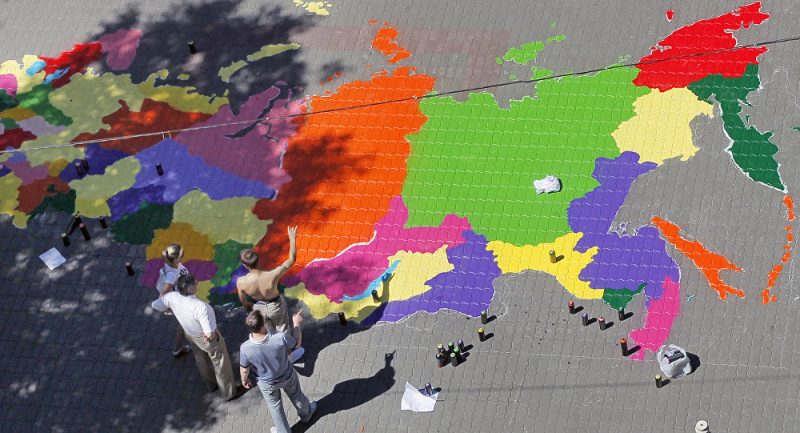
They want to delegitimize the Russian political system and process as we have seen with the public commentary on President Putin’s re-election and they want nothing short of regime change, which would then lead to a permanent and irreversible change of Russia’s national character and possibly the country’s partition along the lines allocated by Zbigniew Brzezinski. With these people partnership is impossible and Russia needs to be prepared for a long and sustained period of confrontation.
Israel readies extra troops, snipers and drones, for Palestinian ‘March of Return’
Courtesy: defenseindustrydaily.com
MEMO | March 27, 2018
Israeli authorities are preparing extra troops, snipers and drones ahead of the Palestinians’ planned “March of Return”, a six-week long series of actions beginning this Friday with Land Day protests.
According to the Times of Israel, Israeli occupation forces are “gearing up” for protests expected to take place along the Gaza Strip’s perimeter fence, “putting additional units on alert out of concerns that large numbers of Palestinians might try to break through the barrier and rush into Israel”.
The majority of Palestinians in the occupied and blockaded Gaza Strip are from nearby communities ethnically cleansed by Israel in the 1948 Nakba.
Land Day, which takes place annually on 30 March, marks the Israeli government’s appropriation of land from Palestinian citizens in 1976, and the bloody repression of protests against the seizure. The March of Return initiative is intended to continue until 15 May, the 70th anniversary of the Nakba.
Citing a “military source”, the Times of Israel reported that in preparation for the expected protests, “additional army battalions, Border Police units, and dozens of snipers will be deployed along the Gaza border on Friday, in order to keep demonstrators from crossing”.
In addition, “police officers will be stationed a bit farther back, in order to keep back any Palestinians who breach the first line of defence”, while “additional teams of IDF soldiers will also patrol the Israeli communities closest to the border”.
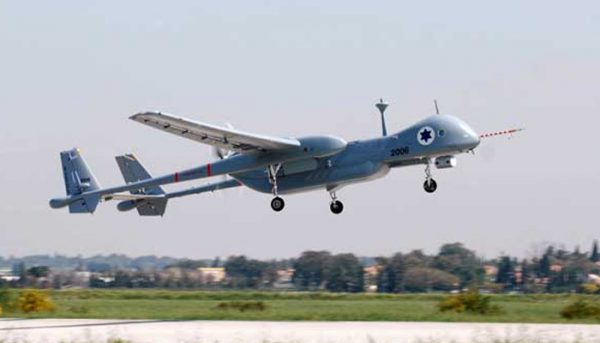
Israeli forces are also likely to “deploy drones that can drop tear gas on protesters on the Gaza side of the border, a technique that the Border Police tested earlier this month.”
In regular protests since December, Israeli occupation forces have used lethal violence against Palestinian demonstrators, killing a number of unarmed protesters and injuring hundreds more.
Enough is More Than Enough!

By Gilad Atzmon | March 27, 2018
Jewish power, as I define it, is the power to suppress criticism of Jewish power.
For the last few days the Brits have been shown a spectacular display of that power and the manner in which it is mobilised. Without any attempt to hide their behaviour, a bunch of Jewish leaders have chosen to slander Europe’s biggest party and its popular leader in the name of ‘Jewish sensitivities.’
This blitz attack was sparked by Labour leader Jeremy Corbyn’s reaction to a mural back in 2012. The mural was painted by US street artist Kalen Ockerman. Apparently, at the time Corbyn defended the public display of the painting on the grounds of freedom of speech.
The Labour leader was heavily criticised by Jewish institutions for supporting a mural “depicting Jewish bankers playing Monopoly on the backs of the poor.” The clumsy British media didn’t do its homework and failed to actually examine the mural, but instead immediately delved into the hookedness of the noses of those alleged Jewish bankers.
Embarrassingly for them, Ockerman has came forward and identified the men he depicted in the mural. They are from left to right, “Rothschild, Rockefeller, Morgan, Aleister Crowley, Carnegie & Warburg.” Of the six men, only Rothschild and Warburg were Jewish. In fact, Aleister Crowley was noted for his antisemitic views. The take home message for the BBC & co is that maybe capitalists of all races share similar shaped noses.
I am left wondering if the British Zionist league was offended by the mural because it is they, the Zionists, who see the capitalist as the Jew and vice versa. After all, Labour Zionism began as an avowed attempt to liberate Diaspora Jews of parasitic capitalist traits. Zionism promised to cleanse the Jew of gluttony by means of a ‘homecoming.’
Yesterday 1,500 British Jews took to the streets outside Parliament. They protested Corbyn’s “systematic failure to deal with antisemitism.”
If you wonder what ‘systematic antisemitsm’ means, the Jewish Chronicle provides the answer. In his speech at the protest Jonathan Arkush, the leader of the ardent Zionist Board of Deputies of British Jews, cited Labour’s failure to take proper action on the claims of antisemitism against former London mayor Ken Livingstone and other Labour Party members.
Zionists do not like Ken Livingstone. This is understandable. The man is a legendary icon of ethical thinking. Despite their protests, it is still not easy for the Labour party to expel one of its legends simply for telling the truth about Hitler’s collaboration with Zionism. Maybe Arkush should just give it more time.
Arkush told the crowd that the “the Labour Party must go back to being the enemy of racists – not the refuge.” Of course Corbyn doesn’t have a drop of racism in his entire body, but maybe Jonathan Arkush can meet his own standards and tell us how many Blacks or Muslims are members of his own Jews-only Board of Deputies of British Jews.
The Jewish Leadership Council’s chair Jonathan Goldstein said that Mr Corbyn had become the “figurehead for an antisemitic political culture based upon obsessive hatred of Israel, conspiracy theories and fake news.”
Maybe the Jewish community leader could try to remember that obsession with justice is not a bad thing and also that interfering with freedom of speech can easily backfire.
It is clear why some Jews are upset by Corbyn. The Labour leader treats the Jews as ordinary people. He fails to respect their choseness and ignores their sense of exceptionalism. Perhaps he believes that Jewish politics like all other politics, ought to be subject to criticism. And now it is clear that Corbyn’s approach to Jewish politics is not acceptable to Britain’s Zionist Jewish establishment.
MP John Mann who has operated as a Zionist mouthpiece within the Labour party for more than a while, bemoaned to the Jewish gathering about his Labour comrades that “Some of them glory in being called anti-Zionists – racists that is the word for them.”
Does Mann think that opposing a political movement is ‘racism?’ Is opposition to Britain or the USA, or even North Korea also to be castigated as racism? And then, in an uber-Orwellian manner Mann added “we have to drive these people (the anti Zionists) out of the Labour Party.”
Maidenhead Synagogue Rabbi Dr Jonathan Romain told the JC that this ‘antisemitism crisis’ was Mr Corbyn’s “Watergate moment.” I suggest the Rabbi learn some Jewish history. This tsunami of Jewish self-love and empowerment could turn into a total disaster as it has time after time in the past.
British Jewish leadership is panicking. It has declared open war against a mainstream British political party. This is far from a reasonable move and if it is intended to oppose antisemitsm, its effect will inevitably be the opposite. Maybe gestalt psychology offers us the tools to understand such silly behavior. Jewish history teaches us that attitudes toward Jews resemble a gestalt switch. So that, for instance, once you see Israel for what it is you just can’t un-see it. Once you grasp that the Jewish State is a racist oppressive force no one will be able to uproot that perception in you. Jewish Zionists do face a growing wall of resentment. Instead of dealing with it by means of self reflection, they repeat Israel’s mistake and adopt the most oppressive authoritarian agenda. They are desperately trying to turn Britain into an Orwellian dystopia.
Left open is the question of how it is possible that the Jewish elite, despite its sophistication and education, never learn from the Jewish past. How is it possible that Jews keep repeating the same mistake time after time? I guess one possible answer is that Jewishness (יהודיות) is a form of severe blindness—and that this may be the dark side of choseness.
Let’s Investigate John Brennan
Time to find out if CIA interfered in the 2016 election

By Philip Giraldi • Unz Review • March 27, 2018
Former Central Intelligence Agency (CIA) Director John Brennan, a Barack Obama friend and protégé as well as a current paid contributor for NBC and MSNBC, has blasted President Donald Trump for congratulating President Vladimir Putin over his victory in recent Russian national elections. He said that the U.S. President is “afraid of the president of Russia” and that the Kremlin “may have something on him personally. The fact that he has had this fawning attitude toward Mr. Putin … continues to say to me that he does have something to fear and something very serious to fear.”
It is an indication of how low we have sunk as a nation that a possible war criminal like Brennan can feel free to use his former official status as a bully pulpit to claim that someone is a foreign spy without any real pushback or objection from the talking heads and billionaire manipulators that unfortunately run our country. If Trump is actually being blackmailed, as Brennan implies, what evidence is there for that? One might reasonably conclude that Brennan and his associates are actually angry because Trump has had the temerity to try to improve relations with Russia.
It is ironic that when President Trump does something right he gets assailed by the same crowd that piles on when he does something stupid, leading to the conclusion that unless The Donald is attacking another country, when he is lauded as becoming truly presidential, he cannot ever win with the inside the Beltway Establishment crowd. Brennan and a supporting cast of dissimulating former intelligence chiefs opposed Trump from the git-go and were perfectly willing to make things up to support Hillary and the status quo that she represented. It was, of course, a status quo that greatly and personally benefited that ex-government crowd which by now might well be described as the proverbial Deep State.
The claim that Trump is a Russian agent is not a new one since it is an easy mark to allege something that you don’t have to prove. During the campaign, one was frequently confronted on the television by the humorless stare of the malignant Michael Morell, former acting CIA Director, who wrote in a mind numbing August 2016 op-ed how he was proud to support Hillary Clinton because of her “commitment to our nation’s security: her belief that America is an exceptional nation that must lead in the world for the country to remain secure and prosperous; her understanding that diplomacy can be effective only if the country is perceived as willing and able to use force if necessary; and her capacity to make the most difficult decision of all: whether to put young American women and men in harm’s way.” Per Morell, she was a “proponent of a more aggressive approach [in Syria], one that might have prevented the Islamic State from gaining a foothold…”
But Morell saved his finest vitriol for Donald Trump, observing how Vladimir Putin, a wily ex-career intelligence officer “trained to identify vulnerabilities in an individual and to exploit them” obtained the services of one fairly obscure American businessman named Trump without even physically meeting him. Morell, given his broad experience as an analyst and desk jockey, notes, “In the intelligence business, we would say that Mr. Putin had recruited Mr. Trump as an unwitting agent of the Russian Federation.” An “unwitting agent” is a contradiction in terms, but one wouldn’t expect Morell to know that. Nor would John Brennan, who was also an analyst and desk jockey before he was elevated by an equally witless President Barack Obama.
So Morell is by his own words clearly an idiot, which explains a lot about what is wrong with CIA and is probably why he is now a consultant with CBS News instead of serving as Agency Director under the beneficent gaze of President Hillary Clinton.
Well, Trump’s fractured foreign policy aside, I have some real problems with folks like Michael Morell and John Brennan throwing stones. Both can be reasonably described as war criminals due to what they did during the war on terror and also as major subverters of the Constitution of the United States that has emerged as part of the saga of the 2016 election, the outcome of which, ironically, is being blamed on the Russians.
Back in 2013 John Brennan, then Obama’s counter-terrorism advisor, had a difficult time with the Senate Intelligence Committee explaining some things that he did when he was still working at CIA. He was predictably attacked by some senators concerned over the expanding drone program, which he supervised; over CIA torture; for the kill lists that he helped manage; and regarding the pervasive government secrecy, which he surely condoned to cover up the questionable nature of the assassination lists and the drones. Not at all surprisingly, he was forced to defend the policies of the administration that he was then serving in, claiming that the United States is “at war with al-Qaeda.” But he did cite his basic disagreement with the former CIA interrogation policies and expressed his surprise at learning that enhanced interrogation, which he refused to label torture because he is “no lawyer,” had not provided any unique or actionable information. He claimed that he had only “raised serious questions” in his own mind on the interrogation issue after reading the 525 page summary of the 6,000 page report prepared by the Senate Intelligence Committee which detailed the failure of the Agency program. Brennan’s reaction, however, suggested at a minimum that he had read only the rebuttal material produced by CIA that had deliberately inflated the value of the intelligence produced.
Surprisingly the subject of rendition, which Brennan must surely have been involved with while at CIA, hardly surfaced though two other interesting snippets emerged from the questioning. One was his confirmation that the government has its own secret list of innocent civilians killed by drones while at the same time contradicting himself by maintaining that the program does not actually exist and that if even if it did exist such fatalities do not occur. And more directly relevant to Brennan himself, Senator John D. Rockefeller provided an insight into the classified sections of the Senate report on CIA torture, mentioning that the enhanced interrogation program was both “managed incompetently” and “corrupted by personnel with pecuniary conflicts of interest.” One would certainly like to learn more about the presumed contractors who profited corruptly from waterboarding and one would like to know if they were in any way punished, an interesting sidebar as Brennan has a number of times spoken about the need for accountability.
Brennan was not questioned at all about the conflict of interest or ethical issues raised by the revolving door that he benefited from when he left CIA as Deputy Executive Director in 2005 and joined a British-owned company called The Analysis Corporation (TAC) where he was named CEO. He made almost certainly some millions of dollars when the Agency and other federal agencies awarded TAC contracts to develop biometrics and set up systems to manage the government’s various watch lists before rejoining the government with a full bank account to help him along his way. Brennan also reportedly knew how to return a favor, giving his former boss at CIA George Tenet a compensated advisory position in his company and also hosting in 2007 a book signing for Tenet’s At the Center of the Storm. The by-invitation-only event included six hundred current and former intelligence officers, some of whom waited for hours to have Tenet sign copies of the book, which were provided by TAC.
Brennan certainly knew how to feather his nest and reward his friends, but the area that is still murky relates to what exactly he was up to in 2016 when he was CIA Director and also quite possibly working hard to help Hillary get elected. He was still at it well after Trump got elected and assumed office. In May 2017, his testimony before Congress was headlined in a Washington Post front page featured article as Brennan’s explosive testimony just made it harder for the GOP to protect Trump. The article stated that Brennan during the 2016 campaign “reviewed intelligence that showed ‘contacts and interaction’ between Russian actors and people associated with the Trump campaign.” Politico was also in on the chase in an article entitled Brennan: Russia may have successfully recruited Trump campaign aides.
The precise money quote by Brennan that the two articles chiefly rely on is “I encountered and am aware of information and intelligence that revealed contacts and interactions between Russian officials and US persons involved in the Trump campaign that I was concerned about because of known Russian efforts to suborn such individuals. It raised questions in my mind whether or not Russia was able to gain the co-operation of those individuals.”
The testimony inevitably raises some questions about just what Brennan was actually up to. First of all, the CIA is not supposed to keep tabs on American citizens and tracking the activities of known associates of a presidential candidate should have sent warning bells off, yet Brennan clearly persisted in following the trail. What Brennan did not describe, because it was “classified,” was how he came upon the information in the first place. We know from Politico and other sources that it came from foreign intelligence services, including the British, Dutch and Estonians, and there has to be a strong suspicion that the forwarding of at least some of that information might have been sought or possibly inspired by Brennan unofficially in the first place. But whatever the provenance of the intelligence, it is clear that Brennan then used that information to request an FBI investigation into a possible Russian operation directed against potential key advisers if Trump were to somehow get nominated and elected, which admittedly was a long shot at the time. That is how Russiagate began.
So, Mr. Brennan, for all his bluster and scarcely concealed anger, has a lot of baggage, to include his possible role in coordinating with other elements in the national security agencies as well as with overseas parties to get their candidate Hillary Clinton elected. Brennan should be thoroughly investigated by Special Counsel Robert Mueller, to include subpoenaing all records at CIA relating to the Trump inquiries before requiring testimony under oath of Brennan himself with possible legal consequences if he is caught lying.
British accusations against Russia for Skripal poisoning not only unproven, but absurd!
By Tom Stanford | The Duran | March 24, 2018
The British government claims to have overwhelming evidence of Russia’s responsibility in the Salisbury poison attack on Sergei Skripal and his daughter. In his Washington Post article of March 14, Foreign Secretary Boris Johnson went so far as to claim that there was “only [one] plausible conclusion: that the Russian state attempted murder in a British city, employing a lethal nerve agent banned under the Chemical Weapons Convention”. He even connected this with Russia “covering up” the alleged use of “the nerve agent sarin against the town of Khan Sheikhoun in April 2017” by Syrian forces. In a separate statement, the Foreign Secretary tells us it is “overwhelmingly likely” that Vladimir Putin personally ordered the attack. What evidence is there to support such serious accusations?
According to the British government (see e.g. Boris Johnson’s article) and the mainstream media, the following elements are sufficient to incriminate the Russian state with near certainty: the weapon used, the motive, Russia’s past record, the lack of another explanation.
Use of novichok is no proof of Russian involvement
The nerve agent reportedly used in the attack, named novichok, was developed by the Soviet Union in the 1970s and 1980s. The fact that Russian stockpiles of novichok were destroyed under supervision of UN bodies after the collapse of the Soviet Union and that the OPCW (Organisation for the Prohibition of Chemical Weapons) has seen no reason for suspecting any country of continuing to store this deadly agent does not seem to bother the incriminators. Of course, it can be speculated that Russia may have kept the weapon secretly, as does Vil Mirzayanov, the Russian scientist who revealed the existence of the project in 1992 and has lived in the US since 1995.
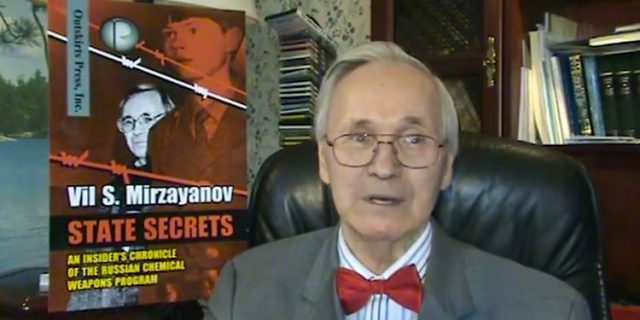
Russian ex-counter intelligence officer Vil Mirzayanov defected to the United States. Now 83 years old, he comments on the Skripal affair from Boston. (Photo credit: Business Insider)
Boris Johnson has announced that over the last ten year Britain has gathered evidence of Russia creating and storing novichok. We are given no detail of what kind of evidence this may be. It could turn out to be nothing more than isolated, unsubstantiated claims made by Mirzayanov and other opponents of the Russian government.
Not only Russia, but other former members of the Soviet Union, or the US, could have secretly stored or recreated the poison. In 1999 US defence officials helped Uzbekistan dismantle a former Soviet facility which had tested chemical weapons such as novichok. Samples, as well as the knowledge required to produce the nerve agent, are highly likely to have become available to countries other than Russia.
Did Russia have a motive?
Russia supposedly had an obvious motive. The argument goes as follows: Sergei Skripal, while still officially working for the Russian military intelligence service, the GRU, had been secretly recruited by the British MI6, and handed over to his new paymasters the names of all Russian agents he knew to be working in the West. Even after serving a few years in a Russian prison and being allowed to emigrate to the UK as part of a spy swap, he would have remained on an official Russian hit list for his act of treason. His murder would serve as a deterrent towards any other Russian agent who may consider switching sides. And to make things even clearer to would-be defectors, the attack would leave some kind of signature pointing to the Russian state as the perpetrator.
On the face of it, the argument sounds reasonable. However, it makes no sense to consider motives as evidence for doing something if we ignore counter-motives, i.e. reasons for refraining from doing it. Suppose you are in your doctor’s waiting room and have been sitting there for quite some time when suddenly an elderly lady, who arrived there just before you, collapses and is rushed to hospital. You had never seen her before. Now imagine the police later suspect some foul play and discover that the incident allowed you to have your own waiting time shortened by ten or fifteen minutes. You had a clear motive for harming the poor lady. Luckily for you, it then occurs to the investigators that your motive for doing so (saving a few minutes of your time) pales into insignificance compared with the reasons that would have held you back, such as the idea of spending years in jail, not to mention your moral conscience or feelings of human compassion.
In other words, motivation is the result of weighing out costs and benefits.
Putin had a clear motive… for NOT doing it
In the case of the Salisbury attack, the foreseeable costs to Russia, and more specifically to President Putin, are enormous. The Russian government spends considerable effort trying to convince the world that it firmly abides by the rule of law, especially international law and agreements between states. Its own statements, as well as the foreign-policy analyses appearing in the Russian state-owned media, all go towards highlighting Russia’s perceived superiority to the US in terms of respect for international law. Such efforts have greatly intensified in the context of the renewed tensions with the West over the last few years.
Russia’s current leaders believe in ending the current US-dominated unipolar world and are striving to recover some of the influence over world affairs that was lost with the collapse of the Soviet Union. This requires having allies, not only state allies, but also Russia-friendly organizations and individuals within states. Any damage to Russia’s international reputation does considerable harm to such prospects.
President Putin himself cultivates the image of a highly principled, responsible and law-abiding person – not that anyone would guess by reading the Western mainstream media! Whatever Russia’s state representatives and media may argue, the Salisbury attack has put many weapons in the hands of Putin’s detractors. In this light, it is absolutely inconceivable that Russia’s president ordered the attack himself. Boris Johnson’s personal accusation not only shows his total misunderstanding of the Russian leadership, but is also utterly irresponsible on the part of Britain’s top diplomat.
Russia had long been hoping that the EU may gradually put to an end its sanctions policy. It is still very dependent on trade with the block. It would be insane for Russia to do anything that could threaten the current Nord Stream 2 gas pipeline project, especially given that the US, with the support of a number of EU countries mainly from Eastern Europe, has been putting pressure on the EU to abandon the project. But Germany, determined to ensure its supply of cheap gas, has so far resisted such calls.
Predictably, the EU has sided with the UK and is officially demanding explanations from Russia concerning its novichok programme – which only makes any sense if Russia was in some way involved in the Salisbury attack, definitely not if it genuinely ceased the production and storage of the nerve agent in the 1990s, as documented by the OPCW!
Could other agents of the Russian state be responsible?
It is also entirely unrealistic to imagine that leading members of the Russian secret service agencies may have acted autonomously and ordered the Salisbury attack without consulting their superiors and not realizing how much damage it would have on Russia’s and Putin’s international reputation. They live in the world of the Russian state elite, continually exposed to its way of thinking, and not cocooned in some fantasy world of their own – unlike many Western politicians and journalists who apparently still live with the image of James Bond-like characters fighting against evil Russian agents!
Any significant agent of the Russian state would be fully aware of the displeasure that a Salisbury-type attack would trigger among the leadership. Supposing players within the Russian state did carry out the attack, it could only be construed as a hostile act towards President Putin and his team.
No sense for Russia to kill Skripal abroad rather than in Russia
This is not a simple case of a former spy-turned-traitor being “executed”. The attack leaves a deliberate Russian “signature” (there is no other reason for using novichok rather than a more discreet or classical weapon) and was carried out on the soil of a foreign country, the United Kingdom, which in spite of the Brexit process remains a highly significant player on the international stage. Whoever the perpetrators may be, they would have foreseen that any improvement in relations between Russia and its Western neighbours would be seriously jeopardized as a consequence.
But what makes Russian involvement even more absurd is the fact that Alexander Skripal was officially released and allowed to emigrate as part of a spy swap. Why would the Russians have waited another eight years before killing him in another country, with the terrible diplomatic consequences that would ensue, when he could have been much more easily liquidated while still in Russia, in a manner that would give would-be defectors an even clearer warning that there is “no way out for traitors”.
Would Russia give up the chance of other spy swaps?
Furthermore, a spy-swap deal implies that the parties involved agree to give up all claims pertaining to the released individuals. In other words they will not try to recapture or kill them, which would amount to a breach of the agreement. A country reneging on such a deal would no longer be trusted for any similar arrangements in the future. Is it reasonable to believe that the Russian government, or any top secret service official in Russia, would be prepared to sacrifice Russia’s chances of making any new spy-swap deals with its Western partners in the future? This is not just unlikely, it is the pinnacle of absurdity! Sadly, Western political leaders and mainstream media are quite happy to believe and propagate such nonsense.
Goal of attack: outrage against Russia
The attack itself does not seem to bear the mark of professional Russian agents. The daughter of the former double agent suffered the same fate as her father. It is only a matter of circumstances that many others were not seriously injured. It is like using a sledgehammer to crack a nut! And the main target, Sergei Skripal, is – weeks later – still reported to be alive! Either it was some very sloppy attack carried out by non-professionals, or the attack was deliberately not confined to Mr Skripal in order to provoke even greater outrage against Russia.
Boris Johnson has apparently recently adapted his interpretation of Russian intentions to take account of these facts. He now claims it was probably specially timed just before the presidential election, “to conjure up in the public imagination the notion of an enemy”. So the Russian president supposedly deliberately provoked British outrage to help him win the election! The Foreign Secretary seems to be completely out of touch with reality. It has long been common knowledge that Vladimir Putin would win with a landslide anyway. Would he wish to cause himself and his country enormous trouble for absolutely no gain at all?
What is Russia’s past record?
We are told there is “a pattern” of state-sponsored assassinations or deaths in unusual circumstances of political opponents, critical journalists and secret service defectors. Deaths attributed to President Putin have included the journalist Politskaya, the political opponent Nemtsov, the accountant and lawyer Magnitsky, the former agent Litvinenko and even the oligarch Berezovsky. In all these cases, the incrimination of the Russian state is based on rather flimsy evidence. The argumentation here is circular: in each case the belief in the Russian government’s responsibility is strengthened by the existence of the other stories. But if none of the stories are true, then the whole argument collapses.
The Litvinenko case does bear a similarity to the current one. Instead of the nerve agent novichok, Litvinenko was poisoned by radioactive polonium, a substance very difficult to obtain and produced only by a few countries – such as Russia – with a nuclear weapons industry. In both cases, it is highly unlikely that the Russian state would choose to leave a “made in Russia” signature on the poison used, with only one major outcome – the poisoning of Britain’s relationship with Russia.
If not Russia, then who did it?
Russia’s accusers claim there are no alternative explanations for the attack: nobody, apart from the Russian state, is understood to have had a motive for the attempted murder. This argument can only make sense to those who believe in the world of an evil, criminal Russia whose only opponents are pure, honest, angelic fighters for freedom and justice.
The main consequence of the Salisbury attack – undoubtedly one that would have been predicted by whoever planned it – is to further damage relations between Russia and the West, or at least prevent their improvement. A long list of countries (Ukraine, Poland, the US and many others) or organizations may believe they have an interest in this – at least they have been doing their best to spoil Western Europe’s relationship with Russia. Of course, the existence of a possible motive does not constitute sufficient ground to suspect anyone in particular. However, on the basis the motives involved, to quote British former Member of Parliament George Galloway, “Russia must be near the bottom of the list of suspects.”
How to get away with murder: blame Russia!
It can also not be excluded that the attack was the work of some rogue “ultra-patriotic” group within Russia (whether within or outside Russia’s state institutions) wishing to undermine Putin’s attempts to mend relations with the West by killing a “traitor” on British soil. In this case, the Salisbury attack would clearly be an act of aggression against the Russian government more than against the UK. And Britain’s refusal to cooperate with Russia would make the UK unwittingly guilty of helping the perpetrators avoid the course of justice.
Another aspect is that we do not know what personal enemies Aleksander Skripal may have had. There may be motives involved that nobody suspects. If, for whatever reason a person or organization with sufficient power wished to have him killed, there was a simple way to get away with the crime: a highly effective cover-up the crime would involve using a weapon that points towards Russia, with the knowledge the British authorities would be unlikely to seriously explore other avenues, especially in the current international climate. The same can be argued in the case of Litvinenko’s murder in 2006.
There is something particularly disturbing about the Western international community rushing to accuse Russia for any crime showing the slightest hint of a Russian connection: it provides criminal organizations and terrorists with assurances that they can avoid being held accountable. All they need to do is to leave some kind of “Russian signature”.
UK reckless attitude is dangerous
The words of Theresa May and Boris Johnson, accusing Russia for crimes it did not commit with astoundingly aggressive and hostile language, will naturally lead the Russian population and their decision makers to believe their country is the victim of an orchestrated attack. Hostility towards the West will increase dramatically as a result. British, European and North-American leaders may have convinced themselves of Russia’s guilt, but have they reflected on the possible consequences of their reckless attitude?
It is urgent to stop the escalation in the Russia blame game, which has taken a momentum of its own. It may be of benefit for the media, who can publish stories that make a good read, with an evil bogey man that everyone loves to hate, or for politicians who, when confronted with problems at home – such as the UK government with its current Brexit troubles – can take the opportunity to look strong in the face of an enemy. However, it is an extremely dangerous game which could have disastrous consequences for the entire world.
Featured Video
The Failed Air War Over Vietnam
or go to
Aletho News Archives – Video-Images
From the Archives
USS Liberty Massacre: A Pivotal Moment in the Hostile Takeover of America
By Kevin Barrett | Crescent | Dhu al-Qa’dah 24, 1445
In corporate America, hostile takeovers are commonplace. They occur when an aggressor—a larger corporation or rich individuals—seizes control of a smaller corporation without asking permission.
What few recognize is that the United States itself has been subjected to a hostile takeover. Since the aggressor, the illegitimate settler colony known as “Israel,” is much smaller than the US, the takeover has necessarily been surreptitious.
As of June, 2024, Israel’s gradual takeover of the US has become obvious and undeniable—a proverbial “elephant in the living room.” … continue
Blog Roll
 Aletho News
- Leaders Condemn Ansarallah Attack on Saudi Arabia While Ignoring Illegal War Against Yemen
- Leaked: Britain’s Covert Iraqi Psyops Network
- Yemeni Armed Forces Warn Airlines Against Using Saudi Airports, Exempt Mecca and Medina
- Iran security chief says powers greater than US tried to conquer Iran but ended in ‘dustbin of history’
- Europe’s mounting social chaos… chickens coming home to roost for proxy war against Russia
- US-Russia Diesel Deal Becomes Massive Defeat for Ukraine
- Hormuz and the Looming Economic Catastrophe
- Dhubab offensive, media blitz and the rapid unraveling of Saudi-backed coalition’s new gambit
- Putin Conveys to Trump Iran’s Vision on Possible Conflict Resolution – Kremlin
- The Search for Truth: Charlie Kirk’s Assassination One Year Later
- If Americans Knew
- For three years, Israel has killed a child in Gaza every 71 minutes – Daily Update
- Israeli forces kill another child in Gaza – Daily Update
- Gaza ceasefire exists in name only, say more than 100 organizations
- Nearly 2 Million in Gaza Need Urgent Shelter Assistance as Winter Looms: IOM Chief Warns
- Suppressing Palestinian resistance: US charity under fire for AI monitoring of Gaza classrooms
- Thousands Are Held in Israeli Torture Camps. This Is What Happens Inside
- Israel puts Gaza’s sick, injured, newborn in peril – Daily Update
- Report claimed Mark Levin used by Israeli government to influence Trump
- Over 2,000 Gazans have died awaiting medical evacuation amid Israel’s continued siege
- How a U.S. Diplomat Suppressed and Altered Reports Critical of Israel
- No Tricks Zone
- Germany’s Green Energy Debacle: High Energy Costs Force Kahla Porzellan to Close After 182 Years!
- New Study: 50 Years Of The Most Aggressive ‘Net Zero’ Policies Can Only Affect The Global Climate By 0.03°C
- US September “Heat” Was No Record…Many Records Set Decades Ago
- Latest European Green Energy Debacle; Portugal’s Largest Flagship Solar Park Insolvent!
- Green Energy Debacle: German Expert Professor Fritz Vahrenholt Warns Of Severe Economic And Social Consequences
- Two More Paleo Reconstructions Affirm Meters-Higher Sea Levels Across Ireland, Brazil 7000-6000 Years Ago
- New Study: Earth And Venus Surface Warmth Largely Explained By Convection And Lapse Rate, Not CO2 Or Radiation
- 2025 Nature Paper Claiming Worsening Global Drought Gets RETRACTED …Heavily Flawed
- New Study: ‘Global Drought Shows No Detectable Recent Acceleration Under Climate Warming’
- Economic Masterminds: German Socialists Suggest Taxing Productivity Gains Stemming From Using AI

