On February 13, 1960, France carried out its first nuclear test in Algeria’s southern Reggane region. According to official statistics, 17 nuclear tests were carried out in total over the next 6 years. The area remains affected, and local scientists say that radioactive contamination has caused genetic mutations and irreversibly changed the region.
There are no official statistics on the number of victims. The only figures can be found in the records kept by the French representative of the local church, which lists 42,000 victims of nuclear tests. Three years ago, the French Ministry of Defense issued a statement, putting the number at 27,000 people. The victims include French soldiers as well as local Algerians who lived in the surrounding areas.
However, these figures do not take into account the untimely deaths of the descendants of these people, who were affected by cancer and other nuclear radiation-related illnesses. To this day, the contaminated areas pose a danger to life and health.
A representative of the ‘Desert Detainees’ (a community of people who served sentences in prisons located in the desert regions of Algeria from 1992 to 1996), Nureddin Mauhub, said that many prisoners were exposed to radiation while serving their sentences in jails in the desert.
Nuclear engineer Ammar Mansuri told the newspaper Arabi al-Jadid, that in fact, there were more nuclear tests carried out in Algeria.
“France conducted 13 underground nuclear tests, 4 ground tests, 4 plutonium tests and 35 other tests,” he said.
According to him, the nuclear tests documentation was passed on to the Algerian government only 10 years ago.
Some of the documents are still classified. For these reasons, no systematic observations or studies have been conducted in the area in the past century. Therefore, no timely measures were taken to reduce the negative impact on the environment. It is difficult to say how the level of contamination has changed over the past decades and what to expect in the future.
The Algerian government claims that the contaminated area is more than 100 square km, according to the Al-Arabi al-Jadid website. However, problems aren’t limited to this exclusion zone. The desert winds carry contaminated particles to formally clean areas. There’s now a need to study the level of radiation in the desert to accurately determine the boundaries of the contaminated area.
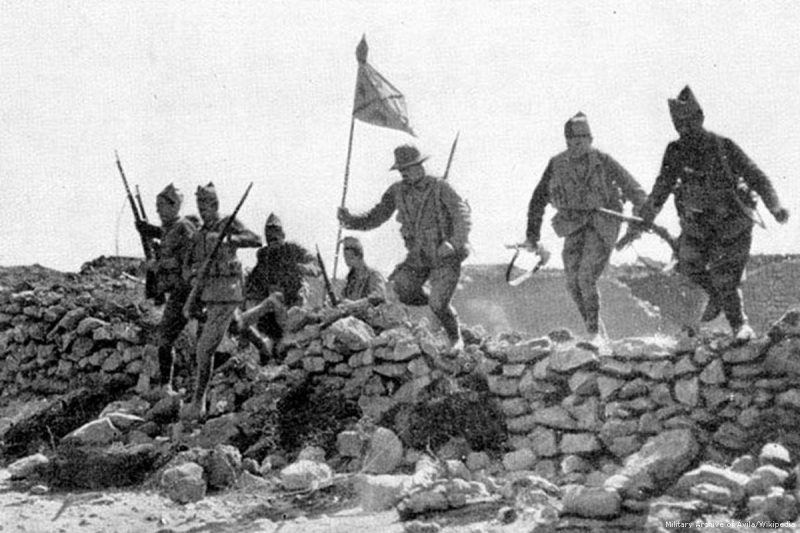
Spain has said it will respond to the Amazigh World Assembly’s (AMA) request concerning the use of chemical weapons by King’s Alfonso XIII military during the Rif War from 1921-1926 but has fallen short on agreeing to apologise for its actions.
Spain’s Foreign Minister Alfonso Dastis confirmed that the request had been made to Madrid and “as a result of the request of the King, the [AMA] were received in the Spanish embassy to submit their demands and also examine possible ways of cooperation.”
Speaking during a parliamentary meeting, Dastis answered questions from Joan Tarda, a member of the Esquerra Republicana, who has been pushing for the Spanish government to admit its use of chemical weapons in the Rif war.
However, though showing his willingness to hear the AMA’s demands, Dastis fell short of expressing his country’s readiness to apologise for its use of chemical warfare on civilians.
The conflict lasted from 1920 to 1927 between Berber rebels led by Mohamed Ibn Abd Al-Karim Al-Khattabi against Spanish colonial forces in Morocco’s Rif region. Following the defeat of Spanish troops in the Annoual battle in July 1921, Spain reportedly used chemical and toxic gas indiscriminately against the Rif civilian population in order to inflict maximum damage. The chemical attacks were a violation of the 1919 Treaty of Versaille which prohibited the use of chemical weapons.
The AMA filed a request calling on Spanish authorities to officially apologise to the Rif people and to compensate the victims and families for the tragedy. A similar request by AMA was last made in 2015 to King Felipe VI.
The Moroccan Centre for Common Memory, Democracy and Peace echoed calls by AMA and called on the Spanish Minister of Foreign Affairs to honour previous pledges to respond to the requests of Moroccan civil society organisations calling on Spain to recognise its culpability.
As a result of the chemical warfare, many of those in the Rif have suffered the highest rates of cancer than in any other region in Morocco with 80 per cent of cases of larynx cancer in Morocco found in the Rif region.
Netherlands Prime Minister Mark Rutte was this week forced to bear a parliamentary vote of no confidence after his foreign minister finally came clean over a dangerous lie he has been telling for two years concerning Russian President Vladimir Putin.
Halbe Zijlstra quit in shame on Monday as the country’s foreign minister after admitting that a story he had peddled about personally hearing Putin plotting to create a “greater Russia” was false. That then forced premier Rutte to endure a “no confidence” motion from parliamentarians. In the end, Rutte survived the vote. If a majority had voted against his leadership, his coalition government may have collapsed.
But the deep damage done to the Dutch authorities will not be so easily repaired by Rutte’s survival as premier. What has been exposed this week is a senior member of government recklessly telling bare-faced lies in an attempt to slander Russia, poison international relations, and ratchet up already dangerous geopolitical tensions.
Zijlstra had claimed two years ago, in 2016, that he had personally witnessed Russian leader Vladimir Putin boasting about creating a “greater Russia” which, it is claimed, would incorporate Ukraine, the Baltic states, Belarus and Kazakhstan.
The newly resigned Dutch top diplomat claimed he heard Putin making the remarks while present with others at the Russian leader’s dacha (summer house) back in 2006.
This week, Zijlstra finally came clean and admitted before parliament that he hadn’t in fact been present at the alleged gathering. He still maintains, however, that a confidant who was among the guests at Putin’s dacha informed him of the alleged “greater Russia” plan. But how can we now trust the word of a self-confessed liar?
Zijlstra’s boss, Prime Minister Rutte, also sought to downplay the debacle, claiming that his foreign minister had made “a big mistake” – but that “lying was not a deadly sin”.
Rutte is in for a rude awakening due to his complacent thinking. For indeed his government has been caught telling a very grave lie whose ramifications concern issues of war and peace in Europe.
Disgraced former minister Zijlstra stands accused of gross distortion of Russia’s foreign policy.
Since the US and European-backed illegal coup in Ukraine in early 2014, geopolitical reality has been turned upside-down. American and European corporate media have peddled relentless anti-Russia propaganda accusing Moscow of “aggression” and “expansionism” in Europe.
This torrent of Russophobia spewed out by Washington, the Pentagon, NATO and the European Union has created the worst crisis in relations with Russia since the Cold War ended nearly three decades ago. There are real fears that the mounting crisis could escalate into an all-out war involving nuclear powers.
Zijlstra’s offense therefore is not merely a “mistaken” lie. His flagrant public distortion has contributed directly to the grave deterioration in geopolitical relations. One could even argue such reprehensible remarks amount to incitement of war, which is a cardinal crime under Nuremberg legal principles.
Lamentably, the mendacious senior Dutch politician is not an isolated case. Recall how former Polish foreign minister Radek Sikorski was caught out telling similar defamatory lies about Russia in 2014.
Sikorski, who has been an ardent supporter of NATO force build-up against Russia, reportedly claimed that he personally overheard Vladimir Putin in 2008 plotting to annex Ukrainian territory in a covert plot. Sikorski claimed that he heard Putin propositioning then Polish Prime Minister Donald Tusk with a carve-up deal of Ukraine between Poland and Russia.
Sikorski was obliged to swiftly retract the claims published in US media, and awkwardly admit that he was not present at the alleged meeting with Putin, and that his quoted remarks were meant as a “surreal joke”.
But, again, this is no joke or mistake. It is deadly serious disinformation by senior government officials, which is recklessly inciting war tensions with Russia. Sikorski is prominently associated with pro-NATO think-tanks like the hawkish American Enterprise Institute. He is married to Anne Applebaum who makes a living from writing anti-Russian screeds for news outlets like the Washington Post.
Zijlstra and Sikorski join the ranks of Russophobia regurgitated by other European foreign ministers like Britain’s Boris Johnson who issued the outlandish claim earlier this year that Russia is “targeting” British infrastructure; or French foreign minister Jean-Yves Le Drian who has impugned Russia for chemical weapons use in Syria – only for the French President Emmanuel Macron to admit this week that his government has actually no evidence about the use of such weapons in Syria.
Macron has made his own contribution to Russophobia by leveling unsubstantiated allegations that his presidential election campaign last year was “hacked” by Kremlin agents. He has since banned Russian news media from attending his press conferences.
All these senior government figures are irresponsibly fueling a climate of demonization against Russia which is compounding other unhinged claims made by politicians in Washington and the Baltic states. Lithuanian President Dalia Grybauskaite, for example, recently claimed that Russian Iskander missiles based on Russian sovereign territory of Kaliningrad were targeting half of Europe, an alarmist claim which has been amplified by US secretary of defense James Mattis in the Pentagon’s recent Nuclear Posture Review.
The climate of hysteria – based on false, fevered official claims – is militating against normal political and diplomatic relations, which is, in turn, exacerbating the war in Ukraine and leading to wider war tensions with Russia across Europe.
A good question is why the ousted Dutch minister decided to own up this week to his lies about Putin.
The answer may be related to the bigger credibility crisis of the Dutch government and its NATO allies with regard to the whole Russophobia propaganda war.
Next month, the Netherlands is to hold a national referendum on extending powers of Dutch state intelligence to monitor public electronic communications. To convince the Dutch public to vote for more snooping powers, the authorities are relying on the hackneyed claims about Russian “meddling” and “interference”.
It seems significant that Dutch media reported last month that the country’s secret services allegedly “hacked into” Russian state hackers who were allegedly penetrating the American Democratic party’s databases during the US presidential elections back in 2015-2016. As usual, no evidence was provided to support the claims. We know from other credible reports that the Democratic party was quite possibly not hacked at all, but rather was leaked from inside by a Democrat staffer. So the Dutch intel story smearing Russia is highly dubious.
But it seems that the purported “good deed” performed by the Dutch intelligence services was pitched in the media as a way to ingratiate bona fides with the Netherlands public. The aim being to dispose the public toward voting in the referendum next month to give the Dutch state more intrusive powers over citizens to “protect” them from “nefarious Russians”.
Now, if the Dutch minister had held on to his office any longer there was a risk that his lies may have become public embarrassingly close to the March referendum, which could have resulted in the public rejecting the authorities’ desire for more snooping powers.
Perhaps then the decision was taken in high office for the minister to take the fall now in order to get rid sooner of an embarrassing story concerning his lies over Russia.
Whatever the explanation about the timing, the admission of Dutch government lying about Russian aggression in Europe is nevertheless an illuminating and appalling insight into how Russophobia and war is being fomented by the US and its European NATO allies.
Abominably, European government officials are willing to risk plunging millions of citizens into a war with Russia based on lies and warped, self-serving prejudices.
I was on WGN for a live interview last week, and was asked to speak about my work and my book, but when I gave answers the hosts didn’t like, their questions (and comments) started to get hostile, literally telling me I “don’t sound American.” They gave me 5 minutes on-air. I’m going to give myself this short article instead. Here are a few quick thoughts about this interview (which they also did not publish online, or give us access to the clip), as I feel it serves as a good example for a bit of commentary that can be applied to so many conversations happening now, and relevant to the work that is happening here on JooJoo Azad.
“Do you think, you would like to see Iran go back to that before women were wearing hijabs?”
This question is assuming that there was, in fact, a time in recent Iranian history where women were wearing miniskirts and not hijabs as if there were no Muslim people in Iran before the revolution or that everyone is wearing black now and all sense of personal expression has been stripped from them. So wearing a black chador is not “expressing yourself”? Is expression of self through the body truly only limited to dressing in Western fashion?
For more elaboration on my response, a dear friend Alex Shams wrote a brilliant piece: “The Weaponization of Nostalgia, How Afghan Miniskirts Became the Latest Salvo in the War on Terror”, discussing how this exact dichotomous framework of seeing women’s bodies in the middle east (mini skirts as freedom and liberation and hijabs as repression and lack of rights) is established as justification for keeping troops on the ground in Afghanistan. Fashion is powerful, but it’s not a gauge of a state’s morality or progress based on how it frames women’s bodies.
“Let’s talk about nuclear weapons”
So hindsight is always 20/20, and I honestly should have just stopped him right there and questioned why he thought it was okay to make this ridiculous comment and pose it as a question (I think I was too excited to answer the question than question his premises). Nothing to do with what we are talking about and yet, I’m forced to take up a role as an expert on all things related to Iranian politics — a position I know other POC/Muslims have found themselves in if they have ever been the token Muslim on a panel or interviewed about their work. The title they gave me on the show was “fashion blogger,” yet here I am being asked about nuclear weapons. Would they ever bring on a white chef to their show and then ask him about Brexit or his thoughts on the rise of white supremacy?
“You don’t sound American”
Clearly, this is not the interview they expected. Identifying me as an Iranian-American, just moments before they wanted me to swiftly and unquestionably denounce Iran and then am immediately called out for not blindly pledging to the USA. Of course, both countries deserve their questioning, but the double standards is mind-blowing. Not to mention that what, then, must an American “sound like”? Are they saying that Americans must not question their government, must see the world in black & white, and chose simplicity over nuanced understandings? In that case, you all are doing it right.
But furthermore, what an incredibly loaded statement to say to a visibly Muslim woman on live TV, pushing every stereotype of “other”, “foreign”, and “incompatible with America” that Muslims are so systematically characterized as–and therefore used as justification to commit violence against, both here and abroad. If a white person said the same things as I did I guarantee you their “American-ness” would not have been questioned.
“Know that Muslims are tired of having to “prove” they are American. But also, know that one does not need to be American to deserve respect, humanity, dignity, equality, rights, and freedom from hate and bigotry. An over-emphasis on being American as a prerequisite of deserving respect is harmful for immigrants and refugees. Especially under the new administration that already has plans of “extreme vetting” to prove American-ness. This is only pushing their agenda further.”
This is also why I work with the medium of fashion/art — images and image production (such as the American Flag Hijab) are not just abstract, harmless “expressions” but truly are so deeply connected to our understandings of ourselves and others.
—
I could go on, but I think these three points in particular work to highlight the absurdity of this interview the best. Thank you Heba & Nausheen for literally buying this interview from a third party so I could share and dissect it. Also shout-out to whatever editing/lighting that was done to make my skin look a few shades darker.
A video has shown up on Senator Bernie Sanders’ Facebook page, with his name on it and his face in it making all the familiar (to a small number of people) points about U.S. military spending (how much it is, how it compares to the rest of the world, how it does not produce jobs, what wonders could be achieved with a small fraction of it, etc.).
I wish there were mention of the fact that it kills huge numbers of people, or that it risks apocalypse, or that it damages the earth’s environment. I wish the alternatives proposed were not all of the bring-our-war-dollars-home variety, as if the amount of money under consideration were not enough to radically transform this and every other country.
Still, had Sanders put out this video in 2015, tens of thousands of people wouldn’t have had to petition him in vain to oppose militarism, to fill the glaring gap in his website. I wouldn’t have had to write this or this or even this.
Sanders willingly subjected himself to endless accusations of raising taxes, rather than declare that he would push for a small cut in military spending. Jeremy Corbyn has had greater success — albeit in a different country — by taking the other approach. I continue to think Sanders is snatching defeat from the jaws of victory.
It’s not as if Sanders doesn’t know the issues. A half-century back he would have said something very close to what I want to hear. There’s no reason why he can’t do so now. But I’m afraid that this video may have slipped through because there’s not a presidential election this year, and that such things will be nowhere to be found in the years ahead.
I hope I’m wrong. I hope that Sanders actually declares himself in favor of a serious transfer of resources from militarism to human and environmental needs. As soon as he does, I’ll start advocating for all of us to work for his election. He can keep promoting the Russiagate nonsense that was primarily invented to distract from the story of the DNC cheating him. He can publicly commit to allowing the DNC to cheat him again. He can ask Saudi Arabia again to kill even more people. But if he comes out against the military budget, that’s the big one. He will deserve the support he could have had last time.
Once upon a time in the United States there was a general perception that organizations like the Federal Bureau of Investigation (FBI) and the Central Intelligence Agency (CIA) were both apolitical and high-minded, existing only to calmly and professionally promote the safety and security of the nation. Directors of both organizations often retired quietly without fanfare to compose their memoirs, but apart from that, they did not meddle in politics and maintained low profiles. There was a widespread belief at CIA that former officers should rightly retire to a log cabin in the Blue Ridge Mountains where they could breed Labrador retrievers or cultivate orchids.
But the relative respectability of America’s national security agencies largely vanished in the aftermath of the 9/11 terrorist incidents. It was learned that both the CIA and FBI had made fatal mistakes in their investigations of the al-Qaeda group, putting in question their effectiveness, and the leaders of both organizations began to focus on pleasing their political masters. The appearance of CIA Director George Tenet at the United Nations supporting lies promoted by Secretary of State Colin Powell was a low point, but there were many more to follow.
The 2016 election brought out the worst in the CIA’s leadership, with its Director John Brennan lining up behind Hillary Clinton together with former Acting Director Michael Morell and former Director Michael Hayden. Morell even claimed that Trump was a Russian agent. Indeed, there has been remarkably little speculation regarding the possible roles of some senior intelligence officials, most notably CIA Director John Brennan and Director of National Intelligence James Clapper, both of whom were in office during the electoral campaign. In September 2016, the two men reportedly were involved in obtaining information on Page and it has also been suggested that Brennan sought and obtained raw intelligence from British, Polish, Dutch and Estonian intelligence services, which might have motivated FBI’s James Comey to investigate the Trump associates. Brennan and Clapper, drawing on intelligence resources and connections, might have helped the FBI build a fabricated case against Trump.
Currently the senior officials who were so hostile to Donald Trump have decided against going quietly into their generously rewarded retirements. Morell has long been a paid contributing “expert” for CBS news, Hayden has had the same role at CNN, and they are are now being joined by John Brennan at NBC. Brennan, an NBC “senior national security and intelligence analyst,” is an Obama-Clinton loyalist who can be relied upon to oppose policies and actions undertaken by the Trump Administration, admittedly not a bad thing, but he will be doing so from a strictly partisan perspective. And the danger is that his tag as former CIA Director will give him a certain credibility, which, depending on the issue, might not be deserved or warranted. To be sure CIA interests will be protected, but they will be secondary to commentary from a partisan and revenge seeking John Brennan who is out to burnish his own sorry reputation. He looks perpetually angry when he is on television because he is.
Brennan has behaved predictably in his new role. In his first appearance on Meet the Press last Sunday he said that the Steele dossier did “not play any role whatsoever in the intelligence community assessment that was presented to President Obama…” which is a lie. He denounced the release of the so-called “Nunes memo” by the House Intelligence Committee because it was “exceptionally partisan,” which is true, and because it exposes secrets, which it does not. Brennan is also a leader of the blame Russia movement. He has claimed without providing any evidence that Russia “brazenly interfered” in the 2016 election and he can be counted upon to be yet one more anti-Russian voice on the mainstream media.
Brennan, who was hated by much of the CIA’s rank-and-file during his tenure as director, does not have much of a reputation for truth-telling. He lied about how the Agency under his leadership tried to spy on and disrupt the Senate’s investigation into CIA torture. He was also the driving force behind the Obama administration “kill list” of U.S. citizens selected for assassination. Concerns that Brennan will represent the Agency’s viewpoint on NBC News are largely irrelevant as the network should have instead considered his credibility and judgment before hiring him.
Whether “mercenries” or “special forces”, whether “only four” or “hundreds”, it’s incredibly dangerous that the illegal US Syria occupation force is killing Russians
The numbers vary according to source. Some put them in single figures, some say “hundreds”. Some say they were special forces. Some say “mercenaries.” The Kremlin is vague and non-commital, so are the Pentagon & State Department. But no one is denying that Russians have been killed by the US Army.
Couple that with the second attack on a “Syrian tank” yesterday, and the “new cold war” that people keep talking about just got a bit hotter.
This really happened. It is an unavoidable reality. The time has come for people to truly wake up, because American fantasies are in danger of destroying the real world.
But the western media who are bothering to cover this seem entirely unaware of its meaning or even its historical significance. Alec Luhn in the Telegraph describes the incident as the “deadliest” confrontation between the two nations “since the Cold War”, as if he believes the 1950s-80s were seeing the Soviet Union & NATO taking pot shots at each other on a regular basis. He simply does not understand that rigid rules of engagement once existed specifically to avoid this kind of thing. Because back then the US military & State Department was run by people who understood what MAD (“mutually assured destruction”) actually meant. That neither they, nor journos such as Luhn have any comprehension of this any more is the most dangerous thing in this dangerous situation.
Luhn and other western journalists seem to believe a potential nuclear holocaust is a relic from the past, a thing that can no longer happen, or that if it does it will be “somewhere else”. Growing up with years of phoney “wars” with countries barely able to defend themselves has lulled these people into a sense of absolute safety and invulnerability. They believe war is a video game they can watch from the security and comfort of their living room and comment about in smug soundbites on Twitter.
By the time they realise their mistake it will probably be too late.
But let’s have a quick reality check.
These things didn’t happen
The Russian’s did not hack the American election.
That did not happen, the entire machinery of American bureaucracy has been working overtime to attempt to prove this story true. They have found nothing. If they had even the tiniest shred of evidence, it would be being pasted onto 20 foot tall billboards.
The hysterical social media-based screaming about Trump being “Putin’s man”, or the “Siberian” candidate, or any other ridiculous label needs to stop, because while people are talking about non-problems, the American deep state is causing REAL problems.
Do a results based analysis. If Trump had been put in power by the Kremlin… why would he promote increased NATO funding? Why would he be overhauling American nuclear weapons? Why would he be carrying out airstrikes in Syria, that kill Russian nationals? Trump has not made a single move to de-escalated the new conflict with Russia. The opposite. He has made the situation worse at every juncture, despite his campaign promises to work together. That fact alone disproves the “Russian interference” meme.
We have other reports from the battlefield from people who claim it’s been used… We do not have evidence of it.”
In contrast, America’s own military admit that they have been using depleted uranium shells in Syria. The claimed moral authority of the US and NATO does not exist.
Bashar Al-Assad won a Presidential election.
Far from being a dictator with no democratic mandate, Assad won an election in 2014. Assad is the legitimate president of Syria. All polls carried out over the years since the war started have shown a large majority support their President. One in 2012, 2013, and 2017. Some of the polls were carried out by NATO powers. There is no question that Assad has the support of most Syrians.
America has been planning regime change in Syria for years.
In a now famous 2007 interview, Gen. Wesley Clark of the US Army stated that he was given a list of countries that the US was planning to “hit”. Those 7 countries were Iraq, Libya, Somalia, Sudan, Lebanon, Iran… and Syria. Of those 7 counties, only 2 are still standing in one piece, Iran and Syria…and Syria only just. It’s perfectly clear that Syria has been in America’s crosshairs for a long time.
ISIS et al are funded by the West and their allies.
ISIS are the excuse for all of America’s military personnel on the ground in Syria. They are the reason for “coalition” air strikes. But they are the creation of American intelligence. No one disputes that the CIA armed and trained the Mujahadeen in Afghanistan, in order to undermine the USSR. No one disputes that the Contras in Nicaragua were armed and trained by the CIA also. Cuba and Chile likewise. Arming and training extremists (whether religious or political) to fight proxy wars has been the American MO for decades. Leaked e-mails show that ISIS, al-Nusra and their ilk are exactly the same, therefore any claims that America are in Syria to defeat ISIS are proven lies.
America (and Israel) are in breach of international law.
Syria is a sovereign state, it is illegal to perform military operations on the territory of a sovereign state without permission of the government of said state. This is the basic premise of all international law. War is a crime, to declare war on another state without approval of the UNSC is illegal under international law. To fund, train or arm mercenaries in order to fight a proxy war is also illegal under international law. You cannot shoot down Syrian jets over Syrian airspace. You cannot perform “defensive” air strikes against Syrian soldiers, in Syria, whilst being on their land illegally. Any such attacks are de facto war crimes.
Russia and Iran, on the other hand, are operating on Syrian soil at the express invitation of the legitimate Syrian government. In terms of international law, there is no question as to who is in the wrong.
It’s very important that this fact doesn’t get lost.
This time, they’re not asking our permission, they’re not trying to persuade us or deceive us. They are distracting us. The Oscars and the Olympics and Brexit and Oxfam and ‘hate speech’ and #MeToo…none of it ultimately matters. Side shows, a three ring circus with an orange clown in the centre ring.
Behind these distractions, the deep state moves, declaring their intentions openly for anyone with eyes willing to see or ears to hear. The machine is moving toward war, a war far more dangerous than Iraq or Libya. Potentially global. Potentially devastating. Potentially final.
The above are the basic facts of the Syria conflict, they cannot be refuted. They must be repeated and spread. The fantasies need to be put aside and the realities understood. We can’t afford to keep our eyes shut, and stopper our ears, as we let a delusional American elite, and their zombified spokespeople in the MSM, push us toward a global war.
The only way to stop it is to be aware. Luhn and his fellow stenographer-journalists are clueless in the face of potential catastrophe. They are not going to be speaking truth to anyone. We have to do this ourselves.
Letter of the Islamic Emirate to the American people!
The American people, officials of independent non-governmental organizations and the peace loving Congressmen!
With the hope that you will read this letter prudently and will evaluate the future of American forces and your profit and loss inside Afghanistan in light of the prevailing realities alluded to in the following lines!
The American people!
You realize that your political leadership launched a military invasion of our country 17 years ago. This invasion was not only contrary to the legal and national norms of our own sovereign country but also a violation of all international rules and regulations, but still the following three main points were put forward by your authorities to justify this illegitimate invasion:
1. Establishing security by eliminating the so called terrorists inside Afghanistan.
2. Restoring law and order by establishing a legal government.
3. Eradicating narcotics.
However let us analyze how successful your war-monger leaders were in achieving the above three slogans in this illegitimate war?
Increased insecurity and fighting:
In 2001 when your ex-president George W. Bush ordered the invasion of Afghanistan, his justification for that felonious act was the elimination the Islamic Emirate (Taliban) and Al-Qaeda.
But despite continuing this bloody war for seventeen years and accepting huge casualties and financial losses, your current president Donald Trump – to continue the illegal 17 year old war in Afghanistan – acknowledged increased insecurity and emergence of multiple groups instead of the single unified Islamic Emirate (Taliban).
This was stated by Trump while declaring his new war strategy for Afghanistan and South Asia on 23rd August 2017 and seventeen years later, again ordered the perpetuation of the same illegitimate occupation and war against the Afghan people. Since your authorities admit the presence of multiple warring factions inside Afghanistan, it verifies our claim that by invading Afghanistan and overthrowing a unified responsible government of Taliban, the Americans have merely paved the way for anarchy in the country.
No matter what title or justification is presented by your undiscerning authorities for the war in Afghanistan, the reality is that tens of thousands of helpless Afghans including women and children were martyred by your forces, hundreds of thousands were injured and thousands more were incarcerated in Guantanamo, Bagram and various other secret jails and treated in such a humiliating way that has not only brought shame upon humanity but is also a violation of all claims of American culture and civilization.
In this lopsided war and as confirmed by your own military authorities, 3546 American and foreign soldiers have been killed, more than 20,000 American forces injured and tens of thousands more are suffering mentally but in reality the amount of your casualties is several times higher and is deliberately being concealed by your leaders. Similarly this war has cost you trillions of dollars thus making it one of the bloodiest, longest and costliest war in the contemporary history of your country.
Chaos and the most corrupt regime:
Even though it is not the duty of America to draft laws and suggest systems for other countries but nevertheless, the second excuse of George W. Bush for the invasion of Afghanistan was to establish a supposed legitimate government. But despite seventeen years of war costing thousands of American and coalition lives and billions of dollars, such a system has taken root in Afghanistan which has achieved the following administrative, legal, military and political records:
Number one internationally in administrative and financial corruption.
Number one internationally in violating human rights.
Number one internationally in usurping of land and embezzling international aid.
Number one internationally in violence against women, etc. etc.
The latest example of the corrupt regime formed in the wake of American invasion is the presence of a two-headed system which is unparalleled in the established laws of forming a government throughout the world.
Production and expansion of narcotics:
The third justification of George W. Bush to invade Afghanistan was the prevention and eradication of narcotics. Let us examine the amount and levels of production and expansion of the narcotic trade in Afghanistan after seventeen year war effort?
According to the data provided by UNODC (United Nations Office on Drugs and Crimes) – prior to the American invasion – poppy was cultivated only on 185 hectors land of Afghanistan and only in areas controlled by anti-Taliban forces whereas the level of heroin addiction among Afghans was next to nil. But following the American invasion of Afghanistan, poppy cultivation skyrocketed from 185 hectors to 328,000 hectors while under the shadow of seventeen year occupation, the number of drug addicts has reached 3 million people.
On 21st December 2017, the UNODC (United Nations Office on Drugs and Crimes) reported that drug production increased by 87% and poppy cultivation increased by 63% during the year 2017, thus mounting the total production of narcotics to 9000 metric tons.
The American people!
You proclaim to be a developed and civilized nation of the world. Since the imposed government in Afghanistan is established by you therefore we leave it to your judgment to decide – according to your logic and conscience – whether the present system and its pertinent changes, insecurity, chaos and 87% increase in narcotics are reforms or crimes against humanity?
Your authorities proclaim that tens of billions of dollars have been spent on various reconstruction projects in Afghanistan. Of course this is the same money which is collected from you as taxes and revenues, but here it has been distributed among thieves and murderers.
Do you agree that the hard earned money of your labor should be wasted on such a corrupt system where in only one criminal case, $900 million were stolen from Kabul Bank by corrupt officials?
Do you consider it the rule of law in American culture and lexicon where the first deputy of a government is a person involved in the felonious act of sexual assault on a 70-year-old man besides hundreds of other crimes against humanity?
Is this the civilization, modernity and rule of law proclaimed by you in the world?
Were your 3546 forces killed in Afghanistan to establish and empower such a system?
Can your scholars, intellectuals and unbiased analysts produce an answer to our questions?
You must understand that our people are living, watching and closely analyzing all these calamities and that is why the regime working under the shadow of your military support and the corrupt elements assembled therein are not looked upon as a legitimate government rather they are considered a band of usurpers, looters, mafia warlords and drug-dealers while at the same time, the resistance against them is considered their legal, moral and national obligation. The people working alongside you to impose this system are committing treason against our nation and national interests. On the other hand, the people who waging armed resistance against your corrupt regime are the defenders of their homeland, national interests, sovereignty as well as their dignity and they are revered by the Afghan masses as their heroes. That the American media is propagating against the Afghan resistance and labelling them as foreign terrorists instead of Afghan freedom fighters, all of this is baseless propaganda aimed at concealing their own humiliating defeat. To repudiate this propaganda, we only want to say that had there been any chance of success in Afghanistan with foreign support, the American invaders and their coalition forces would definitely have succeeded due to enjoying the political and military support of a powerful country like the United States of America as well as the support of a well-equipped military alliance like NATO.
The People of America!
We would like to summarize our message to you in the following words:
The Afghans who are fighting your forces and any other invader today, this is their legal, religious and national obligation. However mighty and well-equipped your forces might be, even if supported by the entire world, this resistance will be sustained by the Afghan people due to their religious, legal and national obligation. This resistance is considered by Afghan masses as a sacred responsibility of defending their creed and country. To relinquish this sacred obligation is considered by them as abandoning Islam and all human values and this disgrace is never acceptable for any valiant Muslim Afghan individual.
Afghans have continued to burn for the last four decades in the fire of imposed wars. They are longing for peace and a just system but they will never tire from their just cause of defending their creed, country and nation against the invading forces of your war-mongering government because they have rendered all the previous and present historic sacrifices to safeguard their religious values and national sovereignty. If they make a deal on their sovereignty now, it would be unforgettable infidelity with their proud history and ancestors.
Afghanistan is a country which has maintained its independence throughout its several thousand year history. Even in the 19th and 20th century when most Muslim countries were occupied by the then European imperial powers, Afghanistan was the only country in the region to preserve its independence and despite an eighty year imperialistic endeavor, the British failed make them accept occupation. It is the same inherent zeal and historic succession in the hearts and minds of Afghan masses which presently inspires this empty-handed nation to continue protracted resistance against your occupying forces. This is not exaggeration rather irrefutable reality that today the valiant Afghan self-sacrificial attackers are competing among themselves to carry out martyrdom seeking attacks against your invading forces.
This national religious resistance of the Afghans is not a futile war, rather it is progressing everyday as various parts of the country are liberated. At this moment the head of SIGAR (Special Inspector General for Afghanistan Reconstruction) acknowledged that sixty percent of Afghan territory is under the control of Taliban (Islamic Emirate).
In 2001 during the American invasion of Afghanistan, a number of world countries came under the influence of misleading propaganda by your officials and supported the warring strategy of the then president George W. Bush. But today we see that your government has lost that international support as a number of your coalition partners have withdrawn their forces from our country by discerning the prevailing realities and they are currently seeking a political solution. The international community at large is now backing our justified resistance against the illegitimate American occupation. If your government is still insisting on perpetuating the war in Afghanistan by conjuring excuses, it will further undermine American prestige in the world.
The People of America!
In the American society where the main source of power is the masses and the authorities are elected by public votes, the Islamic Emirate of Afghanistan – as representatives of the will of Afghan nation – asks the American people and the peace loving Congressmen to put pressure on your authorities and demand an end to the occupation of Afghanistan because stubbornly seeking the protraction of this war and existence of a corrupt and ineffective regime here in Kabul will have dreadful consequences for the region and particularly for the stability of America herself.
The Afghan masses feel pity for the whole American nation because they are being sacrificed and are losing respect through the world with each passing day solely due the war-mongering policies of a few war-mongering officials.
Your intellectuals, peace loving Congressmen and independent chiefs of civil organizations should question your authorities as to why the American people are so insecure and detested at home and abroad despite their international prestige?
For how long will your modern country and your children continue to be sacrificed for the war-mongering policies of a few war-mongering officials?
And what eventual benefit will these warring policies bring for your country?
The American People!
Your president and his military and political officials following his war policies still speak the language of war in Afghanistan. They intentionally release fake statistics for the sake of their vested interests and misguide you and the world by throwing dust in your eyes. The reality is that in contemporary world, the use of force and arms has been replaced by peaceful dialogue and wars cannot be won with lies.
Only in past September – in accordance with Trump’s new strategy – American forces used all their new powers and carried out 751 air strikes. You should ask your Generals that despite using such force, have you retaken even a single inch of land from the Taliban or have they become even more powerful.
If you do not understand the inexperienced policies of president Trump and his war-monger advisors, then look no further than his irrational decision of shifting the American embassy to from Tel Aviv to Jerusalem which brought America in opposition with 128 countries of the world.
Truly it is humiliating for a civilized people like you to be confronted with such a decisive international majority. It was only due of the pursuit of policies of force which pitted majority of the world countries against America, and your authorities are still insistent upon that ridiculous policy!!
The Islamic Emirate had asked America from the very beginning to solve her issues with the Islamic Emirate through talk and dialogue. The use of force has adverse consequences, and you might have now discerned the bitter consequences of American aggression against Afghanistan. If the policy of using force is exercised for a hundred more years and a hundred new strategies are adopted, the outcome of all of these will be the same as you have observed over the last six months following the initiation of Trump’s new strategy.
According we still believe that it is not too late for the American people to understand that the Islamic Emirate – as representative of its people – can solve its problems with every side through healthy politics and dialogue. Needless use of force only complicates the issues by creating new dimensions which gradually move out of the realm of control. The Islamic Emirate is a regional power with deep roots which cannot be subdued by sheer force. The chances of dialogue however are not exhausted. The American people must understand that the Islamic Emirate understands its responsibility and can play a constructive role in finding a peaceful solution for issues but this can never mean that we are exhausted or our will has been sapped. It is our policy that logic should be given a chance before the use of force. Whatever can be achieved by logic, should not be relinquished due to the use of force. It is the moral obligation of the Islamic Emirate of Afghanistan to inform you, the American masses, about these realities.
We must state that the Islamic Emirate of Afghanistan undertakes legitimate efforts for the independence of our homeland. Having a sovereign country free from any foreign occupation is our natural and human right. Seeking freedom of our homeland and establishing an Islamic system conforming to the creed of our people can never be called terrorism by any law of the world. It is worth mentioning that we have no agenda of playing any destructive role in any other country and we have practically proven over the past seventeen years that we have not interfered in any other country. Likewise we will not allow anyone else to use Afghan territory against any other country. War is imposed on us, it is not our choice. Our preference is to solve the Afghan issue through peaceful dialogues. America must end her occupation and must accept all our legitimate rights including the right to form a government consistent with the beliefs of our people. After gaining independence, we would like to have positive and constructive relations with all countries of the world including our neighboring countries. We welcome their assistance and support in the reconstruction and rehabilitation of our country. We want to play a beneficial role in regional and world peace and stability, provide high standard education and employment opportunities for our people and guarantee all human and legal rights of every child, woman and man, secure our youth from drugs and all other moral indecencies, provided job opportunities to every individual such that they not leave their homeland or seek refuge abroad.
In brief, insisting on prolonging the war in Afghanistan and maintaining American troop presence is neither beneficial for America nor for anyone else, rather it endangers the stability of the entire world. This is irrefutable reality which is only rejected by your arrogant authorities. If you want peaceful dialogue with the Afghans specifically and with the world generally, then make your president and the war-mongering congressmen and Pentagon officials understand this reality and compel them to adopt a rational policy towards Afghanistan!
This will be the most constructive step for the stability of your people, the Afghans as well as the whole world.
Our only obligation is to convey (the message) to you!
The Islamic Emirate of Afghanistan
هـ ق 1439/5/28
هـ ش 1396/11/25
In the history of world, there are many actors who deserved a title of “Butcher” but there are only two persons whom the Western historians, journalists or political analysts pasted this label as the official mark of their participation in world history – General Ratko Mladić (the “Butcher of Bosnia”) and Slobodan Milošević (the “Balkan Butcher”). In the following paragraphs more candidates for the title of “Butcher” will be presented as a small contribution to the proper interpretation and understanding of global history.
The Three Men of Slashing
This year is the 73rd anniversary of the end of the WWII – the bloodiest and most horrible war ever fought in human history. The war that caused creation of the UNO in 1945 in order to protect the world from similar events in the future – a pan-global political-security organization whose first issued legal act was a Charter of the UN which inspired the 1948 Geneva Conventions’ definition of genocide.
The Nüremberg and Tokyo Trials were organized as “The Last Battles” for justice as the first ever global trials for the war criminals and mass murderers including and the top-hierarchy statesmen and politicians. However, 73 years after WWII the crucial moral question still needs a satisfactory answer: Have all the WWII war criminals faced justice at the Nüremberg and Tokyo Trials? Or at least those who did not withdraw from public life after the war. Here we will present only one of those cases from WWII which has to be characterized as genocide followed by the personalities directly responsible for it: The 1945 Dresden Massacre.
At the Old Market in the east German city of Dresden, following allied bombings 13 February 1945 (Photo credit should read WALTER HAHN/AFP/Getty Images)
The 1945 Dresden Raid was surely one of the most destructive air-raids during WWII but in the world history of massive military destruction and war crimes against humanity too.[1] The main and most destructive air-raid was during the night of February 13th−14th, by the British Bomber Command when 805 bomber military crafts attacked the city of Dresden which up to that time was protected from similar attacks primarily for two reasons:
The city was of an extreme pan-European cultural and historical importance as one of the most beautiful “open-air museum” places in Europe and probably the city with the most beautiful Baroque architectural inheritance in the world.[2]
The lack of the city’s geostrategic, economic and military importance.
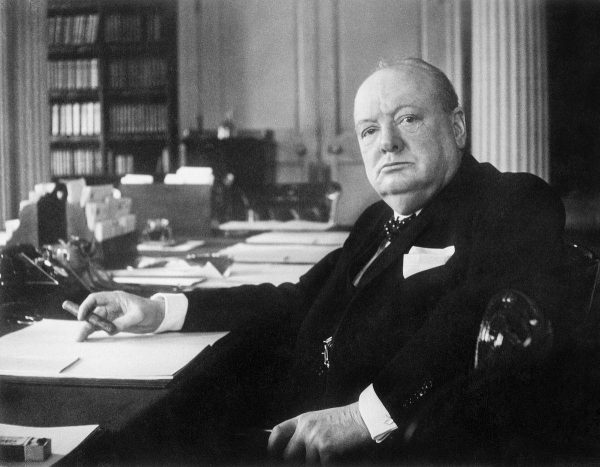
The main air raid was followed by three more similar raids in daylight but now by the U.S. 8th Air Force. The Allied (in fact, the U.K.−U.S.) Supreme Commander-In-Chief the U.S. a five-star General Dwight D. Eisenhower (1890−1969) was anxious to link the Allied forces with the very advancing Soviet Red Army in the South Germany. For that reason, Dresden suddenly came to be taken into consideration as a point of high strategic importance as a communication center, at least at the eyes of Eisenhower. However, at that time Dresden was known as a city that was overcrowded with up to 500,000 German refugees from the east. For the U.K.−U.S. Supreme Command Headquarters it was clear that any massive air-bombing of the city would cost many human lives and cause a human catastrophe. That was not primarily only on Eisenhower’s conscience to decide to launch massive airstrikes on Dresden or not as we have not to forget that Eisenhower was only a military commander (a strategy in Greek) but not a politician. Undoubtedly, the Dresden question in January−February 1945 was of a political and human nature not only of military one. Therefore, together with the Supreme Commander-In-Chief of the Allied Forces a direct moral and human responsibility for the 1945 Dresden Massacre was on the British PM Winston Churchill (1874−1965) and the U.S. President Franklin D. Roosevelt (1882−1945) also.
These three men, however, finally agreed that inevitably very high casualties in Dresden might in the end, nevertheless, help to shorten the war, that from a technical point of view was true. During one night and one day of the raids there were over 30,000 buildings destroyed and the numbers of those who were killed in the bombing and the ensuing firestorm are still in dispute among historians as the estimates go up to 140,000. Here it has to be noticed that if this highest estimate is going to be true it means that during the 1945 Dresden Massacre more people were killed than in the Hiroshima case from August 1945 (around 100,000 that was one third out of total Hiroshima’s pre-bombing population).
The “Bomber Harris” and the “Atomic Harry”
One person with direct responsibility for transforming Dresden into an open-air crematorium, as the city was bombed by forbidden flammable bombs for massive destruction (Saddam Hussein was attacked in 2003 by the NATO’s alliance under the alleged and finally false accusation to possess exactly such weapons – WMD) is “Bomber Harris” – a commander of the British Royal Air-Forces during the Dresden Raid. “Bomber Harris” was in fact Arthur Travers Harris (1892−1984), a Head of the British Bomber Command in 1942−1945. He was born in Cheltenham, joined the British Royal Flying Corps in 1915, before fighting as a soldier in the South-West Africa. He became a Commander of the Fifth Group from 1939 till 1942 when he became the Head of this Group (Bomber Command). The point is that it was exactly Arthur Travers Harris who stubbornly required and defended the massive aerial bombing of Germany under the idea that such practice will bring the total destruction of Germany (including and civil settlements) that would finally force Germany to surrender without involving of the Allied forces in a full-scale overland military invasion. The crucial point is that this “Bomber Harris” strategy received full support from British PM Winston Churchill who, therefore, became a politician who blessed and legitimized massive aerial massacres in the legal form of genocide as it was described in the post-WWII Charter of the UNO and other international documents on protection of human rights (for instance, the 1949 Geneva Conventions). Nevertheless, there were the “Bomber Harry”, Dwight Eisenhower, Franklin D. Roosevelt and Winston Churchill who transformed the bombing of selected targets as transport systems, industrial areas or oil refineries into the massive aerial destruction of the whole urban settlements, transforming them into the open-air crematoriums as was done for the first time in history with Dresden – a city with a rare historical heritage (today the pre-war Dresden would be on the UNESCO list of protected places of the world’s heritage) but flattened during one night and one day.[3]
Arthur Harris
This successful practice was very soon followed by the Allied forces in the cases of other German cities,[4] like Würtzburg – a tightly packed medieval housing city that exploded in a firestorm in March 1945 in one night with 90% of city-space which had no strategic importance destroyed.[5] However, a strategic bombing of the urban settlements in WWII reached its peak with the destruction of Hiroshima and Nagasaki under the order of the U.S. President (Democrat) Harry Truman – “Atomic Harry” (1884−1972) who authorized the dropping of the atomic bombs over these two Japanese cities in order to end the war against Japan without further loss of U.S. military troops, insisting on unconditional surrender of Japan.[6]
“The Last Battle for Justice” and the “Butchers of Dresden”
Surely, one of the most obvious results of the WWII was “its unparalleled destructiveness. It was most visible in the devastated cities of Germany and Japan, where mass air bombing, one of the major innovations of the Second World War, proved much more costly to life and buildings than had been the bombing of Spanish cities in the Spanish civil war”.[7] For that and other reasons, we believe that many Allied military and civil top decision-making personalities from the WWII should have faced justice at the Nüremberg and Tokyo Trials together with Hitler, Eichmann, Pavelić and many others. However, it is an old truth that the winners are writing history and re-writing historiography. Therefore, instead of seeing Dwight Eisenhower, Winston Churchill, Franklin D. Roosevelt (FDR), Harry Truman or Arthur Travers Harris at the Nüremberg and Tokyo Trials’ courtrooms as indicted on such charges as crimes against humanity and genocide as were the German Nazi defendants, who included the NSDAP’s officials and high-ranking military officers along with the German industrialists, lawmen and doctors, we are even 73 years after WWII reading and learning politically whitewashed and embellished biographies of those war criminals who destroyed Dresden, Hiroshima or Nagasaki as national heroes, freedom fighters and democracy protectors.[8] For instance, in any official biography of Winston Churchill it is not written that he is responsible for the ethnic cleansing of the German civilians in 1945 but we know that the British PM clearly promised to the Poles to get after the war ethnically cleansed territory from the Germans.[9]
If the Nüremberg Trial, 1945−1949 was “The Last Battle” for justice,[10] then it was incomplete. Moreover, two the most ardent killers of Dresden – Churchill and Eisenhower were granted after the war by the second premiership and double-term presidency, respectively, in their countries.
There were many (Western) butchers in world history but only small fish (from the Balkans) are officially marked by such label.
Notes:
[1] On this issue, see more in [L. B. Kennett, A History of Strategic Bombing: From the First Hot-AirBaloons to Hiroshima and Nagasaki, Scribner, 1982].
[2] On Dresden’s history and architecture, see [W. Hädecke, Dresden: Eine Geschichte von Glanz, Katastrophe und Aufbruch, Carl Hanser Verlag, München−Vien, 2006; J. Vetter (ed.), Beautiful Dresden, Ljubljana: MKT Print, 2007].
[3] On the case of firebombing of Dresden, see more in [P. Addison, J. A. Crang (eds.), Firestorm. The Bombing of Dresden, 1945, Ivan R. Dee, 2006; M. D. Bruhl, Firestorm: Allied Airpower and the Destruction of Dresden, New York: Random House, 2006; D. Irving, Apocalypse 1945: The Destruction of Dresden, Focal Point Publications, 2007; F. Taylor, Dresden. Tuesday, February 13, 1945, HarpenCollins e-books, 2009; Charler River Editors, The Firebombing of Dresden: The History and Legacy of the Allies’ Most Controversial Attack on Germany, CreateSpace Independent Publishing Platform, 2014].
[4] On this issue, see more in [J. Friedrich, The Bombing of Germany 1940−1945, New York: Columbia University Press, 2006; R. S. Hansen, Fire and Fury: The Allied Bombing of Germany, 1942−1945, New York: Penguin Group/New American Library, 2009].
[5] On Würtzburg’s case, see [H. Knell, To Destroy a City: Strategic Bombing and its Human Consequences in World War II, Cambridge, MA: Da Capo Press/Pireus Books Group, 2003].
[6] On this issue, see more in [C. C. Crane, Bombs, Cities, & Civilians: American Airpower Strategy in World War II, Lawrence, Kansas: University Press of Kansas, 1993; A. C. Grayling, Among the Dead Cities: The History and Moral Legacy of the WWII Bombing of Civilians in Germany and Japan, New York: Walker & Company, 2007].
[7] J. M. Roberts, The New Penguin History of the World, Fourth Edition, London: Allien Lane an imprint of the Penguin Press, 2002, p. 965.
[8] See, for instance [R. Dallek, Harry S. Truman, New York: Henry Holt and Company, LLC, 2008; J. E. Smith, FDR, New York: Random House, 2008; S. E. Ambrose, The Supreme Commander: The War Years of Dwight D. Eisenhover, New York: Anchor Books A Division of Random House, Inc., 2012; A. D. Donald, Citizen Soldier: A Life of Harry S. Truman, New York: Basic Books, 2012; W. Manchester, P. Reid, The Last Lion: Winston Spencer Churchill: Defender of the Realm, 1940−1965, New York: Penguin Random House Company, 2013; B. Johnson, The Churchil Factor: How One Man Made History, London: Hodder & Stoughton Ltd, 2014; B. Harper, Roosevelt, New York City, Inc., 2014; P. Johnson, Eisenhower: A Life, New York: Viking/Penguin Group, 2014].
[9] T. Snyder, Kruvinos Žemės. Europa tarp Hitlerio ir Stalino, Vilnius: Tyto alba, 2011, p. 348 (original title: T. Snyder, Bloodlands. Europe Between Hitler and Stalin, New York: Basic Books, 2010).
[10] D. Irving, Nuremberg: The Last Battle, World War II Books, 1996.
Thousands of innocent children continue to fall victim to Saudi Arabia’s use of cluster bombs in aerial attacks on residential areas across the Yemen, corroborating assertions of violation of international law in the impoverished Arab country.
Derhim al-Tuheiti was playing in a farming field in an area in Yemen’s western coastal province of Hudaydah, located 150 kilometers southwest of the capital Sana’a, less than a week ago when he found an unexploded cluster bomb.
He took it home, believing it was a toy or a piece of scrap metal. All at once, like deafening firecrackers, explosions ripped through the building, seriously injuring Derhim, his mother and siblings.
“I was working outside my house to earn money and feed my family. I was in shock when I returned home. People told me all my family members, including my wife, had been transferred to hospital. Now my wife has a back injury, and has gone insane due to the shock,” Ahmed, father of the family, told Press TV.
Derhim was taken to the intensive care unit at al-Thawra Hospital, and had to undergo numerous surgeries. He had both lower legs amputated after the horrific incident.
“Doctors amputated his legs as they had grave shrapnel wounds. The cluster bomb had also seriously injured his head, and paralyzed the right side of his body,” Doctor Khlowd M Doublah stated.
Cluster munitions, which are banned by more than 100 countries, present an enormous danger to civilians.
Dropped from the air or fired from the ground, they are designed to break open in mid-air, releasing the sub-munitions over a wide area in a way that cannot discriminate between civilians and military targets.
Many of the sub-munitions fail to explode on impact and effectively become anti-personnel mines. Unexploded sub-munitions have the potential to remain lethal for years, posing a high risk to the civilian population, both during and after the conflict.
Cluster bombs are banned under the Convention on Cluster Munitions (CCM), an international treaty that addresses the humanitarian consequences and unacceptable harm caused to civilians by cluster munitions through a categorical prohibition and a framework for action.
At least 13,600 people have been killed since the onset of Saudi Arabia’s military campaign against Yemen in 2015. Much of the country’s infrastructure, including hospitals, schools and factories, has been reduced to rubble due to the war.
The Saudi-led war has also triggered a deadly cholera epidemic across Yemen.
A picture taken on February 5, 2018, shows a man standing next to the Yemeni criminal investigations unit in the capital Sana’a, a day after it was hit in a Saudi air raid. (Photo by AFP)
According to the World Health Organization’s latest tally, the cholera outbreak has killed 2,167 people since the end of April 2017 and is suspected to have infected 841,906.
In November 2017, the United Nations children’s agency, UNICEF, said more than 11 million children in Yemen were in acute need of aid, stressing that it was estimated that every 10 minutes a child died of a preventable disease there.
Additionally, the UN has described the current level of hunger in Yemen as “unprecedented,” emphasizing that 17 million people were food insecure in the country.
The world body says that 6.8 million, meaning almost one in four people, do not have enough food and rely entirely on external assistance.
Wracked by allegations of ad fraud and tax evasion, Newsweek’s senior editors are resigning and it looks like the whole organization is falling apart… But from this chaos has emerged a tiny sliver of truth amidst the torrent of MSM lies. Could this be a sign that the truth will out when the editorial gatekeepers fall, or is this a mere glitch in the matrix? Stay tuned.
By Kevin Barrett | Crescent | Dhu al-Qa’dah 24, 1445
In corporate America, hostile takeovers are commonplace. They occur when an aggressor—a larger corporation or rich individuals—seizes control of a smaller corporation without asking permission.
What few recognize is that the United States itself has been subjected to a hostile takeover. Since the aggressor, the illegitimate settler colony known as “Israel,” is much smaller than the US, the takeover has necessarily been surreptitious.
As of June, 2024, Israel’s gradual takeover of the US has become obvious and undeniable—a proverbial “elephant in the living room.” … continue
This site is provided as a research and reference tool. Although we make every reasonable effort to ensure that the information and data provided at this site are useful, accurate, and current, we cannot guarantee that the information and data provided here will be error-free. By using this site, you assume all responsibility for and risk arising from your use of and reliance upon the contents of this site.
This site and the information available through it do not, and are not intended to constitute legal advice. Should you require legal advice, you should consult your own attorney.
Nothing within this site or linked to by this site constitutes investment advice or medical advice.
Materials accessible from or added to this site by third parties, such as comments posted, are strictly the responsibility of the third party who added such materials or made them accessible and we neither endorse nor undertake to control, monitor, edit or assume responsibility for any such third-party material.
The posting of stories, commentaries, reports, documents and links (embedded or otherwise) on this site does not in any way, shape or form, implied or otherwise, necessarily express or suggest endorsement or support of any of such posted material or parts therein.
The word “alleged” is deemed to occur before the word “fraud.” Since the rule of law still applies. To peasants, at least.
Fair Use
This site contains copyrighted material the use of which has not always been specifically authorized by the copyright owner. We are making such material available in our efforts to advance understanding of environmental, political, human rights, economic, democracy, scientific, and social justice issues, etc. We believe this constitutes a ‘fair use’ of any such copyrighted material as provided for in section 107 of the US Copyright Law. In accordance with Title 17 U.S.C. Section 107, the material on this site is distributed without profit to those who have expressed a prior interest in receiving the included information for research and educational purposes. For more info go to: http://www.law.cornell.edu/uscode/17/107.shtml. If you wish to use copyrighted material from this site for purposes of your own that go beyond ‘fair use’, you must obtain permission from the copyright owner.
DMCA Contact
This is information for anyone that wishes to challenge our “fair use” of copyrighted material.
If you are a legal copyright holder or a designated agent for such and you believe that content residing on or accessible through our website infringes a copyright and falls outside the boundaries of “Fair Use”, please send a notice of infringement by contacting atheonews@gmail.com.
We will respond and take necessary action immediately.
If notice is given of an alleged copyright violation we will act expeditiously to remove or disable access to the material(s) in question.
All 3rd party material posted on this website is copyright the respective owners / authors. Aletho News makes no claim of copyright on such material.




 Aletho News
