Since the early 1980’s the USDA Dietary Guidelines for Americans have urged trusting Americans to eat a low-fat high-carbohydrate diet for their health and weight control. Since then, there has been an alarming increase in chronic diseases such as cancer and diabetes. In addition, obesity rates have shot up to 30%, and more than 70% of Americans are overweight.
Can the dietary guidelines be to blame?
Many experts believe that the USDA and other government agencies have stubbornly disregarded the science and continued a 30-year long nutrition experiment on Americans that has had disastrous results.
Nutrition experts from The Healthy Nation Coalition, which includes the Weston A. Price Foundation, the Salt Institute, and the Nutrition and Metabolism Society, have voiced concerns about the current USDA Dietary Guidelines issued in 2010. They criticize the guidelines for perpetuating the wrong-headed advice to eat a low-fat diet, high in processed grains and cereals, which has contributed to the current obesity and health crisis.
What’s wrong with the government’s nutrition advice?
Dietary guidelines are a creation of politics and not science. Critics claim that the 2010 USDA Dietary Guidelines Committee ignored scientific research that validates low-carbohydrate diets for weight loss and improved health. Low-carb diets generally recommend 60 to 120 grams of unprocessed carbohydrates per day, although some provide more, and some as little as 20 grams.
Besides encouraging people to eat processed carbohydrates such as cereal, rice, pasta and bread, the guidelines have made Americans fearful of eating real natural whole foods such as whole milk, cheese, red meat, eggs, salt, butter and full-fat yogurt. As a result, Americans have stocked their pantries with processed fake soy meats, vegetable oils, margarine and skimmed dairy products, all of which are depleted or completely devoid of key nutrients, such as vitamins D, A, K and choline.
The Campaign Against Saturated Fats
Sally Fallon Morell, president of the Weston A. Price Foundation, faults the guidelines for continuing to demonize saturated fats based on unsound science. The most recent guidelines reduce the recommended intake of saturated fats from 10% of calories to less than 7%.
The proposed 2010 USDA Dietary Guidelines perpetuate the mistakes of previous guidelines in demonizing saturated fats and animal foods rich in saturated fatty acids such as egg yolks, butter, whole milk, cheese, fatty meats like bacon and animal fats for cooking. The current obesity epidemic emerged as vegetable oils and refined carbohydrates replaced these healthy, nutrient-dense traditional fats. Animal fats supply many essential nutrients that are difficult to obtain from other sources,” explained Ms. Morell in a press conference sponsored by the Healthy Nation Coalition.
Ms. Morell noted that for the past 60 or 70 years, saturated fats have been blamed for clogging arteries, and for causing heart disease, diabetes and even multiple sclerosis. None of these accusations is based on sound science she says.
Health Benefits of Saturated Fats
On the other hand, Ms. Morell points out the critical roles that saturated fats play in the body, including:
- Make up 50% of cell membranes
- Help the body put calcium in the bones
- Lower Lp(a), a marker for heart disease
- Protect the liver from alcohol and other poisons
- Are required for lung and kidney function
- Enhance the immune system
- Work together with essential fatty acids
- Support the body’s detoxification mechanisms
The government’s rationale for promoting a low-fat diet is the belief that fat makes us fat. Ms. Morell cites, however, the famous Framingham Heart Study which demonstrated that those eating more saturated fat, more cholesterol and more calories actually had lower blood serum cholesterol levels, weighed less and were more physically active.
In addition, a 1965 British heart study showed that heart attack survivors eating a saturated fat diet lived longer than those eating a diet of polyunsaturated or mono-unsaturated vegetable oils.
Finally, she cites a study of European countries which found that countries in which the population ate a diet high in saturated fats had lower rates of heart disease and those eating a low saturated fat diet had higher rates of heart disease.
The government and nutrition experts often lump saturated fats in with trans fats. Even worse, the fear of saturated fats has led many to replace the butter in their diets with trans fat laden margarine. Since 1926, Ms. Morell points out, use of butter in the U.S. has plummeted and at the same time rates of cancer and cardiovascular disease have skyrocketed.
Other “grave concerns” with the guidelines include
- Restriction of dietary cholesterol to 300 mg per day (less than 2 eggs);
- Restriction of sodium to 1,500 mg per day (2/3 of a teaspoon of salt);
- Promotion of low-fat milk and lean meats;
- Use of meat substitutes in federally funded school lunches; and
- Absence of any restrictions on refined carbohydrates and sweeteners in school meals.
Ms. Morell warned that the harm resulting from these misguided recommendations fall disproportionately on the nation’s children who will be fed these nutrient poor, fat inducing diets every day at school. And that is a tragedy.
February 28, 2013
Posted by aletho |
Deception, Science and Pseudo-Science, Timeless or most popular | Framingham Heart Study, Health, Human nutrition, Low-fat diet, Nutrition, Saturated fat, United States Department of Agriculture, Weston A. Price Foundation |
Leave a comment
British Prime Minister David Cameron stood on the Indian soil recently, expressing condolences on the Amritsar massacre, the bloodbath of unarmed civilians in 1919. But Britain had committed far more shameful crimes against this former colony which no condolence could ever cleanse.
Britain’s testing poisonous gas on Indian soldiers before WWII is among the most notorious atrocities in Britain’s colonial history, leaving hundreds of Indians dead and the surviving victims severely injured.
According to the discovered National Archive documents, British military scientists from the Porton Down chemical warfare establishment in Wiltshir sent Indian soldiers into gas chambers to test mustard gas during more than a decade of experiments that began in the early 1930s before the Second World War.
The experiments, which took place in Rawalpindi military site, now in Pakistan, aimed at determining the amount of poison gas needed to produce a casualty on the battlefield.
According to the revealed document, these tests were part of a much larger program intended to test the effects of chemical weapons on human beings.
Being exposed to mustard gas, many Indian soldiers suffered severe burns on their skin, including their genitals, leaving them in pain for days and even weeks. Some had to be treated in hospital but British military did not even check up on the victims to see if any illnesses were developed.
“Severely burned patients are often very miserable and depressed and in considerable discomfort, which must be experienced to be properly realized,” the scientists wrote.
It is now recognized that mustard gas can cause cancer and severe damage to health.
But this is not the end of the story. More than 20,000 British soldiers were also subjected to nerve gas and mustard gas trials at Porton between 1916 and 1989, many of whom say they were deceived to take part in the experiments.
This question comes to one’s mind, how can Britain be an advocate of human rights in Afghanistan, Iraq, Syria, and many other countries around the world, while the country has the poorest record of human rights violations all through its disgraceful history?!
February 28, 2013
Posted by aletho |
Ethnic Cleansing, Racism, Zionism, Timeless or most popular, War Crimes | Britain, David Cameron, Porton Down, Winston Churchill |
Leave a comment
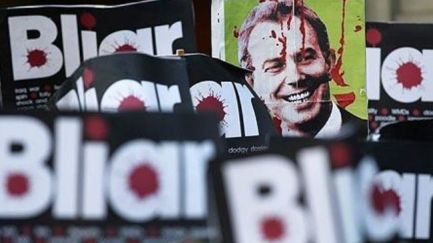
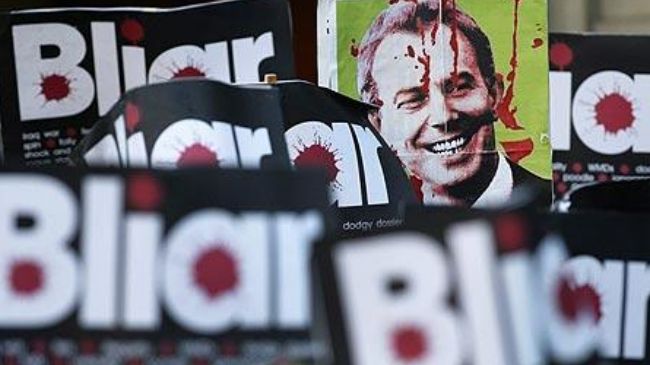
Former British Prime Minister Tony Blair, who is globally discredited for his war crimes, has tried to defend his decision to invade Iraq in 2003, claiming the country is a “safer place” after the execution of dictator Saddam Hussein.
In an interview on BBC2’s Newsnight marking the tenth anniversary of UK armed forces joining a US-led invasion of Iraq, he said despite the death toll among both British troops and Iraqi civilians being “very, very high”, the decision to wage a war against the Arab country was the right one.
He also conceded people are still “very abusive” to him years after the war on Iraq, adding that he had given up trying to “persuade people it was the right decision”.
Being asked if he minded being called a “liar” and “war criminal”, former leader of Britain’s Labour party said it did not matter whether the controversy about Iraq had “taken a toll on” him.
Moreover, he admitted that life in Iraq today was not what he had hoped for 10 years ago.
His comments come as hundreds of thousands were killed and injured in illegal interventions, and hundreds of thousands more were made refugees between 1997 and 2007, under Blair’s premiership.
Meanwhile, according to a recent Guardian/ICM poll a decade after the invasion of Iraq, the majority of Britons believe that the war “sold on a false prospectus delivered little but bloodshed.”
In 2003, the US and Britain invaded Iraq in blatant violation of international law and under the pretext of finding weapons of mass destruction (WMD) allegedly stockpiled by the former Iraqi ruler. However, no WMD were ever discovered in Iraq.
More than one million Iraqis were killed as a result of the invasion and subsequent occupation of the country, according to the California-based investigative organization Project Censored.
February 27, 2013
Posted by aletho |
Illegal Occupation, Militarism, Supremacism, Social Darwinism, Timeless or most popular, War Crimes | 2003 invasion of Iraq, Iraq, Iraq War, Tony Blair |
Leave a comment
An Interview With Marshall Sahlins
Last Friday, esteemed University of Chicago anthropologist Marshall Sahlins formally resigned from the National Academy of Sciences (NAS), the United States’ most prestigious scientific society.
Sahlins states that he resigned because of his “objections to the election of [Napoleon] Chagnon, and to the military research projects of the Academy.” Sahlins was elected to the National Academy of Sciences in 1991. He issued the below statement explaining his resignation:
“By the evidence of his own writings as well as the testimony of others, including Amazonian peoples and professional scholars of the region, Chagnon has done serious harm to the indigenous communities among whom he did research. At the same time, his “scientific” claims about human evolution and the genetic selection for male violence–as in the notorious study he published in 1988 in Science–have proven to be shallow and baseless, much to the discredit of the anthropological disciple. At best, his election to the NAS was a large moral and intellectual blunder on the part of members of the Academy. So much so that my own participation in the Academy has become an embarrassment.
Nor do I wish to be a party to the aid, comfort, and support the NAS is giving to social science research on improving the combat performance of the US military, given the toll that military has taken on the blood, treasure, and happiness of American people, and the suffering it has imposed on other peoples in the unnecessary wars of this century. I believe that the NAS, if it involves itself at all in related research, should be studying how to promote peace, not how to make war.”
Napoleon Chagnon rose to fame after his fieldwork among the Yanomami (also known as Yanomamo) in the rainforests of northeastern South America’s Orinoco Basin in the 1960s and 70s. He wrote a bestselling ethnography used in introductory anthropology classes around the world, describing the Yanomami as “the fierce people” because of the high levels of intra- and inter-group warfare observed during his fieldwork, warfare that he would describe as innate and as representing humankind in some sort of imagined natural state.
Chagnon, is currently basking in the limelight of a national book tour, pitching a memoir (Nobel Savages) in which he castes the bulk of American anthropologists as soft-skulled anti-science postmodern cretins embroiled in a war against science.
The truth is that outside of the distortion field of the New York Times and a few other media vortexes, there is no “science war” raging in anthropology. Instead the widespread rejection of Chagnon’s work among many anthropologists has everything to do with the low quality of his research. On his blog, Anthropomics, anthropologist Jon Marks recently described Chagnon as an “incompetent anthropologist,” adding:
“Let me be clear about my use of the word “incompetent”. His methods for collecting, analyzing and interpreting his data are outside the range of acceptable anthropological practices. Yes, he saw the Yanomamo doing nasty things. But when he concluded from his observations that the Yanomamo are innately and primordially “fierce” he lost his anthropological credibility, because he had not demonstrated any such thing. He has a right to his views, as creationists and racists have a right to theirs, but the evidence does not support the conclusion, which makes it scientifically incompetent.”
The widely shared rejection of Chagnon’s interpretations among anthropologists comes from the shoddy quality of his work and the sociobiological nature of his analysis, not with an opposition to science.
Among Chagnon’s most dogged critics was my dissertation chair, anthropologist Marvin Harris, himself an arch positivist and a staunch advocate of the scientific method, yet Harris rejected Chagnon and his sociobiological findings in fierce academic debates that lasted for decades, not because Harris was anti-science, but because Chagnon was a bad scientist (I should note that Harris and Sahlins also famously feuded over fundamental theoretical differences; yet both shared common ground objecting to the militarization of the discipline, and rejecting Chagnon’s sociobiological work).
I suppose if there really were battles within anthropology between imagined camps embracing and rejecting science, I would be about as firmly in the camp of science as anyone; but if such divisions actually existed, I would be no closer to accepting the validity and reliability (the hallmarks of good science) of Chagnon’s findings than those imagined to reject the foundations of science.
In 2000, there was of course a huge painful crisis within the American Anthropological Association following the publication of Patrick Tierney’s book Darkness in El Dorado, in which numerous accusations of exploitation (and worse) were leveled against Chagnon and other anthropologists working with the Yanomami (see Barbara Rose Johnston’s essay on the José Padilha’s film, Secrets of the Tribe). Without detailing all the twists and turns involved in establishing the wreckage of Chagnon and the paucity of his claims, suffice it to say that the choice of offering one of the select seats in the National Academy of Sciences’ Section 51 to Dr. Chagnon is an affront to a broad range of anthropologists, be they self-identified as scientists or not.
Marshall Sahlins’ resignation is an heroic stand against the subversion of science to those claiming an innate nature of human violence, and a stand opposing the increasing militarization of science. While Sahlins’ credentials as an activist opposing the militarization of knowledge are well established—he is widely recognized as the creator of the “teach-in,” organizing the February 1965 University of Michigan teach-in—it still must have been difficult for him to resign this prestigious position.
In late 1965 Sahlins traveled to Vietnam to learn firsthand about the war and the Americans fighting it, work that resulted in his seminal essay “The Destruction of Conscience in Vietnam.” He became one of the clearest and most forceful anthropological voices speaking out against efforts (in the 1960s and 70s, and in again in post-9/11 America) to militarize anthropology.
In 2009 I was part of a conference at the University of Chicago critically examining renewed efforts by U.S. military and intelligence agencies to use anthropological data for counterinsurgency projects. Sahlins’ paper at the conference argued that, “in Vietnam, the famous anti-insurgency strategy was search and destroy; here it is research and destroy. One might think it good news that the military’s appropriation of anthropological theory is incoherent, simplistic and outmoded – not to mention tedious – even as its ethnographic protocols for learning the local society and culture amount to unworkable fantasies. ”
Yesterday, Sahlins sent me an email that had been circulated to NAS Section 51 (Anthropology) members, announcing two new “consensus projects” under sponsorship of the Army Research Institute. The first project examined “The Context of Military Environments: Social and Organizational Factors,” the second, “Measuring Human Capabilities: Performance Potential of Individuals and Collectives.” Reading the announcement of these projects forwarded by Sahlins, it is apparent that the military wants the help of social scientists who can streamline military operations, using social science and social engineering to enable interchangeable units of people working on military projects to smoothly interface. This seems to be increasingly becoming the role Americans see for anthropologists and other social scientists: that of military facilitator.
Below is the exchange, I had with Sahlins yesterday discussing his resignation, Chagnon’s election to the National Academy of Sciences, and the Academy’s links to military projects.
Price: How has Chagnon so successfully turned numerous attacks on his ethically troubling research and scientifically questionable methods and findings into what is widely seen as an attack on science itself?
Sahlins: There has been no address of the issues on Chagnon’s part, notably of the criticism of his supposed empirical results, as in the 1988 Science article, and the numerous criticisms from Amazonian anthropologists of his shallow ethnography and villainously distorted portrayal of Yanomami. These Cro-Chagnon scientists simply refuse to discuss the facts of the ethnographic case. Instead they issue ad hominem attacks–before it was against the Marxists, now it is the ‘fuzzy-headed humanists.’ Meanwhile they try to make it an ideological anti-science persecution–again ironically as a diversion from discussing the empirical findings. Meanwhile the serious harm, bodily and emotionally, inflicted on the Yanomami, plus the reckless instigation of war by his field methods, are completely ignored in the name of science. Research and destroy, as I called the method. A total moral copout.
Price: Most of the publicity surrounding your resignation from the National Academy of Sciences focuses either exclusively on Napoleon Chagnon’s election to the Association, or on the supposed “science wars” in anthropology, while little media attention has focused on your statements opposing the NAS’s increasing links to military projects. What were the reactions within NAS Section 51 to the October 2012 call to members of the Academy to conduct research aimed at improving the military’s mission effectiveness?
Sahlins: The National Association of Science would not itself do the war research. It would rather enlist recruits from its sections–as in the section 51 memos–and probably thus participate in the vetting of reports before publication. The National Research Council organizes the actual research, obviously in collaboration with the NAS. Here is another tentacle of the militarization of anthropology and other social sciences, of which the Human Terrain Systems is a familiar example. This one as insidious as it is perfidious.
Price: Was there any internal dialogue between members of NAS Section 51 when these calls for these new Army Research Institute funded projects were issued?
Sahlins: I was not privy to any correspondence, whether to the Section officers or between the fellows, if there was any–which I don’t know.
Price: What, if any reaction have you had from other NAS members?
Sahlins: Virtually none. One said I was always opposed to sociobiology
Price: To combine themes embedded in Chagnon’s claims of human nature, and the National Academy of Sciences supporting to social science for American military projects; can you comment on the role of science and scientific societies in a culture as centrally dominated by military culture as ours?
Sahlins: There is a paragraph or two in my pamphlet on The Western Illusion of Human Nature, of which I have no copy on hand, which cites Rumsfeld to the effect (paraphrasing Full Metal Jacket) that inside every Middle eastern Muslim there’s an American ready to come out, a self-interested freedom loving American, and we just have to force it out or force out the demons who are perpetrating other ideas [see page 42 of Sahlins; The Western Illusions of Human Nature]. Isn’t American global policy, especially neo-con policy, based on the confusion of capitalist greed and human nature? Just got to liberate them from their mistaken, externally imposed ideologies. For the alternative see the above mentioned pamphlet on the one true universal, kinship, and the little book I published last month: What Kinship Is–And Is Not.
Price: You mention a desire to shift funding streams from those offering military support, to those supporting peace. Do you have any insight on how we can work to achieve this shift?
Sahlins: I have not thought about it, probably because the idea that the National Academy of Sciences would so such a thing is essentially unthinkable today.
There is a rising international response supporting Sahlins’ stance. Marshall shared with me a message he received form Professor, Eduardo Viveiros de Castro, of the National Museum, Rio de Janeiro, in which de Castro wrote,
“Chagnon’s writings on the Yanomami of Amazonia have contributed powerfully to reinforce the worst prejudices against this indigenous people, who certainly do not need the kind of stereotyping pseudo-scientific anthropology Chagnon has chosen to pursue at their cost. The Yanomami are anything but the nasty, callous sociobiological robots Chagnon makes them look – projecting, in all likelihood, his perception of his own society (or personality) onto the Yanomami. They are an indigenous people who have managed, against all odds, to survive in their traditional ways in an Amazonia increasingly threatened by social and environmental destruction. Their culture is original, robust and inventive; their society is infinitely less “violent” than Brazilian or American societies.
Virtually all anthropologists who have worked with the Yanomami, many of them with far larger field experience with this people than Chagnon, find his research methods objectionable (to put it mildly) and his ethnographic characterizations fantastic. Chagnon’s election to the NAS does not do honor to American science nor to anthropology as a discipline, and it also bodes ill to the Yanomami. As far as I am concerned, I deem Chagnon an enemy of Amazonian Indians. I can only thank Prof. Sahlins for his courageous and firm position in support of the Yanomami and of anthropological science.”
We are left to wonder what is to become of science, whether practiced with a capital (at times blind) “S” or a lower case inquisitive variety, when those questioning some of its practices, misapplications and outcomes are increasingly marginalized, while those whose findings align with our broader cultural values of warfare are embraced. The NAS’s rallying around such a divisive figure as Chagnon, demonizing his critics, claiming they are attacking not his practices and theories, but science itself damages the credibility of these scientists. It is unfortunate that the National Academy of Sciences has backed itself into this corner.
The dynamics of such divisiveness are not unique to this small segment of the scientific community. In his 1966 essay on, “The Destruction of Conscience in Vietnam,” Sahlins argued that to continue to wage the war, America had to destroy its own conscience—that facing those destroyed by our actions was too much for the nation to otherwise bear, writing: “Conscience must be destroyed: it has to end at the barrel of a gun, it cannot extend to the bullet. So all peripheral rationales fade into the background. It becomes a war of transcendent purpose, and in such a war all efforts on the side of Good are virtuous, and all deaths unfortunately necessary. The end justifies the means.”
It is a tragic state of affairs when good people of conscience see the only acceptable act before them to be that of resignation; but sometimes the choice of disassociation is the strongest statement one can courageously make.
David Price a professor of anthropology at Saint Martin’s University in Lacey, Washington. He is the author of Weaponizing Anthropology: Social Science in Service of the Militarized State published by CounterPunch Books.
February 26, 2013
Posted by aletho |
Deception, Science and Pseudo-Science, Timeless or most popular | Chagnon, Marshall Sahlins, Marvin Harris, Napoleon Chagnon, United States, United States National Academy of Sciences, University of Chicago, Ya̧nomamö |
Leave a comment
Foreign policy observers have long known that Hollywood reflects and promotes U.S. policies (in turn, is determined by Israel and its supporters). This fact was made public when Michelle Obama announced an Oscar win for Argo – a highly propagandist, anti-Iran film. Amidst the glitter and excitement, Hollywood and White House reveal their pact and send out their message in time for the upcoming talks surrounding Iran’s nuclear program due to be held tomorrow – February 26th.
Hollywood has a long history of promoting US policies. In 1917, when the United States entered World War I, President Woodrow Wilson’s Committee on Public Information (CPI) enlisted the aid of America’s film industry to make training films and features supporting the ‘cause’. George Creel, Chairman of the CPI believed that the movies had a role in “carrying the gospel of Americanism to every corner of the globe.”
The pact grew stronger during World War II, when, as historian Thomas Doherty writes, “[T]he liaison between Hollywood and Washington was a distinctly American and democratic arrangement, a mesh of public policy and private initiative, state need and business enterprise.” Hollywood’s contribution was to provide propaganda. After the war, Washington reciprocated by using subsidies, special provisions in the Marshall Plan, and general clout to pry open resistant European film markets.1
Hollywood has often borrowed its story ideas from the U.S. foreign policy agenda, at times reinforcing them. One of the film industry’s blockbuster film loans in the last two decades has been modern international terrorism. Hollywood rarely touched the topic of terrorism in the late 1960s and 1970s when the phenomenon was not high on the U.S. foreign policy agenda, in news headlines or in the American public consciousness. In the 1980s, in the footsteps of the Reagan administration’s policies, the commercial film industry brought ‘terrorist’ villains to the big screen (following the US Embassy takeover in Tehran – topic of Argo) making terrorism a blockbuster film product in the 1990s.
Today, whether Hollywood follows US policy or whether it sets it, is up for discussion. But it is abundantly clear that Hollywood is dominated by Israelis and their supporters who previously concealed their identity. According to a 2012 Haaretz article:
From the 1930s until the mid-1950s, Hanukkah never appeared on screen. This was because the Jewish studio heads preferred to hide their ethnic and religious heritage in attempting to widen the appeal of their products [emphasis added]. Jews were thus typically portrayed as participants in an American civil religion, whose members may attend the synagogue of their choice, but are not otherwise marked by great differences of appearance, speech, custom, or behaviour from the vast majority of American.
This is no longer the case.
In sharp contrast to its past, Hollywood “celebrated” Israel’s 60th “birthday” [occupation] with a Gala called “From Vision to Reality”. Israeli TV blog wrote of the Gala: ‘Don’t Worry Israel, Hollywood is behind you’. Actor Jon Voight said: “World playing a dangerous game by going against Israel”.
Israeli businessman and Hollywood producer Arnon Milchan, was a longtime weapons dealer and Israeli intelligence agent who purchased equipment for Israel’s nuclear program (the book, Confidential: The Life of Secret Agent Turned Hollywood Tycoon Arnon Milchan, written by Meir Doron and Joseph Gelman, recounts Milchan’s life story, his friendships with Israeli prime ministers, U.S. presidents and Hollywood stars).
It is important to understand Hollywood not only in the context of a multi-billion dollar industry, but the propaganda aspect of it and as one of the most powerful and universal methods of spreading ideas through visual propaganda. “Propaganda is defined as a certain type of messaging that serves a particular purpose of spreading or implanting a particular culture, philosophy, point of view or even a particular slogan”. With this capability, Hollywood owns the world of ideas on a scale too large and too dangerous to ignore – see this excellent example by Gilad Atzmon – Hollywood and the Past.
Atzmon writes:
History is commonly regarded as an attempt to produce a structured account of the past. It proclaims to tell us what really happened, but in most cases it fails to do that. Instead it is set to conceal our shame, to hide those various elements, events, incidents and occurrences in our past which we cannot cope with. History, therefore, can be regarded as a system of concealment. Accordingly, the role of the true historian is similar to that of the psychoanalyst: both aim to unveil the repressed. For the psychoanalyst, it is the unconscious mind. For the historian, it is our collective shame.
As Hollywood and the White House eagerly embrace “Argo” and its propagandist message, they shamelessly and deliberately conceal a crucial aspect of this “historical” event. The glitter buries the all too important fact that the Iranian students who took over the U.S. Embassy in Tehran, proceeded to reveal Israel’s dark secret to the world. Documents classified as “SECRET” revealed LAKAM’s activities. Initiated in 1960, LAKAM was an Israeli network assigned to economic espionage in the U.S. assigned to “the collection of scientific intelligence in the U.S. for Israel’s defense industry.2
As it stands, the purpose of the movie and its backers was to push the extraordinary revelations to the background while sending a visual message to the unsuspecting audience – to lay the blame of the potential (and likely) failure of the upcoming negotiations over Iran’s nuclear program on the Iranians — the gun-wielding, bearded Iranians of Argo who deserve America’s collective punishment and the crippling, deathly sanctions.
Soraya Sepahpour-Ulrich is a Public Diplomacy Scholar, independent researcher, and blogger with a focus on U.S. foreign policy and the role of lobby groups.
February 26, 2013
Posted by aletho |
Deception, Mainstream Media, Warmongering, Timeless or most popular, Wars for Israel | Hollywood, Iran, Israel, United States, Woodrow Wilson, World War II, Zionism |
Leave a comment
The Slocum Massacre
Last month marked the 90th anniversary of the Rosewood Massacre in Florida and calls a similar Texas slaughter to mind.
The 1923 Rosewood Massacre saw six blacks and two whites killed. The 1910 Slocum Massacre in East Texas saw 8-22 blacks killed and no whites. The Rosewood Massacre is remembered as a national tragedy, even receiving Hollywood treatment; the Slocum Massacre has become a dirty Lone Star secret, remarkable more for the inattention it’s received than its remembrance.
Unlike most Texas and Anderson County communities in the early 20th century, the unincorporated town of Slocum—like Rosewood—was mostly African-American, with several black citizens considerably propertied, and a few owning stores, businesses, etc. This alone, in parts of the south, might have been enough to foment violence. But in the Slocum area, which included the small towns of Ioni Creek, Priscilla and Denison Springs, there were other issues.
When a white man reportedly tried to collect a disputed debt from a well-regarded black citizen, a confrontation occurred and hard feelings lingered. When a regional road construction foreman put an African-American in charge of some local road improvements, a prominent white citizen named Jim Spurger was infuriated and became a vociferous agitator.
Rumors began to spread, warning of threats against Anglo citizens and plans for race riots. White malcontents manipulated the local Anglo population and, on July 29th, white hysteria transmogrified into bloodshed.
Stoked and goaded by Spurger and others, hundreds of Anglo citizens from all over Anderson County converged on Slocum armed with pistols, shotguns and rifles. That morning, near Saddlers Creek, they fired on three African-Americans headed to feed their cattle, killing 18-year-old Cleveland Larkin and wounding 15-year-old Charlie Wilson. The third, 18-year-old Lusk Holly, escaped, only to be shot at again later in the day while he, his 23-year-old brother Alex and their friend William Foreman, were fleeing to Palestine. Alex was killed and Lusk was wounded. Foreman fled and disappeared. Lusk pretended to be dead so a group of 20 white men would not finish him off.
White mobs marched through the area shooting black folks at will. A 30-year-old African-American named John Hays was found dead in a roadway and 28-year-old Sam Baker was shot to death in front of his house. When three of the Baker’s relatives (Dick Wilson, Jeff Wilson and a 70-year-old man named Ben Dancer) attempted to sit up with his body the following night, they, too, were gunned down in cold blood. According to an August 1 report in the Galveston Daily News, bloodstains at the residence indicated they were shot while relaxing on the front porch and then dragged inside.
In addition to the Anderson County murders, which occurred near the county line, Will Burley was killed in Houston County.
According to the August 1 edition of the Newark Daily Advocate, the mobs traveled from house to house, shooting African-Americans who answered their calls and slaughtering more while they tended their fields.
Every early newspaper report (in the New York Times, Galveston Daily News, Fort Worth Star-Telegram, et al.) on the transpiring bloodshed in and around Slocum portrayed the African-Americans as armed insurrectionists that the local Anglo community was simply defending itself against. These accounts were gross mischaracterizations. When district judges in Palestine closed saloons and ordered local gun and ammunition stores to stop selling their wares on July 30, it was not to quell a Black uprising; it was to defuse what the Galveston Daily News called an indescribable, one-sided “reign of terror” characterized by “a fierce manhunt in the woods” and resulting in “riddled bodies found on lonesome roads.”
When reporters gathered on July 31, up to two dozen murders had been reported and more were suspected, but local authorities only had eight bodies. Once the carnage had begun, hundreds of African-American’s had fled to the surrounding piney woods and local marshes. By the time the Texas Rangers and state militia arrived, there was no way to estimate the number of African-American dead.
On August 1, a few Texas Rangers and other white men gathered up six of the African American bodies and buried them (wrapped in blankets and placed in a single large box) in a pit four miles south of Slocum. Farther north, Marsh Holly, owner of a Slocum store and father of Alex and Lusk, was found on a road just outside Palestine. He was terrified and begged the authorities in Palestine for help, requesting that he be locked up in jail for protection. He identified himself as the well-regarded black citizen involved in the promissory note dispute, but denied that the affair comprised a serious provocation.
After the first several murders, much of the African-American community had been in various stages of flight, but this didn’t stop the white mobs. They shot down blacks they discovered in the countryside, even if they were clearing out. Two bodies found near the town of Priscilla still had travel bundles of food and clothing at their sides.
Anderson County Sheriff William H. Black said it would be “difficult to find out just how many were killed” because they were “scattered all over the woods.” He also admitted that buzzards would find many of the victims first, if at all.
It’s reasonable to suspect that after the initial bloodlust had subsided, some of the transgressors returned to the murder scenes to remove the evidence of their crimes. Certainly with the arrival of the press—and after early attempts at spinning the news reports to portray the African-American victims as armed insurrectionists had failed—the guilty Anglo contingents engaged in damage control efforts. But Sheriff Black was inexorable and unflinching.
“Men were going about killing Negroes as fast as they could find them,” Black told the New York Times. “And, so far as I was able to ascertain, without any real cause.”
“These Negroes have done no wrong that I can discover,” Black continued. “I don’t know how many [whites] were in the mob, but there may have been 200 or 300. Some of them cut telephone wires. They hunted the Negroes down like sheep.”
According to the local law enforcement leaders on hand at the time, eight casualties was a conservative number. Sheriff Black and others insisted there were at least a dozen more and some reports suggest there may have been dozens more. Frank Austin, the president of the First State Bank of Frankston, reported the death of an African-American named Anderson Austin near Slocum, but it was never investigated. Abe Wilson—who Houston County Justice of the Peace Pence Singletary identified as the African-American who had been put in charge of the local road improvements—disappeared and was never heard from again. Some witnesses counted 22 casualties. Elkhart native F. M. Power said there were 30 “missing negroes.” Slocum-area resident Luther Hardeman claimed to have knowledge of 18 African-American casualties, and that’s the original number reported by the Galveston Daily News and the New York Times (on July 31), but the body count seemed to shrink as the massacre’s publicity grew. A reliable fatality count was impossible, especially with the perpetrators likely covering their tracks. And the deceased weren’t the only folks becoming scarce; the surviving African-Americans began to disappear as well.
It was one thing to return to your home or your daily routine after the odd murder or infrequent lynching of one of your friends, neighbors or relatives—black folks in the south were not unused to that. But a localized campaign of genocide, where the executioners surrounded you and cut phone lines to prevent you from getting help? That was not something Slocum-area African-Americans could easily relegate to a list of bygones.
If the proverbial water under the bridge was auburn with African-American blood, home was no longer a place to remain attached or return to. And with a large contingent of the black community running for their lives, some victims went unidentified and some disappearances went unreported.
The arrival of the Texas Rangers and the state militia stabilized the situation or at least made it safe enough for many of the remaining African-Americans to pack their belongings and leave without being fired on. The saloons in Anderson County were re-opened for business at noon on August 1.
When a Galveston Daily News correspondent visited Lusk Holly and Charlie Wilson on July 31st (two days before their Grand Jury testimony), they were both suffering from incredible levels of pain due to the gunshot wounds they had received. The correspondent reported that their injuries would be “relieved only by death unless medical attention is speedily afforded.” Wilson had a fractured thigh, damage to one ankle and “glancing wounds through his chest.” Holly had 8-10 pieces of buckshot in his lower left abdominal area and damage to one arm. Physicians had perfunctorily treated their wounds when they were first discovered two days prior, but not since.
Wilson told the Galveston Daily News correspondent that he had recognized two of the assailants during the first shooting on July 29. Holly said that after he had been wounded in the second shooting later in the day, a different group of white men had come upon him while he pretended to be dead. He said he recognized the voice of a prominent, local farmer named Jeff Wise, who deemed his apparent and his brother’s actual death “a shame” as he passed by.
In the weeks and months following what came to be known as the Slocum Massacre, the African-American population made a mass exodus, leaving homes, properties, businesses and personal connections to the land and the community.
And the whites who perpetrated the massacre as active participants or passive bystanders?
At the initial Grand Jury hearing, nearly every remaining Slocum resident was subpoenaed; some residents refused to testify and were arrested. The Grand Jury judge, B. H. Gardner, of Palestine, told the all-male, all-white jury that the massacre was “a disgrace, not only to the county, but to the state” and it was up to them to do their “full duty.”
According to the August 2 edition of the Palestine Daily Herald, Judge Gardner attempted to clarify the charges and the issues at hand, explaining various statutes to the jury. He said that even if there had been threats or conspiracies “on the part of any number of Negroes to do violence to white persons, it would not justify anybody to take the law into their own hands.”
“The law furnishes ample remedy,” Gardner continued. “There is no justification for shooting men in the back, waylaying or killing them in their houses.”
When the Grand Jury findings were reported on August 17, several hundred witnesses had been examined. Though eleven men were initially arrested, seven were finally indicted, but only six were named—and they were only accused in the murders of five of the identified victims. Defendants Reagon McKenzie, T. W. Bailey and Morgan Henry were released without being charged. Jim Spurger was indicted in two cases, B. J. Jenkins in four cases and Curtis Spurger, Steve Jenkins, Isom Garner and Andrew Kirkwood in three cases. The seventh indicted man was not arrested or named; only Kirkwood was immediately granted bail. No one was ever indicted for the deaths of John Hays or Alex Holly.
After the Grand Jury indictments came down, Judge Gardner decided to move the trial for the indicted, identified perpetrators of the Slocum Massacre to Harris County, distrusting the potential jury of peers the defendants might receive in Anderson County. The indictments received no interest in Harris County.
On May 4, 1911, Judge Ned R. Morris of Palestine petitioned the Travis County Court of Criminal Appeals to grant bail for the remaining defendants and it was granted. Eventually, all those charged were released and none of the indictments were ever prosecuted.
In the meanwhile, the personal holdings of many Slocum area Anglo citizens fortuitously increased.
The abandoned African-American properties were absorbed or repurposed as the now majority white population saw fit. The standard southern Anglo-centric world order was restored, and this order has endured, even to the present day.
According to recent demographic statistics, most of the communities around Slocum have an African-American population that ranges between 20-25%. Grapeland’s is 35%, Rusk’s is 30% and Palestine’s and Alto’s is 25%. Slocum’s African-American population is just under 7%.
Today, Slocum is still an unincorporated community and that’s probably wise. If there was an elected civic leader or assembly in Slocum, they might be asked to apologize for the massacre or explain why there are no placards acknowledging the event or the American citizens who were slaughtered there and covered up in unmarked graves in the woods and creek bottoms.
On April 24, 1929, a tornado rolled through Slocum, leveling the town, killing seven and injuring 20. Organizations from all over East Texas went to great lengths to raise money for the victims and help the town get back on its feet. Though the Slocum Massacre’s casualties were greater and its African-American community’s coerced migration was arguably just as landscape-altering, the twister overshadowed the localized genocide of 1910, and the event is largely forgotten today.
In the Rosewood Massacre, six blacks and two whites were killed and a special, governor-appointed grand jury found no one to prosecute. In the Slocum Massacre, at least eight blacks were killed and no whites were even injured and, though seven men were indicted by a grand jury, none were ever prosecuted. In both cases, thriving African-American populations vacated their own communities to survive a racially-motivated bloodbath.
In the Rosewood Victims v. the State of Florida decision in 1994, Florida became the first U.S. State to compensate the victims and the descendants of victims of racial violence and, ten years later, the site of Rosewood was designated a Florida Heritage Landmark.
In Texas, the Slocum Massacre—which was at least as heinous as the Rosewood Massacre—hasn’t even received a historical marker. And there have been no investigations to determine the toll of the carnage, the extent of the personal losses or the exact number of victims.
On March 30, 2011, after a February 27 story on the Slocum Massacre in the Fort Worth Star Telegram (by Tim Madigan), the 82nd Texas Legislature adopted House of Representatives Resolution 865 (filed by Reps. Marc Veasey and Lon Burnam), acknowledging the Slocum Massacre of 1910. It admitted that a mob comprised of hundreds of armed white men in the Slocum area went on a “bloody rampage” that resulted in eight and perhaps many more African-American deaths, forcing the black community there to abandon their homes and properties and flee. The resolution concluded with flowery language stating that “only by shining a light on previous injustices can we learn from them and move forward,” but the little-publicized gesture hardly accomplishes that.
In testimony presented at the bail hearing on May 10, 1911, defense witness Alvin Oliver criticized the “insolent manner and conduct” of the blacks in that part of Anderson County after the lynching of an African-American in neighboring Cherokee County a couple of years before and brazenly noted that things were different after the massacre.
“The Negroes down there are not disbehaving now,” Oliver observed.
And he was right.
There were hardly any left.
E.R. Bills is a writer from Ft Worth, Texas. His recent works appear in Fort Worth Weekly, South Texas Nation, Fort Worth Star-Telegram, Fort Worth Magazine, etc. He can be reached at: erbillsthinks@gmail.com.
February 25, 2013
Posted by aletho |
Ethnic Cleansing, Racism, Zionism, Supremacism, Social Darwinism, Timeless or most popular | Florida, Rosewood Massacre, Slocum Massacre, Texas |
Leave a comment

By Doug E. Steil | Aletho News | February 25, 2013
Nearly ten years ago, on the eve of the Jewish festival of Purim, invoking the slaughter of Persians, an American student protesting house demolitions in Gaza, Rachel Corrie, was killed by a bulldozer (March 16, 2003).
Shortly after this festival had ended, the Iraq War, waged primarily on behalf of Israel — and still in progress on a more covert level — began on land amidst much media fanfare, including live television coverage. Around the time of the vernal equinox on March 20, 2003, multiple tank formations entered from staged positions in Kuwait, and even now there is still no end in sight to the ongoing slaughter of hundreds of thousands of innocent people in that region.
To commemorate and possibly even celebrate the tenth anniversary of this disastrous debacle, of “Neocon” inspired servitude to Zionism, Israel will welcome Obama on his first official state visit on March 20, yes, just at the time of the equinox (11:02 GMT), a key reference point used in astronomy, astronautics, and astrology.
Here is the planned itinerary:
Obama is scheduled to land in Ben Gurion International Airport around noon on Wednesday, March 20.
How symbolic!
This scripted event should not be lost on the alternative media. Ten years ago it used to be taboo to openly talk about the “War for Israel” because a large segment of the population was still enthralled by the lies (for instance, “Saddam’s weapons of mass destruction” and “war for oil”) the media deployed in order to trick them into supporting the operation. Now, after the lies have been exposed, it’s a brazen “in-your-face” attitude that is regularly on display, and Obama’s planned ceremonies in Israel next month will only highlight the obsequious stance of the US government vis-a-vis Israeli leaders dictating their demands.
Since the symbolism is important, though shameful, beware of “coincidence theorists” who will want to deny the intent of the timing!
February 25, 2013
Posted by aletho |
Ethnic Cleansing, Racism, Zionism, Militarism, Progressive Hypocrite, Timeless or most popular, Wars for Israel | Iraq War, Israel, Obama, Purim, Rachel Corrie, United States, Zionism |
Leave a comment
Leaving the scandal of horsemeat contamination of processed meat products behind, the British prime minister David Cameron flew to India for a three-day visit (February 18-20), boasting the largest-ever trade delegation he had led to a foreign country. The aim of young Cameron was to clinch multi-million pound deals with the world’s second most populous nation, and a vibrant and rising economy. The reasons behind his mission to India were domestic as well as foreign.
Cameron leads a wobbly government in coalition with the Liberal Democratic Party, which has all but abandoned many of its policies on civil liberties, minority rights, the nature of Britain’s relationship with the European Union and the welfare state. In essence, the Liberal Democrats, whose leader Nick Clegg has the title of deputy prime minister with no portfolio, have become the enablers keeping in power a Conservative Party that is itself fatally divided over how far right to move on some of the most fundamental issues.
Britain’s Conservative prime minister, his finance minister George Osborne, and a group of ministers to the right, are enforcing draconian cuts that, many experts complain, are making economic recovery more difficult. The Liberal Democrats have become supporters of war. A former Liberal Democrat leader, now a party grandee, Lord Paddy Ashdown, recently defended President Obama’s drone wars that, according to several authoritative studies including one by Stanford and New York Universities, have killed thousands of innocent people. In an astonishing defense of Obama’s “kill list,” Lord Ashdown asserted that the president’s policy had more accountability than ever before. A U.S. president secretly ordering to kill specific individuals, and others who happen to be in the targeted area, without Congressional or judicial scrutiny, is somehow “more accountable than ever”? One does not know what to say––except that power has clearly elevated Lord Ashdown and deputy prime minister Nick Clegg to a different planet.
Against this backdrop, Prime Minister Cameron went to India to seduce politicians in government and big business with a basket of offers. He reminded his hosts of India’s colonial links with Britain, and sought to press the Indian government to buy Eurofighters, in which Britain has a stake, instead of French multi-role combat planes already being negotiated. Cameron had been promising his party MPs that he would be pushing the deal aggressively, failing to realize that the Indians do not like being told by the British, especially by a Conservative prime minister. In such an event, the Indian response would likely be to buy from any one except India’s former colonial rulers.
Cameron leads a party which continues to live in the Churchillian past. He simply misread India’s historical development, and was badly advised as he embarked on his visit. Cameron failed to accept the reality that India, a country twenty times larger in population than the United Kingdom, was not a client state that could be pressured. The Indians would be courteous in welcoming him, but were quite capable of turning the tables, and would rebuff unwanted offers. The signs were there some while ago when India told Britain that it did not want a few hundred million pounds worth of British aid, describing it as “peanuts.” The British government’s increasingly hostile anti-immigrant rhetoric and policies to placate the political right at home were alienating many Indian residents and new students coming to Britain. The consequences of this went largely unnoticed in Cameron’s circle.
There is an unmistakable propensity in today’s Britain to blame “immigrants” and “asylum-seekers” for all the ills––from filth to chaos and crime in the streets, as well as unemployment among white Britons. Alienation and frustration of those less fortunate are alarming, but their causes are easier to explain. However, the eagerness of the political class to join in the chorus of xenophobic hysteria, and to craft legislation to placate the Right are much harder to understand because of the risks this entails. News reaches distant places with lightning speed in a globalized world. Indian students, increasingly better informed and direct, told the BBC, as Cameron sought to woo them, that they thought the British attitudes were a “little racist.” They would rather seek other destinations for education, or stay in their own country.
As he visited the historic Golden Temple of Amritsar and the nearby site of the 1919 Jallianwala massacre of hundreds of men, women and children, committed on the orders of General Reginald Dyer, Prime Minister Cameron described the episode as a “deeply shameful event.” But he stopped short of issuing an outright apology. That was not enough for historians and ordinary citizens alike in India. Among other questions raised was whether the British government would please return the Koh-i-noor to India. The world’s most precious diamond had been taken to Britain following the imperial power’s annexation of the Punjab into the Empire in 1849. For ten years prior to that, the British administrators had failed to execute the last will of the Punjab ruler Ranjit Singh, who had the diamond until his death. Cameron could not have agreed, so he said that he did not believe in “returnism.”
By the time the British prime minister met his Indian counterpart Manmohan Singh in Delhi, the deal to sell AgustaWestland helicopters to India seemed to have been scuppered. It was suggested to Cameron that Britain cooperate with the Indian authorities in providing more information about allegations that the Anglo-Italian helicopter manufacturer based in the United Kingdom had attempted to bribe influential figures to secure the deal with India. The British prime minister promised to do so, and returned home, leaving a “wish list” behind.
February 25, 2013
Posted by aletho |
Corruption, Economics, Timeless or most popular | Britain, Cameron, David Cameron, India, Liberal Democrat |
Leave a comment
The idea that British rule in India was a force for good is not uncommon in Britain and even in certain sections of westernised Indian elite. Read right-of-centre British newspapers and you will regularly find articles and columns that glorify Britain’s colonial past, giving the impression that Britain was spreading the light of Western Civilisation to the dark corners of the world. Many British history books still do their best to highlight the benefits that British rule brought to the numerous colonies, rather than the hardships.
Recently in an interview with the BBC, Niall Ferguson, a British historian who has recently produced a six-part documentary series for Channel 4, and also works in a research department at Oxford University, said that British rule greatly benefited the ruled nations and people.
To be sure, many white Britons, perhaps even the majority, think that the colonial era is not something to be proud of. But at the same time it must be acknowledged that the idea of British rule as benevolent is not just a fringe idea. In this light it is worth examining some facts about the British Raj that are seldom discussed in the media.
History is never black and white. There are benefits that come out of otherwise bad situations. In the case of India, British rule certainly did have some benefits, such as development of previously absent infrastructure. Of course, colonial historians such as Niall Ferguson will be fast to point this out:
By the 1880s the British had invested £270 million in India, not much less than one-fifth of their entire investment overseas.
But at what cost were these investments made? The pro-colonial authors miss out or even cover-up some basic points about the British Raj, which should be the foundation of any debate about the ‘merits’ of colonialism.
The economic devastation of India under British rule is discernible from the fact that India’s share of world trade fell from 17% percent in 1800 (almost equal to America’s share of world trade in 2000) to less than 2%. It is a very telling fact that during British rule of India, British per capita gross domestic product increased in real terms by 347 per cent, Indian by a mere 14 per cent. But even more important are the famine statistics of British-controlled India.
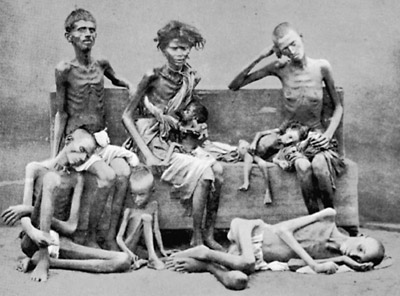
According to British records, one million Indians died of famine between 1800 and 1825, 4 million between 1825 and 1850, 5 million between 1850 and 1875 and 15 million between 1875 and 1900. Thus 25 million Indians died in 100 years! Since Independence, although poverty still exists, there have been no such mass famines, a record of which India should be proud. Funnily enough, there is no mention of this by pro-colonial authors. It is certainly a strange omission on their part and something they should be ashamed of. Perhaps not surprising as it would make British investment in India seem trivial and pointless by comparison. Any rational person would rather avoid millions of deaths than have a few railway tracks built and some land irrigated.
How did these famines occur? The main reason was not bad weather or natural causes but rather the breaking up of India’s indigenous crop patterns. The British replaced food crops such as rice and wheat and instead forced Indian farmers to produce jute, cotton, tea and oil seeds, which they needed as raw materials for their home industries. The implication of this in times of shortages was catastrophic, as the famine figures show.
Niall Ferguson also credits the British with labouring to improve India’s public health:
It was the British who introduced quinine as an anti-malarial prophylactic, carried out public programmes of vaccination against smallpox – often in the face of local resistance – and laboured to improve the urban water supplies that were so often the bearers of cholera and other diseases.
Once again, there is some truth in this, but also some omission, and some downright distortion. On the subject of smallpox vaccination, it is well documented that before the British arrived, Indians had a system of immunisation against smallpox, in which cowpox was used inoculate against smallpox. The British doctor J Z Holwell wrote a book in 1767 describing the system, accepting that it was safe and effective. European medicine did not have any treatment against the disease at that time.
Inoculation against smallpox became a part of Western medicine by 1840. No sooner did that happen that the British in India banned the older method of vaccination, denouncing it as barbaric, without making certain that sufficient number of inoculators in the new technique existed. Smallpox in India became a greater scourge than before. This is not the only example in which the British undermined and even banned indigenous systems of knowledge, particularly medicine, creating dire consequences.
In writing this article I am not trying to stir up bitterness. As I have mentioned, many if not most white Britons see colonialism as a dark part of their history, and refrain from glorifying it or acting triumphant over it. I am simply trying to combat the smug, celebratory version of Imperial history that is in vogue in some circles. This distorted version of history should be discarded into the dustbin of history.
This article is dedicated to the millions men, women and children, of India as well as other nations, who perished in unnecessary and avoidable famines during the colonial era.
February 24, 2013
Posted by aletho |
Deception, Mainstream Media, Warmongering, Timeless or most popular | Britain, British, British Raj, David Cameron, India, Niall Ferguson, Oxford University |
Leave a comment
Washington DC – The National Black Church Initiative (NBCI), a faith-based coalition of 34,000 churches comprised of 15 denominations and 15.7 million African Americans calls Obama’s policy on the right to kill Americans who are associated with terrorist organizations either at home or abroad murder, which constitutes evil in the Christian tradition. The Holy Scripture says, “THOU SHALT NOT KILL”.
Our founding fathers and decent, hard-working American find such policies irrational and without moral merit. The Obama Administration has us believe that terrorism is the greatest threat to humanity, and that they reserve the right through the secular American creed to kill anyone, anywhere, who they label part of a terrorist organization. This is why they spent 1 trillion dollars to go after ONE man. To make the point that we will kill you dead, and that is the creed of the American soul.
The church is trying to transform the evil mentality that exists in this country. That is our goal. We believe that the greatest threat to humanity are laws that assume moral absolutism to determine who lives and who dies. This is not only foolish in nature, this is destructive. Should we be reminded of the words of Jesus Christ, Mahatma Ghandi, and Martin Luther King, that violence can only beget more violence. There can never be a legal rationale that gives a government the right to destroy a human being that God created. Only God preserves that right for himself.
The Revered Anthony Evans says, “I do not know what to say after the pronouncement of this evil policy. This policy has led me to a life of prayer for the soul of this administration and for this President. Anyone who has had anything to do with formulating a policy like this either in the Bush or Obama administration will have to answer before God one day. May God have mercy on their souls.”
Rev Evans continued to ask where the outcry against such a policy is, saying “Where are the loud the mouths and the so-called drum majors for justice when it comes to correcting this president and this administration on this evil policy. Where are you Al Sharpton?? Where are you Jesse Jackson?? Where are you Ben Jealous?? Where are you John Lewis?? Where are you members of the Black caucus? Where are the Catholic bishops?? Where are you “The American Way”? Where are you Rev. Jim Wallis? Where are you Pastor T.D. Jakes? Pastor Creflo Dollar? Where are you Joseph Lowry? Where are the Southern Baptists? Where are you Pastor Joel Osteen? Where are you Dean Alton Pollard? If the church does not speak against this immoral policy we will lose our moral voice, our soul, and our right to represent and preach the gospel of Jesus Christ.”
The black church is not only appalled that this comes out of the administration of the only black president, but we are frightened by the monstrous tendencies that have emerged from this administration. The unleashing of the mechanical drones kill not only their target but everyone that is near who is morally innocent of any crime. The church’s heart cries out for mercy and sanity for such an ill-conceived policy. President Obama has to be roaringly condemned by the entire Christian church for allowing such a policy to emerge from such a promising administration.
NBCI cannot be proud of this, and neither can we be supportive of it. This policy should be condemned by both liberal and conservative and especially those who love mercy, do justice, and walk humbly before God.
About NBCI
The National Black Church Initiative (NBCI) is a coalition of 34,000 churches working to eradicate racial disparities in healthcare, technology, education, housing, and the environment. NBCI’s mission is to provide critical wellness information to all of its members, congregants, churches and the public. NBCI offers faith-based, out-of-the box and cutting edge solutions to stubborn economic and social issues. NBCI’s programs are governed by credible statistical analysis, science based strategies and techniques, and methods that work. Visit our website at www.naltblackchurch.com.
February 24, 2013
Posted by aletho |
Militarism, Progressive Hypocrite, Timeless or most popular, War Crimes | NBCI, Obama, United States |
Leave a comment
On Friday, February 15, the International Monetary Fund (IMF) announced that it had concluded its most recent Article IV consultation with Honduras. The Fund’s recommendations varied little from those it has offered many other countries in recent years: cut public spending, reduce deficits, reform pensions and depress wages.
The IMF regularly conducts Article IV consultations with almost all of its member countries—with Argentina, which since 2006 has refused to take part in the process, being one notable exception. The official reviews are a way for the Fund to present its analysis of each country’s economic prospects and to advocate for a set of reforms. While it is difficult to precisely assess the influence of the consultations, it has been noted that in many cases the recommended policies have been adopted against popular public opinion. And in countries that end up borrowing from the fund, these policies are often preconditions for receiving future IMF loans.
The Fund’s recommendations on Honduras diverged little from the policies it is pushing in many other countries. Below is a selection from the IMF’s brief (347-word, to be exact) Executive Board Assessment of its most recent consultation with Honduras:
Directors . . . underscored the need to tighten macroeconomic policies and press ahead with structural reforms . . .. [They] welcomed the planned reduction of the budget deficit in 2013, and urged early adoption of the measures needed to ensure this outcome and avoid further central bank borrowing or accumulation of domestic payments arrears. They called for sustained medium-term fiscal consolidation . . . [and] supported plans to restrain the public sector wage bill . . . and emphasized the importance of reducing energy subsidies . . .. Directors concurred that monetary policy should be tightened . . . [and] regarded plans to reform state-owned enterprises as critical to strengthen the fiscal position and support growth, and encouraged timely implementation . . . and welcomed the ongoing reform of public pension funds.
It is difficult to overlook how much this assessment resembles the Fund’s recommendations to European countries struggling to emerge from the global recession. CEPR co-director Mark Weisbrot and Senior Research Associate Helene Jorgensen recently released a paper analyzing 67 Article IV consultations for European member countries between 2008 and 2012, in which the authors found that the lending body was pushing a “one-size-fits-all” approach that often included pro-cyclical policy recommendations. In the paper Weisbrot and Jorgensen summarized their findings, in part, as follows:
This content analysis finds a consistent pattern of policy recommendations, which indicates (1) a macroeconomic policy that focuses on reducing spending and shrinking the size of government, in many cases regardless of whether this is appropriate or necessary, or may even exacerbate an economic downturn; and (2) a focus on other policy issues that would tend to reduce social protections for broad sectors of the population (including public pensions, health care, and employment protections), reduce labor’s share of national income, and possibly increase poverty, social exclusion, and economic and social inequality as a result.
Given the consistency of the Fund’s advice, one might think there are no alternatives to such prescriptions. But a look at Ecuador’s economy definitively tells us otherwise.
As detailed in a new paper by CEPR’s Weisbrot, Jake Johnston and Stephan Lefebvre (and noted recently on The Americas Blog), since Rafael Correa was sworn in as president in 2007, Ecuador’s government has taken an unorthodox approach to shoring up its macroeconomic standing. From bringing the Central Bank under the control of the executive branch, to taxing capital flight, to defaulting on illegitimate foreign debt, and launching new regulations on the financial industry, the Correa government repeatedly took steps that are antithetical to the IMF’s perspective and advice. The results? A reduction in unemployment to its lowest point on record, a 27% decline in poverty from its 2006 level, and an increase in government revenue from 26 to 40% of GDP over the same period, all in the context of greatly expanded spending on infrastructure, health, and education. The Ecuadorian example should be enough evidence that the IMF’s singular prescriptions are not the only option—in fact, they may be far worse than other “unconventional” approaches.
In the case of Honduras, it is perhaps worth noting that the IMF had a rocky response to the June 28, 2009, military coup that deposed Honduras’ democratically elected president Manuel Zelaya.
Exactly two months after Zelaya’s illegal ouster, which led most foreign governments and international lenders to freeze aid to Honduras, the IMF announced that it would extend $150.1 million in loans to the Central American country’s illegitimate government. Another $13.8 million was released just a week later. Yet on September 6, perhaps partly in response to criticism, the IMF released a statement saying the de facto government could not use the money “until a decision on whether the Fund deals with this regime or the government of Honduras.” That decision was finally made on September 24, when the IMF ordered that the funds would only be made available to the deposed president.
Despite the clumsiness of this decision and the mixed messages it sent the coup-government in Tegucigalpa, it marked an improvement over the Fund’s response to the 2002 coup that temporarily overthrew Venezuela’s socialist president Hugo Chavez. One day after the coup, a spokesman stated that the lending body stood “ready to assist the new administration in whatever manner they find suitable.”
February 21, 2013
Posted by aletho |
Economics, Timeless or most popular | Arthur Phillips, IMF, International Monetary Fund, Mark Weisbrot, Rafael Correa |
Leave a comment


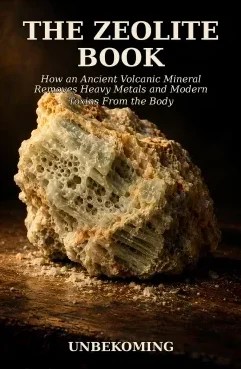 Zeolite is old. It is in Roman concrete that has held for two thousand years. It’s in the water filters of ancient cisterns. It’s in the stomachs of Pacific livestock whose keepers knew, somehow, that this grey crumbling rock made the animals healthier. It’s in Soviet clinical protocols from the 1960s. It’s in the standard emergency response to the Chernobyl explosion.
 Aletho News

