Israel is heading towards a profound internal crisis: a Jew on Jew confrontation, which, however, has major implications for its relations with Palestinians, as well as its Middle East neighbors. The conflict is between the highly militarized Zionist state and the Haredim religious movement over a number of issues, including recent proposals by Netanyahu to end the religious exemption of Haradi youth from serving in Israel’s colonial armed forces.
Haredim and the Zionist Colonial State
Even before the forcible imposition (‘founding’) of the Israeli state, the Haredim were opposed to Zionism. Today the vast majority of Haredim in Israel remain staunchly opposed to the Zionist state for religious, ethical and political reasons. Haredim religious teaching claims that the Jewish people are bound by three oaths (1) not to settle in Israel by using force (2) not to war with other nations and (3) not to act as if the nations of the world would persecute Israel. Haredim were in opposition to Israel’s violent ethnic cleaning of over 850,000 Palestinians in the course of establishing the Israeli State and continues to oppose Israel’s settlers’ violently dispossession of Palestinians. Unlike other so-called “ultra-Orthodox” sects, who support Israeli colonialism and bless the military, Haredim believe that Israeli militarism corrupts the spirit and that Zionists have converted Jews from worshipers of the Torah to rabid ethnocentric upholders of a militarist State. For the Haredim, State worship especially the waving of the Israeli flag in the houses of worship, is a sacrilege comparable to the renegade Jews condemned by Moses for worshiping the Golden Calf.
The majority of Haredim boycott elections, organize their own schools (Yeshivas), encourage students to deepen their religious studies, emphasize community and family values (of a oppressive patriarchal sort) with numerous children and strongly reject the State’s attempt to conscript Haredim youth into their colonial occupation army, the so-called Israeli Defense (sic) Force (IDF). All the major Zionist political parties and the ruling colonial regime demonize the Haredim, claiming they are shirking their military responsibilities. Via the mass media and public pronouncements they incite Israeli hatred toward the Haredim: a study in 2006 claimed that over a third of Israeli Jews considered the Haredim the most hated group in Israel.
The Haredim, on the other hand, have reason to fear and loath the secular militarist Zionist state and politicians. After World War II in the Zionist controlled camps for Jewish refugee children in Teheran, the Jewish Agency imposed Zionist ideology and militarist anti-religious policies to cut Haredim children from their spiritual roots. According to one Haredim report many groups of Jewish youth from Poland, mostly survivors of the Holocaust and Soviet Russia, were subjected to “unimaginable mental and physical cruelty with one goal in mind: obliteration of Judaism”. Given the Israeli drive today to harness a corrupted form of Judaism to colonial militarism, the Haredim have every reason to believe that the conscription of its youth will be accompanied by cruel, systematic Zionist brainwashing to ensure they make “good”, brutal occupation soldiers.
Haredim versus Israeli State Values
The Haredim fervently believe and practice in the Biblical teaching, “Be fruitful and multiply”. They have large families and the median age of Haredim is 16 years. Their peaceful message to militarist Zionists could be “make babies not bombs”.
Some Haredim leaders have met with Palestinian and Iranian leaders and in line with their religious doctrine have declared their support for peaceful resolution of conflicts and have denounced Israel’s aggressive military posture.
Haredim are intensely religious and discuss and debate the readings of some of the great religious scholars: their message to the Zionists is read Maimonides’ ethical treatises not Netanyahu’s bellicose, blood curdling rants.
Haredim live and study largely in the confines of their cohesive communities. They send their sons to the yeshivas to study religious doctrine not to the West Bank to kill Palestinians. They call on their children to serve G-d not the IDF. They seek truth in the Torah not in conquest via the Preventive War Doctrines espoused by prestigious Israeli and overseas Zionist academic militarists.
Haredim focus on building a better life within their community; they reject the efforts of the Zionist state to entice them into joining self-styled “Jewish” settlers engaged in vicious land grabs in the West Bank, in the name of “contributing to society (sic)”. Haredim’s ‘introverted way of life’ is seen as a prophylactic alternative to the crass militarism, money laundering, financial speculation, body parts enterprises and real estate swindles rife among the elite Jews in Israel and among sectors of overseas Zionists engaged in procuring multi-billion dollar tribute from the US Treasury.
Haredim believe, with exemplary evidence, that conscripting their youth into the Israeli colonial army would destroy their moral values, as they would be forced to grope Arab women at checkpoints, break the legs of stone throwing Palestinian children, defend lawless self-styled “Jewish” settlers scribbling obscene graffiti in mosques and churches … not to speak of the ill effects of what secular Israeli Jews call a “modern education”, full of historical fabrications about the origins of Israel, scientific readings on high tech war-making and “advanced” economic doctrines proclaiming the sacred role of the free market,and justifying the 60% poverty rate among Haredim as “self-induced”:
No, the Haredim demand that the Israeli Jewish elite stop trying to conscript their youth into the Army and practicing employment discrimination, which triples the unemployment rate among Haredim.
The Coming ‘Civil War’: Zionist State versus the Haredim
The elected leader Yair Lapid of newly formed Yesh Atid Party, dubbed a “centrist” by the New York Times and a ‘moderate’ by the leading ideologues of the Zionist “lobby”, ran on a platform of forcibly ending the Haredim exemption from conscription into colonial military service. Yair Lapid, in the run-up to joining a new Netanyahu coalition regime, has launched a vicious attack on Haredim. Lapid premises his agreement to joining Netanyahu’s war machine on forcibly confronting the Haredim leadership. Yair Lapid taps the class and secular resentments of Israel’s upwardly mobile youth who bitterly complain of having to serve in the army and delaying their money-making opportunities while the poor, semi-literate “blacks” (derogatory term for the clothing of Haredim) engage in “worthless studies” of the Torah. Lapid, using the same perverted logic as Netanyahu, claims that “Ten percent of the population cannot threaten 90 percent with civil war” (Financial Times, 2/14/13, p. 6.). The executioner (Lapid) accuses the victim (Haredim) of the violence he is about to commit. Yesh Atid, the “centrist party” (sic), has allied with Naftali Bennett’s neo-fascist Jewish Home Party (pushing for the annexation of all of Palestine) in support of smashing Haredim’s opposition to conscription. They hold veto power over the next cabinet. This rabid secular military assault has provoked the opposition and unity of other Zionist-religious parties. The Shahs and United Torah Judaism have taken up the defense of the Haredim.
Lines are being drawn far beyond a Haredim-Zionist State confrontation.
The Larger Meaning of the Haredim-Zionist Conflict
The Haredim hostility to the secular Zionist state is in part based on its opposition to military conscription thus calling into question Israeli militarism, in general, and specifically its policy of colonial occupation and regional aggression. While some Haredim may oppose conscription for religious reasons and seek exemption solely for its own youth, objectively, the effect is to undermine Israel’s violation of Palestinian rights and to call into question the entire apartheid system. By speaking to spiritual values, they deny the legitimacy of the idea of a Jewish police state based on force, violence, torture and disappearance of political prisoners. In their questioning of the institutional configuration upholding Jewish supremacy and Israel as the homeland of the Chosen People, they strike a powerful blow at the ideological underpinnings of the overseas activity of the Zionist power configuration. Their animosity to the fusion of Jewish chauvinism and religious rituals and the tribal deification of the Israeli state is counter-posed to their embrace of Moses Ten Commandments.
The Haredim study the teaching of the renowned Judaic philosophy Maimonides and abhor Zionist militaristic strategists like Walzer, Dershowitz, Kagan, Feith, Netanyahu, etc. who preach colonial “just war” doctrines. Representing 10% of the Israeli population and a far greater percentage of military age youth, the Haredim are in a position to sharply limit the scope of future Zionist wars. If they succeed in blocking conscription, they would provide a lasting contribution to making the world in general, and the Middle East in particular, a more secure and peaceful place to live.
Facing the prospect of a loss of future cannon fodder to sustain its colonial ventures, and in their frenzied attacks on the Haredim, the Israeli-Zionist elite have incited the majority of Israeli Jews to demonize them as ‘backward’, illiterate, freeloaders and to blame the religious curriculum for their growing and current 60% rate of poverty and high unemployment. Israel’s war machine needs fresh recruits to maintain its imperial quest for a Greater Israel. Demographics – with families exceeding five children –indicate the Haredim are likely to double their percentage of the Israeli population over the next two decades. Faced with the facts in the womb, the colonial expansionist imperative drives all the leading Zionist parties to end Haredim’s exemptions. In response Haredim leaders threaten to engage in massive civil disobedience if the Zionists impose conscription, rightly seeing conscription of its youth as an assault on its most profoundly held spiritual and family values and as an opening wedge in destroying community solidarity and reciprocal relations.
The Haredim share a common plight with Israel’s Arab population: both face increasing police harassment, discrimination, religious persecution and rising levels of poverty. A Haredim-Arab alliance would unite 30% of the population against a common secular militarist and plutocratic enemy. Farfetched as it seems on the subjective level, there are objective historical and structural processes which are driving the two groups together.
It is one of the great ironies of history that the world’s modern secular anti-imperialist movements should find their most consequential allies among Israel’s most traditional and deeply religious movement.
February 21, 2013
Posted by aletho |
Civil Liberties, Ethnic Cleansing, Racism, Zionism, Militarism, Timeless or most popular | Conscription |
Leave a comment
Israelis have been reveling in the prospect of an Oscar night triumph next week, with two Israeli-financed films among the five in the running for Best Documentary. But the country’s right-wing government is reported to be quietly fuming that the films, both of which portray Israel’s occupation of the Palestinian territories in a critical light, have garnered so much attention following their nominations.
Guy Davidi, the Israeli co-director of 5 Broken Cameras, one of the finalists, said industry insiders had warned him that pressure was being exerted on the Academy to stop the films winning the award.
“Many people in Hollywood are working very hard to make sure that neither film wins,” he said. “From Israel’s point of view, an Oscar would be a public relations disaster and mean more people get to see our films.”
The film is a searing account by Palestinian filmmaker Emad Burnat of a six-year period in his West Bank village during which the residents protested non-violently against an Israeli wall that cut off their farmland.
Israeli soldiers are shown beating, tear-gassing and shooting the villagers and solidarity activists.
The other Israeli-backed contender, The Gatekeepers, directed by Dror Moreh, features confessions by all six former heads of the Shin Bet, the main agency overseeing Israel’s occupation, since 1980. All are deeply critical of Israel’s rule over the Palestinians, with one even comparing it to the Nazis’ occupation of Europe.
Both films have won critical acclaim. This month The Gatekeepers won the Cinema for Peace Prize at the Berlin International Film Festival. The film has also been picked up by a major distributor, Sony Pictures Classics.
With the Israeli media abuzz over the country’s Oscar hopes, the columnist Gideon Levy observed: “This is not a matter of Israeli pride but rather of Israeli chutzpah. … Israel should be ashamed of what these movies bring to light.”
Despite the publicity, showings of the films in Israel have been mainly limited to circles of intellectuals and left-wing activists.
Davidi said requests to the education ministry to put 5 Broken Cameras on the civics curriculum had been rebuffed. That appears to be in line with official efforts to avoid drawing attention to the documentaries.
The culture ministry, run by Limor Livnat, a hawkish ally of prime minister Benjamin Netanyahu, broke its silence to make a short, caustic comment. A spokesman, Meir Bardugo, said: “Israeli cinema doesn’t have to be anti-Israeli.”
Responding to claims from local film executives that Livnat had put pressure on them to start making films showing Israel in “a sweeter light”, Bardugo added: “If Livnat would interfere, these two films wouldn’t get to the Oscars.”
Paradoxically for the government, Israel’s claim to 5 Broken Cameras is disputed. Emad Burnat, the other co-director, said: “It’s my story. I am Palestinian and the film is about the struggle of my village in Palestine. If it wins, it will be a victory for Palestine, not Israel.”
Unlike the Best Foreign Language Film category, Oscar-nominated documentaries are not classified according to country. 5 Broken Cameras received US$250,000 (Dh918,000) from Israeli and French government film funds.
Nonetheless, the dispute echoes previous Oscar controversies, including claims that the Academy refused to consider Elia Suleiman’s Divine Intervention in 2002 because it did not recognise Palestine as a state, and a statement by Skandar Copti, the Palestinian-Israeli co-director of Ajami, that he would not “represent Israel” in the 2010 Oscars.
Both 5 Broken Cameras and The Gatekeepers exploit to the full the exclusive access the filmmakers had to their subject matter.
The former records in troubling detail confrontations between the Israeli army and the villagers, including a sensational scene in which a soldier fires directly at Burnat. The bullet lodges in his camera lens and saves his life.
However, of the two films, The Gatekeepers has polarized opinion most sharply in Israel and among many American Jews because its criticisms of the occupation are made from consummate insiders.
At a festival screening in Jerusalem last year, some audience members were reported to have shouted “Traitors!” at the former Shin Bet heads who attended.
Writing in the US weekly The Jewish Press this month, the psychology professor Phyllis Chesler argued that the $1.5 million-budget film followed “a lethal narrative script against the Jewish state”.
But the CNN reporter Christiane Amanpour described The Gatekeepers as “full of stunning revelations”. It is rare for senior officials to break a code of silence designed to shield their activities from scrutiny.
The film was made in absolute secrecy, according to the director. “I knew I had dynamite in my hands.”
Moreh is scathing of Netanyahu for his inaction on Palestinian statehood, calling him “the biggest danger to Israelis”. The antipathy has apparently been reciprocated. Netanyahu’s spokesman has told the media that the prime minister has no plans to see the film.
Another new Israeli documentary, The Law in These Parts, which has been competing in festivals alongside 5 Broken Cameras and The Gatekeepers, is causing similar unease among officials.
In it, some of the country’s top legal minds admit that their job was to create arbitrary and oppressive laws to control Palestinians in the occupied territories.
Lia Tarachansky, an Israeli-Canadian filmmaker whose documentary Seven Deadly Myths interviews aging former soldiers about the ethnic cleansing of Palestine in 1948, said the new films were groundbreaking: “For the first time people who know the system from the inside are providing a very precise, even clinical, picture of the structure of the occupation.”
She echoed Davidi’s fears that pro-Israel lobbyists were trying to stop critical films reaching a mainstream audience. “There is a lot of blind support for Israel in the industry.”
Jonathan Cook is a writer and journalist based in Nazareth, Israel. He won this year’s Martha Gellhorn Special Prize for Journalism.
February 20, 2013
Posted by aletho |
Ethnic Cleansing, Racism, Zionism, Mainstream Media, Warmongering, Timeless or most popular | Academy Award, Elia Suleiman, Gatekeepers, Israel, Oscar, Palestine, West Bank, Zionism |
Leave a comment
On December 4, 1982, former President Ronald Reagan spoke in Honduras after meeting with Efraín Ríos Montt, the evangelical Guatemalan General who seized power in a military coup a little over 8 months earlier.
“I know that President Ríos Montt is a man of great personal integrity and commitment,” said Reagan. “I know he wants to improve the quality of life for all Guatemalans and to promote social justice. My administration will do all it can to support his progressive efforts.”
Two days later the regime that Reagan said was getting a “bum rap” sent a contingent of Kabiles, Guatemala’s notorious special forces unit, to the department of Peten. There they entered the village of Dos Erres, where they tortured the men, raped the women, took hammers to the children, and in the end murdered as many as 250 people. Afterwards they burnt the village to the ground as part of Rios Montt’s “scorched earth” campaign against the country’s Mayan population.
Thirty years later Ríos Montt may finally face justice. On January 28, 2013 a Guatemalan judge ruled that the former head of state accused of responsibility for “1,771 deaths, 1,400 human rights violations and the displacement of 29,000 indigenous Guatemalans” would be tried for genocide in a domestic court. This precedent-setting decision was lauded internationally by human rights activists and NGOs.
“Until recently, the idea of a Guatemalan general being tried for these heinous crimes seemed utterly impossible,” said José Miguel Vivanco, Americas director at Human Rights Watch. “The fact that a judge has ordered the trial of a former head of state is a remarkable development in a country where impunity for past atrocities has long been the norm.”
The Association for Justice and Reconciliation and the Center for Human Rights Legal Action issued a joint statement on the day of the decision, also emphasizing the significance of the trial.
“This event represents the path walked by thousands of victims of genocide. It allows for the path of memory, truth and justice to continue, which offers a solid foundation for the construction of a more just country,” the statement noted. “We are hopeful that this case will continue on its course according to law and that soon there will be a final judgment against those who ordered genocide in Guatemala.”
However, in order for justice to overcome impunity in Guatemala there needs to be an international component.
The cozy relationship between Ríos Montt and the Reagan administration needs to be dug up from the graveyards of history, much like the bodies that are still being dug up from mass graves in Guatemala.
The US media should use this case as an opportunity to act like the forensic anthropologists in Guatemala to sort through Washington’s skeletons when it comes to the history of foreign policy in Guatemala. This could be done very simply by sifting through declassified documents, old press articles, and other past reports to accurately retell the story of modern US-Guatemalan relations and Washington’s role in aiding and abetting what the United Nations declared a genocide, a genocide in which over 200,000 mostly Mayan Guatemalans were killed and tens of thousands tortured, disappeared, raped and displaced.
While the recovery and discussion of national historical memory is central to creating lasting peace and justice in war-ravaged countries like Guatemala, US citizens must consider their own country’s history of promoting systemic violence in Guatemala if there is to be an improvement in US foreign policy toward the country.
Meanwhile, former US officials like Elliott Abrams, Reagan’s State Department point man for Latin American policy, should be called to testify as a witness at Ríos Montt’s trial, much like he did for a case in Argentina in January 2012.
Abrams testified via video conference that the Reagan administration knew that Argentina’s military regime were stealing babies from political prisoners and giving them to right-wing and military families. After finding out about such crimes, the Reagan administration then provided the military junta political cover by certifying its “improving” human rights record.
In the case of Guatemala, complicity in war crimes is not limited to the United States; there are other international actors with blood on their hands.
In December 2012 the Jubilee Debt Campaign released a report, Generating Terror, which made the case that the World Bank and the Inter-American Development Bank (IDB) helped legitimize and subsidize Guatemala’s genocidal regimes of the late 1970’s and early 1980’s. The report uses the Chixoy Dam project as a case study. The World Bank and IDB funded this dam project, the construction of which resulted in a series of massacres that resulted in over 400 deaths. Even after the documented massacres, these same international financial institutions provided additional funding to the same project seven years later.
Guatemala also turned to countries like Israel, Switzerland, France and Belgium during the civil war for aid, equipment and training.
There can be no peace in Guatemala without justice. In order for justice to prevail, the war crimes and impunity in the country need to be dealt with as an international issue, not just a local problem. While the Guatemalan government, again with the assistance of Washington, is re-militarizing the country, and corpses once more pile up, the need for accountability becomes more urgent—people’s lives depend on it.
February 19, 2013
Posted by aletho |
Ethnic Cleansing, Racism, Zionism, Timeless or most popular, War Crimes | Efraín Ríos Montt, Elliott Abrams, Guatemala, Human rights, Ronald Reagan, United States |
Leave a comment
As Bulgaria claims to have found new evidence linking Hezbollah to the deadly attack on Israeli tourists last July, Israel, the United States, Britain, and the Netherlands have continued to pressure the European Union to declare Hezbollah a terrorist organization and impose sanctions on the resistance group.
Placing Hezbollah on the terror list requires unanimity among the EU’s 27 member states.
France and Italy have so far opposed sanctions, but Israel says they may be convinced to put some senior Hezbollah officials on the terror list.
“If we get that we’ll consider it an achievement,” said a senior Foreign Ministry official, cited in Haaretz Monday.
Lebanese Kataeb Party leader Amin Gemayel said Monday that the accusation by the Bulgarian government was evidence that Hezbollah could not be seen as “neutral.”
The Bulgarian opposition accused the government in early February of prematurely accusing Hezbollah before the investigation had been concluded.
Bulgarian Socialist Party (BSP) leader Sergei Stanishev had said that Bulgaria was acting under US and Israeli pressure and had entered “into a political game in an irresponsible manner, without calculating the consequences.”
Hezbollah’s Naim Kassem, the group’s number two, slammed the “international campaign of intimidation waged by Israel against Hezbollah” three weeks ago, saying it is “ever improving its equipment and training” and that “these charges will change nothing.”
The Bulgarian government had released a report concluding that three Hezbollah members were behind the July attack that killed five Israeli tourists, based on evidence including a computer printer in Beirut, DNA traces on a SIM card and telephone calls from the bombers to Hezbollah officials.
The Bulgarian government said they had well-grounded reasons to suspect that the three attackers were Lebanese with foreign passports and forged drivers licenses from Canada and Australia.
With the help of foreign intelligence agents, drivers licenses were shown to have been printed on a printer in Lebanon, according to the Bulgarian report.
The US government have in the past convinced some color laser printer manufacturers to encode every page printed with identifying information, but not all printers do so.
Two of the attackers were said to have returned to Lebanon after the attack, while one of attackers died unintentionally during the bombing.
Two Israelis had allegedly confronted the unintentional suicide bomber while he was trying to put his booby-trapped backpack into the bus’ cargo hold. The bomb was said to have exploded prematurely because of the “shaking.”
The investigation’s allegations regarding the role of Lebanon and Hezbollah in the bombing remain unclear and disputed.
Aware of the traceability of mobile phones and internet communications, Hezbollah currently operates within a highly secure landline network to avoid tracking.
The debate on the usefulness and reliability of telephone calls or found SIM cards as evidence in criminal investigations has been ongoing in Lebanon, particularly since evidence of telephone calls linking certain individuals to the Hariri assassination in 2005 was leaked as part of the Special Tribunal for Lebanon.
The evidence is considered especially unreliable in Lebanon, given Israel’s known tampering in telephone networks in Lebanon, with the capability of forging SIM cards and tampering with collected data on the networks.
The International Telecommunications Union in 2010 passed three resolutions against Israel for “piracy and attacks against fixed and cellular telephone networks in Lebanon.”
The resolutions determined that “Lebanon’s telecommunication facilities have been and are still being subjected to piracy, interference and interruption, and sedition by Israel against Lebanon’s fixed and cellular telephone networks.”
Israel has not yet halted their activities or provided Lebanon with reparations for the damages incurred so far.
February 18, 2013
Posted by aletho |
Deception, False Flag Terrorism, Mainstream Media, Warmongering, Timeless or most popular, Wars for Israel | Bulgaria, Bulgarian Socialist Party, European Union, Hezbollah, Israel, Lebanon, Sergei Stanishev, United States |
Leave a comment
Late Prime Minister Rafiq Hariri’s Counselor Moustapha Nasser assured Sunday that the late PM had extended his hand to Hezbollah Secretary General Sayyed Hasan Nasrallah in order to protect the resistance, not to take away its arms.
As Nasser assured that the late PM was about to form an electoral alliance with the resistance before his assassination, he revealed that Saad Hariri proceeded in this agreement, until Fouad Seniora tore the agreement sheet.
Speaking to Al-Jadeed TV Channel, Rafiq Hariri’s Counselor reassured the good relation between the late PM and the resistance, saying that “the relation was based on trust.”
“The base of this trust was that Rafiq Hariri extended his hand to Hasan Nasrallah, in order to protect the resistance, not to disarm it,” Nasser said.
He indicated that “PM (Rafiq) Hariri was about to make an agreement with Sayyed Hasan on the electoral alliance. They were preparing for the elections, that is PM Hariri was martyred on the 14th of February, 2005, and the parliamentary elections were close.”
From here, Nasser stated: “I went to Sheikh Saad Hariri’s House in Riyadh, along with (Hezbollah Secretary General’s Political Assistant) Hussein Khalil, and Minister Ali Hasan Khalil. We met for three days without leaving his house, and we made an agreement to settle the quartet agreement (Hezbollah, Amal Movement, Future Party, and Progressive Socialist Party).”
However, Nasser revealed that “PM Seniora tore the papers in Beirut, and indicated that Saad Hariri didn’t have the authority to approve this agreement.”
Moustapha Nasser’s statements came after Sayyed Nasrallah highlighted, in his latest speech, Martyr Rafiq Hariri’s supportive stance to the resistance and its arms, until a settlement between Palestine and the Zionist entity is reached.
February 18, 2013
Posted by aletho |
False Flag Terrorism, Timeless or most popular | Lebanon, Middle East |
Leave a comment
HEBRON — Children and teachers at Qurtuba school in Hebron say getting to class past Israeli soldiers and settlers is like navigating a minefield every day.
The school, for children aged 7 to 16, is adjacent to the illegal Jewish settlement of Beit Hadassah in the center of the West Bank city.
Israeli forces fenced off the school’s stairs with barbed wire in 2002. Now the only route to the school is a muddy path up a steep hill.
Some pupils live beside the school, but have to walk two kilometers around a circuit to reach the entrance, Najah Abu Munshar, a teacher in the school told Ma’an.
Across the street from the school, “Gas the Arabs” has been scrawled on a door. Next to the school gates, a mural of a girl holding a book, painted by a French activist, has been covered by racist graffiti. A gallery in a school corridor shows photos of Israeli soldiers and settlers assaulting students.
International volunteers escort children to and from school as a protective measure, but pupils and teachers are still frequently harassed and assaulted on their way to the school, which has been vandalized and set on fire.
“School students start their day by crossing the checkpoint of Shuhada street. I can only describe daily life at Qurtuba school as suffering and struggle,” school principal Noura Nasser told Ma’an.
Teachers must also pass an Israeli checkpoint and metal detectors to get to work, and Israeli soldiers decide whether to let them pass each day.
Pupil Yasmeen Ghareb, 12, says settlers have assaulted her and her siblings. “Sometimes they say bad words to me, and sometimes they throw fluids at me on my way to school.”

Yasmeen Ghareb stands in front of a checkpoint on her way to school
(MaanImages/Salam Muharam)
Other students told Ma’an that settlers have attacked them with stones, water and rotten vegetables.
Najah Abu Munshar has taught at Qurtaba school for 15 years. “The settlers used to let their dogs attack the students, and when settlers attack a student, I try my best to calm him or her down, and if he or she has any wounds, I provide first aid,” she told Ma’an.
The Ministry of Education hired a psychological counselor for the school, to work with children suffering psychological trauma which often manifests as bed wetting, Nasser, the school principal, told Ma’an. “The school focuses on the extracurricular activities and days of joy.”
Nasser said settler attacks were usually heightened during periods of political instability.
A grid of walls, fences and checkpoints divides Jewish settlers and Palestinians who live in close proximity to each other in Hebron, which was divided into two sections in the 1997 Hebron Agreement.
The Palestinian Authority controls the larger area, while Israeli forces control the city center, including the old market, the Ibrahimi Mosque and the historic Old City.
Qurtaba school lies on Shuhada street, a once-bustling thoroughfare and now a shuttered ghost town, with a military checkpoint restricting Palestinians’ access to this part of the city.
Israel started restricting access to Shuhada street after an Israeli settler Baruch Goldstein broke into the Ibrahimi Mosque and shot dead 29 Palestinians.
During the second intifada, Israel closed the street to traffic and many traders were not even able to collect their goods before their shops were welded shut.
Palestinian families who remained on Shuhada street must climb through side doors and across rooftops to get to their homes.
Waed Zeidan al-Sharabati, a 9-year-old pupil at Qurtuba school who lives on Shuhada street, recounted to Ma’an how settlers assaulted her and her cousin in 2011 when they were harvesting almonds nearby.
“They threw stones on us… The settler kidnapped my cousin, and I called the neighbor to come check the situation. My neighbor talked to the settlers, and after a long argument, my cousin was returned. One settler threw a stone on my leg. They tried to take me another time, but I escaped to my neighbor’s wife, and she hid my inside her home, and closed the door.”
“I got used to it, and at the beginning I used to be scared, but now I am not scared of them,” she told Ma’an.

Ward al-Sharabati, 9, lives on Shuhada street, a hub of settler violence in the West Bank
(MaanImages/Salam Muharam)
February 17, 2013
Posted by aletho |
Ethnic Cleansing, Racism, Zionism, Subjugation - Torture, Timeless or most popular | Baruch Goldstein, Hebron, Human rights, Israeli settlement, Ma'an, Palestine, West Bank, Zionism |
Leave a comment
 “I turn with admiration to the masses of our heroic Palestinian people, to our Palestinian leadership, to all forces, parties and national institutions. I salute them for standing by our fight to defend our right to freedom and dignity.
I draw my strength from my people, from all the free people in the world, from friends and the families of the prisoners who continue day and night chanting for freedom and an end to the occupation.
My health has deteriorated dramatically and I’m hung between life and death. My weak body is collapsing but still able to be patient and continue the confrontation. My message is that I will continue until the end, until the last drop of water in my body, until martyrdom. Martyrdom is an honor for me in this battle. My martyrdom is my remaining bomb in the confrontation with the tyrants and the jailers, in the face of the racist policy of the occupation that humiliates our people and exercises against us all means of oppression and repression.
I say to my people: I’m stronger than the occupation army and its racist laws. I, Samer al-Issawi, son of Jerusalem, send you my last will that, in case I fell as a martyr, you will carry my soul as a cry for all the prisoners, man and women, cry for freedom, emancipation and salvation from the nightmare of prisons and their harsh darkness.
My battle is not only for individual freedom. The battle waged by me and by my heroic colleagues, Tariq, Ayman and Ja’affar, is everyone’s battle, the battle of the Palestinian people against the occupation and its prisons. Our goal is to be free and sovereign in our liberated state and in our blessed Jerusalem.
The weak and strained beats of my heart derive their steadfastness from you, the great people. My eyes, which started to lose their sight, draws light from your solidarity and your support of me. My weak voice takes its strength from your voice that is louder than the warden’s voice and higher than the walls.
I’m one of your sons, among thousands of your sons who are prisoners, still languishing steadfast in the prisons, waiting for an end to be brought to their plight, their pains and the suffering of their families.
The doctors told me I became exposed to stroke because of the disorder of my heartbeats, the shortage of sugar and the drop in blood pressure. My body is full of cold and I can’t sleep because of the continued pain. But despite the extreme fatigue and chronic headaches, as I move on my chair, I’m trying to summon all my resources to continue on the road till its end. There is no going back, only in my victory, because I’m the owner of Right and my detention is invalid and illegal.
Do not be afraid for my heart if it will stop, don’t be afraid for my hands if they will be paralyzed. I am still alive now and tomorrow and after death, because Jerusalem is moving in my blood, in my devotion and my faith.”
**Via Rona Merrill, Neta Golan
February 17, 2013
Posted by aletho |
Ethnic Cleansing, Racism, Zionism, Solidarity and Activism, Subjugation - Torture, Timeless or most popular | Human rights, Israel, Jerusalem, Palestinian prisoners in Israel, Zionism |
Leave a comment
The tactics employed against Christopher Dorner by the San Bernardino Sheriff’s Department are attracting an awkward amount of interest since an audiotape surfaced with law enforcement officials referring to a munition as a “burner”.
As in (all quotes from the Feb. 15, 2013 LA Times report titled “As Dorner fired, tactics got tougher”):
“We’re going to go forward with the plan, with the burner,” the unidentified officer said, according to a recording of police radio transmissions reviewed by The Times.
…
“Seven burners deployed,” another officer responded several seconds later, according to the transmission which has circulated widely among law enforcement officials. “And we have a fire.”
I was interested in this issue because of an incident in Burma where Burmese police cleared an encampment of protesters trying to block expansion of a China-invested copper mine project.
The tear gas munitions fired into the protesters’ tents apparently caused severe burns to some of the protesters for reasons that are apparently not completely understood.
So I corresponded with an expert on police tactics and learned that there is indeed a munition commonly called “incendiary CS [CS standing for the inventors of the tear gas compound, Ben Corson and Roger Stoughton] gas” or, in day-to-day argot, “the burner”.
The tear gas chemical, 2-chlorobenzalmalononitrile, is actually a solid at room temperature, not a gas, and it doesn’t disperse quickly and thoroughly, as a gas would. To be effective, the CS chemical has to be melted, dissolved in a solvent, or micropulverized and then mechanically dispersed.
In the burner scenario, the shell contains CS solution and an explosive charge which generates intense heat in order to aerosolize the solution and evaporate the solvent, so that the CS instantaneously precipitates in a cloud of solid particles, saturates the target area, and rapidly incapacitates the subject/victim.
Intense heat is a fundamental feature of the incendiary CS gas shell.
If the shell used in the Dorner case was similar to the munition employed in the disastrous siege of the Branch Davidian compound in Waco or the MOVE headquarters in Philadelphia, an accurate description of the “burner” would be “thermal grenade with some tear gas added”.
With incendiary CS, fires are considered to be well-nigh inevitable if anything combustible is around. So, the “burner” is only used as a last resort by law enforcement.
Of course, there is considerable skepticism that the circumstances of the Dorner siege—he was alone, barricaded in a cabin, and surrounded by law enforcement officers—demanded that the SBSD fire seven “burners” into the cabin instead of waiting him out.
I don’t think the arguments put forth by defenders of the operation could withstand the scrutiny of a middle school forensics team.
Here they are, courtesy of the LA Times:
“What difference does it make if one of the officers puts a … round in his head, drives the armored vehicle over his body when they are knocking the building down, or he dies in a conflagration?” said David Klinger, a use-of-force expert at the University of Missouri at St. Louis and a former LAPD officer. “If he is trying to surrender you can’t do any of those things … But if he is actively trying to murder people, there’s no doubt that deadly force is appropriate and it doesn’t matter what method is used to deliver it.”
Geoffery Alpert, a professor at the University of South Carolina who also specializes in police tactics, agreed.
“I don’t understand what the big deal is,” Alpert said. “This man had already shot two officers and was suspected of murdering other people. He wasn’t responding in a rational manner. The actions you take have to remove the threat and if it requires extreme measures, then so be it.”
I might point out that the arguments advanced by these two distinguished scholars both reference rules of war, not policing. I guess we can chalk this up to the further militarization of US security culture post-9/11.
In wartime, any force that is not actively engaged in surrender is fair game. This was the justification for the “turkey shoot” on the “highway of death” —the attack on Iraqi forces as they were withdrawing from the front lines after Saddam Hussein had accepted the UN resolution and a ceasefire had been declared, and the concurrent “Battle of Rumaili”, a five-hour air and artillery bombardment carried out by General McCaffrey’s forces against helpless units of the Iraqi Republican Guard boxed in on the Rumaila Causeway on their way back to Baghdad.
It is different for accused criminals in the United States. Some kind of trial/sentencing/due process thing is supposed to intervene before someone can be killed for not surrendering.
Mr. Alpert, while upholding the proud tradition of South Carolina higher education, is further off base. Despite determined efforts by the United States to stretch the boundaries, under international law a pre-emptive strike is only permitted in the case of an imminent threat, not the past or potential threat represented by a guy barricaded alone in a cabin surrounded by dozens of law enforcement officers with guns.
As to the issue of who was “responding in a rational manner” that day…
The thought processes of the San Bernadino County Sheriff’s Department—which had lost one of their own to Dorner—are probably reflected in an alleged transcription from the radio chatter that the LA Times demurely declined to reproduce, but was reported by the no-holds barred NY Post:
“Burn this motherf–ker!” one officer shouted …Amid sounds of gunfire, voices can be heard shouting, “Burn it down!” and “Shoot the gas!”
February 16, 2013
Posted by aletho |
Civil Liberties, Deception, Full Spectrum Dominance, Timeless or most popular, War Crimes | Christopher Dorner, CS gas, San Bernardino County California, United States, University of Missouri–St. Louis, University of South Carolina |
Leave a comment
I finally watched The Great Book Robbery at the University of Pennsylvania this weekend with some friends. It’s a film documenting Israel’s systematic looting of over 70,000 books from Palestinian public and private libraries after Jewish gangs in Palestine proclaimed the state of Israel and ethnically cleansed the native population.
The film itself is excellent and I have a lot of good things to say about it. But I was bothered by a certain element, at the very end, which was repeated by the Director, Benny Brunner, who was at the showing to answer questions. So I raised my hand and asked a question about it. Mr Brunner became very defensive.
His reaction made me think and re-think on a topic that already preoccupies me on a near daily basis – namely, the Palestinian narrative: who tells it, in what context is it told, how is it told, and, ultimately, who owns it. The importance of such a discussion regarding a people’s narrative should not be underestimated, particularly in instances of oppression and ethnic cleansing.
Putting aside the single, albeit important, element that bothered me in the film, and the film director’s unfortunate reaction to uncomfortable questions, I will first tell you everything that was right and good about this documentary. For starters, it unveils another facet of the Zionist project to strip the indigenous Palestinians of everything tangible and intangible, not merely out of pure greed and opportunism, but also to necessarily fill in the various gaps and requirements of manufacturing a Jewish state in the 20th century. This documentary deals with our books – some ancient, others contemporary; some rare one-of-a-kind books, others reproduced. Most of them were personal, all were historic, and each was a piece of Palestinian cultural and intellectual heritage and identity.
As Zionists did with our homes, bank accounts, photographs, farms, orchards, and all remaining worldly possessions, they also stole our books. A large number of them were looted from wealthy families from Jerusalem and Haifa, and in the process of watching this documentary, the viewer gets a sense of the cultured and highly-educated Palestinian society that was dispossessed of home and history by foreign Jewish newcomers. One man in the audience made reference to this in a comment to the director. This film clearly changed the image of Palestinians in his mind from something other than cultured, to people he could relate to. That says something about the film’s power.
Several Palestinian personalities were featured, including Nasser Nashashibi, whose tears fell as he spoke of the loss of his library. Ghada Karmi, too, was in the film. Footage showed her returning to her home in Qatamon and finding the same lemon tree and porch tiles from her youth. Another poignant interview was with a Palestinian by the name of Ahmed Batrawi. He described himself as a prisoner of war who was forced to work and to clear out other Palestinian homes, including his own, and turn over all loot to Zionist authorities. Although the director did not mention this, all evidence points to Batrawi having been in one of the many forced labor camps that Israel apparently established just 4 years after Nazis closed the last of their forced labor camps. Little is known of these camps and I first heard of them from Dr Salman Abu Sitta, whose research into the archives of the Swiss Red Cross revealed 5 camps with 6,360 prisoners who were forced into slave labor after 1948. But I digress.
The story was haunting and compelling. It provoked anger in me that plunged into a depth of sadness and loss. I think it would seem silly to some to mourn old books, especially when there is so much more to mourn, from stolen futures to extinguished lives. But perhaps it is precisely for the magnitude of our loss that our books, our intellectual heritage and narrative, matter so much.
Now I’ll tell you what bothered me about this film. Toward the end, text appeared on the screen to tell us that no attempts have ever been made to return any of these stolen books (marked abandoned property in the Israeli national library). Immediately after, there was text indicating that there has also been no organized Palestinian demand for these books to be returned. My well-honed antennae perked up with this statement and I sat through much of the Q&A session ruminating about the unspoken meaning of those words, particularly as they were coming from an Israeli filmmaker. In one of his responses to questions, he made another reference to Palestinian inability to coalesce around a demand for those books, “whose ownership is easily proven.”
It was here that I raised my hand. I asked the first of my questions, which didn’t pertain to what really annoyed me: “Palestinians can prove ownership of nearly all of Israel, what makes you think that demanding our books back would get a result different than demanding our homes back?” He said it didn’t matter whether we got them back or not, what mattered was the demand.
It seems that Israelis, especially those referred to as “leftists” can’t help but to lecture Palestinians. The kind of paternalistic finger wagging the director was doing seemed so natural. Even when I questioned him about it, he was indignant and self-assured in his right to criticize.
I reminded him that they – yes, he is part of the “they” – have taken everything from us and with what gall, with what right, did he think he could wag his finger at us when heroes like Samer Issawi are dying of hunger in their prisons.
He didn’t get it. And few in the audience understood my perspective. What an angry, ungrateful Palestinian I was being! This Israeli was on our side and here I was jumping all over the poor guy. Even the Palestinian young woman who organized the event stood up to defend Mr Brunner. I asked her to sit down if she was going to try to squash this discussion because he, the director, should be able to answer uncomfortable questions.
Mr Brunner defended his position and said he did indeed have a right to criticize Palestinians. He said the books were part of his history, too. I disagreed. The legacy of theft was all, and is all, he can claim of those books. Anything else is as ridiculous and laughable as “Israeli couscous” and “Israeli hummus”.
Mr Brunner further lectured that an ideal “solution” to the problem of these stolen books would be that photocopied replicas remain in the Israeli library while the originals could go to the “Birzeit library”. An astute Palestinian woman behind me asked why he thought they should be transferred to Birzeit when these books came from Jerusalem, Haifa, Yaffa, Lod, and other Palestinian towns quite a distance from Birzeit. His response? “It doesn’t have to be only Birzeit. The books can be split between there and Nablus, for example.” He clearly didn’t understand what the woman was asking or the deeply Zionist underpinnings of his response.
In his irrelevant response that followed, Brunner recounted how he was not permitted to participate in the showing of his film in Ramallah because his participation would have constituted normalization. He was indignant that Palestinians would not want to engage in a cultural event with an Israeli in Ramallah. Again, he didn’t get it.
It is not for Mr Brunner to lecture or criticize us. It is not up to him plot an ideal future for our books, one that is suitable to Zionist desires relocate Palestinian identity to the confines of “Birzeit” or “Nablus”, “for example.” Nor is it for him to decide or even express an opinion on how Palestinians should conduct a non-violent anti-normalization struggle.
This is an important lesson for us. Just because and Israeli makes a film and admits that Israel murdered, dispossessed, robbed, disinherited, marginalized, and terrorized Palestinians, it doesn’t mean they really understand. It doesn’t mean that they have a right to our story. Most of all, it doesn’t give them a right to express their endless subtext of ineffectual Palestinian efforts. We know our weaknesses and we know our (official) leaders have fallen short of leadership. Given the magnitude of his societies crimes against the indigenous population and the fact that Israeli society keeps electing one war criminal after another to lead them, perhaps Brunner should focus his criticism at his own and just stick to that.
I recounted this story recently to a friend who is African American. He laughed, cut me off, and said, “Susie, you don’t need to explain it to me. I’m a black man. You know how many do-gooder white people have tried to lecture me on everything wrong in the Black community and what we need to do to fix it?”
The fact is that Mr Brunner’s film is wonderful and he’s being compensated for it, with whatever funds, fame or recognition the film brings. And while there is nothing wrong with an Israeli contributing to our narrative, it is not okay for him or her to try to frame that narrative or the discussion of our narrative. When an Israeli filmmaker cannot understand why an occupied, imprisoned, oppressed society might not want to normalize relationships with members of the occupier’s society, that filmmaker does not have the right to condescend and criticize. That is something that must be earned by Israelis, and there are certainly some who have. They are those who have truly joined Palestinian society in one way or another. People like Neta Golan and Amira Haas come to mind.
The fact is also this: For societies that have been stripped of everything tangible and intangible, so little remains. Some of us still have a little property left. Some still have the privilege to wake up and see the land our forefathers and foremothers roamed (and the price of that privilege is living under the hell of occupation). But the one thing we all still have is our narrative. Our collective story. Our societal truth that’s made up of millions of individual histories. We should all guard, protect, and propagate that. It’s ours. We are the natural descendants of every tribe that ruled or submitted in that land, every conqueror who passed through and raped our mothers, every battle, every harvest, every wedding. We didn’t step off European boats and proceed to kill, terrorize, or steal everything in sight. I’d like every liberal Zionist or Israeli leftist to remember that before he or she presumes to adopt a paternal tone that criticizes or tries to shape the Palestinian narrative or Palestinian struggle.
– Susan Abulhawa is the author of the international bestselling novel, Mornings in Jenin (Bloomsbury, 2010) – http://www.morningsinjenin.com – and founder of Playgrounds for Palestine – http://www.playgroundsforpalestine.org.
Related posts:
- Three Books to Stimulate Thought
- Zionists and the Palestine Narrative
- Five Books: Stories to Shape Life
- Deconstructing the Israeli Narrative
- Jim Miles: Between the Lines – Books Review
February 16, 2013
Posted by aletho |
Ethnic Cleansing, Racism, Zionism, Solidarity and Activism, Timeless or most popular | Benny Brunner, Israel, Susan Abulhawa |
Leave a comment

The case of Ben Zygier, known as “Prisoner X,” has opened the door to questions about the possibility of Israel secretly detaining other prisoners and abductees.
Zygier, a Jewish-Australian citizen, died in an Israeli prison two years ago, in a case Israel went to extreme lengths to cover up, imposing media gag orders.
This is not the first time Israel has hidden information related to the whereabouts and conditions of prisoners. Consider, for example, reports of the three Iranian diplomats kidnapped by the Lebanese Forces during the Israeli invasion of Lebanon in 1982, who were reportedly moved to prisons in occupied Palestine.
Then consider the case of Lebanese prisoner Yahya Skaf. In addition to a wealth of reporting on his case, testimonies by other detainees all aver that he is still alive and being held in an Israeli prison. It’s a claim that Tel Aviv denies, maintaining that it lost Skaf’s body.
In the same vein, reports from various sources assert that Iranian General Mohammed Reza Asgari, who was kidnapped in Turkey in 2007, is being held in Israel.
Until recently, the global norm was to accept that Israel is a state where the rule of law is paramount. Any reports that questioned Israel’s democratic credentials were considered prejudiced or even anti-Semitic.
Yet if Tel Aviv was able to conceal the truth about Zygier for so long – the fact that he had committed suicide more than two years ago – then it’s entirely fathomable that Israel is withholding the truth about other prisoners like Skaf, Asgari, and the above-mentioned Iranian diplomats.
The answer is now clear and backed up by damning evidence: Israel has both the capability and the willingness to engage in such acts.
A simple hypothetical exercise. Let’s say the kidnapping, detention, and subsequent suicide of the Australian Prisoner X had happened to another detainee of a different nationality. How would the global media reaction differ? Would it have been as fervent as with the Australian Prisoner X?
Just look to the cases of the Lebanese and Iranian detainees, specifically with the three Iranian diplomats and General Asgari. Iran repeatedly declared that it had evidence as to their whereabouts, and the Iranian press reported extensively on the matter. Yet Israeli denials were enough to refute the Iranian account. Western and Israeli reports did not stop there, and Iran was even mocked as a source of fabricated news.
The same applies to cases involving Lebanese citizens, such as Skaf. Israel cannot possibly deny it has him, and that he had entered occupied Palestine. For one thing, Tel Aviv’s claims about Skaf and his lost body make little sense. If he had been a citizen of Australia, or other nations of similar stature, Israel’s account would have differed.
Israeli assertions that Tel Aviv had kept the Australian government in the loop on Prisoner X created more – not less – ramifications. Indeed, Israel is not only able to hide the facts and detain people in secret, but also to involve Western governments in the cover-up.
February 15, 2013
Posted by aletho |
Civil Liberties, Subjugation - Torture, Timeless or most popular, War Crimes | Australia, Human rights, Iran, Israel, Yahya Skaf |
Leave a comment
Spielberg v. Tarantino
History is commonly regarded as an attempt to produce a structured account of the past. It proclaims to tell us what really happened, but in most cases it fails to do that. Instead it is set to conceal our shame, to hide those various elements, events, incidents and occurrences in our past which we cannot cope with. History, therefore, can be regarded as a system of concealment. Accordingly, the role of the true historian is similar to that of the psychoanalyst: both aim to unveil the repressed. For the psychoanalyst, it is the unconscious mind. For the historian, it is our collective shame.
Yet, one may wonder, how many historians really engage in such a task? How many historians are courageous enough to open the Pandora Box? How many historians are brave enough to challenge Jewish History for real? How many historians dare to ask why Jews? Why do Jews suffer time after time? Is it really the Goyim who are inherently murderous, or is there something unsettling in Jewish culture or collectivism? But Jewish history is obviously far from being alone here: every people’s past is, in fact, as problematic. Can Palestinians really explain to themselves how is it that after more than a decade of struggle, they wake up to find out that their current capital has become a NGO haven largely funded by George Soros’ Open Society? Can the Brits once and for all look in the mirror and explain to themselves why, in their Imperial Wars Museum, they erected a Holocaust exhibition dedicated to the destruction of the Jews? Shouldn’t the Brits be slightly more courageous and look into one of the many Shoas they themselves inflicted on others? Clearly they have an impressive back catalogue to choose from.
The Guardian vs. Athens
The past is dangerous territory; it can induce inconvenient stories. This fact alone may explain why the true Historian is often presented as a public enemy. However, the Left has invented an academic method to tackle the issue. The ‘progressive’ historian functions to produce a ‘politically correct’, ‘inoffensive’ tale of the past. By means of zigzagging, it navigates its way, while paying its dues to the concealed and producing endless ad-hoc deviations that leave the ‘repressed’ untouched. The progressive subject is there to produce a ‘non- essentialist’ and ‘unoffending’ account of the past at the expense of the so-called ‘reactionary’. The Guardian is an emblem of such an approach, it would, for instance, ban any criticism of Jewish culture or Jewishness, yet it provides a televised platform for two rabid Zionist so they can discuss Arab culture and Islamism. The Guardian wouldn’t mind offending ‘Islamists’ or British ‘nationalists’ but it would be very careful not to hurt any Jewish sensitivities. Such version of politics or the past is impervious to truthfulness, coherence, consistency or integrity. In fact, the progressive discourse is far from being ‘the guardian of the truth’, it is actually set as ‘the guardian of the discourse’ and I am referring here to Left discourse in particular.
But surely there is an alternative to the ‘progressive’ attitude to the past. The true historian is actually a philosopher – an essentialist – a thinker who posits the question ‘what does it mean to be in the world and what does it take to live amongst others’? The true historian transcends beyond the singular, the particular and the personal. He or she is searching for the condition of the possibility of that which drives our past, present and future. The true historian dwells on Being and Time, he or she is searching for a humanist lesson and an ethical insight while looking into the poem, the art, the beauty, the reason but also into the fear. The true historian is an essentialist who digs out the concealed, for he or she knows that the repressed is the kernel of the truth.
Leo Strauss provides us with a very useful insight in that regard. Western civilization, he contends, oscillates between two intellectual and spiritual poles – Athens and Jerusalem. Athens — the birthplace of democracy, home for reason, philosophy, art and science. Jerusalem — the city of God where God’s law prevails. The philosopher, the true historian, or the essentialist, for that matter, is obviously the Athenian. The Jerusalemite, in that regard, is ‘the guardian of the discourse’, the one who keeps the gate, just to maintain law and order at the expense of ecstasies, poesis, beauty, reason and truth.
Spielberg vs. Tarantino
Hollywood provides us with an insight into this oscillation between Athens and Jerusalem: between the Jerusalemite ‘guardian of the discourse’ and the Athenian contender – the ‘essentialist’ public enemy. On the Left side of the map we find Steven Spielberg, the ‘progressive’ genius. On his Right we meet peosis itself, Quentin Tarantino, the ‘essentialist’.
Spielberg, provides us with the ultimate sanitized historical epic. The facts are cherry picked just to produce a pre meditated pseudo ethical tale that maintains the righteous discourse, law and order but, most importantly, the primacy of Jewish suffering (Schindler’s List and Munich). Spielberg brings to life a grand epic with a clear retrospective take on the past. Spielberg’s tactic is, in most cases, pretty simple. He would juxtapose a vivid transparent binary opposition: Nazis vs. Jews, Israelis vs. Palestinians , North vs. South, Righteousness vs. Slavery. Somehow, we always know, in advance who are the baddies and who are the goodies. We clearly know who to side with.
Binary opposition is indeed a safe route. It provides a clear distinction between the ‘Kosher’ and the ‘forbidden’. But Spielberg is far from being a banal mind. He also allows a highly calculated and carefully meditated oscillation. In a universalist gesture of courtesy he would let a single Nazi into the family of the kind. He would allow the odd Palestinian to be a victim. It can all happen as long as the main frame of the discourse remains intact. Spielberg is clearly an arch guardian of discourse – being a master of his art-form, he will certainly maintain your attention for at least 90 minutes of a historic cinematic cocktail made of factual mishmash. All you have to do is to follow the plot to the end. By then the pre-digested ethical message is safely replanted at the hub of your self-loving narcissistic universe.
Unlike Spielberg, Tarantino is not concerned with factuality; he may even repel historicity. Tarantino may as well believe that the notion of ‘the message’ or morality are over rated. Tarantino is an essentialist, he is interested in human nature, in Being and he seems to be fascinated in particular in vengeance and its universality. For the obvious reasons, his totally farfetched Inglorious Bastards throws light on present Israeli collective blood thirstiness as being detected at the time of Operation Cast lead. The fictional cinematic creation of a revengeful murderous WWII Jewish commando unit is there to throw the light on the devastating contemporary reality of Jewish lobbies’ lust for violence in their relentless push for a world war against Iran and beyond. But Inglorious Bastards may as well have a universal appeal because the Old Testament’s ‘eye for an eye’ has become the Anglo American political driving force in the aftermath of 9/11.
Abe’le vs. Django
What may seem a spiritual clash between Jerusalemite Spielberg and Athenian Tarantino is more than apparent in their recent works.
The history of slavery in America is indeed a problematic topic and, for obvious reasons, many aspects of this chapter are still kept deeply within the domain of the concealed. Once again Spielberg and Tarantino have produced distinctively different accounts of this chapter.
In his recent historical epic Lincoln, Spielberg, made Abraham Lincoln into a Neocon ‘moral interventionist’ who against all (political) odds, abolished slavery. I guess that Spielberg knows enough American history to gather that his cinematic account is a crude Zigzag attempt, for the anti slavery political campaign was a mere pretext for a bloody war driven by clear economical objectives.
As one may expect, Spielberg peppers his tale with more than a few genuine historical anecdotes. He is certainly paying the necessary dues just to keep the shame shoved deep under the carpet. His Lincoln is cherished as a morally driven hero of human brotherhood. And the entire plot carries all the symptoms of contemporary AIPAC lobby assault within the Capitol. Being one of the arch guardians of the discourse, Spielberg has successfully fulfilled his task. He added a substantial cinematic layer to ensure that America’s true shame remains deeply repressed or shall we say, untouched.
Needles to mention that Spielberg’s take on Lincoln has been cheered by the Jewish press. They called the president Avraham Lincoln Avinu (our father, Hebrew) in The Tablet Magazine. ‘Avraham’, according to the Tablet, is the definitive good Jew. “As imagined by Spielberg and Kushner, Lincoln’s Lincoln is the ultimate mensch. He is a skilled natural psychologist, an interpreter of dreams, and a man blessed with an extraordinarily clever and subtle legal mind.” In short, Spielberg’s Lincoln is Abe’le who combines the skills, the gift and the traits of Moses, Freud as well as Alan Dershowitz. However, some Jews complain about the film. “As an American Jewish historian, writes Lance J. Sussman, “I’m afraid I have to say I am somewhat disappointed with the latest Spielberg film. So much of it is so good, but it would have been even better if he had put at least one Jew in the movie, somewhere.”
I guess that Spielberg may find it hard to please the entire tribe. Quentin Tarantino, however, doesn’t even try. Tarantino is, in fact, doing the complete opposite. Through a phantasmic epic that confesses zero interest in any form of historicity or factuality whatsoever, he manages, in his latest masterpiece Django Unchained, to dig out the darkest secrets of Slavery. He scratches the concealed and judging by the reaction of another cinematic genius Spike Lee, he has clearly managed to get pretty deep.
By putting into play a stylistic spectacle within the Western genre Tarantino manages to dwell on every aspect we are advised to leave untouched. He deals with biological determinism, White supremacy and cruelty. But he also turns his lens onto slaves’ passivity, subservience and collaboration. The Athenian director builds here a set of Greek mythological God like characters; Django (Jamie Fox), is the unruly king of revenge and Schultz (Christoph Waltz) the German dentist turned bounty hunter is the master of wit, kindness and humanity with a giant wisdom tooth shining over his caravan. Calvin Candie (Leonardo DiCaprio) is the Hegelian (racist) Master and Stephen (Samuel L. Jackson) is the Hegelian Slave, emerging as the personification of social transformation. To a certain extent, the relationships between Candie and Stephen could be seen as one of the most profound yet subversive cinematic takes on Hegel’s master-slave dialectic.
In Hegel’s dialectic two self-consciousnesses are constituted via a process of mirroring. In Django Unchained, Stephen the slave, seems to convey the ultimate form of subservience, yet this is merely on the surface. In reality Stephen is way more sophisticated and observant than his master Candie. He is on his way up. It is hard to determine whether Stephen is a collaborator or if he really runs the entire show. And yet in Tarantino’s latest, Hegel’s dialectic is, somehow, compartmentalized. Django, once unchained, is clearly impervious to the Hegelian dialectic spiel. His incidental liberation induces in him a true spirit of relentless resilience. When it comes to it, he kills the Master, the Slave and everyone else who happens to be around, he bends every rule including the ‘rules of nature’ (biological determinism). By the time the epic is over, Django leaves behind a wreckage of the Candie’s plantation, the cinematic symbol of the dying old South and the ‘Master Slave Dialectic’. Yet, as Django rides on a horse towards the rising sun together with his free wife Broomhilda von Shaft (Kerry Washington), we are awakened to the far fetched cinematic fantasy. In reality, I mean the world out of the cinema, the Candie’s plantation would, in all likelihood, remain intact and Django would probably be chained up again. In practice, Tarantino cynically juxtaposes the dream (the cinematic reality) and reality (as we know it). By doing so he manages to illuminate the depth of misery that is entangled with the human condition and in Black reality in America in particular.
Tarantino is certainly not a ‘guardian of the discourse.’ Quite the opposite, he is the bitterest enemy of stagnation. As in his previous works, his latest spectacle is an essentialist assault on correctness and ‘self-love’. Tarantino indeed turns over many stones and unleashes many vipers into the room. Yet being a devout Athenian he doesn’t intend to produce a single answer or a moral lesson. He leaves us perplexed yet cheerful. For Tarantino, I guess, dilemma is the existential essence. Spielberg, on, the other hand, provides all the necessary answers. After all, within the ‘progressive’ politically-correct discourse, it is the answers that determine, in retrospective, what questions we are entitled to raise.
If Leo Strauss is correct and Western civilization should be seen as an oscillation between Athens and Jerusalem, truth must be said – we can really do with many more Athenians and their essentialist reflections. In short, we are in a desperate need of many more Tarantinos to counter Jerusalem and its ambassadors.
Gilad Atzmon’s latest book is: The Wandering Who? A Study of Jewish Identity Politics
February 15, 2013
Posted by aletho |
Mainstream Media, Warmongering, Supremacism, Social Darwinism, Timeless or most popular | George Soros, Jewish history, Secular Jewish culture, Steven Spielberg |
Leave a comment
Blame the Pentagon
The nation’s biggest polluter isn’t a corporation. It’s the Pentagon. Every year the Department of Defense churns out more than 750,000 tons of hazardous waste — more than the top three chemical companies combined.
Yet the military remains largely exempt from compliance with most federal and state environmental laws, and the Environmental Protection Agency (EPA), the Pentagon’s partner in crime, is working hard to keep it that way.
For the past five decades the federal government, defense contractors and the chemical industry have joined forces to block public health protections against perchlorate, a component of rocket fuel that has been shown to effect children’s growth and mental progress by disrupting the function of the thyroid gland which regulates brain development.
Perchlorate has been leaking from literally hundreds of defense plants and military installations across the country. The EPA has reported that perchlorate is present in drinking and groundwater supplies in 35 states. Center for Disease Control and independent studies have also overwhelmingly shown that perchlorate is existent in our food supplies, cow’s milk, and human breast milk. As a result virtually every American has some level of perchlorate in their body.
Currently only two states, California and Massachusetts, have set a maximum allowable contaminant level for perchlorate in drinking water. But the EPA won’t follow these states’ lead. In the Colorado River, which provides water for over 20 million people, perchlorate levels are high. The chemical is most prevalent in the Southwest and California as a result of the large number of military operations and defense contractors in the region.
In 2001 the EPA estimated that the total liability for the cleanup of toxic military sites would exceed $350 billion, or five times the Superfund Act liability of private industry. But the federal government has been complacent and allowed perchlorate to run rampant throughout our water supplies. This negligence and lack of regulatory oversight has left the Pentagon, NASA and defense contractors free to set their own levels, trimming the high, but necessary costs of restoring groundwater quality.
While the situation has become dire in recent years, it was the Clinton administration that didn’t do nearly enough to begin cleaning up these sites and certainly did not keep a close eye on how the Pentagon spent the money it received. During the 1990s the Defense Department spent only $3.5 billion a year cleaning up toxic military sites — much of that on studies, not actual work. In 1998, the Defense Science Review Board, a federal advisory committee set up to provide independent advice to the secretary of defense, looked at the problem and concluded that the Pentagon had no clear environmental cleanup policy, goals or program, which led lawyer Jonathan Turley, who holds the Shapiro Chair for Public Interest Law at George Washington University, to call the Pentagon the nation’s “premier environmental villain.”
“If they can spend $1 million on a cruise missile, it seems kind of ridiculous they won’t spend $200,000 to see if our food is contaminated with rocket fuel,” says Renee Sharp, a scientist with Environmental Working Group. But if the Clinton program was chintzy, the Bush plan has been downright penurious.
While Bush has boosted overall Pentagon spending by billions, the administration has simultaneously slashed its environmental remediation program. Moreover, the Bush defense plan has called for “new rounds of base closures” to “shape the military more efficiently.” Efficiency is usually a code word for sidestepping environmental rules.
These military sites, which total more than 50 million acres, are among the most insidious and dangerous legacies left by the Pentagon. They are strewn with toxic bomb fragments, unexploded munitions, buried hazardous waste, fuel dumps, open pits filled with debris, burn piles and yes, rocket fuel. An internal EPA memo from 1998 warned of the looming problem: “As measured by acres, and probably as measured by number of sites, ranges and buried munitions represent the largest cleanup program in the United States.”
When a site gets too polluted, the Pentagon has chosen simply to close it down and turn it over to another federal agency. Over the past three decades, the Pentagon has transferred more than 16 million acres, often with little or no remediation. The former bombing areas have been turned into wildlife refuges, city and state parks, golf courses, landfills, airports and shopping malls.
Serious contamination of streams, soil and groundwater is a problem at nearly every military training ground. The sites are often saturated with heavy metals and other pollutants as well as unexploded weapons. The Government Accountability Office’s list of the kinds of unexploded munitions left behind on many training sites reads like a catalogue for a Middle East arms bonanza: “hand grenades, rockets, guided missiles, projectiles, mortars, rifle grenades, and bombs.”
But the government has gone to great extents to cover up its deadly legacy. In 2002 the Pentagon, defense contractors and perchlorate makers persuaded the editors of a prestigious journal to rewrite an article on the chemical’s health effects without the lead author’s knowledge or consent. Then in 2005 the White House loaded a National Academy of Science panel, which was set up to assess the health risks of perchlorate, with paid consultants of the rocket fuel industry, which, not surprisingly, recommended that exposure levels be set many times higher than the lower doses recommended by numerous independent research studies.
“Perchlorate provides a textbook example of a corrupted health protection system, where polluters, the Pentagon, the White House and the EPA have conspired to block health protections in order to pad budgets, curry political favor, and protect corporate profits,” Richard Wiles, Executive Director of the Environmental Working Group, told the Senate Environment and Public Works Committee on May 7 during a hearing held by committee Chair Barbara Boxer (D-CA) who would like to see national safety standards for perchlorate in drinking water.
“All the pieces needed to support strong health protections are in place,” said Wiles. “This is a nightmare of epic proportions for the Department of Defense and its contractors, and rather than address it head-on, they have spent 50 years and millions of dollars trying to avoid it.”
Jeffrey St. Clair’s latest books are Born Under a Bad Sky and Hopeless: Barack Obama and the Politics of Illusion, published by AK Press. Hopeless is now available in Kindle format. He can be reached at: sitka@comcast.net
Joshua Frank, Managing Editor of CounterPunch, is the author of Left Out! How Liberals Helped Reelect George W. Bush, and along with Jeffrey St. Clair, the editor of Red State Rebels: Tales of Grassroots Resistance in the Heartland, and of Hopeless: Barack Obama and the Politics of Illusion, published by AK Press. Hopeless is now available in Kindle format. He can be reached at brickburner@gmail.com.
February 15, 2013
Posted by aletho |
Corruption, Deception, Economics, Environmentalism, Militarism, Timeless or most popular | CounterPunch, Defense Department, EPA, JOSHUA FRANK, Pentagon, United States, United States Environmental Protection Agency, White House |
Leave a comment
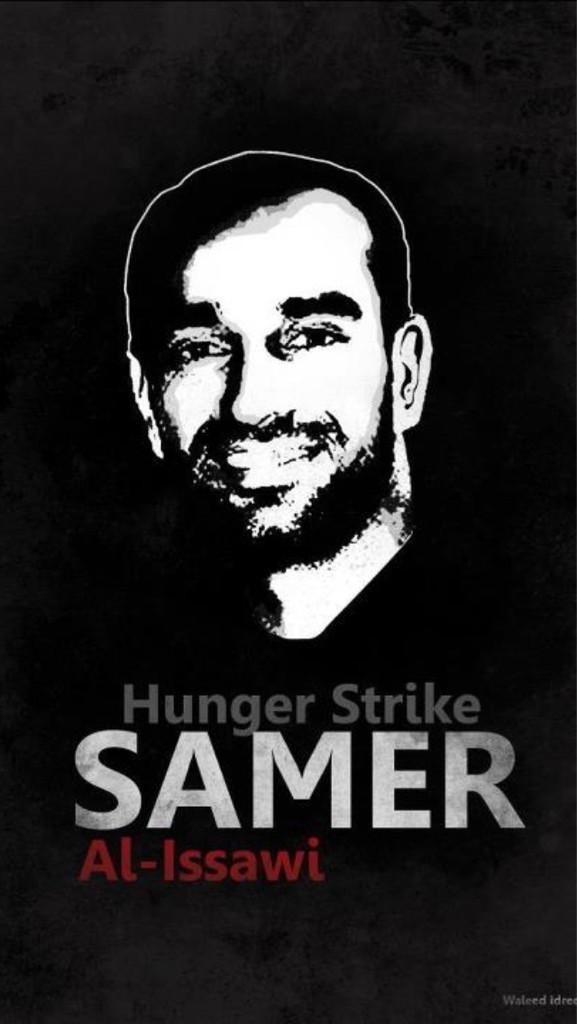 “I turn with admiration to the masses of our heroic Palestinian people, to our Palestinian leadership, to all forces, parties and national institutions. I salute them for standing by our fight to defend our right to freedom and dignity.


 Zeolite is old. It is in Roman concrete that has held for two thousand years. It’s in the water filters of ancient cisterns. It’s in the stomachs of Pacific livestock whose keepers knew, somehow, that this grey crumbling rock made the animals healthier. It’s in Soviet clinical protocols from the 1960s. It’s in the standard emergency response to the Chernobyl explosion.
 Aletho News

