COBAN, GUATEMALA—Since February, forensic anthropologists have turned up over 400 skeletons at a military base in Coban, Guatemala, in what has fast become one of the largest discoveries of a clandestine mass grave in the country. During the country’s 36 year long internal armed conflict that led to acts of genocide, the base at Coban was a center of military coordination and intelligence.
But what sets this dig apart is that it is taking place at a military base that remains active today: foreign military and police arrive regularly at the base to train troops from Guatemala, El Salvador, Nicaragua, Honduras, and the Dominican Republic. [1] In 2006, the military zone in Coban was renamed CREOMPAZ, which stands for Regional Training Command for Peacekeeping Operations.
The horrid history of the military base in Coban—and the impunity with which mass killings of men, women and children were carried out—provides a disturbing backdrop for present day “peacekeeping” operations.
Evidence of the ongoing excavation is all over Guatemala’s capital city, in the form of ads gracing billboards and bus stops. On the right hand side of the ad is a stock photo of a woman in a surgical mask, looking at a medical instrument. In Los Angeles, it might be a weight loss ad, in Houston, promotion for a private hospital. Not here. Instead, text across the top reads: “Do you have a family member disappeared between 1940 and 1996?” Then, “with DNA we are identifying them. A spit sample is enough.”
The Forensic Anthropology Foundation of Guatemala (FAFG) put the ad campaign together in attempt to identify the skeletons of the disappeared by matching them with DNA from their living family members. FAFG anthropologists are at work around Guatemala, digging, dusting, recording and finally exhuming human remains.
CREOMPAZ is one of the largest current excavations.
“We have a few more than 400 trenches, where we’ve found I think 60 graves, and we’ve found 426 skeletons, mostly men, like everywhere else, but there’s also women, and what’s particular to CREOMPAZ is that there are also many children,” said José Suasnavar, the executive sub-director of FAFG, during an interview in Guatemala City in October. FAFG is the only group in Guatemala dedicated to identifying the estimated 50,000 disappeared during the country’s internal armed conflict.
Most of the dead found at CREOMPAZ are believed to be people who disappeared from communities around the country. Men and women kidnapped by the army on their way to the shop to buy some food for their children, people who said goodbye to their families one morning and headed off to school or to work, never to be heard from again. Evidence uncovered by forensic anthropologists shows that people disappeared from various regions were later brought to the base at Coban by soldiers for interrogation and torture, followed by extrajudicial execution and secret burial.
“What is radically different about this military base… is that here there is up to 62 people buried in one single grave, representing a single event,” said Sausnavar.
There are few bullet wounds among the dead, according to Sausnavar. Most of the skeletons still show evidence of being bound, and many reveal bones that had been broken, healed and re-broken, indicating that the dead had been tortured and interrogated, some for lengthy periods of time, before they were killed and thrown in the pits.
As this image displays, most of the 24 human remains found in Mass Grave 16 were found bound, tied, blindfolded and only wearing underwear.
The dig in Coban is revealing the gruesome reality of the country’s internal armed conflict, where people labeled subversives—political and student activists, Indigenous leaders and community members, and others— were kidnapped and tortured en masse. Children were also murdered before being dumped in clandestine graves at the base. All of this took place within the protective confines of a military controlled area.
Of the 28 former military areas the FAFG has dug since 1996, 24 have turned up bodies. Some of those digs are still works in progress, while more military bases, zones and detachments remain to be investigated. The dig at CREOMPAZ has turned up by far the largest number of corpses of any base.
“When the peace accords were signed, many military bases or detachments were reduced and closed. But the military remained here the whole time,” said Suasnavar of the base at Coban. “They say to us ‘we didn’t know that that happened, it was another time, it was other people, but you found it so there’s no other option than to keep working,’ right, those have been the words that they use with respect to our findings. But the continuity in the structure and function and the territorial control of this location has been strictly military.”
Regardless of the mass graves at the base, military and police training continues there, supported by countries like the US and Canada.
“The facilities have a sort of rank as a military organization of the United Nations, in fact the Guatemalan soldiers and officials that are based there wear the distinctive blue helmets,” said Iduvina Hernández Batres from the Guatemala City based organization Security and Democracy (Sedem). “This is happening, and this unit exists there, regardless of the fact that this property has been documented to have constituted an enormous clandestine cemetery.”
In 2011, the Ottawa-based Pearson Centre carried out a workshop at CREOMPAZ about “police and military cooperation in peace operations.” [2] Canada’s Department of Foreign Affairs and International Trade and the US Southern Command jointly funded the event. Soldiers trained at CREOMPAZ have been deployed as part of UN missions in Haiti and the Democratic Republic of Congo.
For some, like Ka’koj Ba Tiul, a Maya Poqomchi’ anthropologist and professor, CREOMPAZ has received an unwarranted facelift by rebranding the military base as a peacekeeping center.
“It is a school of assassins. The hidden side is the training of teams of military counterintelligence,” said Ba Tiul, who calls CREOMPAZ “the little School of the Americas.”
“There are instructors from Argentina, instructors from Chile, instructors from Colombia, instructors from North America, and instructors from Israel,” said Ba Tiul in an interview at his home just over a dozen kilometers from the base. “It is where they are training all of those who will form part of the modern counterinsurgency model for Guatemala and Central America.”
Dawn Paley is a freelance journalist. See more of her work at her website, dawnpaley.ca. Images by James Rodríguez. See more of his work at mimundo.org.
By the middle of the 19th Century, the multi-ethnic empire was on its way out as the dominant political paradigm in Europe. Replacing it was the nation-state, a political form which allowed the concentration of ethnic groups within their own political borders.
This, in turn, formed cultural and “racial” incubators for an “us (superior) vs. them (inferior)” nationalism that would underpin most of the West’s future wars. Many of these nation states were also imperial powers expanding across the globe and, of course, their state-based chauvinistic outlook went with them.
Zionism was born in this milieu of nationalism and imperialism, both of which left an indelible mark on the character and ambitions of the Israeli state. The conviction of Theodor Herzl, modern Zionism’s founding father, was that the centuries of anti-Semitism were proof positive that Europe’s Jews could not be assimilated into mainstream Western society. They could only be safe if they possessed a nation state of their own.
This conviction also reflected the European imperial sentiments of the day. The founders of modern Zionism were both Jews and Europeans, and (as such) had acquired the West’s cultural sense of superiority in relation to non-Europeans.
This sense of superiority would play an important role when a deal (the Balfour Declaration) was struck in 1917 between the World Zionist Organization and the British Government. The deal stipulated that, in exchange for Zionist support for the British war effort (World War I was in progress), the British would (assuming victory) help create a “Jewish national home” in Palestine. It was no oversight that neither side in this bargain gave much thought to the Palestinian native population.
Years later, beginning in 1945 (at the end of World War II), the British were forced to officially give up the imperial point of view. They came out of the war with a population burdened by extraordinary high war taxes.
Retaining the empire would keep those taxes high and so the British voters elected politicians who would transform the empire into a commonwealth, granting independence to just about all of Britain’s overseas territories. One of those territories was Palestine.
It is interesting to note that in other European colonies, where large numbers of Europeans resided, the era following World War II saw their eventual evacuation as power shifted over to the natives. Kenya and Algeria are examples which show that this process was hard and bloody, but it happened.
And when it did happen, the official imperial mind set was defeated. That does not mean that all Europeans (or Westerners) saw the light and ceased to be racists, but that their governments eventually saw the necessity to stop acting that way.
Some Consequences
Unfortunately, in the case of Palestine, this process of de-colonization never occurred. In this case the European colonists did not want the imperial mother country to stay and protect them. They wanted them out so they could set up shop on their own. They got their chance after the British evacuated in 1947.
Soon thereafter, the Zionists began executing a prepared plan to conquer the “Holy Land” and chase away or subjugate the native population. And what of that imperial point of view which saw the European as superior and the native as inferior? This became institutionalized in the practices of the new Israeli state.
That made Israel one of the very few (the other being apartheid South Africa) self-identified “Western” nation states to continue to implement old-style imperial policies: they discriminated against the Palestinian population in every way imaginable, pushed them into enclosed areas of concentration and sought to control their lives in great detail.
If one wants to know what this meant for the evolving character of Israel’s citizenry who now would live out the colonial drama as an imperial power in their own right, one might take a look at a book by Sven Lindqvist entitled Exterminate All The Brutes (New Press 1996). This work convincingly shows that lording it over often resisting native peoples, debasing and humiliating them, regularly killing or otherwise punishing them when they protest, leads the colonials to develop genocidal yearnings.
There is evidence that the Zionists who created and now sustain Israel suffer from this process. For a long time Israeli government officials tried genocide via a thought experiment. They went about asserting that the Palestinians did not exist.
The most famous case of this was Israeli Prime Minister Golda Meir, who on June 15, 1969, claimed that “there were no such thing as Palestinians. … They do not exist.” One of the reasons she gave for this opinion was that the Arabs of Palestine never had their own nation state.
Others took a different approach by denying not so much the existence of Palestinians, but rather their humanity. At various times and in various contexts, usually in response to acts of resistance against occupation, Israeli leaders have referred to the Palestinians as “beasts walking on two legs” (Menachem Begin); “grasshoppers” (Yitzhaq Shamir); “crocodiles” (Ehud Barak); and “cockroaches” (Rafael Eitan).
Of course, these sentiments were not confined to the Israeli leadership. They soon pervaded most of the Zionist population because the old imperial superiority-inferiority propaganda had become a core element of their basic education. The Israelis have taught their children the imperial point of view, augmented it with biased media reporting, labeled the inevitable resistance offered by the Palestinians as anti-Semitism and took it as proof of the need to suppress and control this population of “Others.”
And, from the Zionist standpoint, this entire process has worked remarkably well. Today all but a handful of Israeli Jews dislike and fear the people they conquered and displaced. They wish they would go away. And, when their resistance gets just a bit too much to bear, they are now quite willing to see them put out of the way.
Thus, during the latest round of resistance rocket fire from Gaza and the vengeful killing that came from the Israeli side, we heard the following: “We must blow Gaza back to the Middle Ages destroying all the infrastructure including roads and water” (Eli Yishai, present Deputy Prime Minister); “There should be no electricity in Gaza, no gasoline or moving vehicles, nothing. … We need to flatten entire neighborhoods … flatten all of Gaza” (journalist Gilad Sharon in the Jerusalem Post); “There are no innocents in Gaza. Mow them down … kill the Gazans without thought or mercy.” (Michael Ben-Ari, member of the Knesset); Gaza should be “bombed so hard the population has to flee into Egypt” (Israel Katz, present Minister of Transportation); Gaza should be “wiped clean with bombs” (Avi Dichter, present Minister of Home Front Defense); Israeli soldiers must “learn from the Syrians how to slaughter the enemy” (prominent Israeli Rabbi Yaakov Yosef).
Finally, there were the numerous, spontaneous demonstrations of ordinary Israeli citizens, both in the north and south of the country, where could be heard chants and shouts such as “They don’t deserve to live. They need to die. May your children die. Kick out all the Arabs.”
If it wasn’t for the fact that the outside world was watching, there can be little doubt that the famed Israeli armed forces would have been tempted to do all that these ministers, clerics and citizens wished. After Prime Minister Netanyahu agreed to a cease-fire, a group of Israeli soldiers showed their frustration by using their bodies to spell out (in Hebrew) the words “Bibi Loser” (Bibi is a nickname for Netanyahu).
It was a pre-arranged photo-op and the picture can now easily be found on the Web. What seems to really irk the Israeli citizenry is not that Bibi killed and maimed too many innocent Palestinian civilians, but rather that he did not kill and maim enough of them to grant Israelis “safety and security.”
Throughout history it has been standard operating procedure to demonize those you fight and demote to inferior status those you conquer. But as Lindqvist’s work shows, there was something different about the way Europeans went about this business. The deeply racist outlook that underlay modern imperialism made it particularly perverse.
Now that apartheid South Africa is no more, the Israelis are the last surviving heirs to that dreadful heritage. So much for a “light unto the nations.” That proposition has quite failed. Wherever the Israelis and their Zionist cohorts are leading us, it is not into the light, it is to someplace very very dark.
Yet another massacre is unfolding in Gaza, the largest prison in the world. We are surrounded by familiar chatter: ‘Israel’s right to defend itself’; ‘Palestinians’ legitimate resistance to (the 1967) occupation’; ‘who started it this time?’ Most insidious, however, is the stale refrain, sung by a chorus which includes President Obama, that the violence is disastrous for the ‘peace process’ aimed at a ‘two-state solution’.
While it has been noted that one motivation for the Israeli government, in the run-up to elections in January, is to unite voters behind a ‘no choice’ rhetoric, there is a deeper motivation at stake here – to restrict the horizons of political debate, to control what should be regarded as a litmus test for ‘realistic’, ‘moderate’ and ‘reasonable’ voices.
War is useful because the passion it arouses prevents people from asking two basic questions that must be addressed if the core of silencing and violence that we are witnessing is to be grasped and, in turn, if progress is ever to be made towards justice and enduring peace. First, what kind of state is Israel? Second, who are the Palestinians that this state is in conflict with?
Israel was established to be a Jewish state. Its institutions have always been shaped and constrained so as to ensure the continued existence of a Jewish majority and character. Passing a test of Jewishness entitles someone to Israeli citizenship regardless of where in the world she lives. Furthermore, her citizenship comes with a bundle of political, social and economic rights which are preferential to that of citizens who do not qualify as Jewish. This inbuilt discriminatory premise highlights the apartheid nature of the state. But apartheid is not an accidental feature of Israel. Its very creation involved immense injustice and suffering. Shielding and rationalizing this inbuilt premise prevents the address of past injustices and ensures their continuity into the future. It is a premise that, in matters of constitutional interpretation, takes precedence over, and thus involves the imposition of ‘reasonable’ limitations on, equality of citizenship.
The Palestinians, we are told, are a people who live in the West Bank and Gaza. The impression forced on us is that the conflict concerns a compromise to be made to correct the border between Israel and a Palestinian state. We are led to believe that a partition into two-states would satisfy both genuine and realistic aspirations for justice and peace. In this view, the violence in Gaza is just an unreasonable aberration from an otherwise noble peace process.
But Palestinians actually comprise three groups. First, those whose families originate in the territories that were occupied by Israel in 1967 (Gaza and the West Bank, including East Jerusalem). Second, the descendants of the approximately 750,000 non-Jews who were ethnically cleansed in 1947-9 in order to ensure a Jewish majority in the new Jewish state. This group is dispersed around the world, mostly in refugee camps in the territories occupied in 1967 and the neighbouring states. Israel has persistently denied them their internationally recognized legal right to return. The majority in Gaza consists of refugees from villages which are now buried under Israeli towns and cities that were created explicitly for Jewish citizens, places which include Ashkelon and Tel Aviv that were hit by rockets in the current conflict. The third group of Palestinians, which Israel insists on calling by the euphemism ‘Israeli Arabs’, are the non-Jews who managed to evade ethnic cleansing in 1947-49 and who now live as second-class citizens of Israel, the state which likes to claim that it is ‘Jewish and democratic’.
Until 1948, the territory of Palestine stretched from the River Jordan to the Mediterranean. The violence that has afflicted the area ever since is the direct result of an event whose true nature our society seems determined to deny. Violence keeps erupting because of the silencing and marginalization of a simple truth surrounding any partition policy: that the injustice that afflicts Palestine can not be partitioned. It is because of the desire to preserve a Jewish state that first, the legal dualism that exists in the 1967 Occupied Territories as well as the horror at the ‘Separation Wall’ have become the dominant political discourses of apartheid, second, that the refugees are remained dispossessed and, thirdly, that both actual and potential non-Jew Arab citizens do, and would, suffer discrimination. The two-state vision means that the inbuilt apartheid within Israel, and in turn the injustice to two groups of Palestinians, never becomes the central political problem.
The range of reactions to the current carnage shows just how successful violence has been in sustaining the legitimacy of Israel by entrenching the political focus merely on its actions rather than on its nature. These reactions keep the discourse that calls for criticizing Israel rather than for replacing it with an egalitarian polity over the whole of historical Palestine.
Israel desires to be hated by Palestinians. By provoking violence Israel has not merely managed to divert the limelight from its apartheid nature. It has also managed to convince us that, as Joseph Massad of Columbia University once captured, it has the right to occupy, to dispossess and to discriminate, namely the claim that the apartheid premise which founds it should be put up with and rationalized as reasonable. Would anybody allow such a right-claim to hold sway in apartheid South Africa? How come the anti-apartheid and egalitarian calls for the non-recognition of Israel’s right to exist are being marginalized as extreme and unrealizable? What kind of existential fetters cause the world to exhibit such blindness and lack of compassion? Is there no unfolding tragedy that anticipates violence against Jews precisely because past violence against them in Europe is being allowed to serve as a rationalizing device of an apartheid state?
Israel has already created a de facto single state between the river and the sea, albeit one which suffers from several apartheid systems, one within Israel and another in the occupied territories. We must not let Israeli aggression prevent us from treating as moderate and realistic proposals to turn this single state into one where all would have equal rights.
Oren Ben-Dor grew up in the State of Israel. He is a Professor of Law and Philosophy in the Law School, University of Southampton, UK. He can be reached at: okbendor@yahoo.com.
On Wednesday, November 12, Israel deliberately provoked Hamas by breaking a two day long truce, carrying out some 20 airstrikes on the Gaza Strip, the heaviest barrage on the Palestinian territory in four years, and, for good measure, to make sure the provocation worked, assassinating Gaza’s supreme military commander Ahmed Jabari.
It killed him even though it was he that was mainly responsible for arranging the release of Shalit, even though his interest in entering into a long-term truce agreement had been communicated to Israeli authorities.
When Gaza, as expected, responded with a fresh barrage of rockets, Israel used that as an excuse to continue its murderous attack on Gaza and launched its Operation Pillar of Defense.
It pummeled Gaza – again, barely four years after it infamous Operation Cast Lead – for eight straight days, day and night, launching well over 1500 deadly airstrikes, shelling targets from tanks and gunboats, killing 161 Palestinians, including a large number of innocent men, women, children and even babies, wiping out families, injuring at least 840, flattening residential buildings, Hamas leader’s headquarters, police stations, several other infrastructures, targeting and damaging dozens more, including a hospital and the international media center.
Then, on Wednesday , November 21, under intense international pressure, Israel signed with Hamas a truce agreement.
The agreement provides, for Hamas: an end to Israeli airstrikes and assassinations of Hamas militants wanted by Israel. For Israel the agreement provides a halt to rocket fire from Gaza and attempts at cross-border incursions into Israeli territory from Gaza and especially from the Sinai area.
However, the agreement left the door open to a possible ground incursion of Gaza at a later date.
People all over the world heaved a sigh of relief. Gazans celebrated by firing guns into the air, dancing in the streets, distributing sweets and waving Hamas flags.
It is to be hoped that the truce will last. Unfortunately all indications are that violence will flare up once again.
To begin with, already there are differences as to what the agreement provides, especially with reference to the opening of checkpoints.
According an Associated Press report on November 22, the agreement provides for Israel “discussing easing an Israeli blockade constricting the Gaza Strip.” Khaled Mashal, Gazan leader in exile, insists that “the document provides for the opening of all crossings.”
According to a copy of the agreement obtained by AP, the agreement provides, after a 24 hour cooling off period, for “opening the crossings and facilitating the movement of people and transfer of goods and refraining from restricting residents’ free movement.”
Under the Israeli blockade, Israel continues to restrict the movement of certain goods through Israeli controlled crossings. There is a near complete ban on exports, limited movement of people leaving the territory and limits on construction materials that Israel says could be put to military use.
The agreement is vague on what restrictions Israel would lift.
There is also the question of Gaza’s southern passenger terminal on the Egyptian border, not to mention whether Israel will have the right to continue intercepting and seizing, in international waters, aid flotillas headed for Gaza or limiting Gazans from fishing in their own waters outside or even within the three mile water rights, as it now does.
On any of these points a difference can be interpreted as a rejection/violation of the truce agreement and violence can restart.
But these are details.
The main point to note is that, notwithstanding claims to the contrary, Operation Pillar of Defense was NOT a response to the recent escalation of rocket firing by Hamas. The rockets being fired from Gaza has very little to do with Israel’s repeated deadly military operations against Gaza.
Consider this. During the present conflict, Hamas rockets killed five Israelis, injured not more than a couple of dozen people and partially damaged two buildings. Hardly figures to invite a massive military operation that lasted eight days, killed 161 Palestinians and inflicted unimaginable misery and destruction on the Gazans.
The reasons for Israeli operations go beyond the rocket firing activities of Hamas. Israel’s reasons and objectives go much, much deeper.
Put simply, behind it all is Israel’s objective to have all of Palestine. It wants to establish Eretz Yisrael on all of the land between the Jordan River and the Mediterranean Sea, complete with biblical Judea and Samara.
Israeli leaders have long maintained that Jordan is the homeland of the Palestinians and Palestine, all of it, is the God given homeland of the Jews.
Several Israeli leaders have openly stated that their aim is to make life so miserable for the Palestinians that they will eventually flee to neighboring countries.
To ensure that Palestinians never have the ability to stand up against or challenge Israel, Israel is committed to preventing any arms coming into Gaza (even as shiploads of arms keep flowing into Israel from the USA and other countries!), preventing Gazans from manufacturing any such arms, even primitive rockets, and destroying from time to time any rocket making facility that Gazans may put up, and also destroying periodically all stockpiles of such arms that Gazans may accumulate.
Another goal of Israel’s repeated attacks on Gaza is to cow the Gazans and beat them into submission.
None of Israel’s military operations has succeeded in weakening Hamas. After every Israeli military operation, the Gazans, though suffering huge human and material loss, have emerged stronger.
Operation Pillar of Defense has made them stronger than ever. Arab leaders, taking a lesson from the Arab Spring, and sensitive to the sentiments of their people about Israel and Palestine, for the first time came together to try and save Gaza from further death and destruction. World leaders, including UN chief Ban Ki-moon, US Secretary of State Hilary Rodham Clinton, Turkey’s foreign minister, a delegation of Arab foreign ministers, Khaled Mashaal, the top Hamas leader in exile – all of them converged on the region.
The UN Security Council held closed door consultations at the request of Russia. A resolution would have emerged but for the feet dragging by one of the members.
In addition, the Muslim Brotherhood, of which Hamas is an offshoot, is now in power in Egypt and Tunisia and Hamas is also getting support from Qatar and Turkey.
The political situation has changed dramatically.
As to the spirit of Gazans, it is best illustrated by a message given by a 13 year old girl from Gaza who sustained shrapnel injuries throughout her upper body, with some pieces still in embedded in her chest. Here is her message: “I say, we are children. There is nothing that is our fault to have to face this. They (the Israelis) are occupying us and I will say, as Abu Omar said, ‘If you’re a mountain, the wind won’t shake you.’ We’re not afraid. We’ll stay strong.”
Trying to beat the Gazans into submission apart, the Israeli attacks on Gaza are, as pointed out by Peace Laureate Mairead Maguire, a continuation of Israel’s “policies of war, illegal occupation of Palestine, siege of Gaza, carrying on building illegal settlements and confiscating Palestinian land”, not to mention transferring a large number of its citizens onto occupied West Bank, bulldozing Palestinian homes and razing Palestinian villages.
This is a legacy of Israel’s policy of dispossession that precedes the creation of Israel.
With Hamas having become stronger than ever, more defiant than ever, instead of docilely submitting to Israel, and with Israel’s goal of eliminating all rocket manufacturing facilities and stockpiles of rockets in Gaza not having been accomplished, and with the truce eliminating any further attempts by Israel to strike Gaza again, the indications are, given Israel’s history in this regard, that Israel will, as soon as it can, create another incident to provoke Hamas once more into retaliating and use that retaliation as an excuse, once more, to mount a better planned and more massive attack that will inflict massive destruction in a short time, before the world starts putting pressure on Israel once again to agree to a ceasefire.
The words of Israeli President in a recent CNN interview are ominous. He let it slip that “You don’t negotiate with terrorists. You strike” Perhaps even more ominous is what Israeli Prime Minister Netanyahu said: “I know there are citizens that expected a wider military operation and it could be that it will be needed. But at this time, the right thing for the state of Israel is to take this opportunity to reach a lasting cease fire.” (emphasis added)
Gulamhusein A. Abba is an 83-year-old writer with more than 50 years in journalism. Originally from Bombay (now Mumbai), he has been in the USA since 1982. He can be reached at: gaabba2000@yahoo.com.
Anyone who knows a little bit of history realizes that when there is situation where a people has refused to surrender and abandon its rights, oppressing it will not work. The only ones who may live in denial of this fact are the oppressor and those who support it. Their wishful thinking thus leads them to trying different types of violence and criminality, coupled with mass lies and distortion campaign.
In Palestine today, this is merely one layer of the issue. The Israeli regime has convinced itself not only that it can get the Palestinian people to surrender, forget and let go, but also that the whole world should be supporting its racist policies and actually help it achieve its goals. Everyone else in the world, who has not fallen prey to the Israeli PR campaigns, do not doubt the inevitable outcome of the struggle of the Palestinians: justice and equality.
The Middle East featured prominently on the agenda of the recent annual meeting of the World Bank and International Monetary Fund in Tokyo. But how relevant are these agencies’ policy prescriptions in the context of conflict? In the case of the occupied Palestinian territories they are not only inappropriate but also harmful.
And yet both institutions have relentlessly dished up these prescriptions for the past two decades. To understand why they are so harmful, it is useful to deconstruct the policy recommendations in the World Bank’s latest growth report for the Palestinian territories.
The Bank’s growth report provides a breakdown of the current state of the Palestinian economy, which it describes as fragile and dependent on foreign aid. The report’s frank conclusions are largely unsurprising: aid-based growth is unsustainable, especially because aid levels are expected to decline over time.
The surprising part of the report lies not in the Bank’s negative prognosis of the Palestinian economy, but rather in its recommendations. It calls for the Palestinians to emulate the Asian tigers by “adopting an outward orientation and integrating into world supply chains.”
Just how a people that exercises no control over its own land, borders and natural resources can carry out such export-based growth is not explained. The report further recommends that the Palestinian Authority “should strive to build a business environment that is among the best in the world and not merely on par with its neighbors.”
This is utterly impossible under prolonged occupation, where Palestinian civil and property rights are ignored by an Israeli state that is simultaneously engaged in the mass-expropriation of Palestinian land. The business climate is so bad that one report suggested certain Palestinian businesspersons even prefer to invest in Israel.
The report also repeats a dangerous belief long propagated by the World Bank: that the Palestinian economy can benefit from deeper integration with the Israeli economy.
Actual experience indicates otherwise. The Palestinian economy has been de-developed since 1967, as US scholar Sara Roy’s work has shown, and Palestinian industry has been deliberately sabotaged in favor of Israeli industry, as economist Shir Hever documents.
Classic World Bank economic assumptions that recommend “free trade agreements between a future Palestinian state, Israel and neighboring countries” have never been embraced by Israel.
Palestinians cannot exploit “competitive advantages” because Israel deliberately prevents them. Instead, integration has been one-sided, allowing Israel to exploit a captive Palestinian market cut off from the outside world.
It is vital to understand the extent to which much of the World Bank’s policy advice is destined for failure because it exercises enormous influence on foreign aid to Palestinians, and its recommendations form the basis on which international donors design their aid programs.
In fact, it designed the aid regime adopted by the international community during the Oslo Peace Process of the early 1990s. Since that time, the Bank has prescribed policy recommendations for donors that do not take into account the human reality of Palestinians struggling to survive for decades under a violent military occupation and in colonial conditions.
Nor have the international community and those many prominent international bodies engaged in the ‘peace process,’ such as the World Bank, held Israel to account for its actions.
Indeed, the Bank sanitizes the language it uses when criticizing the occupation, employing euphemisms that downplay the effects of occupation while focusing on the Palestinians when giving reasons why Bank recommendations have failed.
As they met with the world’s delegations in Tokyo, did the World Bank and IMF question their policies and the need to actually reflect the facts on the ground?
Until and unless they do, they will waste valuable time and resources and distract Palestinians from what should be their primary goal: Ending the military occupation as a first step toward sovereignty, freedom, and self-determination.
Until Palestinian rights are secured, it is meaningless to develop aid programs that do not take into account the full impact of the occupation and the expropriation of Palestinian land.
The Bank’s growth report is useful only in revealing that the Palestinian economy is in a critical state of disrepair. Its inability to provide policy recommendations that properly account for the effects of occupation renders its advice irrelevant.
It is time to look for alternative models of aid, ones that do not simply seek new ways for the Palestinians to cope with life under occupation, but rather challenge the status quo while enabling Palestinians to survive, by, for example, promoting investment in smallholder agriculture.
This alone can lead to real economic growth and sustainable development.
Alaa Tartir is Program Director of Al-Shabaka: The Palestinian Policy Network, and author of The role of international aid in development: the case of Palestine 1994-2008 (Lambert 2011). Jeremy Wildeman, an Al-Shabaka Guest Author, co-founded the Nablus-based charity Project Hope. The full policy brief on World Bank policies by al-Shabaka is available here.
During the Napoleonic Wars, when it was reported that the French were preparing to invade England, Admiral John Jervis said “I do not say they the French cannot come–I only say they cannot come by sea.” Barring the movement of a regiment of sans culottes across the English Channel by a fleet of Montgolfier balloons, the Jervis comment pretty much summed up the limits to French ambitions as long as Britannia ruled the waves.
A similar bit of military overreach appears to be surrounding the alleged planning by the Israelis to stage an air assault on Iran’s nuclear facilities. The US media and even some Pentagon spokesmen have suggested that Israel cannot do the job alone, but the problem is much larger than that, leading to the question whether Israel can do it at all. Israel has over 400 fighters, but many of them are configured to establish air superiority over an opponent by shooting down opposing aircraft and disabling air defense facilities on the ground. They are fighters supporting ground operations first with a limited secondary capability as bombers.
Israel has no dedicated bomber force but it does have an estimated 125 advanced F-15I and F-16I’s, which have been further enhanced through special avionics installed by the Israel Aircraft Industry to improve performance over the types of terrain and weather conditions prevailing in the Middle East. The planes are able to fly long range missions and very capable in a bombing role but they do have their limitations.
It is generally agreed that any attempt to destroy the hardened and well-defended Iranian nuclear sites would require use of the United States-provided GBU-28, a five thousand-pound laser-guided smart bomb that can be directed to the target. The GBU-28 is regarded as accurate and able to penetrate deep into a target, which is why it has been described as the “bunker buster.” Exact performance specifications of the weapon are classified, but it is believed to be able to penetrate twenty feet of reinforced concrete. Whether that would be enough to take out the expected Iranian targets at the research centers in Natanz and Fordow, the heavy water facility at Arak, and the operating reactor at Bushehr is unknown and some analysts have opined that it might require multiple hits on the same spot to do the job. As Bushehr, the most accessible target of the three, is an active reactor, an attack would release considerable contamination.
Assuming that the US has supplied Israel with a sufficient supply of GBU-28s to go around to all the available aircraft, there remain two additional problems with the weapon that impact Israeli ability to stage an attack. First, it is so heavy that only Israel’s twenty-five F15Is are able to carry it, one bomb for each plane. For optimum use against a target, the GBU-28 also requires a clear line of sight, which means that the plane has to be flying low and relatively slowly, making the fighters more vulnerable to ground defenses, particularly with their maneuverability limited due to the bomb load. This first problem creates the second problem, which is that an attack will require a separate fleet of F-16 fighters unencumbered by GBU-28s to go in first and suppress the defensive fire, further complicating the mission.
Assuming that all the Israeli fighters capable of carrying the GBU-28 are available, which would not normally be the case, twenty-five bombs might not be enough to do critical damage to the targets. Perfect intelligence is required to place the bombs where they will do the most harm, an element that will likely be lacking with the underground targets. Some bombs will miss while others might not function perfectly and will detonate before penetration. And before the bombs are dropped the planes have to arrive over Iran.
Let’s assume that the Israelis opt for an attacking force of 50 fighters, one third of which would be designated for suppression of ground fire. The planes would be equipped with conformal fuel tanks built into the fuselages for extended range. They would also have auxiliary tanks that could be jettisoned when empty. Nevertheless, the attacking force would have to take off from Israeli airfields and then almost immediately refuel either over Israel or above the Mediterranean because fighters burn considerable fuel in getting off the ground. Refueling from Israel’s twelve modified Boeing 707 and C-130 tankers would take some time even though a plane using a flying boom for refueling can top up in thirty seconds. It is the maneuvering and connecting to enable the refueling that takes considerably longer. Refueling all 50 planes will be a major task essential to the success of the mission and while the planes are in the air and forming up they will be detected by radar in Egypt and Lebanon, information that one must assume is likely to be shared with Iran.
The objectives in Iran are more than 1,000 miles from Israel and the planes must be able to spend some time over their targets, which is why the refueling is necessary. But even then there would be problems if the Israeli jets have to engage any enemy planes either en route or over Iran. They would have to drop their auxiliary tanks to take defensive action and would probably have to return immediately to Israel.
There are three possible routes to Iran. One route to the south violates Saudi airspace and it is by no means certain that the very capable 80 plus F-15s of the Saudi Air Force would not scramble to intercept. The other is to the north over Syria, skirting the Turkish border. Syria is unlikely to be able to interfere much given its current troubles though it does possess some capable Russian made anti-aircraft missiles, but a Turkish response to possible airspace violations cannot be ruled out. The third and most likely option is to fly along Syria’s southern border, avoiding Jordan, and then through Iraq, which has only limited air defense capabilities since the US military’s departure at the end of 2011.
Israel’s previous attacks on nuclear facilities in Iraq and Syria hit targets that were above ground while relying on the element of complete surprise. Upon arrival over Iran, the Israelis would be confronted by something quite different, targets that are deep underground or hardened with reinforced concrete and further protected by layers of ground defenses that will be alert and waiting. Iran is known to have batteries of Russian supplied SA-5s for high altitude targets and SA-15s for lower level attackers. Both systems are regarded as very effective. It has also been alleged that Tehran has been able to acquire advanced Russian S-300 long range missiles, which, if true, would pose a serious problem for the Israeli fighters. The Israelis would have to be very lucky to avoid losses.
Assuming that the Israeli Air Force is able to carry out the refueling, fly successfully to Iran, suppress ground defenses, and carry out its bombing, it still has to return home, again flying over Iraq with every air force and air defense battery in the region on full alert. Depending on how much maneuvering was required while over Iran, some planes might well need to be refueled again which would mean deploying highly vulnerable tankers over Iraq or Jordan.
Back at home the Israelis would have to expect volleys of missiles of all kinds and varieties launched by Hezbollah in Lebanon to retaliate for the attack. The US-funded Iron Dome defense missile system would intercept many of the incoming missiles, but some would certainly get through and Israeli civilian casualties could be high.
It is clear that staging the attack on Iran would be fraught with difficulties and intelligence estimates suggest that at best the bombing would set back the Iranian ability to construct a weapon by only a year or two. Plus the attack would make certain that Iran would pursue a weapon, if only for self-defense, an essentially political decision that has not yet been made by the country’s leadership.
Israel has other military assets–including ballistic missiles and submarine-launched cruise missiles–that could be used to attack Iran, that would invite retaliation from Iran’s own ballistic and cruise missiles, considerably complicating post-attack developments. There is also the Israeli nuclear weapons capability, use of which would invite worldwide condemnation and instantly escalate the fighting into a regional or even broader conflict.
On balance, all of the above suggests that the frequently repeated threat by the Israeli leadership to attack Iran is not a serious plan to take out Iran’s nuclear sites. It is more likely a long running disinformation operation to somehow convince the United States to do the job or a deliberate conditioning of the Israeli and US publics to be supportive if some incident can be arranged to trigger an armed conflict. If one believes the two presidential candidates based on what they said in Monday’s debate, both have more-or-less conceded the point, agreeing that they would support militarily any Israeli attack on Iran. Whether Romney or Obama is actually willing to start a major new war in the Middle East is, of course, impossible to discern.
Philip Giraldi, a former CIA officer, is executive director of the Council for the National Interest.
A couple of days ago, I wrote about an article in The National Interest magazine by a visiting fellow at a pro-Israel think tank that argued that the United Arab Emirates may be violating the Foreign Agent Registration Act by its funding of ostensibly environmental anti-drilling films. As might be expected, Susan Schmidt’s piece entitled “Lobbying through the Silver Screen” appears to be part of a broader campaign by the Foundation for the Defense of Democracies to end America’s energy dependence on Israel’s recalcitrant neighbors.
On October 15, the Foundation for the Defense of Democracies (FDD) website published an op-ed piece by FDD senior fellow John Hannah tellingly entitled “How Oil Dependence Undermines America’s Effort to Stop the Iranian Bomb.” Citing the neocon-mentored Mitt Romney campaign promise of achieving “North American energy independence,” Hannah goes on to argue that dependence on Middle East oil not only endangers U.S. economic security but also serves as a constraint on its strategic freedom of movement in the region. “Concerns about oil prices,” claims Hannah, “have often badly distorted U.S. policy toward the Middle East.” As the title of his piece suggests, however, the “distortion” that most troubles the FDD is how this energy dependence makes Washington think twice before doing Israel’s bidding in the region:
The most acute example is the effort to pressure Iran to give up its nuclear weapons ambitions. U.S. policymakers have long known that the most effective step we could take against the mullahs is to cut off Iran’s oil sales and starve them of the enormous revenues they need to keep their repressive regime afloat. Yet for years, first President Bush and then President Obama fiercely resisted sanctioning the Islamic Republic’s petroleum sector. The reason? Because they quite legitimately feared that removing Iranian crude from the market would disrupt global supplies and trigger a devastating price shock. Only in late 2011, with Iran rapidly approaching the nuclear threshold, did Congress finally steamroll the administration by forcing through legislation that targeted Iranian oil.
Even then, implementation of the sanctions was watered down. The administration was given a six-month grace period to assess the possible impact that sanctions would have on the global oil market. And rather than demanding that customers of Iranian oil end their purchases entirely, countries were granted waivers from U.S. sanctions if they only “significantly reduced” their buy — which in practice required them to cut back between 15 and 20 percent. While the U.S. effort, together with complimentary EU sanctions, have no doubt had a major effect on Iran’s economy — reducing its oil exports by as much as 50 percent — a full embargo would have been far more impactful and the obvious course of action for Washington to pursue if not for the countervailing concern about oil markets. In the meantime, the Iranian regime continues to pocket perhaps $3 billion per month from the million or so barrels of oil that it still exports daily, all the while pressing ahead with its nuclear program.
America doesn’t have a higher national security priority than stopping the world’s most dangerous regime from going nuclear. And yet the sad reality is that our dependence on oil has for years, and to our great peril, systematically deterred us from fully deploying the most powerful tool in our arsenal — all-out sanctions on Iran’s petroleum sector — for resolving the crisis peacefully. Not surprisingly, that underlying logic applies in spades when it comes to any discussion about the possible use of force against Iran, where predictions of oil spiking to an economy-crippling $200 per barrel are commonplace.
The fact that our oil vulnerability has put such severe constraints on our freedom-of-maneuver to address the most pressing national security threat we face is deeply troubling.
Fortunately, there is a solution to the think tank’s concerns about U.S. “freedom” to address what it and other pro-Israel groups have worked so hard to convince Americans is their latest “most pressing national security threat.” As Hannah points out, “the United States is experiencing an oil and gas boom that promises to transform our energy landscape in very fundamental ways”:
Thanks to American ingenuity and technology, U.S. production is poised to increase dramatically over the next decade, after years of steep decline. As Governor Romney has correctly emphasized, through close cooperation with democratic allies in Canada and Mexico, the goal of energy self-sufficiency for North America may well be within reach — an unthinkable prospect just a few years ago, and one whose benefits in terms of job creation and economic growth could be quite profound.
Presumably more important — at least from a pro-Israel perspective — than the “potential economic windfall” for Americans is, as Hannah puts it, “how we can best exploit the coming energy boom to really enhance U.S. national security.” For him, enhancing U.S. security seems to be synonymous with going to war with Iran — notwithstanding the view of more objective analysts that this would seriously, if not fatally, exacerbate American insecurity. Nevertheless, according to the FDD fellow, the major obstacle to this supposedly security-enhancing military action are fears that it would lead to rocketing oil prices. To remove this problematic impediment in the way of another war for Israel, Hannah proposes:
It seems that what really needs to be part of the mix is a viable, bipartisan, market-driven strategy for reducing the monopoly that oil has over our transportation sector. If a sensible way could be found to begin moving some significant portion of U.S. cars and trucks to run on cheaper, domestically produced alternative fuels — natural gas, methanol, electric — it would largely eliminate the sword of Damocles that Middle Eastern tyrannies like Iran now hold over the West’s economic wellbeing and its strategic decision-making. That would put us on the path toward true energy independence, and restore to the United States a degree of flexibility, leverage, and strength to pursue its interests and values abroad, especially in the Middle East, that we have not known for at least a generation.
While acknowledging the difficulty of the task ahead, Hannah is cautiously optimistic:
Perhaps once the upcoming election is over, a new administration will be prepared to look seriously at developing a bipartisan, comprehensive energy strategy that both fully exploits America’s new oil and gas bonanza while taking meaningful steps to reduce our vulnerability to extortion by hostile, repressive dictatorships in unstable parts of the world.
And as luck would have it, there is already “one place that a new president should definitely look to mobilize ideas as well as political support.” Explains the FDD fellow:
Securing America’s Future Energy (an organization that I’m proud to advise), […] has brought together an extraordinary group of American business and military leaders to highlight both the economic as well as national security dangers posed by our dependence on oil, and to recommend possible solutions. Co-chaired by Fred Smith, CEO of FedEx and General P.X. Kelley, former commandant of the Marine Corps, the group includes such luminaries as General Jack Keane, former vice chief of the Army; Admiral Dennis Blair, former director of national intelligence; David Steiner, CEO of Waste Management; Herb Kelleher, founder of Southwest Airlines; and John Lehman, former undersecretary of the Navy.
So there you have it. America’s energy dependence on the Jewish state’s regional rivals may soon by a thing of the past thanks to the ingenuity of the new environmentally-friendly Israel lobby.
Of the three presidential debates, Monday’s saw the only mention of U.S. drone warfare. But after the challenger Romney quickly affirmed his support of President Obama’s drone program, stating that it is “absolutely the right thing to do,” the issue was summarily dropped by moderator Bob Schieffer. The president thus skirted having to account for the most controversial facet of his foreign policy.
Of course, the clear bipartisan support for the administration’s ongoing campaign of assassinations can only portend a future of expanded drone warfare and U.S. administered terror the world over—no matter the outcome of the presidential election.
Indeed, a Tuesday report in the Washington Post laid bare the Obama administration’s plans to ensure that any future administration seamlessly continues its drone program. As the Post reports, “Targeted killing is now so routine that the Obama administration has spent much of the past year codifying and streamlining the processes that sustain it.”
The process of streamlining the administration’s program of “targeted” killings has reportedly led to the creation of a “disposition matrix,” comprised of both the names of suspected terrorists and the resources expended on their targeting. This matrix, the Post reports, “is designed to go beyond existing kill lists, mapping plans for the ‘disposition’ of suspects beyond the reach of American drones.”
Such efforts to expedite the worldwide campaign of terror have reportedly left the administration buoyant on the prospects of the program’s indefinite continuation. Officials, the Post reports, “seem confident that they have devised an approach that is so bureaucratically, legally and morally sound that future administrations will follow suit.”
“The United States’ conventional wars are winding down,” the Post thus concludes, “but the government expects to continue adding names to kill or capture lists for years.”
Sure enough, as the Post revealed in a separate report published last week, the C.I.A. has sent a formal request to the White House appealing for an additional ten drones to supplement its current fleet of over 30. If approved, the paper reported, the request would “extend the spy service’s decade-long transformation into a paramilitary force.”
Yet, as the Obama administration works to extent the reach of its aerial assassins into every last crevice of the world, its claims regarding to the drone program’s effectiveness and “targeted” nature remain in doubt.
According to a September report on U.S. drone strikes in Pakistan, conducted by researchers at the N.Y.U. School of Law and Stanford University Law School, evidence that the program has made the U.S. safer is “ambiguous at best.” Moreover, despite administration claims of that there have been “no” civilian causalities, the report marshals substantial evidence to the contrary.
Assessments from U.S. officials regarding the “collateral damage” from drones, though, are heavily skewed by the administration’s definition of combatants.
Remarkably, as the New York Timespiece first revealing the existence of an administration “kill list” noted, the U.S. “counts all military age males in a strike zone as combatants … unless there is explicit intelligence posthumously proving them innocent.”
Kill first, we see, then ask questions.
Needless to say, all such reports ought to serve—at the very minimum—as an impetus for an independent review of the the drone program. But as the Post reports: “Internal doubts about the effectiveness of the drone campaign are almost nonexistent.”
The callous absence of doubt is evidently just as prevalent amongst the elite U.S. media. For instance, in an appearance on MSNBC’s Morning Joe Tuesday, Time columnist Joe Klein chillingly sought to justify the gravest horrors of the Obama drone program.
In a debate over drones with right-wing host Joe Scarborough, Klein went on to aver, “The bottom line, in the end, is: Whose four-year-old gets killed? What we’re doing is limiting the possibility that four-year-olds here are going to get killed by indiscriminate acts of terror.”
The very fact that rationalizing the killing of children can freely emanate from amongst “respectable” circles in Washington is indicative of the severe moral deterioration from which the Obama administration’s drone program was born.
Of course, the very fact that the defining program of Obama’s foreign policy was discussed in far greater detail on a cable talk show sponsored by Starbucks than it was in all three presidential debates is quite revealing of the decay afflicting the nation’s political system. It’s such a rotted system, though, that perpetuates our present class of amoral and unaccountable elites who so readily wage a global campaign of terror.
The twilight of the American Empire, it thus appears, will be remembered for its endless kill lists and its codification of murder.
The US National Security Agency isn’t outright rejecting claims that they’ve been conducting surveillance on everyone in the country, but they want Americans to at least give them the benefit of the doubt when it comes to their intentions.
The NSA was in court again this week to challenge a potential class action lawsuit that aims to end the governmental agency’s electronic surveillance program begun by President George W. Bush in the aftermath of the September 11, 2001 terrorist attacks; but while the plaintiffs in the case want to abolish the warrantless wiretapping and spying on innocent civilians started under that administration’s Terrorist Surveillance Program, the government’s argument is now one that requires Americans to accept the agency’s insistence they’re really not up to anything worth worrying about, Courthouse News reports.
In Federal Court this week, the NSA said that the public should simply trust the government when they say they aren’t abusing any powers legally or illegally in place to engage in clandestine surveillance of each and every citizen.
A San Francisco courthouse was the venue for the latest episode in the matter of Jewel v. NSA, a 4-year-old case that charges the spy agency with once and still operating an “illegal and unconstitutional program of dragnet communications surveillance.” Lead plaintiff Carolyn Jewel brought on the suit back in 2008 with the assistance of the Electronic Frontier Foundation and on behalf of current and former customers of AT&T who say they were affected when the telecom giant allowed the NSA unfettered access to their systems to spy on the communications of any customers they wish.
The plaintiffs say that the NSA ordered the attachment of surveillance devices to AT&T’s master network in order to have the ability to divert any communication routed through their service to secure facilities to allow for “an unprecedented suspicionless general search.” When former NSA senior executive Thomas Drake condemned the agency’s overly broad and costly surveillance of innocent Americans in 2007, the government attempted to silence him by filing an indictment under the Espionage Act of 1917.
When Jewel v NSA ended up in federal court in 2010, US District Court Chief Judge Vaughn Walker originally dismissed the case, only for the Ninth Circuit Court of Appeals deciding to reinstate it last year.
“Since September 11 and now, through two administrations, the executive has engaged in unprecedented assertions of power without regard to the constitutional and statutory limits of its authority,” attorney Richard Wiebe wrote in the case’s initial filings. “It has correspondingly sought to exclude the judiciary from adjudicating whether these exercises of executive power have stayed within the limits set by the Constitution and by Congress.”
Currently, the government alleges that they do not have to respond to charges of unwarranted eavesdropping because they have immunity in instances where disclosure could disrupt national security. As Courthouse News previously reported, the federal government “claims to have invoked state secrets privileges that protects it from any litigation consequentially stemming from supposed violations of those acts.” Plaintiffs, however, say that the government waived its right to sovereign immunity when it put itself in violation of the Foreign Intelligence Surveillance Act (FISA) as well as the US Constitution’s Fourth Amendment that protects Americans from unlawful searches and seizures.
Dozens of similar lawsuits against Verizon and other telecommunication companies were initially filed during the George W. Bush administration, but amendments added to the Foreign Intelligence Surveillance Act (FISA) in 2008 granted those companies immunity to civil actions “providing assistance to an element of the intelligence community.” Now, however, plaintiffs say the government must be held accountable for their own violations of FISA and the Constitution.
Responding to the case earlier this month, the government insisted, “The Foreign Intelligence Surveillance Act does not authorize a claim against the Government defendants sued in their official capacities, the state secrets privilege bars the litigation of plaintiffs’ remaining claims and the state secrets privilege is not displaced by the FISA.”
“[T]he disclosure of sensitive intelligence sources and methods . . . reasonably could be expected to cause exceptionally grave harm to national security,” the government wrote in one of three motions filed so far to put Jewel v. NSA to rest. “The very purpose of these cases is to put at issue whether the NSA undertook certain alleged activities under presidential authorization after 9/11, and whether those activities continue today. At every stage, from standing to the merits, highly classified and properly privileged intelligence sources and methods are at risk of disclosure. The law is clear, however, that where litigation risks or requires the disclosure of information that reasonably could be expected to harm national security, dismissal is required.”
Wiebe and the plaintiffs see things another way, though, and wrote earlier that “The government here seeks to transform the state secrets privilege from a powerful but targeted evidentiary shield into a justiciability sword, preventing the Judiciary from engaging in its constitutional duty.”
The government’s goal, Wiebe continued, “is to convince this court to close its eyes to a program that impacts every American who uses a phone, email or the Internet. The judiciary must recognize the dangers of allowing the executive to distort narrow exceptions like the state secrets privilege into broad unfettered power to ‘turn the Constitution on or off at will.’ Even in the case involving war powers, the Supreme Court has confirmed that the ‘war power does not remove constitutional limitations safeguarding essential liberties.'”
This week the government did not fight back as hard to defend any surveillance practices engaged by either the George W. Bush or Obama administrations, but said innocent Americans should trust that they aren’t in danger of being watched.
“This lawsuit puts at issue alleged intelligence activities of the National Security Agency (‘NSA’) purportedly undertaken pursuant to presidential authorization since the terrorist attacks of September 11, 2001,” the NSA says in their latest response. “For the past six years, the nation’s most senior intelligence officials, in succeeding administrations, have consistently advised this court that litigation of plaintiffs’ allegations would risk exceptional damage to national security, setting forth in detail the matters at issue. Renewed invocation of the state secrets privilege in this action by the Director of National Intelligence has undergone rigorous review within the Executive Branch under a process providing that privilege will only be asserted where necessary to protect against significant harm to national security. Contrary to plaintiffs’ suggestion, in these circumstances dismissal would not constitute an abdication of judicial authority, but the exercise of judicial scrutiny of the privileged information at issue and the application of established law to protect compelling national security interests.”
US District Judge Jeffery White will consider the latest motion on November 2 and could decide to let the arguments be brought to trial. If the case is allowed and elevated to class action status as the plaintiffs hope, attorneys fear that a victory for the NSA would mean the continuation of warrantless dragnet surveillance would continue — this time on-the-books.
A majority of the Zionist entity’s Jews admitted they are living in an apartheid state, a recent survey posted by Haaretz said. Many also believed that Palestinians should be denied the right to vote, and suggested that Jewish settlers should be given preferential treatment.
Some 500 Jewish adults took part in the survey, answering questions put together by a group of civil rights activists and academics, the Haaretz newspaper reported on Tuesday. The survey’s findings revealed that 39 percent of respondents believe there is a ‘slight’ form of apartheid in the Occupied Territories, while 19 percent admit that there is ‘heavy’ apartheid.
A different question suggested that the number of those in favor of ethnic segregation is higher, with 74 percent of those surveyed in favor of separate roads for Zionist Jews and Arabs in the West Bank.
On the contentious issue of the West Bank, 38 percent of respondents wanted to annex the territories with the illegal settlements, and 48 percent opposed that policy. A follow-up question on voting rights for Palestinians saw 69 percent of respondents in favor of denying 2.5 million of Palestinians the vote if West Bank territories were annexed.
More than a half of those questioned said Zionists should be given preference over Arabs when applying for jobs in the government sector. And slightly under half favored legalized discrimination of Arabs, saying that the entity should “treat Jewish citizens better than Arab ones.”
The survey also revealed that people of ultra-religious views demonstrated more discriminatory attitudes, with 82 percent saying Jews should be given preferential treatment over Arabs. Secular responders generally expressed more pluralistic views.
In its report, Haaretz claimed that the survey was initiated by the so-called ‘New Israeli Fund’, a US-based NGO. But the NIF denied any involvement, saying the poll “was not commissioned or sponsored or in any way related to the New Israel Fund,” but set up by Goldblum Fund, an organization with which it had only indirect links.
The volcanic mineral medicine will not patent — for the toxic burden medicine will not name
Lies are Unbekoming – October 30, 2026
Zeolite is old. It is in Roman concrete that has held for two thousand years. It’s in the water filters of ancient cisterns. It’s in the stomachs of Pacific livestock whose keepers knew, somehow, that this grey crumbling rock made the animals healthier. It’s in Soviet clinical protocols from the 1960s. It’s in the standard emergency response to the Chernobyl explosion.
In 1986, after the Chernobyl reactor failure, the Soviet Union manufactured and distributed natural zeolite at industrial scale — for soil remediation, for livestock feed, for human consumption, for the cleanup itself. Karl Hecht, who had been director of the Institute for Experimental and Clinical Pathophysiology at the Charité of Humboldt University Berlin, spent the six decades after that building the clinical research base — on silicon’s role in human health, on zeolite’s clinical safety, on its applications in ageing. In 2018, Pavelić and colleagues published a comprehensive clinical safety review of natural clinoptilolite in Frontiers in Pharmacology. In 2019, Mastinu analysed its binding affinities. In the Western medical literature, these works sit largely uncited.
What has not been treated at book length, until now, is how a volcanic mineral with six decades of Soviet clinical work behind it, two major peer-reviewed Western reviews, and ongoing clinical use across the former Eastern Bloc, remains almost entirely absent from Western medical practice — and what the toxic burden it’s meant to address actually is.
The Zeolite Book gathers the Soviet clinical record, the Western peer-reviewed studies, three contemporary practitioner voices, and three serious counterviews into one honest treatment. That’s why the book runs to seven appendices. 288 pages, four parts, three practitioner voices, three counterviews, seven appendices. The honest treatment is the argument.
This site is provided as a research and reference tool. Although we make every reasonable effort to ensure that the information and data provided at this site are useful, accurate, and current, we cannot guarantee that the information and data provided here will be error-free. By using this site, you assume all responsibility for and risk arising from your use of and reliance upon the contents of this site.
This site and the information available through it do not, and are not intended to constitute legal advice. Should you require legal advice, you should consult your own attorney.
Nothing within this site or linked to by this site constitutes investment advice or medical advice.
Materials accessible from or added to this site by third parties, such as comments posted, are strictly the responsibility of the third party who added such materials or made them accessible and we neither endorse nor undertake to control, monitor, edit or assume responsibility for any such third-party material.
The posting of stories, commentaries, reports, documents and links (embedded or otherwise) on this site does not in any way, shape or form, implied or otherwise, necessarily express or suggest endorsement or support of any of such posted material or parts therein.
The word “alleged” is deemed to occur before the word “fraud.” Since the rule of law still applies. To peasants, at least.
Fair Use
This site contains copyrighted material the use of which has not always been specifically authorized by the copyright owner. We are making such material available in our efforts to advance understanding of environmental, political, human rights, economic, democracy, scientific, and social justice issues, etc. We believe this constitutes a ‘fair use’ of any such copyrighted material as provided for in section 107 of the US Copyright Law. In accordance with Title 17 U.S.C. Section 107, the material on this site is distributed without profit to those who have expressed a prior interest in receiving the included information for research and educational purposes. For more info go to: http://www.law.cornell.edu/uscode/17/107.shtml. If you wish to use copyrighted material from this site for purposes of your own that go beyond ‘fair use’, you must obtain permission from the copyright owner.
DMCA Contact
This is information for anyone that wishes to challenge our “fair use” of copyrighted material.
If you are a legal copyright holder or a designated agent for such and you believe that content residing on or accessible through our website infringes a copyright and falls outside the boundaries of “Fair Use”, please send a notice of infringement by contacting atheonews@gmail.com.
We will respond and take necessary action immediately.
If notice is given of an alleged copyright violation we will act expeditiously to remove or disable access to the material(s) in question.
All 3rd party material posted on this website is copyright the respective owners / authors. Aletho News makes no claim of copyright on such material.

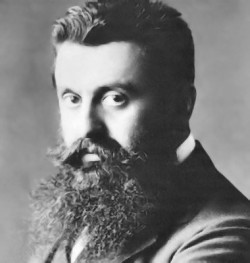 Zionism was born in this milieu of nationalism and imperialism, both of which left an indelible mark on the character and ambitions of the Israeli state. The conviction of Theodor Herzl, modern Zionism’s founding father, was that the centuries of anti-Semitism were proof positive that Europe’s Jews could not be assimilated into mainstream Western society. They could only be safe if they possessed a nation state of their own.
 Just how a people that exercises no control over its own land, borders and natural resources can carry out such export-based growth is not explained. The report further recommends that the Palestinian Authority “should strive to build a business environment that is among the best in the world and not merely on par with its neighbors.”

 Zeolite is old. It is in Roman concrete that has held for two thousand years. It’s in the water filters of ancient cisterns. It’s in the stomachs of Pacific livestock whose keepers knew, somehow, that this grey crumbling rock made the animals healthier. It’s in Soviet clinical protocols from the 1960s. It’s in the standard emergency response to the Chernobyl explosion.
 Aletho News

