Excuse Me, But Israel Has No Right To Exist
By Sharmine Narwani – Al Akhbar – 2012-05-17
The phrase “right to exist” entered my consciousness in the 1990s just as the concept of the two-state solution became part of our collective lexicon. In any debate at university, when a Zionist was out of arguments, those three magic words were invoked to shut down the conversation with an outraged, “are you saying Israel doesn’t have the right to exist??”
Of course you couldn’t challenge Israel’s right to exist – that was like saying you were negating a fundamental Jewish right to have… rights, with all manner of Holocaust guilt thrown in for effect.
Except of course the Holocaust is not my fault – or that of Palestinians. The cold-blooded program of ethnically cleansing Europe of its Jewish population has been so callously and opportunistically utilized to justify the ethnic cleansing of the Palestinian Arab nation, that it leaves me utterly unmoved. I have even caught myself – shock – rolling my eyes when I hear Holocaust and Israel in the same sentence.
What moves me instead in this post-two-state era, is the sheer audacity of Israel even existing.
What a fantastical idea, this notion that a bunch of rank outsiders from another continent could appropriate an existing, populated nation for themselves – and convince the “global community” that it was the moral thing to do. I’d laugh at the chutzpah if this wasn’t so serious.
Even more brazen is the mass ethnic cleansing of the indigenous Palestinian population by persecuted Jews, newly arrived from their own experience of being ethnically cleansed.
But what is truly frightening is the psychological manipulation of the masses into believing that Palestinians are somehow dangerous – “terrorists” intent on “driving Jews into the sea.” As someone who makes a living through words, I find the use of language in creating perceptions to be intriguing. This practice – often termed “public diplomacy” has become an essential tool in the world of geopolitics. Words, after all, are the building blocks of our psychology.
Take, for example, the way we have come to view the Palestinian-Israeli “dispute” and any resolution of this enduring conflict. And here I borrow liberally from a previous article of mine…
The United States and Israel have created the global discourse on this issue, setting stringent parameters that grow increasingly narrow regarding the content and direction of this debate. Anything discussed outside the set parameters has, until recently, widely been viewed as unrealistic, unproductive and even subversive.
Participation in the debate is limited only to those who prescribe to its main tenets: the acceptance of Israel, its regional hegemony and its qualitative military edge; acceptance of the shaky logic upon which the Jewish state’s claim to Palestine is based; and acceptance of the inclusion and exclusion of certain regional parties, movements and governments in any solution to the conflict.
Words like dove, hawk, militant, extremist, moderates, terrorists, Islamo-fascists, rejectionists, existential threat, holocaust-denier, mad mullah determine the participation of solution partners — and are capable of instantly excluding others.
Then there is the language that preserves “Israel’s Right To Exist” unquestioningly: anything that invokes the Holocaust, anti-Semitism and the myths about historic Jewish rights to the land bequeathed to them by the Almighty – as though God was in the real-estate business. This language seeks not only to ensure that a Jewish connection to Palestine remains unquestioned, but importantly, seeks to punish and marginalize those who tackle the legitimacy of this modern colonial-settler experiment.
But this group-think has led us nowhere. It has obfuscated, distracted, deflected, ducked, and diminished, and we are no closer to a satisfactory conclusion… because the premise is wrong.
There is no fixing this problem. This is the kind of crisis in which you cut your losses, realize the error of your ways and reverse course. Israel is the problem. It is the last modern-day colonial-settler experiment, conducted at a time when these projects were being unraveled globally.
There is no “Palestinian-Israeli conflict” – that suggests some sort of equality in power, suffering, and negotiable tangibles, and there is no symmetry whatsoever in this equation. Israel is the Occupier and Oppressor; Palestinians are the Occupied and Oppressed. What is there to negotiate? Israel holds all the chips. They can give back some land, property, rights, but even that is an absurdity – what about everything else? What about ALL the land, property and rights? Why do they get to keep anything – how is the appropriation of land and property prior to 1948 fundamentally different from the appropriation of land and property on this arbitrary 1967 date?
Why are the colonial-settlers prior to 1948 any different from those who colonized and settled after 1967?
Let me correct myself. Palestinians do hold one chip that Israel salivates over – the one big demand at the negotiating table that seems to hold up everything else. Israel craves recognition of its “right to exist.”
But you do exist – don’t you, Israel?
Israel fears “delegitimization” more than anything else. Behind the velvet curtain lies a state built on myths and narratives, protected only by a military behemoth, billions of dollars in US assistance and a lone UN Security Council veto. Nothing else stands between the state and its dismantlement. Without these three things, Israelis would not live in an entity that has come to be known as the “least safe place for Jews in the world.”
Strip away the spin and the gloss, and you quickly realize that Israel doesn’t even have the basics of a normal state. After 64 years, it doesn’t have borders. After six decades, it has never been more isolated. Over half a century later, and it needs a gargantuan military just to stop Palestinians from walking home.
Israel is a failed experiment. It is on life-support – pull those three plugs and it is a cadaver, living only in the minds of some seriously deluded foreigners who thought they could pull off the heist of the century.
The most important thing we can do as we hover on the horizon of One State is to shed the old language rapidly. None of it was real anyway – it was just the parlance of that particular “game.” Grow a new vocabulary of possibilities – the new state will be the dawn of humanity’s great reconciliation. Muslims, Christians and Jews living together in Palestine as they once did.
Naysayers can take a hike. Our patience is wearing thinner than the walls of the hovels that Palestinian refugees have called “home” for three generations in their purgatory camps.
These universally exploited refugees are entitled to the nice apartments – the ones that have pools downstairs and a grove of palm trees outside the lobby. Because the kind of compensation owed for this failed western experiment will never be enough.
And no, nobody hates Jews. That is the fallback argument screeched in our ears – the one “firewall” remaining to protect this Israeli Frankenstein. I don’t even care enough to insert the caveats that are supposed to prove I don’t hate Jews. It is not a provable point, and frankly, it is a straw man of an argument. If Jews who didn’t live through the Holocaust still feel the pain of it, then take that up with the Germans. Demand a sizable plot of land in Germany – and good luck to you.
For anti-Semites salivating over an article that slams Israel, ply your trade elsewhere – you are part of the reason this problem exists.
Israelis who don’t want to share Palestine as equal citizens with the indigenous Palestinian population – the ones who don’t want to relinquish that which they demanded Palestinians relinquish 64 years ago – can take their second passports and go back home. Those remaining had better find a positive attitude – Palestinians have shown themselves to be a forgiving lot. The amount of carnage they have experienced at the hands of their oppressors – without proportional response – shows remarkable restraint and faith.
This is less the death of a Jewish state than it is the demise of the last remnants of modern-day colonialism. It is a rite of passage – we will get through it just fine. At this particular precipice in the 21st century, we are all, universally, Palestinian – undoing this wrong is a test of our collective humanity, and nobody has the right to sit this one out.
Israel has no right to exist. Break that mental barrier and just say it: “Israel has no right to exist.” Roll it around your tongue, tweet it, post it as your Facebook status update – do it before you think twice. Delegitimization is here – have no fear. Palestine will be less painful than Israel ever was.
Sharmine Narwani is a commentary writer and political analyst covering the Middle East. You can follow Sharmine on twitter @snarwani.
Related articles
- Revisiting the Palestine question: An interview with Ilan Pappe (alethonews.wordpress.com)
- Solidarity and Realpolitik: My Response to Jeff Halper (alethonews.wordpress.com)
- Top 10 Facts You Probably Didn’t Know About the #Nakba (alethonews.wordpress.com)
May 17, 2012 Posted by aletho | Civil Liberties, Ethnic Cleansing, Racism, Zionism, Supremacism, Social Darwinism, Timeless or most popular | Israel, Jewish State, Palestine, Right To Exist | Leave a comment
That Was Now, This is Then: Another Pro-War Resolution Hits the House Floor
By Nima Shirazi | Wide Asleep in America | May 17, 2012
On Tuesday afternoon, the U.S. House of Representatives debated H.Res. 568, an AIPAC-sponsored bill designed to outlaw diplomacy with Iran and take the United States Congress one step closer to authorizing an illegal, unprovoked and premeditated military attack on Iran.
Debunking statements about Iran made by House Representatives and Senators on the floor of Congress is tedious and boring. Most of the statements are inarticulate readings of AIPAC-drafted talking points and boilerplate hasbara. M.J. Rosenberg has already excellently addressed the point of this legislation and there is no need to repeat, ad nauseum, why most of what’s in the bill is wrong, how 13,000 AIPAC operatives were dispatched through the halls of Congress to garner sponsorship and support for the bill, how shameful it is for elected officials to spout pure propaganda about silly cartoon drawings and absurd assassination plots, and how – despite the many repetitions of the same infamous and long–debunked claim (which has literally appeared in over 50 Congressional resolutions since 2005) – even Israeli Minister of Intelligence and Atomic Energy Dan Meridor admitted on Al Jazeera that Iran has never threatened to “wipe Israel off the map.”
No, instead of all that, this time around it’s best to just take a look at how statements made during yesterday’s floor debate compare to statements made over a decade ago, if not longer. After so much deceit, destruction and death, how can anyone take this stuff seriously?
Ileana Ros-Lehtinen (R-FL), October 9, 2002:
Saddam Hussein is not far from developing and acquiring the means to strike the United States, our friends and our allies with weapons of mass destruction. Thus, if we do not act now, when?
Ileana Ros-Lehtinen (R-FL), May 15, 2012:
The Iranian regime continues to pose an immediate and growing threat to the United States, to our allies, and to the Iranian people. We are running out of time to stop the nightmare of a nuclear weapons-capable Iran from becoming a reality…We must meet our responsibility to the American people and protect the security of our Nation, our allies, and the world from this threat of a nuclear capable Iran.
Madeleine Albright, February 18, 1998:
[T]hat the leaders of a rogue state will use nuclear, chemical or biological weapons against us or our allies is the greatest security threat we face.
Rush Holt (D-NJ), May 15, 2012:
The threat of nuclear proliferation is the greatest threat to world peace. A nuclear Iran would destabilize the region and threaten the United States and our allies.
Howard Berman (D-CA), October 10, 2002:
But under today’s circumstances, the best way to give peace a chance and to save the most lives, American and Iraqi, is for America to stand united and for Congress to authorize the President to use force if Saddam does not give up his weapons of mass destruction. Confront Saddam now, or pay a much heavier price later.
Howard Berman (D-CA), May 15, 2012:
What better time for this body to send an unambiguous message that Iran must never be allowed to achieve a nuclear weapons capability and that its nuclear weapons program must end once and for all?
George W. Bush, January 29, 2002:
By seeking weapons of mass destruction, these regimes pose a grave and growing danger…[T]ime is not on our side. I will not wait on events, while dangers gather. I will not stand by, as peril draws closer and closer. The United States of America will not permit the world’s most dangerous regimes to threaten us with the world’s most destructive weapons.
Gene Green (D-TX), May 15, 2012:
Iran is developing the capability to quickly produce a nuclear weapon at a time of its choosing. Iran’s acquisition of such a capability would create a significant new regional danger and be an immediate threat to America’s interest and allies in the Middle East.
John McCain (R-AZ), Jesse Helms (R-NC), Henry Hyde (R-IL), Richard Shelby (R-AL), Harold Ford (D-TN), Jr., Joe Lieberman (D-CT), Trent Lott (R-MS), Ben Gilman (R-NY) and Sam Brownback (R-KS), December 5, 2001:
The threat from Iraq is real, and it cannot be permanently contained…We have no doubt that these deadly weapons are intended for use against the United States and its allies. Consequently, we believe we must directly confront Saddam, sooner rather than later.
Howard Berman (D-CA), May 15, 2012:
And so, as the window is closing, we send a clear message that the House is aligned with the administration in thoroughly rejecting containment…In fact, we have no choice but to stop Iran’s nuclear weapons program before it ever reaches that point.
Steny Hoyer, (D-MD), October 9, 2002:
[Saddam Hussein] continues his efforts to develop and acquire weapons of mass destruction, and he sponsors international terrorism. Saddam Hussein continues to be an unacceptable threat whose duplicity requires action, action now.
Steny Hoyer (D-MD), May 15, 2012:
The most significant threat to peace, regional security, and American interests in the Middle East is Iran’s nuclear program…Iran continues to be a sponsor of groups committed to the destruction of our ally Israel and of groups that threaten Americans throughout the world.
John Edwards (D-NC), October 7, 2002:
Saddam Hussein’s regime is a grave threat to America and our allies, including our vital ally, Israel… Every day he gets closer to his longtime goal of nuclear capability. We must not allow him to get nuclear weapons.
Eni Faleomavaega (D-American Samoa), May 15, 2012:
[I]t is imperative that the United States and the international community understand that a nuclear-capable Iran is a global threat and a danger to the United States and, just as important, to the State of Israel…This is a direct threat to our closest ally in the Middle East.
George W. Bush, March 19, 2003:
The people of the United States and our friends and allies will not live at the mercy of an outlaw regime that threatens the peace with weapons of mass murder.
Ileana Ros-Lehtinen, May 15, 2012:
For the Iranian regime, the possession of the capability to produce a nuclear weapon would be almost as useful as actually having one…Tehran would be in the driver’s seat, and the security of the United States, Israel, and our many other allies would be in their hands.
George W. Bush, March 13, 2002:
First of all, we’ve got all options on the table, because we want to make it very clear to nations that you will not threaten the United States or use weapons of mass destruction against us, or our allies or friends…[Saddam Hussein] is a problem, and we’re going to deal with him. But the first stage is to consult with our allies and friends, and that’s exactly what we’re doing.
Rob Andrews (D-NJ), May 15, 2012:
[W]e are negotiating with a country that has conceived its nuclear weapons program in secret, that has brandished its nuclear weapons program with the rhetoric of hostility, and for whom the attainment of a nuclear weapon would be fraught with peril for free people everywhere…[O]ur position must be that we will not support or stand for an Iran with nuclear weapons.
George W. Bush, August 13, 2005:
As I say, all options are on the table. The use of force is the last option for any president and you know, we’ve used force in the recent past to secure our country…In all these instances we want diplomacy to work and so we’re working feverishly on the diplomatic route and we’ll see if we’re successful or not.
Barack Obama, January 24, 2012:
Let there be no doubt: America is determined to prevent Iran from getting a nuclear weapon, and I will take no options off the table to achieve that goal. But a peaceful resolution of this issue is still possible, and far better, and if Iran changes course and meets its obligations, it can rejoin the community of nations.
Howard Berman (D-CA), May 15, 2012:
The urgent nature of the Iranian nuclear threat demands that the United States work with our allies to do everything possible diplomatically, politically, and economically to prevent Iran from acquiring a nuclear weapons capability. No option, as the President has said, can be taken off the table.
Related articles
- AIPAC Resolution Demanding War With Iran On House Floor Tomorrow (alethonews.wordpress.com)
- U.S. Sides With Israel’s Nukes Over Iran’s Lack Thereof (alethonews.wordpress.com)
- AIPAC Bomb Iran Resolution On House Floor TODAY (mjayrosenberg.com)
May 17, 2012 Posted by aletho | Deception, Mainstream Media, Warmongering, Timeless or most popular, Wars for Israel | American Israel Public Affairs Committee, Congress, Howard Berman, Ileana Ros-Lehtinen, Iran, United States, United States Congress | Leave a comment
German citizen sues CIA for abduction, torture
Press TV – May 16, 2012
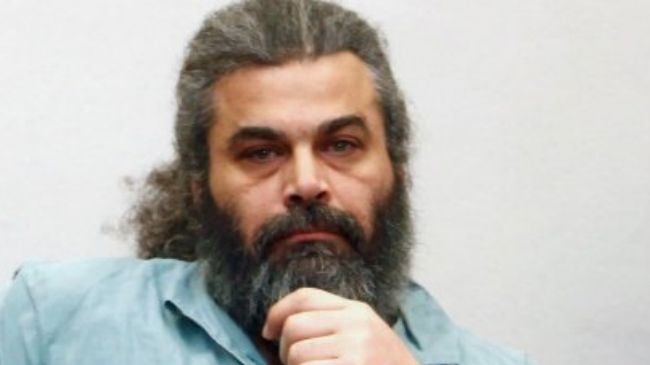
A German citizen, who says was abducted in Macedonia by the CIA and taken to a prison in Afghanistan and tortured, has demanded justice from Europe’s human rights court.
Khaled El-Masri of Lebanese descent says he was brutally tortured and interrogated at a secret CIA-run prison in Afghanistan for more than four months after being kidnapped from Macedonia in 2003, the Associated Press reported.
On Wednesday, Masri took his case to the European Court of Human Rights.
“Mr. El-Masri has spent the last eight years seeking legal redress for the crimes that were committed against him,” said James Goldston, who is the executive director of the Open Justice Initiative, a rights group that campaigns against the US extraordinary rendition practice.
Extraordinary rendition is a practice enabling the US apprehension and extrajudicial transfer of a person from one state to another.
He noted, “There is abundant evidence, including data on CIA flights to and from [Macedonia’s capital] Skopje.”
Masri was eventually released after the CIA realized it had mistaken him for another suspect.
He is also suing the Macedonian government for its role in the kidnapping, an accusation that the authorities in Skopje deny.
The court will consider whether Macedonian agents actually kidnapped Masri, and, if they did, whether they knew what would happen to him after they handed him over to US authorities.
May 16, 2012 Posted by aletho | Civil Liberties, Subjugation - Torture, Timeless or most popular | Central Intelligence Agency, CIA, European Court of Human Rights, Khalid El-Masri, Macedonia | Leave a comment
Top 10 Facts You Probably Didn’t Know About the #Nakba
Permission To Narrate
1. Nakba is the Arabic word for catastrophe. It is used to describe the Palestinian loss of land and property during the depopulation of Palestine from 1947-1949 and does not refer simply to the declaration of a state of Israel.
2. 212 localities depopulated and at least half of the refugees created during the Nakba were created prior to May 15th, which is, prior to the entry of armies of other Arab states. The largest Palestinian cities at the time, Yaffa and Haifa, were emptied of the vast majority of their inhabitants before May 15th, 1948. The idea that refugee creation happened only after, or only as a result of, the mobilization of Arab armies is patently false.
3. At every stage of the war, the Yishuv/Israeli forces were superior in training, equipment and numbers to the combined Arab armies.
4. The Zionists prepared extensive data collection efforts to map out intelligence relating to the Palestinian villages for a decade prior to the war. Detailed information about each village was kept including information on the number of inhabitants, the village’s resources, the potential activists that resided within it and what its political affiliations were.
5. Of the over 500 Palestinian villages depopulated during the Nakba, 303 were depopulated as a result of either direct expulsion carried out by Yishuv/Israeli forces or as a result of attack by Yishuv/Israel forces.
6. Of the depopulated villages, 81 have been completely obliterated which means there is no traceable sign of their existence. Rubble was identified at the site of another 140 villages. Some standing walls were apparent at another 60 villages while 74 more had few houses intact. Other villages had houses intact and occupied by Israelis.
7. Golda Meir struck a secret agreement with the King of Jordan before the war. Even though Jordan’s Arab Legion was the most formidable of the Arab armies, and even though the massacre at Deir Yassin tested this agreement, the Jordanian forces didn’t cross into territory that was designated for the Jewish State under the UN partition plan.
8. After the depopulation of towns and villages, rampant looting of personal property took place. Israeli civilians and soldiers took part in stealing from vacated Palestinian homes and shops. Israeli historian Tom Segev notes that 1,800 trucks were taken from the town of Lydda alone.
9. While 700-800,000 Palestinians were made refugees and not permitted to return by the state of Israel, 150,000 did remain inside Israel and many became internally displaced persons who still lost their property and were subjected to martial law until 1966 and various discriminatory laws since then.
10. Yitzhak Rabin, an officer during the 1948 war, included a description of orders to forcibly expel tens of thousands of Palestinian civilians in his memoirs. The State of Israel prevented this description from being printed when his memoirs were published and, as far as I am aware, continues to prevent it today.*
*UPDATE: The censored passage from Rabin’s memoirs was published in the appendix of a 1996 English version published after Rabin’s death. It is unclear if the passage is permitted for inclusion within the text of the memoirs themselves or in versions published in Hebrew or in Israel.
Related articles
- Dire Nakba memories live by the day (alethonews.wordpress.com)
- Nakba Law in action: Students must pay expenses for ceremony (alethonews.wordpress.com)
- #Nakba64 | Israeli forces arrest 20 Palestinians & injure 250 during An-Nakba day (occupiedpalestine.wordpress.com)
- Tel Aviv University imposes restrictions on Nakba Day events (alethonews.wordpress.com)
May 16, 2012 Posted by aletho | Ethnic Cleansing, Racism, Zionism, Timeless or most popular, War Crimes, Wars for Israel | Golda Meir, Israel, Nakba, Palestine, Yitzhak Rabin, Zionism | Leave a comment
CNN: The Latest Outlet for Roger Noriega’s Paranoid Speculations
By Keane Bhatt | NACLA | May 14, 2012
On May 2, CNN executive producer Arthur Brice published what was purported to be a news article on Venezuela. Instead, Brice’s 4,300-word screed, titled “Chavez Health Problems Plunge Venezuela’s Future Into Doubt,” is little more than a platform for the bizarre theories of Roger Noriega, an ultra-rightwing lobbyist and one-time diplomat under George W. Bush, who Brice references over two dozen times throughout his article.
As a political commentator, Noriega pontificates with total brazenness. He appeared as the chief pundit in Brice’s CNN piece six months after announcing—based on what he said was the belief of Chávez’s own medical team—that the Venezuelan president was “not likely to survive more than six months.” Noriega is not fazed by facts. He promotes his fantastical claims in many major news outlets, often based on anonymous sources. Take, for example, his 2010 Foreign Policy article, “Chávez’s Secret Nuclear Program,” whose subtitle reads: “It’s not clear what Venezuela’s hiding, but it’s definitely hiding something—and the fact that Iran is involved suggests that it’s up to no good.” (State Department officials dismissed this suspicion with “scorn.”)
CNN’s interviews with Noriega and the other mostly rightwing analysts likely led to this demonstrably false claim at the beginning of Brice’s May 2 article: “Diosdado Cabello, a longtime Chavez cohort . . . amassed tremendous power in January when Chavez named him president of the National Assembly.” In fact, even El Universal, a daily Venezuelan newspaper long-aligned with the opposition, conceded in a January 5 report that Cabello was elected as the new president of the National Assembly, even if “only with the votes” of the majority United Socialist Party of Venezuela (PSUV). Ewan Robertson of Venezuelanalysis.com found that 98 deputies of the pro-government bloc supported Cabello, while the 67-member opposition bloc opposed him. Such mundane electoral processes have guided much of Venezuela’s political dynamics over the past decade.
The rest of CNN’s long-winded compilation of hearsay proceeds in the same way. To give two examples, Brice turns to Venezuelan doctor Jose Rafael Marquina to shed light on Chávez’s current state of health. By Brice’s own admission however, Marquina “practices in Florida and has no direct connection with the case but says he has colleagues who know what is happening.” On the separate issue of Venezuelan politics, “the Cubans,” Brice writes, “may only have the power to suggest and manipulate as best they can,” but he also cites “some observers” who fear the Cubans could leverage their “perceived point men” in the country to unleash “militias in an attempt to take over.” Brice then quotes Noriega as saying, “I have no doubts that some Cubans would use violent means to deal with Venezuelans.”
These examples are indicative of CNN’s desire to spin a yarn of intrigue. Venezuela’s October presidential vote should be no different from the past. Closely monitored, free and fair elections have been the final word in political outcomes in Venezuela. But by relying on telephone interviews with self-proclaimed “analysts” almost exclusively based in the United States, CNN portrays Venezuelan politics as a grand chess game of “powerful men trying to bend the arc of history because they believe their president’s life may be slipping out of the hands of doctors and into the hands of God.” For CNN, Venezuelan voters play a marginal role, if any at all—it’s a sensationalized struggle between drug-dealing generals, Cuban spooks, well-connected cronies, armed militias, and a dying, charismatic strongman in thrall to Fidel Castro.
Had Brice decided to report on the ground from Caracas, he may have produced a video segment similar to the one that appears alongside his own article on CNN’s website. Journalist Paula Newton describes the free, government-provided medical attention in poor areas—a “concrete” reason why broad support for Chavez “isn’t exactly blind,” she says. Newton also shows Chávez voters displaying (reasonable) skepticism toward conjectures that the president is about to die or is already dead—a potentially valuable lesson for CNN, considering Brice’s general credulousness.
~
Noriega’s buffoonish commentary in outlets like CNN would be more amusing if not for his hands-on experience in crafting devastating U.S. policies toward Latin America. Noriega’s career in government, one may recall, includes administering “non-lethal” aid to the Nicaraguan Contra insurgency as a U.S. Agency for International Development (USAID) official in the 1980s. He followed this up as a senior staffer to Senator Jesse Helms in the 1990s, co-authoring the Helms-Burton Act, which intensified the U.S. embargo on Cuba. Bush II appointed him as ambassador to the Organization of American States in 2001, and in 2003, he replaced Iran-Contra veteran and Venezuelan coup-backer Otto Reich as Bush’s Assistant Secretary of State for Western Hemisphere Affairs. For this post—his last in government before switching over to the private sector—Noriega had big shoes to fill, and he undoubtedly rose to the occasion.
Whereas Reich failed to roll back the leftward tide of Venezuela in 2002 during his tenure (the military coup which overthrew Hugo Chávez lasted only two days), Noriega triumphed in damming the populist flood of Lavalas in Haiti. As the only mass-based political movement in the most unequal country in the hemisphere, Lavalas, headed by the democratically elected president Jean-Bertrand Aristide, was an obvious threat to the Bush administration. The denouement of the administration’s destabilization campaign occurred in February 2004 when Aristide and his family were spirited away by a U.S. plane in the middle of the night. Noriega initially denied that the United States played a role in Aristide’s removal, feebly claiming that Aristide had embarked on the plane by his own volition. But according to Dr. Paul Farmer—Harvard health specialist and UN Deputy Special Envoy for Haiti—Noriega admitted “during a House hearing that Aristide did not know of his destination until less than an hour before landing in the Central African Republic.” Robert White, a former U.S. ambassador to El Salvador and Paraguay, told Newsday right before the coup that “Roger Noriega has been dedicated to ousting Aristide for many, many years, and now he’s in a singularly powerful position to accomplish it.”
Today, Noriega divides his time between his post as a Latin America “scholar” at the pro-corporate American Enterprise Institute (AEI) think tank, and as a registered lobbyist for various interests in countries that are the subjects of his widely published commentaries. Noriega’s influence-peddling has been extremely effective in recent years. For example, in addition to writing opinion pieces defending the 2009 Honduran coup d’etat, Noriega—who was hired to represent a Honduran textile manufacturers group—organized a meeting between the coup regime’s supporters and U.S. Senators less than 10 days after the overthrow of the democratically elected president, Manuel Zelaya. Daniel W. Fisk, who helped set U.S. policies in Central America as a high-ranking government official in the 1980s and ‘90s, attended the meeting. According to The New York Times, Fisk was “stunned by the turnout.” “I had never seen eight senators in one room to talk about Latin America in my entire career,” he was quoted as saying.
The Times framed Noriega’s actions toward Honduras as a vestige of Cold War planning. Noriega, Reich, and Fisk, wrote The Times, viewed Honduras as “the principal battleground in a proxy fight with Cuba and Venezuela,” two countries that the three men characterized “as threats to stability in the region in language similar to that once used to describe the designs of the Soviet Union.” Noriega certainly warned against a new red menace when he supported Zelaya’s overthrow; Honduras was ground zero in what Noriega called “the continued spread of Chavista authoritarianism under the guise of democracy.”
~
Given Noriega’s disturbing record, it is astonishing that CNN produced a news piece on Venezuela through the lens of a lobbyist with obvious conflicts of interest in Latin America. Brice’s article, which never mentions Noriega’s lobbying, is dominated by comments like these:
Noriega and other observers have said [Chávez’s] appointments of Cabello and Rangel Silva have turned Venezuela into a narcostate. . . . ‘If Cabello and Rangel Silva resort to dirty work to hold things together, Maduro is a guy they can bring in to give a veneer of respectability to the international community,’ Noriega said, calling [the hypothetical scenario he just created] a ‘junta kind of arrangement.’ . . . The military also would face deep divisions if called upon to fire on Venezuelan citizens. . . . “The elections are, from [Cabello and Rangel Silva’s] standpoint, expendable,” [Noriega] said. “On the other hand, if they believe they can add a patina of legitimacy, they will hold them. They’re going to be hard-pressed to make a legitimacy argument with a narco kingpin in power.”
Through CNN, Noriega is able to publicly fret over the prospects of a Venezuelan military coup (like the one the Bush administration and the IMF supported in 2002) and criticize Venezuela’s purported drug trafficking (like the kind carried out by CIA asset Manuel Noriega and the U.S.-backed Contras). Noriega preemptively disapproves of a hypothetical Venezuelan election whose purpose, he says, would be to “add a patina of legitimacy” (despite Noriega’s own endorsement of the U.S.-backed sham elections in Honduras in 2009, which were conducted under a dictatorship).
There is also some historical context behind Brice’s unquestioning use of terms like “narcogenerals,” “narcostate,” “narcoterrorism,” and “narco kingpin” with relation to Venezuela. Many of these instances originate from Noriega’s direct quotes to CNN. This is just the latest example of media manipulation that Noriega’s colleagues mastered long ago. From 1983-86 Reich headed a taxpayer-funded propaganda outlet, the Office of Public Diplomacy, which, among other activities, placed false reports in major outlets that the Sandinista government in Nicaragua was involved in narcotrafficking. Haiti is another case: In 1992, the CIA created a fraudulent psychological profile on Aristide, which Senator Jesse Helms then used to denounce the president as a “psychopath,” a claim that was uncritically parroted by the press at the time. Aristide, the diminutive liberation theologian, was also the subject of a U.S. grand jury investigation due to his alleged involvement in narcotrafficking. Although the media repeated the claim that Aristide’s was running drugs, human-rights attorney Brian Concannon pointed out in 2006 that ultimately, “not a single charge [was] issued from the courthouse.” (U.S. efforts to assassinate Aristide’s character through the courts continue up to the present day.)
~
Roger Noreiga’s nuttier theories, thankfully, were not incorporated into the piece. Here are just a few short excerpts of Noriega’s baseless output as of late:
- In a March 2011 article for AEI titled, “U.S. Diplomats Clueless on Alleged Chávez Plot to Kill the President of Panama,” Noriega asked, “If Panamanian authorities dismissed this as a hoax, why have senior officials of that government expressed their gratitude to me for revealing the plot months since the incident? And why on earth would Chávez risk an attack on Martinelli? I cannot answer these questions.”
- In another AEI entry from October 2011, titled “The Mounting Hezbollah Threat in Latin America,” Noriega contends that “Hezbollah’s presence in Latin America dates to the mid-1980s, when it began sending operatives into the notoriously lawless region known as the tri-border area . . . Their activity also includes pirating software and music.”
- In the March 2011 Washington Post op-ed “Is There a Chavez Terror Network on America’s Doorstep?” Noriega is able to find both al-Qaeda and Iranian operations in Venezuela: “The threat posed by globe-trotting terrorists is ever-present,” he writes. “A U.S. security official told me in mid-January that two known al-Qaeda operatives were in Caracas planning a ‘chemical’ attack on the U.S. embassy . . . A Venezuelan government source has told me that two Iranian terrorist trainers are on Venezuela’s Margarita Island instructing operatives who have assembled from around the region. In addition, radical Muslims from Venezuela and Colombia are brought to a cultural center in Caracas named for the Ayatollah Khomeini and Simon Bolivar for spiritual training.”
- In Noriega’s April 2010 ultimatum in The Wall Street Journal, “Time to Confront the Tehran-Caracas Axis,” he uncovers yet another sinister plot: “[T]he Canadian uranium exploration company U308 Corp has recorded a substantial source of uranium in the Roraima Basin, which straddles the border between Guyana and the Venezuelan province of Bolívar. Iranian or other Middle Eastern individuals operate a tractor factory, cement plant and gold mine in this region.”
Noriega concludes this WSJ op-ed by appealing to international law. He writes that Venezuela’s nefarious plans “should be challenged as a threat to peace and an act of aggression under Chapter 7 of the United Nations Charter.” This is a perfectly appropriate way to deal with any rogue state that, in Noriega’s words, is prone to “meddle in the internal politics” of other countries, and provides “support for terrorist groups in the Americas.” Unfortunately, Noriega has it upside down. It is not Venezuela, but the United States that is unequivocally responsible for doing both kinds of activities. But don’t hold your breath waiting for Noriega to equally apply such standards.
Related articles
- US ambassadors to Venezuela: chronology of failure (alethonews.wordpress.com)
May 16, 2012 Posted by aletho | Deception, Mainstream Media, Warmongering, Militarism, Timeless or most popular, Wars for Israel | CNN, Diosdado Cabello, Paula Newton, Roger Noriega, United Socialist Party of Venezuela, United States, Venezuela | Leave a comment
Chile: Human Rights Activists Protest New US Base
Weekly News Update on the Americas | May 13, 2012
A US military training center in the port city of Concón, in the central Chilean province of Valparaíso, will be used for exercises “clearly oriented toward the control and repression of the civilian population,” according to an open letter that more than 20 human rights organizations sent Defense Minister Andrés Allamand on May 7. The US government has spent $460,000 constructing the installation, which opened on Apr. 5 at the Chilean military’s Fort Aguayo naval base. UPI Business News writes that the site “is growing into a major destination for regional military trainers and defense industry contractors.”
According to the US Southern Command (USSC), which heads US military operations in Latin America and the Caribbean, the installation will be used for training in Military Operations on Urban Terrain (MOUT) by Latin American soldiers as they prepare for international operations, such as United Nations (UN) peacekeeping missions. But the human rights groups wrote in their letter that the Fort Aguayo training ground—a simulation of an urban zone, with eight buildings and sidewalks and roads—suggests plans for military intervention in civilian society. The groups noted that the installation was opened at a time when “broad and massive social demonstrations are developing on the part of the citizenry throughout the country.” [The government of rightwing president Sebastián Piñera has been shaken over the past year by militant protests by students, the indigenous Mapuche, residents of the southern region of Aysén, and other groups; see Updates #1122, 1127].
The human rights organizations said the US lacks “the moral quality to teach ‘peace operations,’” since “it has promoted coups, financed destabilization operations in sister countries, and has promoted war in the world. We don’t forget that in 2009 the Soto Cano base in Honduras, with US military personnel, was used to implement the coup d’état” against former president José Manuel Zelaya Rosales [2006-2009]. The letter also held the US responsible for the brutal 1973 coup in Chile and for training “the worst human rights violators in our country” at the US Army’s School of the Americas. (El Ciudadano (Chile) 5/9/12; Adital (Brazil) 5/10/12; People’s World 4/26/12; UPI Business News 4/30/12)
The Southern Command is also planning to build an installation in Argentina, at the airport in Resistencia, capital of the northeastern province of Chaco. The plan seems to contradict center-left president Cristina Fernández de Kirchner’s policy against allowing foreign military bases, although the province’s governor, Jorge Milton Capitanich, insists that the installation isn’t a “base,” since the US now describes its facilities with terms like “Cooperative Security Location” (CSL) and “Forward Operating Location” (FOL).
The $3 million installation in Chaco will ostensibly be a humanitarian aid center for dealing with natural disasters, but critics suspect the real goal is to monitor the sensitive Triple Frontier region, where the borders of Argentina, Brazil and Paraguay meet, and the Guaraní Aquifer, one of the world’s largest sources of fresh water. The US officer in charge of the project is Col. Edwin Passmore, who was expelled from Venezuela in 2008 on a charge that he had engaged in espionage while serving as US military attaché there. In November 2011 Passmore was involved in an incident in which a US military plane landed in Buenos Aires carrying undeclared electronic monitoring equipment, medications, and intelligence transmission devices.
The US currently has about 800 bases worldwide, with 22 in Latin America, including bases in Colombia, El Salvador, Honduras, Guatemala, Costa Rica, Panama, Paraguay and Peru; naval stations in Aruba and Curaçao; and a “CSL” under construction in the Dominican Republic. (People’s World 4/26/12; El Ciudadano 5/5/12)
Related articles
- Chile: Mapuche Still Face Exclusion And Inequality (eurasiareview.com)
May 15, 2012 Posted by aletho | Civil Liberties, Militarism, Timeless or most popular | Argentina, Chile, Honduras, Human rights, Latin America, United States, Urban warfare | Leave a comment
Friend or Foe?
By John Andrews | Dissident Voice | May 15th, 2012
The almost unknown subject of False Flag events is slowly creeping into people’s conscious awareness; and about time too.
The term comes from a tactic that was commonly employed many centuries ago by all the navies of fledgling empires. Although these navies very occasionally engaged in heroic battles with each other in order to protect the citizens of their countries from invading hoards, as our history books suggest, the far more common use of mighty battleships was for theft. Sinking an enemy ship was never the intention of these engagements, and would have been seen as something of a failure. The purpose was to capture the ship, preferably undamaged, and steal anything and everything from the personal possessions of the crew to the very ship itself, which would then be recycled by the victors. After all, what could possibly be the point of sinking an expensive ship, laden to the gunnels with the riches of plundered foreign colonies, when its capture would serve exactly the same political purpose, as well as providing vast wealth?
The Royal Navy, for example, routinely operated a “prize” system right up until quite recent times; and although acts of piracy don’t form quite the same staple diet in the senior service as they used to do, prize legislation remains on British statute books to this day. Right up until the nineteenth century “prize courts” would routinely assess and divvy-up the wealth of ships that had been attacked and seized by the jolly Jack Tars. Some of the plunder was apportioned to the ship’s crew. Of course, it wasn’t an equal distribution of wealth, where the loblolly boy, say, received as much of a cut as the captain; nor was the cut in any way equal to the share gifted to the high and mighty Lords of the Admiralty, who weren’t required to do anything more dangerous for their cut than over-indulge themselves in London society. However, some small portion of the “prize” would find its way to even the lowliest cabin boy – the original “trickle-down” effect perhaps. In short, the routine day-job of the glorious Royal Navy was plunder. In fact, the only way the great sailors of Nelson’s day differed from common pirates was that the piracy of Nelson’s navy was simply deemed to be legal. It’s a similar principle to the one that’s alive and well to this day, and helping to keep investment bankers out of jail.
But even hardened cynics such as myself find it difficult not to admire the considerable skill that was often required for some of the encounters that took place between the mighty warships of Nelson’s day. In the days before modern communications these great behemoths, seventy metres long with a thousand souls on board, could only use the power of the wind to move around, so finding and engaging and defeating an enemy in thousands of square miles of empty ocean was no easy matter, and the seamanship required for these encounters was often truly amazing. Apart from some acts of genuine courage, with perhaps just a hint of insanity, these sailors also relied on a host of devious tricks and raw cunning to capture a “prize”. Apart from plenty of luck, you also needed a good brain to be an effective captain in Nelson’s day; and it’s hardly surprising, given hundreds of years of regular practice in the dark arts of subterfuge and deceit, that the roots of the British intelligence service were established in the Royal Navy.
One of the many tricks used in the days of sail was to make your ship appear friendly to the watchful telescopes of the prospective prize; and the easiest way to do this was to ensure the flags your ship were flying were not those of your own country but were either exactly the same as those of the prize, or the same as those of whichever country was friendly to the prize. This simple ruse would, of course, eventually be discovered as a trick; and, of course, every ship’s crew knew about the trick. However, it would invariably buy some invaluable time, making all the difference between success and failure, enabling the hunter to get close enough to his prey to capture him before the darkness of night might come to the hapless victim’s rescue.
This tactic is still very much alive and well, and survives in modern language usage as the “false flag” attack, to mean an attack by someone who isn’t quite who they seem to be. Variations of it include attacks perpetrated by people pretending to be enemies of the state. These attacks may be carried out by the state’s own armed forces, or by paid mercenaries, or by allies of the state. History is rich with evidence.
Take, for example, the infamous sinking of the Maine. In 1898, when the US was beginning to flex its expansionist muscles abroad, the battleship USS Maine was blown up in Havana harbour. Although there was no evidence to support it, the incident was blamed on Spain, who controlled Cuba at the time; and it had the desired effect of triggering the Spanish American war which eventually led to Spain’s eviction from the island and the installation of a US puppet regime – a model that would be successfully repeated time and again for many decades to come. Fifty-five years later something very similar happened again – this time without going to the extra expense of actually sinking any ships.
On August 4, 1964 the world was informed that another US warship, the USS Maddox, had come under sustained attack by North Vietnam. It was the event which directly led to ten years of total hell for tens of millions of people in South East Asia, and whose effects are still being felt to this day. Fifty years after the false flag event of the Maddox, declassified documents revealed that the US government was fully aware at the time that no such attack had taken place. But by then, of course, the false flag had long served its purpose.
Although the term “false flag” originated from these naval deceptions, false flag incidents have never been solely confined to the high seas. Armies have always used any number of devices to deceive their victims, and anyone who’s ever watched a Hollywood war movie is probably aware of it; for how many of these movies have included a scene where either the good guys or the bad guys dress up in the uniforms of their enemy in order to carry out some raid or another? Is that not a completely routine story-line? Although many of these movies are obviously fictitious, these deceptions, which might also be called “false flag” adventures, are based on normal military tactics which have been used by almost every army, probably since the beginning of civilisation.
However, Hollywood movies seldom reveal the true evil and cynicism of war. Therefore not many of the 99%, who obtain much of their understanding of the world in general and history in particular from the silver screen, know anything at all about the truly dark side of all armies in general, and their leaders in particular. For how many Hollywood movies tell the stories of how armies routinely slaughter defenceless people? Although they will sometimes depict the enemy of the day carrying out these atrocities, they never show the so-called “good guys” doing it – which creates in the mind of the viewer the impression that our armies never behave in such a beastly fashion. But they most certainly do.
Consider the vast number of movies that came out of Hollywood telling how the west was won – how handfuls of brave adventurers defeated marauding hoards of screaming bloodthirsty savages, which was, in fact, a complete inversion of the truth. And how many war movies told the truth about the bombing of Dresden, or of Hiroshima and Nagasaki? These completely needless events took place in the closing days of World War Two, when Germany and Japan were already crushed nations. They were events which deliberately targeted hundreds of thousands of defenceless civilians, and served absolutely no military purpose whatsoever. They were war crimes, already outlawed by the Geneva Convention. Not many Hollywood movies tell us that.
Although these mass slaughters of defenceless civilians are a different aspect of the cynicism of war, and cannot be considered as false flag adventures, it’s important to cite these as evidence of the psychotic ruthlessness of our own trusted leaders and the brainwashed youngsters who are routinely conditioned to obey an order, any order.
It’s important to grasp this principle of war that not even Hollywood can glamorise: that our trusted leaders can and do routinely issue orders to slaughter innocent defenceless civilians, and that brainwashed young people then carry out those orders, and that society is then brainwashed into considering these young people to be heroes. Not even Hollywood can glamorise the deep cynicism of that fact.
My own personal first-hand experience of false flag adventures was obtained in the late seventies, in Rhodesia, where I was batting out my national service as an intelligence officer. Our army had a small unit of people called the Selous Scouts. They were considered the elite of the elite, and were supposedly originally created by a couple of junior officers serving in the Rhodesian SAS who thought the SAS wasn’t quite hard enough. I did some of my training with the Scouts. They were definitely different.
Later on, when I was operational, I was based in a small rural outpost called Rusape. For me it was a very comfortable posting and, I’m very glad to say, I managed to see out my time there without being injured and, I’m even more glad to say, without causing injury to anyone else.
Each morning, after a leisurely breakfast, I would saunter over to the operations room to see what was going on. Like almost every military operations room in the world, one wall of it was given over to a huge map of our area of responsibility. Most of the time it was just a map of rural Rhodesia, with little coloured stickers on it depicting some sort of recent “terrorist” incident – such as a landmine going off, or an attack on some isolated school or clinic. My job would be to go out to investigate these incidents and report on them. Sometimes it was very harrowing, but mostly it was a fairly pleasant way to sit out the war.
But every now and then I would turn up to the ops room in the morning and would be met with the sight of a sizeable chunk of the map covered over in hatched lines. Everyone understood that that area had been “frozen”. This meant that no army personnel or police were to go into that area. The Scouts had moved into it. For a few weeks after that life went on pretty much as normal everywhere else on the patch; but no information at all emerged from the area with the mysterious hatching; and then one morning I’d turn up for work and the hatching would have been removed from the map as mysteriously as it had first appeared.
Within a day or two of that happening the reports would start rolling in from where the Scouts had been, about “terrorist” murders at some isolated village or another, of a “terrorist” rocket attack on a small business centre perhaps, or a “terrorist” landmine blowing up a rural bus. These would all have been carried out by the Scouts, dressed up as “terrorists” and using “terrorist” weaponry.
The purpose of these attacks was a variation of that old favourite: the hard cop/soft cop routine. The Scouts’ role was to try to out-terrorise the forces working for the likes of Robert Mugabe, to try to alienate the local population from Mugabe’s men by pretending to be Mugabe’s men and committing such atrocities that the locals would be repulsed by them. Then when the soft cops turned up in the shape of government forces, the locals would feel like offering their help and support. It’s called winning hearts and minds, and was a tactic that had already been used by US special forces in Vietnam before that, and by British special forces all over the place before that: Malaya, Congo, Kenya, Aden…
Some would dismiss false flag adventures as conspiracy theory, which is, of course, a very convenient way to persuade the 99% that our trusted leaders couldn’t possibly stoop so low. But history is rich with proof that they most certainly do stoop so low, with amazing frequency. So the really important lesson to learn in all of this is that whenever a so-called “terrorist” outrage occurs, especially those outrages where the perpetrators haven’t been caught in action (and rounding up “suspects” after the event cannot be trusted either – as the “Guildford Four” and “Birmingham Six”, for example, could confirm)… always, always recall the very real world of false flag adventures.
John Andrews is a writer whose main work is Peace Talk.
Related articles
- When False Flags Don’t Fly (corbettreport.com)
May 15, 2012 Posted by aletho | Deception, False Flag Terrorism, Militarism, Timeless or most popular, War Crimes | False flag, Royal Navy, Spanish–American War, United States, USS Maddox, USS Maine, World War II | Leave a comment
Dire Nakba memories live by the day
By Ramzy Baroud | Palestine Chronicle | May 14, 2012
Many Palestinians remember and reference al-Nakba, also known as the Catastrophe, on May 15 every year. The event marks the expulsion of nearly a million Palestinians, while their villages were destroyed.
The destruction of Palestine in 1947-48 ushered in the birth of Israel. Older generations relay the harsh and oppressive memory of their collective experience to younger Palestinians, many of whom live their own Nakbas today.
In covering al-Nakba, sympathetic Arab and other media play sad music and show black and white footage of displaced, frightened refugees. They rightly emphasize the concept of Sumud, steadfastness, as they show Palestinian of all ages holding unto the rusty keys of their homes and insisting on their right of return. Other, less sympathetic media discuss al-Nakba, if at all, as a side note – a nuisance in the Israeli narrative of a nation’s supposedly miraculous birth and its progression to an idyllic oasis of democracy. What such reductionist representations often fail to show is that while al-Nakba started, it never truly finished.
Those who underwent the pain, harm and loss of al-Nakba are yet to receive the justice that was promised to them by the international community. UN Resolution 194 states that “the refugees wishing to return to their homes and live at peace with their neighbors should be permitted to do so at the earliest practicable date” (Article 11). Those who wrought this injustice are also yet to achieve their ultimate objectives in Palestine. After all, Israel doesn’t have defined boundaries by accident.
David Ben Gurion, first Prime Minister of Israel, once prophesized that “the old (refugees) will die and the young will forget.” He spoke with the harshness of a conqueror. Ben Gurion carried out his war plans to the furthest extent possible. Every region in Palestine that was meant to be taken was captured, its people were expelled or massacred in their homes and villages. Ben Guiron ‘cleansed’ the land, but he failed to cleanse Israel’s past. Memory persists.
Ben Gurion referenced my own family’s village – Beit Daras – which witnessed three battles and a massacre. In an entry in his diaries on May 12, 1948, he wrote: “Beit Daras was mortared. Fifty Arabs (were killed). The (villages of) Bashit and Sawafir were occupied. There is mass exodus from nearby areas (neighbors in Majdal). We sustained 5 dead and 15 wounded. ” (War Diaries, 1947-1949).
More than fifty people were killed in Beit Daras that day. An old Gaza woman, Um Mohammed – who I discussed in my last book, My Father was a Freedom Fighter – refers to what is likely the same event:
“The town was under bombardment, and it was surrounded from all directions. There was no way out. The armed men (the Beit Daras fighters) said they were going to check on the road to Isdud, to see if it was open. They moved forward and shot few shots to see if someone would return fire. No one did. But they (the Zionist forces) were hiding and waiting to ambush the people. The armed men returned and told the people to evacuate the women and children. The people went out (including) those who were gathered at my huge house, the family house. There were mostly children and kids in the house. The Jewish (soldiers) let the people get out, and then they whipped them with bombs and machine guns. More people fell than those who were able to run. My sister and I…started running through the fields; we’d fall and get up. My sister and I escaped together holding each other’s hands. The people who took the main road were either killed or injured. The firing was falling on the people like sand. The bombs from one side and the machine guns from the other.”
Ben Gurion would not necessarily doubt Um Mohammed’s account. He candidly stated: “Let us not ignore the truth among ourselves…politically we are the aggressors and they defend themselves…The country is theirs, because they inhabit it, whereas we want to come here and settle down, and in their view we want to take away from them their country” (as quoted in Chomsky’s Fateful Triangle, pp. 91-2).
It is precisely for this reason that neither the old nor the young have forgotten. Every day is another manifestation of the same protracted al-Nakba that has lasted 64 years now. Young people’s hardships today are inextricably linked to the violent and horrific uprooting decades ago.
Al-Nakba has also remained an ongoing project through generations of Israeli Zionists. When Ben Gurion died in 1973, current Israeli Prime Minister Benjamin Netanyahu was in his mid-twenties. He was then serving his last year in the Israeli army, and today he rules Israel with a coalition that includes almost three quarters of the Israeli parliament. Like most Israeli leaders, he continues to contribute to the very discourse by which Palestine was conquered. He speaks of peace, while his soldiers and armed settlers take over Palestinian homes and farms. He makes repeated offers to Palestinians for ‘unconditional’ talks, as he repeats his violent rejection of every Palestinian aspiration. His lobby in Washington is much stronger than ever before. He reigns supreme, as he continues to fulfill the ‘vision’ of early Zionists.
Old keys and deeds of stolen lands attest to the intergenerational experience that is Al-Nakba. Today Palestinians continue to be herded behind military checkpoints. They are denied the right to proper medical care, and their ancient olive trees are ruthlessly bulldozed. What Israel has not been able to control, however, is the resolve of Palestinians. The prison, the checkpoint and the gun reside in our collective memory in a way that cannot be held captive, controlled, or shot.
In fact, al-Nakba is not a specific date or an estimation of time, but the entirety of those 64 years and counting. The event must not be assigned to the shelves of history, not as long as refugees are still refugees and settlers continue to rob Palestinian land. As long as Netanyahu speaks the language of Ben Gurion, other ‘catastrophic’ episodes will follow. And as long as Palestinians hold on to their keys and deeds, the old may die but the young will never forget.
Related articles
- #Nakba64 | Israeli forces clash with Palestinians on Nakba Day (occupiedpalestine.wordpress.com)
- #Nakba64 | Youth vigil in Hebron commemorates Nakba (occupiedpalestine.wordpress.com)
- Nakba Law in action: Students must pay expenses for ceremony (alethonews.wordpress.com)
- Tel Aviv University imposes restrictions on Nakba Day events (alethonews.wordpress.com)
May 15, 2012 Posted by aletho | Ethnic Cleansing, Racism, Zionism, Timeless or most popular | Al-Nakba, David Ben Gurion, Israel, Nakba, Palestine | Leave a comment
Nakba Law in action: Students must pay expenses for ceremony
By Noam Sheizaf | +972 | May 13 2012
A little over a year ago, the Israeli Knesset passed the Nakba Law, stating that institutions who receive state funding are not to permit any commemoration of the Palestinian catastrophe in 1948. During Israel’s War of Independence, 80 percent of the Arab population in what later became the State of Israel was displaced. Some of the Palestinians fled battle grounds, others were forcefully removed. None were allowed back, and their property was confiscated by the State of Israel. Palestinians mark their national catastrophe on May 15, the day following Israel’s declaration of independence.
A couple of years ago, the Knesset passed a bill aimed at limiting the discussion and commemoration of the Nakba entirely. The original bill ordered any person organizing a ceremony in memory of the Nakba to face criminal charges and a prison term of up to three years. The Knesset ended up passing a softer version of the bill, stating that any institution – even a Palestinian one – could lose state funding if it was to sponsor a Nakba-related event.
Tel Aviv University has permitted a Nakba memorial ceremony planned by Jewish and Palestinian students, but ordered it to take place just outside the university gates, in the main plaza. The university also forced the students to pay for the security expenses of the ceremony, contrary to the practice in all other events organized by students within the campus. The university cited the Nakba Law as the reason for this decision.
Haaretz reported today that Israel’s Minister of Education, Gidon Saar, urged Tel Aviv University to cancel the event altogether.
Needless to say, these developments cast a shadow on Israel’s self-perception as a democracy even within the Green Line. When mentioning an historical event at an academic institution is outlawed, one wonders what is truly left of freedom of speech.
Related articles
- Tel Aviv University imposes restrictions on Nakba Day events (alethonews.wordpress.com)
May 14, 2012 Posted by aletho | Civil Liberties, Ethnic Cleansing, Racism, Zionism, Timeless or most popular | Israel, Knesset, Nakba, Nakba Day, Tel Aviv University | Leave a comment
Israel arrests 800,000 Palestinians since 1948
Petra | May 12, 2012
 Gaza – Israel has arrested and imprisoned around 800,000 Palestinians since 1948 including children, according to Palestinian Ministry of Prisoners’ Affairs Abdul Nasser Farwaneh.
He added in a statistical report released today that the Israeli occupation forces adopted the policy of arrest on a daily basis to humiliate Palestinians, noting that Israel used some of them as human shields and executed many of them.
The Director of Palestinian Statistics Department said the period between 1948-1967 was the worst for Palestinian and Arab prisoners as there were random arrests and collective detention.
The Palestinians prisoners had been exposed to severe torture and abuse as they were deprived of minimum rights guaranteed to prisoners of war and conflicts by international conventions.
May 14, 2012 Posted by aletho | Civil Liberties, Subjugation - Torture, Timeless or most popular, War Crimes | Abdul Nasser Farwaneh, Israel, Palestinian prisoners in Israel | Leave a comment
What’s NATO Ever Done?
A Global Crime Spree
By JOHN LaFORGE | CounterPunch | May 14, 2012
Wondering why anyone would confront NATO’s summit in Chicago this month? A look at some of its more well-known crimes might spark some indignation.
Desecration of corpses, indiscriminate attacks, bombing of allied troops, torture of prisoners and unaccountable drone war are a few of NATO’s outrages in Afghanistan, Pakistan, Libya, Yemen and elsewhere. On March 20, 2012 Pakistani lawmakers demanded an end to all NATO/CIA drone strikes against their territory. As reported in The New York Times, Pakistan’s foreign secretary Jalil Jilani said April 26, 2012, “We consider drones illegal, counter-productive and accordingly, unacceptable.” On May 31 last year, Afghan President Hamid Karzai gave what he called his “last” warning against NATO’s bombing of Afghani homes, saying “If they continue their attacks on our houses … history shows what Afghans do with trespassers and with occupiers.”
While bombing Libya last March, NATO refused to aid a group of 72 migrants adrift in the Mediterranean. Only nine people on board survived. The refusal was condemned as criminal by the Council of Europe, a human rights watchdog.
NATO jets bombed and rocketed a Pakistani military base for two hours Nov. 26, 2011—the Salala Incident— killing 26 Pakistani soldiers and wounding dozens more. NATO refuses to apologize, so the Pakistani regime has kept military supply routes into Afghanistan closed since November.
The British medical journal Lancet reported that the US-led unprovoked 2003 bombing, invasion and military take-over of Iraq—which NATO officially joined in 2004 in a ‘training’ capacity—had resulted in over 665,000 civilian deaths by 2006, and 200,000 in the UN-authorized, 1991 Desert Storm massacre led primarily by the US with several NATO allies.
On April 12, 1999, NATO attacked the railway bridge over the Grdelica Gorge and Juzna Morava River with two laser-guided bombs. At the time, a five-car civilian passenger train was crossing the bridge and was hit by both bombs. Amnesty International and Human Rights Watch accused NATO of violating binding laws that require distinction, discrimination and proportionality.
NATO rocketed the central studio of Radio Televisija Srbije (TRS) in Belgrade, the state-owned broadcasting corporation, on April 23, 1999 during the Kosovo war. Sixteen civilian employees of RTS were killed and 16 wounded when NATO destroyed the building. Amnesty Int’l reported that the building could not be considered military, that NATO had violated the prohibition on attacking civilian objects and had therefore committed a war crime.
Headlines chronicle NATO’s crime spree
“U.S. troops posed with body parts of Afghan bombers.” Los Angeles Times, April 18, 2012
“Drones At Issue…: Raids Disrupt Militants, but Civilian Deaths Stir Outrage.” New York Times, March 18, 2012
“G.I. Kills 16 Afghans, Including 9 Children In Attacks on Homes.” New York Times, March 12, 2012
“NATO Admits Airstrike Killed 8 Young Afghans, but Contends They Were Armed.” New York Times, Feb. 16, 2012
“Informer Misled NATO in Airstrike That Killed 8 Civilians, Afghans Say.” (Seven shepherd boys under 14.) New York Times, Feb. 10, 2012
“Video [of U.S. Marines urinating on dead Taliban fighters] Inflames a Delicate Moment for U.S. in Afghanistan.” New York Times, Jan. 12, 2012
“Commission alleges U.S. detainee abuse.” Minneapolis StarTribune, Jan. 8, 2012
“Six Children Are Killed by NATO Airstrike in Afghanistan.” New York Times, Nov. 25, 2011
“American Soldier Is Convicted of Killing Afghan Civilians for Sport.” New York Times, Nov. 11, 2011
“Pakistan: U.S. Drone Strike Kills Brother of a Taliban Commander.” New York Times, Oct. 28, 2011
“Afghanistan officials ‘systematically tortured’ detainees, UN report says.” Guardian, & BBC Oct. 10; Washington Post, Oct. 11, 2011
“G.I. Killed Afghan Journalist, NATO Says.” New York Times, Sept. 9, 2011
“Cable Implicates Americans in Deaths of Iraqi Civilians.” New York Times, Sept. 2, 2011
“Civilians Die in a Raid by Americans and Iraqis.” New York Times, Aug. 7, 2011
“NATO Strikes Libyan State TV Transmitters.” New York Times, July 31, 2011
“NATO admits raid probably killed nine in Tripoli.” St. Paul Pioneer Press, June 20, 2011
“U.S. Expands Its Drone War to Take On Somali Militants.” New York Times, July 2, 2011
“NATO airstrike blamed in 14 civilian deaths.” St. Paul Pioneer Press, May 30, 2011
“Libya Effort Is Called Violation of War Act.” New York Times, May 26, 2011
“Raid on Wrong House Kills Afghan Girl, 12.” New York Times, May 12, 2011
“Yemen: 2 Killed in Missile Strike.” Associated Press, May 5, 2011
“NATO Accused of Going Too Far With Libya Strikes.” New York Times, May 2, 2011
“Disposal of Bin Laden’s remains violated Islamic principles, clerics say.” Associated Press, May 2, 2011
“Photos of atrocities seen as threat to Afghan relations.” St. Paul Pioneer Press, March 22, 2011
“Missiles Kill 26 in Pakistan” (“most of them civilians”) New York Times, March 18, 2011
“Afgans Say NATO Troops Killed 8 Civilians in Raid.” New York Times, Aug. 24, 2010
“A dozen or more” Afghan civilians were killed during a nighttime raid August 5, 2010 in eastern Afghanistan, NATO’s officers said. Chicago Tribune, Aug. 6, 2010
“Afghans Say Attack Killed 52 Civilians; NATO Differs.” New York Times, July 27, 2010
In June 2008, NATO bombers attacked a Pakistani paramilitary force called the Frontier Corps killing 11 of its soldiers. New York Times, Nov. 27, 2011
“Afghans Die in Bombing, As Toll Rises for Civilians.” New York Times, May 3, 2010
John LaForge works for Nukewatch, a nuclear watchdog and anti-war group in Wisconsin and edits its Quarterly.
May 14, 2012 Posted by aletho | Militarism, Timeless or most popular, War Crimes | Afghanistan, Libya, NATO, Pakistan, United States | Leave a comment
The Radical History of Mother’s Day
Nation of Change | May 12, 2012
There’s a good number of us who question holidays like Mother’s Day in which you spend more time feeding money into a system that exploits our love for our mothers than actually celebrating them. It’s not unlike any other holiday in America in that its complete commercialization has stripped away so much of its genuine meaning, as well its history. Mother’s Day is unique in its completely radical and totally feminist history, as much as it has been forgotten.
Mother’s Day began in America in 1870 when Julia Ward Howe wrote the Mother’s Day Proclamation. Written in response to the American Civil War and the Franco-Prussian War, her proclamation called on women to use their position as mothers to influence society in fighting for an end to all wars. She called for women to stand up against the unjust violence of war through their roles as wife and mother, to protest the futility of their sons killing other mothers’ sons.
Howe wrote:
Arise, then, women of this day!
Arise, all women who have hearts, Whether our baptism be of water or of tears!
Say firmly: “We will not have great questions decided by irrelevant agencies, Our husbands will not come to us, reeking with carnage, for caresses and applause. Our sons shall not be taken from us to unlearn All that we have been able to teach them of charity, mercy, and patience. We, the women of one country, will be too tender of those of another country To allow our sons to be trained to injure theirs.”[Read the remainder of Howe’s quote here]
The holiday caught on years later when a West Virginia women’s group led by Anna Reeves Jarvis began promoting it as a way to reunite families after the Civil War. After Jarvis’ death, her daughter began a campaign for the creation of an official Mother’s Day in honor of peace. Devoting much of her life to the cause, it wasn’t until 1914 when Woodrow Wilson signed it into national observance in 1914.
The holiday flourished, along with the flower industry. The business journal, the Florists Review, actually admitted to its desire to exploit the holiday. Jarvis was strongly opposed to every aspect of the holiday’s commercialization, arrested for protesting the sale of flowers, and petitioning to stop the creation of a Mother’s Day postage stamp.
Today we are in multiple wars that continue to claim the lives of thousands of sons and daughters. We are also experiencing a still-rising commercialization of nearly every aspect of life; the exploitation of every possible human event and emotion at the benefit of corporations.
Let’s take this Mother’s Day to excuse ourselves from the pressure to consume and remember its radical roots – that mothers, or rather all women, in fact, all people, have a stake in war and a responsibility as American citizens to protest the incredible violence that so many fellow citizens, here and abroad, must suffer through.
The thousands of civilian casualties in Afghanistan and Iraq as well as the devastating impact of post-traumatic stress disorder on our veterans are just the beginning of the terrible repercussion of war. As we saw last week an announcement of an extension of the military occupation of Afghanistan, let this mother’s day be a day after Julia Ward Howe’s own heart as we stand up and say no to 12 more years of war.
Related articles
- Julia Ward Howe: Mother’s Day Tribute to Mothers and to Their Gifts Making All Possible: Peace (peoplesadvocacycouncil.wordpress.com)
May 13, 2012 Posted by aletho | Militarism, Timeless or most popular, War Crimes | American Civil War, Franco-Prussian War, Julia Ward Howe, Mother's Day Proclamation, Mothers Day, United States | Leave a comment
Featured Video

Ivermectin and iodine
or go to
Aletho News Archives – Video-Images
From the Archives
UN declares war on ‘dangerous’ conspiracy theories
‘World is not secretly run by elites’
Free West Media | August 5, 2022
UNESCO says it is seriously concerned about the increase in “disinformation” and “conspiracy theories”. And they plan to put an end to it through a network of informants.
“Conspiracy theories can be dangerous,” the UN agency warned. “Often they ignore scientific evidence and polarize society with dire consequences. This has to stop.”
Unesco’s director-general warned that “conspiracy theories” could cause damage to people as well as to their health. “They reinforce misconceptions about the pandemic, reinforcing stereotypes that can fuel violence and violent, extremist ideologies,” said Audrey Azoulay.
The UN agency has launched a campaign to help people identify, debunk and report “conspiracy theories” to prevent them from spreading further.
This campaign is being carried out in collaboration with the European Commission, Twitter and the World Jewish Congress. The UN has created a toolkit to “debunk” such theories and smear anyone who dares to claim that governments are not fair and transparent.
The UN also warned that George Soros, the Rothschilds and Israel should not be linked to “alleged conspiracies”.
World events “are not secretly manipulated behind the scenes by powerful players with malicious intent,” the UN agency maintained.
And if anyone therefore comes across someone who believes that the world elite is plotting to consolidate power or direct events, then that person needs to take action. According to the UN agency, when meeting a “conspiracy theorist”, under no circumstances should one enter into a discussion. … continue
Blog Roll
-
Join 2,366 other subscribers
Visits Since December 2009
- 7,796,114 hits
Looking for something?
Archives
Calendar
Categories
Aletho News Civil Liberties Corruption Deception Economics Environmentalism Ethnic Cleansing, Racism, Zionism Fake News False Flag Terrorism Full Spectrum Dominance Illegal Occupation Mainstream Media, Warmongering Malthusian Ideology, Phony Scarcity Militarism Progressive Hypocrite Russophobia Science and Pseudo-Science Solidarity and Activism Subjugation - Torture Supremacism, Social Darwinism Timeless or most popular Video War Crimes Wars for IsraelTags
Afghanistan Africa AIPAC al-Qaeda Australia BBC Benjamin Netanyahu Brazil Canada CDC Central Intelligence Agency China CIA CNN Covid-19 COVID-19 Vaccine Donald Trump Egypt European Union Facebook FBI FDA France Gaza Germany Google Hamas Hebron Hezbollah Hillary Clinton Human rights Hungary India Iran Iraq ISIS Israel Israeli settlement Japan Jerusalem Joe Biden Korea Latin America Lebanon Libya Middle East National Security Agency NATO New York Times North Korea NSA Obama Pakistan Palestine Poland Qatar Russia Sanctions against Iran Saudi Arabia Syria The Guardian Turkiye Twitter UAE UK Ukraine United Nations United States USA Venezuela Washington Post West Bank WHO Yemen Zionism
 Aletho News
- Ukrainian air alert app hacked with fake nuclear warnings
- Ivermectin and iodine
- Congratulations climate skeptics — you are a ‘Hybrid weapon of war’ and a growing public health threat
- ‘The Arab Vote’: How Israeli Racism Has Ruined Their Elections
- Israel forces Palestinians in Gaza to choose between assassination alone or death with their families: Report
- US Approves Sale of 500 Patriot Missiles to Ukraine, Deliveries May Take Years
- German Imperialism: An Urgent Explainer
- Backed by AAP, West Virginia Proposal Would Allow Dental Hygienists to Give HPV Vaccine to 9-Year-Olds
- Poland Is the Symptom and Europe Is the Patient
- UAE security forces tortured, killed journalist for opposing Israel normalization: Report
- If Americans Knew
- An error has occurred; the feed is probably down. Try again later.
- No Tricks Zone
- Germany’s Green Energy Transition Becoming Increasingly Expensive…Another 6 Trillion Euros!
- Sudden Stratospheric Warming, Powerful El Niño Combination May Lead To Extreme Europe Cold, Energy Crisis!
- Two New Studies Find Thwaites Glacier Melt Cannot Be Driven By Human Activity Or A Warming Ocean
- E-Cars Reduce CO2 Emissions By Only 41% Compared To Internal Combustion Engine Vehicles
- Predictions Made By Renowned Climate Professor Over Past Decades Have Been Proven To Be Poor
- New Study Suggests Large Regions Of The Pacific Ocean Have Been Cooling For The Last 80 Years
- Germany’s Green Energy Debacle: High Energy Costs Force Kahla Porzellan to Close After 182 Years!
- New Study: 50 Years Of The Most Aggressive ‘Net Zero’ Policies Can Only Affect The Global Climate By 0.03°C
- US September “Heat” Was No Record…Many Records Set Decades Ago
- Latest European Green Energy Debacle; Portugal’s Largest Flagship Solar Park Insolvent!
Contact:
atheonews (at) gmail.com
Disclaimer
This site is provided as a research and reference tool. Although we make every reasonable effort to ensure that the information and data provided at this site are useful, accurate, and current, we cannot guarantee that the information and data provided here will be error-free. By using this site, you assume all responsibility for and risk arising from your use of and reliance upon the contents of this site.
This site and the information available through it do not, and are not intended to constitute legal advice. Should you require legal advice, you should consult your own attorney.
Nothing within this site or linked to by this site constitutes investment advice or medical advice.
Materials accessible from or added to this site by third parties, such as comments posted, are strictly the responsibility of the third party who added such materials or made them accessible and we neither endorse nor undertake to control, monitor, edit or assume responsibility for any such third-party material.
The posting of stories, commentaries, reports, documents and links (embedded or otherwise) on this site does not in any way, shape or form, implied or otherwise, necessarily express or suggest endorsement or support of any of such posted material or parts therein.
The word “alleged” is deemed to occur before the word “fraud.” Since the rule of law still applies. To peasants, at least.
Fair Use
This site contains copyrighted material the use of which has not always been specifically authorized by the copyright owner. We are making such material available in our efforts to advance understanding of environmental, political, human rights, economic, democracy, scientific, and social justice issues, etc. We believe this constitutes a ‘fair use’ of any such copyrighted material as provided for in section 107 of the US Copyright Law. In accordance with Title 17 U.S.C. Section 107, the material on this site is distributed without profit to those who have expressed a prior interest in receiving the included information for research and educational purposes. For more info go to: http://www.law.cornell.edu/uscode/17/107.shtml. If you wish to use copyrighted material from this site for purposes of your own that go beyond ‘fair use’, you must obtain permission from the copyright owner.
DMCA Contact
This is information for anyone that wishes to challenge our “fair use” of copyrighted material.
If you are a legal copyright holder or a designated agent for such and you believe that content residing on or accessible through our website infringes a copyright and falls outside the boundaries of “Fair Use”, please send a notice of infringement by contacting atheonews@gmail.com.
We will respond and take necessary action immediately.
If notice is given of an alleged copyright violation we will act expeditiously to remove or disable access to the material(s) in question.
All 3rd party material posted on this website is copyright the respective owners / authors. Aletho News makes no claim of copyright on such material.

