Dead Silence: UN, OSCE Ignore Russian Appeals Over Ukraine’s Slaughter at Starobelsk
Sputnik – 28.05.2026
MOSCOW – There has been no response from the UN, the Organization for Security and Cooperation in Europe (OSCE), or other international organizations to Russia’s appeals regarding the Ukrainian strike on Starobelsk, Russian Human Rights Commissioner Yana Lantratova told Sputnik.
Lantratova previously reported that she had sent letters to the UN High Commissioner for Human Rights, the OSCE Secretary General, the President of the UN Human Rights Council, and other international organizations regarding the Ukrainian strike on a college and dormitory in the Lugansk People’s Republic (LPR).
“We sent letters immediately after the tragedy occurred. We have not yet received any response. We are awaiting it, and hope for an objective assessment of these events by the international public… We hope for a response, and moreover, we will send [letters] to all our counterparts in various countries around the world so that people know the truth,” Lantratova said.
On May 22, Ukrainian forces attacked an academic building and a dormitory of the Starobelsk Professional College of Lugansk State Pedagogical University. Twenty-one people were killed and 44 others wounded.
The US Military Keeps Blowing Up Small Boats in the Caribbean and Pacific
By Adam Dick | Peace and Prosperity Blog | May 28, 2026
Suppose a Latin American nation’s military kept blowing up private American small boats in the Caribbean Sea and Pacific Ocean, killing nearly all the United States citizens on them in the process. The Donald Trump administration and a horde of US Congress members would be shouting about terrorism and supporting major responsive military actions. However, the actual perpetrator of the blowing up of small boats in the Caribbean and Pacific since early September has been the US government and the victims have been mainly residents of Latin American nations, so the destruction and killing just keeps going on with little pushback from politicians in Washington, DC.
At The Intercept, Nick Turse is keeping a tally of the ongoing slaughter at sea. He counts, relying on information derived from US government sources, 60 strikes killing 197 people. The number of survivors of the strikes is just six.
This is a killing spree, not an ordinary drug interdiction effort.
The blowing up of small boats started in conjunction with the movement toward a regime change war against Venezuela. The small boats were claimed by the Trump administration, though never with convincing argument, to be part of a supposed grand threat of “narco-terrorism” from the South American country. Even if that argument had some credibility, discerning observers asked: Why were the small boats being summarily destroyed and everyone on board killed instead of more typical actions being taken, such as stopping and searching boats and detaining and arresting people on board?
Come January 3, the US military invaded Venezuela and carried off its president to America. The Trump administration has since been imposing demands on the nation’s government. The war justifying rationale for the US government blowing up small boats had thus come to an end. But, the slaughter at sea has continued nonetheless. The latest strike included in Turse’s tally was on Wednesday. It was the fifth such strike this month in the Pacific and Caribbean. The continuation of attacks on boats and the people on them seems to be either a macabre demonstration of the tendency of a government program to continue even after the reason for its creation is gone or part of the preparation for further intervention abroad.
The Popular Scapegoats: How Israel Is Pushing Its New ‘Bad Apples’ Hasbara Strategy
By Robert Inlakesh | Palestine Chronicle | May 28, 2026
A revived attempt to scapegoat a handful of Israeli officials for the crimes of its entire regime structure has again taken off, especially in light of the recent diplomatic fallout over Israeli Security Minister Itamar Ben-Gvir’s public humiliation of Gaza aid flotilla activists. The idea behind this Hasbara campaign is to normalize Israel’s actions.
When Itamar Ben-Gvir posted the video of him mocking the brutal treatment that foreign activists were being subjected to – after being kidnapped in international waters – entitling it “welcome to Israel”, it understandably triggered a diplomatic firestorm. However, the Western leaders who summoned their envoys in response haven’t dared to address the treatment of the activists, including their own citizens, since.
All of this begs the question as to how much authenticity came along with these stances. One point of note is that even Israeli Prime Minister Benjamin Netanyahu joined in with the chorus of condemnation, as did his Foreign Minister Gideon Sa’ar and others. Since that time, at least 15 activists who were part of the latest Global Sumud Flotilla have accused the Israeli military of committing different forms of sexual assault against them, including rape.
The widespread weaponization of sexual violence by the Israeli military and security forces is no new phenomenon, yet it has occurred at a markedly higher frequency over the past few years, and it is something that has solely occurred to international peace activists. Instead, the Israelis have been proven to have implemented a systematic campaign of sexual violence against Palestinians, in particular those who are held hostage in military detention centers and civilians who have been detained in Gaza.
UN and human rights reports, eye witness testimonies, victim accounts, even video and photographic evidence, have all been presented to support the conclusion that sexual violence, including rape, has been used in unprecedented ways against the Palestinian civilian population. Despite all of this, the only mainstream corporate media outlet in the West that dared report on the issue was the New York Times, in a piece that addressed the issue years too late.
These same Western governments have not followed up the summoning of their envoys with any solid action, nor have they made a deal about the testimonies of sexual assault against activists who were kidnapped in international waters. Now, a coordinated media push, within which the Israeli President, Isaac Herzog, has recently participated, seeks to play the “bad apples” public relations strategy.
Smotrich and Ben-Gvir have become popular scapegoats, used to hide a society behind them that supports almost everything they do, even if they seek to be more well hidden. The overwhelming majority of the Israeli public supported their military committing genocide.
In fact, things are so bad that the 10 Israeli soldiers who were accused of gang raping a Palestinian hostage have now become celebrities in their society. Israeli comedians make jokes about the rape of Palestinians with dogs, Israeli politicians openly defend such despicable behavior, and there were even the infamous “right to rape” protests when soldiers were temporarily detained for the acts they committed.
The gang rape incident was not just alleged; it was caught on film and leaked. In the end, all of the Israeli soldiers who committed the violent rape got off scot free. The Israeli military’s top lawyer, who had leaked the video of the incident, something that forced the arrest of the perpetrators, ended up getting arrested herself, resigning from her job, and then made at least two suicide attempts following a string of death threats.
Itamar Ben-Gvir did not sexually assault those 15 activists; it wasn’t Bezalel Smotrich who convinced Israeli society to turn gang rapists into heroes and place them on public television shows. Israel has a citizen army and is a society built around a military culture.
When others try to scapegoat Benjamin Netanyahu, something that you will hear from Western liberals and mainstream Democrats, this, too, is disingenuous. According to polling data, a plurality of Israelis dislike the current Premier, which means it isn’t him that is to blame for the vast majority of Israeli citizens supporting the genocide in Gaza, or even worse, advocating publicly for even harsher means of dealing with Palestinian civilians.
It’s also not only Netanyahu that has openly supported the notion of achieving the “Greater Israel” project, his so-called “moderate” opponent, Yair Lapid, has himself publicly advocated the exact same policy– the only difference is that the opposition leader seeks to be more strategic about stealing territory all the way up to and including Iraq.
The reality is, these Western leaders are fully complicit with the Israelis. They only withdrew their summoned diplomatic envoys because Ben-Gvir’s video embarrassed them, robbing them of the ability to lie and cover up Israel’s blatant crimes against the international activists. It took no courage and it would have been more genuine of them to have endorsed the Israeli Security Minister’s actions.
Why? Because many of these nations that summoned their envoys are openly part of the so-called “Civil Military Coordination Center” (CMCC) that was set up to enforce the Gaza ceasefire and prevent violations of it. Instead, these nations have joined a center that watches Israeli war crimes – including the mass murder of over 900 Palestinians during the ceasefire – in real time, refusing to even leave the center in protest, let alone take any action. They are all directly complicit in the genocide.
What this whole ordeal has proven is just how low Western governments and their stenographers in the media will go in order to cover up the crimes of the Israeli regime. No matter what, they refuse to take a stand. If they had grown a backbone, it could have deterred many of the horrors we see playing out today.
– Robert Inlakesh is a journalist, writer, and documentary filmmaker. He focuses on the Middle East, specializing in Palestine.
How Israel’s Resettlement Demands Shifted Toward Europe
By Jose Nino | Occidental Observer | May 25, 2026
Long before Israel declared independence, Zionist leaders openly discussed what they termed “transfer,” the organized removal of the Palestinian Arab population. David Ben-Gurion, who would become Israel’s first prime minister, stated as early as 1937, “The compulsory transfer of the Palestinians from the valleys of the proposed Jewish state could give us something we never had.” He added, “With compulsory transfer we would have a vast area for settlement. I support compulsory transfer. I don’t see anything immoral in it.”
These pre-state declarations established the ideological foundation that would resurface throughout Israeli political history, eventually extending from proposals to relocate Palestinians within the Middle East to explicit demands that Western nations absorb them.
The 1948 war resulted in the displacement of 750,000 to 1 million Palestinians. Ben-Gurion’s government directed and facilitated this displacement as part of constructing a Jewish-majority state. While the primary expulsion pushed Palestinians into neighboring Arab countries, Western resettlement schemes also emerged during this period.
While serving as Deputy Foreign Minister under Prime Minister Yitzhak Shamir, Netanyahu spoke at Bar-Ilan University on November 16, 1989 and called for mass expulsions of Palestinians: “Israel should have exploited the repression of the demonstrations in China [Tiananmen Square], when world attention focused on that country, to carry out mass expulsions among the Arabs of the territories.” He told the students the government had failed to exploit “politically favourable situations in order to carry out ‘large-scale’ expulsions at times when ‘the damage would have been relatively small.’” He added: “I still believe that there are opportunities to expel many people.” Netanyahu denied the remarks on November 21, claiming he had been misunderstood.
Avigdor Lieberman, then leader of the Yisrael Beiteinu party, first proposed his “Populated-Area Exchange Plan” in 2004. The plan would redraw Israel’s borders to transfer hundreds of thousands of Arab-Israeli citizens, particularly those in the Galilee Triangle region, out of Israel and into a Palestinian state, stripping them of Israeli citizenship. Lieberman reiterated this plan at the UN General Assembly in September 2010, describing it as a “population and territory swap.”
As Foreign Minister in 2014, Lieberman received a classified legal opinion from Foreign Ministry legal adviser Ehud Keinan arguing that a population transfer plan would be legal under international law provided it was consensual. First reported by Haaretz’s Barak Ravid, the document was entitled “Territorial Exchange: Transfer of Sovereignty over Populated Areas” and proposed transferring approximately 300,000 Palestinian citizens of Israel living in the Triangle region—a densely populated area along the Green Line—to Palestinian Authority control in exchange for Israeli annexation of large West Bank settlement blocs.
The ideas Lieberman had spent two decades pushing from the political fringe entered the mainstream of Israeli official discourse after October 7. The Hamas attack on October 7, 2023 triggered an unprecedented wave of Israeli official statements calling for the resettlement of Palestinians outside Gaza, with several explicitly naming Europe and the West as destinations.
In a cross-party op-ed in The Wall Street Journal titled “The West Should Welcome Gaza Refugees,” Danny Danon—the former Israeli Ambassador to the United Nations—and Ram Ben-Barak—the former deputy director of Mossad—called on “countries around the world to accept limited numbers of Gazan families who have expressed a desire to relocate.” They urged Western nations to create “well-structured and internationally coordinated relocation programs” and suggested that “even if countries took in as few as 10,000 people each, it would help alleviate the crisis.” The op-ed explicitly invoked European and American precedents of accepting refugees from prior wars.
Responding to the Danon and Ben-Barak op-ed the following day, Finance Minister Smotrich endorsed the idea in a Facebook post, writing: “I welcome the initiative of members of Knesset Ram Ben-Barak and Danny Danon on the voluntary immigration of Gaza Arabs to the countries of the world. This is the right humanitarian solution for the residents of Gaza and the entire region.” He argued that a “cell with a small area like the Gaza Strip without natural resources and independent sources of livelihood has no chance to exist independently, economically and politically in such a high density for a long time.” At the time, the U.S. State Department condemned the statements from both Smotrich and National Security Minister Itamar Ben-Gvir, with spokesman Matthew Miller calling them “inflammatory and irresponsible.”
In a similar vein, shortly after October 7, Intelligence Minister Gamliel called on the international community to promote “the voluntary resettlement of Palestinians in Gaza, for humanitarian reasons, outside of the Strip.” She argued, “Instead of funneling money to rebuild Gaza or to the failed UNRWA [The United Nations Relief and Works Agency for Palestine Refugees], the international community can assist in the costs of resettlement, helping the people of Gaza build new lives in their new host countries.” She described this as “a win-win solution: a win for those civilians of Gaza who seek a better life and a win for Israel.”
Similar calls came from elsewhere in the Netanyahu cabinet. National Security Minister Ben Gvir called for promoting “a solution to encourage the emigration of Gaza’s residents,” calling it “a correct, just, moral, and humane solution.” He stated, “The emigration of hundreds of thousands from Gaza will allow Israeli settlers to return and live in security.”
After the U.S. State Department condemned these statements, Smotrich doubled down, claiming “more than 70 percent of the Israeli public supports” encouraging emigration, and arguing that Israel “cannot afford a reality where four minutes away from our communities there is a hotbed of hatred and terrorism where two million people wake up every morning with aspiration for the destruction of the State of Israel.” Pushing back on the US State Department, Ben Gvir posted on X, “The migration of hundreds of thousands from Gaza will allow the residents of the [Gaza] envelope to return home and live in security … with all due respect, we are not another star in the American flag.”
The rhetorical positions soon hardened into operational planning at the highest levels of the Israeli defense establishment. Defense Minister Israel Katz announced on February 6, 2025: “I have instructed the IDF to prepare a plan that will allow any resident of Gaza who wishes to leave to do so, to any country willing to receive them.” He explicitly named Spain, Ireland, Norway, and Canada as target destinations, stating: “Countries such as Spain, Ireland, Norway, and others, which have falsely accused Israel over its actions in Gaza, are legally obligated to allow Gazans to enter their territory. Their hypocrisy will be exposed if they refuse.” He separately singled out Canada, noting that it “has a structured immigration program” and had “previously expressed willingness to take in residents from Gaza.” Spain’s Foreign Minister José Manuel Albares rejected the suggestion directly, saying “Gaza is the land of Gazan Palestinians and they must stay in Gaza,” and Ireland similarly rejected Katz’s comments.
Despite the European rebuffs, Netanyahu and the Israeli security establishment pressed forward. In February 2025, Netanyahu endorsed the Trump plan to relocate Gaza’s population, calling it a “remarkable idea,” and told Fox News, “The actual idea of allowing first Gazans who want to leave to leave — what is wrong with that?” The following month the Israeli security cabinet formally approved a proposal from Defense Minister Katz to facilitate “voluntary transfer” for Gaza residents.
In July 2025, Mossad Director David Barnea traveled to Washington to meet with US special envoy Steve Witkoff and formally requested US assistance in convincing countries to accept “hundreds of thousands” of Palestinians from Gaza. He told Witkoff that Ethiopia, Indonesia, and Libya had expressed openness, and asked the US to offer incentives to those countries. The White House was described as non-committal and reportedly told Israeli officials that if Netanyahu wanted to pursue the plan, Israel would need to find willing host countries itself. A few months later Netanyahu discussed plans for “voluntary emigration” at a meeting with senior defense officials and cabinet members. A Defense Ministry plan would allow Gazans to leave by air and sea starting in October 2025.
Other figures in the Israeli right pushed the same logic well beyond Gaza. At a vineyard near Ramallah, presenting his “Colonisation 2030” campaign platform ahead of elections, Smotrich declared, “Destroy the idea of an Arab terror state; finally, formally and practically cancel the cursed Oslo Accords and get on the path of sovereignty, while encouraging migration both from Gaza and from Judea and Samaria. There is no other long-term solution.” This marked the first time a senior minister explicitly extended the emigration demand to the West Bank.
These statements have drawn uniform international condemnation. The US State Department explicitly condemned the January 2024 statements by Smotrich and Ben Gvir as “inflammatory and irresponsible,” stating that “Gaza is Palestinian land and will remain Palestinian land.” Saudi Arabia, the EU, Netherlands, Slovenia, and other states joined in that condemnation. Spain, Ireland, and Norway rejected Katz’s February 2025 demand that they accept Gazans. Human rights organizations including Amnesty International, Human Rights Watch, and BADIL have characterized these plans as constituting ethnic cleansing or forced displacement under international law. While the post-2023 statements frame resettlement as “voluntary” and “humanitarian,” critics and legal experts note that mass displacement carried out under conditions of war and siege cannot meaningfully be called voluntary.
Taken together, these resettlement schemes represent the logical culmination of a long-standing Jewish policy designed to make the world safe for Jewish supremacy, where the systematic exploitation of Western capital and influence serves the dual purpose of clearing the land of Palestine while accelerating the permanent transformation and destabilization of the traditional European heartlands.
Ex-Mossad chief threatened ICC prosecutor over Israel war crimes probe
Press TV – May 26, 2026
Former chief prosecutor of the International Criminal Court (ICC), Fatou Bom Bensouda, says former head of the Israeli spy agency Mossad, Yosef Meir Cohen, had threatened her over her investigation into Israeli war crimes against Palestinians.
Bensouda, who served as the ICC’s chief prosecutor from 2012 to 2021, revealed on Tuesday that Cohen pressured her to abandon a war crimes investigation targeting leaders of the occupying regime.
She stated that between 2017 and 2021, Cohen met with her twice, once in Munich and once in New York City, where he explicitly demanded that she halt the probe.
According to Bensouda, Cohen subjected her to “threats and pressure,” which also extended to members of her family.
She added that she did not receive sufficient support from ICC member states to withstand Israel’s pressure. The situation later escalated, she said, to include indirect threats against her family, including the tracking of her husband and the collection of information about him in an attempt to influence her decisions.
Bensouda reported the Israeli threats to Dutch authorities but said she did not receive adequate protection.
She stressed that the ICC must continue its work despite pressure from the United States and Israel, insisting that justice should not be shaped by political interests.
On November 21, 2024, the ICC issued arrest warrants for Israeli prime minister Benjamin Netanyahu and former war minister Yoav Gallant over war crimes and crimes against humanity committed against Palestinians during the regime’s genocide in Gaza, which began on October 7, 2023.
On February 6, 2025, the administration of US President Donald Trump sanctioned several ICC officials over the court’s investigations into war crimes committed by US forces in Afghanistan between 2001 and 2021, as well as war crimes committed by Israel in Gaza since October 2023.
Over 50 countries continued to arm Israel during genocide of Palestinians in Gaza: Report
The Cradle | May 23, 2026
An Al-Jazeera investigation published on 23 May revealed that military-grade products from at least 51 countries and self-governing territories kept entering Israel even after the International Court of Justice (ICJ) issued a provisional ruling over the genocide of Palestinians in Gaza.
In January 2024, the UN’s top court ordered Israel to take all measures to prevent genocidal acts in Gaza. By then, Israel’s brutal bombing of Gaza had killed more than 26,000 Palestinians, most of them women and children.
However, countries across the globe continued to provide weapons and military assistance to the Israeli military, the Al-Jazeera report found.
Using Israeli Tax Authority (ITA) import data, customs records, and freedom of information requests, the Al-Jazeera investigation found the military-related goods were shipped to Israel from countries across Europe, Asia, North America, and South America, including from many that have signed the genocide convention.
In some cases, the military supplies originated from countries that had publicly imposed arms embargoes on Israel or had at least partially suspended arms supplies to the country.
According to the ITA data, Israeli arms imports increased after the ICJ ruling, in particular munitions imports.
The five biggest military suppliers to Israel—namely the US, India, Romania, Taiwan, and the Czech Republic—all boosted their shipments of military equipment to Tel Aviv following the ruling.
ITA data showed that 2,603 consignments of military-related goods valued at $885 million were sent to Israel between October 2023 and October 2025. Of those, $805 million worth came after the January 2024 ruling.
The consignments included ammunition, explosive munitions, weapons parts, and armored vehicle components.
According to Stephen Humphreys, professor of international law at the London School of Economics, there was “ample evidence that countries arming Israel may be complicit in international crimes, including war crimes and crimes against humanity.”
“The most recent ‘ceasefire’ did not change this,” stated Gerhard Kemp, a professor of criminal law at the University of the West of England.
Since the ceasefire reached in October 2025, Israel has continued killing Palestinian civilians in Gaza and creating conditions of life that could destroy the group in whole or in part, Kemp said.
This indicates that states still have an obligation to stop supporting Israel’s war on Palestinians in Gaza, which has now killed at least 72,000 people. Tens of thousands more remain buried under the rubble of buildings Israel has bombed.
“Some states have a very narrow understanding of the duty to prevent genocide and are waiting for a judicial determination that there is a genocide in Gaza,” Kemp said. “But the ICJ will likely take several years to make such a determination. The better view is to look at domestic legal obligations … and international legal obligations and legal tools triggered by available evidence.”
Though the ICJ has not issued its final ruling, the UN Independent International Commission of Inquiry on the Occupied Palestinian Territory published a report in September 2025 concluding that Israel “committed a genocide against the Palestinians in Gaza.”
The UN report asserts that “states are obliged to take steps to ensure the prevention of conduct that may amount to an act of genocide … including the transfer of weapons that are used or likely to be used by Israel to commit genocidal acts.”
Hunter Biden Tells Candace Owens His Father Blackmailed by Israel

By Kurt Nimmo | Another Day in the Empire | May 22, 2026
Hunter Biden, the crack addict son of the former president, told Candace Owens the Zionists were out to get him and his father. Despite the fact Joe Biden proudly considers himself a Zionist, the real Zionists threatened and blackmailed him into allowing a genocide in Gaza, according to Hunter.
Left unmentioned is the fact Joe Biden provided Israel with what it needed to eliminate Palestinians in Gaza. AIM-120C-8 AMRAAM air-to-air missiles for fighter jets, 155mm artillery shells, Hellfire AGM-114 missiles for attack helicopters, 2,800 MK-82 500-lb. bombs, JDAMs, small diameter bombs, and bomb fuzes worth $8 billion. He arranged the shipment of thousands of Joint Direct Attack Munition (JDAM) kits and hundreds of small diameter bombs worth $680 million. His Pentagon authorized the “deployment of a Terminal High-Altitude Area Defense (THAAD) battery and associated crew of U.S. military personnel to Israel.”
During the Biden regime, “an analysis published by the medical journal The Lancet estimated that the actual number of Palestinian deaths in Gaza, including those decomposing beneath the rubble of bombed-out hospitals, schools, and densely packed refugee camps, is likely more than 186,000.”
Evidence of “genocide, starvation, ethnic cleansing, and forced displacement was clearly available to the Biden administration, yet it lied to the American public to hide its own criminal culpability in the war crimes, crimes against humanity, and genocide.”
By June [2024], the Biden administration had sent Israel at least 14,000 massively deadly 2,000-pound MK-84 bombs, made in Oklahoma and dropped on hospitals, apartment blocks, and crowded refugee camps. In addition, it sent 6,500 500-pound bombs, 3,000 Hellfire precision-guided air-to-ground missiles, 1,000 bunker-buster bombs, 2,600 air-dropped small-diameter bombs, and other munitions.
Democracy for the Arab World Now (DAWN) produced a 172-page document submitted to the International Criminal Court accusing President Biden, former Secretary of State Antony Blinken, and former Defense Secretary Lloyd Austin of committing war crimes. The filing “details how the US officials provided ceaseless military and diplomatic support to Israel despite being aware that its aid was being used to commit the type of alleged war crimes for which the ICC issued warrants against Israeli leaders,” Zeteo reported.
Such US support has included at least $17.9 billion of weapons transfers, intelligence sharing, and targeting assistance – and the US abstaining from, voting against, and vetoing several UN resolutions calling for a ceasefire and hostage deal or increased humanitarian aid over the course of 15 months. It’s also included repeatedly sending weapons to Israel without congressional review.
Biden not only gave Israel everything it wanted, he was also part of Prime Minister Benjamin Netanyahu’s war cabinet. “While there certainly is a time-honored tradition of a ‘special relationship’ between the U.S. and Israel, Biden has gone where no other U.S. president ever has gone during one of Israel’s wars—not only physically but also politically and strategically,” TIME Magazine reported.
“Biden’s connection to Israel is deeply engrained in his political DNA,” argues Aaron David Miller, a former Middle East negotiator. “I don’t believe you have to be a Jew to be a Zionist, and I am a Zionist,” Biden declared when he met with Netanyahu and his war cabinet during a visit to Israel.
During his long career, Biden voiced unwavering support for Israel. “America must insure Israel’s existence,” he declared in 1972 by “ensur[ing] that Israel receives whatever weapons she needs.” In 1975, he admitted that the “interest groups that I hear from are the Jewish interest groups concerned about Israel. And they’ve always been reasonable when they’ve come to me, they’ve never threatened me in any way. Maybe it’s because I tend to vote their way.”
Since his political career began as a senator in 1973, Biden has consistently supported the Jewish state. He affirmed Israel’s right to defend itself throughout the Yom Kippur War and the October 7 prison break, earning him the nickname of the most pro-Israel president in American history.
Hunter is attempting to salvage his father’s reputation, but he cannot hide the fact the elder Biden consistently supported the illegal invasion of Iraq, and that of Afghanistan. He supported the 78-day bombing of Serbia in 1999 (he called for “a Japanese-German-style occupation” of the country).
“Biden’s imperial outlooks,” writes Gerald Sussman,
drawn from Washington’s and the mainstream media’s commitments to maintaining US hegemony in the world, has placed him among the world’s leading war criminals, alongside those, Kennedy, Johnson, and Nixon, who led the genocide in Vietnam, where millions of people were bombed, gassed, maimed, and disfigured by chemical weapons.
While the former president’s disgraced son insists his father was setup by the Zionists, he cannot escape the fact his old man is a war criminal that “continuously and unconditionally provid[ed] political support and military support to Israel while being fully aware of the specific crimes committed by Netanyahu, Gallant, and their subordinates” while providing over $17.9 billion in military aid and arms transfers to the criminal government of Israel.
Naftali Bennett Is Running A Campaign To ‘Fix Israel’s Hasbara’
The Dissident | May 21, 2026
Naftali Bennett, the leader of the Israeli opposition challenging Benjamin Netanyahu’s government, shares the exact same genocidal, expansionist vision of greater Israel as Netanyahu, arguably in an even more extreme way.
Bennett, who has described himself as “more right-wing than Bibi”, has called to annex the majority of the West Bank, celebrated the genocide in Gaza, justified the IDF shooting Palestinian children, supports the Israeli occupation of South Lebanon, and supports the war on Iran.
As the Times of Israel noted, Bennett and his coalition partner, Yair Lapid, “broadly accept Netanyahu’s security assumptions — hardline on Iran, hawkish on Gaza and Lebanon, opposed to Palestinian sovereignty under current conditions”.
One of the major ways Bennett is differentiating himself from Benjamin Netanyahu is by campaigning on improving Israel’s propaganda machine, effectively supporting the same Greater Israel policies of the Benjamin Netanyahu’s government, but doing a better job in hiding them from the world.
Israel recently suffered another PR crisis after its national security minister, Itamar Ben-Gvir, released a video showing his forces abusing detained activists who were attempting to bring food aid to Gaza.
In repose, Naftali Bennett did not oppose the torture of international activists, but criticized the damage Ben-Gvir did to Israel’s propaganda machine by publishing the video of it, saying, “The Netanyahu-Ben Gvir-Deri coalition has weakened Israel’s international standing to an unprecedented low, endangering IDF soldiers abroad and arming our antisemitic enemies around the world.”
He then announced one of the key planks of his campaign platform, “how we will fix Israel’s hasbara”.
Announcing his plan, Bennett laid out an organized attempt to run social media troll farms and to plant Israeli propagandists in media in order to silence criticism and factual reporting on Israel’s war crimes.
He said that he will “establish a powerful national hasbara authority:
The authority will set Israel’s messaging strategy, coordinate between bodies, and ensure that the Israeli response is swift, unified, and professional. It will have an independent budget, a professional director, and its own power”.
This “powerful national hasbara authority,” according to Bennett’s plan, “will recruit experts in international media, social networks, public opinion research, crisis management, creativity, data, and technology”.
Bennet called to create a pool of Israeli propagandists in the media to be activated to do damage control for Israel.
As part of his plan, he called to “create a pool of spokespeople in major languages who will appear in global media, podcasts, universities, and social networks.
We will initiate a presence—in every language, in every arena, at every hour.”
He also called to establish a social media troll farm to silence criticism of Israel, calling to “establish a consciousness and technology war room” which “will operate an advanced war room that will monitor the discourse in real time, identify disinformation before it takes hold, and distribute sharp, accurate, and fast content.”
He called to coordinate this campaign with existing Israeli troll farms, writing, “Today, there are many excellent private hasbara efforts operating out of a sense of mission around the world, but they operate alone. We will connect them to a coordinated campaign, one fist for Israel.”
Finally, he called to work with Western government backing Israel in this major propaganda operation, writing, “Israel is not alone. There are other democracies grappling with disinformation attacks and attempts at influence by foreign actors. We will work together with technological, legal, and media tools to fight the lie machines that poison young people around the world.”
Naftali Bennett will be at least as genocidal and expansionist as the Netanyahu coalition government, but he will do a better job at hiding Israel’s crimes from the world by running an even more sophisticated propaganda operation, as he has openly admitted.
Iran blasts CENTCOM’s ‘shameless distortion’ on Minab school massacre
Press TV – May 20, 2026
The Iranian Foreign Ministry spokesman has rejected as totally “baseless” the US Central Command (CENTCOM)’s narrative regarding the missile strike on Minab’s Shajareh Tayyebeh school, saying the US is attempting to shun accountability for the massacre of more than 170 students and teachers.
In a post on his X account early Wednesday, Esmaeil Baghaei said that the “claim by US Central Command (CENTCOM) that the targeted #Shajareh_Tayyebeh Elementary School in #Minab was located within a ‘missile launch facility’ is a baseless fabrication and an appalling lie.”
On the very first day of the unprovoked war of aggression by a US-Israeli military coalition on February 28, US Tomahawk missiles struck Shajareh Tayyebeh Girls’ Elementary School in Minab, in southern Iran, killing at least 175 people, most of them schoolgirls.
Baghaei’s remarks came after Adm. Brad Cooper, the CENTCOM commander, claimed during a House committee hearing that the school was located near an active Islamic Revolution Guards Corps (IRGC) cruise missile base.
“This shameless distortion is a clear attempt to obscure the severe reality of the 28 February missile attacks, which resulted in the tragic slaughtering of over 170 school children and their teachers,” Baghaei stressed.
“Targetting an active educational institution during school hours constitutes a grave violation of international humanitarian law and is a clear war crime. The civilian nature of the site cannot be obscured by technical misrepresentations.
“The military commanders and United States authorities responsible for ordering and executing this catastrophic assault must be held fully accountable under international law,” the Iranian Foreign Ministry spokesman emphasized.
Multiple independent investigations, including visual analyses by CBC News and satellite imagery from Planet Labs, revealed a pattern of precision-guided munitions striking the school.
Former Pentagon targeting expert Wes Bryant concluded the attack was “absolutely deliberately targeted.” Leaked preliminary US military findings cited “outdated targeting data” as a factor.
Despite this, President Donald Trump claimed without evidence that “that was done by Iran, because they’re very inaccurate with their munitions.” Days later, when shown video of a US Tomahawk missile striking the site, Trump said “I haven’t seen it” and falsely asserted Iran possesses Tomahawks.
US war secretary Pete Hegseth told the BBC: “The only side that targets civilians is Iran.”
Five former US officials have criticized the Pentagon’s unprecedented lack of transparency, with Rep. Adam Smith calling Pentagon responses “pathetic and completely inadequate.”
Republican Senator John Kennedy broke with the administration, saying: “I think we made a mistake. It was a terrible, terrible mistake.” Former officials attribute the deflection to a “reluctance” to contradict Trump after he blamed Iran, a claim described as “really far-fetched and very clearly not true.”
The administration’s efforts to recast a school with children’s murals and a sports field as a military target continue as the investigation nears three months with no admission of responsibility.
Featured Video
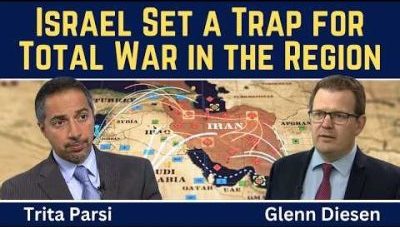
Trita Parsi: Israel Set a Trap for Total War in the Region
or go to
Aletho News Archives – Video-Images
From the Archive
Zionism’s Violent Legacy
By Donald Neff | Washington Report On Middle East Affairs | January 1996
On January 4, 1948, Jewish terrorists drove a truck loaded with explosives into the center of the all Arab city of Jaffa and detonated it, killing 26 and wounding around 100 Palestinian men, women and children.[1] The attack was the work of the Irgun Zvai Leumi – the “National Military Organization,” also known by the Hebrew letters Etzel – the largest Jewish terrorist group in Palestine. The Irgun was headed by Revisionist Zionist Menachem Begin and had been killing and maiming Arabs, Britons and even Jews for the previous ten years in its efforts to establish a Jewish state.
This terror campaign meant that at the core of Revisionist Zionism there existed a philosophical embrace of violence. … continue
Blog Roll
 Aletho News
- Trita Parsi: Israel Set a Trap for Total War in the Region
- Trump’s Iran war is on an Israeli leash
- Saudi oil boss issues global supply warning
- Riyadh Says Its Oil System Is Intact. The Numbers Say Otherwise.
- Trump and Netanyahu Want to “Finish the Job” on Iran
- US ‘one-sided dictation’ not Iran’s beliefs makes rational talks impossible: Baghaei
- Iran’s Next Strike May Not Explode. It Could Shut You Down /Col Doug Macgregor
- Iran: US political targets legitimate if assassinations return
- Iraq shuts key border crossing with Iran under US pressure: Report
- Undersea Internet cables could be targeted in retaliation for attacks on Iran: IRGC deputy chief
- If Americans Knew
- The Israel Lobby’s Changing Fortunes
- AIPAC has become such a political liability that it’s shifting to a more “nimble” approach to buying politicians
- At least 160 Israeli settler attacks in 2 weeks
- Will Gaza’s Ancient Christian Community Disappear Forever?
- Israel’s vision of regional security rests on keeping Arab states weak
- Heidi Levine recounts how Palestinian youths helped save her in settler attack
- DAILY UPDATE: Latest essential news on Palestine, Israel, & region
- Trump’s Intensifying Sabotage of the ICC, for Israel’s Sake
- Israeli military detain US and UK volunteers in West Bank including Democratic NY politician Brad Lander
- Americans at National Conservatism Conference held in Israel this year criticize Israel
- No Tricks Zone
- E-Cars Reduce CO2 Emissions By Only 41% Compared To Internal Combustion Engine Vehicles
- Predictions Made By Renowned Climate Professor Over Past Decades Have Been Proven To Be Poor
- New Study Suggests Large Regions Of The Pacific Ocean Have Been Cooling For The Last 80 Years
- Germany’s Green Energy Debacle: High Energy Costs Force Kahla Porzellan to Close After 182 Years!
- New Study: 50 Years Of The Most Aggressive ‘Net Zero’ Policies Can Only Affect The Global Climate By 0.03°C
- US September “Heat” Was No Record…Many Records Set Decades Ago
- Latest European Green Energy Debacle; Portugal’s Largest Flagship Solar Park Insolvent!
- Green Energy Debacle: German Expert Professor Fritz Vahrenholt Warns Of Severe Economic And Social Consequences
- Two More Paleo Reconstructions Affirm Meters-Higher Sea Levels Across Ireland, Brazil 7000-6000 Years Ago
- New Study: Earth And Venus Surface Warmth Largely Explained By Convection And Lapse Rate, Not CO2 Or Radiation

