US Southern Command Chief Admits Plans Against Venezuela
teleSUR- October 7, 2020
Venezuela’s Foreign Affairs Minister Jorge Arreaza Monday denounced that the U.S. Southern Command Admiral Craig Faller openly admitted his country’s plans to violently overthrow President Nicolas Maduro.
On Monday, Faller commented at an online meeting organized by the business forum Council of the Americas that the international attempts to bring down Venezuela’s government have worked, although not quickly enough for the Venezuelan people.
He not only said that such efforts have not worked quick enough but also that it took an entire generation to get to this point and that it will take a while to unblock Venezuela’s democratic framework.
The Admiral also attributed certain external factors such as the help of Cuba, Russia, China and Iran to the alleged slow change within Venezuela.
Arreaza pointed out that this arrogant position of the members of the White House is unacceptable as they insist on violating the Charter of the United Nations and the most basic principles of international law through threats and blockades.
This statement shows Washington’s systematic and widespread attacks on Venezuela, which constitutes a crime against humanity.
Venezuela’s government will add Faller’s confessions to the criminal complaint it filed against the U.S. government on Feb. 13 before the Hague’s International Criminal Court.
In this complaint, President Maduro requests the White House to lift all coercive measures against his country since the U.S. government prevents Venezuela from acquiring food and medicines and from negotiating freely on the international market.
Gantz: During Next War with Hezbollah, ‘Israel’ Will Strike Governmental Targets in Lebanon
Al-Manar | October 5, 2020
The Israeli minister of defense, Benny Gantz, threatened to strike governmental targets in Lebanon during any upcoming war with Hezbollah, considering that ‘Israel’ can no longer differentiate between the resistance military posts and the residential buildings which house missiles.
In an online interview with Saudi, Emirati and Bahraini journalists, Gantz said that the normalization deals with the Gulf countries will reinforce the fight against Iran, adding that the best approach to confront Tehran is to exert the heavy pressures and impose tough sanctions on it.
Gantz pointed out that no one can accept the demands of the Palestinians in the context of the ‘peace’ negotiations, adding that the normalization deals would reinforce the Zionist-Palestinian settlement.
‘We were deceived’, says Syria mercenary fighting in Azerbaijan
MEMO | October 1, 2020
A Syrian fighting in Azerbaijan’s disputed Nagorno-Karabkh region has spoken to BBC Arabic and claims he, along with others, were deceived when being recruited by the Turkish-backed “Syrian National Army”, formerly known as the Free Syria Army.
The fighter using the nom de guerre “Abdullah” is among hundreds of Syrians aged 17 to 30 who arrived last week “with the knowledge of the Turkish army the SNA”. However he was under the impression that he was recruited for a job paying $2,000 a month.
“Last week, Saif Abu Bakr, the commander of the Hamza Division of the opposition Syrian National Army, suggested that we go to Azerbaijan to guard military points on the border with a monthly wage of up to $2,000,” said Abdullah.
“There was no war at the time, and we were transferred from Northern Syria to the village of Hor Kilis, and there we have stripped us from the opposition Syrian National Army of all our money, phones and clothes, so that our identity is not recognised.”
Days after arriving, the untrained Syrians were forced to fight on the front lines as the fighting broke out between Armenian and Azerbaijani forces over the disputed region.
“They loaded us into troop carriers, we were wearing Azeri uniforms, and each of us was armed with a single Kalashnikov weapon. Most of the people here are poor civilians who wanted the money, not soldiers, stopped the car and we were surprised that we were in the line of fire. We did not even know where the enemy was.”
Abdullah and others later said they wanted to return to Syria, but were prevented and threatened with long prison terms if they refused to fight “We are almost exiled”, he said.
Both Turkey and Azerbaijan have denied the accusations that Syrian fighters have been sent to fight for Azerbaijan. However, according to the Guardian, at least three Syrian opposition fighters have been killed in Nagorno-Karabkh.
On Monday, Armenia’s ambassador to Moscow said that Turkey had sent around 4,000 fighters from northern Syria. France today also weighed in on the accusations, the office of President Emmanuel Macron said he and Russian President Vladimir Putin discussed the issue and both “share concern about the sending of Syrian mercenaries by Turkey to Nagorno-Karabakh”.
Turkish media outlets have claimed that Armenia is recruiting Kurdish PKK terrorists in their ranks, although critics argue it is using the reports to justify military intervention and that no evidence has been provided.
Turkey has previously sent Syrian fighters to Libya despite denials by the internationally-recognised Government of National Accord (GNA).
PLO: US puts pressure on Sudan to settle Palestine refugees
MEMO | September 28, 2020
The United States is putting pressure on Sudan to accept settling Palestine refugees on its soil, member of the PLO’s Executive Committee, Bassam Al-Salhi, was reported saying by Anadolu yesterday.
“Special sources told me that the ongoing normalisation talks between Washington, Israel and Sudan include Sudan’s possibility to resettle [Palestine] refugees on its soil as part of the deal of the century,” Al-Salhi said, in reference to the US ‘peace deal’ for the region.
He stated that “this is part of the conspiracy against the Palestinian cause,” stressing the issue between Israel and Sudan goes beyond the normalisation of ties.
The PLO official called on Sudan “to reject being dragged into these American-Israeli plans in order to maintain its interests and future.”
Resettling Palestine refugees had been raised dozens of times by Israel and the US mainly in Egypt and other host countries; however, Al-Salhi said, proposing to resettle them in Sudan is new.
Sudan did not issue an immediate comment on the remarks, but the country’s officials have several times denied reports about the possible normalisation of ties with Israel despite several meetings between Sudanese and Israeli officials.
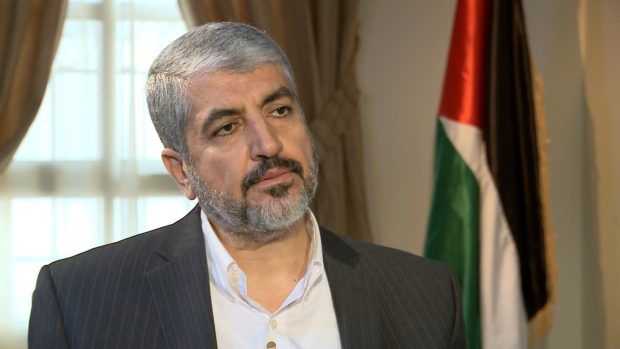
Remembering Israel’s botched attempt to assassinate Khaled Meshaal
MEMO | September 25, 2020
What: On 25 September, 1997, Israelis from the Mossad spy agency attempted to assassinate Palestinian political leader Khaled Meshaal in Amman, the capital of Jordan. The brazen attempt on the life of the then 41-year-old head of the Hamas Political Bureau sparked a diplomatic row which threatened to wreck the newly-signed peace deal between Jordan and Israel. The crisis ended with Israeli Prime Minister Benjamin Netanyahu making a number of humiliating concessions.
Where: Amman, Jordan.
When: 25 September, 1997.
What happened?
In an attempt to cripple the Palestinian resistance movement Hamas, Netanyahu, then in his first term as prime minister, authorised the assassination of Meshaal. The little-known Palestinian leader was born in 1956 in Silwad, which was then in the Jordanian administered West Bank. In 1967, Meshaal’s family and 300,000 other Palestinians were expelled from their homes by Israeli occupation forces in a second wave of ethnic cleaning that came to be known as the Naksa (Setback). Netanyahu is said to have personally picked Meshaal from a number of Hamas operatives for Mossad agents to kill. The attempt on Meshaal’s life came in the wake of a series of suicide bombings in Jerusalem and Tel Aviv.
A six-member Mossad team arrived in Amman a week before the assassination using false Canadian passports. The plan was clear: kill the exiled Hamas leader using a lethal toxin without leaving any trace of the killers. The idea was that after the toxin had been administered covertly, Meshaal would go about the rest of his day as normal and then, when tiredness overcame him, he would take a nap, never to wake up again; he was expected to die within 48 hours.
On the morning of the assassination attempt, two of the six agents moved into position to deliver a lethal dose of toxin — identified later as fentanyl — as Meshaal entered his office. The other four Israeli agents are said to have been deployed around the block either as drivers or as lookouts.
The Mossad agents delivered the toxin using an aerosol device and fled from the scene. One of Meshaal’s bodyguards gave chase and managed to apprehend the assassins after some hand to hand combat. Their capture was to have major ramifications.
What happened next?
Hours after the arrest of the two agents by the Jordanian authorities, the Israelis hatched a plan to diffuse the situation. With the diplomatic consequence of his actions dawning on Netanyahu, he attempted to conceal the botched assassination attempt from the rest of the world. He dispatched Mossad head Danni Yatom to plead with King Hussain of Jordan for the agents’ release. Yatom’s pre-emptive disclosure and plea for help from the Jordanian monarch exploded in Israel’s face, sparking a diplomatic crisis with the Hashemite Kingdom, which had normalised relations with the Zionist state three years earlier.
While the Israelis tried frantically to keep a lid on the botched plot, Meshaal’s health deteriorated. The toxin had done its job and within 48 hours he would be dead. King Hussain warned Israel that if the Hamas leader died, the Mossad agents would be hanged as murderers. The King had gone out on a limb to sign a peace treaty with Israel against the wishes of his people, so he called US President Bill Clinton to enlist his support. It was said that US anger was such that no one within the normally pro-Israel White House was willing to make Netanyahu’s case for him. “This man is impossible,” Clinton is reported to have said upon hearing that the Israeli Prime Minister had authorised the assassination attempt with little regard for Jordanian sovereignty, and thus endangered the fragile peace treaty.
Having been stonewalled by Netanyahu for the antidote to the toxin at the first time of asking, an angry King Hussein relayed his message through Clinton, insisting that the Israelis must deliver a vial of the antidote, which was the only way to save Meshaal’s life. “If Meshaal dies, the peace treaty dies with him,” he insisted. With the US applying pressure, Israel had no choice but to comply. A light aircraft delivered the antidote.
The indignity for Netanyahu did not end there. The two Mossad agents were still under arrest facing a death sentence and the Israeli Embassy in Amman, in which the other four members of the six man Mossad team had taken refuge, was surrounded by Jordanian security forces. In exchange for allowing them to leave Jordan, King Hussain was determined to exact a heavy price. He demanded a prisoner exchange, which was agreed.
Under the deal, Israel released the ailing Sheikh Ahmed Yassin, the quadriplegic founder and spiritual leader of Hamas who was one of the most notable Palestinians in its prisons, along with 70 other Palestinian prisoners.
Meshaal was saved with just hours to spare. His reputation grew within the Palestinian resistance movement as “the man who wouldn’t die”. He became the leader of Hamas when Israel assassinated Yassin in 2004.
Meanwhile, a chastened Netanyahu was forced to apologise. His act of contrition came two days later when he arrived in Amman to pledge that Israel would not make another attempt on Meshaal’s life. This was not the end for the humiliated Israeli Prime Minister. He lost his bid for re-election in 1999, after which he retired temporarily from politics.
Are You Feeling Safer? ‘War of the Worlds’ Pits U.S. and Israel Against Everyone Else
By Philip Giraldi – Strategic Culture Foundation – September 24, 2020
The media being focused on an upcoming election, coronavirus, fires on the West Coast and burgeoning BLM and Antifa unrest, it is perhaps no surprise that some stories are not exactly making it through to the evening news. Last week an important vote in the United Nations General Assembly went heavily against the United States. It was regarding a non-binding resolution that sought to suspend all economic sanctions worldwide while the coronavirus cases continue to increase. It called for “intensified international cooperation and solidarity to contain, mitigate and overcome the pandemic and its consequences.” It was a humanitarian gesture to help overwhelmed governments and health care systems cope with the pandemic by having a free hand to import food and medicines.
The final tally was 169 to 2, with only Israel and the United States voting against. Both governments apparently viewed the U.N. resolution as problematical because they fully support the unilateral economic warfare that they have been waging to bring about regime change in countries like Iran, Syria and Venezuela. Sanctions imposed on those countries are designed to punish the people more than the governments in the expectation that there will be an uprising to bring about regime change. This, of course, has never actually happened as a consequence of sanctions and all that is really delivered is suffering. When they cast their ballots, some delegates at the U.N. might even have been recalling former Secretary of State Madeleine Albright’s claim that the death of 500,000 Iraqi children due to U.S. imposed sanctions had been “worth it.”
Clearly, a huge majority of the world’s governments, to include the closest U.S. allies, no longer buy the American big lie when it claims to be the leader of the free world, a promoter of liberal democracy and a force for good. The vote prompted one observer, John Whitbeck, a former international lawyer based in Paris, to comment how “On almost every significant issue facing mankind and the planet, it is Israel and the United States against mankind and the planet.”
The United Nations was not the only venue where the U.S. was able to demonstrate what kind of nation it has become. Estimates of how many civilians have been killed directly or indirectly as a consequence of the so-called Global War on Terror initiated by George W. Bush are in the millions, with roughly 4 million being frequently cited. Nearly all of the dead have been Muslims. Now there is a new estimate of the number of civilians that have fled their homes as a result of the worldwide conflict initiated by Washington and its dwindling number of allies since 2001. The estimate comes from Brown University’s “Costs of War Project,” which has issued a report Creating Refugees: Displacement Caused by the United States Post-9/11 Wars that seeks to quantify those who have “fled their homes in the eight most violent wars the U.S. military has launched or participated in since 2001.”
The project tracks the number of refugees, asylum seekers applying for refugee status, and internally displaced people or persons (IDPs) in the countries that America and its allies have most targeted since 9/11: Afghanistan, Iraq, Pakistan, Yemen, Somalia, the Philippines, Libya and Syria. All are predominantly Muslim countries with the sole exception of the Philippines, which has a large Muslim minority.
The estimate suggests that between 37 and 59 million civilians have become displaced, with an extremely sharp increase occurring in the past year when the total was calculated to be 21 million. The largest number of those displaced were from Iraq, where fighting against Islamic State has been intermittent, estimated at 9.2 million. Syria, which has seen fighting between the government and various foreign supported insurgencies, had the second-highest number of displacements at 7.1 million. Afghanistan, which has seen a resurgent Taliban, was third having an estimated 5.3 million people displaced.
The authors of the report observe that even the lower figure of 37 million is “almost as large as the population of Canada” and “more than those displaced by any other war or disaster since at least the start of the 20th century with the sole exception of World War II.” And it is also important to note what is not included in the study. The report has excluded sub-Saharan Africa as well as several Arab nations generally considered to be U.S. allies. These constitute “the millions more who have been displaced by other post-9/11 conflicts where U.S. forces have been involved in ‘counterterror’ activities in more limited yet significant ways, including in: Burkina Faso, Cameroon, Central African Republic, Chad, Democratic Republic of the Congo, Mali, Niger, Saudi Arabia, and Tunisia.”
Yemen should be added to that list given U.S. military materiel assistance that has enabled the Saudi Arabian bombing attacks on that country, also producing a wave of refugees. There are also reports that the White House is becoming concerned over the situation in Yemen as pressure is growing to initiate an international investigation of the Saudi war crimes in that civilian infrastructure targets to include hospitals and schools are being deliberately targeted.
And even the United States Congress has begun to notice that something bad is taking place as there is growing concern that both the Saudi and U.S. governments might be charged with war crimes over the civilian deaths. Reports are now suggesting that as early as 2016, when Barack Obama was still president, the State Department’s legal office concluded that “top American officials could be charged with war crimes for approving bomb sales to the Saudis and their partners” that have killed more than 125,000 including at least 13,400 targeted civilians.
That conclusion preceded the steps undertaken by the Donald Trump White House to make arms sales to the Saudis and their allies in the United Arab Emirates central to his foreign policy, a program that has become an integral part of the promotion of the “Deal of the Century” Israeli-Palestinian peace plan. Given that, current senior State Department officials have repressed the assessment made in 2016 and have also “gone to great lengths” to conceal the legal office finding. A State Department inspector general investigation earlier this year considered the Department’s failure to address the legal risks of selling offensive weapons to the Saudis, but the details were hidden by placing them in a classified part of the public report released in August, heavily redacted so that even Congressmen with high level access could not see them.
Democrats in Congress, which had previously blocked some arms sales in the conflict, are looking into the Saudi connection because it can do damage to Trump, but it would be far better if they were to look at what the United States and Israel have been up to more generally speaking. The U.S. benefits from the fact that even though international judges and tribunals are increasingly embracing the concept of holding Americans accountable for war crimes since the start of the GWOT, U.S. refusal to cooperate has been daunting. Last March, when the International Criminal Court (ICC) in The Hague authorized its chief prosecutor to open an investigation into U.S. crimes in Afghanistan the White House reacted by imposing sanctions on the chief prosecutor and his staff lawyer. And Washington has also warned that any tribunal going after Israel will face the wrath of the United States.
Nevertheless, when you are on the losing side on a vote in a respected international body by 169 to 2 someone in Washington should at least be smart enough to discern that something is very, very wrong. But I wouldn’t count on anyone named Trump or Biden to work that out.
UAE signs contracts with Israel firms on UN blacklist
MEMO | September 24, 2020
Emirati companies have signed contracts with Israeli firms and banks blacklisted by the United Nations (UN) for supporting illegal settlements in the occupied West Bank, an investigation by Anadolu Agency revealed on Wednesday.
In February, the UN released a database of 112 companies on its blacklist for doing business inside Israeli settlements in the West Bank.
On 13 August, the United Arab Emirates (UAE) and Israel announced a US-brokered agreement to normalise their relations. The move was followed by a series of announcements on agreements and contracts between companies from both countries.
However, Anadolu Agency found that some of the deals struck between the two sides included Israeli companies and banks on the UN blacklist.
Pro-settlement banks
Among the contracts announced by Emirati media was one struck with Bank Leumi, one of the banks on the UN blacklist.
According to official Emirati media, this Israeli bank has signed agreements with three of the top Emirati banks: Abu Dhabi Islamic Bank (ADIB), First Abu Dhabi Bank and Emirates NBD.
Bank Hapoalim, another Israeli bank blacklisted by the UN, has reportedly signed a memorandum of understanding with Emirates NBD, an agreement celebrated as the first between Israeli and Emirati bankers, according to Emirati media outlets.
Film production companies
The agreements that UAE companies have signed with blacklisted Israeli companies were not limited to banks. The Abu Dhabi Film Commission (ADFC) announced that it has reached an agreement with the Israel Film Fund (IFF) and the Jerusalem Sam Spiegel Film & Television School (JSFS), for promoting tolerance and cultural cooperation between the Emirati and Israeli people.
The IFF is supervised by the Israeli Ministry of Culture and the Israel Film Council.
In November 2019, Israeli newspaper Haaretz announced that the IFF approved the establishment of three new cinema funds, including one in the occupied West Bank settlements.
Many international companies have suspended their dealings with their Israeli counterparts on the UN blacklist for fear of being prosecuted by the International Criminal Court (ICC). The ICC is expected to soon decide on launching a criminal investigation into alleged war crimes committed by Israel in the occupied Palestinian territories.
Palestinians have long called for an immediate halt of dealings with the blacklisted Israeli companies.
US requires Kenya to publicly back Israel or forget FTA: Nairobi
Press TV – September 22, 2020
The United States has required Kenya to support Israel’s commercial and political interests or forget a free trade agreement (FTA) with Washington, with activists warning that the inclusion of Israel in the bilateral deal would undermine the Kenyan reputation.
Washington and Nairobi recently resumed trade pact talks after a several-week halt. The US has set a raft of conditions in the ongoing negotiations for the bilateral deal.
In its objectives seen by the Kenyan newspaper East African, Washington has indicated that the conditional deal should, with respect to commercial partnerships, discourage actions that prejudice or discourage business between the United States and Israel.
The White House argues that the FTA should “discourage politically motivated actions to boycott, divest from, and sanction Israel.”
The US also wants the “elimination of politically motivated, non-tariff barriers on Israeli goods, services, or other commerce imposed on Israel; and the elimination of State-sponsored, unsanctioned foreign boycotts of Israel, or compliance with the Arab League Boycott of Israel.”
“The United States published its negotiating position before negotiations began for all to see. We are negotiating with transparency and openness,” said the US ambassador to Kenya, Kyle McCarter, when asked about the inclusion of Israel in the trade talks.
“This is how we have treated the numerous other countries with which we have concluded successful free trade agreements benefiting both parties.”
The inclusion of Israel as a third party in the negotiation agenda has sparked criticism from activists who warn that the agreement could be too risky for Kenya.
The East African Tax and Governance Network (EATGN) and East African Trade Network (EATN), the groups who have been following developments on the matter, said Nairobi was being “entrapped” in the Palestine-Israeli conflict.
“Due to Kenya’s own special relationship with Israel and its pragmatic approach in dealing with issues like tensions in the Middle East, US demands for such political connotations in the USFTA would undercut the country’s reputation,” said Leonard Wanyama, the co-ordinator of the EATGN and vice-president of the International Relations Society of Kenya, a lobby for foreign policy experts in Nairobi.
This week, the Tax Network said Washington’s demand could place Nairobi in a difficult situation. It called for officials to reject the demand.
Nairobi’s own published objectives indicate the agreement must be discussed within the limits of the East African Community (EAC) and the World Trade Organization (WTO) regulations.
Kenya also wants a deal that takes into consideration the “special and differential treatment applicable to Kenya as a developing country,” according to the report.
Traditionally, Kenya has often recognized Israel, but rarely makes a public statement endorsing one side or the other and supports the so-called two-state solution to the decades-long Israeli-Palestinian conflict. It allows Palestine to establish a representative office in Nairobi.
Last year, Israel’s Channel 13 said in a report that Israeli commandos were training local forces in more than a dozen African nations where Israeli arms exporters are already accused of being complicit in war crimes.
The channel showed footage of Israeli officers coaching Tanzanian troopers in hand-to-hand krav maga, hostage operations and urban combat, saying there was a dramatic rise in Tel Aviv’s military activities in Africa.
Tel Aviv’s policy to spice up ties with Africa, the report said, also features combined efforts by the Israeli Foreign Ministry, military, the Mossad spy agency and the regime’s security agency Shin Bet.
The report named Ethiopia, Rwanda, Kenya, Tanzania, Malawi, Zambia, South Africa, Angola, Nigeria, Cameroon, Togo, Ivory Coast and Ghana as the African countries that Israel was seeking to stake out a niche with.
Prime Minister Benjamin Netanyahu has made inroads into Africa a key part of his agenda, becoming the first Israeli leader to visit the continent in 50 years in 2016.
The US demand for protection of Israeli interests means that Washington seeks to counter the international Boycott, Divestment, and Sanctions (BDS) movement, which targets Israel, according to the East African report.
The BDS movement was initiated in 2005 by over 170 Palestinian organizations and later turned international. It is meant to initiate “various forms of boycott against Israel until it meets its obligations under international law” and end its occupation of Palestinian lands.
The BDS, which was inspired by the South African anti-apartheid movement, has claimed several recent successes in isolating Israel.
Featured Video

Can the U.S. Afford to Annihilate Iran?
or go to
Aletho News Archives – Video-Images
From the Archives
Sanctions, War and the Policy of Dual Containment
By SASAN FAYAZMANESH | March 17, 2008
It is now nearly three decades since the Unites States adopted the policy of dual containment of Iran and Iraq. While much has been written about the containment of Iraq, there has been very little in-depth analysis of this policy when it comes to Iran. In a book that is going to be released on March 31, 2008, entitled The United States and Iran: Sanctions, Wars and the Policy of Dual Containment (Routledge), I attempt to address this shortcoming by investigating when and why the US policy of containment of Iran came about, how it evolved, and where it stands today.[1] To the extent that Israel has been involved in US policy making, the study will also include the role that Israel has played in the containment of Iran. Also, since the fate of Iran has been inextricably linked to that of Iraq, occasionally the investigation will overlap with the containment of Iraq.
The policy of dual containment of Iran and Iraq originated during the Carter Administration, but it was not until the Clinton Administration that the expression “dual containment” became popular. … continue
Blog Roll
 Aletho News
- Can the U.S. Afford to Annihilate Iran? /Seyed M. Marandi
- Elmo Sold mRNA Jabs to Your Toddler. Now They Are “Off-Label.”
- British state targets Palestine Action with yet another crooked trial
- Americans are paying the price to preserve Israel’s nuclear hegemony
- Resistance factions are necessary to ensure a permanent US Iraq withdrawal
- How Israel destabilizes the Middle East: Denying sovereignty and the right to exist
- Europe’s Establishment Is Embracing War – and Losing Voters
- NATO chief advocates war of aggression
- No Vote, No Representation, No State: Democracy, Israeli Style
- Zionist Bought Senate Blocks Information About American Citizens Killed By Israel
- If Americans Knew
- Israeli Soldiers Abduct At Least 22 Across Occupied West Bank
- Eight Palestinians Killed in Israeli Attacks on Gaza
- Israeli former leaders and security chiefs threaten legal action over ‘Jewish terrorism’
- Israel map in LA Times ad includes all land from the river to the sea
- Inside Lebanon’s 200-page dossier on Israeli war crimes
- Flydubai, genocide, settler violence, Trump abuse of power to deport – Daily Update
- Counting Antisemitic Incidents: What the ADL Audit Reveals — and Obscures
- Mamdani releases plan to combat antisemitism and hate crimes in New York City
- Iran’s Revolutionary Guards Publish Letter to the American People
- DMFI launches $1 million ad campaign supporting Virginia’s Elaine Luria
- No Tricks Zone
- Green Energy Debacle: German Expert Professor Fritz Vahrenholt Warns Of Severe Economic And Social Consequences
- Two More Paleo Reconstructions Affirm Meters-Higher Sea Levels Across Ireland, Brazil 7000-6000 Years Ago
- New Study: Earth And Venus Surface Warmth Largely Explained By Convection And Lapse Rate, Not CO2 Or Radiation
- 2025 Nature Paper Claiming Worsening Global Drought Gets RETRACTED …Heavily Flawed
- New Study: ‘Global Drought Shows No Detectable Recent Acceleration Under Climate Warming’
- Economic Masterminds: German Socialists Suggest Taxing Productivity Gains Stemming From Using AI
- The South China Sea Has Not Been Cooperating With The Climate Change Narrative
- Energy Crisis: Germany Enters Heating Season With Historically Low Gas Reserve Fill Levels
- New Study: The Antarctic Ice Sheet Gained Mass From 2020-2024 Due To Staggering Snow And Ice Accumulation
- Study: Ocean Heating Rates From Thousands Of Years Ago ‘Dwarf’ Modern Ocean Heating Rates

