Churchill’s War: the Real History of World War II
By Paul Craig Roberts • Institute for Political Economy • April 19, 2020
All truth-tellers are denounced, and most end up destroyed. Truth seldom serves the agendas of powerful interests.
The one historian from whom you can get the unvarnished truth of World War II is David Irving.
On the bookjackets of Irving’s books, the question is asked: What is real history?
The answer is that real history is history that travels straight from history-maker to the history-maker’s documents and from the document archives to the historian’s book without political input and free of academic and patriotic prejudice. It is history that cannot be bought.
Irving’s Hitler’s War was published in 1977. Irving was an archaeologist digging in history who located and dug up previously unknown documents and archives. He lets the factual record tell the history. He is exact and scrupulous and does not curry favor. The Board of Deputies of British Jews wrote: “The book was thoroughly researched . . . It confirmed Irving’s reputation as one of the world’s most thorough researchers and an exciting and readable historian.”
 The first volume of Irving’s Churchill’s War was published in 1987. The second volume in 2001. The third and final volume is awaited.
These works far surpass all previous histories of the war and all accounts of the agendas and events that produced the war. Irving is not motivated to curry favor with the ruling establishment, to make us feel self-righteous in our victory by demonizing the opponent or to grind any personal, ideological, or political axe. He lets the history-makers speak for themselves in their own words, and it is seldom a pretty picture.
Irving’s books sold millions of copies, and he was well-to-do. But he fell foul of Zionists, oddly enough because he documented actual atrocities against Jews. The problem was the attrocities he found differed from the official holocaust story. He documented a holocaust of a sort, but it is a different one than the Zionists prefer. If I understand correctly, infuriated Zionists with plentiful funds used unethical tactics and brought lawsuits, the defense against which eventually bankrupted him. Little wonder most historians choose to suck up to powerful interests by validating their claims and explanations. The fake history they write is a self-protective device like a bullet-proof vest.
I previously reported on Hitler’s War and the first volume of Churchill’s War in my most widely read article — The Lies About World War II. As I quoted Irving’s account that Jews were killed, but in a more ad hoc than organized way, Zionists rushed to my already defective Wikipedia biography to attribute Irving’s words to me, thereby labeling me a “holocaust denier.” When I complained of the misrepresentation, I was fobbed off with the reply that I would not have quoted Irving if I had not agreed with him. In other words, if you report in a book review what a writer says, it means you agree with him. I am not qualified to agree or to disagree with Irving. Indeed, few people are.
People in the Western world have been indoctrinated for 75 years into a white hat/black hat story of World War II that exonerates the “allies” and demonizes Hitler and Germany. To tell people, especially elderly ones whose memory of the war was formed by war propaganda, that the “allies” were as bad or worse war criminals than the Germans brings fire and brimstone down on one’s head. It nevertheless needs to be done, because our view of ourselves reflects the make-believe story of the war with which we are inculcated. In the false history comes strength for the opinion that we Americans and our country are exceptional and indispensable and that these traits justify Washington’s hegemony over the world. Our destruction in whole or part of seven countries in the 21st century, our withdrawal from arms limitation agreements, our dangerous demonization of militarily powerful countries such as Russia and China all rest in our self-righteous view of ourselves. Of course, not all Americans share these self-righteous views, but the views are the basis for both Republican and Democrat foreign policy. Even the left-wing, or whatever remains of it, believes in war in order to overthrow dictators and “bring democracy and human rights.”
In what follows I am not going to attempt a review of Irving’s second volume on Churchill. Instead, I will report some of the findings that documents reveal, findings that will be new information for most readers. But first a preface.
Hitler did not start World War II. England and France launched World War II with a declaration of war against Germany. Hitler did not want a war with Britain and France and tried to avoid it and then end it with a peace agreement very favorable to Britain and France. Hitler regarded the British Empire as essential to the survival of European dominance. He promised Churchill in exchange for an end of hostilities that Germany would defend the British Empire with the German military anywhere in the world that it was in jeopardy. Hitler left a large part of France and French North Africa unoccupied. He left the French fleet in French hands.
Hitler’s aim was to restore the integrity of the German nation which had been torn apart and distributed to Czechoslovakia, Poland, Denmark, and France by the Versailles Treaty which had been forced on Germany after World War I by a policy of starvation. Germans in the territories turned over to Czechoslovakia and Poland were being persecuted and murdered. Hitler had no choice but to do something about it. He recovered German territory from France, Czechoslovakia, and Denmark without war.
The same outcome was likely in Poland except the British interfered. The British gave the Polish military dictatorship a “guarantee” to come to Poland’s aid if Poland refused Hitler’s demands. Consequently, the Polish dictatorship broke off negotiations with Germany. Germany and the Soviet Union then split Poland between them.
The guarantee compelled “British honor” to declare war on Germany—but not on the Soviet Union—and the hapless French were pulled along.
 The British relied on the “powerful French military” and sent an expeditionary force which was promptly trapped at Dunkirk where Hitler let them go, thinking that an act of magnanimity and his refusal to humiliate the British would bring an end to the conflict. However, Churchill kept Hitler’s overly generous peace terms from the British people and from Parliament. Churchill had wanted war and had worked hard for one and now that he had power and a chance to repeat the military leadership of his great ancestor, the Duke of Marlborough, he was determined to keep his war.
With Hitler in control of Europe, Churchill began working harder to get the US into the war. All along the way President Roosevelt had given Churchill war encouragement but without promising any definite course of action from America. Roosevelt wanted Britain at war. He knew it would bankrupt the British and place them economically in Washington’s hands, which would permit the US to break up the British system of trade preferences that allowed Britain to control world trade, destroy the British Empire, dethrone the British pound and replace it with the dollar. Roosevelt was an enemy of empire except America’s own. From FDR’s standpoint, World War II was an attack by the US on British trade preferences that were the backbone of the British Empire.
So Churchill got his war which cost Britain her empire, and Roosevelt replaced the British Empire with an American one. FDR paid a cheap price—about 300,000 US combat deaths. In her defeat of Germany, Russia lost about 9,000,000 soldiers in combat deaths and 26 million people altogether,
After the Russians stopped the German offensive, the war could have ended, but FDR and Churchill had established a policy of unconditional surrender, which shackled allied wartime foreign policy to two more years of death and destruction.
As Pat Buchanan said, it was The Unnecessary War. The war served Churchill’s path to power and Washington’s empire.
Volume 2 begins in 1941. Irving has tracked down and unearthed many documents that permit a better understanding of the war. Many official papers are still under lock and key and many have been destroyed. The effort to suppress truth from coming out continues 75 years after the war.
Secrecy is used to hide crimes. It is reputations that are protected, not national security.
Churchill used secrecy to protect his war crime of ordering the bombing of civilian residential areas of German cities with his emphasis on bombing the homes of the working class as they were closer together which helped the conflagation to spread. Churchill would first have the civilian areas firebombed, and then when firemen and rescue workers were engaged the British would drop high explosives. Churchill ignored military targets, preferring instead to break the morale of the German population by bombing civilian areas. He tried to get the British Air Force to include poison gas when dropping incendiary and high explosive bombs on civilian residential areas.
As the British people did not know Churchill was bombing civilians, Churchill hoped Hitler would be provoked into replying in kind. Hitler refused for three months to take the bait, but finally his military insisted that unless he bombed the British they would keep on bombing German civilian areas. Hitler gave in but initially insisted that only British industrial targets be bombed. Once a few bombs went astray, Churchill had his rallying cry that the Nazi barbarians were bombing civilians. He got away with this, but officials in the know worried that the British Air Force, especially “Butcher” Harris, would face war crimes trials when the war was over. British generals and admirals disagreed with Churchill’s bombing policy. They regarded it as unprofessional and unprincipled. They complained that it harmed the war effort by denying the army and navy needed air support.
In November 1942 British Air Chief Portal compared the German bombing of Britain with the British bombing of Germany. The Germans had dropped 55,000 tons of bombs, killing 41,000 British and destroying 350,000 homes. The British had dropped 1,250,000 tons of bombs, killing 900,000 German civilians, maiming one million more, and destroying 6,000,000 German homes. The UK/US firebombing of Dresden at the end of the war stands as one of the worst war crimes in history. It killed as many or more civilians as the atomic bombs Washington dropped on the two Japanese cities, also at war end.
Churchill was determined to bomb Rome, but was resisted by the British Air Force. In contrast, Hitler ordered the German military not to risk the destruction of Rome by defending it.
Churchill ordered the bombing of the French fleet, which Hitler had left in the hands of Vichy France, killing around 3,000 French sailors. Churchill together with FDR and Eisenhower invaded French Northwest Africa which was in the hands of Vichy France. Vichy France Admiral Darlan used his influence to persuade the French not to resist the invasion, thus minimizing British and American casualties. Darlan cooperated in every way. His reward was to be assassinated in a plot organized by Foreign Secretary Anthony Eden, later one of Britain’s disastrous prime ministers. The assassin protested that he was promised immunity by the British, but was quickly executed to silence him. Eden, whose ambition was larger than his intelligence, was in DeGaulle’s pocket, and DeGaulle wanted Darlan out of his way to power.
The military schemes that Churchill imposed on the British military, such as his invasion of neutral Norway, always came to a bad end, but he rescued himself with masterful speeches in Parliament.
The British had a poor opinion of Eisenhower, and FDR had a poor opinion of Eden. There was so much conflict between the British and the Americans that it is amazing they were able to agree to any plan of action. The American people disliked the British for drawing them into “their war.” The British disliked the Americans for the Negro troops sent to England where they were believed to be responsible for rapes and a crime wave. A lot of propaganda was necessary to focus the hate on the Germans.
The British did not want to sacrifice Arab interests to Zionists but usually did because Zionists had the money. Churchill himself was indebted to a multimillionaire Jew who bailed him out when he faced bankruptcy. Zionists attempted to use their leverage over Churchill to force his approval of both more Jewish immigration to Palestine and for the formation of a “Jewish fighting force,” allegedly to fight the Germans but in reality to drive Palestinians out of Palestine. Zionists promised Churchill that if he would agree to their demands, they would bring the US into the war against Germany. Such was their power.
The British saw Zionists’ interests as detrimental to their hold on their Arab colonies. When deportations of Jews and their mistreatment began leaking out, the British Foreign Office saw the reports as the work of the international Zionist campaign to create sympathy and to use the sympathy in behalf of their Palestinian purpose. When 700 Jews found incapable of work were shot in a work camp, the Foreign Office responded, “Information from Jewish refugees is generally coloured and frequently unreliable.” Eisenhower was pleased with Darlan and was unaware of Eden’s plot against him. An American newsman told Eisenhower’s staff that the agitation against Admiral Darlan came from “Jews of press and radio who wish to make certain we were fighting a war to make the world safe for Jews.” The Jews cried wolf so often that when he actually showed up they were not believed.
Much information emerges in the second volume about Churchill’s character, personal habits, excessive drinking—he was dependent on alcohol—and autocratic ways. He could turn people against him and then with a speech or by taking special notice of them put them back in his pocket. Churchill had flaws and the ability to survive them. Irving does not excoriate Churchill. He merely shows us what he was like. There are things to admire and things to disapprove.
Moreover, it is not only Churchill who was ambitious. All were. It is a mystery that organization survived ambition. Somehow officers were able to devote time to war against the Germans from the time they spent warring against one another for commands and promotions. The same with cabinet ministers. The same for the military services fighting one another for resources. And the same for the Germans. The Italian and German generals were so jealous of Rommel’s initial successes in North Africa that they worked to undermine him.
And German efficiency also bites the dust. German intelligence never caught on that the British were reading their codes and knew precisely every shipment to resupply Rommel which the British seldom failed to send to the bottom of the Mediterranean. One would think that after nothing gets through time and again that a light would come on.
Volume 2 has 200 pages of footnote references. It has a 35 page index. It is the kind of history that only gets written once in a century. Irving is clearly the master of historical documentation. When you disagree with Irving, most likely you are disagreeing with the documented historical record.
UK arms giant sold £15bn in weapons to Saudi Arabia during Yemen war: Report
Press TV – | April 15, 2020
Britain’s leading arms manufacturer is found to have sold above £15 billion ($18.9) worth of arms to Saudi Arabia since the kingdom started a brutal war against Yemen, the Arab world’s most impoverished nation.
The Guardian carried a news article on Tuesday, citing data obtained from the BAE (British Aerospace) Systems’ most recent annual report that has also been newly analyzed by Britain’s Campaign Against the Arms Trade (CAAT).
The sum includes £2.5 billion in revenues that the company received from Saudi arms sales in 2019.
The sales came despite a ruling by Britain’s Court of Appeal in June last year that all British arms exports that could be used against Yemen were to be halted.
Andrew Smith of the CAAT, meanwhile, said, “The last five years have seen a brutal humanitarian crisis for the people of Yemen, but for BAE it’s been business as usual. The war has only been possible because of arms companies and complicit governments willing to support it.”
The data further showed that the true value of the UK’s arms sales to Saudi Arabia is far greater than the £5.3bn total value of the country’s export licenses since March 2015, when Riyadh and a coalition of its allies launched the military campaign.
The gap has been due to the fact that arms have also been sold to the Saudi kingdom under open licenses, which authorize the sales without recording the cost under the official export total.
“These figures expose the cozy relationship between the Saudi regime and BAE. But they also imply that the value of UK arms sales is far greater than government figures show,” Smith added.
Riyadh is BAE’s third biggest buyer. The company maintains and supplies Tornado warplanes to the kingdom and provides “operational capability” to its Air Force and Navy.
Saudi Arabia and its allies have been staging indiscriminate attacks against Yemen since March 2015 to put the country’s former Saudi-allied officials back in the saddle.
The war — which has the support of the UK, the US and other Western states — has killed tens of thousands of Yemenis and rendered at least 80 percent of Yemen’s 28-million-strong population dependent on aid for survival.
The UK government has been under fire for keeping up arms sales to the Saudi regime despite widespread reports that the weapons are being used against Yemeni civilians and non-military infrastructure.
Last week, the invaders claimed they were halting military operations in support of United Nations peace efforts and to avoid further spread of the new coronavirus in Yemen.
The Yemeni army, however, reported days afterwards that it had been forced to repel several Saudi-led assaults on various fronts in just one day.
The Houthi Ansarullah movement — which runs Yemen and leads its armed forces — said the Western-backed coalition had even ramped up its acts of aggression since announcing the so-called truce.
If Coronavirus Overwhelms Gaza, Israel Alone will be to Blame
What is already a crisis in the territory barely needs a nudge from Covid-19 in order to be tipped into a health disaster
By Jonathan Cook | The National | April 14, 2020
The Palestinians of Gaza know all about lockdowns. For the past 13 years, some two million of them have endured a closure by Israel more extreme than anything experienced by almost any other society – including even now, as the world hunkers down to try to contain the Covid-19 pandemic.
Israel has been carrying out an unprecedented experiment in Gaza, using the latest military hardware and surveillance technology to blockade this tiny coastal enclave by land, air and sea.
Nothing moves in or out without Israel’s say-so – until three weeks ago, when the virus smuggled itself into Gaza inside two Palestinians returning from Pakistan. It is known to have spread to more than a dozen people so far, though doctors have no idea of the true extent. Testing equipment ran out days ago.
Unless Gaza enjoys a miraculous escape, an epidemic is only a matter of time. The consequences hardly bear contemplating.
Countries around the world are wondering what to do with their prison populations, aware that, once it takes hold, Covid-19 is certain to spread rapidly in crowded, enclosed spaces, leaving havoc in its wake.
Gaza is often compared to an open-air prison. But even this analogy is not quite right. This is a prison that the United Nations has warned is on the brink of being “uninhabitable”.
In the prison of Gaza, many inmates are undernourished, and physically and emotionally scarred by a decade of military assaults. They lack essentials such as clean water and electricity after repeated Israeli attacks on basic infrastructure. And the 13-year blockade means there is only rudimentary medical care if they get sick.
Social distancing is impossible in one of the most crowded places on earth. In Jabaliya, one of eight refugee camps in the enclave, there are 115,000 people packed together in little more than a square kilometre. Comparable population density nearby in Israel is typically measured in the hundreds.
There are few clinics and hospitals to cope. According to human rights groups, Gaza has approximately 60 ventilators – most of them already in use. Israel has 15 times as many ventilators per head of population.
There is little in the way of protective gear. And medicines are already in short supply or unavailable, even before the virus hits. Gaza’s infant mortality – an important measure of medical and social conditions – is more than seven times higher than Israel’s. Life expectancy is 10 years lower.
Unlike a normal prison, Gaza’s warden – Israel – denies responsibility for the inmates’ welfare. Since it carried out a so-called “disengagement” 15 years ago, dismantling illegal settlements there, Israel has argued – against all evidence – that it is no longer the occupying power.
That should have been proved an obvious lie when Palestinians, choking on their isolation and deprivation, began rallying in protest two years ago at the perimeter fence that acts as a cage locking them in. Demonstrators were greeted with live fire from Israeli snipers.
Around 200 people were killed, and many thousands left with horrific injuries, mostly to their legs. Medical services are still overwhelmed by the need for long-term surgery, amputations and rehabilitation for the disabled protesters.
What is already a crisis barely needs a nudge from the coronavirus to be tipped into a health disaster.
And with most of the population already below the poverty line, after Israel’s blockade destroyed Gaza’s textile, construction and agricultural industries, the economy is no shape to withstand an epidemic either.
Most governments, including Israel’s, maintain a degree of control even in the face of this most unexpected emergency. They could prepare for it, even if many were slow to do so. They can marshall factories to produce ventilators and protective equipment. And they have the resources to rebuild their health services and economies afterwards.
If they fail in these tasks, it will be their failure.
But Gaza is entirely dependent on Israel and an international community preoccupied with its own troubles. Even if health authorities can secure ventilators and protective equipment in the current, highly competitive global market, Israel will decide whether to let them in. Equally, it could choose to seize them for its own use, in order to placate growing domestic criticism that it is short of vital equipment.
The blame for Gaza’s plight – now and in the future – lands squarely at Israel’s door.
Israel should be helping Gaza, but it is doing the precise opposite. Last week, Israeli planes sprayed herbicide to destroy the crops of Gaza’s farmers – part of a policy to keep clear sight-lines for Israeli military forces.
Moreover, in this time of crisis, Gaza’s food insecurity is only set to deepen. For the past year, Israel has been starving both Gaza and the rival Palestinian Authority in the West Bank of the taxes and duties it collects on their behalf and that rightfully belong to the Palestinian people. Many families have no money for food.
The US has aggravated this financial crisis by cutting funds to the United Nations refugee agency, UNRWA, which cares for many of Gaza’s families expelled by Israel from their homes decades ago and forcibly crowded into the enclave.
The little influence retained by Hamas relates to the thousands of Palestinian political prisoners held illegally in Israel. Hamas wants them out, especially the most vulnerable, aware of the danger the virus poses to them in Israel, where the contagion is more advanced.
It is reported to be trying to negotiate a release of prisoners, offering to return the corpses of two soldiers it seized during Israel’s infamous attack on Gaza in 2014 that killed more than 500 Palestinian children.
If Israel refuses to trade, as seems likely, or denies entry to much-needed medical supplies, Gaza’s only other practical leverage will be to fire missiles into Israel, as Hamas leader Yahya Sinwar has threatened. That is the one time western states can be expected to notice Gaza and voice their condemnation – though not of Israel.
But if plague does overwhelm Gaza, the truth about who is really responsible will be hard to conceal.
Modelling the horrifying conditions in Gaza, Israeli experts warned last year of an epidemic like cholera sweeping the enclave. They predicted hundreds of thousands of Palestinians storming the fence to escape contagion and death.
It is the Israeli army’s nightmare scenario. It admits it has no response other than – as with the fence protests – to gun down those pleading for help.
For decades Israel has pursued a policy of treating Palestinians as less than human. It has minutely controlled their lives while denying any meaningful responsibility for their welfare. That deeply unethical and inhumane stance could soon face the ultimate test.
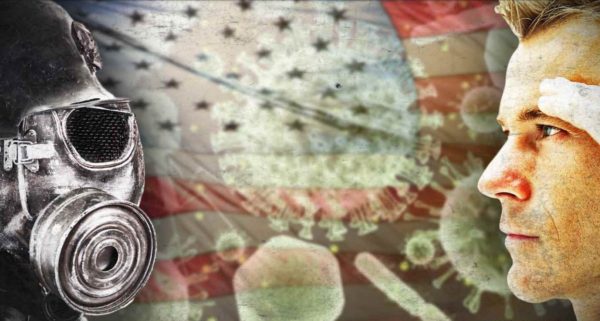
US Army Has Admitted To Conducting 100s Of Germ Warfare Tests On Americans
By Rachel Blevins | The Free Thought Project | April 28, 2018
While the United States government claims to be horrified every time there are reports of a chemical attack that was allegedly carried out by the Syrian government, history serves as a reminder that the U.S. is responsible for carrying out a number of chemical attacks on thousands of unsuspecting Americans, and some of the innocent victims are still suffering from the effects today.
In 1977, the U.S. Army admitted that it secretly conducted at least 239 germ warfare tests in the open air in cities across the country between 1949 and 1969. The areas where the lethal germs were simulated on the public were typically in major cities such as Washington D.C., San Francisco, New York City, Key West and Panama City, according to a report the Army submitted to the Senate Health Subcommittee.
In the report, the Army insisted that the purpose of the tests was to study how biological warfare affects the public, in case it needs to defend against it. Calling tests “essential,” the Army claimed it needed to “substantiate theories and fill knowledge gaps and to determine vulnerability to attack.”
According to a report from the Washington Post, the release of the Army’s censored report was “the most complete official version of this nation’s biological warfare effort,” and it revealed that in addition to public areas, military personnel and their families were also targeted:
“The Army listed 27 times that it tested simulated toxins on public property, including releasing spores in two tunnels on a stretch of Pennsylvania Turnpike. In addition to those experiments in public places, the Army secretary used military personnel and their families for open-air experiments by spraying simulated germs into the air at a number of bases, including Fort Detrick, Md.; Fort Belvoir, Va.; and the Marine training school at Quantico, Va. … Another 504 workers connected with biological warfare activities at Ft. Detrick, Dugway Proving Ground and the Deseret Test Center in Utah and the Pine Bluff Arsenal in Arkansas suffered infections, according to the Army’s count.”
The Army’s report also noted that while the initial tests were carried out 1942, the testing of biological warfare agents increased drastically in 1961 when the Secretary of Defense ordered the Joint Chiefs of Staff to “evaluate the potentialities” of biological and chemical warfare, instead of just studying the effects of the agents from a defense standpoint.
While the report from the Army maintained that the live bacteria deployed in tests across the country were “deemed harmless at the time,” the tests resulted in lifelong illnesses and health problems for many of the innocent victims who were unaware that their quality of life was being compromised by a government experiment.
As The Free Thought Project reported, the largest experiment was carried out in San Francisco, California, in 1950. The Army sprayed the city with the microbe Serratia marcescens in an attack that was called “Operation Sea-Spray.” They claimed San Francisco was chosen as the target because it is close to the ocean and because it has a unique geography, tall buildings, and dense population.
For six days in September 1950, military members used giant hoses to spray clouds of Serratia along the San Francisco coastline, which resulted in the city’s 800,000 residents receiving heavy doses of the chemical. It is also estimated that residents in the neighboring communities of Albany, Berkeley, Daly City, Colma, Oakland, San Leandro, and Sausalito, were exposed to it.
While the military insisted that Serratia marcescens is “rarely a cause of illness,” Discover Magazine noted that there were a number of serious illnesses and even one tragic death reported as a result of the government’s chemical attack:
“A week after the spraying, 11 patients were admitted to the now-defunct Stanford University Hospital in San Francisco with severe urinary tract infections, resistant to the limited antibiotics available in that era. One gentleman, recovering from prostate surgery, developed complications of heart infection as Serratia colonized his heart valves. His would be the only death during the aftermath of the experiment … Later, the repeated occurrence of urinary-tract infection by this organism, with bacteremia in two patients and death in one, indicated the potential clinical importance of this group of bacteria.’”
While the idea that the U.S. government would willingly poison its own citizens may seem shocking to some, it is not unprecedented. Earlier this year, a study found that the Pentagon has contaminated more than 40,000 sites across the United States, exposing hundreds of thousands of Americans to dangerous chemicals.
The investigation, which was conducted by ProPublica and Vox, revealed that by testing and disposing of deadly chemical weapons in the United States, the Pentagon has “poisoned drinking water supplies, rendered millions of acres of land unsafe or unusable, and jeopardized the health of often unwitting Americans.”
The study noted that while the Pentagon has spent more than $40 billion in an effort to clean up the contaminated sites over the years, the results have been overwhelmingly inadequate, and many Americans are still at risk, even after the government claims that the sites have been rendered “safe” for public use.
The Department of Defense and its contractors are also currently using at least 61 active military sites across the country to “burn and detonate unused munitions and raw explosives in the open air with no environmental emissions controls,” according to a series of reports from ProPublica.
Ultimately, while the U.S. claims that it must engage in the “War on Terror” to protect Americans from terrorists, the fact remains that some of the most harmful warfare launched against Americans on U.S. soil has resulted from secret experiments backed by the Pentagon. Yet none of the officials from the government agencies who are responsible have been held accountable for poisoning countless innocent Americans with the attacks.
Ashrawi: While the world works on saving lives, US and Israel working on killing peace
WAFA – April 12, 2020
RAMALLAH – Member of the Executive Committee of the Palestine Liberation Organization (PLO), Hanan Ashrawi, said today that Israel was “cynically exploiting” the international community’s focus on protecting humanity from the consequences of the COVID-19 pandemic to implement its extraterritorial and expansionist colonial agenda.
She said the Israeli politicians “are busy negotiating a coalition agreement centered on permanent colonization and annexation at the expense of Palestinian lives, land, and rights.”
“While the world is preoccupied with combating COVID-19, the joint Israeli-US committee set up to implement the US administration’s disastrous so-called plan has found the time and energy to work on annexation and prioritize it over saving lives,” Ashrawi said in a statement.
“The clear support and sponsorship of the US administration of these dangerous plans is further proof of the disruptive and irresponsible role of the Trump administration at all levels.”
She blamed the US administration’s “partnership with Israel on the issues of annexation and permanent occupation for making the situation on the ground completely untenable.”
Following is the full text of Ashrawi’s statement:
Israel is cynically exploiting the international community’s focus on protecting humanity and the world economy from the devastating consequences of the COVID-19 pandemic to implement its extraterritorial and expansionist colonial agenda.
Israeli politicians are busy negotiating a coalition agreement centered on permanent colonization and annexation at the expense of Palestinian lives, land, and rights.
While the world is preoccupied with combating COVID-19, the joint Israeli-US committee set up to implement the US administration´s disastrous so-called plan has found the time and energy to work on annexation and prioritize it over saving lives. The clear support and sponsorship of the US administration of these dangerous plans is further proof of the disruptive and irresponsible role of the Trump administration at all levels.
Israeli annexation is not a possibility the world should be worried about. It is a reality unfolding on the ground to the grave detriment of future generations in the region and at the expense of the standing and relevance of multilateral efforts and international law. Israel is taking practical steps to permanently and irreversibly undercut the realization of the Palestinian people’s inalienable rights to freedom and independence, thus ensuring permanent conflict in the region.
Israel has scaled up land grab, settlement and Wall construction, nightly raids and other illegal measures and crimes to satisfy the insatiable appetite of colonial expansion. This agenda is now the common ground on which unity government discussions are based, dissolving any pretension that main Israeli political actors have differences on the policies of ensuring permanent colonization, enacting annexation, and enforcing apartheid-like policies. This dangerous agenda is neither new nor surprising.
It is what the Palestinian leadership has warned from for years. Regrettably, the international community has abdicated its responsibilities to hold Israel accountable for its pervasive illegal actions and shameful impunity. This inaction has emboldened and empowered the Israeli political establishment to abandon all pretense of commitment to the internationally agreed-on solution of two states on the basis of international law and relevant United Nations resolutions.
The current US administration’s ideological and practical partnership with Israel on the issues of annexation and permanent occupation has made the situation completely untenable.
Despite its focus on combating the COVID-19 pandemic, the international community is well aware of what is transpiring on the ground, including Israel’s obstruction of Palestinian efforts to combat the virus effectively.
This was evident in the recent European Union statement announcing increased assistance to Palestine to help fight the virus. However, rhetorical diagnosis of the threat to peace and international obligations will not be enough to avert the complete breakdown of the world agenda for peace. Serious and deterrent international action is required to stop Israeli actions and plans. Time has run out on complacency and platitudes.
A Viral Pandemic or A Crime Scene?
By Gilad Atzmon | April 11, 2020
We have recently heard from frontline medical physicians that the current global health crisis is something they have not been trained to deal with nor do they fully understand the spectrum of symptoms they encounter in hospitals and emergency centres. Earlier this week, Dr. Cameron Kyle-Sidell, an emergency physician affiliated with Maimonides Medical Center (Brooklyn), posted two insightful videos urging health practitioners to accept that COVID-19 does not cause any form of pneumonia. Instead, the virus causes a condition of oxygen deprivation, and ventilators as they are currently being used, may cause more harm than good for some patients.
Watch Dr. Cameron Kyle-Sidel:
What Dr. Kyle-Sidell suggests is a paradigm change in the perception of the current endemic. Kyle-Sidell is not alone, the few doctors who allow themselves to discuss the situation in a critical manner admit that medical science is perplexed by the virus.
One would assume that if the virus at the centre of the current epidemic was an unsavoury present from ‘mother nature’ we would be able to trace its evolution. We likely would have seen the gradual appearance of some of the new symptoms that have caught our medical establishment unprepared. It doesn’t seem this happened. In the view of many medical practitioners the new disease is in a category of its own. It is a novelty.
This means that it is possible that the Corona virus wasn’t created by nature but by creatures who believe themselves to be greater than nature.
In light of the above, I offer my paradigm change, one that is probably more radical than what Dr. Kyle-Sidell may have had in mind.
Since we do not know its provenance, we should treat the current epidemic as a potentially criminal act as well as a medical event. We must begin the search for the perpetrators who may be at the centre of this possible crime of global genocidal proportions.
While medical diagnosis is defined by:
1. a determination of the nature of the cause of a disease.
2. a concise technical description of the cause, nature, and/or manifestations of the symptoms.
Criminal investigations are primarily engaged with the human element. The criminal investigator seeks to ascertain the methods, motives, and identities of criminals, the identity of victims and may also search for and interrogate witnesses to the crime.
Treating the Corona virus as a crime would mean searching for possible offenders: individuals, institutions, or states that may have created the lethal virus as part of a research program or more directly, as an agent of biological warfare.
Law enforcement agencies often allocate dozens of investigators, officers, detectives and agents to untangle a single homicide. One would expect that following the deaths of tens of thousands around the globe, every police force, government and intelligence agency would join forces in the attempt to identify the possible culprit(s) at the root of the coronavirus crisis. We may be dealing with a negligent or criminal event on a massive scale.
While scientists and medical experts find it difficult to explain exactly how Covid-19 operates or how it came about, a few critical voices within the scientific community and the dissident media have pointed to alternative explanations that seem more explanatory than anything conventional medical thought has so far offered.
Some claim that G5 radiation is at the core of the new epidemic. I do not have any intention nor am in any position to comment on the topic, however, considering the scale of death we are dealing with, a criminal investigation may have to look closely into such a possibility: identifying the danger, identifying the possible motive and spotting the financial benefactors as well as beneficiaries.
A number of scientists have commented that laboratories and research centres have been engaged in the study of corona viruses and experimented with models that resemble the current virus. Specifically, some have pointed to a North Carolina laboratory that experimented with the viruses extracted from bats in 2015.
Back in 2015 USA Today published extensive research relating to the ongoing safety issues in biological laboratories in America and elsewhere. “Vials of bioterror bacteria have gone missing. Lab mice infected with deadly viruses have escaped, and wild rodents have been found making nests with research waste. Cattle infected in a university’s vaccine experiments were repeatedly sent to slaughter and their meat sold for human consumption. Gear meant to protect lab workers from lethal viruses such as Ebola and bird flu has failed, repeatedly.” The American outlet revealed that “hundreds of lab mistakes, safety violations and near-miss incidents have occurred in biological laboratories coast to coast in recent years, putting scientists, their colleagues and sometimes even the public at risk.” Naturally, safety failures in biological laboratories aren’t just an American problem. “A small, deadly outbreak of severe acute respiratory syndrome in China in 2004 was traced to lab workers at the National Institute of Virology in Beijing. In 2007, an outbreak of foot and mouth disease among cattle in England that required herds to be slaughtered was blamed on leaking drainage pipes at a nearby research complex.”
In 2014 the US National Institute of Health removed its funding of gain-of-function (GOF) experiments involving the influenza, SARS, and MERS viruses. Gain-of-function involves activating mutations to change the gene product to enhance its effect or so that its normal actions are superseded by a different and abnormal function. Apparently, the National Institute of Health’s moratorium ended on Dec. 19, 2017 when the US announced that it would resume funding American gain-of-function experiments involving these viruses. This means that since 2017 some American laboratories have been experimenting with Corona viruses; creating mutants with the financial support of the government.
Treating the Corona virus outbreak as a crime ought to include a visit by the FBI to the office of the National Institute of Health and a careful review of all the files related to American laboratories conducting GOF experiments with Coronavirus. This investigative procedure must be exercised in every region and country in the world that has engaged in GOF experiments.
As soon as the Corona virus became the new disaster, Dany Shoham, a former Israeli military intelligence officer, was quick to point to China’s biowarfare program as a possible originator of the virus.
By now, with the exception of President Trump and his Pompeo character, not many are convinced that Covid-19 is a Chinese Virus (as Trump refers to it when he wants to annoy progressives). A criminal investigation would have to examine Chinese as well as Russian, British, French, German, etc. laboratories and their safety records. It should also verify whether Dany Shoham had any evidence for his assertion regarding China or whether he was attempting to divert attention from another possible suspect in this Corona affair.
Israel, with its extensive biological warfare laboratories and WMD facilities must also be subject to thorough scrutiny.
During his first term as Israel’s leader, Mr Netanyahu authorised a risky attempt to assassinate the Palestinian rising star and Hamas leader, Mr. Khaled Meshaal in the Jordanian capital, Amman. Five Mossad agents, posing as Canadian tourists, were sent to Amman. They ambushed Mr Meshaal on a street corner and sprayed poison into his left ear and expected him to die within 48 hours.
But their plan went wrong. One of Meshaal’s bodyguards chased the two Mossad agents who had carried out the operation and, with the help of a passing Palestinian Liberation Army officer, managed to capture them.
Instead of escaping over the border as they had planned, the rest of the Mossad team was trapped in the Israeli embassy in Amman. Mr Netanyahu was left with no option other than to negotiate with King Hussein of Jordan and plead for his assassins’ return. The king, who was dying of cancer, drove a hard bargain. Israel had to supply immediately the antidote to the poison that was killing Mr Meshaal. Netanyahu also had to agree to release nine Jordanians and sixty-one Palestinian prisoners amongst them Sheikh Ahmed Yassin, the spiritual leader of Hamas and at the time, Israel’s most hated foe.
But here is the astonishing piece of this saga. The poison used by Israel is a slow-acting but lethal poison that gradually shuts down the brain’s respiratory centre, leading to death. The doctor that revived Meshaal described his condition as respiratory oxygen deficiency. To date, it is not clear what type of agent was used by the Mossad against Meshaal, but a few facts are known. Israel employed a biological/chemical agent with a respiratory effect. Israel possessed the antidote to its lethal agent. Benjamin Netanyahu as Israeli PM, authorised the botched assassination and the usage of a biological/chemical weapon.
Watch Al Jazeera’s Kill Him Silently: Mossad vs Khaled Meshaal:
Israel is not a signatory to the Biological Weapons Convention. It is generally assumed that the Israel Institute for Biological Research in Ness Ziona develops vaccines and antidotes for chemical and biological warfare. In 2012 Haaretz wrote of the Ness Ziona laboratory that it’s an “institution that very rarely finds itself in the news, and when it does, it’s usually because of some controversy or other. According to Israeli sources, the institute develops pharmaceuticals, vaccinations, treatments and antibodies to protect Israelis from chemical (gas) or biological weapons. That’s along with its civilian research projects.” Haarertz continues, “according to foreign reports, it also develops chemical and biological weapons. One of these reports said institute scientists had developed the poison that was meant to have eliminated Hamas political leader Khaled Meshaal in the botched Mossad attack against him in Amman in 1997.”
Any detectives who examine the Ness Ziona Lab will have to figure out how the Israeli institute is already so advanced in the development of a Covid-19 vaccine. According to the Israeli press, a novel corona virus vaccine is already being tested at the institute.
Ness Ziona is not alone at the front of the Corona vaccine race. Migal, another Israeli company, announced at the end of February that it was almost ready with a vaccine. Detectives should ascertain whether Migal, like other laboratories around the world, is a safe environment and that it wasn’t in the Galilee laboratory that a tiny but vicious virus escaped its guardians.
Foreign Policy Magazine revealed three weeks ago that the Corona virus’ early appearance in Iran that sickened government and military leaders caused some Iranian officials to believe that the Coronavirus was part of an ‘American-Zionist biofare military campaign’ against their republic and its leaders.
I am not in any position to produce incriminating evidence against any person, institution or a state, it isn’t my job nor it is my wish to do so. I am a writer not a detective. Yet I maintain that evaluating the corona crisis as a crime may make those who plan to survive the pandemic feel a little safer in a world that long ago has lost its way.
Ottawa dances with the Saudi kingdom
By Yves Engler · April 11, 2020
As Canadians focus on the coronavirus pandemic the Trudeau government announced it was lifting its suspension of arms export permits to Saudi Arabia. It has also renegotiated the government’s $14 billion armoured vehicle deal with the belligerent, repressive, monarchy.
This is not surprising. The government set the stage for this decision with its September review that found no evidence linking Canadian military exports to human rights violations committed by the Saudis. The Global Affairs review claimed there was no “credible” link between arms exports to the Saudis and human rights abuses even though the April 2016 memo to foreign minister Stéphane Dion originally approving the armoured vehicle export permits claimed they would assist Riyadh in “countering instability in Yemen.” The five year old Saudi led war against Yemen has left 100,000 dead. Throughout their time in office the Liberals have largely ignored Saudi violence in Yemen.
Despite a great deal of public attention devoted to a diplomatic spat, after Riyadh withdrew its ambassador over an innocuous tweet from the Canadian Embassy in August 2018, the Liberals have sought to mend relations and continue business as usual. In December 2018 HMCS Regina assumed command of a 33-nation Combined Maritime Forces naval coalition patrolling the region from Saudi Arabia. Last September foreign Minister Chrystia Freeland said, “Saudi Arabia is an important partner for Canada and we continue to work with Saudi Arabia on a number of different issues at a number of different levels.” For its part, the Canadian Embassy’s website continues to claim, “the Saudi government plays an important role in promoting regional peace and stability.”
According to an access to information request by PhD researcher Anthony Fenton, Freeland phoned new Saudi foreign minister Ibrahim Abdulaziz Al-Assaf in January 2019. In briefing notes for the (unannounced) discussion Freeland was encouraged to tell her counterpart (under the headline “points to register” regarding Yemen): “Appreciate the hard work and heavy lifting by the Saudis and encourage ongoing efforts in this regard.”
After Crown Prince Mohammad bin Salman’s (MBS) thugs killed and dismembered journalist Jamal Khashoggi in October 2018, Trudeau treaded carefully regarding the murder. Ten days after the Canadian Press reported, “the prime minister said only that Canada has ‘serious issues’ with reports the Washington Post columnist was killed by Saudi Arabian operatives inside Saudi Arabia’s consulate in Turkey.” Six weeks later the Liberals sanctioned 17 Saudi nationals over the issue but none of them were in positions of significant authority.
Foreign minister Freeland looked the other way when Saudi student Mohammed Zuraibi Alzoabi fled Canada last year — presumably with help from the embassy — to avoid sexual assault charges in Cape Breton. While Freeland told reporters that Global Affairs was investigating the matter, Halifax Chronicle Herald journalist Aaron Beswick’s Access to Information request suggested they didn’t even bother contacting the Saudi embassy concerning the matter.
In April 2019 the Saudis beheaded 37 mostly minority Shiites. Ottawa waited 48 hours — after many other countries criticized the mass execution — to release a “muted” statement. The Trudeau government stayed mum on the Saudi’s effort to derail pro-democracy demonstrations in Sudan and Algeria in 2018/19 as well as Riyadh’s funding for Libyan warlord Khalifa Haftar’s bid to seize Tripoli by force.
While they implemented a freeze on new export permit approvals, shipments of Canadian weaponry continued. The year 2018 set a record for Canadian rifle and armoured vehicle sales to the Saudis. Over $17 million in rifles were exported to the kingdom in 2018 and a similar amount in 2019. Canada exported $2 billion worth of “tanks and other armoured fighting vehicles” to the Saudis in 2019. In February Canada exported $155.5 million worth of “Tanks and other armoured fighting vehicles” to Saudi Arabia.
The Global Affairs review that claimed there was no “credible” link between Canadian weapons exports to the Saudis and human rights abuses noted there were 48 arms export permit applications awaiting government approval.
As Fenton has documented in detail, armoured vehicles made by Canadian company Streit Group in the UAE have repeatedly been videoed in Yemen. Equipment from three other Canadian armoured vehicle makers — Terradyne, IAG Guardian and General Dynamics — was found with Saudi-backed forces in Yemen. Fenton has shown many examples of the Saudi-led coalition using Canadian-made rifles as well.
The Trudeau government arming the monarchy’s military while saying little about its brutal war in Yemen should be understood for what it was: War profiteering and enabling of massive human rights abuses.
Israel threatens Hezbollah in Syria days after assassinating member in Lebanon
Press TV – April 10, 2020
The Israeli military has threatened to strike the positions in Syria of the Lebanese Hezbollah resistance movement, days after assassinating a senior member of the group in southern Lebanon.
The Israeli military on Friday posted grainy footage on Twitter purporting to show the head of the Syrian Armed Forces 1st Corps, Luau Ali Ahmad Assad, “visiting Hezbollah positions in Syria.”
The footage, which was filmed from a distance, showed individuals wearing military fatigues greeting a man with military salutes and shaking hands with him in an open area.
The text accompanying the footage on the Israeli post read, “See the man with white hair? That’s the head of the Syrian Armed Forces 1st Corps, Luau Ali Ahmad Assad. He’s visiting Hezbollah positions in #Syria.”
“Our message: We see you. Consider this a warning,” the caption further read. “We won’t allow Hezbollah to entrench itself militarily in Syria.”
It was unclear who had captured the footage, or whether it was of Assad visiting Hezbollah members in Syria.
Syria has been fighting foreign-backed militants since 2011. While that fight has been winding down, the country has also had to combat Daesh terrorists in Syrian territory, including near the Lebanese border. Hezbollah has dispatched fighters to help the Syrian military eradicate the terrorists and has prevented the spillover of terrorist activity into Lebanon.
The Israeli regime has, meanwhile, frequently conducted airstrikes against positions in Syria. While the Tel Aviv regime has often refused to confirm or deny specific strikes, it has claimed that it has been hitting Hezbollah forces in Syria.
 The latest threat comes a few days after a Hezbollah commander in charge of tracking collaborators with Israel, Ali Mohammed Younes, was killed in southern Lebanon apparently by agents working for Israel’s Mossad spy organization.
Younes was found by his car and had been stabbed twice and shot four times.
According to Sputnik, Younis was a “close associate” of Lieutenant General Qassem Soleimani, the former commander of the Quds Force of Iran’s Islamic Revolutionary Guards Corps (IRGC) who was himself assassinated in a United States drone strike in Baghdad back in January.
The Syrian army has managed to drive the terrorists out of most parts of the country and end Daesh’s territorial rule with help from Iran, Hezbollah, and Russia.
See also:
Over a dozen ships carrying fuel, food impounded in Djibouti: Yemeni official
Press TV – April 9, 2020
A Yemeni maritime official says the Saudi-led coalition has impounded more than a dozen ships carrying energy derivatives and food destined for the conflict-plagued and impoverished Arab country, despite the fact that the vessels had earlier acquired necessary permits from the United Nations.
The unnamed official at Hudaydah port told Arabic-language al-Masirah television network on Thursday that 14 tankers loaded with more than 320 thousand tons of oil derivatives and three vessels with foodstuff aboard have been marooned at a port in Djibouti.
He added that the vessels had undergone inspection by the United Nations and obtained the relevant papers to dock at Yemen’s Hudaydah port.
The remarks came a day after the Saudi-led coalition, which has been engaged in a brutal five-year-old military aggression against Yemen, declared a two-week ceasefire, and announced that it would take effect at 12 p.m. local time (0900 GMT) on Thursday.
Yemen’s Houthi Ansarullah movement has, in return, downplayed the Saudi-led coalition’s ceasefire announcement, describing it as a chance for the alliance to get out of the quagmire with minimum disgrace. The movement highlighted it would will not abide unless a years-long siege on the impoverished nation is lifted.
Mohammed al-Bukhaiti, a senior member of the political bureau of the Ansarullah movement, told the Lebanon-based and Arabic-language al-Mayadeen television news network that the coalition’s move to announce a ceasefire was just another ploy by the aggressors.
“Saudis have repeatedly declared ceasefire in Yemen, but have violated it every time,” he noted.
Bukhaiti said Riyadh is using the outbreak of COVID-19 as an opportunity for ceasefire and a face-saving exit from the Yemen war.
However, he added, with the siege of Yemen in place, the war will not end.
“If any ceasefire does not include the removal of the siege on Yemen, that would be the continuation of the Saudi war,” he noted.
Houthis unilaterally release 70 prisoners
Separately, the Ansarullah movement has unilaterally released dozens of Saudi-sponsored Yemeni militiamen loyal to the country’s former president Abd Rabbuh Mansur Hadi.
The head of the Houthi-affiliated National Committee for Prisoners Affairs (NCPA), Abdulqader al-Mortada, said in a post published on his official Twitter page on Thursday that 70 prisoners were set free on humanitarian grounds and handed over to local authorities in a number of provinces amid the coronavirus pandemic.
Saudi Arabia and a number of its regional allies launched the devastating war on Yemen in March 2015 in order to bring Hadi back to power and crush Ansarullah.
The US-based Armed Conflict Location and Event Data Project (ACLED), a nonprofit conflict-research organization, estimates that the war has claimed more than 100,000 lives over the past five years.
Saudi Arabia and the United Arab Emirates have purchased billions of dollars’ worth of weapons from the United States, France and the United Kingdom in their war on Yemen.
Riyadh and its allies have been widely criticized for the high civilian death toll resulted from their bombing campaign in Yemen.
The UN says over 24 million Yemenis are in dire need of humanitarian aid, including 10 million suffering from extreme levels of hunger.
Featured Video

Can the U.S. Afford to Annihilate Iran?
or go to
Aletho News Archives – Video-Images
From the Archives
Sanctions, War and the Policy of Dual Containment
By SASAN FAYAZMANESH | March 17, 2008
It is now nearly three decades since the Unites States adopted the policy of dual containment of Iran and Iraq. While much has been written about the containment of Iraq, there has been very little in-depth analysis of this policy when it comes to Iran. In a book that is going to be released on March 31, 2008, entitled The United States and Iran: Sanctions, Wars and the Policy of Dual Containment (Routledge), I attempt to address this shortcoming by investigating when and why the US policy of containment of Iran came about, how it evolved, and where it stands today.[1] To the extent that Israel has been involved in US policy making, the study will also include the role that Israel has played in the containment of Iran. Also, since the fate of Iran has been inextricably linked to that of Iraq, occasionally the investigation will overlap with the containment of Iraq.
The policy of dual containment of Iran and Iraq originated during the Carter Administration, but it was not until the Clinton Administration that the expression “dual containment” became popular. … continue
Blog Roll
 Aletho News
- Can the U.S. Afford to Annihilate Iran? /Seyed M. Marandi
- Elmo Sold mRNA Jabs to Your Toddler. Now They Are “Off-Label.”
- British state targets Palestine Action with yet another crooked trial
- Americans are paying the price to preserve Israel’s nuclear hegemony
- Resistance factions are necessary to ensure a permanent US Iraq withdrawal
- How Israel destabilizes the Middle East: Denying sovereignty and the right to exist
- Europe’s Establishment Is Embracing War – and Losing Voters
- NATO chief advocates war of aggression
- No Vote, No Representation, No State: Democracy, Israeli Style
- Zionist Bought Senate Blocks Information About American Citizens Killed By Israel
- If Americans Knew
- Israeli Soldiers Abduct At Least 22 Across Occupied West Bank
- Eight Palestinians Killed in Israeli Attacks on Gaza
- Israeli former leaders and security chiefs threaten legal action over ‘Jewish terrorism’
- Israel map in LA Times ad includes all land from the river to the sea
- Inside Lebanon’s 200-page dossier on Israeli war crimes
- Flydubai, genocide, settler violence, Trump abuse of power to deport – Daily Update
- Counting Antisemitic Incidents: What the ADL Audit Reveals — and Obscures
- Mamdani releases plan to combat antisemitism and hate crimes in New York City
- Iran’s Revolutionary Guards Publish Letter to the American People
- DMFI launches $1 million ad campaign supporting Virginia’s Elaine Luria
- No Tricks Zone
- Green Energy Debacle: German Expert Professor Fritz Vahrenholt Warns Of Severe Economic And Social Consequences
- Two More Paleo Reconstructions Affirm Meters-Higher Sea Levels Across Ireland, Brazil 7000-6000 Years Ago
- New Study: Earth And Venus Surface Warmth Largely Explained By Convection And Lapse Rate, Not CO2 Or Radiation
- 2025 Nature Paper Claiming Worsening Global Drought Gets RETRACTED …Heavily Flawed
- New Study: ‘Global Drought Shows No Detectable Recent Acceleration Under Climate Warming’
- Economic Masterminds: German Socialists Suggest Taxing Productivity Gains Stemming From Using AI
- The South China Sea Has Not Been Cooperating With The Climate Change Narrative
- Energy Crisis: Germany Enters Heating Season With Historically Low Gas Reserve Fill Levels
- New Study: The Antarctic Ice Sheet Gained Mass From 2020-2024 Due To Staggering Snow And Ice Accumulation
- Study: Ocean Heating Rates From Thousands Of Years Ago ‘Dwarf’ Modern Ocean Heating Rates

