Sudan: US conditioning removal from terror list on normalisation with Israel
MEMO | September 7, 2020
The United States (US) has conditioned Sudan’s removal from a list of states sponsors of terrorism on its normalisation of diplomatic ties with Israel, Sudanese Foreign Minister, Omer Ismail, announced yesterday.
“US Secretary of State Mike Pompeo combined, during his visit to Khartoum in late August, the two files of the normalisation and the removal of Sudan from the terror list,” Ismail told local Al-Tayyar newspaper, adding that it was “important to fulfil defined conditions for normalisation, even if it is the will of Sudan.”
He stressed that his country’s transitional government did not have the “authority to make such a decision [to normalise ties with Israel],” referring to remarks made by the Sudanese Prime Minister Abdullah Hamdok during Pompeo’s recent visit to Khartoum.
Sudan has been widely tipped to be the next Arab country that would normalise ties with Israel after the United Arab Emirates (UAE) agreed to do so as part of a US-brokered agreement in mid-August.
Israel’s Friends at the RNC: ‘Christian Zionists’ Dictate the Agenda of the Republican Party
By Ramzy Baroud | Palestine Chronicle | September 2, 2020
It is difficult – and futile – to argue which American president has historically been more pro-Israel. While former President Barack Obama, for example, has pledged more money to Israel than any other US administration in history, Donald Trump has provided Israel with a blank check of seemingly endless political concessions.
Certainly, the unconditional backing and love declared for Israel is common among all US administrations. What they may differ on, however, is their overall motive, primarily their target audience during election time.
Both Republicans and Democrats head to the November elections with strong pro-Israel sentiments and outright support, completely ignoring the plight of occupied and oppressed Palestinians.
To win the support of the pro-Israeli constituencies, but especially the favor of the Israel lobby in Washington DC, Democratic presidential nominee, Joe Biden, and his running mate, Kamala Harris, have deviated even further from the low standards set by the Democratic Obama administration. Despite his generous financial support for Israel and full political backing, especially during Israel’s wars on the Gaza Strip, Obama dared, at times, to censure Israel over the expansion of its illegal Jewish settlements.
The Biden-Harris ticket, however, is offering Israel unconditional support.
“Joe Biden has made it clear,” Harris was quoted as saying in a telephone call on August 26, “he will not tie US security assistance to Israel to political decisions Israel makes, and I couldn’t agree more.” The call was made to what the Israeli newspaper, Haaretz, termed as “Jewish supporters.” The Jerusalem Post and the Times of Israel referred to this crucial constituency as “Jewish donors.”
The references above are sufficient to delineate the nature of the Democratic Party establishment’s current support for Israel. Although the view of the party’s rank and file has significantly shifted against Israel in recent years, the Democratic upper echelon still caters to the Israel lobby and their rich backers, even if this means molding US foreign policy in the entire Middle East region to serve Israeli interests.
For Republicans, however, it is a different story. The party’s establishment and the rank and file are united in their love and support for Israel. Though the Israel lobby plays an important role in harnessing and channeling this support, Republicans are not entirely motivated by pleasing the pro-Israel lobbyists in Washington DC.
The speeches made by Republican leaders at the Republican National Convention (RNC), held in Charlotte, North Carolina, between August 24-27 were all aimed at reassuring Christian Evangelicals – often referred to as ‘Christian Zionists’- who represent the most powerful pro-Israel constituency in the United States.
The once relatively marginal impact of Christian Zionists in directly shaping US foreign policy, has morphed over the years – particularly during the Trump presidency – to define the core values of the Republican Party.
“This is apocalyptic foreign policy in a nutshell,” tweeted Israeli commentator, Gershom Gorenberg, on August 24. In Republican thinking, “Israel is not as a real country but a fantasyland, backdrop for Christian myth.”
Gorenberg’s comments were tweeted hours before the controversial speech made by US Secretary of State, Mike Pompeo, America’s top diplomat, who delivered his brief notes from “beautiful Jerusalem, looking out over the old city.” The location, and the reference to it, were clear messages regarding the religious centrality of Israel to US foreign policy, and the unmistakable target audience.
Trump was even more obvious during an August 17 speech in Oshkosh, Wisconsin. “We moved the capital of Israel to Jerusalem,” Trump announced to a cheering crowd, “and so the Evangelicals – you know, it’s amazing with that – the Evangelicals are more excited about that than Jewish people … It’s really, it’s incredible.”
Unsurprisingly, 22 percent of Wisconsin residents identify as “Evangelical Protestants.”
This was not the first time that Trump has derided US Jews for not being as supportive of him as they are of his Democrat rivals. A year ago, Trump called Jewish Democrats “disloyal” to Israel. “I think any Jewish people that vote for a Democrat, I think it shows either a total lack of knowledge or great disloyalty,” he said in August 2019.
This was not a simple case of Trump’s typical political insensitivity but, rather, the cognizance that the real Republican prize in the coming elections is not the Jewish vote but the Christian Zionists.
In his speech before the RNC on August 27, Trump recounted to this same audience his pro-Israeli accomplishments, including the relocation of the US embassy from Tel Aviv to Jerusalem in May 2018. “Unlike many presidents before me, I kept my promise, recognized Israel’s true capital and moved our embassy to Jerusalem,” Trump proclaimed.
The moving of the embassy, always a great opportunity to repeat the word “Jerusalem” before a jubilant crowd, was the buzzword at the RNC, repeated by all top Republicans, including former US Ambassador to the UN, Nikki Haley. “President Trump moved our embassy to Jerusalem — and when the UN tried to condemn us, I was proud to cast the American veto,” Haley announced proudly, which generated an approving cheer.
In all of their references to Israel at the RNC, Republican leaders adhered to specific talking points: Iran, the US embassy move, the recognition of the Occupied Golan Heights as Israeli territories, the fight against anti-Semitism (silencing any criticism of Israel), and so on.
However, the Republican discourse seems to be detached from the traditional US foreign policy view that US support for Israel serves the geopolitical and geostrategic interests of Washington. This view, predominant among Democrats, seems to be almost entirely forsaken by Republicans, whose love for Israel is now dedicated to a purely religious mission.
In June 2015, when he was still a Congressman from Kansas, Secretary Pompeo once declared before a packed megachurch in Wichita, that the “battles” against evil are a “never-ending struggle,” one that will continue “until the Rapture,” a reference to what some Christians believe to be a sign of the end of times.
Addressing the RNC from Jerusalem on August 25, Pompeo must have felt that part of his spiritual mission has already been fulfilled.
Ramzy Baroud is a journalist and the Editor of The Palestine Chronicle. He is the author of five books. His latest is “These Chains Will Be Broken: Palestinian Stories of Struggle and Defiance in Israeli Prisons” (Clarity Press, Atlanta). Dr. Baroud is a Non-resident Senior Research Fellow at the Center for Islam and Global Affairs (CIGA), Istanbul Zaim University (IZU). His website is www.ramzybaroud.net.
Meet the IDF-Linked Cybersecurity Group “Protecting” US Hospitals ‘Pro Bono’

By Whitney Webb –
UNLIMITED HANGOUT– August 27, 2020
Since the Coronavirus crisis began in earnest earlier this year, the strain on hospitals in the US and around the world has been the subject of a considerable number of media reports. However, hardly any media attention has been given to the dramatic and unsettling changes that have been made to hospital and healthcare information technology (IT) systems and infrastructure under the guise of helping the US healthcare system “cope” with the surge in data as well as an unsettling uptick in cyberattacks.
Over the past several months, 80% of healthcare institutions in the US have reported being targeted by some sort of cyberattack, ranging from minor to severe, with an uptick in phishing attempts and spam specifically. Most of these attempts have been aimed at illegally acquiring troves of patient data, including the recent hacks of hospitals in Chicago and Utah. About 20% of the hacks and cyberattacks reported by hospitals and medical facilities since March directly affected the facilities’ capacity to function optimally, with a much smaller percentage of those including ransomware attacks.
One of the reasons for the increase in the success of these attacks has been the fact that more healthcare IT workers are working remotely as well as the fact that many IT staffers have been laid off or let go completely. In several recent instances, the removal of entire hospital system IT staffs have been tied to a larger effort by the Department of Health and Human Services (HHS) to consolidate control over patient data, including Coronavirus-related data, with the assistance of secretive government contractors with longstanding ties to HHS.
The surge of cyberattacks combined with major budget cuts has made hospitals even more vulnerable as many are compelled to do more with less. As a result, there has been a renewed push for the improvement of cybersecurity at hospitals, clinics and other healthcare institutions throughout the country over the course of the Coronavirus (Covid-19) crisis.
Amid this backdrop, an odd group of “cyber threat intelligence” analysts with ties to the US government, Israeli intelligence and tech giant Microsoft have “volunteered” to protect US healthcare institutions for free and have even directly partnered with US federal agencies to do so. They have also recently expanded to offer their services to governments and social media platforms to target, analyze and “neutralize” alleged “disinformation campaigns” related to the Coronavirus crisis.
While these analysts have claimed to have altruistic motives, its members who have identified themselves publicly have notably dedicated much of their private sector careers to blaming nation states, namely Iran but also China, for hacking and, most recently, for cyberattacks related to the Coronavirus crisis, as well as the 2020 presidential campaign. These individuals and their employers rarely, if ever, make their reasons for assigning blame to state actors available to public scrutiny and also have close ties to the very governments, namely the US and Israel, that have been attempting to gin up hostilities with those countries in recent years, particularly Iran, suggesting a potential conflict of interest.
The Cyber Justice League?
Calling themselves the cyber version of “Justice League,” the Covid-19 Cyber Threat Intelligence (CTI) League was created earlier this year in March and has described itself as “the first Global Volunteer Emergency Response Community, defending and neutralizing cybersecurity threats and vulnerabilities to the life-saving sectors related to the current Covid-19 pandemic.” They now claim to have over 1,400 members hailing from 76 different countries.
According to their website, they seek “to protect medical organizations, public healthcare facilities, and emergency organizations from threats from the cyber domain” and offer their services “pro-bono” to major hospitals, healthcare and pharmaceutical companies as well as U.S. law enforcement and federal agencies. Upon their creation, they sent an “open letter to the healthcare community,” offering to volunteer “their time and efforts to mitigate [cyber] threats and protect our healthcare system.”
However, since its creation, the CTI League has offered its services to sectors entirely unrelated to healthcare systems, companies and institutions. For instance, they now offer their services to critical infrastructure systems throughout the US, including dams, nuclear reactors, chemical plants and others, according to their inaugural report and their contact form. This is particularly concerning given that there is no oversight regarding who can become a member of the League, as one must merely be approved for entrance or “vetted” by the league’s four founding members, whose conflicts of interests and ties to the US and Israeli national security states are detailed later on in this report.
In addition, the league’s team of “expert” volunteers also tackle alleged disinformation campaigns related to Covid-19. Some examples of the “disinformation” campaigns the CTI league has been investigating on behalf of its private sector and federal partners include those that “associate Covid-19 spread with the distribution of 5G equipment,” “encourage citizens to break quarantine”, and one that “incited” a “1st and 2nd amendment rally” in Texas.
Regarding their disinformation “workstream,” the CTI league states the following:
“The CTI League neutralizes any threat in the cyber domain regarding the current pandemic, including disinformation. The mission of this effort is to find, analyze, and coordinate responses to the current pandemic disinformation incidents as they happen, and where our specialist skills and connections are most useful.”
The CTI League has offered its services “pro bono” to a variety of groups in the private and public sector, which has allowed the League’s members access to the critical systems of each. For instance, they work closely with the Health Information Sharing and Analysis Center (H-ISAC), whose members include Johnson & Johnson, Pfizer, Merck, Amgen, Blue Cross Blue Shield and Athenahealth, among others. H-ISAC’s president, Denise Anderson, works closely with the National Cybersecurity and Communications Integration Center, part of the Department of Homeland Security (DHS). According to H-ISAC’s Chief Security Officer (CSO), Errol Weiss, the organization has been partnered with the CTI League since “very early on” in the Coronavirus crisis.
The CTI League also works with unspecified law enforcement partners in the US and works particularly closely with the US Cybersecurity and Infrastructure Security Agency (CISA), an independent federal agency overseen by DHS. The current CISA director, Christopher Krebs – who was previously the Director of Cybersecurity for Microsoft, told CSO Online in April that “CISA is working around the clock with our public and private sector partners to combat this threat. This includes longstanding partnerships, as well as new ones that have formed as a direct result of Covid-19, including the Covid-19 Cyber Threat Intelligence (CTI) League.”
Since they began “working with US authorities,” the CTI League has increasingly taken to assigning blame to nation states, specifically Russia, China and Iran, for various cyber-intrusions just as the US federal authorities began to do the same. In late April, for instance, the Justice Department began claiming Chinese hackers planned to target “US hospitals and labs to steal research related to coronavirus” and anonymous US officials blamed China for a hack of the Department of Health and Human Services (HHS) and COVID-19 research. Yet, no evidence tying China to the hacks was provided and only anonymous government officials were willing to imply blame in statements given to the press, suggesting that there was not enough evidence to justify going public with the accusation or to even open an official investigation against specific foreign entities.
Notably, that same week in April, CTI League’s founder Ohad Zaidenberg claimed that China, Iran and Russia “are trying to steal everything,” telling CBS News that they “can steal information regarding the coronavirus information that they don’t have, (if) they believe someone is creating a vaccine and they want to steal information about it. Or they can use the pandemic as leverage so they (can) to steal any other type of information.”
Yet, upon looking more closely at the CTI league’s membership and co-founders, particularly Mr. Zaidenberg, much of the league’s leadership has a rather dubious track record regarding past claims linking state actors to cyberattacks. In addition, they also possess rather glaring conflicts of interests that undermine the CTI League’s professed desire to protect critical health and other infrastructure “free of charge” as well as ties to foreign governments with a history of espionage targeting the United States.
ClearSky and the manufactured Iranian threat
The public face of the CTI League and its original founder is a young Israeli named Ohad Zaidenberg, who was previously an “award-winning” commander in Israeli military intelligence’s Unit 8200, a key component of Israel’s military intelligence apparatus that is often compared to the U.S.’ National Security Agency (NSA). While serving in Unit 8200, Zaidenberg specialized in acts of cyberwarfare targeting the Iranian state, serving first as a Persian analyst in the Unit before becoming commander. His current biography states that he continues to remain “focused on Iran as a strategic intelligence target” and describes him as “an authority in the operations of key Iranian APTs [Advanced Persistent Threats].”
In addition to his leading role at the CTI League, Zaidenberg is also the lead cyber intelligence researcher at ClearSky Cybersecurity, an Israeli company directly partnered with the Unit 8200-linked Checkpoint and Verint Inc., formerly known as Comverse Infosys – a company with a long history of fraud and espionage targeting the US federal government. ClearSky also collaborates “daily” with Elta Systems, an Israeli state-owned subsidiary of Israel Aerospace Industries (IAI), and was founded by Boaz Dolev, the former head of the Israeli government’s “e-Government” platform.
Aside from his work at CTI League and ClearSky, Zaidenberg is also a researcher for Tel Aviv University’s Institute for National Security Studies (INSS). Zaidenberg is specifically affiliated with the INSS’ Lipkin-Shahak Program, which is named after the former head of Israeli military intelligence and which focuses on “national security and democracy in an era of Post-Truth and Fake News.” According to the INSS website, the program works directly with the Israeli government and the IDF and is currently headed by Brigadier General (Ret.) Itai Brun, the former head of the Israel Defense Intelligence (IDI) Analysis Division.
Prior to the creation of CTI League, ClearSky – and Zaidenberg, specifically – were often cited by US mainstream media outlets as the sole source for dubious claims that “Iranian hackers” were responsible for a series of high-profile hacks and “disinformation” campaigns. In every mainstream media report that has covered ClearSky’s and Zaidenberg’s claims regarding “Iranian hackers” to date, their connections to the Israeli government and Israeli intelligence services have been left unmentioned. Also unmentioned was the fact that the only state actor that ClearSky has ever blamed for hacks or other online attacks has been Iran, suggesting that the government-linked cybersecurity firm has a rather myopic focus on the Islamic Republic.
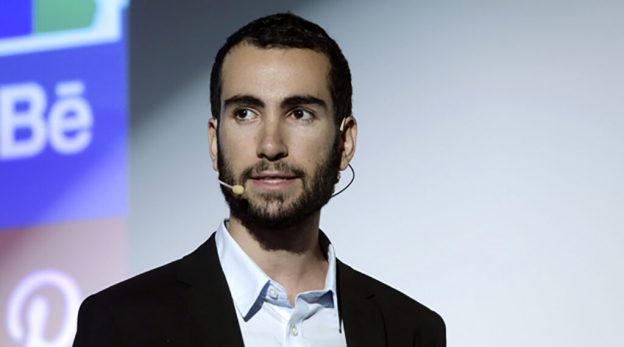
Ohad Zaidenberg
For instance, in February 2018, Forbes reported on ClearSky’s claim, citing only Zaidenberg by name, that an individual linked to Iran’s government had been responsible for an “Iranian propaganda machine” producing “fake news” and attempting to imitate BBC Persian. Zaidenberg claimed that the individual behind the three “fake news” websites, which largely published criticisms of the BBC as opposed to false news stories, is “believed to have worked for [Iran’s] National Ministry of Communications.” Based merely on the Iranian national’s “believed” (i.e. unconfirmed) work history, Zaidenberg then asserts with “medium-high certainty that the operation was funded by the Iranian government.” Zaidenberg’s history as a commander in Unit 8200 targeting Iran and his continued, self-admitted work in pursuing Iran as a “strategic intelligence target” while working at the Israeli government-affiliated ClearSky are left unmentioned by Forbes.
More recently, right before the founding of the CTI League, Zaidenberg and ClearSky were the sole source of claims that “Iranian hackers” were “exploiting VPN servers to plan backdoors” in companies around the world as well as targeting the networks of certain governments, mainly in the U.S. and Israel. ClearSky’s assertion that the hackers in question were tied to Iran’s government was solely based on their finding of “medium-high probability” that the hackers’ activities overlapped with the past “activity of an [unspecified] Iranian offensive group.” They declined to specify what the nature of the overlap was or its extent.
A clear conflict of interest
Notably, ClearSky’s February report on “Iranian hackers” targeting governments and major international companies in the US and elsewhere came right on the heels of speculation that Iran would target the US with a cyberattack following the US’ January assassination of Iranian general Qassem Soleimani, an act that was greatly influenced and allegedly prompted by Israeli intelligence. In the aftermath of the Soleimani assassination, mainstream media outlets in the US had heavily promoted the claim that Iran’s government would soon respond with a “cyberattack” as retaliation and that “financial institutions and major American corporations may be in the crosshairs.”
President Trump and Secretary of State Mike Pompeo had both threatened, at the time, to dramatically respond to any Iran-launched attack, including one launched in the cyber domain, presumably with military force. While Iran’s much-hyped “cyber retaliation” failed to materialize, ClearSky, with its dubious claims that “Iranian hackers” were targeting major corporations and governments, created the impression that Iran’s government was involved in cyberattacks against U.S. interests at this sensitive time.
ClearSky and Zaidenberg’s claims regarding Iran only intensified after the CTI League was founded, with ClearSky and Zaidenberg being the only source for the claim made earlier this year in May that Iran had been responsible for the hacking of US biopharmaceutical company Gilead (a company which boasts close links to the Pentagon). The hack itself, which was widely reported by US media, is said to have consisted of a Gilead executive receiving a single “fake email login page designed to steal passwords” and it is unknown if the attack was even successful, per Reuters, which first broke the story in May. ClearSky subsequently claimed to have single-handedly “foiled” the Gilead hack. Notably, Gilead is part of H-ISAC, which had been partnered with Zaidenberg’s CTI League weeks prior to the alleged hack.
The alleged Iranian-led hack received considerable media attention as the cyberattack was said to have targeted Gilead’s antiviral medication remdesivir, which had received a Covid-19-related emergency use authorization from the U.S. Food and Drug Administration (FDA) just a week before the hack allegedly took place. Only Zaidenberg is cited by name in the report on Iran’s alleged links to the Gilead hack, with Reuters citing two other, yet anonymous, cybersecurity researchers who told the outlet that they concurred with Zaidenberg’s assertion “that the web domains and hosting servers used in the hacking attempts were linked to Iran.”
Then, earlier this month, the FBI sent out a security alert claiming that Iranian government-aligned hackers were targeting F5 networking devices in the US public and private sector, with some media outlets citing anonymous sources tying the hackers in question to those previously identified by ClearSky. The FBI alert was issued right after an alert from CISA (which works directly with the CTI League and Zaidenberg) regarding vulnerabilities in F5 devices that did not mention the involvement of any state actors. Just a few days before the FBI alert, the director of the US intelligence community’s National Counterintelligence and Security Center, William Evanina, had alleged that Iran was “likely” to use online tactics to “discredit U.S. institutions” and “to stir up U.S. voters’ discontent.”
Aside from citing only ClearSky and Zaidenberg for claims linking Iran’s government to cyberattacks, it is also worth noting that the media reports that accused Iranian government-linked groups of committing those attacks declined to even mention the extreme extent to which Iran itself has been the subject of cyberattacks over the course of 2020. For instance, in February, a cyberattack took down an estimated 25% of Iran’s internet, with some alleging US involvement in a similar attack that had targeted Iran just months prior. More recently, a series of several mysterious fires and other acts of industrial sabotage across Iran over the past few months have been linked to Israeli intelligence operations. In some cases, Israeli officials have acknowledged the Zionist state’s role in these events.
In addition, there is the fact that top Israeli intelligence officials have attempted for years to goad the US into making the “first move” against Iran, both covertly and overtly. Indeed, for much of the last twenty years, Mossad has had access to “virtually unlimited funds and powers” for a “five-front strategy,” involving “political pressure, covert measures, proliferation, sanctions and regime change” in order to target Iran. Some Mossad officials have openly stated that part of this “five-front” strategy involves directly influencing the US’ Iran policy, including lobbying the U.S. to conduct a military strike on Iran. For instance, former Mossad director Meir Dagan, who pushed the US State Department to pursue “covert measures” and “urged more attention on regime change” in Iran while head of Mossad, is on record in 2012 stating that, in his view, the US needs to strike Iran first so Israel doesn’t have to.
Currently, Israeli officials have been relatively candid about their role in several of the recent cyberattacks that have befallen Iran as well as the fact that powerful elements of the Israeli state are trying to get the US to join a conflict against Iran before the 2020 presidential election while Trump remains in power. The effort has reportedly led to concern among EU officials that Israel’s government may be seeking to provoke an event whereby the US would engage Iran militarily.
This context highlights why solely citing a firm like ClearSky and an individual like Ohad Zaidenberg in linking a cyber attack to the Iranian government is dangerous, given that ClearSky and Zaidenberg’s ties to the Israeli national security state presents a conflict of interest. This is especially true given that Zaidenberg’s old unit in Unit 8200 is directly involved in conducting cyber attacks on Iran, like those that have been recently taking place as part of the strategy to provoke a military engagement between the US and Iran prior to the November elections.
While Iran’s government could have been involved in recent cyberattacks, especially considering the extent to which Iran has been recently targeted by cyberwarfare, using a firm tied to the very government and military intelligence apparatus actively seeking to embroil the US in a war with Iran as the sole source linking Iran to a cyberattack is not only ill advised, but dangerous and reckless.
Furthermore, given Zaidenberg’s key role in the CTI League, allowing faceless “volunteers” vetted by Zaidenberg and the league’s three other founding members (whose affiliations are discussed below) onto critical private and public networks under the guise of “aiding” their security amid the Covid-19 crisis is similarly reckless.
CTI, Microsoft & 2020
While Zaidenberg has made himself the public face and spokesperson of the CTI League, it is worth examining the other three individuals that are listed as founding members on the League’s website, if only because only these four individuals “vet” those who join the CTI League.
One of these other founding members is Marc Rogers, who began his career as a hacker and later “hacktivist” before deciding that “ethical hacking” was “more likely to have a positive outcome.” For Rogers, “ethical hacking” meant pursuing a cybersecurity career with multi-national corporations like Vodafone and Cloudfare as well as asset management firms like Asian Investment & Asset Management (AIAM).
Rogers is currently the Vice President of Cybersecurity Strategy at Okta, an enterprise identity solution platform, co-founded by former Salesforce executives and largely funded by venture capital firm Andreessen Horowitz. Andreessen Horowitz is advised by former Secretary of the Treasury and Jeffery Epstein friend Larry Summers and is also a major investor in Toka, a company closely tied to Israel’s military intelligence apparatus and led by former Israeli Prime Minister (and a close friend of Epstein’s), Ehud Barak.
Aside from Rogers and Zaidenberg, the other founding members of the CTI League are Nate Warfield and Chris Mills. Warfield is a former self-described “Grey Hat” hacker (defined as “a hacker or cybersecurity professional who violates laws or common ethical standards but without malicious intent”) who now works as a senior program manager for the Microsoft Security Response Center (MSRC). Mills also currently works for the MSRC as a senior program manager and he previously created the US Navy Computer Forensics Lab while serving in the Navy’s Cyber Defense Operations Command.
The MSRC “proactively builds a collective defense working with industry and government security organizations to fend off cyberattacks” and works within the Cyber Defense Operations Center and Microsoft’s other cybersecurity teams, including that previously overseen by Chris Krebs when he was in charge of “Microsoft’s US policy work on cybersecurity and technology issues.” Krebs, as previously mentioned, is now the head of the federal agency CISA, which oversees the protection of critical electronic infrastructure in the US, including the voting system. In addition to the above, MSRC is heavily focused on pursuing the cybersecurity needs of Microsoft customers, which includes the US government, specifically the US Department of Defense.
It is worth noting that the MSRC is also directly affiliated with Microsoft’s ElectionGuard, a voting machine software program that was developed by companies closely tied to the Pentagon’s infamous research branch DARPA and Israeli military intelligence Unit 8200 and creates several risks to voting security despite claiming to make it “safer.” The push for the adoption of ElectionGuard software in the US has been largely spearheaded by the Chris Krebs-led CISA.
Perhaps more telling, however, is that Microsoft and the MSRC have been at the center, alongside ClearSky, of claims linking Iran’s government to recent hacking events and assertions that Iranian government-linked hackers will soon target the US power grid and other critical infrastructure with cyberattacks. For instance, last year, Microsoft penned a blog post about a “threat group” it named Phosphorus, sometimes also called APT35 or “Charming Kitten”, and Microsoft claimed that they “believe [the group] originates from Iran and is linked to the Iranian government.” Microsoft did not provide more details as to why they hold that “belief,” despite the implications of the claim.
Microsoft went on to assert that the “Iranian” Phosphorus group attempted to target a US presidential campaign, which subsequent media reports revealed was President Trump’s re-election campaign. Microsoft concluded that the attempt was “not technically sophisticated” and was ultimately unsuccessful, but the company felt compelled, not only to disclose the event, but to attempt to link it to Iran’s government. Notably, the Trump campaign was later identified as the only major presidential campaign using Microsoft’s “AccountGuard” software, part of its suspect “Defending Democracy” program that also spawned NewsGuard and ElectionGuard. AccountGuard claims to protect campaign-linked emails and data from hackers.
Though it provided no evidence for the hack or its reasons for “believing” that the attack originated from Iran, media reports treated Microsoft’s declaration as proof that Iran had begun actively meddling in the US’ 2020 presidential election. Headlines such as “Iranian Hackers Target Trump Campaign as 2020 Threats Mount,” “Iran-linked Hackers Target Trump 2020 Campaign, Microsoft says”, “Microsoft: Iran government-linked hacker targeted 2020 presidential campaign” and “Microsoft Says Iranians Tried To Hack U.S. Presidential Campaign,” were commonplace following Microsoft’s statements. None of those reports scrutinized Microsoft’s claims or noted the clear conflict of interest Microsoft had in making such claims due to its efforts to see its own ElectionGuard Software adopted nationwide or the fact that the company has close ties to Israel’s Unit 8200 and 8200-linked Israeli tech start-ups.
Coincidentally, Phosphorus, as Microsoft calls them, is also the group at the center of the “Iranian hacker” allegations promoted by ClearSky and Zaidenberg, which refers to this same group by the name “Charming Kitten.” The overlap is not very surprising given Microsoft’s long-standing ties to Israel’s Unit 8200 as well as the fact that Microsoft as a company and its two co-founders, Paul Allen and Bill Gates, personally ensured the success of an Israeli intelligence-linked tech company then-led by Isabel Maxwell, Ghislaine Maxwell’s sister who boasts close ties to Israel’s national security state. It is certainly interesting that the four founding members of CTI League share ties to the same military intelligence agencies and associated corporations as well as an interest in the same group of alleged “Iranian hackers.”
While CTI League only publicly identifies the names of its four founding members, further investigation reveals that another member of the league is its program lead for combating Covid-19-related “disinformation” — Sara-Jayne Terp. Terp is a former computer scientist for the UK military and the United Nations and, in addition to her role at the CTI League, she currently co-leads the “misinfosec” (i.e. a combination of misinformation analysis and information security) working group for an organization known as the Credibility Coalition.
The Credibility Coalition describes itself as an effort to “address online misinformation by defining factors that communicate information reliability to readers” and is backed by Google’s News Lab, Facebook’s Journalism Project as well as Craig Newmark Philanthropies and the Knight Foundation. The latter two organizations also back the Orwellian anti-“fake news” initiatives called the Trust Project and the Microsoft-affiliated Newsguard, respectively.
Questionable access granted
Through claims of altruism and partnerships with powerful corporations and government agencies, the CTI League has been able to position itself within the critical infrastructure of hospitals and the U.S. healthcare system as well as attempting to expand into other key networks, such as those tied to dams and even nuclear reactors. It is truly stunning that a group whose unnamed members are “vetted” only by Zaidenberg, Warfield, Mills and Rogers, has been cleared to access critical private and public networks all because of the pandemonium caused by the Coronavirus crisis and the league’s offering of their services “pro bono.”
Notably, a considerable part of the strain that led hospitals and healthcare institutions to request the league’s services, such as budget cuts or the firings of IT staffers, were actually the result of government policy, either due to state or federal budget cuts for healthcare systems or HHS’ efforts to consolidate control over patient data flows into the hands of a few. In other words, these government policies directly led to a situation where hospitals and healthcare institutions would, out of desperation, be more likely to accept the “pro bono” offer of the CTI League than they otherwise would have been under more “normal” conditions.
Another critical fact worth pointing out is that the U.S. and Israeli intelligence communities have been seeding the narrative for over a year regarding the upcoming hacks of critical U.S. infrastructure on or around the US 2020 election, scheduled for November 3rd, by groups affiliated with the governments of Iran, Russia and/or China. As described above, many of the same groups and individuals behind the CTI League have played key roles in seeding aspects of that narrative.
Despite its massive conflict of interest, this opaque group is now nestled within much of the US’ critical infrastructure enjoying little, if any, oversight – ostensibly justified by the league’s “altruism.” As a consequence, the group’s opaqueness could easily lend itself to be used as the springboard for a “false flag” cyberattack to fit the very narrative pushed by Zaidenberg and his affiliates. From a national security perspective, allowing CTI League to operate in this capacity would normally be unthinkable. Yet, instead, this suspect organization is openly partnered with the US government and US law enforcement.
With US intelligence already having conducted such “false flag” cyberattacks through its UMBRAGE program, which allows them to place the “fingerprints” of Chinese, Russian and Iranian-affiliated hackers on cyberattacks that the U.S. actually conducts, any forthcoming cyberattack should be thoroughly investigated before blame is assigned to any state actor. Any such investigation would do well to first look at whether the CTI League was given access to the targets.
U.S. Isolated From Double-Think & Arrogance on ‘Snapback’ Sanctions Against Iran
Strategic Culture Foundation | August 22, 2020
More than two years ago, in May 2018, the Trump administration unilaterally walked away from the international nuclear accord with Iran signed by the five permanent members of the UN Security Council plus Germany. President Trump derided the deal as the “worst ever” and proceeded to re-impose crippling U.S. sanctions on Iran.
This week the United States announced it intends broadening sanctions to those previously imposed by the United Nations. Those UN sanctions were lifted after the nuclear deal was signed in July 2015 and subsequently endorsed by the UN Security Council under Resolution 2231. Washington wants to reimpose the UN sanctions by claiming that Iran is in “non-compliance” of the nuclear accord, formally known as the Joint Comprehensive Plan of Action (JCPOA). Washington’s claims of Iran’s “non-compliance” are baseless.
The U.S. is asserting that it is entitled to trigger the reimposition of UN sanctions by invoking a “snapback” mechanism incorporated into the JCPOA, which permits signatories to lodge a complaint if they register credible, non-compliance by another party.
Washington’s double-think is astounding. It unilaterally repudiated an international accord, and by doing so was in breach of a UNSC resolution, yet Washington now wants to use this same accord to enforce multilateral sanctions against Iran. The American position is preposterous, yet it is proposing to proceed in absurd mental gymnastics with an apparently straight face. The seeming lack of awareness of its own glaring illogicality is an illustration of the consummate conceit that defines Washington’s policy.
To accuse Iran of “non-compliance” in a treaty that Washington has trashed is the height of hubris. Furthermore, the wielding of extra-territorial sanctions against any nation that defies U.S. sanctions against Iran is tantamount to aggression. Nations that are trying to uphold the JCPOA are threatened with American sanctions under the diktat from Washington to abandon an international treaty.
The Trump administration’s policy of “maximum pressure” against Iran is really a policy of “maximum aggression”. The callousness of Washington’s criminality is testified by its refusal to shelve its sanctions against Iran at a time of global pandemic. Appeals from the UN chief Antonio Guterres have been coldly rebuffed.
Washington’s conduct is that of a rogue state which has no shame nor legal semblance. And yet as its maximum aggression policy fails in its objectives to destroy the JCPOA and incite regime change in Iran, Washington is now turning to the multilateral forum of the UN in order to pursue its felonious aims. That’s a measure of the moral torpor that characterizes the regime in Washington.
Nevertheless, one consolation is that the U.S. is finding itself more and more isolated from its irrational and insatiable tyranny.
Last week, a U.S. draft resolution to extend an arms embargo on Iran was dealt a humiliating defeat at the UN Security Council. That embargo is due to expire as a result of the JCPOA which Iran has been in full compliance with, as verified by multiple UN inspections of its nuclear program for solely civilian purposes. Infuriated by the embarrassing snub to its presumed global power, the Trump administration doubled down this week by demanding the re-imposition of UN sanctions as part of a snapback mechanism, a mechanism that the Americans forfeited when their president crashed out of the deal in 2018.
U.S. Secretary of State Mike Pompeo – whose brain size seems to have an inverse relationship to his expanding waist measurement – this week served notice of 30 days on the international community for the reimposition of UN sanctions on Iran. It is unfathomable how the U.S. intends to proceed with such a process given its void of legal competence from no longer being a participant in the JCPOA. In double-think wonderland fashion, the U.S. somehow maintains that it still is a participant.
In any case, the American posturing this week was roundly rejected by all signatories to the JCPOA, including significantly Washington’s allies among the so-called E3 of Britain, France and Germany.
Russia and China denounced the U.S. proposal as “illegitimate”. Moscow lambasted Washington’s “reckless actions” and noted that the U.S. side has been “blatantly violating UNSC Resolution 2231 since May 2018” with “its policy course aimed at destroying the JCPOA.”
Unabashed, the intemperate and pugnacious Pompeo lashed out at European allies for “siding with the ayatollahs” and warned Russia and China of more sanctions, accusing them of “disinformation”.
The fiasco over the nuclear deal and Washington’s arrant delinquency is but one facet of a much bigger picture. Namely, the flagrant disregard for international laws and norms by the United States which views itself as “exceptional” and above the law, unlike all other nations. There has always been a distinctive element of double-think and hypocrisy in the historic conduct of the United States, especially when it comes to its presumed right to wage genocidal wars and subversions against other nations with impunity.
However, what the fiasco over U.S. demands for sanctions on Iran shows is the extreme culmination of its arrogance and increasingly the isolation that inevitably goes with such deviancy. Washington’s rampant and deranged arrogance is now rightly seen as a global danger to peace and security.
US is willing to dismantle the UN Security Council to put pressure on Iran
By Scott Ritter | RT | August 21, 2020
In a world where American exceptionalism and unilateralism has become common currency, the brazenness of Secretary of State Pompeo’s bid to impose “snap back” inspections of Iran takes the cake. Moreover, it’s doomed to fail.
When it comes to Iran and the Iran nuclear deal (formally known as the Joint Comprehensive Plan of Action, or JCPOA), President Trump has been singularly focused on one outcome–to bring the Islamic Republic back to the negotiation table for the purpose of producing a “better deal” than the one done by his predecessor, Barack Obama, in July 2015. For the former New York realtor and reality television star-turned Chief Executive, it does not get any simpler than that–he is, after all, the consummate (if self-proclaimed) “deal maker.” How the deal is made, and even what constitutes the deal, is less important than the deal itself. This goal dominated his thinking about Iran as a candidate and continues to do so as President.
The precipitous decision to withdraw from the JCPOA in May 2018 was driven more by the perceived need to begin shaping the diplomatic battlefield in support of a new negotiation than any legitimate national security concerns. Trump’s goal all along has been to compel Iran, through the implementation of economic sanctions combined with political isolation, to scrap the Obama-era JCPOA and sit down with the new American “deal maker” to craft a “big deal” that would make everyone happy.
America versus the world
The problem from the start, however, was that the United States was alone with its displeasure over how the deal was being implemented. Among the other parties to the JCPOA (France, Great Britain, Germany, the EU, Russia, China and Iran), the agreement was proving its viability by preventing Iran from engaging in any “breakout” actions that could result in Iran obtaining enough fissile material from its centrifuge-based uranium enrichment program to build a nuclear device. Trump, however, had latched on to the so-called “sunset clauses” of the JCPOA, which lifted restrictions on Iran’s use of centrifuges after a period of several years, allowing Iran to blow-past the hypothetical calculations regarding nuclear “breakout,” and thereby mooting the fundamental purpose of the JCPOA to begin with.
The US decision to unilaterally withdraw from the JCPOA has proven to be an unmitigated policy disaster, one that has empowered Iran, Russia and China as the “aggrieved parties,” and driven a wedge between the US and its European allies. Rather than admit defeat and help restore the status quo by re-entering the JCPOA, the Trump administration has instead opted to double down, threatening to reimpose UN sanctions which had been suspended upon Iran’s entry into the JCPOA via procedural mechanisms contained in the body of that agreement calling for the “snap back” of sanctions if any party is dissatisfied with the compliance of another. The real purpose of the US gambit to reimpose “snap back” inspections wasn’t any malfeasance on the part of Iran’s nuclear program, but rather a desire to prevent the automatic lifting of an arms embargo that had been spelled out in the body of the JCPOA. This embargo was scheduled to automatically terminate come October 2020.
The US sought to pressure the Security Council into passing a resolution which would permanently extend this embargo. Both Russia and China had promised to veto, so the resolution’s defeat was inevitable. The goal in pushing for it, however, was to persuade at least nine other members of the 15-member body to vote in favor, thereby providing the US with the moral high ground when approaching the Security Council about re-imposing “snap back” sanctions. Most of the other members of the Security Council, recognizing that if they intervened to reverse a clause mandated by the JCPOA, they would put Iran’s continued participation in the agreement at risk, instead abstained from voting on the resolution. Only the Dominican Republic sided with the US; Russia and China, as expected, cast their vetoes.
Trump’s deal or no deal
Having failed to secure the moral high ground, the US could have admitted defeat and regrouped, trying to find another, less controversial way forward. But the US policy of “maximum pressure” brooks no such weakness, especially when Donald Trump has bragged that he will secure a new deal with Iran within four weeks of his being re-elected. To even have a shot at this, the US would need to not only maintain the existing unilateral sanctions regime it is enforcing on Iran, but also increase the pressure, something that could only be done by re-imposing UN sanctions via the “snap back” mechanism of the JCPOA.
If the US were to succeed in “snapping back” UN sanctions, the JCPOA would be dead in the water, as there would be no way Iran would continue to comply with an agreement which no longer delivers on its promises. The other parties to the JCPOA understand this and indicated their unwillingness to go along with the US scheme. Moreover, these nations believe that by having withdrawn from the JCPOA, the US was no longer a “participant” to that agreement, and as such, had no jurisdictional or legal authority to initiate the “snap back” provisions.
On August 20, Secretary of State Mike Pompeo, ignoring the warnings from the other JCPOA parties, met with the President of the Security Council for the purpose of delivering a letter announcing that the US was activating the “snap back” procedures, and that in 30 days it would be calling for a vote on the matter by the Security Council. Almost immediately the US actions were condemned by the other parties of the JCPOA, with France, Great Britain and Germany calling the US move “incompatible with our current efforts to support the JCPOA”, and both Russia and China terming the effort “illegal.”
Tearing down UNSC is an acceptable outcome for the US
The Trump administration, faced with this united opposition, has shown no indication it is willing to back down. The UN Security Council is navigating uncharted waters, having never been confronted with a challenge of this nature in its entire 75-year history. There is every reason to believe that the US will submit a resolution for consideration following the expiration of the 30-day notification period, and then veto it itself, thereby triggering the automatic “snap back” of UN sanctions. There is also every reason to believe that the Security Council will seek to block the US through various procedural formalities designed not to formally recognize the US demands, and thereby preventing the submission of any resolution.
A likely outcome will be that the Security Council fails to recognize the US submission of a resolution, followed by the US refusing to recognize the Security Council’s ability to prevent such a resolution from being submitted. The US will seek to submit the resolution, then immediately veto it, and claim that the “snap back” has been accomplished. The rest of the Security Council will reject this action, and deem the JCPOA to be in play, free of UN sanctions. The US will then sanction any party which fails to comply with the UN sanctions.
If this were in fact to occur, it would mean the functional death of the UN Security Council, an outcome many in the Trump administration appear willing to live with. Faced with the inevitability of this outcome, some members–especially the French, Germans and Brits–may be compelled to reexamine their position on the lifting of the arms embargo, seeking a compromise solution that salvages the JCPOA while denying Iran access to Russian and Chinese armaments. This may be the goal of the US all along. If so, it is an extremely dangerous one that is based on a false predicate, namely that there is a combination of economic and diplomatic pressure that can be placed on Iran to compel it to renegotiate the JCPOA. Simply put, there is not, and for the Trump administration to proceed as if there is only endangers regional and international peace and security.
Scott Ritter is a former US Marine Corps intelligence officer and author of ‘SCORPION KING: America’s Suicidal Embrace of Nuclear Weapons from FDR to Trump.’ He served in the Soviet Union as an inspector implementing the INF Treaty, in General Schwarzkopf’s staff during the Gulf War, and from 1991-1998 as a UN weapons inspector. Follow him on Twitter @RealScottRitter
Iran “snapback” sanctions is a pantomime. Spectacle to watch is Trump-Putin summit.
By M. K. BHADRAKUMAR | Indian Punchline | August 21, 2020
As expected, the Trump Administration delivered letters on Thursday to both the UN Secretary-General Antonio Guterres and to the president of the Security Council Dian Triansyah Djani notifying them that the United States is initiating the restoration of virtually all UN sanctions on Iran lifted under UN Security Council Resolution 2231.
This process, if successful, could lead to those sanctions coming back into effect 30 days from August 20. Explaining the move, US Secretary of State Mike Pompeo stated at the UN Headquarters in New York at a press conference that the US “will never allow (Iran) to freely buy and sell planes, tanks, missiles, and other kinds of conventional weapons. These UN sanctions will continue the arms embargo… also reimpose accountability for other forms of Iranian malign activity…
“Iran will be again prohibited from ballistic missile testing. Iran will be back under sanctions for ongoing nuclear activities – such as the enrichment of nuclear material – that could be applied to a nuclear weapons program,” Pompeo added.
In essence, the US has triggered the “snapback” process notifying the security council that Iran is breaching the JCPOA (2015 Iran nuclear deal), whereupon, the council’s members or its president must introduce a resolution to continue the suspension of the UN embargoes under 2231.
The battle lines are drawn. An overwhelming majority of UN SC members are opposed to the US move. A US resolution last week seeking extension of the UN arms embargo on Iran met with crushing defeat with only the Dominican Republic supporting it. In a scathing criticism, New York Times wrote that the US has “largely isolated itself from the world order.”
On Thursday, UK, France and Germany issued a joint statement questioning the US’ credentials to make such a move, saying, inter alia, “The U.S. ceased to be a participant to the JCPOA following their withdrawal from the deal on 8 May, 2018… We cannot therefore support this action which is incompatible with our current efforts to support the JCPOA.”
Politico in a dispatch from Berlin wrote that the US move has left European allies in “an awkward position … For now, the European strategy is to play for time. If Pompeo triggers the snapback, they’re likely to look for ways to delay a final decision until after the November 3 presidential election in the hope Joe Biden would reverse Trump’s course.” Russia and China have explicitly rejected the US move, too. On Thursday, Russia sought an “open debate” at the Security Council, but the US promptly shot it down.
Of course, the UN SC’s rotating presidency — held by Indonesia through August — could simply ignore the US notification of Iran’s noncompliance with the JCPOA. (But Pompeo said he’s “confident” the notification won’t be ignored.) If the US pushes ahead and imposes its will, Russia and China may proceed to defy the “snapback” sanctions.
Tehran has warned that it will strongly react to “snapback” sanctions. A range of options remain open to Iran, including exit from Nuclear Non-Proliferation Treaty. Tehran remains defiant: on Thursday, it unveiled a new ballistic missile (named after Gen. Qassem Soleimani) and another cruise missile.
Indeed, a confrontation that irreparably damages the standing of the UN SC is in no one’s interest. President Trump himself did some kite-flying recently that he could get a deal with Iran within four weeks if re-elected. On Tuesday, Trump’s son-in-law and senior advisor Jared Kushner appealed through Voice of America to Iranian President Hassan Rouhani to engage with Washington. “For President Rouhani, I would say it’s time for the region to move forward. Let’s stop being stuck in conflicts of the past. It’s time for people to get together and to make peace.”
Trump seems open to shifting course after November. Despite the failure of his “maximum pressure” approach, Trump wants a deal with Iran that outdoes Obama. Which means that after the election, freed from Jewish donors and conservative Evangelicals, a shift could be more likely on his part than a continuation of the status quo.
This is where President Vladimir Putin’s proposal of August 14 on the holding of an online summit of the five permanent members of the UN Security Council, Germany and Iran soon to focus on the JCPOA implementation issues — to “set out steps to avoid confrontation and tensions in the UN Security Council” — comes into play.
Trump has rejected Putin’s proposal “for the time being” with a hint he may revisit it after November. On Wednesday, Kremlin spokesman Dmitry Peskov also hinted that all is not lost. Peskov said: “Indeed, the US rejection does not allow us to gather in this format as it was proposed from the start.
“However, it does not mean that the dialogue with the other states is halted on the Iranian issue. This dialogue for the sake of viability of the JCPOA and for the sake of settlement will definitely be continued.”
Indeed, much is happening elsewhere on the template of Russian-American relations. The NBC News disclosed on August 16 quoting “four people familiar with the subject” that Trump has told aides he’d like to hold an in-person meeting with Putin before the November election.
The Administration officials have since “explored various times and locations” for a summit, including potentially next month in New York.
The report added, “The goal of a summit would be for the two leaders to announce progress towards a new nuclear arms control agreement … One option under consideration is for the two leaders to sign a blueprint for a way forward in negotiations on extending New START.” This was almost exactly what I had predicted. (See US snapback sanctions on Iran not easily done, Asia Times)
A Russian-American confrontation over Iran — with all its ramifications for international security — is not on Trump or Putin’s calculus. Trump lost a great deal of time through his first term to improve relations with Russia but being a consummate deal maker, he hasn’t given up hope.
Nor has Putin. An agreement to renew START is one offer from Trump that Putin cannot afford to spurn, something he’s been keenly seeking, as it could open pathway for a resumption of arms control talks that would not only strengthen strategic balance and make US-Russia relations more predictable but enhance Russia’s global standing.
Furthermore, Trump at this point in time also hopes to win over Russia and isolate China. Putin, being a realist, would know the contradictions in US domestic politics that might stymie Trump’s belated effects to cap and rollback the slide in US-Russian relations. Equally, Putin believes in the raison d’être of Sino-Russian entente, which is a strategic choice and necessity for Moscow — as unfolding events in Minsk only underscore.
Suffice to say, Putin will stick to his pragmatic foreign-policy trajectory that prioritises Russia’s national interests. He’ll accept Trump’s invitation to a summit.
In such a complex backdrop of shifting moods in big-power politics, it is neither in American nor Russian interest to get entangled just now in acrimonious confrontation at the horseshoe table in the UN Hqs in New York while preparations have begun for a likely Trump-Putin summit.
The moment is at hand for Putin to step in as mediator to navigate the US-Iran standoff to calmer waters — perhaps, even bring the two implacable adversaries to the negotiating table. In the current US election cycle, this can only work to Trump’s advantage.
Wolves Prowl Team Biden Borders, Scenting Opportunities
By Alastair Crooke | Strategic Culture Foundation | August 17, 2020
The choice of Vice-President, of course, is primarily about U.S. domestic needs. With BLM and wokeness pervasive in the western sphere, Joe Biden needed to, and committed himself to choosing a black woman, (Kamala Harris is half Indian and Jamaican), since the support of black voters will be crucial in November. But equally importantly, Harris, a career prosecutor, is very aggressive in her speeches — and that’s what Biden needs: i.e. someone with sharp elbows.
She is ‘woke’ on social issues, yet has been notably zealous in incarcerating pot-smoking LA youths, and paradoxically, drew “very little black support in the primaries”. However, in this era of mass protest, Harris will plausibly gild Biden’s ticket – as a Law and Order Vice-President. That counts. And the ‘woke’ contingent on Wall Street, they love her. That counts too.
But down to ‘brass tacks’: Does this tell us anything about Biden’s probable foreign policy, were he to prevail in November? Harris indeed has not adopted war and militarism as her platform – however she hasn’t offered a major foreign policy speech, either. Nonetheless, hers, is no blank page – she has very discernible stances.
Her ‘signature stance’ has been a strong commitment to Israel and to AIPAC: In March 2017, she told the AIPAC Policy Conference: “Let me be clear about what I believe: I stand with Israel – because of our shared values, which are so fundamental to the founding of both our nations.” At the 2018 AIPAC conference, Harris gave an off-the-record speech in which she recounted how, “As a child, I never sold Girl Scout cookies, I went around with a JNFUSA (The Jewish National Fund) box, collecting funds to plant trees in Israel”. And her husband is Jewish. (She skipped the 2019 conference, along with several other Presidential candidates.)
Apart from unwavering support for Israel (which the more panglossian amongst us may see simply as the entry-price to office in the U.S.), Harris has been noted for bellicose rhetoric toward North Korea and Russia, and for her reluctance to co-sponsor legislation aimed at preventing war with Venezuela and North Korea. In short, on such military intervention issues, she’s in line with—and sometimes to the right of—a hawkish Democratic establishment.
‘Move along: Nothing to see here!’ might seem the appropriate riposte: She’s just ‘boilerplate’ Democrat. Maybe that’s right. But to focus on this would be to miss the wood for the trees – for the foreign policy real action is happening almost unnoticed elsewhere.
Executive editor of The American Conservative, Kelly Beaucar Vlahos, warns that we might miss noticing the Neo-con “wolves, dressed in NeverTrumper clothing, sniffing around Joe Biden’s foreign policy circle, bent on influencing his China policy – and more” (emphasis added):
“Never-Trumper Republicans have been worming their way into the Biden campaign, offering to flesh out his “coalition” ahead of the election and pushing their way into the foreign policy discussions, particularly on China. Given their shared history with liberal interventionists already in the campaign, don’t for a second think that there aren’t hungry neoconservatives among them trying to get a seat at the table.
“Some hawkish Democrats may see the neocons as convenient allies in preserving an outdated interventionist mindset,” offers Matt Duss, who is Sen. Bernie Sanders’ longtime foreign policy advisor, who maintains close ties with the Democratic campaign to replace President Trump. “And of course, neocons are desperate for any opportunity to salvage their own relevance.””
A Daily Beast report at the end of last month quoted unnamed “individuals who work for conservative think tanks in Washington” acknowledging that they were “informally speaking with members of the Biden team in recent weeks”.
Their focus is said to be on the ‘failing China trade deal’, and Trump’s supposedly ‘weak posture’. Reportedly, they are “so frustrated with the U.S-China trade deal, and the Administration’s efforts to hold Beijing accountable, that they are willing to offer counsel to the Democratic nominee”. And moreover, are proposing not just support to the Democratic candidate, but also to provide guidance on ways to formulate a tough economic posture toward Beijing, (in order to undermine Trump).
In a later update, the Daily Beast says that with the election less than 100 days away, some members of Trump’s own inner circle are pushing him too in the hawkish direction – urging him to make a new bet: Rather than to put his chips on the trade deal, Trump would hit the electoral jackpot (they counsel) were he just to ‘blow it up’.
Four people knowledgeable about the issue told The Daily Beast that in the past three weeks, an internal campaign has intensified within the Trump administration to convince the president ‘to nuke’ the China trade deal.
The ‘back-story’ here is Biden’s campaign to expand its months of back-channel outreach to Republicans – with the goal of hitting President Trump on his signature campaign issue: China.
Interviews with several of the most prominent NeverTrump Republicans reveal that for now, the nascent effort to mobilise a ‘Republicans for Biden’ movement – alongside the extant Lincoln Project – is loosely defined, and could ultimately take a variety of forms. Essentially, however, Team Biden is being pressed by the Republican strategists to ‘out-Hawk’ Trump on China policy by taking a tougher line than the President. In other words, the campaign is setting up to be about who will be tougher – and will be fought out on the President’s key platform.
Kelley Beaucar Vlahos opines that: “It’s hard to think that real hardline conservative hawks on China, like Steve Bannon and the folks at the Committee on the Present Danger: China [see here] are involved in the Biden collusion. Some of them are certainly neoconservative … They’d be pushing for cold – if not hot – war from Trump’s Right – [and therefore would] not be hedging bets with Biden”. Vlahos continues:
“No, it can only be the establishment Republican types, perched at places like Brookings and AEI, who now see some sort of opening on the D-team. But if they seem like the mushy end of the Right flank, think again. These guys are charter members of the Washington foreign policy consensus, mixed in with neoconservative NeverTrumpers, like Eliot Cohen and Robert Kagan (his wife Victoria Nuland was a top neo-con official in the Clinton State Department) and who have despised Trump from the beginning. They think his America First foreign policy is “deeply misguided” and leading the country to “crisis.””
Ah – It is precisely here where the link back to the choice of Kamala Harris becomes more obvious. She is not likely to bring the Progressive Dems constituency to the Biden campaign (It would take Elizabeth Warren as VP to do that), and she has not had an impressive record of attracting the Black vote in LA. But, she would mesh-in seamlessly with the ‘Washington foreign policy consensus’, whilst still giving ‘the ticket’ a veneer of wokeness.
She thus could be an effective point person for NeverTrumper Republicans. This is a path down which Biden, it seems, is already embarked – at least as far as China is concerned. On domestic issues – such as energy – Biden tilts more towards Sanders, and even Alexandria Ocasio-Cortez (the latter sits on his advisory panel).
And Biden – if elected in November – may not last (or, at least, not attempt a second term). In which case, Harris could theoretically be front-runner for 2024 Presidential contest. And here is the point: If there is one area where these neo-con entryists despise ‘policy weakness’ as much as they do on China, it is Iran. On that issue, Harris is clear. She is an unreserved Israeli partisan.
Anyone therefore hoping for a softening of U.S. policy towards Iran, should Biden win, may be pinning too much hope on Bernie Saunders or ‘The Squad’ being able to ‘round off the sharp edges from U.S. foreign policy stances’ – they may be being overly-optimistic. It is just too obvious: As China veers towards Iran and the Middle East in search of energy-supply security, the temptation of any success with forcing a hawkish stance on China will be to link the two (Iran and China), and to try to push for a ‘kill-two-birds-with-one-stone’ policy stance.
Keep the eyes fixed on the neo-con ‘wolves’, not on Harris.
Russia’s Proposal on UNSC Summit With Iran Remains on Table After Trump’s Refusal, Moscow Says
Sputnik – 16.08.2020
MOSCOW – The proposal by Russian President Vladimir Putin to hold an online conference of leaders of the UNSC states, Germany, and Iran to discuss the Persian Gulf and Iran remains on the table after US President Donald Trump’s refusal to support it, Russian Deputy Foreign Minister Sergey Ryabkov affirmed on Sunday.
“Of course, yes”, Ryabkov said when asked whether the initiative is still on the table after Trump’s statement.
Trump said on Saturday that he would unlikely support Putin’s initiative to hold the online summit on Iran adding that he would wait until [after] the election.
On Friday, Putin suggested holding a remote videoconference around tensions in the Persian Gulf with the participation of the leaders of the UN Security Council members, Germany and Iran.
He urged Washington to assess the advantages of the implementation of this initiative in order to avoid further escalation of the situation in the Persian Gulf.
Snapback sanctions on Iran isn’t open-and-shut case
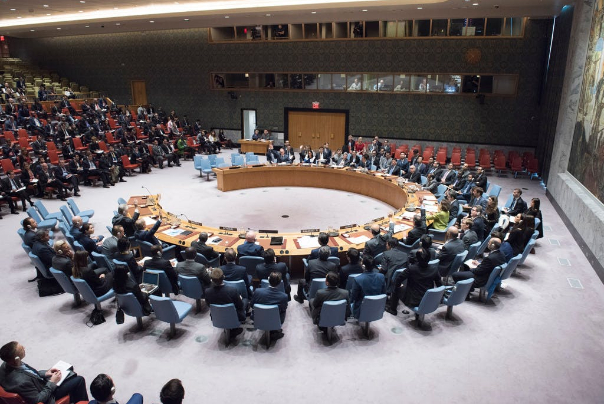
The UN Security Council resoundingly defeated a US resolution to indefinitely extend UN arms embargo on Iran, with only Dominican Republic endorsing the American move, New York, August 14, 2020
By M. K. BHADRAKUMAR | Indian Punchline | August 16, 2020
The Iran nuclear issue moves to centerstage of international security with US President Donald Trump’s remarks Saturday that Washington “will be doing a snapback” against Iran — announcing Washington’s intention to push for restoration of all pre-2015 UN sanctions against Iran. Trump added, “You will be watching it next week.”
Also, Trump apparently poured cold water on Russian President Vladimir Putin’s proposal Friday for a video summit of the veto-holding permanent members of the UN Security Council plus Germany and Iran (that were the original signatories of the JCPOA) to discuss the 2015 Iran nuclear deal and Persian Gulf security issues. He saw no urgency. Trump vaguely hinted that he would revisit the subject “after November”.
Clearly, the optics of the “snapback” sanctions is that Washington is hanging tough and the “maximum pressure” approach is further tightening.
But having said that, Trump ultimately considers himself to be the consummate deal maker — and is strategising an approach of calibrated brinkmanship.
For a start, he hopes to extract out of Russia and China some sort of self-restraint that at least until the US elections are over in November, they wouldn’t provide Iran with military technology. On the other hand, by side-stepping Putin’s proposal — which effectively resuscitates the dispute resolution mechanism of the “6+1” format of the original signatories of the JCPOA — Trump avoids any controversies in the US domestic politics in the run-up to the November election where his “maximum pressure” approach embellishes his strongman image.
Of course, Moscow has a dubious history of heeding such US expectations in the past — when it delayed the delivery of S-300 missiles to Iran for several years due to US and Israeli pressure, forcing Tehran to sue Moscow for compensation. But circumstances have changed. US-Russia relations are tense, while Russia and Iran are partners in regional security.
Equally, Russia and China have worked in tandem on the diplomatic plane and over the JCPOA, Beijing has adopted a line which upfront rejects the Trump administration’s locus standii to invoke snapback sanctions. Again, China-Iran relations have matured and the two countries are expected to conclude in a conceivable future a 25-year $400 billion comprehensive strategic partnership agreement.
Significantly, Putin’s statement on Friday underscored Moscow’s convergence with Tehran and reiterated Moscow’s rejection of Washington’s “maximum pressure” approach against Iran. The following elements of Putin’s statement are to be noted:
- “Iran faces groundless accusations.”
- “Resolutions are being drafted (by Washington) with a view to dismantling decisions that had been unanimously adopted by the Security Council.”
- “Russia maintains its unwavering commitment to the JCPOA.”
- Russia’s Collective Security Concept for the Persian Gulf Region (which Iran welcomed and US ignored) “outlines concrete and effective paths to unravelling the tangle of concerns” in Persian Gulf region.
- “There is no place for blackmail or dictate in this (Gulf) region, no matter the source. Unilateral approaches will not help bring about solutions.”
- There is imperative need to build an inclusive security architecture in the Persian Gulf.
Indeed, Trump is playing his cards close to his chest. The US move on “snapback” sanctions will come up for a decision before the rotating presidency of the UN Security Council, which will be called upon to take a view on the admissibility of the American contention that although Trump publicly repudiated the JCPOA, since it did not formally intimate the same to the UN SC, it still enjoys the prerogative to act under the security council’s Resolution 2231 that provided an international legal basis for the “snapback” clause.
Indonesia chairs the presidency through August and Jakarta and Tehran enjoy friendly relations. The next in line for September is Niger, which may be susceptible to US pressure. By October, Russia’s turn comes to chair the presidency. How far Washington will push the envelope through the August-September period remains to be seen.
Without doubt, a UN sanctions snapback could have predictable consequences for any form of trade with Iran, as it demands from member states to exercise caution when transacting with Iranian financial institutions, and permits countries to inspect vessels or aircraft suspected of carrying cargo in violation of UN sanctions provisions on Iran in national or international waters. Russia and China may decide to take advantage of the new Iranian market for their weapons exports. China’s stance has been exceptionally strong. Of course, all bets are off if Iran carries through its threats of a withdrawal from the Nuclear Non-Proliferation Treaty in the case of UN sanctions reimposition.
In sum, instead of focusing on sanctions snapback, the issue of critical importance in the coming weeks will be the ability of the E3 (France, UK and Germany) — and potentially Russia and China — to take advantage of the time available to engage with the US on the sidelines.
The key to unlocking the current dispute lies largely in Washington, which is insisting on a resolution of the current impasse and on limiting Iranian nuclear activities. Washington in turn will have to offer some incentives to Iran. And those incentives need to be worked out through creative negotiation, as they devolve upon the existing unilateral US sanctions regime on Iran. The good part is that none of the JCPOA protagonists stands to gain out of the snapback sanctions.
Arguably, Trump is applying “maximum pressure” on other JCPOA countries by threatening snapback sanctions, while keeping an open mind on Putin’s proposal to discuss all issues in a “6+1” format once the November election is out of the way. It is a fair assumption that Moscow anticipated Trump’s response on the above lines.
After all, Iran figured in the last phone conversation in late July between Trump and Putin a fortnight ago and Putin’s latest proposal followed up that discussion. Iran was kept in the loop, too. (Interestingly, following the visit by Iran’s FM Javad Zarif to Moscow in late July, Tehran Times newspaper had commented that a “possible revival of diplomatic initiatives between Iran and the US” under Putin’s mediation was to be expected.)
Moscow is yet to react to Trump’s “Probably-not” remark of Saturday apropos the Putin proposal. But the Tass report took note that “Washington will probably want to wait until presidential elections in the country end.” Beijing and Paris have so far voiced support for Putin’s proposal, while London and Berlin are watching from the sidelines.
As for Tehran, it is still savouring the sweet taste of the defeat of the US resolution at the UN Security Council on Friday to extend an arms embargo on Iran that is due to expire in October. (here and here ) In the final analysis, however, Tehran’s choice will be to directly negotiate with Washington.
INTERVIEW: Dr Marandi on Beirut Blast Aftermath & Lebanon’s Future
21stCenturyWireTV | August 11, 2020
SUNDAY WIRE show, host Patrick Henningsen is joined by global affairs analyst Mohammad Marandi from the University of Tehran, to discuss the recent developments in Beirut, Lebanon in the aftermath of the tragic explosion which destroyed the city’s port area and resulted in many dead and injured, as well as 300,000 made homeless due to ancillary damages.
Dr Marandi explains some of the legacy issues in Lebanese politics, as well as the true aims of US and its allies in the region, the geopolitical motivation behind punishing economic sanctions by Washington, and how these policies actually prevent delivery of regional aid, cooperation and prosperity among neighboring states. Listen:
Russia’s proposal to convene meeting of heads of state of UN Security Council permanent members with participation of heads of Germany and Iran
Statement by President of Russia Vladimir Putin | August 14, 2020
Debates around the Iranian issue within the UN Security Council are becoming increasingly strained. Tensions are running high. Iran faces groundless accusations. Resolutions are being drafted with a view to dismantling decisions that had been unanimously adopted by the Security Council.
Russia maintains its unwavering commitment to the Joint Comprehensive Plan of Action (JCPOA) on Iran’s nuclear programme. Its approval in 2015 was a landmark political and diplomatic achievement that helped fend off the threat of an armed conflict and reinforced nuclear non-proliferation.
In 2019, Russia presented an updated version of its Collective Security Concept for the Persian Gulf Region, outlining concrete and effective paths to unravelling the tangle of concerns in this region. We strongly believe that these problems can be overcome if we treat each other’s positions with due attention and responsibility, while acting respectfully and in a collective spirit.
Like anywhere else in the world, there is no place for blackmail or dictate in this region, no matter the source. Unilateral approaches will not help bring about solutions.
It is essential that the positive experience gained earlier through intensive effort is maintained when building an inclusive security architecture in the Persian Gulf.
Accordingly, we propose convening an online meeting of the heads of state of the permanent members of the UN Security Council, with the participation of the heads of Germany and Iran, as soon as possible, in order to outline steps that can prevent confrontation or a spike in tensions within the UN Security Council. It is important to secure collective support for the implementation of UN Security Council Resolution 2231 that sets forth an international legal framework for the execution of the JCPOA.
During this leaders’ meeting, we propose agreeing on parameters for joint efforts to facilitate the emergence of reliable mechanisms in the Persian Gulf region for ensuring security and confidence building. This can be achieved if our countries and the regional states combine their political will and creative energy.
We call on our partners to carefully consider this proposal. Otherwise, we could see the further escalation of tension and an increased risk of conflict. This must be avoided. Russia is open to working constructively with anyone interested in taking the situation back from the dangerous brink.
This is an urgent matter. Should the leaders agree in principle to have this conversation, we propose that the foreign ministries of the seven countries agree on a meeting agenda, make the necessary arrangements and schedule a video summit.
Featured Video

Trita Parsi: Middle East Unraveling — Are We on the Path to World War?
or go to
Aletho News Archives – Video-Images
New Book
Trans agenda is ‘normalization of sadism’ – US author

RT | September 23, 2026
The US Democratic Party has embraced a transgender agenda that amounts to “the normalization of sadism,” author A.J. Rice has said, warning that radical trans policies would return if the party is allowed to regain power.
Speaking to RT’s America First host Scotty Nell Hughes about his new book, ‘The Curse of the Bearded Lady: How the Trans Mafia Whacked American Sanity’, Rice argued that activists have gained significant influence in schools, medicine, and corporate America while people who questioned the agenda have faced pressure to stay silent.
The author described the “trans mafia” as the sprawling network of people and institutions that have helped the movement gain influence. He singled out parts of academia, wealthy backers, and corporations, and stated that providers of transition-related treatment also have a financial incentive to keep young people in their care indefinitely.
Rice argued that the consequences of these policies ultimately fall on children who are being drawn toward gender-affirming medical treatments and on girls who are expected to share locker rooms or compete in sports with biological males.
He noted that while voters rejected the Democrats’ approach to gender in 2024, the party, which has been “captured by madness,” has since only doubled down and is seeking what is effectively “the normalization of sadism.” … Full report
Blog Roll
 Aletho News
- Integrity Initiative: UK-funded network framed dissent as Russian disinformation for years
- ‘We don’t seek permission to defend our country’: Snippets from President Pezeshkian’s UNGA address
- NATO chief wants Europeans to fight American wars [for Israel]
- German chemicals giant reveals details of downsizing
- Refaat Al-Areer Was The Canary In The Coal Mine In Israel’s War On The Truth
- Israeli election committee bars candidate from Knesset race over Gaza war opposition
- French-Lebanese man files war crimes complaint over Israeli attacks
- Mahan Air Flight Lands in China Despite US Threat against Iranian Airlines
- US eyes $10bn fund to rebuild war-battered Gulf infrastructure
- Trump meets Rodríguez near Maduro’s prison as Venezuela’s oil flows to US
- If Americans Knew
- Caught on Tape: AIPAC CEO Boasted of Controlling Trump’s National Security Officials
- Why Hamas Attacked Israel in October 2023 – Israeli professor Ilan Pappé
- They see them, then kill them: Israeli quadcopters track, deliberately target civilians in Gaza
- Winter could turn Gaza’s treacherous, war-damaged buildings into deathtraps
- Majority of Democratic Voters Want to Prosecute Both Biden and Trump Administration Officials Over Gaza
- As Gaza languishes, world leaders gather at the UN – Daily Update
- Sanctions are collective punishment: immoral and self-defeating
- Phosphorus Munitions Fired by Israel Burn Groves, Orchards in Southern Lebanon
- Israel Carries Out New Ceasefire Violations Across Gaza
- AI – Emphasis on the ‘I’: Israel Is Funding AI Chatbot Propaganda
- No Tricks Zone
- New Study: Earth And Venus Surface Warmth Largely Explained By Convection And Lapse Rate, Not CO2 Or Radiation
- 2025 Nature Paper Claiming Worsening Global Drought Gets RETRACTED …Heavily Flawed
- New Study: ‘Global Drought Shows No Detectable Recent Acceleration Under Climate Warming’
- Economic Masterminds: German Socialists Suggest Taxing Productivity Gains Stemming From Using AI
- The South China Sea Has Not Been Cooperating With The Climate Change Narrative
- Energy Crisis: Germany Enters Heating Season With Historically Low Gas Reserve Fill Levels
- New Study: The Antarctic Ice Sheet Gained Mass From 2020-2024 Due To Staggering Snow And Ice Accumulation
- Study: Ocean Heating Rates From Thousands Of Years Ago ‘Dwarf’ Modern Ocean Heating Rates
- Climate Extremists Target, Attack Large-Scale Power Grid Infrastructure In Germany!
- New Study: Antarctic Ice Melt Has Contributed Less Than 1 Centimeter To Sea Level Rise In The Last 30 Years

