Aletho News

ΑΛΗΘΩΣ

Some 3,000 ‘Hezbollah-tied’ accounts await freeze

Press TV – June 11, 2016

As many as 3,000 more bank accounts, allegedly tied to the Lebanese resistance movement of Hezbollah, reportedly await freeze in the coming days under pressure from the United States.

Those to be affected include “employees, partners, customers affiliated with the party,” Saudi daily Asharq Al-Awsat reported on Friday, citing a source within Lebanon’s Central Bank.

On December 18, 2015, US President Barack Obama signed into law the Hezbollah International Financing Prevention Act.

The legislation says Washington will target those “knowingly facilitating a significant transaction or transactions for” Hezbollah or any individual, business or institution linked to the group.

As per the law, the US Treasury Department’s Office of Foreign Assets Control has been tasked with releasing names of the entities it considers to be associated with the group.

Governor of Lebanon’s Central Bank Riad Salameh has so far ordered 100 accounts frozen in line with the Treasury’s instructions as any failure to abide by the law will result in US sanctions.

“If anyone is suspicious, there can be no leniency, even if the customers have millions of dollars, because the negative repercussions in not abiding by the [US] law will be catastrophic on the bank,” the source said.

Interviewed by the CNBC, Salameh recently said, “Our priority is to keep Lebanon on the international financial map, so we have taken a resolution that we will implement that US law in Lebanon, and we have put in place a structure to do this, to satisfy the objectives of that law.”

On Thursday, Hezbollah reacted to the remarks, saying Salameh’s position “shows that the monetary policy has lost its sovereignty.”

Hezbollah is credited with defending Lebanon against two wars launched by Israel, the US’s strongest ally in the region, in 2000 and 2006.

In recent months, Saudi Arabia, another staunch ally of the US, has also been targeting the resistance movement.

Earlier in the year, Riyadh imposed sanctions on four Lebanese firms and three individuals it accused of having links to Hezbollah, among its other measures against the movement.

Analysts say Hezbollah has come under such pressure due to its involvement in anti-terrorism military operations in neighboring Syria.

The resistance movement has been successfully helping the Syrian army fight Saudi-backed Takfiri militants in order to prevent the Syria conflict from spilling over to Lebanon.

June 11, 2016 Posted by | Economics, Ethnic Cleansing, Racism, Zionism, Wars for Israel | , , , , | Leave a comment

Israel Covets Golan’s Water and Now Oil

By Jonathan Marshall | Consortium News | June 7, 2016

On June 1, Israeli police burst into the home of an Israeli journalist, confiscated his computer and camera, and arrested him for “incitement to violence and terrorism.” His employer, Iran’s government broadcasting company, said the Druze reporter had antagonized the Netanyahu government with his hard-hitting reports on Israel’s plans for “stealing” oil from the Golan Heights, a 460-square-mile region of Syria seized by Israel during the Six Day War in 1967.

Such reports come at a particularly sensitive time for Prime Minister Benjamin Netanyahu and other right-wing Israeli politicians, who are seeking to take advantage of the ongoing war in Syria to cement Israel’s control over the Golan. Their allies include such influential Americans as Rupert Murdoch, Dick Cheney, former CIA Director James Woolsey, and former Treasury Secretary Larry Summers, all of whom are backing an oil-drilling operation of doubtful legality in the occupied region.

Besides its strategic value and potential oil, the Golan Heights is a major source of Israel’s fresh water and agricultural products and a leading tourist destination. If exploratory drilling unlocks as much oil as some geologists predict, the occupied region could turn Israel into “an energy powerhouse.”

Ethnic Cleansing

Israel annexed the Golan Heights in 1981, in violation of the United Nations’ 1967 General Assembly Resolution 242, which called for the eventual withdrawal of Israeli forces from the occupied territories. Rejecting Israel’s claim, the U.N. Security Council immediately declared the attempted annexation “null and void and without international legal effect.” Within a few months, however, the controversy was overshadowed by the international crisis following Israel’s massive invasion of Lebanon.

As recently as January 2010, the U.N. General Assembly once again reaffirmed the illegality of Israel’s claim to the land and called on Israel to desist from “changing the physical character, demographic composition, institutional structure and legal status of the occupied Syrian Golan and, in particular, to desist from the establishment of settlements” in the area. But that demand came much too late to stop Israel’s systematic land grab.

The respected Israeli newspaper Ha’aretz reported in 2010 that “Neglect and ruin are everywhere. . . . Apart from the four Druze villages at the foot of Mount Herman, [all Syrian villages] were all destroyed, in most cases down to their foundations. . . . Most were wiped off the face of the earth in a systematic process of destruction that began right after Israel’s occupation of the Golan.”

Challenging the myth that the local population simply fled during the 1967 war, the newspaper reported that the Israeli Defense Forces systematically expelled villagers and then began destroying their homes. An Israeli commander estimated that 20,000 civilians “were evacuated or left when they saw that the villages were starting to be destroyed by bulldozers and they had nowhere to return to.” Census figures indicate that more than 100,000 Syrians lost their homes and property.

Israel has no intention of ever letting them return, even if that means putting aside peace with Syria forever. Instead, Israel today has entrenched more than 20,000 of its own settlers in the Golan. Last year, the right-wing minister and Jewish Home party leader Naftali Bennett announced a five-year goal of spending hundreds of millions of shekels to settle 100,000 more Israelis on the mountain.

Precious Water

This April, Prime Minister Netanyahu hosted a special cabinet meeting on the Heights, calling it “an integral part of the state of Israel in the new era.” He vowed that the region “will remain in the hands of Israel forever” rather than returning to “Syrian occupation.”

As usual, the U.N. Security Council rejected the Israeli claims, to no practical effect.

Israeli leaders acknowledge that a major reason they will never hand back the Golan Heights is economic: it provides precious fresh water to Israel.

Israel’s Ministry of Foreign Affairs states flatly, “The region’s strategic importance derives from its location, overlooking the Israeli Galilee region, and from the fact that it supplies Lake Kinneret (the Sea of Galilee) – a major source of water for Israel – with one third of its water.”

But there is another economic motive driving Israeli policy, as the recently arrested Druze journalist had reported: the smell of oil.

Last fall, an Israeli geologist working for the American company Genie Oil and Gas reported evidence of a huge oil find in the Golan Heights — with the potential to supply billions of gallons of crude, enough to make Israel a net oil exporter. Rejecting complaints by environmental groups, Israeli authorities granted the company a two-year extension of its right to carry out test drilling on 150-square-miles of occupied Syrian land.

Genie Oil and the Israel Lobby

Genie Oil is no ordinary drilling company. Its American CEO, Howard Jonas, is a major campaign donor to Netanyahu. The chairman of its Israeli subsidiary, Brig. Gen. Efraim Eitam, is a former leader of the National Religious Party who called for expelling Palestinians from the occupied territories and murdering their leaders.

He said of the Palestinian people, “These are creatures who came out of the depths of darkness. It is not by chance that the State of Israel got the mission to pave the way for the rest of the world, to militarily get rid of these dark forces.”

The company’s shareholders include at least two billionaire supporters of Israel: multinational media magnate Rupert Murdoch and retired investment banker Lord Jacob Rothschild (whose family foundation donated the Knesset and Supreme Court buildings to Israel).

Murdoch and Rothschild also sit on Genie Oil’s well-connected “strategic advisory board.” Its chair, Michael Steinhardt, is a prominent Wall Street hedge fund manager and a major financial backer of the Foundation for Defense of Democracies, a hawkish, neoconservative think tank noted for its fear-mongering against Palestinian leaders as well as Syria and Iran.

Other advisory board members include former Vice President Richard Cheney; James Woolsey, former CIA Director and chairman of the Foundation for the Defense of Democracies Leadership Council who has called for tougher U.S. military intervention against Syria; former Louisiana Sen. Mary Landrieu, who sponsored the U.S.-Israel Energy Cooperation bill; former Energy Secretary Bill Richardson; and former Treasury Secretary Larry Summers.

Potential for Regional Conflict

Genie’s drilling in the Golan is part of an energy boom that is transforming the outlook for Israel’s economy. Israel has raised “consternation” in Jordan by claiming a major oil reservoir near the Dead Sea, potentially worth hundreds of millions of dollars.

Israel has also discovered enormous reserves of natural gas off the coast of Israel and Gaza in the Mediterranean Sea, and is reportedly close to signing a huge gas export agreement with Turkey. The latter deal could undercut long-term plans by Iran and Syria to export gas to Europe.

A report by the U.S. Army War College’s Strategic Studies Institute, released in December 2014, noted that recent energy discoveries put Israel “ahead of all East Mediterranean countries in terms of gas reserves and resource prospectivity.”

It warned, however, that conflicts over disputed ownership of oil and gas fields could lead to a regional war between Israel, Lebanon, Syria and other countries. It cited Israel’s drilling in the Golan Heights, in particular, as creating the “potential for another armed conflict between the two parties should substantial hydrocarbon resources be discovered.”

The report added ominously, “U.S. security and military support for its main allies in the case of an eruption of natural resource conflict in the East Mediterranean may prove essential in managing possible future conflict.”

Owing to Israel’s expulsion of most Golan residents in 1967, that occupied land rarely makes the news. Ever since the Six Day War, however, Israel’s conquest mentality has subverted peace negotiations with Syria. If Israel now succeeds in tapping commercial oil reserves underneath the Golan, its illegal occupation may once again fan the flames of regional conflict.

If the United States does help “manage” that conflict by supporting its ally, no one should be surprised — but it will represent a terrible dereliction of America’s duty to uphold international law and to seek a just and peaceful solution in the Middle East.


Jonathan Marshall is author or co-author of five books on international affairs, including The Lebanese Connection: Corruption, Civil War and the International Drug Traffic (Stanford University Press, 2012).

June 8, 2016 Posted by | Ethnic Cleansing, Racism, Zionism, Timeless or most popular, Wars for Israel | , , , , , | Leave a comment

US terror report on Iran a stupendous denial of Washington-Saudi terror reality

By Finian Cunningham  | RT | June 7, 2016

Since 1984, the US has been labeling Iran a leading state sponsor of terrorism, a charge that was reiterated last week. However, global events explode Washington’s credibility and denial of reality.

Russia’s Defense Ministry, for example, this week reported that some 270 civilians were killed within 24 hours from shelling of Syria’s second city, Aleppo, by Al-Qaeda-affiliated terror groups.

Moscow said the surge in violence by these groups followed from the curbing of Russian air strikes at the request of Washington – purportedly to spare “moderate rebels” located in the same areas as Al-Qaeda terror brigades.

The latter include Jabhat al-Nusra and Islamic State (IS, formerly ISIS/ISIL), both of which are internationally proscribed by the United Nations Security Council.

As noted by former British ambassador to Syria, Peter Ford, the risible pretext of protecting “moderates” is a cynical cover for the unavoidable fact that the US is, in effect, siding with Al-Qaeda terrorism in Syria for the overthrow of the Assad government.

It has been reliably documented that the anti-government militia in Syria affiliated with Al-Qaeda, including Jaysh al-Islam and Ahrar al-Sham, are supported materially and politically by the governments of Saudi Arabia, Qatar and NATO-member Turkey – all close allies of Washington.

Also in the news, just as the latest US State Department report came out pillorying Iran over terrorism, the United Nations condemned the Saudi-led military coalition in Yemen for inflicting 60 percent of child deaths over the past year in the war-torn country.

The Saudi-led coalition includes the US and Britain which supplies warplanes and logistics for air raids purportedly aimed at defeating Houthi rebels who ousted the US-Saudi-backed regime in early 2015. The latest UN report also condemned the Saudi coalition for destroying hospitals and schools across Yemen, which had already been designated as the Arab region’s poorest country even before the US-Saudi military intervention began in March 2015.

Disgracefully, within days of the report being published UN Secretary General Ban Ki-Moon buckled under political pressure and removed Saudi Arabia and its coalition partners from a global blacklist of rights violations against children.

Nevertheless, while in Syria the terrorist campaign is being waged by Al-Qaeda-affiliated groups funded and weaponized indirectly by foreign governments. In Yemen a major part of the violence is attributable directly to the military forces of the same foreign governments. By any definition this is terrorism, either state-sponsored or state-directed.

In presenting its latest global terror report, the US State Department devotes the vast majority of its concern to the threat posed by Islamic State (also referred to as ISIL) and related Al-Qaeda franchises, such as Boko Haram in Nigeria and Al Shabaab in Somalia.

“ISIL remain the greatest terrorism threat globally,” said the US State Department, adding: “ISIL-aligned groups have established branches in parts of the Middle East, North Africa, West Africa, the Russian North Caucasus , and South Asia.”

In the US press briefing at least 95 per cent of the content was connected to Al-Qaeda-linked terror groups. Only about five per cent dealt with Iran and its alleged sponsorship of terrorism.

After detailing ISIS terrorism, the State Department then makes the discrepant assertion: “The United States continues to work to disrupt Iran’s support for terrorism. Iran remains the leading state sponsor of terrorism globally.”

If Iran is the “leading terror sponsor globally”, as Washington claims, then why is its latest global terror report preponderantly taken up with Al-Qaeda and various tentacle organizations?

Moreover, in the fleeting details on Iran in its report, the US bases its claim on the rather hackneyed allegation that “Iran continues to provide support to Hizballah [sic], Palestinian terrorist groups in Gaza, and various groups in Iraq and throughout the Middle East” as well as its support for “the Syrian regime.”

Iran scoffed at the allegations, saying that its support for Hezbollah in Lebanon and Hamas in Palestine is a legitimate alliance with liberation movements against US-backed Israeli state oppression.

As for Washington’s claim that Iranian support for Syria constitutes terror sponsorship, if it were a credible assessment then the US should at least be consistent in its logic and thereby should have included Russia in its latest terror report, given that Moscow is supporting the Syrian government militarily.

The US global terror report does not stand up to scrutiny. Its flagrant disconnect with reality betrays the study as having a political, or more bluntly, propaganda purpose.

The fact is that terrorist activity around the world is, by far, greatly more ascribed to Al-Qaeda-type groups. The US State Department says so itself. These groups are funded ideologically and logistically by Washington’s allies, principally Saudi Arabia. That connection of Saudi sponsorship of terror organizations has even been acknowledged previously by former US Secretary of State Hillary Clinton and the US Treasury Department, among other senior establishment sources.

Hezbollah’s, and by extension Iran’s, alleged involvement in terrorism is an equally politicized subject fraught with murky claims and counter-claims. The US and Israel designate Hezbollah as “terrorist” but the European Union and several European governments do not. Russia officially views Hezbollah as a legitimate political party, which is a member of Lebanon’s coalition government.

Washington’s antagonism to Hezbollah arises from a litany of alleged terrorist actions, including the bombing of a US marines barracks in Beirut in 1983, which killed 241 American troops – the single greatest US military loss since the Second World War.

Several US courts have convicted Hezbollah and Iran of involvement in the Beirut bomb massacre, as well as other atrocities in Lebanon. Hezbollah and Tehran reject many of these accusations. But even if there were some truth to the American claims, it could be reasonably argued that the actions constitute military combat, not terrorism. The US-backed Israeli invasions of Lebanon in 1982 and again in 2006 were themselves arguably acts of aggression, or state-terrorism.

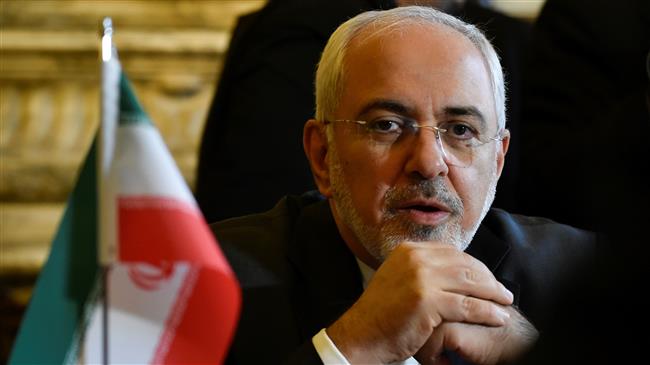
Another disconnect in the latest US terror report highlighting Iran is the flurry of European trade agreements signed with Tehran since the conclusion of the international nuclear accord last year. Iranian Foreign Minister Mohammad Javad Zarif’s trip to Finland last week was but the latest in a host of renewed European relations.

If Iran were such a terrorist pariah, as Washington asserts, would European governments really be courting Tehran with evident diplomatic respect?

It is estimated the US owes Iran upwards of $100 billion in assets frozen since the Islamic revolution in 1979. The US is also accused of dragging its feet on implementing sanctions relief under the terms of the P5+1 nuclear accord that came into effect on January 16 this year.

It seems obvious that one way for Washington to procrastinate on implementing the nuclear accord and the financial rewards due to Iran from unfrozen assets and European trade deals would be for the US to maintain its narrative accusing Iran of “sponsoring terrorism”.

Despite Washington’s narrative sounding increasingly hollow and in denial of its own documented links to global terrorism.

June 8, 2016 Posted by | Deception, Mainstream Media, Warmongering, Wars for Israel | , , , , , , , , | Leave a comment

Hillary’s Foreign Policy Speech: Queen Galadriel Before Her Magic Mirror

8b1da66b-99cd-49ea-a20e-739bc8df537b

By Gary Leupp | CounterPunch | June 6, 2016

Rachel Maddow,  the famously progressive MSNBC show host, pronounced it “her greatest speech of the campaign.” Chris Matthews agreed, adding that it would “have a very strong appeal to the neocon movement.” He mentioned in particular Bill Kristol, the Weekly Standard editor and TV commentator, as someone likely to be impressed. “A very smart man,” opined Matthews, the conservative Democrat and “Hardball” host, causing the entire cosmos to shudder.

You’d think that that war in Iraq, which Kristol had tirelessly championed, had never happened. And that its results had been anything other than horrific for the entire Middle East.

Hillary Clinton’s fiery performance last Thursday night, intended to assert her credentials as a former secretary of state (with all the positive “experience” that’s supposed to entail), framed by no fewer than seventeen U.S. flags, was a strident reassertion of U.S. “exceptionalism” without apologies or even reflections on the recent past and her bloody role in it.

It was billed as a “major foreign policy address,” the sort of thing you might expect of a sitting president. And it was designed, of course, to make her look presidential, and to underscore her campaign’s declaration that she has the Democratic nomination all sewed up. But it was not in fact a foreign policy speech at all; Donald Trump is quite right to call it “a political speech” directed at him.

Maddow has occasionally shown signs of critical reasoning in her coverage of the U.S.’s imperialist wars. One has to wonder what she finds admirable in the speech. Because actually, Clinton said nothing new.

However unsubstantial, it was all over the news the next morning, competing with the stories about new fencing at the Cincinnati Zoo and Prince’s autopsy results. Meanwhile the networks systematically ignore the ongoing wars in Iraq and Syria generated by the invasion of Iraq 13 years ago, and the European refugee crisis sparked by the regime-change wars in those countries as well as in Afghanistan and Libya. Like the monkeys adorning the Nikko Shrine, they see no evil, hear no evil, and speak no evil.

Some takeaway lines from the Clinton speech: “Donald Trump doesn’t know the first thing about Iran or its nuclear program.” It’s true that Trump is an uninformed blowhard and that Hillary in contrast knows a lot. She knows, for example, that the entire U.S. intelligence community, in two separate National Intelligence Estimates after 2003, concluded that Iran does not have a military nuclear program. She knows that the whole issue was hyped at the demand of the Israeli leaders who continuously demanded that the U.S. bomb Iran’s nuclear facilities  (that in fact date back to the period of the Shah’s reign and supported by the U.S.’s “Atoms for Peace” program).

She also knows from experience the value of the Big Lie in obtaining mass acceptance for real or threatened military action.

Clinton has generally avoided specifics in discussing her plans for more war with one conspicuous exception: she has continuously stated that she strongly advocates a “no-fly zone and humanitarian corridors” in Syrian air space and on the ground in that country beset by civil war pitting a secular regime, mainly against terrorist and terrorist-aligned Islamist opponents.

For Hillary, Syria is the ideal battlefield: one that pits her vision of U.S. hegemony against both Russia (Syria’s patron and her main target) and the nebulous evil of Islamist terrorism in the world—on behalf of an imaginary middle force of democrats who will stay cozy with the U.S. and end support for armed groups opposing Israel.

Her plans are as much a recipe for war as the bogus humanitarian mission in Libya in 2011. They would, as estimated by former Chairman of the Join Chiefs of Staff Gen. Martin E. Dempsey, require the deployment of 70,000 U.S. troops for their implementation.

In last week’s speech she was more circumspect. “We need to take out [ISIL’s] strongholds in Iraq and Syria,” she declared, “by intensifying the air campaign and stepping up our support for Arab and Kurdish forces on the ground. We need to keep pursuing diplomacy to end Syria’s civil war and close Iraq’s sectarian divide, because those conflicts are keeping ISIS alive. We need to lash up with our allies, and ensure our intelligence services are working hand-in-hand to dismantle the global network that supplies money, arms, propaganda and fighters to the terrorists.”

She didn’t mention that the money supplied to the terrorists is overwhelmingly from donors in Saudi Arabia, Turkey and Gulf states closely allied with the U.S.  Or that the current U.S. air campaign over Syria is, unlike that of Russia, illegal, opposed by the internationally recognized government in Damascus and lacking UN approval. Her “major foreign policy address” could not address such small details.

Hillary did not mention her own crowning achievement as secretary of state—the savage destruction of Libya involving the death of about 30,000 people, the unleashing of the ugliest forms of tribalism, and ISIL’s securing of a beachhead around Sirte—even once.

In contrast she made repeated references to NATO, well aware no doubt that most Americans aren’t clear at all about what that is but think it must be something good. Like the UN, or the International Red Cross. (I doubt that one in ten knows what the acronym stands for—the North Atlantic Treaty Organization—or realizes that it has only been deployed well outside the North Atlantic region, in the Balkans, Afghanistan, and North Africa.)

“This is someone [Trump] who has threatened to abandon our allies in NATO,” Clinton thundered (as though the peoples of Europe had ever earnestly sought, or are begging to maintain that Cold War, specifically anti-Russian, alliance).

It’s true that Trump has—on occasion and inconsistently—labeled NATO “obsolete” and opined that it should have been dissolved years ago. Whether he truly believes this is unclear. As Hillary says, his “ideas are dangerously incoherent” and he can withdraw or deny such comments at any time. But Trump’s statements about NATO, however vague, are actually the most intelligent and welcome statements he’s made in the course of his campaign.

The fact is, beginning in 1999 at her husband Bill’s orders, the NATO alliance designed as a binding military pact uniting West European countries against the Soviet Union from 1949—that should have been dissolved in 1990 when the Warsaw Pact formed in response shut down—has relentlessly expanded to encircle Russia. That’s post-Cold War Russia, with a military budget about 7% of the U.S. figure. Some NATO leaders aim to ultimately swallow Ukraine—which just happens to have been part of the Russian state from the 1670s to the Bolshevik Revolution, when it was made a soviet socialist republic until the collapse of the Soviet Union in 1991. Its economy including its munitions industry are inextricably interwoven with Russia’s; its eastern regions are peopled by ethnic Russians; it shares a 1,400 mile long border with Russia.

Does it not make sense that Moscow would see the incorporation of Ukraine, especially one headed by the current Russophobic leadership, into an anti-Russian military alliance as threatening and unacceptable?

Yet Hillary has been a ferocious advocate for the infinite expansion of the alliance, its wars that have produced dysfunctional U.S. client states (Kosovo, Bosnia-Herzegovina) in the former Yugoslavia, and its provocative moves on Russia’s doorstep. But in her speech, avoiding any reference to that expansion—the key geopolitical change of the last quarter-century—she proclaimed: “Moscow has taken aggressive military action in Ukraine, right on NATO’s doorstep.” She never explains why that doorstep has advanced (despite Reagan’s promises to Gorbachev) to include Poland, Slovakia, Hungary and Romania to begin with. Or why it has bordered Russia itself since the inclusion of the former soviet socialist republics of Estonia and Latvia, which share a 508 kilometer border with Russia.

The “military action in Ukraine” that she alludes to refers to separatists’ resistance to the U.S.-backed coup in February 2014, surely supported by Russia at some level, and surely by Russian public opinion, but you notice that the Pentagon has produced precious little evidence for large scale “military actions.” And the annexation of Crimea (Russian from 1783 to 1954, when it was transferred to the Ukrainian SSR within the old Soviet Union) was only a “military action” in that the 25,000 Russian troops stationed there by treaty were deployed to secure government buildings.

And do not expect Hillary to ever inform her audiences that Sevastopol on Crimean Peninsula is Russia’s only year-round ice-free port except Murmansk north of the Arctic Circle; that the Russian Black Sea Fleet has been headquartered there without interruption since 1783; and that the expulsion of the Russians and their replacement with NATO forces would constitute a truly existential threat to the Russian state.

It would in fact be hard to build a case convincing to the American people that all these countries need to be locked into an alliance with the U.S. and obliged to pay out 2% of their GDPs on military expenses in order to protect them from some imaginary Russian invasion. (From a rational standpoint, it would be precisely like persuading the Russian people that Moscow should head up an alliance including Canada, Mexico and Cuba to secure them against U.S. aggression.)

But the expansion of NATO to include Ukraine has been a pet project of the former Madame Secretary. Clinton chose as her Under Secretary of State for European and Eurasian Affairs Victoria Nuland, a former aide to Vice President Dick Cheney, neocon and wife of the powerful neocon Republican pundit (John McCain advisor and recently declared Hillary supporter) Robert Kagan. Nuland already had a rich history of warmongering when she embarked on a plan to topple the elected government in Ukraine and replace it with one that would join NATO.

She boasted publically that the U.S. had spent $ 5 billion by 2014 in an effort to, as she put it so quaintly and dishonestly, “support Ukraine’s European aspirations.” The result was the coup in February 2014 and consequent civil war that has taken over 8,000 lives, including hundreds killed by the neo-fascist Azov Battalion which functions as a regiment of the National Guard.

The U.S. State Department echoed by the compliant media has methodically depicted these events as Russian interference, rather than the results of a U.S.-orchestrated “Color Revolution”-type regime change campaign. To anyone paying attention, the dishonesty, and the success of the propaganda prettifying the coup, is sickening.

Trump has, as Clinton notes, praised Vladimir Putin as someone to whom he’d award an A for leadership. She for her part calls him a “dictator,” a term she would never use for a U.S. ally such as Egypt’s Abdel Sisi or the Saudi king. She has compared the apparently popular president, who has deftly pushed Obama back from his 2013 threat to order a massive strike on Syria and cooperated in the conclusion of the Iran nuclear deal, to Hitler—an astonishing statement of historical illiteracy and propensity for sensationalism.

Hillary’s imperious message boils down to: We are the exceptional nation, which the world needs to maintain its “stability.”

“I believe in strong alliances; clarity in dealing with our rivals; and a rock-solid commitment to the values that have always made America great. And I believe with all my heart that America is an exceptional country – that we’re still, in Lincoln’s words, the last, best hope of earth. We are not a country that cowers behind walls. We lead with purpose, and we prevail.”

The peoples of Korea, Vietnam, Afghanistan, Iraq, and Libya, know very well how “exceptional” a country the U.S. is, how seldom it “cowers behind walls,” how cheerfully and unapologetically it destroys countries using its “alliances”—even when the latter are jerry-rigged to provide a fig-leaf for what’s essentially unilateral action. Even when their member-lists are often padded with name-only participants such a tiny Pacific nations sometimes informed after the fact that they’re suscribers.

The youth of Iraq—93% of whom according to a recent poll view the U.S. as an enemy—know how U.S. “values” manifest themselves: in the form of “shock and awe” bombing, Abu Ghraib torture, Blackwater murders, and cowboy-managed “reconstruction” that in fact further divided and scourged an already ruined and humiliated country. There is nothing good that can be said about the war that Hillary so passionately supported, until it became politically impossible for her to continue to do so.

Madame Secretary looked regal Thursday night, in the worst way. She reminded me of the elfin Queen Galadriel, as played by Cate Blanchett, in The Lord of the Rings, in that scene where she stares into her magic mirror, sees a vision of the power of Sauron, and suddenly towers over Frodo, arms like dark hollows, arms flung high, and bellows:

“In place of a Dark Lord, you would have a queen! Not dark, but beautiful and terrible as the dawn! Treacherous as the sea! Stronger than the foundations of the earth! All shall love me, and despair!”

Trump and Clinton are both servants of the enchanted ring called Capital. It is not at all clear who is more darkly and fatefully bound, or whose foreign policy, applauded by more devoted followers, would be more terrible and cause the greater despair among the people of this planet.

In response to the warrior-queen awaiting coronation, Bernie Sanders has sadly avoided the whole question of U.S. imperialism. (Among other things, he never uses the term.) It’s as though he accepts Chris Matthew’s smug pronouncement, “The American people don’t care about foreign policy.” The best Bernie could do last week was to say: “… when it comes to foreign policy, we cannot forget that Secretary Clinton voted for the war in Iraq, the worst foreign policy blunder in modern American history, and that she has been a proponent of regime change, as in Libya, without thinking through the consequences.”

Forgive me, Bernie—because I do of course hope you’ll win—but that comment was wimpish. Hillary’s Libya policy wasn’t a matter of not “thinking through consequences,” but a matter of calculated ruin of a modern state. It’s the difference from the “blunder” of accidental manslaughter and well-planned murder. (Recall how Madame Secretary cackled with hilarity after Col. Gadhafy was sodomized with a knife and assassinated in the desert by NATO’s friends.)

Like the CNN anchors who sometimes mention in passing Hillary’s “foreign policy blunders such as Libya,” Sanders cannot yet call out evil for what it is, but has to chalk it up to well-meaning mistakes lacking forethought.

But that level of criticism is the best the system can provide, the most it will allow. Mistakes were made. There were some intelligence flaws. There were blunders. To paraphrase Erich Segal’s Love Story: being the exceptional power means never having to say you’re sorry. You just acknowledge you fucked up, because hey, things like that happen. And let’s move on.

Had Bernie been the antiwar, anti-imperialist candidate throughout, rather than just repeating his (totally valid) tirade against Wall Street, he might have further sharpened his differences with Clinton. If he loses in California, and then betrays his following with a Clinton endorsement, he will be saying that more wars for regime change and more confrontation with Russia is worth some changes in party rules and some meaningless clauses on the party platform.

I would hope that any Bernie supporters (or anyone at all) who watched last night’s speech, or have read the on-line transcript, would buckle down on their opposition to this creature of Wall Street and the Democratic Party establishment. Better to vote not at all, if Clinton’s the nominee—and instead think about how best to topple whichever candidate wins.

The “billionaire class” that Bernie decries wants badly to suck you in. That’s why the party bosses praise Sanders for “bringing so many new young people into the process”—the better to eat you, my dear! They want you to love this queen, even as you despair of ever electing anybody better.

One Ring to rule them all, One Ring to find them,
One Ring to bring them all, and in the darkness bind them,
In the Land of Mordor where the Shadows lie

Better, surely, to destroy the Ring that is the rigged economy, rigged political process and murderous foreign policy that Hillary so personifies.


Gary Leupp is Professor of History at Tufts University, and holds a secondary appointment in the Department of Religion.

June 6, 2016 Posted by | Militarism, Timeless or most popular, War Crimes, Wars for Israel | , , , , , , , , , , , | Leave a comment

Hillary Clinton: Electing a Foreign Spy for President?

haiphong_hillaryaipac

By James Petras | June 6, 2016

During her 4 years as Secretary of State of the United States (2009-2014), Hillary Clinton controlled US foreign policy. She had access to the most confidential information and state documents, numbering in the tens of thousands, from all of the major government departments and agencies, Intelligence, FBI, the Pentagon, Treasury and the office of the President. She had unfettered access to vital and secret information affecting US policy in all the key regions of the empire.

Today, Mme. Clinton’s critics have focused on the technical aspects of her violations of State Department procedures and guidelines regarding handling of official correspondences and her outright lies on the use of her own private e-mail server for official state business, including the handling of highly classified material in violation of Federal Records laws, as well as her hiding official documents from the Freedom of Information Act and concocting her own system exempt from the official oversight which all other government officials accept.

For many analysts, therefore, the issue is procedural, moral and ethical. Mme. Clinton had placed herself above and beyond the norms of State Department discipline. This evidence of her arrogance, dishonesty and blatant disregard for rules should disqualify her from becoming the President of the United States. While revelations of Clinton’s misuse of official documents, her private system of communication and correspondence and the shredding of tens of thousands of her official interchanges, including top secret documents, are important issues to investigate, these do not address the paramount political question: On whose behalf was Secretary Clinton carrying out the business of US foreign policy, out of the review of government oversight?

The Political Meaning and Motivation of Clinton’s High Crimes Against the State

Secretary Clinton’s private, illegal handling of official US documents has aroused a major FBI investigation into the nature of her activities. This is separate from the investigation by the Office of the Inspector General and implies national security violations.

There are several lines of inquiry against Mme. Clinton:

(1) Did she work with, as yet unnamed, foreign governments and intelligence services to strengthen their positions and against the interest of the United States?

(2) Did she provide information on the operations and policy positions of various key US policymakers to competitors, adversaries or allies undermining the activities of military, intelligence and State Department officials?

(3) Did she seek to enhance her personal power within the US administration to push her aggressive policy of serial pre-emptive wars over and against veteran State Department and Pentagon officials who favored traditional diplomacy and less violent confrontation?

(4) Did she prepare a ‘covert team’, using foreign or dual national operatives, to lay the groundwork for her bid for the presidency and her ultimate goal of supreme military and political power?

Contextualizing Clinton’s Clandestine Operations

There is no doubt that Mme. Clinton exchanged minor as well as major official documents and letters via her private e-mail system. Personal, family and even intimate communications may have been carried on the same server. But the key issue is that a large volume of highly confidential government information flowed to Clinton via an unsecured private ‘back channel’ allowing her to conduct state business secretly with her correspondents.

Just who were Secretary Clinton’s most enduring, persistent and influential correspondents? What types of exchanges were going on, which required avoiding normal oversight and a wanton disregard for security?

Clinton’s covert war policies, which included the violent overthrow of the elected Ukraine government, were carried out by her ‘Lieutenant’ Under-Secretary of State Victoria Nuland, a virulent neo-conservative holdover from the previous Bush Administration and someone committed to provoking Russia and to enhancing Israel’s power in the Middle East. Clinton’s highly dangerous and economically destabilizing ‘brainchild’ of militarily encircling China, the so-called ‘pivot to Asia’, would have required clandestine exchanges with elements in the Pentagon – out of the State Department and possibly Executive oversight.

In other words, within the Washington political circuit, Secretary Clinton’s escalation of nuclear war policies toward Russia and China required secretive correspondences which would not necessarily abide with the policies and intelligence estimates of other US government agencies and with private business interests.

Clinton was deeply engaged in private exchanges with several unsavory overseas political regimes, including Saudi Arabia, Israel, Honduras and Turkey involving covert violent and illegal activities. She worked with the grotesquely corrupt opposition parties in Venezuela, Argentina and Brazil

Clinton’s correspondence with the Honduran armed forces and brutal oligarchs led to the military coup against the elected President Zelaya, its violent aftermath and the phony election of a pliable puppet. Given the government-death squad campaign against Honduran civil society activists, Clinton would certainly want to cover up her direct role in organizing the coup. Likewise, Mme. Clinton would have destroyed her communications with Turkish President Erdogan’s intelligence operations in support of Islamist terrorist-mercenaries in Syria and Iraq.

Secretary Clinton’s e-mail would have shown her commitment to the Saudis when they brutally invaded Bahrain and Yemen to suppress independent civil society organizations and regional political rivals.

But it is Clinton’s long-term, large-scale commitment to Israel that goes far beyond her public speeches of loyalty and fealty to the Jewish state. Hillary Clinton’s entire political career has been intimately dependent on Zionist money, Zionist mass media propaganda and Zionist Democratic Party operations.

In exchange for Clinton’s dependence on political support from the Zionist power configuration in the US, she would have become the major conduit of confidential information from the US to Israel and the transmission belt promoting Israel-centric policies within the US government.

The entire complex of Clinton-Israel linkages and correspondences has compromised the US intelligence services, the State Department and Pentagon.

Secretary Clinton went to extraordinary lengths to serve Israel, even undermining the interests of the United States. It is bizarre that she would resort to such a crude measure, setting up a private e-mail server to conduct state business. She blithely ignored official State Department policy and oversight and forwarded over 1,300 confidential documents and 22 highly sensitive top-secret documents related to the ‘Special Access Program’. She detailed US military and intelligence documents on US strategic policies on Syria, Iraq, Palestine and other vital regimes. The Inspector General’s report indicates that ‘she was warned’ about her practice. It is only because of the unusual stranglehold Tel Aviv and Israel’s US Fifth Column have over the US government and judiciary that her actions have not been prosecuted as high treason. It is the height of hypocrisy that government whistleblowers have been persecuted and jailed by the Obama Administration for raising concerns within the Inspector General system of oversight, while Secretary Clinton is on her way to the Presidency of the United States!

Conclusion

Many of Clinton’s leading critics, among them two dozen former CIA agents, have presented a myth that Hillary’s main offence is her ‘carelessness’ in handling official documents and her deliberate deceptions and lies to the government.

These critics have trivialized, personalized and moralized what is really deliberate, highly politicized state behavior. Mme. Secretary of State Hillary Clinton was not ‘careless in managing an insecure mail server’. If Clinton was engaged in political liaison with foreign officials she deliberately used a private email server to avoid political detection by security elements within the US government. She lied to the US government on the use and destruction of official state documents because the documents were political exchanges between a traitor and its host.

The 22 top secret reports on ‘Special Access Programs’ which Clinton handled via her private computer provided foreign governments with the names and dates of US operatives and proxies; allowed for counter-responses inflicting losses of billions of dollars in program damages and possibly lost lives.

The Inspector General Report (IGP) deals only with the surface misdeeds. The Federal Bureau of Investigations (FBI) has gone a step further in identifying the political linkages, but faces enormous obstacles from Hillary’s domestic allies in pursuing a criminal investigation. The FBI, whose director is a political appointee, has suffered a series of defeats in its attempts to investigate and prosecute spying for Israel, including the AIPAC espionage case of Rosen and Weismann and in their long held opposition to the release of the notorious US-Israeli spy, Jonathan Pollard. The power of the Zionists within the government halted their investigation of a dozen Israeli spies captured in the US right after the attacks of September 11, 2001.

Clinton’s choice of conducting secret private communications, despite several years of State Department warnings to abide by their strict security regulations, is an indication of her Zionist power base, and not a mere reflection of her personal hubris or individual arrogance.

Clinton has circulated more vital top-secret documents and classified material than Jonathan Pollard.

President Obama and other top Cabinet officials share her political alliances, but they operate through ‘legitimate’ channels and without compromising personnel, missions, funding or programs.

The executive leadership now faces the problem of how to deal with a traitor, who may be the Democratic Party nominee for US President, without undermining the US quest for global power. How do the executive leadership and intelligence agencies back a foreign spy for president, who has been deeply compromised and can be blackmailed? This may explain why the FBI, NSA, and CIA hesitate to press charges; hesitate to even seriously investigate, despite the obvious nature of her offenses. Most of all it explains why there is no indication of the identity of Secretary Clinton’s correspondents in the various reports so far available.

As Sherlock Holmes would say, “We are entering in deep waters, Watson”.

June 6, 2016 Posted by | Timeless or most popular, Wars for Israel | , , , , , , | Leave a comment

Hillary Comes Out as the War Party Candidate

CdeV41iW0AA5s1O

By Diana Johnstone | CounterPunch | June 3, 2016

On June 2, a few days before the California primary, Hillary Clinton gave up trying to compete with Bernie Sanders on domestic policy. Instead, she zeroed in on the soft target of Donald Trump’s most “bizarre rants” in order to present herself as experienced and reasonable. Evidently taking her Democratic Party nomination for granted, she is positioning herself as the perfect candidate for hawkish Republicans.

Choosing to speak in San Diego, home base of the U.S. Pacific Fleet, on a platform draped with 19 American flags and preceded by half an hour of military marching music, Hillary Clinton was certain of finding a friendly audience for her celebration of American “strength”, “values” and “exceptionalism”. Cheered on by a military audience, Hillary was already assuming the role to which she most ardently aspires: that of Commander in Chief of the Armed Forces.

Whenever Hillary speaks, one must look for the lies. The biggest lies in this speech were lies of omission. No mention of her support for the invasion of Iraq, no mention of the disaster she wrought in Libya, no mention of her contribution to pursuing endless death and destruction in the Middle East.

But she also lied in claiming partial credit for the Iran nuclear deal, which she had tended to block, and most profoundly in presenting herself as a champion of diplomacy. As Secretary of State, she blocked diplomacy that would have prevented or ended conflict, most notoriously concerning Libya, where even senior U.S. military officers were told to cut off their contacts with Gaddafi agents seeking a peaceful compromise.

The Washington Post reported prior to the speech that her campaign “hopes there are many more national-security-minded Republicans and independents who would vote for her, even grudgingly, rather than see Trump win the White House.”

The Washington Post noted that the state of California’s “defense industry and military bases lend a backdrop for her speech.” Indeed! Hillary Clinton is quite simply catering to the military-industrial complex, as she has been doing throughout her career.   She is catering to the arms industry, which needs to keep the American people scared of various “threats” in order to continue draining the nation’s wealth into their profitable enterprises. She needs the support of military men and women who believe in all those threats invented by intellectuals in think tanks and editorial offices.

This is the core of the “national-security-minded” electorate that Hillary is targeting. She warned that Trump would jeopardize the wonderful bipartisan foreign policy that has been keeping us great and safe for decades.

In reality, such “national-security-minded” leaders as Dick Cheney and Clinton herself have led the United States into wars that create chaos, inspire enemies and endanger everybody’s national security. Despite the geographically safe position of the United States, it is that bipartisan War Party that has created genuine threats to U.S. national security by prodding the hornets’ nest of religious fanaticism in the Middle East and provoking nuclear-armed Russia by aggressive military exercises right up to its borders.

The basis of Hillary Clinton’s world view is that notorious “American exceptionalism” which Obama has also celebrated. If we don’t rule the world, she suggested, “others will rush in to fill the vacuum”. She clearly cannot conceive of dealing respectfully with other nations. The United States, she proclaimed, is “exceptional – the last best hope on earth.”

Not all people on earth feel that way. So they must be brought to heel. In practice, this “exceptionalism” means acting above the law. It means a unipolar world policed by U.S. armed forces. In practice, Hillary’s devotion to “our allies” means fighting wars in the Middle East for the benefit of Israel and of Saudi Arabia, whose arms purchases are indispensable for our military industrial complex. It means bombing countries and overthrowing foreign governments, from Honduras to Syria and beyond, in order to help them conform to “our values”.

Trump is groping clumsily, at times idiotically, toward a major shift in US foreign policy. He is ill-prepared for the task. If ever elected, he would have to fire the neocons and take on a whole new team of experts to educate and guide him. That would be something of a miracle.

But some of Hillary’s reproaches aimed at Trump’s “reckless, risky” foreign policy statements are not as self-evident as she assumes. For example, his statement that he would sit down to negotiate with North Korean dictator Kim Jong Un. Is that really such a crazy idea?

North Korea is a small country, whose leaders call themselves “communist” but who are essentially a dynasty that emerged from the resistance against Japanese invaders in World War II. Their quarrel with South Korea stemmed from the domination of Japanese collaborators in that part of the country. That is practically ancient history, and today North Korea feels threatened – and is indeed threatened – by the everlasting U.S. military presence on its borders. A small isolated country like North Korea is not a real “threat” to the world. Even with nuclear weapons. Its much-vaunted nuclear weapons are clearly meant both to defend itself from attack and as a bargaining chip.

So would it be so terrible to sit down and find out what the bargain might be? Basically, North Korean leaders would like to make a deal to lessen the U.S. threat and bring their country out of isolation. Why not discuss this, since it could lead to the end of the “North Korean threat” which is artificial anyway?

Hillary’s reaction is typical. She boasts that her solution is to build up an expensive missile defense shield in Japan and increase everybody’s military buildup in the region. As usual, she goes for the military solution, ridiculing the notion of diplomacy.

Hillary Clinton’s speech will certainly sound convincing to the “national security minded” because it is so familiar. The same as George W. Bush but delivered with much greater polish. America is good, America is great, we must remain strong to save the world. This is the road to disaster.

Hillary Clinton is the clear candidate of the War Party.


Johnstone-Queen-Cover-ak800--291x450Diana Johnstone is the author of Fools’ Crusade: Yugoslavia, NATO, and Western Delusions. Her new book is Queen of Chaos: the Misadventures of Hillary Clinton. She can be reached at diana.johnstone@wanadoo.fr

June 4, 2016 Posted by | Militarism, Wars for Israel | , , | Leave a comment

Tim Canova’s Statements Are Even More Pro-Israel than Wasserman Schultz

By Sam Husseini | May 31, 2016

Congressional candidate Tim Canova, a professor of law and public finance, is widely depicted as being a progressive challenger to Rep. Debbie Wasserman Schultz. Wasserman Schultz of course chairs the Democratic National Committee and has rightly come in for lots of criticism on a host of issues.

Canova was recently endorsed by Bernie Sanders. Sanders, at the New York debate with Hillary Clinton in April had showed some minimal concern for rights of Palestinians, rare in U.S. politics, saying that Israel’s attack on Gaza was “disproportionate.”

Recently however, on MSNBC, Canova criticized Wasserman Schultz for being unreliable on a host of issues, then added: “even support for Israel, people don’t know where she stands.”

The subject of Israel doesn’t come up in many pieces on Canova, including his lengthy interview with Glenn Greenwald early this year.

As the Jewish Daily Forward recently noted: “when it comes to Israel and the Middle East, Canova is trying to take on Wasserman Schultz from the right.”

Canova’s website states he “visited Israel many times … returning to his former kibbutz as a volunteer time and again, and participating in workshops on citizenship, war, and counter-terrorism at Tel Aviv University.”

He’s also adopted an extremely anti-Iran position. Writes AP : “Despite the big fundraising haul, Canova faces a daunting task to defeat a strong Jewish Democratic incumbent in a district dominated by Jewish and Hispanic voters, where U.S. relations with Israel and Cuba are debated as often as jobs and the economy. … Canova supports ending the U.S. embargo on Cuba but believes it must be done ‘in stages.’ He said ‘trade liberalization needs political liberalization.’ He thinks the landmark Iran nuclear agreement was filled with ‘holes’ and that it was wrong to give Iran access to $100 billion in frozen assets.”

Canova has said: “I would like to see a Palestinian state, [but] to me, I don’t see how you have one as long as all of these neighbors of Israel still don’t recognize its right to exist … as long as Iran is still funding Hamas, [as long as] Saudi Arabia has telethons for families of suicide bombers!

In contrast, apparently Saudi Arabia’s misogyny, authoritarianism, blood soaked interventions and invasions and fine with Canova. Well, the same would seem to be true regarding Israel’s bigotry and carnage.

I should note I use the term “pro-Israel” with implied scare quotes. An increasingly aggressive Israel could be “successful” in perpetuating oppression. And it could be disastrous for many, including many of the Jewish citizens of Israel.

The funny part is that I’ve promoted Canova on Institute for Public Accuracy news releases. But then again, unlike lots of folks, I try not to have a litmus test for people. I try to put people on news releases for what they’re best at. And Canova seems sharp and good on financial issues, so I use him on that without prejudice for how he is when it comes to Israel.

It often doesn’t work the other way. I’ve had odd looks for working with “rightwingers” on some issues. I find that there’s often a whole series of double standards associated with that. If you only want to work with people who agree with you across the board, fine. Do that. If you’re flexible about who you work with, fine, do that. But there’s something really wrong when people have a litmus test sometimes, but not others.

June 1, 2016 Posted by | Ethnic Cleansing, Racism, Zionism, Militarism, Wars for Israel | , , , , | Leave a comment

Fake “Humanitarians” and Fake “Leftists” taking Canada down the wrong path

Angelina Jolie Pitt 498bd

Special Envoy of the UNHCR addresses the Security Council meeting on the continuing conflict in Syria. Credit: UN Photo/ Mark Garten/ flickr
By Mark Taliano | American Herald Tribune | May 30, 2016

There’s really no excuse for supporting the NATO/terror position. We’ve seen the destruction of Iraq, Libya, Ukraine, now Syria, all built on lies, all beneath the guise of “humanitarian interventions”. Since people with any sense of historical memory can not legitimately plead ignorance, supporters of the terrorist invasion of Syria fall into the category of “fake humanitarians”. They aren’t “progressive” or “left” when they support the criminal violation of Syria’s sovereignty and territorial integrity.

Canadian peace activist Ken Stone, recently returned from Syria, expresses similar sentiments in his newly released book, Defiant Syria|dispatches from the Second Tour of Peace to Syria.  He explains,

“The point for me is to ask why otherwise intelligent people can fall for such shit (referring to a 2015 New Internationalist magazine article: “The forgotten revolution of Syria”), and not once but repeatedly.  It’s not as if Syria is the very first government targeted for regime change by the USA. It’s not that people are unaware of the fact that the first casualty of war is the truth … there is never a shortage of “leftists” in the West who can be either bought or convinced through incredible naivété, warped political outlook, or Eurocentric arrogance, that the motives of Empire are good.”

People such as Ken, who have visited Syria and have seen with their own eyes the devastation wrought by Western-supported terrorists against civilization, have less tolerance for the lies, the propaganda and the “fake humanitarians” who enable it all.

Stone doesn’t mince words when he describes some of his on-the-ground observations of Homs, Syria; observations fortified by his historical memory of NATO’s imperial destruction elsewhere:

 “Judging from the many corpses found buried around the city, some of which were missing eyes and various internal organs, many have speculated that the mercenaries ran a lucrative trade in human organs, besides their human trafficking in Syrian women, boys, and children, and their other rackets such as rapine and pillage … The terrorist organizations were working in accordance with a well-rehearsed imperial script here in Homs. The KLA, NATO’s foot soldiers in Kosovo (formerly part of Yugoslavia) also ran an organ smuggling operation out of a house in Pristina in 1999.”

To their detriment, the fake “humanitarians” and pseudo “leftists” are shielded from such on-the-ground realities.

In a later chapter, “Palmyra: Bride Of The Desert”, Stone also bemoans the self-proclaimed “leftists” who cast the Russians as “imperialists” and as guilty as the West in the war against Syria – conveniently forgetting that Russia is legally in Syria, while NATO is not:

“It’s true,” he writes, “that Russia is unfortunately no longer a socialist country. However, it doesn’t act like an imperialist country either. Mr. Putin consistently respects the sovereignty of other countries, such as Syria, and speaks up at the United Nations for the observance of international law, which the USA, priding itself as “the exceptional country” and the “sole indispensable country”, tramples on almost every day.”

This resonates with the author’s earlier piece, “Western Hegemony vs Russian Sanity”, and the “Saker’s” observations of the differences between the “Anglo-Zionist Unipolar Imperial Model” and the “Russian Multi-polar Model”.

Sustainable evidence demonstrates, for example, that the current Russian multi-polar model respects the rule of international law, ideological and cultural pluralism, and the use of military force as a last resort.

The illegal Western war of aggression against Syria, on the other hand, is consistent with the “Anglo-Zionist Unipolar Imperial Model” which defies the rule of international law, negates ideological and cultural pluralism, and uses military violence as a first resort.

The West’s invasion contradicts the rule of international law: Russia is in Syria legally, whereas the West is not; it negates Syria’s ideological and cultural pluralism and seeks to replace it with a Wahhabist stooge government or an assortment of stooge governments in balkanized states; and it demonstrates the West’s propensity to use military violence as a first resort – the invasion, after all, was planned well in advance.

Given the fact of the West’s criminality, consistent with the “Anglo-Zionist Unipolar Imperialist Model”, and the concurrent failures of the “fake humanitarians” and the fake “left” to reconcile themselves to evidence-based findings and historical memory, Stone reiterates some concrete steps that should be taken by those of us who support foreign policy trajectories consistent with peace and the rule of international law, rather than the current reality of war and barbarism.

Important steps would include normalizing diplomatic relations with Syria, ending illegal sanctions, withdrawing from all criminal military interventions against Syria, and withdrawing from NATO.

Canada needs to assert an independent foreign policy, and it needs to reject the current barbarity implicit in its status as a vassal appendage of the Anglo-Zionist Unipolar Imperial Model.  This is what Real Change would look like.


Mark is a retired high school teacher.

May 31, 2016 Posted by | Illegal Occupation, Militarism, War Crimes, Wars for Israel | , , , , , , , | Leave a comment

Dying to Forget the Israel Lobby?

By Harry Clark | CounterPunch | April 22, 2016

Irene Gendzier makes two main claims about US Middle East policy in the late 1940s in her book Dying to Forget. Oil, Power, Palestine and the Foundations of U.S. Policy in the Middle East. One is that there was no contradiction between US support for Zionism and its goal of establishing a Jewish state in Arab Palestine, and US interest in the region’s oil reserves. This claim is based on heretofore unexamined contacts between Max Ball, who headed the Oil and Gas Division of the U.S. Department of the Interior, and Eliahu Epstein, Washington representative of the Jewish Agency, the Jewish state in the making in Palestine. Gendzier argues that these contacts, outside official foreign policy, enabled the Jewish Agency to address US concerns about the impact of Zionism on US oil interests, and to insert its arguments into the discussion in the Truman White House. The “encounter between Max Ball and Eliahu Epstein in 1948 forms the basis of the ‘oil connection’ discussed in this book. The encounter. . . revealed that major U.S. oil executives were pragmatic in their approach to the Palestine conflict and were prepared to engage with the Jewish Agency and later with Israeli officials, albeit within existing constraints.” (xxi)

The second is that Israel’s military prowess in the 1948 war showed the Pentagon that Israel had changed the regional balance of power, and should be included in US military planning, and oriented toward the West and away from the Soviet Union. The USSR had supported partition of Palestine into Arab and Jewish states, and Czechoslovakia in the emerging Soviet bloc had supplied Israel with arms. These “strategic” concerns about Israel’s potential role, Gendzier claims, outweighed US concerns for the effects of the war that established Israel: the destruction of Arab Palestine, the creation of a large refugee population, the antagonism of the Arab world, and potential “instability,” the hegemon’s bugbear, with consequences for US interests. The Pentagon’s judgment about Israel’s military ability has been noted by other writers, but Gendzier makes stronger claims. These “strategic reasons,” she argues, “undermined Washington’s critical position on Israeli policy toward refugee repatriation and territorial expansion. These vital factors in the conflict between Israel-Palestine and the Arab world thereby assumed a subordinate position.” (xxii)

Here, then, is the logic of U.S. oil policy, which was responsible for the increasing deference to Israeli policies whose purpose was to ensure that Israel turned toward the United States and away from the USSR. This objective, in turn, was allied to Washington’s principal goal in the Middle East—protection of its untrammeled access and control of oil. (xxii)

Observers of US politics recognize the US-Israel “special relationship,” and the “strategic asset” and “Israel Lobby” conceptions of it. The “asset” concept holds that the relationship expresses fundamental “US interests” that are independent of any Lobby influence, that the Lobby is powerful only when it promotes those interests. The Lobby proponents see a quasi-sovereign force capable of defining or undermining US interests. This book is clearly intended to enhance the “strategic asset” view.

The first chapter is entitled “The Primacy of Oil,” and “oil” is a primary, even the dominant theme of the book. For all this emphasis, Gendzier does not fully address the nexus of US oil interests, Zionism, and Arab resistance. She overlooks pre-war Arab and oil industry opposition, an “oil connection” that predates hers, and doesn’t do justice to the Trans-Arabia Pipeline (Tapline), a key postwar project and US policy instrument. She depicts a natural, inevitable synthesis of Zionism and US oil interests that was disproven by events she omits.

In 1933 Saudia Arabia awarded an oil concession to Standard Oil of California, through a subsidiary, California Arabian Standard Oil Company, Casoc. Standard of California was eventually joined by three other major US oil companies. In 1938 oil in commercial quantities was found. The Saudi monarch, Abd al Aziz ibn Saud, decided to award another concession, and Casoc again won the bidding.

The potential conflict between American support for Zionism and US oil interests arose in 1936 and later, following increased Jewish immigration to Palestine, and ruthless British suppression of the Palestinian Arab revolt against British rule. This elicited strong protest, from Arabs to US diplomats, from at least one oil industry executive, and from King Saud himself. “King Ibn Saud of Saudi Arabia made an eloquent appeal to President Roosevelt in a letter of November 29 [1938] criticizing the main points in the Zionist argument and pleading for justice for the Palestinian Arabs on the basis of self-determination.” Gendzier omits all of this.

World War II consolidated the position of Casoc and the US in Saudi Arabia, against potential British influence. The US extended Lend-Lease to Saudi Arabia to ease the financial crisis of the war, upgraded its diplomatic representation, and developed an air base at Dhahran near the oil fields. Casoc renamed itself Arabian American Oil Company, Aramco, and expanded the small oil refinery it had built.

Building a pipeline from the oil fields in eastern Saudi Arabia to the eastern Mediterranean was discussed during the war. Postwar, the Trans-Arabian Pipeline (Tapline) became a major instrument of US policy; it would support Saudi Arabia, assist the economies of the transit countries, fuel the recovery in western Europe, enhance “stability,” diminish Soviet influence, and profit the oil companies. Tapline was delayed and almost cancelled due to political complications in the Middle East, and also, despite its strategic importance, in the US.

The direct pipeline route led through Jordan and Palestine to the oil refinery and tanker terminal at Haifa, which was precluded by emphatic opposition from King Saud. The alternative led through Jordan, Syria and Lebanon. Terms were readily agreed with the Christian Maronite government in Lebanon, and with King Abdullah in Jordan, despite strong public opposition to Zionism.

In Syria, opposition was stronger still, but agreement was reached in September, 1947, after intervention by the CIA, Aramco, King Saud and US diplomats. Parliamentary ratification was suspended after the UN partition resolution in November, when a crowd of 2,000 stormed the US Embassy in Damascus, and snipers fired on Aramco survey teams. In February, 1948, the Arab League “prohibited its members from granting any new Western oil concessions ‘until the Palestine situation was clarified.’” Moreover, Arab League officials “were ‘studying nationalization precedents’ and claimed that even ‘Ibn Saud, in case of a showdown, would not oppose any oil resolutions, even suspension of American oil operations, if faced with united front of all Arab states.’”

The US steel export license needed for the pipe subjected Tapline to the opposition of the domestic oil companies. Executive departments approved licenses, but in late 1947 Congress began three months of hearings over allegations that Aramco overcharged the US Navy during the war, and that the pipeline would ruin the domestic oil industry. As violence in Palestine escalated prior to the British withdrawal in May, 1948, followed by the Arab-Israeli war, congressional critics asked why licenses for export to an unsettled region seething with anti-Americanism should be granted, when steel was urgently needed elsewhere. By mid-year, “some American officials doubted that the project would ever be completed, and others worried that the stalemate would play into the hands of the Kremlin, which was rumored to have designs on Saudi petroleum.”

Tapline finally cleared US politics, but a pipeline route was obtained in Syria only after the CIA, in March, 1949, engineered a coup. Zionism had forced the re-routing of Tapline, increased the cost, and held up completion by twenty months. Gendzier mentions the coup, but omits the US political wrangle, including American Zionism’s initial opposition to Tapline.

American Zionists were preternaturally sensitive to their potential conflict with US oil interests. In July, 1942, Emmanuel Neumann of the American Zionist Emergency Committee met with State Department officials. In November, 1943, Nahum Goldmann, of the Zionist Organization of America, met with Harold Ickes, Roosevelt’s wartime oil czar. In October, 1945, Eliahu Epstein, Washington representative of the Jewish Agency, met with Arthur G. Newmayer, public relations director of Standard of New Jersey. In 1946, Zionist officials met with James Terry Duce, vice-president of Aramco. In these meetings, the Zionist officials

voiced concern about the strengthening ties with Saudi Arabia that could push the Zionist movement outside the circle of America’s strategic interests. They stressed the importance of a strong and stable Jewish state, given the loyalty of the Jewish community in Palestine to allied interests during the war. Moreover, they denied categorically that a pro-Zionist policy would harm the status of American oil companies in the Middle East; because oil has no significance while in the depths of the earth, the oil-producing states would need American companies in order to profit from their resources even if the United States pursued a pro-Zionist policy. There were even veiled threats as Zionist representatives hinted at damage to the oil companies’ image, should they appear anti-Zionist after the Holocaust, in a decisive hour for continued Jewish existence.

As the debate over Tapline began late in the war, the renamed American Zionist Emergency Council “set up a subcommittee for oil. It prepared a series of position papers and memoranda to establish guidelines for Zionist policy.” The “campaign was designed to prevent the construction of the pipeline unless it went through the Jewish state.” At first Zionists denied a need for the pipeline, “assuming that not laying it at all was better than not laying it through the future Jewish state, and thus removing that state from the circle of American interests.” They “tried to exploit differences of opinion within the oil industry and to reinforce the opposition of companies without Middle East concessions and those not participating in the project.” They argued that tanker transport was cheaper and safer, that a pipeline was vulnerable to terrorist attacks. (In 1947, Jewish terrorists attacked the Haifa oil refinery and the pipeline from Iraq three times). As agreements were signed and work begun, they advocated a “route through areas likely to be under Jewish sovereignty in the future.” Zionist officials presented the pipeline through Palestine as a contribution to regional development, to the integration of the Jewish state into the region, and to peace. Gendzier omits this campaign, which pitted American Zionism against Tapline for a time, even as she cites the article that discusses it.

The Truman White House, against the judgment of its diplomats and military experts, supported the historic vote recommending partition in the General Assembly of the UN in November, 1947. Palestine, unsettled by the Zionist campaign against British rule, erupted into civil war. By early 1948, the US had begun to consider alternatives to partition, including UN trusteeship, and extending British administration. Oil interests were chief among US concerns, and Gendzier mentions a weaker version of the February, 1948 threat by the Arab League against American oil companies cited above.

In January, 1948 the Jewish Agency prepared a “Note on Palestine Policy,” for private circulation in Washington during Congressional hearings on US oil interests. (99-101) In February, Max Ball, head of the Oil and Gas Division of the Interior Department, met Eliahu Epstein of the Jewish Agency, through family relations. Drawing on the Note, Epstein argued that Zionism was a progressive economic and political force, and asserted the harmony of Zionist and US interests in that respect, and the dependency of the Arab oil producers on western oil companies.

Ball argued that oil development was a progressive force in the Arab world, and that it would also fuel Europe’s recovery and stave off Communism and chaos there. Partition would antagonize the Arabs and jeopardize this, hence was not in US interests. Epstein replied that “ ‘imposition of the will of the U.N. by the loyal implementation of the partition scheme would have a soothing effect on the Arabs and make them regain their right sense of proportion’ ” (105) about their weakness. Epstein cited Palestine Jewry’s support of the Allied war effort. He mentioned the oil prospects of the Negev (Naqab), the southern desert of Palestine, and Ball offered to introduce Epstein to oil company executives. Ball later advised Epstein that such meetings could happen “ ‘only when the Jewish state is established both de facto and de jure. The Oil Companies’ policies are based on practical advantages’ ” which could be pursued only “when the Jewish state becomes a reality.” (108) Ball thus implicitly endorsed partition, at least in the Jewish Agency’s account which Gendzier quotes, when his government was still debating it.

These “historic encounters” (101) of Epstein and Ball are the high point of Gendzier’s “oil connection.” “From this vantage point, the future of the Jewish state appeared more promising than expected. . . major oil companies were not categorically set against [Zionism], which was interpreted as an indication of fu- ture interest.” (111) She claims that the “Jewish Agency strategy developed in the ‘Notes’ appeared to be effective in addressing the fear of partition endangering U.S. oil interests,” when disseminated in the White House by Clark Clifford, special counsel to Truman and Zionist advocate. (111) Ball’s role in oil policy and wide contacts, Gendzier claims, made his belief that Israel had a place in the oil companies’ plans “of no small importance in the period leading up to Israel’s unilateral declaration of independence and. . . the reassessment of U.S. policy toward Israel.” (112)

Gendzier’s account of the Truman Administration debate over partition vs. trusteeship in spring, 1948 does not cite the Jewish Agency’s blandishments about oil-related development, or their assurances that the Arabs had no alternatives. They would have been quite out of place as Palestine was being destroyed, with atrocities reported, refugees fleeing, and US officials fearing the destruction of US interests with the disaster. The State Department would shortly despair of Tapline ever being built. In June, the US ambassador in Saudi Arabia reported King Saud’s warning that Saudi Arabia would conform with any Arab League actions, and that consequences could include “(a) transfer Dhahran air base to British; (b) cancellation ARAMCO concession; (c) break in diplomatic relations.” (178)

After reviewing the studies of US recognition of Israel on May 15, which all stress domestic politics, Gendzier notes the absence of “any reference to the interactions between Max Ball and Eliahu Epstein.” These contacts “seemed to open unforeseen possibilities. At least, they invited oil company executives. . . to think about pragmatic possibilities after independence.” They “may have figured in [Clifford’s] calculations.” (168-9, emphasis added) This speculation is Gendzier’s “oil connection.”

In her final chapter, “The Israeli-U.S. Oil Connection and Expanding U.S. Oil Interests,” Gendzier tries to thicken this tenuous connection with accounts of two meetings between oil executives and Israeli officials, US government discussion, Aramco’s growing Saudi interests, and Max Ball’s authorship of the petroleum legislation of Israel and of Turkey. She mentions in passing the Arab League boycott of Israel, which actually began in 1945, as a boycott of the Palestine Jewish economy.

Two Aramco partners also had operations in Palestine, utilizing the Haifa refinery, which continued in Israel. Gendzier cites Uri Bialer’s statement from his Oil and the Arab-Israeli Conflict, 1948-1963 that “agreements with AIOC, Shell, Socony Vacuum and Standard Oil of New Jersey—made, in fact, in open defiance of the Arab boycott—did indeed open up opportunities for Israel.” After 1948 the Haifa refiners obtained crude oil mostly from Venezuela, though the British also procured from Kuwait via the Cape of Good Hope. Gendzier omits Bialer’s further history and his statement: “Within four years, from late 1954 through 1958, all British and American companies which had constituted the backbone of Israel’s oil supply system, ceased operations in the country. . . While commercial considerations certainly played a part. . . the overriding one was undoubtedly political. . . by late 1958 the Arab League had in fact accomplished one of its main objectives—to force the foreign oil companies out of Israel.”

The Arab oil producers attempted an embargo on the US, Britain and Germany during and after the June, 1967 war, but the supply-demand balance in the marketplace did not favor it. Between 1970 and 1973 oil prices doubled, and demand rose to 99% of production capacity. From the outbreak of Arab-Israeli war in October to December 1973, OPEC price increases and Arab production cuts and embargo on the US raised the oil price four-fold, causing supply dislocations, long lines and fights for gasoline, a deep recession, and discussion in Congress of nationalizing the oil industry. In 1976 Aramco and Saudi Arabia agreed on terms for nationalization. Gendzier’s augury of a natural, inevitable mixing of oil and Zion was not borne out by events.

A decade ago Professors John Mearsheimer and Stephen Walt published their article “The Israel Lobby,”precursor to their 2007 book, The Israel Lobby and U.S. Foreign Policy. They argue that the Israel Lobby is much more powerful than the oil lobby, and disagree that oil had much to do with the decision to invade Iraq, as does historian Stephen Sniegoski. In the 1940s, the US international oil companies (and the foreign policy executive) were weaker politically than the domestic oil industry, which held up Tapline over steel export licenses, and were also weaker than the nascent Israel Lobby.

Gendzier claims that Israel’s “strategic value” led the US to accept Israel’s refusal to repatriate Palestinian refugees, and its extension of sovereignty to conquered territory. This is no more persuasive than the “oil connection,” for similar reasons. Gendzier deprecates or omits US efforts to secure repatriation, misrepresents Israel’s access to arms sales and alliances, and exaggerates Israel’s role in US strategy.

As Gendzier notes, US diplomats and the CIA were clear-eyed about Israel’s military superiority and aggressive proclivities, and about the atrocities and coercion that led to the expulsion of around 85% of the Palestinian Arab civilian population when hostilities finally ended, 750-800,000 souls. This was far more than the Jewish displaced persons population in Europe, the largest population displacement since the war. A March, 1949 State Department report stated:

Failure to liquidate or materially reduce the magnitude of the Arab refugee problem would have important consequences. The Arab states presently represent a highly vulnerable area for Soviet exploitation, and the presence of over 700,000 destitute, idle refugees provides the likeliest channel for such exploitation. In addition, their continued presence will further undermine the weakened economy of the Arab states, and may well provide the motivation for the overthrow of certain of the Arab Governments.

The issues of refugees and territory dominated US relations with Israel into late 1949. In mid-September, 1948, Swedish diplomat and UN mediator Folke Bernadotte proposed an armistice and settlement that accepted partition, but called for territorial exchanges, for Jerusalem to be under UN administration, and most critically, for the Palestinian refugees to be repatriated as early as practicable. Two days after releasing the plan, Bernadotte was assassinated by Jewish terrorists. When US secretary of state George Marshall endorsed Bernadotte’s plan three days after his murder, “the floodgates of domestic protest really burst.” In late October Truman told the State Department and Marshall expressly that he wanted no statements or votes at the UN on Palestine until after the election.

In late October and November, Israel conquered the Negev, in December the Galilee, and in late De- cember and January battled with Egypt, before the final cease-fire. After the election, as Lovett explained to Marshall, “ ‘the President’s position is that if Israel wishes to retain that portion of the Negev granted it under Nov 29 resolution, it will have to take rest of Nov 29 settlement, which means giving up western Galilee and Jaffa,’ ” with the proviso that changes “ ‘should be made only if fully acceptable to the State of Israel.’ ” (229) Gendzier attributes this to US “strategic interest” in Israel. Yet, while

Truman remained responsive to domestic political pressures to back Israel, after his re-election he demonstrated an unprecedented degree of impartiality. . . Truman appointed as secretary of state Dean G. Acheson, who had earned the president’s trust and confidence. . . Under Acheson, State Department officials obtained Truman’s explicit consent to their policies on Arab-Israeli issues, and he refrained from overturning their handiwork.

Or tried harder to refrain.

The UN established the Palestine Conciliation Commission in December, 1948, which led to a peace conference at Lausanne, Switzerland in May, 1949. In preparation, “Truman originally authorized the State Department to contest Israeli retention of land beyond the partition borders. . . Accordingly, Truman wrote King Abdullah of Jordan that ‘Israel is entitled to the territory allotted to her’ by partition, but ‘if Israel desires additions. . . it should offer territorial compensation.’” At Lausanne, Israel proposed to retain Jaffa and the western Galilee without giving compensation, angering the US delegate, Mark Etheridge, a personal friend of Truman. The State Department was angered by “evidence that ‘certain agents of the Israeli government’ had indirectly pressured Truman to relent,” and suggested “ ‘immediate adoption of a generally negative attitude toward Israel.’ ”

State presented Truman “with a choice between approving department policy ‘on behalf of our national interest’ or overruling it in light of ‘strong opposition in American Jewish circles.’” Truman warned Israeli prime minister Ben-Gurion that “his refusal to honor partition borders would force the U.S. to conclude ‘that a revision of its attitude toward Israel has become unavoidable.’” Initially, “the president decided ‘to stand completely firm.’” In August, Truman endorsed a plan “to remove the southern Negev from Israel, and declared that Israel ‘sh[ou]ld be left under no illusion. . . that there is any difference   of view’ between the White House and the State Department.” Israel claimed that Arab aggression had invalidated the partition resolution, and that its security depended on occupying further territory. “The Foreign Ministry also intensified its indirect pressure on Truman by ‘recruiting everybody we’ve got. . . all the Baruchs, Crums, Frankfurters, Welles, young and old Roosevelts, etc., and making an all-out effort’ to change Truman’s mind.”

Israeli President Chaim Weizmann, Truman’s Zionist anti-conscience during the statehood campaign, wrote another eloquent, sentimental appeal. Eddie Jacobson, Truman’s old Army buddy, postwar business partner, and Zionist last resort, again visited the White House, at Israeli Ambassador Elath’s request, and secured a pledge that “ ‘no single foot of land will be taken from Israel in [the] Negev.’ ” “Truman’s change of heart forced Acheson to suspend pressure on Israel and adjourn the Lausanne conference.”

Gendzier’s account discusses the frustration of Etheridge and the State Department, and Zionist lob- bying, but downplays Truman’s support for State, which Zionism overwhelmed. (Chapter 12, “The PCC, Armistice, Lausanne and Refugees”) Her chronology of US policymaking is subsumed in August, 1949, at the height of tension over territory and refugees, by discussion of an alleged epiphany of Israel’s “strategic value” in the government. She claims that this, rather than the machinations of the Israel Lobby, led the US to accept Israel’s sovereignty over conquered territory, and its adamant opposition to refugee repatriation. “The importance of the changing assessments of Israel and the Middle East by the Joint Chiefs of Staff (JCS) and the secretary of defense cannot be overestimated. . . the JCS concluded that Israel’s military justified US interest, and such interest merited lowering the pressure on Israel to ensure that it turned away from the USSR and toward the West and the United States.” (239)

Gendzier notes Acheson’s comment on an Israeli request in March 1949 for US military training. “ ‘Giving such permission could be one way of encouraging Israel towards a western orientation.’ ” (279) As Gendzier acknowledges, the Joint Chiefs turned down the request, “so long as a risk of war between Israel and the Arab states continued to exist. The Israeli army was not in dire need of foreign technical assistance, and the United States might become overtly involved if the Arab-Israeli conflict resumed. . . US strategic interests in the Middle East would unquestionably suffer under these circumstances” because of identification with Israel. Israel’s “orientation” was less important than US standing in Arab eyes.

Gendzier notes Acheson’s insistence to Israeli foreign minister Moshe Sharett in March, 1949, that “Israel consider accepting ‘a portion, say a fourth, of the refugees eligible for repatriation’.” (259) A State Department mission called for “Israel to repatriate at least 200,000 refugees” for any “satisfactory solution of the refugee problem” at the same time. (262) State rejected an Israeli offer to repatriate 100,000, and Truman supported Acheson’s decision to withhold $49 million of a $100 million loan. Yet “Israel used [Truman aide David] Niles as a conduit to complain about Acheson’s ‘coercion and blackmail,’ and Acheson, feeling pressured by the White House, capitulated,” releasing further sums, “even though Israel remained unyielding on the refugee issue.”

From 1949-52, the State Department proposed a mixture of development projects in the Arab countries and political initiatives, revisiting the 100,000 figure. All foundered on Israeli hostility, Congressional limits on funding, Arab aversion to implicit recognition of Israel, and the refugees’ desire to return home. “By 1951, officials in Washington concluded that large-scale repatriation would prove impossible in light of Israeli resistance, thus essentially embracing the Israeli view that resettlement on a grand scale provided the only realistic solution.”

The “realistic solution” proved to be the refugee camps, whose restive populations formed the guerilla factions that were the popular base of the Palestinian national movement of the 1960s, with all their political and social consequences. The State Department had foreseen this outcome and sought to ameliorate the conditions that produced it. Acheson’s withholding of the balance of the loan, until Israel reached Truman and countermanded him, and later efforts, strongly suggest that the Israel Lobby, not a concern for Israel’s orientation, was the decisive factor.

Gendzier notes that the Pentagon opposed partition, but argues that, after the Arab-Israeli war, it recognized Israel’s strategic value in the event of war with the USSR. The Soviet Union was expected to occupy the Middle East to prevent attacks on its southern regions from there, and to deny the Suez Canal, the Gulf and the oil fields to the Allies. The US declined to commit ground forces to the region in advance, but would station bombers at Britain’s Suez Canal bases to attack the USSR. The US had no plans to defend the oil fields, but would sabotage and bomb them.

In a brief memo titled “United States Strategic Interests in Israel,” in spring, 1949, the Joint Chiefs noted Israel’s harbor at Haifa, its network of bases and airfields (British legacies), both excellent but small and limited, and its battle-tested fighting forces. Israel flanked the Suez Canal, and dominated communications northward. The Chiefs did not view Israel as a potential base because it could not support large forces, nor was there need to develop facilities “because of the more highly developed and more accessible Cairo-Suez area some two hundred miles to the West.” Those British facilities “along the Suez Canal comprised 38 army camps and 10 airfields. In 1945 it was the single largest military base in existence, anywhere across the globe.”

Britain was charged with defending the Middle East, and US confidence in Britain’s ability to secure even the Suez Canal declined steadily after 1945. This culminated in the US abandoning the Middle East en- tirely, including the Canal, to concentrate its forces outside Britain in northwest Africa. The US announced this strategy at the ABC (American-British-Canadian) planners’ conference in fall, 1949 in Washington, and implemented it in the Offtackle plan, approved by the Joint Chiefs by year-end. US war planners viewed Israel as cannon fodder, which would expend itself defending a target they doubted could be held and would abandon.

The abandonment of Egypt for northwest Africa was in turn superseded by a “northern tier” strategy centered on Turkey, scene of early Cold War skirmishes. In 1947 the Truman Doctrine proclaimed the defense of Greece and Turkey. The US genuinely viewed Turkey as a “strategic asset,” and US policy was predictable. By the end of 1950 US military aid to Turkey totaled $271 million, with $154 million allocated in fiscal year 1951. By 1950, the US had trained Turkish troops in eight military schools, supplied the Turkish army with 50,000 tons of war materiel, and provided 11 surface vessels and four submarines to the Turkish navy. The Turkish air force received 314 World War II aircraft, with 25 jet fighters to be delivered in 1951, while numerous airfields were modernized or built outright. Turkey had remained neutral in World War II, and resisted being turned into an offensive base against the USSR without concrete assurances of western support. The US recognized this, and Turkey became an associate member of Nato in 1950, and a full member in 1951.

This was a total contrast with Israel. Gendzier cites the Pentagon’s statements about Israel as momentous portents, but concedes that the US refused Israel’s repeated requests for military ties. As noted, Gendzier acknowledged that the Joint Chiefs turned down the March, 1949, request for training. Gendzier also acknowledges that the Pentagon rejected a 1950 Israeli request for advanced weaponry, after Britain sold arms to Egypt. The Pentagon still found that “Israel had ‘the preponderance of striking power’ in the region and that additional arms acquisitions ‘would increase Israel’s offensive capabilities and give incentive to offensive planning.’”

Gendzier omits the denouement of this episode. Sharett decided to mount a major campaign in the US, and Truman yielded to crushing pressure and instructed the State Department “to formulate an arms supply policy that would satisfy the ‘many active sympathizers with Israel in this country.’” The “resourceful State Department” crafted the Tripartite Declaration with Britain and France, conditioning arms sales to Middle East states on a pledge of non-aggression, for purposes of “ ‘internal security and their legitimate self-defense’ ” and “ ‘defense of the region as a whole.’ ” Arab and Israeli reaction was guardedly positive, and the effect was to limit overall arms sales to the region.

Nor does Gendzier discuss military alliances. The Korean War in 1950 raised US concern about the Middle East, and to defend “against the Soviets and to assuage Arab anger about Israel, U.S. planners resolved to erect a security pact on Arab foundations.” The Middle East Command would be centered on Egypt, but exclude Israel “in light of Israeli neutralism and Arab-Israeli dynamics.” Israel in any event declined to join the pact, fearing obligations and compromises, and preferring direct relations with the US. Egypt rejected the MEC, abrogated its defense treaty with Britain, which ceded the bases in the Suez Canal Zone, and demanded that British forces leave Egypt. A successor proposal, the looser Middle East Defense Organization, foundered for the same reasons.

At the end of Chapter 13, “The View from the Pentagon and the National Security Council,” having strongly implied otherwise, Gendzier states that the “reassessment of Israel in 1949 cannot be interpreted as evidence that the JCS envisioned a ‘special relationship’ with Israel at this date.” (292)

What it signified was recognition of the potential value, in terms of U.S. strategy, of a state whose origins had originally aroused opposition due to the fear that U.S. support would imperil access to oil. Its reconsideration was in the context of U.S. calculations with respect to the overall assessment of “U.S. Strategic Position in the Eastern Mediterranean and Middle East,” in which the exclusion of communist penetration into Greece, Turkey and Iran was paramount. (292)

At the end of the final Chapter 14, “The Israeli-U.S. Oil Connection and Expanding U.S. Oil Interests,” Gendzier claims that “after independence, Israel emerged as an asset,” which “led U.S. officials to reduce their pressure on Israel” over refugee repatriation, territorial exchange and Jerusalem. “The decision to defer to Israel on these core issues signified Washington’s subordination of the Palestine Question, and its legitimation of Israel’s use of force in its policy toward the Palestinians to considerations of US interest.” (301)

The first set of claims is greatly exaggerated, the second is unproven at best. Israel’s “potential value” in US strategy was negligible. The US declined to sell Israel arms or include it in regional alliances. It abandoned the only theater in which Israel would be useful, before settling on its northern tier strategy. The US was concerned about the Cold War alignment of the entire region, and certainly not more for Israel than for the Arab states. The authoritative “Report by the National Security Council on United States Policy Toward Israel and the Arab States” in October, 1949, is even-handed, not a brief for Israel, and referred to a settled policy of refugee repatriation, territorial exchange and the internationalization of Jerusalem. The US was concerned about the destruction of Palestine for its own strategic reasons, because it feared Arab resentment of Israel as an opening for Soviet influence, and because of the radicalizing potential of the refugee population. The US continued to seek both refugee repatriation and territorial exchange, but was overwhelmed by the Israel Lobby.

Gendzier is trying to make the Israel Lobby disappear, to insert the “strategic asset” argument in the 1940s, in the face of a large body of writing depicting the Lobby’s paramount influence in this period. The overriding lesson of the 1940s is not the “primacy of oil,” but the “primacy of Zion.” “The Zionist lobby came into its own during the Truman presidency.” The Israel Lobby was powerful enough to overwhelm the US diplomatic and military establishments, and major business interests, and their settled policy, and to force them to adapt to its imperatives, beginning, but certainly not ending, with the destruction of Palestine.

No reader with an interest in the period will be persuaded about Gendzier’s “foundations” of Middle East policy, but her account does show that the US made practical adjustments after Israel’s establishment. The US abandoned the idea of Palestinian sovereignty embodied in the partition resolution, and acceded to Jordanian control of the remainder of Palestine, which disappeared as a political subject, replaced by discussion of refugees and ameliorative economic development. Some US officials advocated population transfer and border revisions to make Israel more compact and homogeneous. This was practical accommodation to Zionist realities, not a “strategic” adoption of Israel. US policymakers advanced plans for a general settlement and joint Arab-Israeli projects, in pursuit of “stability,” against Zionism’s destabilization. In October, 1947 the CIA predicted that “ ‘no Zionists in Palestine will be satisfied with the territorial arrangements of the partition settlement. Even the more conservative Zionists will hope to obtain. . . eventually all of Palestine.’ ” (70)

Too much of the book is unoriginal, or too long and distant from Gendzier’s main claims. The book begins with four pages establishing that senior US government officials were drawn from business elites. A discussion of US immigration and refugee policy misnames Roosevelt confidante Morris L. Ernst as “Ernest Morris.” (37) Curiously, for a work with high ambitions, by a professor emerita at Boston University, from a leading academic press, there is no bibliography.

The reader will learn from this book, if not the expected lessons. It reveals perhaps most of all the level of discussion in the United States, ten years after Professors John Mearsheimer and Stephen Walt tried to mainstream the issue of the Israel Lobby.

A PDF with notes of this article is at https://questionofpalestine.net/2016/04/21/dying-to-forget-the-israel-lobby/

May 27, 2016 Posted by | Book Review, Economics, Ethnic Cleansing, Racism, Zionism, Timeless or most popular, Wars for Israel | , , , , , , , , , | Leave a comment

U.S. Anti-Hezbollah Law Unfairly Targeting Charity Network

teleSUR | May 21, 2016

A Lebanese charity network run by a Shiite Muslim cleric said it had been unfairly caught up in new U.S. financial sanctions against Hezbollah, accusing Lebanese banks of applying the restrictions too widely.

The U.S. act passed in December threatens to punish any organization providing significant finance to Lebanese Shiite group Hezbollah, deemed a terrorist organization by Washington.

The Mabarrat foundation told Reuters that some Lebanese banks, scared of risking international isolation, had frozen some of its accounts, even though it had no political affiliation.

The foundation was established by the late Grand Ayatollah Sayyed Muhammad Hussein Fadlallah, a top authority in Shiite Islam who was an early mentor to Hezbollah but later distanced himself from its ties to Iran. He died in 2010.

Sayyed Ali Fadlallah, his son, declined to say which bank or banks had frozen the accounts.

“The foundation’s name was not mentioned in this law … what is happening now are precautionary measures taken by some institutions that are dealing with this matter far removed from the accuracy required to ensure no one is done an injustice,” Fadlallah told Reuters in an interview on Friday.

The foundation generates funding through individual donations and a network of businesses including hotels, restaurants and petrol stations.

“We felt from our meeting with some of the banks that they are afraid and wanted to take precautions that were greater than necessary,” said Fadlallah, whose charities include schools, hospitals and orphanages.

The U.S. Hezbollah International Financing Prevention Act has ignited an unprecedented dispute between Hezbollah, Lebanon’s most powerful group, and the central bank.

The Shiite militia is Lebanon’s most powerful political and military group, has provided crucial support to the Syrian army, along with Iranian forces and the Russian air force. The group is estimated to have lost around 1,200 fighters in Syria’s five-year-old conflict. It has dealt serious blows to the Nusra Front, which is linked to al-Qaeda, and the Islamic State group.

The organization has said the law will lead to “a wide rift” between Lebanese citizens and the banks, suggesting many Shiites would stop dealing with banks for fear of being sanctioned.

The central bank has said the U.S. law must be applied to avoid the international isolation of Lebanon’s banking sector.

Central bank governor Riad Salameh said in a May 17 statement that banks that intended to close accounts of individuals or organizations considered to be in breach of the U.S. law must provide justification for that decision, and wait for a response from a central bank committee.

RELATED:
Hezbollah Claims Electoral Victory in Lebanon’s Eastern Region

May 21, 2016 Posted by | Economics, Full Spectrum Dominance, Wars for Israel | , , , , , | Leave a comment

A Framework for Reclaiming Reality

By Jonathan Revusky • Unz Review • May 16, 2016

I believe I first read George Orwell’s essay, Politics and the English Language, as part of the reading list for an English 101 college class. I was a teenager at the time and I don’t believe I really understood what Orwell was getting at. I think my understanding was at the superficial level. I mostly just took it to be a screed against crappy writing — which it is, of course. But it is much more than that. Some of the ideas in that essay were later developed in his magnum opus, the dystopian novel Nineteen Eighty-Four, wherein the government of Oceania are designing a new language called Newspeak, which brings to mind the current-day scourge of “political correctness”. Come to think of it, Nineteen Eighty-Four is also something I first read around that time but did not fully understand.

Now, here we are, 66 years after Orwell’s untimely death and many of these ideas he explores in his writing are still topical and relevant. In fact, increasingly so. When it comes to understanding the pervasive propaganda matrix, one important aspect is seeing how language is manipulated to frame issues. Much of this is quite blatant. Anybody paying the slightest attention ought to notice how different words are used depending on the desired framing. Thus, Osama Bin Laden was a “freedom fighter” when he was fighting the Soviet Union, but when he started opposing the United States, he became a “terrorist”. Likewise, if an enemy uses a torture method like water-boarding, it is simply called torture and is utterly deplorable. When we do it, it is “enhanced interrogation”.

I wonder what Orwell would have made of what happened to the word “gay”. Surely, in his time, it was perfectly normal to say: “You seem in a very gay mood today!” Nowadays, not so much. Granted, language is a living, dynamic thing, and thus tends to evolve over time. However, I don’t think this particular change of meaning happened organically. It seems to be an example of deliberate framing. While there already was a perfectly good, neutral term, “homosexual”, and we still have that word, it seems there was a conscious attempt to promote “gay” as an alternative term with a more positive connotation, what with its normal meaning of “merry” or “cheerful”.

The case where Orwell would have had a field day, though, is with the word “conspiracy”. The official dictionary definition has not changed since Orwell’s day. From the Merriam-Webster dictionary online:

  • a secret plan made by two or more people to do something harmful or illegal
  • the act of secretly planning to do something that is harmful or illegal

By that definition, a conspiracy theory would just mean some theory that posits that two or more people planned in secret to do some shit. Nonetheless, the very same Merriam-Webster dictionary has a separate entry for “conspiracy theory”.

  • a theory that explains an event or situation as the result of a secret plan by usually powerful people or groups

Truth told, I don’t think the above definition of “conspiracy theory” is really adequate, at least assuming that the purpose of a dictionary is to document how words are actually used. This definition comes nowhere near fully capturing to what extent this has become a term of derision. In popular usage, the person who believes in conspiracies, the conspiracy theorist, is taken to be self-evidently crazy and anything he says can be dismissed out of hand.

I assume that Orwell would note that the way this term is used contains built-in question-begging. By all means, tell me that what I am saying is absurd and crazy, be my guest. Except, now, you do have to demonstrate that it is!

Well, apparently not… When somebody says: “Oh, that’s just a conspiracy theory!” don’t hold your breath waiting for the explanation of why the theory is wrong. ‘Cause it ain’t coming! No, somehow the person who trots out this cliché is relieved of any obligation to demonstrate, using facts and logic, that an idea is mistaken. It’s enough to just say “Conspiracy theory!” like some sort of magical incantation that short-circuits all the necessary debate.

Actually, it is well established that this state of affairs did not come about on its own, but rather, was deliberately engineered by the CIA in the wake of the Kennedy assassination. Nonetheless, I do wonder whether they anticipated just how successful they would be in implanting this notion in the public mind — that believing in so-called “conspiracies” was the hallmark of a nutter.

We can read old novels and characters say things like: “I’m feeling a bit queer, it must be something I ate.” But nowadays, most of us find some other way to express the idea. Rage, by all means, that yet another perfectly innocent English word has suffered an identity theft. But know that it serves no purpose. Once you recognize that a word has become effectively unusable, you just have to look for an alternative term to use. In the case of “conspiracy”, I would propose that we talk more in terms of “deep events” and “deep politics”. Using that framing, the Kennedy assassination and 9/11 are quintessential “deep events” that require a “deep political analysis” to be properly understood. I think this is a good counter-framing of the question. If you say, quite correctly, that Lee Harvey Oswald was just a patsy and there was a high-level conspiracy to kill Kennedy, you’ve all but conceded the debate, given how the word “conspiracy” has been hijacked. If you say, on the other hand, that the JFK assassination was a “deep event” that requires a “deep political analysis”, you are implicitly saying that the people repeating this discredited “Lee Harvey Oswald acted alone” nonsense are not engaging in a deep political analysis, but rather a shallow analysis. I mean to say, there really is the need to think about how they manipulate language to frame these questions and to come up with a counter to that.

When it comes to this sort of framing, aside from the overloading of already existing words, like “conspiracy” or “gay”, there is also the invention of new words — neologisms to use the more academic term. For our purposes here, there is nothing particularly interesting about the cases where a new word is invented to describe something that really did not exist before and now does — like “smartphone”. What we need to examine are the cases where new words enter common usage for propaganda or framing purposes.

In this vein, the term “blowback” really merits some careful consideration. The aforementioned Merriam-Webster dictionary claims that the first known use of the word is from 1973, while the wikipedia page on the term cites CIA internal documents from 1954. Said documents expressed the concern that the CIA operation to overthrow the government of Mossadegh in Iran could lead to “blowback”. (Boy, did it ever!)

It seems that the discrepancy between Wikipedia’s first usage of the term in 1954 and Merriam-Webster saying that it was 1973 is that Merriam Webster was referring to public usage. It does not seem under dispute that “blowback” began as internal CIA shorthand that meant unintended (and undesirable) consequences of CIA covert operations.

The “Blowback” theory of terrorism

At this point in time, the term “blowback” seems to have gone from being internal CIA jargon to being a sort of shibboleth of the left-liberal intelligentsia. The basic idea is that the major terrorist events of recent history, such as 9/11 or 7/7 in London or the recent events in Paris and Brussels, are a natural (yet unintended) result of the brutal policies of Western governments in far off (largely Muslim) countries. Anybody listening to these people would surely conclude that this is a well established phenomenon. But what is odd is that when you step back and look at this with ample historical perspective, the whole concept looks pretty dubious. Let’s consider certain key facts:

The British Empire…

Some people look back on it fondly, but it is safe to say that a lot of people around the world really did not appreciate it; they had their reasons… So, if “blowback terrorism” is a real, important phenomenon, the British Empire should have had a huge “blowback” problem, no? Surely angry Indians or Africans or Arabs were plotting how they would make their way to London and kill some random Brits to express their dissatisfaction with British government policies, no? And surely, the local authorities in the home country of Britain were on constant guard against this “blowback”, right?

Well…. not exactly….

The police departments of American cities have been acquiring military grade weaponry to deal with an alleged terrorism threat, yet throughout the entire period of the British empire, English cops felt no need to even carry a firearm. Ain’t that something?

What is striking about this is that, not only were the authorities of the time not concerned about “blowback”, they did not even have a word for it! The very word had not been invented yet! This phenomenon, disgruntled people showing up in London or Paris or New York and carrying out terrorist attacks as a result of whatever meddling in their country — there was not even a word for it!

Well, the sun set on the British Empire a while back and it could be that something happened since then such that blowback terrorism became a big problem. Scan forward a bit…. the United States carpet bombed villagers throughout Southeast Asia, killing literally millions of innocents, yet I cannot recall a single “blowback” terrorism incident, where somebody who lost his entire family, entire village, decided to get even by blowing up some Americans in California. It never happened, I think not even once. There are large ethnic Vietnamese populations in the U.S. and all it would take is one embittered person, but no… nothing.

Fast forward to the 1980′s and we can make some similar comments about very brutal U.S. policies in Central America, the support for Nicaraguan contras or the Salvadoran death squads. Surely the U.S. suffered a wave of “blowback terrorism” as a result, no? Uh,.. no. There was a large population of refugees from those countries. Most of them, in my own personal experience, are very nice people, but out of hundreds of thousands of them, surely all it would take is one person with a grudge to do a suicide bombing or some such thing. But it doesn’t seem to have happened.

So, on the face of it, so-called “blowback terrorism” is a very dubious concept, no? There are so many situations where, by all rights, there should have been plenty of “blowback terrorism”, or some amount anyway, but it just never happened! And I don’t mean to say that it was rare. No, there simply was not a single case! I think it bears repeating: it was so rare that nobody had yet bothered to invent a word for it!

Magical Incantations

In the above, I referred to the term “conspiracy theory” as a magical incantation of a sort. Another way of putting this is that the use of the term contains built-in question-begging. The person using this loaded term is strongly implying that the so-called “conspiracy theory” is self-evidently crazy. However, that is precisely what needs to be demonstrated!

The term “blowback” is similar. It contains an implicit theory of events that there should be a need to demonstrate. Specifically, the concept of “blowback” is that a certain outcome is an unfortunate, and unintended consequence of whatever policy. Thus, the rise of these “jihadist” or “islamist” groups such as Al Qaeda or ISIS/Daesh was an unanticipated consequence of U.S. policy. Or to put it another way, this is a bug, as opposed to a feature.

But is that true? Well, maybe… but that is precisely what there is a need to demonstrate, no? The person using this “blowback” term is simply begging the question, assuming the proposition that needs to be proven, that whatever phenomenon is an unintended consequence of the government’s foreign policy — as opposed to it being an intended result.

Of course, more importantly, the people using the term “blowback terrorism” assume invariably that the people whom the authorities claim carried out the terrorist attacks in question actually did so! They always seem to be willfully ignorant of all of the independent research that shows that the people in question were just patsies. But hey, that’s what the other magical incantation, “conspiracy theory”, is for: to dismiss all of that independent research! Don’t even bother to look at any of that. Those are all just “conspiracy theories”.

Now, the foregoing discussion leads us two key questions — well, I think they are two separate questions, albeit rather entangled with one another:

  • Given that the “blowback” theory of terrorism is quite tenuous at best (since in situations where there should have been a lot of blowback terrorism, there was none) then why is the entire American “intelligentsia” so invested in this explanation? In particular, figures such as Noam Chomsky and Chris Hedges and many others (practically anybody who writes for Counterpunch and other such “alternative media”) never tire of telling us that an event such as 9/11 is “blowback”. Likewise for the recent events in France and Belgium.
  • The aforementioned people are not stupid. So, must we conclude that they are being consciously dishonest when they use these magical incantations such as “blowback” or “conspiracy theory”?

I think the first question can be answered with some level of confidence. As for the second question, whether these people are being consciously dishonest, it is hard, maybe impossible, to come to any determination on that. Possibly these various intellectual gatekeepers are not even being consciously dishonest for the most part. In their own minds, they are honest, but they have internalized a kind of tortuous mental gymnastics to such a degree that it has become second nature to them. This is the phenomenon that I shall now explore.

The HIQI revisited and introducing the concept of TITT

In a previous article, I introduced the concept of the HIQI, which is the “High IQ Idiot”. A HIQI is a person with a fairly high IQ and typically a high level of formal education (the two things usually go together obviously…) who has an abysmally low BDQ, Bullshit Detection Quotient.

Now, nobody really took much issue with the HIQI or BDQ concepts. I guess it corresponds to most people’s casual observation: somebody can have an arbitrarily high IQ and still be utterly incapable of seeing through political propaganda (a.k.a. bullshit). In fact, the bullshit can be really laughably absurd, cartoonish — hence my terminology of RRN, Roger Rabbit Narrative — yet the HIQI in question cannot see through it. So I made that observation in the article and I don’t think hardly anybody really disagreed with me, but what I didn’t do was make any attempt to explain why.

Well, actually, I don’t even presume to know fully the reasons why so many high IQ people are so easily taken in by absurd political propaganda. What I’ll attempt to do though is to lay some groundwork that could be useful in exploring the question. What I shall do now is go off on what looks like a tangent and introduce a sort of archetypal situation. My point may not be initially obvious but please bear with me.

Let us consider an intellectual figure in the Middle Ages, who has a great interest in understanding celestial phenomena. Let’s say this early astronomer has developed a theory to explain a certain phenomenon — the solar eclipse, let’s say. Let us call this theory A.

Theory A is a very clear, very elegant model of the solar eclipse. However, it has a very major problem. Theory A is based on the heliocentric model, i.e. the earth revolves around the sun. Well, that is not the problem precisely. After all, the earth does revolve around the sun. The problem is that, at this point in time, this was considered to be heresy. (Heresy, by the way, is the older term, what they used to call inconvenient truths, long before the CIA came up with the term “conspiracy theory”.)

Or, alternatively, the real problem is that our medieval astronomer does not fancy getting burnt at the stake, which is what they used to do to conspiracy theorists heretics back then. (Medical knowledge was not as advanced as it is now, but it was generally understood that this was not good for one’s health.)

So what is one to do? Well, let’s say that the not so heroic hero of our story decides to tear up his elegant theory A and comes up with a new theory, theory B.

Theory B is very inelegant and complicated compared to theory A. It has a very contrived feel about it. Despite having invented the theory himself, our astronomer is not really very happy with it, thinking that it is actually kind of self-contradictory and doesn’t withstand very much scrutiny at all.

The advantage of theory B — actually its only positive point — is that it is not heretical. Theory B is based on the sun revolving around the earth, as Church doctrine claims. What happens now in the story is that, much to this person’s surprise, theory B is widely lauded and accepted by the leading minds of the day.

Okay, this is the story and we can make certain observations about it. First of all, we do not need to introduce any new terminology to describe theory A. Theory A is simply the correct explanation, the truth. Yes, it runs counter to Catholic Church dogma, but hey, guys, check out this radical concept:

Objective reality simply exists. It is not the slightest bit constrained by Catholic Church dogma… OR any other dogma!

Now, theory B is, of course, not the correct explanation. In fact, it only comes into existence because the correct explanation, theory A, is taboo, heresy. And that, obviously, is why the leading thinkers of the day rush to endorse theory B and disavow theory A. Theory B is not a very good theory, it doesn’t withstand much serious scrutiny, but it won’t get you burnt at the stake!

Now for some new terminology. The phenomenon that the above story illustrates is Taboo Induced Tortuous Thinking (or Theorizing) which we can call TITT for short. Such tortuous thinking leads to Taboo Induced Tortuous Theories, or TITTs, of which theory B above is an example. (As for the approved pronunciation of TITT, I’m not going to be very prescriptive. I always assumed that the pronunciation of HIQI was pretty clearly “hickey”. As for TITT, if the final T is pronounced separately, it is Tit-Tee. If the term really catches on, we could have a vote. It does not strike me as such an important matter to resolve in any case. For example, if British readers prefer to think that BDQ stands for “Bollocks Detection Quotient”, I have no particular objection. A native speaker of Spanish would tend to pronounce TITT more like “teat”, which also seems appropriate. So I’m willing to leave this up to the reader.)

Grasping TITT

Now, once you understand this concept, then (as per Doctor Freud) you start seeing TITTs everywhere! You open the op-ed page of the New York Times or some such mainstream publication and you just see nothing but TITTs — explanations for events that are very tortuous and contrived and you realize they are necessary because the correct, simpler explanation is a taboo. It dawns on you that many of the conventional explanations of events that you were taught as part of your (mis)education are actually just examples of Taboo Induced Tortuous Thinking. Thus:

  • The mainstream history of the Second World War is chock full of TITTs.
  • The Warren Commission explanation of the Kennedy assassination is a TITT.
  • The 9/11 Commission Report is a TITT.
  • All the mainstream media explanation of what happened in Ukraine in the past few years is TITT.
  • The theory of “Blowback Terrorism” is a TITT.

This is a very incomplete list, of course…

Yes, WW2, a.k.a. the “Good War”. I was hesitant to go there for obvious reasons, but aspects of the conventional history are such major examples of TITT that I think we really need to examine it a moment. So here goes:

On 22 June 1941, Germany launched an invasion of the Soviet Union. Some months later, the German army was occupying a large part of the country, had encircled major Soviet army groups, taking millions of prisoners. And not long after that, German troops were on the outskirts of Moscow and Leningrad. So, at this historical juncture, when this country, the Soviet Union, the flagbearer of international communism, was on the verge of collapse, what did the major capitalist countries do?

  1. Simply stay out of it and hope that Hitler’s Germany would finish off the USSR, and thus remove the specter of communism for good
  2. Actively join in with Germany to make sure they finished off the USSR
  3. Pull out all the stops in order to save the USSR, economic aid, lend-lease, sending supplies and equipment…

Well, it’s a silly question, right? You all know the answer. (I hope to hell you know the answer. If you don’t, go get some remedial education…) What happened is number 3. The question to consider, though, is this: let’s say you didn’t know that the answer was 3, let’s say you are Rumpelstiltskin and you went to sleep on 21 June 1941 and just woke up. And now you are catching up on the last 75 years of history, what would you guess?

I put it to you that option 3 is very surprising. In particular, why would the United States, the pre-eminent capitalist power in the world, be so intent on saving the Soviet Union? My own guess would be that option 1 is the most likely as there is no strong reason for the U.S. in particular to want the Soviet Union to survive. Surely the owners of the country, the capitalist corporate elite, would very much like to the see the Soviet Union destroyed.

Now, option 2 seems less likely than option 1 because, okay, they may not like the German regime that much either, not enough to actively ally with it. In any case, in principle, you need a positive reason to actually get involved in a fight; simply remaining neutral in a conflict so far away is the default option, no? So option 2 seems less likely than option 1. However, a priori, option 3 seems even less likely, since it is very hard to understand why the capitalist elite of the U.S.A. would prefer Stalin over Hitler, certainly not enough to get involved actively on Stalin’s side.

Yet we know what happened: option 3. But why? It is pretty well established that Hitler never had any designs against the West and his war aims were in the East. In 1941, Hitler would have been delighted to make a separate peace with Churchill, thus freeing him to concentrate on smashing the Soviet Union. He hated the idea of a two-front war which had been Germany’s downfall in the previous war. No, certainly after Germany invaded the USSR, Britain was, effectively, staying in the war against Germany specifically to save the USSR, to save Stalin.

Why?

Well, the intent of this essay is not to be a lesson in World War 2 history any more than to discuss medieval astronomy. I just want to make a simple point here.

If you believe that you can explain this episode of history without any reference to the political power of world Jewry, I believe you have your work cut out for you.

I suppose few readers need it explained to them that Jewish power generally is a very major taboo. To engage in “conspiracy theories” is one thing, but to engage in “anti-semitic conspiracy theories”? Hardly the way to advance your academic career if you are an ambitious historian, eh?

So, again, just like the medieval astronomer who does not want to be branded as a heretic, you must come up with an alternative explanation that avoids the taboo. So you engage in some “Taboo Induced Tortuous Thinking”. You publish some TITT. Pass Go, collect tenure….

Now, okay, if you were up to that, and you’ve come up with your TITT explanation of why Britain and the U.S. helped Joe Stalin in his hour of need, it’s time for the next exercise in TITT and… boy, it’s a doozy:

Explain how, some 60 years later, the same countries basically, America and Britain, got embroiled in something called the Global War on Terror, all of these disastrous military adventures in Muslim countries — Afghanistan, Iraq, Libya, Syria…. (Actually, one should mention Iran, where they have tried but not been successful in getting something going. Yet….)

Explain how we got into this huge mess BUT:

  • WITHOUT any mention of the Jewish lobby, a.k.a. the Zionist Power Configuration (ZPC, to use the term of James Petras)
  • WITHOUT any mention of false flag terrorism (specifically as a tool to manipulate public opinion in favor of the disastrous wars)

I welcome you to have a go at it, but I am pretty sure that any explanation that you come up with which fails to mention both the ZPC and false flag terrorism will be yet another example of pure TITT.

Earlier, I posed the question: given how tenuous and implausible the blowback theory of terrorism is when you examine it, why is the the left-liberal intelligentsia in the U.S.A. so committed to it? Well, I think the foregoing analysis basically answers the question. “Blowback” is a perfect example of TITT in action, Taboo Induced Tortuous Thinking. The correct explanation is taboo so there is a need to come up with an alternative. The “Blowback” theory of terrorism is a TITT but there are many other examples of TITT as well.

Doublethink, Cognitive Dissonance, and the Emperor’s New Clothes

When you reach a certain adult understanding of the world, sometimes you look back on stories you heard or read as a child with a much greater understanding. We all probably heard some version of the Hans Christian Andersen story “The Emperor’s New Clothes” in our childhood. We have the little naive child who just says: “That man is naked”. And we have the adults in the story, courtiers… sycophants… who fulsomely praise the emperor’s fine new clothes. I suppose that the idea is that the sycophants in the story know perfectly well that the king is naked but pretend that he is clothed. What I wonder nowadays is whether the courtiers, at least some of them, actually believe somehow that the king is clothed despite the fact that their own eyes tell them that he is not! In Nineteen Eighty-Four, George Orwell introduces doublethink, the capacity of the indoctrinated person to hold contradictory views at the same time.

So, applying it to this story, doublethink would allow somebody to see a naked man right in front of him with his own two eyes and simultaneously believe — I mean sincerely believe — that he is dressed in a fine set of clothes! In light of this, I now wonder whether some of the courtiers really possess this Orwellian doublethink capability and thus believe (on some level, somehow) that the king really is wearing clothes, while others are just pretending.

In this whole doublethink/emperor’s new clothes vein, consider a video that I found quite appealing, entitled “This is an Orange”:

https://www.youtube.com/watch?v=Zv7BImVvEyk

I later learned that the man who created that video, the late Anthony Lawson, was a retired advertising professional. It shows. In just over two minutes, he really gets to the heart of the issue. At the end, he shows the viewer an orange and basically says: “Are you going to believe somebody if they say this is an apple?” That is a rhetorical question obviously, but I guess the retort could be: “Damn right. I’ve gotten so good at doublethink that you can show me an orange and I can sincerely believe it is an apple.” (Okay, I know these people would never really say that. They aren’t that self-aware!)

The other question I posed above is whether the people pushing the “blowback” and the other TITT explanations are being consciously dishonest. This is a tough question. How many people, for example, really believe in “gender fluidity”? Do so many people sincerely believe that Bruce Jenner is really, somehow a woman? I have no idea, it’s mind-boggling. There really is this problem when you live in a society that is so utterly suffused with… drenched in… bullshit; it can be very hard to know who really believes all of it and who is just playing along. There can be massive rewards for going along with all the bullshit, and though they no longer burn people at the stake, the personal cost people pay for going against it can be very high. My own speculation is that, in most cases, somebody whose entire career in academia or as a commentator is based on espousing TITTs is never going to admit even to himself that he is basically a charlatan. That is simply too disturbing. If so, this means that many people really have mastered doublethink. The problem is that doublethink produces a lot of mental tension. In fact, there is a technical word in psychology for this: cognitive dissonance.

TITT Monger Tactics (TMTs)

Now, regardless of whether they are being consciously dishonest or really have mastered Orwellian doublethink, the various intellectual gatekeepers, the TITT mongers, do not debate in an intellectually honest manner. Their discourse is invariably chock full of all manner of illegitimate argumentation: straw men, arguments from ignorance, you name it. Especially question-begging. They just constantly assume as a given the proposition that they need to demonstrate.

The basic problem they have is that they are espousing an explanation of events that does not really fit the available facts. Not only that, but there is usually a competing explanation (the taboo explanation like the earth going round the sun) that does fit the facts. In my last article, I wrote a section about how the most basic HIQI approach to defending ridiculous stories (WOP, Wings on Pigs narratives) is that they simply never cede the initiative. So there is always an onus on you to respond to them, but they never have to respond to you. I got a fair bit of positive feedback about that and I think that it is maybe the most practically useful part of the article.

As infuriating as it is, one should probably not take it too personally. When somebody is up bullshit creek without a paddle, they must resort to illegitimate tactics. They have no other option. So, as a public service, it could be useful to outline the basic tactics they use. Also, I find it useful, just for myself, to sit down and delineate it all.

So, let’s look at it from their point of view. If you are committed to your TITTs, you will typically resort to a set of basic tactics. These, we can call “TITT Monger Tactics” or TMTs for short:

  1. Guard the Gate! Suppress or disallow the competing explanation that actually does explain the facts.
  2. The Memory Hole. Suppress or ignore the facts that do not conform to your explanation.
  3. Coincidence Theory. Also Lower the Bar. Recognize the facts that do not fit your theory but attribute it all to “coincidence”. What you will typically need to do is to “lower the bar” such that you no longer need to prove that your theory is true, just that it is possible.
  4. Blowhard Tactics. This is a grab-all category, a varied repertoire of bullying methods — pseudo-intellectual browbeating, hyper-emotionalism… Also, never concede a debating point.

The first tactic above, guard the gate, is self-explanatory. Actually, it’s not really a debating tactic per se; you just don’t let the other people into the debate. Typically, you just say that’s a “conspiracy theory” and it’s like: “We’re a respectable venue, we don’t discuss conspiracy theories here!” Well, if they do discuss a so-called “conspiracy theory”, it’s some sort of hit piece in which a straw-man version of the theory is presented and then lampooned. The actual independent researchers (whom they call “conspiracy theorists”) will never be allowed to present and defend their case in an open, intellectually honest setting.

The next TMT, the memory hole, comes from Orwell of course. The protagonist of Nineteen Eighty-Four, Winston Smith, works in the Ministry of Truth (sic) and when he comes across some item, like a photo or news clipping that contains one of these pesky facts that do not support the current official dogma, it goes down the memory hole. I think the single most glaring example in recent history of this is the collapse of the third building, WTC7, on the day of 9/11. How do they explain the fact that a third building collapsed into its own footprint and was definitely not hit by a plane? The most important component of the establishment strategy is simply to suppress the fact, just never mention it. In fact, the 9/11 Commission issued a report and simply never mentioned the third building.

Another example of the memory hole in action is when the coup in Ukraine against the constitutional, elected government, is presented as some sort of popular revolution. People who depend solely on Western mainstream media for their information are not likely to know about this:

https://www.youtube.com/watch?v=WV9J6sxCs5k

Yes, two American functionaries discussing who will form the next Ukrainian government after the U.S. instigated armed coup popular revolution.

In this vein, “doublethink” (again from Orwell) can be understood as a fallback. Let’s say some pesky little fact, like the above video, pops out of the “memory hole” and you are confronted with it. (Poor little things, they must hate it when that happens.) Now, if you are one of these TITT mongers, obviously you never concede that this pesky little fact refutes your TITT. For example, in this case, the TITT you would be embracing is that there was a popular revolution in Ukraine and that the new government was put in there by the Ukrainian people. Say you are shown the above video, two unelected American officials deciding who will be in the next Ukrainian government, with no input from any Ukrainian. Of course, you will never admit that it is what is clearly is, proof that “Yatz” is an American-installed puppet leader of a puppet regime. No, you just keep hanging onto the TITT. When shown the orange, you maintain that it is an apple. Maybe you can give way a tiny bit to appear reasonable. “Okay, I know it looks a little bit like an orange, and yeah, I can see why an uneducated person such as yourself would be duped into thinking that it is, but I’m a Harvard-educated expert and I can assure you that this is definitely an apple.” So, there, you make a show of being open-minded and reasonable while still maintaining the appropriate arrogant condescending tone. Anyway, you can vary the parameters on all that a fair bit, but of course, I’m sure you understand, whatever you do, you never admit that the orange actually is an orange! “The collapse of building 7 does look a tiny bit like a controlled demolition and those “conspiracy theorists” try to make a big deal out of that, but we know those people are all whack jobs….”

Coincidence Theory

The other major approach to pesky facts is coincidence theory; you explain away the pesky fact by saying that it is some sort of “coincidence”. Well, of course, what that really means is that your TITT offers no explanation of the fact. Now, in a normal, non-corrupted intellectual process, if a theory doesn’t fit the facts and another theory does, you eventually must abandon the first theory in favor of the second one. But that doesn’t happen here. (Surprise, surprise…) No, if you’re committed to your TITT — “blowback” or “lone nut gunman who self-radicalized” — you never let go of it. But you do have a problem. What you need to do now is you need to drastically lower the bar. Rather than having to prove that your theory, your TITT, is true — or even likely — you only need argue that it is within the limits of the possible. That’s a great trick because all kinds of utterly far-fetched things are still possible. For example, if I told you that a monkey banged away at a keyboard randomly and produced a Shakespeare sonnet, you would (quite reasonably) say that this is impossible. But no! It’s not absolutely impossible! So in a mode of absolute logical rigor, we cannot say it is impossible. The problem is that the probability, while not a true absolute zero, is so infinitesimal that, in terms of everyday common-sense use of language, it is perfectly reasonable to say that this is simply impossible!

So if your TITT, to be viable, requires some event of a very low order of probability, you simply argue that it is possible, i.e. it is not absolutely impossible….

So…. therefore it happened.

(Did you catch the sleight of hand there?)

And then you dance your victory dance, chant your victory chant: “I really showed those conspiracy theorists, kicked their asses!

The classic example of “lowering the bar” would surely be the “single bullet theory”, which is part of the Warren Commission report on the assassination of President Kennedy. The JFK research community tends to call this the “magic bullet theory”, to emphasize the far-fetched nature of the story, one bullet causing seven different wounds on two men.

In any case, this “single/magic bullet theory”, proposed by an ambitious young lawyer by the name of Arlen Specter, is really an archetypal TITT. The task of the Warren Commission was to issue a report saying there was only one shooter, Lee Harvey Oswald, who was acting alone. They had some thorny problems though. Oswald’s alleged murder weapon was a cheap Italian-made WW2 surplus bolt action rifle. Given the very short window of time, Oswald could only have fired at most three shots (and even that is in dispute) yet they had to explain eight wounds on two different men, Kennedy and John Connally. The utterly obvious explanation is that, in fact, there were other people shooting. However, that is the theory that could not be admitted, it’s the taboo, thus the need for this very contrived explanation, the TITT, the magic bullet theory.

Now, I do not know offhand precisely how unlikely the magic bullet story is — assuming that it even is possible. However, I think it is quite safe to say that it is pretty damned unlikely — sufficiently unlikely that a reasonable, honest person, given the available facts, would conclude that Oswald could not have acted alone. What you’ll notice when you look at the arguments of people who defend the Warren Commission story is that they have set the bar very low for themselves. They don’t even try to argue that the single bullet theory is particularly likely, or that it is more likely than the alternative theory of more than one shooter. They simply set out to argue that it is possible. Nothing more. It’s possible, therefore it happened, so I win the argument…. And, of course, you should know that, not only do they set the bar very low for themselves, but they also set the bar impossibly high for anybody on the other side of the debate.

With so many of these deep events, they are running a drill of the event on the same day. If this were a crime mystery from Agatha Christie, surely something like this would be a very big clue. For example, with the Sandy Hook shooting, Adam Lanza (for no obvious reason) decides to get a gun and shoot his momma and then go to the nearest primary school and shoot a bunch of cute little kids. On the very same day, they are running a “live shooter drill” which is a simulacrum of the event that actually happens. This was also the case with 9/11. The actual attacks coincided with large-scale drills in which a scenario being drilled is multiple plane hijackings.

Here is an article I came across a couple of years ago and I think I belly laughed when I read it.

https://skeptoid.com/blog/2013/08/12/terror-attacks-and-drills/

The author of the article, one Mike Rothschild, outlines a large number of cases in which a terrorist attack coincides with a drill, at a level that it is beyond belief that this is a pure coincidence, and then argues that the so-called “conspiracy theorists” are crazy because they do not accept that all this is just a coincidence. It’s a funny article because the author seems so oblivious to the fact that what he has written refutes itself! In any case, it’s the same sort of thing. The rock-solid chain of reasoning goes something like this: “It is possible that the conjunction of drills and real events is a coincidence, therefore it is, therefore people who suggest otherwise are crazy.”

Blowhard Tactics

What I call blowhard tactics is really a set of different things. I already outlined some of them in my previous essay. One is simply never relinquishing the initiative. Now, any game or sport with formalized rules is structured in a fair manner. Consider tennis. The serve (the initiative) alternates: if I play a tennis match with you, and in this game, I am the one serving, then the next game, you serve. Well, needless to say, to the people we are talking about here, a fairly structured situation like that is anathema. They need to play a rigged game. So, for them, it’s more like a tennis match in which they always get to serve, and even if their opponent executes a perfect return of serve, they don’t recognize any need to respond to that. They just grab another ball and serve again and never concede the previous point. Actually, this is what characterizes the blowhard tactics in a debate generally speaking: never, ever concede a point. Like so:

https://www.youtube.com/watch?v=hnTmBjk-M0c

Monty Python meant this as a comedy skit, but little did they know that it would prove to be invaluable training material for participants on Sunday morning talk shows.

Actually, thinking of Sunday morning talk shows, this immediately brings to mind another major blowhard tactic, the resort to hyper-emotionalism. Basically, you affect that you are infuriated at the person who brings up whatever uncomfortable fact. For example, somebody asks legitimate questions about 9/11 and you angrily claim that they are dishonoring the memory of the victims of that day. Don’t concern yourself that it doesn’t make any sense. (Does it have to? Does it make sense to say that an orange is an apple?) The idea is that if somebody’s brother or best friend died in some murky incident, then a person who investigates and tries to get to the bottom of what happened is dishonoring their loved one’s memory. Or, conversely, the people who are trying to cover up the circumstances of the death of one’s spouse or family member are honoring them?! Go figure that one out.

The key thing to understand here is that if you can say something, even something nonsensical, with enough emotional intensity, it somehow becomes convincing — for weak-minded people, I suppose, but that is most people and is good enough. They’ll tell you as much in any sales training course: emotional intensity sells… excitement… So this is well understood by sales people. It is less well understood by bookish, intellectual types.

Counter-Tactics, Turning the Tables, Fighting Fire with Fire

While I think it is already somewhat empowering to outline all the illegitimate tactics these people use, the real question is now how to counter this. I don’t presume to have all the answers. It’s easier to say what not to do than what to do. The old adage that the best defense is a good offense has a real core of truth to it. As I said in my previous essay, regardless of the game or contest, a passive, reactive stance is almost never a winning strategy — in any activity. Another way of putting this is that we must be on the lookout as to how to seize the initiative — to turn the tables. What this amounts to, I think, is not accepting the preset framing of the issue and finding the appropriate counter-framing.

Take the JFK assassination, which is really the canonical “conspiracy”. After all, the whole weaponized “conspiracy theory” construct was created by the CIA as part of the subsequent cover-up. What has happened is that they have managed to create such a stigma around the term “conspiracy” that, as I point out earlier, we probably should do our best to avoid using the very word — just like we avoid using “gay” or “queer” for their original meanings.

One does have to hand it to them. They really have created a bizarro inverted world. A HIQI can fall for any bullshit and there is really no attached stigma. He can believe in the magic bullet that caused seven wounds on two people. He can find it perfectly normal that a reporter announces the collapse of a steel-framed skyscraper (from fire) before it happens. He can believe that cartoon characters portrayed by actors, like Jihadi John and Jihadi Joseph, are real people. He can fall for any crude hoax and nobody questions his sanity. But if you say that there was a “conspiracy” to kill Kennedy (when there obviously was) then you are crazy. Go figure…

I guess the perceptive reader will have noticed that I have invented some rather… well… silly sounding terminology. The High IQ Idiot, the HIQI… or, a Taboo Induced Tortuous Theory, i.e. a TITT. And saying that somebody who espouses such theories however badly they fit the facts is “grasping TITTs”. This is not just sophomoric humor (though, okay, there is a bit of that) but rather, an attempt to turn the tables. They say: “You’re crazy, you believe in conspiracies”. Now we can say: “Get real, you HIQIs. Let go of the TITTs.” So, yes, I am very consciously inventing terminology to cast these people in a ridiculous light. If they are going to have these question-begging magical incantations, like “conspiracy theory” to smear us as crazy for telling the truth, then it’s high time we fight fire with fire. Rather than deal with the truth, that these are Deep State false flag operations, they invent these pathetic silly theories like “blowback”. To call their silly explanations TITTs and refer to these people as “TITT mongers” seems right and proper to me. Who knows? Maybe other people feel the same way and my terminology will catch on.

Reclaiming Reality

In my last essay, I started with the Matrix, and developed the idea of the Roger Rabbit mental world, in which cartoons are superimposed on reality. In this essay, I started by riffing on George Orwell and ended up developing the idea of magical incantations and TITT. Somehow this reminds me of the proverb of the blind men and the elephant. Are we not all blind men groping at the same creature and reporting different things? Or finding different terms to describe the same thing? There is Orwell with “doublethink” and the “memory hole”. Ron Unz refers to “American Pravda”. Here I am with Roger Rabbit narratives and Taboo Induced Tortuous Theories. Well, hey, there is nothing wrong with having more than one term to refer to roughly the same thing — slime, ooze, goo… twaddle, nonsense, bullshit, bollocks… Whether you call it the Matrix or the Roger Rabbit mental world, or American Pravda, there is this feeling of a need to reclaim reality.

We live in a world of great specialization. Given the vastness of human knowledge at this point in time, few people can have expert domain knowledge in more than one or two fields. The optimal career strategy for most people (assuming they have the capacity and the follow-through) is to develop deep expertise in some fairly narrow field. This means that, when it comes to anything outside that narrow field in which you are a specialist, you would defer to the corresponding experts in that domain. In principle, that sounds right, but as we see, there really is a need to be able to detect bullshit, to be able to discern when the alleged experts are bullshitting you. But how can you tell if you are not an expert in the relevant field (or fields)?

For example, suppose we are watching CNN and some general or expert on military affairs is on there explaining how they had to incinerate some isolated village in the Hindu Kush, using a drone or cruise missile or whatever…. in order to defend America. I ask you: do we need domain expertise to know that this is absolute bullshit?! (Criminally insane bullshit to boot…)

Or suppose some economist from Harvard or some place comes on espousing “austerity economics”, telling us, essentially, that the way a country gets rich is by impoverishing itself. Can a non-specialist, a generalist, figure out that the prestigious professor is, in fact, talking shit?

Obviously, I think the answer to the above two questions is yes. Yes, I believe that, armed with only generalist knowledge and a certain baseline BDQ level, we can state that the aforementioned “experts” are full of shit. (Shout after me: Yes, we can!) It occurs to me that some of what I’m talking about here, the HIQI/BDQ concept, is reclaiming the ability of the generalist to come to some understanding of the world. We need not (and must not) be so utterly defenseless against all this pompous bullshit.

If we were to form a new 12-step group, HIQIs anonymous, the redemption of the chronic HIQI must start with some first step, and what would that be? Well, I guess like with Alcoholics Anonymous, it would start with a recognition of the problem.

HIQI: Hi, my name is Jon and I’m a HIQI.

Group: Hi, Jon. (in unison)

HIQI: You know, I used to read the New York Times every morning.

Group: OMG! (collective gasp)

HIQI: Yeah, and I believed every word of it.

Group: (another collective gasp)

HIQI: Yep, I ate up all that shit with a spoon — every morning with my corn flakes. etcetera, etecetera

Step by step. Reclaim reality. There are things one can know without being a specialist. Pigs cannot fly. If a naked man is standing in front of you, you believe what you see. If somebody tries to tell you otherwise, he’s bullshitting you. If somebody tries to tell you that an orange is an apple, it doesn’t matter how many phD’s he’s got, he’s talking shit… Just tentatively, these might be some initial steps towards reclaiming reality.

When they show you something that is basically a cartoon and ask you to accept that this is real, you do not need domain expertise to reject it. This is for a very simple reason: a grownup knows that the real world ain’t a cartoon. And getting back to a main theme of this essay, TITT issue, a theory is a TITT if the only reason for its existence is to avoid a taboo, i.e. it’s taboo-induced. So another rule could be:

If you can see that something is a TITT, then you don’t need specialized domain knowledge to know that the theory is not correct.

Or, to put it more succintly, TITTs are always bullshit. (A Brit would say that TITTs are always bollocks, which, I know doesn’t make a lot of sense to the uninitiated, but never mind…)

Concluding Remarks

I must make a point about one aspect of this essay. I’m quite aware that I broke a major taboo by alluding to the revisionist history of the Second World War. Asking people to reconsider the conventional analysis of WW2 is akin to heresy. Well, actually, it is not akin to heresy. It is heresy! The History Channel Atlanticist version of WW2 is, to all intents and purposes, a secular religion at this point in time.

Arguably, I did not have to go there at all. There are so many examples of what I call Taboo Induced Tortuous Thinking, TITT, that I did not need to use this one. But, finally, I think I did have to go there because it makes no sense to decry all these taboos and then consciously skirt around one, especially when it is the biggest taboo of them all.

Now, if you want to attack what I am saying, feel free. However, I would dissuade you from one particular line of attack (that I already anticipate). I anticipate people asking me (quite aggressively) why I think I am such an expert on the Second World War. Since I anticipate the question, I answer it in advance.

No, I do not consider myself very knowledgeable about WW2. In fact, many people who comment on this very website have a much more detailed knowledge of the history of that period. But, you see, that is a completely invalid critique of my point in this article. My first example of what I call TITT was the medieval astronomer. Was I implying at all that I myself have any expertise in astronomy? No, actually, I was implying the opposite! I was saying that, even given my lack of expertise, I can say with absolute confidence that an explanation of the solar eclipse that is based on the sun going round the earth cannot be correct.

So, if your line of attack is that I am not an expert in WW2 history, or that I lack expertise in whatever other thing, then you might as well save us both the bother. In fact, such a critique would mean that you don’t understand what I am saying. You see, I’m not claiming any particular expertise in anything. I am reclaiming the ability of the generalist, with a certain level of BDQ, to come to some understanding of the world. We have to stop being so defenseless against all the bullshit, stop being such HIQIs. Truth told, all the right/left sorts of debates are starting to bore me. I now tend to believe that the central front in the battle for the future is…. Roger Rabbit!!!

Now, when it comes to all these various big honking issues — capitalism versus socialism, religion versus secularism, ethno-nationalism versus multiculturalism, right to bear arms versus gun control, spank your kids or don’t spank your kids… — I don’t mean that these various debates are not important. The problem is that I have this growing, gnawing sense that one cannot really debate these things or anything else if one does not escape from the Roger Rabbit mental universe. In other words, when people end up allowing the various debates to be framed for them by the MSM via Roger Rabbit narratives, the situation is hopeless from the get-go. Whatever your mix of views on these issues, if you insist on believing in cartoons, you can really only be part of the problem, not any solution. Not to say that taking the red pill or putting on the sunglasses solves things on its own. It’s not sufficient, but it is a necessary initial step.

On or around September 11 of every year, we have articles that come out, especially in the left-liberal media, decrying what has happened since that fateful day over a decade ago. What has become of the country: the loss of basic constitutional freedoms, the perpetual paranoia and state of warfare, the criminality, the wars, the torture… But such articles will still pretend that the official Roger Rabbit narrative is true — the bearded religious fanatic in the cave and the nineteen suicide hijackers.

Well, guys, if you really care so much, really care — I mean care more about it than about your career in the commentariat — maybe it’s time to let go of all the TITTs and grow yourselves a pair of bollocks.

Fan mail (as well as hate mail) can be directed to revusky at gmail.

May 17, 2016 Posted by | Deception, False Flag Terrorism, Full Spectrum Dominance, Timeless or most popular, Wars for Israel | , | Leave a comment

Why did the US government destroy evidence in the Guantanamo Bay trial of Khalid Sheikh Mohammed?

By Prof. Tony Hall | American Herald Tribune | May 14, 2016

The so-called “mastermind of 9/11” is appearing before the kangaroo court at the US Torture Chamber and Concentration Camp in Guantanamo Bay Cuba. The main defendant appearing before the secretive military proceedings is a person the US government says is Khalid Sheikh Mohammed, aka KSM.

In 2003 the Asia Times highlighted the controversy over the actually status of the entity said to be KSM. A person by this same name was earlier reported to have been killed by Pakistani authorities in Karachi. Sayed Saleem Shahzad reported for AT, “Clearly, no one has the final word on whether Khalid is dead, was captured earlier, or is still free.”

In 2003 and 2004 the US government depended heavily on the real or concocted personae of KSM as a major source of “evidence” in the Philip Zelikow-authored fable known as the 9/11 Commission Report. An expert in the engineering of public mythology to secure popular consent for so-called pre-emptive warfare, Professor Zelikow was one of the key point persons responsible for pinning the false flag terror extravaganza of 9/11 on CIA asset Osama bin Laden.

Interestingly bin Laden’s homies in al-Qaeda have reverted back to a role similar to that assigned them by the US government during the presidency of Ronald Reagan. Along with its offshoot, al-Nusra, al Qaeda is part of the so-called “moderate rebels” engaged in Syria in something of a repeat of the US-backed operation in Afghanistan in the 1980s. As in Afghanistan and now in the Syrian theatre of superpower confrontation, al-Qaeda is part of a US proxy army put together by the CIA to bring about violent regime change. The current target is the Syrian government of Bashir al-Assad.

Once cast in the role of #3 jihadist in the staged drama associated with al-Qaeda, KSM was assigned an important part in Zelikow’s fictionalized narrative of 9/11. KSM was alleged to be the primary source of “evidence” that pinned the 9/11 debacle on Islamic jihadists rather than on a closely knit group of Zio-American Israel Firsters including Zelikow himself. A growing body of evidence has exposed this neocon clique, many of whom are dual Israeli and US citizens, as the primary group that led the planning, execution and attempted cover up of the 9/11 crimes.

Much to the eventual chagrin of even the figure heads set up to be co-chairs of the 9/11 Commission, the concocted evidence on which Philip Zelikow drew was obtained in torture sessions at secret CIA dark sites where the entity know as KSM was supposedly locked away until he was delivered to Guantanamo Bay in 2006. Even by the government’s own accounting of this torturing of KSM included 183 waterboardings over the period of a single month.

Like a New Pearl Harbor

George W. Bush’s war-cabinet-in-waiting signaled its plans for the global coup d’é·tat a year prior to the 9/11 false flag terror event. In a report of the Project for a New American Century (PNAC), the Israel Firsters laid out a plan whose real aim was to transform the Jewish state’s dispossessed regional enemies into one part of a worldwide Islamic enemy said to be posed against the so-called “West.” In order to build up the military muscle of the US Armed Services so it could act as an enforcer of the interests of a “Greater Israel,” public consent for this agenda would have to be engineered through the manufacturing of a surprise attack “like New Pearl Harbor.”

On 9/11 the United States was delivered its new Pearl Harbour. In 2004 the Zelikow Report, also known as The 9/11 Commission Report, formalized officialdom’s adoption of the Israeli Firsters’ cover story of what transpired on September 11, 2001. The 9/11 Commission helped reify as supposed fact an engineered fable purposely saturated with evocative religious symbolism. This religious fable attributed the strikes on the major architectural icons of US military and commercial might to a globalized Islamic fighting force said to be acting with self-directed independence.

Within the flash of a single news cycle the military-industrial complex and its attending national security apparatus were supplied with precisely the kind of malleable global enemy required to maintain and grow the business of aggressive warfare abroad, police state intervention at home. Obsolete Cold Warriors like Donald Rumsfeld and Dick Cheney immediately walked into new and prestigious roles as czars of an open-ended War on Terror.

The vast military and intelligence establishment formerly built up as an instrument of US-directed anti-communism was thereby turned to the task of anti-terrorism. Old elites and pyramids of power were thereby preserved. Many of those at the heights of these structures of privilege were further empowered, entitled and entrenched, all in the name of a specious Global War on Terror.

In the course of this process the entity said to be KSM became an important prize and asset for those engaged in cashing in on the lucrative privatized growth of the national security business. Through the intervention of White House operative Philip Zelikow, KSM’s supposed testimony was transferred from a torture chamber in Eurasia to serve the interests of insiders buzzing in and around the Washington Beltway. One of the patsies had to be singled out to incriminate the other patsies and the entity know as KSM was inducted to serve that strategic function.

The shape of things to come was foreshadowed on the morning of 9/11 with the BBC’s extension to Ehud Barak, a former Prime Minister of Israel, of full license to finger on world television the targets for post-9/11 revenge. Without any formal investigation at all, the former Israeli General and intelligence officer named as probable culprits Osama bin Laden, Yasser Arafat, Iraq, Iran and Libya. Barak provided this list only minutes after an aircraft was pictured not even slowing down as it cut into the South Tower like a hot knife slicing through butter.

Some of the most basic laws of physics were apparently defied by the televised spectacle of an aluminum plane smashing seemingly unobstructed through thick steel beams; of massive skyscrapers plunging symmetrically down to earth through the course of maximum resistance at near free fall speeds. What was the exotic technology that transformed three massive steel-frame WTC Towers into huge plumes of vapor and toxic dust clouds? Such a dramatic change in the composition of gargantuan masses of matter could not have been realized without the igniting of energy sources far more explosively powerful than some combination of jet fuel fires, melted metal and the pancaking effects of gravity.

The demise of a third structure, sometimes known as Lucky Larry Silverstein’s World Trade Center 7, poses its own unique set of questions. It is completely impossible that an office fire caused this 47-story steel-frame structure not hit by any airplane to instantly collapse late in the afternoon of 9/11. The only credible explanation is that of the late Danny Jowenko, Europe’s leading expert in controlled demolition before he died under mysterious circumstances in 2011. In his filmed response to a 9/11 researcher Jowenko insisted that only a group of pros would be in a position to wire the Building 7 in a way that would make it plunge to the ground as it did on 9/11.


9/11 and the US Government’s Destruction of Damning Evidence

It was the 9/11 Commission Report that bestowed on the real or constructed personae of KSM his title as “the mastermind of 9/11.” Gradually even the figure heads that co-chaired the 9/11 Commission have tried to distance themselves from their own study, one that they have asserted was “set up to fail.” And fail it did in very consequential ways. As Benjamin DeMott explained in his review in Harper’s Magazine of The 9/11 Commission Report, it’s a “whitewash” and a “fraud” that “dangerously reenergizes a national relish for fantasy.”

As they came to understand the deceptiveness to which they had been subjected, the co-chairs became especially chagrined that they were not permitted to question KSM and the other “witnesses” whose supposed damning evidence was derived from illegal torture. The resort of key US officials to criminal acts of internationally outlawed torture became the subject of a major report of the US Senate Committee that presented in 2014 a very damning account of Central Intelligence Agency’s Detention and Interrogation Program.

Chaired by Diane Feinstein, the Senate investigation came in response to news that CIA officials had destroyed about 100 videos recording the intelligence agency’s ghastly extremes in extracting supposed information from those it so violently abused. Among the destroyed tapes were some on which the 9/11 Commission based some of its key conclusions.

The massive and systematic destruction of state evidence has itself become something of a smoking gun exposing the fraud and deception integral to the Global War on Terror that originated in the false flag events of 9/11. An early example of the rush to destroy evidence was marked by the actions at Ground Zero of the Federal Emergency Measures Agency, FEMA. The FEMA agents’ priority was to cart away the remnants of the three steel frame structures mostly pulverized into dust clouds on 9/11. The physical evidence of the high-tech takedown of the three WTC structures was whisked out of Manhattan and then out of the USA to be sold at discount prices to Chinese firms.

Now the US government’s already highly problematic prosecution of KSM for the crimes of 9/11 is running into telling revelations that key evidence in the case has been destroyed without so much as a notice to KSM’s lawyers, David Nevin and Marine Corp Major Derek Poteet. The result is that these jurists are asking the judge, Army Colonel James Pohl, and the prosecutor, Army Brigadier General Mark Martins, to withdraw themselves from the proceedings. “There’s at least the appearance of collusion between the prosecution and the judge,” Poteet said.

As reported in The Guardian, “Nevin and Poteet said that they were ultimately seeking the end of Mohammed’s military commission, even if Pohl recuses himself in favor of a different available military judge and a new prosecution is appointed. ‘The effect is there would be no further prosecution,’ Nevin said.”

We Need Trials of the Real Culprits, Not the Patsies

The withholding of the much-publicized 28 pages from the Joint Congressional Report on the events of September 11, 2001 is just the tip of the iceberg when it comes to the destruction and secreting away of evidence about what really happened on 9/11. Before the Twin Towers were pulverized, Ehud Barak floated the fiction that Osama bin Laden was the chief culprit. Then it was made to seem that the main imperative flowing from the events of 9/11 was for the US Armed Forces to invade and overthrow the Iraqi regime of Saddam Hussein.

The disinformation that Saddam’s government possessed Weapons of Mass Destruction is just one piece of a vast complex of lies involving 9/11 and its aftermath. The growing awareness of millions of citizens the world over of the extent of these lies and subsequent cover up has long been eroding the credibility of many major institutions starting with the US government and the mainstream media outlets that regularly report on its operations.

After the administration of Barack Obama decided to take over the neocon lies and deceptions first disseminated on the very day of 9/11, the focus of public attention was shifted onto Khalid Sheikh Mohammed. It seemed for a time that the Obama administration would conduct in New York a public criminal trial of KSM as its way of commemorating the tenth anniversary of 9/11.

That concept, however, was shelved in favor of concocting a fake hunting down of Osama bin Laden in Pakistan. This way of shutting down the contemporary life of a fabricated myth from the Bush era was meant as a way for President Obama to begin engineering his own specious justifications for the Democratic Party’s extension of 9/11 Wars.

There have been many reports that KSM is a very unstable individual wanting to take credit for dozens and dozens of terror attacks. Some reports claim he has a martyr complex and covets the possibility of being executed by the US government. Among the violent actions he claims as his own is the beheading of Wall Street Journal reporter Daniel Pearl. Bernard-Henry Levy, the neocon propagandist who is France’s leading Israel First advocate, put great emphasis on KSM in advancing his favored political agenda in his volume, Who Killed Daniel Pearl?

The breakdown of due process even in the rigged system of military-style jurisprudence at the Guantanamo Bay Concentration Camp helps illuminate the latest chapter in the task of trying to keep the 9/11 scam alive. Fortunately there is now a large and growing body of genuine scholarship subjecting the lies and crimes of 9/11, including those contained in fraudulent 9/11 Commission report, to skeptical scrutiny.

Surely the US government’s destruction of yet more evidence in the prelude to the long-delayed trial of Khalid Sheikh Mohammed, or whoever it is that is currently cast in the part, is yet another indication that there is much for authorities to hide when it comes to 9/11. What will it take to force some genuine reckoning with the role of 9/11 and the long series of false flag terror events that will continue to accelerate in frequency unless and until the corrupt core of this vile psychological operation is exposed? When will the real culprits rather than the patsies of 9/11 be brought to justice?

Professor Tony Hal is Editor In Chief, AHT and Co-Host of False Flag Weekly News

May 14, 2016 Posted by | Deception, False Flag Terrorism, Timeless or most popular, Wars for Israel | , , , | Leave a comment