It was refreshing to hear then aspirant to the GOP nomination for president Donald Trump tell a gathering of Republican Jews in New York City that he didn’t need their money. It was, of course, a lie, like so many other lies that came out of the electoral campaign, but it seemed to open the door on a new era for American foreign policy. Combined with Trump’s pledge that he would not rush headlong into any new wars in the Middle East, linked to a robust condemnation of what had gone wrong in Iraq, it seemed to indicate that the Israel Lobby would no longer be defining the playing field for U.S. engagement in the region and that a Trump presidency just might take office with considerable wariness about Jewish power in the United States. Or so it seemed.
Two years later, how things have changed. The real Donald Trump has emerged as a dedicated supporter of the most hardline elements in Israel, whose aspirations are fueled by the money flowing from American Jewish billionaires. And nowhere in sight is any actual American national interest.
Trump’s A-team in the Middle East is headed by his son-in-law Jared Kushner who is being advised by a group of Orthodox Jews. The Ambassador to Israel is David Friedman, a former bankruptcy lawyer, who is a passionate supporter of the illegal Israeli settlements and his chief “international negotiator” for the Middle East is Jason Greenblatt, the former Trump Organization lawyer. Both are Orthodox Jews with strong ties to Israel and Friedman has already distinguished himself by condemning the Palestinians at every opportunity.
Israeli Prime Minister Benjamin Netanyahu, who is facing criminal charges for corruption, is reportedly delighted with Trump and his “team.” To be sure, Israel has benefited from the White House’s reconstruction of what might be referred to as U.S. Middle East policy to favor Israel even more strongly than did George W. Bush and Barack Obama. The decision to move the U.S. Embassy from Tel Aviv to Jerusalem is a de facto affirmation of Israel’s “right” to annex and control of all of the city and its surroundings, a violation of the United Nations resolutions that established Israel in 1948. Having received what is perceived to be a green light from the White House, the expansion of Israel’s equally illegal settlements in the West Bank has been accelerating in expectation that Netanyahu will eventually move to incorporate nearly all of what might have become a Palestinian state.
Trump is also making Israel happy in other ways, to include Ambassador Nikki Haley’s Jeremiads at the United Nations and the withholding of U.S. funding to assist Palestinian refugees. Beyond that, the pressure on what Netanyahu perceives as his arch-enemy, the state of Iran, has been unrelenting both from Washington and Jerusalem, with Donald Trump repeatedly asserting that he will tear up the “terrible” nuclear agreement. Some pretext for war will surely follow with the United States having to bear much of the burden as well as most of the consequences, including what is likely to be a large casualty list as the Iranians will surely fight back.
And then there is Syria, where the U.S. looks the other way as Israel bombs targets that it claims to be Iranian or Hezbollah based on alleged intelligence that only it seems to have obtained, while Washington maintains an active presence on the ground to further destabilize the country, a major Israeli objective.
But all of the above pales beside the recent news coming from the bought-and-paid-for politician front, a congenital feature of American democracy capitalist style that Donald Trump promised to end. Jewish- Israeli mega billionaire and casino magnate Sheldon Adelson, who contributed $25 million to the Trump campaign and $5 million to his inauguration ceremony, is calling in his markers. It is widely believed that Adelson is the man who pressured the White House into making the embassy shift in the first place, and now he is offering to help pay for the new building, which will take several years to construct, to accelerate and institutionalize the process. The White House has folded, declaring that a temporary embassy will now be opening in May, to celebrate the 70th anniversary of the founding of the State of Israel and the dispossession and scattering of the Palestinians. Trump had previously declared that the opening of the embassy would take some time, but money talks, apparently.
Even the New York Times, citing some “Adelson allies,” expressed concern that the gesture “could be seen as a well-heeled financial contributor effectively privatizing – and politicizing – American foreign policy.” Bingo.
For those who are unfamiliar with Adelson and his obsession with Israel, it is possible to gain some insights from the following reports concerning his views and behavior. Adelson served in the U.S. Army in World War 2 but has since declared that he is ashamed of that service and would much prefer having served in the Israel Defense Forces. He and his wife Miriam, an IDF veteran, have stated that they would like to raise a son who would become an Israeli sniper. Adelson has declared that his primary goal in life is to obtain 100% U.S. support for Israel, to include annexation of all of historic Palestine and expulsion of its Arab inhabitants. He has referred to Palestinians as “fake people.” Regarding Iran, Adelson has recommended that Washington drop a nuclear bomb on it in a desert area with a warning that the next one would be in the middle of Tehran.
So, it turns out that Donald Trump was not so rich that he could not be bought by Adelson, worth an estimated $40 billion, who had to spend less than one-thousandth of that to ensnare an American president. It was a bargain for Israel but a very bad deal for those of us who wish to see a United States government promoting policies that benefit the American people rather than a badly-behaved tiny client-state five thousand miles away.
As President Donald Trump prepares to host Israeli Prime Minister Benjamin Netanyahu next week, a group of U.S. intelligence veterans offers corrections to a number of false accusations that have been levelled against Iran.
FROM: Veteran Intelligence Professionals for Sanity (VIPS)
SUBJECT: War With Iran
INTRODUCTION
In our December 21st Memorandum to you, we cautioned that the claim that Iran is currently the world’s top sponsor of terrorism is unsupported by hard evidence. Meanwhile, other false accusations against Iran have intensified. Thus, we feel obliged to alert you to the virtually inevitable consequences of war with Iran, just as we warned President George W. Bush six weeks before the U.S. attack on Iraq 15 years ago.
In our first Memorandum in this genre we told then-President Bush that we saw “no compelling reason” to attack Iraq, and warned “the unintended consequences are likely to be catastrophic.” The consequences will be far worse, should the U.S. become drawn into war with Iran. We fear that you are not getting the straight story on this from your intelligence and national security officials.
After choosing “War With Iran” for the subject-line of this Memo, we were reminded that we had used it before, namely, for a Memorandum to President Obama on August 3, 2010 in similar circumstances. You may wish to ask your staff to give you that one to read and ponder. It included a startling quote from then-Chairman of President Bush Jr.’s Intelligence Advisory Board (and former national security adviser to Bush Sr.) Gen. Brent Scowcroft, who told the Financial Times on October 14, 2004 that Israeli Prime Minister Ariel Sharon had George W. Bush “mesmerized;” that “Sharon just has him wrapped around his little finger.” We wanted to remind you of that history, as you prepare to host Israeli Prime Minister Benjamin Netanyahu next week.
* * *
Rhetoric vs. Reality
We believe that the recent reporting regarding possible conflict with nuclear-armed North Korea has somewhat obscured consideration of the significantly higher probability that Israel or even Saudi Arabia will take steps that will lead to a war with Iran that will inevitably draw the United States in. Israel is particularly inclined to move aggressively, with potentially serious consequences for the U.S., in the wake of the recent incident involving an alleged Iranian drone and the shooting down of an Israeli aircraft.
There is also considerable anti-Iran rhetoric in U.S. media, which might well facilitate a transition from a cold war-type situation to a hot war involving U.S. forces. We have for some time been observing with some concern the growing hostility towards Iran coming out of Washington and from the governments of Israel and Saudi Arabia. National Security Adviser H.R. McMaster is warning that the “time to act is now” to thwart Iran’s aggressive regional ambitions while U.S. United Nations Ambassador Nikki Haley sees a “wake-up” call in the recent shooting incident involving Syria and Israel. Particular concern has been expressed by the White House that Iran is exploiting Shi’a minorities in neighboring Sunni dominated states to create unrest and is also expanding its role in neighboring Iraq and Syria.
While we share concerns over the Iranian government’s intentions vis-à-vis its neighbors, we do not believe that the developments in the region, many of which came about through American missteps, have a major impact on vital U.S. national interests. Nor is Iran, which often sees itself as acting defensively against surrounding Sunni states, anything like an existential threat to the United States that would mandate the sustained military action that would inevitably result if Iran is attacked.
Iran’s alleged desire to stitch together a sphere of influence consisting of an arc of allied nations and proxy forces running from its western borders to the Mediterranean Sea has been frequently cited as justification for a more assertive policy against Tehran, but we believe this concern to be greatly exaggerated. Iran, with a population of more than 80 million, is, to be sure, a major regional power but militarily, economically and politically it is highly vulnerable.
Limited Military Capability
Tehran’s Revolutionary Guard is well armed and trained, but much of its “boots on the ground” army consists of militiamen of variable quality. Its Air Force is a “shadow” of what existed under the Shah and is significantly outgunned by its rivals in the Persian Gulf, not to mention Israel. Its navy is only “green water” capable in that it consists largely of smaller vessels responsible for coastal defense supplemented by the swarming of Revolutionary Guard small speedboats.
When Napoleon had conquered much of continental Europe and was contemplating invading Britain it was widely believed that England was helpless before him. British Admiral Earl St Vincent was unperturbed: “I do not say the French can’t come, I only say they can’t come by sea.” We likewise believe that Iran’s apparent threat is in reality decisively limited by its inability to project power across the water or through the air against neighboring states that have marked superiority in both respects.
The concern over a possibly developing “Shi’ite land bridge,” also referred to as an “arc” or “crescent,” is likewise overstated. It ignores the reality that Iraq, Syria, and Lebanon all have strong national identities and religiously mixed populations. They are influenced — some of them strongly — by Iran but they are not puppet states. And there is also an ethnic division that the neighboring states’ populations are very conscious of– they are Arabs and Iran is Persian, which is also true of the Shi’a populations in Saudi Arabia and the Emirates.
Majority Shi’a Iraq, for example, is now very friendly to Iran but it has to deal with considerable Kurdish and Sunni minorities in its governance and in the direction of its foreign policy. It will not do Iran’s bidding on a number of key issues, including Baghdad’s relationship with Washington, and would be unwilling to become a proxy in Tehran’s conflicts with Israel and Saudi Arabia. Iraqi Vice President Osama al-Nujaifi, the highest-ranking Sunni in the Prime Minister Haider al-Abadi government, has, for example, recently called for the demobilization of the Shi’ite Popular Mobilization Forces or militias that have been fighting ISIS because they “have their own political aspirations, their own [political] agendas. … They are very dangerous to the future of Iraq.”
Nuclear Weapons Thwarted
A major concern that has undergirded much of the perception of an Iranian threat is the possibility that Tehran will develop a nuclear weapon somewhere down the road. We believe that the current Joint Comprehensive Plan of Action, even if imperfect, provides the best response to that Iranian proliferation problem. The U.N. inspections regime is strict and, if the agreement stands, there is every reason to believe that Iran will be unable to take the necessary precursor steps leading to a nuclear weapons program. Iran will be further limited in its options after the agreement expires in nine years. Experts believe that, at that point, Iran its not likely to choose to accumulate the necessary highly enriched uranium stocks to proceed.
The recent incident involving the shoot-down of a drone alleged to be Iranian, followed by the downing of an Israeli fighter by a Syrian air defense missile, resulted in a sharp response from Tel Aviv, though reportedly mitigated by a warning from Russian President Vladimir Putin that anything more provocative might inadvertently involve Russia in the conflict. Israeli Prime Minister Benjamin Netanyahu is said to have moderated his response but his government is clearly contemplating a more robust intervention to counter what he describes as a developing Iranian presence in Syria.
In addition, Netanyahu may be indicted on corruption charges, and it is conceivable that he might welcome a “small war” to deflect attention from mounting political problems at home.
Getting Snookered Into War
We believe that the mounting Iran hysteria evident in the U.S. media and reflected in Beltway groupthink has largely been generated by Saudi Arabia and Israel, who nurture their own aspirations for regional political and military supremacy. There are no actual American vital interests at stake and it is past time to pause and take a step backwards to consider what those interests actually are in a region that has seen nothing but disaster since 2003. Countering an assumed Iranian threat that is minimal and triggering a war would be catastrophic and would exacerbate instability, likely leading to a breakdown in the current political alignment of the entire Middle East. It would be costly for the United States.
Iran is not militarily formidable, but its ability to fight on the defensive against U.S. naval and air forces is considerable and can cause high casualties. There appears to be a perception in the Defense Department that Iran could be defeated in a matter of days, but we would warn that such predictions tend to be based on overly optimistic projections, witness the outcomes in Afghanistan and Iraq. In addition, Tehran would be able again to unleash terrorist resources throughout the region, endangering U.S. military and diplomats based there as well as American travelers and businesses. The terrorist threat might easily extend beyond the Middle East into Europe and also the United States, while the dollar costs of a major new conflict and its aftermath could break the bank, literally.
Another major consideration before ratcheting up hostilities should be that a war with Iran might not be containable. As the warning from President Vladimir Putin to Netanyahu made clear, other major powers have interests in what goes on in the Persian Gulf, and there is a real danger that a regional war could have global consequences.
In sum, we see a growing risk that the U.S. will become drawn into hostilities on pretexts fabricated by Israel and Saudi Arabia for their actual common objective (“regime change” in Iran). A confluence of factors and misconceptions about what is at stake and how such a conflict is likely to develop, coming from both inside and outside the Administration have, unfortunately, made such an outcome increasingly likely.
We have seen this picture before, just 15 years ago in Iraq, which should serve as a warning. The prevailing perception of threat that the Mullahs of Iran allegedly pose directly against the security of the U.S. is largely contrived. Even if all the allegations were true, they would not justify an Iraq-style “preventive war” violating national as well as international law. An ill-considered U.S. intervention in Iran is surely not worth the horrific humanitarian, military, economic, and political cost to be paid if Washington allows itself to become part of an armed attack.
FOR THE STEERING GROUP, VETERAN INTELLIGENCE PROFESSIONALS FOR SANITY
William Binney, former NSA Technical Director for World Geopolitical & Military Analysis; Co-founder of NSA’s Signals Intelligence Automation Research Center (ret.)
Kathleen Christison, CIA, Senior Analyst on Middle East (ret.)
Graham E. Fuller, Vice-Chair, National Intelligence Council (ret.)
Philip Giraldi, CIA, Operations Officer (ret.)
Matthew Hoh, former Capt., USMC Iraq; Foreign Service Officer, Afghanistan (associate VIPS)
Larry C. Johnson, former CIA and State Department Counter Terrorism officer
Michael S. Kearns, Captain, USAF; ex-Master SERE Instructor for Strategic Reconnaissance Operations (NSA/DIA) and Special Mission Units (JSOC) (ret.)
John Brady Kiesling, Foreign Service Officer; resigned Feb. 27, 2003 as Political Counselor, U.S. Embassy, Athens, in protest against the U.S. attack on Iraq (ret.)
John Kiriakou, Former CIA Counterterrorism Officer and former senior investigator, Senate Foreign Relations Committee
Edward Loomis, Jr., former NSA Technical Director for the Office of Signals Processing (ret.)
David MacMichael, National Intelligence Council, National Intelligence Estimates Officer (ret.)
Ray McGovern, former US Army infantry/intelligence officer & CIA analyst; CIA Presidential briefer (ret.)
Elizabeth Murray, Deputy National Intelligence Officer for Near East (ret.)
Todd E. Pierce, MAJ, US Army Judge Advocate (ret.)
Coleen Rowley, FBI Special Agent and former Minneapolis Division Legal Counsel (ret.)
Greg Thielmann, former Director of the Strategic, Proliferation, and Military Affairs Office, State Department Bureau of Intelligence & Research (INR), and former senior staffer on Senate Intelligence Committee (ret.)
Kirk Wiebe, former Senior Analyst, SIGINT Automation Research Center, NSA ret.)
Lawrence Wilkerson, Colonel (USA, ret.), former Chief of Staff for Secretary of State; Distinguished Visiting Professor, College of William and Mary (associate VIPS)
Sarah G. Wilton, CDR, USNR, (ret.); Defense Intelligence Agency (ret.)
Robert Wing, former Foreign Service Officer (associate VIPS)
Ann Wright, Colonel, US Army (ret.); also Foreign Service Officer who, like Political Counselor John Brady Kiesling, resigned in opposition to the war on Iraq
The world’s financial watchdog has extended a waiver for punitive measures against Iran for another six months but refused to remove the country from its blacklist.
The Paris-based the Financial Action Task Force (FATF) had been weighing Tehran’s request for the lifting of so-called countermeasures for some time but a flurry of recent visits by a top US official to France and other European countries thwarted the bid.
Change of heart
Iran’s removal from the blacklist had gained support in European capitals in recognition of the steps Tehran has taken in recent years to enact legislation barring terrorist financing and money laundering.
However, the US sent the official to France, Germany, the Netherlands and Belgium ahead of a plenary meeting of the task force Friday to warn that keeping Iran on the FATF blacklist was a top priority, and that Washington would aggressively pursue that policy.
As a result, the FATF decided to continue the suspension of countermeasures, taking into account the fact that Iran has draft legislation currently before Parliament, but did not remove the country from the list in a decision which many believe is political.
The FATF suspended its punitive measures for a year in 2016 when Iran reached a landmark nuclear deal and promised to step up its fight on money-laundering. The task force extended the waiver last July and again on Friday.
The Iranian government hopes that the exit from the FATF blacklist would remove one hurdle to foreign investment. Critics of the government, however, say membership in the Financial Action Task Force has not only failed to attract investment, but it has also exposed various institutions to extraterritorial regulations and penalties.
Iranian institutions targeted
In its Friday decision, the FATF threatened Iran with new penalties in June if it doesn’t bolster oversight of alleged terrorism financing and money laundering within its borders.
Some in Iran believe the US is using the FATF to target key organizations such as the Islamic Revolution Guards Corps (IRGC) which has both a role in the Iranian economy and supports groups such as Lebanon’s Hezbollah regarded as legitimate “resistance” entities by the Islamic Republic.
The FATF cited nine “action items” which Iran had to fully address before the body considers its bid for removal from the blacklist.
“Until Iran implements the measures required to address the deficiencies identified in the Action Plan, the FATF will remain concerned with the terrorist financing risk emanating from Iran and the threat this poses to the international financial system,” it said.
“The FATF, therefore, calls on its members and urges all jurisdictions to continue to advise their financial institutions to apply enhanced due diligence to business relationships and transactions with natural and legal persons from Iran, consistent with FATF Recommendation 19,” it added.
Countries that do not follow FATF are often labeled as high-risk or uncooperative jurisdictions by the West, making international trade costly and difficult.
US threats
Iran agreed to scale back its nuclear energy program in return for the lifting of sanctions which would facilitate business with the world and pave the way for foreign investment. However, US pressures on bodies such as FATF and its threats have driven away banks, investors and companies.
Earlier this week, Iran’s Deputy Foreign Minister Abbas Araqchi said Tehran will withdraw from the nuclear deal if there is no economic benefit and major banks continue to shun the Islamic Republic.
Big banks are afraid of falling foul of remaining US sanctions.
Araqchi said even if US President Donald Trump relents and issues fresh “waivers” to continue suspending sanctions on Tehran, the existing situation is unacceptable for Iran.
“The deal would not survive this way even if the ultimatum is passed and waivers are extended,” Araqchi, Iran’s lead nuclear negotiator, said in a speech at the Chatham House think tank in London.
“If the same policy of confusion and uncertainties about the JCPOA (Joint Comprehensive Plan of Action) continues, if companies and banks are not working with Iran, we cannot remain in a deal that has no benefit for us,” he said. “That’s a fact.”
The United States has warned Iraq, among a number of other countries, of the consequences of extending military cooperation with Russia, and striking deals to purchase advanced weaponry, particularly the S-400 surface-to-air missile defense systems.
US State Department spokeswoman Heather Neuert said on Thursday that Washington has contacted many countries, including Iraq, to explain the significance of the Countering America’s Adversaries Through Sanctions Act (CAATSA), and possible consequences that would arise in the wake of defense agreements with Moscow.
On August 2, 2017, US President Donald Trump signed into law the CAATSA that imposed sanctions on Iran, North Korea, and Russia.
Neuert said she did not know whether Iraq and Russia have finalized an accord on the S-400 missile systems.
The remarks came only a few days after Saudi Arabia’s Arabic-language al-Watan newspaper reported that Baghdad is planning to buy Russian-made S-400 surface-to-air missile system from Moscow.
There are also reports that Iraqi Prime Minister Haider al-Abadi has tasked a team of advisers from the Iraqi Ministry of Defense and National Security Council to negotiate the purchase of the missile systems with Russian officials.
Earlier this month, Chairman of the Defense Committee of the Russian Federation Council, Colonel General Viktor Bondarev, named Syria, Iraq, Sudan and Egypt as the potential buyers of the defense systems.
Last week, Chief Executive Officer of Rostec, Russia’s state-owned corporation for promoting the development, production and export of high-tech industrial products, stated that Moscow is ready to sell its air defense systems to any country with security concerns.
Iranian Deputy Foreign Minister Abbas Araghchi said Thursday that the US violated the Joint Comprehensive Plan of Action (JCPOA) almost every day, while Trump’s public statements contribute to this.
“It is a fact that the United States is not implementing the JCPOA [the Joint Comprehensive Plan of Action], it is a fact that it violates it almost daily,” he told the BBC.
According to him, Trump’s statements regarding the deal being “bad,” or seeking to change it are a violation of the agreement.
“This violates the letter, not the spirit of the agreement,” the deputy minister added.
Speaking further, the senior Iranian official said that Iran would withdraw from the agreement if there would be no economic benefits for the country and major banks wouldn’t work with Iran.
“The deal would not survive this way even if the ultimatum is passed and waivers are extended,” Araqchi said.
The statement comes almost two weeks after US President Donald Trump delivered an ultimatum to the heads of European countries, saying that he wouldn’t extend the US sanctions relief on Iran if the sides refused to “fix the terrible flaws of the Iran nuclear deal.
“The day before, Iranian Foreign Minister Mohammad Javad Zarif said in an exclusive interview with Sputnik that “the US has never adhered to its liabilities within the JCPOA.”
Fears of Syrian War Tearing Middle East Apart
Araghchi also commented on the on-going conflict in Syria, which has recently escalated after an Israeli F-16 jet was shot down by the Syrian Army as it was about to attack Iranian positions for allegedly flying a drone into Israel’s airspace.
The Deputy FM denied the accusations, claiming that the drone in fact belonged to the Syrian government.
At the same time, he underlined the policy of double standards on the part of Israeli Prime Minister Benjamin Netanyahu, who had earlier branded Iran as the “greatest threat to our world,” while the Israeli military itself is frequently flying drones over Syria and neighboring countries.
“They shouldn’t be angry when they are faced with something that they are doing against others on a daily basis,” Araghchi said.
The deputy minister noted that the incident has had a significant destabilizing impact on the de-escalation process in Syria and on the maintenance of peace in the Middle East.
“Fear of war is everywhere in our region,” Araghchi stated.
Nevertheless, Araghchi stressed that the presence of Iranian forces in Syria should not be misinterpreted as a threat to Israel, since their sole objective is to assist the government of Bashar al-Assad in combating terrorists.
“Just imagine if we were not there. Now you would have Daesh [the Islamic State group] in Damascus, and maybe in Beirut and other places,” he said.
The Deputy FM affirmed that the “de-escalation of tensions” is “very important” to the Iranian strategy in Syria, and the country has “worked hard to achieve that.”
The atmosphere in the United States regarding possible Russian interference in the 2016 presidential election is something like hysteria, with a real danger that bilateral relations might break down completely as a result. Indeed, a number of politicians and senior government officials have described the allegations that Moscow sought to influence the election results as an “act of war” with Congressman Jerold Nadler even declaring that it was similar to Pearl Harbor.
Assuming that the indictment against 13 Russians and 3 Russian companies filed last week by Special Counsel Robert Mueller is accurate, the reported activity of the Internet Research Agency could indeed have been part of an intelligence operation seeking to influence developments in the US, but the organization’s employees also displayed considerable amateur behavior, suggesting that they were not professional spies, supporting the stronger argument that it was not a Russian government-run operation at all.
And the United States is hardly innocent when it comes to interfering in the domestic politics of both friends and enemies. That is very often what intelligence agencies are designed to do, and no one is more active in interfering in foreign governments and elections than the United States of America. The Russian election featuring Boris Yeltsin in 1996 was arranged by Washington working with the International Monetary Fund, and more recently there was the $5 billion invested in bringing “democracy” to Ukraine in 2014. The US was also involved in many of the elections in post-war Europe, most particularly in countries whose own democratic systems were still evolving. The CIA worked to keep communists out of the government in Italy’s 1976 national election. Conservative parties received sacks of money and articles warning about communism appeared in all the major newspapers. The major covert action proceeded even though Italy was a NATO member and the corruption that the intervention brought with it has blighted Italian politics to this day.
And then, there are America’s friends who in similar fashion interfere in US politics to support their own national agendas. Most active recently have been Israel and Saudi Arabia, both of which have an identical foreign policy goal, which is to end what they describe as the Iranian threat in their region. As neither has the resources to go it alone, both seek to involve the United States in what would likely be a catastrophic war for all involved, leaving Riyadh and Tel Aviv standing on the sidelines to pick up the pieces.
The Saudi lobby in the United States operates largely below the surface, working on individual congressmen and through the funding of think tanks. Israel’s manipulation of the US is, however, much more in the open. One can argue that what we are now calling Russiagate all started when Trump National Security Adviser designate Michael Flynn called Russian Ambassador Sergey Kislyak, on December 22, 2016. The call was made at the direction of Trump son-in-law Jared Kushner, who, in turn, had been approached by Israeli Prime Minister Benjamin Netanyahu to change a U.N. vote critical of Israel.
Kushner asked Flynn, the soon-to-be National Security Adviser, to help Israel by undermining what was being done by the still-in-power American government in Washington headed by President Barack Obama. In legal terms this most certainly could be construed as covered by the “conspiracy against the United States” statute that the Mueller investigation has exploited in the recent Russian indictments.
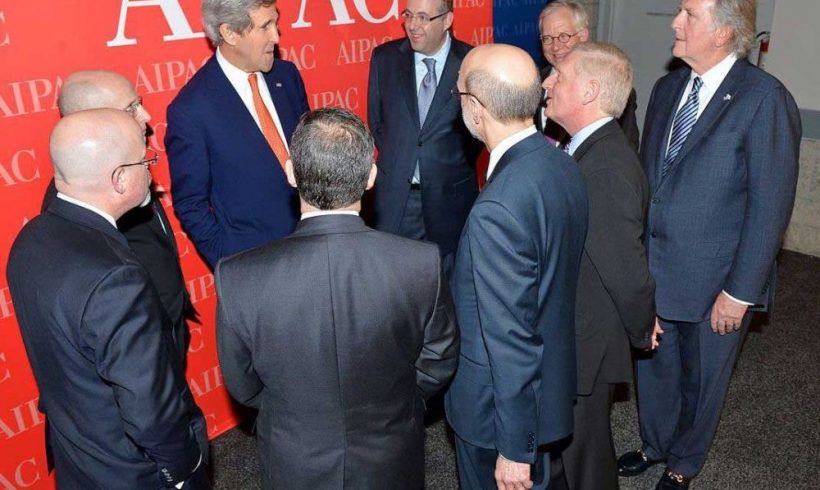
Mueller’s indictment specifically claimed that the Russians created false US personas while also stealing actual identities. But the Russians are being accused of involvement in activity that Israel engages in openly. It has interfered in US elections, to include promoting Mitt Romney over Barack Obama in 2012, and has a powerful and well-funded lobby in AIPAC that intervenes aggressively in American foreign and domestic policy. And the Israeli government’s propaganda arm uses its hasbara to use false internet identities to confuse and deflect critical stories. They do so routinely and do not even try to hide what they are doing. Part of their agenda is to smear critics and elect politicians favorable to them.
So, when will Mueller and the several congressional committees that are investigating the Russians move on to the topic of Israel and Saudi Arabia to find out what really effective foreign influencing operations looks like? Given the power of Israel and the Saudis over Congress, probably never.
Iran’s President Sheikh Hassan Rouhani reiterated the necessity of respecting Syria’s sovereignty and territorial integrity, underlining the need to restore security and stability to it as soon as possible and provide appropriate conditions that will enable all Syrian displaced people to return home.
Rouhani’s remark came during a phone call with his Turkish counterpart Recep Tayyip Erdogan on Monday.
The Iranian President added that talks between the leaders and officials of Iran, Russia and Turkey in Astana and Sochi have been promising in terms of enhancing security and stability in Syria.
He stressed that this constructive track should be further reinforced through the continuous consultations among the heads of the three states.
Rouhani said that fighting terrorism, cleansing Syria of terrorist organizations and countering separatist attempts in the region are among the common objectives of Iran and Turkey, adding that “We should not allow terrorist groups to regain strength and return again to the region.”
He pointed out to the US-Zionist conspiracies against the countries of the region, noting that Iran and Turkey have common objectives regarding the regional and international issues.
The Iranian President called for consolidating cooperation in line with implementing the decisions reached in Astana.
Over the past few days, a controversy has been in raging over what exactly happened near Deir ez-Zor in eastern Syria.
To hear the US tell it, “pro-regime” forces launched an “unprovoked attack” on a “well-established” headquarters of the “Syrian Democratic Forces” (SDF), among whom were US personnel. (One denizen of the fever swamps assures us the attack was for the purpose of killing Americans and was approved personally by Russian President Vladimir Putin!) So, naturally, in “self-defense,” American planes and artillery struck the “advancing aggressor force,” killing dozens, perhaps hundreds, of Russian “mercenaries.”
To hear Russia and pro-Russian sources tell it, Syrian government and pro-government militia were fighting off an SDF and ISIS joint attack when they were hit by American air power, killing an unknown number of Syrians and perhaps five Russian private military contractors. Reports of higher numbers are “a classic example of disinformation,” according to Moscow, and were first peddled by sources close to anti-government jihadists, then picked up by Western media.
Whatever the real story is, one thing is clear: the US is hunkering down in Syria to stay.
The question is, why?
It isn’t to defeat ISIS, the destruction of which was the sole reason the US needed to be involved in Syria, then-candidate Donald Trump said during the 2016 campaign. Even that mission would not make the presence of American forces there legal, but at least it’s some kind of explanation.
But is President Trump even calling the shots? There’s reason to think not. As related in the Washington Post (that very ‘truthful’ mainstream outlet, so you know it’s not fake news), the following exchange took place between Trump and Defense Secretary James Mattis:
Last summer, Trump was weighing plans to send more soldiers to Afghanistan and was contemplating the military’s request for more-aggressive measures to target Islamic State (IS, formerly ISIS) affiliates in North Africa. In a meeting with his top national security aides, the president grew frustrated.
“You guys want me to send troops everywhere,” Trump said, according to officials in the Situation Room meeting. “What’s the justification?”
“Sir, we’re doing it to prevent a bomb from going off in Times Square,” Mattis replied.
The response angered Trump, who insisted that Mattis could make the same argument about almost any country on the planet.
That was about Afghanistan, where Trump stifled what he admits was his own instinct to get out and instead allowed the “professionals” to talk him into doubling down on the same policy that has failed for the past 17 years.
It seems that Syria fits the same pattern. The permanence of the intended US presence in Syria was signaled recently by Secretary of State Rex Tillerson. Speaking at a meeting in Kuwait at a meeting of the global coalition fighting against ISIS – a coalition that includes neither Russia, nor Iran, nor Syria itself! – Tillerson pledged $200 million for aid in rebuilding Syria as well as aid for Iraq. “If communities in Iraq and Syria cannot return to normal life, we risk the return of conditions that allowed ISIS to take and control vast territory,” said Tillerson. (The State Department’s resident News Barbie tweeted recently: “The U.S. is the # 1 contributor to humanitarian aid in #Iraq, the # 1 contributor in stabilization assistance, and the # 1 contributor in military support.”)
Evidently, it’s only nation-building at home that isn’t a priority. Some America First!
There are a couple of catches to promises of all this largesse, though. First, Tillerson is promising only loan guarantees, not direct aid. Second and more importantly, there’s no indication that any aid would be available to areas liberated from ISIS and other, mainly Al-Qaeda linked jihadist groups, by the Syrian Army and its allies. Quite to the contrary, government-held areas are under crushing sanctions, which Tillerson gave no indication of relaxing. We mustn’t forget: Assad must go!
In Syria, as in Afghanistan, Trump has become a hostage to the very policies he denounced during the campaign. We can speculate as to why that is, but there’s no doubt that it is the case. For whatever reason, Trump is now the hostage to the globalists and generals with whom he has surrounded himself.
The looming big question is how bad it will get. The probable answer: a lot worse.
That’s even though Mattis recently admitted that the US has no evidence of chemical weapons use by the Syrian government. Does that mean there will be a US apology for the cruise missile strike on a Syrian air base in April 2017? Of course not.
But just a few days earlier, Mattis had warned of stern consequences against Damascus, telling the Syrians “they’d be ill-advised to go back to violating the chemical convention.” Did he only find out the Syrians maybe hadn’t used them after issuing his warning? Did he rescind his threat on making that discovery? Of course not.
Mattis went further, not only warning against use of chemical weapons but specifically against sarin:
Q: Can I ask a quick follow up, just a clarification on what you’d said earlier about Syria and sarin gas?… Just make sure I heard you correctly, you’re saying you think it’s likely they have used it and you’re looking for the evidence? Is that what you said?
SEC. MATTIS: That’s – we think that they did not carry out what they said they would do back when – in the previous administration, when they were caught using it. Obviously they didn’t, cause they used it again during our administration. [ . . . ]
Q: So there’s credible evidence out there that both sarin and chlorine…
SEC. MATTIS: No, I have not got the evidence, not specifically. I don’t have the evidence. What I’m saying is that other – that groups on the ground, NGOs, fighters on the ground have said that sarin has been used. So we are looking for evidence. I don’t have evidence, credible or uncredible.
Bottom line: Mattis admits he has no evidence – “credible or uncredible” – that the Syrians have in the past used sarin or any other chemical weapon but still insists “they were caught using it” during the previous administration – and threatens “they’d be ill-advised to go back” and do it again! (One is reminded of Bill Clinton’s Secretary of State Madeleine Albright and her stunning non-sequitur following a 1996 marketplace bombing in Sarajevo: “It’s very hard to believe any country would do this to their own people, and therefore, although we do not exactly know what the facts are, it would seem to us that the Serbs are the ones that probably have a great deal of responsibility.” Shortly thereafter, NATO bombed the Serbs.)
The only way Mattis’ contradictory comments can be read is as an open invitation for the jihadists fighting the Syrian government to stage yet another false flag chemical attack – and make sure this time it’s sarin, not mere chlorine. Washington has already decided where the blame will be placed.
How this fits into any rational policy, much less the one Trump ran on, it anyone’s guess. Some suggest the real goal is chaos itself. It’s easier to wreck a nation than to build one. Any fool can figure out how to turn an aquarium into fish soup. No one has yet figured out how to reverse the process.
Jim Jatras is a former US diplomat (with service in the Office of Soviet Union Affairs during the Reagan administration) and was for many years a senior foreign policy adviser to the US Senate Republican leadership.
On February 17 it will be 7 years since the start of the events in Libya which led to the overthrow of its leader – Muammar Gaddafi. These years have been full of dramatic and often bloody events, which, according to a number of different indices (effective sovereignty, stability, commercial activity etc.), have left the country much worse off.
Since 2014 the country has been in chaotic situation- divided into two sectors, with opposing capitals in Tripoli and Tobruk, each of which have their own government, parliament, and security services. The balance of power between them is changing.
In the last year the area controlled by the National Army, led by Marshal Khalifa Haftar (i.e. the eastern, or Tobruk, sector) has expanded. That sector includes the ‘oil crescent’ (the oil wells and the main ports for oil exports). The Government of National Accord, headed by Fayez al-Sarraj, has an unsteady hold over the country.
For three years the United Nations and a number of neighboring Arab countries have tried, without success, to persuade the two opposing parties to comply with the peace agreement that they signed in Morocco (which called for the creation of unified national transitional state structures, elections to the new parliament etc.) The Shkirat Agreement expired at the end of 2017.
Many experts consider that the negotiators meeting to discuss issues arising from the treaty lack the authority to make any decisions, and the military groups who they represent are heterogenous, each split into a number of camps, divided along regional and tribal lines.
To save the negotiating process, the UN special representative for Libya, Hasan Salam has presented a three-stage plan for the next year. He proposed that the Shkirat Agreement be amended, the Tripoli-based government be restructured, a constitution be drawn up and elections be held in the new parliament.
The question is, how can fair, impartial and democratic elections be held, when there are two governments? And how important are elections to the average Libyan, living in a delicate security situation and suffering from disorder and social and economic problems?
The falling value of the Libyan dinar and annual inflation of 30% are causing a fall in his standard of living. Before the revolution a dinar could be exchanged for three dollars and at its highest level Libyans looked down on the ‘green dollar’ with contempt. Now one dollar can be exchanged in the market for 9 Libyan dinars.
This is genuinely resulting in an increase in prices, as the majority of goods, especially food, are imported. Libyans are faced with the curse of cash shortages, queues in banks, power cuts, deteriorating services etc.
All these problems are the result of the collapse of Libya’s economy and manufacturing sector. According to Mustafa Sanalla, the president of the National Oil Corporation, Libya has lost $180 billion since 2011 because of the actions of various militias in the regions where oil is extracted, refined and transported.
In 2017 Libya received $14 billion from oil sales, three times more than in the previous year. But in 2010, the year before the revolution, oil exports brought approximately $47 billion into the national budget. It is true that recently the amount of ‘black gold’ extracted has increased to 1 million barrels a day, but this is still below the pre-revolution level of 1.6 million barrels a day.
Out of the 150 countries listed in Forbes Magazine’s rating of the ‘Best Countries for Foreign Business’, Libya occupies the last but one position.
As a result of the above situation, people’s attitudes towards the ideals of the February revolution are changing. Today, in Libya’s political and media circles, a clear divide is being observed between so-called ‘Februarists’ and ‘Septemberists’.
The ‘Februarists’ are those who fully support the February 17 revolution, and are convinced that the ‘rebels against a despotic regime’ won a just victory.
Those who support the former Gaddafi regime are known as ‘Septemberists’, as it was the September Revolution that brought Gaddafi to power. The latter camp, shaking their heads in wonder, ask themselves whether it was worth shedding so much blood, losing lives and suffering a huge material loss, merely to end up in Libya’s current fragmented state.
Both of these schools of thought have their own liberal, Islamist, and secular factions. That is why many local political analysts are urging them to find common points of agreement, steer clear of extreme positions, and put the interests of their country above their own selfish political calculations and concerns.
For example, Fatima Hamroush a former minister in Libya’s first post-revolution government, called for the creation of an emergency cabinet made up of politicians with a wide range of affiliations, including former associates of Gaddafi (). That is despite the fact that Dr. Hamroush was at one time a fierce critic of the previous regime.
It appears possible that a political consensus, arrived at in accordance with the law, might be able to fill the current institutional vacuum. But Libyan society is still divided by the powerful shocks it suffered in a war involving NATO and other foreign powers, and during the period of sectarian conflict which followed.
Political circles are pulled apart by disagreement, and are kept hostage by mutual resentments, suspicions and hostilities that have built up over a number of years.
Yury Zinin, Leading Research Fellow at the Moscow State Institute of International Relations (MGIMO).
A senior Iranian official says the resistance front in the region will push the United States and Israel out of the eastern side of the Euphrates River, which flows from Turkey through Syria and into Iraq.
Ali Akbar Velayati, a senior advisor to Leader of the Islamic Revolution Ayatollah Seyyed Ali Khamenei on international affairs, made the remarks in a conference on Islamic unity in the Iraqi capital, Baghdad, on Saturday.
Velayati said the Americans and Arabs are trying to create “a new Middle East, whose reality will be marked by the disintegration of Muslim societies.”
He said Washington was seeking to split Syria through its presence in the eastern Euphrates.
He also referred to US Secretary of State Rex Tillerson’s recent Middle East tour, saying the visit had been aimed at broadening the division among the Muslim Ummah and Muslim countries.
Velayati said the Americans were seeking to establish bases for the North Atlantic Treaty Organization (NATO) with the help of Muslim states to prevent unity among these countries.
“The Americans and Zionists should know that as they were defeated in the Lebanon, Syria, and Iraq, their illusions won’t materialize. The resistance front in Iraq, Syria, and Lebanon will push them out of the eastern Euphrates,” he said.
Much of northeast Syria to the east of the Euphrates is controlled by the so-called Syrian Democratic Forces (SDF), which is dominated by the militants from the Kurdish People’s Protection Units (YPG) and is backed by the US.
The US announced last month that it would work with the SDF to set up a new 30,000-strong “border security” force along the Turkish border with Iraq and within Syria along the Euphrates River.
The stakes couldn’t be higher. And it is happening in Syria. The goal of destroying the Islamic State is largely complete. Now the Syrian proxy war is entering a new stage. Who are the players and what are their aims? And what does winning mean?
CrossTalking with Abdel Bari Atwan, Marwa Osman, and Mohammad Marandi.
French President Emmanuel Macron has said he would order airstrikes against Syria if the rumors that its government has used chemical weapons (CW) against civilians are confirmed. Never backed up with any solid evidence, such reports crop up from time to time in the Western media. In some cases the Organization for the Prohibition of Chemical Weapons (OPCW) has claimed that the traces actually led to the rebels, not the Syrian government. More of the CW stories have been published recently. Why now? A bit of background information can offer some clues.
The situation in Syria has been greatly aggravated. France is not the only actor threatening an incursion. Israel has just attacked some sites in Syria, as well as what it called “Iranian forces in Syria” and said that it would not hesitate to do so again. It hit an Iranian drone and lost an F-16 fighter. A direct confrontation between Israel and Iran is highly likely. Israel has beefed up its defenses at the Syrian border.
The Trump administration, which has taken a hard line on Iran, strongly supports Israel. It says the US will not allow Iran to entrench itself in Syria so close to Israel’s border. A conflict between Israel and Iran will jeopardize US forces all over the Middle East. Iran’s mobile missiles have a range of 2,000 kilometers (1,200 miles), which puts every American base in the region within their reach, including the ones in Qatar, Kuwait, the UAE, and the US Fifth Fleet based in Bahrain. A strike range like that is enough to make the US outposts in Syria and Afghanistan vulnerable as well. Israel is also within the missiles’ reach. Iran’s ballistic missiles are not covered by the 2015 “nuclear deal,” but nonetheless the US has slapped sanctions against Tehran because of its missile program.
Tensions have been cranked up during a time when Russia and its partners in Syria – Turkey and Iran – are making major diplomatic advances. The Syrian National Congress, held in Sochi on Jan. 30, brought together more than 1,500 Syrians to kick-start the national dialog. This new forum has every chance of becoming a platform to unite all those who are taking part in the negotiations in Geneva and Astana. The UN Special Envoy for Syria Staffan De Mistura gave due credit to the event.
On Feb. 15, Russian President Vladimir Putin held talks with King Abdullah II of Jordan. The two leaders discussed a number of issues in private. The prospects for a peaceful settlement of the Syrian crisis topped the agenda. In an interview with the Russian government-owned daily newspaper Rossiyskaya Gazeta, the Jordanian king called President Putin his brother.
Palestinian President Mahmoud Abbas visited Moscow on Feb. 12. It was a landmark visit reflecting a major shift from the US to Russia as the chief mediator between Palestine and Israel. The Palestinian leader ousted America from this role after President Trump’s Dec. 6, 2017 announcement of US recognition of Jerusalem as Israel’s capital. That decision significantly undermined US credibility in the Middle East. Impressed with Russia’s diplomatic efforts to overhaul the Syrian peace process, Mahmoud Abbas asked Moscow to organize an international peace conference to settle the Palestinian-Israeli conflict.
If Moscow accepts the offered role and manages to make some progress, its influence in the region will skyrocket, dwarfing that of the United States, which has already seen its stature diminished after its failures in Iraq, Afghanistan, and other places. Unlike Moscow, Washington can offer no alternative to the work being done in Astana and Sochi. Its contribution to the stymied Geneva talks has been modest at best. The humiliation of the US over its Jerusalem policy at the United Nations General Assembly put a spotlight on Washington’s waning clout.
The illegal presence of the US in Syria has become more complicated and fraught with many dangers. The need to fight the Islamic State became a flimsy pretext after the jihadist group’s defeat. Now the alleged threat coming from Iran is being used to justify US military operations in a faraway country. America is sparing no effort to try to bring back the days when it was the only dominant power in the Middle East. One way to do that is to lead the anti-Iran coalition. The best place to confront Iran and start rolling back its influence is in Syria. France is ready to join Washington in a pinch. Inflaming the Israeli-Iranian standoff serves that purpose, but the main obstacle there is the peace process Russia is spearheading. And the harder Russia works, the more artificially created situations spring up to thwart the achievement of that noble goal.
By Mazin Qumsiyeh | Popular Resistance | August 18, 2013
There is no way to say this truth nicely: Politicians lie. That includes Japanese, American, Egyptian, Israeli, and Palestinian politicians! Is there something more common sense than that? Yet, so many citizens around the world believe their own politicians or wistfully acknowledge lies but think it is part of the job needed to run things. They believe even when politicians contradict themselves blatantly. This phenomenon is rather remarkable. It is a dissonance and disconnect from reality that many seem oblivious to. It is very dangerous because it can lead to accepting rationales for going to war. These can be deadly wars that lead to millions of lives lost as happened in what was called World War 1 and WW2. Even when incredible and declassified evidence abound, politicians continue to lie and old mythologies refuse to die. Here are just a few of the countless lies told to us over the past few decades… continue
This site is provided as a research and reference tool. Although we make every reasonable effort to ensure that the information and data provided at this site are useful, accurate, and current, we cannot guarantee that the information and data provided here will be error-free. By using this site, you assume all responsibility for and risk arising from your use of and reliance upon the contents of this site.
This site and the information available through it do not, and are not intended to constitute legal advice. Should you require legal advice, you should consult your own attorney.
Nothing within this site or linked to by this site constitutes investment advice or medical advice.
Materials accessible from or added to this site by third parties, such as comments posted, are strictly the responsibility of the third party who added such materials or made them accessible and we neither endorse nor undertake to control, monitor, edit or assume responsibility for any such third-party material.
The posting of stories, commentaries, reports, documents and links (embedded or otherwise) on this site does not in any way, shape or form, implied or otherwise, necessarily express or suggest endorsement or support of any of such posted material or parts therein.
The word “alleged” is deemed to occur before the word “fraud.” Since the rule of law still applies. To peasants, at least.
Fair Use
This site contains copyrighted material the use of which has not always been specifically authorized by the copyright owner. We are making such material available in our efforts to advance understanding of environmental, political, human rights, economic, democracy, scientific, and social justice issues, etc. We believe this constitutes a ‘fair use’ of any such copyrighted material as provided for in section 107 of the US Copyright Law. In accordance with Title 17 U.S.C. Section 107, the material on this site is distributed without profit to those who have expressed a prior interest in receiving the included information for research and educational purposes. For more info go to: http://www.law.cornell.edu/uscode/17/107.shtml. If you wish to use copyrighted material from this site for purposes of your own that go beyond ‘fair use’, you must obtain permission from the copyright owner.
DMCA Contact
This is information for anyone that wishes to challenge our “fair use” of copyrighted material.
If you are a legal copyright holder or a designated agent for such and you believe that content residing on or accessible through our website infringes a copyright and falls outside the boundaries of “Fair Use”, please send a notice of infringement by contacting atheonews@gmail.com.
We will respond and take necessary action immediately.
If notice is given of an alleged copyright violation we will act expeditiously to remove or disable access to the material(s) in question.
All 3rd party material posted on this website is copyright the respective owners / authors. Aletho News makes no claim of copyright on such material.

 Aletho News
