Neocon Max Boot now says it’s better for the Syrian people if Assad stays in power. But we still can’t get the American left to come to its senses about Syria.
Louis Proyect says in Counterpunch that the suffering coming out of East Ghouta is “on a massive scale reminiscent of Leningrad in 1941.”
According to Wiki, a million and a half people died during the Leningrad siege. According to the authoritative-sounding Syrian Observatory for Human Rights — one anti-Assad guy in a Coventry flat, relying mostly on reports from anti-Assad fighters — 1,000 people have been killed in East Ghouta, horrible to be sure but not Leningrad. In Leningrad, people were reduced to cannibalism. There was cannibalism in Syria in 2013: a commander for the left’s beloved Free Syrian Army cut the lungs out of a Syrian Army soldier and ate them on camera. A “moderate” rebel eminently worthy of CIA dollars — and spicy recipes.
While bringing up Lou-dicrous comparisons to 1941 Leningrad, Proyect fails to mention the US-destroyed Raqqa and Mosul from which dead bodies are still being found and dragged out of the rubble. Rest assured that the Great Satan will not rebuild those cities as Assad is doing with Palmyra and Aleppo. To the colonized mind of the American left, the crimes of America’s enemies are always worse and more worth talking about than the crimes of America itself. US airstrikes were responsible for most of the 40,000 dead civilians in Mosul and over 3,000 in Raqqa.
By the way, two thirds of the casualties in Syria have been Syrian soldiers and anti-government fighters. The anti-Assad left and the mockingbird media would have us believe that all 345,000 Syrian deaths have been civilians who Assad and Putin deliberately, personally and exclusively killed. The pressitutes tell us how unpopular the Alawite Assad is while the entire world sees a Sunni majority army fighting to the death for him and the rest of Syria by killing off Wahhabist Sunni fanatics. Huh? (Syria has never been a “civil war” or a “sectarian conflict” — it’s been a pre-planned destruction led by the US, piggy-backing on legitimate grievances of the Syrian working class.)
Interestingly, the anti-Assad left never tells us the names of the armed opposition groups that it supports. Why? Is it because they are al-Qaeda offshoots? Is it because they are so tiny and few in number that they are inconsequential and/or the Syrian working class majority don’t support them? Is it because they collaborated with the most regressive fundamentalist groups and/or got wiped out by them? The anti-Assad left seems to live in an ivory tower that got destroyed somewhere around 2012 — they never say what should be done now.
Then Proyect makes a false equivalency between Israel bombing Gaza in response to Hamas’ largely ineffectual rockets and the Syrian government bombing terrorists in East Ghouta who have been shelling Damascus for years with howitzers, mortars and GRAD rockets, killing and wounding thousands of civilians. Gazans are occupied and have legitimate rights under international law to resist, including violently.
Proyect quotes Counterpunch’s Jeffrey St. Clair that aerial bombing of cities is a war crime. I couldn’t agree more and I’ll raise you an aerial bombing of jungles also. And I think shooting a barrage of GRAD rockets into downtown Damascus is a war crime too. (What parts of war aren’t a crime?) So, where does that put us? It puts “us” safely and snugly in the belly of the beast. It puts the Syrian working class majority wanting its government to protect them from a minority of al-Qaeda metastases, funded and armed by the most reactionary regimes on earth, trying to win violently what they can’t win intellectually, socially or politically. The left just won’t cut its intellectual (“moderate” rebels) or political (Russia-gate) losses. And isn’t it interesting how so much of what the left does is in harmony with what the Pentagon, the CIA and the empire wants.
And since Proyect brought up Gaza and the Palestinians… It was the Palestinian Liwaa al-Quds force who stormed the al-Shaaher roundabout in Aleppo on September 24, 2016 which liberated the Handaraat Camp which turned around the battle for Aleppo which turned around the fight for Syria which is turning the American empire upside down with indispensable help from Russia and Iran. On that memorable September day eastern Aleppo residents were cheering on Liwwa al-Quds, Hezbollah and the Syrian Arab Army as they hunted down and killed the members of the CIA-funded Nour al-Din al-Zenki who beheaded the 12-year-old Palestinian boy on film. The Syrian working class doesn’t actually like the 31 flavors of takfiri terrorists that some western leftists find so sweet.
In fact, during the December 2016 liberation of Aleppo, Syrians who lived for years under the rule of the fanatics were outraged that the Syrian army put the terrorists on buses to Idlib instead of killing them outright. A day later it was discovered that, just before they surrendered, the terrorists had summarily executed over 100 hostages and prisoners in basement prisons, including many Syrian soldiers.
Then Proyect attempts to make a case for the fanatics in East Ghouta by contrasting their poverty-stricken area with wealthier Damascus. A splendid insight. Now, how about you leading the charge of South Central against Beverly Hills? Oh, that’s right — the impotent defeated American left has been on the run for 40 years and can only mind the business of the Assads, Saddams, Gadaffis and the ayatollahs — all Israeli enemies and sitting atop large energy resources [allowing economically viable resistance] — while “our” own government remains the chief engine of destruction in the world. Blessedly, the brown working classes of the world don’t give a flying fuck about what white western leftists think because they know they aren’t going to get any help from us. We’re irrelevant. Ask a Yemeni, ask a Honduran, ask a Congolese.
Christmas and New Years have been celebrated for the last two years in Aleppo and some semblance of normalcy is returning. Right now, in liberated areas of East Ghouta, people are welcoming the return of the Syrian Arab Army and telling the media how they’ve been used as human shields. In non-liberated areas, civilians are demonstrating against the terrorists and negotiating with them to leave. As with Aleppo in 2016, people in East Ghouta have been telling the SAA the locations of terrorist commanders, ammo dumps, jails and headquarters. Also, as with Aleppo, terrorists are sniping and shelling humanitarian corridors so civilians have difficulty leaving. There are also now civilians rallying in Raqqa for the occupying American monster to GTFO.
The future of the world is being fought for in Syria — that’s why the propaganda of the mockingbird media has been unrelenting in its lies, hypocrisy, hysteria and demonization for seven years. Tel Aviv and Riyadh are going crazy and they are making sure Mordor-on-the-Potomac goes crazy with them. Putin is killing off America’s regime-changing terrorist mercenary army although, characteristically, he’s been too slow and cautious and Daesh has now set up shop in Afghanistan to harass, delay and destroy China’s Belt and Road Initiative. Assad and Putin are bringing a horrible end to the carnage in Syria as opposed to the Saudi, Israeli and US-preferred endless horror.
One last thing. People have not been paying proper attention to the written transcript of several lines toward the end of Putin’s March 1st address to the Russian Federal Assembly: “I should note that our military doctrine says Russia reserves the right to use nuclear weapons solely in response to a nuclear attack, or an attack with other weapons of mass destruction against the country or its allies, or an act of aggression against us with the use of conventional weapons that threatens the very existence of the state. This all is very clear and specific. As such, I see it as my duty to announce the following. Any use of nuclear weapons against Russia or its allies, weapons of short, medium or any range at all, will be considered as a nuclear attack on this country. Retaliation will be immediate, with all the attendant consequences.”
An attack with other weapons of mass destruction against Russia or its “allies.” Who does Russia consider allies? China, Iran, Syria, North Korea, Venezuela? Turkey? The Donbass? Did Putin just tell the criminal neocon filth who rule America to never attack Iran and North Korea — or ever attack the Syrian government again? No sane person in the world should test that out. Perhaps the previously mentioned neocon Max Boot is one of the first to “listen.”
The last time no one paid careful attention to Putin was his September 28, 2015 address to the United Nations where he condemned the US use of terrorists to further its regime change operations throughout the world, saying “We can no longer tolerate the current state of affairs in the world.” Two days later Russia began bombing hundreds of ISIS oil tankers in Syria that US satellite surveillance had been contentedly watching grow for years. Wake up, Americans. “Retaliation will be immediate, with all the attendant consequences.” The three horses’ asses of the apocalypse — Trump, Satanyahoo and Saudi Clown Prince Mohammad bin Salman — are leading the world to disaster.
During an interview with the television and radio company of Kazakhstan’s President, Russian Foreign Minister Sergei Lavrov has commented on a wide range of issues: from the situation in Syria to Skripal’s poisoning and beyond.
While stressing that the level of violence in Syria has significantly decreased, the foreign minister emphasized that “the process of deescalation in Eastern Ghouta could start only if militants stopped shelling Damascus.”
“This process has not been underway for a very long time, now there seems to be some hope that these armed formations will separate from Jabhat al-Nusra, ” Lavrov said.
According to Lavrov, “any plans on Syria’s partitions should be abandoned.”
“I do not think that we should even talk about a potential partition of Syria, but it is our duty to demand that these plans be immediately stopped, some bear it,” the minister said in an interview with the television and radio company of the president of Kazakhstan.
The decrease of violence in the country was discussed during a ministerial meeting on Syria between foreign ministers of Russia, Iran and Turkey as part of the Astana reconciliation process.
“Those armed groups that could be a part of the negotiating process are, unfortunately, operating under the umbrella of Jabhat Fatal al Sham. They created a joint command and in fact three groups: Faylaq al-Rahman, Jaysh al-Islam and Ahrar al-Sham — became allies of Jabhat Fatal al Sham, which is designated by the UN Security Council as a terror organization,” Lavrov said, adding that the Russian servicemen were urging the three groups to distance themselves from the terrorists.
He has also condemned illegitimate presence of foreign forces in Syria, saying that it “contradicted international law and the UN Charter.”
“US, French, UK special forces are ‘on the ground’ in Syria. So it is not a ‘proxy war’ anymore, but direct engagement in the warfare,” Lavrov added.
Furthermore, the foreign minister said that Americans “plant local authorities” on the eastern shore of the Euphrates River.
“What is happening on the eastern shore of the Euphrates River, where Americans have indeed liberated vast territories from terrorists with the help of Kurds, but plant local authorities, who are intentionally isolating themselves from Damascus, and declare that they will support these authorities without any contacts with the Syrian government,” he said.
Earlier this week, the minister stated that the progress achieved at the Astana talks on Syria, including due to Russia’s efforts, was not being welcomed by those striving to divide the country into small territories under their control.
“Those who, in violation of all norms of international law, in violation of Resolution 2254, obviously seek to divide Syria, to replace the regime so that this important Middle Eastern country is replaced by small principalities, controlled by external players, certainly do not welcome what we are doing in Astana, we are trying to achieve in Astana,” Lavrov said in a welcoming speech before the talks with his Iranian and Turkish counterparts in Astana.
Since 2014, the US-led coalition has been conducting airstrikes against terrorists in Syria without any authorization from the Damascus government or a UN mandate.
UK, Russia Diplomatic Standoff Over Skripal’s Poisoning
Commenting on the resonant case of former Russian spy Sergei Skripal’s poisoning, Lavrov said that “the western propaganda becomes more brazen and primitive.”
On March 4, Sergei Skripal and his daughter Yulia were found collapsed after being exposed to a chemical substance, later identified by UK police as the military-grade nerve agent Novichok, allegedly developed in Russia. British authorities have accused Moscow of “attempted murder,” although declined Russia’s request to provide samples of the substance in question.
As a response to the alleged attack, UK Prime Minister Theresa May announced the largest expulsion of Russian diplomats from the country since the Cold War. Moscow, in turn, has declared 23 British diplomats personae non grata, with the Foreign Ministry revoking its agreement on the UK General Consulate’s operation in St. Petersburg.
Russia-US Relations
The interview has also touched upon relations between Russia and the United States, with Sergei Lavrov insisting that Russia would not sign treaty on the prohibition of nuclear weapons.
“Five official nuclear powers, as well as unofficial ones will not accept it,” he said, adding that the US plans to expand its missile defense system and the fact that the Comprehensive Nuclear-Test-Ban Treaty had not entered into force yet, “mainly due to Washington’s reluctance, influence strategic stability as much as nuclear weapons do.”
As for the role of the United States in the UN, Lavrov said that ultimatums during the Security Council’s sessions were “unacceptable.”
“When our American colleagues bring any resolution in to the UNSC, and we suggest holding talks on the matter because there are alternative views, we are being accused of blocking the proceedings, and they decide to do it solo. Immediate ultimatums, sanctions, etc are absolutely unacceptable according to the UN Charter,” he added.
Russian Foreign Minister has also commented on the statement made by the US Envoy to the UN Nikky Haley on Washington’s “readiness to strike Damascus,” calling it “absolutely irresponsible.”
“I don’t know who has empowered the US permanent representative to UN Nikky Haley to declare that the United States will be ready to bomb Damascus… […] It’s an absolutely irresponsible statement,” he concluded.
Senator Chuck Schumer (D, NY) says Tillerson’s firing indicates that the Trump administration is disintegrating. I understand why Senator Schumer sees it that way, especially following all the other dismissals and resignations.
I see it differently. The firing of Secretary of State Tillerson, the movement of CIA Director Pompeo to Secretary of State, and the promotion of Gina Haspel, who oversaw the secret CIA torture prisons in Thailand, indicate that the military/security complex has closed its grip on the Trump regime. There will be no more talk of normalizing relations with Russia.
The combination of the Israel Lobby, the neoconservatives, and the military/security complex have proven to be too powerful for peace to be established between the two nuclear powers. If you look at Trump’s administration, the above three forces are those in charge.
Israel remains determined to use the US military to destabilize Syria and Iran in order to isolate Hezbollah and cut off the milita’s support and supplies. The neoconservatives both support Israel’s interest and their own desire for Washington’s hegemony over the world. The military/security complex intends to hold on to the “Russia threat” as a justification of its budget and power.
The presstitutes are in complete harmony with the scheme. Although Russiagate has been proven to be false charges orchestrated by the DNC, FBI, and CIA, the presstitutes continue to repeat the charges as if evidence exists that proves the charges to be true. The “stolen election” is fiction turned into fact. And now we have a new charge, that Putin ordered a former British spy in England to be eliminated while sitting on a park bench with the use of a highly unlikely form of military poison. The charge is preposterous, but that is not preventing the fiction from becoming fact.
Having served in Washington for a quarter century and having known members of the British government, I do not believe that any of them believe the Russiagate and Skripal poisoning stories. What is happening is that an agenda has taken precedence over truth.
This is an extremely dangerous agenda. Russia’s new weapons easily give Russia military superiority over the US. As China and Iran see the situation similarly to the Russians, the US is greatly out-classed. Yet, Washington and its vassals persist in making violent and false charges and threats against Russia, Iran, and on occasion China. Russia, Iran, and China know that these charges are false. Confronting an endless string of false and hostile charges, they prepare for war.
The world is being driven to war, which would be nuclear, by a tiny minority: Israeli Zionists, neoconservatives, and the US military/security complex. We are witnessing the most reckless and irresponsible behavior in world history. Where are the voices against it?
Operation Juniper Cobra is not a routine exercise; it is a portent of a potentially devastating war against Syria, Hezbollah and Gaza for which Israel is actively preparing — a war likely to erupt within the coming months.
Last Sunday, the largest joint military exercise between the United States and Israel began with little fanfare. The war game, dubbed “Operation Juniper Cobra,” has been a regular occurrence for years, though it has consistently grown in size and scope. Now, however, this year’s 12-day exercise brings a portent of conflict unlike those of its predecessors.
Previous reports on the operation suggested that, like prior incarnations of the same exercise, the focus would be on improving Israeli defenses. “Juniper Cobra 2018 is another step in improving the readiness of the IDF [Israeli Defense Forces] and the IAF [Israeli Air Force] in particular to enhance their operational capabilities in facing the threat posed by high-trajectory missiles,” Brig. Gen. Zvika Haimovitch, the IDF’s Aerial Defense Division head, told the Jerusalem Post.
However, this year’s “Juniper Cobra” is unique for several reasons. The Post reported on Thursday that the drill, set to end on March 15, was not only the largest joint U.S.-Israeli air defense exercise to ever happen but it was also simulating a battle “on three fronts.” In other words, Israel and the U.S. are jointly simulating a war with Lebanon, Syria, and Palestine – namely, the Gaza strip – simultaneously.
What makes this last part so concerning are Israel’s recent statements and other preparations for war with all three nations, making “Juniper Cobra” anything but a “routine” drill. It is instead yet another preparation for a massive regional conflict, suggesting that such a conflict could be only a matter of months away.
As MintPress recently reported, Israeli officials recently told a bipartisan pair of U.S. Senators that it needed “ammunition, ammunition, ammunition” for a war against Hezbollah in Lebanon — a war that will expressly target Lebanese civilians and civilian infrastructure, such as hospitals, schools, and apartment buildings. The alleged motive for the invasion is the presence of Iranian rocket factories. However, this allegation is based solely on the claims of an anonymous deputy serving in the Iranian Revolutionary Guard and was first reported on by a Kuwaiti newspaper known to publish stories planted by the Israeli government.
In addition, Israel has been laying the groundwork for an invasion of Syria since last year and is largely responsible for the current conflict in Syria that has raged on for seven years. Israel’s current push to invade Syria is also based on flimsy evidence suggesting that Iran is establishing bases in Syria to target Israel.
Israel has also been preparing for a conflict on the embattled Gaza strip, which – owing to the effects of Israel’s illegal blockade and the devastation wrought by past wars – is set to be entirely uninhabitable by 2020. Reports have quoted officials of the Palestinian resistance group Hamas, which governs the Gaza strip, as saying that they place the chances of a new war with Israel in 2018 “at 95 percent” and that war games, like Operation Juniper Cobra, were likely to be used to plan or even initiate such a conflict. This concern was echoed by IDF Chief of Staff Gadi Eizenkot, who stated that another Israeli invasion of Gaza, home to 1.8 million people, was “likely” to occur this year. Eizenkot ironically framed the imminent invasion as a way to “prevent a humanitarian collapse” in Gaza.
U.S. lights match, prepares troops
Such a war is likely to be ignited by the unrest destined to follow the U.S.’ imminent move of its embassy from Tel Aviv to Jerusalem. The move, set to take place in May, led Hamas to call for a third intifada, or uprising, in response to the U.S.’ unilateral decision to recognize Jerusalem as the capital of Israel in defiance of the international consensus.
Beyond the fact that Israel is preparing to go to war with several countries simultaneously is the fact that U.S. ground troops are now “prepared to die for the Jewish state,” according to U.S. Third Air Force Commander Lt. Gen. Richard Clark. “We are ready to commit to the defense of Israel and anytime we get involved in a kinetic fight there is always the risk that there will be casualties. But we accept that, as in every conflict we train for and enter, there is always that possibility,” Clark told the Post.
However, more troubling than the fact that U.S. troops stand ready to die at Israel’s behest was Clark’s assertion that Haimovitch would “probably” have the last word as to whether U.S. forces would join the IDF during war time. In other words, the IDF will decide whether or not U.S. troops become embroiled in the regional war for which Israel is preparing, not the United States. Indeed, Haimovitch buoyed Clark’s words, stating that: “I am sure once the order comes we will find here U.S. troops on the ground to be part of our deployment and team to defend the state of Israel.”
Operation Juniper Cobra is not a routine exercise; it is a portent of a potentially devastating war for which Israel is actively preparing, a war likely to erupt within the coming months. In addition to overtly targeting civilians, these preparations for war — as Juniper Cobra shows — directly involve the United States military and give the war-bent Israeli government the power to decide whether or not American troops will be involved and to what extent. This is a devastating giveaway of national sovereignty by U.S. President Donald Trump.
While the potential involvement of the U.S. forces in such a war is being framed as limited in scope, there is no indication that such a war will be so in practice. Indeed, the U.S. is currently occupying 25 percent of Syria and the Trump administration has economically attacked Palestinians living in Gaza by withdrawing crucial aid, as well as Hezbollah by enforcing new sanctions against the group. Furthermore, Israel’s nuclear arsenal and the fact that Iran — and even Russia — could become involved in such a conflict means that it could quickly spiral out of control.
Whitney Webb is a staff writer for MintPress News who has written for several news organizations in both English and Spanish; her stories have been featured on ZeroHedge, the Anti-Media, and 21st Century Wire among others. She currently lives in Southern Chile.
Israel is in the process of plunging America into a war with Iran that could destroy what’s left of the Middle East and ignite a third world war, Col. Lawrence Wilkerson, former chief of staff to Secretary of State Colin Powell, warned in Washington approximately a week ago.
Wilkerson, a retired army colonel who now teaches at Washington-area universities, didn’t hold back in his critique of where the status quo is leading the United States via its client state, Israel.
At the annual Israel lobby conference at the National Press Club, sponsored by the Washington Report on Middle East Affairs and Institute for Research: Middle East Policy, Wilkerson explained that Israel is headed toward “a massive confrontation with the various powers arrayed against it, a confrontation that will suck America in and perhaps terminate the experiment that is Israel and do irreparable damage to the empire that America has become.”
One of the principal antagonists begging for a war with Iran that Wilkerson identified was none other than Avigdor Lieberman, Israel’s Russian-born Defense Minister. Wilkerson stated:
Lieberman will speak in April in New York City at the annual conference of the Jerusalem Post. The title is, ‘The New War with Iran.’ It is clear that he’s [at] the forefront of promoting this war.
And nowhere does my concern about such a war focus more acutely at the moment than Syria. As [the] president of France Emmanuel Macron described it recently, ‘The current rhetoric of the U.S., Saudi Arabia, and Israel is pushing the region toward conflict with Iran.’”
Despite Prime Minister Benjamin Netanyahu’s incessant denigrations of Iran, including claiming the greatest danger facing the Jewish state is the Islamic republic — a country he accuses of fanning the flames of anti-Semitism — Wilkerson blew these accusations out of the park using simple logic. He said:
This antisemitism bit, of course, as we’ve heard today, is almost always a weapon of choice for Israeli politicians under stress hurled, in this case, at the country whose Jewish population — by the way, the largest in the Middle East outside of Turkey and Israel — lives in Iran in reasonable peace.”
He continued:
And don’t forget that these words were uttered by the man who, as we’ve heard today, is doing everything he can to expel dark-skinned African refugees largely from Eritrea and Sudan from Israel, where most have come as legitimate refugees.”
Wilkerson highlighted the hypocrisy of Netanyahu and his cohorts in more ways than one. For example, Wilkerson referred to Netanyahu’s grandiose speech at the Munich Security Conference in which he directly challenged Iranian Minister of Foreign Affairs Mohammad Javad Zarif while holding remnants of a drone allegedly downed over Israeli airspace. Israel claimed the drone was Iranian-manufactured. Wilkerson noted that in response, Iran found itself being rescued by Lebanon’s Defense Minister, who said he had an Israeli drone over his head virtually 24 hours a day.
Further, the mainstream media and the governments that benefit from their narratives pay close to zero attention to the fact that Israel routinely violates Lebanese airspace with its sophisticated aircraft. Rather, Iran is constantly painted as the major threat and violator of international law.
“Of late of course,” Wilkerson continued, “Tel Aviv is increasingly using Iran’s presence in Syria, its support for Bashar al-Assad, and its alleged drive– and I love this one, and my military comrades love it, too– for a Shia corridor from Tehran to Aden, as the hoary beast that must not be at any cost, including of course America’s treasure and lives, as his probable cause and existential prompt for action.”
But why is there a danger that the U.S. will be dragged into this war, and why does Israel need America’s help? As Wilkerson explains:
I believe the answer is fairly clear once you push aside the cobwebs that surround it. The legitimacy of great power is what I call it. And that is precisely what Netanyahu and Lieberman desire.
“It’s also what Riyadh desires, especially with the new boy king Mohammed bin Salman, now an erstwhile ally of Israel.
“In short, the IDF could defend Israel but it could not attack Iran. Not successfully, anyway. And were it to do so, it would be damned internationally and thus isolated even more than it already is today, perhaps devastatingly so.”
Last year, a top Israeli general tasked with writing his country’s defense policy admitted that Israel cannot take on Iran’s military alone if the day should come that the regional powers face off in a direct military confrontation, saying they would need to rely on the U.S. for assistance
According to a Politico report, during the Obama years, Israel drew up a military strike option but never really used it. Deep down, Israel knew its effectiveness lied in its ability to pressure the U.S. government into taking further action of its own lest it be dragged into a catastrophic war with Iran that it may or may not be prepared to fight. From the Politico report:
They [the Israelis] ordered the Israel Defense Forces and the intelligence arms to prepare for a huge operation: an all-out air attack in the heart of Iran. Some $2 billion was spent on preparations for the attack and for what the Israelis believed would take place the day after – a counterattack either by Iranian warplanes and missiles or by its proxy in Lebanon, Hezbollah. The latter could use either the 50,000 missiles it had stockpiled (by 2018, Israeli intelligence estimated the number had increased to 100,000), or it could activate its terror cells abroad, with the assistance of Iranian intelligence, to strike at Israeli or Jewish targets. This is what it did in 1992 and 1994 when it responded to Israeli attacks in Lebanon by blowing up the Israeli embassy in Buenos Aires and the Jewish community center AMIA in that city, with a massive number of casualties in both attacks.”
The strike plan never took place, of course, but according to Politico, Prime Minister Benjamin Netanyahu continued to use it to put pressure on the U.S. government to achieve its anti-Iranian objectives. Every day, the likelihood that a war might erupt between Israel and Iran, in turn involving the United States, which has sworn to come to Israel’s defense if attacked by Iran, continues to inch that much closer to reality.
Watch | Is the US Ramping Up Its Military Presence in Syria and Planning to Attack Iran for Israel?
Lawrence Wilkerson, former chief of staff to former Secretary of State Colin Powell, and national security advisor during the Reagan administration. Wilkerson is an outspoken critic of the current US foreign policy.
Darius Shahtahmasebi is a practicing attorney with an interest in human rights, international law, and journalism. He is a graduate of the University of Otago, where he obtained degrees in Law and Japanese. Follow him on Twitter at @TVsLeaking.
The American Israel Public Affairs Committee, has just completed its annual conference in Washington. There were reportedly 18,000 attendees speakers including the Vice President, United Nations Ambassador, as well as numerous senators and congressmen. The organization is better known by its acronym AIPAC, and it has been fixture on Capitol Hill for more than sixty years. Its website proclaims “The mission of AIPAC is to strengthen, protect and promote the U.S.-Israel relationship in ways that enhance the security of the United States and Israel” because “… it is in America’s best interest to help ensure that the Jewish state is safe, strong and secure.”
In reality, the security of the U.S. part is a bit of a sham as AIPAC in no way works to strengthen the United States or benefit the American people. Quite the contrary. The bilateral “special” relationship is a one-way street that has done considerable damage to the United States in terms of its international standing and national security. AIPAC is all about Israel and always has been. Its hundreds of staffers lobby Congress and the White House daily to support legislation and policies favorable to Israel and damaging to its enemies and critics. It works closely with the Israeli government to obtain maximum benefit from the U.S. Treasury and Pentagon, to the detriment of American citizens and genuine national interests.
So why isn’t AIPAC forced to register as a foreign agent under the Foreign Agents Registration Act (FARA) of 1938? There has been only one serious attempt to register AIPAC, undertaken by President John F. Kennedy in 1963, shortly before he was assassinated. Since that time growing Jewish political and financial power in the United States has meant that no chief executive has dared to make any demands on Israel and its Lobby. On the contrary, Israel has significantly benefited materially over that time period, commensurate with its ability to manipulate or coerce the media and Congress while also intimidating a series of presidents.
FARA registration of AIPAC, currently a tax exempt 501(c)4, would require the organization to open its books to make transparent its sources of revenue. It would also be unable to contribute to political campaigns, reducing its leverage over Congress. So it is Washington’s interest to have AIPAC register, if only to limit interference in government and elections by a foreign country.
FARA should rightly be understood as a tool to punish the activities of governments that Washington does not like. In 1938, it was originally directed against the German, Italian and Japanese governments, whose front organizations were forced to register. The British, who were in fact lobbying much more heavily, were ignored. In today’s environment, Russian news outlets RT America and Sputnik were forced to register while the actions of the Israel lobby have been basically protected by its powerful advocates within the government.
So yes, AIPAC should be registered under FARA. I would even suggest that FARA be further extended to include public figures like congressmen and journalists, who basically lobby for Israel. That extension of FARA might seem overreach, but there is really no difference, legally speaking, between organizations like AIPAC that promote Israeli interests and individuals who do the same.
The recent AIPAC conference included prominent Israel-firsters, who place Israel’s interests ahead of those of the United States. Let’s start with Christian Zionist Vice President Mike Pence, who said last year that “Every freedom loving American stands with Israel because her cause is our cause, her values are our values and her fight is our fight.” Wrong Mike. Israel is a foreign theocracy that has embraced deliberate policies inclusive of war crimes and crimes against humanity. It is manifestly un-American.
And then there is UN Ambassador Nikki Haley, whose speech at AIPAC this year was, uh, memorable. It is no surprise that she is being touted by neocon commander-in-chief Bill Kristol as the future GOP candidate for president. Haley, who received twelve standing ovations from the audience plus two shout-outs of “We love you Nikki!” seemingly forgot that she represents the U.S. at the U.N. She said that “There are lots of other things that we do, big and small, week after week, to fight back against the U.N.’s Israel bullying.”
Senators Ben Cardin and Chuck Schumer also received standing ovations from the audience. Schumer, who has described himself as Israel’s “shomer” or defender in the Senate, was particularly bizarre, saying “”The fact of the matter is that too many Palestinians and too many Arabs do not want any Jewish state in the Middle East. Of course, we say it’s our land, the Torah says it, but they don’t believe in the Torah. So that’s the reason there is not peace… that is why we, in America, must stand strong with Israel through thick and thin.”
So they are all promoting Israeli policies and should be compelled to register under FARA. And if you want to know what an Israeli recruited agent of influence sounds like you need go no farther than House Democratic Whip Steny Hoyer, who addressed the AIPAC Political Leadership Conference on December 15, 2003 and said:
“I had the privilege of leading the largest congressional delegation in history to Israel in August. This was my sixth trip to Israel, and my fifth as a member of Congress… Let me say very clearly: as a member of the Democratic leadership and a long-time supporter of Israel, it is absolutely imperative that Members of Congress… recognize the moral and strategic significance of the U.S.-Israel partnership… Israel’s safety and security is not a Jewish/non-Jewish issue. It is an American national security issue.”
Steny is flat out wrong about Israel aiding U.S. national security. It is a liability and always has been, but don’t expect him to be convinced otherwise. Maybe it’s somehow related to the $304,000 in pro-Israel PAC money he has received. One thing that is undoubtedly true is that American politics will be measurably less corrupt if AIPAC, Hoyer and the rest of the congress critters are forced to register under FARA and become responsible for the damage they continue to do to the United States and the American people.
Philip M. Giraldi is a former CIA counter-terrorism specialist and military intelligence officer who served nineteen years overseas in Turkey, Italy, Germany, and Spain.
US National Security Adviser HR McMaster is reportedly down to his last few weeks in the White House, which, perhaps coincidentally, aligns with a long-standing effort by the oldest Zionist organization in the country to seek McMaster’s ouster.
“General McMaster should not maintain a position where he can continue to undermine President Trump’s policies on Iran, Israel and the fight against ‘radical Islamic terrorism’ — a term that General McMaster believes should not even be used,” the Zionist Organization of America said in a statement last fall.
The ZOA urged “Trump to remove General McMaster from his current position and reassign him to another position,” the statement reads.
The Mint Press News’ Whitney Webb reported March 6 that the organization’s “efforts to axe McMaster as national security adviser gained considerable momentum after securing the support of Zionist billionaire donor Sheldon Adelson.”
”NBC first reported not that long ago that McMaster was likely to be fired probably within the month,” Webb said during a Wednesday interview with Radio Sputnik’s Fault Lines, “and that this was being orchestrated by John Kelly and James Mattis, and that it was — allegedly, according to NBC, CNN and the mainstream outlets — related to McMaster’s personal beef with Trump.”
“McMaster allegedly called Trump an ‘idiot,'” at one point, the journalist told hosts Lee Stranahan and Garland Nixon.
“But what’s been glossed over is that there’s been this really strong effort by the Zionist Organization of America, which is funded in part by Sheldon Adelson, the big Republican Zionist billionaire donor, who has a lot of control in the Republican Party.”
”At first Adelson tried to separate himself from this [the ZOA], but then he talked to Safra Catz, CEO of Oracle — the big tech company that’s also a government contractor,” Webb noted.
“In leaked emails, Catz enlightened him as to what McMaster was really all about. And then Adelson decided, ‘oh, I emailed the Zionist Organization of America and support your efforts to have McMaster removed,'” Webb continued.
According to CNN, Catz is among those under consideration to replace McMaster as NSA.
The American Israel Public Affairs Committee (AIPAC) is back in Washington for its annual summit. Or at least it used to be called a summit but now it is referred to as a policy conference, which is perhaps a bit of very welcome transparency as if there is one thing that AIPAC is good at it is using its $100 million budget and 300 employees to harass lawmakers on Capitol Hill and generate policy for the United States to adhere to. Eighteen thousand supporters have gathered at the city’s Convention Center to hear speeches by U.N. Ambassador Nikki Haley, Ambassador to Israel David Friedman, Vice President Mike Pence, plus Senators Marco Rubio, Robert Menendez, Tom Cotton and Ben Cardin. My personal favorite is Maryland Congressman and House Minority Whip Steny Hoyer who has visited Israel so many times he might as well move there and who can be relied on to deliver a loud sucking noise as he enthuses over the many wonders of the Jewish state. And for a little foreign flair there is the disheveled French “philosopher” Bernard-Henri Levy, who has described the brutal Israeli Army of occupation as the “most moral in the world.”
If you want to get some idea of the money and political power represented at AIPAC this year I would recommend going through the speakers’ list, a dazzling display of precisely why the United States is in bondage to Israel and its interests. The heavyweight speakers and other attendees will be joined by hundreds more Congressmen, Supreme Court Justices, and senior government officials as well as a heavy dose of “experts” from the usual Jewish-dominated pro-Israel think tanks that have sprouted up like mushrooms along K Street, including luminaries like John Bolton, Victoria Nuland, Bill Kristol, Elliot Abrams and Eric Cantor. Those participants coming from the government will, of course, be ignoring their oaths of office in which they swore to uphold the Constitution of the United States against “all enemies domestic and foreign,” but it doesn’t matter as everyone performs proskynesis for Israel.
The slogan of this year’s gather is “Choose to Lead,” an interesting objective for an organization that has led successive presidents since Bill Clinton by their respective noses. Prime Minister Benjamin Netanyahu, facing indictment back home, will also be in town and will meet with President Donald Trump. He might just decide to stay awhile as one thing that Israel is particularly good at is trying, convicting and imprisoning its corrupt leaders.
There has been some informed speculation that Trump will unveil during their meeting a “two state solution” peace plan for Israel-Palestine, but as it will possibly require Israel to withdraw from much of the large chunks of the West Bank that it has “settled,” it will not be received favorably by Netanyahu. Israel is certainly vulnerable to possible pressure coming from the White House to impose a solution, but as Trump has proven unable or unwilling to punish an out-of-control Netanyahu in any way up until this point, it has to be considered unlikely that he will change course this time around.
AIPAC must be particularly pleased since Israel has had a sweet ride with the Trump Administration in place in Washington. The greatest gift to Netanyahu has been the Administration’s recognition of all of Jerusalem as Israel’s capital together with a commitment to move the U.S. Embassy to that city. No other country currently has its embassy in an internationally disputed Jerusalem though Guatemala has followed Washington’s lead and has stated that it also intends to physically move its diplomatic facility.
The original State Department relocation plan was to phase the embassy move while a new building is being constructed, but the White House recently accelerated the process, reportedly under pressure from Jewish billionaire GOP donor Sheldon Adelson, and will open a temporary facility in May to coincide with the 70th anniversary of Israel’s founding. Netanyahu has asked Trump to appear at the embassy opening ceremony and also to assist in the celebration of the founding.
Israel has also benefited from a Trump Middle East team that is all Jewish and committed to Israel. It is headed by his son-in-law Jared Kushner and includes former bankruptcy attorney Ambassador David Friedman, who has financially supported Israel’s illegal settlements, and Jason Greenblatt, the Trump Organization corporate lawyer, as Special Representative for International Negotiations. In addition, Kushner is reportedly personally advised by a group of Orthodox Jews that he knows from his Synagogue and through his business interests.
The outcome deriving from the all-Jewish team determining Middle Eastern policy combined with a benign White House is predictable, and it just as clearly does not include any benefits for the United States. Israel has been able to dramatically expand its settlements on stolen Palestinian land and is instigating several new wars in its region without any pushback coming from Washington. Quite the contrary as the United States has proven to be an enabler for new conflicts with Syria, Lebanon and Iran. Several Senators who have recently returned from Israel claim that an invasion of Lebanon is coming because of allegations that Hezbollah is constructing an Iranian-supplied factory to build sophisticated missiles, yet another phony narrative depicting Israel as the perpetual victim of its brutal and threatening neighbors when in reality the reverse is true. This animosity towards Iran and its allies is particularly dangerous as it could produce a new war that might spin dangerously out of control as third countries like Russia and China get involved to protect their own interests.
The reality is that it is a militarily dominant Israel that has been regularly bombing targets alleged to be Iranian or Hezbollah in Syria as well as Syrian military installations. It has threatened to bomb Lebanon back into the “stone age,” which leads one to ask what have those nations done to provoke the wrath of Zion? Close to nothing. An alleged Iranian drone reportedly launched from Syria wandered into the airspace over the Israeli-occupied Golan Heights before being shot down. How many Israeli drones have flown over Lebanon and Syria? Hundreds if not thousands.
And when Israeli planes flew deep into Syria to bomb what was claimed to be the base that the drone flew from, one was shot down by a Syrian air defense missile. Israel then launched a major bombing campaign against Syrian military targets and was only dissuaded from doing far, far worse by Vladimir Putin, who warned Netanyahu against broadening the conflict. Note that it was Russia that made Bibi back down, not Washington. The United States was meanwhile busy in trying to justify its continued presence in Syria, also at the urging of Israel and AIPAC.
Every American president has to bow before Jewish power in the United State and you better believe that both AIPAC and the hundreds of other Jewish and Christian-Zionist organizations that exist at least in part to nurture and protect Israel know it. Even Barack Obama, who had an openly frosty relationship with Netanyahu knew the score and gave the Jewish state $38 billion. He opposed Israel’s expansion into the formerly Palestinian West Bank but never did one thing to stop it until the end of his final term in office when he had the U.S. abstain on a U.N. vote condemning the illegal settlements, a pointless gesture.
Demands that AIPAC, an echo chamber for Israeli interests, should be required to register under the Foreign Agents Registration Act of 1938 have been ignored by various Attorneys General since the time of John F. Kennedy, who tried to get AIPAC’s predecessor organization the American Zionist Council to comply. He was killed soon after, though I am not necessarily trying to imply anything even though Jack Ruby does come to mind.
Here at home “The Lobby” has also been successful in 2017, with 23 states having now passed laws making it illegal to boycott Israel if one wishes to have dealings with the local or state government. Three months ago, the Anti-Semitism Awareness Act was approved by the House of Representatives with 402 affirmative votes and only two libertarian-leaning congressmen voting “no.” The Israel Anti-Boycott Act that is also currently making its way through a Senate committee would set a new standard for deference to Israeli interests on the part of the national government. It would criminalize any U.S. citizen “engaged in interstate or foreign commerce” who supports a boycott of Israel or who even goes about “requesting the furnishing of information” regarding it, with penalties enforced through amendments of two existing laws, the Export Administration Act of 1979 and the Export-Import Act of 1945, that include potential fines of between $250,000 and $1 million and up to 20 years in prison. According to the Jewish Telegraph Agency, the Senate bill was drafted with the assistance of AIPAC.
And there’s lots more to come in 2018. Lindsey Graham and Chris Coons were two of the senators who have just returned from the taxpayer funded “fact finding” trip to Israel and warned about a new war breaking out. And beyond that, what other “fact” did they find? Apparently that Israel needs more money from the U.S. taxpayer. Here is what was reported:
“… they considered the provision of $38 billion over 10 years, ‘a floor.’ Graham [also] said during a meeting with reporters that he thought provisions in the agreement phasing out an arrangement in which Israel could spend U.S. funds on its own defense industry and the provision of just $500 million in missile defense funding were ‘short-sighted.’ Coons said tensions in the broader region supported the idea of more funding for Israel, citing the ongoing war in Syria and Iran’s recent use of a stealth drone.”
So, we can look forward to Congress voting another half billion or so for Israel and the money can be spent on building up Israel’s own defense industry, which competes with that of the U.S. Currently most of the largess has to be spent on U.S.-made weapons, but clearly that will be changed to benefit Israel. You can always count on Congress pretending to do the right thing by the American people and it is good to know that the folks at AIPAC, gathered in their thousands this week and including both Senators Graham and Coons, are smiling.
Former CIA officer Jeffrey Sterling, left, leaves the Alexandria Federal Courthouse on Jan. 26, 2016 with his wife Holly, center, and attorney Barry Pollack. Photo: Kevin Wolf/AP
Jeffrey Sterling, the case officer for the CIA’s covert “Operation Merlin,” who was convicted in May 2015 for allegedly revealing details of that operation to James Risen of the New York Times, was released from prison in January after serving more than two years of a 42-month sentence. He had been tried and convicted on the premise that the revelation of the operation had harmed U.S. security.
The entire case against him assumed a solid intelligence case that Iran had indeed been working on a nuclear weapon that justified that covert operation.
But the accumulated evidence shows that the intelligence not only did not support the need for Operation Merlin, but that the existence of the CIA’s planned covert operation itself had a profound distorting impact on intelligence assessment of the issue. The very first U.S. national intelligence estimate on the subject in 2001 that Iran had a nuclear weapons program was the result of a heavy-handed intervention by Deputy Director for Operations James L. Pavitt that was arguably more serious than the efforts by Vice-President Dick Cheney to influence the CIA’s 2002 estimate on WMD in Iraq.
The full story of the interaction between the CIA operation and intelligence analysis, shows, moreover, that Pavitt had previously fabricated an alarmist intelligence analysis for the Clinton White House on Iran’s nuclear program in late 1999 in order to get Clinton’s approval for Operation Merlin.
Pavitt Plans Operation Merlin
The story of Operation Merlin and the suppression of crucial intelligence on Iran’s nuclear intentions cannot be understood apart from the close friendship between Pavitt and CIA Director George Tenet. Pavitt’s rise in the Operations Directorate had been so closely linked to his friendship with Tenet that the day after Tenet announced his retirement from the CIA on June 3, 2004, Pavitt announced his own retirement.
Soon after he was assigned to the CIA’s Non-Proliferation Center (NPC) in 1993 Pavitt got the idea of creating a new component within the Directorate of Operations to work solely on proliferation, as former CIA officials recounted for Valerie Plame Wilson’s memoir, Fair Game. Pavitt proposed that the new proliferation division would have the authority not only to collect intelligence but also to carry out covert operations related to proliferation, using its own clandestine case officers working under non-official cover.
Immediately after Tenet was named Deputy Director of the CIA in 1995, Pavitt got the new organization within the operations directorate called the Counter-Proliferation Division, or CPD. Pavitt immediately began the planning for a major operation targeting Iran. According to a CIA cable declassified for the Sterling trial, as early as March 1996 CPD’s “Office of Special Projects” had already devised a scheme to convey to the Iranians a copy of the Russian TBA-486 “fireset” – a system for multiple simultaneous high explosive detonations to set off a nuclear explosion. The trick was that it had built-in flaws that would make it unworkable.
A January 1997 declassified cable described a plan for using a Russian émigré’ former Soviet nuclear weapons engineer recruited in 1996 to gain “operational access” to an Iranian “target.” The cable suggested that it would be for the purpose of intelligence on the Iranian nuclear program, in the light of the fact that the agency had not issued a finding that Iran was working on nuclear weapons.
But in mid-March 1997 the language used by CPD to describe its proposed covert operation suddenly changed. Another declassified CPD cable from May 1997 said the ultimate goal was “to plant this substantial piece of deception information on the Iranian nuclear weapons program.” That shift in language apparently reflected Tenet’s realization that the CIA would need to justify the proposed covert operation to the White House, as required by legislation.
With his ambitious plan for a covert operation against Iran in his pocket, Pavitt was promoted to Associate Deputy Director of Operations in July 1997. On February 2, 1998, CPD announced to other CIA offices, according to the declassified cable, that a technical team from one of the national laboratories had finished building the detonation device that would include “multiple nested flaws,” including a “final fatal flaw” ensuring “that it will not detonate a nuclear weapon.”
An official statement from the national lab certifying that fact was a legal requirement for the CIA to obtain the official Presidential “finding” for any covert operation required by legislation passed in the wake of the Iran-Contra affair.
Pavitt obtained the letter from the national laboratory in mid-1999 a few weeks after it was announced he would be named Deputy Director of the CIA for Operations.
But that left a final political obstacle to a presidential finding: the official position of the CIA’ s Intelligence Directorate remained that Iran did not have a nuclear weapons program. The language of the CIA’s report to Congress for the first half of 1999, which was delivered to Congress in early 2000, contained formulations that showed signs of having been negotiated between those who believed Iran just have a nuclear weapons program and those who did not.
The report referred to nuclear-related projects that “will help Iran augment its nuclear technology infrastructure, which in turn would be useful in supporting nuclear weapons research and development.” The shift from “will” to “would” clearly suggested that nuclear weapons work was not yet an established fact.
A second sentence said, “expertise and technology gained, along with the commercial channels and contacts established-even from cooperation that appears strictly civilian in nature-could be used to advance Iran’s nuclear weapons research and developmental program.” That seemed to hint that maybe Iran already had such a nuclear weapons program.
That was not sufficient for Tenet and Pavitt to justify a covert nuclear weapons program involving handing over a fake nuclear detonation device. So the dynamic duo came up with another way around that obstacle. A new intelligence assessment, reported in a front page article by James Risen and Judith Miller in the New York Times on January 17, 2000, said the CIA could no longer rule out the possibility that Iran now had the capability to build a bomb – or even that it may have actually succeeded in building one.
Risen and Miller reported that Tenet had begun briefings for Clinton administration officials on the new CIA assessment in December 1999 shortly after the document was completed, citing “several U.S. officials” familiar with it. The Tenet briefings made no mention of any evidence of a bomb-making program, according to the sources cited by the Times. It was based instead on the alleged inability of U.S. intelligence to track adequately Iran’s acquisition of nuclear technology and materials from the black market.
But the new assessment had evidently not come from the Intelligence Directorate. John McLaughlin, then Deputy Director for Intelligence, said in e-mail response to a query that he did not recall the assessment. And when this writer asked him whether it was possible that he would not remember or would not have known about an intelligence assessment on such a high profile issue, McLaughlin did not respond. Pavitt and Tenet had obviously gone outside the normal procedure for an intelligence assessment in order to get around the problem of lack of support for their thesis from the analysts.
A declassified CIA cable dated November 18, 1999 instructed the Russian émigré to prepare for a possible trip to Vienna in early 2000, indicating that Tenet hoped to get the finding within a few weeks. Clinton apparently did give the necessary finding in early 2000; in the first days of March 2000 the Russian émigré dropped the falsified fireset plans into the mail chute of the Iranian mission to the United Nations in Vienna.
Pavitt’s CPD was also managing a group of covert operatives who recruited spies to provide information on weapons of mass destruction in Iran and Iraq. CPD not only controlled the targeting of the operatives working on those accounts but the distribution of their reports. CPD’s dual role thus represented a serious conflict of interest, because the CPD had a vested interest in an intelligence estimate that showed Iran had an active nuclear weapons program, and it could prevent intelligence analysts from getting information that conflicted with that interest.
That is exactly what happened in 2001. One especially valuable CPD operative, who was fluent in both Farsi and Arabic, had begun recruiting agents to provide intelligence on both Iran and Iraq since 1995. His talents had been recognized by the CPD and by higher levels of the Operations Directorate: by 2001 he had been promised an intelligence medal and a promotion to GS14 – the second highest grade level in the civil service.
But that same year the operative reported very important intelligence on the Iran nuclear issue that would have caused serious problems for Pavitt and CPD and led ultimately to his being taken out of the field and being fired.
In a November 2005 court filing in a lawsuit against Pavitt, the unnamed head of CPD and then CIA Director Porter Goss, the operative, identified only as “Doe” in court records, said that one of his most highly valued “human assets” – the CIA term for recruited spies – had given him very important intelligence in 2001. That information was the subject of three crucial lines of the key paragraph in the operative’s complaint that were redacted at the demand of the CIA. For years “Doe” sought to declassify the language of that had been redacted, but the CIA had fought it.
It was assumed in press accounts at the time that the redacted lines were related to Iraq. But the lawyer who handled the lawsuit for “Doe,” Roy Krieger, revealed to this writer in interviews that the redacted lines revealed that the CIA “human asset” in question was an Iranian, and that he had told “Doe” that the Iranian government had no intention of “weaponizing” the uranium that it was planning to enrich.
It was the first intelligence from a “highly-valued” U.S. spy – one who was known to be in a position to know he claimed to know – on Iran’s intentions regarding nuclear weapons to become available to the U.S. intelligence community. “Doe” reported what the spy had said to his supervisor at CPD, according to the court filing, and the supervisor immediately met with Pavitt and the head of CPD. After that meeting the CPD supervisor ordered “Doe” not to prepare any written report on the matter and assured him that Pavitt and the head of the CPD would personally brief President Bush on the intelligence.
But “Doe” soon learned from his own contacts at CIA headquarters that no such briefing ever took place. And “Doe” was soon instructed to terminate his relationship with the asset. After another incident involving intelligence he had reported on WMD in Iraq that had also conflicted with the line desired by the Bush administration, CIA management took “Doe” out of the field, put him in a headquarters job and denied him the intelligence medal and promotion to GS-14 that he had been promised, according to his court filing. The CIA fired “Doe” without specifying a reason in 2005.
Pavitt did not respond to requests for an interview for this story both at the Scowcroft Group and, after he retired, at his home in McLean, Virginia.
The intervention by Pavitt to prevent the intelligence from Doe’s Iranian asset from circulating within the U.S. government came as the intelligence community was working on the 2001 National Intelligence Estimate (NIE) on the Iranian nuclear program. That NIE concluded that Iran was working on a nuclear weapon, but the finding was far from being clear-cut. Paul Pillar, the CIA’s National Intelligence Officer for the Middle East and North Africa, who was involved in the 2001 NIE, recalled that the intelligence community had no direct evidence of an Iranian nuclear weapons program. “We’re talking about things that are a matter of inference, not direct evidence,” Pillar said in an interview with this writer.
Furthermore he recalls that there was a deep divide in the intelligence community between the technical analysts, who tended to believe that evidence of uranium enrichment was evidence of a weapons program, and the Iran specialists, including Pillar himself, who believed Iran had adopted a “hedging strategy” and had made no decision in favor or a nuclear weapon. The technical analysts at the CIA’s Weapons Intelligence Non-Proliferation and Arms Control (WINPAC), were given the advantage of writing the first draft not only on Iranian technical capabilities but on Iranian intentions – a subject on which it had no real expertise – as well, according to Pillar.
The introduction of the intelligence from a highly credible Iranian intelligence asset indicating no intention to convert its enriched uranium into nuclear weapons would arguably have changed the dynamic of the estimate dramatically. It would have meant that one side could cite hard intelligence from a valued source in support of its position, while the other side could cite only their own predisposition.
Pillar confirmed that no such intelligence report was made available to the analysts for the 2001 NIE. He noted just how rarely the kind of intelligence that had been obtained by “Doe” was available for an intelligence estimate. “Analysts deal with a range of stuff,” he said, “from a tidbit from technical intelligence to the goldmine well-placed source with an absolutely credible account,“ but the latter kind of intelligence “almost never comes up.”
After reading this account of the intelligence obtained by the CPD operative, Pillar said he is not in a position to judge the value of the intelligence from the Iranian asset, but that the information from the CPD Iranian asset “should have been considered by the NIE team in conjunction with other sources of information.”
That lead to a series of estimates that assumed Iran had a nuclear weapons program.
In 2004, a large cache of purported Iranian documents showing alleged Iranian research related to nuclear weapons was turned over to German intelligence, which the Bush administration claimed came from the laptop of an Iranian scientist or engineer. But former senior German Foreign Official Karsten Voigt later revealed to this writer that the whole story was a fabrication, because the documents had been given those documents by the Mujahedin-E Khalq, the Iranian opposition group that was known to have publicized anti-Iran information fed to it by Israel’s Mossad.
Those documents led directly to another CIA estimate in 2005 asserting the existence of an Iranian nuclear weapons program, which in turn paved the way for all the subsequent estimates – all of which were adopted despite the absence of new evidence of such a program. The CIA swallowed the ruse repeatedly, because it had already been manipulated by Pavitt.
Operation Merlin is the perfect example of powerful bureaucratic interests running amok and creating the intelligence necessary to justify their operations. The net result is that Jeffrey Sterling was unjustly imprisoned and that the United States has gone down a path of Iran policy that poses serious – and unnecessary – threats to American security.
Gareth Porter is an independent journalist and winner of the 2012 Gellhorn Prize for journalism. He is the author of numerous books, including Manufactured Crisis: The Untold Story of the Iran Nuclear Scare (Just World Books, 2014).
The fear mongers among the Indian elite spread a canard that India needs to be watchful of American wrath if it expands economic ties with Iran. Of course, that is plain baloney. The Modi government has announced a decision to sequester India-Iran relations from US sanctions by allowing Indian companies and entities to use the national currency. This decision coincided with President Hassan Rouhani’s recent visit and becomes a landmark event in the chronicle of India-Iran relations.
Interestingly, European countries are also moving in the same direction as India. Their plan is to offer euro-denominated credits to Iranian buyers of their goods and services, which will keep the transactions beyond the reach of any US sanctions. France has already announced its intention to offer dedicated, euro-dominated export guarantees to Iranian buyers, which dispense with any US link, whether to the dollar or otherwise.
Like India, European countries also are staunch supporters of the Iran nuclear deal. Like India, they also are on the lookout for increasing their trade with Iran. The head of France’s state-owned Public Investment Bank (Bpifrance) Nicolas Dufurcq said last week with a touch of sarcasm, “This is a completely separate flow (of money). There is no dollar in this scheme… no one holding a US passport.” (One might say about the Indian elite, perhaps – “no one holding a Green Card.”)
Dufurcq was addressing French lawmakers in Paris. He disclosed that there is a pipeline of about 1.5 billion euros in potential contracts for French exporters in the Iranian market. France used to have close business ties with Iran and French manufacturing plants are still operating in Iran. Other European countries such as Germany, Belgium, Austria and Italy are also following the French example to insulate their economic relations with Iran from US sanctions. Italy and Iran agreed recently on a framework agreement that provides Italian credit up to 5 billion euros for its companies making investments in Iran. The credit agreement is between state-owned agencies in the two countries.
Unfortunately, Indian analysts largely go by the jaundiced opinions about Iran disseminated by the US media. The stunning reality is that in the last financial year the post-sanctions Iranian economy surged by 16%. Importantly, Iran is unique among the petrodollar states of the Persian Gulf in having a concerted strategy to grow its non-oil economy. And that is where lucrative business opportunities lie for Indian trade and industry.
Of course, the stabilization of oil prices above $50 per barrel also helps boost Iran’s income. Thus, the Modi government’s plans for a huge expansion of economic relations with Iran are based on a sound assessment. This is what Professor Juan Cole, the noted American expert on the Middle East wrote in his blog Informed Comment:
US pressure on Iran is not insignificant and does slow its economic progress. But if you tallied up wins and losses, there does not seem much question that Iran is gradually winning. That progress by Tehran is because of the nuclear accord, which reassured most of the world. Tehran should stick with it.
To be sure, Iran intends to stick to the nuclear accord and keep its part of the bargain so long as the international community abides by the July 2015 agreement. Tehran places great store on the support from European countries. (Read a piece in LobLog by former British diplomat Peter Jenkins, A Nuclear Deal With Iran Remains The Least Bad Option)
Iranian foreign policy is making an historic shift in its integration with the international community. The Supreme Leader Ali Khamenei said on February 19 in a national address, “In foreign policy today, the top priorities for us include preferring East to West.” Of course, it is another side of the Iranian ideology of preserving the country’s strategic autonomy. Yet, importantly, Khamenei didn’t exclude the West.
Détente with the US was Iran’s expectation in negotiating the 2015 nuclear deal but the growing feeling is that this will not be possible so long as the Trump administration is in power. It was an historic mistake on the part of the Obama administration not to have taken the nuclear deal to its logical conclusion by removing the residual US sanctions that hamper banking ties and, secondly, by engaging Iran constructively on issues of regional security and stability. The bottom line is that Iran has a surprisingly flexible foreign policy – pragmatic to dealings with the West. It’s the Israeli lobby, stupid – in Washington and Delhi!
The United States has escalated international tensions with Iran, threatening unilateral action against the Islamic Republic on Monday after Russia vetoed a United Nations Security Council motion to call out Tehran for allowing weapons to fall into the hands of Yemen’s Houthi group.
“If Russia is going to continue to cover for Iran then the U.S. and our partners need to take action on our own. If we’re not going to get action on the council then we have to take our own actions,” said U.S. Ambassador Nikki Haley during a visit to the Honduran capital of Tegucigalpa.
Haley did not specify what type of action she meant, however the Russian veto was a big blow to the United States which has been lobbying for months to hold Iran accountable at the U.N. – while also threatening to withhold waivers on U.S. sanctions unless the “terrible flaws of the Iran nuclear deal” are fixed.
“Obviously this vote isn’t going to make the decision on the nuclear deal. What I can say is it doesn’t help,” Haley said. “That just validated a lot of what we already thought which is Iran gets a pass for its dangerous and illegal behavior.”
President Trump warned European allies in January that they would need to commit to fixing the nuclear deal by May 12.
President Donald Trump warned European allies last month that they had to commit by mid-May to work with Washington to improve the pact. Britain drafted the failed U.N. resolution in consultation with the United States and France.
The initial draft text – to renew the annual mandate of a targeted sanctions regime related to Yemen – wanted to include a condemnation of Iran for violating an arms embargo on Houthi leaders and include a council commitment to take action over it. –Reuters
Russia has questioned the findings of January U.N. report which concluded that Iran supplied the Houthi group with weapons in a proxy war between the Saudi-backed Yemeni government forces and Iranian-allied Houthi rebels in what appears to be another attempted regime change in the region.
In mid-January, Yemeni Houthi rebels claimed to have struck targets inside Saudi Arabia after launching two ballistic missiles, according to Houthi military media. Some pro-Houthi sources also reported the destruction of a Saudi military base in Najran, which lies in southwest Saudi Arabia near the border with Yemen.
Meanwhile, Saudi Arabia disputed that the missiles hit their targets, with Saudi state TV Ekhbariya reporting that Saudi missile defense has intercepted one near Jizan Regional Airport, a busy transport hub in southern Saudi Arabia, though it is unclear what happened to the reported second missile.
Following Monday’s Security Council vote, Iran’s mission to the U.N. accused the United States and Britain of abusing council privileges to “advance their political agenda and put the blame of all that happens in Yemen on Iran.”
Iran, meanwhile, has grown frustrated with what they’re getting out of the nuclear deal – with deputy foreign minister Abbas Araghchi telling a London audience last Thursday that they would likely pull out of the nuclear deal before the May 12 deadline if western banks don’t start doing business with them.
Most of it is because of this atmosphere of uncertainty which President Trump has created around JCPOA, which prevents all big companies and banks to work with Iran, it’s a fact, and it’s a violation lead by the United States. -Abbas Araghchi
Araghchi also criticized President Trump for his increasing rhetoric over the nuclear deal:
You know, every time President Trump makes a public statement against JCPOA saying it’s a bad deal, it’s the worst deal ever, I am going to fix it, I am going to change it, all these statements, public statements are a violation of the deal. Violation of the letter of the deal, not a sprit, the letter. If you just see paragraph 28 it clearly says that all JCPOA participants should refrain from anything which undermines successful implementation of JCPOA, including in their public statements of silly officials.
“If the same policy of confusion and uncertainties about the (deal) continues, if companies and banks are not working with Iran, we cannot remain in a deal that has no benefit for us,” Araqchi told an audience at the London-based think tank Chatham House. “That’s a fact.”
[This article is an edited and expanded version of a memorandum that I prepared for Veteran Intelligence Professionals for Sanity which has been released separately on Consortium News ].
The deluge of recent reporting regarding possible conflict with nuclear armed North Korea has somewhat obscured consideration of the much higher probability that Israel or even Saudi Arabia will take steps that will lead to a war with Iran that will inevitably draw the United States in. Israel is particularly inclined to move aggressively, with potentially serious consequences for the U.S., in the wake of the recent incident involving an alleged Iranian drone and the shooting down of an Israeli aircraft. Prime Minister Benjamin Netanyahu has been repeatedly warning about the alleged threat along his northern border and has pledged that Israel will not be in any way restrained if there are any hostile moves directed against it. The Israeli Transportation Minister Ysrael Katz has warned that Lebanon will be blasted back into the “stone age.”
There is also considerable anti-Iran rhetoric currently coming from sources in the United States, which might well be designed to prepare the American people for a transition from a cold war type situation to a new hot war involving U.S. forces. The growing hostility towards Iran is coming out of both the Donald Trump Administration and from the governments of Israel and Saudi Arabia. National Security Adviser H.R. McMaster is warning that the “time to act is now” to thwart Iran’s allegedly aggressive regional ambitions while U.S. United Nations Ambassador Nikki Haley sees a “wake-up” call in the recent shooting incident involving Syria and Israel. The hostility emanating from Washington is increasing in spite of the fact that the developments in the region impact on vital U.S. national interests, nor is Iran anything like an existential threat to the United States that would mandate sustained military action.
Iran’s alleged desire to stitch together a sphere of influence consisting of an arc of allied nations and proxy forces running from its western borders to the Mediterranean Sea has been frequently cited as justification for a more assertive policy against Tehran, but that concern is certainly greatly exaggerated. Iran, with a population of more than 80 million, is, to be sure, a major regional power but militarily, economically and politically it is highly vulnerable. Its economy is struggling and there is a small but growing protest movement regarding the choices being made for government spending.
Iran’s Revolutionary Guard is well armed and trained, but much of its “boots on the ground” force consists of militiamen of variable quality. Its Air Force is a “shadow” of what existed under the Shah and is significantly outgunned by its rivals in the Persian Gulf, not to mention Israel. Its navy is only “green water” capable in that it consists largely of smaller vessels responsible for coastal defense supplemented by swarms of Revolutionary Guard speedboats.
When Napoleon had conquered much of continental Europe and was contemplating invading Britain in 1804 it was widely believed that England was helpless before him. But Admiral Earl St Vincent was nonplussed. He said at the time: “I do not say the French can’t come, I only say they can’t come by sea.” In a similar fashion, Iran’s apparent threat to its neighbors is in reality decisively limited by its inability to project power across the water or through the air against other states in the region that have marked superiority in both respects.
And the concern over a possibly developing “Shi’ite land bridge,” also referred to as an “arc” or “crescent,” is likewise overstated for political reasons to make the threat more credible. It ignores the reality that Iraq, Syria, and Lebanon all have strong national identities and religiously mixed populations. They are influenced and sometimes more than that by Iran, but they are not puppet states and never will be. Even Lebanon’s Hezbollah, often cited as Iran’s fifth column in that country, is not considered a reliable proxy.
Majority Shi’a Iraq, for example, is generally considered to be very friendly to Iran but it has to deal with considerable Kurdish and Sunni minorities in its governance and in the direction of its foreign policy. It will not do Iran’s bidding on a number of key issues, including its relationship with Washington, and would be unwilling to become a proxy in Tehran’s conflicts with Israel and Saudi Arabia as such a move would be extremely unpopular. Iraqi Vice President Osama al-Nujaifi, the highest-ranking Sunni in the Prime Minister Haider al-Abadi government, has, for example, recently called for the demobilization of the Shi’ite Popular Mobilization Forces or militias that have been fighting ISIS because they “have their own political aspirations, their own [political] agendas. … They are very dangerous to the future of Iraq.”
A seemingly legitimate major concern driving much of the perception of an Iranian threat is the possibility that Tehran will develop a nuclear weapon somewhere down the road. Such a development is quite plausible if only from a defensive point of view as Iran has been repeatedly threatened by nuclear armed Israel and the United States, but the current Joint Comprehensive Plan of Action provides the best response to the possible proliferation problem. The U.N. inspections regime is rigorous and Iran is reported to be in compliance with the agreement. If the plan survives the attacks by the White House, there is every reason to believe that Iran will be unable to take the necessary precursor steps leading to a nuclear weapons program while the inspections continue. And it will be further limited in its options after the agreement expires in nine years because it will not be able to accumulate the necessary highly enriched uranium stocks to proceed if it should ever make the political and economic decisions to go ahead with such a program.
The recent incident involving the shoot-down of a drone alleged to be of Iranian provenance followed by the downing of an Israeli fighter by a Syrian air defense missile resulted in a sharp response from Tel Aviv, though reportedly mitigated by a warning from Russian President Vladimir Putin that anything more provocative might inadvertently involve Russia in the conflict. Israeli Prime Minister Benjamin Netanyahu accordingly moderated his response but his government is clearly contemplating a more robust intervention to counter what he calls a developing Iranian presence in Syria. It is important to recall that Netanyahu’s prime objective in Syria and Lebanon is to have both nations in turmoil so they cannot threaten Israel. With that in mind, it is wise to be skeptical about Israeli claims regarding Iranian intentions to build bases and construct missiles in Syria. Those claims made by Israel’s Mossad have not been confirmed by any western intelligence service, not even by America’s totally corrupted and subservient CIA.
Netanyahu is also facing a trial on corruption charges and it would not be wildly off target to suggest that he might welcome a small war to change the narrative, just as Bill Clinton did when he launched cruise missiles into Afghanistan and Sudan to deflect congressional and media criticism of his involvement with Monica Lewinsky. Unfortunately, if Netanyahu does wind up being charged and going to prison his successor will likely be even more hardline.
It must be understood that the mounting Iran hysteria evident in the U.S. media and as reflected in Beltway groupthink has largely been generated by allies in the region, most notably Saudi Arabia and Israel, who nurture their own aspirations for regional political and military supremacy. There are no actual American vital interests at stake and it is past time to pause and take a step backwards to consider what those interests actually are in a region that has seen nothing but U.S. missteps since 2003. Countering an assumed Iranian threat that is no threat at all and triggering a catastrophic war would be a major mistake that would lead to a breakdown in the current political alignment of the entire Middle East. And it would be costly for the United States. Iran is not militarily formidable, but its ability to fight on the defensive against U.S. Naval and air forces is likely to be considerable, producing high casualty levels on both sides. How would the U.S. public respond if an aircraft carrier were to be sunk by a barrage of Iranian shore-to-ship missiles? And Tehran would also be able to unleash terrorist resources throughout the region, particularly endangering U.S. military and diplomats based there as well as American travelers and businesses. The terror threat might easily extend beyond the Middle East, into Europe and also within the United States while the dollar costs of a major new conflict and its aftermath could also break the bank, literally. Promoting a robust U.S. role in “regime change” for Iran as a viable military option to support objectives largely fabricated by allies would be a phony war fought for bad reasons. It is not commensurate with the threat that the Mullahs actually pose, which is minimal, and is just not worth the price either in dollars or lives.
Philip M. Giraldi, Ph.D., is Executive Director of the Council for the National Interest, a 501(c)3 tax deductible educational foundation that seeks a more interests-based U.S. foreign policy in the Middle East. Website is http://www.councilforthenationalinterest.org, address is P.O. Box 2157, Purcellville VA 20134 and its email is inform@cnionline.org.
By Mazin Qumsiyeh | Popular Resistance | August 18, 2013
There is no way to say this truth nicely: Politicians lie. That includes Japanese, American, Egyptian, Israeli, and Palestinian politicians! Is there something more common sense than that? Yet, so many citizens around the world believe their own politicians or wistfully acknowledge lies but think it is part of the job needed to run things. They believe even when politicians contradict themselves blatantly. This phenomenon is rather remarkable. It is a dissonance and disconnect from reality that many seem oblivious to. It is very dangerous because it can lead to accepting rationales for going to war. These can be deadly wars that lead to millions of lives lost as happened in what was called World War 1 and WW2. Even when incredible and declassified evidence abound, politicians continue to lie and old mythologies refuse to die. Here are just a few of the countless lies told to us over the past few decades… continue
This site is provided as a research and reference tool. Although we make every reasonable effort to ensure that the information and data provided at this site are useful, accurate, and current, we cannot guarantee that the information and data provided here will be error-free. By using this site, you assume all responsibility for and risk arising from your use of and reliance upon the contents of this site.
This site and the information available through it do not, and are not intended to constitute legal advice. Should you require legal advice, you should consult your own attorney.
Nothing within this site or linked to by this site constitutes investment advice or medical advice.
Materials accessible from or added to this site by third parties, such as comments posted, are strictly the responsibility of the third party who added such materials or made them accessible and we neither endorse nor undertake to control, monitor, edit or assume responsibility for any such third-party material.
The posting of stories, commentaries, reports, documents and links (embedded or otherwise) on this site does not in any way, shape or form, implied or otherwise, necessarily express or suggest endorsement or support of any of such posted material or parts therein.
The word “alleged” is deemed to occur before the word “fraud.” Since the rule of law still applies. To peasants, at least.
Fair Use
This site contains copyrighted material the use of which has not always been specifically authorized by the copyright owner. We are making such material available in our efforts to advance understanding of environmental, political, human rights, economic, democracy, scientific, and social justice issues, etc. We believe this constitutes a ‘fair use’ of any such copyrighted material as provided for in section 107 of the US Copyright Law. In accordance with Title 17 U.S.C. Section 107, the material on this site is distributed without profit to those who have expressed a prior interest in receiving the included information for research and educational purposes. For more info go to: http://www.law.cornell.edu/uscode/17/107.shtml. If you wish to use copyrighted material from this site for purposes of your own that go beyond ‘fair use’, you must obtain permission from the copyright owner.
DMCA Contact
This is information for anyone that wishes to challenge our “fair use” of copyrighted material.
If you are a legal copyright holder or a designated agent for such and you believe that content residing on or accessible through our website infringes a copyright and falls outside the boundaries of “Fair Use”, please send a notice of infringement by contacting atheonews@gmail.com.
We will respond and take necessary action immediately.
If notice is given of an alleged copyright violation we will act expeditiously to remove or disable access to the material(s) in question.
All 3rd party material posted on this website is copyright the respective owners / authors. Aletho News makes no claim of copyright on such material.
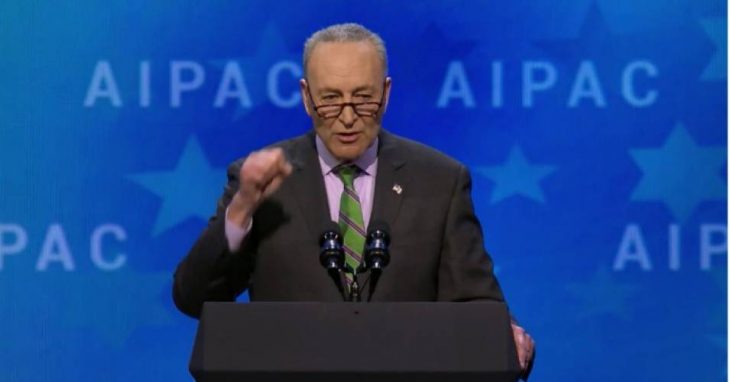


 Aletho News

