IAEA satisfied by Iran commitment to nuclear deal: Amano
Press TV – December 18, 2016
During a visit to Tehran, the head of the United Nations nuclear watchdog has expressed satisfaction with Iran’s commitment to its obligations under the 2015 nuclear accord with world powers.
“Iran has been committed to its obligations and this is an important matter,” the International Atomic Energy Agency (IAEA)’s Director General Yukiya Amano said on Sunday at a joint press conference with Ali Akbar Salehi, the head of the Atomic Energy Organization of Iran (AEOI).
The nuclear accord, officially known as the Joint Comprehensive Plan of Action (JCPOA), was signed between Iran and the P5+1 group of countries — the US, Britain, Russia, France and China plus Germany — last year in Vienna.
The IAEA is tasked with monitoring the technical implementation of the nuclear deal.
Since January, when the JCPOA took effect, the agency has confirmed Iran’s compliance in several reports.
“We are satisfied with the trend of the JCPOA’s implementation, and hope for this trend to continue,” added Amano, who is in Tehran on a one-day visit at the invitation of Salehi.
Concerning his meeting with Salehi, he said the two had discussed a range of issues, including heavywater, enriched uranium, Iran’s uranium stockpiles as well as research and development in the field of nuclear energy.
Among other topics in the talks was a recent order by President Hassan Rouhani to the AEOI to plan work on nuclear propulsion devices to be used in sea transport, Amano added.
The Iranian chief executive issued the decree in response to the recent violation of the multilateral nuclear deal by the United States. The US Congress recently voted to extend Iran Sanctions Act (ISA), Washington’s sanctions law against Iran, for another 10 years. This is while Iran had all its nuclear-related sanctions removed on the back of the JCPOA.
Salehi, in turn, said he had addressed cooperation with the IAEA on the JCPOA’s implementation.
He urged the IAEA to “act as an impartial international authority, whose reports do not reflect leverage or influence peddling by any party,” the Iranian official asserted, thanking the agency for “acting in such a manner so far” in its reports on the JCPOA’s implementation.
He said the two had addressed the presidential decree and how to implement it as well as Tehran’s obligations under the IAEA’s Nuclear Safeguards Agreement during the JCPOA’s implementation process.
Salehi also touched on Washington’s extension of the Iran Sanctions Act, saying Tehran “is ready to take whatever proportionate measure upon the decision of the Iranian establishment’s authorities.”
Later in the day, Amano sat down for talks with the Iranian president, who likewise called on the agency to produce impartial and technical reports on Iran.
“We expect that this international institution perform its responsibility in the area of technical cooperation, the transfer of peaceful nuclear technology, and nuclear trade, too,” President Rouhani said.
He said the JCPOA’s sustainability hinged on compliance by all parties, and added, “The Islamic Republic will honor its commitments as long as other parties honor theirs.”
Rouhani said some recent measures by the US, including the extension of the ISA, contravened the nuclear agreement. “The course the United States has taken vis-à-vis Iran will lead to the reduction of international confidence in the US government,” he said.
Amano, for his part, reiterated that Iran had lived up to its contractual obligations since the accord’s implementation. “The JCPOA was a big achievement, whose implementation the IAEA will support with all its might.”
Westerners’ minds disoriented with fake news on Syria: Anthony Hall
Press TV – December 14, 2016
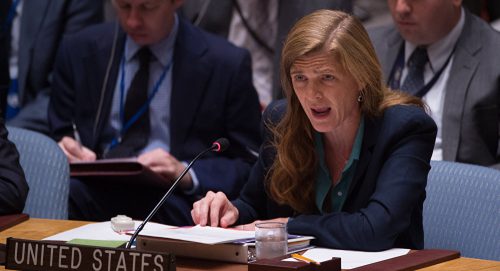
Russia’s UN Ambassador Vitaly Churkin has accused the United States, France and Britain of spreading fake news and and waging a psychological warfare over the situation in Syria’s Aleppo. The three countries have claimed that the Syrian government targeted civilians in eastern Aleppo, with US Ambassador to the UN Samantha Power accusing Syrian forces of killing some 80 civilians in the last few days.
Anthony Hall, editor-in-chief of the American Herald Tribune, believes Westerners’ minds are completely “disoriented” with a barrage of fake news, adding there has been an enormous psychological warfare campaign to totally confuse them about what is going on in Syria.
“And now in Aleppo we are presented with this image of rebels as if these are human rights activists who have just been standing there trying to bring about better human rights in Syria, ignoring the reality of this tremendous infusion of weaponry, of psychological warfare, of resources, Saudi Arabia’s role, Qatar’s role, NATO’s role in creating this whole confused situation in Syria,” he told Press TV on Wednesday.
By defeating the terrorists in Aleppo, he said, Russia demonstrated that the United States military campaign against Daesh is “phony”.
Less than a month ago, Syrian army forces, backed by Russian airstrikes, started a wholesale push to drive the militants out of their stronghold in the city’s eastern side, making great strides in the process.
Hall said there is overwhelming evidence that Daesh is a creation of the same process that created al-Qaeda and an extension of 9/11 wars.
According to the analyst, the “Angelo-American Zionist empire” is seeking to divide and break up the Middle East so that Israel can thrive and continue its expansionary policies towards a greater Israel.
Since March 2011, Syria has been hit by militancy it blames on some Western states and their regional allies. The Syrian Observatory for Human Rights and UN have put the death toll from the Syria conflict at more than 300,000 and 400,000, respectively.
US Mulls Pulling Out of Iran Deal
By Peter KORZUN | Strategic Culture Foundation | 06.12.2016
The US Senate voted on December 1 to extend the Iran Sanctions Act (ISA) giving the president the authority to impose sanctions on Iran for another decade. The bill had already passed the house of Representatives. The ISA was enacted in 1996 (as the Iran and Libya Sanctions Act), reauthorized in 2006 and 2011, and is set to expire on Dec. 31, if not renewed. GOP lawmakers have unanimously opposed the agreement. Some Democratic senators reconsidered their stances, expressing support for extending the presidential authority to counter Iran’s «aggressive behavior.» President Obama is not expected to veto the motion because the scale of support indicates a veto would be easily overridden.
The measure ensures that the president could easily restore the sanctions, if Iran breached the Joint Comprehensive Plan of Action (JCPOA). The deal reached in July 2015 required Iran to cap its nuclear program in exchange for lifting of sanctions against it.
Iran has complied significantly reducing its nuclear infrastructure. It’s important to note that the implementation of the JCPOA began January 16 after the UN’s International Atomic Energy Agency (IAEA) certified that Iran was meeting all its obligations under the deal. Other parties to the agreement – Russia, the UK, China, France, Germany and the European Union – have largely lifted the sanctions since the deal became effective. Non-nuclear sanctions have also been dropped, partially ushering Iran back into the global economy.
After taking office, Donald Trump may continue signing waivers to be reissued every 120 to 180 days or he may change the policy. The waiver related to nuclear sanctions remains in place under the reauthorized ISA but the deal is in jeopardy. US President-elect Donald Trump has said many times that he would scrap the nuclear agreement, calling it the «stupidest deal of all time». He said that dismantling it would be his «No. 1 priority» as president. The deal allows any of the countries that negotiated the deal to cancel it within 30 days, without a vote by the United Nations Security Council, if they flag a violation.
Non-nuclear sanctions related to terror-sponsorship, human rights abuses and ballistic missile activities are intended to remain in place under the JCPOA.
The GOP lawmakers support the idea of introducing new sanctions on Iran over human rights violations and terrorism, including the support of Hezbollah. Mitch McConnell, the Senate majority leader, calls for a review of the current policy on Iran.
Iran has threatened to resume its nuclear program if the bill goes through. The Iranian government described the Senate vote as a violation of the agreement. Iranian Supreme Leader Ayatollah Khamenei said recently the extension would be viewed in Tehran as a breach of the nuclear accord and threatened retaliation.
A US Senate vote to extend the Iran Sanctions Act (ISA) for 10 years shows the world that Washington cannot be relied upon to act on its commitments, said Iranian Foreign Minister Mohammad Javad Zarif. Iranian lawmakers said they want to introduce a measure to make the government resume nuclear activity.
Indeed, the prospect of US ultimate withdrawal from the JCPOA is not to be taken lightly. Congress can vote to reintroduce sanctions not waived or vetoed by the new president. President Trump may not renew waivers. The US could merely declare that Washington was no longer bound by the non-binding multilateral agreement based on the UN Security Council resolution. The United States can sneak out of the deal if the Congress overrides a presidential veto of a joint congressional resolution disapproving the JCPOA.
The consequences of Congress stopping the deal would be grave. The deal has the support of European parties to the JCPOA. The US will face a big problem trying to bring them to its side. If not, some sanctions will remain lifted and the West’s unity will be broken. It would put into question the ability of the United States to lead the reshaping of the world order on Western terms, by alienating Washington’s European allies. The move will rob Europe of any illusions about their ally at a time when support for the US is already low. The EU will face a big challenge trying to convince the US and Iran not to leave. It will have a slim chance to succeed.
Russia and China will adhere to the JCPOA provisions. Defying other global powers will make Washington the odd man out while the rest of the world would continue to trade with Iran.
Slate cites Jeffrey Lewis, an expert on nuclear nonproliferation at Middlebury College and founder of the Arms Control Wonk blog, who says, «If the unity of the countries that negotiated the deal falls apart, all of the safeguards that the IAEA has put in place under the deal will go away.» According to him, «The IAEA access will drop, and they will say that they are no longer in a position to verify the peaceful nature of Iran’s program. They just won’t have the access. You could end up with a situation in which there are no sanctions, and we have no idea whether they’re building a bomb or not. And by the time we figure it out, it might be too late.»
As a party to the Iran deal talks, Russia is a member of the Joint Commission established to monitor the implementation of the agreement and resolve any disputes that may emerge. As such, it can influence the process of compliance. Moscow has the right to co-decide on the sanctions imposed by the Security Council and the unilateral sanctions adopted by the United States. This right is envisioned by the JCPOA.
No matter what the US does, Russia retains the right to export weapons to Iran on condition that contracts are reported to and verified by the UN Security Council. It has already sold S-300 air defense systems to Tehran.
A decision to tear up the deal will most certainly provoke Iran into reviving its nuclear weapons [sic] program. It could lead to a regional arms race. Saudi Arabia has already made known its intention to acquire nuclear capability. Israel – a US skittish regional ally – may consider striking Iran – a decision fraught with grave implications.
Donald Trump has said many times his prime goal in the Middle East is ousting Islamic State (IS). This stance has vast support in Congress. Iran is a member of the coalition fighting the extremist group. If the US joins Russia in fighting IS – something the US president-elect said many times he wanted to do – it will need Tehran onside.
* * *
The US Congress has taken a step to destroy a deal enshrined in a United Nations resolution. «Say goodbye to the Iran deal», said Richard Nephew, a former US negotiator with Iran now at Columbia University. «There is very little likelihood that it stays, either because of a deliberate decision to tear it up by Trump, or steps that the US takes which prompt an Iranian walk back.»
The move entails harsh consequences. The Senate vote has undermined the US credibility as a reliable partner. Some of them mentioned above definitely prove that Congress does a disservice to its country reducing its national security and international standing.
Will America’s War with Iran Continue?
By Donald Liebich | American Herald Tribune | December 2, 2016
The United States has been at war with Iran for over thirty five years. Sometimes the war has been hot, sometimes cold, sometimes overt, and sometimes covert. Throughout this time period relations between the two countries have been hostile with very little diplomatic contact between officials of the two governments. In 2008, Barack Obama ran against Hillary Clinton on a platform of diplomatic engagement with Iran in opposition to her statements of being able to “totally obliterate Iran”.
Upon entering office, Obama, continuing America’s penchant for coercive diplomacy, doubled down on sanctions against Iran hoping that by causing economic hardship for ordinary Iranians he could pressure Iran to change its policies, particularly with respect to the development of nuclear capabilities. The strategy failed as Iran not only continued its peaceful nuclear development, but in many ways accelerated it. By his second term Obama, prioritizing addressing the nuclear proliferation issue, began negotiations with Iran on the nuclear issue in conjunction with Germany, France, United Kingdom, Russia and China. (EU3 + 3) The negotiations resulted in the signing in July 2015 of the Joint Comprehensive Plan of Action (JCPOA) which limited Iran’s nuclear program in return for removal of economic sanctions. The agreement was endorsed by the UN Security Council in an action that requires member states to carry out the agreement.
The International Atomic Energy Agency (IAEA) has affirmed on numerous occasions that Iran has largely lived up to its obligations under the JCPOA. Obama has taken some executive action to live up the JCPOA by loosening the impact of the sanctions. The administration has approved the sale of aircraft and aircraft parts to Iran by Boeing and this week the US approved a license for Airbus to sell over 100 aircraft to Iran. However, the basic legal structure of sanctions remains in place. Obama has not moved as aggressively as he did in Cuba to increase U.S. business involvement in Iran, a step which would make the nuclear deal more difficult to reverse by engaging the business lobby in the issue.
With the current sanctions authorization legislation set to expire on December 31, 2016, House of Representatives and the Senate passed the Iran Sanctions Extension Act by an overwhelming majorities (419 -1 and 99-0). Opponents of the JCPOA in the U.S. have argued in justifying this action, which is a clear violation of the JCPOA, that Iran has engaged in other “nefarious” activities, such as supporting the Assad in Syria, supplying arms to Hezbollah in Lebanon and the Houthi tribe in Yemen, developing ballistic missiles and in general resisting U.S. influence in the Middle East. The Senate has said that it will take up this bill in the rump session of Congress in December. Although Obama has indicated that he will veto the bill, the bipartisan support in Congress for sanctions extension means that a veto override is likely. Obama’s best option for preserving the nuclear deal is to fight a delaying action to “kick the can” down the road to the next administration where a Republican controlled Congress may be reluctant to create a big foreign policy problem for President Trump so early in his administration.
As on many issues, it is unclear what President Trump’s position will be on the JCPOA. During the campaign he condemned the JCPOA as a “horrible contract”, but acknowledging that it was a contract, vowed to renegotiate it. Renegotiating the agreement is probably not possible. The JCPOA is the result of complicated, intertwined negotiations over a long period of time. Reopening talks in an atmosphere of mistrust and recriminations likely means that the whole agreement would collapse. A number of senior Congressmen and potential officials in a Trump led government, having received large speaking fees, are closely tied with the Mujahidin-e-Khalq (MEK), an exiled Iranian opposition group with an odd Islamist/Marxist ideology. The MEK, having allied with Saddam Hussein during Iran-Iraq war, has the distinction of being more unpopular in Iran than the U.S. They will push a hard line approach under a Trump administration..
The agreement, however, is not totally dependent on the U.S. Even if the U.S. withdraws from the agreement, Iran, under the administration of President Hassan Rouhani, and Russia, China and the EU have indicated that they will continue to abide by it. As it has in the past, the U.S. will likely use secondary sanctions on European companies to deter them from conducting business with Iran. This strategy will probably not be effective with Russia, India and China who have taken steps to disconnect their economy from the U.S. dominated and dollar denominated neo-liberal economic system. It remains to be seen how U.S. allies in Europe will react to being pressured to act against their own national interest.
The political situation in Iran will also have an influence on how U.S./Iran relations play out. Supreme Leader Ali Khamenei has said that if sanctions are extended Iran will “respond”. What the response will look like depends, in large measure, on the outcome of the May 2017 presidential elections. Incumbent President Rouhani has maintained a position that engagement with the West will benefit Iran diplomatically and economically. Because sanctions have, in large measure, remained in place and because Iran has been slow to reform its economic system, the benefits have not met public expectations. The opposition have attacked the policy of engagement with the West. Faced with these political threats, Rouhani may be forced to tack to the right and abandon the JCPOA, kick out the IAEA inspectors and expand the nuclear program. In that case the undeclared war with Iran will continue with all of the uncertainties and potential for disastrous consequences.
Don Liebich spent his work career with the US Navy Nuclear Submarine service and Sysco Corp. He and his wife, Marcia, have traveled to the Middle East numerous times in the past ten years. Mr. Liebich has conducted seminars and taught courses on Islam: God and his Prophet, Christian Fundamentalisms, US Middle East foreign policy and Iran. Don & Marcia live in Hailey, ID.
Iranophobes on Parade
Will Iran be the target of the Trump regime?
By Philip Giraldi • Unz Review • November 29, 2016
One of the most discouraging aspects of the filling out of the Donald Trump cabinet is the array of Iran haters that seem to be lining up in the foreign policy and national security areas. Trump has been personally advocating sensible policies relating to Russia and Syria but he appears to have gone off the rails regarding Iran, which just might be attributed to those who are giving him advice. A reversion to the relationship that prevailed prior to last year’s signing of the Joint Comprehensive Plan of Action (JCPA) between Iran and the so-called P5+1 consisting of the United States, Russia, China, France, Britain, and the European Union would be undesirable, to say the least, but that appears to be what is likely to develop. Or it could be even worse, finding bilateral support for “action” as a number of policy advisors in the presidential campaign from both parties were endorsing something like war against the Persians.
The irony is that the arguments made then and now for attacking Iran were based on the threat of Tehran deciding to build its own atomic bomb. With the JCPA agreement, however, most would agree that any remaining concerns that Tehran might even be considering the development of a nuclear weapons program were greatly diminished. Iran has since that time been in compliance with the agreement, possible nuclear proliferation has been avoided, and, apart from the fulminations of the inevitable anti-Iranian politicians in the United States, the signatories to the agreement have expressed their satisfaction with the outcome. It has been Washington that has failed to live up to its part of the agreement by easing remaining restrictions that are being imposed against Iranian financial institutions and regarding the purchase of some commercially available dual use technologies.
Candidate Donald Trump did not need much prompting to pick up on the prevailing anti-Iran sentiment. In a number of campaign speeches he denounced the JCPA as a bad deal and vowed to tear it up upon taking office. Some of that sentiment might well have been derived from his desire to distance himself from foreign policy positions promoted by President Barack Obama that were subsequently endorsed by Hillary Clinton so it is no surprise that since being elected he has somewhat modified his stance. He is now veering towards trying to renegotiate the agreement, which would likely be impossible given that it has multiple signatories. He could nevertheless disrupt it by continuing or increasing sanctions on Iran.
The thought of reverting to a state of unrelenting hostility towards Iran is disconcerting. One recalls joint CIA-Mossad operations between 2010 and 2012 that assassinated four civilian scientists connected to the country’s nuclear program as well as the creation of the Stuxnet virus that threatened to spread to other computers worldwide. It is generally accepted that Israel’s Mossad planned and prepared the killing of the scientists with a little help from the U.S., attacks which were almost certainly carried out by associates of the radical Marxist group Mujaheddin e Khalq (MEK), which is now being seen favorably by several Trump advisors even though the group is Marxist, cult-like and has killed Americans.
The assassinations were based on the false premise that Iran had a nuclear weapons program that could be disrupted by killing the scientists and technicians involved. Two comprehensive studies by the American government’s Central Intelligence Agency (CIA) conducted in 2007 and 2011 determined that no such program existed and that Iran had never taken any serious steps to initiate such research. Israel was also aware that there was no program. Nevertheless, the Israeli and American governments took steps to interfere with Iran’s existing and completely legal and open to inspection atomic energy program by identifying then killing its scientists and also introducing viruses into its computer systems. This was in spite of the fact that Iran was fully compliant with international norms on nuclear research and it was a signatory to the Nuclear Non-Proliferation Treaty (NPT), which Israel, possessing its own nuclear arsenal, had refused to sign.
The history of the Iran-U.S. relationship is significant because several Trump advisors appear to be locked into a time warp regarding the Mullahs and the threat to Americans that they allegedly constitute. Former Defense Intelligence Agency (DIA) head Michael Flynn, who will be the Trump National Security Advisor, is the most prominent Iran hater and also the most outspoken.
Flynn, also an unapologetic Islamophobe, has said that Iran represents a danger to U.S. national security and that our friend and ally Israel “lives under the threat of total annihilation from Iran… something the United States must never allow.” He believes that Iran intends to build nuclear weapons as well as the ballistic missiles needed to deliver them on target and thinks that “regime change” is the only solution to the threat posed by the current government. And for Flynn, Iran is not alone, it is part of a “global alliance” that includes China and Russia which seeks to threaten the U.S. and its allies.
Flynn concludes that Iran is unmitigated evil and that Washington should have nothing to do with it, apart from recognizing the reality that it and its government must be destroyed. I personally attended a conference in Moscow last December at which Flynn asserted that Iran is solely responsible for nearly all the instability in the Middle East and is behind at least five wars in the region, an assertion that is just as ridiculous as it sounds.
One might suggest that Flynn is terribly uninformed about a subject regarding which he claims expertise. His comments would suggest that the capabilities of the DIA that he once headed were dangerously overrated, but reports from his former colleagues indicate that he was always guilty of serious overreach in his pronouncements, something they referred to as “Flynn facts”.
If Flynn were just one loud voice braying in the wilderness he would be bad enough since his job is important, particularly with a president who has no foreign policy experience, but the sad fact is that he is not alone. Congressman, West Point grad and former Army officer Mike Pompeo, who will head the CIA, is more-or-less on the same page when it comes to Iran. He supports new sanctions on the country and, regarding his appointment as Director, he had only one comment to make and it related to the JCPA, “I look forward to rolling back this disastrous deal with the world’s largest state sponsor of terrorism.” As in the case with Flynn and DIA one has to wonder what kind of “objective” intelligence CIA will be producing under Pompeo.
Finally, there is retired Marine General James Mattis, who is being considered for a senior position in national security, possibly as Secretary of Defense. He is yet another Iranophobe who opposed the JCPA and calls Iran a rogue state that constitutes the “greatest threat” in the Middle East. As part of the evidence for that assessment he cites Iran’s alliance with Syria, which is at least in part directed against America’s enemy number one ISIS, demonstrating once again how Establishment Washington has difficulty in understanding what constitutes actual national interests. Mattis, in fact, denies that Iran is actually fighting ISIS.
The neoconservative kingpin Bill Kristol is gloating, headlining in his Weekly Standard publication that the “Iran Deal Is Doomed!” He should be pleased. Team Trump’s attitude towards an alleged Iranian threat is delusional, more in sync with Kristol and some Israeli thinking than with any actual American interests. Just as neoconservatives always believe that it is 1938 and we are in Munich, Flynn, Pompeo and Mattis likewise seem to think that it is 1979 and the United States Embassy in Tehran is still occupied.
The three Trumpsmen are not stupid, far from it, but the problem appears to be that they cannot comfortably assess two or more conflicting concepts at the same time, which might be due to the linear thinking derived from their military backgrounds. The Middle East is awash with players, all of whom have separate agendas, few of which coincide with actual American interests. If one is fixated on or obsessed with Iran as the sole disruptive force in the region it becomes difficult to see how Saudi Arabia, Turkey and Israel are also problems. It is decidedly neoconnish to look at a complex foreign policy issue and only see black and white, but that is what the Trump national security team seems to be prone to do.
Hopefully someone will convince Donald Trump that the real answer to eliminating the “Iranian threat” is not war. It requires building on the relationship established by JCPA to bind Iran more closely to the international community, both economically and culturally. By all accounts, young Iranians, a majority of the population, are dismissive of the rigidity of their own government and are very open to Western ideas and lifestyle. Change will come to Iran if the United States and its European allies encourage more rather than less non-threatening contact. It will not come at the point of a bayonet as Flynn, Pompeo and Mattis appear to be promoting.
Israeli military court jails two Syrians for blocking ambulance carrying Nusra militants
Press TV – November 25, 2016
An Israeli court has handed down prison sentences to two Syrians living in the occupied Golan Heights for blocking an Israeli ambulance transporting militants operating in Syria for treatment.
The military court on Thursday sentenced Amal Abu Saleh to seven years and eight months in jail and a fine of more than 3,000 dollars, Syria’s official news agency SANA reported.
Bashira Mahmoud, the other Syrian, was sentenced to 22 months in prison. She was also fined 1,000 dollars.
According to the report, Israeli forces arrested the two along with 24 others in June 2015, when residents of the village of Majdal Shams blocked the ambulance and prevented it from transporting two injured terrorists with the Takfiri Jabhat Fateh al-Sham militant group, formerly known as al-Nusra Front.
The Israeli regime later released the detainees except the two. Bashira has been under house arrest since July 2016.
Sheikh Nazih Abu Saleh, Amal’s uncle, said the court ruling was “hostile.” He added that the residents of the occupied Golan Heights have the right to block the transport of al-Nusra terrorists for treatment in Israeli hospitals.
Ahmed Sheikh Abdul Qader, the governor of the city of Quneitra in southwestern Syria that borders Golan, slammed the “provocative” court ruling, calling on human rights organizations to force the Israeli regime to release Syrians held in its prisons.
Syria says Israel and its Western and regional allies are aiding Takfiri terrorist groups operating inside the Arab country.
In December 2015, the Daily Mail said the Israeli regime had saved the lives of over 2,000 Takfiri militants at the cost of about 13 million dollars since 2013.
The Syrian army has several times seized huge quantities of Israeli-made weapons and advanced military equipment from the foreign-backed militants inside Syria.
In February 2014, photos of Israeli Prime Minister Benjamin Netanyahu were released, showing him visiting injured militants at a field hospital in Israel.
Featured Video
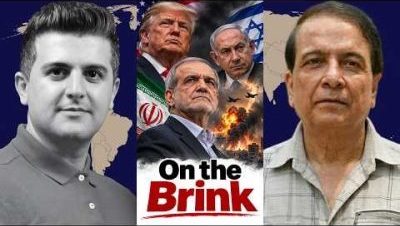
Pravin Sawhney: Massive Escalation Pushes Every Side Toward the Brink
or go to
Aletho News Archives – Video-Images
From the Archives
A sample of vaccine and injectable medication tragedies during my lifetime
This is what happens when you demand speedy production in an era of politicized regulation
By Meryl Nass, MD | February 12, 2022
All these tragedies have been due to failures of testing or failures in manufacturing processes. Most occurred before vaccine manufacturers were given virtually complete protection from liability in 1987.
With the duration of patent exclusivity determining how much new products earn, products are rushed to market as quickly as possible, most using a shortened path for FDA review. Recalls and market removals of approved products are much more common than they used to be. We can only expect more of these disasters in the future, especially if the products are mandated for everyone. … continue
Blog Roll
 Aletho News
- Trump claims funding to Israel ending in 2026 as merger of Israeli–US armies looms
- Iran Weathering The Storm, But Saudi Arabia Is Sinking
- Sunk Ships Don’t Sail Home: Why Peace Won’t Save the Oil Market and War Will Wreck It
- No Cossacks at the gates, fix Italy instead – opposition leader to Meloni
- The Pits: Zelensky’s torture chamber network in the public eye
- Moscow mocks Kiev’s language hypocrisy exposed by ‘torture chamber’ scandal
- Military ‘torture chamber’ triggers new scandal in Kiev
- Algerian army launches second operation to clear French nuclear test sites
- Pravin Sawhney: Massive Escalation Pushes Every Side Toward the Brink
- UK High Court Upholds Speech Regulator Notices To Meta, WhatsApp, X, And TikTok
- If Americans Knew
- An error has occurred; the feed is probably down. Try again later.
- No Tricks Zone
- Germany’s Green Energy Transition Becoming Increasingly Expensive…Another 6 Trillion Euros!
- Sudden Stratospheric Warming, Powerful El Niño Combination May Lead To Extreme Europe Cold, Energy Crisis!
- Two New Studies Find Thwaites Glacier Melt Cannot Be Driven By Human Activity Or A Warming Ocean
- E-Cars Reduce CO2 Emissions By Only 41% Compared To Internal Combustion Engine Vehicles
- Predictions Made By Renowned Climate Professor Over Past Decades Have Been Proven To Be Poor
- New Study Suggests Large Regions Of The Pacific Ocean Have Been Cooling For The Last 80 Years
- Germany’s Green Energy Debacle: High Energy Costs Force Kahla Porzellan to Close After 182 Years!
- New Study: 50 Years Of The Most Aggressive ‘Net Zero’ Policies Can Only Affect The Global Climate By 0.03°C
- US September “Heat” Was No Record…Many Records Set Decades Ago
- Latest European Green Energy Debacle; Portugal’s Largest Flagship Solar Park Insolvent!

