President Barack Obama – always sensitive to neocon criticism that he’s “weak” – continues to edge the world closer to a nuclear confrontation with Russia as he talks tough and tolerates more provocations against Moscow, now including Turkey’s intentional shoot-down of a Russian warplane along the Turkish-Syrian border.
Rather than rebuke Turkey, a NATO member, for its reckless behavior – or express sympathy to the Russians – Obama instead asserted that “Turkey, like every country, has a right to defend its territory and its airspace.”
It was another one of Obama’s breathtaking moments of hypocrisy, since he has repeatedly violated the territorial integrity of various countries, including in Syria where he has authorized bombing without the government’s permission and has armed rebels fighting to overthrow Syria’s secular regime.
Obama’s comment on Turkey’s right to shoot down planes — made during a joint press conference with French President Francois Hollande on Tuesday — was jarring, too, because there was no suggestion that even if the SU-24 jetfighter had strayed briefly into Turkish territory, which the Russians deny, that it was threatening Turkish targets.
Russian President Vladimir Putin angrily called the Turkish attack a “stab in the back delivered by the accomplices of terrorists.” He warned of “serious consequences for Russian-Turkish relations.”
Further provoking the Russians, Turkish-backed Syrian rebels then killed the Russian pilot riddling his body with bullets as he and the navigator parachuted from the doomed plane and were floating toward the ground. (Update: On Wednesday, the Russian defense minister said the navigator was alive and was rescued by Syrian and Russian special forces.)
Another Russian soldier was killed when a U.S.-supplied TOW missile brought down a Russian helicopter on a search-and-rescue mission, according to reports.
But Obama, during the news conference, seemed more interested in demonstrating his disdain for Putin, referring to him at one point by his last name only, without the usual use of a courtesy title, and demeaning the size of Putin’s coalition in helping Syria battle the jihadist rebels.
“We’ve got a coalition of 65 countries who have been active in pushing back against ISIL for quite some time,” Obama said, citing the involvement of countries around the world. “Russia right now is a coalition of two, Iran and Russia, supporting [Syrian President Bashar al-] Assad.”
However, there have been doubts about the seriousness of Obama’s coalition, which includes Sunni countries, such as Saudi Arabia and Turkey, which have been covertly supporting some of the jihadist elements, including Al Qaeda’s Nusra Front and its ally, Ahrar al-Sham.
Syrian rebels, including jihadists fighting with Ahrar al-Sham, have received hundreds of U.S. TOW anti-tank missiles, apparently through Sunni regional powers with what I’ve been told was Obama’s direct approval. The jihadists have celebrated their use of TOWs to kill tank crews of the Syrian army. Yet Obama talks about every country’s right to defend its territory.
Obama and the U.S. mainstream media also have pretended that the only terrorists that need to be fought in Syria are those belonging to the Islamic State (also known as ISIS, ISIL or Daesh), but Al Qaeda’s Nusra Front and its ally, Ahrar al-Sham, which was founded in part by Al Qaeda veterans, make up the bulk of the Turkish-and-Saudi-backed Army of Conquest which was gaining ground – with the help of those American TOW missiles – until Russia intervened with air power at the request of Syrian President Assad in late September.
The SU-24 Shoot-down
As for the circumstances surrounding the Turkish shoot-down of the Russian SU-24, Turkey claimed to have radioed ten warnings over five minutes to the Russian pilots but without getting a response. However, the New York Timesreported that a diplomat who attended a NATO meeting in which Turkey laid out its account said “the Russian SU-24 plane was over the Hatay region of Turkey for about 17 seconds when it was struck.”
How those two contradictory time frames matched up was not explained. However, if the 17-second time frame is correct, it appears that Turkey intended to shoot down a Russian plane – whether over its territory or not – to send a message that it would not permit Russia to continue attacking Turkish-backed rebels in Syria.
After shooting down the plane, Turkey sought an emergency NATO meeting to support its attack. Though some NATO members reportedly consider Turkish President Recep Tayyip Erdogan a loose cannon, NATO Secretary General Jens Stoltenberg declared that the allies “stand in solidarity with Turkey.”
Further increasing the prospect of a dangerous escalation, NATO has been conducting large-scale military exercises near the Russian border in response to the Ukraine crisis.
Erdogan’s government also appears to have dabbled in dangerous provocations before, including the alleged role of Turkish intelligence in helping jihadist rebels stage a lethal sarin gas attack outside Damascus on Aug. 21, 2013, with the goal of blaming Assad’s military and tricking Obama into launching punitive airstrikes that would have helped clear the way for a jihadist victory.
Obama only pulled back at the last minute amid doubts among U.S. intelligence analysts about who was responsible for the sarin attack. Later evidence pointed to a jihadist provocation with possible Turkish assistance, but the Obama administration has never formally retracted its allegations blaming Assad’s forces.
One motive for Erdogan to go along with the sarin “false flag” attack in 2013 would have been that his two-year campaign to overthrow the Assad government was sputtering, a situation similar to today with the Russian military intervention hammering jihadist positions and putting the Syrian army back on the offensive.
By shooting down a Russian plane and then rushing to NATO with demands for retaliation against Russia, Erdogan is arguably playing a similar game, trying to push the United States and European countries into a direct confrontation with Russia while also sabotaging Syrian peace talks in Vienna – all the better to advance his goal of violently ousting Assad from power.
The Neocon Agenda
Escalating tensions with Russia also plays into the hands of America’s neoconservatives who have viewed past cooperation between Putin and Obama as a threat to the neocon agenda of “regime change,” which began in Iraq in 2003 and was supposed to continue into Syria and Iran with the goal of removing governments deemed hostile to Israel.
After the sarin gas attack in 2013, the prospect for the U.S. bombing Syria and paving the way for Assad’s military defeat looked bright, but Putin and Obama cooperated to defuse the sarin gas crisis. The two teamed up again to advance negotiations to constrain Iran’s nuclear program – an impediment to neocon hopes for bombing Iran, too.
However, in late 2013 and early 2014, that promising Putin-Obama collaboration was blasted apart in Ukraine with American neocons playing key roles, including National Endowment for Democracy president Carl Gershman, Sen. John McCain and Assistant Secretary of State for European Affairs Victoria Nuland.
The neocons targeted the elected government of President Viktor Yanukovych, recognizing how sensitive Ukraine was to Russia. The Feb. 22, 2014 coup, which was spearheaded by neo-Nazis and other extreme Ukrainian nationalists, established a fiercely anti-Russian regime in Kiev and provoked what quickly took on the look of a new Cold War.
When the heavily ethnic Russian population of Crimea, which had voted overwhelmingly for Yanukovych, reacted to the coup by voting 96 percent to leave Ukraine and rejoin Russia, the neocon-dominated U.S. mainstream media pronounced the referendum a “sham” and the secession a Russian “invasion.” Cold War hysteria followed.
However, in the nearly two years since the Ukraine coup, it has become increasingly clear that the new regime in Kiev is not the shining light that the neocons and the mainstream media pretended it was. It appears to be as corrupt as the old one, if not more so. Plus, living standards of average Ukrainians have plunged.
The recent flooding of Europe with Syrian refugees over the summer and this month’s Paris terror attacks by Islamic State jihadists also have forced European officials to take events in Syria more seriously, prompting a growing interest in a renewed cooperation with Russia’s Putin.
That did not sit well with ultranationalist Ukrainians angered at the reduced interest in the Ukraine crisis. These activists have forced their dispute with Russia back into the newspapers by destroying power lines supplying electricity to Crimea, throwing much of the peninsula into darkness. Their goal seems to be to ratchet up tensions again between Russia and the West.
Now, Turkey’s shoot-down of the SU-24 and the deliberate murder of the two Russian pilots (Update: Russia says one airman saved.) have driven another wedge between NATO countries and Russia, especially if President Obama and other NATO leaders continue taking Turkey’s side in the incident.
But the larger question – indeed the existential question – is whether Obama will continue bowing to neocon demands for tough talk against Putin even if doing so risks pushing tensions to a level that could spill over into a nuclear confrontation.
Investigative reporter Robert Parry broke many of the Iran-Contra stories for The Associated Press and Newsweek in the 1980s. You can buy his latest book, America’s Stolen Narrative, either in print here or as an e-book (from Amazon and barnesandnoble.com).
An American scholar and journalist in Wisconsin says not only was the Zionist regime the primary force behind the 9/11 attacks, it was Israeli spies working for Mossad – not Arab Muslims – who celebrated the burning Twin Towers on September 11, 2001.
Dr. Kevin Barrett, a founding member of the Scientific Panel for the Investigation of 9/11, made the remarks in an interview with Press TV on Monday, a day after an international Jewish organization based in the US denounced Republican presidential candidate Donald Trump’s claim that dozens of Arab Muslims cheered as the World Trade Center collapsed on September 11 as unsubstantiated.
“It is unfortunate that Donald Trump is giving new life to long-debunked conspiracy theories about 9/11,” the Anti-Defamation League (ADL) said in a statement on Sunday, after Trump said in an interview with ABC News that there were “people over in New Jersey that were watching it, a heavy Arab population that were cheering as the buildings came down.”
The ADL statement said there is no basis for Trump’s claim, calling it irresponsible and factually challenged. “This seems to be a variation of the anti-Semitic myth that a group of Israelis were seen celebrating as the Twin Towers fell.”
Commenting to Press TV, Dr. Barrett said the Anti-Defamation League is “correct that Trump is factually challenged when he talks about the Arabs celebrating the destruction of the World Trade Center on September 11th.”
“But he in fact is referring to a true story, which is that Israeli spies working for the intelligence agency Mossad were in fact arrested after they were caught celebrating the September 11th attacks,” he added.
Sivan Kurzberg led Israeli spies
“They were set up to film the World Trade Center attacks before the first plane hit. They wildly celebrated the flaming and then exploding Twin Towers. They photographed themselves flicking cigarette lighters in front of the burning and exploding buildings,” he stated.
“And then they were arrested. They were held for forty or so days. They failed lie detector tests, and they then returned to Israel. They went on television and admitted that they were there to ‘document the event’, that is Israeli spies led by Sivan Kurzberg are on record in the Israeli mainstream media, bragging that they were sent to New York to document the event,” he said.
“And that means that the people they were working for, namely the Israeli government, were complicit in the event. Apparently the Anti-Defamation League doesn’t know that, because they are saying that Trump’s comment blaming the Arabs appears to be a mixed up version of what they are calling the ‘myth’ of the dancing Israelis celebrating their success on 9/11. But that’s not a myth,” Dr. Barrett emphasized.
“It’s been reported reliably in all kinds of mainstream media, including the Bergen New Jersey Record, which first exposed the story. The leading Jewish newspaper in the United States, The Forward, and Israeli media – including the television show in which Kurzberg brags about being sent to New York to document the event, that was coming up on September 11th,” he pointed out.
“So, the Anti-Defamation League, which is actually an Israeli propaganda outfit, is essentially running a misdirection ploy. They are trying to discredit ‘conspiracy theories’ about 9/11, because they know full well that the government of Israel was the prime force behind the attacks on September 11th,” the analyst explained.
Jewish group lying about 9/11
“The Anti-Defamation League is lying when they are calling it a myth. It isn’t a myth. And every place from the Jewish newspaper The Forward to the Israeli media, even to Fox News, which ran an investigative series by Carl Cameron, admits that this actually happened. Mossad agents were caught red-handed celebrating the success of their destruction of their World Trade Center by controlled demolition on September 11th, 2001,” Dr. Barrett concluded.
The September, 11, 2001 attacks, also known as the 9/11 attacks, were a series of strikes in the US which killed nearly 3,000 people and caused about $10 billion worth of property and infrastructure damage.
US officials assert that the attacks were carried out by 19 al-Qaeda terrorists but many experts have raised questions about the official account.
They believe that rogue elements within the US government, such as former Vice President Dick Cheney, and foreign intelligence agencies orchestrated the 9/11 attacks in order to accelerate the US war machine and advance the Zionist agenda.
Dr. Barrett and other eminent scholars have argued that the 9/11 attacks were carried out through a “controlled demolition” technique by placing explosive material inside the twin towers, causing the structures to collapse on themselves in a matter of seconds.
Over the past 15 years the US has been engaged in a series of wars, which has led many writers to refer to the ‘rise of militarism’ – the growth of an empire, built primarily by and for the projection of military power – and only secondarily to advance economic imperialism.
The rise of a military-based empire, however, does not preclude the emergence of competing, conflicting, and convergent power configurations within the imperial state. These factions of the Washington elite define the objectives and targets of imperialist warfare, often on their own terms.
Having stated the obvious general fact of the power of militarism within the imperialist state, it is necessary to recognize that the key policy-makers, who direct the wars and military policy, will vary according to the country targeted, type of warfare engaged in and their conception of the war. In other words, while US policy is imperialist and highly militaristic, the key policymakers, their approach and the outcomes of their policies will differ. There is no fixed strategy devised by a cohesive Washington policy elite guided by a unified strategic vision of the US Empire.
In order to understand the current, seemingly endless wars, we have to examine the shifting coalitions of elites, who make decisions in Washington but not always primarily for Washington. Some factions of the policy elite have clear conceptions of the American empire, but others improvise and rely on superior ‘political’ or ‘lobbying’ power to successfully push their agenda in the face of repeated failures and suffer no consequences or costs.
We will start by listing US imperialist wars during the last decade and a half. We will then identify the main policy-making faction which has been the driving force in each war. We will discuss their successes and failures as imperial policy makers and conclude with an evaluation of “the state of the empire” and its future.
Imperial Wars: From 2001-2015
The current war cycle started in late 2001 with the US invasion and occupation of Afghanistan. This was followed by the invasion and occupation of Iraq in March 2003, the US arms support for Israel’s invasion of Lebanon in 2006, the proxy invasion of Somalia in 2006/7; the massive re-escalation of war in Iraq and Afghanistan in 2007-2009; the bombing, invasion ‘regime change’ in Libya in 2011; the ongoing proxy-mercenary war against Syria (since 2012), and the ongoing 2015 Saudi-US invasion and destruction of Yemen. In Europe, the US was behind the 2014 proxy putsch and violent ‘regime change’ in Ukraine which has led to an ongoing war against ethnic Russian speakers in south-east Ukraine, especially the populous industrial heartland of the Donbas region.
Over the past 15 years, there have been overt and covert military interventions, accompanied by an intense, provocative military build-up along Russia’s borders in the Baltic States, Eastern Europe (especially Poland), the Balkans (Bulgaria and Romania) and the mammoth US base in Kosovo; in Central Europe with nuclear missiles in Germany and, of course, the annexation of Ukraine and Georgia as US-NATO clients.
Parallel to the military provocations encircling Russia, Washington has launched a major military, political, economic and diplomatic offensive aimed at isolating China and affirming US supremacy in the Pacific.
In South America, US military intervention found expression via Washington-orchestrated business-military coup attempts in Venezuela in 2002 and Bolivia in 2008, and a successful ‘regime change’ in Honduras in 2009, overthrowing its elected president and installing a US puppet.
In summary, the US has been engaged in two, three or more wars since 2001, defining an almost exclusively militarist empire, run by an imperial state directed by civilian and military officials seeking unchallenged global dominance through violence.
Washington: Military Workshop of the World
War and violent regime change are the exclusive means through which the US now advances its foreign policy. However, the various Washington war-makers among the power elite do not form a unified bloc with common priorities. Washington provides the weapons, soldiers and financing for whichever power configuration or faction among the elite is in a position, by design or default, to seize the initiative and push their own war agenda.
The invasion of Afghanistan was significant in so far as it was seen by all sectors of the militarist elite, as the first in a series of wars. Afghanistan was to set the stage for the launching of higher priority wars elsewhere.
Afghanistan was followed by the infamous ‘Axis of Evil’ speech, dictated by Tel Aviv, penned by presidential speech-writer, David Frum and mouthed by the brainless President Bush, II. The ‘Global War on Terror’ was the thinly veiled slogan for serial wars around the world. Washington measured the loyalty of its vassals among the nations of Europe, Asia, Africa and Latin America by their support for the invasion and occupation of Afghanistan. The Afghan invasion provided the template for future wars. It led to an unprecedented increase in the military budget and ushered in Caesar-like dictatorial presidential powers to order and execute wars, silencing domestic critics and sending scores of thousands of US and NATO troops to the Hindu Kush.
In itself, Afghanistan was never any threat and certainly no economic prize for plunder and profit. The Taliban had not attacked the US. Osama Bin Laden could have been turned over to a judicial tribunal – as the governing Taliban had insisted.
The US military (with its Coalition of the Willing or COW) successfully invaded and occupied Afghanistan and set up a vassal regime in Kabul. It built scores of military bases and attempted to form an obedient colonial army. In the meantime, the Washington militarist elite had moved on to bigger and, for the Israel-centric Zionist elite, higher priority wars, namely Iraq.
The decision to invade Afghanistan was not opposed by any of Washington’s militarist elite factions. They all shared the idea of using a successful military blitz or ‘cake-walk’ against the abysmally impoverished Afghanistan as a way to rabble rouse the American masses into accepting a long period of intense and costly global warfare throughout the world.
Washington’s militarist elites fabricated the link between the attacks on 9/11/2001 and Afghanistan’s governing Taliban and the presence of the Saudi warlord Osama Bin Laden. Despite the ‘fact’ that most of the ‘hijackers’ were from the kingdom of Saudi Arabia and none were Afghans, invading and destroying Afghanistan was to be the initial test to gauge the highly manipulated and frightened American public’s willingness to shoulder the burden of a huge new cycle of imperial wars. This has been the only aspect of the invasion of Afghanistan that could be viewed as a policy success – it made the costs of endless wars ‘acceptable’ to a relentlessly propagandized public.
Flush with their military victories in the Hindu Kush, the Washington militarists turned to Iraq and fabricated a series of increasingly preposterous pretexts for war: Linking the 9/11 ‘jihadi’ hijackers with the secular regime of Saddam Hussein, whose intolerance for violent Islamists (especially the Saudi variety) was well documented, and concocting a whole fabric of lies about Iraqi ‘weapons of mass destruction’ which provided the propaganda basis for invading an already disarmed, blockaded and starved Iraq in March 2003.
Leading the Washington militarists in designing the war to destroy Iraq were the Zionists, including Paul Wolfowitz, Elliot Abrams, Richard Perle, and a few Israel-centric Gentile militarists, such as Vice President Cheney, Secretary of State Colin Powell and Defense Secretary Rumsfeld. The Zionists had a powerful entourage in key positions in the State Department, Treasury and the Pentagon.
There were ‘outsiders’ – non-Zionists and militarists within these institutions, especially the Pentagon, who voiced reservations – but they were brushed aside, not consulted and ‘encouraged’ to retire.
None of the ‘old hands’ in the State Department or Pentagon bought into the hysteria about Saddam Hussein’s weapons of mass destruction, but to voice reservations was to risk one’s career. The manufacture and dissemination of the pretext for invading Iraq was orchestrated by a small team of operatives linking Tel Aviv and Deputy Secretary of Defense Paul Wolfowitz’s Office of Special Plans, a tight group of Zionists and some Israelis headed by Abram Shulsky (Sept. 2002-June 2003).
The US war on Iraq was an important part of Israel’s agenda to ‘re-make the Middle East’ to establish its unchallenged regional hegemony and execute a ‘final solution’ for its own vexing ‘Arab (native Palestinian) problem’: It was made operational by the powerful Zionist faction within the Executive (White House), which had assumed almost dictatorial powers after the attack on 9/11/2001. Zionists planned the war, designed the ‘occupation policy’ and ‘succeeded wildly’ with the eventual dismemberment of a once modern secular nationalist Arab state.
In order to smash the Iraqi state – the US occupation policy was to eliminate (through mass firings, jailing and assassination) all high level, experienced Iraqi civil, military and scientific personnel – down to high school principals. They dismantled any vital infrastructure (which had not been already destroyed by the decades of US sanctions and bombing under President Clinton) and reduced an agriculturally advanced Iraq to a barren wasteland which would take centuries to recover and could never challenge Israel’s colonization of Palestine, let alone its military supremacy in the Middle East. Naturally, the large Palestinian Diaspora refugee population in Iraq was targeted for ‘special treatment’.
But Zionist policymakers had a much larger agenda than erasing Iraq as a viable country: They had a longer list of targets: Syria, Iran, Lebanon and Libya, whose destruction was to be carried out with US and NATO blood and treasure (and not a single Israeli soldier).
Despite the fact that Iraq did not even possess a functioning air force or navy in March 2003 and Afghanistan in late 2001 was rather primitive, the invasions of both countries turned out to be very costly to the US. The US completely failed to benefit from its ‘victory and occupation’, despite Paul Wolfowitz’ boasts that the pillage of Iraq’s oil fields would pay for the entire project in a ‘few months’. This was because the real Zionist plan was to destroy these nations – beyond any possibility for a quick or cheap imperialist economic gain. Scorching the earth and salting the fields is not a very profitable policy for empire builders.
Israel has been the biggest winner with no cost for the ‘Jewish State’. The American Zionist policy elite literally handed them the services of the largest and richest armed forces in history: the US. Israel-Firsters played a decisive role among Washington policy-makers and Tel Aviv celebrated in the streets! They came, they dominated policy and they accomplished their mission: Iraq (and millions of its people)was destroyed.
The US gained an unreliable, broken colony, with a devastated economy and systematically destroyed infrastructure and without the functioning civil service needed for a modern state. To pay for the mess, the American people faced a spiraling budget deficit, tens of thousands of American war casualties and massive cuts in their own social programs. Crowning the Washington war-makers’ victory was the disarticulation of American civil and constitutional rights and liberties and the construction of a enormous domestic police state.
After the Iraq disaster, the same influential Zionist faction in Washington lost no time in demanding a new war against Israel’s bigger enemy – namely Iran. In the ensuing years, they failed to push the US to attack Tehran but they succeeded in imposing crippling sanctions on Iran. The Zionist faction secured massive US military support for Israel’s abortive invasion of Lebanon and its devastating series of blitzkriegs against the impoverished and trapped people of Gaza.
The Zionist faction successfully shaped US military interventions to meet Israel’s regional ambitions against three Arab countries: Yemen, Syria, and Libya. The Zionists were not able to manipulate the US into attacking Iran because the traditional militarist faction in Washington balked: With instability in Afghanistan and Iraq, the US was not well positioned to face a major conflagration throughout the Middle East, South Asia and beyond – which a ground and air war with Iran would involve. However, the Zionist factions did secure brutal economic sanctions and the appointment of key Israel-Centric officials within the US Treasury. Secretary Stuart Levey, at the start of the Obama regime, and David Cohen afterwards, were positioned to enforce the sanctions.
Even before the ascendancy of Israeli Prime Minister Binyamin Netanyahu, Tel Aviv’s military objectives after Iraq, including Iran, Syria, Lebanon, Libya, and Yemen had to be spaced over time, because the non-Zionist factions among Washington’s elite had been unable to integrate occupied Afghanistan and Iraq into the empire.
Resistance, armed conflict and military advances in both Afghanistan and Iraq never ceased and are continuing into their 2nd decade. As soon as the US would withdraw from a region, declaring it ‘pacified’, the armed resistance would move back in and the local sepoys would defect to the rebels or take off for London or Washington with millions in pillaged loot.
‘Unfinished wars’, mounting casualties and spiraling costs, with no end in sight, undermined the agreement between the militarist and the Zionist factions in the Executive branch. However, the massively powerful Zionist presence in the US Congress provided a platform to bray for new and even bigger wars.
Israel’s vicious invasion of Lebanon in 2006 was defeated despite receiving massive US arms supplies, a US funded ‘Iron Dome’ missile defense system and intelligence assistance. Tel Aviv could not defeat the highly disciplined and motivated Hezbollah fighters in South Lebanon despite resorting to carpet bombing of civilian neighborhoods with millions of banned cluster munitions and picking off ambulances and churches sheltering refugees. Israelis have been much more triumphal murdering lightly armed Palestinian resistance fighters and stone-throwing children.
Libya: A Multi-faction War for the Militarists (without Big Oil)
The war against Libya was a result of multiple factions among the Washington militarist elite, including the Zionists, coming together with French, English and German militarists to smash the most modern, secular, independent state in Africa under President Muammar Gaddafi.
The aerial campaign against the Gaddafi regime had virtually no organized support within Libya with which to reconstruct a viable neo-colonial state ripe for pillage. This was another ‘planned dismemberment’ of a complex, modern republic which had been independent of the US Empire.
The war succeeded wildly in shredding Libya’s economy, state, and society. It unleashed scores of armed terrorist groups, (who appropriated the modern weapons of Gaddafi’s army and police) and uprooted two million black contract workers and Libyan citizens of South Saharan origin forcing them to flee the rampaging racist militias to the refugee camps of Europe. Untold thousands died in rickety boats in the Mediterranean Sea.
The entire war was carried out to the publicly giddy delight of Secretary of State Hillary Clinton and her ‘humanitarian interventionist’ lieutenants (Susan Rice and Samantha Power), who were utterly ignorant as to who and what the Libyan “opposition” represented. Eventually, even Hillary’s own Ambassador to Libya would be slaughtered by … the same victorious US-backed ‘rebels’ (sic) in the newly liberated Bengazi!
The Zionist faction destroyed Gaddafi (whose capture, grotesque torture and murder was filmed and widely disseminated), eliminating another real adversary of Israel and supporter of Palestinian rights. The US militarist faction, which led the war, got nothing positive – not even a secure naval, air, or training base – only a dead Ambassador, millions of desperate refugees flooding Europe, and thousands of trained and armed jihadists for the next target: Syria.
For a while Libya became the main supply-line for Islamist mercenaries and arms to invade Syria and fight the secular nationalist government in Damascus.
Once again the least influential faction in Washington turned out to be the oil and gas industry, which lost lucrative contracts it had already signed with the Gaddafi regime. Thousands of highly trained foreign oil workers were withdrawn. After Iraq, it should have been obvious that these wars were not ‘for oil’!
Ukraine: Coups, Wars, and Russia’s ‘Underbelly’
With the US-orchestrated coup and intervention in Ukraine, the militarist factions once again seized the initiative, establishing a puppet regime in Kiev and targeting Russia’s strategic ‘soft underbelly’. The plan had been to take over Russia’s strategic military bases in Crimea and cut Russia from the vital military-industrial complexes in the Donbas region with its vast iron and coal reserves.
The mechanics of the power grab were relatively well planned, the political clients were put in power, but the US militarists had made no contingencies for propping up the Ukrainian economy, cut loose from its main trading partner and oil and gas supplier, Russia.
The coup led to a ‘proxy war’ in the ethnic-Russian majority regions in the south east (the Donbas) with four ‘unanticipated consequences’. 1) a country divided east and west along ethno-linguistic lines, (2) a bankrupt economy made even worse by the imposition of an IMF austerity program, (3) a corrupt crony capitalist elite, which was ‘pro-West by bank account’, (4) and, after two years, mass disaffection among voters toward the US puppet regime.
The militarists in Washington and Brussels succeeded in engineering the coup in Ukraine but lacked the domestic allies, plans and preparations to run the country and successfully annex it to the EU and NATO as a viable country.
Apparently the militarist factions in the State Department and Pentagon are much more proficient in stage managing coups and invasions than in establishing a stable regime as part of a New World Order. They succeed in the former and fail repeatedly in the latter.
The Pivot to Asia and the Pirouette to Syria
During most of the previous decade, traditional global strategists in Washington increasingly objected to the Zionist faction’s domination and direction of US war policies focused on the Middle East for the benefit of Israel, instead of meeting the growing challenge of the new world economic superpower in Asia, China.
US economic supremacy in Asia had been deeply eroded as China’s economy grew at double digits. Beijing was displacing the US as the major trade partner in the Latin American and African markets. Meanwhile, the top 500 US MNCs were heavily invested in China. Three years into President Obama’s first term the ‘China militarist faction’ announced a shift from the Middle East and the Israel-centric agenda to a ‘pivot to Asia’, the source of 40% of the world’s industrial output.
But it was not profits and markets that motivated Washington’s Asia faction among the militarist elites – it was military power. Even trade agreements, like the TransPacific Partnership (TPP), were viewed as tools to encircle and weaken China militarily and undermine its regional influence.
Led by the hysterical Pentagon boss Ashton Carter, Washington prepared a series of major military confrontations with Beijing off the coast of China.
The US signed expanded military base agreements with the Philippines, Japan, and Australia; it participated in military exercises with Vietnam, South Korea, and Malaysia; it dispatched battleships and aircraft carriers into Chinese territorial waters.
The US confrontational trade policy was formulated by the Zionist trio: Secretary of Commerce, Penny Pritzker, Trade Negotiator Michael Froman (who works for both the Asia militarist and Zionist factions), and Treasury Secretary Jake Lew. The result was the Trans-Pacific Partnership (TPP), involving 12 Pacific countries while deliberating excluding China. Washington’s Asian militarist faction planned to militarize the entire Pacific Basin, in order to dominate the maritime trade routes and, at a moment’s notice, choke off all of China’s overseas markets and suppliers – shades of the series of US provocations against Japan leading up to the US entering WW2.
The ‘Asia-militarist faction’ successfully demanded a bigger military budget to accommodate its vastly more aggressive posture toward China.
Predictably, China has insisted on defending its maritime routes and has increased its naval and air base building and sea and air patrols. Also, predictably, China has countered the US-dominated TPP by setting-up a one hundred billion dollar Asia Infrastructure Investment Bank (AIIB), while contributing to the multi-billion dollar BRICS Bank. Meanwhile, China even signed a separate $30 billion dollar trade agreement with Washington’s strategic ‘partner’, Britain. In fact, Britain followed the rest of the EU and joined the Asia Infrastructure Investment Bank – despite objections from Washington’s “Asia faction”.
While the US depends heavily on its military pacts with South Korea and Japan, the latter nations have been meeting with China – their most significant trading partner – to work on expanding and deepening economic ties.
Up until 2014, the “business-with-China faction” of the Washington elite played a key role in the making of US-Asia policy. However, they have been eclipsed by the Asia militarist-faction, which is taking US policy in a totally different direction: Pushing China out as Asia’s economic superpower and escalating military confrontation with Beijing now heads Washington’s agenda.
Ashton Carter, the US Defense Secretary, has China, the second most important economy in the world in the Pentagon’s ‘cross-hairs’. When the TPP failed to curtail China’s expansion, the militarist faction shifted Washington toward a high risk military course, which could destabilize the region and risk a nuclear confrontation.
The Pirouette: China and Syria
Meanwhile in the Levant, Washington’s Zionist faction has been busy running a proxy war in Syria. The pivot to Asia has had to compete with the pirouette to Syria and Yemen.
The US joined Saudi Arabia, Turkey, the Gulf Emirates, and the EU in sponsoring a replay of the Libyan ‘regime change’ — sponsoring proxy terrorists from around the globe into invading and devastating Syria. Damascus has been attacked from all sides for the ‘crime’ of being secular and multi-ethnic; for being pro-Palestinian; for being allied with Iran and Lebanon; for having an independent foreign policy; and for maintaining a limited representative (but not necessarily democratic) government. For these crimes, the West, Israel and the Saudis would have Syria fractured into an ethnically cleansed ‘tribal state’ – something they had accomplished in Iraq and Libya.
The US militarist faction (personified by Secretary of Defense Carter and Senators McCain and Graham) have funded, trained and equipped the terrorists, whom they call ‘moderates’ and had clearly expected their progeny to follow Washington’s directions. The emergence of ISIS showed just how close these ‘moderates’ stuck to Washington’s script.
Initially, the traditional militarist wing of Washington’s elite resisted the Zionist faction’s demand for direct US military intervention (American ‘boots on the ground’). That is changing with recent (very convenient) events in Paris.
Warfare: From Piecemeal Interventions to Nuclear Confrontation
The Washington militarists have again committed more US soldiers to Iraq and Afghanistan; American fighter planes and Special Forces are in Syria and Yemen. Meanwhile, US naval armadas aggressively patrol the coasts of China and Iran. The militarist-Zionist ‘compromise’ over Syria was comprised of an initial contingent of 50 US Special Forces to join in ‘limited’ combat roles with (“loyal” sic) Islamist mercenaries – the so-called moderates. There are commitments for greater and heavier weaponry to come, including ground to air missiles capable of shooting down Russian and Syrian military jets.
Elite Factional Politics: An Overview
How does the record of these competing factions, formulating US imperial war policies in the Middle East over the past 15 years stack up? Clearly there has been no coherent imperial economic strategy.
The policy toward Afghanistan is remarkable for its failure to end the longest war in US history – over 14 years of occupation! The recent attempts by US-led client NATO forces to withdraw have been immediately followed by military advances by the nationalist-Islamist resistance militia – the Taliban, which controls much of the countryside. The possibility of a collapse of the current puppet in Kabul has forced the militarists in Washington to retain US bases – surrounded by completely hostile rural populations.
The Afghan war’s initial appearance of success triggered new wars – inter alia Iraq. But taking the long view, the Afghan war, has been a miserable failure in terms of the stated strategic goal of establishing a stable client government. The Afghan economy collapsed: opium production (which had been significantly suppressed by the Taliban’s poppy eradication campaign in 2000-2001) is the now predominant crop – with cheap heroin flooding Europe and beyond. Under the weight of massive and all pervasive corruption by ‘loyal’ client officials – the Afghan treasury is empty. The puppet rulers are totally disconnected from the most important regional, ethnic, religious and family clans and associations.
Washington could not ‘find’ any viable economic classes in Afghanistan with which to anchor a development strategy. They did not come to terms with the deep ethno-religious consciousness rooted in rural communities and fought the most popular political force among the majority Pashtu, the Taliban, which had no role in the attack on ‘9/11’.
They artificially slapped together a massive army of surly illiterates under Western imperial command and watched it fall apart at the seams, defect to the Taliban or turn their own guns on the foreign occupation troops. These “mistakes”, which accounted for the failure of the militarist faction in the Afghanistan war were due, in no small part, to the pressure and influence of the Zionist faction who wanted to quickly move on to their highest priority, a US war against Israel’s first priority enemy – Iraq – without consolidating the US control in Afghanistan. For the Zionists, Afghanistan (envisioned as a ‘cake-walk’ or quick victory) was just a tool to set the stage for a much larger sequence of US wars against Israel’s regional Arab and Persian adversaries.
Before the militarists could establish any viable order and an enduring governmental structure in Afghanistan, attention shifted to a Zionist-centered war against Iraq.
The build-up for the US war against Iraq has to be understood as a project wholly engineered by and for the state of Israel, mostly through its agents within the US government and Washington policy elite. The goal was to establish Israel as the unchallenged political-military power in the region using American troops and money and preparing the ground for Tel Aviv’s “final solution” for the Palestinian ‘problem’; total expulsion…
The US military and occupation campaign included the wholesale and systematic destruction of Iraq: Its law and order, culture, economy and society – so there would be no possibility of recovery. Such a vicious campaign did not resonate with any productive sector of the US economy (or for that matter with any Israeli economic interest).
Washington’s Zionist faction set about in a parody of Pol Pot’s Khmer Rouge to identify and destroy any competent, experienced Iraqi professional, civil servant, scientist, intellectual, or military official capable of re-organizing and re-building the county and war-battered society. They were assassinated, arrested, tortured, or driven into exile. The occupation deliberately encouraged religious parties and traditional tribes to engage in inter-communal massacres and ethnic cleansing. In other words, the Zionist faction did not pursue the traditionally understood policy of empire building which would incorporate the second tier functionaries of a conquered state to form a competent client regime and use Iraq’s great oil and gas wealth to build its economy. Instead they chose to impose a scorched earth policy; setting loose organized sectarian armies, imposing the rule of grotesquely corrupt ex-pats and placing the most venal, sectarian clients in positions of power. The effect has been to transform the most advanced, secular Arab country into an ‘Afghanistan’ and in less than 15 years destroying centuries of culture and community.
The goal of the ‘Zionist strategy’ was to destroy Iraq as Israel’s regional rival. The cost of over a million Iraqi dead and many millions of refugees did not prick any conscience in Washington or Tel Aviv.
After all, Washington’s traditional ‘militarist faction’ picked up the bill (costing hundreds of billions) which they passed on to the American taxpayers (well over one trillion dollars) and used the deaths and suffering of tens of thousands of American troops to provide a pretext for spreading more chaos. The result of their mayhem includes the specter of the Islamic State in Iraq and Syria (ISIS), which they may consider to be a success – since hysteria over ISIS pushes the West ‘closer to Israel’.
The sheer scale of death and destruction inflicted on the Iraqi population by the Zionist faction led to thousands of highly competent Ba’athist officers, who had survived ‘Shock and Awe’ and the sectarian massacres, to join armed Islamist Sunnis and eventually form the ISIS. This group of experienced Iraqi military officers formed the strategic technical core of ISIS which launched a devastating offensive in Iraq in 2014 – taking major cities in the north and completely routing the US-trained puppet armies of the ‘government’ in Baghdad. From there they moved into Syria and beyond. It is fundamental to understanding the roots of ISIS: The Zionist faction among US militarist policymakers imposed a deliberate ‘scorched earth’ occupation policy, which united highly trained nationalist Ba’athist military officers with young Sunni fighters ,both locals and increasingly foreign jihadist mercenaries. These deracinated members of the traditional Iraqi nationalist military elite had lost their families to the sectarian massacres; they were persecuted, tortured, driven underground, and highly motivated. They literally had nothing left to lose!
This core of ISIS leadership stands in stark contrast to the colonial, corrupt, and demoralized army slapped together by the US military with more cash than morale. ISIS quickly swept through half of Iraq and came within 40 miles of Baghdad.
The US militarist faction faced military defeat after eight years of war. They mobilized, financed, and armed their client Kurdish mercenaries in northern Iraq and recruited the Shia Ayatollah Ali al-Sistani to appeal to the Shia militia.
ISIS exploited the Western-backed Islamist uprising in Syria and extended their sweep well across the border. Syria had accepted a million Iraqi refugees from the US invasion, including many of Iraq’s surviving experienced nationalist administrative elite. The US militarists are in a dilemma – another full-scale war would not be politically feasible, and its military outcome uncertain… Moreover the US was aligned with dubious allies – especially the Saudis – who had their own regional ambitions. Turkey and Saudi Arabia, Israel and the Kurds were each eager to expand their power territorially and politically.
In the midst of this, the traditional Washington militarists are left with no overall viable imperialist strategy. Instead they improvise with faux ‘rebels’, who claim to be moderates and democrats, while taking US guns and dollars and ultimately joining the most powerful Islamist groups – like ISIS.
Throwing a wrench into the machinery of Israeli-Saudi hegemonic ambitions, Russia, Iran and Hezbollah have sided with the secular Syrian government. Russia finally moved to bomb ISIS strongholds – after identifying a significant ISIS contingent of militant Chechens whose ultimate aims are to bring war and terror back to Russia.
The US-EU war against Libya unleashed all the retrograde mercenary forces from three continents (Africa, Asia and Europe) and Washington finds itself with no means to control them. Washington could not even protect its own consulate in their ‘liberated’ regional capital of Benghazi – the US ambassador and two intelligence aides were killed by Washington’s own ‘rebels’. The competing and cooperating factions of the Washington militarist elite placed Libya on a steaming platter: Serving up invasion, regicide and hundreds of thousands of refugees, which they did not bother to even ‘season’ with any plan or strategy – just unadulterated scorched earth against another opponent of Zionism. And a potentially lucrative strategic neo-colony in North Africa has been lost with no accountability for the Washington architects of such barbarism.
Latin America: The Last Outpost of the Multi-Nationals
As we have seen, the major theaters of imperial policy (the Middle East and Asia) have been dominated by militarists, not professional diplomats-linked to the multi-national corporations. Latin America stands as something of an exception. In Latin America, US policymakers have been guided by big business interests. Their main focus has been on pushing the neo-liberal agenda. Eventually this has meant promoting the US-centered ‘free trade’ agreements, joint military exercises, shared military bases, and political backing for the US global military agenda.
The ‘militarist faction’ in Washington worked with the traditional business faction in support of the unsuccessful military coups in Venezuela (2002 and 2014), the attempted coup in Bolivia 2008, and a successful regime change in Honduras (2010).
To harass the independent Argentine government which was developing closer diplomatic and trade ties with Iran, a sector of the US Zionist financial elite (the ‘vulture fund’ magnate Paul Singer) joined forces with the Zionist militarist faction to raise hysterical accusations against President Cristina Kirchner over the ‘mysterious’ suicide of a Israel-linked Argentine prosecutor. The prosecutor, Alberto Nisman, had devoted his career to ‘cooking up a case’ against Iran with the aid of the Mossad and CIA for the unsolved, bombing the Buenos Aires Jewish community center in 1994. Various investigations had exonerated Iran and the Nisman Affair was an intense effort to keep Argentina from trading with Iran.
The Washington business faction operated in a mildly hostile Latin America for most of the past decade. However, it was able to recover influence, via a series of bilateral free trade agreements and took advantage of the end of the commodity cycle. The latter weakened the center-left regimes and moved them closer to Washington.
The ‘excesses’ committed by the US backed military dictatorships during the nineteen sixties through eighties, and the crisis of the neo-liberal nineties, set the stage for the rise of a relatively moderate business-diplomatic faction to come to the fore in Washington. It is also the case that the various militarist and Zionist factions in Washington were focused elsewhere (Europe, Middle East and Asia). In any case the US political elite operates in Latin America mostly via political and business proxies, for the time being.
Conclusion
From our brief survey, it is clear that wars play a key role in US foreign policy in most regions of the world. However, war policies in different regions respond to different factions in the governing elite.
The traditional militarist faction predominates creating confrontations in Ukraine, Asia and along the Russian border. Within that framework the US Army, Air Force, and Special Forces play a leading, and fairly conventional, role. In the Far East, the Navy and Air Force predominate.
In the Middle East and South Asia, the military (Army and Air Force) factions share power with the Zionist faction. Fundamentally the Zionists dictate policy on Iraq, Lebanon, and Palestine and the militarists follow.
Both factions overlapped in creating the debacle in Libya.
The factions form shifting coalitions, supporting wars of interest to their respective power centers. The militarists and Zionists worked together in launching the Afghan war; but once launched, the Zionists abandoned Kabul and concentrated on preparing for the invasion and occupation of Iraq, which was of far greater interest to Israel.
It should be noted that at no point did the oil and business elite play any significant role in war policy. The Zionist faction pushed hard to secure direct US ground intervention in Libya and Syria, but was not able to force the US to send large contingents of ground troops due to opposition from the Russians as well as a growing sector of the US electorate. Likewise, the Zionists played a leading role in successfully imposing sanctions against Iran and a major role in prosecuting banks around the world accused of violating the sanctions. However, they were not able to block the military faction from securing a diplomatic agreement with Iran over its uranium enrichment program – without going to war.
Clearly, the business faction plays a major role in promoting US trade agreements and tries to lift or avoid sanctions against important real and potential trade partners like China, Iran and Cuba.
The Zionist faction among Washington elite policymakers takes positions which consistently push for wars and aggressive policies against any regime targeted by Israel. The differences between the traditional militarist and Zionist factions are blurred by most writers who scrupulously avoid identifying Zionist decision-makers, but there is no question of who benefits and who loses.
The kind of war which the Zionists promote and implement – the utter destruction of enemy countries – undermines any plans by the traditional militarist faction and the military to consolidate power in an occupied country and incorporate it into a stable empire.
It is a serious error to lump these factions together: the business, Zionist, and various militarist factions of the Washington policy making elite are not one homogeneous group. They may overlap at times, but they also differ as to interests, liabilities, ideology, and loyalties. They also differ in their institutional allegiances.
The overarching militarist ideology which permeates US imperialist foreign policy obscures a deep and recurrent weakness – US policymakers master the mechanics of war but have no strategy for ruling after intervening. This has been glaringly evident in all recent wars: Iraq, Syria, Libya, Ukraine, etc. Improvisation has repeatedly led to monumental failures: from financing phantom armies to bleeding billions to prop-up incompetent, kleptocratic puppet regimes. Despite the hundreds of billions of public money wasted in these serial disasters, no policymaker has been held to account.
Long wars and short memories are the norm for Washington’s militarist rulers who do not lose sleep over their blunders. The Zionists, for their part, do not even need a strategy for rule. They push the US into wars for Israel, and once having destroyed ‘the enemy country’ they leave a vacuum to be filled by chaos. The American public provides the gold and blood for these misadventures and reaps nothing but domestic deterioration and greater international strife.
HOLLANDE AND THE ROTHSCHILD BANKSTERS – François Hollande, seen here with David de Rothschild, appointed a Rothschild banker to manage the French ministry of economy in 2014. What does that say about Hollande’s loyalty?
“An act of war was committed by a terrorist army, DAESH [ISIS], a jihadist army, against France… An act of war prepared, planned, from outside, with outside complicity which an investigation will establish.” – French President François Hollande, November 14, 2015
“We need to work to find a political solution. Bashar al-Assad is not the solution, he is the problem.” – French President François Hollande, October 23, 2015
“In politics, nothing happens by accident. If it happens, you can bet it was planned that way”. – Franklin D. Roosevelt
The Friday the 13th terror attacks in Paris seem to have accomplished exactly what they were meant to. They have seemingly given the French and the U.S. the right to attack “without mercy” ISIS forces in Syria. While the strikes are supposedly aimed at ISIS, the country taking the pounding is Syria.
There are basically two ways to view the terror attacks in Paris: they were, either, as French President François Hollande says, “an act of war… committed by a terrorist army, DAESH, a jihadist army,” – or they were something else.
The accepted view, promoted by the controlled media and accepted by world leaders, is that they were, exactly as Hollande says, “an act of war” carried out by DAESH (a.k.a. ISIS, ISIL, Islamic State). Based on this interpretation, U.S. A-10 Warthogs and French fighter jets have started bombing DAESH targets in Syria.
À quoi bon?
This raises the obvious question, what’s the point? Why would any militia carry out an outrageous terror atrocity against a very powerful nation that is well prepared, willing, and ready to wage war against it as a response?
This is a situation strikingly similar to 9-11, in which the predecessor of DAESH, Al Qaida, supposedly attacked the United States, opening the door for the pre-planned invasion of Afghanistan. How convenient.
We should ask: Do these so-called Islamic groups have a desire to commit mass suicide? With the French aircraft carrier Charles de Gaulle approaching Syria and with American A-10 Warthogs poised on the border ready for destroy anything on the ground, why would any Islamic group give such powerful forces a carte blanche reason to attack?
Is this not just a little too neat?
If you agree that this is too neat, there is the alternative view to be considered. That is that the Paris attacks are something other than what they appear to be and that the desired outcome was achieved by using a fraudulent input. That is to say that the terror attacks in Paris were, in fact, controlled and carried out by a hidden hand that used deception to produce the desired outcome. We are, after all, living in an era of massive deception.
Who might that be?
Given the fact that the fraudulent “War on Terror” is an Israeli construct dating back to the 1970s, the first suspect would have to be Israeli intelligence.
Why would they do that?
To advance the Israeli strategy known as the “War on Terror” – and destroy Syria in the process.
How would they do it?
By creating a cell of extremists who are cultivated and prepared to carry out such acts of violence.
Are there any indications that this is the case?
The fact that the Bataclan theatre was Israeli-owned until September 11, 2015, is one rather obvious clue. There are many others, such as the degree of knowledge held by the planners. For example, how did the terrorists know that the French president would be at the football game? And why did French SWAT teams wait for more than two hours to take action at the theatre?
Is Hollande part of the deception?
He could be, but I would tend to doubt it. Hollande is simply “in the pocket” of the Rothschild family and proved it by waging war in Mali on behalf of the Rothschilds and their gold interests in that poor African nation. In August 2014, Hollande appointed Emmanuel Macron, a Rothschild investment banker to head the French Ministry of Economy.
Hollande is a Rothschild puppet who does what his masters want. At this point they want him to attack Syria.
ROTHSCHILD PUPPET – François Hollande, seen here with Eric de Rothschild, serves the Rothschild family – not the Republic of France.
How does this affect the situation in Syria?
The Paris attacks bring France into the Syrian conflict, although their military actions in Syria are neither legal nor approved by the government of Syria. This increases the weight of the anti-Assad coalition vis-à-vis the Russians, who have been asked to intervene in Syria and are fighting in support of the Assad government.
By John Chuckman | Aletho News | November 19, 2015
Mass murder, as that which just occurred in Paris, is always distressing, but that does not mean we should stop thinking.
Isn’t it rather remarkable that President Hollande, immediately after the event, declared ISIS responsible? How did he know that? And if he was aware of a serious threat from ISIS, why did he not take serious measures in advance?
Within days of Friday 13, French forces assaulted an apartment with literally thousands of bullets being fired, killing a so-called mastermind, Abdelhamid Abaaoud. Just how are you instantly elevated to the rank of “mastermind”? And if security people were previously aware of his exalted status, why did they wait until after a disaster to go after him?
Well, the ugly underlying truth is that, willy-nilly, France for years has been a supporter of ISIS, even while claiming to be fighting it. How do I know that? Because France’s foreign policy has virtually no independence from America’s. It could be described as a subset of American foreign policy. Hollande marches around with his head held stiffly up after getting off the phone at the Élysée Palace, having received the day’s expectations from Washington. He has been a rather pathetic figure.
So long as it is doing work the United States wishes done, ISIS remains an American protectorate, and regardless of Hollande’s past rhetoric, he has acted according to that reality. But something may just have changed now.
It is important to note the disproportionate attention in the West to events in Paris. I say disproportionate because there are equally ugly things going on in a number of places in the Middle East, but we do not see the coverage given to Paris. We have bombs in Lebanon and Iraq. We have daily bombings and shootings in Syria. We have cluster bombs and other horrors being used by Saudi Arabia in Yemen. And of course, there are the ongoing horrors of Israel against Palestinians.
We have endless interviews with ordinary people in Paris, people who know nothing factual to help our understanding, about their reaction to the terror, but when was the last time you saw personal reactions broadcast from Gaza City or Damascus? It just does not happen, and it does raise the suspicion that the press’s concern with Paris is deliberately out of proportion. After all, Israel killed about twenty times as many people in Gaza not very long ago, and the toll was heavily weighted with children, many hundreds of them. Events in Paris clearly are being exploited for highly emotional leverage.
Leverage against what? Arabs in general and Muslims in particular, just part of the continuing saga of deliberately-channeled hate we have experienced since a group of what proved (after their arrest) to be Israeli spies were reported on top of a truck, snapping pictures and high-fiving each other as the planes hit the World Trade Center in 2001. What those spies were doing has never been explained to the public. I’m not saying Israel is responsible for 9/11, but clearly some Israeli government interests were extremely happy about events, and we have been bombarded ever since with hate propaganda about Muslims, serving as a kind of constant noise covering the crimes Israel does commit against Palestinians and other neighbors.
It is impossible to know whether the attack in Paris was actually the work of ISIS or a covert operation by the secret service of an ISIS supporter. The point is a bit like arguing over angels on a pinhead. When you are dealing with this kind of warfare – thugs and lunatics of every description lured into service and given deadly toys and lots of encouragement to use them – things can and do go wrong. But even when nothing goes wrong in the eyes of sponsors for an outfit like ISIS, terrible things are still happening. It’s just that they’re happening where the sponsors want them to happen and in places from which our press carefully excludes itself. Terrible things, for example, have been happening in the beautiful land of Syria for four or five years, violence equivalent to about two hundred Paris attacks, causing immense damage, the entire point of which is to topple a popularly-supported president and turn Syria into the kind of rump states we see now in Iraq.
A covert operation in the name of ISIS is at least as likely as an attack by ISIS. The United States, Israel, Turkey, and France are none of them strangers to violent covert activities, and, yes, there have been instances before when a country’s own citizens were murdered by its secret services to achieve a goal. The CIA pushed Italian secret services into undertaking a series of murderous attacks on their own people during the 1960s in order to shake up Italy’s “threatening” left-wing politics. It was part of something called Operation Gladio. Operation Northwoods, in the early 1960s, was a CIA-planned series of terrorist acts on American civilians to be blamed on Cuba, providing an excuse for another invasion. It was not carried out, but that was not owing to any qualms in the CIA about murdering their own, otherwise no plan would have ever existed. The CIA was involved in many other operations inside the United States, from experiments with drugs to ones with disease, using innocent people as its subject-victims.
There have been no differences worth mentioning between Hollande’s France and America concerning the Middle East. Whatever America wants, America gets, unlike the days when Jacques Chirac opposed the invasion of Iraq, or earlier, when de Gaulle removed France’s armed forces from integration within NATO or bravely faced immense hostility, including a coup attempt undertaken by French military with CIA cooperation, when he abandoned colonialism in Algeria.
If anything, Hollande has been as cloyingly obsequious towards America’s chief interest in the Middle East, Israel, as a group of Republican Party hopefuls at a Texas barbecue fund-raiser sniffing out campaign contributions. After the Charlie Hebdo attack, Hollande honored four Jewish victims of the thugs who attacked a neighborhood grocery store with France’s highest honor, the Legion of Honor. I don’t recall the mere fact of being murdered by thugs ever before being regarded as a heroic distinction. After all, in the United States more than twenty thousand a year suffer that fate without recognition.
Israel’s Netanyahu at the time of the Charlie Hebdo attack actually outdid himself in manic behavior. He barged into France against a specific request that he stay home and pushed himself, uninvited, to the front row of the big parade down the Champs-Élysées which was supposed to honor free speech. He wanted those cameras to be on him for voters back home watching.
Free speech, you might ask, from the leaders of Egypt, Turkey, the UAE, and Israel, who all marched in front? Well, after the free-speech parody parade, the Madman of Tel Aviv raced around someone else’s country making calls and speeches for Jewish Frenchmen to leave “dangerous” France and migrate “home” to Israel. It would in fact be illegal in Israel for someone to speak that way in Israel to Israelis, but illegality has never bothered Netanyahu. Was he in any way corrected for this world-class asinine behavior? No, Hollande just kept marching around with his head stiffly up. I guess he was trying to prove just how free “free speech” is in France.
But speech really isn’t all that free in France, and the marching about free speech was a fraud. Not only is Charlie Hebdo, the publication in whose honor all the tramping around was done, not an outlet for free speech, being highly selective in choosing targets for its obscene attacks, but many of the people marching at the head of the parade were hardly representatives of the general principle.
France itself has outlawed many kinds of free speech. Speech and peaceful demonstrations which advocate a boycott of Israel are illegal in France. So a French citizen today cannot advocate peacefully against a repressive state which regularly abuses, arrests, and kills some of the millions it holds in a form of bondage. And Hollande’s France enforces this repressive law with at least as much vigor as Israel does with its own version, in a kind of “Look, me too,” spirit. France also has a law which is exactly the equivalent of a law against anyone’s saying the earth is flat: a law against denying or questioning the Holocaust. France also is a country, quite disgracefully, which has banned the niqab.
Now, America’s policy in the Mideast is pretty straightforward: subsidize and protect its colony Israel and never criticize it even on the many occasions when it has committed genuine atrocities. American campaign finance laws being what the are, politics back home simply permits no other policy. The invasion of Iraq, which largely was intended to benefit Israel through the elimination of a major and implacable opponent, has like so many dark operations backfired. I call the invasion a dark operation because although the war was as public as could be, all of America’s, and Britain’s, supposed intelligence about Iraq was crudely manufactured and the reasons for undertaking an act which would kill a million people and cripple an entire country were complete lies.
America’s stupid invasion created new room for Iran to exert its influence in the region – hence, the endless noise in Israel and Saudi Arabia about Iran – and it led directly to the growth of armed rabble groups like ISIS. There were no terrorists of any description in Saddam’s Iraq, just as there were no terrorists in Gadhafi’s Libya, a place now so infested with them that even an American ambassador is not safe.
Some Americans assert that ISIS happened almost accidentally, popping out of the dessert when no one was looking, a bit like Athena from the head of Zeus, arising from the bitterness and discontents of a splintered society, but that view is fatuous. Nothing, absolutely nothing, happens by accident in this part of the world. Israel’s spies keep informed of every shadowy movement, and America always listens closely to what they say.
It is silly to believe ISIS just crept up on America, suddenly a huge and powerful force, because ISIS was easy for any military to stop at its early stages, as when it was a couple of thousand men waving AK-47s from the backs of Japanese pick-up trucks tearing around Iraq. Those pick-up trucks and those AK-47s and the gasoline and the ammunition and the food and the pay required for a bunch of goons came from somewhere, and it wasn’t from Allah.
A corollary to America’s first principle about protecting Israel is that nothing, absolutely nothing, happens in Israel’s neighborhood that is not approved, at least tacitly, by the United States. So whether,
in any given instance of supply and support for ISIS, it was Israel or Saudi Arabia or Turkey or America – all involved in this ugly business – is almost immaterial. It all had to happen with American approval. Quite simply, there would be hell to pay otherwise.
As usual in the region, Saudi Arabia’s role was to supply money, buying weapons from America and others and transshipping them to ISIS. Ever since 9/11, Saudi Arabia has been an almost pathetically loyal supporter of America, even to the extent now of often cooperating with Israel. That couldn’t happen before an event in which the majority of perpetrators proved to be Saudi citizens and which led to the discovery that large amounts of Saudi “go away” money had been paid to Osama bin Laden for years. But after 9/11, the Saudis feared for the continuation of their regime and now do what they are told. They are assisted in performing the banking function by Qatar, another wealthy, absolute state aligned with the United States and opposing the rise of any possibly threatening new forces in its region.
Of course, it wasn’t just the discoveries of 9/11 that motivated Saudi Arabia. It intensely dislikes the growing influence of Iran, and Iran’s Shia Muslim identity is regarded by Sunni sects in Saudi Arabia in much the way 17th century Protestantism was viewed by an ultramontane Catholic state like Spain. The mass of genuine jihadists fighting in Syria – those who are not just mercenaries and adventurers or agents of Israel or Turkey or the Saudis – are mentally-unbalanced Sunni who believe they are fighting godlessness. The fact that Assad keeps a secular state with religious freedom for all just adds to their motivation.
ISIS first achievement was toppling an Iraqi government which had been excessively friendly to Iran in the view of Israel, and thereby the United States. Iraq’s army could have stopped them easily early on but was bribed to run away, leaving weapons such as tanks behind. Just two heavy tanks could have crushed all the loons in pick-up trucks. That’s why there was all the grotesque propaganda about beheadings and extreme cruelty to cover the fact of modern soldiers running from a mob. ISIS gathered weapons, territory, and a fierce reputation in an operation which saw President al-Maliki – a man disliked by the United States for his associations with Iran and his criticism of American atrocities – hurriedly leave office.
From that base, ISIS was able to gain sufficient foothold to begin financing itself through, for example, stolen crude sold at a discount or stolen antiquities. The effective splitting up of Iraq meant that its Kurdish population in the north could sell, as it does today, large volumes of oil to Israel, an unheard of arrangement in Iraq’s past. ISIS then crossed into Syria in some force to go after Assad. The reasons for this attack were several: Assad runs a secular state and defends religious minorities but mainly because the paymasters of ISIS wanted Assad destroyed and Syria reduced in the fashion of Iraq.
Few people in the press seem to have noted that ISIS never attacks Israel or Israeli interests. Neither does it attack the wheezingly-corrupt rulers of Saudi Arabia, the Islamic equivalent of ancient Rome’s Emperor Nero. Yet those are the very targets a group of genuine, independent warrior-fundamentalists would attack. But ISIS is not genuine, being supplied and bankrolled by people who do not want to see attacks on Israel or Saudi Arabia, including, notably, Israel and Saudi Arabia. ISIS also is assisted, and in some cases led, by foreign covert operators and special forces.
There does seem to be a good deal of news around the idea of France becoming serious in fighting ISIS, but I think we must be cautious about accepting it at face value. Putin is reported as telling ship commanders in the Mediterranean to cooperate and help cover the French aircraft carrier approaching. Hollande keeps calling for American cooperation too, as Putin has done for a very long time, but America’s position remains deliberately ambiguous. A new American announcement of cooperation with Turkey in creating a “safe zone” across the border with northern Syria is a development with unclear intentions. Is this to stop the Kurds Erdogan so despises fighting in the north of Syria from establishing themselves and controlling the border or is it a method for continued support of ISIS along the that border? Only time will tell.
I do think it at least possible Hollande may have come around to Putin’s view of ISIS, but America has not, and the situation only grows more fraught with dangerous possibilities. I’ve long believed that likely America, in its typically cynical fashion, planned to destroy ISIS, along with others like al-Nusra, once they had finished the dirty work of destroying Syria’s government and Balkanizing the country. In any event, Israel – and therefore, automatically, America – wants Assad destroyed, so it would be surprising to see America at this point join honestly with Putin and Hollande.
America has until now refused Russia any real support, including such basic stuff as sharing intelligence. It cooperates only in the most essential matters such avoiding attacks on each other’s planes. It also has made some very belligerent statements about what Russia has been doing, some from the America’s Secretary of Defense sounding a lot like threats. Just the American establishment’s bully-boy attitude about doing anything which resembles joining a Russian initiative does not bode well.
After all, Putin has been portrayed as a kind of Slavic Satan by American propaganda cranking stuff out overtime in support of Ukraine’s incompetent coup-government and with the aim of terrifying Eastern Europe into accepting more American weapons and troops near Russia’s border, this last having nothing to do with any Russian threat and everything to do with America’s aggressive desire to shift the balance of power. How do you turn on a dime and admit Putin is right about Syria and follow his lead?
And there are still the daily unpleasant telephone calls from Israel about Assad. How do you manoeuvre around that when most independent observers today recognize Assad as the best alternative to any other possible government. He has the army’s trust, and in the end it is the Syrian army which is going to destroy ISIS and the other psychopaths. Air strikes alone can never do that. The same great difficulty for Hollande leaves much ambiguity around what he truly means by “going to war against ISIS.”
It is an extremely complicated world in which we live with great powers putting vast resources towards destroying the lives of others, almost killing thousands on a whim, while pretending not to be doing so. We live in an era shaped by former CIA Director Allen Dulles, a quiet psychopath who never saw an opportunity for chaos he did not embrace.
The only way to end terror is to stop playing with the lives of tens of millions in the Middle East, as America has done for so long, and stop supporting the behaviors of a repressive state which has killed far greater numbers than the madmen of ISIS could dream of doing, demanding instead that that state make peace and live within its borders. But, at least at this stage, that is all the stuff of dreams.
Arthur Topham, the man behind Radical Press, was found guilty yesterday on one count of communicating statements that “wilfully promote hatred against an identifiable group.”
Some Canadians such as Harry Abrams, former B.C. representative for the League of Human Rights for B’nai Brith Canada, were thrilled. “Canada says that you should be able to walk in peace and not be fearful to be victimized, to be vilified, because of who you are or who you were born as,” Abrams told CBC News. But Topham, who has been married to a Jewish woman for over 37 years, doesn’t criticise or vilify Jews for who they are or the family into which they were born. He actually criticises some Jews, like Abrams, who subscribe to some particularly noxious tribally exclusive politics and ideology. Topham must have wrongly assumed that in a Western society, all forms of politics and ideologies, including Jewish ones, must be subject to criticism.
Topham’s case is full of surprises. Topham was found guilty on ‘count one’ but not guilty on ‘count two.’ But the two counts are pretty much identical in meaning, content and context. Both counts refer to “communication of statements, other than in private conversation, that wilfully promote hatred against an identifiable group, people of the Jewish religion or ethnic origin, contrary to Section 319(2) of the Criminal Code.“ The two counts differ only in the dates they cover.
Some commentators and legal experts speculated yesterday what led the jury to form such an inconsistent ruling. The documents, books and texts disseminated by Topham on his site (The Radical Press ) within the period covered by both counts are all widely available to the Canadian public on many on-line outlets including amazon.ca. The one document on Topham’s site that has not been widely available recently is: ‘Israel Must Perish!’
In fact, ‘Israel Must Perish!’ is a hateful text. It promotes hatred against an ‘identifiable group.’ The book advocates the genocide through sterilization of all Israelis and the territorial dismemberment of Zion. The text is a deeply problematic pamphlet that demands the strongest possible condemnation, except that it wasn’t really written by Arthur Topham. ‘Israel Must Perish!’ was actually written by a politically driven Zionist Jew named Theodore N. Kaufman in 1941 under the title ‘Germany Must Perish!’ While ‘Germany Must Perish!’, is advocating the extinction of all Germans, Topham’s ‘Israel Must Perish!’ is clearly a satire, quoting as it does,verbaitm from Kaufman’s original (He substitutes the word ‘Israel’ for ‘Germany’ and ‘Zionist(s) for German(s).)
Topham’s satire, published in 2011, was obviously intended to make Israelis and Zionists reflect on their politics following a decade of extensive Jewish lobby advocacy of more and more immoral interventionist wars (Iraq, Syria, Libya, Iran etc). ‘Israeli Must Perish!’ is a mirror placed in front of the forgotten Kaufman’s ‘Germany Must Perish!’ Presumably, Topham saw some applicability of a critique of Germany in 1941 to Israel and global Zionism today.
If history is the attempt to narrate the past as we move along, then the return to Kaufman’s text couldn’t be more timely and essential. In an interview in the September 26, 1941, issue of The Canadian Jewish Chronicle, Kaufman attempted to justify his plan for the “sterilization of all Germans”. He said:
“I believe, that the Jews have a mission in life. They must see to it that the nations of the world get together in one vast federation. ‘Union Now’ is the beginning of this. Slowly but surely the world will develop into a paradise. We will have perpetual peace. And the Jews will do the most to bring about this confederation, because they have the most to gain. … Let us sterilize all Germans and wars of world domination will come to an end!” (Harold U. Ribalow (September 26, 1941). “Hitler Will Be Nothing But A Rosebud Says Author ‘Germany Must Perish!’. One Man’s Plan For Peace Forever”. The Canadian Jewish Chronicle. p. 5. Retrieved December 4, 2011.)
At the time, Kaufman’s book was widely quoted in Germany as evidence of a Jewish plan for genocide against the German people. Goebbels wrote,
“Thanks to the Jew Kaufman, we Germans know only too well what to expect in case of defeat.”
American journalist Howard K. Smith was in Germany when Germany Must Perish! became known. He wrote:
“No man has ever done so irresponsible a disservice to the cause his nation is fighting and suffering for than Nathan Kaufman. His half-baked brochure provided the Nazis with one of the best light artillery pieces they have, for, used as the Nazis used it, it served to bolster up that terror which forces Germans who dislike the Nazis to support, fight and die to keep Nazism alive …”( Howard K. Smith, Last Train from Berlin (London: Phoenix Pr., 1942), 134)
When the Jews of Hanover were evicted on September 8, 1941, the local authorities cited Kaufman’s book as one of the reasons. The well respected German philosopher and historian Ernst Nolte argued recently that the German reaction to ‘Germany Must Perish!’ supports his view that WWII was a genuine response to German knowledge of a worldwide Jewish plot.
And yet, Kaufman’s book was concealed for 7 decades. It didn’t fit into the Zionist Shoah narrative. It was, in fact, Arthur Topham and his crude satire that brought Kaufman’s hateful text to our attention.
Topham’s crime is obvious, the radical man is guilty of unveiling some shameful corners in Jewish past, exposing some documents Jews would prefer to keep deep under the carpet.
If Topham has to be penalised for contextualizing Israeli present within a Jewish historical continuum, we may have to accept it. Within the western ethos often enough the brave truth teller pays heavily for other people’s sins. But we should never forget that that within the same Western ethos, the truth has the unique capacity to resurrect itself.
Israeli Prime Minister Benjamin Netanyahu is currently making one of his periodic devastating plundering raids on Washington and New York. During his visit he discreetly picked up a bunch of large checks from the Wall Street crowd, benefited from the plaudits dutifully delivered by the media and chattering class and has even met with President Barack Obama, whom he quite openly despises. Netanyahu and Obama carefully concealed their mutual dislike when in front of the cameras but the president also made all the right noises about Israel’s security “needs.” Apparently all the violence occurring in Israel-Palestine is the fault of the Palestinians and Israel always has the right to do whatever it wants to defend itself. Obama will follow up on the meeting by throwing billions of dollars of additional Danegeld at Netanyahu as a token of America’s undying love and fealty to Israel’s interests.
One wonders if Obama had his fingers crossed behind his back to indicate that he was lying to Bibi except for the intention to come up with more money, which is always an easy way out for America’s ruling class. It is generally convenient to pay off blackmailers like Netanyahu in hopes that they will stop whining. The president will in any event have to prepare himself to endure the usual firestorm coming from GOP presidential candidates later this week over his less than enthusiastic support for America’s greatest ally and best friend, which would have been a consequence of the visit no matter how it had turned out.
Last Thursday a full page ad placed by the World Jewish Congress appeared in the Washington Post, New York Times and the Wall Street Journal. The group’s president Ronald Lauder, the cosmetics company heir, provided the White House with suggestions for how to deal with the visiting Israeli leader. Predictably, he delivered some debatable assertions in constructing his argument as to why the president and prime minister should kiss and make up.
Lauder wants to “reinvigorate” the relationship with Israel because “never has this relationship been more important.” Wrong Ron, the Israeli connection is an enormous liability for the United States strategically speaking that has cost well in excess of $100 billion to the American taxpayer and has done untold political damage. Compared to other strategic partners in the region including Turkey and Egypt Israel is of little or no importance but for the fact that it has an enthusiastic, politically powerful and extremely wealthy domestic lobby conniving on its behalf. Which includes you, Ron.
Lauder goes on to cite “human disaster in Syria, ISIS moving on Iraq, [and] Iran’s bid to destabilize the region.” Well Ron, the human disaster in Syria and ISIS in Iraq have been caused by policies pushed by Israel and carried out by the United States, all starting with the Iraq war which was initiated at least in part for Israel by a cadre of neocons in the Bush Administration. Iran may not be a friend of the United States, but its support is desperately needed to eliminate ISIS and help stabilize Iraq. As always, Israel sees a U.S. led military solution to each and every problem dealing with Muslims. That might provide a comfort zone for Israeli politicians but it is bad for the United States and to be completely honest it is not even good for the Israeli people.
The ad also cites “the ongoing violent attacks against Jews in Israel” and that Israel is the “only democracy” in the Middle East. Ron, more than seven Palestinians have been killed for each dead Israeli, many of them shot execution style, but you seem to have forgotten that. The simple solution to the attacks would be for Israel to give up its endless and endlessly brutal occupation of the West Bank as well as its siege of Gaza. The knifings would end.
And what about democracy when it only applies to Jews? Netanyahu has proposed expelling thousands of Palestinians from East Jerusalem, where they and their ancestors have lived for centuries. And the continuous theft of Arab land and destruction of their livelihoods proceeds at an accelerated pace. If Ron Lauder and his friends really cared about suffering humanity instead of only the Jewish subset he would be using his considerable leverage to complain directly to Netanyahu and ask him to reverse his policies.
And how to fix things? Lauder claims that Netanyahu has “the greatness, the vision and the courage to move this relationship forward on a positive path.” Sure. And pigs have wings. Let’s face it Ron, Bibi is quite likely clinically insane. Even many Israelis are saying so, though they still vote for him based on his government’s relentlessly implemented and self-fulfilling program of inciting fear of Arabs.
For what it’s worth, this is what I propose Obama should have said to Bibi but didn’t, with a transcript of the conversation also faxed over to Ron Lauder at the World Jewish Congress:
“Nice to have you back Prime Minister, but not really as it’s close to lunchtime, to which, incidentally, you are not invited. Why don’t you stay home? You have been interfering in our politics and denigrating both me personally and my office for far too long. How would you like it if I were to go to Israel and endorse one of your opponents? If you keep up this crap I will revoke your visa and you’ll never visit here again.”
“And by the way, your plan to expel thousands of Arabs from East Jerusalem and to shoot kids throwing stones at your occupying army is not acceptable to us. And then there are new reports of your harvesting organs and other medical transplant material from the bodies of Palestinians that you have killed. There’s a long history of that in your country, but it’s a bit much even by your standards, isn’t it, and it begs the question whether there is anything that you won’t do. Next time a motion comes up in the United Nations condemning your brutality we will support it. Maybe we’ll co-sponsor or even propose it to show that we’re serious.”
“We are running out of money here in Washington and are thinking of cutting benefits to our own people. I note that Israelis have free medical care and university education, which means that we are subsidizing things that we Americans do not have so it hardly seems fair. We have been giving you more than $3 billion in aid every year and also looking the other way when you benefit from tax free charitable contributions that actually are illegal under American law. By executive order, I am stopping the cash flow and asking the IRS to look at your friends over here.”
“And speaking of Israel’s many friends, your good buddy at the State Department Victoria Nuland is now working down in the mail room. And I am asking the Justice Department to register the American Israel Public Affairs Committee (AIPAC) as a foreign agent, subject to having its finances and operations monitored by U.S. authorities. Oh, and your spy Jonathan Pollard will be denied parole later this month and will be the guest of a federal prison for the next twenty years.”
“I cannot see where you have done anything for us except complain. As you are now pledging Israel to continue its occupation of Palestinian land and ‘live by the sword’, meaning the killing of Arabs will accelerate, I am suspending all military cooperation with you until you come up with a plan to remove most of your settlers from the West Bank. Come back when you have something to show me. Don’t let the door hit you in the ass on the way out.”
Well, okay, it was never bloody likely to happen that way, but I can dream, can’t I? If you think Obama is spineless when confronted by Ron Lauder and the usual suspects, just think of how bad it will be when we have President Clinton or President Rubio, proxies for their Israel firster donors Haim Saban and Paul Singer respectively. The new president and his or her staff will have to learn how to perform proskynesis whenever Netanyahu enters the oval office.
While I was in the midst of trying to publicize the Jewish instigation and the folly of invading Iraq in early 2003 as an occasional writer of scripts for American Dissident Voices, PBS Frontline presented a rather helpful documentary called The War Behind Closed Doors, written by Michael Kirk, and coproduced by Michael Kirk and Jim Gilmore.
The introduction to The War Behind Closed Doors is quite promising, with Frontline’s narrator stating: “Over two decades, they had served three presidents, and argued for one big idea, that the United States must project its power and influence throughout the world. This is the story of how they set out to change American foreign policy in the days immediately after the tragedy of September 11th.” Then, to be more specific about what that means, the intro includes a clip of former CIA analyst Kenneth Pollack saying: “And it does seem very clear that this group seized upon the events of September 11th to resurrect their policy of trying to go after Saddam Hussein and a regime-change in Iraq.” This was a documentary that would clarify who was responsible for the drive for war against Iraq: Neoconservatives — which meant that that the war was not fundamentally about oil.
The documentary describes the path to invasion of Iraq (which seemed imminent but had not yet occurred when the program aired on 20 February 2003) as a struggle between Neoconservatives (also calling themselves “Neo-Reaganites” or “hawks”) led by Paul Wolfowitz, and “pragmatists” or “realists” ostensibly led by Colin Powell. The Neoconservative position was that Saddam Hussein’s government must be destroyed, while the pragmatists, without disputing the Neoconservatives’ provocative claims about Saddam Hussein, advocated containment as the appropriate response.
Brent Scowcroft (a pragmatist who had been an advisor to George H.W. Bush) is shown explaining to an interviewer that George H.W. Bush had deliberately left Saddam Hussein in power in 1991, contrary to what the Neoconservatives had wanted, because it was desirable to preserve a balance of power between Iraq and Iran, and because overthrowing Saddam Hussein might lead to various negative consequences — reasons that in hindsight make excellent sense.
The interviewer, and some other Jewish commentators in the documentary — Kenneth Pollack and Richard Perle — speak as if the goal of the 1991 war had been to remove Saddam Hussein from power, but Scowcroft is adamant that it was not.
LOWELL BERGMAN:I thought we had two interests. One was to evict the Iraqi army from Kuwait, but the other really was to get Saddam out—
BRENT SCOWCROFT: No.
LOWELL BERGMAN: —of power.
BRENT SCOWCROFT: No, it wasn’t.
LOWELL BERGMAN: Well, either covertly or overtly.
BRENT SCOWCROFT: No. No, it wasn’t. That was never — you can’t find that anywhere as an objective, either in the U.N. mandate for what we did or in our declarations, that our goal was to get rid of Saddam Hussein. [PBS Frontline transcript]
The widespread belief that the goal of the 1991 war had been to eliminate Saddam Hussein was supported by the hyperbolic propaganda that had been used. The comparisons of Saddam Hussein to Adolf Hitler started in the mass-media. In late 1990 President Bush joined the trend by comparing Saddam Hussein (unfavorably) to Hitler, because of the supposed brutality of the Iraqi troops in Kuwait (AP, 2 November 1990). There was a tendency to see everything in terms of this Hitler comparison, from “He gassed his own people!” to supposedly unprovoked invasions of neighboring states. Given that President George H.W. Bush had engaged in and never repudiated that kind of crazed propaganda, the first Bush Administration would necessarily be seen as having failed to fulfill a moral imperative when, ultimately, they did the practical thing by leaving Saddam Hussein in power.
In fact, George H. W. Bush did call for the overthrow of Saddam Hussein and then refrained from supporting such an effort, as the Neocons have charged. This can be seen either as disingenuous war-rhetoric or as vacillation between the influences of the pragmatists (Scowcroft) and the Neoconservatives (Wolfowitz), or as a combination of the two.
Immediately after the 1991 war, Paul Wolfowitz (as Undersecretary of Defense for Policy) authored a set of military guidelines that would justify preventive war — in other words, war against a state that had not attacked and was not threatening to attack, but might attack someday if not attacked first. Recall that in 1981 the State of Israel had been condemned by the UN Security Council for “preventive war” in its attack on the Osirak nuclear reactor, with the Reagan Administration’s ambassador to the United Nations, Jeane Kirkpatrick, also voting to condemn. The President of the Security Council, Porfirio Muñoz Ledo, explained:
The reasons on which the Government of Israel bases its contention are as unacceptable as the act of aggression it committed. It is inadmissible to invoke the right to self-defense when no armed attack has taken place. The concept of preventive war, which for many years served as justification for the abuses of powerful States, since it left it to their discretion to define what constituted a threat to them, was definitively abolished by the Charter of the United Nations. [Security Council Official Records, S/PV.2288 19 June 1981]
Wolfowitz was now advocating that the government of the United States adopt the uninhibited belligerence of the State of Israel, using military strikes to maintain hegemony against merely suspected (or perhaps imagined) threats.
Information about the Wolfowitz Doctrine was leaked to the news media by people within the administration who opposed it, and it became a source of embarrassment. Dick Cheney was ordered to rewrite Wolfowitz’s guidelines in a way that eliminated the option of unilateral preventive war.
Neoconservative William Kristol however commends the Wolfowitz Doctrine, declaring that Wolfowitz was “ahead of his time.” The narrator explains: “One day there would be a more receptive president, and another opportunity.”
That more receptive president was not Bill Clinton.
The narrator implies that George W. Bush was chosen as the likely successor to Bill Clinton as early as 1998, and that a group of “foreign-policy wisemen” including Wolfowitz on one hand and Colin Powell on the other, attempted to groom him for that position.
This period, when the struggle for the mind of George W. Bush occurred, shows most clearly that invading Iraq was not the idea of George W. Bush. William Kristol states that Bush was not immediately supportive of the Neoconservatives’ aggressive foreign policy: “I wouldn’t say that if you read Wolfowitz’s defense policy guidelines from 1992 and read most of Bush’s campaign speeches and his statements in the debates, you would say, ‘Hey, Bush has really adopted Wolfowitz’s worldview.’” Thus the pragmatists initially prevailed over the Neoconservatives, so that George W. Bush, in the period before the election, was advocating a reduced role for American military forces in the world.
The narrator says that Bush’s foreign policy during the first few months of his administration was “stalled between the two competing forces” — stalled between the Neocons and the pragmatists. Kristol indicates that this continued until the 9-11 attacks: “I think you could make a case that on September 10th, 2001, that it’s not clear that George W. Bush was in any fundamental way going in our direction on foreign policy.”
A pivotal moment, following the attacks on the World Trade Center and Pentagon, came when Bush delivered a speech that evening that included the line: “We will make no distinction between the terrorists who committed these acts and those who harbor them.”
The War Behind Closed Doors treats this as a highly important utterance. Obviously it is important, since rumors that some government harbors or supports terrorists are easy to generate, and were in fact generated. The narrator says: “The hawks welcomed the president’s phrase, ‘those who harbor’ terrorism.” Richard Perle is quoted praising the speech.
David Frum, Bush’s Canadian-born Jewish speechwriter, also praises the speech:
Within 48 hours, he had made the two key decisions that have defined the war on terror. First, this is a war, not a crime. And second, this war is not going to be limited to just the authors of the 9/11 attack but to anyone who assisted them and helped them and made their work possible, including states. And that is a dramatic, dramatic event. And that defines everything.
What Frontline fails to mention is that it was Frum who insisted on that crucial line in Bush’s speech. One week before PBS Frontline aired its documentary, The Nation magazine had already revealed that detail:
It was not, alas, “a war speech.” It did, though, contain the line about making “no distinction between the terrorists who committed these acts and those who harbor them.” And Frum cannot resist informing us he had been the one to insert that thought into every draft of the speech. [David Corn, “Who’s in Charge?” The Nation, 13 February 2003; emphasis added]
This casts a very interesting light on another comment from Frum about the speech: “When he laid down those principles, I don’t know whether he foresaw all of their implications, how far they would take him. I don’t know if he understood fully and foresaw fully the true radicalism of what he had just said.”
Who was really making the big decisions for which Frum liked to give Bush so much credit? Frum had put words into Bush’s mouth and then said that he was not sure that Bush had understood the implications. The picture that we get, by adding just a bit of information that Frontline had omitted, is that George W. Bush was pushed into belligerent posturing by his Jewish advisors.
The pragmatists continued to push the idea of going after terrorists rather than governments; Powell for example spoke of “persuading” governments that might be harboring terrorists. But the fact that the President had already talked about going after governments had created an expectation that was difficult to oppose.
Meanwhile the false notion that Iraq was unfinished business was revived. (Obviously such an evil man must be doing evil things.) The notion that Iraq was somehow a “state sponsor of terrorism” (having been taken off the list of state sponsors of terrorism by the Reagan Administration in 1982, but reinstated amid the war-propaganda of 1990) was bandied about.
Dick Cheney is a favorite target for leftist critics of the War on Terror, and for the John Birch Society, who want a scapegoat that allows them to avoid saying anything critical of Jews. Very often, Cheney is represented as a key “Neocon.” In fact Cheney had worked with the Neoconservatives at various times since the days of “Team B” during the Ford Administration. But William Kristol described Cheney’s position at the beginning of George W. Bush’s presidency thus: “Cheney is a complicated figure and, obviously, a very cautious and reticent figure, so hard to know what he thinks in his heart of hearts. I think he had feet in both camps, so to speak.” In other words, Cheney was not initially committed to the Neoconservative position on Iraq.
George W. Bush adopted the doctrine of preventive war that had been advocated by “the brains” of the Neoconservative outfit, Paul Wolfowitz (see here, p. 41ff, for a portrait of Wolfowitz’s Jewish identity and connections). From this, given 15 years of demonization-propaganda against Saddam Hussein and a little nudging from Jews like David Frum who were positioned to influence George W. Bush, the invasion of Iraq followed.
At the time when The War Behind Closed Doors aired, the Neoconservatives were getting their way and enjoying practically unanimous support for their project, and perhaps it was overconfidence that motivated William Kristol to claim for his Neoconservative movement such unequivocal responsibility for the imminent war. There was always obfuscation about who had agitated for war, with many habitually blaming the oil industry or other economic interests, because such explanations fit their leftist theory about how the world works. It was extremely useful that PBS Frontline documented that it was in fact Neoconservatives who spent more than a decade agitating for that war, and also, if it did not explain exactly who these Neoconservatives were, at least gave some indications about who they were not.
There are however some negative aspects to The War Behind Closed Doors, the worst of them being the propaganda spouted by Jewish television-host Ted Koppel’s Jewish son-in-law, Kenneth Pollack, who also happened to be a former CIA analyst, a sometime member of the National Security Council and various think-tanks, and author of a pro-war book, The Threatening Storm, that was especially influential with liberals. (Pollack had excellent liberal credentials, having served in the Clinton administration; he was also indicted for spying on behalf of Israel, but the indictment was dropped underless than convincing circumstances.) Although supposedly giving an expert outsider’s perspective on the Neoconservatives’ agitation for war, and seeming to criticize the Neoconservatives in some ways, the most important part of what Pollack said really supported the Neoconservatives’ project. I suspected that Pollack was Jewish when I first saw the program in 2003 because of the general thrust of what he was saying, but now it is confirmed.
In the section of PBS Frontline’s The War Behind Closed Doors about Bill Clinton, Pollack promotes the idea that Saddam Hussein really was developing WMDs behind the backs of the UN’s weapons-inspectors, and tries to portray the clashes in the 1990s between Iraqi officials and the UN’s inspectors as the expression of some kind of psychological strategy on Saddam Hussein’s part for undermining “containment.” Frontline should have pointed out that there was no direct evidence for any ongoing WMD-program. It was all speculation, based, as Pollack says, on the fact that the Iraqis gave the inspectors trouble. But the friction between inspectors and Iraqi authorities was easily explained with the fact that the inspection-team, infiltrated by agents of the CIA, appeared to have been used to try to orchestrate a coup:
But one of the problems is, is that you have a situation, in June of 1996, where the United States is fomenting a coup against Saddam Hussein, a coup based upon Special Republican Guard units. At the same time, you have an UNSCOM inspection, UNSCOM 150, which is in Iraq, creating a confrontation by inspecting Special Republican Guard sites. [Scott Ritter, PBS Frontline: Spying on Saddam, 27 April 1999].
These known facts should have been brought to bear on Pollack’s statements.
The Newsweek of 24 February 2003, four days after this documentary aired, quoted Saddam Hussein’s son, General Hussein Kamel, as telling an interrogator in 1995: “All weapons — biological, chemical, missile, nuclear — were destroyed.” Pollack, with his positions in government as a supposed expert on Iraq, should have known about this.
It is the major fault of The War Behind Closed Doors that it allows Pollack’s claims in support of the WMD accusation to go undisputed. Pollack admitted after the invasion that he had been wrong (“I made a mistake based on faulty intelligence.” New York Times Magazine, 24 October 2004), but it is worse than being wrong: he was either a liar or incompetent. The failure to challenge Pollack’s statements is a crucial omission in PBS Frontline’s presentation, because the proposition that Saddam Hussein had been 100% successful in circumventing weapons-inspections was essential to the argument for war. Add the claim that weapons-inspections were not working (and probably could not work) to the premise that Saddam Hussein is “another Hitler,” and it becomes self-evident that one must go to war.
A Russian official says Tehran and Moscow have signed a contract for the long-overdue delivery by Russia of 300 missile defense systems to Iran.
Sergei Chemezov, the chief executive of Russian state-owned defense conglomerate Rostec, was quoted by Ria Novosti as saying that the deal had been signed.
Russia committed to delivering the systems to Iran under a USD-800-million deal in 2007.
Moscow, however, refused to deliver the systems to Tehran in 2010 under the pretext that the agreement was covered by the fourth round of the United Nations Security Council sanctions against Iran over its nuclear program. The resolution bars hi-tech weapons sales to Tehran.
Following Moscow’s refusal to deliver the systems, Iran filed a complaint against the relevant Russian arms firm with the International Court of Arbitration in Geneva.
In April this year, President Vladimir Putin lifted a previous ban on the delivery of S-300 to Iran.
Iranian Defense Minister Brigadier General Hossein Dehqan said in mid-August that “all changes” that have been made to the S-300 system by the Russians over the years will be implemented on the battalions that are going to be delivered to Iran.
The US-led coalition has been “unbelievably” inefficient in fighting the terror group Islamic State, possibly because some members have their plans for the terrorists, Iraq’s former PM told RT.
Nouri al-Maliki, who stepped down as the head of the Iraqi government last year and remains a vice-president, believes that Iraq was targeted by a “regional conspiracy” and is at risk of breaking up. He also said inviting Russia to target Islamic State targets in Iraq could play a positive part in the debacle.
Describing the effort of the international coalition led by the US to cripple ISIS fighters in Iraq, Maliki said it was “inefficient”.
“It’s unbelievable and unacceptable that more than 60 nations comprising this coalition that have the most modern aircraft and weapons at their disposal have been conducting their campaign in Iraq for 14 months and IS still remains in the country,” he told RT’s Arabic-language sister-channel Rusiya Al-Yaum.
Maliki cited the loss of the city of Ramadi and the major oil refining center Baiji to ISIS, both of which happened after the coalition started bombing the terrorists, as proof that not enough is being done by the coalition.
“Some members of the coalition have their own strategies that account for ISIS either continuing to exist or being destroyed. They also consider what would happen after ISIS’s destruction. I believe they are indecisive, trying to calculate what happens. What will be the situation in Iraq, in the region, will the map look the same? Or maybe ISIS is a key instrument for changing the situation in Iraq and the region?” he asked.
Maliki says Russia helped Iraq in the aftermath of the fall of Mosul to the Islamic State by providing weapons and may help more by expanding to Iraq its bombing campaign in Syria. He said the Russian effort had proven to be efficient.
“The Russian involvement in Syria and the intensive bombings have stopped the offensive of many terrorist groups. This involvement hurt the terrorists a lot and inspired the Syrian troops. Russia’s actions also stunned the international coalition. In just days and weeks Russia delivered strikes against major terrorist positions in Syria. And where is the international coalition of more than 60 nations that had achieved nothing in 14 months in Iraq?” he said.
Maliki said the Iraq government is dragging its feet on inviting Russia, partially due to pressure from the US.
“If somebody has a strong position in the region and then another nation starts using its capabilities the former party is naturally concerned. It was believed that Russia’s presence in the region was over. But now Russia has a comeback to fight terrorism alongside Iraq and Syria. And a situation where decision, which could be previously taken unilaterally, should now be taken in partnership, causes concern,” Maliki said.
Democratic presidential candidate, Hillary Clinton, vowed to strengthen ties with Israel if she is elected president.
In an op-ed published by the American-Jewish newspaper The Forward, Clinton wrote: “The alliance between our two nations transcends politics.”
The piece was published before Israeli Prime Minister Benjamin Netanyahu’s visit to Washington, where President Barack Obama will receive him.
This will be the first meeting between Obama and Netanyahu after the Iranian nuclear agreement was reached in July between Tehran and the P5+1, which Netanyahu described as a “historic mistake.”
Clinton also added: “I will do everything I can to enhance our strategic partnership and strengthen America’s security commitment to Israel, ensuring that it always has the qualitative military edge to defend itself.”
“I would also invite the Israeli prime minister to the White House in my first month in office,” she wrote.
The former US Secretary of State wrote that she believed Netanyahu’s visit to Washington “is an opportunity to reaffirm the unbreakable bonds of friendship and unity between the people and governments of the United States and Israel.”
She stressed that she has always supported Israel and she mentioned that she had first visited Israel in 1981. She wrote: “As president I will never stop working to advance the goal of two states for two peoples living in peace, security and dignity.”
With regards to the Iranian issue, Clinton reaffirmed her commitment not to allow Iran to acquire nuclear weapons.
Picture the scene. Israeli prime minister Benjamin Netanyahu is off to Washington to see Barack Obama next week for the first time in more than a year. Their last major dealings were in March, when Netanyahu travelled to the US to speak to Congress in a bid to undermine a key plank of the US president’s foreign policy – reaching a nuclear deal with Iran.
This time Netanyahu wants a favour. He hopes to squeeze from Obama billions more of US taxpayers’ hard-earned dollars in “aid” so that he can buy yet more weapons to use against the Palestinians.
How is Netanyahu preparing for this important visit? He has appointed a new head of public diplomacy, Ran Baratz.
And how will Baratz help Netanyahu repair relations with Obama? It seems he won’t. Last March, as Netanyahu went behind Obama’s back to try to stymie the Iran deal in Congress, Baratz posted his views of Obama on Facebook. He called the US president an “anti-semite” for criticising Netanyahu’s behaviour.
Here’s what he wrote:
Obama’s reference to Netanyahu’s speech – this is what modern anti-Semitism looks like in Western and liberal countries. And it comes, of course, alongside much tolerance and understanding toward Islamic anti-Semitism.
By the way, to give you a flavour of quite how unhinged Netanyahu has become in appointing someone like Baratz as his new spokesman, Baratz has also argued that the al-Aqsa mosque in Jerusalem should be replaced by a third Jewish temple and Muslims denied the right to pray at the site unless they recognise its holiness to Jews. Almost as crazy as accusing the Palestinians of persuading Hitler to carry out the Holocaust.
Will this cause Netanyahu any harm in Washington or prompt Obama to refuse to subsidise Israel’s belligerent and illegal occupation? Don’t hold your breath. It seems there is no insult Obama and the US political elites won’t swallow when it comes from their “ally” Israel.
By Jamal Kanj – Intifada-Palestine.com – January 14, 2011
Israel’s survival kit is: perpetuate conflict, insecurity to rationalize collective hate and finally playing victim.
Devoid of conflict, Israel implodes internally; without hate, Zionism loses its justification; and playing eternal victim to continue blackmailing the West. Absence of this holy trinity, Israel ceases to exist.
From its inception, the house of Zion has mastered exploiting adversarial powers to advance Israel’s cause. For instance, their influence over the Democratic Party in the US began with President Truman’s bid for 2nd term election in 1948.
Responding to strong opposition from Secretary of State General George Marshall and Department experts urging against recognition of Israel, President Truman replied: “I’m sorry gentlemen but I have to answer to hundreds of thousands [Jewish voters] who are anxious for the success of Zionism. I do not have hundreds of thousands of [voting] Arabs among my constituents”
Zionists influence over liberal American politics was matched with the doctrinal school of Conservative theoreticians aligning the Republican Party’s platform with Israel’s objectives. The Neoconservative Zionists, coined Zioncons, invented the “Clash of Civilization” concept to fight Israel’s wars. … continue
This site is provided as a research and reference tool. Although we make every reasonable effort to ensure that the information and data provided at this site are useful, accurate, and current, we cannot guarantee that the information and data provided here will be error-free. By using this site, you assume all responsibility for and risk arising from your use of and reliance upon the contents of this site.
This site and the information available through it do not, and are not intended to constitute legal advice. Should you require legal advice, you should consult your own attorney.
Nothing within this site or linked to by this site constitutes investment advice or medical advice.
Materials accessible from or added to this site by third parties, such as comments posted, are strictly the responsibility of the third party who added such materials or made them accessible and we neither endorse nor undertake to control, monitor, edit or assume responsibility for any such third-party material.
The posting of stories, commentaries, reports, documents and links (embedded or otherwise) on this site does not in any way, shape or form, implied or otherwise, necessarily express or suggest endorsement or support of any of such posted material or parts therein.
The word “alleged” is deemed to occur before the word “fraud.” Since the rule of law still applies. To peasants, at least.
Fair Use
This site contains copyrighted material the use of which has not always been specifically authorized by the copyright owner. We are making such material available in our efforts to advance understanding of environmental, political, human rights, economic, democracy, scientific, and social justice issues, etc. We believe this constitutes a ‘fair use’ of any such copyrighted material as provided for in section 107 of the US Copyright Law. In accordance with Title 17 U.S.C. Section 107, the material on this site is distributed without profit to those who have expressed a prior interest in receiving the included information for research and educational purposes. For more info go to: http://www.law.cornell.edu/uscode/17/107.shtml. If you wish to use copyrighted material from this site for purposes of your own that go beyond ‘fair use’, you must obtain permission from the copyright owner.
DMCA Contact
This is information for anyone that wishes to challenge our “fair use” of copyrighted material.
If you are a legal copyright holder or a designated agent for such and you believe that content residing on or accessible through our website infringes a copyright and falls outside the boundaries of “Fair Use”, please send a notice of infringement by contacting atheonews@gmail.com.
We will respond and take necessary action immediately.
If notice is given of an alleged copyright violation we will act expeditiously to remove or disable access to the material(s) in question.
All 3rd party material posted on this website is copyright the respective owners / authors. Aletho News makes no claim of copyright on such material.
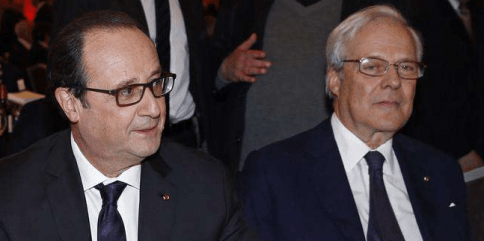
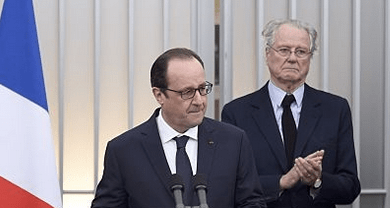

 Aletho News
