The State Department said today that it is “seriously” considering classifying Venezuela as a “terrorist state”
By Eva Golinger – June 24, 2011
During a hearing today on the Foreign Relations Committee of the House of Representatives of the United States on “sanctioned activities in Venezuela,” Congressional Democrats and Republicans asked the Obama administration to take more aggressive actions against the government of Hugo Chavez in Venezuela. The head of the Sub-Committee on Foreign Affairs for the Western Hemisphere, Connie Mack, Republican of Florida, branded the Venezuelan government “terrorist”, saying “it is time to act to contain the dangerous influence of Hugo Chavez and his relations with Iran”.
Mack is known for his rabid anti-Chavez stance. However, the Republican congressman has weight in the legislature because of his high office in the Foreign Relations Committee. His efforts, along with the head of the Foreign Relations Committee, Republican Ileana Ros-Lehtinen, managed to convince the White House to impose sanctions against Venezuela’s state oil company, Petroleos de Venezuela SA (PDVSA) last May 24. Mack has said that his only mission this year is “go for Hugo Chavez.”
Today’s hearing, devoted entirely to in Venezuela, was attended by senior officials of the State Department, the Treasury Department and the Office of Foreign Assets Control. In testimony before the Committee, the Assistant Under-Secretary of State for Latin America, Kevin Whitaker, revealed that the administration of Barack Obama is “seriously considering” labeling Venezuela a “terrorist state”. “No option is off the table and the department will continue to study any further action as may be necessary in the future,” said Whitaker.
The sanctions imposed on May 24 PDVSA fell into a sanctions law against Iran (Iran Sanctions Act) of the United States, including the prohibition of entering into contracts with the U.S. government, the use of the import and export bank of the United States and the approval of certain technology licensing. Washington’s hostile action towards Venezuela did not have much economic impact against the South American country and its oil company because it no longer had agreements with the U.S. government or loans from their banks. The sanctions did not affect the important oil supplies from Venezuela to the United States or the Venezuelan subsidiary in U.S. territory, CITGO.
However, the sanctions had an impact on diplomatic relations between Caracas and Washington, which were already in a period of deterioration. After the latter’s aggressive actions, the Venezuelan government declared relations with the United States “frozen”.
DANGEROUS TO DO BUSINESS WITH PDVSA
According to the Department of State, sanctions against PDVSA, while not impacting the country economically, “give a message to the world that it is dangerous to do business with Venezuela and PDVSA,” indicating that in the near future, Washington would act against those who enter into contracts or agreements with Venezuelan companies.
SANCTIONS AGAINST CONVIASA
The lawmakers also demanded that the State Department impose sanctions against the Venezuelan airline CONVIASA because of what they consider their “support for terrorism” because it had maintained flights between Caracas, Syria and Iran. Without a shred of evidence, the congressmen said that the flight, which is no longer operating, was “carrying radioactive material, weapons, drugs and known terrorists of Hezbollah and Iran.”
To support this dangerous “accusation”, Congress cited the German newspaper, Die Welt, which had published earlier in the week that Venezuela and Iran were building a missile base in the western Venezuelan coast-to “attack the United States.” Faced with this misinformation, President Hugo Chavez showed footage of a farm of windmills in the location where “sources” had indicated the fictional Iranian military base was.
MORE SANCTIONS
The congress also implored the State Department to consider applying more sanctions against Venezuela, including “a ban on U.S. imports” and “transactions in dollars.” Representatives of the White House said that although they are considering further action against the government of Hugo Chávez, which they consider to be “an enemy government”, they must take into account the significant supply of Venezuelan oil, which comprised 15% of U.S. imports . Some days ago, President Barack Obama authorized oil drilling in the state of Alaska in an area protected due to its environmental value, indicating that Washington is seeking to secure their energy needs before breaking the trade relationship with Venezuela.
SANCTIONS TO DATE
In addition to the sanctions imposed against PDVSA on 24 May, Washington already has taken aggressive actions against the Venezuelan government. In June of 2006, it classified Venezuela as a country that “does not cooperate sufficiently with the fight against terrorism” and imposed sanctions prohibiting US arms sales to Venezuela or of any company in the world using U.S. technology.
Since 2005, Washington also has classified Venezuela as a country that does not “cooperate in the fight against drug trafficking,” which should carry a financial penalty against the South American country. Yet, Washington clarified that since Venezuela has no loans in the U.S., the only support that could be cut would be those millions of dollars given annually to anti-Chavez groups in Haiti who work every day to overthrow the Chavez government. They included an exception to this penalty, saying that it “would not affect the U.S. financial support grants to democratic ‘civil society’ organizations, thus ensuring continued support for the destabilization of Venezuela.
In 2007, the Treasury of the United States sanctioned three senior Venezuelan officials, accusing them of ties to terrorism and drug trafficking, but never offered proof. The officials included the Director of the Directorate of Military Intelligence, General Hugo Carvajal, the then Director of Bolivarian Intelligence (SEBIN), General Henry Rangel and then-Minister of Interior and Justice, Ramón Rodríguez Chacin.
The following year, the Treasury Department designated two Venezuelans of Syrian origin, Fawzi Kan’an and Ghazi Nasr al Din, as being “terrorists” for having ties with Hezbollah, considered a terrorist group by the United States.
All indications are that Washington will continue to increase their aggression against Venezuela with future sanctions and isolation.
Translation by Aletho News
See also AFP:
US says won’t rule out options on Venezuela sanctions
June 25, 2011
Posted by aletho |
Progressive Hypocrite, Timeless or most popular, Wars for Israel |
Leave a comment
Recently I often think I have entered a parallel universe. One where the illegal is legal; the victim the criminal; where Goliath defends himself from David.
Palestinians have of course endured this experience for the last 100 years, but in recent weeks Israel’s denunciations of the upcoming Gaza Flotilla, coming on the heels of its pious condemnation of the dead refugees on the Golan Heights have stretched incredulity to breaking point.
When Israel killed 14 unarmed refugees on Nakba Day and then out did itself in a repeat performance three weeks later, I expected the international community to speak out; to condemn, to reiterate the promise of the Universal Declaration of Human Rights, that everyone has the right to leave and return to their own country. I waited in vain.
Over the mumblings of the Quartet, and Ban Ki-moon’s pathetic call for “restraint,” the most strident voice of course was Israel’s. Outraged at having to kill unarmed civilians, the turkey shoot of refugees became transformed into a defence of Israeli sovereignty, the refugees aggressors – guilty of the egregious provocation of attempting to exercise their human rights.
Today, as the Gaza Flotilla approaches, the same transformation of unarmed activists into dangerous and irresponsible extremists is already well under way. Whilst Israel rehearses its naval operations, it also ratchets up its diplomatic and media offensive. Israel’s UN Ambassador, Ron Prosor, ominously repeats the language used before last year’s massacre; declaring the flotilla “a provocation” and calling upon the international community to do all in its power to prevent it.
Omitted of course from this discourse is the statement from the International Committee of the Red Cross that the blockade is illegal; or that from the former head of UNRWA in Gaza, John Ging, who last year called for activists to break the blockade. Indeed, forgotten already is the fact that Israel’s previous assault upon the Mavi Marmara was both illegal, and, according to the UN Human Rights Council report, murderous.
In other words, all the objective legal context necessary for the public and the international community to judge the actions of the activists and Israel is absent. Instead what is presented is a narrative of Israel under attack – indeed of Israel under siege. As Proser says, “The goal of the flotilla is not to give humanitarian aid but to provoke and aid a radical political agenda.”
That radical agenda being the enforcement of international and human rights law.
And of course Israel has had its successes. The Turkish charity IHH has pulled out of the flotilla, most probably under pressure from the Turkish government which in light of the Syrian uprising appears keen to repair relationships with Israel. Even more concerning however has been the pusillanimous appeal by Ban Ki-moon to Middle East states to do everything they can to prevent the flotilla (28/05/2011).
Similarly Israel’s champions in the media have not been slow to trumpet the statements of its politicians and smear the flotilla activists as far leftists, anti-Semites or terrorists; Israeli Admiral Eliezer Marom calling it “a hate flotilla whose only goals are to clash with IDF soldiers, create media provocation and to delegitimize the State of Israel.” (Ha’aretz, 19/06/2011)
Sadly, amongst all this media storm, what is being delegitimized here is not Israel but international law. To my knowledge, no country has issued a statement warning Israel not to attack it citizens, but several have warned their citizens not to take part in the flotilla and to avoid all travel to Gaza. This sends an ominous message. In the event of an Israeli attack it puts the blame for activist casualties on the activists themselves. In effect it is governments diplomatically washing their hands whilst giving Israel a readymade alibi to be as violent as it chooses. A phenomenon, which in the context of Gaza, is anything but unusual.
Yet International Humanitarian Law requires that all States both “respect and ensure respect” for the laws of war; the Universal Declaration of Human Rights that all States promote “universal respect for and observance of human rights and fundamental freedoms.” Therefore, when governments wash their hands of Gaza and of the activists who are seeking to aid its people, they are also washing their hands of these commitments.
So let’s see the Gaza Flotilla as the challenge it really is – it is not about whether a few ships can successfully reach Gaza; or about whether some tonnes of aid can be delivered; nor is it about the delegitimization of Israel – in fact, it is about the most fundamental issue of all – whether the rule of law or the rule of might should prevail. In the end its not just the siege of Gaza the flotilla activists are challenging, but the siege of international law. So yes I agree with Ron Proser, it is “a radical political agenda.”
~
Richard Irvine is a Belfast, Ireland-based writer.
June 24, 2011
Posted by aletho |
Civil Liberties, Deception, Timeless or most popular, War Crimes, Wars for Israel |
Leave a comment
Last night at Netroots Nation, I had a conversation with Minnesota congressman Keith Ellison, the only Muslim in the Congress, and after I congratulated him for his outspokenness on Gaza, he told me of his support for the Palestinian statehood initiative in the United Nations.
“We all say we’re for two states. Everyone is for two states. Well for me this is the rubber meeting the road. Why do we oppose it if we are for the two state solution?
“Because,” he said, answering his own question, “we are captured by the Likud and to the right of the Likud. We are not captured by Israel or even by the lobby.” Israel, he said, has a more diverse political discourse than the United States, and as for the lobby in the U.S., it’s more progressive than people give it credit, it’s the Republican right that is making trouble.
“We are captured by the dispensationalists and the dominionists. It’s a myth that the Jewish lobby is doing it. Every single Jewish congressman in the Democratic Party is for two states and for peace. But the Republican party is driving the debate, and it’s dominionists and dispensationalists who need the Jews of Israel for the end times.”
I disagreed with him. His is the conventional dodge of any Democratic or by extension communal Jewish responsibility for Palestinian rightslessness, when support for Israeli maximalism is imbedded in his own party. I told Ellison about the debate between his good friend Brian Baird, a former congressman, and then-congressman Anthony Weiner in New York in March. “Weiner has said racist and intolerant things, including that there’s no occupation.”
Ellison said, “I don’t think that Anthony necessarily represents where the Democratic Party would be given its druthers.” He said that Jews vote 80 percent for Obama and their concerns are far more diverse than Israel, they have a progressive agenda. Again we differed. I said that opinion polls show that Jews are conservative on the Israel issue, against dividing Jerusalem for instance, and that this is not a trivial area for us, and we’re an empowered community.
“A lot of communities have had you know people who are not tolerant, Every community has its own us versus them going on,” Ellison said, and he included the black community. “But you got to remember 80 percent of Jews voted for Obama.”
He went on to say, “I’ve been to Sderot, I understand the Israeli security need.” He said he has heard some insensitivity toward Israeli concerns from the Palestinian solidarity community.
The fault in Ellison’s thinking is, Rightwingers can’t be driving this debate if they did not have adherents inside the Democratic Party; and they do. Anthony Weiner is hardly alone. The Democratic Party is also extreme. And Obama is, according to the Wall Street Journal and Commentary and the Jewish press, afraid of losing Jewish money, which is likely a majority of Democratic giving, if he say, comes out against settlements in the Security Council or supports a Palestinian state in the General Assembly.
I’m having some great conversations at Netroots, meaning kindred spirits, like Ellison. But in spite of Ellison’s great efforts, this issue continues to be special, even in the progressive community. Yesterday at Netroots, a heavyweight panel including two congressmen (John Garamendi, Jim McGovern) and Darcy Burner and Steve Clemons said that Democratic Party antiwar folks have to make common cause with the Republican libertarians on Afghanistan, so as to get us out of there, by putting pressure on the president. The thrust of the panel was that Obama has become a war president, and we must take him on by talking, from an American national interest, along with Republicans, about how much money we are wasting that we could be spending on education and infrastructure.
There is no panel here to talk about a creative coalition to take on the Republican right on settlements/Palestine. Because, embedded in the Democratic Party’s left-prog base, is support for Israel no matter what.
Though again, I’m having good conversations here, there are a lot of us here. Netroots is like J Street that way. The base is to the left of the leadership. More to come soon.
June 18, 2011
Posted by aletho |
Timeless or most popular, Wars for Israel |
Leave a comment
“Mother Teresa” is going to be allowed to visit the alleged displaced Syrians in Turkey!!!
Oh, sorry that is Mother Angelina. ………
Angelina Jolie. The big breasted actress. The “earth mother” to all.
Lights, makeup, camera-ACTION.
Angelina stars in the globalist feature film “Lara Croft: Slave Provider for the Elites”
The UN’s “Goodwill Ambassador”. Sheesh!
Goodwill Ambassador is a nice fancy title, but what it really means is Angelina Jolie is the PR person.
She is public relations for the UN.
You see, Goodwill merely means friendly, helpful or cooperative feelings and/or attitude.
Angelina Jolie is therefore the smiling happy face of the globalist agenda.
Don’t believe me?
Don’t want to believe that Angelina Jolie is the smiling happy face of the globalists?
That she is a tool and nothing more, of the powers that be?
Besides her UN “goodwill ambassador” position, which is a public relations job.
Ms. Jolie is a member of the Council on Foreign Relations. From the horse’s mouth
“She was honored for her philanthropic work by joining the Council on Foreign Relations. The prestigious think tank officially approved Jolie’s membership nomination.” In 2007.
Isn’t it curious that Turkey won’t let any aid/humanitarian groups into the camps.
But they will allow Angelina Jolie to visit.
What is wrong with that picture boys and girls???
EVERYTHING!
This is a Public Relations stunt!
How is it that this marginal actress will get access to refugee camps that Turkey has blocked all media and humanitarian groups from visiting??
Cameras will be in tow, as Angelina lovingly visits displaced persons.
From who knows where?
This stunt will be spoon fed to the Western audience via every TV/print media outlet
All the entertainment “news” outfits will cover this.
Guaranteeing the message of “bad Syria” will trickle all the way down to the dumbest of the dumb, the people who’s lives revolve around celebrity news.
This news, of Angelina’s visit, confirms my previous post and suspicions that the reporting surrounding the camps in Turkey is suspect. If there was a legitimate humanitarian concern then aid groups would be given access to the camps, not a tool of the globalist elite class, pushing a specific political agenda.
The overthrow of Syria’s government.
June 16, 2011
Posted by aletho |
Mainstream Media, Warmongering, Wars for Israel |
Leave a comment
Senator Mark Kirk of Illinois sure is earning the hundreds of thousands of dollars the Israel lobby dumps into his coffers. In a report based on a recent “fact-finding” trip to the Middle East, Kirk calls for U.S. naval and special operations forces to support Israel in combating the upcoming flotilla to Gaza.
Kirk’s report reads:
The IHH plans to send a second flotilla to breach Israel’s coastal security later this month. To prevent further violence, the United States should:
1) immediately designate the IHH as a terrorist entity under Executive Order 13224, which targets “terrorists, terrorist organizations, and those providing financial, technological, or material support to terrorists, terrorist organizations, or acts of terrorism”;
2) make available all necessary special operations and naval support to the Israeli Navy to effectively disable flotilla vessels before they can pose a threat to Israeli coastal security or put Israeli lives at risk; and
3) make it clear to Turkish President Erdogan that Turkey will be held accountable for any actions that support or enable the IHH to launch its flotilla.
The flotilla, set to sail to Gaza at the end of this month, aims to nonviolently challenge the Israeli blockade that has suffocated the Gaza Strip. Kirk’s call for the U.S. Navy to provide “special operations and naval support to the Israeli Navy” to stop the flotilla is particularly alarming because a contingent of American citizens will be a part of the flotilla. Kirk would have no problem, it seems, with the U.S. Navy being deployed against U.S. citizens aiming to break the blockade, which has been termed “collective punishment” by the International Committee of the Red Cross.
June 16, 2011
Posted by aletho |
Illegal Occupation, Solidarity and Activism, Timeless or most popular, Wars for Israel |
Leave a comment
The recent call by U.S. Senator Charles Schumer for increased rail safety funding and the creation of a “no-ride” list for Amtrak trains is yet another reminder of just who is stoking fear of Muslims in America.
In an interview last year with a Jewish radio talk show in New York, Senator Schumer said he believed that HaShem (an Orthodox Jewish term for “God”) gave him the name “Schumer” — which means “guardian” — so that he could fulfill his “very important” role in the U.S. Senate as a “guardian of Israel.” Presumably, Schumer’s God-given role also includes turning the country he is actually paid to represent — the United States — into an Islamophobic police state.
Americans wondering what happened to their freedoms since 9/11 need to understand the key role played by ardent pro-Israelis like Schumer in undermining their civil liberties under the guise of protecting them from terrorism.
On October 11, 2001, exactly one month after 9/11, Senator Joe Lieberman introduced a bill to establish the Department of Homeland Security. Since then, “the No. 1 pro-Israel advocate and leader in Congress” has been the main mover behind such draconian legislation as the Protect America Act of 2007, the Enemy Belligerent, Interrogation, Detention, and Prosecution Act of 2010, and the proposed Terrorist Expatriation Act, which would revoke the citizenship of Americans accused of providing “material support” to a foreign terrorist organization, i.e. groups such as Hamas and Hezbollah that are legitimately resisting Israeli occupation and aggression. Lieberman, who was Barack Obama’s mentor when he entered the Senate, has even proposed a bill which would give the president the power to kill the Internet in the event of a so-called “national cyber-emergency.”
Although it would be hard to think of anyone who has done more to undermine American freedoms than Joe Lieberman, Michael Chertoff runs him a close second. A mere 45 days after the September 11 attacks, the infamous 342-page document known as the USA PATRIOT Act was signed into law. It was co-authored by Chertoff, then head of the Justice Department’s criminal division. Chertoff, whose mother, Livia Eisen, was an El Al air hostess believed to have had links to the Mossad, was appointed secretary of Homeland Security in 2005, after having been endorsed for the job by Senators Schumer and Lieberman.
Since he left public service in 2009, Chertoff co-founded the Chertoff Group, a security and risk-management firm, whose clients include a manufacturer of full-body scanning machines. After a young Nigerian without a passport — the so-called Christmas Day “underwear bomber” — was allowed, in the words of Haaretz, to “slip through” security at Schiphol Airport by the Israeli security firm, ICTS International (which was established by former members of Israel’s internal security service, the Shin Bet), the former Homeland Security chief was all over the mainstream media touting full-body scanners as the answer to America’s airline security problems.
On September 11, 2001, within hours of planes having struck the World Trade Center (recently leased by an extraordinarily “lucky” Larry Silverstein, a friend of not one but four Israeli prime ministers), the then former Israeli Prime Minister Ehud Barak dropped into the BBC studios in London to interpret what the attacks would mean for travellers’ civil liberties. “In this area, we will suffer,” Barak confidently suggested. “It will not be so easy to go aboard an airplane in the near future. But we have no way but to stand firm facing terror. Otherwise, all our way of life will be threatened.”
Later that evening, Benjamin Netanyahu let slip that the deaths of almost 3,000 Americans was “very good” for Israel. In particular, the mass murder proved to be very good for an emerging sector of the Israeli economy. In “Laboratory for a Fortressed World,” Naomi Klein detailed the post-9/11 “explosion of Israel’s homeland security sector.” Writing in 2007, Klein observed: “Before 9/11 homeland security barely existed as an industry. By the end of this year, Israeli exports in the sector will reach $1.2 billion — an increase of 20 percent.”
Consequently, Americans concerned about what “homeland security” is doing to their civil liberties need to be asking: Exactly whose “homeland” and whose “security” is being protected by the likes of Schumer, Lieberman and Chertoff?
It certainly isn’t America’s.
Maidhc Ó Cathail is an investigative journalist and Middle East analyst.
June 10, 2011
Posted by aletho |
Civil Liberties, Wars for Israel |
Leave a comment
Amid a whole host of abstentions and ‘no’ votes by Russia and China, the UN nuclear regulator votes to report Syria to the world body as what it describes as a former harborer of an undeclared nuclear reactor.
The motion was approved by the International Atomic Energy Agency (IAEA)’s board of governors in New York on Thursday with 17 members endorsing the move and 11 holding back their vote, AFP reported.
The body will therefore refer Syria to the UN Security Council over allegations that it built a nuclear reactor that was destroyed in 2007 by Israeli bombs.
The vote came a few days after IAEA’s Director General Yukiya Amano slammed the Israeli regime for the arbitrary attack on what Tel Aviv had called ‘a Syrian nuclear facility.’
Amano expressed regret that the bombing had been carried out “without the agency having been given an opportunity to perform its verification role.”
In September 2007, at least four Israeli fighter planes crossed into the Syrian airspace and launched an attack on what turned out to be a research center that belonged to the regional grouping of the Arab League in the city of Deir ez-Zor in the northeast of the country.
The assault caused a significant rise in tension between the two sides, which are technically at war due to Tel Aviv’s 1967 occupation and annexation of the Golan Heights in southwestern Syria.
“Rather than force being used, the case should have been reported to the IAEA,” Amano had said.
Damascus denies harboring a nuclear weapons program. It opened up the attacked site to IAEA inspectors in 2008 and has pledged to fully cooperate with the agency regarding the issue.
Tel Aviv has neither confirmed nor denied bombing the site. Former US President George W. Bush has, however, written in his memoire, published last year, that the attack took place after he resisted former Israeli Prime Minister Ehud Olmert’s request for Washington to undertake the strike.
The developments come amid Tel Aviv’s continued refusal to declare its nuclear arsenal and its insistence on not joining the Nuclear Non-Proliferation Treaty (NPT).
Since 1958, when Tel Aviv began building its Dimona plutonium- and uranium-processing facility in the Negev desert in southern Israel, it has secretly manufactured numerous nuclear warheads, thus becoming the sole owner of such weapons in the Middle East.
Former US President Jimmy Carter has attested to the existence of the arsenal, which he has said includes between 200 to 300 nuclear warheads.
Israel has, however, neither confirmed nor denied possessing nuclear arms under a deliberate policy of ‘nuclear ambiguity.’
June 9, 2011
Posted by aletho |
Wars for Israel |
Leave a comment
44 years after attack, US Politicians still cover for Israel
Salem-News, Ed Hunt – A year after the bloody Israeli attack on the Mavi Marmara, the Turkish humanitarian aid ship bound for Gaza, I am reminded of an earlier Israeli attack on another ship that took place several decades ago.
The 8th of June marks a little noticed anniversary date that should live in infamy in the annals of modern US history. It was the day, during the 1967 war, that the Israel attacked the US spy ship, the USS Liberty, off the coast of Egypt. Thirty four US servicemen were killed and one hundred seventy two were wounded in this well documented, unprovoked attack.
Related articles & reports
“Accidental” is what Israel, and her defenders proclaim. It was an Egyptian ship, they “mistakenly” thought. Specifically, an out-of-service Egyptian horse carrier, the Israeli government later explained, with the most ‘heartfelt regret.’ It’s their story and they’re sticking to it. How many Egyptian vessels were flying an oversized US flag (riddled with bullet holes from Israeli weapons fire) the Israelis are at a loss for words.
According to the ‘Independent Commission of Inquiry into the Attack on the USS Liberty’, this accidental air and naval attack lasted two hours “during which time unmarked Israeli aircraft dropped napalm canisters on the Liberty’s bridge, and fired 30mm cannons and rockets, causing 821 holes, more than 100 of which were rocket size; survivors estimate 30 or more sorties were flown over the ship by a minimum of 12 attacking Israeli planes which were jamming all five American emergency radio channels.”
This ‘accident’ happened after only eight, yes eight, hours of aerial surveillance, on the Liberty, which had unmistakable American markings.
Amazingly, the response of the US government to this attack has been unprecedented. The Johnson White House recalled a Sixth Fleet military rescue en route toward the scene while the attack was still in progress. The victims, the survivors and their families were betrayed by their government. Surviving crew members were threatened with “court-martial, imprisonment or worse” if they revealed the truth, and the USS Liberty “incident” was the subject of an official cover-up by the Johnson administration. Every US administration since has given Israel a free pass on the attack and no standing administration, including the Obama administration, has even uttered a word publicly about it.
The truth about this attack and cover-up continues to be officially concealed from the American people, although many of those who have since retired from political, military and diplomatic circles have acknowledged it. However, to no ones surprise, the mainstream media to this day have largely maintained an unofficial blackout policy on the subject. [See American Media Miss the Boat]
Now is the time for speaking truth to power. It is a very opportune moment to revive the issue. Over the years there have been numerous attempts to press the US government to come clean and to hold the Israeli government accountable.
Due to the influence of the pro-Israel lobby, the White House and/or the Congress, no matter which party is in charge, have continued to shield Israel, from any measure of accountability. Perhaps it’s time to turn up the volume, and turn on the spotlight, in a very public way.
We’ve armed Israel, provided billions of dollars in aid and shielded them diplomatically for decades. US taxpayers have been subsidizing the occupation of the Palestinian Territories since the beginning.
President Barack Obama’s statements about returning to the 1967 borders were dismissed by Israeli Prime Minister Benjamin Netanyahu during the recent AIPAC (American Israeli Public Action Committee) Convention. It seemed clear as always, that no voice in the US with the capability of speaking out will ever find the task of helping Palestine to be a simple one. In the meanwhile, Jerusalem continues to be the scene of ever expanding settlement construction.
I suspect that there is far greater diversity of opinion on the Israel-Palestine conflict among the US public than is tolerated in the US Congress. I would venture to predict that if the details of the USS Liberty case were be placed before the US public, we might see a drastic rise in opposition to the billions in US aid that Israel rakes in every year. It might be just what the Congress needs to find its backbone and the courage to snub the powerful pro-Israel interests that continue dictate US Middle East policy.
On this occasion of the 44rd Anniversary of the Israeli attack on the Liberty, I will be contacting my US Senators and my Congressperson. I will bring them up to speed on the Liberty case, so that they cannot claim lack of knowledge of this atrocity.
Materials to distribute about Liberty
I will make clear that their failure to support the re-opening of the Liberty case will be an affront to the memory of the victims of Israel’s murderous assault. Politicians love to posture as to how much they love the troops. With your help, we can break down what has seemed like an insurmountable obstacle: Israel’s untouchable status in US politics. In the process, perhaps we can get a little recognition and justice for the crew and families of the Liberty, as well as justice for the Palestinians, who have been denied a homeland for far too long.
June 8, 2011
Posted by aletho |
Deception, False Flag Terrorism, Timeless or most popular, Wars for Israel |
Leave a comment
David Brooks admitted everything yesterday. Monstrous column. Who will call him on these belligerent attitudes? He said that the peace process is in essence the pacification of Arab countries. And so it required the invasion of Iraq and, prospectively, getting rid of Qaddafi, Assad, and Hamas. Not a word about the occupation, not a word about 25-to-1 ratio of water used, Jews to Palestinians in the West Bank. This is the neoconservative mind: the only issue is Israel’s dominance in the region, and our support for it. Be thankful to Brooks for admitting it.
In fact, the current peace process is doomed because of the inability to make a categorical distinction. There are some countries in the region that are not nice, but they are normal – Egypt, Jordan, Saudi Arabia. But there are other governments that are fundamentally depraved. Either as a matter of thuggishness (Syria) or ideology (Hamas), they reject the full humanity of other human beings. They believe it is proper and right to kill innocents. They can never be part of a successful negotiation because they undermine the universal principles of morality.
…There won’t be peace so long as depraved regimes are part of the picture. That’s why it’s crazy to get worked into a lather about who said what about the 1967 border. As long as Hamas and the Assad regime are in place, the peace process is going nowhere, just as it’s gone nowhere for lo these many years.
That’s why it’s necessary, especially at this moment in history, to focus on the nature of regimes, not only the boundaries between them. To have a peaceful Middle East, it was necessary to get rid of Saddam’s depraved regime in Iraq. It will be necessary to try to get rid of Gadhafi’s depraved regime in Libya. It’s necessary, as everybody but the Obama administration publicly acknowledges, to see Assad toppled. It will be necessary to marginalize Hamas. It was necessary to abandon the engagement strategy that Barack Obama campaigned on and embrace the cautious regime-change strategy that is his current doctrine.
This is unreconstructed neoconservatism, transplanted to the Arab spring, and signalling that the Palestinians must never have self-determination, unless it’s in Jordan. Notice the “universal principles of morality” — which Brooks, who has visited Israel a dozen times and was raised as a Jew to be “gooey-eyed” about the place– fails to apply to Israel’s occupation. No, the neoconservative principle is that Arabs must be bludgeoned by a superpower into accepting the presence of Israel. As Ed Koch used to say, How’m I doing??
Note as well that Brooks says “cautious regime change” is Obama’s policy. Well Brooks is a favorite of Obama, and it’s hard to imagine him saying anything like that without a signal from the White House. So Obama is pushing for the removal of Assad and Gaddafi.
June 5, 2011
Posted by aletho |
Ethnic Cleansing, Racism, Zionism, Mainstream Media, Warmongering, Timeless or most popular, Wars for Israel |
Leave a comment
Seymour Hersh’s new piece in the New Yorker has generated a fair amount of buzz, so much so that Iran hawks have quickly leaped into action to try to discredit it. Virtually none of the criticism of Hersh’s piece has actually addressed the substance of his article, however, and since the article is subscription-only, it’s possible that not many people have actually gotten a chance to read it. It may therefore be worthwhile simply to spell out what Hersh’s piece actually says.
By far the most significant revelation in the piece concerns the recently-completed 2011 National Intelligence Estimate (NIE). NIEs represent the consensus judgments of the 16 agencies that make up the U.S. intelligence community, and as such their findings frequently have major political ramifications. The 2007 NIE was particularly important (and contested), for it concluded that Iran had halted its nuclear weapons program in 2003 and found no evidence that the program had resumed.
Predictably, the 2007 NIE elicited howls of outrage from hawks who have been pushing military action against Tehran, and in the years since they have constantly attempted to discredit it. It’s worth making clear, however, just what the NIE did and didn’t say. It found no evidence of an active Iranian nuclear weapons program — that is, a nuclear program with elements that had no conceivable civilian uses (e.g., nuclear warhead design). The NIE never claimed that Iran had halted its nuclear program entirely, only that none of the nuclear program’s projects were unambiguously military in scope. Thus, to point to the fact that Iran continues to enrich uranium as evidence that the 2007 NIE has been discredited, as the Iran hawks have frequently tried to do, simply misses the point; the NIE did not suggest that Iran had stopped enriching uranium.
Nor did the NIE claim that it’s inconceivable that the Iranian regime ultimately seeks a nuclear weapon. It’s quite plausible that the regime does (not least, to deter U.S. or Israeli military action). What the NIE claimed was that there was no hard evidence or smoking gun proving that this was the case. Thus the relevant question is not whether we believe in our heart of hearts that Iran is seeking nukes, but whether there is any incontrovertible evidence that it is. This question is particularly salient in the wake of the Iraq war intelligence fiasco. In the runup to war, most people (including many war opponents) suspected that Saddam Hussein had WMD programs of some kind, but the U.S. would have been better served to put less weight on such suspicions and more weight on the actual evidential record.
So what does the Hersh piece actually say? The biggest revelation is that despite four years of intense political pressure from Iran hawks pushing the intelligence community to renounce the 2007 NIE, the just-released 2011 NIE continues to find no clear evidence of an Iranian nuclear weapons program. According to Hersh, analysts at the military’s Defense Intelligence Agency (DIA) in particular have pushed back against this political pressure; in fact, the DIA analysts suggest that Iran’s nuclear weapons program was primarily directed at Saddam Hussein’s Iraq, not Israel, and was abandoned following the fall of Saddam.
Typically, a declassified version of the NIE is released for public consumption. This has not been done with the 2011 NIE, however, for reasons that are unclear. It’s possible that the Obama administration fears a political backlash along the lines of the 2007 version, or that it is worried that publicizing the new NIE would undercut its relatively hard-line stance on Iran. Regardless, the fact that a declassified version of the NIE has not been released means that Hersh’s piece is the first time the public is hearing about it.
In light of this, it is obvious that most of the criticism of Hersh’s piece completely ignores its central contention. The issue, once again, is not whether we should believe in our heart of hearts that Iran is seeking a nuclear weapon. The issue is whether the U.S. intelligence community has found any incontrovertible evidence that this is the case. If Hersh’s account of the 2011 NIE is correct, the intelligence community has not, and this is a fact that surely deserves to be mentioned in discussions of the Iranian nuclear issue.
June 4, 2011
Posted by aletho |
Mainstream Media, Warmongering, Wars for Israel |
Leave a comment
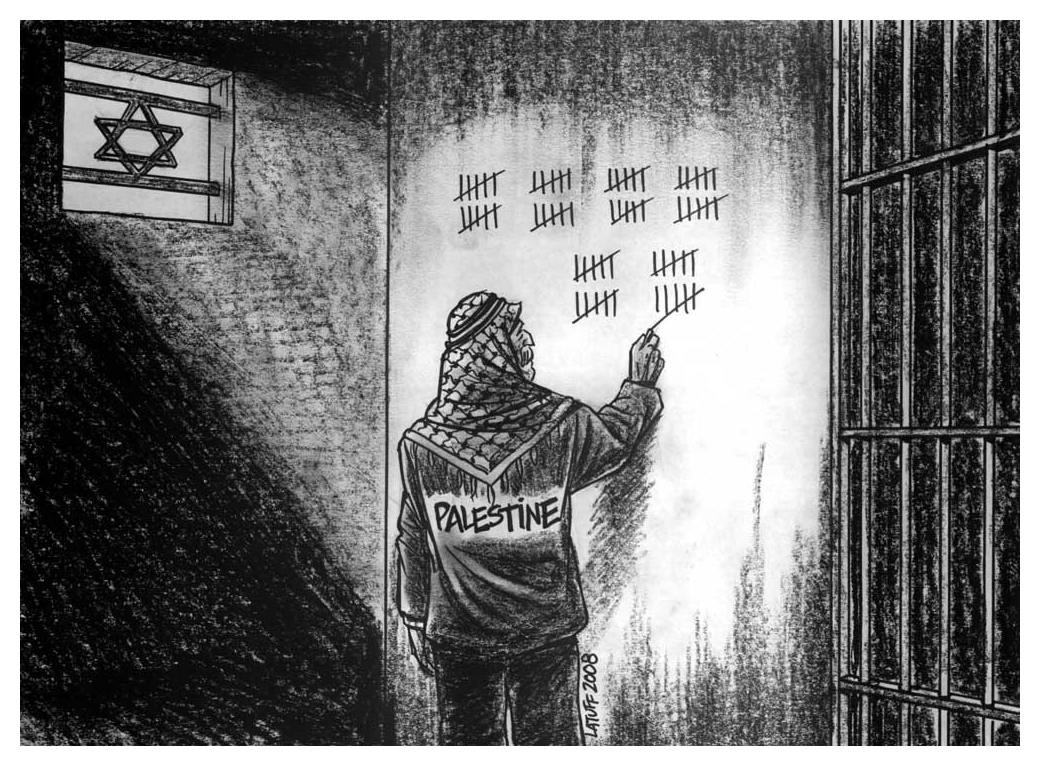
Former Minister of Detainees, Hamas political official, Wasfi Qabha, stated that there are no real indications of reconciliation in the West Bank as the Palestinian security forces are still interrogating Hamas members and supporters.
Qabha told the Haas-affiliated Palestinian Information Center that “the situation has not changed in the West Bank’”, adding that political prisoners are still in prison, and more persons are being interrogated and questioned by the security forces.
The Hamas leader further stated that despite repeated promises by the Palestinian security forces to release political prisoners, the P.A is still holding captive more than 35 prisoners.
He added that he hopes all political prisoners will be released without any delays and obstructions.
“More than a month have passed since the unity agreement was signed”, Qabha said, “But most of the prisoners are still behind bars”.
Qabha also stated that such violations are against reconciliation, and that the Fateh movement of President Mahmoud Abbas in the West Bank must act to protect unity and national interests.
June 4, 2011
Posted by aletho |
Deception, Full Spectrum Dominance, Subjugation - Torture, Wars for Israel |
Leave a comment
Remember how the U.S. government “proved” that Osama bin Laden (and, by extension, apparently, the entire nation of Afghanistan) was responsible for 9/11? No, you don’t, since at least before the invasion of Afghanistan happened, there was little if any actual proof. But at least it was, in some way at least, a provable event.
Then there was the invasion of Iraq. Here, the proof was a combination of faked and imaginary, but again, the alleged reason for the invasion was, at least, in some way provable.
But now we have the latest declaration: the Pentagon says that cyber attacks on the U.S. will be met with physical counterattacks. Aside from the minor Constitutional issue (“If you shut down our power grid, maybe we will put a missile down one of your smokestacks,” an unnamed military official told the Journal, which kind of skips the “Congress authorizes wars and the President orders them” step), we are now really in the realm of the unprovable, not to mention the spoofable.
How can we not imagine the possibility that hackers in country A could “shut down our power grid” and make it look to all the world as if the attack came from country B? Or how can we not imagine, to be even more paranoid but not that much less realistic, that the U.S., wanting to attack Iran, could have one part of its cyber-war apparatus shut down the power grid and make it look to another part of the apparatus that the attack came from Iran? Or perhaps the evidence, which none but the tiniest handful of people would ever see anyway, will be inconclusive (just like the evidence of the Lockerbie bombing, to name but one of many examples), but the U.S. will announce (and who will be able to disprove them?) that it was conclusive and go ahead and attack whoever they want to?
It’s a scary development.
May 31, 2011
Posted by aletho |
Deception, False Flag Terrorism, Timeless or most popular, Wars for Israel |
Leave a comment

 Aletho News
