With Barada TV, the anti-Assad satellite channel referred to by Soraya Sepahpour-Ulrich, all roads lead to Israel.
According to an April 18 Washington Post report, the State Department’s Middle East Partnership Initiative (MEPI) has funneled up to $6 million to Syrian opposition groups such as Barada TV since 2006. MEPI is supervised by Tamara Wittes, a longtime pro-Israel advocate of democratic reform in the Middle East and author of Freedom’s Unsteady March: America’s Role in Building Arab Democracy. The Deputy Assistant Secretary for Near Eastern Affairs (NEA), where she coordinates democracy and human rights policy for the NEA Bureau, is a former director of the Saban Center’s Middle East Democracy and Development (MEDD) Project. As to the nature of MEDD’s concern for the Middle East, a New Yorker profile of Haim Saban is revealing:
His greatest concern, [Saban] says, is to protect Israel, by strengthening the United States-Israel relationship. At a conference last fall in Israel, Saban described his formula. His ‘three ways to be influential in American politics,’ he said, were: make donations to political parties, establish think tanks, and control media outlets.”
Asked to comment on the Post’s allegations, Wittes responded:
“There are a lot of organizations in Syria and other countries that are seeking changes from their government. That’s an agenda that we believe in and we’re going to support.”
According to the Post, the money was funneled through an LA-based non-profit, the Democracy Council. Jim Prince, the founder and president of the Democracy Council, is also an advisor to CyberDissidents.org, which was launched in 2008 by the Jerusalem-based Adelson Institute for Strategic Studies “to research and focus attention on the online activities of democracy advocates and dissidents in the Middle East, in the hope of empowering them at home and raising awareness of their plight abroad.”
Dissidents who put their faith in such improbable champions of their freedom would do well to remember the words of Sheldon Adelson, the Las Vegas casino mogul whose $4.5 million grant set up the institute in 2007. Referring to a conversation he had with Iranian dissident Amir Abbas Fakhravar at a neoconservative 2007 Prague conference on “Democracy and Security,” the Likudnik casino magnate reportedly said, “I like Fakhravar because he says that, if we attack, the Iranian people will be ecstatic.” But when another Iranian pro-democracy activist disputed that assumption, Adelson candidly responded:
“I really don’t care what happens to Iran. I am for Israel.”
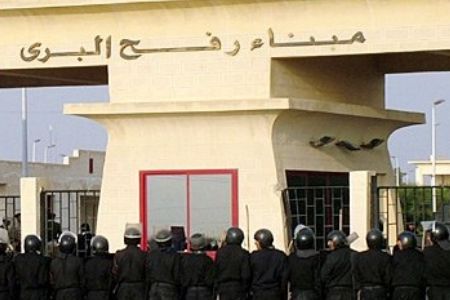
Egyptian authorities have reportedly blocked access to the Sinai Peninsula to prevent activists from reaching the Gazan town of Rafah.
Pro-Palestinian activists plan to march to the Gaza Strip on Sunday, to mark the 63rd anniversary of the day of Nakba, or catastrophe, which marks the day when Israel occupied Palestinian lands.
The Egyptian army has warned against rallies at the Rafah border crossing with the Gaza Strip.
However, a convoy left Cairo’s Liberation square on Saturday to head to Sinai.
Organizers say their march is to show that the Palestinian issue concerns all Arabs and supporting it remains a concern for Egyptians. The activists are calling for Palestinian statehood, an end to the Israeli occupation, as well as the release of all Palestinian prisoners.
Egyptians have frequently demanded that their military rulers abandon Israel and lift the blockade on the besieged Gaza Strip.
Egypt’s political parties say the Gaza blockade serves the interests of Israel and the US and threatens regional stability and independence.
Under the US-backed Mubarak regime, Egypt consistently served Tel Aviv’s interests in the region by helping to impose a crippling blockade on the impoverished Strip after the democratically-elected Hamas government took control of the territory in 2007.
Regarding Philip Weiss’s recent post “Lobbying for Syrian dictatorship, Israel leaves no doubt about its support for counterrevolution in Arab world,” I believe there’s far stronger evidence, contrary to the assertions of Ben Wedeman and Ted Koppel, that Israel is actually supportive of revolution throughout the Arab world.
The clearest example of Israeli support for pro-democracy Arab dissidents is an organization called CyberDissidents.org. It was launched in 2008 by the Adelson Institute, then chaired by Natan Sharansky. The Adelson Institute was located at the Netanyahu-linked Shalem Center, financed by Ronald Lauder and on whose board Bill Kristol sits. Directed by Sharansky protégé, David Keyes, CyberDissidents.org was created “to research and focus attention on the online activities of democracy advocates and dissidents in the Middle East, in the hope of empowering them at home and raising awareness of their plight abroad.” Advising Keyes was neocon guru Bernard Lewis, who would have been very much at home at the 2007 Prague conference organized by Sharansky on “Democracy & Security” (whose participants reminded one Middle East analyst of Murder, Inc!). Also in attendance were some of the neocons’ favourite Arab dissidents. All of this is covered in more detail in my article “Arab Dissidents’ Strange Bedfellows.”
Moreover, CyberDissidents.org is only the tip of the iceberg. Check out, for example, the Saban Center’s Project on Middle East Democracy and Development (MEDD), WINEP’s Project Fikra, and the CFR’s Middle East Program to see how keenly pro-Israelis have for some time been promoting “democratic change” throughout the Middle East. Then there’s the prominence of pro-Israelis at “democracy promotion” near-governmental organizations such as the National Endowment for Democracy, the National Democratic Institute, the International Republican Institute and Freedom House, as well as “NGOs” like the International Center on Nonviolent Conflict (a subject which Jeff Blankfort and I recently discussed on his radio programme). There’s also Joshua Muravchik’s 2009 book, The Next Founders: Voices of Democracy in the Middle East. In fact, the list of pro-Israelis who have enthusiastically backed what Shimon Peres approvingly refers to as the Arab “awakening” goes on and on…
Two years ago at the National Endowment for Democracy (NED) in Washington, DC., Joshua Muravchic spoke about his book, “The Next Founders: Voices of Democracy in the Middle East.” In “The Next Founders,” he profiles seven people from Saudi Arabia, Iraq, Iran, Egypt, Palestine, Kuwait, and Syria. It’s especially noteworthy that the Jewish Institute for National Security Affairs (JINSA) advisor was not promoting democratic voices only in regimes that would be considered unfriendly to Israel.
There to discuss Muravchik’s book was Tamara Wittes, another longtime pro-Israel advocate of democratic reform in the Middle East and author of Freedom’s Unsteady March: America’s Role in Building Arab Democracy. The then director of the Saban Center’s Middle East Democracy and Development (MEDD) Project is currently Deputy Assistant Secretary for Near Eastern Affairs (NEA), where she coordinates democracy and human rights policy for the NEA Bureau and supervises the State Department’s Middle East Partnership Initiative (MEPI). According to an April 18 Washington Post report, MEPI has funneled up to $6 million to Syrian opposition groups since 2006. Wittes commented:
“There are a lot of organizations in Syria and other countries that are seeking changes from their government. That’s an agenda that we believe in and we’re going to support.”
Presumably, those “other countries” included Egypt. After all, as far back as 2005, while she was still working for Haim Saban’s Israel-protecting think tank, Wittes had written a critical piece on Hosni Mubarak entitled “Elections or no, he’s still Pharaoh,” in which she predicted that Egyptians would soon “start thinking, along with other Arabs, about hitting the streets.”
The US government has frozen the bank accounts belonging to Hatem Abudayyeh, a Palestinian community organizer and director of a social service organization serving the Arab community in Chicago, and his wife, Naima.
Meanwhile, several members of Congress have written to the Obama administration to express their concerns about violations in civil liberties as a result of earlier government actions toward Abudayyeh and other activists.
The freezing of the Abudayyeh family’s bank accounts on Friday, 6 May is the latest development in a secret grand jury investigation that has been launched by US District Attorney Patrick Fitzgerald’s office in Chicago. The freezing of the accounts has raised concerns that criminal indictments in the case may be imminent.
“I was downtown [in Chicago] on Friday, I had parked my car in a garage and when I tried to use my debit card to get out, it was declined,” Hatem Abudayyeh, director of the Arab American Action Network, told The Electronic Intifada. “I talked to Naima right away and she said she had no access with her card either, so I had to call a friend in the [Chicago] Loop to borrow money to get my car out of the garage.”
The next day the couple went to their bank branch, where the manager said that he had no information but that their accounts were frozen as a result of a government order.
The Abudayyehs’ accounts were frozen just two days before Mother’s Day is observed in the United States. “We were planning on having lunch with my mom and her family, and I couldn’t buy flowers or anything like that,” Hatem Abudayyeh said.
Last September, federal agents raided and searched the Abudayyehs’ home and confiscated the family’s belongings, including financial records and, as Hatem Abudayyeh told The Electronic Intifada last November, “everything that said ‘Palestine’ on it.” Federal agents also confiscated home videos that Naima Abudayyeh, a Palestinian immigrant, had recorded during a family visit to Palestine last summer.
The Abudayyehs’ five-year-old daughter was present during the raid and the family was mainly confined to their small living room during the hours-long search through their home.
That same day, federal agents raided several other homes and offices across the Midwest, serving subpoenas to 14 anti-war and international solidarity activists to appear before a federal grand jury in Chicago. After those activists refused to testify to a grand jury, saying that they were being unfairly targeted because of their work organizing in opposition to US foreign policy in the Middle East, Afghanistan and Colombia, nine additional activists were served subpoenas around the month of December.
The nine additional activists served subpoenas are all residents of Chicago and all are Palestinians or those who have organized in solidarity with the Palestinian people. The Electronic Intifada’s managing editor, Maureen Clare Murphy, was served a subpoena on 21 December. The subpoena issued to Murphy is not connected to her work with The Electronic Intifada, but likely targets her because of her Palestine solidarity activism.
All 23 activists who have received subpoenas since September have refused to testify, despite risking being jailed for doing so.
A grand jury, no longer in use anywhere outside the US, is an investigative tool that allows the government to compel citizens to testify even if they are not suspected of any crime. Activists targeted by these subpoenas, their lawyers, and their supporters, believe the government is using the grand jury as a form of political inquisition and intelligence gathering, targeting groups and individuals working for a more peaceful US foreign policy.
Attack on the US Palestinian community
According to a statement made by the Committee to Stop FBI Repression and the Coalition to Protect People’s Rights and also distributed by the US Palestinian Community Network, “Not only does the government’s action [to freeze the bank accounts] seriously disrupt the lives of the Abudayyehs and their five-year-old daughter, but it represents an attack on Chicago’s Arab community and activist community and the fundamental rights of Americans to freedom of speech” ( “Demand US Attorney Fitzgerald unfreeze the bank accounts of the Abudayyeh family,” 8 May 2011).
Of the total of 23 activists who have been subpoenaed, seven are Palestinians from Chicago — home to one of the largest Palestinian communities outside of the Middle East. Scores of Arab community and Palestine solidarity organizations, as well as anti-war groups, civil liberties organizations and faith groups, have issued statements condemning the investigation and attempts to criminalize the Palestine solidarity movement in the US.
The investigation for which the 23 activists have been targeted takes places in the context of widespread surveillance and repression of the Muslim and Arab communities in the US.
And as The Electronic Intifada reported in November of last year, the investigation targeting the subpoenaed activists is just the latest chapter in a long history of US government attempts to criminalize Palestine community organizing and support work in the country.
In December 2001, the US government shut down the largest Muslim charity in the US, the Holy Land Foundation, which sent direct humanitarian aid to Palestinians living under Israeli military occupation, amongst other places. Five defendants prosecuted in relation to the case are serving out lengthy prison sentences of 15 to 65 years (for more information, see the Holy Land Foundation case website).
Other prominent Palestinian community organizers in the US who have been put on trial in recent years because of their work educating Americans about the impact of US military aid to Israel and raising funds for humanitarian assistance for Palestinians living under occupation are Dr. Sami al-Arian, Muhammad Salah and Dr. Abdelhaleem Ashqar.
All three were acquitted by juries of US citizens of all terrorism and racketeering-related charges but have been charged with or convicted of obstruction of justice or contempt of court for refusing to name the names of other Palestinian activists in the US and in the occupied West Bank and Gaza Strip.
Investigation into material support law violations
While the US government does not comment on grand jury investigations or even confirm that they are underway, search warrants used to raid activists’ homes last September indicate that the home invasions and subpoenas are part of an investigation into violations of the law banning material support for foreign terrorist organizations.
The material support legislation was enacted under the Clinton administration, expanded with the PATRIOT act under Bush and expanded even further last summer after the Supreme Court ruled in Holder v. Humanitarian Law Project that political speech can be considered material support for foreign terrorist organizations if done in a “coordinated way.”
The broad scope of the material support laws — especially after last summer’s Supreme Court decision — has provoked sharp criticism from civil liberties groups. Humanitarian agencies have also protested the breadth of the laws, saying it impacts their ability to carry out their work.
Critics of the legislation have pointed out that had these laws been in place during the South Africa anti-apartheid movement, it would have criminalized the entire movement in the US. At the peak of the movement, the Reagan administration’s State Department placed Nelson Mandela’s party, the African National Congress (ANC), on the designated foreign terrorist organization list. The South Africa solidarity movement in the US took direction from the ANC.
Undercover agent at center of case
The basis of the investigation for which Abudayyeh and the 22 other activists have been targeted appears to be the word of an undercover law enforcement agent who infiltrated anti-war groups in Minneapolis.
The agent, who went by the name of Karen Sullivan, became involved in the anti-war movement in Minneapolis around the time of the 2008 Republican National Convention — one of the largest anti-war protests in the US in years (“Who was Karen Sullivan?” City Pages, 20 January 2011). The 14 activists subpoenaed in September were all involved in organizing permitted marches to protest the convention.
In addition to apparently surveilling activists, the undercover agent also disrupted their work. “Sullivan” elected to join an educational trip to Israel and the occupied West Bank in the summer of 2009. When she and the two women from Minneapolis with whom she was traveling arrived at Ben Gurion International Airport near Tel Aviv, they were detained and ultimately deported. The two women with whom the agent was traveling have since been subpoenaed to appear before a grand jury.
The identity of the undercover agent has been confirmed in discussions between the activists’ legal team and the US attorneys. However, the undercover agent’s identity was not disclosed during the discovery process of the lawsuit filed by Mick Kelly — one of those raided in September — after Kelly was shot at close range and injured by a high-velocity marking device during one of the Republican National Convention marches.
Attorneys representing Kelly, one of the organizers of the march, filed a motion in March of this year to reopen the lawsuit discovery process and subpoena “Sullivan” as she was present when he was shot (“Lawsuit against police violence at Republican National Convention to go forward,” Fight Back! News, 4 March 2011).
Call to action
The Committee to Stop FBI Repression and the Coalition to Protect People’s Rights are calling on supporters to call US District Attorney Fitzgerald’s office today to protest the ongoing investigation and the freezing of the Abudayyeh family’s bank accounts (“May 9: Demand US Attorney Fitzgerald unfreeze the bank accounts …”).
Meanwhile, hundreds of concerned citizens have signed a pledge issued by the Committee to Stop FBI Repression to take action in the event of activists being jailed for refusing to testify to a grand jury or being indicted (Pledge to resist FBI, grand jury repression).
Activists across the country have built a broad support movement that has seen trade union resolutions in support of the targeted activists from locals representing more than 600,000 workers in the US. They have also lobbied to elected representatives and several members of Congress have written letters to the Obama administration raising concern of the investigation’s violations of civil liberties (see “Statements from legislators about the case,” Committee to Stop FBI Repression).
How many pro-Israelis have to support the Arab uprisings before people begin to suspect that Israel might be partial to a little “democratic change” in the region?
The latest pro-Israel advocate of democracy promotion in the Middle East to come to my attention is Council on Foreign Relations (CFR) senior fellow Steven A. Cook. Writing on his CFR blog on May 3 about the unrest in Syria, the Hasib J. Sabbagh Senior Fellow for Middle Eastern Studies urged President Obama to publicly back the opposition, increase sanctions, and call for President Assad’s departure. Despite the risk of “generalized instability” that would likely ensue from Assad’s fall, Cook opined that the “potential for isolating Iran … is worth the risk.”
Like many a policy “expert” willing to take risks with American interests, Cook has quite an impressive pro-Israel pedigree. In the late 1990s, he was a Soref Research Fellow at the Washington Institute for Near East Policy, the AIPAC-created think tank. In 2004, he authored “The Unspoken Power: Civil-Military Relations and the Prospects for Reform” for the Saban Center for Middle East Policy — named after Haim Saban, the Egyptian-born Israeli-American media mogul who admitted to the New York Times that Israel was the only issue that concerned him. In that paper, Cook advocated political liberalization and economic reform in the Middle East and the broader Islamic world, a theme which he pursued as director of the CFR-sponsored Independent Task Force on U.S. policy toward reform in the Arab world, and in his 2007 book, “Ruling But Not Governing: The Military and Political Development in Egypt, Algeria, and Turkey.” But when he isn’t busy promoting democratic reform in Israel’s neighbourhood, he reportedly “works overtime” to make sure the U.S. shares Israeli policy objectives.
And like the National Endowment for Democracy’s program officer for Middle East and North Africa, Amira Maaty, and former State Department official and CFR adjunct fellow Jared Cohen, (who “has written about how technology can empower citizens in repressive regimes”), Cook just happened to arrive in Cairo in time to witness the protests that could herald the reform he has long sought.
If it’s true that, as Shakespeare famously put it, “Misery acquaints a man with strange bedfellows,” then pro-democracy Arab dissidents must be very miserable indeed.
CyberDissidents.org is a project launched in 2008 by the Jerusalem-based Adelson Institute for Strategic Studies “to research and focus attention on the online activities of democracy advocates and dissidents in the Middle East, in the hope of empowering them at home and raising awareness of their plight abroad.” Until its demise in 2009, the Adelson Institute was located at the Shalem Center, a controversial research institute associated with right wing Zionist causes. Founded in 1994, the Shalem Center was initially funded by its current chairman, Ronald Lauder, heir to the Estée Lauder cosmetics fortune. Lauder is also president of the Jewish National Fund, which promotes ethnic cleansing through planting forests on expropriated Palestinian land. The Adelson Institute was set up in 2007 with a $4.5 million grant from Las Vegas casino mogul Sheldon Adelson, who, like Lauder, is a patron and confidante of Israeli Prime Minister Benjamin Netanyahu.
Under the direction of Natan Sharansky, the former Israeli minister who resigned his cabinet seat in 2005 in protest over Ariel Sharon’s Gaza disengagement plan, the institute held a “Democracy and Security” conference in Prague in 2007. It brought together Israeli officials; their American neoconservative sympathizers with their favourite Middle Eastern dissidents in tow—most notably, Richard Perle’s Israel-admiring Syrian protégé Farid Ghadry; and the newly-installed Eastern European democrats swept to power in the wake of a wave of neocon-backed “color revolutions,” the latter group presumablyserving to inspire the Arab and Iranian participants to emulate them.
One year later, Sharansky’s activist coordinator of democracy programs at the Adelson Institute, David Keyes, co-founded CyberDissidents.org and has served since then as its director. During his visit to the United States in 2009 to present the organization’s mission and progress to pro-Israeli policy-makers, activists and press, Keyes spent “significant time” with ardent Zionist academic Bernard Lewis, an advisory board member to the group during the first two years of its existence. Among his more notable contributions to the Arab world, Lewis introduced the concept of a “Clash of Civilizations” between Islam and Christendom, advocated the “Lebanonization” of the region, and was “perhaps the most significant intellectual influence behind the invasion of Iraq.”
Seemingly undeterred by its Israeli origins, prominent Middle Eastern pro-democracy activists have been recruited by the Adelson Institute’s project for Internet activists. On its advisory board are Egyptian dissident Dr. Saad Eddin Ibrahim, the founder of the Ibn Khaldun Center for Development Studies and the Arab Organization for Human Rights and a board member of the Arab Democracy Foundation, who participated in the Prague conference; and Samer Abu Libdeh, the director of the Interaction Forum, an Amman-based civil society and democracy-promotion organization, and a senior fellow at the Center for Liberty in the Middle East (CLIME). Abu Libdeh also served as a visiting fellow at the Washington Institute for Near East Policy (WINEP), a think tank created by the American Israel Public Affairs Committee (AIPAC).
On its website, CyberDissidents.org features provocative articles such as the one entitled “Shocking Videos, Photos, and Tweets from Syria,” which includes amateur videos, digital photographs and tweets from Daraa. It first appeared on The Daily Beastwebsite, where David Keyes also blogs about the human rights abuses of practically every Middle Eastern regime, except the one occupying Palestine. Considering The Daily Beast’s insatiable appetite for Arab freedom, it’s worth noting that its creator Barry Diller, who also launched the Fox TV network, attended a 1983 Manhattan conclave convened to coordinate pro-Israeli political operations in the United States. Incidentally, fellow participant Martin Peretz, editor-in-chief emeritus of The New Republic, not noted for his love of Arabs, lambasted President Obama’s insufficiently enthusiastic support of the Libyan rebels as a “betrayal of the Arab revolution, of an Arab people and of Arab hope.”
Last April, David Keyes attended an event entitled “Cyber-Dissidents and Political Change” sponsored by the George W. Bush Institute. “Inspired by President and Mrs. Bush’s unwavering commitment to freedom for all people,” its website states, “the Bush Institute works to embolden dissidents and freedom advocates, creating a powerful network for moral support and education.” Keyes was one of the featured guests on a TV programme presented by the institute’s executive director, Jim Glassman, who as Bush’s Undersecretary for Public Diplomacy brought dissidents from around the world to New York for the inaugural Alliance of Youth Movementssummit in 2008. The other guests were Radio Free Europe/Radio Liberty president Jeffrey Gedmin, formerly a resident scholar at the neoconservative American Enterprise Institute and a Project for a New American Century founding signatory; Christopher Walker, director of studies at Freedom House, home to indefatigable pro-Israel democracy promoters like Max Kampelman, Paula Dobriansky and Joshua Muravchik; and former Ha’aretz journalist Bari Weiss, The Wall Street Journal’s assistant editorial features editor with a soft spot for the world’s non-Palestinian dissidents.
Dissidents who put their faith in such improbable champions of Arab freedom would do well to remember the words of Sheldon Adelson. Referring to a conversation he had with Iranian dissident Amir Abbas Fakhravar at the Prague conference, the Likudnik casino magnate reportedly said, “I like Fakhravar because he says that, if we attack, the Iranian people will be ecstatic.” But when another Iranian pro-democracy activist disputed that assumption, Adelson candidly responded, “I really don’t care what happens to Iran. I am for Israel.”
Middle East analyst and investigative journalist Maidhc Ó Cathail exposes US governmental and quasi-governmental agencies that have been involved behind the scenes in encouraging “democratic” reform in the Middle East.
Mentioned:
Al-Jazeera, Tahrir Square, Washington Post, George Soros, Barack Obama, Eastern Europe, Color Revolution, Open Society Institute, USAID, National Endowment for Democracy, The International Republican Institute, National Democratic Institute, Mohamed ElBaradei, Muslim Brotherhood, International Crisis Group, Mondo Weiss, Israel Lobby, Arab Protests, Serbia, Srdja Popovic, Otpor, Slobodan Milosevic, April 6th Youth Movement, Belgrade, Facebook, Internet, Twitter, Canvas, Colonel Robert Helvey, Gene Sharp, From Dictatorship to Democracy, Autocracy, Georgia, Ukraine, Orange Revolution, Peter Ackerman, Wall Street, Drexel Burnham Lambert, Michael Milken, Albert Einstein Institution, International Center for Nonviolent Conflict, Freedom House, Thomas A. Dine, AIPAC, American Israel Public Affairs Committee, Max Kampelman, JINSA, The Jewish Institute For National Security Affairs, PNAC, Project for the New American Century, Neoconservative Movement, Trotskyism, Kenneth Adelman, Paula J. Dobriansky, Joshua Muravchik, Mark Palmer, Ronald Reagan, Crusade for Freedom, Allen Weinstein, Dr. Wiliam Robinson, CIA, Breaking the Real Axis of Evil, Herzliya Conference, Radical Islam, Uzi Landau, Avigdor Lieberman, Ariel Sharon, Judith Miller, Ahmed Chalabi, Steven Emerson, Council for a Community for Democracies, Frank C. Carlucci, The Carlyle Group, Jared Cohen, Google Ideas, Condoleezza Rice, Hilary Clinton, CyberDissidents.org, James Prince, Democracy Council, David Keyes, Natan Sharansky, The Case for Democracy, Withdrawal from Gaza, New Anti-Semitism, Israel, Zionist, Bernard Lewis, Iraq War, Dick Cheney, Clash of Civilizations, Nazism, Bolshevism, Christendom, Islam, Lebanonization, Iran, Ronald Lauder, WJC, World Jewish Congress, World Trade Center, 911, Anti Defamation League, ADL, Hungary, Austria, CME, Central European Media Enterprises, SignalOneTV, Iraq, Saudi Arabia, Larry Diamond, Justice and Development, AK Party, Turkey, Gradual Democratiszation, Moderate Liberal Islamic Democracy, Carl Gershman, Oligarchy, Baathists, Islamists, Israel, Jewish People, Unemployment, Corruption
In May 2009, Congressmen Eric Cantor (R., Va.) and Steny Hoyer (D., Md.) wrote to President Barack Obama about U.S. policy toward Israel. Their staff sent the letter as a PDF but forgot to change the name of the file to something other than “AIPAC Letter Hoyer Cantor May 2009.pdf.”
AIPAC stands for the American Israel Public Affairs Committee, a group widely recognized as one of the most effective at lobbying Congress, and a group that consistently promotes the positions of the rightwing party of the Israeli government. AIPAC also has the distinction of having lobbied against accountability for an Israeli attack on a U.S. ship and in favor of leniency for a man convicted of selling U.S. secrets to Israel. In a separate case, six years ago, two AIPAC employees were indicted for obtaining U.S. secrets from a U.S. military employee who pled guilty. After powerful Congress members like Jane Harman (D., Calif.) lobbied on their behalf, the charges were dropped.
That’s what it means to be an effective lobby group: having your way. Need sanctions on Iran? You got em. Support at the United Nations for illegal settlements in Palestine or a blockade and bombing of Gaza? Not a problem. In fact, it would be our pleasure to provide the weapons needed, whether it’s for bombing Gaza, bombing Lebanon, or killing Turkish and American peace activists on an aid ship as happened last year. We’d be honored, and don’t let cost be a consideration! That would be an insult in these times of huge budget surpluses in Washington! (Warning, this paragraph contained sarcasm.)
We give $3 billion in “military aid” to Israel every year, more than we give to any other country. This is justified by the need to protect Israel from all the other countries in its region, most of which we also give or sell arms to. Last fall, when pressure was building in Washington to cut off foreign aid spending, Congressman Cantor proposed making an exception for Israel that would help guarantee it $30 billion over the next decade by hiding that funding in the U.S. “defense” budget. That proposal didn’t fly, but neither has any funding of Israeli weapons been cut.
Is there any spending here in Virginia that Congressman Cantor has defended this tenaciously? Would there be if we could afford it?
Cantor is listed on Maplight.org as the top recipient of campaign money from “pro-Israel” groups in the U.S. House of Representatives, having taken in over $200,000. These groups, most of them affiliated with AIPAC, dump tens of millions of dollars into U.S. elections each cycle. And they certainly appear to get what they pay for. In February, continuing a decades-long pattern that has made the United States the leader in U.N. vetoes, President Obama instructed U.N. Ambassador Susan Rice to veto and overrule the other 14 Security Council members’ backing of a resolution condemning as illegal Israeli settlements in the West Bank.
The problem here is more specific than the wild-west financing of U.S. elections. The problem is that the interests of the Israeli government, far from always representing the Israeli people, in no way represent those of the American people or the people of Virginia. Our views may align or diverge. But the Israeli government’s hostility toward Iraq or Iran, Lebanon or Palestine, or to independent democratic rule in Egypt and the rest of the region, need not be our own. That should be for us to decide, open to foreign input, but free of foreign financial pressure. AIPAC raises its money in the United States but advances the agenda of a foreign nation, diverging often from the majority views of both Americans at large and Jewish Americans in particular.
Later this month, Congressman Cantor will be a featured speaker at AIPAC’s annual conference in Washington DC, but over 100 peace and justice organizations will be holding a counter-conference called “Move Over AIPAC.” I wonder if Eric Cantor will get the message.
David Swanson is an author and blogger in Charlottesville, Va.
In months of strategizing, the media team settled on red and white as the opposition colors for the spring elections. After Hariri’s assassination, however, the team members faced an unexpected challenge: how to blend the colors into the angry demonstration, giving the movement the brand recognition that had proved so successful in Ukraine.
Despite being the primary colors of Lebanon’s flag, red and white were not obvious choices. Kassir said they considered orange. But they did not want the movement to be seen as an imitation of Ukraine’s uprising, in November and December, that overturned fraudulent elections. Many Lebanese also remembered the distinctive orange markings on the Israeli tanks that rumbled into the country in 1982.
Blue also posed complications: What shade? Israeli blue wouldn’t work. Nor would European Union blue or United Nations blue. A rainbow was briefly considered, but it evoked the international gay rights movement. “In a macho country like this one,” Kassir said, “it just wouldn’t have worked.”
They settled on red and white. In the hours after the assassination, Jumblatt’s wife, Nora, a leading organizer of the protests, commissioned the manufacture of 40,000 lengths of red-and-white cloth that opposition leaders would soon drape around their necks. This was meant to serve as a message to the young foot soldiers to set aside party banners and follow suit, opposition strategists said. Soon, only red and white could be seen on the square and in other demonstrations, including a March 7 human chain leading from the bomb site to Hariri’s grave.
“In the business, it’s called visual equity,” said Francis, whose regular clients include General Mills, Cadbury chocolates and several banks. “That day, when I saw the streets full of red and white, it was just visually stunning.”
At the time of publication, Said Francis was the regional creative director of the advertising agency Saatchi & Saatchi, which had been acquired in 2000 by the Publicis Groupe, a Paris-based global marketing concern. Considering Francis’s role in mobilizing crowds against Syria and Hezbollah, it’s interesting, to say the least, that his boss is an ardent supporter of Israel.
According to the Wikipedia entry on Publicis CEO Maurice Lévy:
In January 2008, Lévy was bestowed the International Leadership Award 2008 from the Anti-Defamation League in recognition of his stance towards tolerance and diversity. He also financed the 2008 concert at the Trocadéro to celebrate the 60th anniversary of the founding of the state of Israel.
It is no secret that Syria has been marked for regime change for at least two decades. In a 2007 speech given by General Wesley Clark regarding what he called a US “policy coup,” he relayed a 1991 conversation between himself and then Under Secretary of Defense Paul Wolfowitz. Wolfowitz indicated that America had 5-10 years to clean up old Soviet “client regimes,” namely Syria, Iran, and Iraq, before the next super power rose up to challenge western hegemony.
Following the September 11, 2001 attacks, Clark was again passed plans drawn to implement regime change throughout the Middle East, specifically to attack and destroy the governments of 7 countries; Iraq, Syria, Sudan, Somalia, Iran, Lebanon and Libya. In 2002, then US Under Secretary of State John Bolton, would add Syria to the growing “Axis of Evil.”
In a recent CNN article, acting State Department spokesman Mark Toner stated, “We’re not working to undermine that [Syrian] government. What we are trying to do in Syria, through our civil society support, is to build the kind of democratic institutions, frankly, that we’re trying to do in countries around the globe. What’s different, I think, in this situation is that the Syrian government perceives this kind of assistance as a threat to its control over the Syrian people.”
Toner’s remarks come after the Washington Post released cables indicating the US has been funding Syrian opposition groups since at least 2005 under the Bush administration and was continued under Obama. To suggest America is promoting any conceivable form of democracy in Syria, when it itself is ruled by a monopolistic corporate oligarchy within which special interest driven agendas transcend presidential administrations is tenuous if not scandalous. It is quite clear that Wolfowitz’ agenda back in 1991 had long ago leaped from the drawing board and into practice, undermining the Syrian government through sanctions and seditious, foreign funded “civil society” networks.
What has ensued in Syria during the also admittedly US-funded “Arab Spring” is a puppet show of sorts, where Obama feigns surprise and confusion over what to do about Syria’s unrest. As the violence escalates, the propagandists predictably argue that Obama is doing “nothing” as Syrians yearn for “true democracy and freedom.” Undeniably, however, the US has fueled the unrest from the very beginning and most certainly is far from doing “nothing.”
In a recent AFP report, Michael Posner, the assistant US Secretary of State for Human Rights and Labor, stated that the “US government has budgeted $50 million in the last two years to develop new technologies to help activists protect themselves from arrest and prosecution by authoritarian governments.” The report went on to explain that the US “organized training sessions for 5,000 activists in different parts of the world. A session held in the Middle East about six weeks ago gathered activists from Tunisia, Egypt, Syria and Lebanon who returned to their countries with the aim of training their colleagues there.” Posner would add, “They went back and there’s a ripple effect.”
The ripple effect of course are the uprisings themselves, facilitated by yet more aid, equipment, and the complicity of the corporate owned media, disingenuously portraying the events as “spontaneous,” “genuine,” and “indigenous.” […]
With the preplanned operation to effect regime change in Syria already well underway, propagandists and co-conspirators like Council on Foreign Relations (CFR) member Elliot Abrams disingenuously berates Obama for standing idly by. In a recent article published on the CFR’s website, Abrams argues that “the Obama Administration should be in no “bind” or “quandary” about Syria,” citing “200 peaceful protesters now dead in the streets of Syria’s cities.”
Abrams also brings up Iran, and that collapsing Syria’s Assad regime would be a step toward isolating and collapsing Iran as well. (Syria under Asad is “Iran’s only Arab ally, able and willing to trans-ship arms to Hezbollah and through Hezbollah control Lebanon and give Iran a border with Israel.”) Also of interest, Abrams reconfirms reports that Libya indeed was amongst one of many nations that supplied fighters to Iraq, funneled through Syria he emphasizes, in an oafish attempt to bolster his argument for removing Assad from power. These fighters were drawn from eastern Libya, where many of them now are part of the US-backed rebellion against Qaddafi.
Abrams’ propaganda and similar pieces are meant to create a strategy of tension to herd the people into their political camps, create the illusion of debate, and justify an already foregone conclusion – regime change in Syria. Abrams concludes his piece by stating that the US “should side clearly with the people of Syria, who want an end to the Asad nightmare.” Quite obviously, the US already has. Just as one sitting through a bad play they already know the ending of, we too are made to endure a poorly performed act put on by puppet politicians as the corporate-financiers coax us through another leg of their agenda.
Are the elections results of US presidential elections determined by 2 percent of the population? Can the five million or so Jewish population be counted as the US majority? Does the Israel lobby shape the majority of US voters’ decisions? Is Israel the main determinant of political elections’ results when it comes to high US public offices?
I don’t know your take or answers to these questions, but we do have ‘theirs, on the record, loud and clear, and of course, delivered with hubris and cockiness:
Chief Ashkenazi rabbi says he’s not making prophecy, just reflecting the feelings of US Jews who supported US president’s election.
Chief Ashkenazi Rabbi Yona Metzger wants US President Barack Obama to know that unless he acts to release Israeli agent Jonathan Pollard, he will not be elected for a second time in November 2012.
“If Obama wants another term as president, he must immediately release Pollard,” the rabbi said on Saturday. …
I don’t believe the above article is in need of any interpretation or explanation. It is pretty straightforward: Mr. President if you do A, we won’t let you get reelected, but if you do B, we will; yes, we have that much power and influence. The condition put on this one way negotiation has nothing to do with the topic I am discussing here. Period. In this case it is about Jonathan Pollard, the convicted Israeli spy who betrayed his nation and endangered lives. It could very well be about Iran: Mr. Obama you either attack or advocate for an attack on country X, and we’ll ensure you get reelected, or, stand against it, and lose your chance of getting reelected. Why? Because ‘we’ have that power. Because ‘we’ perceive country X as a threat to ‘us,,’ and ‘we’ want you to put your nation at war for ‘us.’
Now you may say, ‘hey, that’s a ludicrous empty threat! Give or take two percent of the voting population can’t carry that level of influence over a United States President!’ And, you will be wrong; flat out wrong. It is true that the population of American adherents of Judaism was around 5 million,1.7 percent of the total US population in 2007, and including those who identify themselves culturally as Jewish (but not necessarily religiously), around 6.5 million,2.2 percent as of 2008. But who ever claimed that these things are all about size, and that only size matters?!!! If you don’t have the size you go about compensating for it; don’t you? Well, that’s exactly what ‘they’ have been doing, and doing successfully. How? In more than one way:
Shape the voters’ votes
So you want power and influence but there are too few of you, and you want your ‘men and women’ to get elected to high and mighty offices. You can’t multiply your 3 or 4 million votes by 30 or so. That option is out. But if you are shrewd and clever enough, if you are dedicated enough, and if you are rich and willing to pay for it enough, you can get the number of votes you need for your candidate. All you have to do is: shape the voters’ votes. And how do you shape the voters’ votes? One major way is to get ownership and or control and or management and or influence of the media. And ‘they’ have done exactly that, and have been doing ‘that’:
Declassified files from a Senate investigation into Israeli-funded covert public relations and lobbying activity in the United States were released by the National Archives and Records Administration (NARA) on July 23rd, 2010. The subpoenaed documents reveal Israel’s clandestine programs for “cultivation of editors,” the “stimulation and placement of suitable articles in the major consumer magazines” as well as U.S. reporting about sensitive subjects such as the Dimona nuclear weapons facility. . . .
Click here if you want to read the report detailing how ‘they’ successfully control, direct and shape American media.
So, what else can you do?
Pay what it takes—every candidate has a price
Do I even need to expand upon this particular means of getting one’s candidate of choice? Come on people, I don’t have to tell you how far big dollars will get you when put inside political candidates’ pockets , enabling them to successfully and fruitfully campaign. And that’s another means ‘they’ have been successfully pursuing. In 2006 The Washington Post had a fairly sanitized report on the Israel Lobby’s ‘known & direct’ donations between1990–2006:
Pro-Israel interests have contributed $56.8 million in individual, group and soft money donations to federal candidates and party committees since 1990, according to the nonpartisan Center for Responsive Politics. (By contrast, the center says, pro-Arab and pro-Muslim groups donated $297,000 during the same period.) Between the 2000 and the 2004 elections, the 50 members of AIPAC’s board donated an average of $72,000 each to campaigns and political action committees. One in every five board members was a top fundraiser for President Bush or John Kerry.
Since 1990 the Israel lobby has contributed $78 million to congressional incumbents and $94 million when including non-incumbents. The pro-Israel lobby ranks 40 in total campaign giving as compared to more than 80 other industries, reports the Center for Responsive Politics. . . .
I want to emphasize: these dollar figures are only known and above board donations. There are many indirect and or under the table and illegal ways of getting big dollars into your candidates’ pockets. While working at the FBI I had the pleasure (Not!) of learning about a few of these scams. And the Israel lobby is a pretty well-known participant in ‘these’ practices in the United States.
I am not writing this piece to attack anyone. I am not attacking Israel or the Israel lobby. Not really. In fact, I am giving them credit due: They are clever and shrewd, they are rich and successful, and they are dedicated (not to the United States) enough to put shrewdness and cleverness and richness to work for ‘what’ they believe in, and ‘who/what’ they are loyal to. Good for them. Terrible for us whom I am directing this article to. This is about us, the American voters. You may say, ‘hey, I ain’t got the money, and I ain’t got the position or means necessary to influence the media. So I can neither buy politicians nor use the media marketing platform!’
And my response to you is: I am not asking you to. All I am doing here is letting you see what I see, and letting you know what is out there in front of us; that is, if you haven’t already seen and don’t already know. Then, I’ll let you decide for yourself: Do I sit back, buy the things the media is marketing and selling, and let ‘them’ shape my vote easily? Or do I treat the media’s marketing campaign as I do Nike’s super performance ads when it comes to deciding on the candidate who will be getting my vote? Do I become enamored of the candidates with the glitziest and fanciest campaigns, or, do I direct my attention to the ones’ whose pockets have been left empty by foreign and special interests?
After all, it is your vote, and I am not going to spend more words or time trying to shape it, so please don’t let ‘them’ either.
According to American media, defense news outlets, and independent analysts, the 12-day Israeli military aggression against Iran significantly depleted the US stockpile of THAAD (Terminal High Altitude Area Defense) interceptor missiles.
Citing official sources, American magazine Newsweek reported on Friday that the US transferred a substantial portion of its advanced missile defense capabilities to support the Israeli regime, an effort with questionable results and a critical impact on US strategic reserves.
THAAD, developed by Lockheed Martin arms manufacturing company, is a key component of Israel’s multi-layered air defense architecture. It is designed to intercept medium-range ballistic missiles, including those launched from Iran and Yemen.
The US-made system is capable of targeting short-, medium-, and intermediate-range ballistic missiles during their terminal phase, whether inside or outside Earth’s atmosphere.
THAAD uses a “hit-to-kill” method, relying on kinetic energy rather than explosive warheads to destroy incoming threats, intercepting at altitudes of up to 150 km and ranges between 150-200 km.
Operated exclusively by American personnel, the US military maintains eight THAAD batteries with an estimated 350–400 interceptors in total. The eighth battery was activated during the June 20 Israeli aggression against Iran and is capable of intercepting hypersonic missiles. … continue
This site is provided as a research and reference tool. Although we make every reasonable effort to ensure that the information and data provided at this site are useful, accurate, and current, we cannot guarantee that the information and data provided here will be error-free. By using this site, you assume all responsibility for and risk arising from your use of and reliance upon the contents of this site.
This site and the information available through it do not, and are not intended to constitute legal advice. Should you require legal advice, you should consult your own attorney.
Nothing within this site or linked to by this site constitutes investment advice or medical advice.
Materials accessible from or added to this site by third parties, such as comments posted, are strictly the responsibility of the third party who added such materials or made them accessible and we neither endorse nor undertake to control, monitor, edit or assume responsibility for any such third-party material.
The posting of stories, commentaries, reports, documents and links (embedded or otherwise) on this site does not in any way, shape or form, implied or otherwise, necessarily express or suggest endorsement or support of any of such posted material or parts therein.
The word “alleged” is deemed to occur before the word “fraud.” Since the rule of law still applies. To peasants, at least.
Fair Use
This site contains copyrighted material the use of which has not always been specifically authorized by the copyright owner. We are making such material available in our efforts to advance understanding of environmental, political, human rights, economic, democracy, scientific, and social justice issues, etc. We believe this constitutes a ‘fair use’ of any such copyrighted material as provided for in section 107 of the US Copyright Law. In accordance with Title 17 U.S.C. Section 107, the material on this site is distributed without profit to those who have expressed a prior interest in receiving the included information for research and educational purposes. For more info go to: http://www.law.cornell.edu/uscode/17/107.shtml. If you wish to use copyrighted material from this site for purposes of your own that go beyond ‘fair use’, you must obtain permission from the copyright owner.
DMCA Contact
This is information for anyone that wishes to challenge our “fair use” of copyrighted material.
If you are a legal copyright holder or a designated agent for such and you believe that content residing on or accessible through our website infringes a copyright and falls outside the boundaries of “Fair Use”, please send a notice of infringement by contacting atheonews@gmail.com.
We will respond and take necessary action immediately.
If notice is given of an alleged copyright violation we will act expeditiously to remove or disable access to the material(s) in question.
All 3rd party material posted on this website is copyright the respective owners / authors. Aletho News makes no claim of copyright on such material.


 Aletho News
