Iran Retaliation Strikes Chemical Plant Near Dimona
By Kurt Nimmo | Another Day in the Empire | March 29, 2026
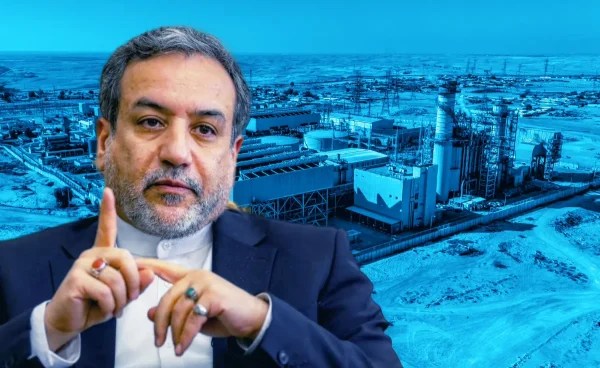
On March 28, Iran’s Foreign Minister, Seyed Abbas Araghchi, condemned Israel’s attack on key Iranian infrastructure, including steel factories, a power plant, and civilian nuclear sites. He described the attacks as a serious escalation and vowed Iran would respond. “Iran will exact a heavy price for Israeli crimes,” he warned.
That heavy price arrived the following day. Israel’s Home Front Command said sirens were sounding in the Negev Desert, Dimona, Be’era, Arad, and Ashkelon. Ne’ot Hovav, formerly Ramat Hovav, an industrial zone (in occupied Al-Naqab) southeast of Be’er Sheva, and the site of Israel’s main hazardous waste disposal facility, was targeted. The Voice of Israel reported ten warheads falling in the Negev, while other sources indicate 27 targets were struck.
The zone is home to 19 chemical factories, including Makhteshim Agan, a pesticide plant, Teva Pharmaceutical Industries (implicated in the opioid crisis), and Israel Chemicals, a bromine plant. It was reported that a disulfide factory was struck. Molybdenum disulfide is an anti-seize lubricant designed to meet the requirements of military specification. It is not known if the disulfide factory in the Negev produced this disulfide variant.
The Negev Phosphates Chemicals Company, part of the ICL Group, is also located in the Rotem Industrial Zone and situated near the Dimona reactor in Mishor Rotem. It is Israel’s sole recognized nuclear fuel cycle facility. Israel extracts uranium from Negev phosphate deposits. The Rotem complex is a critical node within a broader Israeli-US military-industrial network. In addition to phosphates, the facility produces fertilizers and high-purity phosphoric acid.
The phosphate extracted from the Rotem site is exported to several ICL facilities in the United States. ICL is the sole supplier of white phosphorus to the US military, a substance internationally banned for use in munitions. ICL white phosphorus is used by the occupation army in Gaza and Lebanon to burn people, homes, and agricultural lands.
It is important to note that Site 512, near Kmehin west of Dimona on the Har Qeren mountain, is a secretive US War Department ballistic missile early warning facility operated by the United States Army’s 1st Space Brigade.
The AN/TPY-2 Surveillance Transportable Radar, or Forward Based X-band Transportable, a long-range, high altitude digital antenna array surveillance radar, is located at the site. Iran targeted a similar radar facility at the Muwaffaq Salti Air Base in Jordan, and another radar unit in Qatar. “There are strong indications that a number of other similar systems have been destroyed or damaged, as well,” reports the TWZ Newsletter, a website covering military technology.
Initial information provided by the Israeli Ministry of Environmental Protection indicates there was a leak of dangerous ammonia gas at the Ne’ot Hovav site following the Iranian missile attack. “The situation is rapidly escalating and has reached a dangerous and potentially hazardous level,” reported the Israel Home Front Command, a civil defense operation.
Last week, a spokesperson for Iran’s Khatam al-Anbiya Central Headquarters warned “all energy, information technology, and desalination infrastructure belonging to the United States and the (Israeli) regime in the region will be targeted” in response to President Trump’s warning (since scaled back) the US would hit Iranian power plants, “starting with the biggest one first.”
On March 27, Araghchi posted to X saying Israel had violated Trump’s momentary pause and attacked two of Iran’s largest steel factories. “Attack contradicts POTUS extended deadline for diplomacy,” he said, and added that “Iran will exact HEAVY price for Israeli crimes.” In addition, Israel targeted a uranium processing facility in the central Iranian city of Yazd. Iran’s Atomic Energy Organization confirmed the strike, but said there were no casualties or radiation leaks, Aljazeera reported.
The March 29 attack is retaliation for the March 27 strike as Iran, Israel, and the United States continue to escalate a conflict that portends tectonic shocks for the global economy.
AWACS’ Destruction is a Major Loss for US Military – Ex-DoW Analyst
Sputnik – 29.03.2026
The destruction of a US E-3 Sentry airborne warning and control system (AWACS) aircraft in Saudi Arabia by an Iranian missile strike is a serious blow to the US military, former US Department of War analyst Karen Kwiatkowski tells Sputnik.
The US has a limited number of E-3 aircraft, which are based on aging Boeing 707 airframes, and the next-generation replacement for E-3 is not yet available
The loss of even one of E-3s puts a strain on the remaining aircraft as they are forced to operate longer. It demoralizes the crew, stresses systems, and “increases the consumption rate of surveillance capability and information management”.
Other E-3s now have to prioritize their own defense, which may reduce the radar, surveillance, and command effectiveness they supply.
With many of the important US long-range radars in the region being knocked out by Iranian strikes, the strain put on E-3 aircraft will only get worse, with further losses among them threatening to “narrow and pressure the information space for theater commanders and US and Israeli forces”.
Due to E-3’s distinctive and well-recognized function and appearance, Kwiatkowski adds, its destruction creates concern in the US because it doesn’t look like “winning,” and that claims of Iran losing its fighting capability were premature.
“One month into a ‘well planned 4 day operation’ is revealing many predictable operational and logistical crises, as well as a noticeable reduction in the tactical and operational choices for US and also Israeli theater commanders,” she says.
Israel’s Iran Strategy Uses US Military & Gulf States as Its Pawns
By Robert Inlakesh | Palestine Chronicle | March 29, 2026
While most honest analysts will conclude that the decision made by the White House came as a result of pressure from the Israelis or that this is a war that is being fought for Tel Aviv’s interests, many fail to see any clear strategy at play.
In order to understand the strategy behind the US-Israeli assault on the Islamic Republic, you must first remove the notion that the United States is in the driving seat to any significant extent.
Almost immediately after the 12-Day War in June of 2025, the Israeli leadership was already preparing for the next round. On July 7, Axios News even reported that officials in Tel Aviv believed that US President Trump would give them another green light to attack.
Meanwhile, the most influential Zionist think tanks in Washington DC, the likes of the Washington Institute for Near East Policy (WINEP) and the Foundation for Defense of Democracies (FDD), were openly discussing the necessity of a new round of confrontations.
These think tanks facilitated discussions and published pieces in which they made it clear that while the next round was inevitable, it had to be the last round, and that the US’s involvement would be important in deciding outcomes.
Understanding the Israeli Strategy
It is no coincidence that senior Israeli officials, all the way from Israeli Prime Minister Benjamin Netanyahu to opposition leader Yair Lapid, have all recently publicly endorsed the “Greater Israel Project”.
This is not simply posturing, this is their goal. But how does this fit into the Iran war? Well, it will begin to make sense when the context is all provided.
Firstly, the Greater Israel Project’s strategy is grounded in an academic article published by a former Israeli intelligence officer and journalist, Oded Yinon. The plan did not advocate for the physical expansion of the Israeli State’s borders over every nation between the Euphrates River and the River Nile, but instead opted for an approach that would transform Israel into a regional empire.
In order to achieve this goal of a “Greater Israel”, it would first necessitate the collapse of all the region’s sovereign States, which would instead be broken up into warring sectarian and ethno-regimes.
The purpose of achieving the disintegration of the surrounding nations is a simple concept to understand. If they are all divided, economically weak, and lack the military capabilities to stand up to Israel, it makes it easy for the Israelis to control them.
Take, for example, the Kurdish Regional Government in northern Iraq, or the semi-autonomous zone in southern Syria’s Sweida Province, now carved out by Israeli-backed separatists.
Syria and Iraq are perfect examples of what happens when a nation is torn apart and sectarianism, or ethno-supremacist ideologies, are spread through deliberate propaganda campaigns.
Although Secular Arab Nationalism failed in the region, the chief proponent of it, former Egyptian President Gamal Abdul Nasser, was indeed correct in his analysis as to why it was a net positive for the region.
A united Arab World would undoubtedly be far stronger than the simple modern nation-states of the region, whose borders were drawn up by European colonial powers.
For the Israelis, they had always sought to impose this long-term solution upon West Asia, of a “Greater Israel”, but were previously seeking to do it in a slow and methodical way, opposed to a ruthlessly violent one.
Part of this way of thinking was centered around the idea that Israel maintained a “deterrence capacity”, meaning that their military power was capable of deterring any significant strategic threat from rising against it.
On October 7, 2023, the Qassam Brigades of Hamas crippled this strategy and debunked the notion of their “deterrence capacity”. A few thousand Palestinian fighters managed to overcome the most militarily advanced army in the region, bursting through the gates of their concentration camp, despite the world’s most advanced surveillance systems being present in the area.
The Palestinian groups themselves appear to have been genuinely surprised by how easily they were capable of achieving their goals. Not only did they inflict a blow on the Israeli military and seize captives, but they also managed to collapse the entire Israeli southern command, all with light weapons.
To Israel, the message was clear: The Arab populations of Jordan and Egypt had taken to the streets, some even pouring across the Jordanian border. The weakest link in the Iranian-led Axis of Resistance had dealt the Israeli military its most embarrassing defeat. Deterrence was dead, and former Secretary General of Hezbollah, Seyyed Hassan Nasrallah, was proven correct: “Israel is weaker than a spider’s web”.
The decision to commit genocide was therefore ordered. Israel believed it had to show the Arab World what it was truly capable of, as a means of asserting its control. In the cases of the Arab populations in Jordan, Egypt, and even the occupied West Bank and Jerusalem, the fear tactics appeared to have worked. Then they made an irreversible mistake.
In September 2024, they assassinated Seyyed Hassan Nasrallah, a move that completely changed the thinking of Iran and its allies. Now, the message had been received loud and clear; preparations for the last war had to be made. Up until then, the Axis of Resistance had been attempting to close the chapter of the Gaza genocide; now, they understood that destroying Gaza wasn’t the end goal of Israel.
Israel had decided it would accelerate its national project of gradual expansion, meaning that the Islamic Republic of Iran had to be deposed. A failure to overthrow the Iranian government would represent an existential threat to this project.
Israel’s Iran War Strategy
As I have been writing in the Palestine Chronicle for the past eight months, the only viable strategy that the Israelis could hope to use, in order to see any gains, is one where Iran’s civilian infrastructure is the primary target.
That means: taking out power stations, desalination plants along with other key water facilities – less than 3% of Iran’s water needs come from desalination – while blowing up oil and gas facilities, bombing factories, destroying agricultural lands, inflicting costly environmental catastrophes, and attempting to cripple the Iranian State’s ability to function. In other words, a policy that replicates the Gaza model on a much wider scale, impacting a nation of 92 million people.
Tel Aviv’s goal here is a long-term regime change operation, one that will happen gradually following the war itself. Israel knows that destroying Iran’s military capabilities was never going to be possible. Yes, they may have some successes, but totally crippling their missile and drone programs through strikes alone won’t work.
Therefore, they seek to try and force Tehran to expend a large portion of its missile arsenal, making it more difficult for them to start a new war in the near future following the conflict’s conclusion.
If you look at Syria, for example, the government of Bashar al-Assad did not collapse during the war. Instead, the Syrian State slowly eroded from the inside, due to its isolation and the US-EU’s maximum pressure sanctions.
In the end, the Syrian State was largely bought out and was so corrupt that there was little left. When Ahmed al-Shara’a marched into Aleppo and then Damascus, he did so without any fight, although there were some exceptions where a few units resisted.
Now, Damascus is open for Israeli citizens, the leadership in Syria meets with Israeli officials face-to-face, and has even set up a joint normalizing mechanism between both sides. Therefore, using the long game strategy against Iran makes the most sense in Israel’s strategic thinking.
Then there comes the convenient side effect of the strategy, which begins to explain how the US leadership is not in the driver’s seat at all. That being the weakening of the Persian Gulf Arab nations.
Qatar, Bahrain, Kuwait, the United Arab Emirates and Saudi Arabia are experiencing untold economic devastation as a result of this war. The reason for this, evidently, is that they all host US bases and have permitted a large presence of American military and intelligence personnel inside their countries.
Oman, and to a lesser extent Qatar, have been the only Gulf nations that appear to be pushing back against the true culprits in this war, the Israelis and US. Muscat in particular has blasted the “security arrangements” in the region and condemned normalising efforts with Tel Aviv, pointing their fingers in the right direction.
Bahrain and especially the UAE have gone in the opposite direction. They are only increasing their pro-Israeli and anti-Iran rhetoric, which comes as little surprise given that both have normalized relations with the Zionists. Riyadh, on the other hand, appears to be on a separate trajectory, with its rhetoric being diplomatic, while its actions suggest it is hostile towards Iran.
The Israelis, despite their efforts to normalize ties with the Gulf States, do not want strong nations to exist anywhere in West Asia under their accelerationist approach to achieving an Israel Empire. This appears to be something that the leadership in Abu Dhabi and Manama have not proven intelligent enough to figure out.
That is why the Israeli leadership had started to announce their next targets, following Iran, were the leaderships in Turkiye and even Pakistan. Turkish President Recep Tayyip Erdogan is not a threat in the way that Iran is, but he does command one of the most powerful military forces in the region and rules over a developing economy, working towards transforming itself into a key global trade hub.
Alone, the idea that Turkiye would begin to build an economic or defence alliance with Saudi Arabia, Pakistan or Egypt, poses a direct threat to the Greater Israel Project. In Syria, we see a similar thing; although Ankara does not present a clear and present military challenge to the Israelis as a result of its influence in Damascus, it acts as a potential competitor, a nation that may seek to curtail Israeli expansionist plots.
The GCC countries, which are in alliance with one another, maintain immense economic power. As we see today, if the Strait of Hormuz is disrupted, the entire world is impacted. Back in 1973, these Persian Gulf Arab States exercised that power temporarily. One thing to keep in mind with the Israelis is that they never forget history and are infamous for holding grudges.
So, the dismantlement of the Gulf Arab nations’ economies, or at the very least, the weakening of these countries, is viewed as a positive development in Tel Aviv. As for the US, this war is similarly disastrous, but Israel fails to care less.
This war has destroyed US power projection, making it open to its top chosen adversaries – Russia and China – in a number of other arenas. Donald Trump personally has business ties in the Gulf, which don’t benefit from this conflict, so even on a personal level, it isn’t exactly a victory. The entire Western World, allying itself with the US and Israel, is suffering economically, and as a result, this will mean social unrest is possible, even if it takes time to come to fruition.
An embarrassment has already been dealt to the US military, which is being made to look like a paper tiger, as Mao Zedong once called it. Its future in the Gulf region may have just been ruined, along with those billions, or trillions as Trump believes, of investments – from Gulf States – may no longer materialize. The entire White House Security Doctrine, published last year, has been torn up and set on fire.
In terms of soldier casualties, the Trump administration is evidently hiding the true figure, but it goes without saying that this isn’t good news. NATO has been forced to flee Iraq. The US has even lifted sanctions on Moscow and a limited number of sanctions on Iranian oil. There is simply nothing that the US stands to gain from this war, even if it were to somehow pull off a victory; at this point, it would prove pyrrhic.
With all of this being said, what the Israelis are doing is making a massive gamble. A series of risks that appear so far to be backfiring, as Tehran appears to have pre-empted the conspiracies set against it. The final results of the war are not yet in, but the odds appear to be on the side of Iran.
– Robert Inlakesh is a journalist, writer, and documentary filmmaker. He focuses on the Middle East, specializing in Palestine. He contributed this article to The Palestine Chronicle.
Iran: Trump wanted regime change, now just begging for Hormuz to open
Al Mayadeen | March 29, 2026
Iran’s Parliament Speaker Mohammad Bagher Ghalibaf said on Sunday, marking the 30th day of Iranian national defense against the US-Israeli aggression, that the US president’s objectives have dramatically shifted since the start of the war on Iran.
“The enemy who claimed to have destroyed our air, naval, and missile forces, and had a plan for the collapse of the Islamic Republic, has now set his goal on reopening the Strait of Hormuz,” Ghalibaf said.
“Reopening a strait that was open before the war has become Trump’s operational dream,” he said mockingly.
Ghalibaf stated that the war on Iran, which has come to be known as the Ramadan War, is now at its most critical moment. He noted that Trump is unable to secure the support of European countries, that energy markets are out of control, and that food inflation is approaching.
The war bites the belligerent
The Parliament Speaker detailed the damage inflicted on US military assets throughout the conflict. “The manifestations of American arrogance, from the F-35 to the aircraft carrier and US regional bases, have suffered major blows,” he said. “Strikes on the Israeli regime have been effective, precise, and foundation-shaking.”
Ghalibaf also highlighted the growing strength of the Resistance Axis across the region.
“Hezbollah in Lebanon, which was constantly threatened with disarmament, is today an important and effective part of the Resistance and has trapped the malignant Israeli regime,” he said.
“The Resistance in Iraq is fighting heroically and has astonished the enemy. Ansarallah in Yemen has breathed new life into the Resistance front and is ready to achieve spectacular surprises.”
“This is the honor and greatness of the Resistance front against the world’s arrogant powers,” Ghalibaf stated. “Trump has been accused worldwide of waging a pointless war and has no answer for his public opinion. The evil of initiating the war has returned to its initiator.”
Here is a background section summarizing the current situation with the Strait of Hormuz, based on the Al Mayadeen article:
The battle for the Strait of Hormuz
Since the US-Israeli war on Iran began on February 28, the Strait of Hormuz, through which approximately one-fifth of the world’s oil and natural gas shipments pass, has become a central front in the war on Iran. Iranian authorities have restricted the movement of vessels linked to the US and “Israel” or those supporting, requiring ships to obtain approval before transiting the strategic waterway.
Tehran has made clear that “nonhostile” ships may pass safely if authorized, while the strait remains “closed only to enemies carrying out cowardly aggression against Iran,” as Foreign Minister Abbas Araghchi put it. The Islamic Revolution Guard Corps has turned back multiple container ships attempting to transit without authorization.
Iran’s Parliament is now advancing legislation to impose formal tolls on vessels passing through the strait, a move lawmakers say is designed to assert Tehran’s “sovereignty, control and oversight” over the passage, much like the model applied by Turkey in the Bosphorus and Dardanelles straits. The toll system would build on temporary fees applied since late February.
US President Donald Trump has threatened an escalation in the aggression against Iran’s power infrastructure if the strait remains closed, while US attempts to organize international naval escorts to bypass Iran’s control over the strait have so far failed.
The new framework signals Tehran’s intent to use its control over its waterway to regulate access systematically, rather than relying on ad hoc measures, while simultaneously sending a message to the US and “Israel” about the country’s ability to control this key energy corridor.
IRGC: Israeli, US universities in region legitimate targets after strikes on Iranian university
Al-mayadeen | March 29, 2026
The Iranian Revolution Guard condemned the bombing of the Tehran University of Science and Technology by American and Israeli forces, emphasizing that such attacks on universities and research centers will not go unanswered.
The IRGC warned that all universities in the Israeli entity, as well as American universities across West Asia, are now considered legitimate targets, following a principle of destroying two institutions for every Iranian university attacked.
“The misguided rulers of the White House should know that from now on, all universities of the occupying Israeli entity, as well as American universities in West Asia, are legitimate targets for us,” the statement said.
The statement issued a warning to all staff, professors, students, and nearby residents to maintain a safe distance of at least one kilometer from American universities in the region.
The Guard added that if the US government wants to ensure that its universities in the region are limited to only the two corresponding targets in this phase, it must issue an official statement by 12:00 PM on Monday, March 30 (Tehran time), condemning the bombing of the universities.
Failure to prevent future attacks by US forces or their allies will leave these institutions exposed to further military action, the statement added.
Baghaei condemns US-Israeli strikes on Iran’s universities
Iranian Foreign Ministry spokesperson Esmaeil Baghaei on Saturday denounced deliberate US-Israeli attacks targeting Iran’s scientific and cultural foundations, accusing the aggressors of waging a systematic assault on the country’s civilian infrastructure under fabricated pretexts.
In a statement posted on X, Baghaei said that “Isfahan University of Technology and the Iran University of Science and Technology are just two among many universities and research centers deliberately attacked by the aggressors during the past 30 days of their illegal war on the Iranian nation.
His remarks come amid a sustained US-Israeli unprovoked aggression that has inflicted heavy civilian losses and widespread destruction across Iran, including repeated strikes on educational and academic institutions. Earlier today, a strike hit a building on the campus of Isfahan University of Technology, causing material damage to university facilities, while in recent days, a satellite research center affiliated with the Iran University of Science and Technology in Tehran was also targeted, with the blast damaging surrounding structures.
The most devastating incident occurred on February 28, when missiles struck the Shajareh Tayyebeh girls’ school in Minab, killing more than 170 people, the majority of them schoolchildren, in what has become one of the deadliest attacks of the war.
The strike, which hit the school during class hours, drew condemnation from international organizations, with UN agencies warning that attacks on educational facilities constitute serious violations of international humanitarian law.
Beyond Minab, multiple reports confirm that schools in several cities, including Tehran and Parand, have been struck or damaged since the beginning of the war, pointing to a broader pattern of attacks affecting Iran’s educational sector.
Trump admits Iran hit USS Ford carrier: ‘We ran for our lives’
Al Mayadeen | March 28, 2026
US President Donald Trump revealed that Iranian forces carried out a coordinated assault on the USS Gerald R. Ford, stating that the world’s largest aircraft carrier came under a multi-directional attack in the Red Sea as Tehran intensifies its retaliation against the US-Israeli aggression launched on February 28.
Speaking at a Saudi investment forum in Miami on Friday, Trump described what unfolded as “a serious situation” for US naval forces, indicating that the scale and intensity of the operation rapidly overwhelmed expectations.
“It was one o’clock in the morning,” Trump said, recalling the moment the vessel came under attack “from 17 different angles.”
“We knew we were in trouble,” he added.
“They were here, they were there. We ran for our lives, it was over,” Trump said, relaying the account of a Navy commander who was aboard at the time.
Carrier forced to withdraw
The USS Gerald R. Ford, the centerpiece of US naval power projection, had been deployed to West Asia as part of Washington’s aggression against Iran. In the immediate aftermath of the reported confrontation, the carrier was forced out of the theater following a fire that erupted onboard on March 12, injuring crew members and leaving nearly 200 sailors affected by smoke inhalation, while damaging large sections of the vessel.
The warship withdrew first to the Greek island of Crete before docking in Croatia for urgent repairs, after nearly nine months of continuous deployment marked by mounting technical failures, including persistent system malfunctions that had already raised concerns about its operational reliability under sustained pressure.
Despite the sequence of events, the Pentagon insisted that the damage stemmed from a “non-combat-related” fire in a laundry area, attempting to frame the withdrawal as a routine technical issue rather than the result of battlefield impact.
Iran exposes vulnerability
Iranian officials have categorically rejected this narrative, arguing that it is a transparent attempt to obscure the consequences of Iran’s retaliatory operations, which have increasingly exposed the vulnerability of even the most advanced US military assets.
The Islamic Revolution Guard Corps ridiculed the US account, stating, “What kind of military giant is this that faces a crisis and is forced to leave the battlefield due to a fire occurring in its laundry room?”
Tehran has repeatedly warned that US aircraft carriers operating in regional waters would be treated as legitimate targets, stressing that their presence constitutes a direct threat to Iran’s sovereignty.
Within this context, Iranian officials and analysts view the carrier’s abrupt withdrawal as clear evidence that sustained missile and drone operations are imposing real constraints on US forces, undermining Washington’s ability to maintain control despite its overwhelming technological advantage.
Iran’s armed forces have also reported conducting successful drone and missile strikes against another US carrier, the USS Abraham Lincoln, reinforcing what Tehran presents as an expanding and effective deterrence posture capable of reshaping the military balance across the region.
Iraqi resistance conducts drone strike on US-run base in Syria
Press TV – March 28, 2026
Fighters from the anti-terror group Islamic Resistance in Iraq have conducted a drone strike against an installation operated by US occupation forces in Syria’s southwestern al-Tanf region, close to the borders with Iraq and Jordan.
The Syrian Arab News Agency (SANA) reported that air defense systems manned by members of the ruling Hay’at Tahrir al-Sham (HTS) militant group had intercepted and shot down an unmanned aircraft as it was flying in the skies over the base.
It added that the drone had most likely set off from an area in neighboring Iraq, without specifying the exact location.
Back on March 20, Iraqi resistance groups destroyed three critical sites at the US-run Harir base in Erbil — the capital of Iraq’s semi-autonomous Kurdistan region, sharply reducing American military activities there.
An informed source said the positions were targeted simultaneously with missile strikes on the Victory Airbase close to the Baghdad International Airport.
Over the past two weeks, coordinated drone and missile attacks have repeatedly struck key infrastructure at Harir, including its central radar system, which was hit at least four times and ultimately destroyed.
Failing to Defeat Hezbollah, Israel & US Pressure Syria’s Ahmed al-Sharaa to Join War
By Robert Inlakesh | MintPress News | March 27, 2026
Openly declaring its intent to illegally occupy southern Lebanon, Israel finds itself in a costly ground battle with Hezbollah, from which there are indications Syria may soon be roped in. This is born from the understanding that in order to successfully weaken the Lebanese resistance, the Israeli military must penetrate the Bekaa Valley area.
Understanding the costly price of attempting to physically take all of south Lebanon militarily, both Washington and Tel Aviv have been attempting to devise strategies that would help achieve Israel’s war goals of weakening Hezbollah.
One possible option that has been placed on the table is the use of Syria’s military to invade Lebanon’s border and attack Hezbollah, aiming to go after what is labelled critical infrastructure belonging to the Lebanese group. According to reports, the US Trump administration has directly put pressure on Syrian leader Ahmed al-Shara’a to do just that.
In the event of such an assault, the Beka’a Valley would be the target territory. The Beka’a is what Israel’s Alma Research and Education think-tank calls “Hezbollah’s strategic depth”, which it argues is the group’s “operational and logistical center of gravity”. If Tel Aviv truly seeks to degrade Hezbollah’s capabilities, a ground incursion into this region is the only way to truly achieve such a goal.
Another plausible option is that Israel itself will use Syrian territory in order to invade Lebanon’s eastern border. This would appear possible, as the current Hayat Tahrir al-Sham administration in Damascus has allowed Israel to use Lebanese territory on two occasions so far.
Although al-Shara’a doesn’t grant direct permission, he refuses to deploy his forces to prevent the Israelis from violating Syria’s sovereignty. Earlier this year, the leadership in Damascus agreed to setting up a soft normalisation understanding with the Israelis. According to US State Department press release, the following was agreed upon:
“Both Sides have decided to establish a joint fusion mechanism—a dedicated communication cell—to facilitate immediate and ongoing coordination on their intelligence sharing, military de-escalation, diplomatic engagement, and commercial opportunities under the supervision of the United States.”
It suffices to say that Syria’s current leader, who once spoke of conquering occupied Jerusalem, has clearly aligned himself with the United States and now openly states he will pose no threat to Israel. Instead of fighting back against Israel’s ever growing occupation of more Syrian lands, or responding to civilian massacres inside his territory, he has instead sought to disarm those Syrians who are threatened by the belligerent occupying force in the south.
Despite this, Israel has continually attacked Syrian territory, including bombing the ministry of defence in Damascus. Recently, it also attacked Syrian military positions in the Damascus countryside, citing renewed sectarian clashes between Israeli-aligned Druze separatists and HTS allied forces.
In December of last year, parades were held in Damascus and other Syrian cities, where armed factions making up the country’s new armed forces held marches in the streets to mark the fall of Bashar al-Assad. Notably, these soldiers chanted in solidarity with Gaza and issued threats to Israel.
Some groups belonging to the new Syrian security forces, also burned Israeli flags and expressed solidarity with the village of Beit Jinn, where a group of locals had organised an ambush against Israeli invading forces. Israel then bombarded the village, which is home to both Palestinians and Syrians, murdering at least 13 civilians.
A series of Syrian Resistance groups have also popped up in the country’s south, occasionally carrying out rocket attacks or opening fire on Israeli soldiers with light weapons. The most prominent group has been ‘Jabhat al-Moqowameh al-Islammiya Fe Souriya’ [The Islamic Resistance Front In Syria].
The newest group to emerge is called ‘Kataeb Jund al-Karrar Fe Balad as-Sham’ [Soldiers of the Karrar Brigades in the Levant] also emerged on March 8, publishing a video of themselves firing rockets at US military positions in Syria’s Palmyra. The group has additionally claimed attacks on Israel.
If Syrian President Ahmed al-Shara’a orders an attack on Lebanon, this could immediately trigger an incursion into Syria by the powerful Iraqi groups aligned with Hezbollah. An official statement issued by The Islamic Resistance Coordination Committee in Iraq explicitly threatened that:
“We see the treachery of the new authority in Syria and are monitoring its coordination with the enemy. We say clearly: if you dare violate the sovereignty of Lebanon and its patient, resisting people, we will turn your land into an open arena of fire. He who warns has given fair notice.”
On the other hand, due to the fragile security situation inside Syria, if the Israeli military does attempt to launch an offensive from inside Syrian territory, there is always a chance that they will come under attack from a whole myriad of forces. It is possible that what currently constitutes the Syrian Army, may even break ranks and refuse to listen to the leadership in Damascus.
On March 6, a botched Israeli special forces raid targeted the Lebanese village of Nabi Cheet, located east of Beirut. In order to conduct this infiltration operation – which was successfully repelled due to a joint effort from Hezbollah, local militias and the Lebanese Army – it used Syrian territory. Notably, it launched its assault from an area located north-west of Damascus.
Israel has so far displaced over a million people in Lebanon, openly declaring its intent to expand what it calls a military “buffer zone”. Israeli defence minister Israel Katz doesn’t mince his words however, openly declaring that he is seeking to occupy southern Lebanon up to the Litani River.
To this effect, the Israeli military has not only ordered the entire population of southern Lebanon to evacuate the territory, but also bombed five primary bridges connecting the south to the rest of the country. And yet, on the ground, the Israeli army is having a difficult time simply passing the border villages, where Hezbollah has damaged or destroyed around 70 Merkava tanks so far.
If the Israelis come under attack from forces inside Syria itself, they could be dragged into a painful quagmire there. This could also come about in the event that Syria’s al-Shara’a decides to seize the opportunity of Israel being distracted in Lebanon, to launch an offensive against the Druze separatist militias in Sweida. In order to save their Druze militia allies from suffering a major defeat, the Israeli army itself could get roped into direct clashes with Syrian forces.
Therefore, if the Israeli leadership makes the decision to escalate the Lebanon conflict by making a move towards the Bekaa Valley, they could very easily find themselves dealing with a totally new reality inside Syria too.
US-Israeli war on Iran drives global fertilizer prices up 40%
Al Mayadeen | March 28, 2026
The ongoing war on Iran is driving a sharp rise in global fertilizer prices, exposing how Western-led escalation is reverberating across critical sectors such as agriculture and food production, the German-based Deutsche Presse-Agentur (DPA) reported on Friday.
According to Philipp Spinne, managing director of the German Raiffeisen Association, mineral fertilizer prices have increased by 30% to 40% since the beginning of the year. He noted that current market conditions are approaching levels seen at the start of the war in Ukraine, indicating mounting pressure on global supply chains. “A situation similar to what happened in February 2022 is recurring,” Spinne said, pointing to the rapid climb in nitrogen fertilizer prices toward previous peaks.
Hormuz disruptions
The surge is closely tied to disruptions around the Strait of Hormuz, a strategic waterway through which a significant share of global fertilizer trade passes, including roughly one-third of globally traded urea and about 20% of ammonia. Tehran’s response to the US-Israeli aggression has prompted restrictions on maritime flows, tightening supply and pushing energy prices higher, feeding directly into production costs.
Despite this, the immediate impact on European consumers remains limited. Many farmers had already secured their fertilizer supplies before the outbreak of the war. According to German industry estimates, around 80% of the required quantities for the entire spring season are already held in cooperative storage, while roughly 50% are already in the hands of farmers. However, industry representatives warn that a prolonged war will inevitably translate into higher production costs, which are expected to pass through to food prices over time.
A spokesperson for the Bavarian Farmers’ Association noted that while availability is currently manageable, farms that did not secure supplies early are now facing significant cost burdens. At the same time, relatively weak grain prices are compounding the pressure, squeezing margins and weighing on farm liquidity.
Rising fertilizer costs
Energy costs remain the central driver. Gas accounts for between 80% and 90% of the cost of producing ammonia and nitrogen fertilizers, meaning that fluctuations in energy markets, intensified by the war, directly affect agricultural inputs. Industry representatives added that the sharp rise in gas prices in Western Europe during the Ukraine war had already weakened the region’s chemical sector, a trend now deepening.
As prices rise, farmers may reduce fertilizer use, a shift that could lead to lower yields and tighter food supplies globally. The structural importance of fertilizers to global food systems reflects the scale of the risk: nearly half of the world’s population depends on crops grown using mineral fertilizers, while yields today are roughly double those of the early 20th century due to their use. Any sustained disruption, therefore, carries long-term implications for food security.
Although Europe produces a large share of its own fertilizers, covering roughly three-quarters of its nitrogen needs domestically and slightly more in the case of potash, it remains indirectly exposed through rising gas and LNG prices. While Europe has for years imported little fertilizer directly from conflict-affected regions, indirect pressures through energy markets continue to impact production costs.
Europe under pressure
At the policy level, European actors are increasingly turning to protectionist measures, including tariffs on Russian fertilizers, in an effort to shield domestic markets and reduce external dependency. Industry groups have also called for higher tariffs on Russian potash and for strengthening local production capacity. At the same time, Russia has introduced its own export restrictions to protect internal supply, further tightening global availability.
For now, German farmers remain partially insulated, but those forced to purchase at current prices are facing significantly higher costs, reinforcing concerns that the economic strain on agriculture will deepen if the war persists.
Yemen joins fight against US, Israel by firing missiles at occupied territories
Al Mayadeen | March 28, 2026
Yemen’s Armed Forces have carried out their first military operation since announcing readiness for direct military intervention in the ongoing US-Israeli war on the Axis of Resistance, targeting military sites in southern occupied Palestine with a salvo of ballistic missiles.
Yemeni Armed Forces spokesperson Brigadier General Yahya Saree confirmed the operation on Saturday, stating that ballistic missiles struck “sensitive military objectives belonging to the Israeli enemy in southern occupied Palestine.”
Saree said the operation coincided with ongoing resistance operations by fighters in Iran and Lebanon, stressing that it “successfully achieved its intended objectives.”
He affirmed that operations would continue “until the declared goals are met and until the aggression ceases across all fronts of the resistance.”
Earlier this morning, Israeli media had reported missiles launched from Yemen toward the southern occupied territories, with sirens sounding in Eilat, the Wadi Araba region, and al-Naqab.
Saree’s warning
The strike follows a Friday warning from Saree that the Yemeni Armed Forces were prepared for direct military intervention should certain red lines be crossed.
He named three specific triggers: the formation of additional alliances alongside the US and “Israel” against Iran or Axis of Resistance states; the use of the Red Sea as a platform for hostile military operations against Iran or any Muslim country; and the continued escalation of the US-Israeli aggression.
Ansar Allah leader Sayyed Abdul Malik al-Houthi had warned Thursday that the US and “Israel” are advancing a “scheme to reshape the Middle East and establish the so-called Greater Israel,” stressing that Yemen is “not neutral” but stands with the Islamic nation.
Sayyed al-Houthi affirmed that any developments requiring a military response would be met with full readiness, as in previous rounds, while reiterating that Yemen’s military activity targets only US and Israeli objectives, not Muslim-majority states or civilian populations.
Seizing the Kharg: Washington’s path to defeat in the Persian Gulf
By Anis Raiss | The Cradle | March 27, 2026
Four weeks of US-Israeli war on Iran – and the stakes have climbed far higher than Washington anticipated. US President Donald Trump threatened on Truth Social to “hit and obliterate” Iran’s power plants if the Strait of Hormuz was not reopened within 48 hours.
The deadline passed. He blinked and, for the second time, postponed his own ultimatum, recasting it as ‘productive conversations.’ Tehran denied any talks and insisted the reversal was driven by “fear of Iran’s response.”
The US-Israeli air campaign was supposed to break Iran. It didn’t. Now the hawks are pushing for boots on the ground. But the ground war being floated does not simply risk American lives on an island 15 miles (around 24 kilometers) off Iran’s coast. It threatens the entire US military architecture in the Persian Gulf – the bases, the alliances, and the energy infrastructure that has underwritten American dominance in West Asia for decades.
In an interview with NBC News, Iran’s Foreign Minister Abbas Araghchi, in response to a question about a possible ground invasion by the US, delivered words the Pentagon had no answer for: “We are waiting for them,” which became a meme in the process. The bluff has been called. The question now is whether showing Washington’s hand collapses the entire table.
Raising the stakes with an empty hand
The ground invasion discourse is no longer hypothetical. Pentagon officials have submitted detailed preparation requests for deploying ground forces. Three Marine amphibious assault groups are converging on the Persian Gulf: the USS Tripoli carrying the 31st Marine Expeditionary Unit from Japan, the USS Boxer with the 11th MEU from California, and roughly 1,500 paratroopers from the 82nd Airborne Division at Fort Bragg.
By the time all units arrive, between 6,000 and 8,000 US ground troops will be within striking distance of Iran. But the composition of these forces exposes the gap between rhetoric and reality. Military analyst Ruben Stewart noted that what is being deployed is “consistent with discrete, time-limited operations, not a sustained ground campaign.”
At the same time, Israel’s own military is showing signs of strain. Chief of staff Eyal Zamir warned on 25 March that the army is “going to collapse in on itself,” citing an eroding reserve force and a deepening manpower crisis as wars stretch from Gaza to Lebanon and now Iran.
Washington is pushing more chips to the center of the table – but the hand behind them remains weak. The scenarios now circulating form an escalation ladder where each rung risks pulling the US deeper into a fight it is structurally unprepared to sustain.
Pickaxe Mountain and the raid that takes too long
The most politically attractive option is a covert raid on Iran’s enriched uranium stockpile – believed to be around 400 kilograms enriched to roughly 60 percent, possibly stored near Isfahan or deep inside Pickaxe Mountain.
But the problem is one Sun Tzu identified centuries ago: speed is the essence of war – yet this mission demands the opposite. Extracting nuclear material requires troops to remain on-site long enough for Iranian forces to respond.
Former CENTCOM commander General Joseph Votel described such operations as “feasible,” but issued a clear warning: “You’re going to have to take care of them, resupply them, medevac them. And that requires a logistical tail, and at some point that tail has to be protected as well.”
Washington still carries the scar of Operation Eagle Claw – the failed 1980 hostage rescue that collapsed in the Iranian desert and helped end Jimmy Carter’s presidency.
Kharg Island: The trap disguised as a shortcut
If covert raids carry too much risk for too little certainty, the next option on the table is a limited territorial seizure – and Washington’s hawks have converged on a single target: Kharg Island.
An eight-square-mile (around 20.7 square kilometers) coral outcrop in the northern Persian Gulf, Kharg processes roughly 90 percent of Iran’s crude exports. US Senator Lindsey Graham urged Trump to “take Kharg Island,” while retired Lieutenant General Keith Kellogg described himself as a “big believer in boots on the ground” there.
The logic sounds surgical: seize Iran’s economic lifeline and force Tehran to the table. But it collapses under even basic scrutiny. Kharg sits just 15 miles (around 24 kilometers) off the Iranian mainland – well within range of coastal missile batteries, drones, rockets, and artillery. Any US force stationed there would face “near-constant bombardment.”
Retired Rear Admiral Mark Montgomery put it bluntly: “If we seize Kharg Island, they’re going to turn off the spigot on the other end. It’s not like we control their oil production.”
Sun Tzu warned that there is no instance of a nation benefiting from prolonged warfare. Modern analyses reach the same conclusion. Think tank assessments warn that Kharg is a textbook case of mission creep, pulling US forces step by step toward a wider ground war.
The war Iran has prepared for
What Washington’s hawks consistently overlook is that Iran has spent decades preparing for precisely this scenario – not to match US firepower, but to make any ground war prohibitively costly.
Iran’s Islamic Revolutionary Guard Corps (IRGC) is divided into 31 autonomous ground divisions, each capable of operating independently if central command is disrupted.
When strikes killed the Islamic Republic’s supreme leader Ali Khamenei, intelligence minister Esmail Khatib, and Basij chief Gholamreza Soleimani, the military apparatus continued launching missiles, closing the Strait of Hormuz, and fighting. A command structure designed to survive decapitation appears to be doing exactly that.
At sea, Iran’s naval doctrine relies on asymmetric warfare. Its reported arsenal: hundreds of fast attack craft, coastal missile batteries, an estimated 5,000 naval mines, over 1,000 unmanned suicide vessels, and Ghadir-class midget submarines built for the Gulf’s shallow waters. The Persian Gulf is not an open ocean. It is a corridor shaped by geography and fortified by doctrine – designed to swallow conventional naval power.
On land, the scale alone is decisive. Iran is four times the size of Iraq, with a population exceeding 90 million. Estimates suggest that any conventional invasion would require “hundreds of thousands of troops.”
Then there is the Basij paramilitary network, reportedly capable of mobilizing up to a million reservists – and the IRGC’s decades of experience coordinating asymmetric resistance across the region.
The US currently has fewer than 8,000 moving into position. This is not a war Iran needs to win – but one that is designed to make Washington unable to sustain.
Winning Kharg, losing the Gulf
Even if Washington succeeds tactically – seizing Kharg and declaring victory – the strategic consequences are immediate.
Since the war began, Iran has already demonstrated its escalation capacity. Missiles and drones have targeted US-linked infrastructure across Bahrain, Kuwait, Qatar, the UAE, Jordan, and Saudi Arabia. Energy facilities, airports, and desalination plants have all come under fire.
A seizure of Kharg would likely trigger a far broader response. Iranian officials have explicitly warned of “continuous and relentless attacks” on regional infrastructure if Iranian territory is occupied.
Tehran has also signaled it could expand the conflict to the Bab al-Mandab Strait through allied Ansarallah-aligned forces in Yemen, threatening a second global chokepoint.
Every US position in the Gulf depends on supply lines that run through the very states already under threat. Bahrain hosts the Fifth Fleet. The UAE hosts Al-Dhafra. Kuwait functions as a logistical hub.
As the Stimson Center noted, Gulf states already fear Trump could declare victory and leave them fighting Iran alone.
Iran reports 500 US casualties in strikes on covert US military sites
Al Mayadeen | March 28, 2026
Iran’s Armed Forces announced on Saturday that they inflicted heavy casualty losses on US military personnel after striking two covert sites used to shelter US troops, both in Dubai.
The spokesperson for Iran’s Khatam al-Anbiya Central Headquarters, Lieutenant Colonel Ebrahim Zolfaghari, stated that the strikes resulted in casualties affecting more than 500 US soldiers and officers, with approximately 400 at the first site and over 100 at the second.
He confirmed ambulances were seen transporting the dead and wounded for hours following the operations.
Tehran issued a warning to US President Donald Trump and US military commanders in the wake of the strikes, declaring that the region had become “a graveyard for their soldiers” and that the United States has no option but to yield to Iran’s will or face inevitable consequences.
Dubai, al-Kharj targeted in coordinated strike
Zolfaghari also announced in a separate statement that the two secret locations were identified and struck using a combination of missiles and drones in precise operations.
He added that an IRGC strike on the US troop deployment site at Al-Kharj base in Saudi Arabia on Friday destroyed one refueling aircraft and severely damaged three others, rendering all four completely inoperable.
At the same time as the Dubai strikes, Zolfaghari revealed that a warehouse storing Ukrainian anti-drone systems, present in Dubai to support the US military, was also destroyed in a combined operation carried out by the IRGC’s aerospace and naval forces.
21 Ukrainian personnel were reported to have been at the site at the time of the strike. “There is no confirmed information regarding the fate of the Ukrainian personnel present at the site, who are likely to have been killed,” Zolfaghari said.
Featured Video
BRITAIN’S WARNING: PREPARE FOR WAR
or go to
Aletho News Archives – Video-Images
From the Archives
British weapons and personnel doing much of the killing in Yemen
Press TV – June 18, 2019
A detailed report published by the Guardian newspaper has shown how Britain is massively contributing to Saudi Arabia’s devastating war on Yemen as it suggests that London is not only supplying the bombs that fall on Yemenis, but it provides the personnel and expertise that keep the war going.
The comprehensive report by Arron Merat published on Tuesday showed that Britain was doing much of the killing in Yemen as the country continues to provide Saudi Arabia with everything it needs to turn its southern impoverished neighbor into a graveyard.
“Every day Yemen is hit by British bombs – dropped by British planes that are flown by British-trained pilots and maintained and prepared inside Saudi Arabia by thousands of British contractors,” said Merat in the report. … continue
Blog Roll
 Aletho News
- Pentagon designates Chinese cultural centers national security threat
- Israel Demolishes Home Of Lebanese Journalist Whose Viral Film Exposed Pager Attack
- Record Oil, Empty Tanks: The UAE’s Miracle Recovery
- Burnham tackles Britain’s poverty with aggression in Yemen
- Peace in Ukraine: the easy way – or the hard way
- Trump & the Rrrrussians
- US taxpayer money laundered back through Ukraine – Musk
- Before COVID, an NIH lab chief proposed making a SARS-like bat virus more infectious
- Gates, Bourla on Trial in Netherlands Accused of ‘Great Reset’ Scheme at Vaccine Injury Hearing
- BRITAIN’S WARNING: PREPARE FOR WAR
- If Americans Knew
- An error has occurred; the feed is probably down. Try again later.
- No Tricks Zone
- Sudden Stratospheric Warming, Powerful El Niño Combination May Lead To Extreme Europe Cold, Energy Crisis!
- Two New Studies Find Thwaites Glacier Melt Cannot Be Driven By Human Activity Or A Warming Ocean
- E-Cars Reduce CO2 Emissions By Only 41% Compared To Internal Combustion Engine Vehicles
- Predictions Made By Renowned Climate Professor Over Past Decades Have Been Proven To Be Poor
- New Study Suggests Large Regions Of The Pacific Ocean Have Been Cooling For The Last 80 Years
- Germany’s Green Energy Debacle: High Energy Costs Force Kahla Porzellan to Close After 182 Years!
- New Study: 50 Years Of The Most Aggressive ‘Net Zero’ Policies Can Only Affect The Global Climate By 0.03°C
- US September “Heat” Was No Record…Many Records Set Decades Ago
- Latest European Green Energy Debacle; Portugal’s Largest Flagship Solar Park Insolvent!
- Green Energy Debacle: German Expert Professor Fritz Vahrenholt Warns Of Severe Economic And Social Consequences

