Russian fuel exports surge despite sanctions – Bloomberg
RT | April 27, 2023
Russia is on course to record its highest seasonal export rate of petroleum products in seven years despite Western oil sanctions that took effect in February, Bloomberg reported on Wednesday, citing tanker tracking data from Vortexa.
According to the report, shipments of clean petroleum products, including diesel-type fuel, amounted to 1.9 million barrels a day during the first three weeks of April. If that rate continues for the remainder of the month, it will be the highest for this time of the year since at least 2016, calculations show.
The new data follows multi-year highs reached in March, when shipments were at their highest since the start of 2016.
Russian diesel-type fuel exports were targeted by an EU embargo on seaborne petroleum products that came into force in early February, along with a G7 price cap on the same products. In response, Moscow announced it will cut output by 500,000 barrels a day between March and December.
Despite the sanctions, data shows that Russia has successfully redirected fuel shipments. Most of the country’s petroleum products in April have been shipped to Türkiye as well as North African countries, including Morocco, Tunisia, and Libya.
Russia has also boosted exports to South American countries, most notably Brazil. According to a recent report by Reuters, Russia’s share of Brazilian diesel fuel imports is set to reach 53% in April, compared to just 0.2% a year ago.
A Senior Pentagon Official Strongly Implied Impending “Mission Creep” In Sudan
BY ANDREW KORYBKO | APRIL 23, 2023
The US evacuated a little less than 100 of its diplomats, their families, and a “small number” of other countries’ diplomats from the Sudanese capital of Khartoum on Saturday. The mission was launched from a base in nearby Djibouti, refueled in neighboring Ethiopia, and then spent less than an hour on the ground before departing that war-torn country. That could have closed the book on the US’ military involvement in Sudan had a senior Pentagon official not told reporters about what’s being planned next.
CNN reported that Assistant Secretary of Defense for Special Operations and Low-Intensity Conflict Chris Maier said the following in a call with journalists sometime after the evacuation ended:
“In the coming days, we will continue to work with the State Department to help American citizens who may want to leave Sudan. One of those ways is to potentially make the overland routes out of Sudan potentially more viable.
[The Department of Defense] is at present considering action that may include use of intelligence, surveillance, and reconnaissance capabilities to be able to observe routes and detect threats.
Secondly, the employment of naval assets outside the port of Sudan to potentially help Americans who arrive at the port, and third, the establishment at the US Africa Command in Stuttgart deconfliction cell focused particularly on the overland route.”
Instead of washing its hands of this “deep state” war that risks turning into a civil and even international war, the US is getting drawn into “mission creep” on the pretext of evacuating its remaining citizens.
CNN mentioned in their report that “Officials told staffers (from the State Department) that there could be an estimated 16,000 Americans in Sudan, most of whom are dual nationals.” This means that foreign-born US citizens who returned to their homeland for whatever reason are being exploited as the “justification” for redirecting intelligence, surveillance, and reconnaissance (ISR) capabilities there, possibly deploying naval assets to its main port, and creating a “deconfliction cell” for managing events.
In simple English, the Pentagon will likely use a combination of drones, electronic means, and satellites to spy on the Sudanese Armed Forces’ (SAF) Rapid Support Forces (RSF) opponents, after which they’ll dispatch warships to Port Sudan that’ll be organized by AFRICOM’s newest (warfighting) “cell”. Those vessels can either carry armed aid (irrespective of whether it’s disguised as humanitarian aid) for the SAF and/or be capable of conducting their own offensive actions against the RSF under certain conditions.
The so-called “overland routes out of Sudan” that the Pentagon wants to “make… potentially more viable” could be sold to the public as a “humanitarian corridor” but will in reality function as a means for supplying the SAF. The “deconfliction” element of this equation purely refers to the contact that the US also has with the RSF, whom Undersecretary of State for Management John Bass said on Saturday “cooperated to the extent that they did not fire on our service members in the course of the operation.”
In the emerging context of “mission creep”, the Pentagon could simply warn the RSF not to impede the creation of these “overland routes out of Sudan” just like they stayed out of the way during Saturday’s evacuation under threat of being bombed on “humanitarian” pretexts if they don’t. The American public could easily be manipulated into supporting this action if they’re misled to believe that “Russian-/Wagner-backed insurgents/terrorists are holding approximately 16,000 US citizens hostage in Africa”.
Therein lies the importance of the latest narrative being pushed by the Mainstream Media (MSM) suggesting that this entire conflict is Russia’s fault, the false claims of which were reviewed and analyzed in this piece here. Basically, the US sees an opportunity to proverbially kill multiple birds with one stone on a Russophobic basis, which could ultimately result in them putting Moscow on the backfoot in Africa and securing a symbolic victory in this little-discussed but hugely significant New Cold War front.
Policymakers don’t truly care about those Americans that are stranded in Sudan, especially since the majority of them are thought to be dual nationals, but they see a chance to exploit the “humanitarian” optics as part of a larger power play against Russia. The first step was to safely evacuate US diplomats since it’s those citizens who lives are truly valued by the government after it invested a considerable sum in each of them over the course of their careers. Everyone else is expandable in their view.
Now that its “VIPs” are out of harm’s way, the US can up the ante in Sudan on a “humanitarian” pretext as part of its latest anti-Russian proxy war. There’s still the possibility that it’ll reconsider, but events are quickly moving in that direction as evidenced by what the earlier mentioned senior Pentagon official revealed to the media on Saturday about the US’ impending “mission creep”. If it goes ahead with this scenario, then precedent shows that Sudan might become the next Libya, or perhaps even worse.
Here’s Why The US Is Trying To Pin The Blame For Sudan’s “Deep State” War On Russia
BY ANDREW KORYBKO | APRIL 21, 2023
Debunking The Latest Fake News Narrative
CNN published an exclusive piece on Thursday alleging that “Evidence emerges of Russia’s Wagner arming militia leader battling Sudan’s army”. They claim that satellite imagery shows increased Russian military transport activity between Libya and Syria in the run-up to Sudan’s “deep state” war. According to CNN, this confirms rumors that General Haftar is supplying Rapid Support Forces’ (RSF) leader General Mohamed Hamdan Dagalo (“Hamedti”) with surface-to-air missiles (SAM) on behalf of Wagner.
The Wall Street Journal published their own exclusive piece the day prior on Wednesday alleging that “Libyan Militia and Egypt’s Military Back Opposite Sides in Sudan Conflict”, so these two stories complement one another. Both Hamedti and Wagner have denied these claims, however. The Sudanese Ambassador to Russia also confirmed that “Russia is a friendly country to us so we have been in direct contact with [the] Russian Foreign Ministry since the very beginning of those events last Saturday.”
That diplomat’s reaffirmation of Sudan’s close ties with Russia is especially important since he represents the government that’s internationally recognized as being led by Chief General Abdel Fattah Al-Burhan, who commands the Sudanese Armed Forces (SAF) and is one of the two figures vying for power. At present, Khartoum therefore doesn’t extend credence to the emerging US-led Western Mainstream Media (MSM) narrative that Russia is arming the RSF via Haftar-Wagner, but that could soon change.
Preconditioning The Public For Another Proxy War
Unless the present three-day Eid ceasefire holds and leads to the start of peace talks that ultimately end this “deep state” war, which is unlikely since both sides made clear their intent to completely destroy the other, then this conflict is expected to resume in the near future. Should the SAF fail to defeat the RSF and possibly even be placed on the backfoot, then Burhan might gamble that it’s in his best interests to parrot the MSM’s anti-Russian accusations in an attempt to receive direct Western military support.
That scenario isn’t all that far-fetched either considering that the Associated Press and Politico both cited unnamed officials on Thursday to report that the US is assembling additional troops in nearby Djibouti to prepare for the possible evacuation of Americans from Sudan. This pretext could easily be exploited to arm the SAF and/or attack the RSF, especially if the Pentagon claims that the latter tried stopping its operation by building upon last week’s claim that its forces shot at an armored US diplomatic vehicle.
In the event that Burhan repeats the MSM’s emerging anti-Russian narrative and promises to rubbish Sudan’s naval base deal with Moscow upon defeating the RSF, then the Biden Administration can “justify” its military intervention on the basis of “defending Sudanese democracy from a Kremlin coup”. The public would then be told that the latest conflict was sparked by Russia’s support for the “insurgent” RSF, which the MSM would attribute to its interests in defending Wagner’s mining operations there.
American Meddling In Russian-Egyptian Relations
This would predictably precede an unprecedented but preplanned information warfare campaign painting Russia as a “destabilizing” force in Africa, which would be aimed at counteracting its hitherto highly successful efforts at presenting itself as a force of stability in support of legitimate governments. The purpose of this aforesaid operation would be to erode Russia’s newfound “Democratic Security” appeal across the continent with a view towards reversing the decline of Western influence there.
Furthermore, Burhan’s potentially opportunistic piggybacking on the earlier described emerging anti-Russian narrative could have serous implications for Moscow’s ties with Cairo due to the perception of them backing opposite sides in Sudan’s “deep state” war. Russian-Egyptian relations have recently been beset by scandal upon the latest Pentagon leaks alleging that Cairo abandoned its supposedly secret plan to supply rockets to Moscow under pressure from Washington and agreed to arm Kiev instead.
Considering this context, the scenario of Egyptian-backed Burhan blaming Russia for sparking the latest conflict could therefore lead to the rapid deterioration of Russian-Egyptian ties, especially if Cairo decides to indirectly retaliate against Moscow by curtailing its investment rights in Port Said. Those two signed an additional agreement on this industrial zone last month, which was first approved in 2018 and is supposed to help Russia expand its economic engagement with the broader region.
Punishing The Emirates For Its Close Relations With Russia
That goal could be jeopardized if Egypt decides to punish Russia through these means in response to Burhan opportunistically piggybacking on the MSM narrative in an attempt to obtain direct Western military support against the RSF. Furthermore, the UAE’s ties with Egypt and the US could also become much more complicated in that event too since Abu Dhabi is accused of backing reportedly RSF-allied Haftar, being favorable disposed to that armed Sudanese group, and secretly allying with Russia.
The last-mentioned accusation was brought to the public’s attentions as a result of the previously mentioned Pentagon leaks, which were denied by the UAE but coincided with the weakening of its ties with Washington that are partially over that Gulf country’s growing ones with Moscow. There are more factors at play than just the Russian-Emirati relationship, but the point is that the UAE’s problems with the US could be amplified by the MSM if Burhan accuses Russia of arming the RSF via Haftar-Wagner.
It also deserves mentioning that America’s other ulterior interest in its incipient propaganda campaign against Russia in Sudan is to complicate its geopolitical opponent’s logistical connections with the Central African Republic (CAR), which owes its continued existence as a state to Moscow’s military support. The Kremlin largely relies on transit across Sudan in order to supply its forces and its ally’s there, but this could be cut off if Burhan jumps on the anti-Russian bandwagon and revokes Moscow’s privileges.
The Chadian Connection
Lastly, another strategic factor behind this latest information warfare offensive against Russia is that it could ruin that country’s surprisingly solid relations with regional military heavyweight Chad. As explained in this recent analysis here, N’Djamena ended up expelling the German Ambassador earlier this month for meddling instead of the Russian one despite the US telling its counterparts in late February that Moscow is using Wagner in the CAR and Libya to arm anti-government rebels against it.
The Associated Press cited an African analyst from a Western risk assessment firm in their article on Thursday about 320 SAF troops fleeing to Chad to claim that this development could prompt N’Djamena into taking those forces’ side in Sudan’s “deep state” war. According to Benjamin Hunter, “N’Djamena is likely to oppose (Dagalo) due to fears that RSF dominance in Darfur could empower Chadian Arabs to unseat the (president’s) regime. Many within (Dagalo’s) Rizeigat tribe live across the border in Chad.”
If Chad becomes embroiled in Sudan’s “deep state” war on Burhan’s side, then it might be susceptible to Western suggestions that jumping on the anti-Russian bandwagon like he would have already done in this scenario could lead to them suspending their regime change campaign against N’Djamena. Should that happen, then this regional military heavyweight might also support any potentially forthcoming rebel/terrorist offensive that its historical French partner could soon plot against Russia in the CAR.
Concluding Thoughts
Putting everything together, the US plans to achieve the following strategic objectives by introducing the narrative that Russia is arming the RSF:
1. Entice Burhan to extend credence to these claims in exchange for US military support;
2. Demand that he also rescinds Russia’s naval base rights and cuts off its overflight access to the CAR;
3. Consider direct support to the SAF on the pretext of commencing an “evacuation operation” in Sudan;
4. Discredit Russia and the UAE’s African engagement policies by framing both as “destabilizing forces”;
5. Attempt to provoke a crisis in Russia’s relations with Sudan’s Chadian and Egyptian neighbors;
6. Exploit the above scenario to assemble a regional coalition for pushing back against Russia in Africa;
7. Encourage Chad to support a French-backed rebel/terrorist offensive in the Russian-allied CAR;
8. Plot a copycat proxy war in Russian-allied Mali in order to crush the Kremlin’s influence in the Sahel;
9. Perfect this new Hybrid War method prior to employing it all across the continent;
10. And thus turn Africa into the top proxy war battleground of the New Cold War.
The US therefore has many reasons to push this fake news campaign, though it’s unclear whether it’ll ultimately achieve any of its envisaged objectives or not.
DR-Congo’s Audit & Attempted Renegotiation Of A Chinese Mining Deal Is A Major Move
BY ANDREW KORYBKO | APRIL 17, 2023
Quartz published a concise report earlier this month about the Democratic Republic of the Congo’s (DRC) audit of a Chinese mining deal from the early aughts and attempts to renegotiate its terms more in Kinshasa’s favor. President Tshisekedi claims that his predecessor Kabila agreed to a massively lopsided arrangement, which he claims Beijing hasn’t even perfectly honored. Accordingly, he wants it to pay more taxes as well as invest more in the DRC’s infrastructure like was initially agreed.
This is a major move for several reasons, the first being that the lion’s share of the world’s cobalt reserves (70%) that are indispensable for the green revolution and modern-day technological devices is located in the DRC, almost all of which (80%) is exported to China according to Quartz’s report. Second, China’s positive reputation across Africa is largely based on the perception that it’s a reliable infrastructure investment partner, but the DRC’s latest claims challenge that notion.
The third and fourth reasons why everyone should pay attention to this concern the potential outcome of their planned negotiations. If they successfully agree to new terms, then this could inspire copycat efforts– including those on false pretexts – for pressuring China into revising the terms of other deals elsewhere. Should they fail to agree to new terms, however, then Kinshasa could potentially demand that Beijing sell back its earlier purchased shares in the DRC’s state-run mining firm.
The final reason why all of this is so important is because either outcome could set a precedent that complicates China’s Belt & Road Initiative (BRI) deals across the Global South that have already been under intense scrutiny since the US declared its trade war against the People’s Republic in 2018. While it’s true that some of the unsavory reports and related investigations into those deals were baseless provocations by the US’ intelligence services, others nevertheless have some substance to them.
This means that they should each be approached on a case-by-case basis exactly as the DRC-Chinese one presently is since it’s inaccurate to paint the scrutiny into every deal with the same brush by either dismissing it all as a foreign intelligence provocation or assuming that every criticism is valid. The outcome of this latest audit and attempted renegotiation might set a standard across the Global South in terms of reshaping perceptions about China for better or for worse depending on the ultimate result.
On the one hand, agreeing to renegotiate the deal’s terms would show flexibility on China’s part and thus counteract the weaponized narrative that it’s laid a series of so-called “debt traps” for its partners through BRI. That said, the cumulative effect of potentially setting into motion a series of seemingly never-ending renegotiations on other deals elsewhere could reduce the profitability of its BRI projects, prolong the time that it takes to recoup its investments, and thus imperil this model in the long run.
On the other hand, however, refusing to renegotiate the deal’s terms would feed into the aforesaid weaponized narrative and risk setting the precedent for Kinshasa to demand that Beijing sell back its earlier purchased shares. Instead of setting into motion a series of seemingly never-ending renegotiations on other deals elsewhere, this could catalyze the process whereby BRI states – irrespective of US influence – consider reappropriating Chinese assets just like the DRC might do.
Both outcomes could have outsized consequences for BRI, but the first-mentioned related to successfully renegotiating the DRC-Chinese deal is preferred when all the risks are considered since it would counteract weaponized narratives while also keeping the BRI model alive for the time being. The second scenario could quickly deal immense strategic damage to Chinese interests, especially if US intelligence weaponizes that process, hence why all efforts should be made to avoid it.
It remains to be seen what will happen, but there’s no question that the DRC’s audit and attempted renegotiation of its mining deal with China is a major move that could have far-reaching economic-strategic reverberations in the New Cold War, particularly with respect to its African front. Observers should closely monitor this process for that reason and remain especially alert for any signs of foreign forces like the US’ intelligence agencies and/or media attempting to influence the outcome.
Chad Expelled The German Ambassador A Month After The US Claimed Russia Was Meddling
By Andrew Korybko | April 9, 2023
Chad’s expulsion of the German Ambassador for his “impolite attitude and the non-respect of diplomatic customs”, which reports suggested was a euphemism for his meddling in its internal affairs, wasn’t what the US expected when it reportedly passed along intelligence about Russia in late February. The Wall Street Journal wrote at the time that American officials informed their Chadian counterparts about Moscow’s alleged plots to arm anti-government rebels and even assassinate the president.
There were reasons to be skeptical of this at the time, not least because the Russian Embassy in N’Djamena warned in January about Western efforts to divide these two states, especially after Moscow shared its expectation that the Chadian President will attend summer’s second Russia-Africa Summit. To be sure, bilateral relations have come a long way since their low point in September 2021 when the Chadian Foreign Minister claimed that Wagner posed a threat to his country’s interests.
Its presence in the neighboring countries of the Central African Republic (CAR) and Libya was allegedly being exploited to arm anti-government rebels, according to him, hence why US spies probably thought that Chad would fall for a remixed version of this narrative. His words led to the conclusion that “Chad Wants To Lead The Charge Against Russia’s Inroads In Françafrique” for several self-interested reasons, not least of which was to ensure Paris’ continued support for the authorities amidst rising discontent.
Everything radically changed in Africa over the last 18 months since then, however. France’s “sphere of influence” in the Central and Western parts of the continent has been shattered as a result of Russia’s successful “Democratic Security” policies in the CAR and Mali, with Paris now needing N’Djamena much more than the inverse. Furthermore, not a single African country complied with the West’s demands to sanction Moscow for its special operation in Ukraine, thus exposing the limits of its influence nowadays.
These interconnected developments contributed to changing Chad’s perceptions of Russia’s rising role in Africa, hence the possibility of its president attending summer’s second Russia-Africa Summit. It also accounts for why this country didn’t fall for the US’ claims that Moscow is meddling in its affairs, instead choosing to expel the German Ambassador a little over a month later instead of the Russian one like Washington likely expected would happen after sharing its so-called “intelligence”.
To be clear, there’s still a chance that some influential forces in Chad could do the geopolitical bidding of their country’s traditional French patron by lobbying for decisionmakers to authorize an anti-Russian provocation of some sort, but it’s important to point out that this hasn’t yet happened. The preceding observation extends credence to the conclusion that Chad’s perceptions of Russia are changing for the better, so much so that it didn’t fall for the US’ latest attempt to divide-and-rule them.
This is admittedly impressive since Chad is a bastion of French influence in Africa, but as was earlier written, it’s nowadays the case that France needs Chad more than the inverse after Paris’ “sphere of influence” in the Central and Western parts of the continent was shattered over the last 18 months. N’Djamena can now at least in theory consider demanding more aid and other sorts of benefits from France in exchange for continuing to host its forces without having to do its regional bidding like before.
Chadian officials can also more confidently confront the West since the scenario of the latter initiating any serious deterioration in their ties is no longer all that troubling because their country could just shift towards Russia in that event like the CAR, Mali, and a growing number of others are presently doing. In fact, this pivot could be held above their heads as a Damocles’ sword for squeezing more benefits from that de facto New Cold War bloc, which fears the consequences of pushing Chad into Russia’s arms.
Expelling an ambassador is a major move, however, let alone a traditionally Western-aligned African country doing this to one who represents the EU’s de facto leader. For that reason, this development probably wasn’t the result of a failed effort by Chad to get more money from Germany. Rather, it’s most likely the case that reports about that official’s meddling in his host state’s internal affairs are accurate, hence why N’Djamena took this unprecedented step.
The authorities want to avoid a repeat of last October’s deadly unrest that was officially driven by discontent over them delaying their country’s democratic transition but was exploited by certain forces to carry out a spree of violence across the capital. The West specializes in organizing Color Revolutions so it might have been the case that the recently expelled German Ambassador was trying to initiate another round of similar unrest to pressure the Chadian President against possibly visiting Russia in July.
His attendance at the second Russia-Africa Summit would be a coup de grace for Moscow by proving that its pragmatic engagement with the continent has succeeded in turning the leaders of traditionally Western-aligned countries like Chad into important partners who refuse to do third parties’ bidding. It would be Russia’s top diplomatic victory over the West since NATO began waging its proxy war in Ukraine to have him and other such leaders all meet with President Putin in the latter’s hometown.
Moscow has no reason to meddle in any of these countries’ affairs and thus risk spoiling this opportunity, especially not with Chad, which previously positioned itself as France’s vanguard force for pushing back against Russia all across Paris’ “sphere of influence”. The West, however, has every reason to meddle via disinformation disguised as “intelligence” and the cultivation of Color Revolution pressure in a desperate attempt to preemptively avert its rival’s impending diplomatic victory.
That’s why it was ultimately the German Ambassador that was expelled from Chad and not the Russian one despite the US claiming a little over a month ago that Moscow was plotting to kill its president. He didn’t extend credence to those reports otherwise Russia’s representative would have already been kicked out of the country. By ordering the German Ambassador’s expulsion, however, Chad just signaled that it now fears that its traditional Western partners are the ones who are truly conspiring against it.
RT International extends reach via new platforms
RT | April 7, 2023
RT International is now freely available via satellites operated by the Arab Satellite Communications Organization, which is based in Saudi Arabia, and Egypt’s Nilesat. The channel has also been added to India’s DD Free Dish service.
The Russian news network’s English-language channel is now broadcast by Arabsat’s Badr 4 satellite and the Nilesat 201 satellite. No subscription is required for either service.
Both transmitters predominantly serve audiences in North Africa and the Arab Peninsula. The Badr 4 signal can also be picked up in numerous European countries, according to its stated coverage. Viewers in some parts of Sub-Saharan Africa can likewise tune in to Badr 4 and Nilesat 201.
The receiver settings for the two satellites and the list of places where they are available are as follows:
Badr 4
Position: 26.0°E
Frequency (MHz): 12054
Polarization: V
Modulation: DVB-S (QPSK)
Symbol Rate (SR): 27500
FEC: 5/6
SID: 1850
VPID: 2140
APID: 2255
Albania, Algeria, Andorra, Austria, Bahrain, Belgium, Bosnia and Herzegovina, Bulgaria, Croatia, Cyprus, Czech Republic, Denmark, Djibouti, Egypt, Eritrea, Faroe Islands, France, Gaza Strip, Germany, Gibraltar, Greece, Hungary, Iran, Iraq, Ireland, Israel, Italy, Jordan, Kuwait, Lebanon, Libya, Liechtenstein, Luxembourg, Malta, Monaco, Montenegro, Morocco, Netherlands, North Macedonia, Oman, Palestine (PNA), Poland, Portugal, Qatar, Romania, SADR (Western Sahara), San Marino, Saudi Arabia, Serbia, Serbia (Kosovo), Slovakia, Slovenia, Sudan, Sweden, Switzerland, Syria, Tunisia, Türkiye, UAE, United Kingdom, Vatican City, West Bank, Yemen.
Nilesat 201
Position: 7.0°W
Frequency (MHz): 11958
Polarization: H
Modulation: DVB-S (QPSK)
Symbol Rate (SR): 27500
FEC: 5/6
SID: 839
VPID: 554
APID: 555
Algeria, Bahrain, Cyprus, Djibouti, Egypt, Eritrea, Ethiopia, Gaza Strip, Gibraltar, Iraq, Israel, Jordan, Kenya, Kuwait, Lebanon, Libya, Malta, Mauritania, Morocco, Oman, Palestine (PNA), Qatar, SADR (Western Sahara), Saudi Arabia, Somalia, South Sudan, Sudan, Syria, Tunisia, UAE, Uganda (in some parts), West Bank, Yemen.
Residents of India can now find RT International on the DD Free Dish satellite service operated by state-owned broadcaster Prasar Bharati. The channel was added to its content on April 1.
The US and its allies have been working for years to reduce RT’s international presence, claiming that the outlet serves as an instrument of Russian propaganda. After the conflict in Ukraine escalated last year, many Western nations demanded that platforms ban RT content from being shown on their territory.
READ MORE: Ban on Russian media protects ‘freedom of expression’ – Borrell
RT offers a viewpoint that it believes Western mainstream media outlets fail to present to their audiences, and urges people to “question more” when consuming news. RT programming is available in several languages, including Arabic, English, French, German, Serbian, and Spanish.
Why was Covid so deadly for African Leaders?
The Naked Emperor’s Newsletter | April 5, 2023
Could Covid have been used as an excuse to bump off political rivals in third world countries? Or perhaps they were removed by foreign powers looking for regime change. For example in March 2020, 12 Iranian politicians and officials died from Covid including a member of the clerical body that appoints the supreme leader, Ayatollah Hashem Bathayi Golpayegni. Admittedly, Golpayegni was 78 but Ali Reza Zali, who was leading the campaign against the Covid outbreak, acknowledged that many of those who died were otherwise healthy.
The British Medical Journal (BMJ) produced a short analysis in 2021 looking at why so many African leaders died of COVID-19. They estimated that the average minister was a 60.5 year old male and that the fatality rate in the general population for this demographic was 0.17%. However, amongst worldwide ministers and heads of states this figure was 0.6% which was heavily skewed by Africa with a fatality rate of 1.33%.
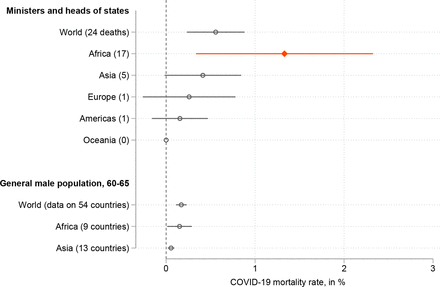
Why, when Africa was barely affected by Covid, were African leaders and ministers disproportionality killed by the disease?
The BMJ found that between 6 February 2020 and 6 February 2021, Covid claimed the lives of 24 national ministers and heads of states around the world. For some reason this didn’t include the Iranian deaths above but putting that aside, 17 of those 24 deaths occurred in Africa.
There was nothing special or different about the demographic of African ministers, “if anything, the African leaders who succumbed to COVID-19 were slightly younger than their seven counterparts on other continents”.
Five suggestions were given as to why the death rate could be so much higher.
- More comorbidities. However, no evidence of this was uncovered;
- Poor healthcare. You would think of all the people in Africa, the leaders of the nation would have access to the best healthcare around;
- General mortality in Africa was higher than reported. This was challenged by the WHO;
- African ministers work environments are busier and, therefore, they are more prone to the circulation of the virus. Even the BMJ say this is a weak hypothesis;
- 50% of the African deaths occurred in Southern Africa and the majority after the more transmissible ‘South African’ variant was reported.
Or was it something else?
John Magufuli
Not included in the report, due to it happening at the time it was published, was the death of another African leader, John Magufuli. Magufuli was president of Tanzania and died in March 2021, aged 61.

The Tanzanian leader had gone missing for two weeks before his death was announced even though the Prime Minister, Kassim Majaliwa, had insisted that the president was “healthy and working hard”. The media speculated that he was in hospital with Covid but when the vice-president, Samia Suluhu announced his death, she said he had died of heart failure.
From the very start, Mr. Magufuli had been a Covid sceptic. The Guardian’s obituary even called him “Tanzania’s Covid-denying president”. He had said how well Tanzania’s economy would do because they weren’t locking down and causing huge harm.
Just over two weeks before his disappearance, the Guardian published an opinion piece titled “It’s time for Africa to rein in Tanzania’s anti-vaxxer president.” The article was sponsored by the Bill & Melinda Gates foundation.
Mr. Magufuli, who had trained as a Chemistry teacher, first saw through the Covid scam when he realised the false positives produced by PCR tests. He sampled a goat, sheep and even a pawpaw fruit, assigned them human names and ages, sent them off for analysis and all came back with a positive Covid test result.
As a result, the president said “There is something happening. I said before we should not accept that every aid is meant to be good for this nation”. At the time of his death, only 21 Tanzanians had died and the president said the country was “Covid-free”. However, the country had stopped testing and recording deaths as ‘with Covid’ so we can’t be sure if this was correct or not.
Masks were laughed at and the government’s advice was to “improve personal hygiene, wash hands with running water and soap, use handkerchiefs, herbal steam, exercise, eat nutritious food, drink plenty of water, and [use] natural remedies that our nation is endowed with”. Whilst in the West, we were told to stop exercising and sit indoors worrying.
The Tanzanian president had also refused to buy “dangerous” foreign vaccines, instead choosing “herbal remedies”. However, even though Western media said this “herbal remedy” lacked scientific evidence, it was in fact made from Artemisia, a plant from Madagascar, shown to fight SARS-CoV-2.
Artemisia is used against malaria and has shown anti-inflammatory effects, including inhibition of interleukin-6 that plays a key role in the development of severe COVID-19. Furthermore, it has been shown to inhibit the viruses invasion and replication, as well as reducing oxidative stress and inflammation and mitigating lung damage. The plant also contains zinc, gallium and selenium, as well as having an antiviral effect.
The week before the president disappeared, ten prominent Tanzanians, including the former Bank of Tanzania Governor, all died from suspected Covid. This led to the WHO calling upon Tanzania to take “robust action”. The president suggested citizens should wear masks but reiterated that the country would not impose a lockdown.
After Magufuli’s death, his vice-president took over the presidency and reversed all his Covid policies.
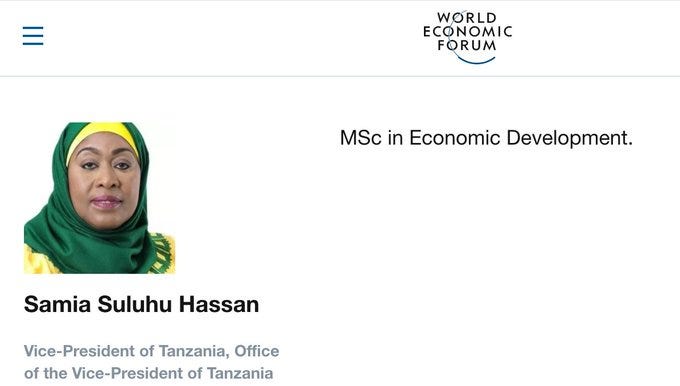
A million doses of Johnson & Johnson vaccine were ordered and a vaccination drive was put in place. A Covid task force was setup, masks had to be worn and lockdowns were enacted.
Pierre Nkurunziza – President of Burundi
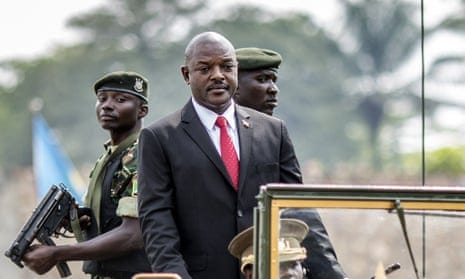
President Nkurunziza died unexpectedly, after a short stay in hospital, aged 55 in June 2020. Again, it was suspected that he had Covid but the official reason given for his death was a heart attack.
A month earlier in May 2020, the president had refused to introduce any social distancing or lockdown rules. After the WHO questioned the country’s Covid statistics, Burundi expelled WHO’s coronavirus team and declared them persona non grata for interfering with pandemic management.
On 30th June, new president Evariste Ndayishimiye announced that Covid was Burundi’s biggest enemy and to fight it required “strict compliance with the barrier measures that the Ministry of Health will now display everywhere across the country”.
Malawi
In April 2020, the high court in Malawi stopped the government from implementing a national lockdown. This had been initiated by a civil society group which challenged president Peter Mutharika who wanted a lockdown to save 50,000 Malawian lives. To date 2,686 Malawians have died with Covid.
However, in January 2021, a number of government ministers died including Minister of Local Government and Rural Development, Lingson Belekanyama; Principal Secretary in the Ministry of Information, Ernest Kantcheche; Transport Minister, Sidik Mia and Foreign Minister, Sibusiso Moyo (the former army general who ousted Mugabe).
Subsequently, the president used these deaths to stress the importance of new restrictions.
Other deaths
As well as the deaths above, which highlight how Covid deaths were used to change Covid policies in their respective countries, other Covid deaths included:
- Ambrose Dlamini, Prime Minister of Eswatini (formerly Swaziland);
- Christian Myekeni Ntshangase, Minister of Public Service in Eswatini;
- Makhosi Vilakait, Minister in Eswatini;
- Mahmoud Jibril, former Libyan Prime Minister and part of rebel government that overthrew Gaddafi;
- Pierre Buyoya, former Burundi president who died in Paris and had just been sentenced to life imprisonment in Burundi over the assassination of his successor, Melchior Ndadye;
- Khalif Mumin Tohow, Justice Minister of Somalia. This was the second Covid death in Somalia;
- Sekou Kourouma, Chief of Staff to Guinean President Alpha Conde;
- Amadou Salif Kebe, Head of Guinea’s electoral commission;
- Victor Traore, Director of Guinea’s Interpol bureau;
- Abba Kyari, Chief of Staff to the President of Nigeria Muhammadu Buhari;
- Mohamed Ben Omar, founder of the Nigerien Social Democratic Party which allied with the President of Nigeria’s party;
- Mahamane Jean Padonou, 2016 Nigerian presidential candidate and special advisor to President Issoufou;
- Ismail Gamadiid, Minister of Climate Change in Somalia;
- Perrance Shiri, part of the Cabinet of Zimbabwe and cousin of Mugabe;
- Ellen Gwaradzimba, Minister of State in Zimbabwe;
- Sibusiso Moyo, Minister of Foreign Affairs in Zimbabwe, noted for announcing the ousting of Mugabe;
- Joel Biggie Matiza, Minister in Zimbabwe and on the US sanctions list;
- Jackson Mthembu, Minister in South Africa. A medical helicopter transporting his doctor crashed, killing all 5 on board, the same day Mthembu died;
- Abdoul Aziz Mbaye, founding member of Senegal’s ruling party;
- Hasan al-Lawzi, Minister of Information in Yemen.
The list could go on and on.
I’m not saying that any of these people were taken out by the WHO or some international organisation that wanted lockdowns or to sell more vaccines. But what I am saying is that, in less transparent countries, Covid provided the perfect cover to get rid of a political opponent or undergo some type of regime or agenda change.
We have seen in the West how politicised the pandemic became and how politicians used the situation to their advantage as much as possible. Unfortunately for many of those Western politicians, killing people you don’t agree with is a little bit harder and more likely to get you put behind bars.
But in many third world countries, including the ones listed above in Africa, this happens a lot. And normally papers such as the Guardian would be rightly outraged. They would claim a coup had taken place or a political assassination.
However, many of the people who would normally be reporting and getting outraged about these deaths joined the cult of Covid. Suddenly, instead of investigating what happened, the political victor only had to write “maybe died of Covid” and Western media just reported “So sad, Covid is so terrible, if only they had been vaccinated”.
I’m sure some of the aforementioned deaths were due to some respiratory virus but maybe now that some ‘journalists’ are coming out of their Covid-induced reporting comas, they will start investigating whether all these politicians really died from Covid or were politically assassinated. The fact that African leaders were almost 8 times more likely to die from Covid than the general population might give them a clue.
China is the Rock Upon Which the U.S. World Order Breaks
By Ted Snider | The Libertarian Institute | April 4, 2023
In March, Chinese President Xi Jinping visited Russian President Vladimir Putin in Moscow, where they not only “reaffirm[ed] the special nature of the Russia-China partnership,” but “signed a statement on deepening the strategic partnership and bilateral ties which are entering a new era.” As Xi was leaving the Kremlin, he told Putin that “Together, we should push forward these changes that have not happened for 100 years.” That goodbye was Xi’s not so coded call for the end of the American century.
In his February 7 State of the Union Address, U.S. President Joe Biden got carried away by his excitement and arrogantly and ineptly went off script and called out, “Name me a world leader who’d change places with Xi Jinping. Name me one. Name me one.”
But the deflating truth is that the world is lining up behind China and Russia’s vision of a multipolar world no longer exclusively led by the United States. From Africa and its unanimous attendance at the recent Russia-Africa in a Multipolar World conference, to the Middle East and its long list of countries lining up to join the Chinese and Russian led multipolar organizations BRICS and the SCO, to Latin America and most of Eurasia and Asia, including India, the weight of the world is going to Xi’s place to balance American hegemony and support a multipolar world.
Biden’s outburst was an insult and confrontation that was a personal microcosm of U.S. provocation and confrontation of China on a global level. And it has had a corrosive and dangerous effect. An angry China is not answering America’s phone calls. Biden had hoped to talk to Xi on the phone in mid-March, but Chinese officials are not responding to U.S. requests to arrange the call. Defense Secretary Lloyd Austin’s calls to set up talks with his Chinese counterpart have also not been answered.
China is emerging as the rock upon which the U.S.-led alliance breaks.
China’s growing economic, diplomatic, and political influence is beginning to be more powerfully felt on the world stage. The rapid growth of international organizations that support China and Russia’s multipolar world vision is just one piece of evidence. China’s emergence as an influential broker is another.
Beijing has become a power that can shape the world, leaving Washington out of the process. They shocked the world in March by brokering a region transforming agreement between archrivals Saudi Arabia and Iran. And they upset the U.S. in February by initiating a peace process for the war in Ukraine. Both initiatives left the U.S. out in the cold.
The world is no longer unipolar: a world with multiple poles of power is emerging. China’s foreign policy seeks economic growth that demands the fostering of stability in the world; U.S. foreign policy seeks hegemony that demands hostility and schisms that punish and isolate resisters. The problem with China’s emergence as a broker is that it breaks U.S. hegemony. But it is also that China’s peace plans get in the way of America’s war plans.
The U.S. is not ready for peace in the Russo-Ukrainian War. Though peace plans may serve a devastated Ukraine, they do not serve the larger U.S. goals being served by the devastated Ukraine. The United States is not ready for Ukraine to go to the table and end the war before their larger goals are accomplished. As State Department spokesperson Ned Price said in March 2022, “This is a war that is in many ways bigger than Russia, it’s bigger than Ukraine.”
Biden rejected China’s potential role as a broker in the war, insisting that “the idea that China is going to be negotiating the outcome of a war that’s a totally unjust war for Ukraine is just not rational.” National Security Council spokesman John Kirby said that the U.S. does not believe that a Chinese peace proposal “is a step towards a just and durable peace.” He claims that “We all want to see the war end… And a ceasefire, at this time, while that may sound good, we do not believe would have that effect.” Kirby then added that “we don’t support calls for a ceasefire right now. We certainly don’t support calls for a ceasefire that would be called for by the [People’s Republic of China] in a meeting in Moscow that would simply benefit Russia.”
The U.S. has long insisted that no decisions will be made without Ukraine. But if a Chinese-brokered peace were to succeed, it would be because Ukraine has agreed to it. It is remarkable that it is up to Ukraine to continue the war but not up to Ukraine to end it.
China’s peace plans for the Middle East also get in the way of America’s war plans. A U.S.-led unipolar world demands the isolation of Iran. A key piece of that plan is the establishment and maintenance of a regional coalition against Iran. At the heart of that coalition is Saudi Arabia firmly in the anti-Iran camp. The recent Chinese brokered Saudi-Iran agreement breaks that coalition and mends that schism.
The Saudi-Iran agreement has had immediate effects in the region that further challenge American efforts to shape it in their own way. Fast in the wake of the agreement, Saudi Arabia and Iranian ally Syria agreed to reopen their embassies. And the shift in shape is not just bilateral, but regional. Saudi Arabia’s foreign minister is reported to be on his way to Damascus to formally invite Syrian President Bashar al-Assad to this May’s Arab League summit in Riyadh. The invitation, Syria’s first since 2011, would “formally end Syria’s regional isolation.” On April 1, Syria’s foreign minister went to Cairo for the first official visit in twelve years to begin the process of reinstating Syria in the Arab League.
That “leap forward in Damascus’s return to the Arab fold” frustrates U.S. plans to continue the isolation of Assad and Syria. The U.S. has opposed normalization of relations with Syria by countries in the Middle East. The State Department says their “stance on normalization remains unchanged” despite Saudi Arabia’s new stance and the changes in the region.
China has emerged as a diplomatic force that can broker agreements and shape the world in a way that shatters U.S. hegemony in a unipolar world. Some countries are willing to break with the United States and work with China.
France has communicated to China its “appreciation for China’s positive role in promoting peace talks.” Macron’s Diplomatic Advisor, Emmanuel Bonne, told Wang Yi, China’s Director of the Office of the Central Commission for Foreign Affairs, that “France is ready to make joint efforts with China to facilitate cessation of hostilities and seek a peaceful solution.”
France is a major European NATO ally. China’s emergence as a diplomatic superpower has created a crack in the structure of the U.S.-led alliance.
France is not alone in its willingness to work with China. Where France’s independent position reveals a rift within the U.S.-led alliance, Brazil’s independent position reveals the emergence of other poles in the newly emergent multipolar world.
The independent course charted by Brazil and its willingness to work with America’s rival reveals, not only the loss of U.S. hegemony in its own hemisphere, but the loss of U.S. hegemony globally because partnering with China is partnering with BRICS, the large international organization whose goal is to balance U.S. hegemony of a unipolar world.
Brazilian President Luiz Inácio Lula da Silva has supported China’s efforts at negotiating a peace proposal and criticized the United States for speaking “very few words about peace.” But he has also proposed a joint effort, or a “peace club” that could include BRICS members China, India and Brazil and possibly Indonesia. Indonesia has been a leader in the nonaligned world and was recently welcomed as a guest at the BRICS Foreign Ministers’ Meeting.
China’s diplomatic entry into the war in Ukraine highlights a multipolar world that could shape a post world war and sideline the United States.
As China’s economy and the gravitational pull of its multipolar world grow, and as its force is further felt, not only economically but politically and diplomatically, the U.S. stance may stiffen, and Washington may more solidly confront China, not only by increasing sanctions, but by calling on its allies to do the same.
That call could be a challenging one for America’s European allies to answer. If Seymour Hersh’s reporting is correct, it took cutting Germany off from their Russian oil supply by a historic act of sabotage—an act of war—to keep Germany fully on board in America’s sanction regime on Russia. China has been Germany’s most important trading partner for seven consecutive years. Since the Russian invasion of Ukraine, Germany has only increased its investments in and economic dependence on China. It will be more difficult to pressure Germany to cut economic ties with China than it was to pressure it to cut ties with Russia. And it will be asking a lot of Germany to ask it to cut ties with both.
Dr. Suzanne Loftus, Research Fellow at the Quincy Institute Eurasia Program, told me that, “China is Germany’s most important trading partner. Having to sanction China would put Germany in a very difficult position seeing as how it has already had to sanction another one of its significant trading partners (Russia) and is also struggling with U.S. protectionist policies (Inflation Reduction Act).” Loftus continued “[f]acing difficulties at home, Germany will most likely opt out of having to sanction China if the U.S. started to put pressure on Germany to do so. It would otherwise face too much of an economic shock and increased domestic turmoil as a result.”
A hint of that potential split with the United States was provided in November when German Chancellor Olaf Scholz’s defied Washington by going to Beijing, accompanied by the CEOs of Volkswagen, BMW, BASF, Bayer and Deutsche Bank, in part to discuss trade.
On the eve of his trip, Scholz wrote that “new centers of power are emerging in a multipolar world, and we aim to establish and expand partnerships with all of them.” He said that, though China is an economic power that will “play a key role on the world stage in the future,” this does not “justif[y]… calls by some to isolate China.” Scholz then wrote clearly that “even in changed circumstances, China remains an important business and trading partner for Germany and Europe—we don’t want to decouple from it.”
Future American calls to sanction China could force Europe into a choice between solidity with the U.S.-led alliance and continued economic partnership with China. For the U.S., there is a hazardous forecast that that choice could weaken that solidity.
The growing reality of China’s multipolar world vision, China’s emergence as a broker of peace plans that interfere with American war plans, the world’s shifting of shape that sees important countries willing to work with China, and the need for countries to strengthen trade ties with Beijing all suggest that China could be the rock upon which the U.S.-led alliance breaks.
OPEC: Saudis aren’t afraid of US anymore
BY M. K. BHADRAKUMAR | INDIAN PUNCHLINE | APRIL 4, 2023
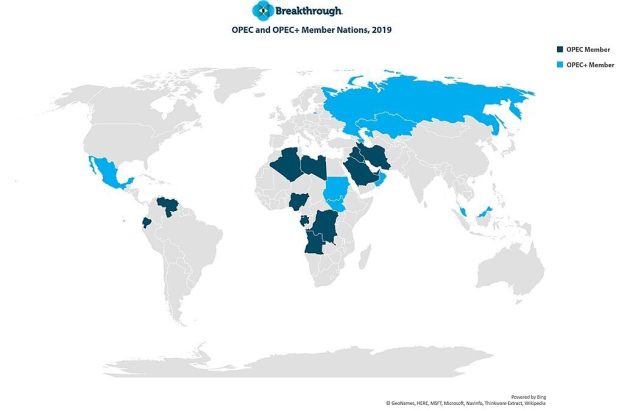
The shock oil production cuts from May outlined by the OPEC+ on Sunday essentially means that eight key OPEC countries decided to join hands with Russia to reduce oil production, messaging that OPEC and OPEC+ are now back in control of the oil market.
No single oil producing country is acting as the Pied Piper here. The great beauty about it is that Saudi Arabia and seven other major OPEC countries have unexpectedly decided to support Russia’s efforts and unilaterally reduce production.
While the 8 OPEC countries are talking about a reduction of one million b/d from May to the end of the year, Russia will extend for the same period its voluntary adjustment that already started in March, by 500,000 barrels.
Now, add to this the production adjustments already decided by the OPEC+ previously, and the total additional voluntary production adjustments touch a whopping 1.6 million b/d.
What has led to this? Fundamentally, as many analysts had forewarned, the Western sanctions against Russian oil created distortions and anomalies in the oil market and upset the delicate ecosystem of supply and demand, which were compounded by the incredibly risky decision by the G7, at the behest of the US Treasury, to impose a price cap on Russia’s oil sales abroad.
On top of it, the Biden administration’s provocative moves to release oil regularly from the US Strategic Petroleum Reserve in attempts to micromanage the oil prices and keep them abnormally low in the interests of the American consumer as well as to keep the inflationary pressures under check turned out to be an affront to the oil-producing countries whose economies critically depend on income from oil exports.
The OPEC+ calls the production cuts “a precautionary measure aimed at supporting the stability of the oil market.” In the downstream of the OPEC+ decision, analysts expect the oil prices to rise in the short term and pressure on Western central banks to increase due to the possible spike in inflation.
What stands out in the OPEC+ decision is that Russia’s decision to reduce oil production by the end of the year has been unanimously supported by the main Arab producers. Independent but time-coordinated statements were made by Saudi Arabia, the UAE, Kuwait, Iraq, Algeria, Oman and Kazakhstan, while Russia confirmed its intention to extend until the end of the year its own production reduction by 500,000 barrels per day, which began in March.
Significantly, these statements have been made precisely by those largest oil producers in OPEC, who have a record of fully utilising their existing quota. Put differently, the reduction in production is going to be real, not just on paper.
Partly at least, the banking crisis in the US and Europe prompted the OPEC+ to intervene. Although Washington will downplay it, in March, Brent oil prices fell to $70 per barrel for the first time since 2021 amid the bankruptcy of several banks in the US and the near-death experience of Credit Suisse, one of the largest banks in Switzerland. The events sparked concern about the stability of the Western banking system and fear of a recession that would affect oil demand.
There is every likelihood that tensions may increase between the US and Saudi Arabia as higher oil prices will push inflation and make it even more difficult for the US Federal Reserve to find a balance between raising the key rate and maintaining financial and economic stability. Equally, the Biden administration must be furious that practical cooperation is still continuing between Russia and the OPEC countries, especially Saudi Arabia, notwithstanding the West’s price cap on Russian oil and Moscow’s decision to unilaterally cut production in March.
However, the Biden administration has only a limited range of options to respond to the OPEC+’s surprise move: one, go for another release of oil from the Strategic Petroleum Reserve; two, pressure US producers to increase domestic oil output; three, back legislation that would allow the US to take the dramatic step of suing OPEC nations; or, four, curb the US’ export of gasoline and diesel.
To be sure, the OPEC+ production cut goes against the Western demand to increase oil output even as sanctions were imposed against Russian oil and gas exports. On the other hand, the disruption in oil supplies from Russia contributed to the rising inflation in the EU countries.
The US wanted the Gulf Arab states to step in and step up oil production. But the latter did not oblige because they felt that there wasn’t enough economic activity in the West and there were clear signs of recession contrary to expectation.
Thus, as a result of the sanctions against Russia, Europe is facing the complex situation of inflation and near-recession known as stagflation. In reality, the adaptive and agile OPEC + read the situation correctly and has shown that it is willing to act ahead of the curve. At a time when the world economy is struggling to grow at a healthy rate, the demand for oil would be relatively less, and it makes sense to cut oil production to maintain the price balance.
All that the Western leaders can complain about is that the OPEC+ cut in oil output has come at an inappropriate time. But the woes of Western economies cannot be laid at the door of OPEC+ as there are inherent problems which are now coming to the surface. For instance, the large scale protests in France against pension reform or the widespread strikes in Britain for higher wages show that there are deep structural problems in these economies, and the governments seem helpless in tackling them.
In geopolitical terms, the OPEC+ move came after a meeting between Russian Deputy Prime Minister Alexander Novak and Saudi Energy Minister Prince Abdulaziz bin Salman in Riyadh on March 16 that focused on oil market cooperation. Therefore, it is widely seen as the tightening of the bond between Russia and Saudi Arabia. In fact, in May, as the largest members of OPEC join Russia in its unilateral reduction, the balance of quotas and the ratio of market shares between and amongst the participants in the OPEC + deal will return to the level set when it was concluded in April 2020.
The big question is, how Moscow might profit from the OPEC+ decision. The rise in crude oil prices particularly benefits Russia. Simply put, the production cuts will tighten up the oil market and thus help Russia to secure better prices for the crude oil it sells. Second, the new cuts also confirm that Russia is still an integral and important part of the group of oil producing countries, despite the western attempts to isolate it.
Third, the consequences of Sunday’s decision are all the greater because, unlike the previous cuts by the OPEC+ group at the height of the pandemic or last October, today, the momentum for global oil demand is up, not down — what with a strong recovery by China expected.
That is to say, the surprise OPEC+ reduction further consolidates the Saudi-Russian energy alliance, by aligning their production levels, thus placing them on equal footing. It is a slap in the face for Washington.
Make no mistake, this is another signal regarding a new era where the Saudis are not afraid of the US anymore, as the OPEC “leverage” is on Riyadh’s side. The Saudis are only doing what they need to do, and the White House has no say in the matter. Clearly, a recasting of the regional and global dynamics that has been set in motion lately is gathering momentum. The future of petrodollar seems increasingly uncertain.
ICC irreversibly crosses the line of legal decency
By Stephen Karganovic | Strategic Culture Foundation | March 29, 2023
Acting at the behest of its political controllers and paymasters, the racist International Criminal Court [ICC], whose principal activity since its founding in 2003 has been the malicious persecution of black African leaders, now, for a change, targets for judicial abuse a distinguished Eurasian figure.
Observers with an attention span of more than fifteen minutes (which would exclude the vast majority in the bamboozled Western countries) should have noticed immediately several glaring anomalies in ICC’s “arrest warrant.”
The warrant purports to be based on humanitarian concern for the welfare of children allegedly transferred illegally from the Donbas. The court officers’ public rationale, however, omits widely known facts regarding the systematic bombardment of civilians in Donetsk and Lugansk since 2014. It ignores the demonstrated death toll of that crime amounting to at least 14,000 victims, including several thousand children. Neither this manifest offence against humanity nor the desire to call to account its obvious perpetrators, the military and political structures of the Kiev Nazi regime, seem to have played any role in the court’s deliberations.
Why not? How can meticulous adherence to the provisions of the Geneva Convention which requires the evacuation of civilians from areas affected by armed conflict (Article 49) be deemed grounds for the issuance of a criminal warrant, while widespread, systematic, and indiscriminate lethal shelling of civilians is passed over in silence, without triggering any prosecutorial reaction?
For that matter, a further question can also be raised with regard to another anomaly, just as glaring. Why have the alleged atrocities in Bucha and Kramatorsk last year apparently been memory holed, to be replaced now by another that has been obviously contrived? If criminal charges were to be pressed, why have the Bucha and Kramatorsk incidents, which at the time of their alleged occurrence were the subject of extraordinary propaganda campaigns, suddenly disappeared from the radar screen? And precisely when they could have served as the most credible foundation for an arrest warrant, assuming there ever was any evidence to support those allegations? Might the fact that both false flag operations were efficiently exposed in the early stages have anything to do with this strange reticence?
How incompetent – or politically corrupt – must a prosecutor be to forego a supposedly open and shut case in favor of a case, and that is putting it very charitably, that is at best legally ambiguous and highly dubious? This question is addressed to the ICC Prosecutor, colonial lackey and consummate opportunist Karim Khan, of course.
Two additional considerations must also be submitted to the judgment of that part of the public whose brains have not yet been fried by propaganda. If the welfare of children is foremost on the minds of ICC staff, what have they got to say about the tsunami of reports that the Kiev junta, desperate to replenish its supply of cannon fodder, is now detaining and kidnapping underage children and with virtually no military training sending them to war, where they have an estimated life expectancy of about four hours?
Rule 136 0f the Convention on the Rights of the Child holds plainly that “Children must not be recruited into armed forces or armed groups.” Additional Protocols I and II, the Statute of the International Criminal Court itself [Art. 8 (b) (xxvi)] and of the Special Court for Sierra Leone put the minimum age for recruitment in armed forces or armed groups at 15, as does the Convention on the Rights of the Child. Are ICC prosecutors capable of reading their own court’s regulations, or do they even care?
Should credible reports of such odious practices, unquestionably in contravention of international conventions which govern the use of child soldiers, not merit at least a full scale ICC investigation?
An equally grave question should be raised concerning the imminent dispatch of hazardous and banned depleted uranium munitions by Great Britain to the armed forces of the Ukrainian junta.
Contrary to the rationalisations of the British Government, depleted uranium munitions are provably detrimental to the environment, as well as to human beings and all forms of animate life in the proximity of their impact. That includes children, of course, who are particularly vulnerable and subject to genetic deformations and painful and lethal illnesses. The catastrophic impact of the use of such munitions in Yugoslavia and Iraq has been extensively studied and well documented over the past several decades. Former UN arms control inspector Scott Ritter has exposed the evils of this practice professionally and competently. It is prohibited by international humanitarian law and if allowed it will constitute a grave threat to life and health both of children and adults in the Ukraine. Would not the warning of arrest warrants for the relevant authorities in the United Kingdom be a suitable response by the ICC in the face of a potential disaster of such magnitude?
It is important to note that the International Criminal Court is a linear extension of the International Criminal Tribunal for the Former Yugoslavia [ICTY] and that its conduct cannot be fully understood without reference to the pattern of lawless behaviour previously exhibited by its model. Indeed, the word “conduct” is in this case a more appropriate terms than “jurisprudence” because neither court has bothered to develop a body of law and legal interpretation in the conventional sense. It is of no significance that ICTY is a manifestly illegal outfit, set up in contravention of the UN Charter, while ICC arguably was properly constituted by international treaty. In their practical operation they have both served as tools of the arrogance of power of global hegemons. Their joint task has been not to uphold the principles of international law, but to demolish them in order to provide a legalistic veneer for the execution of the hegemons’ criminal undertakings.
It is therefore scarcely surprising that the preposterous grounds cited by the ICC for issuing warrants against Russian officials for an alleged act of gross turpitude consisting of the safe evacuation of children from the war zone in the Donbas had an exact analogue in the past behaviour of ICC’s infamous model, the ICTY.
In a nutshell, Serbian defendants in the ICTY Srebrenica trials were routinely charged with a grave breach of international humanitarian law, forced deportation of the civilian population. In mid-July of 1995, three meetings were held between the commander of the UN Protection Force in Srebrenica, Col. Thom Karremans, and the Serbian Commander Gen. Ratko Mladic to consider the issue of civilian refugees assembled in a nearby village. The Serbian side made complete video recordings of those meetings which leave no doubt as to what had in fact transpired. Although the video evidence unambiguously shows that Col. Karremans came to Mladic to convey the request of the UN Command that the refugees be evacuated to safety onto territory where military operations were not taking place, ICTY Prosecution charged Mladic with ordering the expulsion and ethnic cleansing of the refugees. What actually happened is that Gen. Mladic acceded to UN Command’s request, as he had the duty to do under international law since fighting around Srebrenica was still in progress, and as a result the refugees were properly evacuated, as agreed.
For acting in good faith to protect civilians in a zone of conflict, Gen. Mladic was indicted, among other things, for genocide and crime against humanity, deportation.
The exculpatory video evidence was never presented in court in its totality. Snippets taken out of context and appearing to favor the prosecution case were the only parts allowed to be introduced into the evidence. Live testimony by Col. Karremans, who obviously would have been a key witness, was obstructed at every turn by the prosecution with the connivance of the Chamber. Technically, the judges could not be faulted for not taking into account evidence that had not been put before them. In the end, they washed their hands and calmly drew conclusions that were contrary to the facts, but with grave consequences for the defendant.
The Russian targets of ICC’s warrants will never, of course, be in the position of General Mladic. However, the cowboy style of ICTY´s corrupt proceedings, fully assimilated by its subsequent clone, ICC, gives a foretaste of what awaits anyone unlucky enough to fall in its clutches.
ICC, like its precursor ICTY, is a disgrace to law in all its civilised forms. State parties should be encouraged to withdraw from it while it is still possible for them to avoid embarrassment by association.
Xi’s ‘Chilling’ Remarks: A Multipolar World Offers Challenges and Opportunities to the Middle East and Africa
By Ramzy Baroud | MEMO | March 26, 2023
The final exchange, caught on camera between visiting Chinese President Xi Jinping and his Russian host and counterpart, Vladimir Putin, sums up the current geopolitical conflict, still in its nascent stages, between the United States and its Western allies on the one hand, and Russia, China and their allies, on the other.
Xi was leaving the Kremlin following a three-day visit that can only be described as historic. “Change is coming that hasn’t happened in 100 years and we are driving this change together,” Xi said while clasping Putin’s hand.
“I agree,” Putin replied while holding Xi’s arm. ‘Please take care, dear friend,” he added.
In no time, social media exploded by sharing that scene repeatedly. Corporate western media analysts went into overdrive, trying to understand what these few words meant.
“Is that part of the change that is coming, that they will drive together?” Ian Williamson raised the question in the Spectator. Though he did not offer a straight answer, he alluded to one: “It is a chilling prospect, for which the west needs to be prepared.”
Xi’s statement was, of course, uttered by design. It means that the Chinese-Russian strong ties, and possible future unity, are not an outcome of immediate geopolitical interests resulting from the Ukraine war, or a response to US provocations in Taiwan. Even before the Ukraine war commenced in February 2022, much evidence pointed to the fact that Russia and China’s goal was hardly temporary or impulsive. Indeed, it runs deep.
The very language of multipolarity has defined both countries’ discourse for years, a discourse that was mostly inspired by the two countries’ displeasure with US militarism from the Middle East to Southeast Asia; their frustration with Washington’s bullying tactics whenever a disagreement arises, be it in trade or border demarcations; the punitive language; the constant threats; the military expansion of NATO and much more.
One month before the war, I argued with my co-writer, Romana Rubeo, that both Russia and China might be at the cusp of some kind of unity. That conclusion was drawn based on a simple discourse analysis of the official language emanating from both capitals and the actual deepening of relations.
At the time, we wrote,
“Some kind of an alliance is already forming between China and Russia. The fact that the Chinese people are taking note of this and are supporting their government’s drive towards greater integration – political, economic and geostrategic – between Beijing and Moscow, indicates that the informal and potentially formal alliance is a long-term strategy for both nations”.
Even then, like other analysts, we did not expect that such a possibility could be realized so quickly. The Ukraine war, in itself, was not indicative that Moscow and Beijing will grow closer. Instead, it was Washington’s response, threatening and humiliating China, that did most of the work. The visit by then-US House Speaker, Nancy Pelosi, to Taiwan in August 2022 was a diplomatic disaster. It left Beijing with no alternative but to escalate and strengthen its ties with Russia, with the hope that the latter would fortify its naval presence in the Sea of Japan. In fact, this was the case.
But the “100 years” reference by Xi tells of a much bigger geopolitical story than any of us had expected. As Washington continues to pursue aggressive policies – with US President Joe Biden prioritising Russia and his Republican foes prioritising China as the main enemy of the US – the two Asian giants are now forced to merge into one unified political unit, with a common political discourse.
“We signed a statement on deepening the strategic partnership and bilateral ties which are entering a new era,” Xi said in his final statement.
This ‘no-limits friendship‘ is more possible now than ever before, as neither country is constrained by ideological confines or competition. Moreover, they are both keen on ending the US global hegemony, not only in the Asia and Pacific region, but in Africa, the Middle East and, eventually, worldwide as well.
On the first day of Xi’s visit to Moscow, Russia’s President Putin issued a decree in which he has written off debts of African countries worth more than $20 billion. Moreover, he promised that Russia is “ready to supply the whole volume sent during the past time to African countries particularly requiring it, from Russia free of charge ..,” should Moscow decide “not to extend the (grain) deal in sixty days.”
For both countries, Africa is a major ally in the upcoming global conflict. The Middle East, too, is vital. The latest agreement, which normalised ties between Iran and Saudi Arabia is earth-shattering, not only because it ends seven years of animosity and conflict, but because the arbitrator was no other than China itself. Beijing is now a peace broker in the very Middle East which was dominated by failed US diplomacy for decades.
What this means for the Palestinians remains to be seen, as too many variables are still at work. But for these global shifts to serve Palestinian interests in any way, the current leadership, or a new leadership, would have to slowly break away from its reliance on western handouts and validation, and, with the support of Arab and African allies, adopt a different political strategy.
The US government, however, continues to read the situation entirely within the Russia-Ukraine war context. US Secretary of State Antony Blinken responded to Xi’s trip to Moscow by saying that “the world should not be fooled by any tactical move by Russia, supported by China or any other country, to freeze the war (in Ukraine) on its own terms.” It is rather strange, but also telling that the outright rejection of the potential call for a ceasefire was made by Washington, not Kyiv.
Xi’s visit, however, is truly historic from a geopolitical sense. It is comparable in scope and possible consequences to former US President Richard Nixon’s visit to Beijing, which contributed to the deterioration of ties between the Soviet Union and China under Chairman Mao Zedong.
The improved relationship between China and the US back then helped Washington further extend its global dominance, while putting the USSR on the defensive. The rest is history, one that was rife with geostrategic rivalry and divisions in Asia, thus, ultimately, the rise of the US as the uncontested power in that region.
Nixon’s visit to Beijing was described by then-Ambassador Nicholas Platt as “the week that changed the world.” Judging that statement from an American-centric view of the world, Platt was, in fact, correct in his assessment. The world, however, seems to be changing back. Though it took 51 years for that reversal to take place, the consequences are likely to be earth-shattering, to say the least.
Regions that have long been dominated by the US and its western allies, like the Middle East and Africa, are processing all of these changes and potential opportunities. If this geopolitical shift continues, the world will, once again, find itself divided into camps. While it is too early to determine, with any degree of certainty, the winners and losers of this new configuration, it is most certain that a US-western-dominated world is no longer possible.
or go to
Aletho News Archives – Video-Images
From the Archives
Israel Would Have No Qualms About USS Liberty-Style FALSE FLAG If Iran Campaign Falters – Analysts
By Ilya Tsukanov – Sputnik – 18.06.2025
Donald Trump is mulling whether or not to join Israel’s aggression against Iran as Tel Aviv faces problems sustaining its defenses against growing counterstrikes, and apparently lacks a realistic game plan for an end to hostilities after failing to achieve its goals. Analysts told Sputnik how the US could be ‘nudged’ into the conflict.
“The US is already assisting Israel with supplies, intel, refueling support, etc. One of the many US posts in the region could be attacked for a casus belli,” former Pentagon analyst Karen Kwiatkowski explained.
“If Trump doesn’t comply with Israel’s demand” and join its aggression voluntarily, “a false flag may be needed” to drag the US in, Kwiatkowski, retired US Air Force Lt. Col.-turned Iraq War whistleblower, fears.
Netanyahu has a diverse array of options at his disposal, according to the observer, including:
- a false flag against US assets abroad blamed on Iran or one of its Axis of Resistance allies, like the Houthis
- a US domestic attack or assassination blamed on Iran
- Iranian air defenses ‘accidentally’ hitting a civilian jetliner carrying Americans
- use of a dirty bomb or nuclear contamination somewhere in the region blamed on Iran
- even blackmailing by threatening to use nukes against Iran if the US doesn’t join the fight
Kwiatkowski estimates that Israel probably has “enough blackmail power” against President Trump and Congress to avoid the necessity of a false flag operation, but a “USS Liberty-style” attack, targeting the soon-to-be-retired USS Nimitz supercarrier that’s heading to the Middle East, for example, nevertheless cannot be ruled out entirely, she says. … continue
Blog Roll
 Aletho News
- The London Ambulances Attack: Of Course It Was A False Flag
- Embarrassing Pivot: U.S. considers dropping Iran oil sanctions amid war
- US has 2 months of rare earths left to replenish weapons amid Iran war: Report
- Strait Of Hormuz closure brings Empire to brink
- Iran controls Strait of Hormuz, dictates terms of war and peace as US excursion backfires
- Outlasting the Superpower: The Reasons Why Iran is Beating uhe US and Israel
- Top PMU commander, over a dozen fighters killed in new US strikes on Iraq
- Is Netanyahu’s war gamble threatening the future of ‘Israel’?: FT
- Smotrich calls for annexation of South Lebanon to Litani River
- Echos of Gallipoli? Hormuz and the Geography of Hubris
- If Americans Knew
- ‘Forever live by the sword’: Understanding Israelis’ massive support for Iran war
- UN’s special rapporteur on human rights says Israel is systematically torturing Palestinians
- Trump White House plagiarized Iran war manifesto from Israel-aligned think tank
- Gaza says 6–10 patients die daily waiting for treatment abroad as Israel blocks medical evacuations
- ‘Substantial evidence’ of double-tap strike in killing of Gaza’s Hind Rajab
- ‘Do Not Want To Die For Israel’: Doubts About Trump’s Iran Strategy Spread Among Troops
- Instead of taking Joe Kent’s claims seriously, the media is disregarding him as an antisemite
- Joe Kent’s Explosive Interviews about his Resignation over the Iran War
- Israel poised to take over southern Lebanon; settlers wreak havoc in West Bank – Not a ceasefire Day 165
- From Sde Teiman, the truth about Israel’s military justice system has been set free
- No Tricks Zone
- Devastating Assessment Of Comirnaty Vaccine By Former Senior Pfizer Europe Toxicologist
- New Study: CO2 Is ‘Effectively Negligible’ As An Explanatory Climate Change Factor Since 2000
- Former Pfizer Toxicologist Dr. Helmut Sterz Tells Bundestag Hearing Pfizer Vaccine Should Have Never Been Approved
- Energy Expert: Germany’s Nuclear Phaseout Was A “500 Billion Euro Mistake”
- New Research: South Australia’s Mid-Holocene Sea Surface Temperatures Were 4°C Warmer Than Today
- Storing Green Energy To Last Germany 10 Days Would Require A 60-Million Tonne Battery
- New Studies: UK Sea Levels Were 4 Meters Higher Than Today During The Mid-Holocene
- Destructive Green New Deal: German Energy And Metal Group Warns Of Drastic Crisis
- New Study Documents A 20-Year Pause In Arctic Sea Ice Decline – Driven By Internal Variability
- Wake-up Call: Survey Shows Majority Of Germans Now Favor Postponing Climate Targets!
 Aletho News