Terror Bombing in Brussels and Paris: Europe’s Islamist Legionnaires Come Home to Fight
By James Petras :: 04.08.2016
Introduction: The terror bombings in Paris and Brussels have raised a cacophony of voices, ranging from state officials, Prime Ministers and Presidents, to academics, journalists and media consultants. Tons of ink and print have focused on the psychology, networks and operations of the alleged perpetrators – radicalized young Muslim citizens of the EU.
Few have examined the long-term, large-scale policies of the EU, US and NATO, which have been associated with the development and growth of the worldwide terror networks. This essay will discuss the historical links between Islamist terrorists and the US-Saudi Arabian-Pakistani intervention in Afghanistan, as well as the consequences of the US invasion and occupation of Iraq. In Iraq, the US implemented a deliberate policy of destroying all secular state structures and promoting the Balkanization of the country via ethnic-religious and tribal wars – a policy it has followed in subsequent areas of intervention.
The last section will focus on the US-EU-Gulf Petrol-Monarchy proxy invasions and ‘regime change’ bombings of the secular republics of Libya and Syria with the further cultivation and growth of international Islamist terrorism.
Historical Origins of International Islamist Terrorism: Afghanistan
In 1979, President James Carter and his National Security Chief, Zbigniew Brzezinski, launched Operation Cyclone, a major Islamist uprising against the Soviet- aligned secular Afghan regime. The US coordinated its campaign with the rabidly anti-Soviet monarchy in Saudi Arabia, which provided the funding and mercenaries for ‘international jihad’ against secular governance. This brutal campaign ‘officially’ lasted 10 years until the Soviet withdrawal in 1989. It produced millions of casualties and decades of ‘blow-back’ when the CIA-Pakistani-Saudi trained Arab mercenaries (the ‘Afghan-Arabs’) returned to their home countries and elsewhere. The US intelligence agencies, Special Forces Commands and military directorates (especially Pakistan’s ISI intelligence service) trained and armed terrorists with US-Saudi funding. The American covert financial contribution mushroomed over the years rising to over $670 million dollars a year by 1987. Tens of thousands of Islamist mercenaries and adventurers were recruited from the Middle East, North Africa, the Gulf States, the Soviet Union (Chechens), Yugoslavia (Bosnians and Kosovars), China (Uigurs) and Western Europe.
With the defeat of the secular regime of President Najibullah in 1992, the Islamists and tribal factions then fought among themselves, converting Afghanistan into the world’s best-equipped training ground for International Islamist terrorists. Eventually, the Pashtun-based Taliban faction (with Pakistani arms and support) prevailed and established an extreme Islamist regime. The Taliban, despite its rhetoric, settled down to consolidating their brand of ‘Islamism in one country’, (1995-2001), a largely nationalist project. In its quest for respectability, it successfully destroyed the opium poppy fields, earning the praise of US President GW Bush in spring 2001. It also hosted a variety of Saudi princes and warlords, eventually including the jihadi-internationalist Osama bin Laden, who had been driven from North Africa.
Following the terrorist attack on the US in September 2001, the US and NATO invaded Afghanistan on October 2001 and overthrew the nation-centered Islamist Taliban regime. The subsequent chaos and guerrilla war opened up a huge new inflow and outflow of thousands of international extremists who came to Afghanistan, trained, fought and then departed, fully prepared to practice their terrorist skills in their countries of origin in Europe, North Africa and the Middle East.
The US interventions and invasion of Afghanistan provide some of the context for the subsequent bombings in Europe and the US. The Islamist ‘returnees’ to Europe and elsewhere had received funds from Saudi Arabia and training from the CIA and Pakistani intelligence. They began their work among a very ‘available’ constituency of potential recruits in the marginalized Muslim youth of the ghettos and prisons of Europe.
The Middle Period: the US-Zionist Invasion and Destruction of Iraq
The turning point in the growth and internationalization of Islamist terrorism was the US invasion, occupation and systematic reign of terror in Iraq. Largely under the guidance of key US Zionist policymakers (and Israeli advisers) in the Pentagon, State Department and the White House, the US dismantled the entire secular Iraqi army and police forces. They also purged the administrative, civil, educational, medical and scientific institutions of nationalistic secular professionals, opening the field to warring Islamist tribal factions. Hundreds of thousands of Iraqi civilians were killed and millions fled in a regime of ethnic cleansing – which Washington touted as a model for the rest of the Middle East. However, thousands of experienced, but jobless Iraqi military officers, who had survived the US-orchestrated purges, regrouped and eventually joined with tens of thousands of nationalist and internationalist Islamist extremists to form ISIS. Their motives were arguable less ethno-religious and more related to revenge for their displacement and the destruction of their own society.
The deliberate US (Zionist)-EU-Saudi strategy to divide and conquer Iraq initially involved working closely with Sunni feudal tribal leaders and other extremists to counter the rising power of pro-Iranian Shia. They promoted a policy of fragmenting the country with the Kurds dominating in the North, the Sunnis in the center and the Shia in the south (the so-called Joseph Biden-Leslie Gelb Plan of national dismemberment and ethnic cleansing). The rationale was to create a weak central authority completely under US-EU tutelage and a loose group of fragmented subsistence fiefdoms in what had been the most advanced secular Arab republic.
Despite pouring billions of dollars in arms from the US to create a puppet-colonial Iraqi ‘national army’, the Saudis and Israelis pursued their own policy of financing sectors of the Kurds and violent Sunni opposition – with the latter forming the original mass base of ISIS.
As the US-client Shia regime in Baghdad focused on stealing billions while killing or exiling hundreds of thousands of educated Sunnis, Christians and other secular Iraqis from the capital, the morale of its US-puppet troops plummeted. With the entire experienced and nationalist Iraqi officer core purged (slaughtered or driven into hiding), the new puppet officers were cowardly, corrupt and incompetent – as openly acknowledged by their US ‘advisers’. ISIS, meanwhile had acquired hundreds of thousands of US weapons and was financed by the Shia-hating Saudi Royal Family and other Gulf Monarchs. Armed Sunnis soon launched major, lightning-quick offensives under the leadership of ex-Baathist army officers, supported by thousands of terrorists, suicide bombers and foreign mercenaries. US and European ‘military experts’ expressed ’shock’ at their effectiveness.
ISIS routed the Baghdad-controlled army, their US advisers and Kurdish allies from northern Iraq, capturing major cities, including Mosul, thousands of productive oil wells and drove their forces to within a few dozen kilometers of Baghdad. Territorial conquest and military successes attracted thousands more Islamist volunteers from the Middle East, Europe, Afghanistan and even North America. ISIS provided the military training; Saudi Arabia paid their salaries; Turkey purchased their captured oil and antiquities and opened its borders to the transfer of jihadi troops and weapons. Israel, for its part, purchased captured ISIS petrol at a discount from corrupt Turkish traders. Each regional player had its snout in the bloody trough that had once been Iraq!
ISIS successes in Iraq, led it to expand its operations and ambitions across the border into Syria. This occurred just as the US and EU were bombing and destroying the secular government of Colonel Gadhafi in Libya, in another ‘wildly successful’ planned campaign of ‘regime change’ (According to US Secretary of State Clinton as she gleefully watched the captive wounded Gadhafi ’snuff film’ by unspeakable torture – ‘WE came and HE died’.).
The chaos that ensued in Libya led to an exponential growth of extremist Islamist groups with tons of weapons of ‘liberated’ Libyan weapons! Islamist terrorists in Libya gained territory, took over oil wells and attracted ‘volunteers’ from the marginalized youth of neighboring Tunisia, Egypt, Mali and as far away as Somalia, Afghanistan, Iraq and Syria. Flush with more guns, money and training. Many graduates went on to Syria and Iraq.
The Contemporary Period: EU-US-Turkey-Saudi-Israeli Sponsored War in Syria
In 2011, as ISIS rolled across the Iraqi border into Syria and terrorist Islamist bands seized cities in Libya, the US-EU-Turkish-Saudi and Israeli regimes financed and armed Islamist (and the mythical ‘moderate’) forces in Syria to overthrow the nationalist-secular Syrian regime of Bashar al Assad.
Thousands of Islamist extremist volunteers heeded the call (and the fat paychecks) of the Saudi regime and its Salafist propagandists. These constituted the Saudi Royal Family’s own ‘Foreign Legion’. They were trained and armed and shipped into Syria by Turkish intelligence. The US armed and trained hundreds of its own so-called ‘moderate rebels’ whose fighters quickly defected to ISIS and other terrorist groups turning over tons of US arms, while the ‘moderate rebel leaders’ gave press conferences from London and Washington. ISIS seized swaths of Syrian territory, sweeping westward toward the Russian naval and air bases on the coast and upward from the south, encircling Damascus. Millions were uprooted and minority populations were enslaved or slaughtered.
The news of ISIS territorial gains with their plundered oil wealth from sales to Turkey and the flow of arms from Saudi Arabia, the EU and the US attracted over 30,000 ‘volunteer’ mercenaries from North America, Europe, North Africa, the Middle East and South Asia.
These new terrorists received military training, including bomb making and logistical planning in Syria. Many were citizens of the EU, Islamist extremists, numbering over five thousand. These young fighters trained and fought in Syria and then returned to France, Belgium, Germany and the rest of the EU. They had gone to Syria with the tacit support and/or tolerance of their own European governments who had used them, rather than NATO troops, in the US-EU campaign of ‘regime change’ against Damascus.
The European governments were sure they had ‘their’ Muslim recruits under control as they joined the US in a reckless policy of overthrowing independent secular governments in the Middle East and North Africa. They happily encouraged their marginalized young Muslim citizens to flock to Syria and fight. They hoped they would remain in Syria (fighting on the ground or buried under the ground). Officially, EU leaders claimed to support ‘moderate rebels’ (the bland term Western media used to sanitize Islamist terrorists) fighting the Assad ‘dictatorship’. European regimes were not prepared to detain the battle hardened ‘returnees’, who had been trained in Iraq and Syria. These young European Muslims (children of immigrants or converts to Islam) had been heavily indoctrinated and incorporated into international terrorist networks. They easily melted back into their marginalized European urban ghettos – beyond the control of Europe’s bloated intelligence services.
In practice, the EU regimes saw the thousands of Europe’s Muslim youth flocking to Syria as an ‘EU Foreign Legion’, a glorified wastebasket for unemployed young thugs and ex-prisoners, who would advance NATO’s imperial goals while solving the domestic social problem of the marginalized children of North African migrants. Europe’s Muslim youth were viewed as convenient cannon fodder by NATO planners and the governments of France, Belgium and the UK. For public relations, it was better for these young men and women to die overthrowing the secular government in Syria than to send in European soldiers (white Christians) whose deaths would have domestic political repercussions.
The EU underestimated the depth of antagonism these ‘volunteers’ felt about US-EU intervention in the Middle East and North Africa, as well as their anger at Europe’s continued support for Israeli land grabs in Palestine. In its racist arrogance, EU leaders underestimated the capacity of ISIS to indoctrinate, train and organize these marginalized kids from Europe’s slums into effective international cells able to carry the war back to Europe.
 The EU smugly overlooked the active roles of Turkey and Saudi Arabia who had their own independent, regional ambitions. Ankara and Riyadh trained and financed the ‘volunteers’, and facilitated their flow into Syria from camps in Turkey and Jordan. The wounded were treated in Turkey and sometimes even in Israel. Thousands, many EU citizens, would flow back into Europe or to their countries of origin in the Middle East and North Africa, as well as Russia.
The EU had slavishly and blindly followed Washington’s lead in all its Middle East wars. Now it is now paying a big price: Thousands of trained terrorists have returned; bombings and attacks on European civilians and civil structures have occurred, while the European government leaders trip over each other in a mad rush to dismantle civil and constitutional citizen rights and impose wide ranging police state measures (States of Emergency).
These new Saudi-funded terrorist recruits (Riyadh’s Legionnaires) are active in all the countries where the US and EU have launched proxy wars: Iraq, Syria, Libya, Yemen, Afghanistan . . . Turkey funds ISIS terrorists in Syria, Iraq and Kurdish territories to advance its own expansionist ambitions – oblivious to the clucking disapproval of EU leaders. Now Turkey receives over 6 billion Euro’s from the EU in what amounts to blackmail: In return, Turkey will ‘contain’ the flood of regional refugees in barely disguised concentration camps out of European sight.
Conclusion
Ever since the US-EU policymakers decided to implement a war against Arab and West Asian secular nationalism in the Middle-East, Afghanistan, Iran and North Africa through serial ‘regime change’ campaigns they have relied on Islamist Salafist mercenaries and volunteers to do most of the killing on the ground, while the West operates from the air. Washington and its NATO allies operated on the assumption that they could use and then discard their recruits, mostly from marginalized urban youth and criminal gangs, once they had served imperial military purposes. A few with requisite talent and ruthlessness could be turned into puppet ‘leaders’ to unleash on the Russians and other ‘obstacles’ in future engagements.
The EU-US totally misunderstood the volunteers’ high level of independence, their organizational autonomy and their own understanding of the tactical nature of their alliance with Western imperialism. Islamist extremist leaders, like their Western counterparts, believe there are no permanent alliances – only permanent interests.
The EU and US have pursued a policy of overthrowing independent Muslim and secular Arab nations and returning them to the status of pre-independence semi-colonies. The rollback policy against secular nationalism (with its deep roots in the Dulles era) has extended from North Africa, through the Middle East to Southwest Asia. For its part, ISIS and its allies envision a return to a pre-colonial Islamic caliphate over the same lands and people to counter Western imperialism. Millions are caught in the middle.
ISIS views the Westernized secular elites in the Muslim countries as a fifth column for the spread of empire, while it has re-socialized and trained young Islamists from the EU to serve as networks of terrorists ‘behind enemy lines’ sowing mayhem in the West.
The political repercussions of this internationalized war are profound. Millions of civilians in the war zones have been and will be killed, uprooted and converted into desperate refugees flooding the EU. Police-state emergency rule, arbitrary searches, arrests and interrogations have become the norm in the highly militarized European airports, train and metro stations, as well as markets and cultural centers. The EU has increasingly undergone an ‘Israelization’ of its society, with its population polarized and resembling Israel- Palestinian . . . its Muslim community marginalized and confined into little Gaza’s.
In this charged atmosphere, Israeli high tech security companies and advisers flourish, mergers and acquisitions of police state technology multiply. Israeli Prime Minister Benny Netanyahu embraces the French Prime Minister Hollande in the club of electoral authoritarians.
Meanwhile the refugees and their children flow to and fro, the bombs come and go. We line up to place flowers on our latest dead and then pay our taxes for more wars in the Middle East. More young ‘volunteers’ will become cheap fodder to fight in our wars; some will return and plant more bombs, so we can mourn some more at patriotic vigils -protected by armed battalions…
Calls mount for immediate release of Nigerian cleric
Press TV – April 6, 2016
A Nigerian human rights lawyer has called for the immediate and unconditional release of senior Shia cleric and leader of the Islamic Movement of Nigeria (IMN), Sheikh Ibrahim al-Zakzaky.
In a Tuesday letter to the director general of the Department of State Services (DSS), Femi Falana said that Zakzaky and his wife Zeenat should be freed from “illegal detention” within 24 hours.
Zakzaky and his wife have been in detention since December last year.
The clergyman is said to have been charged with “criminal conspiracy and inciting public disturbances.”
Falana said “even though our clients have not been told that they breached any law, they have been denied access to their lawyers, personal physicians, and family members for over three months.”
“Our clients were only permitted to meet with us last Friday after several requests made by us had been turned down without any legal basis,” he added.
Falana further noted that Zakzaky had lost his left eye due to the brutal attacks during his arrest, and that the doctors “are currently battling to save the right” eye.
The Islamic Human Rights Commission also called for the immediate and unconditional release of Zakzaky.
The London-based NGO slammed the persecution of Sheikh Zakzaky and his Islamic Movement in Nigeria as an affront to all civilized and democratic values.
It also urged the Nigerian government to bring to justice all those responsible for the unprovoked attacks on Zakzaky and his supporters.
On December 12, 2015, Nigerian soldiers attacked Shia Muslims attending a ceremony at a religious center in the city of Zaria, accusing them of blocking the convoy of the army’s chief of staff and attempting to assassinate him.
British collusion with sectarian violence: Part one
By Dan Glazebrook | RT | April 3, 2016
In the first of a four-part series, Dan Glazebrook and Sukant Chandan look at the recent spate of revelations about the involvement of British security services in facilitating the flow of fighters into Syria.
Over 13 years ago, in March 2003, Britain and the US led an illegal and unprovoked war of aggression against Iraq, a fellow UN member state. Such a war is deemed to be, in the judgment of the Nuremberg trials that followed World War Two, “not only an international crime” but “the supreme international crime differing only from other war crimes in that it contains within itself the accumulated evil of the whole.”
The mainstream narrative surrounding this war, and the endless catastrophes it bequeathed to Iraq, is that it was the result of a series of unfortunate ‘intelligence failures’: the British government had been led to believe that Iraq posed what Tony Blair called a “clear and present danger” to international security by intelligence that subsequently turned out to be false.
Blair told us that the Iraqi government had an active nuclear weapons program, had acquired uranium from Niger, had mobile chemical weapons factories that could evade UN weapons inspectors, and had stocks of chemical weapons able to hit British troops in Cyprus within 45 minutes.
All of these claims were false, and all were blamed on ‘intelligence failings’, creating an image of an intelligence service totally incapable of distinguishing between credible information and the deluding ravings of crackpots and fantasists, such as the notorious Curveball, the source of many of the various made-up claims later repeated in such grave and reverent tones by the likes of Tony Blair and Colin Powell.
In fact, we now know that sources such as Curveball had already been written off as delusional, compulsive liars by multiple intelligence agencies long before Blair and co got their hands on their outpourings – and the British government was fully aware of this.
The truth is, there were no intelligence failings over the Iraq war. In fact, the intelligence services had been carrying out their job perfectly: on the one hand, making correct assessments of unreliable information, and on the other, providing the government with everything necessary to facilitate its war of aggression. The Iraq war, then, represented a supreme example not of intelligence failure, but intelligence success.
Fast forward to today, and we are again hearing talk of ‘intelligence failings’ and the supposed incompetence of the security services to explain a debilitating Western-sponsored war in the Middle East: this time in Syria.
Earlier this year, British Foreign Minister Philip Hammond admitted that 800 British citizens had gone to join the anti-government terrorist movement in Syria, with at least 50 known to have been killed fighting for Al-Qaeda or Islamic State (IS, formerly ISIS/ISIL). The British security and intelligence community, we are to believe, were simply unable to stop them.
Opportunist political opponents blame such shocking statistics on incompetence, while the government and its supporters increasingly weave them into an argument for greater powers and resources for the security services. Both are wrong; and a closer look at some of these so-called ‘intelligence failings’ makes this very clear.
In December 2013, it emerged that MI5 had tried to recruit Michael Adebolajo, one of the killers of Fusilier Lee Rigby, just a few weeks before Rigby’s murder. Adebalajo had been on the radar of both MI5 and MI6 for over 10 years. He had been under surveillance in no less than five separate MI5 investigations, including one set up specifically to watch him. He was known to have been in contact with the senior leadership of Al-Qaeda in the Arab Peninsula, based in Yemen, and he had been arrested in Kenya on a speedboat on the way to Somalia with five other youths, where he was suspected of hoping to join Al Shabaab.
The Kenyans were furious when they handed him over to the Brits only for him to be turned loose, presumably to continue with his recruitment activities.
The following month, 17-year-old Aseel Muthana left his family home in Cardiff to join rebel fighters in Syria. His brother Nasser had left three months earlier, and his family were worried that Aseel would try to join him. So they confiscated his passport, and informed the police of their concerns. The police kept the family under close scrutiny. They even arrived at his house at 5pm the day he left for Syria, to be told he hadn’t been seen since the night before. He boarded a flight at 8.35pm that night, using alternative travel documents issued by the Foreign Office. His family were horrified that he had been allowed to travel, without a passport, despite all their warnings.
A similar case occurred in June 2015, when three sisters from Bradford traveled to Syria – it is thought to join IS – taking their nine young children with them. Again, the family had been under intense scrutiny from the police ever since their brother went to join IS in Syria earlier that year. And far from being unaware of the risk of their being recruited, counter-terrorist police were, it appears, deeply complicit in their recruitment.
A letter from the family’s lawyers said they were “alarmed” by the police allegedly having been actively promoting and encouraging contact with the brother believed to be fighting in Syria: “It would appear that there has been a reckless disregard as to the consequences of any such contact [with] the families of those whom we represent,” the lawyers said, and continued: “Plainly, by the NECTU [North East Counter Terrorism Unit] allowing this contact they have been complicit in the grooming and radicalizing of the women.”
October 2014 saw the trial of Moazzam Begg, for various terrorism-related offences. Begg had admitted to training British recruits in Syria – but in his defense, he made the incendiary claim that MI5 had explicitly given him the green light for his frequent visits in a meeting they had arranged with him. MI5 admitted it was true, and the trial collapsed.
Six months later, BBC Radio 4 broadcast an interview with Aimen Dean, a founding member of Al-Qaeda who was subsequently recruited by MI6 as a spy. Part of his work for MI6, he said, involved encouraging young impressionable Muslims to go and join the ranks of Al-Qaeda.
Then in June 2015, Abu Muntasir, known as the godfather of British jihadists, thought to have recruited “thousands” of British Muslims to fight in Afghanistan, Kashmir, Burma, Bosnia and Chechnya, gave an interview to the Guardian, repenting his actions. He explained that he came back from fighting in Afghanistan to “create the link and clear the paths. I came back [from war] and opened the door and the trickle turned to a flood. I inspired and recruited, I raised funds and bought weapons, not just a one-off but for 15 to 20 years. Why I have never been arrested I don’t know.”
That same month, a second trial collapsed, for much the same reasons as Begg’s. Bherlin Gildo was arrested in October 2014 on his way from Copenhagen to Manila. He was accused of attending a terrorist training camp and receiving weapons training as well as possessing information likely to be useful to a terrorist. The Guardian reported that the prosecution “collapsed at the Old Bailey after it became clear Britain’s security and intelligence agencies would have been deeply embarrassed had a trial gone ahead.”
In January 2016, it was revealed that Siddhartha Dhar traveled to Syria in September 2014 while on police bail for terrorism offences – the sixth time he had been arrested for terror-related offences, and not long after MI5 had reportedly tried to recruit him. Police had demanded he hand in his passport, but did not follow it up; this was despite the fact that he had revealed – live on BBC morning television no less – that he would “love to live in the Islamic State.” He later posted pictures of himself posing with guns in Raqqa, and is suspected of being the so-called ‘new Jihadi John’, appearing in an IS video executing suspected spies. The original ‘Jihadi John’ – British-Kuwaiti Mohammed Emwazi – had also been well known to the British security services, having – just as Adebolajo and Dhar – apparently been offered a job by MI5.
Is this all just a ‘catalogue of blunders’, more ‘intelligence failings’ on a massive scale?
These cases demonstrate a couple of irrefutable points. Firstly, the claim that the security services would have needed more power and resources to have prevented the absconding is clearly not true.
Since 1995, the Home Office has operated what it calls a ‘Warnings Index’: a list of people ‘of interest’ to any branch of government, who will then be ‘flagged up’ should they attempt to leave the country. Given that every single one of these cases was well known to the authorities, the Home Office had, for whatever reason, decided either not to put them on the Warnings Index, or to ignore their attempts to leave the country when they were duly flagged up. That is, the government decided not to use the powers already at its disposal to prevent those at the most extreme risk of joining the Syrian insurgency from doing so.
Secondly, these cases show that British intelligence and security clearly prioritize recruitment of violent so-called Islamists over disruption of their activities. The question is – what exactly are they recruiting them for?
At his trial, Bherlin Gildo’s lawyers provided detailed evidence that the British government itself had been arming and training the very groups that Gildo was being prosecuted for supporting. Indeed, Britain has been one of the most active and vocal supporters of the anti-government insurgency in Syria since its inception, support which continued undiminished even after the sectarian leadership and direction of the insurgency was privately admitted by Western intelligence agencies in 2012. Even today, with IS clearly the main beneficiaries of the country’s destabilization, and Al-Qaeda increasingly hegemonic over the other anti-government forces, David Cameron continues to openly ally himself with the insurgency.
Is it really such a far-fetched idea that the British state, openly supporting a sectarian war against the Ba’athist government in Syria, might also be willfully facilitating the flow of British fighters to join this war? Britain’s history of collusion with sectarian paramilitaries as a tool of foreign policy certainly suggests this may be so. This history, in Ireland, Afghanistan and the Arab peninsula, and its role in shaping British policy today, will be the subject of the articles to follow.
Dan Glazebrook is a freelance political writer who has written for RT, Counterpunch, Z magazine, the Morning Star, the Guardian, the New Statesman, the Independent and Middle East Eye, amongst others. His first book “Divide and Ruin: The West’s Imperial Strategy in an Age of Crisis” was published by Liberation Media in October 2013. It featured a collection of articles written from 2009 onwards examining the links between economic collapse, the rise of the BRICS, war on Libya and Syria and ‘austerity’. He is currently researching a book on US-British use of sectarian death squads against independent states and movements from Northern Ireland and Central America in the 1970s and 80s to the Middle East and Africa today.
Obama Campaigned on Peace, But Brought Death and War Worldwide
Sputnik – 02.04.2016
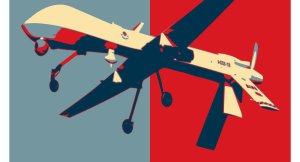 Barack Obama campaigned on a promise to scale back US military engagement in the Middle East and to keep America’s soldiers from getting bogged down in never-ending regional civil wars. President Obama has kept park of that campaign promise, with America’s troop presence abroad reduced. But US military engagement, as a whole, has increased significantly, through the use of unmanned drones and the deployment of troops in combat and security situations in more countries than in 2009.
Obama’s White House ended the previous administration’s Operation Iraqi Freedom and Operation Enduring Freedom — combat missions in Iraq and Afghanistan that continued to fester following George W. Bush’s attempts at regime change in Baghdad and the bombing of mountains into submission around Kabul. Today, despite recent reports that the Defense Department has understated the US troop presence in Iraq, troop levels in each country are down.
Nonetheless, Obama followed up his acceptance of the Nobel Peace Prize by expanding US military actions to nearly every country in the Middle East and North Africa, while reviving a Cold War posture toward Russia and China.
For instance, during the so-called Arab Spring, the US undertook a military campaign against Libyan dictator Muammar al-Qaddafi, leading to the leader being deposed and killed in the streets. The ousting of Qaddafi turned the once thriving country into a hotbed for Daesh extremists and today Libya is largely considered a failed state.
Under Obama, the US has expanded drone wars in Pakistan, Somalia, Yemen, Afghanistan, Libya and Syria with limited results and many civilian deaths.
Reports by the Bureau of Investigative Journalism suggest that the majority of US drone strikes result in civilian casualties, but under Obama these casualties have been defined away by invoking a macabre redefining of the “kill box” – anybody within a certain proximity to targeted victim is deemed a combatant.
The US today now finds itself performing aggressive joint military exercises with the South Koreans, seen as dress rehearsals for a full-scale invasion of North Korea — a nuclear capable country. American and NATO forces are posted along the Russian border in Norway to prepare for potential offensive actions against Moscow justified by the fantasy of Russian military aggression in Europe. US forces are now fighting in not only Iraq and Afghanistan, but also in Syria, Libya, and Yemen.
The paradox of the Obama Administration is how a president who campaigned on getting us out of war in Iraq and Afghanistan has now committed the US to the escalation of several recent wars.
Obama is no dove, and the world is no safer. With unmanned drone use increasing overseas, perpetual war has never been rebranded so effectively.
‘Scandal of privatized aid’: Free-market consultants cream off £450mn in UK govt funds
RT | April 1, 2016
Free-market consultants in Britain are taking hundreds of millions of pounds ring-fenced to alleviate poverty in the developing world, as the government continues with its agenda of privatizing aid, a damning report has warned.
A study conducted by British NGO Global Justice Now (GJN) raises grave concerns over the sheer amount of aid money the Department for International Development (DfID) has given to consultants Adam Smith International (ASI) for overseas aid projects.
The report, titled The Privatization of UK Aid, was published on Friday.
It found that ASI has won a minimum of £450 million (about US$640 million) in aid-funded contracts over the last five years. DfID funneled almost £90 million of its budget through the consultancy firm, more than the total amount given to human rights and women’s rights groups. This figure is almost double that spent on projects to tackle Aids and HIV, according to the report.
The study examined how much of DfID’s work was geared towards supporting market-based development and the private sector in poor states. Recent projects included backing for a “business advocacy capacity development program” in Zimbabwe, and projects to increase private schooling in Kenya.
The report also analyzed a number of existing case studies on ASI projects, such as the consultancy firm’s role in privatizing Nigeria’s energy system and making Afghanistan “investor friendly” by helping to rewrite energy extraction legislation there.
The NGO said the legislation, which was later passed into law, lacks transparency and does not protect local citizens’ rights. ASI has also helped to develop new mining legislation and regulations in Papua New Guinea, where the energy extraction technique has a legacy of violent conflict. GJN’s report says the laws have been branded “authoritarian and regressive” by critics.
The NGO argues that Westminster’s increasing use of consultancy firms forces out smaller companies in impoverished states and highlights DfID’s tendency to embrace private partnerships and back private-sector development schemes that risk jeopardizing communities in the developing world. It has called on DfID to explain why it chooses to hire profit-driven British firms like ASI rather than using its own employees or companies in the developing world.
GJN also urged DfID to be more transparent on contractors’ costs, and to release a robust plan on spending more through organizations in developing countries.
DfID defended its use of private contractors, arguing British aid is assisting highly vulnerable people in crisis-ridden states.
“UK aid is focused on tackling extreme poverty, helping people in some of the most fragile and dangerous places on Earth, including war zones and disaster areas,” a spokeswoman for the government department told the Guardian.
“We draw on specialist expertise from charities, NGOs and the private sector to get the job done and get the best value for taxpayers.”
Labour’s Shadow Secretary for International Development Diane Abbott said the government must take a serious look at how aid money is spent.
“UK aid is being used to pay for consultants instead of alleviating poverty in the global south. We must look beyond simply spending 0.7 percent of UK GNI on aid, but look at how it is spent. UK aid should be first and foremost about tackling poverty and inequality and not benefitting the UK,” she said.
“We need to critically assess if the sort of free market reforms that Adam Smith International are enabling in the developing world, using UK taxpayers’ money, are actually helping to alleviate poverty or if they are making it worse.”
ASI defended itself against the allegations in the report.
“The vast majority of the world’s poor are in the informal private sector. To bring people out of poverty, one must address the factors that are keeping them poor,” the firm said in a statement.
“We engage with the private sector to reduce poverty by helping create jobs and make markets more accessible. This type of development is widely reflected in donor strategies and recognized in the 8th sustainable development goal.”
ASI stressed its “expert associates” and employees hail from diverse backgrounds, and are “all committed to poverty alleviation.” The think tank went on to claim the projects mentioned in GJN’s study had been misreported and “taken out of context.”
However, GJN’s campaigns and policy officer, Aisha Dodwell, hit back, saying British taxpayers would be shocked if they knew how much UK aid money was given to free-market consultants.
“UK aid could be used to strengthen public services, support civil society, and build democratic and accountable institutions,” she said.
“Instead of padding the pockets of big UK contractors like Adam Smith International.”
ASI describes itself as a transparent, objective organization dedicated to making public services more robust. It also claims to support economic growth and civil society, while building “democratic and accountable institutions.”
SITE intelligence group: ‘Al-Qaeda’ claims attack on Statoil Gas Plant in Algeria, issues threat against shale gas production
Sputnik — 19.03.2016
The al-Qaeda in the Islamic Maghreb (AQIM) Islamist group claimed responsibility for an attack with explosive munitions on Norwegian energy major Statoil’s facility in the Algerian Sahara, media reported Saturday.
The Norwegian oil and gas company declared state of emergency Friday following the attack on one of its gas facilities in Algeria. The In Salah Gas asset was hit by explosive munitions fired from a distance. No one was injured in the attack.
According to the SITE intelligence group, al-Qaeda in the Islamic Maghreb — banned in Russia — issued a statement threatening both the Algerian authorities and Western companies producing shale gas.
Background:
Statoil’s Gas Facility in Algeria Hit by Explosive Munitions
The U.S. Is Exporting Its Oil Everywhere
How Hillary Clinton Lied Her Way to War in Libya
teleSUR | March 18, 2016
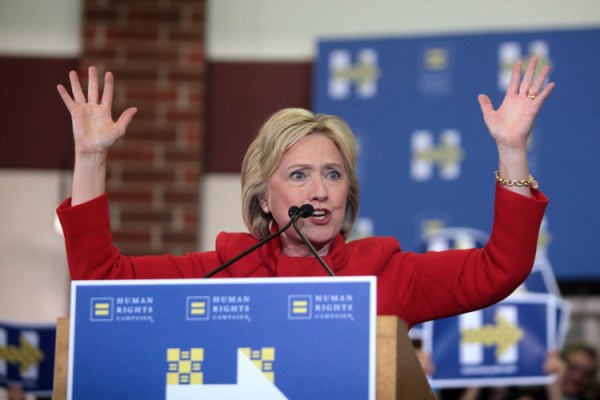
Declassified emails released in January and February reveal that Hillary Clinton was one of the main instruments in spreading chaos and extremism in Libya when the U.S. secretary of state personally pushed for the ousting of late Libyan leader Muammar Gadhafi.
Clinton’s emails reveal that she and her staff were aware that civilians they claimed to be protecting were not actually in danger from government forces.
Less than a month ahead of the passage of U.N. Security Council Resolution 1973, a resolution which authorized a no-fly zone to protect civilians on March 17, 2011, Hillary’s assistant, Huma Abedin, in an email dated Feb. 21, 2011, stated: “Based on numerous eyewitness reports, it is the Embassy’s assessment that the government no longer controls Benghazi. This is likely the case for Ajdabiyah as well.”
Abedin went on to write that sources in Benghazi reported that Libyan Interior Minister Abdul Fattah Younes had “changed sides” and was “now with the protesters in Benghazi.” The mood in Benghazi and Ajdabiyah, according to the email, was “celebratory” and all posters of Gadhafi had been “knocked down.”
Crucially, this email was written at a time when Clinton was aware that no government crackdown was taking place in either Benghazi or Ajdabiyah.
This was despite anti-government protests kicking off in Benghazi and Ajdabiyah a few days before, at a time when the U.S. and France and other Western governments were claiming government forces were involved in the mass-killing of protesters and civilians.
However, on March 2, 2011, a few days before the passage of the U.N. resolution, U.S. State Department official Harriet Spanos sent an email informing Clinton that “Security Reports . . . confirm that Benghazi has been calm over the past couple of days.”
“Economic activity is going on in Benghazi,” she added in the email, with shops and banks open and “[m]obile and landline phones… working… and Internet has returned.”
The moment of truth came 11 days into the NATO bombing, which continued for several months, when Clinton’s top adviser, Sidney Blumenthal, who was not employed by the state department but by the private Clinton Foundation, laid out the reasons for the Washington-led intervention and the eventual ousting of Gadhafi.
Without once mentioning “humanitarian” purposes, in a March 27, 2011 email Blumenthal stressed to Clinton the importance of pressing for a “final win” by ousting Gadhafi in order to boost U.S. President Barack Obama’s then low approval ratings.
Ousting the Libyan strongman, argued Blumenthal, would further establish “security in North Africa, securing democracy in Egypt and Tunisia, economic development, effect throughout Arab world and Africa, extending U.S. influence, counter-balancing Iran, etc.”
Further highlighting his complete and utter disregard for the human cost of the intervention, in the same email Blumenthal informed Clinton about the horrors committed by U.S.-backed forces in Libya, which included members of al-Qaida.
“Speaking in strict confidence, one rebel commander stated that his troops continue to summarily execute all foreign mercenaries in the fighting.” Such actions are considered war crimes and in violation of international resolutions and conventions.
The emails also reveal that the Obama administration and Clinton were aware of the threat of al-Qaida in the eastern part of the country, which had for years been suppressed by the Libyan leader.
The emails also show that claims made by NATO at the time, including alleged atrocities committed by Gadhafi’s forces such as rape and mass killings, were rumors used by Clinton and the Obama administration to help sell the intervention to the world.
It is clear the NATO intervention was not intended for humanitarian purposes. So what were the intentions of Clinton and the Obama administration? [Beyond the long planned and ongoing destruction of any and all enemies of Israel*] The same as most U.S. interventions: financial interest.
The emails reveal that most of the intelligence Clinton received on Libya was from Blumenthal, who was preparing to make substantial financial gains from the fall of the Libyan leader.
According to Vice News, the intel briefs on Libya were “prepared by Blumenthal’s business partner and former CIA operative Tyler Drumheller, a consultant with plans to take advantage of economic opportunities in a post-war Libya.”
Both men worked with the U.S.-based security company Osprey, a start-up that hoped to profit from medical and military contracts with Libyan rebels amid the chaos of the conflict, according to Vice News.
Five years later, the opportunism of Clinton and the Obama administration which resulted in one of the most disastrous interventions in recent decades, aiding the rise of extremist groups in the oil-rich African country and contributing to Europe’s ongoing refugee situation can be seen for what it was: a devastating assault on the people of Libya rooted in lies, deceit and narrow, imperial self-interest.
*Also in the cited Vice article but not presented by teleSUR:
… Much of the intelligence Blumenthal fed to Clinton was quite odd. One email suggested that Libyan elites wanted warm relations with Israel, another that European spy agencies were encouraging tribal leaders to declare a semi-autonomous tribal zone in the east of the country. […]
On Aug. 27, 2012, for instance, Blumenthal’s intelligence claimed that a new Libyan president would “seek a discreet relationship with Israel.” Then, Clinton forwarded on the e-mail to her top policy aide Jacob Sullivan with a note attached: “If true, this is encouraging. Should consider passing to Israelis.”
Tunisian Foreign Minister Denounces Legally Baseless Intervention in Libya
By Svetlana Alexandrova – Sputnik – March 15, 2016
Tunisia strongly opposes any military intervention in Libya outside the framework of international law, Tunisian Foreign Minister Khemaies Jhinaoui told Sputnik.
In January, media reported that US President Barack Obama was making plans to open a third front against Daesh in Libya, following military operations in Syria and Iraq started by a US-led coalition in 2014.
“The impact of any foreign involvement or military strikes in Libya will be significant to our security. We are saying to our partners, who are willing to hit the strongholds of terrorists, that they have to inform us about their plans and, of course, we are against any strikes without legal ground. We think that any strike should be made [according to] the international legal framework and UN,” the minister said.
He added that the international community should shift its focus and help Libyans strengthen bonds and resolve their differences.
“We would like to see a new national accord government in Libya assume power and taking care of the terrorism issue. It is a task for the Libyans, not for foreigners to fight terrorism in Libya,” Jhinaoui pointed out.
Libya has been engulfed in conflict since the 2011 overthrow of long-term leader Muammar Gaddafi and the subsequent civil war. There are currently two governments in Libya: the internationally-recognized Council of Deputies based in Tobruk and the Tripoli-based General National Congress. The two sides came to an agreement on December 17, paving the way to the formation of the Government of National Accord.
On Monday, Russian Foreign Minister Sergei Lavrov said that any military operations against terrorists in Libya should only be possible if the UN Security Council agrees to them.
Featured Video

Macgregor: We Haven’t Seen the Worst of the Iran War Yet
or go to
Aletho News Archives – Video-Images
From the Archives
15 Saudi ‘hijackers’ were CIA agents working for US: Scholar
Press TV – April 13, 2016
Fifteen of the 9/11 “hijackers” from Saudi Arabia were CIA agents working for the United States government, which was seeking to destroy the Middle East for Israel and to double the American military budget, says Dr. Kevin Barrett, an American academic who has been studying the events of 9/11 since late 2003…. continue
Blog Roll
 Aletho News
- Iran’s Plan to Shut Down AI in the Persian Gulf
- Israel seeks ‘compensation’ from Washington over Saudi F-35 sale
- Saudi crown prince seeks dialogue with Ansarullah after Yemeni blows: Report
- Damascus rejects Saudi request for Syrian fighters to counter Yemen: Report
- South Korea says will not send troops to join terrorist US war on Iran
- Russia Just Struck the Eyes of NATO’s War Machine in Ukraine
- Russia summons UK charge d’affaires over Kiev drone support
- NATO member warns bloc seeking pretext for war with Russia
- Macgregor: We Haven’t Seen the Worst of the Iran War Yet
- ‘We are not like everyone else’ laws that bind other nations do not apply to Israel, says Likud lawmaker
- If Americans Knew
- Debunking The Claim That Macklemore Has A “History Of Antisemitism”
- CPJ demands release of arrested Palestinian-US journalist near Bethlehem
- Robert Kraft: The Billionaire Friend of Netanyahu Pulling The Strings Behind the Macklemore/Ed Sheeran Blow Up
- Columbia Administered Fund Gives Big Money to Pro-Israel Groups
- Deportation Case of Palestinian Activist Salah Sarsour Tests First Amendment
- ‘We Will Not Forget’: Palestinians Mark 44 Years since Sabra and Shatila
- Why do we let Zionists decide what we can and can’t say?
- US welcomes Israeli, Iranian delegations to UN, but not Palestinians – Daily Update
- Biden’s Genocide Accomplices Targeted by New Accountability Campaign
- AIPAC’s Network Has Already Spent $67.2 Million to Shape the Midterm Elections
- No Tricks Zone
- New Study: ‘Global Drought Shows No Detectable Recent Acceleration Under Climate Warming’
- Economic Masterminds: German Socialists Suggest Taxing Productivity Gains Stemming From Using AI
- The South China Sea Has Not Been Cooperating With The Climate Change Narrative
- Energy Crisis: Germany Enters Heating Season With Historically Low Gas Reserve Fill Levels
- New Study: The Antarctic Ice Sheet Gained Mass From 2020-2024 Due To Staggering Snow And Ice Accumulation
- Study: Ocean Heating Rates From Thousands Of Years Ago ‘Dwarf’ Modern Ocean Heating Rates
- Climate Extremists Target, Attack Large-Scale Power Grid Infrastructure In Germany!
- New Study: Antarctic Ice Melt Has Contributed Less Than 1 Centimeter To Sea Level Rise In The Last 30 Years
- Fear Of Debate: Alarmist German Climate Scientist Calls On Mainstream Media To Discredit Skeptic Voices
- End-Of-August Arctic Sea Ice Extent Hasn’t Fallen In 20 Years, Official Data Show!
 Aletho News