Last week, Siddharta Dhar, a Hindu-born Muslim convert, made front page news as the latest British citizen to turn up in Syria draped in ISIS imagery and toting an AK.
He may or may not be the masked Brit who starred in a recent ISIS snuff movie, but, like pretty much all those who preceded him, he was well known to the British security services.
A member of Al-Muhajiroun, a ‘proscribed organization’ under the 2000 Terrorism Act, he was on bail for terrorism offenses at the time he left the country, and had been asked to hand over his passport to the police (he didn’t bother, it turned out). Indeed, according to Andy Burnham, shadow British Home Secretary, “He was well-known to the authorities having been arrested six times on terrorism related offenses”.
Perhaps stating the obvious, Burnham added that “people will be shocked that a man detained on a series of counts of terrorism-related activity could be allowed to walk out of the country, unimpeded.”
Nor was his flight exactly unpredictable. Earlier in the year, he had declared – on the BBC’s ‘This Morning’ program, no less – that “now that we have this caliphate I think you’ll see many Muslims globally seeing it as an opportunity for the Koran to be realized”. Just to further clarify his intentions, he went on to tell Channel Four News: “I would love to live under the Islamic State”.
I’m no expert on decoding terrorist lingo, but to my untrained eye this statement appears fairly unambiguous. But perhaps no one in British intelligence has a telly.
Or perhaps there is another explanation. Once in Syria, Dhar tweeted: “My Lord (Allah) made a mockery of British intelligence and surveillance… What a shoddy security system Britain must have to allow me to breeze through Europe to the Islamic State.” Shoddy? Maybe. But as Nick Lowles, from the group Hope not Hate, put it, “With at least six prominent members of al-Muhajiroun (the banned extremist group) having been able to slip out of Britain whilst on bail or having been banned from leaving, questions need answering. One absconding is a worry, two appears careless, but six – well, that needs answering.” Indeed it does.
In fact, it seems that pretty much every time a British ISIS or Al Qaeda recruit is unearthed, they turn out to have deep ties to the intelligence services. The story of Michael Adebalajo is a case in point.
On May 22, 2013, Adebelajo and Michael Adebowale stabbed Fusilier Lee Rigby to death in London. It soon emerged that MI5 had been trying to recruit him at the time. But for what?
The parliamentary committee on intelligence and security conducted hearings on the murder later that year, and its report makes fascinating reading. It revealed that, prior to the murder, Adebolajo had been identified as a Subject of Interest (SoI) in no less five separate MI5 investigations, including one which was focused specifically on him.
This surveillance had revealed that he was in contact with “a high profile and senior AQAP [Al Qaeda in the Arabian Peninsula] extremist” as well as two “Tier 1 SoIs being investigated… due to their possible links with AQAP in Yemen”. At one point in 2011, this particular investigation was “MI5’s highest priority operation” and it led MI5 to conclude that “Adebolajo was a primary contact of BRAVO and CHARLIE”, code names for the two suspected AQAP members under investigation.
Of course, ‘guilt by association’ alone would not have been enough to arrest him. But his drug dealing would have been. In theory, MI5 are supposed to ‘disrupt’ the activity of extremists by, for example, facilitating their arrest if they are involved in criminality. In Adebolajo’s case, the ‘intrusive surveillance’ which he was under for a time revealed not only that he was “involved in drug dealing” but indeed that he was “spending most of his time” drug dealing.
This was the perfect opportunity for MI5 to ‘disrupt’ the activities of a man suspected of being a recruiter for Al Shabaab and known to be in contact with senior members of Al Qaeda. But MI5 seemed curiously uninterested in pursuing it. They did eventually pass some information onto the local police – but without passing on any actual evidence, and “accidentally omitting” his house number, with the result that “the police officer tasked to investigate concluded… that no further action could be taken”, an entirely predictable outcome.
Further opportunities for ‘disruption’ were also ignored. The report notes that in November 2012, Adebolajo was part of “a larger group of individuals who were [involved in] a violent confrontation”. Following the disruption, it was noted that “Adebolajo’s details will be passed to [another police unit]”. For some reason, however, this didn’t happen. Nor was Adebolajo prosecuted for his membership in a proscribed organization (Al Ghurabaa, aka Al Muhajiroon).
But most suspicious was the British response to his arrest in Kenya in 2010: “On 22 November 2010, the Kenyan police reported to the MPS officer based in Nairobi that they had arrested Adebolajo the previous day. He had been arrested with a group of five Kenyan youths and was assessed to have been attempting to travel into Somalia to join Al Shabaab (a Somalia-based terrorist group).”
Information apparently relating to Adebolajo’s involvement with terrorism – but redacted from the report – was known by MI6 at the time of his arrest according to the British counter-terrorist police officer stationed in Kenya at the time.
According to the Daily Mail, “The Kenyans believed Adebolajo, 28, had played a crucial role in recruiting his co-accused, including two secondary school-aged boys, after they were radicalised during weekly visits to a mosque in Mombasa.”
Kenyan government spokesman Muthui Kariuki said: “We handed him to British security agents in Kenya and he seems to have found his way to London and mutated to Michael Adebolajo. The Kenyan government cannot be held responsible for what happened to him after we handed him to British authorities.”
The security agents in question belonged to a highly secretive counter-terrorism unit in Kenya (referred to in the report as ARCTIC) with “a close working relationship” with the British government. Adebolajo alleged on several occasions that he had been tortured during his time in custody, leading the Committee to point out that “if Adebolajo’s allegations of mistreatment did refer to his interview by ARCTIC then HMG could be said to have had some involvement”.
MI6 consistently lied to the Committee about their involvement with Adebolajo in Kenya – a point noted (albeit somewhat apologetically) in their report. Of his detention, MI6 claimed “we did not know it was going on”; prompting the Committee report to “note that SIS [MI6] had been told that a British citizen was being held in detention: therefore, they did know that “it was going on”.
The Chief of MI6 then lied about their responsibility to investigate the allegations of abuse, claiming that this “is not an SIS responsibility”, directly contradicting emails written by an MI6 officer at the time which had stated that “We obviously need to investigate these allegations”. This, said the Committee, “clearly indicates that SIS officers believed that they had a responsibility to investigate the allegations”, adding that this is “not consistent with the evidence provided to the Committee by the Chief of SIS”, and going on to note their “concern that this email was not provided as part of the primary material initially offered in support of this Inquiry as it should have been [as] it was clearly relevant to the issues under consideration.”
Finally, a redacted piece of information referring to what the Committee called “relevant background knowledge” concerning Adebolajo was disowned by MI6, who claimed only to have heard it when told by the police. The police, however, had already explained that it was MI6 who passed it to them in the first place.
Exactly what MI6 were up to in Kenya with Adebolajo remains shrouded in mystery. However, the Committee was clearly unimpressed by what they were told: “SIS has told the Committee that they often take the operational lead when a British national is detained in a country such as Kenya on a terrorism-related matter.
They have also told the Committee that they have responsibility for disrupting the link between UK extremists and terrorist organizations overseas, and that in Kenya this is at the centre of their operational preoccupations. The Committee therefore finds SIS’s apparent lack of interest in Adebolajo’s arrest deeply unsatisfactory: on this occasion, SIS’s role in countering ‘jihadi tourism’ does not appear to have extended to any practical action being taken.”
What if, however, MI6’s work on the “link between UK extremists and terrorist organizations overseas” is not aimed at disruption after all? What if they have been charged with facilitating, rather than countering, “jihadi tourism”?
The SO15 (counter-terrorism) police officer who conducted an extensive interview with Adebolajo on his return to the UK from Kenya concluded that “It is… believed Adebolajo will attempt to travel again in the future…”
At the time, MI5 was running an investigation into “individuals who were radicalizing UK-based extremists and facilitating their travel overseas for extremist purposes”, referred to in the Committee’s report as Operation Holly. They wrote to an MI6 representative in East Africa to ask whether “one of Adebolajo’s contacts could have been a Kenya-based SoI known to MI5 and SIS” then under investigation, but MI6 never responded.
The following year, “surveillance deployments indicated that Adebolajo had met an SoI investigated for radicalizing UK-based individuals and facilitating their travel overseas.” This entry in the report’s timeline was preceded by four redacted items and followed by another.
The report also contains reference to a number of occasions in which investigating officers’ requests and recommendations for action against Adebolajo and Adebowale were not implemented, for reasons that were not recorded. This raises the issue of whether these requests had been over-ruled, and if so by whom.
Unfortunately, the committee seemed to accept at face value MI5’s explanations of such failures (new priorities taking away resources, etc), but their report did note, in somewhat exasperated tone, that “where actions were recommended, they should have been carried out. If the investigative team had good reason not to carry out a recommended action, then this should have been formally recorded, together with the basis for that decision”.
Adebolajo, then, had come up on the security services radar again and again as someone not just potentially involved in recruiting for overseas terrorism, but with prior form in actually doing so. And yet we are supposed to believe that MI6 – whose prime concern was supposedly to deal with such people – had no interest in him in Kenya, and that MI5 – who are supposed to disrupt the work of such figures – willfully passed up chance after chance to do so.
Fast forward to today, and we have an official figure of 800 – but with estimates of 1,500 and more – British citizens who have gone to fight in Syria. We have evidence from Moazzam Begg’s collapsed trial that MI5 gave the ‘green light’ to his trips to train fighters in Syria; we have the collapse of Bherlin Gildo’s trial for terrorist activities in Syria due to the embarrassment it was feared it would cause British security; we have Abu Muntasir’s testimony that “I inspired and recruited, I raised funds and bought weapons, not just a one-off but for 15 to 20 years. Why I have never been arrested I don’t know”; we have the US Senate hearings into the murder of US ambassador Christopher Stevens revealing that MI6 was involved in running a ‘ratline’ of weapons from Libya to Syria; we have case after case of families angry at the British authorities for allowing their children to go and fight despite repeated warnings, and on it goes.
Can we really still call it a conspiracy theory to believe that British intelligence has allowed this to happen?
A shoddy security system? Or a ruthlessly efficient one.
Dan Glazebrook is a freelance political writer who has written for RT, Counterpunch, Z magazine, the Morning Star, the Guardian, the New Statesman, the Independent and Middle East Eye, amongst others. His first book “Divide and Ruin: The West’s Imperial Strategy in an Age of Crisis” was published by Liberation Media in October 2013. It featured a collection of articles written from 2009 onwards examining the links between economic collapse, the rise of the BRICS, war on Libya and Syria and ‘austerity’. He is currently researching a book on US-British use of sectarian death squads against independent states and movements from Northern Ireland and Central America in the 1970s and 80s to the Middle East and Africa today.
For generations, U.S. officials have averted their eyes from Saudi Arabia’s grotesque monarchy – which oppresses women, spreads jihadism and slaughters dissidents – in a crude trade-off of Saudi oil for American weapons and U.S. security guarantees. It is a deal with the devil that may finally be coming due.
The increasingly undeniable reality is that the Saudis along with other oil sheikhs are the biggest backers of Al Qaeda and various terrorist groups – helping these killers as long as they spread their mayhem in other countries and not bother the spoiled playboys of the Persian Gulf.
President George W. Bush – and then President Barack Obama – may have suppressed the 28 pages of the congressional 9/11 report describing Saudi support for Al Qaeda and its hijackers but the cat is thoroughly out of the bag. Mealy-mouthed comments from the State Department spokesmen can no longer hide the grim truth that U.S. “allies” are really civilization’s enemies.
The big question that remains, however, is: Will Official Washington’s dominant neocon/liberal-interventionist claque continue to protect the Saudis who have built a regional alliance of convenience with Israel over their shared hatred of Iran?
Inside Official Washington’s bubble – where the neocons and liberal hawks hold sway – there is a determination to make the “designated villains,” the Iranians, the Syrian government, Lebanon’s Hezbollah and the Russians. This list of “villains” matches up quite well with Israeli and Saudi interests and thus endless demonization of these “villains” remains the order of the day.
But the Saudis – and indeed the Israelis – are showing what they’re really made of. Israel has removed its humanistic mask as it ruthlessly suppresses Palestinians and mounts periodic “grass mowing” operations, using high-tech munitions to slaughter thousands of nearly defenseless people in Gaza and the West Bank while no longer even pretending to want a peaceful resolution of the long-simmering conflict. Israel’s choice now seems to be apartheid or genocide.
Meanwhile, the Saudis – though long-hailed in Official Washington as “moderates” – are showing what a farcical description that has always been as the royals now supply U.S.-made TOW missiles and other sophisticated weapons to Sunni jihadists in Syria, fighting alongside Al Qaeda’s Nusra Front.
Using advanced U.S.-supplied warplanes, the Saudis also have been pulverizing poverty-stricken Yemen after exaggerating the level of Iranian support to the Houthis, who have been fighting both a Saudi-backed regime and Al Qaeda’s Yemeni affiliate. Amid the Saudi-inflicted humanitarian crisis, Al Qaeda’s forces have expanded their territory.
And, at the start of the New Year, the Saudi monarchy butchered 47 prisoners, including prominent Shiite cleric Nimr al-Nimr for his offense of criticizing the royals, or as the Saudis like to say – without a touch of irony – supporting “terrorism.” By chopping off Nimr’s head – as well as shooting and decapitating the others – the Saudis demonstrated that there is very little qualitative difference between them and the head-choppers of the Islamic State.
The Usual Suspects
Yes, the usual suspects in Official Washington have sought to muddle the blood-soaked picture by condemning angry Iranian protesters for ransacking the Saudi embassy in Tehran before the government security forces intervened. And there will surely be an escalation of condemnations of anyone who suggests normalizing relations with Iran.
But the issue for the neocons and their liberal-interventionist sidekicks is whether they can continue to spin obviously false narratives about the nobility of these Middle East “allies,” including Israel. Is there a limit to what they can put over on the American people? At some point, will they risk losing whatever shreds of credibility that they still have? Or perhaps the calculation will be that public credibility is irrelevant, power and control are everything.
A similar choice must be made by politicians, including those running for the White House.
Some Republican candidates, most notably Sen. Marco Rubio, have gone all-in with the neocons, hoping to secure largesse from casino tycoon Sheldon Adelson and other staunch supporters of Israel’s right-wing Prime Minister Benjamin Netanyahu. On the other hand, real-estate magnate Donald Trump has distanced himself from neocon orthodoxy, even welcoming Russia’s entry into the Syrian conflict to fight the Islamic State, heresy in Official Washington.
On the Democratic side, former Secretary of State Hillary Clinton is the most closely associated with the neocons and the liberal hawks – and she has dug in on the issue of their beloved “regime change” strategy, which she insists must be applied to Syria.
She appears to have learned nothing from her misguided support for the Iraq War, nor from her participation in overthrowing Muammar Gaddafi’s secular regime in Libya, both of which created vacuums that the Islamic State and other extremists filled. (British special forces are being deployed to Libya as part of an offensive to reclaim Libyan oil fields from the Islamic State.)
A Sanders Opportunity
The Saudi decision to chop off Sheikh Nimr’s head and slaughter 46 other people in one mass execution also puts Sen. Bernie Sanders on the spot over his glib call for the Saudis “to get their hands dirty” and intervene militarily across the region.
That may have been a clever talking point, calling on the rich Saudis to put some skin in the game, but it missed the point that – even before the Nimr execution – the Saudis’ hands were very dirty, indeed covered in blood.
For Sanders to see the Saudis as part of the solution to the Mideast chaos ignores the reality that they are a big part of the problem. Not only has Saudi Arabia funded the extreme, fundamentalist Wahhabi version of Sunni Islam – building mosques and schools around the Muslim world – but Al Qaeda and many other jihadist groups are, in essence, Saudi paramilitary forces dispatched to undermine governments on Riyadh’s hit list.
That has been the case since the 1980s when the Saudis – along with the Reagan administration – invested billions of dollars in support of the brutal mujahedeen in Afghanistan with the goal of overthrowing a secular, Soviet-backed government in Kabul.
Though the “regime change” worked – the secular leader Najibullah was castrated and his body hung from a light pole in Kabul – the eventual outcome was the emergence of the Taliban and Al Qaeda, led by a Saudi scion, Osama bin Laden.
Though Sanders has resisted articulating a detailed foreign policy – instead seeking to turn questions back to his preferred topic of income inequality – the latest Saudi barbarism gives him a new chance to distinguish himself from front-runner Clinton. He could show courage and call for a realignment based on reality, not propaganda.
President Obama, too, has a final chance to refashion the outdated and counter-productive U.S. alliances in the Middle East. At least he could rebalance them to allow a pragmatic relationship with Iran and Russia to stabilize Syria and neutralize the Saudi-backed jihadists.
Standing Up, Not Bowing Down
Instead of being supplicants to Saudi riches and oil, the West could apply stern measures against the Saudi royals to compel their acquiescence to a real anti-terrorist coalition. If they don’t comply immediately, their assets could be frozen and seized; they could be barred from foreign travel; they could be isolated until they agreed to behave in a civilized manner, including setting aside ancient animosities between Sunni and Shiite Islam.
It seems the European public is beginning to move in this direction, in part, because the Saudi-led destabilization of Syria has dumped millions of desperate refugees on the European Union’s doorstep. If a new course isn’t taken, the E.U. itself might split apart.
But the power of the neocon/liberal-hawk establishment in Official Washington remains strong and has prevented the American people from achieving anything close to a full understanding of what is going on in the Middle East.
The ultimate barrier to an informed U.S. public may also be the enormous power of the Israel Lobby, which operates what amounts to a blacklist against anyone who dares criticize Israeli behavior and harbors hopes of ever holding a confirmable government position or – for that matter – a prominent job in the mainstream media.
It would be a test of true political courage and patriotism for some major politician or prominent pundit to finally take on these intimidating forces. That likely won’t happen, but Saudi Arabia’s latest head-choppings have created the possibility, finally, for a game-changing realignment.
Investigative reporter Robert Parry broke many of the Iran-Contra stories for The Associated Press and Newsweek in the 1980s. You can buy his latest book, America’s Stolen Narrative, either in print here or as an e-book (from Amazon and barnesandnoble.com).
As the New Year dawns, the neocons and their liberal interventionist sidekicks remain firmly in control of Official Washington’s storylines – on Syria, Russia and elsewhere – even as their policies continue to wreak havoc across the Mideast and threaten the stability of Europe and indeed the future of civilization.
The latest proof of this dangerous reality came when Saudi Arabia’s repressive Sunni monarchy executed prominent Shiite political leader Sheikh Nimr al-Nimr for criticizing the nation’s kings and princes. Before the killing, the Obama administration held its tongue in public so as not to antagonize the Saudi royals. (Nimr’s nephew awaits Saudi “crucifixion” for his role as a teenager in Arab Spring protests.)
After the Nimr execution, the State Department issued a mild protest toward the Saudis while blurring the guilt by twinning it with criticism of Iran where outraged protesters damaged the Saudi embassy, which led to Saudi Arabia’s retaliatory breaking of relations with Iran.
“We believe that diplomatic engagement and direct conversations remain essential in working through differences,” State Department spokesman John Kirby said meekly on Sunday, while some senior U.S. officials reportedly seethed in private over the latest Saudi provocation.
“This is a dangerous game they are playing,” one official toldThe Washington Post’s Karen DeYoung while insisting on anonymity to discuss U.S.-Saudi relations.
But the fact that the Obama administration could not voice its revulsion over the Saudi mass head-chopping (along with some firing squads) for 47 men, including Nimr, over the weekend speaks volumes. President Barack Obama and other insiders continue to tip-toe around the unsavory U.S. “alliances” in the Mideast.
Over the past several years, Saudi Arabia sealed its impervious protection from U.S. government criticism by forming an undeclared alliance with Israel around their mutual hatred of Shiite-ruled Iran and its Shiite allies, a cause picked up by American neocons and shared by the career-oriented liberal interventionists.
Some more “realist-oriented” U.S. officials, reportedly including Obama and some national security aides, recognize the havoc that neocon/liberal-hawk strategies continue to wreak across the region and now spreading into Europe, but they act powerless to do anything bold to stop it.
With Israel’s lobby siding with the Sunni states in their bloody rivalry with Shiite states, most U.S. politicians and pundits have scrambled to defend each recurring outrage by the Saudis, Qataris and Turks by trying to flip the script and somehow put the blame on Iran, Syria and Russia.
Getting a Pass
Thus, the Saudis, Qataris and Turks get mostly a pass for arming and enabling radical jihadists, including Al Qaeda and the Islamic State. Israel also provides assistance to Al Qaeda’s Nusra Front along the Golan Heights and bombs allies of the Syrian government and, of course, faces no official U.S. criticism.
In 2014, when Vice President Joe Biden blurted out the truth about Saudi support for Islamic terrorism inside Syria, he was the one who had to apologize. [Quote at 53:20 of clip.] In 2015, when Saudi Arabia invaded and bombed Yemen after hyping Iran’s support for Houthi rebels, the Obama administration sided with the Saudis even as their wanton attacks on poverty-stricken Yemen killed thousands of civilians and created a humanitarian crisis.
For more than a year after President Obama announced his air war against the Islamic State in summer 2014, Turkey continued to let the terror group run an industrial-style oil smuggling operation from Syria and Iraq through Turkey. Only when Russia entered the conflict last fall was the U.S. government shamed into joining in bombing raids to destroy the truck convoys. Yet, Obama still defended Turkey and bought its promises about finally trying to seal a 100-kilometer gap in its border.
Then, when Turkey retaliated against the Russian anti-terrorist bombing raids inside Syria by willfully shooting down a Russian Su-24 plane whose pilot was murdered after bailing out, Obama again sided with the Turks even though their claim that the Russian plane had violated Turkish air space was dubious at best. By their account, the plane had intruded over a sliver of Turkish territory for 17 seconds.
In other words, whatever these U.S. “allies” do – no matter how brutal and reckless – the Obama administration at least publicly rushes to their defense. Otherwise, the neocon/liberal-hawk “group think” would be offended – and many angry editorials and columns would follow.
While this strange reality may make sense inside Official Washington – where careerism is intense and offending the Israel Lobby is a sure career killer – this pusillanimous approach to these grave problems is endangering U.S. national interests as well as the world’s future.
Not only has the neocon/liberal-interventionist obsession with “regime change” turned the Middle East into a vast killing field but it has now spread instability into Europe, where the fabric of the European Union is being shredded by dissension over how to handle millions of Syrian refugees.
The United Kingdom may vote to leave the E.U., removing one of the original anchors of the European project which — for all its faults — has deservedly gotten credit for replacing a history of European blood-soaked conflicts with peaceful cooperation.
The spreading disorder has had political repercussions in the United States, too, where panic over terrorism is reshaping the presidential race.
Yet, instead of practical solutions such as pressuring all rational sides in the Syrian conflict to engage in peace talks and hold free elections that give the Syrian people the power to decide who their future leaders will be, Official Washington instead generates “talking points,” such as calling Syrian President Bashar al-Assad a “magnet for terrorism” who “must go” – although his forces have done the most to stop an outright victory by Al Qaeda and Islamic State.
If one buys this “magnet” theory, then you’d also have to seek “regime change” in every country that’s been attacked by terrorists, including the United States, France, United Kingdom, Spain, etc. In the case of Syria, what’s remarkable is that the sponsorship of terrorism by U.S. “allies” and indeed by the U.S. government itself has been so blatant. [See Consortiumnews.com’s “Climbing into Bed with Al Qaeda.”]
However, as far as Official Washington is concerned, it doesn’t really matter what Assad has or hasn’t done. What’s important is that “regime change” in Syria has been on the neocons’ to-do list since at least the mid-1990s – along with the brilliant idea of “regime change” in Iraq. [See Consortiumnews.com’s “How Israel Out-Foxed US Presidents.”].
The Infallible Neocons
And since the neocons are infallible – as far as they’re concerned – the goal can’t be changed. The only option is to escalate the “regime change” planning to include other countries that get in the way, including Iran and now nuclear-armed Russia.
Yes, that’s the ultimate neocon idea – make the Russian economy scream, overthrow the calculating Vladimir Putin and risk having him replaced by some extreme and unstable nationalist with his or her hand on the nuclear button. That may be how life on the planet ends – but there will be evermore “group thinks” and “talking points” right up to the moment of Armageddon. The neocons can never stop generating false narratives.
Meanwhile, the “liberal interventionists” can boast of their own “regime change” – in Libya, a policy promoted by then-Secretary of State Hillary Clinton who delighted at the gruesome torture-murder of Muammar Gaddafi – “we came, we saw, he died,” she laughed – after having ignored his warnings that the overthrow of his secular government would open the oil-rich country to chaos from radical jihadists, a prediction that has been fulfilled.
Yet, despite this record of spreading chaos and death around the world, the grip that the neocons and liberal hawks have on Official Washington remains almost absolute. They control most of the think tanks – from the Brookings Institution to the American Enterprise Institute – as well as the editorial pages of The Washington Post and The New York Times and pretty much the rest of the mainstream media.
In case you haven’t noticed, the Times’ “news” coverage of the Middle East and Russia has been consistently slanted to favor neocon/liberal-hawk positions. Just as the Times eagerly joined President George W. Bush’s bogus case for invading Iraq in 2003, “the newspaper of record” has peddled false and misleading articles about the crises in Syria and Ukraine as well as promoting anti-Russian propaganda.
In this climate of manufactured “reality,” any old-fashioned foreign policy “realist” – especially one who has criticized Israel – cannot expect to win Senate confirmation to any senior position, establishing what amounts to a blacklist against “realists,” such as happened to ex-U.S. Ambassador Chas Freeman whose intelligence appointment was dropped by Obama in his early days out of fear of offending the Israel Lobby and its many neocon backers.
As the rise of those neocons has played out since their emergence during the Reagan administration, the “realists” who were known for cold-hearted foreign policy calculations to protect American interests have aged, died out or otherwise disappeared. They have been largely replaced by ideologues, either neocons with their intense devotion to right-wing Israeli interests or liberal interventionists who almost invariably side with the neocons but cite “humanitarian” concerns to justify “regime change” wars.
Blocking Obama
No matter how foolhardy and deadly these policy prescriptions have been, there is almost no way to dislodge the neocons and liberal hawks inside Official Washington, since they monopolize almost all levers of political and media power.
Even when President Obama tried to collaborate under the table with President Putin to reduce tensions in Syria and Iran in 2013, Obama was quickly outmaneuvered by neocons and liberal hawks inside the State Department who pushed for the putsch in Ukraine in 2014 that effectively destroyed the Obama-Putin cooperation. [See Consortiumnews.com’s “What Neocons Want from Ukraine Crisis.”]
I have long argued that the only way to begin to challenge the neocon/liberal-hawk “group thinks” is to release facts about pivotal events, such as the 2013 Syria-sarin case, the 2014 sniper attacks at Kiev’s Maidan square, and the 2014 shoot-down of Malaysia Airlines Flight 17 over Ukraine. The neocons/liberal hawks currently control all those narratives, using them as clubs to advance ideological agendas just as they did with the false claims about Iraq’s WMD. [See Consortiumnews.com’s “The Power of False Narrative.”]
But other evidence suggests very different scenarios. Obama and his national security team could either release evidence to confirm the accuracy of the “group thinks” or puncture that self-certainty. Instead Obama has chosen to withhold what the U.S. intelligence community knows about these events, all the better to protect the dominant propaganda narratives.
So, the Obama administration continues down a road of tolerating or condoning outrages by its Mideast “allies” as the President and his timid intelligence bureaucrats do nothing to empower the American people with the truth. It is a recipe for worldwide catastrophe.
Investigative reporter Robert Parry broke many of the Iran-Contra stories for The Associated Press and Newsweek in the 1980s. You can buy his latest book, America’s Stolen Narrative, either in print here or as an e-book (from Amazon and barnesandnoble.com).
As Washington sends mixed signals on whether or not it will introduce new sanctions against Iran, Tehran is considering other options should a new round of penalties come to pass, says Seyed Mohammad Marandi, professor at the University of Tehran.
The United States delayed the announcement of new penalties, which reportedly seeks to punish several companies and individuals from Iran, Hong Kong, and the United Arab Emirates that the US believes have been involved in Iran’s ballistic missile tests.
However, such an announcement comes as no surprise to Tehran, according to Marandi, who said that even as the [nuclear] negotiations were taking place between Iran and the P5+1, the general consensus in Iran was that “the United States would move towards increasing sanctions through other excuses than that of the nuclear program.”
Marandi provided a list of methods the United States was using to target Iran, including the recent passage of a law restricting visas for people that have visited Iran, as well as for Iranian citizens that have dual nationality. Also, Iranian assets are being confiscated abroad, which the Iranians “believe… is theft by the United States through using different excuses.”
The professor at the University of Tehran says such actions could “severely damage the chances for the Joint Comprehensive Plan of Action bearing fruit.”
The Joint Comprehensive Plan of Action (JCPOA) is an agreement designed to oversee Iran’s nuclear program reached in Vienna on July 14, 2015 between Iran and the five permanent members of the UN Security Council — China, France, Russia, United Kingdom, United States—plus Germany), and the EU.
Marandi believes that Washington’s aggressive stance towards Iran must be explained by other reasons because, he says, “there’s never been any evidence to show that Iran’s nuclear program has been anything but peaceful. The United States has been making many accusations against Iran that have been unfounded.”
The real reason the US is fundamentally opposed to Iran is because the Islamic Republic successfully freed itself from Washington’s rule many years ago, he argues.
“The United States has not forgiven the Iranian people over three and a half decades for gaining their independence from the United States and becoming an independent actor in this part of the world.
“Therefore, the Iranians expect the United States will use all sorts of excuses – whether it’s the nuclear program, terrorism, human rights.”
Marandi exclaimed with a hint of irony that the only thing Iran has not been blamed for by Washington is “global warming.”
Yet the nuclear issue, he says, is not the main point of contention between the two countries. What really irks Washington about Iran “is not the nuclear program, but rather Iran’s political independence of the US,” he asserts.
But the international community will see through the actions of the United States that – despite the agreement between the two countries – is “trying to make ordinary Iranians suffer until Iran bows down to the will of the US.”
Marandi is adamant that such a thing “is not going to happen.”
In fact, according to the academic, Tehran has many options open to itself should the US impose a new round of sanctions, including seeking the cooperation and partnership of other countries – both non-Western and Western alike.
“If the US continues to go down this road, we will see greater tensions and probably it will be an important incentive for Iran to increase and develop its ties with Russia and China, as well as other non-Western countries.”
Marandi concludes that due to Washington’s support of countries in the region that are guilty of “supporting al-Qaeda and ISIL [Islamic State/ISIS],” Tehran is of the opinion that countries like Russia, China and increasingly India, and even many European Union countries will begin to “look more to Iran as a reliable partner and this is making it far more difficult for the US… to impose sanctions on Iran in a way in which the international community would abide by those demands of the US.”
MOSCOW – Russia and the United States agree that Daesh, al-Qaeda and Jabhat al-Nusra are terrorist organizations but differ over blacklisting Hezbollah and Hamas, the Russian Foreign Ministry said.
Speaking to the Interfax news agency on Tuesday night, Russian Deputy Foreign Minister Gennady Gatilov said: “Our opinions coincide as regards to the main terrorist organizations. These are ISIS, al-Qaeda and Jabhat al-Nusra.”
But “we are not even discussing Hezbollah and Hamas with the Americans,” he added.
Moscow has routinely held senior-level contacts with Hamas officials and leaders.
Commenting on the Russian position, political analyst Abdul Sattar Qassem said: “Hamas cannot be compared to Daesh or al-Qaeda. It can only be viewed in terms of its resistance to the Israeli occupation.”
“The Israeli occupation and the USA are the real terrorists. They are fighting all those who stand in their way,” he added.
“Blacklisting Hamas as terrorist is unacceptable for Moscow. There is no evidence to corroborate the fact that Hamas is a terror group,” he said.
“Israel has been misleading the world into believing that Hamas is targeting Israeli civilians, which is not in fact the case,” the analyst stated.
“Hamas is a movement of national liberation that defends its people. It does not seek to wage wars for the sake of wars. It is engaged in a fight against an entity that colonized its motherland,” he explained.
However, “does Russia dare blacklist Israel as a terrorist entity for the crimes it has perpetrated against the Palestinians?” Qassem wondered. “It is not enough that Russia refuses to dub Hamas a terror group. It should dare include Israel on its terror list.”
“There is no colonizing power in the world but Israel. Occupation is in itself a form of terrorism,” the analyst further stated.
The weapons are foreign, the fighters are foreign, the agenda is foreign. As Syrian forces fight to wrest control of their country back and restore order within their borders, the myth of the “Syrian civil war” continues on.
Undoubtedly there are Syrians who oppose the Syrian government and even Syrians who have taken up arms against the government and in turn, against the Syrian people, but from the beginning (in fact before the beginning) this war has been driven from abroad. Calling it a “civil war” is a misnomer as much as calling those taking up arms “opposition.” It is not a “civil war,” and those fighting the Syrian government are not “opposition.”
Those calling this a civil war and the terrorists fighting the Syrian state “opposition” hope that their audience never wanders too far from their lies to understand the full context of this conflict, the moves made before it even started and where those moves were made from.
When did this all start?
It is a valid question to ask just when it all really started. The Cold War saw a see-sawing struggle between East and West between the United States and Europe (NATO) and not only the Soviet Union but also a growing China. But the Cold War itself was simply a continuation of geopolitical struggle that has carried on for centuries between various centers of power upon the planet. The primary centers include Europe’s Paris, London and Berlin, of course Moscow, and in the last two centuries, Washington.
In this context, however, we can see that what may be portrayed as a local conflict, may fit into a much larger geopolitical struggle between these prominent centers of special interests. Syria’s conflict is no different.
Syria had maintained close ties to the Soviet Union throughout the Cold War. That meant that even with the fall of the Soviet Union, Syria still had ties to Russia. It uses Russian weapons and tactics. It has economic, strategic and political ties to Russia and it shares mutual interests including the prevailing of a multi-polar world order that emphasizes the primacy of national sovereignty.
Because of this, Western centers of power have sought for decades to draw Syria out of this orbit (along with many other nations). With the fall of the Ottoman Empire, the fractured Middle East was first dominated by colonial Europe before being swept by nationalist uprising seeking independence. Those seeking to keep the colonial ties cut that they had severed sought Soviet backing, while those seeking simply to rise to power at any cost often sought Western backing.
The 2011 conflict was not Syria’s first. The Muslim Brotherhood, a creation and cultivar of the British Empire since the fall of the Ottomans was backed in the late 70s and early 80s in an abortive attempt to overthrow then Syrian President Hafez al-Assad, father of current Syrian President Bashar al-Assad. The armed militants that took part in that conflict would be scattered in security crackdowns following in its wake, with many members of the Muslim Brotherhood forming a new US-Saudi initiative called Al Qaeda. Both the Brotherhood and now Al Qaeda would stalk and attempt to stunt the destiny of an independent Middle East from then on, up to and including present day.
There is nothing “civil” about Syria’s war.
In this context, we see clearly Syria’s most recent conflict is part of this wider struggle and is in no way a “civil war” unfolding in a vacuum, with outside interests being drawn in only after it began.
The Muslim Brotherhood and its Al Qaeda spin-off were present and accounted for since the word go in 2011. By the end of 2011, Al Qaeda’s Syrian franchise (Al Nusra) would be carrying out nationwide operations on a scale dwarfing other so-called rebel groups. And they weren’t this successful because of the resources and support they found within Syria’s borders, but instead because of the immense resources and support flowing to them from beyond them.
Saudi Arabia openly arms, funds and provides political support for many of the militant groups operating in Syria since the beginning. In fact, recently, many of these groups, including allies of Al Qaeda itself, were present in Riyadh discussing with their Saudi sponsors the future of their joint endeavor.
Together with Al Nusra, there is the self-anointed Islamic State (IS). IS, like the Syrian conflict itself, was portrayed by the Western media for as long as possible as a creation within a vacuum. The source of its military and political strength was left a mystery by the otherwise omniscient Western intelligence community. Hints began to show as Russia increased its involvement in the conflict. When Russian warplanes began pounding convoys moving to and from Turkish territory, bound for IS, the mystery was finally solved. IS, like all other militant groups operating in Syria, were the recipients of generous, unending stockpiles of weapons, equipment, cash and fighters piped in from around the globe.
The Syrian conflict was borne of organizations created by centers of foreign interests decades ago who have since fought on and off not for the future of the Syrian people, but for a Syria that meshed more conveniently into the foreign global order that created them. The conflict has been fueled by a torrent of weapons, cash, support and even fighters drawn not from among the Syrian people, but from the very centers of these foreign special interests; in Riyadh, Ankara, London, Paris, Brussels and Washington.
How to settle a civil war that doesn’t exist?
If the Syrian conflict was created by foreign interests fueling militant groups it has used for decades as an instrument of executing foreign policy (in and out of Syria), amounting to what is essentially a proxy invasion, not a civil war, how exactly can a “settlement” be reached?
Who should the Syrian government be talking to in order to reach this settlement? Should it be talking to the heads of Al Nusra and IS who clearly dominate the militants fighting Damascus? Or should it be talking to those who have been the paramount factor in perpetuating the conflict, Riyadh, Ankara, London, Paris, Brussels and Washington, all of whom appear involved in supporting even the most extreme among these militant groups?
If Damascus finds itself talking with political leaders in these foreign capitals, is it settling a “civil war” or a war it is fighting with these foreign powers? Upon the world stage, it is clear that these foreign capitals speak entirely for the militants, and to no one’s surprise, these militants seem to want exactly what these foreign capitals want.
Being honest about what sort of conflict Syria is really fighting is the first step in finding a real solution to end it. The West continues to insist this is a “civil war.” This allows them to continue trying to influence the outcome of the conflict and the political state Syria will exist in upon its conclusion. By claiming that the Syrian government has lost all legitimacy, the West further strengthens its hand in this context.
Attempts to strip the government of legitimacy predicated on the fact that it stood and fought groups of armed militants arrayed against it by an axis of foreign interests would set a very dangerous and unacceptable precedent. It is no surprise that Syria finds itself with an increasing number of allies in this fight as other nations realize they will be next if the “Syria model” is a success.
Acknowledging that Syria’s ongoing conflict is the result of foreign aggression against Damascus would make the solution very simple. The solution would be to allow Damascus to restore order within its borders while taking action either at the UN or on the battlefield against those nations fueling violence aimed at Syria. Perhaps the clarity of this solution is why those behind this conflict have tried so hard to portray it as a civil war.
For those who have been trying to make sense of the Syrian “civil war” since 2011 with little luck, the explanation is simple, it isn’t a civil war and it never was. Understanding it as a proxy conflict from the very beginning (or even before it began) will give one a clarity in perception that will aid one immeasurably in understanding what the obvious solutions are, but only when they come to this understanding.
Western media are reporting headline claims that “new evidence supports claims about Syrian state detention deaths”, saying that “a leading rights group has released new evidence that up to 7,000 Syrians who died in state detention centres were tortured, mistreated, or executed”, noting that this information is a moral wakeup call and demanding that officials being held to account should be “central to peace efforts.”
However, as is usually so, not everything is quite as it seems. So let’s take a look at the facts.
First the timing.
As has been commonplace the timing of the reports like these have almost always coincided with important diplomatic meetings or just after important UN resolutions are passed.
For example, beginning in mid-March claims began to pour in that Assad had been using chlorine bombs against his opponents. Media reports would cite the fact that only 2 months later the government had already been accused of using chlorine 35 times. What they failed to mention however was that no claims were made for an entire 7 months before this. So what changed after these 7 months?
Well, a UN resolution was passed condemning the use of chlorine, that’s what.
The government’s alleged chlorine campaign “began just over a week after the UN security council passed a resolution under chapter 7 of the UN charter condemning its use,” the Guardian would report. For more than half of a year no claims are made and then a week after a UN resolution is passed, all of a sudden a total of 35 are made in just under 2 months.
If Assad was really using chlorine, why would he wait a full 7 months only to use it at the exact time that it would prove to be the most disastrous for him?
This, coupled with the fact that former OPCW (Organization for the Prohibition of Chemical Weapons) inspectors admit that there was insufficient evidence to prove the use of chlorine, let alone assign blame for who did it.
And further troubling still is that the claims came from the “White Helmets” “civil defense group”, who have been notorious for producing false claims against the Syrian government. In actuality the White Helmets are part of a slick propaganda campaign aimed at mobilizing support for foreign intervention and calling for a “no-fly zone” to oust the president. They have financial links to Western-backed NGOs who relentlessly work towards furthering the US agenda in the region, and are themselves embedded with al-Qaeda and ISIS. Their primary function is to demonize the Syrian government while acting as al-Qaeda’s clean-up crew, both literally and in terms of propaganda, as one video shows them waiting to clean up dead bodies moments after al-Qaeda commits summary executions against unarmed civilians. They have produced numerous fake videos, fake photos, and fake narratives in order to manipulate public opinion towards their bias.(1)
Needless to say, their words aren’t credible.
In terms of the the Caesar photos, they too are published days before an important Syrian peace conference between the US and Russia, further raising questions as to whether the timing has anything to do with helping Syrian detainees or everything to do with political impact.
As noted by Human Rights Investigations, a previous report of the photos was done by Carter-Ruck and Co. Solicitors of London and published through CNN and the Guardian in January of 2014. The Carter-Ruck report claims that the 55,000 images available show 11,000 dead detainees. However, according to the recent HRW report only 28,707 of the photos are ones that they have “understood to have died in government custody” while the remaining 24,568 are of dead soldiers killed in battle. That is, half of the alleged “torture victims” are actually dead soldiers.
Of the remaining half (6,786), HRW maintains that they “understand” the photos are of dead detainees, this is where the media is getting the “7,000” figure from, yet they themselves admit later on that they were only “able to verify 27 cases of detainees whose family members’ statements regarding their arrest and physical characteristics matched the photographic evidence.”
So, in other words, half of the original batch of photos aren’t torture victims, while of the other half only 27 can be verified by HRW.
There is also reason to doubt the reliability of these 27 cases.
Previous reports of the photos also coincided with important diplomatic events like the 2014 Geneva II conferences. However, at that time, UN Human Rights Chief Navi Pillay admitted that the reports were unverified: “the report… if verified, is truly horrifying.” While it was admitted by outlets like Reuters that they were unable “to determine the authenticity of Caesar’s photographs or to contact Caesar” while Amnesty International notes that they too “cannot authenticate the images.”
One wonders what happened during this time that allowed HRW to do what these others could not just a year prior.
Leaving that aside however, let’s say that they are true, that they do prove that the Syrian government tortured 27 individuals, and that holding the officials “to account should be central to any peace efforts.”
It follows then that the major offenders should be held to account. Namely the United States.
Of the top 10 recipients of US foreign aid programs in 2014, all of them practice torture while at least half of them are reportedly doing so on a massive scale, according to leading human rights organizations.
In terms of Israel, by far the leading recipient with $3.1 billion, the Public Committee against Torture in Israel accused the government of torturing and sexually assaulting Palestinian children suspected of minor crimes, while also keeping detainees in cages outside during winter. “The majority of Palestinian child detainees are charged with throwing stones, and 74 per cent experience physical violence during arrest, transfer or interrogation.”
Not to mention our own widely publicized torture program.
Yet as leading international security scholar Dr. Nafeez Ahmed found in a recent and thorough investigation “Obama did not ban torture in 2009, and has not rescinded it now. He instead rehabilitated torture with a carefully crafted Executive Order that has received little scrutiny.”
It demanded interrogation techniques be brought in line with the US Army Field Manual, which is in compliance with the Geneva Convention. However, the manual was revised in 2006 to include 19 forms of interrogation and the practice of extraordinary rendition. “A new UN Committee Against Torture (UNCAT) review of the manual shows that a wide-range of torture techniques continue to be deployed by the US government,” Ahmed notes, “including isolation, sensory deprivation, stress positions, chemically-induced psychosis, adjustments of environmental and dietary rules, among others.”
In his book “Torture and Impunity: The U.S. Doctrine of Coercive Interrogation” the highly renowned Professor of History at the University of Wisconsin-Madison Alfred McCoy shows that from the 1950s onward the CIA spent billions “improving” interrogation techniques.
At the start, the emphasis was on electroshock, hypnosis, psychosurgery, and drugs, including the infamous use of LSD on unsuspecting soldiers, yet they proved ineffective. It was later found that sensory disorientation and “self-inflicted pain”, such as forcing a subject to stand for many hours with arms outstretched, were far more effective means of breaking individuals; the exact torture techniques it has been shown the US still employs to this day.(2)
The CIA found that by using only the deprivation of the senses, a state akin to psychosis can be induced in just 48 hours.
They found that the KGB’s most devastating torture technique of all was not crude physical beatings, but simply forcing victims to stand for days on end. “The legs swelled, the skin erupted spreading legions, the kidneys shut down, and hallucinations began” explains McCoy, “all incredibly painful.”
Refined through decades of practice, “the CIA’s use of sensory deprivation relies on seemingly banal procedures: heat and cold, light and dark, noise and silence, feast and famine,” yet this combines to form “a systematic attack on the sensory pathways of the human mind” for devastating effect.
These are not “aberrations”, but instead the fruition of over half a century’s work in the experimentation of the science of cracking the code of the human mind, of the perfection of psychological torture into its most sophisticated forms.
“With the election and re-election of President Barak Obama, the problem of torture has not, as many of us have once hoped, simply disappeared, wiped away by sweeping executive orders,” McCoy explains, “Instead it is now well into a particularly sordid second phase, called impunity.”
Simply put, impunity is the political process of legalizing illegal acts.
“In this case, torture.”(3)
Instead of ending, US torture “continues to be deployed by the US government” in its most destructive forms.
It has been re-packaged and rehabilitated, codifying into law, and vanished from the general public consciousness.
Furthermore, not only does the US engage in torture on a mass scale, it and its allies as well “outsource” their torture to various regimes, utilizing their intelligence and security services to do their dirty work for them.
It was recently revealed by numerous Libyan dissidents that the UK government had entangled itself in a deep and sordid relationship with Muammar Gaddafi that amounted to “a criminal conspiracy”, as heard before the UK high court.
A conspiracy where the UK had become “enmeshed in illegality” and involved in “rendition, unlawful detention and torture.”
The victims claim that British intelligence routinely blackmailed them, threatened their families with unlawful imprisonment and abuse if they did not cooperate. Information was extracted through torture in prisons in Tripoli and fed into the British court systems as secret evidence that could not be challenged.
Yet this merely represents a wider trend whereby Western governments commit horrendous crimes in collusion with foreign states, and then use those same acts as justification for aggression against them.
The United States attempted to justify the invasion of Iraq on non-existent WMD’s after it had supplied the same weapons to the country decades prior to wage war on Iran.
As well it was Gaddafi’s alleged brutality and use of torture that was invoked to justify the devastating attack on Libya that has left the country in shambles and overrun with suffering and terrorism.
And so too with Syria.
Not only is the United States by degrees of magnitude more culpable for the crime of torture, it also was intimately involved in offshoring its crimes to Syrian jails.
So while torture in Syria is all too real, what is commonly left out is 3 little words: “with our support.”
First we utilize, exploit, and propagate the atrocities, and then proceed to bask in our own moral righteousness as we denounce others for the crimes that we helped commit, utilizing them to justify further atrocities and aggression for shortsighted geopolitical aims.
If “officials being held to account” are really “central to any peace effort” in regards to torture, we know exactly where to find them: right here at home in Washington and London.
It was the chemical weapons attack that so nearly led to direct war between the US, the UK, France and the Syrian government; a war which most likely would have delivered the whole of Syria to IS and Al-Qaeda extremists.
The horrific Ghouta attack of August 21, 2013, which killed hundreds of civilians, including many children, was blamed on President Assad and his government by Western political leaders and elite media commentators.
Those who dared to question this version of events were predictably denounced as ’conspiracy theorists’ and/or ’Assad apologists’.
Today, however, new evidence has emerged that questions the ‘official’ narrative. Could it be that, as was the case with Iraqi WMDs, we were lied to again by those individuals desperate to launch another ‘regime change’ war in the Middle East?
Interestingly, the US and its allies never publicly produced any hard evidence showing that Syrian government forces had carried out the attacks, but told us that it had to be them because no one else possessed or had the capability to use chemical weapons.
But now Turkish MP Eren Erdem has told RT that Islamic State terrorists, then going under the name of Iraqi Al-Qaeda, received all the necessary materials to produce deadly sarin gas via Turkey.
Erdem, who is now being charged with treason for his comments, revealed that an investigation by Turkish police was started but then the case was closed, and all the suspects were released near the Turkish/Syrian border. He accused the Turkish authorities of a high-level cover up.
The Turkish MP says the evidence shows that IS, and not the Syrian government, was responsible for the Ghouta attacks.
“This attack was conducted just days before the sarin operation in Turkey. It’s a high probability that this attack was carried out with those basic materials shipped through Turkey. It is said the regime forces are responsible, but the indictment says it’s ISIS. UN inspectors went to the site but they couldn’t find any evidence. But in this indictment, we’ve found the evidence. We know who used the sarin gas, and our government knows it too,” Erdem said.
It’s not just Erdem’s testimony that challenges the official version of events.
US experts do too. A Massachusetts Institute of Technology (MIT) report by former UN weapons inspector Richard Lloyd and Professor Theodor Postol challenged the intelligence on which US claims against the Syrian government were made.
They revealed that the range of the rocket which was supposed to have carried the nerve gas was too short to have been launched from government-controlled areas.
“The Syrian improvised chemical munitions that were used in the August 21 nerve gas attack in Damascus have a range of about two kilometers. This indicates that these munitions could not possibly have been fired at East Ghouta from the ‘heart’ or the eastern edge of the Syrian government controlled area in the intelligence map published by the White House on August 30th 2013,” the report concluded.
The report pointed out that all the possible launching points for the rocket were in rebel-controlled areas.
“My view when I started this process was that it couldn’t be anything but the Syrian government behind the attack,” said the report’s co-author, Professor Postol. “But now I’m not sure of anything. The administration narrative was not even close to reality. Our intelligence cannot possibly be correct.”
Award-winning investigative journalist Seymour Hersh also countered the ‘administration narrative’ in articles published in the London Review of Books.
“Most significant, he (President Obama) failed to acknowledge something known to the US intelligence community: that the Syrian army is not the only party in the country’s civil war with access to sarin,” Hersh wrote in a piece entitled ’Whose Sarin?’ in December 2013.
Logic and sheer common sense also suggests that President Assad was not responsible for the attacks.
Imagine you were Bashar al-Assad in August 2013. You know that some of the most powerful nations on earth are desperately looking for an excuse to bomb you, as they know that the ‘rebels’ they’ve been backing aren’t strong enough to topple you and your government without air support.
So what do you do? Well, at the very moment when a team of UN chemical weapons inspectors are in Damascus, you order a chemical weapons attack just 12 kilometers from the center of the capital.
Does that sound logical? If we think that’s what Assad did, then we must believe that he is not only a brutal leader but a foaming at the mouth madman. But what evidence do we have that a man who has ruled Syria since 2000 is actually insane? That’s effectively what the neocons/pro-war lobby are expecting us to believe i.e. that Assad would, right when the UN are in town, do the very thing that the US/UK and others want him to do in order to provide them with a pretext for an attack. What a very obliging fellow that Mr. Assad is!
The faulty logic behind the war lobby’s claims was highlighted by George Galloway MP in his memorable speech against bombing Syria in the British Parliament. “To launch a chemical weapons attack in Damascus on the very day a UN chemical weapons team arrives in Damascus must be a new definition of madness,” Galloway declared.
It’s worth noting where the ’evidence’ that Assad’s forces were responsible for the attack originated. “The bulk of evidence proving the Assad regime’s deployment of chemical weapons, which would provide legal grounds essential to justify any Western military action, has been provided by Israeli military intelligence, the German magazine Focus has reported,” announced the Guardian on August 28, 2013.
According to Fox News, an Israeli military intelligence listening unit, called number 8200 “helped provide the intelligence intercepts that allowed the White House last weekend to conclude that the Assad regime was behind the attack.”
Israel did not publicly release these so-called intercepts, and of course that country had, and still has, a very obvious vested interest in toppling a government allied to Hezbollah and Iran.
The Ghouta chemical attack looked as if it would be the shocking event that would give the war-hawks the chance to bomb Syria and topple the Assad government.
But, unexpectedly, the British Parliament threw a spanner in the works and voted against war. It probably didn’t help that even Prime Minister David Cameron admitted that there was “no 100 percent certainty” about who was responsible for Ghouta.
The bitterness and anger of the neocons afterwards, which I detailed here, told us how badly they had wanted their ’regime change’. Ex-CIA analyst Ray McGovern revealed how he had been in a TV studio with two uber-hawks, Paul Wolfowitz and Joe Lieberman, and remarked on the “distinctly funereal atmosphere.”
“I felt I had come to a wake with somberly dressed folks (no pastel ties this time) grieving for a recently, dearly-departed war.”
Over two years on, it’s frightening to think what would have happened if the neocons had got their war in 2013. The RAF would effectively have become the air force of Al-Qaeda and ISIS. If the Syrian government had fallen in late 2013 or early 2014, radical Islamists and not non-existent ‘moderate rebels‘ would have been the beneficiaries. The black flag of ISIS would be flying high in Damascus and religious executions would be commonplace.
Yet incredibly, those who pressed so hard for war against a secular government fighting the Islamic State and al-Qaeda in 2013, are still upset that they didn’t get their way. UK Chancellor of the Exchequer and fanatical war-hawk George Osborne, said in September that Parliament voting not to bomb Syria in 2013 was “one of the worst decisions ever made.”
In the New Statesman magazine this week, Blairite Labour MP Mary Creagh called the failure to bomb the Syrian government post-Ghouta, “an understandable but unforgivable mistake and the one vote that I deeply regret.”
Yes, you read it right; an MP who voted to bomb ISIS two weeks ago deeply regrets not voting to bomb the government fighting ISIS and al-Qaeda affiliates two years ago.
Despite the official narrative on Ghouta unraveling before our eyes, some pro-Establishment Western media, including the BBC’s flagship current affairs program Newsnight, continues to assert that the chemical attack in Ghouta was carried out by the Assad government, as if it was all 100 percent proven.
My fellow RT Op-Edge columnist Dan Glazebrook lodged an official complaint with the BBC over its broadcasting “without comment,” and with an omission of the word “allegedly,” that President Assad had used chemical weapons at Ghouta.
The BBC replied: “You are right to point out that the UN did not establish that the Syrian government was responsible…. Nevertheless a number of governments concluded that the Syrian government was responsible.”
The governments the BBC referred to were of course those who were itching for an excuse to bomb Syria, namely the US, the UK and France.
We will probably never know for sure who were the evil people who fired the rockets on 21st August 2013, but taking everything into consideration, the likeliest explanation of Ghouta is that it was a ‘rebel’ operation, designed to pave the way for Western bombing of the Syrian government.
“As the months have passed… scientific studies amassing an impressive body of evidence have shown that, not only were Washington’s claims of “certainty” that Assad’s forces had used chemical weapons in their war with extremist fighters utterly baseless, but in fact the reality was quite the opposite, the rebels were the most likely culprits of the attack,” wrote Eric Draitser on the first anniversary of the attacks.
Now we have the explosive testimony of Eren Erdem too.
As was the case with Iraq’s non-existent WMDs, and Iran’s unproven nuclear weapons program, it looks, once again, as if the real conspiracy theorists were those at the top, and not those plucky souls who dared to question the war party line.
US Republican frontrunner Donald Trump has implied that Israel is supporting Daesh (ISIL) by “sending massive amounts of money” to the Takfiri terrorists in Syria and Iraq.
Trump made the remarks in a recent interview with the Morning Joe show, shortly before he cancelled his trip to Israel.
“Some of our so-called allies that we work with and that we protect militarily, they are sending massive amounts of money to ISIS and to al-Qaeda and to others,” he said, using an alternative acronym for the terrorist group.
Asked about who he was talking about, Trump said “you know who it is. What do I have to bring it up for? You know who it is.”
He said that he will not mention US allies which support Daesh because of his relationship with Israelis, but noted that no one talks about Israel, even though everyone is aware of support Israel and other states provide to ISIL.
“There are, but I’m not gonna say it, because I have a lot of relationships with people. But there are. And you know that. And everybody knows that. And nobody says it. Nobody talks about it,” Trump said.
The multi-billionaire businessman said the US government knows about it, suggesting checking records to insure his claims are true.
“All you have to do is check your records. Our government knows the countries,” he stated.
On Thursday, Trump cancelled his plan to visit Israel, saying he would reschedule “at a later date after I become President of the US.”
One reason he mentioned why he had called off his visit was that he did not want to put Israeli Prime Minister Benjamin Netanyahu “under pressure.”
Trump’s campaign has been marked by controversy from the start, but he leads the GOP field with 33 percent support among Republican primary voters.
According to American writer Mickey Z., “It’s always interesting when Donald Trump peels away a propaganda layer to offer a tiny glimpse at the corporate-political brotherhood.”
Congress will soon have to choose whether to amend the Military Selective Service Act to extend draft registration to women, to end all draft registration, or to allow registration to end by court order.
When the Supreme Court upheld the current males-only draft registration in 1981, it based its decision on the ineligibility of women, at that time, for combat assignments, and on the “deference” of the courts to Congress and the President in such military matters. The factual predicate to that decision has now changed, with the announcement last week that women in the military will be eligible for all combat jobs.
On Tuesday of this week, by scheduling coincidence, the 9th Circuit Court of Appeals heard oral argument (which had been scheduled for that date months earlier) in one of several lawsuits challenging the Constitutionality of males-only draft registration that were filed two years ago when the military first began opening combat assignments to women.
From watching the oral argument, it seems likely that the Court of Appeals will send this case back to the U.S. District Court in Los Angeles for consideration of whether males-only draft registration is still Constitutional.
The complaint was dismissed by the a U.S. District Court judge in Los Angeles who found that (1) the controversy was not yet “ripe” for decision and (2) the plaintiff’s lacked standing to complain.
On “ripeness”, it seems clear from the oral argument that the 9th Circuit judges think that if the case wasn’t ripe when it was dismissed in 2013, it is now in light of the latest changes to military policy. There would be no point to upholding the dismissal of the original complaint, when an identical new complaint could immediately be refiled, and would be ripe for decision.
On standing, the issue is that none of the plaintiffs in this case are men who can claim that they are being harmed because they didn’t register. There are a named plaintiff, who says he registered, and an organizational plaintiff. But the plaintiffs argued that they have as much basis to claim standing as the plaintiffs in the case the Supreme Court decided in 1981, who were similarly situated. In addition, plaintiffs’ counsel argued very persuasively that the continuing obligation to provide notice of address changes is a continuing harm that gives registrants continuing standing to challenge that registration requirement.
If I’ve read the tea leaves correctly, this means that in a matter of weeks or months — probably before but possibly not until after the November elections — the 9th Circuit will overturn the dismissal of the complaint, and remand this case to the U.S. District Court. The next step after that would be a status conference in Los Angeles to schedule further proceedings (discovery, briefing, etc.) on the merits of the reinstated complaint.
Some other lawsuit might make it to a decision sooner. But once a court looks at one of these cases on the merits, the outcome seems a foregone conclusion, as the Pentagon’s own analysis released last week suggests. It’s highly likely that a court ruling in this or another case will, sooner rather than later, force Congress to choose whether to extend draft registration to women, or to let a court decision ending registration stand.
Under current law, courts can’t order women to register. So if a Federal court finds that males-only registration is illegally discriminatory, registration will have to end unless Congress amends the law to extend the registration requirement to women.
Last Sunday, the New York Times dismissed this issue, editorializing that Congress could “easily” change the law to require young women, as well as young men, to register.
But it’s not so simple as all that. It won’t be enough just to change the law. Draft registration is not self-implementing. Extending registration to women will also require getting women to comply with the law, and enforcing the law if women don’t comply voluntarily.
When draft registration was reinstated in 1980 after a five-year hiatus, our most optimistic prediction was that half a million men in the first age cohorts required to register might not sign up. A month after the initial mass registration period, the first independent analysis of registration data revealed that more than a million of these young men had not heeded the call to register. [“Million Snub Draft”, Boston Globe, August 27, 1980, page 1; the original banner headline in the Globe was apparently added in page makeup and is missing from the wire service versions and the fragment of the article in the Globe’s digital archive.]
(I was prosecuted by Robert Mueller, then a junior Assistant U.S. Attorney in Boston and later the Director of the FBI. My case was Mueller’s first high-profile trial, and my head was a significant early stepping stone in his political climb. Mueller’s boss, then U.S. Attorney and later Governor William F. Weld, also attended my trial — annoying my mother by sitting next to her — to observe Mueller’s performance in court.)
But despite convictions and prison sentences, these show trials backfired and were quickly abandoned. They called attention to the resistance to draft registration, made clear that there was safety in numbers, and showed that the government could prove the “willfulness” of only those nonregistrants who made public statements (which were essential to the cases against us in court) acknowledging that we knew we were supposed to register.
Nobody has been prosecuted for refusing to register since 1986. But the government has never been able to find a face-saving way to end registration and shut down the Selective Service System without admitting that its scare tactics failed, or dealing with the implications of young people’s insistence on making their own choices about which wars they are willing to fight.
Today, many young people register only because of laws that link draft registration to drivers licensing in some states, and to eligibility for student aid. The resistance by many states to implementing the Federal “REAL-ID Act” (which I discussed in this presentation at the Cato Institute earlier this year), and the repeated failures, including once again this year, of proposals to link drivers’ licenses to draft registration in the most populous state, California, suggest some of the limitations of this carrot-and-stick approach.
(Today, as I’ve discussed elsewhere, nonregistration is most concentrated among those poor young men of color who see little hope of going to college even with the limited available government aid, and especially among undocumented young men who are categorically ineligible for the government programs linked to draft registration, but who are still required to register.)
Many of the people who registered under these financial pressures would resist if actually drafted, and many of these nominal registrations have been effectively invalidated by unreported address changes, even though they are counted in Selective Service “compliance” statistics.
President Obama, who was in the first age group required to register, has said that he registered for the draft. But he hasn’t commented on whether he informed the Selective Service System every time he changed addresses until his 26th birthday, as is required by the law and as is essential for registration records to be of any use in the event of a draft. Few people did so in the 1980s, or do so now. The only audit of Selective Service address records, in 1982, found that 20-40% of the addresses on file with the SSS for registrants in the age groups that would be drafted first were already outdated, and up to 75% for those registrants in their last year of potential eligibility to be drafted.
Many, perhaps most, induction notices sent to current registrants would wind up in the dead-letter office. Without being able to prove that anyone knew they were supposed to tell the Selective Service System when they moved, it’s impossible to enforce the change-of-address notification requirement.
Is there any reason to think that young women would be more willing to sign up to be drafted than young men have been? I doubt it. When President Carter announced his proposal to reinstate draft registration in his State of the Union address in 1980, some of the strongest initial grassroots opposition came from women. Many women remained active in the resistance even after the bill approved by Congress was narrowed to require only men to register, though the press tended to focus on male resisters.
Women share many of men’s reasons not to register, and have other reasons of their own. There are both feminist and sexist arguments against subjecting women to the draft and draft registration.
Are the government’s arguments for why young women (or men) should register for the draft, and promise to fight for or against whomever they are told, any more persuasive today than ever? I don’t think so.
Draft registration was reinstated in 1980 in response to the Soviet invasion of Afghanistan, to prepare for U.S. intervention in support of the fighters who were then called the “mujahideen” and who would later christen themselves the Taliban and Al Qaeda. That the U.S. government put me in prison for refusing to agree to fight on the side of the Taliban doesn’t say much for its judgment of which wars to intervene in, or on which side. Today, people of all ages and genders question why the U.S. is supporting the fundamentalist (and supremely sexist) monarchy in Saudi Arabia, or the dictatorship in Yemen, among others.
Congress should have no illusions. Extending draft registration to women will provoke at least as much resistance as did draft registration for men in 1980. It will force the government, once again, to choose whether to turn the country into a police state to round up all those who fail to register on demand, or to try (probably unsuccessfully) to terrorize them into compliance through show trials and incarceration of a few of the people seen as “leaders” of the resistance.
Regardless of whether Congress or the President think that young women “should” be ready to be drafted, the only realistic choice for Congress is not to extend draft registration to women, but to end it for all.
That’s not likely to be part of the terms of debate, however, unless opponents of draft resistance — including young women who won’t register voluntarily, and older people who support them — make it an issue.
In 1981, the decision of whether to continue — and whether to enforce — the draft registration program that had been reinstated during the Carter administration was a “wedge issue” that divided hawks from libertarians within the Reagan administration and its supporters.
Today, whether to extend draft registration to women or end it entirely is likely to be a similar wedge issue dividing Democrats, Republicans, and military personnel. Will sexist warmongers support subjecting young women to the draft, or depriving the military of its “Plan B” for manpower by ending draft registration entirely? Will supporters of President Obama, or of a future President Hillary Clinton, see subjecting women to the draft as a step towards gender equity, or a step towards more of the gendered violence of war? And if they see it as both, how will they vote?
But there’s more at stake than the opportunity for partisan politicians to embarrass their opponents, and it will be up to draft registration resisters and supporters to make that point.
Draft registration of men has been a fiasco for the government since its resumption in 1980. The likelihood and imminence of a court ruling that males-only draft registration is now unconstitutional provides the perfect opportunity for Congress to end draft registration entirely.
On Thursday, December 18, 2014, The Guardian published The race to save Peter Kassig by Ali Younes, Shiv Malik, Spencer Ackerman and Mustafa Khalili. To refresh memories here is the preface to the story:
The American aid worker was killed by his Isis captors on 16 November. Here, for the first time, is the story of an extraordinary effort to secure his release, which involved a radical New York lawyer, the US government, and the world’s most revered jihadi scholar.
Listen to The Guardian team tell of the daring and extraordinary effort to secure Kassig’s release.
The radical New York lawyer in question is Stanley Cohen, ‘one of America’s most controversial lawyers’. In January he begins an 18-month prison sentence after pleading guilty to a charge from the US Internal Revenue Service. The Guardian article tells a gripping tale of how Cohen put together a team of Islamic scholars and al-Qaeda fellow-travellers to negotiate the release of Peter Kassig from Islamic State’s captivity—only to be thwarted at the last minute by an ill-timed intervention by Jordan’s secret service.
Clearly it’s an important story deserving of a wide readership. How curious then that The Guardian first broke the story just before Christmas, when readers are busy with other things, and that since then corporate news media in the United States have ignored it. On Twitter it’s another matter. Cohen is lauded as a hero for selflessly attempting a rescue mission while the authorities did nothing and his prison cell beckoned. There is talk of a film deal. The Pardon Stanley Cohen movement has more of a spring in its step.
All well and good, then.
And yet, to my ears, ‘The race to rescue Peter Kassig’ does not ring true. Lest it be sanctified by Hollywood without the bother of critical evaluation, I want to register some questions and comments so that we might better understand the fate of Peter Kassig. I fear that Guardian readers, the article’s authors, and even Stanley Cohen, have been taken advantage of by altogether more diabolical forces.
1. Let’s start at the beginning: Where is the evidence that Peter Kassig was ever held captive by ‘Islamic State’ or that they decapitated him? This is so widely assumed that the question is seldom asked. It should be. Questioning assumptions should be a starting point for investigative journalists. If he is to be ‘rescued’ we ought to ask, From whom and where?
Surely the 15 minute video ‘Although the disbelievers dislike it’ is all the evidence we need, even if few have seen it? I do not think so. I’ve studied it carefully and can find evidence only of the Tarantino-like film making skills of whoever created this little masterpiece of deception. (See ISIS Lessons in Terror Marketing: How to Change the World by Deception). No one is decapitated in that video; not anyone of those Syrian servicemen; not Peter Kassig. It’s all camera angles, special effects and clever editing.
What about Kassig’s severed head at the feet of ‘Jihadi John’ in the final segment of that video? It certainly looks like a severed head and it resembles Kassig’s and this is proof of what exactly? The props department of most major theatre and opera companies can produce a severed head on demand, even of a specific individual. Here the Royal Shakespeare Company shows how it is done. Props departments have their counterparts in film; they’re called digital artists. Look carefully: ‘Kassig’s head’ is a digitally inserted prop. It’s not proof of Kassig’s death. It’s proof that someone is attempting to deceive us.
Questions such as these are not asked because ‘we are passive consumers of the pornography of violence’ (Will Self, The Guardian, 2014-12-23). Effectively, public opinion defers to the testimony of ‘Jihadi John’. So when he says ‘This is Peter Edward Kassig, a US citizen of your country’ it surely must be true. From this shaky assumption Ali Younes, Shiv Malik, Spencer Ackerman and Mustafa Khalili set forth on their investigation.
2. Strictly speaking, the byline of ‘The race to save Peter Kassig’ should be ‘Stanley Cohen as told to Younes et al’ for the entire account is based on what Cohen told them he recalled, felt and did. The article reads like an extract from a novel, in which Cohen is the protagonist and Younes et al attempt to breath some life into the character by seeing the world through his eyes. For example, Cohen ‘had other things on his mind’; ‘as he returned from court’; ‘To Cohen, it seemed like fate’; ‘Cohen saw something of himself.’ And so on. The entire article is written like this.
Investigative journalism surely calls for more critical distance from those it investigates. This is especially important since three of the central players in this drama are anonymous and we have no way of checking their account: the FBI official (‘Mike’), the federal prosecutor and an ex-Guantanamo, ‘Kuwaiti member of al-Qaida’ (‘Food’). Essentially, Cohen speaks for them and the coauthors document what he says. The article’s rhetorical style leaves readers no room to make up their own minds about what happened.
3. Even fictional narratives must be plausible; this article stretches plausibility to its limit.
(a) Readers are asked to believe that the United States, with its vast intelligence and diplomatic resources, has no one capable of negotiating with Islamic State for the release of one of its citizens—apart from this maverick Jewish soon-to-be imprisoned lawyer. If so, what’s the point of those ‘diplomats’ in that vast US ‘embassy’ in Baghdad?
(b) How plausible is it that Cohen was given a free hand to negotiate with Islamic State? Let’s look at what he so nearly did with it. According to the article, he concluded that the only way to achieve Kassig’s release was to bring about rapprochement between Turki al-Binali and Abu Muhammad al-Maqdisi; or, put another way, to bring about reconciliation between ISIS and al-Qaeda. No kidding. And this would be a good thing? The life of this one American would be worth this exorbitant price would it? Apparently so. The US intelligence and diplomat community, it would seem, was indifferent to this prospect, which, but for the bungling interference of Jordan’s secret service in arresting al-Maqdisi, would have come about.
(c) How likely is it that Jordan’s secret service would act contrary to the wishes of their American counterparts, especially on a mission of such vital importance?
(d) Why would anyone reasonably expect ‘Islamic State’ to be so magnanimous as to free Kassig just so it could have the pleasure of dedicating his release ‘to Muslim political prisoners around the world, including those in Guantánamo’, as Cohen suggested? What is there in ‘Jihadi John’s’ demeanour that suggests this? Yet this prospect, apparently, was enough for Islamic State to agree that Kassig would not be harmed ‘while Cohen was still engaged on the ground.’
(e) The ‘tentative proposal for Kassig’s unilateral release’ was put together by Cohen with the help of three anonymous characters—the FBI official (‘Mike’), the federal prosecutor and an ex-Guantanamo, ‘Kuwaiti member of al-Qaida’ (‘Food’). Why would they want to conceal their involvement in this noble but tragic rescue mission, when others with more to lose are named?
(f) Turki al-Binali is an elusive character. Just 30-years old, but ‘Isis’s chief scholar’ ‘who has his own English language Facebook page’ and ‘the only person who could stay Jihadi John’s knife with a single edict.’ (‘Jihadi John’, then, is in charge.) Just as ‘Jihadi John’ is a man whose face we have not seen and whose voice is not authenticated, Turki al-Binali is encountered more in the virtual realm than in the flesh. No one actually sees him during these negotiations nor is there any mention of where he is physically located. It’s all done via WhatsApp.
(g) Why would the venerable Abu Muhammad al-Maqdisi, newly released from 5 years in a Jordanian prison, want to jeopardize his freedom by messaging with al-Binali, Islamic State’s ‘scholar-in-arms’, over such a harebrained scheme and then have his private conversations published in a national newspaper for the whole world to gawp at? Incredibly, he takes the word of Cohen, who he has just met, and his anonymous FBI handler (‘Mike’).
(h) In fact, it’s not clear why al-Maqdisi, ‘who may be the world’s most revered living jihadi scholar’, would agree to meet with Cohen in the first place, let alone immediately invite this stranger into his home. ‘The flat was tidy: on the floor were children’s toys and, on the walls, framed religious quotations.’ This is as close as we come to an explanation:
When Cohen told Mike about his travel plans, the FBI official was surprised. “He said ‘Maqdisi is going to meet with you?’” Cohen recalled. “I said ‘Yeah, he’s waiting for me.’ He said ‘Go’.”
As easy as that then. Could the following help explain this instant cordiality? In an article published in the Arab Daily News, October 28, 2014, one of the authors of ‘The race to save Peter Kassig’, Ali Younes, writes of an interview he conducted with the said Abu Mohamad al-Maqdisi. (There they are together in two photographs, friendly as anything). Younes reveals that he had spoken with al-Maqdisi ‘on several occasions in the past few weeks’. This is the very period that Cohen claims to have been communicating with al-Maqdisi. It surely wasn’t the case that one of the authors of ‘The race to save Peter Kassig’ was a party to these negotiations? We would have been told. Wouldn’t we?
(i) According to ‘The race to save Peter Kassig’ al-Maqdisi and al-Binali tried to reach an agreement on the release of Kassig, not by meeting face-to-face, speaking on the phone or even by writing letters, but via WhatsApp (‘one of Isis’s favoured modes of communication’).
By now it was evening, and for the next two hours or so, Maqdisi and Binali messaged each other on WhatsApp. Their exchange was “very warm,” Cohen says. Maqdisi jokingly called Binali “my ungrateful son” and Binali messaged back and said, “Abu Muhammad [Maqdisi] is my father. All these other sheikhs [in Isis] are my uncles.” Binali was eager to show off: he prefaced some of his messages by saying there was a drone overhead or there had just been an air strike, to impress Maqdisi. He also sent his former teacher a picture of himself wearing an ammunition vest and holding a Qur’an.
Quite touching. These are Cohen’s recollections, mind, not al-Maqdisi’s or al-Binali’s.
Maqdisi told Cohen that he’d had an additional WhatsApp discussion with Binali. They made progress towards a personal rapprochement and had even started to resolve their religious differences. Tomorrow, Maqdisi said, he planned on specifically broaching the subject of Kassig with him.
I cannot even imagine the bookish al-Maqdisi using WhatsApp. Is this really how Jihadi scholars do business these days? They are so trusting. Neither could know for sure who he was messaging with. Having ‘made progress towards a personal rapprochement’ they were to ‘resolve their religious differences’—by WhatsApp. This is how the reconciliation between Islamic State and al-Qaeda was to be achieved? This is how the fate of this young man was to be decided? This is the very best the United States could do to rescue him?
Incidentally, where was al-Binali during these exchanges? This isn’t mentioned in the article. Did Cohen or anyone on his team see him or know where he was? Other than by his appearances on WhatsApp, Twitter and Facebook, how would the skeptical know that the elusive al-Binali actually exists?
For these and other reasons I am not at all persuaded by ‘The race to save Peter Kassig’. I do, however, have a more plausible explanation of the events depicted in the article. As I have argued at length elsewhere, the suite of Islamic State beheading videos (of Foley, Sotloff, Henning and Haines, along with ‘Although the disbelievers dislike it’) are works of military deception (MILDEC) aimed primarily at Western public opinion. No one dies in those videos. Their immediate objective was to facilitate Anglo-American military reengagement in Iraq (unthinkable only a few months ago) by goading an emotional reaction among Brits and Americans. Mission accomplished. Their broader objective is to disguise the real forces behind Islamic State and their motives. Things are not as they seem. I do not know for sure who is behind these particular Islamic State beheading videos, other than that it is not ‘Islamic State’, but if a faction within US/UK intelligence did not create them they surely know who did.
To return to the fate of Peter Kassig and the ‘race’ to save him.
Whenever an American hostage meets an untimely demise the US feels obliged to tell us of the heroic efforts they made to save him or her, only to be foiled by circumstances beyond their control. It happens every time. For simulated hostages there are simulated rescue attempts. The day after the release of the Foley beheading video, for example, ‘senior Obama administration officials’ told of an unsuccessful secret operation to rescue Foley and several other Americans held captive in Syria. The Syrian government said it never happened. ‘The race to save Peter Kassig’ tells of the diplomatic equivalent of these heroically unsuccessful military rescue missions. Even if some or all of the participants were sincere, it was a simulated rescue that was designed to fail. Jordanian and American intelligence are like heart and lung on these matters. They work in unison. If Maqdisi was arrested just as the deal was about to be sealed it’s because the US wanted it.
No actual diplomats would fall for this pantomime, but an amateur one facing prison might. No seasoned journalists would fall for it either; they would raise questions such as the above. So what happened to these Guardianistas ? The accompanying audio (by Phoebe Greenward) tells us that the ‘race’ began with ‘a series of emails obtained by the Guardian.‘ ‘Obtained’ suggests some active investigation. A more accurate word I suggest is ‘fed’ (given to Shiv Malik). By whom? And why to a British rather than an American newspaper? Mustafa Khalili’s first response when he read them—’disbelief’—was correct. But these journalists were so intoxicated by the romance of what they read that their investigation lapsed into fleshing out a narrative on the bare bones of those emails, the whole lot marinated in sentiment. The name for this is ‘creative nonfiction’, not investigative journalism.
The correct answer to ‘What happened to Peter Kassig?’ is ‘We don’t know’. This is a more honest position than seeing beheadings where there are none and taking ‘Jihadi John’s’ word as gospel. To answer the question, researching how ‘The race to save Peter Kassig’ came to be would be a good start.
Dr. Richard Marsden
Faculty of Humanities and Social Sciences
Athabasca University
Alberta, Canada T9S 3A3
Islamic State terrorists in Syria received all necessary materials to produce deadly sarin gas via Turkey, Turkish MP Eren Erdem has told RT, insisting there are grounds to believe a cover up has taken place.
The main opposition Republican People’s Party (CHP) member, Erdem, brought up the issue for public discussion in parliament last week, citing evidence from an abruptly-closed criminal case. He accused Ankara of failing to investigate Turkish supply routes used to provide terrorists with toxic sarin gas ingredients.
“There is data in this indictment. Chemical weapon materials are being brought to Turkey and being put together in Syria in camps of ISIS which was known as Iraqi Al Qaeda during that time,” Erdem told RT.
Sarin gas is a military-grade chemical that was used in a notorious attack on Ghouta and several other neighborhoods near the Syrian capital of Damascus in 2013. The attacks were pinned on the Syrian leadership, who in turn agreed to get rid of all chemical weapons stockpiles under a UN-brokered deal amid an imminent threat of US intervention.
Addressing parliamentarians on Thursday, Erdem showed a copy of the criminal case number 2013/120 that was opened by the General Prosecutor’s Office in the city of Adana in southern Turkey.
The investigation revealed that a number of Turkish citizens took part in negotiations with Islamic State (IS, formerly ISIS/ISIL) representatives on the supply of sarin gas. Pointing to evidence cited in the criminal case, he said that wiretapped phone conversations proved that an Al-Qaeda militant, Hayyam Kasap, acquired sarin.
“These are all detected. There are phone recordings of this shipment like ‘don’t worry about the border, we’ll take care of it’ and we also see the bureaucracy is being used,” continued Erdem.
Based on the gathered evidence Adana authorities conducted raids and arrested 13 suspects in the case. But a week later, inexplicably, the case was closed and all the suspects immediately crossed the Turkish-Syrian border, Erdem said.
“About the shipment, Republic prosecutor of Adana, Mehmet Arıkan, made an operation and the related people were detained. But as far as I understand he was not an influential person in bureaucracy. A week after, another public prosecutor was assigned, took over the indictment and all the detainees were released. And they left Turkey crossing the Syrian border,” he said.
“The phone recordings in the indictment showed all the details from how the shipment was going to be made to how it was prepared, from the content of the labs to the source of the materials. Which trucks were going to be used, all dates etc. From A to Z, everything was discussed and recorded. Despite all of this evidence, the suspects were released,” he said.
“And the shipment happened,” Erdem added. “Because no one stopped them. That’s why maybe the sarin gas used in Syria is a result of this.”
Speaking to RT, Erdem said that according to some evidence Turkish Mechanical and Chemical Industry Corporation was also involved, with some unconfirmed reports pointing in the direction of a government cover up, with Minister of Justice Bekir Bozdag’s involvement.
Certain evidence suggests Bozdag wanted to know beforehand from the sarin gas producer when and if the Islamists will use the chemical weapon.
“When I read the indictment, I saw clearly that these people have relationships with The Machinery and Chemical Industry Institution of Turkey and they don’t have any worries about crossing the border. For example in Hayyam Kasap’s phone records, you hear him saying sarin gas many times, saying that the ateliers are ready for production, materials are waiting in trucks which were supposedly carrying club soda,” he told RT.
The parliamentarian said that now he feels like there is a witch hunt against him, after he confronted the justice minister. Bozdag, according to Erdem denied only the part that he wanted to get notified about the operations beforehand.
Furthermore, Erdem argues that the West purposely blamed the regime of Bashar Assad for the August 2013 attacks and used it as part of the pretext to make US military intervention in Syria possible. The MP said that evidence in Adana’s case, according to his judgment, proves that IS was responsible.
“For example the chemical attack in Ghouta. Remember. It was claimed that the regime forces were behind it. This attack was conducted just days before the sarin operation in Turkey. It’s a high probability that this attack was carried out with those basic materials shipped through Turkey. It is said the regime forces are responsible but the indictment says it’s ISIS. UN inspectors went to the site but they couldn’t find any evidence. But in this indictment, we’ve found the evidence. We know who used the sarin gas, and our government knows it too,” he said.
At the same time, Erdem also accused the West and Europe in particular for providing “basic materials” to create such a powerful chemical weapon.
“All basic materials are purchased from Europe. Western institutions should question themselves about these relations. Western sources know very well who carried out the sarin gas attack in Syria. They know these people, they know who these people are working with, they know that these people are working for Al-Qaeda. I think is Westerns are hypocrites about the situation,” he concluded.
By portraying Chinese characters as perpetrators of ruthless violence while casting Japanese Self-Defense Forces (SDF) intelligence operatives as defenders, the season 2 of the Japanese drama Vivant has recently drawn criticism from Chinese netizens, who argue that its depiction turns historical reality on its head while ignoring Japan’s wartime atrocities.
The TBS drama series – a spy suspense story in which an alleged unofficial intelligence unit of the SDF operates across the globe — has attracted a passionate fanbase. Its currently airing season 2 opened with a household rating of 18.8 percent, the highest for a TV drama this year, according toa commentary article by Japanese media Toyo Keizai.
What draws attention is the portrayal of the enemies in the series, the article noted. Scenes in which the Chinese organization subjects kidnapped members of the SDF unit to brutal torture are repeated with unrelenting intensity.
It is rare for Japanese TV dramas to explicitly portray a real-life country as the enemy, the article noted.
Japanese Prime Minister Sanae Takaichi also made a reference to the drama, saying that she has been recording Vivant and hopes to binge-watch it over the year-end and New Year holidays, according to Japanese media outlets.
China’s CCTV News report on Sunday revealed that the drama features scenes in which Chinese personnel cut off the fingers of and stab Japanese intelligence operatives in the abdomen. Such acts bear striking similarities to the torture inflicted on Chinese nationals by invading Japanese troops during the World War II.
The drama distorts the truth by attributing these atrocities to modern Chinese characters. Beneath the surface, it subtly glorifies Japan’s cross-border overseas operations, blurs the functional boundaries of the SDF and implicitly promotes an expansionist narrative, per CCTV News. … continue
This site is provided as a research and reference tool. Although we make every reasonable effort to ensure that the information and data provided at this site are useful, accurate, and current, we cannot guarantee that the information and data provided here will be error-free. By using this site, you assume all responsibility for and risk arising from your use of and reliance upon the contents of this site.
This site and the information available through it do not, and are not intended to constitute legal advice. Should you require legal advice, you should consult your own attorney.
Nothing within this site or linked to by this site constitutes investment advice or medical advice.
Materials accessible from or added to this site by third parties, such as comments posted, are strictly the responsibility of the third party who added such materials or made them accessible and we neither endorse nor undertake to control, monitor, edit or assume responsibility for any such third-party material.
The posting of stories, commentaries, reports, documents and links (embedded or otherwise) on this site does not in any way, shape or form, implied or otherwise, necessarily express or suggest endorsement or support of any of such posted material or parts therein.
The word “alleged” is deemed to occur before the word “fraud.” Since the rule of law still applies. To peasants, at least.
Fair Use
This site contains copyrighted material the use of which has not always been specifically authorized by the copyright owner. We are making such material available in our efforts to advance understanding of environmental, political, human rights, economic, democracy, scientific, and social justice issues, etc. We believe this constitutes a ‘fair use’ of any such copyrighted material as provided for in section 107 of the US Copyright Law. In accordance with Title 17 U.S.C. Section 107, the material on this site is distributed without profit to those who have expressed a prior interest in receiving the included information for research and educational purposes. For more info go to: http://www.law.cornell.edu/uscode/17/107.shtml. If you wish to use copyrighted material from this site for purposes of your own that go beyond ‘fair use’, you must obtain permission from the copyright owner.
DMCA Contact
This is information for anyone that wishes to challenge our “fair use” of copyrighted material.
If you are a legal copyright holder or a designated agent for such and you believe that content residing on or accessible through our website infringes a copyright and falls outside the boundaries of “Fair Use”, please send a notice of infringement by contacting atheonews@gmail.com.
We will respond and take necessary action immediately.
If notice is given of an alleged copyright violation we will act expeditiously to remove or disable access to the material(s) in question.
All 3rd party material posted on this website is copyright the respective owners / authors. Aletho News makes no claim of copyright on such material.
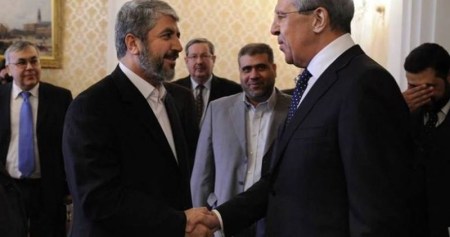
 On Thursday, December 18, 2014, The Guardian published The race to save Peter Kassig by Ali Younes, Shiv Malik, Spencer Ackerman and Mustafa Khalili. To refresh memories here is the preface to the story:

 Aletho News
