Bahrain Strips Leading Shia Majority Cleric Figure of Citizenship
Sputnik — 20.06.2016
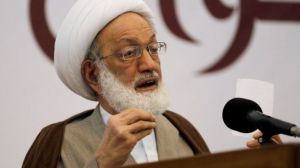 Sunni-ruled Bahrain has deprived leading Shia cleric Sheikh Isa Qassim of his citizenship, media reported Monday.
According to the BBC, Bahrain stripped Qassim, who is the spiritual leader of Al-Wefaq, Bahrain’s biggest opposition group, and holds the senior religious title of Ayatollah, of his citizenship.
On June 14, Bahrain’s Court of Cassation ruled to close all offices of Al-Wefaq in a response to an appeal lodged by the country’s Ministry of Justice.
Al-Wefaq has organized mass protest rallies against the current constitutional monarchy in Bahrain. Al-Wefaq’s leader, Sheikh Ali Salman, was arrested in 2014 and sentenced to four years in prison for inciting hatred and disobedience as well as insulting public institutions in 2015. Earlier in June, the court decided to increase the sentence to nine years.
Since 2011, the Sunni regime in Bahrain became locked in a struggle with an opposition movement led primarily by Shiites, who form a majority in the country. The protesters were calling for political freedom, equality and a parliamentary system that operates independently of Bahrain’s Sunni royal family.
Related:
UK ‘Unconditional Ally’ of Bahrain Despite ‘Inhumane Human Rights Record’
Dismantling Civil Society in Bahrain
By Rannie Amiri | CounterPunch | June 3, 2016
Like a vise which first grips its object and then slowly, deliberately and inexorably crushes it, the al-Khalifa regime has done similarly to civil society in Bahrain. It did not stop when peaceful, pro-democracy, reform protests erupted in 2011 and were violently put down by government forces aided by an invasion of Saudi troops in March of that year. Indeed, the vise continues to close and relentlessly so.
Nationalities have been revoked, mosques razed, citizens deported, human rights activists imprisoned on flimsy charges of insulting the monarchy at the least or plotting its overthrow at worst, and the most perfunctory of dialogues with the opposition abandoned. By smothering the figures and institutions who dare challenge the authority of the ruling dynasty in the most benign of fashions – a tweet, waving the country’s flag, tearing up a photo or merely questioning the tenure of the world’s longest serving prime minister – the Bahraini regime and its Gulf allies would like to believe monarchal rule has been preserved. Such desperate measures however, only speak to its precarity.
The stalwart activist Zainab al-Khawaja was given a sentence of three years and one month in Dec. 2014 for (again) tearing up a picture of King Hamad. She refused to be separated from her infant son whom she took with her to prison. Al-Khawaja has just been released on “humanitarian” grounds after serving 15 months in jail.
Her father though, Abdulhadi al-Khawaja, remains imprisoned serving a life sentence on trumped-up charges of attempting to topple the government. While authorities may have set Zainab al-Khawaja free, they simultaneously doubled the sentence of Sheikh Ali Salman, head of al-Wefaq, an opposition political party. Initially given a term of four years incarceration for alleged incitement against the regime, it was increased to nine years on appeal. The unflinching President of the Bahrain Center for Human Rights (BCHR) and founding Director of the Gulf Centre for Human Rights Nabeel Rajab, remains banned from leaving the country despite the need to secure medical treatment for his wife.
Busy highlighting the nation’s cordial relations with the United Kingdom and United States, the latter of which headquarters its Navy’s Fifth Fleet in the capital Manama, the Western media has largely ignored the plight of Bahrain’s ordinary citizens. The arrest and torture of disabled youth has now been documented by the BCHR. Indeed, for more than a decade, the Center has meticulously chronicled the dismantling of Bahrain’s civil society in all its forms by the al-Khalifa regime.
Most recently, with the passage of a law preventing any religious figure from joining political societies or engaging in political activities, the BCHR issued a statement condemning, “… the Bahraini parliament and Shura Council’s passage of amendments to the Political Societies Law, which places a ban on participation in political decision-making based on discriminatory religious grounds. In defense of this draft amendment, lawmakers supporting this motion argued it would prevent religious acts from being politicized. This decision restricts people’s ability to freely engage in religious practices, as those members willing to join political activities pertinent to the legislative process in Bahrain would now need to refrain from any activities carrying religious connotations.”
In the face of widespread and open abuses in civil society, lack of proportional parliamentary representation, curfews, detentions, and imprisonment and torture of those who dissent, these practices have nonetheless failed to adversely impact the ties enjoyed between Bahrain and the United States. But when a regime becomes alienated from those whom it rules and for example, gives lengthy jail sentences for tweets it finds offensive, it speaks to a tenuous reign.
The pillars of civil advocacy in Bahrain – Nabeel Rajab, Abdulhadi al-Khawaja, Maryam and Zainab al-Khawaja, Abduljalil al-Singace (sentenced to life in prison for participating in pro-democracy protests), Naji Fateel, Hussain Jawad and countless others both named and unnamed – have consistently engaged in purely secular, non-sectarian activism. Unlike the practice of the regime, the designations Sunni and Shia need not be applied when discussing the ongoing struggle for legal, political and socioeconomic rights in Bahrain. The people have waited too long for the West to recognize their demands are not based on sect, but on equity.
Despite an oppressive regime and the long shadow cast by the U.S. Fifth Fleet, resilient Bahrainis remain unintimidated.
Rannie Amiri is an independent commentator on Middle East affairs.
Hillary Clinton’s Memoir Deletions, in Detail
By Ming Chun Tang | The Americas Blog | May 26, 2016
As was reported following the assassination of prominent Honduran environmental activist Berta Cáceres in March, former Secretary of State Hillary Clinton erased all references to the 2009 coup in Honduras in the paperback edition of her memoirs, “Hard Choices.” Her three-page account of the coup in the original hardcover edition, where she admitted to having sanctioned it, was one of several lengthy sections cut from the paperback, published in April 2015 shortly after she had launched her presidential campaign.
A short, inconspicuous statement on the copyright page is the only indication that “a limited number of sections” — amounting to roughly 96 pages — had been cut “to accommodate a shorter length for this edition.” Many of the abridgements consist of narrative and description and are largely trivial, but there are a number of sections that were deleted from the original that also deserve attention.
Colombia
Clinton’s take on Plan Colombia, a U.S. program furnishing (predominantly military) aid to Colombia to combat both the FARC and ELN rebels as well as drug cartels, and introduced under her husband’s administration in 2000, adopts a much more favorable tone in the paperback compared to the original. She begins both versions by praising the initiative as a model for Mexico — a highly controversial claim given the sharp rise in extrajudicial killings and the proliferation of paramilitary death squads in Colombia since the program was launched.
The two versions then diverge considerably. In the original, she explains that the program was expanded by Colombian President Álvaro Uribe “with strong support from the Bush Administration” and acknowledges that “new concerns began to arise about human rights abuses, violence against labor organizers, targeted assassinations, and the atrocities of right-wing paramilitary groups.” Seeming to place the blame for these atrocities on the Uribe and Bush governments, she then claims to have “made the choice to continue America’s bipartisan support for Plan Colombia” regardless during her tenure as secretary of state, albeit with an increased emphasis on “governance, education and development.”
By contrast, the paperback makes no acknowledgment of these abuses or even of the fact that the program was widely expanded in the 2000s. Instead, it simply makes the case that the Obama administration decided to build on President Clinton’s efforts to help Colombia overcome its drug-related violence and the FARC insurgency — apparently leading to “an unprecedented measure of security and prosperity” by the time of her visit to Bogotá in 2010.
The Trans-Pacific Partnership
Also found in the original is a paragraph where Clinton discusses her efforts to encourage other countries in the Americas to join negotiations for the Trans-Pacific Partnership (TPP) trade agreement during a regional conference in El Salvador in June 2009:
So we worked hard to improve and ratify trade agreements with Colombia and Panama and encouraged Canada and the group of countries that became known as the Pacific Alliance — Mexico, Colombia, Peru, and Chile — all open-market democracies driving toward a more prosperous future to join negotiations with Asian nations on TPP, the trans-Pacific trade agreement.
Clinton praises Latin America for its high rate of economic growth, which she revealingly claims has produced “more than 50 million new middle-class consumers eager to buy U.S. goods and services.” She also admits that the region’s inequality is “still among the worst in the world” with much of its population “locked in persistent poverty” — even while the TPP that she has advocated strongly for threatens to exacerbate the region’s underdevelopment, just as NAFTA caused the Mexican economy to stagnate.
Last October, however, she publicly reversed her stance on the TPP under pressure from fellow Democratic presidential candidates Bernie Sanders and Martin O’Malley. Likewise, the entire two-page section on the conference in El Salvador where she expresses her support for the TPP is missing from the paperback.
Brazil
In her original account of her efforts to prevent Cuba from being admitted to the Organization of American States (OAS) in June 2009, Clinton singles out Brazilian President Luiz Inácio Lula da Silva as a potential mediator who could help “broker a compromise” between the U.S. and the left-leaning governments of Venezuela, Ecuador, Bolivia and Nicaragua. Her assessment of Lula, removed from the paperback, is mixed:
As Brazil’s economy grew, so did Lula’s assertiveness in foreign policy. He envisioned Brazil becoming a major world power, and his actions led to both constructive cooperation and some frustrations. For example, in 2004 Lula sent troops to lead the UN peacekeeping mission in Haiti, where they did an excellent job of providing order and security under difficult conditions. On the other hand, he insisted on working with Turkey to cut a side deal with Iran on its nuclear program that did not meet the international community’s requirements.
It is notable that the “difficult conditions” in Haiti that Clinton refers to was a period of perhaps the worst human rights crisis in the hemisphere at the time, following the U.S.-backed coup d’etat against democratically elected president Jean-Bertrand Aristide in 2004. Researchers estimate that some 4,000 people were killed for political reasons, and some 35,000 women and girls sexually assaulted. As various human rights investigators, journalists and other eyewitnesses noted at the time, some of the most heinous of these atrocities were carried out by Haiti’s National Police, with U.N. troops often providing support — when they were not engaging in them directly. WikiLeaked State Department cables, however, reveal that the State Department saw the U.N. mission as strategically important, in part because it helped to isolate Venezuela from other countries in the region, and because it allowed the U.S. to “manage” Haiti on the cheap.
In contrast to Lula, Clinton heaps praise on Lula’s successor, Dilma Rousseff, who was recently suspended from office pending impeachment proceedings:
Later I would enjoy working with Dilma Rousseff, Lula’s protégée, Chief of Staff, and eventual successor as President. On January 1, 2011, I attended her inauguration on a rainy but festive day in Brasilia. Tens of thousands of people lined the streets as the country’s first woman President drove by in a 1952 Rolls-Royce. She took the oath of office and accepted the traditional green and gold Presidential sash from her mentor, Lula, pledging to continue his work on eradicating poverty and inequality. She also acknowledged the history she was making. “Today, all Brazilian women should feel proud and happy.” Dilma is a formidable leader whom I admire and like.
The paperback version deletes almost all references to Rousseff, mentioning her only once as an alleged target of NSA spying according to Edward Snowden.
The Arab Spring
By far the lengthiest deletion in Clinton’s memoirs consists of a ten-page section discussing the Arab Spring in Jordan, Libya and the Persian Gulf region — amounting to almost half of the chapter. Having detailed her administration’s response to the mass demonstrations that had started in Tunisia before spreading to Egypt, then Jordan, then Bahrain and Libya, Clinton openly recognizes the profound contradictions at the heart of the U.S.’ relationship with its Gulf allies:
The United States had developed deep economic and strategic ties to these wealthy, conservative monarchies, even as we made no secret of our concerns about human rights abuses, especially the treatment of women and minorities, and the export of extremist ideology. Every U.S. administration wrestled with the contradictions of our policy towards the Gulf.
And it was appalling that money from the Gulf continued funding extremist madrassas and propaganda all over the world. At the same time, these governments shared many of our top security concerns.
Thanks to these shared “security concerns,” particularly those surrounding al-Qaeda and Iran, her administration strengthened diplomatic ties and sold vast amounts of military equipment to these countries:
The United States sold large amounts of military equipment to the Gulf states, and stationed the U.S. Navy’s 5th Fleet in Bahrain, the Combined Air and Space Operations Center in Qatar, and maintained troops in Kuwait, Saudi Arabia, and the UAE, as well as key bases in other countries. When I became Secretary I developed personal relationships with Gulf leaders both individually and as a group through the Gulf Cooperation Council.
Clinton continues to reveal that the U.S.’ common interests with its Gulf allies extended well beyond mere security issues and in fact included the objective of regime change in Libya — which led the Obama administration into a self-inflicted dilemma as it weighed the ramifications of condemning the violent repression of protests in Bahrain with the need to build an international coalition, involving a number of Gulf states, to help remove Libyan leader Muammar Gaddhafi from power:
Our values and conscience demanded that the United States condemn the violence against civilians we were seeing in Bahrain, full stop. After all, that was the very principle at play in Libya. But if we persisted, the carefully constructed international coalition to stop Qaddafi could collapse at the eleventh hour, and we might fail to prevent a much larger abuse — a full-fledged massacre.
Instead of delving into the complexities of the U.S.’ alliances in the Middle East, the entire discussion is simply deleted, replaced by a pensive reflection on prospects for democracy in Egypt, making no reference to the Gulf region at all. Having been uncharacteristically candid in assessing the U.S.’ response to the Arab Spring, Clinton chose to ignore these obvious inconsistencies — electing instead to proclaim the Obama administration as a champion of democracy and human rights across the Arab world.
‘UK trains armies on its own human rights blacklist’
Press TV – May 23, 2016
The British government is providing military training to the majority of nations it has blacklisted for human rights violations, a new report reveals.
In a report published on Sunday, the Independent revealed that 16 of the 30 countries on the Foreign & Commonwealth Office (FCO)’s “human rights priority” watchlist are receiving military support from the UK despite being accused by London itself of issues ranging from internal repression to the use of sexual violence in armed conflicts.
According to the UK Ministry of Defense, since 2014, British armed forces have provided “either security or armed forces personnel” to the military forces of Saudi Arabia , Bahrain, Afghanistan, Bangladesh, Myanmar, Burundi, China, Colombia, Egypt, Iraq, Libya, Pakistan, Somalia, Sudan, Yemen and Zimbabwe.
Britain is a major provider of weapons and equipment such as cluster bombs and fighter jets to Saudi Arabia in its year-long military aggression against Yemen that has killed nearly 9,400 people, among them over 2,230 children.
Since the conflict began in March 2015, the British government has licensed the sale of nearly $4 billion worth of weaponry to the Saudi kingdom.
British commandos also train Bahraini soldiers in using sniper rifles, despite allegations that the Persian Gulf monarchy uses such specialist forces to suppress a years-long pro-democracy uprising in the country.
Bahraini forces visited the Infantry Battle School in Wales last week, accompanied by troops from Nigeria, the Defense Ministry said.
Nigeria’s top military generals are accused by Amnesty International of committing war crimes by causing the deaths of 8,000 people through murder, starvation, suffocation and torture during security operations against the Boko Haram Takfiri terrorists, according to the report.
Andrew Smith, with the Campaign Against Arms Trade, said Britain should not be “colluding” with countries known for being “some of the most authoritarian states in the world.”
‘Arrest arms dealers, not peace campaigners!’ 8 on trial over weapons fair protest
RT | April 11, 2016
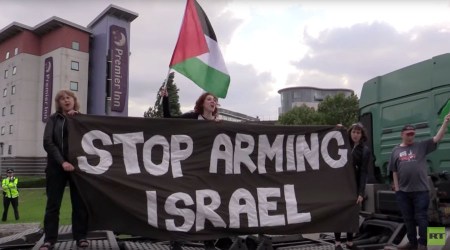
Eight activists are standing trial at Stratford Magistrates Court for disrupting the world’s biggest arms fair, held in London, where deadly merchandise was marketed to repressive regimes such as Saudi Arabia, Bahrain and Azerbaijan.
The campaigners blocked the road leading to the Defence & Security Equipment International (DSEI) in Stratford, London, last September, preventing tanks and weaponry from entering.
The defendants are using a defense of necessity, insisting their actions were justified because they intended to prevent greater crimes taking place around the world.
These include: “The sale of weapons to internally repressive regimes, including Bahrain and Saudi Arabia; the sale of weapons to countries imminently at war and overtly complicit in ongoing war crimes in Yemen, Kurdistan and Palestine; the sale of weapons to regimes that have been widely accused of arming ISIS [Islamic State or IS]; the promotion for sale of weapons that are designed specifically for torture or banned under international law for their capabilities concerning the mass indiscriminate killing of civilians.”
The DSEI arms fair is held every two years in London, and is regularly attended by representatives from repressive regimes. It has also previously provided a platform for weapons dealers to illegally promote arms that are used for torture.
Last September’s event featured stalls from more than 1,500 exhibitors, including arms giants Lockheed Martin, BAE systems, Finmeccanica and others.
Protestors sought to disrupt the fair by locking their bodies together to block access roads outside the Excel Centre, where the fair was held. Several were arrested.
Some protestors, such as Vyara Gylsen – who was arrested after writing a slogan on a military vehicle with a washable marker pen – have since seen criminal charges against them dropped.
The defendants in court this week include Isa Al Aali, a Bahraini activist who was tortured during the Arab Spring uprising in Bahrain.
Green Party activists Angela Ditchfield and Tom Franklin are also among the eight appearing in court.
“The government is supporting and facilitating the sale of weapons that are being used to kill ordinary people, from the West Bank to Yemen and Sudan,” Franklin, 57, of York, said.
“This week we will put the arms trade in the dock and highlight the crimes that the government and the companies at DSEI are complicit in. Arrest arms dealers, not peace campaigners.”
The defendants will be supported by expert witnesses, including former South African MP Andrew Feinstein, who resigned from parliament in 2001 in protest at the government’s refusal to investigate a £5 billion (US$7.12 billion) arms deal.
Amnesty International UK’s Oliver Sprague, who heads up the charity’s arms Control and Policing division, will also give oral evidence, as will Bahrain Institute for Rights and Democracy director Sayed Ahmed, who seeks to improve accountability in the repressive Gulf state.
Kuwait expels 14 people for links with Hezbollah: Report
Press TV – March 21, 2016
The Kuwaiti government has deported 11 Lebanese and three Iraqis on charges of having links to Lebanon’s resistance movement, Hezbollah, a report says.
The Kuwaiti Arabic daily al-Qabas quoted a security source as saying on Monday that the 14 people had been expelled on the order of the state security service.
The move came nearly three weeks after the [Persian] Gulf Cooperation Council ([P]GCC), under the influence of the Saudi regime, declared Hezbollah a “terrorist” organization. Arab League foreign ministers, except those of Iraq and Lebanon, later followed suit.
The [P]GCC – comprising Saudi Arabia, Qatar, the United Arab Emirates, Oman, Bahrain and Kuwait – however, did not provide any evidence for its allegation. This comes as the first three monarchies themselves stand accused of supporting extremists and terrorists in the region.
Describing the [P]GCC decision as “reckless and hostile,” Hezbollah blamed it on Saudi Arabia.
Elsewhere in its report, Qabas said that Kuwaiti security officials have prepared a list of “unwanted” Lebanese and Iraqi people, including advisers to big companies, to be expelled for “the public interest.”
The people will not be allowed to enter the [P]GCC member states after their deportation, the daily said.
‘Human rights abusers’ invited to ‘non-lethal’ weapons show, condemned by activists
RT | March 7, 2016
Activists have denounced a Home Office sponsored security fair, warning that Britain is selling tear gas and other crowd control tools to some of the world’s most oppressive regimes.
Among the governments invited to take part in the fair in Farnborough, Hampshire, 30 miles southwest of London, are Bahrain, Saudi Arabia, Israel, United Arab Emirates (UAE), Egypt and Turkey, the Guardian reported on Saturday.
Police and security officials from 79 countries are expected to participate in the fair later this week, according to the list, which was released under a Freedom of Information request.
Since Prime Minister David Cameron took office in 2010, the UK has approved 126 licenses connected with the sale of tear gas and other irritants, according to the Campaign Against the Arms Trade (CAAT).
Also approved were 75 licenses for crowd control ammunition such as rubber bullets, 79 for “acoustic” crowd control – known as sound grenades – and 259 licenses for riot shields.
CAAT spokesman Andrew Smith told the paper: “There are serious questions to be asked about the impact of the so-called ‘non-lethal’ arms industry. These risks become even more important when these weapons are being sold to human rights abusers and dictatorships.”
“A number of the countries in attendance routinely practice torture, arbitrary detention and other appalling acts of violence. The UK should not be arming these regimes and selling them the means to oppress and kill.”
“[The event] undermines the UK’s claims to be promoting human rights while strengthening the position of repressive regimes.”
Defending the trade show, the Home Office said: “A thriving security industry is vital to help cut crime and protect the public and so it is important these products and services can be showcased and expertise shared.”
Described by organizers as “the perfect place to see the latest security equipment and technology in a secure environment,” the Security and Policy fair will be held behind closed doors, with all visitors “pre vetted to strict Home Office criteria.”
GCC not after protecting Lebanon: Hezbollah chief
Press TV – March 6, 2016
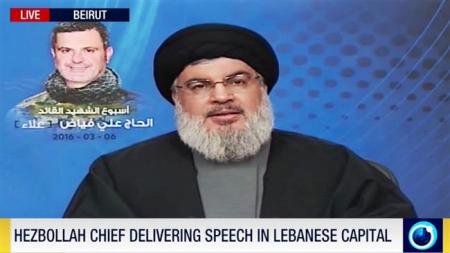
Sayyed Hassan Nasrallah, the secretary general of the Lebanese resistance movement Hezbollah, says the Arab member states of the [Persian] Gulf Cooperation Council ([P]GCC), which recently listed the resistance group as terrorists, do not have the interests of Lebanon in mind.
During a live televised speech on Sunday, Nasrallah said those who assume that the Arab regimes will protect Lebanon have “pinned their hopes on a fantasy.”
Had Lebanon waited for a unified Arab strategy in the face of Israel instead of opting to resist against the occupying regime, “then the fate of this territory would have been the same as the fate of the territories Israel has taken control of,” he said.
On Wednesday, the six-nation Arab bloc issued a statement labeling Hezbollah a terrorist organization. The [P]GCC comprises Bahrain, Kuwait, Oman, Qatar, Saudi Arabia and the United Arab Emirates.
“Many of these Arab countries today, who designate us as terrorists, what do they have to do with this resistance and these victories and these achievements?” Nasrallah said.
Israel unleashed an all-out offensive on Lebanon 10 years ago under the pretext of releasing Israeli soldiers allegedly captured by Hezbollah in southern Lebanon. The invasion claimed the lives of nearly 1,200 Lebanese people, most of them civilians.
The Tel Aviv regime was, however, forced to retreat without achieving any of its objectives after Hezbollah fighters displayed heavy resistance against the Israeli military.
“Back then, we said to them (the Arab countries) ‘we don’t want anything from you… Today, we also say to them, to these regimes, ‘We don’t want anything from you. We don’t want money, nor do we want weapons, nor do we want support or blessing,” he said. “Just leave this resistance alone, leave this country alone, and leave this people alone.”
He blamed some Arab regimes for conspiring against anyone standing against Israel.
Nasrallah also underlined the assistance provided by the resistance group to the Iraqi government in its fight against the Takfiri terror group Daesh and reminded that Hezbollah did not wait for any orders to initiate its anti-terror fight in Syria and only fulfilled its religious commitment.
The secretary general of Hezbollah also addressed the tension that has been bubbling up between Saudi Arabia and Lebanon, causing the former to take a raft of hostile measures against the latter.
“If it’s angry with us, it has the right to. I understand Saudi Arabia’s anger. Why? Because when one fails, at the very least he will be angry,” Nasrallah said.
He went on to explain that the Saudi rage has emanated from the kingdom’s failures in Yemen and Syria.
“In Syria, there’s a very great Saudi anger because what they had calculated in Syria [was that] in two or three months, ‘Syria would fall into our hands,’” Nasrallah said.
Hezbollah has been successfully aiding the Syrian military against foreign-backed militant groups.
“He, who confronts Saudi Arabia in Syria is the real defender of the Lebanese national interests,” Nasrallah said.
“The same goes for Yemen. The estimations of the new Saudi leadership was that ‘we will decide the battle in Yemen. We will teach a lesson to all the Arab countries and the Arab world… and we will impose ourselves on the Arab world,’” he said.
Saudi Arabia launched a campaign of military aggression against Yemen in late March last year in a bid to bring fugitive former Yemeni President Abd Rabbuh Mansur Hadi, a Riyadh ally, back to power and undermine Yemen’s Houthi Ansarullah movement.
Riyadh has, however, failed in accomplishing either of the two objectives, and has become entangled in a prolonged expensive war, whose adverse economic impacts—along with economic mismanagement—have gradually been giving rise to domestic discontent inside Saudi Arabia.
Bahrain King Meets Rabbi: Arab-Israeli Diplomatic Ties ‘Matter of Time’

Al-Manar – March 5, 2016
The King of Bahrain has met Israeli Rabbi and ‘recommended’ that the recent blacklisting of Lebanese resistance movement, Hezbollah, as a “terrorist organization” by the Gulf Cooperation Council be taken up by the Arab League as well, Israeli daily, Jerusalem Post reported.
Hamad bin Isa al Khalifa received Rabbi Marc Schneier, and president of the Foundation of Ethnic Understanding based in New York, in the royal palace in Manama in order to discuss “concerns in the Middle East,” JP reported.
The six-member GCC formally blacklisted Hezbollah as a “terrorist organization” on Wednesday.
During Scheier’s meeting with Khalifa, the king noted that there were one or two countries among the GCC who had wanted to distinguish between Hezbollah’s military wing and its political wing, although this was rejected, the Israeli paper said.
According to Schneier, who has met with Khalifa on two other occasions, the king told him “he was advocating for the struggle against Hezbollah to be expanded as widely as possible in the Arab world, stating that the Arab League and its 22 members should take up this mantle and label the group as terrorists.”
“Iran is not only an obstacle but an opportunity for peace between Israel and Arab nations,” Schneier told The Jerusalem Post on Thursday after his meeting on Wednesday with Khalifa.
“Both Israel and the Gulf states share a common enemy, so it’s the makings of a natural alliance, in terms of joining forces against the evil of terrorism, religious extremism and fanaticism,” the Israeli Rabbi said.
“It’s a real opportunity and a silver lining in the dark cloud of terrorism. The Gulf states recognize Israel as an ally against Iran, and its ability to stabilize the region and support moderate Arab countries, so this could be a game changer in the geopolitical climate of the Middle East.”
Schneier added that Khalifa has also said during their meeting that in his opinion “it is just a matter of time before some Arab countries begin opening diplomatic ties” with the Zionist entity.
GCC declares Hezbollah ‘terrorist group’
Press TV – March 2, 2016
The Arab monarchies of the Persian Gulf have declared Lebanon’s Hezbollah movement, which has been fighting terrorist groups in Syria and Israeli occupation, a “terrorist group.”
The six-nation Gulf Cooperation Council officially added Hezbollah and all groups affiliated to its so-called list of “terrorist” organizations on Wednesday.
In a statement, GCC’s Secretary General Abdullatif bin Rashid al-Zayan accused Hezbollah and associated groups of committing “acts of aggression”, recruiting “youth” inside the Persian Gulf littoral states, smuggling “weapons and explosives”, sowing “sedition” and instigating “chaos and violence.”
The bloc, however, did not provide any evidence for its allegations.
The GCC comprises Saudi Arabia, Qatar, the United Arab Emirates, Oman, Bahrain and Kuwait.
The move by the six-member bloc is the latest measure against Hezbollah, which is fighting terrorists in Syria.
In 2000 and 2006, when Israel launched two wars on Lebanon, Hezbollah fighters gave befitting responses to the Tel Aviv regime’s acts of aggression, forcing Israeli military to retreat without achieving any of its objectives.
The GCC have taken a series of measures against Hezbollah since Saudi Arabia last month halted a $4- billion aid pledge to Lebanon’s security forces.
The aid suspension came after Beirut did not follow Riyadh’s lead and refused to endorse joint anti-Iran statements at separate meetings held in Cairo and Jeddah.
On February 26, Saudi Arabia blacklisted four Lebanese firms and three individuals over alleged affiliation to Hezbollah, and imposed sanctions on them. The kingdom also ordered its citizens not to travel to Lebanon, and is poised to expel the Lebanese citizens working on its territory.
On Tuesday, Seyyed Hassan Nasrallah, the secretary general of Hezbollah said Saudi propaganda against Hezbollah has led to a political conflict in Lebanon, and advised the Lebanese youth against playing into the hands of Saudi Arabia, which he said spreads lies about Hezbollah and wrongly accuses the resistance movement of sowing sectarian strife between Shias and Sunnis.
He also denounced the Arab world’s silence in the face of Riyadh’s aggression on Yemen, where over 8,000 people have lost their lives since the Saudi onslaught began in late March last year.
Nasrallah warned that there are some Lebanese groups hoping to see a war in Lebanon just like the one Riyadh has waged against Yemen.
This comes as the Persian Gulf monarchies themselves stand accused of supporting extremists and terrorists in the region.
Featured Video
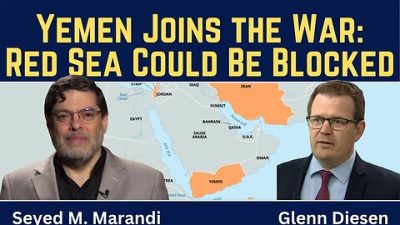
Yemen joins the war – Red Sea could be blocked next – Saudi regime at risk
or go to
Aletho News Archives – Video-Images
From the Archives
A superpower and “the world’s sickest warrior state”
By Paul J. Balles | March 8, 2010
Living through five or six major wars has hardened me to what I thought were the extremes of inhuman cruelty and brutality.
Two things made those extremes almost bearable: the brutality always revealed – at least according to the media coverage – the viciousness of the enemy. It was therefore quite understandable when our “brave men and women” pulverized the enemy.
Films of Japanese torturing captive Americans somehow justified holding Japanese Americans in internment camps during World War II; and only a small percentage of Americans found the bombing of Hiroshima and Nagasaki unreasonably vengeful at best, at worst, depraved.
The media giants in America portrayed the North Koreans as barbaric beasts with their captives, quite unlike their southern counterpoints – our allies during the Korean War. No one ever felt the need to explain how the South Koreans were a civilized breed while the North Koreans were absolute savages, at least according to the official line.
In Vietnam, our warriors justifiably (or so the media made us believe) dropped napalm on the North Vietnamese who had the gall to hide in villages and tunnels to ravage our invaders. At least it was accepted practice until some rogue photojournalist filmed a young girl screaming down a Vietnamese road in flames. … continue
Blog Roll
 Aletho News
- FTC Warns Visa, Mastercard, PayPal, Stripe Over Political Debanking
- Russian tanker approaches Cuba despite US oil blockade
- Marandi: Yemen joins the war – Red Sea could be blocked next – Saudi regime at risk
- Pro-Palestinian French member of European Parliament denied entry to Canada
- Pakistan to Host US-Iran Talks
- How Indonesia’s tilt toward the US left it stranded in the Strait of Hormuz
- US has no choice but to retreat from Iranian borders: Top commander
- Iran Retaliation Strikes Chemical Plant Near Dimona
- AWACS’ Destruction is a Major Loss for US Military – Ex-DoW Analyst
- Israel’s Iran Strategy Uses US Military & Gulf States as Its Pawns
- If Americans Knew
- Israeli police block Catholic cardinal from entering Church of the Holy Sepulchre on Palm Sunday
- Israel is assassinating journalists again, more than any other nation, anywhere, ever – Not a ceasefire Day 170
- Over 300 US service members wounded, majority have brain injuries – Not a ceasefire Day 169
- Researchers at Human Rights Watch Resign Over Blocked Report on Palestinian Refugee Return
- Jewish Groups Are Backing a War Americans Don’t Want
- Eric Fingerhut Thinks He’s the President of the Jews
- Top Jewish Philanthropists, Rabbis Urge Israeli President to Take Action Against ‘Jewish Extremists’
- Don’t Be Fooled. Zionist Leaders Have Always Wanted to Control Southern Lebanon
- Israel’s widespread use of torture is a core element of its genocide against the Palestinian people
- In Israel’s War on Iran, Many Middle East US Bases Rendered “All But Uninhabitable”
- No Tricks Zone
- New Study Finds Warming Saves Lives…Cold Temperatures 12 Times More Deadly Than Excess Heat
- German Science Blog Accuses PIK Climate Institute Of Hallucinating Climate Tipping Points
- Devastating Assessment Of Comirnaty Vaccine By Former Senior Pfizer Europe Toxicologist
- New Study: CO2 Is ‘Effectively Negligible’ As An Explanatory Climate Change Factor Since 2000
- Former Pfizer Toxicologist Dr. Helmut Sterz Tells Bundestag Hearing Pfizer Vaccine Should Have Never Been Approved
- Energy Expert: Germany’s Nuclear Phaseout Was A “500 Billion Euro Mistake”
- New Research: South Australia’s Mid-Holocene Sea Surface Temperatures Were 4°C Warmer Than Today
- Storing Green Energy To Last Germany 10 Days Would Require A 60-Million Tonne Battery
- New Studies: UK Sea Levels Were 4 Meters Higher Than Today During The Mid-Holocene
- Destructive Green New Deal: German Energy And Metal Group Warns Of Drastic Crisis
 Aletho News