Why isn’t NDP critic Randall Garrison questioning $200 billion navy procurement?
By Yves Engler · January 8, 2021
The job of the opposition in Parliament is to hold the government accountable, in part by asking questions. The role of an NDP critic should be to criticize from the left. So why the silence from Randall Garrison after Canada’s leading military reporter David Pugliese published a 5,000 word expose on the Canadian Surface Combatant headlined, “Billions in trouble: How the crown jewel of Canada’s shipbuilding strategy became a possible financial disaster waiting in the wings.”
Despite revelations over the past month of costs growing to over $200 billion, extreme secrecy, the addition of ballistic ‘missile defence’ and Tomahawk missiles that travel 1,700 kilometers, there has been nary a comment from the NDP defence critic on the 15 new frigates.
Initially pegged at $14 billion, the official price tag for the frigates later rose to $26 billion and now sits at $60 billion. In 2019 the Parliamentary Budget Officer put the cost about $10 billion higher and an updated frigates cost estimate next month is expected to reach $80 billion. To keep information about the swelling costs under wraps the military has resorted to extreme secrecy, reported Pugliese in the expose.
The recent winner of a lifetime achievement award from the Canadian Committee for World Press Freedom followed his investigation into the cost and secrecy surrounding the frigates with a story about government officials criticizing companies for speaking out. Subsequently, Pugliese published a story headlined “Top of the line Canadian-made naval equipment shut out of $70-billion warship program” about government subsidized firms cut out of the Lockheed Martin led consortium set to build the frigates. As a result, Thales Canada’s government funded naval radar, which is being used on German, Danish and Dutch warships, won’t be part of the Canadian Surface Combatant.
In response to Pugliese’s reporting, the Ottawa Citizen editorial board criticized the frigate purchase in “Choppy waters for Canada’s warship program”. In November the Hill Times also published a commentary titled “Canada’s surface combatant costs might be taking on water” and a front-page story titled “DND says budget for Surface Combatants remains unchanged; PBO report expected in late February”. Two days before Christmas CBC reported an astounding estimate for the lifecycle cost of the frigates. Initially detailed in Esprit de Corps, former defence official Alan Williams’ concludes that the 15 frigates will cost $213 – 219 billion over 40 years!
One explanation for the astronomical cost of the 15 frigates is the radar system that’s been chosen. According to a CBC story from early December, the radar can be easily upgraded to a ballistic missile defence system, which successive Canadian governments have resisted joining. In the mid 2000s the Canadian Peace Alliance, Échec à la guerre, Ceasefire.ca and others forced the Liberal government to shelve its plan to formally join the US Ballistic Missile Defence. (It’s called “missile defence” because it’s designed to defend US missiles when they use them in offensive wars.)
In November a number of military focused publications reported on the weaponry expected on the vessels. “Canada’s New Frigate Will Be Brimming With Missiles”, is how The Drive described the ships. In a first outside the US, Canada’s surface combatants look set to be outfitted with Tomahawk cruise missiles capable of striking land targets up to 1,700 kilometers away. As such, the frigates could be near London and hit Berlin or, more plausibly, docked in Panama City and strike Caracas, Venezuela.
As I recently detailed in Jacobin, Ottawa has long used naval force as a “diplomatic” tool. Early Canadian ‘gunboat diplomacy’ included pressing Costa Rica to repay the Royal Bank in 1921 and helping a dictator as he was massacring peasants in El Salvador in 1932. In recent years Canadian warships have gone to war with Libya and Iraq.
Amidst growing media criticism, NDP defence critic Randall Garrison has said nothing regarding the frigates’ cost, secrecy or weaponry. He hasn’t released a single tweet (or retweet) about any of the recent stories on the surface combatant vessels.
This is abysmal. What is the point of having an NDP defence critic if they are unwilling to question or challenge the largest procurement in Canadian history?
At the NDP convention in April members need to press Garrison to clarify his position on these violent, $200 billion frigates.
Politicians Criticize China’s Role in Hong Kong while Ignoring Canada’s Role in Haiti
By Yves Engler | Dissident Voice | December 11, 2020
For those who support a truly just foreign policy comparing Canadian politicians’ reactions to protests in Hong Kong and the slightly more populous Haiti is instructive. It reveals the extent to which this country’s politicians are forced to align with the US Empire.
Despite hundreds of thousands of Canadians having close ties with both Haiti and Hong Kong, only protests in the latter seem to be of concern to politicians.
Recently NDP MP Niki Ashton and Green MP Paul Manly were attacked ferociously in Parliament and the dominant media for participating in a webinar titled “Free Meng Wanzhou”. During the hullabaloo about an event focused on Canada’s arrest of the Huawei CFO, Manly — who courageously participated in the webinar, even if his framing of the issue left much to be desired — and Ashton — who sent a statement to be read at the event but responded strongly to the backlash in an interview with the Winnipeg Free Press — felt the need to mention Hong Kong. Both the NDP (“Canada must do more to help the people of Hong Kong”) and Greens (“Echoes of Tiananmen Square: Greens condemn China’s latest assault on democracy in Hong Kong”) have released multiple statements critical of Beijing’s policy in Hong Kong since protests erupted there nearly two years ago. So have the Liberals, Bloc Québecois and Conservatives.
In March 2019 protests began against an extradition accord between Hong Kong and mainland China. Hong Kongers largely opposed the legislation, which was eventually withdrawn. Many remain hostile to Beijing, which later introduced an anti-sedition law to staunch dissent. Some protests turned violent. One bystander was killed by protesters. A journalist lost an eye after being shot by the police. Hundreds more were hurt and thousands arrested.
During more or less the same period Haiti was the site of far more intense protests and state repression. In July 2018 an uprising began against a reduction in subsidies for fuel (mostly for cooking), which morphed into a broad call for a corrupt and illegitimate president Jovenel Moïse to go. The uprising included a half dozen general strikes, including one that shuttered Port-au-Prince for a month. An October 2019 poll found that 81% of Haitians wanted the Canadian-backed president to leave.
Dozens, probably over 100, were killed by police and government agents. Amnesty International, Human Rights Watch and other western establishment human rights organizations have all documented dozens of police killings in Haiti. More recently, Moïse has ruled by decree, sought to extend his term and to rewrite the constitution. Yet, I couldn’t find a single statement by the NDP or Greens, let alone the Liberals or Conservatives, expressing support for the pro-democracy movement in Haiti.
Even an equal number of statements from a Canadian political party would be less than adequate. Not only were the protests and repression far more significant in Haiti, the impact of a Canadian politician’s intervention is far more meaningful. Unlike in Hong Kong, the police responsible for the repression in Haiti were trained, financed and backed by Canada. The Trudeau government even gave $12.5 million to the Haitian police under its Feminist International Assistance Policy! More broadly, the unpopular president received decisive diplomatic and financial support from Ottawa and Washington. In fact, a shift in Canada/US policy towards Moïse would have led to his ouster. On the other hand, a harder Canada/US policy towards Hong Kong would have led to well … not much.
The imperial and class dynamics of Haiti are fairly straightforward. For a century Washington has consistently subjugated the country in which a small number of, largely light-skinned, families dominate economic affairs. During the past 20 years Canada has staunchly supported US efforts to undermine Haitian democracy and sovereignty.
Hong Kong’s politics are substantially more complicated. Even if one believes that most in Hong Kong are leery of Beijing’s growing influence — as I do — the end of British rule and reintegration of Hong Kong into China represents a break from a regrettable colonial legacy. Even if you take an entirely unfavorable view towards Beijing’s role there, progressive Canadians shouldn’t focus more on criticizing Chinese policy in Hong Kong than Canadian policy in Haiti.
Echoing an open letter signed by David Suzuki, Roger Waters, Linda McQuaig and 150 others and the demands of those who occupied Justin Trudeau’s office last year, the national president of the Public Service Alliance of Canada, Chris Aylward, recently sent a letter to Prime Minister Trudeau critical of Canadian support for Moïse. It notes, “Canada must reassess its financial and political support to the Jovenel Moïse government, including police training, until independent investigations are conducted into government corruption in the Petrocaribe scandal and ongoing state collusion with criminal gangs.” The NDP, Greens and others should echo the call.
To prove they are more concerned with genuinely promoting human rights – rather than aligning with the rulers of ‘our’ empire – I humbly suggest that progressive Canadians hold off on criticizing Beijing’s policy towards Hong Kong until they have produced an equal number of statements critical of Canada’s role in Haiti.
• To learn more about Canada’s role in Haiti tune into this webinar Sunday on “Imperialist attacks on Haiti and Haitian resistance: Canada’s Imperialist Adventures in Haiti.”
 Yves Engler is the author of 10 books, including A Propaganda System: How Canada’s Government, Corporations, Media and Academia Sell War and Exploitation.
Canadian Health Ministry Exploring “Immunity Passports,” Vaccine “Tracking And Surveillance”
By Steve Watson | Summit News | December 9, 2020
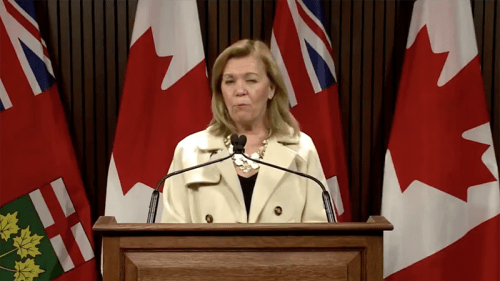
The Health Minister of Ontario in Canada has stoked controversy by suggesting that people who do not take the coronavirus vaccine will face restrictions on where they can travel and spend time.
When asked by reporters about how the government intends to go about convincing people to get the vaccine, Health Minister Christine Elliott warned that those who refuse it will face difficulties reintegrating into society.
“That’s their choice, this is not going to be a mandatory campaign. It will be voluntary,” Elliot said, but adding that “There may be some restrictions that may be placed on people that don’t have vaccines for travel purposes, to be able to go to theatres and other places.”
When another reporter asked if the government would be introducing ‘immunity passports’, or proof of vaccination cards, Elliot said “Yes, because that’s going to be really important for people to have for travel purposes, perhaps for work purposes, for going to theatres or cinemas or any other places where people will be in closer physical contact.”
Following up on Elliot’s comments, The Toronto Sun spoke to her press secretary, who confirmed that the government is exploring several options for vaccine “tracking and surveillance.”
“This includes exploring developing tech-based solutions while also providing for alternative options to ensure equitable access to any potential ‘immunity passport,’” Alexandra Hilkene said.
Sun reporter Brian Lilley notes “That phrase will set off alarm bells and it should, not just for anti-vaxxers, but for anyone who is concerned about Charter rights and governments running roughshod over them.”
Ontario Chief Medical Officer of Health Dr. David Williams has also said that a COVID-19 vaccine may be required for “freedom to move around”.
“What we can do is to say sometimes for access, or ease, in getting into certain settings, if you don’t have vaccination then you’re not allowed into that setting without other protection materials,” Williams said.
The comments of these Canadian officials add to the litany of other government and travel industry figures in both the US, Britain and beyond who have suggested that ‘COVID passports’ are coming, in order for ‘life to get back to normal’
In an essay in The Wall Street Journal on Saturday, former Centers for Disease Control and Prevention director Tom Frieden noted that he expects the so called ‘immunity passports’ will come into widespread use despite any ethical, legal or operational challenges, and despite the fact that it hasn’t at all been determined whether the vaccine equates to immunity.
People who refuse ‘voluntary’ Covid-19 vaccination could face restrictions, Ontario govt warns
RT | December 8, 2020
No one will be forced to receive a coronavirus jab, but people who refuse to get vaccinated could be deprived of certain freedoms, Ontario’s Health Minister Christine Elliott has cautioned.
The senior health official acknowledged that inoculation would be voluntary, but encouraged “everyone who is able to, to have the vaccination,” noting that there could be consequences for those who forgo the procedure.
“There may be some restrictions in terms of travel or other restrictions that may arise as a result of not having a vaccination, but that’s going to be up to the person themselves to make that decision on the basis of what’s most important to them.”
The remarks were made on Monday in response to a question from a journalist about whether schools, businesses, and other institutions could ask people for proof of vaccination.
Ontario Premier Doug Ford responded that it would be unlawful to “force every single person to take” the vaccine, but Elliott’s follow-up remarks seemed to suggest the government might rely upon coercive tactics to obtain ‘voluntary’ compliance.
The health minister’s comments come amid growing fears that mass vaccination programs being rolled out by governments around the world could lead to some form of health ‘passport’ which could be used to restrict travel and other activities.
Prime Minister Justin Trudeau announced on Monday that, pending approval from health authorities, Canada could begin receiving doses of the Pfizer-BioNTech as early as next week. Canada is expected to obtain up to 249,000 doses of the drug by the end of December.
On Tuesday, the United Kingdom became the first country in the world to begin administering the Pfizer-BioNTech jab. The UK government has insisted that it has no plans to issue any kind of identification which could be used to discriminate against those who have not been inoculated.
Canada: Government and Bankers Pay “Antifa” Members to Dox and Attack Right Wingers
By Eric Striker • National Justice • December 3, 2020
Last week, Kurt Phillips of Anti-Racist Canada (ARC) retired his blog after 13 years.
ARC was an early pioneer of the tactic of “doxing,” where leftists post the addresses, photos of homes, and other personal information of political dissidents in order to threaten and intimidate them into silence. Over the years, Phillips has targeted free speech activists, Canadian nationalists, Proud Boys, immigration skeptics and even the Canadian Yellow Vest movement, sometimes paired with thinly veiled calls to violence.
Even his farewell message encourages readers to follow explicitly violent anarchist groups and left-wing “skinheads” like SHARP.
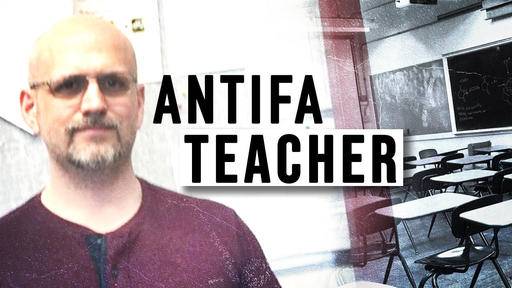
Early this year, Phillips was himself exposed as a gay communist teacher at St. Anthony’s Catholic school in Drumheller, Alberta, where he continues to work despite revelations of his activities and litigation alleging unethical and potentially illegal behavior.
While Phillips is calling it quits at ARC, this is only because of a sinecure he has received at Bernie Farber’s antifa NGO, the “Canadian Anti-Hate Network,” (CAN) where Phillips is now a board member. Farber is a Zionist Jewish activist who was criticized for claiming to be a homosexual in 2009 in order to promote Israel and protest a pro-Palestine group at an gay parade.
CAN engages in similar activities as ARC, specializing in doxing and creating media narratives to demonize right-wingers in Canada. CAN’s position on violence appears to be purely legalistic, with its “About” page stating “We do not, however, engage in any on-the-ground organizing and encourage you to contact your local anti-racist groups if you want to get involved at that level.” The anti-racist groups they are referring to are mostly communist and anarchist “antifa” groups who use force to deny Canadians with different political opinions their civil liberties.
What is most shocking about CAN is who is paying Phillips to harass people: the Canadian government and banking establishment.
In October, the multinational investment bank Bank of Montreal (BMO) provided CAN with a $250,000 donation to expand its “antifa” operations. This was followed up with another big cash injection from the Canadian state itself through its “Anti-Racist Action” program, which allocated $270,000 to CAN’s activities of “monitoring” and “combating” right-wing groups.
The dynamic doesn’t seem to bother self-described anti-capitalists tripping over one another for the money of bankers and Canadian plutocrats.
Non-governmental organizations, often funded by billionaires and business interests, have always been a vital lifeline for the phony left. Now Canada appears to be one of the first nations to use taxpayer dollars to outright fund left-wing paramilitary activity and organized online harassment.
The fact that the “Anti-Racist Action” grant program shares its name with the “antifa” terrorist group is unlikely to be a coincidence. If you were to ask Kurt Phillips, he is likely to proudly agree.
Canadian Intel Report Alleging COVID-19 Disinformation Campaign is ‘Madness’, Russian Embassy States
Sputnik – 04.12.2020
The Russian Embassy in Ottawa refuted a Canadian intelligence report that claimed Russia, China and Iran actively spread COVID-19 disinformation.
Earlier in the day, snippets of a Canadian Security Intelligence Service (CSIS) report obtained by a Canadian media outlet shed light on an alleged disinformation campaign by Russia, China and Iran to discredit western countries’ pandemic response to further their strategic interests.
“False claims in blame Russia-fashion spread by [mainstream media], referring to secret intelligence reports, instead of cooperation against the pandemic. The propaganda war by western spy agencies to denigrate Russian anti-COVID-19 efforts and the successful Sputnik V vaccine while diverting attention from west’s own failures. Madness,” the embassy’s press service tweeted on Thursday.
Canada’s spy agency deduced that Russia spread disinformation to discredit the west, promote national interests abroad and to push for an end to sanctions. China and Iran were accused of spreading disinformation to compensate for their failures in containing the pandemic.
Reciprocally, Russia, China and Iran have vocally asserted that western countries are using COVID-19 disinformation to sow discord in their internal affairs.
Betting other people’s money on green
Climate Discussion Nexus | December 2, 2020
With pandemic lockdowns crushing the private sector, it’s obviously time to launch an ambitious redesign of our economy. Or so they tell us. And “they” are not just the architects of the Great Reset whose plans, we noted last week, offer a strange mix of cosmic ambition and predictable futility. But “they” also includes those who keep insisting, against all evidence, that there are vast commercial opportunities in this new economy. If that were true it would mean we don’t need sweeping government intervention, just the same old profit motive and efficient capital markets. Unfortunately neither profits nor efficient capital markets seem to enter the picture. Yahoo! Finance just noted that “The chief executive officers of eight Canadian pension funds, collectively representing about $1.6 trillion in assets under management, are calling for a green recovery from the COVID-19 economic slump.” But every single one of those massive funds is… a government agency gambling with other people’s money. Every one.
We’re talking state capitalism not the private kind because the CEOs who signed the letter in question run “AIMCo, BCI, Caisse de dépôt et placement du Québec, CPP Investments, HOOPP, OMERS, Ontario Teachers’ Pension Plan, and PSP Investments.” All stuffed with public-sector money and insulated by government guarantees from the cost of any failed investment in magic beans. Unlike, say, taxpayers.
In case some of those pension funds are not familiar to you, HOOPP is the “Healthcare of Ontario Pension Plan (HOOPP)” whose website boasts that “As one of Canada’s largest defined benefit pension plans, we are dedicated to providing retirement security to more than 380,000 healthcare workers in Ontario.” As for AIMCo, aka “Alberta Investment Management Corporation”, its website touts first “New Commitments to Diversity & Inclusion” then “Investors Collaborate on Climate Change Mitigation”. Not return on equity. So you’re not astonished to learn from their 2019 Annual Report that they call themselves “Alberta’s investment manager” and that their shareholder, in the singular, is… “the Government of Alberta”. Or that they are “a non-profit, crown corporation responsible for investing on behalf of most of Alberta’s public sector employees and, through the Heritage Fund, on behalf of all Albertans.”
Shall we continue? Let’s. Sure enough, BCI is the “British Columbia Investment Management Corporation” aka “The Investment Manager of Choice for British Columbia’s Public Sector”. Obviously the Caisse de depot is a branch of the Quebec government. It claims its clients are “41 depositor groups. Most are pension plans and public and parapublic insurance plans which, together, pay out benefits to more than two million Quebecers each year.” But of course its real client is the government of Quebec, which appoints the Board of Directors and mandates the Caisse to generate money for the government’s pension plans “while at the same time contributing to Quebec’s economic development” in, you understand, an independent manner.
Where are we? Ah yes, CPP Investments, whose name speaks for itself, though we might add that it is “one of the world’s largest investors in private equity”. So it is not your grandfather’s capitalism we’re seeing here.
Then there’s OMERS, the Ontario Municipal Employees Retirement System, a branch of the Ontario government that, Wikipedia notes, “has become one of the largest institutional investors in Canada”. And as its own website notes, it runs a “defined benefit pension plan” so if the market returns aren’t there, well, the government will come to the rescue with however many billions are needed.
We don’t have to tell you that the Ontario Teachers’ Pension Plan is another of these parastatal behemoths. But we should mention that PSP Investments is… yes… the “Public Sector Pension Investment Board”, a branch of the federal government that is also “one of Canada’s largest pension investment managers” and once again oversees defined-benefit plans.
We dwell on the “defined-benefit” aspect here because it is vital to understand that these outfits are free to gamble with other people’s money for two vital reasons. First, by law their beneficiaries get paid whether the investments work out or not. And second and related, they are free from the sort of scrutiny normal investment firms face from clients concerned about losing their savings if the fund bets heavily on trendy exotic ideas because their clients are not those whose pensions they manage but governments that can just raise taxes, borrow against other people’s assets or, for the federal government, print the stuff to make up for any failure to find a pot of gold at the end of the green rainbow.
This consideration deserves emphasis because when you hear “institutional investors” you might well be inclined to think, well, if sober money managers taking care of Canadians’ hard-won savings are into this stuff it must not be trendy or exotic. Green must be blue chip. But no. It’s just more of the public-sector song and dance you pay for whether you like it or not.
Except for one nasty thing: The bigger they are the harder they fall. Especially now, with public sector balance sheets a soggy red mess, if one or more of these major holders of often badly underfunded public-sector pension assets should bet the wind farm on something that goes thud, as alternative energy generally does, it may not be possible for the government or governments in question to find the tens or hundreds of billions of dollars needed to make up the losses. (The CPP, the Chief Actuary of Canada has said, must earn a real rate of return of 4% for 75 years to cover projected payouts. Good luck with that mate. And as Andrew Coyne has been tireless in exposing, what was once a small outfit pursuing a “Wealthy Barber” plan of passive investment with 164 employees and administrative costs of $118 million has since 2006 become a bloated behemoth whose 1,661-strong host of managers costing $3.3 billion a year pursue risky ventures around the world. So they’re riding the gravy train even if we’re not.)
There is this meme out there that big companies are extra-right-wing entities that send lavish cheques to deniers and oppose regulation. But it’s not true. Like GM, which just switched from Trump’s position on California’s strict new emissions to Biden’s, many are smooth operators convinced they can game the system. They may find, as carmakers in Europe are already finding, that feeding the crocodile in the hope of being eaten last is just exactly as bad an idea as it sounds. But in any case private companies no longer dominate financial markets. Public and parapublic entities do.
As a result, the only meaningful shareholder revolt possible here is that of citizens. And just imagine trying to make OMERS’ investment strategy a key election issue. But it matters, because that CEOs’ letter is full of trendy verbiage like “The pandemic and other tragic events of 2020 have revealed pre-existing business strengths and shortcomings with respect to social inequity, including systemic racism and environmental threats.” And so all your chips, as a taxpayer and as a retired or even current public employee, are on the notion that a Great Reset is a fiscal winner.
Informal British-Turkish-Ukrainian alliance is emerging in the Black Sea
By Paul Antonopoulos | November 30, 2020
Trade agreements between the UK and Turkey are “very close,” Turkish Foreign Minister Mevlüt Çavuşoğlu said during a visit to Britain in July. London’s endeavour to secure post-Brexit trade agreements reflects on the status of its economic relations with Turkey. A UK-Turkey trade agreement is important for both countries, not only commercially, but also geopolitically as it can extend into the Ukraine against Russia, particularly in the Black Sea.
The trade agreement is crucial because the EU’s relationship with Turkey and the UK have deteriorated. Brussels and Ankara clash over the erosion of democratic controls and balances in Turkey, and also because of its increasingly dynamic foreign policy in Libya and the Eastern Mediterranean against Greece and Cyprus. Turkey’s relationship with the U.S. has also intensified, especially since Ankara bought the Russian S-400 missile defense system despite opposition from Washington and NATO. With it appearing imminent that Joe Biden will become the next U.S. President, relations between Washington and Ankara are set to deteriorate further.
This makes the UK one of Turkey’s few remaining friends in the West, and for Ankara a trade deal would signal a close economic and political relationship with a major European power that still wields international influence. For its part, the UK was willing to cultivate a good relationship with Ankara in the context of a “Global Britain” that it wants to build after Brexit.
When it was still a member of the EU, the UK was one of the leading supporters of Turkey’s membership into the bloc. London has also taken a much more discreet stance than other European capitals in condemning President Recep Tayyip Erdoğan for the deteriorating domestic situation. When Turkey launched a military operation in Syria in 2019, the UK was initially reluctant to condemn Ankara unlike other NATO members, just like what happened when Turkey intervened in Libya.
It was always inevitable that a post-Brexit UK would have strengthened relations with Turkey, especially as British Prime Minister Boris Johnson often boasts that his paternal great-grandfather, Ali Kemal, was a former Ottoman Minister of the Interior.
Johnson describes the Gülen movement, once allied to Erdoğan but now considered a terrorist organization by Ankara, as a “cult.” He also supports Turkey’s post-coup purges that resulted in the detainment of over half a million Turkish citizens, not only from the military, but also from education, media, politics and many other sectors.
It appears that Johnson’s post-Brexit “Global Britain” has Turkey as a lynchpin for its renewed international engagement with the world, and this poses immense security risks for Russia, especially in the Black Sea.
Erdoğan was outraged when Canadian Prime Minister Justin Trudeau suspended arms shipments to Turkey because of its involvement in Azerbaijan’s war against Armenia. This was a major blow to the TB2 Bayraktar drones that are highly valued by Erdoğan as he uses them in his military adventures in not only Libya, Syria and Nagorno-Karabakh, but also in the Aegean in espionage acts against so-called NATO ally Greece. He has even set up a drone base in occupied northern Cyprus to oversee the Eastern Mediterranean.
The so-called “domestically produced” Bayraktar drones have been exposed for using parts from nine foreign companies, including a Canadian one. Although Erdoğan was outraged by Trudeau’s decision, he found a British company to replace Canadian parts. Britain’s decision to be involved in the Bayraktar drone program is all the more controversial considering five of the nine foreign companies involved have withdrawn their support because of Turkey’s role in the Second Nagorno-Karabakh War.
Although the growing unofficial alliance for now appears to be in the fields of economics and military technology, alarming reports are emerging that British troops will be stationed in Ukraine’s Mykolaiv Port on the Black Sea.
Ukrainian Foreign Minister Dmytro Kuleba told the BBC that if British troops “land there and stay, we will not mind either. From the first day of the Russian aggression, Britain has been close and provided practical support, and not only militarily.”
Post-Brexit Britain will not weaken its maximum pressure against Russia, and rather it appears to be increasing its campaign. Britain, as a non-Arctic country, is attempting to bully its way into Arctic geopolitics by undermining Russian dominance in the region. However, Britain’s campaign of maximum pressure creates instability on Russia’s vast frontiers, including in Ukraine and the Black Sea.
With this we can see an informal tripartite alliance emerge between the UK, Turkey and Ukraine.
Kiev has formed a venture with Ankara to produce 48 Turkish Bayraktar drones in Ukraine. This also comes as Ukraine’s Ukrspetsexport and Turkey’s Baykar Makina established the Black Sea Shield in 2019 to develop drones, engine technologies, and guided munitions. In fact, Turkey will allow Ukraine to sell Bayraktar drones it produces, which will now contain British parts after several foreign companies withdrew from the drone program. It is not known whether Bayraktar drones can currently be produced because of the mass withdrawal of foreign companies, but we can expect Ukrainian and British companies to eventually fill the voids left behind.
Both Turkey and Ukraine cannot challenge Russian dominance in the Black Sea alone, and it is in their hope that by closely aligning and cooperating that they can tip the balance in their favor, especially if Britain will have a military presence in Mykolaiv Port. Ukraine still does not recognize Russian sovereignty over Crimea, Britain maintains sanctions against Moscow because of the reunification, and Turkey continually alleges that Russia mistreats the Crimean Tatars.
Erdoğan uses Turkish minorities, whether they be in Syria, Greece or Cyprus, to justify interventions and/or involvement in other countries internal affairs. Erdoğan is now using the Tatar minority to force himself into the Crimean issue while simultaneously helping Ukraine arm itself militarily. With Turkish diplomatic and technological support, alongside British diplomatic, technological and perhaps limited military support, Ukraine might be emboldened to engage in a campaign against Crimea or disrupt Russian trade in the Black Sea.
It certainly appears that an informal tripartite alliance is emerging between the UK, Turkey and Ukraine, and it is aimed against Russia in the Black Sea to end the status quo and insert their own security structure in the region on their own terms.
Paul Antonopoulos is an independent geopolitical analyst.
Open Skies no more: US pulls out of Cold War-era deal that provided global security in diplomatic row with Russia
RT | November 22, 2020
President Donald Trump’s administration has on Sunday withdrawn from an international treaty that allows countries to monitor military hardware build-ups from afar, accusing Moscow – without evidence – of breaking its terms.
The Open Skies Treaty was first considered by the US and the Soviet Union in the 1950s as a possible way to increase transparency around troop movements and the deployment of nuclear weapons. It allows signatories to conduct a limited number of mutually beneficial aerial reconnaissance missions in the countries that are party to the deal, which includes the US, Canada, Russia and most of Europe.
In May, US Secretary of State Mike Pompeo pointed the finger at Moscow when he announced his country would seek to end its involvement in the treaty, claiming without evidence that Russia violated it. President Vladimir Putin’s government was presented with a set of new demands by US diplomats but refused them, calling them ultimatums.
As a result of the decision, the Americans will now no longer be able to operate unarmed spy plane flights over Russian territory, or that of the other signatory countries. They will also, in theory, be unable to benefit from intelligence gained from the program. However, there are concerns that the US will request aerial photographs of Russia taken by allies, while barring equivalent Russian flights over US military installations.
On Sunday, the Russian Foreign Ministry called that situation “unacceptable.” It added in a statement that Moscow “will seek firm guarantees that the states remaining in the treaty will fulfill their obligations, firstly, to ensure there are no barriers to observing their territory and, secondly, to ensure that the photographs from reconnaissance flights are not transferred to third countries that are not signed up to the deal.”
Open Skies is the latest international treaty that the US has pulled out of over tensions with Russia. Last year, Trump’s White House tore up the Reagan-era Intermediate-Range Nuclear Forces Treaty that had banned a number of highly destructive weapons with ranges of between 500 and 5,500km. At the time, Washington also accused Russia of breaking the conditions of the pact, while Moscow strongly denied the allegations.
The presumptive winner of the disputed US presidential elections, former vice president Joe Biden, has been critical of Trump’s approach to these Cold War-era treaties in the past. He has called the move to pull out of Open Skies short-sighted, and implied he would look to re-join the deal. However, this may prove challenging as the US might be forced to sign up to any and all new provisions of the Treaty that were made in their absence.
Canada’s Trudeau calls Great Reset a CONSPIRACY THEORY after video of him promoting the globalist initiative went viral
RT | November 21, 2020
Canadian Prime Minister Justin Trudeau, who brought an avalanche of attention to the World Economic Forum’s ‘Great Reset’ when a video of him talking about the plan surfaced earlier this week, now says it’s a “conspiracy theory.”
Asked at a press conference Friday about concerns raised by conservative lawmakers about his use of the term ‘Great Reset’, Trudeau said, “We’re in a time of anxiety, where people are looking for reasons for things that are happening to him, the difficult moments we’re in. It’s nice to be able to find someone to blame, something to point to, something to get mad at.
“We’re seeing a lot of people fall prey to disinformation. If conservative MPs and others want to start talking about conspiracy theories, well, that’s their choice. I’m going to stay focused on helping Canadians get through this, on learning lessons from this pandemic, and making sure that the world we leave to our kids is even better than the world we inherited from our parents.”
The statement came just six days after a video of Trudeau addressing the United Nations remotely in September came to light, triggering a surge in Google searches for ‘Great Reset’ and sparking viral social media reaction to his comments.
“This pandemic has provided an opportunity for a reset,” Trudeau said. “This is our chance to accelerate our pre-pandemic efforts to reimagine economic systems that actually address global challenges like extreme poverty, inequality, and climate change.”
Opposition-party lawmakers, such as Pierre Poilievre, called attention to the video and posted a petition to stop the Great Reset. “Canadians must fight back against global elites preying on the fears and desperation of people to impose their power grab,” Poilievre said.
It’s easy to see how observers would infer that Trudeau’s comments reflect an international effort to capitalize on the Covid-19 pandemic to impose globalist economic policies. The World Economic Forum has openly promoted the Great Reset and championed using it to avert an economic collapse resulting from the pandemic.
Trudeau also referred in his UN address to “building back better,” echoing Democrat Joe Biden’s campaign slogan. “Building back better means giving the support to the most vulnerable while maintaining our momentum on reaching the 2030 agenda of Sustainable Development and the SDGs,” he said.
Mainstream media outlets put their spin on reaction to Trudeau’s comments, such as AFP saying the video was being used to justify a “baseless conspiracy theory” about global elites using the Covid-19 crisis to bypass democracy.” The Toronto Star also referred to “baseless conspiracy theories.”
Trudeau’s comments on Friday provided another opportunity to try to stamp out concerns that the prime minister meant what he said when he called the pandemic “a chance to accelerate our pre-pandemic efforts to reimagine economic systems.” The Huffington Post used a straw man to paint the reactions as absurd, saying, “No, Prime Minister Justin Trudeau did not engineer the Covid-19 pandemic.”
Royal Canadian Air Force veteran Rex Glacer tweeted that the media was trying to “cover up” for Trudeau. “Seeing things that aren’t there? Like Trudeau on video talking about the Great Reset the entire world has now seen?”
Former National Hockey League star Theo Fleury reacted to Trudeau appearing to directly contradict his own comments, saying, “He’s full of s***.” Other observers agreed, calling Trudeau’s latest comments “gaslighting.” One Twitter user quipped, “He now calls it the ‘Great Turn it Off and Turn it Back On.’”
The Canadian Military Declares War on Canadians – #PropagandaWatch
Corbett • 11/13/2020
Podcast: Play in new window | Download | Embed
Dan Dicks of PressForTruth.ca joins us to delve deeper into the insane story of the Canadian military fake wolves psyop. We go beyond the ludicrous story of the government using fake wolves to scare the public to discover that the Canadian military is now openly announcing that they are targeting the Canadian public themselves with their newly-weaponized public affairs department. The Canadian military has declared war on Canada. Will Canadians even notice?
Watch on Archive / BitChute / LBRY / Minds / YouTube or Download the mp4
SHOW NOTES
PressForTruth.ca
THIS Is How You CONDITION The Masses For The MILITARIZATION OF COVID-19(84)!!!
Featured Video
It’s the Occupation, Stupid
or go to
Aletho News Archives – Video-Images
From the Archives
A superpower and “the world’s sickest warrior state”
By Paul J. Balles | March 8, 2010
Living through five or six major wars has hardened me to what I thought were the extremes of inhuman cruelty and brutality.
Two things made those extremes almost bearable: the brutality always revealed – at least according to the media coverage – the viciousness of the enemy. It was therefore quite understandable when our “brave men and women” pulverized the enemy.
Films of Japanese torturing captive Americans somehow justified holding Japanese Americans in internment camps during World War II; and only a small percentage of Americans found the bombing of Hiroshima and Nagasaki unreasonably vengeful at best, at worst, depraved.
The media giants in America portrayed the North Koreans as barbaric beasts with their captives, quite unlike their southern counterpoints – our allies during the Korean War. No one ever felt the need to explain how the South Koreans were a civilized breed while the North Koreans were absolute savages, at least according to the official line.
In Vietnam, our warriors justifiably (or so the media made us believe) dropped napalm on the North Vietnamese who had the gall to hide in villages and tunnels to ravage our invaders. At least it was accepted practice until some rogue photojournalist filmed a young girl screaming down a Vietnamese road in flames. … continue
Blog Roll
 Aletho News
- How Indonesia’s tilt toward the US left it stranded in the Strait of Hormuz
- US has no choice but to retreat from Iranian borders: Top commander
- Iran Retaliation Strikes Chemical Plant Near Dimona
- AWACS’ Destruction is a Major Loss for US Military – Ex-DoW Analyst
- Israel’s Iran Strategy Uses US Military & Gulf States as Its Pawns
- Iran: Trump wanted regime change, now just begging for Hormuz to open
- IRGC: Israeli, US universities in region legitimate targets after strikes on Iranian university
- Trump admits Iran hit USS Ford carrier: ‘We ran for our lives’
- Battle for Hungary: EU attacks on Orban are a sign of worse things to come
- Iraqi resistance conducts drone strike on US-run base in Syria
- If Americans Knew
- Israel is assassinating journalists again, more than any other nation, anywhere, ever – Not a ceasefire Day 170
- Over 300 US service members wounded, majority have brain injuries – Not a ceasefire Day 169
- Researchers at Human Rights Watch Resign Over Blocked Report on Palestinian Refugee Return
- Jewish Groups Are Backing a War Americans Don’t Want
- Eric Fingerhut Thinks He’s the President of the Jews
- Top Jewish Philanthropists, Rabbis Urge Israeli President to Take Action Against ‘Jewish Extremists’
- Don’t Be Fooled. Zionist Leaders Have Always Wanted to Control Southern Lebanon
- Israel’s widespread use of torture is a core element of its genocide against the Palestinian people
- In Israel’s War on Iran, Many Middle East US Bases Rendered “All But Uninhabitable”
- ‘Burn the lawn’: Israel pursues ‘Rafah model’ in southern Lebanon
- No Tricks Zone
- German Science Blog Accuses PIK Climate Institute Of Hallucinating Climate Tipping Points
- Devastating Assessment Of Comirnaty Vaccine By Former Senior Pfizer Europe Toxicologist
- New Study: CO2 Is ‘Effectively Negligible’ As An Explanatory Climate Change Factor Since 2000
- Former Pfizer Toxicologist Dr. Helmut Sterz Tells Bundestag Hearing Pfizer Vaccine Should Have Never Been Approved
- Energy Expert: Germany’s Nuclear Phaseout Was A “500 Billion Euro Mistake”
- New Research: South Australia’s Mid-Holocene Sea Surface Temperatures Were 4°C Warmer Than Today
- Storing Green Energy To Last Germany 10 Days Would Require A 60-Million Tonne Battery
- New Studies: UK Sea Levels Were 4 Meters Higher Than Today During The Mid-Holocene
- Destructive Green New Deal: German Energy And Metal Group Warns Of Drastic Crisis
- New Study Documents A 20-Year Pause In Arctic Sea Ice Decline – Driven By Internal Variability
 Aletho News