The Vault 7 exposé by WikiLeaks neglected to mention the most important part of the disclosure. Sure, the CIA has all these tools available. Yes, they are used on the public. The important part is; it’s not the CIA that’s using them. That’s the part that needs to frighten you.
The CIA, by the definition of its mission, cannot use the tools in Vault 7, and definitely not on Americans. All the tools are unclassified, open-source, and can be used by anyone. It makes them not exactly usable for secret agent work. That’s what makes it impossible for them to use Vault 7 tools directly. Because of the possible exposure for the agency, use of the tools was farmed out.
Instead, they are there for subcontractors to use. Are you worried about your TV watching you? Has your car developed the habit of starting itself in the morning?
If these tools were solely in the hands of a US agency, you would be much safer. The agencies have limits on what they can do and agencies have oversight providing protections.
Instead, intelligence and counterterrorism tools are in the hands of people that make most of their money pushing political agendas forward. And there is no oversight for what they are doing with the tools.
In March 2015, I started writing about private NSA guns for hire. These hired guns work in the revolving door between government Intel and counterterrorism and private intel and counterterrorism. What it showed was the same people that worked for US agencies and trained them were using the same tools and methods on Americans that they used for terrorist hunting. And they brag about it in social media.
The same people that take counterterrorism measures against Al Qaeda, are free to use those tools on you. According to CNN, Aaron Weisburd models his methods on the no-holds-barred Al Qaeda model.
sources close to U.S. intelligence as saying that “hackers knocked out Al Qaeda’s online means of communication, thus preventing them from posting anything to commemorate 911 anniversary.” The paper also said Western intelligence suspects two hackers were responsible: Aaron Weisburd from Internet Haganah and Rusty Shackleford from the web group My Pet Jawa.”
As much as 80 percent of the US National Security Agency’s (NSA) budget is privatized, demonstrating the merger between Washington and corporate organizations, WikiLeaks founder Julian Assange said Tuesday.”
In May 2015, The Nation published an article that is a must read to grasp how dangerous this has become. I’ve written intensively on how these tools are used to create news and policy from a ground and company level for NGO’s and lobbyists. This article ratchets it up by looking at the policy makers and former agency heads that go into the private Intel and policy crafting business for hire.
According to The Nation :
These are the people — often referred to as “intelligence professionals” — who do the actual analytical and targeting work of the NSA and other agencies in America’s secret government. Over the last 15 years, thousands of former high-ranking intelligence officials and operatives have left their government posts and taken up senior positions at military contractors, consultancies, law firms, and private-equity firms. In their new jobs, they replicate what they did in government—often for the same agencies they left. But this time, their mission is strictly for-profit.”
What does this have to do with overhauling the ODNI and 17 Intel agencies? Everything. From oversight to policy, the level of non-partisan professionalism needed to conduct unbiased intelligence work is no longer there. The Vault 7 leak could well be an inside attempt to address these issues.
“In the intelligence community in the United States, there are certain disgruntled individuals [concerned] about the way operations are being run, and it’s obvious that material has come out that was felt by some of these individuals needed to be discussed,” Kampmark explained.”
The ODNI and its agencies descent into shambles have been three presidencies in the making. Why a shambles? When intelligence is based on political agendas, rumor, or speculation instead of facts, it’s in trouble. All of it was done in the name of getting faster intelligence and making actionable Intel available to members of Congress that had no business getting involved with classified, need to know basis intelligence.
The second part of this article will address how much effect these intel releases have on breaking story news over the years.
Many of the Intel experts hired as contractors are not Intel experts. As you’ll soon see, a housecleaning at the agency level and contractors is both unavoidable and necessary.
I asked Michael Jasinski, Assistant Professor Department of Political Science University of Wisconsin–Oshkosh about this. Professor Jasinski had oversight over researchers that were later hired by US Intel agencies and provided evaluations of them prior to their employment.
His comments show why a radical cleanup in both intel and counter-terrorism needs to happen. With the following statement he also added that their obvious patriotic feelings were real, but:
“Considering how the intelligence community is depicted in the media or in the movies (and clearly CIA “outreach” plays a role here), you’d think Jedi Knights. The Justice League. Gandalf. But if you ever had personal contact with the “three-letter agencies” for any period of time, you’d think different.
My most recent experience with the “intelligence” community was at MIIS, post-9/11 when the agencies were coming there to hire, and they were hiring big. They hired many of my research assistants–I was doing what might be termed “open-source intelligence” on WMD proliferation–and in the process, they’d ask me, their immediate supervisor, for my opinion.
So I’d tell them point-blank: can’t read, can’t write, can’t analyze. I don’t care what their CV says, the only language they can function in at any level is English. No matter, they’d get hired anyway. Drug convictions? No matter, they’d get hired anyway (at least at the time, the CIA would hire you if you didn’t have any drug convictions within the last 3 years). Scary political views they wore on their sleeve? No matter, they’d get hired anyway. All of my good assistants went to work for the UN, IAEA, major NGOs. The dregs went to “intelligence.”
So now when I see a) the “Russian interference” stories and b) the inability to safeguard, and presumably use responsibly, your own cyber-warfare arsenal, I can’t say I’m exactly surprised. But there are no shortcuts in this kind of work. If you rapidly expand at the cost of dramatically lowering standards, you (and the country) are going to pay a price. We’re paying it right now…”
One thing all these people have in common is that none of them have a background in intelligence or antiterrorism. In the years before and after 9/11, these concerned citizens took to the web and started pioneering a new form of intelligence called OSINT (Open Source Intelligence). This would later provide the basis for the establishment of the NSA and become the backbone of US intelligence gathering.
All the intelligence gathering agencies rejected it at first because it relied on social media. At best this intelligence can only be looked at as unsubstantiated or rumor level information. While it’s OK for pointing to a potential problem, it’s limitations are that it provides unproven and possibly compromised and tainted information. The CIA was focused on HUMINT (Human Intel, using human agents or trusted sources) and SIGINT(Signals Intel/ communications).
These Open Source Intel pioneers started gaining ground by emailing community leaders and US Congressmen. They pushed OSINT to the forefront of US intelligence by sending it to anyone they thought would listen and forward their Intel to the US government. At first, they worked on the War on Terror.
Along the way, they collected letters of recommendation which they flashed around to the next prospective clients in government, Intel agencies, military, and lobbyists. This is important because letters of recommendation from people not in the Intel business became the basis for this new internet, Google search based, cottage industry.
Some of them work directly with Israeli intelligence. Most of these pioneers found ready help by sending their Intel to Israeli embassies that sent the info to US government agencies. At the same time, with the help of the connections they were making, they published news stories in major publications before US agencies had time to digest the information that they received. This forced the US government to react to their online Google-driven research.
Because it was Open Source Intel, these pioneers figured out quickly that they could send or sell the information BEFORE it was reviewed by an agency and classified. All Intel the CIA receives is given a classified rating whether it is open source or not. This one point increased the status of the practitioners.
Congressmen, Governors, and news outlets that were interested started getting the same “Intel” the CIA was. It also became clear quickly that the new Intel could be framed on whatever bias you chose. This meant it could be used to create policy.
Lobbyists and Congress quickly figured out that by using these sources, they could push pet or paid foreign policy forward. Because it was a private effort, OSINT operators got paid to deliver Intel for groups looking for specific insights. For instance, during the Gulf War, they searched for WMD and Al Qaeda connections.
From the mid-1990’s this became a boom industry thanks to pioneers Steve Emerson and Rita Katz. Emerson’s big break came with CNN after the 1995 Oklahoma City bombing. He was sure Islamists were behind it. Being wrong didn’t slow him down.
Before 9/11, Emerson and Katz open source Intel was being spread far and wide and thanks to personal networking efforts it made, then president Bush’s daily briefings about Al Qaeda. Emerson and Katz provided erroneous open source Intel to support Ahmed Chalabi’s drive for invading Iraq. This was personal to Katz and Intel agencies noted that most of her Intel is one-sided and politically charged.
Katz made it a habit of bombarding agencies and media with new social media findings that came so fast news cycles couldn’t keep up with it. To ignore her meant you could be scooped by another news agency. To publish it meant that it was unsubstantiated information.
For Katz, this came to a head in 2007 when she posted an Osama bin Laden interview online before Al Qaeda had a chance to. How many conclusions does this point to? Al Qaeda got the video from Katz.
A similar event occurred Friday when another group beat al-Qaeda by nearly a full day with the release of the first video images of bin Laden to appear publicly since 2004. That group, the SITE Institute, provided the tape to government agencies and news organizations at a time when many well-known jihadist Web sites had been shut down in a powerful cyber attack by unknown hackers.”
According to the Newsweek article “How Richard Clarke Outsourced Terrorist Intel,” both Emerson and Katz became the go-to companies for OSINT. US intelligence had no experience with it until this period. And US intel and law enforcement didn’t want any.
Emerson and Katz furnished Clarke and his staff with the names of Islamic radical Web sites, the identities of possible terrorist front groups and the phone numbers and addresses of possible terror suspects–data they were unable to get from elsewhere in the government.
This private pipeline of information–which began under President Clinton and continued under Bush even after September 11–irritated top officials at FBI headquarters, especially when much of the private research bore fruit and was later used to help develop a U.S. government list of banned organizations whose assets were frozen by the Treasury Department.”
After the Patriot Act, it was these two in particular and contractors like them that caused the “no-fly” lists to fill out so quickly. The search for terrorists had begun and it looks like it was paid on a piece-work basis. The more potential terrorists there were the more money in government contracts that could be had.
Until this point, Emerson and Katz research was funded by unnamed wealthy donors and foundations who had an interest in finding Islamic terrorists operating in the US online. In his book “Against All Enemies” Clarke writes “Within days” of his first request in late 1999, Emerson provided him “with a long list of Web sites sitting on servers in the United States.” Clarke then passed along the list to the Justice Department and FBI. But officials there balked at using it and complained at the time about “how difficult it was to prosecute ‘free speech’ cases.”
While all of this sounds good and noble, the reality was and is that most of the targeted websites were American citizens expressing free speech. The only qualification to get on their list for a news site or a website was to print anti-Zionist articles, pro-Palestinian articles, or write something against the policies their donors or lobbyist bosses were against. When the government refused to act, OSINT pioneers took it upon themselves to shut down, hack, makeup, and plant evidence on websites to try to get convictions.
Big media and the agencies themselves did their job letting the public know what was going on. Because no one understood the technology and therefore didn’t care about this, the problem grew to where it is today. As early as 2003 in the Chicago Tribune, the FBI gave warnings like this one about a particular website it was asked to investigate, “The site is not illegal in any way [nor does it condone] illegal activity,” said FBI spokesman Frank Bochte in Chicago. “We cannot be the Orwellian thought police. If it is mere words and nothing beyond that, there’s nothing we can do.”
The proof terrorist hunter Aaron Weisburd offered was simple. “It talks about the “Zionist” rope over American leaders and lists 45 Jews in top positions of U.S. government. A photo gallery features the burning of the American flag, and one section is called “Know Your Enemy.”
In 2005, the Washington Postinterviewed Weisburd and he unabashedly states his group uses the same tactics as Al Qaeda. He goes on to say that not everything they do is legal. According to his victims, he used the tools, access, and criminal activity to destroy their lives. They had nothing to do with the war on terror. They wrote human rights articles.
The Guardian made the point in November 2014 saying:
“Our choice isn’t between a world where either the good guys spy or the bad guys spy. It’s a choice of everybody gets to spy or nobody gets to spy.”
The privatized NSA makes its living off building hate. They are hired to drive headlines and policy. A longtime partner of Rita Katz and Aaron Weisburd drove these headlines in the UK.
‘Terror expert warns of ‘new 9/11’’, The Express, 1 January 2009; ‘Attack on US ‘soon’’, The Sun, 1 January 2009, ‘HATE HIT LIST’, The Sun, 7 January 2009
In her 2003 book “The Terrorist Hunter,” Rita Katz went as far as to say “the F.B.I., didn’t “possess one-thousandth of my knowledge on the relevant issues.”
Through agency overhaul in 2004, Congress set the stage and legislated the method that agencies and media warned would result in politically motivated, goal oriented reports loosely defined as intelligence. All of it affects policy today because a lot of it is designed to.
With over 20 years of experience, Steve Emerson must deliver crazy good OSINT intel to the US government. Just how good is the god-father of US government OSINT intel?
Unfortunately, this isn’t a joke. These same experts taught NATO, the FBI, CIA, NSA, and related agencies their expertise in the business through 6-week courses and seminars. They also testify as expert witnesses for Congress and supply an endless stream of Intel built on the policies their clients or prejudice dictates. Today’s DNI is filled with people that learned his methods.
How serious are they taken? The Information Operations Newsletter Vol. 12, no. 06 (April 2012) Compiled by: Mr. Jeff Harley, US Army Space and Missile Defense Command Army Forces Strategic Command G39, Information Operations Division quotes the above-listed OSINT pioneers as the experts to listen to.
Throughout 2015 and 2016, I followed a team of these OSINT pioneers setting up to attack people in the USA using these technologies. Because no one had ever cared before, they were very open about what they were doing in social media if you knew where to look. They geo-located victims, collected information, and added hackers in the group to attack American news websites.
I followed this group as they destroyed the income of news websites and started to destroy the reputations of owners and journalists. After documenting enough of the facts, I tried to contact the concerned parties directly and indirectly. I wrote a couple articles describing how it was happening and even quoted the group doing it describing what they were setting up for. This even included screen shots.
Why would they go as far as geo-location? Vault 7 makes that clear. The pioneer in this area also helped set up the Peacemaker website for Ukraine. This site provides kill lists with all the information known or needed to find someone. Within a month of my first article about Peacemaker in March 2015, the first victim was murdered.
It raises some serious questions about what is occurring in 2017. When it’s clear the people using Vault 7 tools don’t think of you as anything more than an enemy in a “Call of Duty” video game and they get paid for results, it’s time to question the legality.
When they do it for foreign governments, it’s time to bring up treason. When they turn around, work for government and then put the same people and news site on lists; Are they working for their private clients or for the US government? If you disagree with their employers’ politics, they get paid to destroy your life. They are a privatized NSA attacking you.
Part 2 of this article will show the second fork using these tools took. Understanding who is behind the stories about Russian election influence, hacking, and even the MH-17 disaster in 2014, and why they did it is an eye opener.
This dissects fake news and shows how prominent fabricated intelligence is in mainstream media. The article shows the methodology and the technicians that ignited and pushed the biggest controversies of the past few years.
These are the tools and these are the players that built the election interference and Russian hacking story. The 17 Intel agencies need a ground up rebuild.
George Eliason is an American journalist that lives and works in Donbass. He has been interviewed by and provided analysis for RT, the BBC, and Press-TV.
Who rules? Elected officials or the national security state? The fact this question is being asked reflects the dangerous times we live in. Governments collect intelligence to protect the state and citizens. Is intelligence now a political weapon of unelected stakeholders? CrossTalking with Michael Patrick Flanagan, Philip Giraldi, and Robert David Steele.
WikiLeaks’ latest batch of documents, named ‘Marble’, details CIA hacking tactics and how they can hamper forensic investigators from attributing viruses, trojans and hacking attacks to the spy agency . The tool was in use as recently as 2016.
The third release, which contains 676 source code files for the agency’s secret anti-forensics framework, is part of the CIA’s Core Library of malware, according to a statement from WikiLeaks.
WikiLeaks said Marble hides fragments of texts that would allow for the author of the malware to be identified, meaning the agency allows another party to be blamed for the hack.
A Marble framework document reveals it supports the ability to “add foreign languages” to malware. “Now comes the fun stuff,” it reads, listing Chinese, Russian, Korean, Arabic and Farsi in example code, indicating the potential for the CIA to divert attention to international actors.
It’s “designed to allow for flexible and easy-to-use obfuscation” as “string obfuscation algorithms” often link malware to a specific developer, according to the whistleblowing site.
“This would permit a forensic attribution double game, for example by pretending that the spoken language of the malware creator was not American English, but Chinese, but then showing attempts to conceal the use of Chinese, drawing forensic investigators even more strongly to the wrong conclusion,” WikiLeaks explains, “But there are other possibilities, such as hiding fake error messages.”
The code also contains a ‘deobfuscator’ which allows the CIA text obfuscation to be reversed. “Combined with the revealed obfuscation techniques, a pattern or signature emerges which can assist forensic investigators attribute previous hacking attacks and viruses to the CIA.”
Previous Vault7 releases have referred to the CIA’s ability to mask its hacking fingerprints.
WikiLeaks claims the latest release will allow for thousands of viruses and hacking attacks to be attributed to the CIA.
On January 30 NBC News reported that “On a snowy Polish plain dominated by Russian forces for decades, American tanks and troops sent a message to Moscow and demonstrated the firepower of the NATO alliance. Amid concerns that President Donald Trump’s commitment to NATO is wavering, the tanks fired salvos that declared the 28-nation alliance a vital deterrent in a dangerous new world.”
One intriguing aspect of this slanted account are the phrases “dominated by Russian forces for decades” and “vital deterrent” which are used by NBC to imply that Russia yearns, for some unspecified reason, to invade Poland. As is common in the Western media there is no justification or evidence to substantiate the suggestion that Russia is hell-bent on domination, and the fact that US troops are far from home, operating along the Russian border, is regarded as normal behaviour on the part of the world’s “indispensable nation.”
Then Reutersrecorded that “Beginning in February, US military units will spread out across Poland, the Baltic states, Bulgaria, Romania and Germany for training, exercises and maintenance. The Army is also sending its 10th Combat Aviation Brigade with about 50 Black Hawk and 10 CH-47 Chinook helicopters and 1,800 personnel, as well as a separate aviation battalion with 400 troops and 24 Apache helicopters.”
As the US-NATO military alliance continues its deployments along Russia’s borders, including the US-UK supported Joint Viking 2017 exercise in Norway that began on March 1 and the deployment of more US troops in Poland “from the start of April, as the alliance sets up a new force in response to Moscow’s 2014 annexation of Crimea,” the campaign by the US and British governments against alleged “Russian Aggression” continues to increase in volume and intensity, aided by an ever-compliant media.
During his visit to Washington on March 6-7 Ukraine’s foreign minister Pavlo Klimkin met with Secretary of State Rex Tillerson and Senator Marco Rubio of the Senate Committee on Foreign Relations and received assurances of US support in “confronting Russian aggression” while in Britain it was announced that its foreign minister, Boris Johnson, the “mop-haired buffoon” was about to visit Russia in order to tell it to “keep its nose” out of western affairs. Mr Johnson declared that Russia “was up to all sorts of no good” and “engaged in cyber-warfare.”
The splendid irony of the Johnson allegation about cyber warfare is that it came just before the revelation that Britain’s intelligence agencies were deeply involved with those of the United States in cyber-chicanery on a massive scale. WikiLeaks once again showed the depths of deceit and humbug to which the West’s great democracies submerge themselves, and revealed that leaked files “describe CIA plans and descriptions of malware and other tools that could be used to hack into some of the world’s most popular technology platforms. The documents showed that the developers aimed to be able to inject these tools into targeted computers without the owners’ awareness . . . the documents show broad exchanges of tools and information between the CIA, the National Security Agency and other US federal intelligence agencies, as well as intelligence services of close allies Australia, Canada, New Zealand and the United Kingdom.”
ABC News then announced, without a shred of proof, that “Julian Assange, the man behind WikiLeaks, appears to have a strong relationship with Russia” but could not disguise the report by CNN that the documents disclosed that “to hide its operations, the CIA routinely adopted techniques that enabled its hackers to appear as if they were Russian.”
There has been no comment on the WikiLeaks revelations by such as US Senator Amy Klobuchar who declared in January that “Russia used cyberattacks and propaganda to try and undermine our democracy. We are not alone. Russia has a pattern of waging cyberattacks and military invasions against democracies across the world.” She was echoed by Senator Ben Sasse who declared that increased US sanctions would “upend Putin’s calculus and defend America from Russian cyberattacks and political meddling.”
Of course it would be impossible for the Senators to revise their rabid hatred of Russia and overcome their dismal pride to acknowledge that on March 1 the US National Reconnaissance Office launched a spy satellite carried by an Atlas V rocket that was powered by a Russian RD-180 engine. In an astonishing example of petty-minded obfuscation, the 1,500-word official report on the launching mentioned RD-180 three times — but failed to state its country of manufacture. The mainstream media followed suit.
There was to be another Atlas V launch in March, carrying supplies to the International Space Station, but it was delayed by “a hydraulic issue that was uncovered on ground support equipment required for launch.” Had it been deferred because of malfunction of the Russian engine that powers it, there would have been gloating headlines.
Reaction by the US government to the WikiLeaks disclosures has been to denounce them because they supposedly “not only jeopardise US personnel and operations, but also equip our adversaries with tools and information to do us harm.” Predictably, Senator Sasse tweeted that “Julian Assange should spend the rest of his life wearing an orange jumpsuit. He’s an enemy of the American people and an ally to Vladimir Putin.”
There should be no surprise about the activities of US and British intelligence agencies, because they already have a proven record of spying on UN Secretary General Kofi Annan, Chancellor Merkel of Germany, French Presidents Jacques Chirac, Nicolas Sarkozy and François Hollande and Brazilian President Dilma Rousseff, to name but a few world leaders subjected to the indignity of greasy little eavesdroppers sniggering at their private conversations.
In June 2013 it was revealed that the United States of America had been spying on European Union computer networks in the EU offices in Washington and New York. According to Germany’s Der Spiegel a document of September 2010 “explicitly named the Union’s representation at the UN as a ‘location target’.” Der Spiegeldiscovered that “the NSA had also conducted an electronic eavesdropping operation in a building in Brussels where the EU Council of Ministers and the European Council were located.” Together with their British colleagues, the techno-dweebs of Government Communications Headquarters, the US agencies have been having a ball — but have been unable to prove that Russia “used cyberattacks and propaganda to try and undermine our democracy.”
The faithful CIA mouthpiece, the New York Times, stated in December that “American spy and law enforcement agencies were united in the belief, in the weeks before the presidential election, that the Russian government had deployed computer hackers to sow chaos during the campaign.” Not only this, but “CIA officials presented lawmakers with a stunning new judgment that upended the debate: Russia, they said, had intervened with the primary aim of helping make Donald J Trump president.”
But there is no evidence whatever that there was election-time hacking by Russia, and now there is proof that “to hide its operations, the CIA routinely adopted techniques that enabled its hackers to appear as if they were Russian.”
Although none of the assertions that Russia has been conducting a cyber war against America can be substantiated, Washington’s anti-Russia propaganda campaign will continue for the foreseeable future, while President Trump’s initial intentions to enter into dialogue with his counterpart in Moscow wither away to nothing. Even if he does resurrect the sensible policy he seemed to endorse, his acolytes in Washington will do their best to maintain confrontation by spreading more allegations of Russian “aggression” and “cyberattacks.” The anti-Russia campaign is gathering force, and it is not difficult to put a finger on why such a counter-productive crusade appeals to so many in the West.
The US arms and intelligence industries are the main beneficiaries of confrontation with Russia, closely followed by the hierarchy of the defunct US-NATO military alliance who have been desperately seeking justification for its existence for many years. For so long as the military-industrial complex holds sway in Washington, there will continue to be sabre-rattling and mindless military posturing.
But the International Space Station will continue to be resupplied by rockets powered by Russian engines.
Brian Cloughley writes about foreign policy and military affairs. He lives in Voutenay sur Cure, France.
Newly declassified documents from the Reagan presidential library help explain how the U.S. government developed its sophisticated psychological operations capabilities that – over the past three decades – have created an alternative reality both for people in targeted countries and for American citizens, a structure that expanded U.S. influence abroad and quieted dissent at home.
The documents reveal the formation of a psyops bureaucracy under the direction of Walter Raymond Jr., a senior CIA covert operations specialist who was assigned to President Reagan’s National Security Council staff to enhance the importance of propaganda and psyops in undermining U.S. adversaries around the world and ensuring sufficient public support for foreign policies inside the United States.
Raymond, who has been compared to a character from a John LeCarré novel slipping easily into the woodwork, spent his years inside Reagan’s White House as a shadowy puppet master who tried his best to avoid public attention or – it seems – even having his picture taken. From the tens of thousands of photographs from meetings at Reagan’s White House, I found only a couple showing Raymond – and he is seated in groups, partially concealed by other officials.
But Raymond appears to have grasped his true importance. In his NSC files, I found a doodle of an organizational chart that had Raymond at the top holding what looks like the crossed handles used by puppeteers to control the puppets below them. Although it’s impossible to know exactly what the doodler had in mind, the drawing fits the reality of Raymond as the behind-the-curtains operative who was controlling the various inter-agency task forces that were responsible for implementing various propaganda and psyops strategies.
Until the 1980s, psyops were normally regarded as a military technique for undermining the will of an enemy force by spreading lies, confusion and terror. A classic case was Gen. Edward Lansdale — considered the father of modern psyops — draining the blood from dead a Filipino rebel in such a way so the dead rebel’s superstitious comrades would think that a vampire-like creature was on the prowl. In Vietnam, Lansdale’s psyops team supplied fake and dire astrological predictions for the fate of North Vietnamese and Vietcong leaders.
Essentially, the psyops idea was to play on the cultural weaknesses of a target population so they could be more easily manipulated and controlled. But the challenges facing the Reagan administration in the 1980s led to its determination that peacetime psyops were also needed and that the target populations had to include the American public.
The Reagan administration was obsessed with the problems left behind by the 1970s’ disclosures of government lying about the Vietnam War and revelations about CIA abuses both in overthrowing democratically elected governments and spying on American dissidents. This so-called “Vietnam Syndrome” produced profound skepticism from regular American citizens as well as journalists and politicians when President Reagan tried to sell his plans for intervention in the civil wars then underway in Central America, Africa and elsewhere.
While Reagan saw Central America as a “Soviet beachhead,” many Americans saw brutal Central American oligarchs and their bloody security forces slaughtering priests, nuns, labor activists, students, peasants and indigenous populations. Reagan and his advisers realized that they had to turn those perceptions around if they hoped to get sustained funding for the militaries of El Salvador, Guatemala and Honduras as well as for the Nicaraguan Contra rebels, the CIA-organized paramilitary force marauding around leftist-ruled Nicaragua.
So, it became a high priority to reshape public perceptions to gain support for Reagan’s Central American military operations both inside those targeted countries and among Americans.
A ‘Psyops Totality’
As Col. Alfred R. Paddock Jr. wrote in an influential November 1983 paper, entitled “Military Psychological Operations and US Strategy,” “the planned use of communications to influence attitudes or behavior should, if properly used, precede, accompany, and follow all applications of force. Put another way, psychological operations is the one weapons system which has an important role to play in peacetime, throughout the spectrum of conflict, and during the aftermath of conflict.”
Paddock continued, “Military psychological operations are an important part of the ‘PSYOP Totality,’ both in peace and war. … We need a program of psychological operations as an integral part of our national security policies and programs. … The continuity of a standing inter-agency board or committee to provide the necessary coordinating mechanism for development of a coherent, worldwide psychological operations strategy is badly needed.”
Some of Raymond’s recently available handwritten notes show a focus on El Salvador with the implementation of “Nation wide multi-media psyops” spread through rallies and electronic media. “Radio + TV also carried Psyops messages,” Raymond wrote. (Emphasis in original.) Though Raymond’s crimped handwriting is often hard to decipher, the notes make clear that psyops programs also were directed at Honduras, Guatemala and Peru.
One declassified “top secret” document in Raymond’s file – dated Feb. 4, 1985, from Secretary of Defense Caspar Weinberger – urged the fuller implementation of President Reagan’s National Security Decision Directive 130, which was signed on March 6, 1984, and which authorized peacetime psyops by expanding psyops beyond its traditional boundaries of active military operations into peacetime situations in which the U.S. government could claim some threat to national interests.
“This approval can provide the impetus to the rebuilding of a necessary strategic capability, focus attention on psychological operations as a national – not solely military – instrument, and ensure that psychological operations are fully coordinated with public diplomacy and other international information activities,” Weinberger’s document said.
This broader commitment to psyops led to the creation of a Psychological Operations Committee (POC) that was to be chaired by a representative of Reagan’s National Security Council with a vice chairman from the Pentagon and with representatives from the Central Intelligence Agency, the State Department and the U.S. Information Agency.
“This group will be responsible for planning, coordinating and implementing psychological operations activities in support of United States policies and interests relative to national security,” according to a “secret” addendum to a memo, dated March 25, 1986, from Col. Paddock, the psyops advocate who had become the U.S. Army’s Director for Psychological Operations.
“The committee will provide the focal point for inter-agency coordination of detailed contingency planning for the management of national information assets during war, and for the transition from peace to war,” the addendum added. “The POC shall seek to ensure that in wartime or during crises (which may be defined as periods of acute tension involving a threat to the lives of American citizens or the imminence of war between the U.S. and other nations), U.S. international information elements are ready to initiate special procedures to ensure policy consistency, timely response and rapid feedback from the intended audience.”
Taking Shape
The Psychological Operations Committee took formal shape with a “secret” memo from Reagan’s National Security Advisor John Poindexter on July 31, 1986. Its first meeting was called on Sept. 2, 1986, with an agenda that focused on Central America and “How can other POC agencies support and complement DOD programs in El Salvador, Guatemala, Honduras, Costa Rica and Panama.” The POC was also tasked with “Developing National PSYOPS Guidelines” for “formulating and implementing a national PSYOPS program.” (Underlining in original)
Raymond was named a co-chair of the POC along with CIA officer Vincent Cannistraro, who was then Deputy Director for Intelligence Programs on the NSC staff, according to a “secret” memo from Deputy Under Secretary of Defense Craig Alderman Jr. The memo also noted that future POC meetings would be briefed on psyops projects for the Philippines and Nicaragua, with the latter project codenamed “Niagara Falls.” The memo also references a “Project Touchstone,” but it is unclear where that psyops program was targeted.
Another “secret” memo dated Oct. 1, 1986, co-authored by Raymond, reported on the POC’s first meeting on Sept. 10, 1986, and noted that “The POC will, at each meeting, focus on an area of operations (e.g., Central America, Afghanistan, Philippines).”
The POC’s second meeting on Oct. 24, 1986, concentrated on the Philippines, according to a Nov. 4, 1986 memo also co-authored by Raymond. “The next step will be a tightly drafted outline for a PSYOPS Plan which we will send to that Embassy for its comment,” the memo said. The plan “largely focused on a range of civic actions supportive of the overall effort to overcome the insurgency,” an addendum noted. “There is considerable concern about the sensitivities of any type of a PSYOPS program given the political situation in the Philippines today.”
Earlier in 1986, the Philippines had undergone the so-called “People Power Revolution,” which drove longtime dictator Ferdinand Marcos into exile, and the Reagan administration, which belatedly pulled its support from Marcos, was trying to stabilize the political situation to prevent more populist elements from gaining the upper hand.
But the Reagan administration’s primary attention continued to go back to Central America, including “Project Niagara Falls,” the psyops program aimed at Nicaragua. A “secret” Pentagon memo from Deputy Under Secretary Alderman on Nov. 20, 1986, outlined the work of the 4th Psychological Operations Group on this psyops plan “to help bring about democratization of Nicaragua,” by which the Reagan administration meant a “regime change.” The precise details of “Project Niagara Falls” were not disclosed in the declassified documents but the choice of code-name suggested a cascade of psyops.
Other documents from Raymond’s NSC file shed light on who other key operatives in the psyops and propaganda programs were. For instance, in undated notes on efforts to influence the Socialist International, including securing support for U.S. foreign policies from Socialist and Social Democratic parties in Europe, Raymond cited the efforts of “Ledeen, Gershman,” a reference to neoconservative operative Michael Ledeen and Carl Gershman, another neocon who has served as president of the U.S.-government-funded National Endowment for Democracy (NED), from 1983 to the present. (Underlining in original.)
Although NED is technically independent of the U.S. government, it receives the bulk of its funding (now about $100 million a year) from Congress. Documents from the Reagan archives also make clear that NED was organized as a way to replace some of the CIA’s political and propaganda covert operations, which had fallen into disrepute in the 1970s. Earlier released documents from Raymond’s file show CIA Director William Casey pushing for NED’s creation and Raymond, Casey’s handpicked man on the NSC, giving frequent advice and direction to Gershman. [See Consortiumnews.com’s “CIA’s Hidden Hand in ‘Democracy’ Groups.”]
Another figure in Raymond’s constellation of propaganda assets was media mogul Rupert Murdoch, who was viewed as both a key political ally of President Reagan and a valuable source of funding for private groups that were coordinating with White House propaganda operations. [See Consortiumnews.com’s “Rupert Murdoch: Propaganda Recruit.”]
In a Nov. 1, 1985 letter to Raymond, Charles R. Tanguy of the “Committees for a Community of Democracies – USA” asked Raymond to intervene in efforts to secure Murdoch’s funding for the group. “We would be grateful … if you could find the time to telephone Mr. Murdoch and encourage him to give us a positive response,” the letter said.
Another document, entitled “Project Truth Enhancement,” described how $24 million would be spent on upgrading the telecommunications infrastructure to arm “Project Truth, with the technical capability to provide the most efficient and productive media support for major USG policy initiatives like Political Democracy.” Project Truth was the overarching name of the Reagan administration’s propaganda operation. For the outside world, the program was billed as “public diplomacy,” but administration insiders privately called it “perception management.” [See Consortiumnews.com’s “The Victory of Perception Management.”]
The Early Years
The original priority of “Project Truth” was to clean up the images of the Guatemalan and Salvadoran security forces and the Nicaraguan Contras, who were led by ousted dictator Anastasio Somoza’s ex-National Guard officers. To ensure steady military funding for these notorious forces, Reagan’s team knew it had to defuse the negative publicity and somehow rally the American people’s support.
At first, the effort focused on weeding out American reporters who uncovered facts that undercut the desired public images. As part of that effort, the administration denounced New York Times correspondent Raymond Bonner for disclosing the Salvadoran regime’s massacre of about 800 men, women and children in the village of El Mozote in northeast El Salvador in December 1981. Accuracy in Media and conservative news organizations, such as The Wall Street Journal’s editorial page, joined in pummeling Bonner, who was soon ousted from his job. But such efforts were largely ad hoc and disorganized.
CIA Director Casey, from his years crisscrossing the interlocking worlds of business and intelligence, had important contacts for creating a more systematic propaganda network. He recognized the value of using established groups known for advocating “human rights,” such as Freedom House.
One document from the Reagan library showed senior Freedom House official Leo Cherne running a draft manuscript on political conditions in El Salvador past Casey and promising that Freedom House would make requested editorial “corrections and changes” – and even send over the editor for consultation with whomever Casey assigned to review the paper.
In a “Dear Bill” letter dated June 24, 1981, Cherne, who was chairman of the Freedom House’s executive committee, wrote: “I am enclosing a copy of the draft manuscript by Bruce McColm, Freedom House’s resident specialist on Central America and the Caribbean. This manuscript on El Salvador was the one I had urged be prepared and in the haste to do so as rapidly as possible, it is quite rough. You had mentioned that the facts could be checked for meticulous accuracy within the government and this would be very helpful. …
“If there are any questions about the McColm manuscript, I suggest that whomever is working on it contact Richard Salzmann at the Research Institute [an organization where Cherne was executive director]. He is Editor-in-Chief at the Institute and the Chairman of the Freedom House’s Salvador Committee. He will make sure that the corrections and changes get to Rita Freedman who will also be working with him. If there is any benefit to be gained from Salzmann’s coming down at any point to talk to that person, he is available to do so.”
By 1982, Casey also was lining up some powerful right-wing ideologues to help fund the “perception management” project both with money and their own media outlets. Richard Mellon Scaife was the scion of the Mellon banking, oil and aluminum fortune who financed a variety of right-wing family foundations – such as Sarah Scaife and Carthage – that were financial benefactors to right-wing journalists and think tanks. Scaife also published the Tribune Review in Pittsburgh, Pennsylvania.
A more comprehensive “public diplomacy” operation began to take shape in 1982 when Raymond, a 30-year veteran of CIA clandestine services, was transferred to the NSC. Raymond became the spark plug for this high-powered propaganda network, according to an unpublished draft chapter of the congressional Iran-Contra investigation that was suppressed as part of the deal to get three moderate Republican senators to sign on to the final report and give the inquiry a patina of bipartisanship.
Though the draft chapter didn’t use Raymond’s name in its opening pages, apparently because some of the information came from classified depositions, Raymond’s name was used later in the chapter and the earlier citations matched Raymond’s known role. According to the draft report, the CIA officer who was recruited for the NSC job had served as Director of the Covert Action Staff at the CIA from 1978 to 1982 and was a “specialist in propaganda and disinformation.”
“The CIA official [Raymond] discussed the transfer with [CIA Director] Casey and NSC Advisor William Clark that he be assigned to the NSC as [Donald] Gregg’s successor [as coordinator of intelligence operations in June 1982] and received approval for his involvement in setting up the public diplomacy program along with his intelligence responsibilities,” the chapter said. Gregg was another senior CIA official who was assigned to the NSC before becoming Vice President George H.W. Bush’s national security adviser.
“In the early part of 1983, documents obtained by the Select [Iran-Contra] Committees indicate that the Director of the Intelligence Staff of the NSC [Raymond] successfully recommended the establishment of an inter-governmental network to promote and manage a public diplomacy plan designed to create support for Reagan Administration policies at home and abroad.”
War of Ideas
During his Iran-Contra deposition, Raymond explained the need for this propaganda structure, saying: “We were not configured effectively to deal with the war of ideas.”
One reason for this shortcoming was that federal law forbade taxpayers’ money from being spent on domestic propaganda or grassroots lobbying to pressure congressional representatives. Of course, every president and his team had vast resources to make their case in public, but by tradition and law, they were restricted to speeches, testimony and one-on-one persuasion of lawmakers. But President Reagan saw the American public’s “Vietnam Syndrome” as an obstacle to his more aggressive policies.
Along with Raymond’s government-based organization, there were outside groups eager to cooperate and cash in. Back at Freedom House, Cherne and his associates were angling for financial support.
In an Aug. 9, 1982 letter to Raymond, Freedom House executive director Leonard R. Sussman wrote that “Leo Cherne has asked me to send these copies of Freedom Appeals. He has probably told you we have had to cut back this project to meet financial realities. … We would, of course, want to expand the project once again when, as and if the funds become available. Offshoots of that project appear in newspapers, magazines, books and on broadcast services here and abroad. It’s a significant, unique channel of communication” – precisely the focus of Raymond’s work.
On Nov. 4, 1982, Raymond, after his transfer from the CIA to the NSC staff but while still a CIA officer, wrote to NSC Advisor Clark about the “Democracy Initiative and Information Programs,” stating that “Bill Casey asked me to pass on the following thought concerning your meeting with [right-wing billionaire] Dick Scaife, Dave Abshire [then a member of the President’s Foreign Intelligence Advisory Board], and Co. Casey had lunch with them today and discussed the need to get moving in the general area of supporting our friends around the world.
“By this definition he is including both ‘building democracy’ … and helping invigorate international media programs. The DCI [Casey] is also concerned about strengthening public information organizations in the United States such as Freedom House. … A critical piece of the puzzle is a serious effort to raise private funds to generate momentum. Casey’s talk with Scaife and Co. suggests they would be very willing to cooperate. … Suggest that you note White House interest in private support for the Democracy initiative.”
The importance of the CIA and White House secretly arranging private funds was that these supposedly independent voices would then reinforce and validate the administration’s foreign policy arguments with a public that would assume the endorsements were based on the merits of the White House positions, not influenced by money changing hands. Like snake-oil salesmen who plant a few cohorts in the crowd to whip up excitement for the cure-all elixir, Reagan administration propagandists salted some well-paid “private” individuals around Washington to echo White House propaganda “themes.”
The role of the CIA in these initiatives was concealed but never far from the surface. A Dec. 2, 1982 note addressed to “Bud,” a reference to senior NSC official Robert “Bud” McFarlane, described a request from Raymond for a brief meeting. “When he [Raymond] returned from Langley [CIA headquarters], he had a proposed draft letter … re $100 M democ[racy] proj[ect],” the note said.
While Casey pulled the strings on this project, the CIA director instructed White House officials to hide the CIA’s hand. “Obviously we here [at CIA] should not get out front in the development of such an organization, nor should we appear to be a sponsor or advocate,” Casey said in one undated letter to then-White House counselor Edwin Meese III as Casey urged creation of a “National Endowment.”
But the formation of the National Endowment for Democracy, with its hundreds of millions of dollars in U.S. government money, was still months down the road. In the meantime, the Reagan administration would have to line up private donors to advance the propaganda cause.
“We will develop a scenario for obtaining private funding,” NSC Advisor Clark wrote to Reagan in a Jan. 13, 1983 memo, adding that U.S. Information Agency Director “Charlie Wick has offered to take the lead. We may have to call on you to meet with a group of potential donors.”
Despite Casey’s and Raymond’s success in bringing onboard wealthy conservatives to provide private funding for the propaganda operations, Raymond worried about whether a scandal could erupt over the CIA’s involvement. Raymond formally resigned from the CIA in April 1983, so, he said, “there would be no question whatsoever of any contamination of this.” But Raymond continued to act toward the U.S. public much like a CIA officer would in directing a propaganda operation in a hostile foreign country.
Raymond fretted, too, about the legality of Casey’s ongoing role. Raymond confided in one memo that it was important “to get [Casey] out of the loop,” but Casey never backed off and Raymond continued to send progress reports to his old boss well into 1986.
It was “the kind of thing which [Casey] had a broad catholic interest in,” Raymond shrugged during his Iran-Contra deposition. He then offered the excuse that Casey undertook this apparently illegal interference in domestic politics “not so much in his CIA hat, but in his adviser to the president hat.”
Peacetime Propaganda
Meanwhile, Reagan began laying out the formal authority for this unprecedented peacetime propaganda bureaucracy. On Jan. 14, 1983, Reagan signed National Security Decision Directive 77, entitled “Management of Public Diplomacy Relative to National Security.” In NSDD-77, Reagan deemed it “necessary to strengthen the organization, planning and coordination of the various aspects of public diplomacy of the United States Government.”
Reagan ordered the creation of a special planning group within the National Security Council to direct these “public diplomacy” campaigns. The planning group would be headed by Walter Raymond and one of its principal outposts would be a new Office of Public Diplomacy for Latin America, housed at the State Department but under the control of the NSC. (One of the directors of the Latin American public diplomacy office was neoconservative Robert Kagan, who would later co-found the Project for the New American Century in 1998 and become a chief promoter of President George W. Bush’s 2003 invasion of Iraq.)
On May 20, 1983, Raymond recounted in a memo that $400,000 had been raised from private donors brought to the White House Situation Room by U.S. Information Agency Director Charles Wick. According to that memo, the money was divided among several organizations, including Freedom House and Accuracy in Media, a right-wing media attack organization.
When I wrote about that memo in my 1992 book, Fooling America, Freedom House denied receiving any White House money or collaborating with any CIA/NSC propaganda campaign. In a letter, Freedom House’s Sussman called Raymond “a second-hand source” and insisted that “this organization did not need any special funding to take positions … on any foreign-policy issues.”
But it made little sense that Raymond would have lied to a superior in an internal memo. And clearly, Freedom House remained central to the Reagan administration’s schemes for aiding groups supportive of its Central American policies, particularly the CIA-organized Contra war against the leftist Sandinista regime in Nicaragua. Plus, White House documents released later revealed that Freedom House kept its hand out for funding.
On Sept. 15, 1984, Bruce McColm – writing from Freedom House’s Center for Caribbean and Central American Studies – sent Raymond “a short proposal for the Center’s Nicaragua project 1984-85. The project combines elements of the oral history proposal with the publication of The Nicaraguan Papers,” a book that would disparage Sandinista ideology and practices.
“Maintaining the oral history part of the project adds to the overall costs; but preliminary discussions with film makers have given me the idea that an Improper Conduct-type of documentary could be made based on these materials,” McColm wrote, referring to a 1984 film that offered a scathing critique of Fidel Castro’s Cuba. “Such a film would have to be the work of a respected Latin American filmmaker or a European. American-made films on Central America are simply too abrasive ideologically and artistically poor.”
McColm’s three-page letter reads much like a book or movie pitch, trying to interest Raymond in financing the project: “The Nicaraguan Papers will also be readily accessible to the general reader, the journalist, opinion-maker, the academic and the like. The book would be distributed fairly broadly to these sectors and I am sure will be extremely useful. They already constitute a form of Freedom House samizdat, since I’ve been distributing them to journalists for the past two years as I’ve received them from disaffected Nicaraguans.”
McColm proposed a face-to-face meeting with Raymond in Washington and attached a six-page grant proposal seeking $134,100. According to the grant proposal, the project would include “free distribution to members of Congress and key public officials; distribution of galleys in advance of publication for maximum publicity and timely reviews in newspapers and current affairs magazines; press conferences at Freedom House in New York and at the National Press Club in Washington, D.C.; op-ed circulation to more than 100 newspapers …; distribution of a Spanish-language edition through Hispanic organizations in the United States and in Latin America; arrangement of European distribution through Freedom House contacts.”
The documents that I found at the Reagan library did not indicate what subsequently happened to this specific proposal. McColm did not respond to an email request for comment about the Nicaraguan Papers plan or the earlier letter from Cherne (who died in 1999) to Casey about editing McComb’s manuscript. Freedom House did emerge as a leading critic of Nicaragua’s Sandinista government and also became a major recipient of money from the U.S.-funded National Endowment for Democracy, which was founded in 1983 under the umbrella of the Casey-Raymond project.
The more recently released documents – declassified between 2013 and 2017 – show how these earlier Casey-Raymond efforts merged with the creation of a formal psyop bureaucracy in 1986 also under the control of Raymond’s NSC operation. The combination of the propaganda and psyop programs underscored the powerful capability that the U.S. government developed more than three decades ago for planting slanted, distorted or fake news. (Casey died in 1987; Raymond died in 2003.)
Over those several decades, even as the White House changed hands from Republicans to Democrats to Republicans to Democrats, the momentum created by William Casey and Walter Raymond continued to push these “perception management/psyops” strategies forward. In more recent years, the wording has changed, giving way to more pleasing euphemisms, like “smart power” and “strategic communications.” But the idea is still the same: how you can use propaganda to sell U.S. government policies abroad and at home.
Investigative reporter Robert Parry broke many of the Iran-Contra stories for The Associated Press and Newsweek in the 1980s.
Devin Nunes just set the cat down among the pigeons.
Two days after FBI Director James Comey assured us there was no truth to President Trump’s tweet about being wiretapped by Barack Obama, the chairman of the House Intelligence Committee said Trump may have had more than just a small point.
The U.S. intelligence community, says Nunes, during surveillance of legitimate targets, picked up the names of Trump transition officials during surveillance of targets, “unmasked” their identity, and spread their names around, virtually assuring they would be leaked.
If true, this has the look and smell of a conspiracy to sabotage the Trump presidency, before it began.
Comey readily confirmed there was no evidence to back up the Trump tweet. But when it came to electronic surveillance of Trump and his campaign, Comey, somehow, could not comment on that.
Which raises the question: What is the real scandal here?
Is it that Russians hacked the DNC and John Podesta’s emails and handed them off to WikiLeaks? We have heard that since June.
Is it that Trump officials may have colluded with the Russians?
But former Director of National Intelligence James Clapper and ex-CIA Director Mike Morrell have both said they saw no evidence of this.
This March, Sen. Chris Coons walked back his stunning declaration about transcripts showing a Russia-Trump collusion, confessing, “I have no hard evidence of collusion.”
But if Clapper and Morrell saw no Russia-Trump collusion, what were they looking at during all those months to make them so conclude?
Was it “FBI transcripts,” as Sen. Coons blurted out?
If so, who intercepted and transcribed the conversations? If it was intel agencies engaged in surveillance, who authorized that? How extensive was it? Against whom? Is it still going on?
And if today, after eight months, the intel agencies cannot tell us whether or not any member of the Trump team colluded with the Russians, what does that say of their competence?
The real scandal, which the media regard as a diversion from the primary target, Trump, is that a Deep State conspiracy to bring down his presidency seems to have been put in place by Obamaites, and perhaps approved by Obama himself.
Consider. On Jan. 12, David Ignatius of the Washington Post wrote,
“According to a senior U.S. government official, (Gen. Michael) Flynn phoned Russian Ambassador Sergey Kislyak several times on Dec. 29, the day the Obama administration announced the expulsion of 35 Russian officials … What did Flynn say?”
Now, on Dec. 29, Flynn, national security adviser-designate, was not only doing his job calling the ambassador, he was a private citizen.
Why was he unmasked by U.S. intelligence?
Who is this “senior official” who dropped the dime on him? Could this official have known how many times Flynn spoke to Kislyak, yet not known what was said on the calls?
That is hard to believe. This looks like a contract hit by an anti-Trump agent in the intel community, using Ignatius to do the wet work.
Flynn was taken down. Did Comey turn his FBI loose to ferret out the felon who had unmasked Flynn and done him in? If not, why not?
In today’s Wall Street Journal, Dan Henninger points anew to a story in The New York Times of March 1 that began:
“In the Obama administration’s last days, some White House officials scrambled to spread information about Russian efforts to undermine the presidential election — and about possible contacts between associates of President-elect Trump and Russians — across the government.”
“This is what they did,” wrote Henninger, quoting the Times :
“At intelligence agencies, there was a push to process as much raw intelligence as possible into analyses, and to keep the reports at a relatively low classification level to ensure as wide a readership as possible across the government — and, in some cases, among European allies.”
For what benign purpose would U.S. intelligence agents spread secrets damaging to their own president — to foreign regimes? Is this not disloyalty? Is this not sedition?
On Jan. 12, writes Henninger, the Times “reported that Attorney General Loretta Lynch signed rules that let the National Security Agency disseminate ‘raw signals intelligence information’ to 16 other intelligence agencies.”
Astounding. The Obamaites seeded the U.S. and allied intel communities with IEDs to be detonated on Trump’s arrival. This is the scandal, not Trump telling Vlad to go find Hillary’s 30,000 missing emails.
We need to know who colluded with the Russians, if anyone did. But more critically, we need to unearth the deep state conspiracy to sabotage a presidency.
So far, the Russia-connection investigation has proven a dry hole. But an investigation into who in the FBI, CIA or NSA is unmasking U.S. citizens and criminally leaking information to a Trump-hating press to destroy a president they are sworn to serve could prove to be a gusher.
As for the reports of Lynch-White House involvement in this unfolding plot to damage and destroy Trump the real question is: What did Barack Obama know, and when did he know it?
On March 20, David Rockefeller died at the age of 101. As the obituaries for one of the world’s richest men gush over his philanthropy, it needs to be pointed out that he was a major player in several Latin American coups, supported extremely corrupt military dictatorships, post-dictatorship neoliberal policies that greatly exacerbated income stratification and poverty and that his dark legacy will continue to influence the region long after his death.
The Rockefellers’ arrival in Brazil
The Rockefeller Foundation first arrived in Brazil during World War I and was embedded within the so-called “public health movement” amongst Brazilian elites. At that time, Brazilian eugenics was synonymous with public health and emphasized “hygienization”, expressed in the maxim “to sanitize is to eugenize”. With Rockefeller assistance, the creation of the Eugenic Society of São Paulo in 1918 represented the institutionalization of eugenics in Brazil. Amongst elites, eugenics was associated with evolution, progress and civilization, even treated by some as a ‘new religion’. In “War against the weak” Edwin Black explains that the purpose of the Rockefeller Foundation was to finance programs aimed at “the extermination of those considered degenerate”. In Brazil this meant the poor, the ignorant, those of mixed race and African descent.
In her thesis on David’s older brother Nelson Rockefeller, historian Elisabeth Cobbs argues that U.S. Foreign policy in Brazil was not only realised by official relations between governments and diplomats, but also by the private sector, including philanthropic organisations. Nelson had been a regular visitor to Brazil since the 1930s, and in 1941 was named by President Roosevelt as coordinator of the Office of Interamerican Affairs (CIAA), which ran intelligence and propaganda operations against the Axis Powers in Latin America.
Following the end of the War, Nelson headed the American International Association for Economic and Social Development in Brazil of AIA. The AIA was a “Capitalist Missionary” philanthropic NGO known in Brazil for its programmes for modernisation of agriculture to North American models and standards (including the introduction of pesticides, herbicides and hybrid seeds), sanitation, and literacy. AIA would eventually birth two more agencies, IBEC (International Basic Economy Company) and the IRI Research Institute. As coordinator of the CIAA, Nelson acquired invaluable information about Latin America’s untapped natural resources, especially mineral reserves, information that he would go on to use following the war. IBEC became a key component in the post-World War Two opening of the Amazon rainforest to commercial exploitation, “a process that eventually led to military dictatorships, genocide of native peoples, loss of biological diversity and unprecedented misery for the majority of Brazilians“.
The Cold War increased pressures on Brazil regarding Oil exploration concessions. President Getúlio Vargas was said to have tried to address this by forming a consortium, with the participation of Standard Oil, Shell and the Brazilian State. Shell is reported to have accepted the idea, but Standard Oil and Chase Bank opposed. Standard Oil would instead coerce using threats to Brazil’s Coffee exports – the Rockefeller group controlled the American Coffee Corporation, which bought most of Brazil’s coffee, processed it and distributed to the United States.
In the 1950s David Rockefeller & Chase became more active in Brazil, creating Interamerican Finance & Investments, only to sell their shares in 1956 as the political climate turned against Internationalisation. In 1961 he tried to set up a Chase affiliate bank in Brazil, buying 51% of Banco Lar for $3m dollars, but Chase were discouraged due to the political instability in the country. (In 1980 he was cleared by the Central Bank to buy the remaining shares, and this entity finally became Brazil’s Chase).
During this period, along with his brother Nelson, David developed a very close friendship with partner and boss of Unibanco (later merged with Itau) Walther Moreira Salles, whose family made a second fortune from the ultra-rare mineral Niobium. Together, the Rockefellers and Moreira Salles would purchase a massive Farm, “Bodoquena”, in the state of Mato Grosso.
In the early 1960s on the instruction of President Kennedy, David Rockefeller founded the Business Group for Latin America, which was intended to help counter the spread of leftist governments in the region following the Cuban revolution. Under his leadership, it subsequently transformed into the Council of the Americas and finally AS/COA, which currently publishes Americas Quarterly, a relatively discreet but influential nucleus of anglophone “Free Trade” policy discourse on Latin America.
The Business Group for Latin America included on its board senior executives such as C. Jay Parkinson, CEO of Anaconda Copper – which had a strong presence in Chile, and Harold Geneen, head of the International Telephone and Telegraph Corporation (ITT), also heavily involved in the country, and Donald M. Kendall, CEO of PepsiCo. All of these firms supported the intervention of Nixon and Kissinger against elected President Salvador Allende, in 1973.
In 1970, covert CIA schemes against Allende included a $500,000 contingency plan to influence the congressional vote against his candidacy. His opponent Alessandri was to be given around half a million dollars, to be raised by ITT and other companies within the Business Group. According to Pulitzer Prize winning journalist Seymour Hersh, Rockefeller’s Business Group for Latin America, which was transformed in 1970 into the Council of the Americas, had a close relationship with the CIA and Enno Hobbing, who had participated in the overthrow of Arbenz in Guatemala. Hobbing, a CIA official who had initially been assigned as liaison to the Business Group, eventually left the CIA and became the principal operations officer for the Council of the Americas.
Countless academics have written about economic sabotage, often in cooperation with US business elites such as the Rockefeller family, as a component of US-backed coups in Latin America. From the ITT orchestrated Chilean copper boycott of 1972 to the Reagan administration’s economic destabilization of Nicaragua, to US efforts to sabotage the Venezuelan economy, progressive populism is to this day frequently met with US aggression, including media propaganda.
David Rockefeller and the Brazilian Military Dictatorship
Jan K. Black’s “United States Penetration of Brazil” contains numerous passages related to the activities of Rockefeller Group, the Business Group of Latin America and its precursors in the 1962 Election, the Coup of 1964 and period that followed, in connivance with local conservative elites.She documents how, at a Military conference on Latin America at West Point in the fall of 1964, David Rockefeller said that it had been decided quite early that Goulart was not acceptable to the U.S. banking community, and that he would “have to go.” As in 2016, in 1964 the foreign emphasis was not on Marxist ideology, but on combating economic and resource nationalism.
“The assertion of national control over basic natural resources, as well as a more general assertion of control over the productive capacity of the economy, had been seen by the Goulart government as a prerequisite to the redistribution of income. The advocacy of economic nationalism had also been seen as one of the most promising means of mobilizing mass support for the government. U.S. businesses, with the support of the U.S. Government, had generally been able to fend off the constraints of nationalistic but weak governments. If the mobilization of the masses had not appeared to be a threat or a possibility, It seems likely that the combined pressures of the multinational corporations and those elements of the Brazilian business community whose fortunes were linked to them would have been sufficient to intimidate the Brazilian government into backing down on its nationalistic designs. But regardless of the actual potential in 1964 for the mobilization of the masses, Goulart apparently believed that it was possible: and his enemies, foreign and domestic, apparently feared that he was right.”
In 1975, former CIA agent Philip Agee confirmed many of the findings and suspicions of a Brazilian congressional commission into Foreign interference in Brazil’s 1962 Election. The investigation revealed that of the (CIA) Rio Station’s main political-action operations, the Brazilian Institute for Democratic Action (IBAD) and a related organisation called Democratic Action (ADEP):
“… spent during the 1962 electoral campaign at least the equivalent of some 12 million dollars financing anticommunist candidates, and possibly as much as 20 million…. The parliamentary investigating commission was controlled somewhat-five of its nine members were themselves recipients of IBAD and ADEP funds-but only the refusal of the First National City Bank, the Bank of Boston, and the Royal Bank of Canada to reveal the foreign source of funds deposited for IBAD and ADEP kept the lid from blowing off. Beneficiaries of IBAD were prominent among the conspirators in the coup of 1 April and some, particularly military beneficiaries, were among who gained power as a consequence of it…. Robinson Rojas listed Standard Oil of New Jersey, U.S. Steel, Texas Oil, Gulf Oil, Hanna Corporation, Bethlehem Steel, General Motors, and Willys Overland among the depositors in the accounts of IBAD-ADEP-Promotion”. Economist & Environmentalist Jean Marc von der Weid maintained that “more than one hundred foreign enterprises and some national ones were involved in financing the institute, and that the Rockefeller Group-IBEC was one of the major benefactors.”
The CIA’s “point man” in the 1964 Coup was Joseph Caldwell King, also known by his CIA code name of Oliver G. Galbond. He was former vice president of Business Group member Johnson & Johnson, in charge of Brazil & Argentina, and from there he moved to his close friend Nelson Rockefeller’s Office of the Coordinator of Inter-American Affairs (OCIAA). After officially leaving the CIA in 1967, King became CEO of ‘Amazon Natural Drug Company’, a CIA front which was collecting organic material from the rainforest for Rockefeller Foundation-funded research by US Agencies.
Brazil’s hegemonic media network, Rede Globo, was actually created with the assistance and funding of Rockefeller-associated Time-Life Publishing in the United States. It became a powerful instrument of societal control during the dictatorship following its launch in 1964.
Gerard Colby & Charlotte Dennett’s ‘Thy will be done: The Conquest of the Amazon’ was an investigation into the Summer Institute of Linguistics (SIL), also known as the Wycliffe Bible Translators – a Rockefeller & USAID funded Evangelical organisation which had been translating the Bible into hundreds of indigenous languages in Central and South America. Wycliffe was founded by ultraconservative William Cameron Townsend who worked in tandem with Rockefeller and which the authors accuse of destroying indigenous peoples’ cultural values to abet penetration by U.S. businesses, employing a “virulent brand of Christian fundamentalism that used linguistics to undermine the social cohesion of indigenous communities and accelerate their assimilation into Western culture”. It sent scores of missionaries and establishing churches to counter the “threat” of Left-Wing “Liberation Theology” to United States Security, identified by older brother Nelson in his 1969 ‘Rockefeller Report’ for President Nixon. These missionaries also acted as scouts, covertly surveying the Amazon for resources. Financial support for Evangelical faith in Brazil evidently extends to the present, with the massive and politically influential Pentecostal “Universal Church of the Kingdom of God” whose head Bishop, Edir Macedo told his followers in 2011 that the Rockefellers had been generous contributors.
David and Nelson Rockefeller along with Zbigniew Brzezinski were also involved in the drafting of Henry Kissinger’s “National Security Study Memorandum 200” in 1974, which President Ford, to whom Nelson was serving as Vice, made official United States policy. The once secret NSSM-200, which was first seen by researchers in the 1990s, is a chilling document which advocates forced population control in 13 “Less Developed Countries”, one of which was Brazil, countries chosen for the strategic importance of their natural resources. The study states that “the world is increasingly dependent on mineral supplies from developing countries, and if rapid population frustrates their prospects for economic development and social progress, the resulting instability may undermine the conditions for expanded output and sustained flows of such resources.”
It goes on to conclude that “Whether through government action, labor conflicts, sabotage, or civil disturbance, the smooth flow of needed materials will be jeopardized. Although population pressure is obviously not the only factor involved, these types of frustrations are much less likely under conditions of slow or zero population growth”, and “Young people, who are in much higher proportions in many LDCs, are likely to be more volatile, unstable, prone to extremes, alienation and violence than an older population. These young people can more readily be persuaded to attack the legal institutions of the government or real property of the ‘establishment,’ ‘imperialists,’ multinational corporations, or other-often foreign-influences blamed for their troubles”.
Such mandatory population control programmes would be implemented by Non Governmental Organisations such as the Rockefeller’s own Eugenicist Population Council. In 1968, Frederick Osborn, the organisation’s first president, said “Eugenic goals are most likely to be achieved under another name than eugenics.”
The implications of the NSSM-200 document for Brazilians cannot be understated. It can be interpreted that de-facto opposition to population growth, rises to living standards & life expectancy, availability of quality public education and healthcare, and independent development in Brazil, has been effectively codified into United States foreign policy since 1975.
Post-Dictatorship
Two decades after a Military Dictatorship took power with his support, in 1987 following transition to Civilian Rule, David Rockefeller remarked “In all my visits to Brazil, I have never before come across such desperate poverty”.
In June 1992 he was back in Brasilia. “The progress is encouraging and the road is open to an accord” he said, after a 45-minute meeting with corruption-hit President Fernando Collor de Mello at the Planalto Palace in the capital. Though by this point Rockefeller was only a consultant at Chase Manhattan, he was still involved in the Council of the Americas. The New York Times wrote that Brazil was seeking to convert its world record $108bn debt into 30-year bonds that would be backed by the United States Treasury. Born into an Oligarchic family, Collor had come to power in 1989 via the first direct election since the 1964 Coup, as Rede Globo’s anointed candidate. One of his leftist rivals Leonel Brizola, had been identified as the potential target for a U.S.-supported Coup d’etat should he have won. By the end of 1992, Collor, who had overseen a programme of rapid privatisation and economic liberalisation, resigned, facing imminent impeachment, with inflation standing at over 1000%. In dealing directly with Collor, Rockefeller ensured that debt-deals were set in stone before any change in Presidency.
During preparations for the 1992 Earth Summit in Rio de Janeiro, Rockefeller Foundation created LEAD (Leadership in the Environment and Development). According to their website they have since then “been recruiting talented individuals from key sectors and professions all over the world to be part of a growing network now standing at over 2400 leaders, who are committed to changing the world. […] Since 1992, more than 500 professionals have been trained in Brazil, Canada, China, Former Soviet Union, Europe, India, Indonesia, Mexico, Nigeria, Pakistan and South Africa.” The Brazilian branch of LEAD (ABDL) was one of the first, founded in mid-1991. Al Binger, LEAD’s international director, said with surprising frankness: “We hope that in ten years many of the fellows will be acting as ministers of environment and development, university rectors and CEOs.” One of the Brazilian Politicians most closely associated with LEAD/ABDL would be future Presidential Candidate & environmental campaigner, Marina Silva. Silva was Catholic Liberation Theologist, and social movement leader for almost two decades, converting to Evangelical faith in the mid 1990s. Although widely hailed as an environmentalist leader in the anglophone media, her public support of “green capitalism” is not only rejected by the Brazilian environmentalist movement, it’s rejection was chosen as the theme to the Cupula dos Povos, the international alternative forum to Rio+20, held simultaneously with it in Rio de Janeiro in 2012.
“A bridge to the future”
AS/COA (Americas Society / Council of the Americas) magazine Americas Quarterly and its circle of promoted commentariat have been a major player in reshaping the master narrative of Brazil as a failing state, that Dilma Rousseff’s impeachment was legitimate, and in particular the depiction of Lava Jato judge Sergio Moro as objective “anti-corruption crusader”. There is a also a common rhetorical dismissal of U.S. interference in modern Latin America as being a relic of the cold war.
“PAEG was written in English, there was great American intervention in the country, so much so that the US supported the dictatorship and even sent a ship in case of civil war. The coup of 2016 also has undeniable US interests in relation to a series of developmental moves the country had made since 2003, as it sought greater autonomy in Brazilian foreign policy. The South-South relationship and the strengthening of the BRICs (Trade Bloc formed by Brazil, Russia, India and China)is different from what the US considers to be the best for Latin America.”
Former Dictatorship-era Public Security Official Michel Temer was also asked by one attendee what plans he had to deal with social unrest amongst the population in response to such extreme austerity measures. This too echoes 1964, in “Who Rules the World“, Chomsky noted that the Kennedy administration’s policy was to transform Latin America’s Militaries into glorified police forces, designed to deal with their own populations “should they raise their heads”, not external threats.
Despite the shocking nature of Temer’s comments, they were for the most part ignored by close-knit Brazil-based corporate journalists, but to those who have been following the US-led rollback against democratically elected center-left and left leaders in Latin America, it was no coincidence that Temer admitted this at a meeting sponsored & organised by AS/COA.
AS/COA is effectively a Latin America equivalent of the Atlantic Council and its slogan is “Uniting opinion leaders to exchange ideas and create solutions to the challenges of the Americas today” and its online biographies state: “Americas Society (AS) Is the premier forum dedicated to education, debate, and dialogue in the Americas. Its mission is to foster an understanding of the contemporary political, social, and economic issues confronting Latin America, the Caribbean, and Canada, and to increase public awareness and appreciation of the diverse cultural heritage of the Americas and the importance of the inter-American relationship.”, “Council of the Americas (COA) Is the premier international business organisation whose members share a common commitment to economic and social development, open markets, the rule of law, and democracy throughout the Western Hemisphere. The Council’s membership consists of leading international companies representing a broad spectrum of sectors, including banking and finance, consulting services, consumer products, energy and mining, manufacturing, media, technology, and transportation.”
The organisation is said to be based on the “fundamental belief that free markets and private enterprise offer the most effective means to achieve regional economic growth and prosperity.” Membership has grown to over 200 blue chip companies that represent the majority of U.S. private investment in Latin America. The Council hosts presidents, cabinet ministers, central bankers, government officials, and leading experts in economics, politics, business, and finance, which gives it unique access to information from the region. The Council of the Americas argues that “free markets and private enterprise offer the most effective means to achieve regional economic growth”. It has been a supporter of free trade agreements and has been instrumental in the conception of the North American Free Trade Agreement (NAFTA) and the Central American Free Trade Agreement (CAFTA)…. and the yet to be implemented Free Trade Area of the Americas (FTAA), the long-held ambition of David Rockefeller himself. Meanwhile, sister organisation The Americas Society’s focus is in contrast “to increase public awareness and appreciation of the diverse cultural heritage of the Americas and the importance of the inter-American relationship”
Elite COA corporate members include: Bloomberg, Blackrock, Bank of America, Barings, Barrick Gold Corporation, Boeing, Bombardier, Banco Bradesco, Banco do Brasil, Banco Santander, Cisco, Citigroup, Coca Cola, ExxonMobility, Ford, General Electric, General Motors, Google, Itaú Unibanco, IBM, Johnson & Johnson, JP Morgan Chase, Lockheed Martin, McDonalds, Moody’s, Morgan Stanley, Microsoft, News Corp / Fox, Pearson, Pfizer, Philip Morris, Raytheon, Shell, Television Association Of Programmers Latin America, Time Warner/Turner, Toyota, Viacom, Wal-Mart.One of the successor companies to Standard Oil, Chevron Corporation is listed as “Patron Corporate Member” of Council of the Americas, and has a strong vested interest in who governs Brazil. David Rockefeller remained Honorary Secretary of COA until the day he died, while current Secretary is William R. Rhodes, formerly of Citibank/Citigroup.
Alongside other D.C. Think Tanks such as the older Brookings, and Rockefeller/Ford funded Council on Foreign Relations, AS/COA is not unusual in its stated function but is a particularly interesting case – an interface between State & Corporate power, Intelligence communities, Multinational & Latin American Banks, Washington-aligned Neoliberal Politicians, educational institutions such as FGV, local & international NGOs, Authors, Journalists, and everyday English-language media from the region, such as Reuters and CNN.
David Rockefeller once said, “American capitalism has brought more benefits to more people than any other system in any part of the world at any time in history.” He may have passed away, but his imperialist business interests and his think tank, backed by some of the World’s most nefarious corporations in terms of human and environmental rights, will no doubt continue to meddle and weaken democracy in Latin America for years to come.
It is no longer disputed that the CIA has maintained an extensive and ongoing relationship with news organizations and journalists, and multiple, specific acts of media manipulation have now been documented. But as long as the public continues to ignore the influence of intelligence agencies in shaping or even fabricating news stories, the agency will continue to be able to set the policy that drives the American war machine at will.
Last week the New Yorker, and yesterday Salon magazine, published editorials arguing against the very existence of an “American Deep State”. The arguments presented are very… interesting. Both are, perhaps, classic cases of protesting too much.
Well, I don’t know about you guys, but I’m convinced.
This article, appearing in the New Yorker on Sunday, sets out to tell its readers that there is no such thing as an American “deep state”, repeatedly rubbishing the very idea whilst – at the same time – making a compelling case for the exact opposite.
To start off the author, David Remnick, relates a very cheery sounding story about a young man’s transformative journey from junior naval officer to hard-hitting journalist. I shall relate it to you in bullet points, for the sake of brevity:
In 1970 junior naval officer Bob Woodward, a Yale graduate and member of the Book and Snake secret society, goes to the White House Situation room. At night.
Whilst there, he meets a high-up at the FBI named Mark Felt, an intelligence veteran and long-time loyalist to J. Edgar Hoover.
For reasons unknown the two men discuss the career prospects of young Mr Woodward. Mr Felt gives Woodward advice about pursuing “only employment that interests him”.
Later that year Woodward leaves the navy, and applies for a job at the Washington Post. He doesn’t get it, thanks to a complete lack of any journalistic experience. He spends a year working at a minor local paper instead, before being hired by the WaPo in 1971.
Throughout this time Woodward and his FBI friend are in constant contact, Woodward thinking of Felt as a “career counsellor”.
Felt confides in Woodward that he sees the Nixon administration as “corrupt, paranoid, and trying to infringe on the independence of the Bureau”.
In 1973 Felt, under the alias “Deep Throat”, leaks Woodward information on the Watergate break-in, and – by proxy – brings down the Nixon administration.
How does that story read to you? There are unquestionably overtones of Operation Mockingbird, right?
Well, not according to Remnick. He tells us the meeting was accidental, the friendship natural, the career advice sincere and the leak opportunistic. He asks the rhetorical question:
Was Deep Throat part of the Deep State?”
As if the only logical answer is “no, of course not”, when in truth any answer other than “Yes, almost certainly” shows a level of willful blindness or chronic naivety that probably merits medication. We are expected to believe that a young naval officer, with no previous interest or experience in journalism, takes career advice from a senior FBI agent after one (accidental) meeting, leaves the navy, becomes a reporter, and ultimately acts as a key cog in what amounted to a “soft coup” in the United States. That is patently absurd.
As I said before, what is presented as a case against the existence of an American Deep State, makes a very strong argument for both its existence, and its power.
Next, Remnick provides us with a little history on “Deep States”:
“Deep State” comes from the Turkish derin devlet, a clandestine network, including military and intelligence officers, along with civilian allies, whose mission was to protect the secular order established, in 1923, by the father figure of post-Ottoman Turkey, Mustafa Kemal Atatürk. It was behind at least four coups, and it surveilled and murdered reporters, dissidents, Communists, Kurds, and Islamists. The Deep State takes a similar form in Pakistan, with its powerful intelligence service, the I.S.I., and in Egypt, where the military establishment is tied to some of the largest business interests in the country.
You see, he’s not arguing that Deep State power structures don’t exist – he willingly admits that they do – it’s just that they don’t have them in America. His argument for this is simple… or at least, it probably would be if he were to make one. What he actually DOES is simply describe how deep states work in other countries, and then leave an ellipsis that’s meant to convey “and of course none of that is true in the USA”, when in fact – again – it does the exact opposite.
What he does is supply us a short checklist of qualities which define a “Deep State”:
Clandestine and secretive
Involving military and intelligence officers
civilians allies
Protecting the status quo
coups
surveillance
assassinations
ties to big business interests
Does that not sound the least bit familiar to anyone else? The first two are givens that need no explanation.
Civilian allies? Well, I would imagine that a planted and/or manipulated journalist would make a good “civilian ally”. Such a person could be used to “leak” information that brings down enemies of the Deep State. Or, indeed, to write clumsy editorials about how the Deep State doesn’t even exist.
Protecting the status quo. The protection of “secular order” in Turkey could easily be translated as the protection of the neo-liberal order in the United States. It is essentially a program of protecting those in power from any kind of change. In fact, the way Remnick writes about this mission, it’s almost as if he is arguing that the noble ends justify ignoble means. That’s an interesting subtext to include.
Coups, surveillance and assassinations. Turkey’s derin devlet was behind only four coups? That’s a busy morning at the CIA. Surveillance? Well, it has suited the MSM of late to pretend they didn’t tell us all about the level of surveillance we operate under every single day. But we all know. Assassinations? Yes, there are a few famous examples, and a few not so famous. Blowing the President’s head off in the middle of a public square probably counts.
Ties to big business? Well Eisenhower admitted that, and warned against it, sixty years ago. Soros Open Society Foundation frequently collaborates with the State Department, as does the Bill and Melinda Gates Foundation. The Pentagon’s ties to Boeing and Lockheed Martin are well documented, as is Dick Cheney’s involvement with Halliburton. The list is endless.
As an eight-point definition of a “deep state”, America’s power structures certainly seem to stand as a perfect template.
Now we come to the good part. The part where Remnick is forced to include a lot of information he’d rather pretend wasn’t true, because – if he didn’t mention it – he would open himself up awful lot of correction and/or ridicule… even more so than he does already.
One does not have to be ignorant of the C.I.A.’s abuses—or of history, in general—to reject the idea of an American Deep State. Previous Presidents have felt resistance, or worse, from elements in the federal bureaucracies: Eisenhower warned of the “military-industrial complex”; L.B.J. felt pressure from the Pentagon; Obama’s Syria policy was rebuked by the State Department through its “dissent channel”.
You see, there undoubtedly are powerful secretive intelligence organisations with ties to big business and the military. Yes, you can point to the uncontested public record of literally dozens of crimes – both international and domestic – carried out by these agencies (calling coups and wars “abuses”, is craven apologist language). Yes, it’s perfectly true that many Presidents (from both parties) have faced domestic opposition from these agencies, to their eventual ruin in some cases. Yes, some of those President’s – including Truman, Eisenhower and Kennedy – have publicly warned against the influence of these unelected actors and agencies… but – BUT – that doesn’t mean America has a “Deep State. Because:
… to use the term as it is used in Turkey, Pakistan, or Egypt is to assume that all these institutions constitute part of a subterranean web of common and nefarious purpose.
Which begs the response: “And?”
For one thing, David, it’s not to assume that, it’s to reason that… based on evidence (including all the evidence you helpfully supply in your article). It was your self-appointed task to provide a counter-argument to this reading of the evidence…. and you have failed. Miserably.
However, David Remnick is not alone in his ineffectual assertion that “there is no deep state, it just looks like there is”. Further arguments that there are no “secretive military and intelligence collectives” pushing their agendas through “civilian allies”, was published in Salon. It is an editorial on the exact same subject, published on the exact same day, with almost the exact same title.
The author, Ryan Bohl, argues (in apparent seriousness) that deep states are definitely real, that Egypt has one, but that American can’t have one… because America and Egypt are different.
His assertions that America “doesn’t have a deep state”, would probably hold more water if he displayed any kind of understanding of what the term actually means. Instead he has, in truly Orwellian fashion, redefined the phrase in order to present a counter-argument… and even then barely manages to scrape one together.
… a major flaw of the American Deep State theory is that a deep state needs a weak state to survive
I’m not sure where Bohl got this statement from. I suspect he made it up. It means nothing, and is never backed up by any kind of sources, analysis or evidence. It is a baseless factoid, invented to allow the author to use the rhetorical trick of shifting the argument. Having “established” that a Deep State cannot exist within a strong nation, the author no longer has to disprove the deep states existence… but can now focus on proving that America is strong. Unfortunately for him, he is equally bad at this.
What does a weak state look like? For one, it’s horrifically ineffective: not a “I can’t believe they made me wait 45 minutes for my driver’s license when there were only six people in front of me” nuisance, but “I can’t believe I had to spend 2 years, $4000, and know an official at the Ministry of Transport via a relative to get my license”-style corruption. It is a state that fails to provide water, electricity, schools, and roads on a vast scale every single day.
The logic is obviously terrible. His argument that a deep state can only exist within weak and corrupt infrastructure? A completely unjustifiable a priori assumption. One that is never established with any kind of evidence.
… but let’s suppose, for the sake of argument, that he’s right – doesn’t America have a failing infrastructure?
Have not Salon themselves published two articles in the last month about the collapsing American infrastructure?
If a state is labeled “weak” on the quality of its infrastructure and development, then any objective observer would have to accept that America is weak. In many cases it is practically a third world nation. But Bohl has a response:
It can seem like the United States has a weak state when you compile the many anecdotes of bad roads, bridges, schools, water supplies, and other creaky public services. But this is misleading: just because you know a lot of stories about a topic doesn’t mean you know anything about its societal scale.
You see, much like the deep state, it might seem like America is falling apart… but it’s not really. Just look at the statistics he cites. Of course, these statistics are “indexes”, with a secret formula entirely invented by America-based NGOs who are almost certainly part of the (entirely fictional) American deep state.
There is also yet another critical argument against an America deep state: the regular transfer of power.
Another flawed argument. The very theory he is arguing against is that the elected officials possess very little power at all, and, as such, power is never transferred. Rather, the puppet is replaced.
What frustrates Trump and his allies is not a conspiracy of a CIA/State Department/journalists/Democrats/Obama/Pentagon cabal, agenda-driven to impose some secret world order upon the United States. Rather, they are encountering the hard edges of America’s geopolitical interests.
You see, it’s not that there is a deep state with an agenda, it’s just that America has concrete, innate “interests” that cannot be threatened by elected officials without encountering massive resistance from the agencies whose job it is to protect these interests.
… it is not in America’s interests to align with Russia any more than it has to, especially under the Putin government. So long as Russia has an independent foreign policy, it will be a threat to both NATO and the American-led world order; only bringing its foreign policy into the American-led alliance system will end that condition.
It is counter to the unquestioned and never-changing “interests” of the USA to have friendly relations with Russia, so naturally if the elected representatives of the people try to improve those relations, then the CIA/State Dept./FBI/the media and other unelected bodies will work together in opposing those plans.
This does not mean America has a deep state.
America having geo-political interests that extend beyond the power of the people’s elected officials is NOT evidence of a “deep state”… because? Well…
As the deep state accusations grow, it would behoove some to visit Egypt, stay a while, and try to get a driver’s license. That is what a place with a deep state truly feels like.
… have you ever tried getting a driver’s license in Cairo?
Seven non-members of the non-deep state are so enraged by the idea that people might think the totally fake American deep state might be real, that they accidentally publish seemingly coordinated attacks on the very idea. Under very similar titles. All within the same few days. Citing the same “counter examples” of Egypt and Turkey. All acting with symmetrical umbrage.
That’s almost as unlikely as bumping into a senior FBI agent in the White House by chance, taking his off-hand advice about a career change and then accidentally breaking the story that results in the FBI’s removal of a President they perceived as a threat to their influence, when you think about it.
Never mind. I’m just paranoid. America doesn’t have a deep state.
The Kremlin has been accused of launching large-scale cyberwar ostensibly aimed at undermining democracy in the United States, with high-profile hacks on the Democratic Party cited as evidence, but technology pioneer and founder of McAfee securities John McAfee told Radio Sputnik that Russia is not behind these high-profile cyberattacks.
“I can promise you it was not the Russians who hacked the Democratic National Committee (DNC). The software used was way too old. The state hackers would not use an old version of software which was less functional than the updated versions,” he said. “One of the things that the CIA said and I’ve been saying for years is that it is virtually impossible to find attribution for any hack because a good hacker can hide their tracks plus make it look like someone else did it. This happens all the time.”
It is extremely likely that if a cyberattack appears to have originated in Russia or China for instance, it was in fact launched from a third country. In this case locations are placed specifically to hide the tracks of the true perpetrator, he explained.
McAfee suggested that there could be political motivation behind accusations that Russia launched cyberattacks on the Democratic National Committee (DNC) and John Podesta, the former chairman of the 2016 Hillary Clinton presidential campaign.
Vladimir Putin is “possibly the most powerful man in the world. America resents that. The Democrats for some reason hate Putin. I think Donald Trump is far wiser,” he said, referring to Trump’s pledge to improve relations with Russia which were ruined during the Obama administration. “If in fact they spoke with each other daily, wouldn’t we have a more harmonious world? And yet here in America we are trashing people for speaking to Putin. It’s bizarre.”
McAfee further commented on recent revelations with regard to the CIA’s hacking secrets. He expressed doubt that the US intelligence community could be made more accountable and transparent if stricter rules on its operations are passed.
“I’ve never seen a covert agency adhere to any kind of legislation. We all know that murder is illegal in almost every country and yet there is not a single covert agency in America, except possibly for the FBI, that does not engage in assassinations. We all know this. I don’t think legislation is needed. I think that we need a firm hand. We need to fire the directors and management all the way down to the street agent and then start over,” he said.
McAfee also said that cyberwar could have far more serious implications than a nuclear conflict.
“We are not in a nuclear age anymore. There will not be another nuclear war because cyberwar is far more devastating. The tools will eventually be in the hands of hackers because this is what happens when you build weaponized software. The first time you use it you send a copy into the wild and every researcher in the world has a copy of that. It can then be duplicated and in a year from now, these tools will be sold on the dark web by 15-year-old boys for a hundred dollars,” he explained.
Michael Hastings was that rarest of breeds: a mainstream reporter who wasn’t afraid to rail against the system, kick back against the establishment, and bite the hand that feeds him. On the morning of June 18, 2013, he died in a fiery car crash. But now details are emerging that he was on the verge of breaking an important new story about the CIA, and believed he was being investigated by the FBI. Now even a former counter-terrorism czar is admitting Hastings’ car may have been cyber-hijacked. Join us this week on The Corbett Report as we explore the strange details surrounding the untimely death of Michael Hastings.
Geo-politics in this bold new 21st century world is anything but boring. Just look at the headlines and you’ll agree, 1970s tabloids were real news compared to today’s sensationalist propaganda. One shining example from America’s capital, the Washington Post has become a barometer for truth – but not in the way you might think. Here’s some curious observances of the once venerable newspaper a billionaire technocrat bought for a purpose.
Billionaire Jeff Bezos does not like Donald Trump one little bit. One gander at the front page of his Washington Post tells us that anything “Trump” is bad. The same newspaper that spilled the beans about Richard Nixon’s Watergate mess, it’s now gone over to the dark side with recent front page stories on; Congressional Republicans criticizing Trump’s budget, Sean Spicer’s “angry” defense of the wiretapping claim, Trump and his team blabbing, White House dumping 30,000 FAA workers, Trump picking a “deeply disturbing” hero, Trump’s budget being “utterly unrealistic”, how Republicans plan on hurting American families, and you’ve got the picture on the rest. Bezos’ bullhorn is over the top.
The good “news” is that discerning analysts, researchers, and interested citizens can use the Washington Post’s propaganda for good, by applying some reverse psychology. Or to simplify, if Bezos is against it, then it must be good. Yes, the Washington Post tabloid can point us to the truth! But everyone knows by now the WP is so-called “Fake News”, but few know the ins and outs.
Bezos: The Globalist Minion
Back in the 1980’s Jeff Bezos was a relative nobody. The “legend of Bezos” tells us the science wiz from Princeton went to Wall Street to work the hedge fund company D. E. Shaw & Co. for a few years. Then all-of-a-sudden the soon to be Amazon legend decides to load up his car like the Beverly Hillbillies and head to Seattle. The story goes, he supposedly wrote up the Amazon business plan along the way – and it’s a full American bit of malarkey in my book. Then all of a sudden (as American legends go) “BAM”, in rapid succession he founds Amazon, snags $8 million in series A funding from Kleiner Perkins Caufield & Byers in 1995. And gets a boat load of fame for basically regurgitating what Sears & Roebuck did in the 1800#s – and nothing more. That’s right, there was no innovation or engineering involved – Amazon is a digital mail-order catalog clone. While Amazon and eBay were the early lead in substantial online commercialism, I submit Bezos and Co. were propped up. Here’s some clues.
The digital advertising gurus say Bezos’ company survived the dot-com bust because of his brilliant business planning. But this is simply not the case. When Amazon started selling books online, huge brick and mortar interests like Books-A-Million, Inc. and Barnes & Noble rapidly followed suit. While the latter two book behemoths suffered share price disasters when the bubble burst, Amazon’s stock also fell from $107 to $7 per share. Then something interesting happend. AOL Time Warner bailed Bezos out with $100 million dollars in capital. The trail of fascinating “coincidences” in between Amazon, AOL and Time Warner – intersect with momentous occasions like the one in Tiananmen Square when AOL’s Stephen M. Case and Warner’s Gerald M. Levin met at the celebration of the 50th anniversary of the People’s Republic of China (strangely) in 1999. Even though the AOL-Time Warner deal proved to be the biggest merger flop in history, the investment in Amazon puzzled many even back then.
Faye Landes, an analyst with Sanford C. Bernstein & Company at the time, questioned Bezos’ explanation for revenue shortfalls just prior to the deal. And she was not alone. Amazon was not a real growth and earnings business back then – and the company does not really make that much even today. Compared to other tech giants, Amazon makes peanuts per share these days. Amazon is one giant “equity bubble”, or a kind of mirror of the Federal Reserve under Barack Obama and his predecessors. And in a way the Washington Post is one pixel of an overall game of economics smoke and mirrors. Hundreds of billions of dollars are flowing through entities large and small in America, and only the very rich seem to be getting richer. This is another story though. The Bezos “puzzle” – the geo-policy of globalism – how technocracy entered into the world sweepstakes is where the Texas billionaire is interesting. To understand Bezos’ role in the globalist doctrine, we have to follow the trail of money that made his company successful. Kleiner Perkins Caufield & Byers, which also funded AOL early on, has its fingers in just about every big pie worth eating in the digital space. It should also come as no surprise that former Secretary of State Colin Powell is a partner; as are former Vice President Al Gore, and Sun Microsystems founder Vinod Khosla (see more political alliances here). Put mildly, the technocrats like Bezos are in thick as thieves with the globalist perpetrators on the world stage. From Powell and Tony Blair, to Michael Bloomberg (see Bloom Energy) and KPCB’s L. John Doerr (Obama’s economic recovery advisor), Bezos has plenty of miraculously powerful cohorts in his anti-Trump war.
The Real Evil Geniuses Behind
While Bezos is the subject of my report today, John Doerr is an even more critical figure to take stock of. Back in 2008 he and Steve Jobs announced the Kleiner Perkins $100 million iFund along with a prophetic statement: Doerr declared that the iPhone was “more important than the personal computer” because “it knows who you are” and “where you are.” This fund is the largest single investment in cell phone application history. Given the recent WikiLeaks Vault 7 revelations on the CIA, the fact Doerr and these others are so wired into mobile is significant. Doerr also serves on the board of Google, the company most often accused of collusion with the NSA and CIA in spying on everyone.
If we can grasp that there are two sides in the ideological battle for the world going on, then revealing Jeff Bezos and the other technocrats on the new globalist order side is simplified. The Washington Post, or even Bloomberg’s media for instance, hammer each day to try and forge an alternative reality for people. Take the assertion that Russia and Vladimir Putin were influential in Trump’s victory. The WikiLeaks releases about CIA espionage with the 2012 French elections shows us my “reverse psychology” theory in practice. Russia is blamed, when all along the United States’ administration is the one doing the tampering. And who is fundamental in the technologies and infrastructure necessary for complete surveillance? The technocrats, of course. But the game is big. It’s “huge”, as President Trump would exclaim. And as for those like Bezos, they were not innovators at all – only willing soldiers in a much larger scheme where profit for Amazon was not the goal. Amazon, you see, is a mechanism. If I had to bet, I’d say Amazon serves as a distribution hub, a data collection point, and as a money moving apparatus to assist in expanding the globalist control capability. Washington Post is the company blog, so to speak, spitting out contravening messages to distract and leverage. Just play “what if” for a brief moment. What if all those smart TVs Amazon ship came pre-loaded with CIA malware or spying apparatus? What if agents did not have to physically install malware on targeted devices? Again, I got your attention. I quote from WikiLeaks
“The increasing sophistication of surveillance techniques has drawn comparisons with George Orwell’s 1984, but “Weeping Angel”, developed by the CIA’s Embedded Devices Branch (EDB), which infests smart TVs, transforming them into covert microphones, is surely its most emblematic realization.”
If I may, since the world of media and news now operates on theory, conjecture, and opinion, then perhaps I may have license to speculate further on Bezos’ rise to wealth and fame. Looking at his past and his associations, it’s fair to suggest Bezos is not the genius behind Amazon’s success. If I had to bet real money, I’d say his boss at D. E. Shaw & Co., computer genius and Hillary Clinton campaign funder David Elliot Shaw is. I’d presuppose that Bezos did not just take off for Seattle in the mid-90s, but that Shaw sent him. Without delving deeply into who Shaw is, the reader should know he is the most successful and enigmatic hedge fund billionaire of all. He advised Bill Clinton, Barack Obama, and is a key mover and shaker in the business of supercomputers and molecular dynamics.
After reading this some will ask the question; “How does this relate to world détente and policy?” Well, the answer is pointedly obvious – policy is about business these days. You read about Angela Merkel travelling to Washington to meet President Trump. This is not about saving the world for the people, you must realize. The meetup is so that Germany can continue to lead a European Union entity powered by banking and corporate interest. We can no longer be fooled into thinking the new world order (NOW) is some crazy conspiracy theory. Why the likes of Bezos, George Soros, even politicians admit that the “globalist” mission is endangered by Trump! The Washington Post fake news, installed billionaires, the genius Big Brothers standing behind – they are the reality. We have to start to think independently of their advertising – and make no mistake – the ads are aimed at fleecing you.
Phil Butler, is a policy investigator and analyst, a political scientist and expert on Eastern Europe.
By Mahdi Darius NAZEMROAYA | Strategic Culture Foundation | 30.03.2015
The United States and the Kingdom of Saudi Arabia became very uneasy when the Yemenese or Yemenite movement of the Houthi or Ansarallah (meaning the supporters of God in Arabic) gained control of Yemen’s capital, Sanaa/Sana, in September 2014. The US-supported Yemenite President Abd-Rabbuh Manṣour Al-Hadi was humiliatingly forced to share power with the Houthis and the coalition of northern Yemenese tribes that had helped them enter Sana. Al-Hadi declared that negotiations for a Yemeni national unity government would take place and his allies the US and Saudi Arabia tried to use a new national dialogue and mediated talks to co-opt and pacify the Houthis.
The truth has been turned on its head about the war in Yemen. The war and ousting of President Abd-Rabbuh Manṣour Al-Hadi in Yemen are not the results of «Houthi coup» in Yemen. It is the opposite. Al-Hadi was ousted, because with Saudi and US support he tried to backtrack on the power sharing agreements he had made and return Yemen to authoritarian rule. The ousting of President Al-Hadi by the Houthis and their political allies was an unexpected reaction to the takeover Al-Hadi was planning with Washington and the House of Saudi. … continue
This site is provided as a research and reference tool. Although we make every reasonable effort to ensure that the information and data provided at this site are useful, accurate, and current, we cannot guarantee that the information and data provided here will be error-free. By using this site, you assume all responsibility for and risk arising from your use of and reliance upon the contents of this site.
This site and the information available through it do not, and are not intended to constitute legal advice. Should you require legal advice, you should consult your own attorney.
Nothing within this site or linked to by this site constitutes investment advice or medical advice.
Materials accessible from or added to this site by third parties, such as comments posted, are strictly the responsibility of the third party who added such materials or made them accessible and we neither endorse nor undertake to control, monitor, edit or assume responsibility for any such third-party material.
The posting of stories, commentaries, reports, documents and links (embedded or otherwise) on this site does not in any way, shape or form, implied or otherwise, necessarily express or suggest endorsement or support of any of such posted material or parts therein.
The word “alleged” is deemed to occur before the word “fraud.” Since the rule of law still applies. To peasants, at least.
Fair Use
This site contains copyrighted material the use of which has not always been specifically authorized by the copyright owner. We are making such material available in our efforts to advance understanding of environmental, political, human rights, economic, democracy, scientific, and social justice issues, etc. We believe this constitutes a ‘fair use’ of any such copyrighted material as provided for in section 107 of the US Copyright Law. In accordance with Title 17 U.S.C. Section 107, the material on this site is distributed without profit to those who have expressed a prior interest in receiving the included information for research and educational purposes. For more info go to: http://www.law.cornell.edu/uscode/17/107.shtml. If you wish to use copyrighted material from this site for purposes of your own that go beyond ‘fair use’, you must obtain permission from the copyright owner.
DMCA Contact
This is information for anyone that wishes to challenge our “fair use” of copyrighted material.
If you are a legal copyright holder or a designated agent for such and you believe that content residing on or accessible through our website infringes a copyright and falls outside the boundaries of “Fair Use”, please send a notice of infringement by contacting atheonews@gmail.com.
We will respond and take necessary action immediately.
If notice is given of an alleged copyright violation we will act expeditiously to remove or disable access to the material(s) in question.
All 3rd party material posted on this website is copyright the respective owners / authors. Aletho News makes no claim of copyright on such material.
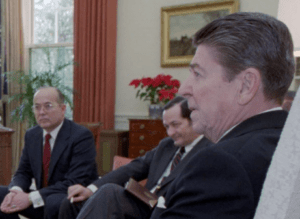

 Aletho News
 Aletho News