New US Health Spokesman Says Rothschild Family ‘Craves Control’, Blames Soros Over Virus

Sputnik – April 24, 2020
Last week, Michael Caputo, who worked on Donald Trump’s 2016 presidential campaign, was appointed by POTUS as Assistant Secretary for Public Affairs at the US Department of Health and Human Services.
The newly nominated spokesman for US the Department of Health and Human Services (HHS), Michael Caputo, has blamed George Soros and the Rothschild family for trying to exploit the coronavirus pandemic in order to promote their own agendas, according to CNN which managed to uncover more than 1,000 Caputo tweets he deleted before entering office.
In a now-scrapped tweet on 15 March, Caputo, who is infamous for his remarks on social media, responded to self-proclaimed China analyst Jack Prosobiec, who speculated on Twitter why billionaire investor and philanthropist Soros allegedly adheres to his favourite political causes rather anti-COVID-19 efforts.
“Are you kidding? Soros’s political agenda REQUIRES a pandemic”, Caputo claimed, in what was followed by another tweet, in which he posted a Soros photo captioned “The real virus behind everything”, also adding skulls and crossbones.
In a separate tweet last month, Сaputo slammed economist David Rothschild as “an inbred elitist sphincter whose family craves control”, adding, “that’s one reason why he constantly lies about President Trump”.
— Michael R. Caputo (@MichaelRCaputo) April 23, 2020
The economist, thought to be not related to the Rothschild gamily, is known for his fierce criticism of Trump who David Rothschild claims is seeking “to murder” people in a bid to stay in power.
Trump nominated Caputo as Assistant Secretary for Public Affairs at the HHS on 12 April, a decision that was reportedly in part due to POTUS’ frustration over the way department secretary, Alex Azar was dealing with communications during the COVID-19 crisis.
CNN, in turn, reported that ahead of entering office, Caputo had deleted more than 1,300 tweets and retweets on his Twitter page from late February to early April, including those pertaining to the coronavirus. CNN managed to unearth the tweet by using the Internet Archive’s “The Wayback Machine”.
A long lockdown will be catastrophic for developed nations – but a ‘biblical’ disaster for the developing world

A family who work as migrant workers walk along a road to return to their villages in New Delhi, India © REUTERS / Danish Siddiqui
By Rob Lyons | RT | April 23, 2020
The looming deep and probably long-lasting global recession caused by the shutting down of our economies will hurt us all – but it will be much, much worse for those already living on the brink of starvation.
A report by the UN World Food Program (WFP), published earlier this week, paints a depressing view of the effects of the Covid-19 pandemic. The report suggests the number of people facing severe food shortages – on the brink of starvation – could double over the next 12 months, from 130 million to 265 million. The head of the WFP, David Beasley, has described the possible famines as ‘biblical.’ Those debating lockdowns in the West should bear in mind the world’s poor before demanding that restrictions should stay in place.
The WFP’s chief economist, Dr Arif Husain, told the media: “Covid-19 is potentially catastrophic for millions who are already hanging by a thread. It is a hammer blow for millions more who can only eat if they earn a wage. Lockdowns and global economic recession have already decimated their nest eggs. It only takes one more shock – like Covid-19 – to push them over the edge. We must collectively act now to mitigate the impact of this global catastrophe.”
We need to take some of the WFP’s claims with a little skepticism. Those who specialize in a particular area will always believe that the problems there are the most important (though food is clearly the most basic necessity). And there is always a degree of special pleading with such institutional reports, with officials trying to promote worst-case scenarios in order to grab as big a slice of budgets as possible.
Nonetheless, there is clearly a very big problem here. The disease itself will cause substantial loss of life and may make a lot of productive people sick, at a time when livelihoods are already on a knife edge. However, we also need to realize just how devastating widespread lockdowns can be, too.
At least a third of the world’s population is currently living under lockdown, including 1.3 billion people in India alone. Despite years of impressive, if possibly overstated, economic growth, almost a quarter of Indians still live on less than $2 per day. The situation will be much worse in countries that have not enjoyed India’s rapid development.
Governments in the developing world have been copying policies in much richer countries. But do they necessarily make sense? In the developed West, the major concern is that a sharp peak in cases will overwhelm intensive healthcare services, leading to unnecessary deaths. However, many poorer countries have very few ventilators and experienced doctors and nurses relative to their populations. So what are the benefits of lockdowns that will drive many millions more into abject poverty?
In the crowded megacities of the developing world – like Mumbai, Cairo, Lagos – social distancing is impractical. Basic handwashing with soap is widely unavailable. From a health point of view, the policies make little sense. Worst, it is estimated that over two billion people work in the “informal” economy – they are off the radar in terms of government action like tax cuts, welfare benefits and other government interventions. As Husain points out bluntly: for many people, if they don’t work, they don’t eat.
It’s not just the lockdowns in the developing world itself that are important. The economies of developing countries depend, in part, on trade with richer nations. If that is disrupted, poverty levels will rise. For example, the UK clothing retailer Primark has almost no online presence. So the closure of its stores across Europe has left tens of thousands of Europeans out of work – but it has also hit those working for manufacturers in poorer countries. The company has promised to support suppliers for the time being, but a long shutdown would leave an enormous number of poorer workers around the world out of work.
More broadly, a UK consultancy, the Center for Economic and Business Research, has estimated that British households could face an average loss of income of £515 ($635) per month over the course of this year. A substantial slice of that spending would have been used to buy goods from developing countries. That loss of spending will undoubtedly exacerbate the recessions in poorer countries.
This aspect of the economic impacts of the coronavirus lockdowns seems to have largely been missed. It is understandable that in the initial reaction to the pandemic, the focus is on dealing with the issue at a domestic level. But now we have a degree of breathing space and infection rates appear to be down, we must now consider all the impacts of continuing the lockdowns, not just on the health and wealth of people in the rich world, but in the poorer part of the world, too.
Yet those, like me, who are calling for restrictions to be loosened sooner rather than later are routinely denounced as being more interested in money than saving lives. At the forefront of this demand has been President Trump. Yet even this week, the UK Guardian newspaper could publish an article titled ‘Consoler-in-chief? Lacking empathy, Trump weighs the economic costs, not the human ones‘.
Whatever Trump’s motivations – and he may well be more concerned with American jobs than Bangladeshi ones – the point remains that it will be the most vulnerable around the world who will suffer if economies are shut down for much longer. With Trump in the White House and a Conservative government in the UK, many left-leaning voices in the Anglo-American media seem to have taken a perverse and politicized approach to defending lockdowns, claiming that they are putting people before profits, when it is actually the poor that suffer the most when the economy stalls.
Western governments need to think beyond their own borders about the impacts of this pandemic. While no one is arguing for an abrupt return to normality, every effort must be made to reduce the impacts of social distancing as soon as possible and get all the world’s economies going again.
Rob Lyons is a UK journalist specialising in science, environmental and health issues. He is the author of ‘Panic on a Plate: How Society Developed an Eating Disorder’.
Developed West is managing Covid-19 worse than poorer countries – French virologist
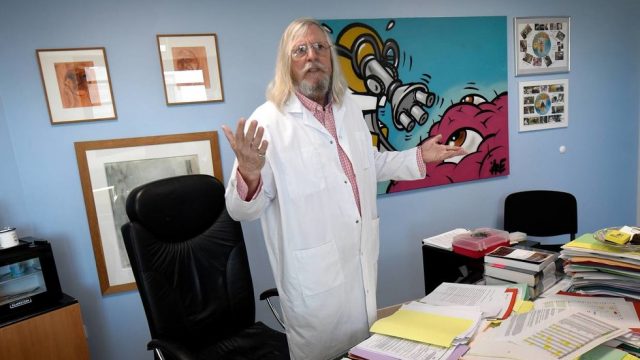
Didier Raoult © AFP / Gerard Julien
RT | April 22, 2020
The world’s experience with Covid-19 has exposed the fact that wealthy nations are not necessarily more prepared than poorer ones to deal with a pandemic and they are often too slow to act, French biologist Didier Raoult said.
In a video posted on YouTube, Raoult noted that many of the countries with the highest coronavirus mortality rates are “wealthy countries.” This reveals “a disconnect between wealth and the ability to respond to situations of this kind.”
The difference could lie in how rich and poor countries have chosen to deal with the virus, Raoult believes.
“The rich and developed countries have had less significant results than the poor countries, which chose to treat [Covid-19] like pneumonia with common drugs and which cost nothing,” he said.
Raoult has been at the center of an international debate over the use of the hydroxychloroquine anti-malaria drug which he promoted as a possible treatment for the coronavirus, citing his own small study and some positive experiences with the drug in China.
Faced with a pandemic, the choice is whether to begin treating patients with existing drugs or conduct studies to find new ones.
“If we start doing research which ends when there’s no disease anymore, we can’t fight it,” he said.
“We decided to treat the disease and you got some extremely violent reactions because of this decision,” he said, referring to backlash from other doctors, officials and media.
While Raoult has adamantly defended his approach, there is still no solid evidence that hydroxychloroquine actually works against the coronavirus.
The most recent study was conducted on sick veterans in the US. In that study of 368 patients, which is not yet peer-reviewed, about 28 percent of the Covid-19 sufferers treated with hydroxychloroquine died of the infection, while only 11 percent of those receiving routine care died.
On Twitter, Raoult slammed the US study as “fraudulent” and “fake news.” He said that the patients treated with hydroxychloroquine were already in critical condition.
First Covid-19 deaths in US occurred WEEKS EARLIER than previously thought
RT | April 22, 2020
People in the US were dying of the novel coronavirus weeks before authorities officially reported the first death linked to the disease, new data published in Santa Clara County, California reveals.
Autopsies performed on two people who died at home on February 6 and February 17 show that their tissues were infected with Covid-19, Santa Clara health authorities said in a statement, adding that another previously unreported death associated with the coronavirus had occurred on March 6.
The first coronavirus-linked death in America was originally believed to have occurred on February 29. At that time, the Centers for Disease Control and Prevention (CDC) confirmed that a man in his 50s had died in Washington state.
The California cases were not previously associated with the epidemic as these victims died at a time when “only individuals with a known travel history and who sought medical care for specific symptoms” were being tested, the statement said.
The news suggests that the virus may have been circulating in the US earlier than previously thought. Santa Clara County Executive Jeff Smith said the fact that several people were apparently infected “right around the beginning of February and late January” – and that two of them had passed away – meant “the virus has been around for a while.”
According to Mercury News, both of the fatal cases are believed to have originated in the community and were not associated with foreign travel. This also means that community transmission in America had started well before the first such case was officially reported on February 26.
The US has seen more than 800,000 confirmed coronavirus cases to date. More than 45,000 Americans died of Covid-19.
France and COVID-19: Incompetence and Conceit
By Patrick Howlett-Martin | CounterPunch | April 22, 2020
On December 31, 2019, the Chinese government informed the World Health Organization of an epidemic of animal origin in Wuhan, reporting similarities to SARS-CoV (Severe Acute Respiratory Syndrome Coronavirus, originally appearing in 2002 in the province of Guangdong) and to MERS-CoV (Middle East Repiratory Syndrome, originally appearing in Saudi Arabia in 2012). On January 12, Chinese scientists shared the completely sequenced genome of this new coronavirus with the entire international scientific community.
The epidemic had already killed 80 people in China and thousands were infected. The city of Wuhan (11 million inhabitants) and the province of Hubei (60 million inhabitants the city of Wuhan included) were isolated on January 25-26. Factories, offices, stores, schools, universities, museums, and airports were all closed down.Urban transportation in the city was significantly reduced. As a precaution, the authorities extended the Chinese New Year vacation by one week (January 23-31) to cover the incubation period for the virus among the inhabitants of Wuhan who left the city and could have been infected. They set up shelter hospitals (“fangcang”) in gymnasiums, conference centers, hotels, and other facilities to separate the symptomatic and the likely-infected from their healthy relatives. With the number of ill people exceeding local hospital capacity, the authorities set up two 1,200-bed hospitals in fifteen days and summoned medical and voluntary nursing personnel from all over China. More than 42,000 healthcare personnel responded. Despite the use of Personal Protective Equipment, 4.4% of them (3,387) had tested positive and 23 had died as of April 3 according to the Chinese Red Cross.[1] The lockdown was strict and neighborhood committees were mobilized to ensure food deliveries to the inhabitants. Masks were requisitioned and distributed to the population. Street fixtures and furniture were disinfected, even banknotes were disinfected. The average age of the ill was 55 and 56% of them were men. No case of infection was reported in anyone under the age of 15.
All this information was shared in international medical journals by Chinese doctors and researchers starting on February 20.[2] The creation of hospitals ex nihilo in the space of a fortnight was given ample coverage in the media but the French authorities did not appreciate the gravity of the implications: they preferred to view the initiative as the Chinese marketing their public works. In mid-January, COVID-19 cases were recorded in Bangkok, Tokyo, and Seoul. Thermal sensors were installed in the airports of China, Korea, Thailand, Taiwan, Hong Kong, and Singapore. On January 26, the authorities in Hong Kong cancelled all sports and cultural events. A testing campaign began in the city on February 18.
And what of France? On January 24, the Ministry of Health announced that three patients coming from China had been hospitalized with the coronavirus. The French National Institute of Health and Medical Research (INSERM) outlined two scenarios for the spread of COVID-19: one high-risk, the other low-risk. Given air traffic, the countries estimated to be the most exposed were Germany and the United Kingdom. Italy was not even mentioned. The Minister of Health, Agnès Buzyn, commented on the INSERM scenarios that same day as she left the Council of Ministers: “the risk of secondary infection from an imported case is very low and the risk of propagation of the virus in the population is also very low.”[3]
On January 30, France repatriated 250 French citizens and 100 European immigrants from Wuhan, putting them in quarantine in southern France. On February 10, a British citizen coming from Singapore infected five other people in the small Alpine ski resort of Contamines-Montjoie. A summary screening did not detect other cases at the resort. The infected were hospitalized. Buzyn reminded us on that occasion that “the risk of infection is very low; only close and sustained contact with an infected person can increase it.”[4]
At that point, with 900 reported dead in China, WHO Director-General Tedros Adhanom Ghebreyesus made clear reference to the danger of global propagation, “we may only be seeing the tip of the iceberg.”[5]
But in France the authorities—duly warned but strangely untroubled—took no particular measures. On March 6, while at the theatre with his wife, President Macron stated, “Life goes on. There is no reason, except for the more vulnerable members of the population, to change our outing habits.”[6] His aim was to encourage the French to continue to go out despite the coronavirus epidemic and the lack of protective masks. That same day, the Italian government decided to lock down Lombardy, extending the provision to the entire country the following day. While Macron was enjoying the performance, there were 613 cases of coronavirus in France and the number was doubling every three days (roughly the same rate recorded by Chinese physicians in Wuhan in January and seen in South Korea and Italy). Extrapolating this exponential growth, it could be estimated that on March 16 there would be approximately 6,500 cases; the final official figure was 6,633.
The French government was all focused on the pension reform, president Macron’s top priority. Protests were organized in all French cities: retirees, railway workers, physicians, lawyers, fire fighters, and students all took to the streets. The demonstrations were violently suppressed by the police. Economists were in unanimous agreement—a rare event—that the proposed reform would harm all categories of worker except those in the upper income brackets. Sociologists warned the government about the deepening social schisms, as had been thrust into the public eye earlier with the 12 months revolt of the gilets jaunes [yellow vests]. These protests had been staged every Saturday for nearly a year in all cities in France, drawing in a broad range of the hardest-hit social and occupational categories, a large portion of whom were pensioners. But all for naught: on Saturday afternoon, February 29, with the chamber of the Assemblée nationale -where the debate on the bill was taking place—almost empty because of the of the day, the government seized the opportunity of the COVID-19 pandemic to pass pension reform by constitutional decree. On that date, gatherings of more than 900 people were prohibited because of COVID-19. The authorities no longer risked protests by the people in the street.
But the Macron administration did not stop there. Against the advice of the medical team and the stadium manager, it authorized a Juventus–Olympique Lyonnais football match for the Round of 16 in the Champions League. Three thousand Italian fans were in Lyon on February 26: at that time Italy had 21 coronavirus deaths and 900 people infected. Dr. Marcel Garrigou-Grandchamp, who had warned the new Minister of Health on the morning of the match, published an opinion piece on the website of the Fédération des Médecins de France on March 31, where he spoke of an “explosion” in coronavirus cases in the Département du Rhône some two weeks after the OL–Juventus match. A similar sequence of events had taken place in Italy with the Atalanta B.C. – Valencia match on February 19, termed a “bomba biologica” by many Italian physicians. It was March 4, fifteen days after the match, that the number of cases in the Lombard city of Bergamo exploded, making it the most heavily impacted city in Italy. Walter Ricciardi, Italian representative to the WHO, acknowledged that the match had been a “catalyst for the propagation of the virus”. The Paris-Nice 8-stage professional cycling race was held as scheduled from March 8th to the 15th. More significantly, the government confirmed the first phase of municipal elections on March 15, after it had ordered the closure of schools and universities on March 12 and the shutdown of most stores, bars, and restaurants on March 14. There are 34,000 communes in France that had to organize the elections with local volunteers: volunteers and voters without adequate protection—there were no masks available. The government had requisitioned them for hospital personnel, where the shortage was critical. Half of the voters stayed home for safety’s sake. To make matters worse, Agnès Buzyn announced her candidacy for mayor of Paris on February 16, less than one month before the election, to take the place of the government’s candidate, Benjamin Griveaux, who had been discredited when an explicit video he had sent to a young woman was posted online. Buzyn left the Ministry of Health in the middle of the Coronavirus crisis. The healthcare workers who had organized numerous strikes over the previous eleven months to protest the deterioration of public hospitals felt belittled. Losing by a wide margin, Buzyn declared in an interview for Le Monde that the election had been a “masquerade”.[7] The lockdown was not ordered until the day after the elections, politique oblige.
The new Minister of Health, Olivier Vérant, a member of parliament with the party in power, took up the government’s mantra, one that every minister and secretary of state is expected to chant in unison: “masks are useless, the tests are unreliable”. They all swear by handwashing and lockdowns. No reference is made to the way things had been handled in Seoul, Hong Kong, or Taiwan, where free masks were distributed and people were required to wear them, and large-scale testing was carried out, and where economic life goes on, in slow motion, but it goes on. Today, with 23 million inhabitants, Taiwan has recorded 6 COVID-19 deaths; Hong Kong, with 7 million inhabitants, has lost 4. As for the French doctors who were in Wuhan working alongside their Chinese colleagues and thus well informed, they were not even consulted.
The French police stop and fine transgressors, solitary walkers or joggers, while the metro, airports, trams, and buses are all operating and supermarkets and tobacconists are open for business. The police are themselves without masks and many fall victim to the virus, becoming potential carriers. The same is true of healthcare and administrative personnel, working without personal protective equipment in retirement homes. The authorities refused to report the number of victims among healthcare workers, citing “medical secrecy” concerns. The elderly die but are not counted in the official statistics. Nor are those who die at home. Now that their numbers are so high and can no longer be ignored, we discover that the residents of these retirement homes account for 40% of the deaths recorded in France. They are not hospitalized. Their treatment? Paracetamol for the mildly afflicted, morphine for the rest. Close to half of the nursing staff in retirement homes are affected by the epidemic.[8] But the government is powerless: it does not have sufficient testing solution and will not allow tests to be conducted in retirement homes unless there is a confirmed case there. Ubuesque!
The borders remain open. President Macron refuses to close the border with Italy, which the leader of the Rassemblement National party, Marine Le Pen has been demanding since February 26. For the Head of State, the problem posed by the epidemic “can only be resolved through perfect European and international cooperation.” The events of the following days would quickly contradict this wishful thinking. Every country has closed in on itself. But not France. There are no health controls at French airports, train stations, or ports. Not even today, April 18, 2020, when the official death toll has reached 18,000. In the worksite next to my home, Italian workmen come to work, without protective equipment, every morning on the 7:35 train from Ventimiglia, getting off at the Gare d’Eze: no checks when they depart, no checks when they arrive. Italy has now officially recorded more than 23,660 deaths. On its April 18 evening newscast, the television station Antenne 2 aired the report by journalist Charlotte Gillard, who had taken an Air France flight from Paris to Marseille: the plane was packed, not a free seat, the passengers did not have masks, no one’s temperature was checked on either departure or arrival.
We gradually learn from news reported in the press that France currently has no stores of masks or test kits. For economic reasons—annual savings of 30 million euros—the country’s strategic stocks were depleted in 2012 and never replenished. On the eve of 2020, when the coronavirus epidemic began to spread, France’s supplies consisted of zero FFP2 masks, 117 million adult surgical masks, and 40 million pediatric masks! The hospitals are experiencing critical mask shortages. The nursing staff in retirement homes have no protection (no gloves, no masks, no sanitizing gel). There is no more sanitizing gel available in pharmacies or stores. Doctors and nurses do not have the equipment they need. As for hospitals, they have neither enough beds nor enough ventilators to adequately cope with the epidemic.
The French authorities do not admit it publicly. And they seem to drag their feet for reasons that are impossible to grasp. They did not expect this. And when it began to materialize, they denied it for reasons that can only be called conceit, a traditional mark of distinction among the French political elite. The French regions authorities, realizing the government deficiencies, order and purchase their supplies directly from China. When they arrive, they are requisitioned by the state: thus 4 million masks that were ordered from China by Bourgogne-Franche-Comté for the nursing staff in its retirement homes were confiscated on the tarmac of the Basel-Mulhouse airport by the police on April 4, using methods that would make a gangster blush. As for the rare mayors who have stocks of personal protective equipment and graciously make them available to the local population, requiring the use of masks, they are taken to court by the Ministry of the Interior, which wants to preserve its royal prerogatives. On April 16, the Council of State, the highest administrative body in France, asserted its regal status by limiting the power of mayors. The decision calls to mind its role in 1942-1944 during the Vichy regime. It stays true to itself; it serves the State, not the Nation.
The nurses in the intensive care units in Paris hospitals report that given the shortage of beds and ventilators, they are essentially practicing battlefield medicine. This means there is a triage among the sick, choosing between those considered too old and those the doctors feel have a better chance of recovery.[9] It is no coincidence that the two European countries least afflicted by the pandemic are well-equipped Austria and Germany, which have not, so far, experience a shortage of beds or ventilators. In France, veterinarians are lending their ventilators to hospitals! Instead of nationalizing private clinics as they have done in Ireland, they transport patients long distances in medical trains, helicopters, or buses to less congested hospitals in the province or abroad (Germany, Switzerland, Luxembourg), increasing the possibility of infecting healthcare personnel and the risk of death. The statistics are biased because patients over the age of 75 do not have access to the ICU services: this is a sad fact for retirement homes.
It was not until March 28 that the Minister of Health, Olivier Véran, announced: “More than a billion masks have been ordered from France and other countries for the coming weeks and months.” This was the man who a few days earlier repeated publicly, in a sort of litany, that masks were useless.
In its decision of April 15 on the screening and protection of the elderly, the Council of State revealed the extent of the disaster. Assailed by associations demanding that people living in retirement homes and their caregivers be systematically tested and that protective equipment (masks, sanitizing gel) be distributed, the Council of State limited itself to reciting the paltry figures promulgated by the government (“40,000 tests per day will be available across the country by the end of April; 60,000 will be available in the weeks to come”). So in mid-May, France will be ready to do close to what Germany has already been doing for a month and a half: 500,000 tests per week. As for masks, the “current orders amount to some 50 million masks”. However, given the delivery rate, it will take nine months to receive them all.
There are 430,000 healthcare personnel and 752,000 pensioners in retirement homes and health centers. All told, there are close to a million healthcare professionals (210,000 active doctors and 700,000 nurses and nursing assistants) in France.
Under these conditions, it is clear that Macron’s announcement of the end of the lockdown and the resumption of school classes on May 11 is a gamble. If all teachers were to return to the classroom, that would mean 870,000 masks per day—reuse of masks is contraindicated. And if all the students return on this date, or even gradually, they would have to be supplied with more than 12 million masks per day.
Even with the President publicizing the “grand public” mask, a French invention no doubt handcrafted locally, the end of the lockdown on May 11 and the resumption of school classes is at best a gamble; without reliable masks to protect the entire population, it is a risky and irresponsible act.
The end of a health crisis that the authorities did not anticipate will be all the more painful for the French, both fiscally and socially, with the President and his administration coming out of this ordeal diminished and wholly discredited.
Notes.
1) “Death from Covid-19 of 23 Health Care Workers in China”, The New England Journal of Medicine, April 15, 2020.
2) The Lancet and the New England Journal of Medicine, see Chen Wang “Covid-19 control in China during mass population movements at New Year”, February 20, 2020 (on line).
3) Statement to the press, BFM TV, Palais de l ‘Elysée, January 24, 2020.
4) Benoit Pavan, “Coronavirus : la station de ski de Contamines-Montjoie, en Haute-Savoie, un foyer potentiel en France”, Le Monde, February 10, 2020.
5) Frederic Lemaître, “Coronavirus : la semaine où tout peut basculer”, Le Monde, February 9, 2020.
6) BFM TV, March 7, 2020.
7) Ariane Chemin, “Les regrets d’Agnès Buzyn : ‘On aurait dû tout arrêter, c’était une mascarade’”, Le Monde, March 17, 2020.
8) Béatrice Jérôme, Lorraine de Foucher, “Dans les Ehpad décimés par le coronavirus, ‘c’est un cauchemar collectif’”, Le Monde, April 2,l 2020.
9) “Une situation de médecine de guerre”, Nice Matin, April 16, 2020.
Patrick Howlett-Martin is a career diplomat living in Paris.
China denies covering up Covid-19 severity, says revision increasing deaths by 50 percent ‘common practice’
RT | April 17, 2020
The correction of Wuhan’s Covid-19 death toll, which rose by 1,290 and now stands at 3,869, was part of a statistical verification process and is a common international practice, a spokesman for the Chinese Foreign Ministry said.
Zhao Lijian rejected claims that the Chinese government had engaged in a cover-up of the severity of the outbreak, saying at a daily briefing that Beijing would not allow such a thing.
The claim has been pushed, among others, by US President Donald Trump, who froze funding for the World Health Organization (WHO) this week after accusing it of conspiring with China to mislead the world about the threat posed by the virus.
After the revision for Wuhan, the ground zero of the Covid-19 pandemic, China’s total death toll stands at 4,632. The change announced on Friday was explained by “incorrect reporting, delays and omissions of cases” by some medical institutions in the city during the early stages of the outbreak.
The US has had its own spike in Covid-19 deaths due to re-evaluation of previous cases. New York this week added 3,778 earlier deaths to its tally, including people “presumed” to have died from the infection based on symptoms and medical history rather than positive tests.
U.S. Government’s $3.7 Million Grant to Wuhan Lab at Center of Coronavirus Outbreak
By Robert F. Kennedy, Jr., Chairman, Children’s Health Defense | April 15, 2020
The Daily Mail reported that it has uncovered documents showing that Dr. Anthony Fauci’s National Institute of Allergy and Infectious Disease (NIAID) gave $3.7 million to scientists at the Wuhan Lab at the center of coronavirus leak scrutiny. According to the British paper, “the federal grant funded experiments on bats from the caves where the virus is believed to have originated.”
Background: Following the 2002-2003 SARS coronavirus outbreak, NIH funded a collaboration by Chinese scientists, US military virologists from the bioweapons lab at Fort Detrick and National Institutes of Health (NIH) scientists from NIAID to prevent future coronavirus outbreaks by studying the evolution of virulent strains from bats in human tissues. Those efforts included “gain of function” research which is “accelerated viral evolution” to create COVID Pandemic superbugs, enhanced bat borne COVID mutants more lethal and more transmissible than wild COVID.
Fauci’s studies alarmed scientists around the globe who complained, according to a December 2017 NY Times article, that “these researchers risk creating a monster germ that could escape the lab and seed a pandemic.” Dr. Marc Lipsitch of the Harvard School of Public Health’s Communicable Disease Center told the Times that Dr. Fauci’s NIAID experiments “have given us some modest scientific knowledge and done almost nothing to improve our preparedness for pandemic, and yet risked creating an accidental pandemic.”
In October 2014, following a series of federal laboratory mishaps that narrowly missed releasing these deadly engineered viruses, President Obama ordered the halt to all federal funding for Fauci’s dangerous experiments. NIAID-funded gain of function research continued after the moratorium in a Wuhan-based laboratory. Congress needs to launch an investigation of NIAID’s mischief in China.
[Addendum after our story ran: CNN reports that: “An intelligence official familiar with the government analysis said a theory US intelligence officials are investigating is that the virus originated in a laboratory in Wuhan, China, and was accidentally released to the public. Other sources told CNN that US intelligence hasn’t been able to corroborate the theory but is trying to discern whether someone was infected in the lab through an accident or poor handling of materials and may have then infected others.”]
This work is reproduced and distributed with the permission of Children’s Health Defense, Inc. Want to learn more from Children’s Health Defense? Sign up for free news and updates from Robert F. Kennedy, Jr. and the Children’s Health Defense. Your donation will help to support us in our efforts.
Featured Video

Pravin Sawhney: Massive Escalation Pushes Every Side Toward the Brink
or go to
Aletho News Archives – Video-Images
From the Archives
A sample of vaccine and injectable medication tragedies during my lifetime
This is what happens when you demand speedy production in an era of politicized regulation
By Meryl Nass, MD | February 12, 2022
All these tragedies have been due to failures of testing or failures in manufacturing processes. Most occurred before vaccine manufacturers were given virtually complete protection from liability in 1987.
With the duration of patent exclusivity determining how much new products earn, products are rushed to market as quickly as possible, most using a shortened path for FDA review. Recalls and market removals of approved products are much more common than they used to be. We can only expect more of these disasters in the future, especially if the products are mandated for everyone. … continue
Blog Roll
 Aletho News
- Albania’s Crisis: Rama, Israeli Investments and the Demand for Accountability
- Hezbollah Categorically Denies Syrian Accusations: We Aim at Confronting Israeli Enemy, Not Undermining Syria’s Stability
- Trump claims funding to Israel ending in 2026 as merger of Israeli–US armies looms
- Iran Weathering The Storm, But Saudi Arabia Is Sinking
- Sunk Ships Don’t Sail Home: Why Peace Won’t Save the Oil Market and War Will Wreck It
- No Cossacks at the gates, fix Italy instead – opposition leader to Meloni
- The Pits: Zelensky’s torture chamber network in the public eye
- Moscow mocks Kiev’s language hypocrisy exposed by ‘torture chamber’ scandal
- Military ‘torture chamber’ triggers new scandal in Kiev
- Algerian army launches second operation to clear French nuclear test sites
- If Americans Knew
- An error has occurred; the feed is probably down. Try again later.
- No Tricks Zone
- Germany’s Green Energy Transition Becoming Increasingly Expensive…Another 6 Trillion Euros!
- Sudden Stratospheric Warming, Powerful El Niño Combination May Lead To Extreme Europe Cold, Energy Crisis!
- Two New Studies Find Thwaites Glacier Melt Cannot Be Driven By Human Activity Or A Warming Ocean
- E-Cars Reduce CO2 Emissions By Only 41% Compared To Internal Combustion Engine Vehicles
- Predictions Made By Renowned Climate Professor Over Past Decades Have Been Proven To Be Poor
- New Study Suggests Large Regions Of The Pacific Ocean Have Been Cooling For The Last 80 Years
- Germany’s Green Energy Debacle: High Energy Costs Force Kahla Porzellan to Close After 182 Years!
- New Study: 50 Years Of The Most Aggressive ‘Net Zero’ Policies Can Only Affect The Global Climate By 0.03°C
- US September “Heat” Was No Record…Many Records Set Decades Ago
- Latest European Green Energy Debacle; Portugal’s Largest Flagship Solar Park Insolvent!

