The Mediterranean Pipeline Wars Are Heating Up
By Viktor Katona | Oilprice.com | December 28, 2018
Things have been quite active in the Eastern Mediterranean lately, with Israel, Cyprus and Greece pushing forward for the realization of the EastMed pipeline, a new gas conduit destined to diversify Europe’s natural gas sources and find a long-term reliable market outlet for all the recent Mediterranean gas discoveries. The three sides have reached an agreement in late November (roughly a year after signing the MoU) to lay the pipeline, the estimated cost of which hovers around $7 billion (roughly the same as rival TurkStream’s construction cost). Yet behind the brave facade, it is still very early to talk about EastMed as a viable and profitable project as it faces an uphill battle with traditionally difficult Levantine geopolitics, as well as field geology.
The EastMed gas pipeline is expected to start some 170 kilometers off the southern coast of Cyprus and reach Otranto on the Puglian coast of Italy via the island of Crete and the Greek mainland. Since most of its subsea section is projected to be laid at depths of 3-3.5 kilometer, in case it is built it would become the deepest subsea gas pipeline, most probably the longest, too, with an estimated length of 1900km. The countries involved proceed from the premise that the pipeline’s throughput capacity would be 20 BCM per year (706 BCf), although previous estimates were within the 12-16 BCm per year interval. According to Yuval Steinitz, the Israeli Energy Minister, the stakeholders would need a year to iron out all the remaining administrative issues and 4-5 years to build the pipeline, meaning it could come onstream not before 2025.
The idea of EastMed was first flaunted around 2009-2010 as the first more or less substantial gas discovery in the Eastern Mediterranean, the Tamar gas field in Israel’s offshore zone, paved the way for speculations about an impending gas boom. Then came the 535 BCm (18.9 TCf) Leviathan in 2010 and the 850 BCm (30 TCf) Zohr discovery in offshore Egypt five years later and suddenly it seemed that an Eastern Mediterranean gas expansion is inevitable. Yet over the years, the operators of Leviathan have already allocated part of their total gas volumes to domestic power generating companies and most notably NEPCO, the Jordanian electric power company (1.6-2BCm per year). Egypt has been concentrating on meeting domestic needs and getting rid of LNG imports, moreover once it bounces back to gas exporter status in 2019, it will only use its own 2 LNG terminals in Damietta and Idku. Related: Has Oil Hit Rock Bottom?
Thus, a pertinent question arises – whose gas would be used to fill the EastMed pipeline? If the pipeline starts in offshore Cyprus, then it would be logical to expect that Cyprus’ gas bounty would be somehow utilized. Yet Cyprus has been lagging behind Egypt and Israel in its offshore endeavors and so far lacks a clear-cut giant field to base its supply future on. The two discoveries appraised heretofore, the 6-8 TCf Calypso operated by ENI and the 4.5 TCf Aphrodite operated by Noble Energy, are not enough to support the construction of a relatively expensive gas pipeline – all the more so as Noble has signed a provisional deal to send Aphrodite gas to Egypt’s Idku LNG terminal, most likely by means of a subsea gas pipeline. If we are to judge the viability of the EastMed on the current situation, there is only Calypso and Israel to fill the pipeline, as Greece’s gas export plans are close to zero on the probability scale.
The subsea section from Cyprus’ offshore zone to the island of Crete lies in depths of 3km and is stretched across a seismically active zone. But there is even more – should Turkey claim rights on Cyprus’ offshore hydrocarbon deposits (in February 2018 it sent warships to scare away ENI’s drilling rig that was on its way to xxx), the project is all but dead. This is far from an implausible scenario as President Erdogan stated that Turkey would never allow for the extortion of natural resources in the East Mediterranean by means of excluding Ankara and Northern Cyprus. Cognizant of the risks inherent in an East Mediterranean gas pipeline, there has been no interest from oil and gas majors to participate in the project. This is worrying as the $7 billion are expected to be financed from private investors, of which there is a palpable dearth – despite the EU’s 35 million funding to promote what it sees as a Project of Common Interest. Related: Wall Street Sees Oil Price Recovery In 2019
Yet even for the European Union, the EastMed gas pipeline presents a bit of a headache as its commissioning would render the Southern Gas Corridor, comprising so far only of Trans Adriatic Pipeline (TAP) with a 10 BCm per year throughput capacity, irrelevant by creating a sort-of competitor. The price of the natural gas to be supplied via the EastMed pipeline might become the biggest obstacle of them all – if the cost of producing offshore Mediterranean gas turns out to be $4-5/MMBtu as expected, the addition of further transportation costs to it all would place EastMed supplied at the bottom range of European gas supply options (Russian gas supply is alleged to be profitable with price levels as low as $4/MMbtu). All this might change if any of the East Mediterranean countries were to discover a giant gas field, altering the economics of production or possibly even liquefaction.
In fact, 2019 will witness several key wells being drilled across Cyprus, Egypt and possibly even Israel. ExxonMobil’s testing of Block 10 in offshore Cyprus would largely point to the overall attractiveness of Cyprus as an oil and gas producing country – the drilling has already started, with results expected in Q1 2019. The ENI-operated Noor offshore field in Egypt, adjacent to Zohr, is a much hotter prospect with BP buying into it lately – most likely it will outshine all the other drilling sites in the Eastern Mediterranean, however, if a big discovery is confirmed, it would be most likely used for Egyptian purposes which run counter to the EastMed gas pipeline. Thus, EastMed’s only hope is that Israel 2nd international licensing round, results to be announced in July 2019, will elicit a couple of Leviathan-like finds that would make pipeline construction profitable. Until then, the prospects are rather bleak.
Egypt bans yellow vests fearing copycat Gilets Jaunes protests
MEMO | December 11, 2018
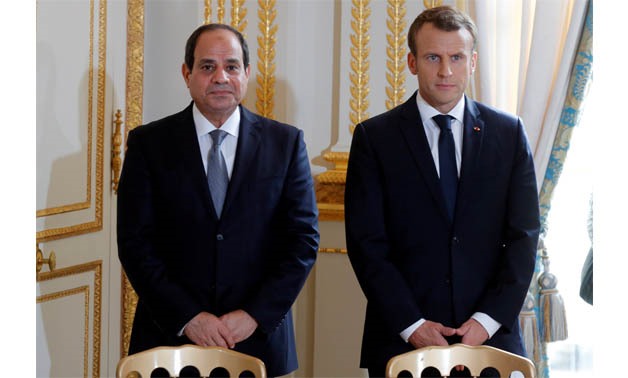
The Egyptian authorities have quietly clamped down on the sales of reflective yellow vests fearing that they could prompt copycat protests inspired by the Gilets Jaunes demonstrations taking place in France. The measure was taken as a precaution as Egypt approaches the seventh anniversary next month of the revolution that toppled the dictator Hosni Mubarak after a 30-year rule. Any form of public gatherings are banned.
According to testimonies from industrial equipment dealers in Cairo, retailers have been instructed not to sell yellow vests to walk-in buyers and to restrict business to wholesale deals with verified companies, but only after obtaining permission from the security forces.
“They seem not to want anyone to do what they are doing in France,” said one retailer. Another added that, “The police came here a few days back and told us to stop selling them. When we asked why, they said they were acting on instructions.” Both spoke to reporters on the condition of anonymity, for fear of reprisals from the authorities.
Security officials confirmed that the restrictions would remain in place until the end of January, but the Interior Ministry refused to comment on the issue. Over the past two years, hundreds of police officers and soldiers have been deployed across the country to quash any protests or commemorations of the revolution.
The yellow vests worn by French protesters have become a symbol of the wave of demonstrations against a rise in fuel taxes and the economic policies of French President Emmanuel Macron.
Egyptian media outlets have covered the Paris protests regularly, stressing the riots, looting and arson, in an attempt to support Egyptian President Abdel Fattah Al-Sisi’s frequent warnings that street action leads to chaos. In October, Al-Sisi even described the 2011 Egyptian revolution as “the wrong cure to the wrong diagnosis,” stating that the protests had achieved insufficient change due to a lack of understanding among the people of what the problems in the country were.
Egypt has witnessed a dramatic crackdown on freedom of speech since the military coup in 2013 that brought Al-Sisi, then a general, to power. The government has also increased regulatory legislation on the grounds of “national security”. The Muslim Brotherhood, which played an instrumental role in the revolution and was subsequently elected to govern, has since been banned and declared a terrorist group.
Amnesty International has described the situation in Egypt as the worst human rights crisis in the country in decades, with the state systematically using arbitrary arrests and enforced disappearances to silence any dissent and create an atmosphere of fear. Hundreds of journalists and human rights activists have also been arrested and held without trial.
The government in Cairo has criticised the findings of many NGOs and accused them of being deliberately “misleading” about human rights abuses in Egypt.
The gulf within GCC is only widening
By M. K. BHADRAKUMAR | Indian Punchline | December 10, 2018
The annual summit meeting of the Gulf Cooperation Council (GCC) in Riyadh on Sunday was particularly important for Saudi Arabia as a display of its regional leadership. But the short meeting of the GCC leaders behind closed doors, lasting for less than an hour, ended highlighting the huge erosion of Saudi prestige lately.
The litmus test was the participation by Qatari Emir Sheikh Tamim bin Hamad al-Thani. King Salman’s letter of invitation to the emir was perceived as some sort of an olive branch for reconciliation. But Qatar’s Minister of State for Foreign Affairs Sultan bin Saad Al Muraikhi represented the country at the summit.
The calculation by the hot headed crown princes of Saudi Arabia and the UAE that Qatar would pack up is turning out to be a historic blunder. Qatar had some trying times but it has successfully weathered the harsh embargo by Saudi Arabia and the UAE, and the boycott is now hurting its enforcers. Qatar “celebrated” the anniversary of the boycott in June by banning the import of goods from the UAE, Saudi Arabia, Bahrain and Egypt (which had cut diplomatic and transport ties on June 5, 2017.) Ironically, Iran has been a beneficiary as Qatar established diplomatic relations with Tehran and began importing Iranian products.
Qatar also strengthened its alliance with Turkey, which stepped in as provider of security for Doha. And Turkey checkmated any plans that Saudis and Emiratis might have had to use force to bring the Qatari emir down on his knees.
The emir’s absence from the summit in Riyadh yesterday underscores that he is not in a mood to forget and forgive. Equally, Kuwait and Oman also have issues to settle with Saudi Arabia and the UAE. There is tension between Kuwait and Saudi Arabia over two oil fields – Khafji and Wafra – that are jointly owned by the two states, which have a capacity to produce more than half a million barrels per day, but have been closed since 2014 and 2015, respectively. The dispute is over the sovereignty over the so-called Neutral Zone on their border, which has been undefined for almost a century.
The Saudis are not relenting. “We’re trying to convince the Kuwaitis to talk about the sovereignty issues, while continuing to produce until we solve that issue,” Saudi Crown Prince Mohammed bin Salman told Bloomberg in an interview in October. Similarly, Saudis and Emiratis have stationed troops in Yemen’s southern province of al-Mahra that borders Oman although the region has no presence of Houthi rebels. Oman considers the move an infringement on its national security. Interestingly, instead of the Sultan of Oman, Deputy Prime Minister for the Council of Ministers Sayyid Fahd bin Mahmood Al Said represented the country at the GCC summit.
To be sure, like Banquo’s ghost at Macbeth’s banquet in Shakespeare’s play, the killing of Jamal Khashoggi provided the backdrop to the GCC summit. The GCC states (including Qatar) have not criticized the Saudi Crown Prince Mohammed bin Salman (MBS) but they would know this is a developing story and it has dented Saudi prestige irreparably, especially with the US Senate is at loggerheads with the Trump administration. The big question for the Gulf region would be as to where Saudi Arabia is heading. (See the blog by Thomas Lippman What Now For U.S. Policy And The Crown Prince?)
Of course, if the GCC disintegrates due to these contradictions, Saudi Arabia will be the big loser, because it will be a reflection on its regional leadership. But do the Saudis understand it? The remarks by the Saudi Foreign Minister Adel Al-Jubeir at the end of the GCC summit showed no sign of remorse.
He said, “The members of the Gulf Cooperation Council are keen that the crisis with Qatar will have no impact on the Council (GCC). But this does not mean relinquishing the conditions imposed on Qatar.” Doha should stop supporting terrorism and extremism and avoid interfering in other countries’ affairs and needed to fulfill the Arab countries’ conditions to open the way for its return to the full-fledged work in the GCC. “The stance towards Qatar came to push it to change its policies,” he added.
The leading Saudi establishment writer Abdulrehman al-Rashed fired away at Qatar on the day of the GCC summit. In a column entitled Is it Time to end the GCC? in the Saudi daily Asharq Al-Awsat (owned by royal family members) he wrote:
“Qatar… has been putting obstacles in the GCC path and it has succeeded where Saddam and Iran have failed: It managed to destroy and rip it [GCC] apart… It organized an internal and external opposition against the United Arab Emirates. It is now the primary financier of the greatest attack against Saudi Arabia and it stands behind the politicization of Khashoggi’s murder… Today’s [GCC] summit could not conceal the dark political cloud hanging over its head. It also strongly poses a question over the future of the GCC as doubts rise over the value of this union… A wedge has been driven in the GCC.”
The disarray within the GCC undoubtedly calls attention to the decline of US influence in the Middle East region. At the end of the day, the Gulf states have not paid heed to repeated US entreaties for GCC unity. Ideally, GCC should have provided today for the US strategy a strong platform for launching the regime change project against Iran. On the contrary, GCC is split down the middle, with Qatar, Oman and Kuwait getting along just fine with Tehran. While addressing the summit in Riyadh on Sunday, the Emir of Kuwait, Sheikh Sabah Al Ahmad hit the nail on the head when he said, “The most dangerous obstacle we face is the struggle within the GCC.”
Egypt tortures Palestinian resistance combatants: Report
MEMO | November 12, 2018
“We were a group of 15 combatants returning from a training mission from one of the countries that supports the Palestinian resistance. When we arrived at Cairo airport, we were taken to an underground place. We were blindfolded, handcuffed, and transferred to a number of prisons.” This is a part of a testimony of a Palestinian resistance combatant who was detained in Egyptian prisons and has been released recently.
Al-Khaleej Online will reveal in this investigation that the Egyptian intelligence and national security services tortured a number of Palestinian resistance combatants and students during their travel and study, in order to extract security information related to the Palestinian resistance.
The investigation documented a number of testimonies of more than 20 Palestinians, including those fighting in the Palestinian resistance, who were detained in secret prisons of Egyptian intelligence and national security, and subjected to physical and psychological torture throughout their interrogation period.
According to these Palestinians’ testimonies, the Egyptian officers had mostly asked them about their military action, especially during the waves of escalation with the Israeli occupation, and their way of firing shells from inside the Strip.
The data Al-Khaleej Online has revealed about the Egyptian security’s torture and interrogation of resistance combatants have been confirmed by sources in the Islamic Jihad Movement in Palestine.
Palestinians in the Gaza Strip use Cairo Airport to travel around the world because there is no airport inside the Strip and the occupation does not allow them to travel through Beit Hanoun (Erez) Crossing.
The Egyptian authorities have been using the so-called “deportation” system for Palestinian travellers wishing to travel outside Egypt. A bus from Rafah Border Crossing is transferred to Cairo Airport under high-security measures. No one from inside the bus would be allowed to leave it until it gets inside the airport. The travellers are then handed over to the security authorities there.
Oman rejects mediating between Israelis, Palestinians
Press TV – October 27, 2018
Oman says it will not act as a “mediator” between Israelis and Palestinians, playing down an earlier visit by Israeli Prime Minister Benjamin Netanyahu.
The sultanate was only offering ideas to help Israel and Palestinians to come together, Omani Foreign Minister Yousuf bin Alawi bin Abdullah told a security summit in Bahrain’s capital Manama on Saturday.
The remarks came a day after Netanyahu visited Oman in a rare visit, while accompanied by other senior Israeli officials, including the head of the Israeli spy agency Mossad.
“We are not saying road is now easy and paved with flowers, but our priority is to put an end to the conflict and move to a new world,” Reuters cited Abdullah as saying.
Despite apparently trying to sound impartial, Abdullah said Oman relied on the United States and efforts by US President Donald Trump in working towards the “deal of the century.”
The Trump administration has targeted the plan at the situation in the Palestinian territories.
Details are yet to emerge, but reports say it envisages a Palestinian state with limited sovereignty across about half of Israel-occupied West Bank and all the Gaza Strip. The deal also reportedly foresees potential disarming of the Palestinian resistance movement Hamas, and does not find Palestinians entitled to the eastern part of Jerusalem al-Quds as their capital.
This is while Abbas, who visited Oman before Netanyahu for three days, has renounced the plan, saying it has been devised without consulting the Palestinians. He also spurned any intermediary role by the US late last year after Washington recognized Jerusalem al-Quds as Israel’s “capital.”
In June, however, Saudi Arabia, the United Arab Emirates, Egypt, and Jordan assured the US of their support for the plan during visits to those countries by Trump’s senior adviser and son-in-law Jared Kushner, and Jason Greenblatt, the US envoy to the region.
Saudi Arabia’s Foreign Minister Adel al-Jubeir told the Manama gathering on Saturday that the kingdom believed the key to “normalizing” relations with Israel was the “peace process.”
The Omani minister also claimed Israel was “present in the region, and we all understand this, the world is also aware of this fact and maybe it is time for Israel to be treated the same and also bear the same obligations.”
Observers say Muscat has come to accommodate the US plan under pressure from Washington and Riyadh, the strongest US ally in the Persian Gulf region, which has been inching towards Tel Aviv over the past years.
Palestinian groups, however, condemned the Israeli prime minister’s visit to Oman, urging Arab countries to support the oppressed people of Palestine, instead.
Hamas warned about the dangerous consequences of Netanyahu’s visit for the people of Palestine. The Islamic Jihad movement also censured the visit, saying Oman acquitted Netanyahu of the crimes committed against innocent Palestinians by welcoming him to the country.
Commenting on Netanyahu’s visit, Paul Larudee, with the Free Palestine Movement, told PressTV, “What in the world would Netanyahu know about peace and stability, when his objectives and objectives of Israel have always been war and instability?”
“The importance is what their objectives are not. They are not about Arab unity, not about solidarity with Arabs who are suffering namely the Palestinians,” he said.
“These other countries realize that sooner or later they are potential targets of Israel… that they can be in the same place that the Palestinians are now,” Larudee said.
Egypt, Cyprus sign accord to build gas pipeline
MEMO | September 20, 2018
Egypt yesterday signed an agreement with Cyprus to construct a maritime pipeline between the two countries, which will transfer of natural gas from Cyprus to Egypt for re-export to different markets, especially the European Union (EU) countries.
The agreement was signed in a meeting held in Cyprus between the Egyptian Minister of Petroleum and Mineral Resources, Tarek El-Molla, and the Cypriot minister of Energy, Industry, Tourism and Trades, Georgios Lakkotrypis.
The project, which was said to cost around $800 million, will involve building a pipeline to transfer natural gas from Cypriot Aphrodite field to Egypt’s liquefied natural gas (LNG) facilities.
El-Molla said that the agreement contributes “to boosting the economic relations between Egypt and Cyprus and is considered as an important step in maximising the benefit of the discoveries of the Cypriot gas fields.”
“The Egyptian-Cypriot agreement is not only about the implementation of a maritime pipeline, but it will contribute positively to securing gas supplies to the EU,” he added.
The deal, El-Molla reiterated, will encourage further research exploration activities in the region and will contribute to further support joint cooperation in the field of oil and gas between the two countries.
Referring to another memorandum of understanding, which was signed between Egypt and the EU in the field of energy last April, the Egyptian minister stressed that it “will open up important prospects for the role that Egypt can play in the industry.”
On his part, Lakkotrypis said that the deal was “an important milestone, not only for Cyprus but also the entire eastern Mediterranean region,” adding that “it’s [the joint agreement] the first of its kind in Cyprus and Egypt’s shared region.”
Egypt president approves law restraining social media
Press TV – September 2, 2018
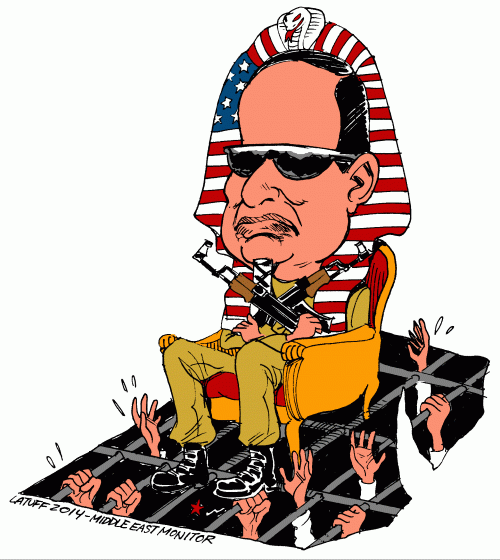
Egypt seems to be intensifying its crackdown on opponents with a new law. President Abdel Fattah al-Sisi has approved the legislation, authorizing officials to monitor social media users.
As reported by the official gazette on Saturday, the new law gives state authorities the right to monitor the activities of social media users on the internet.
The legislation, it said, places social media accounts with over 5,000 followers under the supervision of the Supreme Council for the Administration of the Media.
That means any popular blog, website or even account on Facebook, Twitter or other platforms, could be considered a media outlet and subject to the supervision of the media regulator which could block them for spreading fake news.
The controversial law was passed in the parliament back in July.
Critics argue that it increase state power to crack down on opposition activists.
Human rights groups have on numerous occasions criticized Egypt for its tough approach towards opponents.
The Sisi government has silenced most critics in the media, rolled back social freedoms, and placed draconian restrictions on demonstrations and the work of rights groups.
Tens of thousands of people have been detained since 2013, when the military, led by Sisi, overthrew Mohamed Morsi.
Morsi, Egypt’s first democratically-elected president, came to power after the 2011 uprising toppled long-time autocrat Hosni Mubarak.
Read more:
Egypt arrests prominent blogger amid crackdown on dissent
Egypt subjecting prisoners to horrendous abuse, torture
Corbyn attacked for Islamist hand-sign, claims it was in solidarity with Cairo massacre victims
RT | August 15, 2018
Jeremy Corbyn has found himself involved in a row after a picture of him making a sign linked to the Muslim Brotherhood surfaced. His spokesperson said it was done in solidarity with the victims of a 2013 massacre in Egypt.
The picture, published by the Daily Telegraph and reportedly taken in Finsbury Park Mosque in 2016, shows Corbyn with four outstretched fingers and his thumb tucked in against his palm. The hand-gesture is called Rabbi’ah and used by the Muslim Brotherhood (MB) in a sign of solidarity with ex-Egyptian President Mohammed Morsi and the victims of the Rabaa massacre.
Morsi, who was democratically elected following the Arab Spring and the subsequent fall of dictator Hosni Mubarak, was overthrown by, now-president, Abdel Fattah el-Sisi in a July 2013 coup d’etat.
A spokesperson for Corbyn said he had been “standing up for democracy” when he used the Rabbi’ah symbol, telling the paper: “The four fingered gesture is a well-known symbol of solidarity with the victims of the 2013 Rabaa massacre in Cairo.”
The hand gesture stems from the August 2013 massacre, when Egyptian security forces under the command of el-Sisi raided two Morsi supporter camps in Cairo; including one in Rabaa al-Adawiya Square where the gesture gets its name. Human Rights Watch, who described the raids as “one of the world’s largest killings of demonstrators in a single day in recent history,” estimated that a minimum of 817 people and more likely at least 1,000 died during the dispersal.
The Islamist MB is a transnational organization which originated in Egypt, before spreading across the Arab world. Its brand of political Islam has influenced groups such as Hamas in Gaza, and cites Turkey and Qatar amongst its supporters. The organisation is listed as a terrorist group by countries including Saudi Arabia, Egypt, Russia and Syria
In 2003 the Supreme Court of Russia listed MB as a terrorist organisation for its role the creation of a largely Chechen Islamic extremist group, which has committed multiple terrorist attacks on Russia
While it is not considered a terrorist group by the UK, upon the conclusion of an investigation into the MB ex-British prime minister David Cameron said aspects of the group’s ideology “run counter to British values of democracy.”
UK doubles arms deals with governments on its own rights blacklist: Report
Press TV – July 19, 2018
The UK has almost doubled its arms deals with governments that it has blacklisted as violators of human rights, figures show.
The government of British Prime Minister Theresa May approved some £1.5 billion in arms licenses in 2017, up from £820 million it did the year before, the Campaign Against the Arms Trade (CAAT) pressure group reported Wednesday.
The licenses allowed weapons sales to 18 countries on Home Office blacklist, which includes Saudi Arabia, Bahrain, Egypt, Pakistan and the Israeli regime.
Arms deals with Saudi Arabia, which has been running a deadly military aggression against Yemen since March 2015, accounted for £1.13 billion of the total amount, the group said.
The ruling Tory government is “actively arming and supporting many of the regimes that even it believes are responsible for terrible human rights abuses,” CAAT’s Andrew Smith told The Independent.
“There is little oversight in the system, and no controls over how these arms will be used once they have left the UK,” he added.
“The arms sales being agreed today could be used to fuel atrocities for years to come. Right now UK-made fighter jets and bombs are playing a central role in the Saudi-led destruction of Yemen, and the government and arms companies have totally failed to monitor or evaluate how this deadly equipment is being used.”
“These arms sales don’t just provide dictatorships and human rights abusers with the means to kill, they also give them a huge degree of political support,” Andrews continued.
Saudi Arabia and its allies launched the war on Yemen in March 2015 to reinstall its former Riyadh-allied government. The military aggression has so far killed over 13,600 Yemenis.
The UK has increased its weapons sales by around 500 percent since the onset of the Saudi invasion, according to a report by The Independent. The UK has, so far, sold more than £6 billion worth of arms to the kingdom.
Israel second largest blacklisted buyer
With a total of £221 million of licenses granted, Israel was the second-biggest purchaser of UK arms last year to be featured on the Foreign and Commonwealth Office’s (FCO) human rights priority list.
In its latest version of the watch list, published this week, the FCO blasted Israel for violating the international law during its ongoing occupation of Palestinian lands in the West Bank, East Jerusalem al-Quds and Gaza.
It also slammed the Tel Aviv regime’s “systematic policy of settlement expansion,” despite constant calls by the UN, the European Union and many other international organizations to end them.
Bahrain became the third largest buyer on the list, acquiring £30.7 million of British arms in 2017, while Egypt imported £6.5 million and Pakistan, £11.2 million.
CAAT’s figures came amid efforts by British members of Parliament sitting on the Committees on Arms Export Controls (CAEC) to reform the UK’s arms export regime and stop arms sales to blacklisted governments.
In its latest report, the committee called on cabinet ministers to consider imposing a “presumption of denial” when weighing arms sales applications for such countries.
“We believe there must always be a more stringent process in place for any arms exports to such countries,” read the report.
Featured Video

“Historic Russia”: The Land Putin Will Not Give Back
or go to
Aletho News Archives – Video-Images
Book Review
Why the War on Conspiracy Theories Is Bad Public Policy
By Kevin Barrett • Unz Review • February 1, 2019
 A Review of Conspiracy Theories and Other Dangerous Ideas by Cass Sunstein (based on an earlier paper co-authored with Adrian Vermeule); In Defense of Troublemakers: The Power of Dissent in Life and Business by Charlan Nemeth; and Conspiracy Theories and the People Who Believe Them, edited by Joseph E. Uscinski
On January 25 2018 YouTube unleashed the latest salvo in the war on conspiracy theories, saying “we’ll begin reducing recommendations of borderline content and content that could misinform users in harmful ways—such as videos promoting a phony miracle cure for a serious illness, claiming the earth is flat, or making blatantly false claims about historic events like 9/11.”
At first glance that sounds reasonable. Nobody wants YouTube or anyone else to recommend bad information. And almost everyone agrees that phony miracle cures, flat earthism, and blatantly false claims about 9/11 and other historical events are undesirable.
But if we stop and seriously consider those words, we notice a couple of problems. First, the word “recommend” is not just misleading but mendacious. YouTube obviously doesn’t really recommend anything. When it says it does, it is lying. … continue
Blog Roll
 Aletho News
- “Historic Russia”: The Land Putin Will Not Give Back
- How the Cambridge Analytica scandal still haunts Mark Zuckerberg
- The Ongoing Cancellation Campaign Against a Dissenting Academic in Norway
- Yemen and ‘the Houthis’: Challenging Sami Hamdi’s Narrative
- No, Christians did not invent Zionism
- AIPAC-led lobbying network opens branches in Cypriot, Greek parliaments
- Araghchi blasts ‘parasitic’ alliance as US taxpayers pay for Israel’s war on Iran
- Easy fix for Europe’s chaos? Stop fueling war against Russia
- Putin’s key remarks on peace talks and Europe’s ‘schizophrenia’
- Trita Parsi: Israel Set a Trap for Total War in the Region
- If Americans Knew
- An error has occurred; the feed is probably down. Try again later.
- No Tricks Zone
- Two New Studies Find Thwaites Glacier Melt Cannot Be Driven By Human Activity Or A Warming Ocean
- E-Cars Reduce CO2 Emissions By Only 41% Compared To Internal Combustion Engine Vehicles
- Predictions Made By Renowned Climate Professor Over Past Decades Have Been Proven To Be Poor
- New Study Suggests Large Regions Of The Pacific Ocean Have Been Cooling For The Last 80 Years
- Germany’s Green Energy Debacle: High Energy Costs Force Kahla Porzellan to Close After 182 Years!
- New Study: 50 Years Of The Most Aggressive ‘Net Zero’ Policies Can Only Affect The Global Climate By 0.03°C
- US September “Heat” Was No Record…Many Records Set Decades Ago
- Latest European Green Energy Debacle; Portugal’s Largest Flagship Solar Park Insolvent!
- Green Energy Debacle: German Expert Professor Fritz Vahrenholt Warns Of Severe Economic And Social Consequences
- Two More Paleo Reconstructions Affirm Meters-Higher Sea Levels Across Ireland, Brazil 7000-6000 Years Ago

