An arrest order has been issued for ousted Egyptian President Mohamed Morsi over suspected links to Hamas. State media reports the Muslim Brotherhood leader has already been questioned and confronted with the evidence.
Morsi has been detained for 15 days and will be subjected to questioning over suspicions Hamas helped orchestrate his escape from prison in 2011, reported Reuters, citing Mena state media. Morsi has allegedly already been “confronted with the evidence.” During the uprisings that overthrew former President Hosni Mubarak two years ago there were a number of attacks on police stations that led to the escape of Islamists and political inmates.
The accusations set against Morsi also include killing officers and prisoners and kidnapping soldiers.
The ousted president has been held in an unknown location since he was removed from office on July 3 by the military.
The Muslim Brotherhood has condemned Morsi’s detention as “ridiculous” and a “return to the Mubarak regime.”
The UN has urged the Egyptian military to free Morsi along with other Brotherhood leaders “without delay.” Secretary-General Ban Ki-moon calls “on the interim authorities to ensure law and order along with guaranteeing the safety and security of all Egyptians.”
Egypt is preparing for another day of violent protests as Morsi’s followers and the military opposition have both planned mass rallies.
The two groups are at loggerheads over the future of the Arab world’s most populous country. A military official told Reuters that the army has given the Muslim Brotherhood until Saturday to join the so-called “road map” to new elections.
The Brotherhood fears a military led crackdown on the political party that won the Egyptian elections last summer.
“We are continuing our protests on the streets. In fact we believe that more people will realize what this regime really represents – a return of the old state of Mubarak, with brute force,” Brotherhood spokesman Gehad El-Haddad said.
In some of the worst violence since the unrest began in Egypt, 50 Morsi supporters were gunned down at a Cairo barracks on July 8 by security forces.
July 26, 2013
Posted by aletho |
Civil Liberties | Egypt, Hamas, Mohamed Morsi, Morsi, Muslim Brotherhood |
Leave a comment
A former station chief with the CIA has been detained in Panama after being on the run from Italian police for more than a decade.
Robert Seldon Lady, 59, was reportedly brought into custody early Thursday after surfacing in the Central American country. An Italian court convicted him in 2009 in absentia of abducting an Egyptian terror suspect from the streets of Milan, and he was sentenced in early 2013 to nine years in prison. Only now, however, has he been caught, according to a statement made Thursday by the Italian justice ministry.
The case against Lady marked the first time ever that a CIA agent was accused of kidnapping and brought to trial. Twenty-two other Americans, mostly intelligence officers, were also convicted for their role in the “extraordinary rendition” of a Muslim cleric.
Lady was the station chief of the Central Intelligence Agency post in Milan during the time of the abduction. He is accused of abducting Hassan Mustafa Osama Nasr and assisting in his years’ long detention which was reportedly accompanied with bouts of torture.
“I’m not guilty. I’m only responsible for carrying out orders that I received from my superiors,” Lady told Italy’s Il Giornale newspaper in 2009.
Previously, Lady told GQ magazine in a candid interview that, “When you work in intelligence, you do things in the country in which you work that are not legal.”
“It’s a life of illegality,” said Lady, “But state institutions in the whole world have professionals in my sector, and it’s up to us to do our duty.”
“I console myself by reminding myself that I was a soldier, that I was in a war against terrorism, that I couldn’t discuss orders given to me,” Lady said to Italian journalists.
Lady had served just shy of a quarter-century with the CIA at the time of the crime. He described his former employer to GQ years later as “the vanguard of democracy” and his role as “the greatest job I ever had.”
July 18, 2013
Posted by aletho |
Subjugation - Torture, Timeless or most popular, War Crimes | Central America, Central Intelligence Agency, CIA, Crime, Egypt, Hassan Mustafa Osama Nasr, Latin America, Panama, Robert Seldon Lady, Terrorism, USA |
Leave a comment
The Egyptian Army announced in managed to locate and destroy eight siege-busting tunnels across the border with the Gaza Strip over the last 48 hours, and that it located 23 containers holding a million liters of fuel.
The army said that the Egyptian Border Guards located the containers that were ready to be smuggled to the coastal region, and also located the eight tunnels that have already been operational.
Egyptian security sources said that the army used bulldozers to remove fuel pumps, and that the campaign is ongoing to locate and destroy all tunnels across the border with Gaza.
The sources said that Egypt’s Army Chief, Colonel Abdul-Fattah El-Sissi, gave direct orders to the army to destroy all border tunnels by using explosives, heavy equipment and even by flooding them.
El-Sissi said that the army would not allow any party to “jeopardize Egypt’s national security, its economy, and national resources.”
July 16, 2013
Posted by aletho |
Ethnic Cleansing, Racism, Zionism, Subjugation - Torture | Egypt, Egyptian Army, Gaza |
Leave a comment
One consumes U.S. corporate media at the risk of one’s sanity. Schizophrenia, for example, appears to be the permanent mental state at the New York Times, which cannot figure out which global reality is operative on any given day. Last week, the Times almost simultaneously painted a picture of two different and contradictory worlds – or, at least, two very different Obama administrations. On Friday, June 5, in the wake of the military coup against Egyptian President Mohamed Morsi, the Times depicted the Obama administration as totally unruffled by the turmoil in Cairo – as if the U.S. had little stake in the outcome. The Times headline proclaimed: “Egypt Crisis Finds Washington Largely Ambivalent and Aloof.” The newspaper of record gave the impression that Egypt was no longer a “strategic player” in the region and, therefore, the political complexion of its government was nothing for Washington to worry its last nerve about.
By Saturday, July 6, the article had been replaced by reporting on what the Obama administration had really been up to as the coup unfolded. It described President Morsi’s “last hours” in office, awaiting his fate at the hands of an Egyptian military that has been a United States asset for the last 40 years. An Arab foreign minister telephoned to ask if Morsi would accept the appointment of a new prime minister and cabinet, which would make Morsi a mere figurehead. The Arab foreign minister made it clear that he was acting as an emissary of Washington.
Morsi rejected the offer. His top foreign policy advisor stepped out of the room to call the U.S. ambassador to Egypt, Anne Patterson, and tell her so. But, when he came back, he said he’d been on the phone with Susan Rice, Obama’s national security advisor, in Washington, who advised him that the coup was about to begin.
So, of course, the U.S. was deeply involved in the events that were swirling in Cairo – it would have been bizarre beyond belief if the superpower had, indeed, been “ambivalent” or “aloof” about the fate of the Arab world’s most populous country. What is amazing, is the ability of an organization as large as the New York Times to accommodate two opposite realities within its own pages, and pass off both as the truth, without shame or even visible embarrassment.
The New York Times and its corporate colleagues are not in the business of providing reliable information, but of rationalizing and sanitizing the behavior of those in power. If there are contradictions in the narrative, they can always be papered over with more lies in the next edition.
However, the lies told by the Times and its ilk cannot alter the reality of U.S. decline; they can only make Americans oblivious to the facts. The United States will get the kind of civilian front men it wants in Egypt: international corporate citizens like economist el-Hazem Beblawy, as interim prime minister, and Mohamed ElBaradei, the darling of the global rich, as a vice president. But the U.S. is also now dependent on Muslim fundamentalists as the foot soldiers of imperialism in Syria and North Africa, even as it double-crossed its Muslim Brotherhood friend, former president Morsi. And the Arab royals of the Persian Gulf have their own plans for the region. The superpower isn’t as super as it used to be – but you won’t find out why in the New York Times.
Glen Ford can be contacted at Glen.Ford@BlackAgendaReport.com.
July 10, 2013
Posted by aletho |
Mainstream Media, Warmongering | Egypt, Mohamed ElBaradei, Mohamed Morsi, Morsi, New York Times, Susan Rice, United States |
Leave a comment
BETHLEHEM – Israeli Mossad agents detained a Palestinian in Egypt’s Sinai in June, Israeli media reported Wednesday.
An Israeli judge cleared news of the arrest for publication on Wednesday. Wael Abu Rida was detained on suspicion of “offenses of national security,” the Israeli daily Yedioth Ahronoth reported.
A magistrates’ court in Beersheba on Wednesday extended Abu Rida’s remand by eight days, the report said.
Judge Yuval Livadaro allowed the publication of some details in Israeli media, but extended the gag order of other details by 10 days.
The detainee’s wife, Amani Abu Rida, had told Ma’an on July 3 that her husband disappeared during a visit to Egypt for medical treatment.
The couple traveled together to Egypt on June 6. Wael Abu Rida suffers cerebral atrophy and sought treatment at a hospital in central Sinai, his wife said.
On June 21, Wael received a phone call and left without returning, his wife said.
The family later received a phone call from the International Committee of the Red Cross informing them that Wael was in Israeli custody, without giving any reason for the arrest.
After the phone call, Amani returned to the Gaza Strip.
July 10, 2013
Posted by aletho |
Civil Liberties, Ethnic Cleansing, Racism, Zionism | Egypt, Human rights, Israel, Mossad, Zionism |
Leave a comment
The United Arab Emirates and Saudi Arabia will give Egypt money in the wake of its political and economic crisis. The UAE will provide Cairo with $1 billion and lend it a further $2 billion, while Saudi Arabia will give Egypt a $5 billion aid package.
The UAE loan would be in the form of a $2 billion interest free deposit in Egypt’s central bank, state news agency WAM reported on Tuesday. Abu Dhabi will also to give Egypt $1 billion.
The UAE delegation to Cairo included the Gulf country’s national security adviser, foreign minister and energy minister. The visit was to “show full support to the people of Egypt – political support, economic support,” Egyptian foreign ministry spokesman Badr Abdelatty told Reuters.
The UAE was one of the first countries to congratulate Egypt following the army’s decision to oust the Muslim Brotherhood’s Mohamed Morsi.
“The UAE stands by Egypt and its people at this stage and trusts the choices of its people. Egypt’s security and stability are the basis of Arab security,” WAM quoted UAE National Security Advisor Sheikh Hazza bin Zayad as saying.
The UAE’s foreign minister also stated that the Egyptian army proved that it was a “strong shield” and “protector,” which guarantees that the country embraced all the components of the people.
Saudi Arabia also approved a $5 billion aid package to Egypt Tuesday, comprising of a $2 billion central bank deposit, $2 billion in energy products, and $1 billion in cash, Saudi finance minister Ibrahim Alassaf said. […]
Multi-billion-dollar aid from Saudi Arabia and the UAE is another sign that these two countries had a hand in the military coup which took place in Egypt, believes RT’s contributing analyst in London, Afshin Rattansi.
“We now realize it is much more a Saudi-backed military coup. And as for this General al-Sisi person, who is a former military attaché in Saudi Arabia, he is Saudi’s man… Saudi Arabia, they’ve taken over the largest country in the Arab world,” Rattansi said.
He also described the current interim leaders of Egypt – President Mansour and Prime Minister Beblawi, as “puppets of Saudi Arabia”, who will be ousted at once if they attempt to criticize Saudi Arabia or the UAE. … Full article
July 10, 2013
Posted by aletho |
Corruption | Egypt, Mohamed Morsi, Muslim Brotherhood, Saudi Arabia, UAE, United Arab Emirates |
Leave a comment
As much as the Egyptian street generally sympathise with the plight of the Palestinian people in the Gaza Strip, it seems the new Egyptian regime are falling over themselves to make themselves look good in the eyes of the US in order to ensure that the promised $1.5 billion of aid comes there way despite the coup. Unfortunately, one element of their approach to appeasing the US is by demonstrating that they are mindful of Israel’s concerns with regard to security about the Gaza Strip. And one way of showing they mean business is to close down the Gaza Strip’s supply line tunnels between the Strip and Egypt.
Yesterday the Egyptian army began bulldozing the tunnels. The immediate effect in the Gaza was panic buying and huge price hikes that most Palestinians can ill afford to pay. The cost of living was high enough as it was but now, if the supplies remain cut off for some time, life will steadily become even more unbearable.
Just to add to the turmoil, Fatah, the organisation that governs the West Bank under Abbas, is now calling on its supporters in the Gaza to rise up against Hamas. Hamas, one might recall, were rejected by the West after squarely and fairly winning the January 2006 elections for the Palestinian Legislative Council.
The blame for all this turmoil – not just in Egypt but throughout the entire Middle East – can be laid fairly and squarely at the feet of the US and Israel who has contrived to foment as much friction as they possibly can between secularists and Islamists in the Arab world, and between Sunni and Shia in the world of Islam. On the odd occasion that ‘democracy’ does give the people the opportunity to make their choices, it is the West that rejects those choices and then encourages turmoil that attempts to replace the people’s choices.
In the end it’s just ordinary people who are already struggling to survive that suffer most. The West must leave these people alone to make their own choices and, once the choices have been made, should not be interfered with simply because the West thinks the people made choices the West disagrees with.
Gaza, at the very least, must be allowed to freely trade with whoever they please and not be punished en masse simply because they didn’t vote for the people the West wanted them to vote for.
July 6, 2013
Posted by aletho |
Ethnic Cleansing, Racism, Zionism | Egypt, Gaza, Hamas, Israel, Middle East |
Leave a comment
Freedom and democracy. How I have come to loathe this phrase. Two-lofty-words-and-a-conjunction bandied around by handmaidens of Empire: verbal grenades that can gut entire nations. When I hear “freedom and democracy” I instinctively look for cover – just as “Allahu Akbar” yelled loudly enough can now make Arabs and Muslims hit the ground fast.
“Freedom and democracy” is the battle cry for every single western regime-change operation I can remember. Operations that leave innocent civilians dead, cities destroyed – anarchy, corruption and criminality in their wake.
In the Middle East, these are dangerous words that have filtered into our vocabulary. People here, intoxicated with their faux revolutions, now spout this silly foreign phrase with the same shrill, mad-eyed, self-righteous conviction as do Americans before they bomb us into ‘freedom.’
But Arabs and Muslims should dig deep into their recent memory:
The first words uttered by you as you rose up against your US-backed dictators were “honor and dignity” – not “freedom and democracy.” How did that fact get lost in the mayhem to follow?
And why on earth would this distinction make any difference?
For one, ‘freedom and democracy’ has always suggested western-style standards for governance and social liberties alien to the Mideast. We’re just not there yet – not on those terms anyway – and we’re not likely to be. Many regional states are just entering the nascent phase of what will undoubtedly be a rocky political evolutionary process – with each nation creating wholly indigenous models of governance, as unique as their individual cultures and histories. What if some towns would like their political process determined by an old-fashioned cockfight? What if a strongman is the only way to prevent the disintegration of a nation-state or the outbreak of ethnic and sectarian carnage? What if people genuinely don’t give a toss about gay and lesbian rights, preferring – imagine that – to find employment and feed their kids first? Women’s suffrage? Gender-integrated football stadiums? Childcare in the workplace? Worker’s rights? Important stuff, but… Feed. Child. First.
And then there’s that other unfortunate association: freedom and democracy brings with it a cornucopia of weapons, military bases, bombs hailing from skies heaving with US-made drones, financial assistance tied to all shades of silliness.
Freedom and democracy is extremely discerning. It seems to altogether bypass friendly dictatorships, only landing with uncanny accuracy on the heads of those opposed to Empire – civilians included.
And it is a foreign-imposed concept, presupposing, for instance, that elections are all-important. Except, even Empire doesn’t believe that. Why else dismiss Palestinian elections with a Hamas victor, or Iranian elections when the candidate doesn’t suit, or Russian parliamentary ones that ‘smack’ of fraud?
Yet Empire’s silence is deafening when a friendly monarch passes the mantle to his son, when a client state doesn’t care about popular legitimacy, when a military ally with big budgets for US-made weapons rejects elections outright.
Honor and dignity is none of those things. It doesn’t mean elections, it doesn’t mean individual rights. It is unselfish and broad – it understands what is right, what is important, what is a priority. It will wait a bit longer for jobs, stability, electricity, but it demands one immediate correction: the state must recognize and act upon popular will.
What’s the difference you still say?
Freedom-and-democracy embraces US-Israeli hegemony and GCC petrodollars. Honor-and-dignity does not.
Freedom-and-democracy thinks there are “processes” to remedy the colonization of Palestinian land. Honor-and-dignity knows there is only one: decolonization.
Freedom-and-democracy seeks to vilify, marginalize and criminalize groups, sects and nations in the Middle East. Honor-and-dignity seeks collaboration and harmonious relations, even among those marked by differences.
Freedom-and-democracy is governed by militarization – it seeks military bases, weaponizes its allies, draws red lines, makes threats, retaliates disproportionally, punishes with ease, targets the vulnerable. Honor-and-dignity believes in soft power, engagement and mediation with brothers.
Freedom-and-democracy has always supported dictatorship and brutality. Honor-and-dignity wants that to stop.
Freedom-and-democracy gives you a truckload of money in exchange for implementing a political, social and economic blueprint with the assistance of foreign advisors and NGOs. Honor-and-dignity is determined to learn from its own mistakes.
Freedom-and-democracy knows what’s best for you. Honor-and-dignity wants to decide for itself.
Freedom-and-democracy fears your independence – thinks you are “not ready” for it. Honor-and-dignity can’t stand still from wanting to taste it, lick it, embrace it, implement it.
Freedom-and-democracy violates your border, guns cocked. Honor-and-dignity knows it must shoot you dead or you will never learn.
Freedom-and-democracy thinks it is free and democratic. Honor-and-dignity notices an interesting trend: the more freedom-and-democracy talks about “freedom and democracy,” the more it legislates against freedoms and undermines democracy back home.
Real ‘freedom’ in the Middle East means honor and dignity. Real ‘democracy’ in the Middle East starts with honor and dignity. Arabs nailed it the first time around.
Honor-and-dignity doesn’t mean elections and governments that operate within the exact same geopolitical and economic parameters of yesterday. Honor-and-dignity means good governance in a just society under the rule of law based on consensus – homegrown, indigenous solutions that are unique to each country.
The new governments of Egypt, Tunisia, Libya and Yemen don’t stand a chance – they operate within the old parameters that acknowledge western hegemony, GCC dominance in regional affairs, and the economics of disparity. They play with Israel and pretend Palestine does not exist. They vacillate between paralysis and aggression against the only Resistance this region has ever had. They thrive on yesterday’s divide-and-rule and have warped ideas about brotherhood. And they rig systems today to ensure their continued dominance tomorrow.
You cannot have honor and dignity with a dependent economy – it will hamper your independence. You cannot have honor and dignity with foreign military bases in your country – it will cripple your independence. You cannot have honor and dignity with a colonial state in your midst subverting all efforts at regional reconciliation, killing Arabs with impunity, wagging its tongue at your impotence – it will destroy your independence.
Please leave us be, FreedumbAndDemocrazy. If you don’t, Honor and Dignity will be forced to teach you the meaning of Consequence in a way it would rather not. Leave the Mideast to chart its own course, discover its own strengths and make its own mistakes. Do it now.
And take your conditional aid and military bases with you too.
Sharmine Narwani is a commentary writer and political analyst covering the Middle East. You can follow Sharmine on twitter @snarwani.
July 6, 2013
Posted by aletho |
Ethnic Cleansing, Racism, Zionism, Timeless or most popular | Democracy, Egypt, Human rights, Israel, Middle East, United States, Zionism |
Leave a comment
The road that has been taken in Egypt is a dangerous one. A military coup has taken place in Egypt while millions of Egyptians have cheered it on with little thought about what is replacing the Muslim Brotherhood and the ramifications it will have for their society. Many people in cheering crowds have treated the Egyptian military’s coup like it was some sort of democratic act. Little do many of them remember who the generals of the Egyptian military work for. Those who are ideologically opposed to the Muslim Brotherhood have also cheered the military takeover without realizing that the military takeover ultimately serves imperialist behaviour. The cheering crowds have not considered the negative precedent that has been set.
Egypt was never cleansed of corrupt figures by the Muslim Brotherhood, which instead joined them. Key figures in Egypt, like Al-Azhar’s Grand Mufti Ahmed Al-Tayeb (who was appointed by Mubarak), criticized the Muslim Brotherhood when Mubark was in power, then denounced Mubarak and supported the Muslim Brotherhood when it gained power, and then denounced the Muslim Brotherhood when the military removed it from power. The disgraced Muslim Brotherhood has actually been replaced by a far worse assembly. These figures, whatever they call themselves, have only served power and never democracy. The military’s replacements for the Muslim Brotherhood – be it the new interim president or the leaders of the military junta—were either working with or serving the Muslim Brotherhood and, even before them, Hosni Mubarak’s regime.
The Undemocratic Egyptian Full Circle
Unlike the protests, the military takeover in Egypt is a blow to democracy. Despite the incompetence and hypocrisy of the Egyptian branch of the Muslim Brotherhood’s leadership, it was democratically elected into power. While the rights of all citizens to demonstrate and protest should be protected and structured mechanisms should securely be put into place in all state systems for removing any unpopular government, democratically-elected governments should not be toppled by military coups. Unless a democratically-elected government is killing its own people arbitrarily and acting outside the law, there is no legitimate excuse for removing it from power by means of military force. There is nothing wrong with the act of protesting, but there is something wrong when a military coup is initiated by a corrupt military force that works in the services of Washington and Tel Aviv.
Things have come full circle in Cairo. The military oversight over the government in Cairo is exactly the position that Egypt’s corrupt military leaders wanted to have since the Egyptian elections in 2012 that brought the Muslim Brotherhood’s Freedom and Justice Party into power. Since then there has been a power struggle between the Egyptian military and the Muslim Brotherhood.
Expecting to win the 2012 elections, at first the Egyptian military fielded one of its generals and a former Mubarak cabinet minister (and the last prime minister to serve under Mubarak), Ahmed Shafik, for the position of Egyptian president. If not a Mubarak loyalist per se, Shafik was a supporter of the old regime’s political establishment that gave him and the military privileged powers. When Ahmed Shafik lost there was a delay in recognizing Morsi as the president-elect, because the military was considering rejecting the election results and instead announcing a military coup.
The High Council of the Armed Forces, which led Egypt’s military, realized that a military coup after the 2012 elections would not fare too well with the Egyptian people and could lead to an all-out rebellion against the Egyptian military’s leadership. It was unlikely that many of the lower ranking soldiers and commissioned officers would have continued to follow the orders of the Egyptian military’s corrupt upper echelons if such a coup took place. Thus, plans for a coup were aborted. Egyptian military leaders instead decided to try subordinating Egypt’s civilian government by dissolving the Egyptian Parliament and imposing a constitution that they themselves wrote to guarantee military control. Their military constitution subordinated the president’s office and Egypt’s civilian government to military management. Morsi would wait and then reinstate the Egyptian Parliament in July 2012 and then nullify the military’s constitution that limited the powers of the presidency and civilian government after he worked with the US and Qatar to pacify Hamas. Next, Morsi would order Marshall Tantawi, the head of the Egyptian military, and General Anan, the second most power general in the Egyptian military, into resigning- neither one was a friend of democracy or justice.
Was Morsi’s Administration Really a Muslim Brotherhood Government?
Before it was ousted, the Muslim Brotherhood faced serious structural constraints in Egypt and it made many wrong decisions. Since its electoral victory there was an ongoing power struggle in Egypt and its Freedom and Justice Party clumsily attempted to consolidate its political control over Egypt. The Muslim Brotherhood’s attempts to consolidate power meant that it has had to live with and work with a vast array of state institutions and bodies filled with its opponents, corrupt figures, and old regime loyalists. The Freedom and Justice Party tried to slowly purge the Egyptian state of Mubarak loyalists and old regime figures, but Morsi was forced to also work with them simultaneously. This made the foundations of his government even weaker.
The situation for the Muslim Brotherhood in 2012 was actually similar to the one Hamas faced in 2006 after its electoral victories in the Palestinian elections. Just as Hamas was forced by the US and its allies to accept Fatah ministers in key positions in the Palestinian government that it formed, the Muslim Brotherhood was forced to do the same unless it wanted the state to collapse and to be internationally isolated. The main difference between the two situations is that the Muslim Brotherhood seemed all too eager to comply with the US and work with segments of the old regime that would not challenge it. Perhaps this happened because the Muslim Brotherhood feared a military takeover. Regardless of what the reasons were, the Muslim Brotherhood knowingly shared the table of governance with counter-revolutionaries and criminals.
In part, Morsi’s cabinet would offer a means of continuation to the old regime. Foreign Minister Mohammed Kamel Amr, Morsi’s top diplomat, was a cabinet minister under Marshal Tantawi and served in key positions as Mubarak’s ambassador to the United States and Saudi Arabia. Morsi’s cabinet would only have a few members of the Muslim Brotherhood’s Freedom and Justice Party whereas the ministerial portfolios for the key positions of the Interior Ministry, Defence Ministry, and the Suez Canal Authority would be given to Mubarak appointees from Egypt’s military and police apparatus. Abdul Fatah Al-Sisi, Mubarak’s head of Military Intelligence who has worked closely with the US and Israel, would be promoted as the head of the Egyptian military and as Egypt’s new defence minister by Morsi. It would ironically, but not surprisingly, be Al-Sisi that would order Morsi’s arrest and ouster after extensive consultations with his American counterpart, Charles Hagel, on July 3, 2013.
The Muslim Brotherhood and the Obama Administration: An Alliance of Convenience?
As a result of the Muslim Brotherhood’s collaboration with the US and Israel, large components of the protests in Egypt against Morsi were resoundingly anti-American and anti-Israeli. This has to do with the role that the Obama Administration has played in Egypt and the regional alliance it has formed with the Muslim Brotherhood. In part, it also has to do with the fact that Morsi’s opponents – even the ones that are collaborating with the US and Israel themselves – have capitalized on anti-American and anti-Israeli sentiments by portraying Morsi as a US and Israeli puppet. In reality, both the United States and Muslim Brotherhood have tried to manipulate one another for their own gains. The Muslim Brotherhood has tried to use the Obama Administration to ascend to power whereas the Obama Administration has used the Muslim Brotherhood in America’s war against Syria and to slowly nudge the Hamas government in Gaza away from the orbit of Iran and its allies in the Resistance Bloc. Both wittingly and unwittingly, the Muslim Brotherhood in broader terms has, as an organization, helped the US, Israel, and the Arab petro-sheikhdoms try to regionally align the chessboard in a sectarian project that seeks to get Sunnis and Shias to fight one another.
Because of the Freedom and Justice Party’s power struggle against the Egyptian military and the remnants of the old regime, the Muslim Brotherhood turned to the United States for support and broke all its promises. Some can describe this as making a deal with the “Devil.” At the level of foreign policy, the Muslim Brotherhood did not do the things it said it would. It did not end the Israeli siege on the people of Gaza, it did not cut ties with Israel, and it did not restore ties with the Iranians. Its cooperation with the US allowed Washington to play the different sides inside Egypt against one another and to hedge the Obama Administration’s bets.
The Muslim Brotherhood miscalculated in its political calculus. Morsi himself proved not only to be untrustworthy, but also foolish. Washington has always favoured the Egyptian military over the Muslim Brotherhood. Like most Arab militaries, the Egyptian military has been used as an internal police force that has oppressed and suppressed its own people. Unlike the Muslim Brotherhood, the Egyptian military gives far greater guarantees about the protection of US interests in Egypt, Israel’s security, and US sway over the strategically and commercially important Suez Canal. Furthermore, the Muslim Brotherhood had its own agenda and it seemed unlikely that it would continue to play a subordinate role to the United States and Washington was aware of this.
Revolution or Counter-Revolution?
Indeed a dangerous precedent has been set. The events in Egypt can be used in line with the same type of standard that allowed the Turkish military to subordinate democracy in Turkey for decades whenever it did not like a civilian government. The Egyptian military has taken the opportunity to suspend the constitution. It can now oversee the entire political process in Egypt, essentially with de facto veto powers. The military coup not only runs counter to the principles of democracy and is an undemocratic act, but it also marks a return to power by the old regime. Egypt’s old regime, it should be pointed out, has fundamentally always been a military regime controlled by a circle of generals and admirals that operate in collaboration with a few civilian figures in key sectors.
Things have really gone full circle in Egypt. The judiciary in Egypt is being aligned with the military or old regime again. Mubarak’s attorney-general, Abdel Meguid Mahmoud, who was removed from power in November 2012 has been reinstated. The Egyptian Parliament has been dissolved again by the leaders of the High Council of the Armed Forces. President Morsi and many members of the Muslim Brotherhood have been rounded up and arrested by the military and police as enemies of the peace.
Adli (Adly) Al-Mansour, the Mubarak appointed judge that President Morsi was legally forced to appoint as the head of the Egyptian Supreme Constitutional Court, has now been appointed interim president by the High Council of the Armed Forces. Al-Mansour is merely a civilian figure head for a military junta. It is also worth noting that the Egyptian Supreme Constitutional Court, like much of the Mubarak appointees in the Egyptian judiciary, has collaborated with the Egyptian military against the Muslim Brotherhood and tried to dissolve the Egyptian Parliament.
Mohammed Al-Baradei (El-Baradei / ElBaradei), a former Egyptian diplomat and the former director-general of the politically manipulated International Atomic Energy Agency (IAEA), has been offered the post of interim prime minister of Egypt by the military. He had returned to Egypt during the start of the so-called Arab Spring to run for office with the support of the International Crisis Group, which is an organization that is linked to US foreign policy interests and tied to the Carnegie Foundation, the Ford Foundation, and George Soros’ Open Society Institute. Al-Baradei himself has been delighted every time that the Egyptian military has announced a coup; he supported a military takeover in 2011 and, to his benefit, he has supported it in 2013. Where he could not secure a position for himself through the ballot box, he has been offered a government position undemocratically through the military in 2013.
Many of the Muslim Brotherhood’s supporters are emphasizing that an unfair media war was waged against them. The Qatari-owned Al Jazeera Mubasher Misr, Al Jazeera’s Egyptian branch which has worked as a mouth piece for the Muslim Brotherhood, has been taken off the air by the Egyptian military. This, along with the ouster of Morsi, is a sign that Qatar’s regional interests are being rolled back too. It seems Saudi Arabia, which quickly congratulated Adli Al-Mansour, is delighted, which explains why the Saudi-supported Nour Party in Egypt betrayed the Muslim Brotherhood. Other media linked to the Muslim Brotherhood or supportive of it have also been censored and attacked. Much of the privately owned media in Egypt was already anti-Muslim Brotherhood. Like Gran Mufti Ahmed Al-Tayeb, many of these media outlets were supportive of Mubarak’s dictatorship when he was in power, but only changed their tune when he was out of power. The point, however, should not be lost that media censorship against pro-Muslim Brotherhood media outlets does not equate to democratic practice whatsoever.
The figures that have supported the military coup, in the name of democracy, are themselves no friends of democracy either. Many of these opportunists were Mubarak lackeys. For example, the so-called Egyptian opposition leader Amr Moussa was highly favoured by Hosni Mubarak and served as his foreign minister for many years. Not once did Moussa ever bother or dare to question Mubarak or his dictatorship, even when Moussa became the secretary-general of the morally bankrupt and useless Arab League.
The Egyptian Coma Will Backfire on the US Empire
Despite the media reports and commentaries, the Muslim Brotherhood was never fully in charge of Egypt or its government. It always had to share power with segments of the old regime or “Washington’s and Tel Aviv’s men.” Key players in different branches of government and state bodies from the old regime stayed in their places. Even President Morsi’s cabinet had members of the old regime. The discussions on Sharia law were predominately manipulated by the Muslim Brotherhood’s opponents primarily for outside consumption by predominantly non-Muslim countries and to rally Egypt’s Christians and socialist currents against Morsi. As for the economic problems that Egypt faced, they were the mixed result of the legacy of the old regime, the greed of Egypt’s elites and military leaders, the global economic crisis, and the predatory capitalism that the United States and European Union have impaired Egypt with. Those that blamed Morsi for Egypt’s economic problems and unemployment did so wrongly or opportunistically. His administration’s incompetence did not help the situation, but they did not create it either. Morsi was manning a sinking ship that had been economically ravaged in 2011 by foreign states and local and foreign lenders, speculators, investors, and corporations.
There was an undeniable constant effort to sabotage the Muslim Brotherhood’s rule, but this does not excuse the incompetence and corruption of the Muslim Brotherhood. Their attempts at gaining international respectability by going to events such as the Clinton Global Initiative hosted by the Clinton Foundation have only helped their decline. Their hesitation at restoring ties with Iran and their antagonism towards Syria, Hezbollah, and their Palestinian allies only managed to reduce their list of friends and supporters. All too willingly the Muslim Brotherhood seemed to let itself be used by the US, Israel, Saudi Arabia, and Qatar to pacify Hamas in an attempt to de-link the Palestinians in Gaza from the Resistance Bloc. It continued the siege against Gaza and continued to destroy the tunnels used to smuggle daily supplies by the Palestinians. Perhaps it was afraid or had very little say in the matter, but it allowed Egypt’s military, security, and intelligence apparatuses to continue collaborating with Israel. Under the Muslim Brotherhood’s watch Palestinians were disappearing in Egypt and reappearing in Israeli prisons. Morsi’s government also abandoned the amnesty it had given to the Jamahiriya supporters from Libya that took refuge in Egypt.
The United States and Israel have always wanted Egypt to look inward in a pathetic state of paralysis. Washington has always tried to keep Egypt as a dependent state that would fall apart politically and economy without US assistance. It has allowed the situation in Egypt to degenerate as a means of neutralizing the Egyptians by keeping them divided and exhausted. The US, however, will be haunted by the coup against Morsi. Washington will dearly feel the repercussions of what has happened in Egypt. Morsi’s fall sends a negative message to all of America’s allies. Everyone in the Arab World, corrupt and just alike, is more aware than ever that an alliance with Washington or Tel Aviv will not protect them. Instead they are noticing that those that are aligned with the Iranians and the Russians are the ones that are standing.
An empire that cannot guarantee the security of its satraps is one that will eventually find many of its minions turning their backs on it or betraying it. Just as America’s regime change project in Syria is failing, its time in the Middle East is drawing to an end. Those who gambled on Washington’s success, like the Saudi royals, the Muslim Brotherhood, and Turkey’s Prime Minister Recep Erdogan, will find themselves on the losing side of the Middle East’s regional equation.
July 6, 2013
Posted by aletho |
Corruption, Deception, Mainstream Media, Warmongering, Wars for Israel | Egypt, Egyptian Armed Forces, Freedom and Justice Party, Hosni Mubarak, Morsi, Muslim Brotherhood |
Leave a comment
In ousting Egypt’s first freely elected president, Mohammed Morsi, the Egyptian military have certainly not acted to preserve democracy. They’ve never shown much interest in that. They’re determined to put a break on the mounting political and economic chaos that is ripping the country apart. That turbulence was threatening not just the survival of Egypt, but, more to the point, it was menacing the vast state within a state that Egypt’s military presides over.
Of course, the Egyptian Army is not monolithic. Its lower ranks are very much of the people: filled with hundreds of thousands of conscripts, drawn from the most humble ranks of society—and has a strong identity with the Egyptian people.
It has traditionally been the most important means of socializing and educating the lower classes, in theory, inculcating them with a sense of pride and patriotism.
Indeed the 1971 Constitution says that the Egyptian Army shall “belong to the people”
Thus, as I have previously blogged, in 1977 when the army was called in to quell riots after President Sadat announced cuts in basic food subsidies, the generals refused to intervene unless the subsidies were reestablished. Sadat restored the subsidies.
The top ranks of the army, however, have other concerns—beginning with personal survival. They certainly will never forget the lurid spectacle of Iranian generals being publicly executed in the aftermath of Khomeini’s revolution in Iran. Iran also demonstrated that a radical revolution also means a radically transformed military. (Egypt’s generals have a constant reminder of that lesson nearby: The Shah is buried in a Cairo mosque.).
But since the fall of Mubarak, the military have feared not just a takeover by radical Muslims. There is also the fact that real civilian rule could spell an end to the system of massive military corruption and patronage that has gone on for decades in Egypt, a system that has given the military unimpeded control over an estimated 40% of the Egyptian economy–“a state within a state” as a well-informed Egyptian friend of mine puts it.
For years, Egypt’s top military ranks have enjoyed a pampered existence in sprawling developments such as Cairo’s Nasr City, where officers are housed in spacious, subsidized condominiums. They enjoy other amenities the average Egyptian can only dream of, such as nurseries, bonuses, new cars, schools and military consumer cooperatives featuring domestic and imported products at discount prices. In other areas, top officers are able to buy luxurious apartments on generous credit for 10 percent of what those apartments are actually worth.
But we’re not just talking about sensational official perks. Many of Egypt’s brass are notoriously corrupt. Vast swathes of military land, for instance, were sold by the generals to finance some major urban developments near Cairo — with little if any accounting.
Other choice military property ran on the Nile Delta and Red Sea coast boasted idyllic beaches, and exquisite coral reefs. In return for turning the land over to private developers, military officers became key shareholders in a slew of gleaming new tourist developments.
The generals also preside over 16 enormous factories that turn out not just weapons, but an array of domestic products from dishwashers to heaters, clothing, doors, stationary pharmaceutical products, and microscopes. Most of these products are sold to military personnel through discount military stores, but a large amount are also sold commercially.
The military also builds highways, housing developments, hotels, power lines, sewers, bridges, schools, telephone exchanges, often in murky arrangements with civilian companies.
The military are also Egypt’s largest farmers, running a vast network of dairy farms, milk processing facilities, cattle feed lots, poultry farms, fish farms. They’ve plenty left from their huge output to sell to civilians through a sprawling distribution network.
The justification for all this non-military activity is that the military are just naturally more efficient than civilians. Hard not to be “more efficient” when you are able to employ thousands of poorly paid military recruits for labor.
Many civilian businessmen complain that competing with the military is like trying to compete with the Mafia. And upon retiring, top military officers are often rewarded with plum positions running everything from factories and industries to charities.
Whatever the number, Robert Springborg, who has written extensively on Egypt, says officers in the Egyptian military are making “billions and billions and billions” of dollars.
But there’s no way to know how efficient or inefficient the military are, nor how much money their vast enterprises make, nor how many millions or billions get skimmed off since the military’s operations are off the nation’s books. No real published accountings.
No oversight. Even Mohammed Morsi when he became president, was obliged to agree to the military’s demand that there would be no civilian oversight of the military budget.
Of course none of the above is a surprise to U.S. officials who dole out some 1.3 billion dollars a year in military aid to the Egyptian Army, and hope that sum and the neat weapons it provides will keep the army in line. [One of the most detailed studies of the military’s non-military activities was done by a U.S. military researcher at Fort Leavenworth.]
The U.S. also has a 1.3 billion dollar carrot dangling in front of the Egyptian Army. That annual American military aid to Egypt has allowed the Egyptian officers to get their hands on some of the most sophisticated of modern weapons—as we’ve seen over the past couple of years in downtown Cairo.
The generals realize there is no way the U.S. will continue paying for those goodies if a new regime more hostile to Israel takes power in Cairo.
A perceptive look into all this came via a 2008 U.S.diplomatic cable released by WikiLeaks. The writer in the U.S. Embassy in Cairo ticked off the various businesses the military was involved in, and considered how the military might react if Egypt’s then president, Hosni Mubarak, were to lose power.
The military would almost certainly go along with a successor, the cable’s author wrote, as long as that successor didn’t interfere in the military’s business arrangements.
But, the cable continued, “in a messier succession scenario, it becomes more difficult to predict the military’s actions.”
No scenario could be “messier” than the mounting chaos in Egypt over the past few months.
The military acted.
July 5, 2013
Posted by aletho |
Corruption, Economics, Timeless or most popular | Cairo, Egypt, Egyptian Armed Forces, Egyptian Army, Hosni Mubarak |
Leave a comment
The Israeli regime is worried that Washington’s plan to cut aid to Egypt in the wake of the ouster of President Mohamed Morsi could endanger the Israel-Egypt peace treaty, a report says.
The Tel Aviv regime fears that the US government would suspends the annual military aid of USD 1.3 billion to Egypt after the Egyptian Army overthrew Morsi’s government, Israeli daily Globes reported on Thursday.
The paper quoted US sources as saying that Israel might ask the US administration to find a way to continue supplying aid to Egypt.
US President Barack Obama said on Wednesday that he was “deeply concerned” by the military removal of Morsi. Obama said he ordered the government to review the American aid to Egypt.
Under the US law, the government has to suspend foreign aid to any country whose elected leader is toppled in a coup. Obama has so far stopped short of describing the events in Egypt as a coup.
The American sources also told the Israeli paper that maintaining the peace treaty was one of the pillars of the collapsed government of Morsi.
“The US Congress, which controls the purse strings, was suspicious, and even hostile, to Egypt’s Muslim Brotherhood government. Its agreement, albeit with gritted teeth, to keep the peace treaty with Israel, was one of the main reasons why the pro-Israeli Congress agreed to continue aid to Egypt after the fall of President Hosni Mubarak in 2011,” the paper also said.
The sources also said that the Tel Aviv regime hoped that the US would understand the importance of the treaty and continue its aid to Egypt.
General Abdel Fattah al-Sisi, the head of Egypt’s Army, announced late Wednesday that President Morsi was no longer in office. He declared Head of Supreme Constitutional Court Adli Mansour as the interim president.
Morsi’s ouster came after days of massive anti-government protests plunged the country into chaos.
July 4, 2013
Posted by aletho |
Ethnic Cleansing, Racism, Zionism, Illegal Occupation, Timeless or most popular | Egypt, Egypt–Israel Peace Treaty, Egyptian Army, Mohamed Morsi, Obama, United States, Zionism |
Leave a comment
Tunnels between Egypt and Gaza have been the main life line to the 1.8million residents of Gaza since the Israeli siege was imposed in 2006.
Tunnels between Egypt and Gaza have been the main life line to the 1.8million residents of Gaza since the Israeli siege was imposed in 2006.
On Thursday afternoon, Egyptian bulldozers began to demolish the tunnels between Egypt and the Gaza Strip which have functioned as the life-line to the besieged Gaza Strip since the beginning of the Israeli siege in 2006.
Egyptian facebook news network RNN reported on its page that big Egyptian military bulldozers started the demolition of the tunnels. They were protected by military vehicles.
Eyewitnesses from Rafah, Gaza’s southern city which is adjacent to Egypt, said that they had seen the bulldozers at work; that they had seen them arrive several days ago, but that they had only started working today.
They said that heavy automatic guns are mounted on the military vehicles protecting the bulldozers there.
Egyptian sources said that new military forces arrived in the area between Egypt and Gaza yesterday [Wednesday].
The smuggling of commodities to the Gaza Strip was halted several days before the start of the unrest in Egypt.
Palestinian security forces raised the alert on the tunnels fearing chaos might occur during the unrest.
Tunnels between Egypt and Gaza have been the main life line to the 1.8million residents of Gaza since the Israeli siege was imposed in 2006.
The siege, which was imposed following Hamas’ shock victory in the Palestinian parliamentarian elections, is internationally agreed upon.
The ministry of health in Gaza announced that fuel for electricity generators and ambulances will run out within days. “We are facing an unknown future with the closure of the tunnels,” a statement said.
Israel does not allow enough fuel through its crossings with Gaza.
GAZA CITY – Unrest in Egypt has slowed down construction in the Gaza Strip, which relies on building materials smuggled in through cross-border tunnels, a union official said Thursday.
Israel only allows construction material into Gaza through its border for internationally-funded and approved projects, and this is the only building material available in Gaza since the tunnel trade slowed down, said Nabil Abu Meiliq, head of the union of Palestinian contractors.
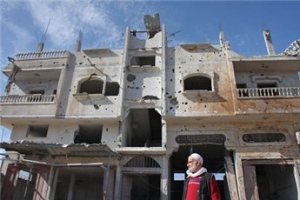 Abu Meiliq says no construction material is coming into Gaza from Egypt. Construction is down to 20% since tunnel traffic halted, ending a brief building boom in Gaza, Abu Meiliq told Ma’an.
Several projects funded by the Qatari government are on hold, including the Sheikh Hamad city, due to shortages of materials including cement, Abu Meiliq added.
Before smuggling tunnels closed, a ton of cement cost around 400 shekels ($110), but each ton is now selling for up to 1,000 shekels.
Abu Meiliq said the shortages were not a result of monopolies, but of high demand and very low supply.
Muhammad Abu Sido, a TV director from Gaza City, told Ma’an he had stopped work on his 3-storey home due to cement shortages.
RAFAH — The Egyptian forces reinforced their presence on the borders with Gaza, where they brought more tanks.
Eyewitnesses said that the Egyptian army brought more tanks and troops along the Egypt-Gaza border which stretches 14 kilometers, and added they saw Egyptian armed forces on the roofs of a number of buildings.
For their part, Palestinian security forces in large numbers have been deployed along the border.
Meanwhile, the Egyptian security forces have closed the tunnels between Egypt and the Gaza Strip, used for the smuggling of essential goods and fuel to the besieged Strip.
Informed sources confirmed that the Egyptian army launched a campaign to demolish the tunnels built under the Egyptian-Palestinian border.
The sources told PIC’s correspondent that Egyptian tanks and armored vehicles have been intensively deployed on the borders, amid a campaign that included the destruction of many tunnels that have been closed for several days due to the recent developments in Egypt.
July 4, 2013
Posted by aletho |
Ethnic Cleansing, Racism, Zionism, Subjugation - Torture | Egypt, Gaza, Israel, Ma'an, Rafah |
Leave a comment
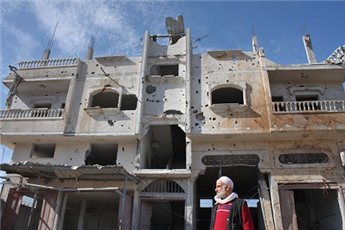 Abu Meiliq says no construction material is coming into Gaza from Egypt. Construction is down to 20% since tunnel traffic halted, ending a brief building boom in Gaza, Abu Meiliq told Ma’an.

 Aletho News
